Daily Archives: November 24, 2009

The Boycott, Divestment and Sanctions movement is working

Mohammad Othman’s administrative detention is a sign BDS is working

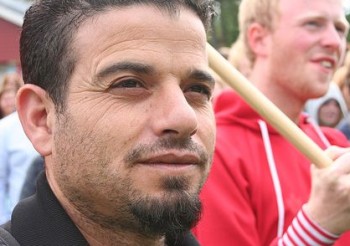
Mohammad Othman, the BDS campaigner who was detained by Israel upon returning from a speaking tour in Norway, was given three months administrative detention yesterday in an Israeli military court. Othman had been held 63 days without charge before the court agreed to the prosecution’s request for administrative dentention. Othman has been under nearly constant interrogation during this time. [continued…]
Editor’s Comment — The ongoing debate about the BDS movement seems like it could be a waste of energy. If BDS gathers enough momentum then it will become a politically self-justifying exercise simply by virtue of the attention it receives. If it doesn’t acquire critical mass, then its merits or flaws will be moot.

And momentum itself is to a significant degree a self-fulfilling expectation. As an Indian master once said: “faith is the willingness to try.” That willingness is increasingly evident.

The fact that J Street is alarmed by a movement that is “spreading like wild fire” across American college campuses is a strong sign that what might have once looked like a form of fringe activism is already heading on a trajectory towards the mainstream — a domain that the “pro-Israel pro-peace” lobby can probably only dream of dominating.

Is Israel threatened by the BDS movement?

For nearly six weeks now Mohammed Othman, a prominent Palestinian activist and an outspoken advocate of the nonviolent boycott, divestment and sanctions (BDS) movement, has been held in an Israeli military prison without charges.

On 22 September 2009 Othman, 34, was detained at the Allenby Crossing as he attempted to return home to the occupied West Bank from Jordan. He was returning from a trip to Norway, where he met with that country’s Finance Minister Kristin Halvorsen, amongst other officials.

At the beginning of September, Finance Minister Halvorsen announced Norway’s divestment from the Israeli company Elbit due to “ethical concerns.” Elbit provides security systems for Israel’s separation wall in the West Bank, for illegal settlements as well as unmanned aerial vehicles (commonly known as drones) and other technology for the Israeli military. According to many Middle East analysts and human rights groups, Othman played a pivotal role in Norway’s decision to disassociate from Elbit. [continued…]


Facebooktwittermail

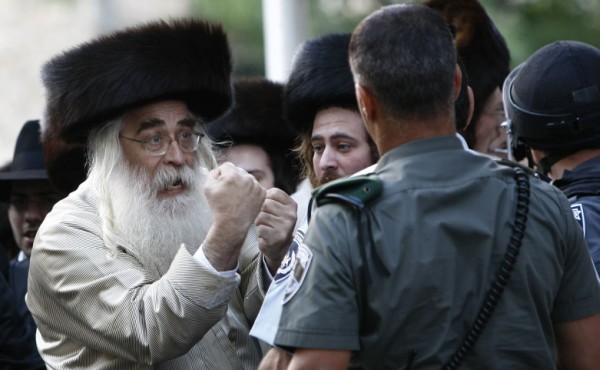
The real demographic threat facing the Jewish state

At the edge of the abyss

The chapter on Israel in the U.S. State Department’s 2009 Report on International Religious Freedom, issued in October, presents Israel in an embarrassing light – as one of the 30 countries “where violations of religious freedom have been noteworthy.” According to the Americans, Israel is more similar to Russia or Turkey than it is to Saudi Arabia or Iran, but that’s small comfort.

The report addresses at length the fact that one-quarter of students in the Jewish school system in Israel do not study general subjects such as English, mathematics and the sciences, and will thus find it difficult to enter the labor market. Like most Israelis, the Americans do not draw the correct conclusions: The difficult situation of today is just a promo – if the current trend continues things will get much worse here.

According to studies carried out by economist Eli Berman of the University of California, San Diego, Israel’s ultra-Orthodox population doubles every 16 years. Thirteen percent of Israelis who are eligible for the draft each year “enlist” in yeshivas. The Israel Defense Forces predicts that in 10 years one in every four 18-year-olds will evade service by studying in a yeshiva. For a long time now the problem has gone beyond discrimination; we are on the brink of a problem of national security.

According to researchers of the Israel 2028 project, headed by Eli Hurvitz and David Brodet, barring a significant change to the fertility rate in the Haredi community, the ultra-Orthodox will represent more than one-fifth of Israel’s Jewish population in 2028. Continue reading

Facebooktwittermail

The mystery of Dr Aafia Siddiqui

The mystery of Dr Aafia Siddiqui

In a hot summer morning 18 months ago a team of four Americans – two FBI agents and two army officers – rolled into Ghazni, a dusty town 50 miles south of Kabul. They had come to interview two unusual prisoners: a woman in a burka and her 11-year-old son, arrested the day before.

Afghan police accused the mysterious pair of being suicide bombers. What interested the Americans, though, was what they were carrying: notes about a “mass casualty attack” in the US on targets including the Statue of Liberty and a collection of jars and bottles containing “chemical and gel substances”.

At the town police station the Americans were directed into a room where, unknown to them, the woman was waiting behind a long yellow curtain. One soldier sat down, laying his M-4 rifle by his foot, next to the curtain. Moments later it twitched back.

The woman was standing there, pointing the officer’s gun at his head. A translator lunged at her, but too late. She fired twice, shouting “Get the fuck out of here!” and “Allahu Akbar!” Nobody was hit. As the translator wrestled with the woman, the second soldier drew his pistol and fired, hitting her in the abdomen. She went down, still kicking and shouting that she wanted “to kill Americans”. Then she passed out.

Whether this extraordinary scene is fiction or reality will soon be decided thousands of miles from Ghazni in a Manhattan courtroom. The woman is Dr Aafia Siddiqui, a Pakistani neuroscientist and mother of three. The description of the shooting, in July 2008, comes from the prosecution case, which Siddiqui disputes. What isn’t in doubt is that there was an incident, and that she was shot, after which she was helicoptered to Bagram air field where medics cut her open from breastplate to bellybutton, searching for bullets. Medical records show she barely survived. Seventeen days later, still recovering, she was bundled on to an FBI jet and flown to New York where she now faces seven counts of assault and attempted murder. If convicted, the maximum sentence is life in prison. [continued…]

Facebooktwittermail

Blackwater’s secret war in Pakistan

Blackwater’s secret war in Pakistan

At a covert forward operating base run by the US Joint Special Operations Command (JSOC) in the Pakistani port city of Karachi, members of an elite division of Blackwater are at the center of a secret program in which they plan targeted assassinations of suspected Taliban and Al Qaeda operatives, “snatch and grabs” of high-value targets and other sensitive action inside and outside Pakistan, an investigation by The Nation has found. The Blackwater operatives also assist in gathering intelligence and help direct a secret US military drone bombing campaign that runs parallel to the well-documented CIA predator strikes, according to a well-placed source within the US military intelligence apparatus.

The source, who has worked on covert US military programs for years, including in Afghanistan and Pakistan, has direct knowledge of Blackwater’s involvement. He spoke to The Nation on condition of anonymity because the program is classified. The source said that the program is so “compartmentalized” that senior figures within the Obama administration and the US military chain of command may not be aware of its existence. [continued…]

Facebooktwittermail

UK role in torture of British citizens in Pakistan condemned

UK role in torture of British citizens in Pakistan condemned

Britain’s role in the torture of its own citizens in Pakistan is condemned today by one of the world’s leading human rights organisations as being cruel, counter-productive and in clear breach of international law.

In a damning report, published after an investigation spanning more than a year, Human Rights Watch (HRW) says the government finds itself in a “legally, morally and politically invidious position” through complicity in torture, and warns its moral legitimacy could be undermined.

The report by the New York-based NGO – entitled Cruel Britannia: British Complicity in the Torture and Ill-treatment of Terror Suspects in Pakistan – corroborates many of the findings of the Guardian’s own investigation into the mistreatment of people held during British-led counter-terrorism operations. [continued…]

Will Miliband address torture evidence?

Today sees the release by Human Rights Watch (HRW) of a searing exposé of the evidence against the British government of its complicity in the torture of people held in Pakistan suspected of terrorism. The report, Cruel Britannia, is based on evidence collected by Ali Dayan Hasan, a senior HRW researcher who interviewed not only suspects and their lawyers but also members of the Pakistani ISI agency who were involved in the torture. It corroborates and provides further detail for the investigative reporting on torture of the Guardian’s Ian Cobain, who recently won the Paul Foot award.

Human Rights Watch, a US-based organisation, has an excellent reputation for independence and fair-minded monitoring. The allegations that British security services knew about torture in Pakistan, took advantage of it and even encouraged it, must be taken very seriously.

The report analyses in some detail the “far from decisive” response of the UK government so far to these and other allegations. Foreign secretary David Miliband and others repeat a mantra that the UK government does not condone torture, but they have refused to investigate the allegations or to publish guidance to officials. Written instructions to security services interrogating suspects in Afghanistan after 9/11 disclosed earlier this year – while saying they should not be seen to “condone” torture – also made it clear that the UK government sanctions a blind eye. The instructions claimed (with dubious legality, let alone morality) that there was no obligation to intervene even when interrogators are aware of torture. [continued…]

Facebooktwittermail

Obama plans to send 34,000 more troops to Afghanistan

Obama plans to send 34,000 more troops to Afghanistan

President Barack Obama met Monday evening with his national security team to finalize a plan to dispatch some 34,000 additional U.S. troops over the next year to what he’s called “a war of necessity” in Afghanistan, U.S. officials told McClatchy.

Obama is expected to announce his long-awaited decision on Dec. 1, followed by meetings on Capitol Hill aimed at winning congressional support amid opposition by some Democrats who are worried about the strain on the U.S. Treasury and whether Afghanistan has become a quagmire, the officials said.

The U.S. officials all spoke on condition of anonymity because they weren’t authorized to discuss the issue publicly and because, one official said, the White House is incensed by leaks on its Afghanistan policy that didn’t originate in the White House. [continued…]

We can’t buy peace in Afghanistan

So now we know the secret weapon of the the new western plan to pacify Afghanistan: cash. As President Obama prepares to announce the expected dispatch of tens of thousands more troops to America’s eight-year-old war and occupation, US and British commanders on the ground have already begun to fund and equip Afghan militias to help fight the Taliban.

The idea behind the homely sounding Community Defence Initiative is to buy off disaffected fighters and create loyal tribal auxiliaries to support Nato occupation forces and the Afghan government. It’s the other leg of US General McChrystal’s plan for a military surge to turn round the deepening crisis of the Afghan war – and is directly modelled on the US surge of 2007 in Iraq.

That combined a large increase in US troop numbers with the creation of American-funded “awakening councils” out of parts of Iraq’s Sunni-based resistance who had come into conflict with al-Qaida. It led to an initial increase in violence and American deaths, followed by a sharp decrease in both thereafter. [continued…]

Why they hate us (I): on military occupation

One of the many barriers to developing a saner U.S. foreign policy is our collective failure to appreciate why military occupations generate so much hatred, resentment, and resistance, and why we should therefore go to enormous lengths to avoid getting mired in them. Costly occupations are an activity you hope your adversaries undertake, especially in areas of little intrinsic strategic value. We blundered into Somalia in the early 1990s without realizing that we weren’t welcome; we invaded Iraq thinking we would be greeted as liberators, and we still don’t fully understand why many Afghans resent our presence and why some are driven to take up arms against us.

The American experience is hardly unique: Britain’s occupation of Iraq after World War I triggered fierce opposition, and British forces in Mandate Palestine eventually faced armed resistance from both Arab and Zionist groups. French rule in Algeria, Syria, Lebanon, and Indochina spawned several violent resistance movements, and Russia has fought Chechen insurgents in the 19th, 20th and 21st centuries. The Shiite population of southern Lebanon initially welcomed Israel’s invasion in 1982, but the IDF behaved badly and stayed too long, which led directly to the formation of Hezbollah. Israelis were also surprised by the first intifida in 1987, having mistakenly assumed that their occupation of the West Bank was benevolent and that the Palestinians there would be content to be governed by the IDF forever. [continued…]

Facebooktwittermail

Iraq’s January elections face near certain delay

Iraq’s January elections face near certain delay

Iraq’s tortuous effort to hold its parliamentary election on schedule in January collapsed Monday, raising the prospect of a political and constitutional crisis next year as the United States begins withdrawing the majority of its combat troops.

After two days of divisive sessions and failed talks, Parliament disregarded a veto by one of the country’s vice presidents and approved new amendments that the vice president promptly indicated he would veto as well.

The moves deepened a crisis that had fleetingly seemed resolved after months of wrangling over how to set up the vote, widely seen as a barometer of Iraq’s progress toward democracy. [continued…]

British colonel’s scathing attack on ‘arrogant, bureaucratic’ Americans

Colonel J.K.Tanner: “We experienced real difficulty in dealing with the American military and civilian organisations who, partly through arrogance and partly through bureaucracy, dictate that there is only one way: the American way. As far as the Iraqis were concerned, here was a nation who could put people on the moon but who could not, or would not, fix the electricity supply. You need to have money in order to make things happen, to buy protection from the looters, to smooth out tribal problems and to have immediate and visible effect and we did not have that. Despite our so-called ‘special relationship’ I reckon that we were treated no differently to the Portugese…

“I realise now that I am a European, not an American. We managed to get on better militarily and administratively with our European partners and indeed at times with the Arabs than with the Americans. Europeans chat to each other whereas dialogue is alien to the US military.

“They need to reintroduce dialogue as a tool of command because, although it is easy to speak to Americans face-to-face and understand each other completely, dealing with them corporately is akin to dealing with a group of Martians.” [continued…]

Facebooktwittermail

Iran expanding effort to stifle the opposition

Iran expanding effort to stifle the opposition

After last summer’s disputed presidential election, Iran’s government relied largely on brute force — beatings, arrests and show trials — to stifle the country’s embattled opposition movement.

Now, stung by the force and persistence of the protests, the government appears to be starting a far more ambitious effort to discredit its opponents and re-educate Iran’s mostly young and restive population. In recent weeks, the government has announced a variety of new ideological offensives.

It is implanting 6,000 Basij militia centers in elementary schools across Iran to promote the ideals of the Islamic Revolution, and it has created a new police unit to sweep the Internet for dissident voices. A company affiliated with the Revolutionary Guards acquired a majority share in the nation’s telecommunications monopoly this year, giving the Guards de facto control of Iran’s land lines, Internet providers and two cellphone companies. And in the spring, the Revolutionary Guards plan to open a news agency with print, photo and television elements.

The government calls it “soft war,” and Iran’s leaders often seem to take it more seriously than a real military confrontation. It is rooted in an old accusation: that Iran’s domestic ills are the result of Western cultural subversion and call for an equally vigorous response. The extent of the new campaign underscores just how badly Iran’s clerical and military elite were shaken by the protests, which set off the worst internal dissent since the country’s 1979 Islamic Revolution. [continued…]

Facebooktwittermail

Charges detail road to terror for 20 in U.S.

Charges detail road to terror for 20 in U.S.

Federal officials on Monday unsealed terrorism-related charges against men they say were key actors in a recruitment effort that led roughly 20 young Americans to join a violent insurgent group in Somalia with ties to Al Qaeda.

With eight new suspects charged Monday, the authorities have implicated 14 people in the case, one of the most extensive domestic terrorism investigations since the Sept. 11 attacks. Some of them have been arrested; others are at large, including several believed to be still fighting with the Somali group, Al Shabab.

The case represents the largest group of American citizens suspected of joining an extremist movement affiliated with Al Qaeda, senior officials said. Many of the recruits had come to America as young refugees fleeing a brutal civil war, only to settle in a gang-ridden enclave of Minneapolis. [continued…]

Editor’s Comment“one of the most extensive domestic terrorism investigations since the Sept. 11 attacks” — “the largest group of American citizens suspected of joining an extremist movement affiliated with Al Qaeda”…

Wow! This has to be a landmark event in the war on terrorism! The high-fives must really have been thrown around at the FBI after cracking open a major operation like this. Not another embarrassing headline like this one from a few months ago: “FBI ‘lured dimwits’ into terror plot.”

Except… “Domestic terrorism investigations” seems like a bit of a stretch. The closest this report gets to suggesting that any of these young Somali Americans were intent on engaging in an act of domestic terrorism is to say: “Law enforcement officials are concerned that the recruits, who hold American passports, could be commissioned to return to the United States to carry out attacks here, though so far there is no evidence of such plots.”

Al Shabab might be labeled a terrorist organization and it might have ties to al Qaeda, but make no mistake: it is fighting a real war with conventional war-ambitions — the conquest of territory. Al Shabab wants to control Somalia. It’s hard to imagine how sponsoring acts of terrorism elsewhere would further that strategic goal.

Should we be concerned that American kids are being enticed into a desperate and bloody conflict far away? Certainly.

But maybe that concern should not be restricted to the fate of kids at risk in Minneapolis. Maybe it should also include kids in New York and elsewhere who are being recruited to serve in the Israeli Defense Force.

Facebooktwittermail