Yearly Archives: 2010

Iran offers nuke fuel deal

Iran offers nuke fuel deal

There are signs that negotiations with Iran over a nuclear fuel swap have resumed despite the expiration of the end-of-year deadline for a deal set by President Barack Obama.

While the Obama administration has stepped up talk of expanding sanctions on the regime’s Revolutionary Guards Corps, Iranian news reports and U.S. official sources say that Iran has recently returned a formal counter offer to swap low enriched uranium, or LEU, in exchange for nuclear fuel cells produced in the West.

The proposal comes as Iranian news reports say the foreign ministry has announced the halting of uranium enrichment for two months as a good-will gesture. Outside observers have not confirmed that claim. [continued…]

U.S. shifts Iran focus to support opposition

The Obama administration is increasingly questioning the long-term stability of Tehran’s government and moving to find ways to support Iran’s opposition “Green Movement,” said senior U.S. officials.

The White House is crafting new financial sanctions specifically designed to punish the Iranian entities and individuals most directly involved in the crackdown on Iran’s dissident forces, said the U.S. officials, rather than just those involved in Iran’s nuclear program.

U.S. Treasury Department strategists already have been focusing on Iran’s Revolutionary Guard Corps, which has emerged as the economic and military power behind Supreme Leader Ayatollah Ali Khamenei and President Mahmoud Ahmadinejad. [continued…]

The state of the opposition is strong

A couple of days after June’s stolen election in Iran, Flynt Leverett and I were both guests on “The Charlie Rose Show.” Mr. Leverett was waxing eloquent about how Ahmadinejad could have actually won the election. His supposed evidence was a May poll, conducted by phone from Turkey, before the presidential campaign had even begun. Apparently he did not read the entire report of the poll, merely a summary, published in a Washington Post editorial. Much of the full report contradicted his conclusions. Moreover, anyone who believes that Iranians today will reveal their real electoral preferences to a pollster calling from Turkey probably responds to emails from Nigerian princes. [continued…]

Steady drip of leaks corrodes the core of the Iranian regime

Beatings, arrests, show trials and even killings have failed to discourage Iranians from taking to the streets in protest. But those same tactics may be taking a toll on the government itself, eating away at its legitimacy even among its core of insiders, Iran experts are saying. The evidence? Leaks.

They began in December. Leaks about private meetings of the intelligence services and Revolutionary Guards; an embarrassing memo from state-owned television on how to cover the protests; a note about how the security services have been using petty criminals to fill out the ranks of pro-government demonstrations.

There is no way to verify the accuracy of these leaks. But the government appears to have grown so angry and frustrated with what it calls a “soft war” to overthrow the state that it recently made it a crime to be affiliated with many foreign news outlets, dozens of nongovernmental organizations and opposition Web sites deemed “antirevolutionary.” [continued…]

Iran’s parliament exposes abuse of opposition prisoners at Tehran jail

Iranian MPs lifted a blanket of official denial on the country’s post-election upheaval today by blaming a ­senior regime insider for abuses that led to the deaths of at least three prisoners in a detention centre.

In the first publicly documented ­admission that abuses occurred in the weeks after President Mahmoud Ahmadinejad’s disputed re-election, the majlis, Iran’s parliament, identified Saeed Mortazavi, Tehran’s former chief ­prosecutor, as the main culprit in the scandal over the Kahrizak facility.

A report read out to MPs said 147 prisoners had been held in a 70-square-metre room for four days without proper ventilation, heating and food on ­Mortazavi’s orders. The prisoners were sent to ­Kahrizak after being arrested at a demonstration on 9 July, less than a month after ­Ahmadinejad’s victory. [continued…]

Iran’s opposition spreads to heartland

Mohammad knew he had to be careful in approaching his old classmate Hamed, the one from the conservative Iranian family. They come from a small city, after all, and word gets around.

When they ran into each other last summer in their eastern Iranian hometown of Birjand, the pair hadn’t seen each other for nine years. As they caught up on old times, the conversation turned to the country’s disputed election in which President Mahmoud Ahmadinejad defeated challenger Mir-Hossein Mousavi.

“He believed Ahmadinejad’s victory was not fraudulent, and that Mousavi was angry because Iranians didn’t vote for him,” said Mohammad, a 23-year-old engineering student in Birjand, a provincial capital of 160,000 near the border with Afghanistan. “He also thought that the people who protest are some gangsters and not civilized people.” [continued…]

Rafsanjani so silent because he gets no respect, brother says

For months Iran watchers have wondered what was up with Ayatollah Ali Akbar Hashemi Rafsanjani, the head of Iran’s powerful Assembly of Experts and the Expediency Council, as well as a pillar of the 1979 Islamic Revolution.

Once considered the second-most powerful man in the country and the primary backer of Iran’s burgeoning opposition movement, he has grown uncharacteristically quiet in the last couple of months.

In an interview published this weekend by the Mehr news agency (in Persian), his younger brother, Mohammad, says he’s grown so silent “because no one listens to him.” [continued…]


Facebooktwittermail

Iraqis say they were forced to take Blackwater settlement

Iraqis say they were forced to take Blackwater settlement

Several victims of a 2007 shooting involving American private security guards employed by the firm formerly known as Blackwater alleged Sunday that they were coerced into reaching settlements, and they demanded that the Iraqi government intervene to have the agreements nullified.

The Iraqis said they were pressured by their own attorneys into accepting what they now believe are inadequate settlements because they were told the company was about to file for bankruptcy, that its chairman was going to be arrested and that the U.S. government was about to confiscate all of the firm’s assets. This would be their last chance to get any compensation, the victims said they were told.

When criminal charges against the guards were dismissed by a U.S. federal judge on Dec. 31, the Iraqis concluded that they had been duped and that Blackwater, now called Xe, was not in the kind of legal and financial trouble they had been led to believe. [continued…]

Facebooktwittermail

The other plot to wreck America

The other plot to wreck America

There may not be a person in America without a strong opinion about what coulda, shoulda been done to prevent the underwear bomber from boarding that Christmas flight to Detroit. In the years since 9/11, we’ve all become counterterrorists. But in the 16 months since that other calamity in downtown New York — the crash precipitated by the 9/15 failure of Lehman Brothers — most of us are still ignorant about what Warren Buffett called the “financial weapons of mass destruction” that wrecked our economy. Fluent as we are in Al Qaeda and body scanners, when it comes to synthetic C.D.O.’s and credit-default swaps, not so much.

What we don’t know will hurt us, and quite possibly on a more devastating scale than any Qaeda attack. Americans must be told the full story of how Wall Street gamed and inflated the housing bubble, made out like bandits, and then left millions of households in ruin. Without that reckoning, there will be no public clamor for serious reform of a financial system that was as cunningly breached as airline security at the Amsterdam airport. And without reform, another massive attack on our economic security is guaranteed. Now that it can count on government bailouts, Wall Street has more incentive than ever to pump up its risks — secure that it can keep the bonanzas while we get stuck with the losses. [continued…]

Editor’s Comment — It’s always struck me as odd that the expression “parasite on society” is so often applied to society’s least fortunate members. On the contrary, it is those who like bloated ticks engorge themselves at the host’s expense who are surely the real parasites.

Frank Rich picks the right metaphor, yet at this time America’s nemeses far from being hunted down by the US government have instead repeatedly been provided with a safe haven.

Should we make any distinction between those who harmed us and those who now give them protection? Indeed we should because it is the banking bandits who should be brought to justice. Indiscriminate rage against government simply helps the culprits stay in hiding.

Still, there is one caveat I would add before getting completely carried away with this populist vent: the greed on Wall Street is not an aberration — it simply represents one of the most extreme expressions of American values.

The titans now reviled were until quite recently revered as models of American success, for in society at large we still too often measure success by the outcome — how much gets accrued — rather than the path that led there. We value rewards above accomplishments.

Wall Street couldn’t wreck America if America didn’t have a propensity to wreck itself.

Facebooktwittermail

How this suicide bomber opened a new front in Al-Qaeda’s war

How this suicide bomber opened a new front in Al-Qaeda’s war

According to the guard, Balawi had been to the base before. He claimed that before the doctor reached the first gate, the Afghan security guards in charge of the perimeter security were instructed by US soldiers to go into their rooms.

“They did not want any Afghans to see Balawi,” he said. A US army vehicle then led the car through the next two gates, reaching the inside of the base before stopping outside a block of buildings used by the CIA and military intelligence to debrief their sources.

As Balawi stepped out of the car, seven CIA officers and a handful of soldiers gathered around. According to the guard, it was then that Balawi detonated his bomb, killing eight and injuring six.

Arghawan, still sitting in the driver’s seat, survived the initial blast but a US soldier shot him in the head with his pistol, assuming that he was part of the bomb plot.

“There were lots of body parts,” said the guard. “The suicide bomber’s legs were all that was left of him. He had hidden the bomb beneath his pattu.”

According to one US intelligence official, the explosive was so powerful that it killed agency operatives who were as far as 50ft away. [continued…]

Editor’s Comment — Arghawan, the Afghan army commander who drove Balawi into the base, “clearly knew” Balawi, Arghawan’s driver told The Sunday Times. So, given that as the Washington Post says, “Virtually everyone within sight of the suicide blast died,” Arghawan would have been the crucial witness who could describe what happened — were it not for the fact that he got executed by an American soldier.

Pakistan’s volatile tribal areas draw foreign militants

As Pakistan’s army pushes ever deeper into the country’s mountainous tribal regions in a bid to flush out extremists, they are making a startling discovery – the majority of fighters are foreigners, and not just from Afghanistan.

Uzbeks, Europeans, Afghans, Russians and even a few Caucasian Americans all have been arrested along the rugged border with Afghanistan as the military presses its operation in North and South Waziristan.

Col Nadeem Mirza, the military commander, told The National on an exclusive trip to the region: “Our intelligence had informed us that al Qa’eda followers were hiding in the tribal agencies but no one was expecting to find so many foreigners and al Qa’eda members here. It seemed like these areas had become a fortress for al Qa’eda.” [continued…]

The terrorist mind: an update

Despite the lack of a single terrorist profile, researchers have largely agreed on the risk factors for involvement. They include what Jerrold M. Post, a professor of psychiatry, political psychology and international affairs at George Washington University, calls “generational transmission” of extremist beliefs, which begins early in life; a strong sense of victimization and alienation; the belief that moral violations by the enemy justify violence in pursuit of a “higher moral condition;” the belief that the terrorists’ ethnic, religious or nationalist group is special and in danger of extinction, and that they lack the political power to effect change without violence. [continued…]

Facebooktwittermail

We’re keeping detainees in the camp because we’re afraid of things they haven’t done yet?

We’re keeping detainees in the camp because we’re afraid of things they haven’t done yet?

When it comes to being detained indefinitely at Guantanamo Bay, it’s not so much what you know as whom you know. Or whom you are alleged to know. Or whom you may know. Someday.

That was the case back in 2002—when the government’s own best evidence showed that most of the detainees had been picked up for “associating” with the Taliban or al-Qaida (and that most were turned in for bounties rather than captured by U.S. forces). And it’s still the case this week, as the Obama administration announces that about 30 Yemeni prisoners—already cleared for release from the camp—will not be freed after all, merely because they’re from Yemen. The clearance they’ve received is now meaningless: Men poised to begin their ninth year of incarceration at the camp will remain there, not because of anything they have done, but in fear of whom they may meet on the streets back home in Yemen. The new twist, then, is that prisoners can now be held indefinitely not just because they once knew a terrorist, but because they may meet one someday in the future. [continued…]

Facebooktwittermail

Elite Revolutionary Guard’s expanding role in Iran may limit U.S. options

Elite Revolutionary Guard’s expanding role in Iran may limit U.S. options

A major expansion in the role played by Iran’s Revolutionary Guard Corps is giving the elite force new economic and political clout, but it could also complicate efforts by the United States and its allies to put pressure on the Iranian regime, according to U.S. officials and outside analysts.

Commanders of the Revolutionary Guard say its growth represents a logical expansion for an organization that is not a military force but a popular movement that protects the ideals of the 1979 Islamic revolution and Iran’s supreme leader, Ayatollah Ali Khamenei. The Guard’s expanded economic role is mirrored by a greater role in politics and security since the disputed presidential election in June, which the government says was won by incumbent Mahmoud Ahmadinejad in a landslide but which the opposition says was stolen.

U.S. officials consider the Guard a ripe target for sanctions over Iran’s controversial nuclear program because of the group’s central role in repressing post-election opposition protests. The officials are also concerned that broader-based sanctions risk alienating the Iranian public at a time when the government here faces protests from an energized opposition. But they also know that because of the Guard’s growing economic influence, sanctions on it could pinch the broader Iranian public as well.

Supporters and opponents alike say the Guard has dramatically expanded its reach into Iran’s economy, with vast investments in thousands of companies across a range of sectors. Working through its private-sector arm, the group operates Tehran’s international airport, builds the nation’s highways and constructs communications systems. It also manages Iran’s weapons manufacturing business, including its controversial missile program. [continued…]

Facebooktwittermail

Israeli general Brigadier-General Uzi Eilam denies Iran is nuclear threat

Israeli general Brigadier-General Uzi Eilam denies Iran is nuclear threat

A general who was once in charge of Israel’s nuclear weapons has claimed that Iran is a “very, very, very long way from building a nuclear capability”.

Brigadier-General Uzi Eilam, 75, a war hero and pillar of the defence establishment, believes it will probably take Iran seven years to make nuclear weapons.

The views expressed by the former director-general of Israel’s Atomic Energy Commission contradict the assessment of Israel’s defence establishment and put him at odds with political leaders.

Major-General Amos Yadlin, head of military intelligence, recently told the defence committee of the Knesset that Iran will probably be able to build a single nuclear device this year. [continued…]

Facebooktwittermail

Imposing Middle East peace

Imposing Middle East peace

Israel’s relentless drive to establish “facts on the ground” in the occupied West Bank, a drive that continues in violation of even the limited settlement freeze to which Prime Minister Benjamin Netanyahu committed himself, seems finally to have succeeded in locking in the irreversibility of its colonial project. As a result of that “achievement,” one that successive Israeli governments have long sought in order to preclude the possibility of a two-state solution, Israel has crossed the threshold from “the only democracy in the Middle East” to the only apartheid regime in the Western world. [continued…]

Out with Israel’s old Left, in with the new

The last decade has seen all the right’s leaders — from Ariel Sharon and Ehud Olmert to, finally, Netanyahu — accept the left’s idea of a Palestinian state. They did so not because they suddenly abandoned the desire to hold on to the entirety of the Greater Land of Israel, nor because they realized how unjust the occupation is. The only reason leaders from the right are today willing to consider withdrawal from Hebron and even from East Jerusalem is that one argument made by the Zionist left did strike a chord with them: that a Palestinian state is the only way to keep a clear Jewish majority in Israel.

By raising the flag of “the demographic battle,” the Jewish left was able to win the debate over the West Bank and Gaza. But it did so in a way that betrayed the same values the left has always claimed to represent — humanism, equal rights and brotherhood. That’s also where the left’s political fate was sealed. When the left abandoned the hope for true partnership with the Palestinians — on both sides of the Green Line — and became almost solely defined by its focus on demography and ethnic separation, it opened the door for Lieberman and his vision of an exclusionary Jewish state.

In fact, all Lieberman did was to propose taking the left’s platform one step further: If we are to separate from the Palestinians in the name of demography, why not redraw the borders so that Israel’s Arab citizens are placed in the Palestinian state as well? Livni and Netanyahu haven’t gone this far yet, but basically they offer the public the same deal: In return for the withdrawal from the West Bank, they pledge to preserve a clear Jewish majority within the state’s borders, the implicit message being that this is an opportunity to make Israel more Jewish.

This conception naturally comes at the expense of the state’s non-Jewish minorities; it makes it clear that Israel is not their country. This has helped set the stage for the current surge of anti-Arab legislation and government measures — from the effort to ban commemorations of the Palestinian Nakba to the order to replace Arab place names on road signs. (In this xenophobic political atmosphere, it is not surprising that even providing refuge to the survivors of the genocide in Darfur became a controversial issue.)

To all this, the left could have responded by opening its ranks to Arabs and creating new coalitions with the non-Zionist parties and grassroots organizations such as those that marched in Tel Aviv. No other political coalition has the power to preserve Israel as a home not just for Jews, but for all the people living in the country. Instead, the left’s leaders and thinkers chose to engage in a contest of ethnic patriotism with the right — one that they have no hope of winning. [continued…]

Facebooktwittermail

Bomber who attacked CIA workers calls it revenge

Bomber who attacked CIA workers calls it revenge

The Jordanian doctor who killed seven CIA employees in a suicide attack in Afghanistan said in a video broadcast posthumously today that all jihadists must attack U.S. targets to avenge the death of Pakistani Taliban chief Baitullah Mehsud.

The video showed Humam Khalil Abu-Mulal Balawi — whom the CIA had cultivated as an asset against Al Qaeda — sitting with Mehsud’s successor in an undisclosed location. It essentially confirmed the Pakistani Taliban’s claim of responsibility for one of the worst attacks in CIA history, though analysts said Al Qaeda and Afghan militants likely played roles, too.

Speaking in Arabic in the video shown on Al Jazeera, the Arabic network, and Aaj, a Pakistani channel, Balawi noted that the Pakistani Taliban had given shelter to “emigrants” — Muslim fighters from abroad.

Mehsud, the group’s longtime leader, was killed in August by a CIA missile strike. [continued…]

Editor’s Comment — As the CIA’s director, Leon Panetta no doubt sees it as his duty to try and lift morale in the agency, yet in an op-ed for tomorrow’s Washington Post he says this:

This was not a question of trusting a potential intelligence asset, even one who had provided information that we could verify independently. It is never that simple, and no one ignored the hazards. The individual was about to be searched by our security officers — a distance away from other intelligence personnel — when he set off his explosives.

Say what? What’s “a distance away from other intelligence personnel” supposed to mean? Outside the doorway of a conference room? What’s the point of trying to search someone after they’ve already reached a location where they can cause carnage? Panetta’s goal appears to be to snuff out the notion that the CIA is getting sloppy with its security procedures. He accomplishes the opposite.

Facebooktwittermail

White House aides said to chafe at slow pace of Afghan surge

White House aides said to chafe at slow pace of Afghan surge

Senior White House advisers are frustrated by what they say is the Pentagon’s slow pace in deploying 30,000 additional troops to Afghanistan and its inability to live up to an initial promise to have all of the forces in the country by next summer, senior administration officials said Friday.

Tensions over the deployment schedule have been growing in recent weeks between senior White House officials — among them Vice President Joseph R. Biden Jr., Gen. James L. Jones, the national security adviser, and Rahm Emanuel, the White House chief of staff — and top commanders, including Gen. Stanley A. McChrystal, the senior commander in Afghanistan.

A rapid deployment is central to President Obama’s strategy, to have a jolt of American forces pound the Taliban enough for Afghan security forces to take over the fight. Administration officials said that part of the White House frustration stemmed from the view that the longer the American military presence in Afghanistan continued, the more of a political liability it would become for Mr. Obama. But beyond the politics, the speeded up deployment — which Mr. Obama paired with a promise to begin troop withdrawals by July 2011 — is part of Mr. Obama’s so-called “bell curve” Afghanistan strategy, whereby American troops would increase their force in Afghanistan and step up attacks meant to quickly take out insurgents.

One administration official said that the White House believed that top Pentagon and military officials misled them by promising to deploy the 30,000 additional troops by the summer. General McChrystal and some of his top aides have privately expressed anger at that accusation, saying that they are being held responsible for a pace of deployments they never thought was realistic, the official said. [continued…]

Facebooktwittermail

Judge tosses out most evidence on Gitmo detainee

Judge tosses out most evidence on Gitmo detainee

A federal judge has tossed out most of the government’s evidence against a tarrorism detainee on grounds his confessions were coerced, allegedly by U.S. forces, before he became a prisoner at Guantanamo Bay.

In a ruling this week, U.S. District Judge Thomas Hogan also said the government failed to establish that 23 statements the detainee made to interrogators at Guantanamo Bay were untainted by the earlier coerced statements made while he was held under harsh conditions in Afghanistan.

However, the judge said statements he made during two military administrative hearings at the U.S. detention center in Cuba, where he was assisted by a personal representative, were reliable and sufficient to justify holding the detainee. [continued…]

Facebooktwittermail

Shots fired at Iran opposition leader’s car, son says

Shots fired at Iran opposition leader’s car, son says

In yet another sign of escalating tensions in Iran, pro-government demonstrators shot at the armored car of the country’s most outspoken opposition leader, Mehdi Karroubi, his Web site Saham News reported Friday.

No one was injured Thursday night in the attack, which appeared to reflect growing frustration that the brutal government crackdown on dissent in recent months had failed to stop the opposition from lashing out at the country’s leaders and staging intermittent protests that have brought tens of thousands of demonstrators into the streets.

Mr. Karroubi, a midlevel cleric who ran in the disputed June presidential election, on occasion has been pushed and shoved by critics since then, and one threw a shoe at him — a grave insult in Iran. But this was the first time someone reportedly shot at him. [continued…]

Facebooktwittermail

Al Qaeda’s strategic advantage

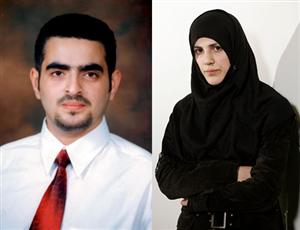
The bomber’s wife

Soft-spoken and composed, but unmistakably angry, the wife of the suicide bomber who killed himself and seven employees of the CIA in Afghanistan on Dec. 30 says flatly, “My husband was anti-American; so am I.” About that, there are no regrets. In an exclusive interview Thursday, Defne Bayrak, 31, spent more than an hour at the offices of Newsweek Türkiye in Istanbul talking about her husband, Dr. Humam Khalil Abu-Mulal al-Balawi; his beliefs; what he may have been offered by the CIA to work as a double agent on the trail of Al Qaeda’s top leadership; and what she heard from those apostles of jihad who ultimately inspired him to kill and die.

Al-Balawi’s case is a study in the radicalization of someone who is well-educated, economically well-off, devout, and disciplined. Such people may not fit into the public’s stereotypical idea of a terrorist, but the profile is increasingly familiar to police and intelligence officers involved with counterterrorism. Many of Al Qaeda’s most successful attacks, from 9/11 to the London transit-system bombings in 2005, were directed and executed by such intelligent, articulate, religious, and suicidally violent men. [continued…]

Editor’s Comment — Reuel Marc Gerecht, a former CIA officer and prominent neoconservative, writes in the Wall Street Journal:

Professionally, one has to admire the skill of suicide bomber Humam Khalil Abu-Mulal al-Balawi’s handlers. This operation could well have been months — if not longer — in the making, and neither the Jordanian intelligence service (GID), which supplied the double agent to the CIA, nor Langley apparently had any serious suspicion that al-Balawi still had the soul and will of a jihadist.

That is an impressive feat. The Hashemite monarchy imprisons lots of Islamic militants, and the GID has the responsibility to interrogate them. The dead Jordanian official, Sharif Ali bin Zeid, reportedly a member of the royal family, may not have been a down-and-dirty case officer with considerable hands-on contact with militants, but al-Balawi surely passed through some kind of intensive screening process with the GID. Yet the GID and the CIA got played, and al Qaeda has revealed that it is capable of running sophisticated clandestine operations with sustained deception.

When asked if she could confirm what other sources had told Newsweek — that Balawi was offered as much as $500,000 by the CIA and $100,000 by the Jordanians to track down al Qaeda’s leadership — Balawi’s wife said only, “It might be true.”

In both these instances — Gerecht’s admiration of al Qaeda’s tradecraft and the likelihood that the CIA believed Balawi could be turned for the right price — the crucial asymmetry between the CIA and its adversary is left unstated: the disparity in the strength of each side’s convictions. On one side are individuals who have transcended their own fear of death, and on the other side individuals whose concerns are unfocused and defuse – a swirl of patriotism, egotism, and ambition.

A former senior CIA officer while explaining what might have drawn so many operatives into Balawi’s trap, told the New York Times: “Everyone would have wanted to be on the team that caught Zawahri. That’s the kind of thing that makes careers.”

Setting aside questions about whose outlook might be more delusional and whether either has a moral footing, the jihadist’s fearlessness and conviction is a force that neither soldier nor spy can truly match.

US drone attacks ‘undermine support for war’: Zardari

Pakistan warned US senators Thursday that American drone attacks against militants on its territory undermined “the national consensus” that supported the war against militancy.

President Asif Ali Zardari made the warning to a US delegation led by former US presidential candidate and Republican Senator John McCain one day after US missile attacks killed at least 13 militants on the Afghan border.

McCain said Thursday in Kabul, the capital of neighbouring Afghanistan, that the use of such drone strikes against suspected Islamist militants in Pakistan was an effective part of US strategy and should continue. [continued…]

Facebooktwittermail

What’s the difference between Obama’s anti-terrorism policies and Bush’s?

What’s the difference between Obama’s anti-terrorism policies and Bush’s?

If Obama is pretending we are not at war, he is not doing a very good job of it. “Our nation is at war against a far-reaching network of violence and hatred,” he declared in his inaugural address. “I don’t think there’s any question but that we are at war” with terrorists, his attorney general, Eric Holder, said at his confirmation hearing that same month. “We are indeed at war with Al Qaeda and its affiliates,” Obama said in May. “As the president has made clear,” his chief counterterrorism adviser, John Brennan, said in August, “we are at war with Al Qaeda.”

It’s true that Obama prefers to say we are at war with terrorists rather than terrorism, because, as Brennan put it, “you can never fully defeat a tactic like terrorism any more than you can defeat the tactic of war itself.” But since Al Qaeda and its allies won’t be signing an instrument of surrender anytime in the foreseeable future, the implications are similar.

Nor does there seem to be much difference between Bush and Obama in terms of the policies said to be justified by this permanent war. The closing of Guantanamo, which was supposed to happen this month but has been delayed until next year at the earliest, is by the Obama administration’s own account a symbolic move, aimed at removing a conspicuous “recruiting tool” for Al Qaeda. But the policy that Guantanamo represents will continue. [continued…]

America has an impressive record of starting wars but a dismal one of ending them well

Since 1945, the United States military has devoted itself to the proposition that, Hiroshima notwithstanding, war still works—that, despite the advent of nuclear weapons, organized violence directed by a professional military elite remains politically purposeful. From the time U.S. forces entered Korea in 1950 to the time they entered Iraq in 2003, the officer corps attempted repeatedly to demonstrate the validity of this hypothesis.

The results have been disappointing. [continued…]

Facebooktwittermail

Egypt ‘deports aid convoy leader’

Egypt ‘deports aid convoy leader’

George Galloway, the British MP leading the Viva Palestina international aid convoy to the Gaza Strip has been forced to leave Egypt, the group has said on its website.

Galloway was apparently picked up by Egyptian officials at the Rafah border crossing on Friday and driven to Cairo where he was placed on a flight back to London.

Galloway told Al Jazeera by telephone from the airport that he had been harassed by about 25 Egyptian police officer as he attempted to re-enter Gaza to join the rest of the Viva Palestina activists.

He said Egyptian officials told him he was being sent out of the country and was now “persona non grata”. [continued…]

Eunice Wong on ‘Footnotes in Gaza’

Joe Sacco’s latest volume of comic book journalism, “Footnotes in Gaza,” is a detective story drawn from the Greek tragedy of Palestinian-Israeli history. It is a search for the truth about a bloody 50-year-old incident almost obliterated from historical memory. Rigorous journalism and moral and philosophical musings are wrangled into an explosive feast of a comic book.

On Nov. 3 and Nov. 12, 1956, in the Gaza towns of Khan Yunis and Rafah, large-scale killings of Palestinian men—275 dead in Khan Yunis and 111 in Rafah, according to the United Nations—were carried out by invading Israeli troops. There is almost nothing written in English about these massacres.

“This is the story of footnotes to a sideshow of a forgotten war,” writes Sacco. Over a drawing of a crowd of Palestinian men, their hands up and their faces contorted, the text continues: “Well, like most footnotes, they dropped to the bottom of history’s pages, where they barely hang on.” [continued…]

Facebooktwittermail

Two defense contractors indicted in shooting of Afghans

Two defense contractors indicted in shooting of Afghans

Two defense contractors working for a subsidiary of the former Blackwater Worldwide were charged with shooting and killing two Afghan citizens in Kabul and wounding a third, prosecutors said Thursday, the first slayings linked to the firm in that country and its latest legal blow.

Justin Cannon, 27, and Christopher Drotleff, 29, were indicted by a federal grand jury in Norfolk on murder and other charges in the May 5 shootings, in which the men opened fire with AK-47 assault rifles on a car that they said they thought was trying to run them down. The indictment was unsealed Thursday.

At the time of the shootings, the men were Pentagon contractors employed by Paravant LLC, a Blackwater subsidiary that specializes in firearms training. They were in Afghanistan to train that country’s army in using and maintaining weapons systems and were transporting two Afghan translators at the time of the incident, their attorney said. [continued…]

U.S. military investigates allegations of detainee abuse in Afghanistan

The U.S. military has begun investigating allegations that two Afghan teenagers were beaten and humiliated by guards while in American custody last year at a secret detention center at Bagram air base, according to U.S. and Afghan officials.

U.S. military officials took statements from the teenagers last month and are contacting others who say they were held at what Afghans call Bagram’s “black prison,” a detention center run by U.S. Special Operations forces. This classified facility is separate from the main prison at Bagram, which holds about 700 detainees.

The two teenagers — Issa Mohammad, then 17, and Abdul Rashid, who said he was younger than 16 — described austere living conditions and rough treatment while undergoing extensive daily interrogations about their alleged links to the Taliban. [continued…]

Facebooktwittermail

Iraq bars 15 political parties with Baathist ties from upcoming elections

Iraq bars 15 political parties with Baathist ties from upcoming elections

At least 15 parties will be banned from upcoming parliamentary elections because they have been linked to Saddam Hussein’s Baath Party or have promoted Baathist ideals, Iraqi officials said Thursday.

The decision by the Justice and Accountability Commission, in charge of cleansing high-level Baathists from the ranks of the government and security forces, seemed to be an attempt to purge candidates with links to the old political order, many of whom are popular among secular nationalist voters. The move is a blow to hopes of bringing opposition figures — who turned to violent resistance over the past seven years — into the political fold, part of the U.S. strategy to bolster the government.

Saleh al-Mutlak, a popular Sunni lawmaker who joined forces with Ayad Allawi, a secular Shiite and former Baathist with links to the CIA, called the move “foolish” and warned that it may lead to a popular uprising in the streets. Mutlak, an agriculturist, has long been a defender of former Baathists and grew popular among Sunnis, most notably in the western Sunni province of Anbar, during provincial elections last year. [continued…]

Facebooktwittermail

For the West, ‘Game over’ in Central Asia

For the West, ‘Game over’ in Central Asia

Last month, the West officially lost the new “Great Game.” The 20-year competition for natural resources and influence in Central Asia between the United States (supported by the European Union), Russia and China has, for now, come to an end, with the outcome in favor of the latter two. Western defeat was already becoming clear with the slow progress of the Nabucco pipeline and the strategic reorientation of some Central Asian republics toward Russia and China. Two recent events, however, confirmed it.

On Dec. 14, Chinese President Hu Jintao and the heads of state of Turkmenistan, Uzbekistan and Kazakhstan personally opened the valve of a new gas pipeline transporting Turkmen natural gas from the state-of-the-art processing facility of Samandepe to the city of Khorgoz, in China’s western province of Xinjiang. The pipeline, developed by the Chinese state-owned energy giant, CNPC, has a capacity of 40 billion cubic meters and traverses almost 1,250 miles through four countries.

Earlier in the month, on Dec. 3, the venture had received the blessings of Russian Prime Minister Vladimir Putin, who declared that Moscow was comfortable with the idea of Turkmen gas flowing eastwards to China. Putin’s words further underscored ongoing Sino-Russian energy cooperation, which has made significant advances and is shaping the new political economy of energy in Central Asia and elsewhere. In an accord signed on Oct. 13, the two countries set the basis for a long-term partnership based on joint explorations in Russia and third countries, as well as cheap loans from Chinese banks to the Russian energy sector, even if complex pricing issues remain unresolved. [continued…]

Facebooktwittermail