Monthly Archives: August 2011

Mounting evidence of a News Corp cover-up

The Guardian reports:

Rupert Murdoch, James Murdoch and their former editor Andy Coulson all face embarrassing new allegations of dishonesty and cover-up after the publication of an explosive letter written by the News of the World’s disgraced royal correspondent, Clive Goodman.

In the letter, which was written four years ago but published only on Tuesday, Goodman claims that phone hacking was “widely discussed” at editorial meetings at the paper until Coulson himself banned further references to it; that Coulson offered to let him keep his job if he agreed not to implicate the paper in hacking when he came to court; and that his own hacking was carried out with “the full knowledge and support” of other senior journalists, whom he named.

The claims are acutely troubling for the prime minister, David Cameron, who hired Coulson as his media adviser on the basis that he knew nothing about phone hacking. And they confront Rupert and James Murdoch with the humiliating prospect of being recalled to parliament to justify the evidence which they gave last month on the aftermath of Goodman’s allegations. In a separate letter, one of the Murdochs’ own law firms claim that parts of that evidence were variously “hard to credit”, “self-serving” and “inaccurate and misleading”.

Nicholas Wapshott writes:

The first letter, from News of the World royal reporter Clive Goodman, who became the patsy for the affair, gives the lie to the suggestion to Parliament by Murdoch’s most trusted retainer Les Hinton that phone hacking was the work of a single rogue reporter. In the letter, Goodman lets slip that “the actions … were carried out with the full knowledge and support” of some of the paper’s other journalists and that “other members of staff were carrying out the same illegal procedures.” The names of those others have been redacted for now, at the request of Scotland Yard, for fear of jeopardizing a prosecution.

Prime Minister David Cameron’s judgment is also called into question by the letter. The socially remote Cameron felt he could not connect with humdrum voters and hired Andy Coulson, top editor at the News of the World when the hacking took place, to explain his government’s policies in language the ordinary person could understand. Cameron says he hired the tainted Coulson because Coulson denied knowing of the illegality going on under his nose. But Goodman reports that hacking “was widely discussed in the daily editorial conference, until explicit reference to it was banned by the Editor [Coulson].” The “smoking gun” letter makes Cameron look naïve and gullible for being taken in so easily.

As in the Watergate affair, the coverup is becoming as important to understanding the culture within Murdoch’s business, and the failure of corporate governance by the board, as the crimes themselves. The Commons media committee received two copies of the Goodman letter, one from News International lawyers Harbottle & Lewis, who were released from their confidentiality after sharp questioning of James Murdoch by committee members Paul Farrelly and Tom Watson. News International executives repeatedly tried to have Watson removed from the committee, and when they failed ran vicious stories about him.

While Harbottle & Lewis redacted a single line from the Goodman letter, at the request of the police, a second copy was issued by News International, on the instructions of James Murdoch. This version not only redacts the names of other employees implicated in the crime but also blots out the sentence saying Coulson openly spoke about the hacking in editorial meetings. Further, it blanks the section that shows that Murdoch’s company wanted to buy Goodman’s silence: “[H.R. director] Tom Crone and the Editor [Coulson] promised on many occasions that I could come back to a job at the newspaper if I did not implicate the paper or any of its staff in my mitigation plea. I did not, and I expect the paper to honour its promise to me.”

A second letter also provides evidence of a coverup of the original crime. At the Commons hearing in July, questioning centred on what Rupert and James Murdoch knew about a Harbottle & Lewis investigation into thousands of e-mails that showed extensive use of hacking by Murdoch journalists in which the legal firm appeared to clear the company of permitting wrongdoing. James Murdoch used the letter to suggest that he had no reason to believe criminality was widespread. Released from its confidentiality, however, Harbottle & Lewis has now revealed that it was never asked to comment on whether they found that the hacking was prevalent, only whether Goodman had been ordered to hack by others. “There was absolutely no question of the firm being asked to provide News International with a clean bill of health which it could deploy years later in wholly different contexts for wholly different purposes,” it writes. “Nor was it being given a general retainer, as Mr. Rupert Murdoch asserted it was, ‘to find out what the hell was going on.’” They found James Murdoch’s attempt to hide behind their letter “hard to credit” and Rupert Murdoch’s assertion “inaccurate and misleading.”


Facebooktwittermail

Syria orders thousands into stadium in Latakia crackdown

The Los Angeles Times reports:

Syrian security forces cracking down on opposition strongholds in Latakia herded thousands of people into a stadium and took away their identification cards and cellphones, activists said Monday.

Forces loyal to the regime of President Bashar Assad continued hammering opposition strongholds in the country’s main port city, especially in the district of Ramleh, which has been pummeled with tank, gunboat and automatic weapons fire after unusually large antigovernment demonstrations broke out there Friday.

Security forces began ordering residents of the area, which includes a refugee camp housing more than 10,000 Palestinians, to go to a soccer stadium ahead of what they described as a huge military operation, activists said. At least five people were confirmed dead.

“They were told they should leave their homes and go to stadiums because the armed forces were going to flatten the area,” said an activist in the city, who asked that his name not be used. “Cellphone networks were cut as thousands of people left their houses and flocked toward the stadium. As they were gathered and directed to the stadium, their IDs were confiscated.”

Facebooktwittermail

Rick Perry, friend of Israel, on a mission from God, calls for Ben Bernanke to be lynched

Think Progress:

Texas Governor Rick Perry, who entered the presidential campaign on Saturday, appeared to suggest a violent response would be warranted should Federal Reserve Chairman Ben Bernanke “print more money” between now and the election. Speaking just now in Iowa, Perry said, “If this guy prints more money between now and the election, I dunno what y’all would do to him in Iowa but we would treat him pretty ugly down in Texas. Printing more money to play politics at this particular time in American history is almost treasonous in my opinion.” Treason is a capital offense.

The economist, Nouriel Roubini, tweeted: “The mind of Rick Perry (his sick words on Bernanke) is not much different from that of the Norway mass murdered. Loaded words cause violence”

Meanwhile, Ron Kampeas reports:

To some conservative Jews, Texas Gov. Rick Perry would make an excellent presidential candidate. He’s been to Israel more than any other candidate in the field and has said he loves it. And Perry creates jobs.

But other Jewish conservatives seeking the anti-Obama candidate look at the three-term governor and see something arresting: He believes he’s on a mission from God.

Perry has nonplussed longtime Jewish supporters by claiming that he has been “called” to the presidency and by hosting a prayer rally this month that appealed to Jesus to save America.

Jennifer Rubin, the Washington Post’s Right Turn columnist and a bellwether of Jewish conservatism, took liberals to task on her blog for treating the event as “a spectacle” — it was borne of deeply considered worries about the country’s parlous state, she said — but Rubin also expressed caveats about the rally.

“His words at the event were restrained but not ecumenical,” she wrote. “And his use of public office to promote the Christian event was, to me, inappropriate. The event, while scheduled last December, is still reflective of the man who would be president. Would he do this in the Oval Office? Does he not understand how many Americans might be offended? Is he lacking advice from a non-Texan perspective?”

Fred Zeidman, an influential Houston lawyer who has known Perry for decades and has hosted him at his home, said that “None of us remember him being quite as devout as he seems to be now, but we wouldn’t necessarily have known.”

Facebooktwittermail

Britain follows Iran’s lead — clamps down on water fights

Robert Mackey reports:

In a demonstration of the kind of zero-tolerance policing of modern criminality that will no doubt impress Iran’s morals police as much as Egypt’s military rulers, officers outside London announced on Monday that they had arrested a man for sending text messages encouraging people to take part in a mass water fight.
[…]
Last week, after reports that rioters had communicated over social networks and BlackBerry’s encrypted messaging service, Prime Minister David Cameron said at an emergency session of Parliament, “We are working with the police, the intelligence services and industry to look at whether it would be right to stop people communicating via these Web sites and services when we know they are plotting violence, disorder and criminality.

On Monday, Vikram Dodd, Richard Norton-Taylor and Josh Halliday reported for The Guardian that MI5, Britain’s domestic security service, and the intelligence agency known as Government Communications Headquarters, which intercepts and decodes communications, have been drafted in “the effort to catch people who used social messaging, especially BlackBerry Messenger,” to organize looting.

The crackdown in England comes as Egypt’s interim military government continues to prosecute bloggers on charges of insulting the army on Facebook and Twitter. On Sunday, the Cairo daily Al Masry Al Youm reported, a 26-year-old activist was forced to pay more than $3,000 in bail after being summoned by a military prosecutor on charges of insulting the army.

Earlier this month, authorities in two Iranian cities made several arrests as they broke up two mass water fights that had been organized on Facebook.

Facebooktwittermail

Glenn Beck calls Israel social protesters ‘communists’

Haaretz reports:

Beck is currently in Israel for a mass rally to “Restore Courage” in Jerusalem.

The conservative pundit, who left Fox News in June of this year, scoffed at the protesters’ list of demands, comparing many of their calls for increased social benefits to those of the former Soviet Union.

When he heard that the protest leaders were calling for higher taxation for the Israeli upper-classes, Beck laughed derisively, saying “ah, hate the rich.”

Beck then went on to suggest that the housing crisis could be solved by simply building up empty land in the West Bank. The right-wing commentator emphasized that the area, biblically referred to as “Judea and Samaria”, is “Judea – like Jews”.

The commentator said that Judea and Samaria is the contested territory’s real name, not the West Bank.

Beck continued to poke holes in the “extreme left” protesters’ demands calling for decreased privatization of health care, free education and an increase in minimum wage.

Beck also insinuated a possible collaboration between socialists and Islamists, pointing out historical instances in which the two movements went hand in hand.

Facebooktwittermail

Report reveals harsh condition in Israeli jails

Haaretz reports:

Inmates were cuffed hand and foot as a punishment, sometimes for months on end, while prisoners considered suicidal remained in restraints for long periods without access to proper medical care, according to a recent report on conditions in Israeli prisons in 2009 and 2010.

The report, issued by the Justice Ministry’s Public Defender’s Office, reveals widespread overcrowding, poor hygienic conditions and excessive punitive measures in most facilities.

In the Sharon Prison, for example, the agency found a policy of restraining suicidal inmates to their beds in order to punish them rather than in order to protect them.

One prisoner was found to have been kept in bed with arm and leg restraints for several hours, during which time he was unable to eat, smoke, cover himself with a blanket or go to the toilet. The restraints were so tight they left red marks on the prisoner’s wrists.

In Tsalmon Prison representatives of the Public Defender’s Office observed a prisoner kept in bed with arm and leg restraints in a stench-filled cell with cockroaches crawling on the walls. The prisoner, who is being treated with psychiatric drugs, told PDO officials he had been held for a number of months in this way. He said that in order to use the toilet he had to shout for a guard stationed some distance away, at the entrance to the wing.

PDO officials observed an inmate at Hadarim Detention Center who had been cuffed to his bed 24 hours a day for five and a half months, and afterward remained in restraints at night, for 13 hours a day, for an additional period of about six months.

Facebooktwittermail

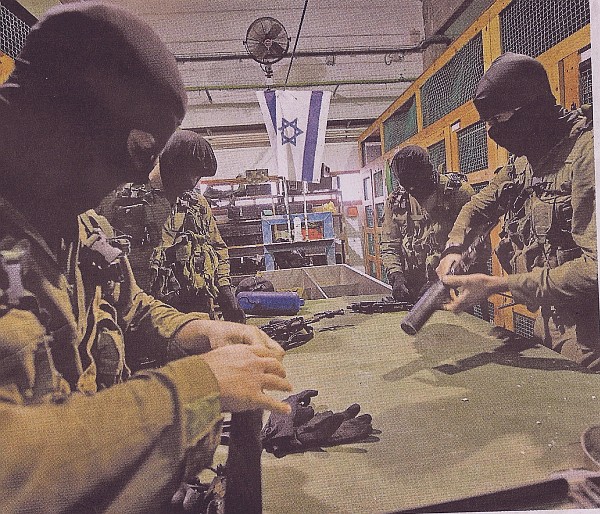
U.S. senator seeks to cut aid to Israeli special forces operating in West Bank and Gaza

Haaretz reports:

U.S. Senator Patrick Leahy is promoting a bill to suspend U.S. assistance to three elite Israel Defense Forces units, alleging they are involved in human rights violations in the West Bank and Gaza Strip.

Leahy, a Democrat and senior member of the U.S. Senate, wants assistance withheld from the Israel Navy’s Shayetet 13 unit, the undercover Duvdevan unit and the Israel Air Force’s Shaldag unit.

Defense Minister Ehud Barak, a long-time friend of Leahy’s, met with him in Washington two weeks ago to try to persuade him to withdraw the initiative.

According to a senior Israeli official in Jerusalem, Leahy began promoting the legislation in recent months after he was approached by voters in his home state of Vermont.

A few months ago, a group of pro-Palestinian protesters staged a rally across from Leahy’s office, demanding that he denounce the killing by Shayetet 13 commandos of nine Turkish activists who were part of the flotilla to Gaza last May.

Leahy, who heads the Senate Appropriations Committee’s sub-committee on foreign operations, was the principle sponsor of a 1997 bill prohibiting the United States from providing military assistance or funding to foreign military units suspected of human rights abuses or war crimes. The law also stipulates that the U.S. Defense Department screen foreign officers and soldiers who come to the United States for training for this purpose.

Leahy wants the new clause to become a part of the U.S. foreign assistance legislation for 2012, placing restrictions on military assistance to Israel, particularly to those three units.

Facebooktwittermail

We’ve been warned: the system is ready to blow

From Britain, Larry Elliott writes:

For the past two centuries and more, life in Britain has been governed by a simple concept: tomorrow will be better than today. Black August has given us a glimpse of a dystopia, one in which the financial markets buckle and the cities burn. Like Scrooge, we have been shown what might be to come unless we change our ways.

There were glimmers of hope amid last week’s despair. Neighbourhoods rallied round in the face of the looting. The Muslim community in Birmingham showed incredible dignity after three young men were mown down by a car and killed during the riots. It was chastening to see consumerism laid bare. We have seen the future and we know it sucks. All of which is cause for cautious optimism – provided the right lessons are drawn.

Lesson number one is that the financial and social causes are linked. Lesson number two is that what links the City banker and the looter is the lack of restraint, the absence of boundaries to bad behaviour. Lesson number three is that we ignore this at our peril.

From Washington, Steven Pearlstein writes:

Another great week for Corporate America!

The economy is flatlining. Global financial markets are in turmoil. Your stock price is down about 15 percent in three weeks. Your customers have lost all confidence in the economy. Your employees, at least the American ones, are cynical and demoralized. Your government is paralyzed.

Want to know who is to blame, Mr. Big Shot Chief Executive? Just look in the mirror because the culprit is staring you in the face.

J’accuse, dude. J’accuse.

You helped create the monsters that are rampaging through the political and economic countryside, wreaking havoc and sucking the lifeblood out of the global economy.

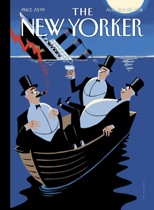
Did you see this week’s cartoon cover of the New Yorker? That’s you in top hat and tails sipping champagne in the lifeboat as the Titanic is sinking. Problem is, nobody thinks it’s a joke anymore.

Did you presume we wouldn’t notice that you’ve been missing in action? I can’t say I was surprised. If you’d insisted on trotting out those old canards again, blaming everything on high taxes, unions, regulatory uncertainty and the lack of free-trade treaties, you would have lost whatever shred of credibility you have left.

My own bill of particulars begins right here in Washington, where over the past decade you financed and supported the growth of a radical right-wing cabal that has now taken over the Republican Party and repeatedly made a hostage of the U.S. government.

When it started out all you really wanted was to push back against a few meddlesome regulators or shave a point or two off your tax rate, but you were concerned it would look like special-interest rent-seeking. So when the Washington lobbyists came up with the clever idea of launching a campaign against over-regulation and over-taxation, you threw in some money, backed some candidates and financed a few lawsuits.

The more successful it was, however, the more you put in — hundreds of millions of the shareholders’ dollars, laundered through once-respected organizations such as the Chamber of Commerce and the National Association of Manufacturers, phoney front organizations with innocent-sounding names such as Americans for a Sound Economy, and a burgeoning network of Republican PACs and financing vehicles. And thanks to your clever lawyers and a Supreme Court majority that is intent on removing all checks to corporate power, it’s perfectly legal.

And from Omaha, Nebraska, Warren Buffett writes:

Our leaders have asked for “shared sacrifice.” But when they did the asking, they spared me. I checked with my mega-rich friends to learn what pain they were expecting. They, too, were left untouched.

While the poor and middle class fight for us in Afghanistan, and while most Americans struggle to make ends meet, we mega-rich continue to get our extraordinary tax breaks. Some of us are investment managers who earn billions from our daily labors but are allowed to classify our income as “carried interest,” thereby getting a bargain 15 percent tax rate. Others own stock index futures for 10 minutes and have 60 percent of their gain taxed at 15 percent, as if they’d been long-term investors.

These and other blessings are showered upon us by legislators in Washington who feel compelled to protect us, much as if we were spotted owls or some other endangered species. It’s nice to have friends in high places.

Last year my federal tax bill — the income tax I paid, as well as payroll taxes paid by me and on my behalf — was $6,938,744. That sounds like a lot of money. But what I paid was only 17.4 percent of my taxable income — and that’s actually a lower percentage than was paid by any of the other 20 people in our office. Their tax burdens ranged from 33 percent to 41 percent and averaged 36 percent.

If you make money with money, as some of my super-rich friends do, your percentage may be a bit lower than mine. But if you earn money from a job, your percentage will surely exceed mine — most likely by a lot.

To understand why, you need to examine the sources of government revenue. Last year about 80 percent of these revenues came from personal income taxes and payroll taxes. The mega-rich pay income taxes at a rate of 15 percent on most of their earnings but pay practically nothing in payroll taxes. It’s a different story for the middle class: typically, they fall into the 15 percent and 25 percent income tax brackets, and then are hit with heavy payroll taxes to boot.

Back in the 1980s and 1990s, tax rates for the rich were far higher, and my percentage rate was in the middle of the pack. According to a theory I sometimes hear, I should have thrown a fit and refused to invest because of the elevated tax rates on capital gains and dividends.

I didn’t refuse, nor did others. I have worked with investors for 60 years and I have yet to see anyone — not even when capital gains rates were 39.9 percent in 1976-77 — shy away from a sensible investment because of the tax rate on the potential gain. People invest to make money, and potential taxes have never scared them off. And to those who argue that higher rates hurt job creation, I would note that a net of nearly 40 million jobs were added between 1980 and 2000. You know what’s happened since then: lower tax rates and far lower job creation.

Facebooktwittermail

Libyan rebels ‘take Az-Zawiyah’

The New York Times reports:

After a period of political turmoil, fighters opposing Col. Muammar el-Qaddafi advanced on several fronts on Sunday, seizing ground in the strategic city of Zawiyah that placed them on Tripoli’s doorstep and threatening to cut off an important supply line for the colonel’s loyalists.

The incursion late Saturday into Zawiyah, joined by fighters inside the city, promised to bolster the flagging morale of the rebel movement, which is still reeling from the assassination of a top military leader.

A rebel military spokesman reported that the rebels had also taken control of Surman, farther west along the road to Tunisia; that claim could not immediately be confirmed. Clashes were reported near the Ras Ajdir border crossing with Tunisia, the spokesman said, as well as in Gheryan, a city in the Nafusah Mountains that straddles another important route connecting Tripoli with Sabha, a Qaddafi stronghold in the south.

In the east, the rebels on Sunday continued their assault on Brega, an oil city where they are trying to force a contingent of Qaddafi fighters out of the city’s manufacturing district. Colonel Qaddafi’s soldiers were said to remain in control of important oil facilities in both eastern and western Libya; the rebels, who have said they are afraid to damage such installations, have had a difficult time dislodging opponents from them.

The New York Times also reports:

The Libyan security chief arrived unexpectedly with his family in Cairo on Monday in an apparent high-level defection from the government of Col. Muammar el-Qaddafi as the rebels challenging his rule seized ground in a strategic oil port just 30 miles from his Tripoli stronghold.

Colonel Qaddafi’s interior minister, Nassr al-Mabrouk Abdullah, landed on a private plane in Cairo with nine family members who were traveling on tourist visas and headed for a local hotel, Egyptian security officials at the airport said Monday.

The Qaddafi government’s ambassador, Ali Maria, said in short telephone interview that he had “no information” about Mr. Abdullah’s arrival or defection.

If confirmed, Mr. Abdullah’s defection would signal a new crack in the Qaddafi government after weeks of seeming stability since the defection of Colonel Qaddafi’s righthand man, Musa Kusa, and a handful of others around the time of start of the Libyan uprising and NATO’s bombing campaign in its support. While the Qaddafi government has recently dispatched other senior officials on quiet trips abroad for diplomatic negotiations or other errands, those on official business do not usually travel with their families.

Facebooktwittermail

Who is in control of the Libyan opposition?

The Washington Post reports:

The retired accounting professor who runs the city council of the Libyan rebel capital wants you to know: “There is good news in Benghazi!” Just ignore the smell.

“Electricity, benzene, water, gas — all okay. No rockets, no fighting — all okay. Sewage? Big headache. But all in all, we are amazed,” said Saad Elferjani, who compared his city — in the most favorable way possible — to a roach motel.

“You remember the advertisement?” he said. “ ‘You can check in, but you can’t check out.’ That is us.”

In recent months, the dueling capitals of Libya have traded places. Tripoli, held by leader Moammar Gaddafi, is now in worse shape than rebel-held Benghazi.

Life in Benghazi gets slightly better every day: Police officers dressed as admirals at least pretend to direct traffic, an exhibit of once-forbidden art has opened in the new Gaddafi Crimes Museum, and the schools are scheduled to start again in September.

“The city feels safe. Things work,” said Abed Dada of the International Committee of the Red Cross, who has spent the past few weeks in Benghazi.

The bakeries are turning out special pastries again. A tank of gas costs $4, less than before the revolution. Cellphone calls are free.

Asked to compare the rival cities of east and west, which were traditional adversaries even before the uprising, one young merchant notes with pride that the price of a chicken in Tripoli is $12, whereas in Benghazi, a bird (imported from Egypt) will set you back $3.

The conditions of daily life in the de facto rebel capital — and the perceptions of its citizens — are important clues to how a post-Gaddafi Libya might function. The evidence in August suggests here would be a fractious, opaque government of well-meaning amateurs who care enough to try to keep the lights on.

Facebooktwittermail

Syrian navy pounds the port city of Latakia

Anthony Shadid reports:

In yet another escalation of its crackdown on dissent, the Syrian government unleashed navy vessels, tanks and a mix of soldiers, security forces and paramilitary fighters against the port city of Latakia on Sunday, killing at least 25 people, including three children, activists and residents said.

The attacks in Latakia marked the third weekend in a row that the government has defied international condemnations in its campaign to stanch a remarkably resilient uprising, which began in March. The attacks have stoked fresh outrage, in part because they have come during the Muslim holy month of Ramadan, traditionally a time of piety and festivity when observant Muslims fast from dawn to dusk.

For much of the summer, President Bashar al-Assad’s government seemed to lose momentum in the face of protests that brought out hundreds of thousands of demonstrators in Syria’s fourth and fifth-largest cities, Hama and Deir al-Zour. But this month, the government retook firm control first of Hama, then Deir al-Zour last weekend. Late on Saturday, it turned its attention to Latakia, which, like Syria as a whole, has a Sunni Muslim majority and an Alawite minority, the Muslim sect that is disproportionately represented in the country’s leadership.

The attacks grew in ferocity on Sunday, and activists and residents said for the first time that gunfire was coming from navy vessels anchored off the coast. As in Hama, activists said security forces fired anti-aircraft weapons at civilian buildings. In addition, the activists said, land-line telephones and Internet connections were cut off to some neighborhoods of Latakia, a city of 650,000 that serves as Syria’s main port.

Tony Karon argues that Syria’s fate may come to rest less in the hands of its own people than be determined by its most influential neighbor: Turkey.

The government of Prime Minister Recep Tayyip Erdogan is arguably more responsive to domestic public opinion than any in Turkey’s history, and just as Turks were outraged at images of Israel pulverizing Gaza in early 2009, so have they been outraged at the spectacle at the Sunni civilian population across the border being shot and shelled for having the temerity to challenge the Assad regime, whose sectarianizing of the conflict also turns the predominantly Sunni Turkish public against Damascus. Then again, Turkey’s Alevi sect, that accounts for about 20% of the countries Muslims, has a close affinity with Syria’s ruling Allawites. Turkey’s interests are arguably less sectarian, in nature, than anti-sectarian.

Then, there’s the fact that some 10,000 Syrian refugees from Assad’s crackdown have already flooded into Turkey, and more would surely follow if the Syrian military allowed them to flee. That prompted Prime Minister Recep Tayyip Erdogan to deem Syria a domestic issue, rather than simply a foreign policy challenge for Turkey.

But while Turkey insists that the Syrian protests are a popular movement that require engagement and reforms by the regime, Iran embraces Assad’s narrative that the protests are a product of Western or Israeli (or Saudi, although that’s rarely said) scheming. Iran has reportedly delivered $5 billion in emergency aid to shore up the Assad regime (and by some accounts has pressed its allies in Iraq to do the same). Rumours that Syria’s military is being coached by the Iranians, however, seem farfetched — or part of a propaganda effort to paint Iran as the fount of all evil. Syria has plenty of experience deploying military force against its own citizenry, and its direct military assaults on opposition strongholds make Iran’s 2009 post-election crackdown look kid-gloved by comparison.

AFP reports:

Spain sent a special envoy to Damascus last month to convince President Bashar al-Assad to accept a plan to end months of violence in the country, a Spanish news report said on Monday. The government was also “ready to offer asylum to Assad and his family in Spain,” the country’s leading daily El Pais said.

The violence in Syria has killed around 2,200 people since March, including some 400 members of the security forces, according to rights activists. Syrian authorities have blamed the bloodshed on armed gangs and Islamist militants.

Spanish Prime Minister Jose Luis Rodriguez Zapatero sent Bernardino Leon, who was at the time one of his senior aides, to Damascus in July “to propose a transition plan for a peaceful solution to the revolution,” El Pais said, quoting sources close to Leon.

The mission was so secret that Leon travelled alone using an ordinary passport rather than a diplomatic one. He never set foot in any public building in Damascus, instead meeting with Syrian officials at their homes.

Jillian C York describes the electronic army that has been mobilized to defend Assad:

While the battles between the opposition and the Syrian regime are waged on the ground, a different battle is emerging online.

In the midst of a virtual blackout on the city of Hama, citizen videos – often shaky and unverifiable – document the brutality of the Syrian military’s crackdown on the city, ongoing since July 31 – the day before the start of Ramadan – while online campaigns, hosted on Facebook and Twitter, aim to draw attention to events on the ground. The narrative: Syrians are suffering and want the world to take notice.

At the same time, and often on the same networks, a different story can be seen, as Syrians in favour of the Assad regime stake out online ground in attempt to shift the narrative in their favour. And though there are individuals who post supportive sentiments about Assad, the overwhelming majority of pro-regime content online appears well-coordinated; the work of organised groups coming together to support the beleaguered president.

Tunisia’s Ben Ali promised a more open internet just one day before he was ousted. In Egypt, Mubarak sought a different strategy, shutting down the majority of the internet for a week in the hopes of disabling activist networks. Syria has taken a different approach to the internet altogether, first unblocking popular social networking sites, then throwing support to pro-regime hackers in the hopes of countering opposition forces online.

Facebooktwittermail

Israel’s J14 ‘social justice’ movement — just about money?

Since it began, Israel’s J14 ‘social justice’ movement, has made what was ostensibly a tactical choice to be apolitical and sidestep the divisive issue of the occupation.

Following a chorus of appeals to take a stand on this pivotal issue, the movement has implicitly done just that.

Max Blumenthal reports:

On August 14, a month after the demonstrations began, the movement finally tackled the situation across the Green Line. But instead of connecting the concept of social justice to the rights of everyone living under Israeli control, July 14 officially endorsed (website is in Hebrew) a tent protest for “social justice” in the illegal West Bank mega-settlement of Ariel.

Presumably J14’s Ariel protesters welcome the latest news about their illegal settlement:

Defense Minister Ehud Barak has approved the building of 277 apartments the West Bank settlement of Ariel, defying U.S. criticism of continued settlement construction.

Barak authorized the construction in Ariel, the core of the settlement bloc deepest inside the West Bank. One hundred of the apartments will house Israelis evacuated in 2005 from a Gaza Strip settlement.

Jerome Slater notes:

Many of Israel’s bravest and most admirable opponents of the occupation—people like [Jeff] Halper, Bernie Avishai, Gideon Levy, Yitzhak Laor, and others—are enthusiastic about the protest movement. Others, like Akiva Eldar, Amira Hass, and Uri Avnery, while of course strongly supporting the social justice goals, are uneasy about the decision to exclude the occupation or skeptical about the likely outcome. For example, Hass writes: “In the coming months, as the movement grows, it will split. Some will continue to think and demand ‘justice’ within the borders of one nation, always at the expense of the other nation that lives in this land. Others, however, will understand that this will never be a country of justice and welfare if it is not a state of all its citizens.”

In light of divisions within the Israeli left and the persuasive arguments on both sides of the debate, an outsider is in no position to reach a confident assessment about the issue. Yet, I can’t help feeling uncomfortable about the current strategy of the protest leaders. First, there is an important difference between the social justice protests and the last mass protests in Israel, which were over Israel’s complicity in the 1982 Sabra and Shatilla massacres in Lebanon. The latter was unambiguously driven by moral considerations; the former, while certainly containing a moral component, is also driven simply by economic self-interest, especially since it has become a populist movement linking the Israeli right with the left. For that reason, there is little reason to be hopeful that the movement signals a moral transformation of Israeli society.

As far as Ami Kaufman is concerned, J14 is really about one thing: money.

Although the protesters are demanding “social justice,” what they’re really asking for is “more money!” – as painful as that may sound. What they’re really shouting is, “Hey! How about a little less capitalism, and a tad more socialism!” Let’s not forget what triggered these demos: Daphne Leef couldn’t afford her rent and set up a Facebook page. It doesn’t get more financial than that.

This revolution is all about money. Sure, there are also elements of “justice” in it (better education for all, health services for all, better taxation, the end of rampant privatization and more) – but the engine of this movement is the realization of people that the system is screwing them. The system gives too much to the rich, and less to them.

Haggai Matar, the Israeli refusenik and activist who until now was ready to pronounce the fight against the occupation a failure, is not ready to write off J14.

It is still too early to predict exactly where the “J14” social protest movement is heading. But for the first time in decades, perhaps, we are witnessing the impossible becoming possible. What appeared to be a mere fantasy half a year ago, while we were watching the people of Egypt take their dreams into the streets, has become a vivid reality.

For example, on the very first day after the Rothschild camp was erected, I met a young Tel Aviv friend with no background in political activism, who decided to protest his high rent. In a discussion about the struggle, he was very adamant about the need to avoid any issue that was not directly related to the housing problem. A week later, I ran into him again, lecturing passionately to friends about why this must be a struggle to change the entire economic system, not just the rent. I learnt that between our two meetings he participated in several workshops about the economy, which took place in the tent camp, and watched films critical of privatization. This has radicalized him in a way that was never before possible in the militaristic security-driven discourse that ruled Israeli political culture since before 1948.

The very next day we witnessed the first mass demonstration in the streets of Tel Aviv and it was here that I first felt that the “people” in the slogan “the people demand social justice” might for the first time actually refer to all Israel’s people or citizens, not just Jews. This simple republican notion, with its radical potential of including Jews and Palestinians in the same mainstream movement against neo-liberal capitalism, would soon prove its worth. The following week’s rally, probably the biggest demonstration in Israeli history, already featured a Palestinian speaker, an Israeli citizen, on stage (Dimi wrote about this here).

Just seven short days after that, more than ten Palestinian tent camps were set up within Israel’s borders. Palestinian citizens have joined the “encampments assembly” – the national leadership of the struggle. Their demands for recognition of “unrecognized” villages and for construction permits on their own lands are being integrated into the official struggle agenda. Last Saturday night’s protest, which focused on the periphery rather than Tel Aviv, saw Palestinian citizens as major partners, if not outright initiators. This was true not only in bi-national Jaffa and Haifa, but also in Be’er Sheva and Afula, where populations are almost entirely Jewish. On the central stages of all these demonstrations, speakers repeated the notion of Jewish-Arab partnership. Raja Za’atry, member of the Higher Arab Monitoring Committee in Israel, welcomed demonstrators to the “Red Haifa”, and said that “hunger and humiliation, just like capital, have no homeland or language… This struggle belongs to everyone!”

Facebooktwittermail

Libyan rebels fly flag over key town near Tripoli

Reuters reports:

Libyan rebels raised their flag over a strategic town near Tripoli on Sunday after their most dramatic advance in months cut off Muammar Gaddafi’s capital from its main link to the outside world.

The swift rebel advance on the town of Zawiyah, about 50 km (30 miles) west of Tripoli, will deal a psychological blow to Gaddafi’s supporters and severs the coastal highway to Tunisia that keeps the capital supplied with food and fuel.

There was no sign Tripoli was under immediate threat from a rebel attack: heavily armed pro-Gaddafi forces still lie between Zawiyah and the capital. Previous rebel advances have often been reversed, despite help from NATO warplanes.

But rebel forces are in their strongest position since the uprising against 41 years of Gaddafi’s rule began in February. They now control the coast both east and west of Tripoli, while to the north is the Mediterranean and a NATO naval blockade and there is fighting to the south.

Facebooktwittermail

Roubini: ‘Karl Marx had it right’

Joseph Lazzaro writes:

There’s an old axiom that goes “wise is the person who appreciates candor almost as much as good news” and with that as a guide, place the forthcoming decidedly in the category of candor.

Economist Nouriel “Dr. Doom” Roubini, the New York University professor who four years ago accurately predicted the global financial crisis, said one of economist Karl Marx’s critiques of capitalism is playing itself out in the current global financial crisis.

Marx, among other theories, argued that capitalism had an internal contradiction that would cyclically lead to crises, and that, at minimum, would place pressure on the economic system.

Companies, Roubini said, are motivated to minimize costs, to save and stockpile cash, but this leads to less money in the hands of employees, which means they have less money to spend and flow back to companies.

Now, in current financial crisis, consumers, in addition to having less money to spend due to the above, are also motivated to minimize costs, to save and stockpile cash, magnifying the effect of less money flowing back to companies.

“Karl Marx had it right,” Roubini said in an interview with wsj.com. “At some point capitalism can self-destroy itself. That’s because you can not keep on shifting income from labor to capital without not having an excess capacity and a lack of aggregate demand. We thought that markets work. They are not working. What’s individually rational…is a self-destructive process.”

Facebooktwittermail

It’s the inequality, stupid!

Branko Milanovic writes:

As income inequality increased in the past quarter century in most parts of the world, it was strangely absent from mainstream economic discussions and publications. One would be hard-pressed, for example, to find many macroeconomic models that incorporated income or wealth inequality. Even in the run-up to and immediate aftermath of the 2007–2008 financial crisis, when income inequality returned to levels not seen since the Great Depression, it did not elicit much attention. Since then, however, the growing disparity in incomes between the rich and poor has taken a place at the top of the public agenda. From Tunisia to Egypt, from the United States to Great Britain, inequality is cited as a chief cause of revolution, economic disintegration, and unrest.

This feeling that the incomes of the rich and the poor have diverged in part reflects reality: between the 1980s and mid-2000s, income inequality rose significantly in countries as diverse as China, India, Russia, Sweden, and the United States. The Gini coefficient, a measure of economic inequality that runs from zero (everyone has the same income) to 100 (one person has the entire income of a country), has risen from around 35 to the low 40s in the United States, from 32 to 35 in India, from 30 to 37 in the United Kingdom, from less than 30 to 45 in both Russia and China, and from 22 to 29 in famously egalitarian Sweden. According to the OECD, during the same time frame, the Gini coefficient increased in 16 out of 20 rich countries. The situation was no different in the emerging market economies: in addition to in India and China, it rose in Indonesia, South Africa, and all the post-Communist countries.

For the poor, the gap has been palpable. In much of the world, the size of the economic pie has been shrinking, and the poor’s relative slice has been getting smaller. The poor’s actual income thus declined on two accounts. Despite large increase in global mean income between 1980 and 2005, excluding China, the number of people who live — or, rather, barely subsist — on an income below the absolute poverty line (1 dollar per day) remained constant, at 1.2 billion.

Facebooktwittermail

Rick Perry’s crony capitalism problem

The Wall Street Journal reports:

Gov. Rick Perry’s presidential pitch goes something like this: During one of the worst recessions in American history, he’s kept his state “open for business.” In the last two years, Texas created over a quarter of a million jobs, meaning that the state’s 8% unemployment rate is substantially lower than the rest of the nation’s. The governor credits this exceptional growth to things like low taxes and tort reform.

It’s a strong message. But one of the governor’s signature economic development initiatives—the Texas Emerging Technology Fund—has lately raised serious questions among some conservatives.

The Emerging Technology Fund was created at Mr. Perry’s behest in 2005 to act as a kind of public-sector venture capital firm, largely to provide funding for tech start-ups in Texas. Since then, the fund has committed nearly $200 million of taxpayer money to fund 133 companies. Mr. Perry told a group of CEOs in May that the fund’s “strategic investments are what’s helping us keep groundbreaking innovations in the state.” The governor, together with the lieutenant governor and the speaker of the Texas House, enjoys ultimate decision-making power over the fund’s investments.

Among the companies that the Emerging Technology Fund has invested in is Convergen LifeSciences, Inc. It received a $4.5 million grant last year—the second largest grant in the history of the fund. The founder and executive chairman of Convergen is David G. Nance.

In 2009, when Mr. Nance submitted his application for a $4.5 million Emerging Technology Fund grant for Convergen, he and his partners had invested only $1,000 of their own money into their new company, according to documentation prepared by the governor’s office in February 2010. But over the years, Mr. Nance managed to invest a lot more than $1,000 in Mr. Perry. Texas Ethics Commission records show that Mr. Nance donated $75,000 to Mr. Perry’s campaigns between 2001 and 2006.

Facebooktwittermail

Record levels of unemployment for Europe’s youth

Stefan Steinberg writes:

According to the latest figures from the German Statistical Office and Eurostat, youth unemployment across Europe has increased by a staggering 25 percent in the course of the past two and a half years. The current levels of youth unemployment are the highest in Europe since the regular collection of statistics began.

In the spring of 2008, prior to the collapse of Lehman Brothers and the financial crash of that year, the official unemployment rate for youth in Europe averaged 15 percent. The latest figures from the German Statistical Office reveal that this figure has now risen to over 20 percent.

In total, 20.5 percent of young people between 15 and 24 are seeking work in the 27 states of the European Union. At the same time, these numbers conceal large differences in unemployment levels for individual European nations.

In Spain, where the social-democratc government led by Jose Luis Zapatero has introduced a series of punitive austerity programmes at the behest of the banks and the IMF, youth unemployment has doubled since 2008 and now stands at 46 percent. In second place in the European rankings is Greece, the first country to be bailed out by the European Union and to install austerity measures, with a rate of 40 percent. In third place is Italy (28 percent), followed by Portugal and Ireland (27 percent) and France (23 percent).

In Britain, where youth have taken to the streets in a wave of riots and protests in a number of the country’s main cities, unemployment hovers around 20 percent. A recent report from Britain’s Office of National Statistics reported that joblessness among people between the ages of 16 and 24 has been rising steadily, from 14.0 percent in the first quarter of 2008 to 20 percent in the first quarter of 2011—an enormous 40 percent spike in just three years.

Facebooktwittermail

How China sees English riots

David Cohen writes:

It's been a good couple of weeks for China’s conservative press and a bad one for the image of liberal governments, as democracies battle crises ranging from the US budget standoff to Britain’s ongoing riots. Chinese commentators have taken the opportunity to take a few shots at the nations that have long lectured them on political reform, most notably a fierce Xinhua editorial that criticized Washington’s handling of the debt issue Sunday. These crises will certainly not be forgotten by defenders of one-party rule eager to find evidence of democratic countries’ failings.  

But Chinese media have followed the English riots with particularly intense interest, making it a lead story for days – and casting it as a reflection of fundamental problems in English and European society.  An editorial in Guangming Daily (Chinese link), a party newspaper, argues: ‘In reality, the disturbances in London are a reflection of Europe’s sickness: years of high welfare payments, excessive personal liberties, and an increase in foreign immigration have rendered it impossible for the lowest rungs of society to enjoy material well-being.’ (The full article is translated below). Adherents to such views have found ample confirmation in the British media – a China Daily translation of a Daily Mail column has become popular on the Chinese networking site Renren. It argues that British youth are ‘wild beasts…they respond only to instinctive animal impulses — to eat and drink, have sex, seize or destroy the accessible property of others.’

Conservative papers especially have picked up on illiberal comments like British Prime Minister David Cameron’s suggestion that social networking websites should be blocked to maintain order.  The Global Times, a conservative, but relatively independent, newspaper owned by the People's Daily has had Cameron's proposal to block access to Facebook and Twitter as a lead story in its special coverage (Chinese link) of the riots all day. As James Fallows writes at the Atlantic, he will undoubtedly be quoted for years whenever China comes under fire for limiting access to controversial information.

Facebooktwittermail