“Mercenary” is a word with lots of ugly connotations — not least for men who’ve been jailed for being mercenaries.
So, Bancroft Global Development, a private company based in Washington DC currently providing “military services” for the US State Department and the UN in Mogadishu, doesn’t like the term “mercenaries.” It describes itself instead as a non-governmental organization dedicated to finding permanent solutions to violent conflict. It also has what might be a unique distinction of operating in the United States as a 501(c)3 not-for-profit charitable organization.
The Obama administration clearly doesn’t feel comfortable employing mercenaries or “mentors,” as Bancroft’s soldiers call themselves, and so they get paid by the governments of Uganda and Burundi who then get reimbursed by the State Department.
Richard Rouget, the French-born South-African Bancroft employee who is the primary source for the New York Times article cited below, let’s the company’s PR mask fall momentarily and reveals a 19th century colonial mentality when he refers to his Somali adversaries as “savages”.
This is how GUD (founded in 1968) and a similar ultra-right group, Unité Radicale, were described in The Guardian:
Both the GUD and UR, founded in 1998, are rabidly racist, anti-semitic and anti-American, declared enemies of “global, cosmopolitan finance”, supportive of the September 11 attacks and believers in la France blanche .
While they profess to be genuine “nationalist revolutionaries” rather than neo-Nazis, the paraphernalia of the Third Reich is never far from their gatherings.
Meanwhile, through its creation of the Somali National Security Agency — an intelligence organization financed largely by the CIA — the Obama administration is backing what one Somali official says is becoming a “government within a government.”
“No one, not even the president, knows what the NSA is doing,” he said. “The Americans are creating a monster.”
Richard Rouget, a gun for hire over two decades of bloody African conflict, is the unlikely face of the American campaign against militants in Somalia.
A husky former French Army officer, Mr. Rouget, 51, commanded a group of foreign fighters during Ivory Coast’s civil war in 2003, was convicted by a South African court of selling his military services and did a stint in the presidential guard of the Comoros Islands, an archipelago plagued by political tumult and coup attempts.
Now Mr. Rouget works for Bancroft Global Development, an American private security company that the State Department has indirectly financed to train African troops who have fought a pitched urban battle in the ruins of this city against the Shabab, the Somali militant group allied with Al Qaeda.
The company plays a vital part in the conflict now raging inside Somalia, a country that has been effectively ungoverned and mired in chaos for years. The fight against the Shabab, a group that United States officials fear could someday carry out strikes against the West, has mostly been outsourced to African soldiers and private companies out of reluctance to send American troops back into a country they hastily exited nearly two decades ago.
“We do not want an American footprint or boot on the ground,” said Johnnie Carson, the Obama administration’s top State Department official for Africa.
A visible United States military presence would be provocative, he said, partly because of Somalia’s history as a graveyard for American missions — including the “Black Hawk Down” episode in 1993, when Somali militiamen killed 18 American service members.
Still, over the past year, the United States has quietly stepped up operations inside Somalia, American officials acknowledge. The Central Intelligence Agency, which largely finances the country’s spy agency, has covertly trained Somali intelligence operatives, helped build a large base at Mogadishu’s airport — Somalis call it “the Pink House” for the reddish hue of its buildings or “Guantánamo” for its ties to the United States — and carried out joint interrogations of suspected terrorists with their counterparts in a ramshackle Somali prison.
And while Washington continues to look at Somalia through the mind-numbing prism of “global terrorism,” the people of this war-torn nation struggle to survive.
A staggering ten percent of children under five are now dying from starvation every 11 weeks.
Ten per cent of Somali children aged under five are dying every 11 weeks in the country’s devastating famine, which is spreading faster than aid agencies can cope with, UN officials warned on Wednesday.
The UN representative to Somalia also told the UN Security Council that warlords will take control of areas of Mogadishu abandoned by Islamist insurgents last weekend unless the transitional government quickly gets a grip.
The envoy, Augustine Mahiga, said about half the Somali population, about 3.7 million people, are now at risk from famine. The UN estimates that more than 12 million are affected across East Africa.
Across the famine zone, more than 13 children out of every 10,000 aged under five die each day, Mahiga said. ‘This means that 10 per cent of children under five are dying every 11 weeks. These figures are truly heart-wrenching,’ the envoy told the council, appealing for greater international assistance.
The UN has asked for one billion dollars for Somalia, but Catherine Bragg, the deputy UN emergency relief coordinator, said less than half the sum has been raised.
Community leaders in Birmingham are working all-out to calm intense anger in the city’s British Asian community over the deaths of three young men who were rammed by a carload of suspected looters.
West Midlands police arrested a man near the scene and recovered a vehicle, which forensics experts are examining. They later launched a murder inquiry.
Groups of residents in Winson Green, the inner-city area where the men were killed as they tried to protect local businesses in the early hours of Wednesday, openly warned of inter-communal violence if the murder inquiry fails to produce rapid results.
Their anger was passed on by the local Labour MP for Ladywood, Shabana Mahmood, and the Bishop of Aston, Rt Rev Anthony Watson, who joined a meeting at Dudley Road mosque, which locals claimed was on looters’ hitlist of targets where money might be found. The victims, brothers Shazad Ali and Abdul Mussavir, 32 and 30, and Haroon Jahan, 21, were among some 80 young men who turned out after a gang tried to ransack the nearby Jet petrol station on Monday night.
In Eltham, south-east London, around 200 people gathered to protect people and property from rioters on Tuesday evening.
On July 31, The Guardian reported that after Haringey council shut eight of its 13 youth clubs, local teenagers feared boredom would fuel violence between young gang members on the streets of north London.
In February 2007, before becoming Britain’s prime minister, David Cameron said:
Sometimes a piece of research is published which goes straight to the heart of the national debate – it holds up a mirror to the whole of society and makes us see ourselves as we really are.
That happened this week. On Wednesday, Unicef published a report entitled “An overview of child well-being in rich countries”. It brings together comparative research on the material, educational and emotional state of childhood in 21 developed nations.
Britain comes bottom of the list.
Of course we can argue about methodology and the timing of statistics, but to do so is to miss the big point. This report shows that our society is deep trouble.
I am an optimistic person. I love this country. It’s a great place to live, a great time to be alive, and I am enormously positive about the future. But sometimes I simply want to despair – and this is one of those moments.
Ten years after the current Government was elected on the promise to end child poverty and make education its number one priority, Britain comes 18th out of 21 rich countries on material wellbeing, and 19th out of 21 on educational wellbeing. According to the report, British children are among the poorest and least educated in the developed world.
But that is not the worst of it. We come at the very bottom – 21st out of 21 – on three other measures which, to me, are even more important.
First, we come bottom on ‘subjective wellbeing’ – how children themselves rate their lives. Put another way, we have the unhappiest children in the developed world.
In The Guardian, David Lammy, Tottenham’s Labour member of parliament, notes the absence of fathers and other adult men to serve as role models in young men’s lives and asks:
“How do you find your masculinity in the absence of role models? Through hip-hop, through gang culture, through peer groups. It is hugely problematic. Teenagers are in school until 3.30, and then MTV, Facebook, the internet, kicks in with a set of values that comes with it. It is not clear to me that parents are equipped to deal with that. There’s an inability to delay gratification, alcohol, sex, drugs – this is presenting real challenges, and as always it hurts the poorest hardest. Why? Because if you have money you can bring in other things – ballet, football classes.”
Lammy knows the subject of weak parenting is so politically explosive that he was momentarily reluctant to discuss it at such a tense juncture.
The Conservative narrative of a broken Britain, championed by Cameron and the work and pensions minister, Iain Duncan Smith, which identifies poor parenting skills as the root of most social problems, had been broadly rejected by the left, he said. “The right have a lot to say about parenting, but no one on the left wants to talk about this. A void has emerged around it. It’s a profound problem.”
He laments the closure of a number of local youth clubs as a result of funding cuts. “These were some of the people who could talk to these young people, and they’ve lost their jobs.”
Last year, he proposed the introduction of the national civic service, to help instil an ethic of service in young people, but the proposal got little traction. He would like government parenting programmes to move beyond focusing on the first few years of a child’s life. “I’ve opened so many adventure playgrounds for under fives, but what about the teenagers? Sure Start is fine, but you need it to continue until the age of 18.”
As well as maternity leave, he thinks parents of teenagers should be allowed to take chunks of time off to look after their children at difficult moments in their development. “We need to move away from a narrative that is just about the early years.”
“If we’re fighting for a cause, let’s fight for a fucking cause,” shouts a woman in Hackney venting her contempt at kids on the rampage. What do the rioters want? New sneakers?
Prize for the wittiest tweet goes to “Sally Can’t Dance” who wrote facetiously: “Turkish and Asian groups have stood up to & chased off rioters. Bloody immigrants. Coming over here, defending our boroughs & communities.”
Turkish and Kurdish business owners between Hackney’s Stoke Newington High Street and Kingsland Road in London have been fighting to defend their properties from days of rioting across the United Kingdom.
“It was between about 9 or 10 at night,” said Yılmaz Karagöz, sitting in his coffee shop next to a jeweller’s shop that has been shuttered since Sunday when the rioting began and a pharmacy that closed a day after.
“There were a lot of them. We came out of our shops but the police asked us to do nothing. But the police did not do anything, so, as more came, we chased them off ourselves,” Karagöz said.
The staff from a local kebab restaurant ran at the attackers with döner knives in their hands. “I don’t think they will be coming back,” Karagöz said.
In other parts of London, local groups have come together to engage in similar ad hoc community policing.
Months of conjecture will follow these riots. Already, the internet is teeming with racist vitriol and wild speculation. The truth is that very few people know why this is happening. They don’t know, because they were not watching these communities. Nobody has been watching Tottenham since the television cameras drifted away after the Broadwater Farm riots of 1985. Most of the people who will be writing, speaking and pontificating about the disorder this weekend have absolutely no idea what it is like to grow up in a community where there are no jobs, no space to live or move, and the police are on the streets stopping-and-searching you as you come home from school. The people who do will be waking up this week in the sure and certain knowledge that after decades of being ignored and marginalised and harassed by the police, after months of seeing any conceivable hope of a better future confiscated, they are finally on the news. In one NBC report, a young man in Tottenham was asked if rioting really achieved anything:
“Yes,” said the young man. “You wouldn’t be talking to me now if we didn’t riot, would you?”
“Two months ago we marched to Scotland Yard, more than 2,000 of us, all blacks, and it was peaceful and calm and you know what? Not a word in the press. Last night a bit of rioting and looting and look around you.”
Eavesdropping from among the onlookers, I looked around. A dozen TV crews and newspaper reporters interviewing the young men everywhere.
There are communities all over the country that nobody paid attention to unless there had recently been a riot or a murdered child. Well, they’re paying attention now.
Tonight in London, social order and the rule of law have broken down entirely. The city has been brought to a standstill; it is not safe to go out onto the streets, and where I am in Holloway, the violence is coming closer. As I write, the looting and arson attacks have spread to at least fifty different areas across the UK, including dozens in London, and communities are now turning on each other, with the Guardian reporting on rival gangs forming battle lines. It has become clear to the disenfranchised young people of Britain, who feel that they have no stake in society and nothing to lose, that they can do what they like tonight, and the police are utterly unable to stop them. That is what riots are all about.
Riots are about power, and they are about catharsis. They are not about poor parenting, or youth services being cut, or any of the other snap explanations that media pundits have been trotting out: structural inequalities, as a friend of mine remarked today, are not solved by a few pool tables. People riot because it makes them feel powerful, even if only for a night. People riot because they have spent their whole lives being told that they are good for nothing, and they realise that together they can do anything – literally, anything at all. People to whom respect has never been shown riot because they feel they have little reason to show respect themselves, and it spreads like fire on a warm summer night. And now people have lost their homes, and the country is tearing itself apart.
If this is a war, the enemy, on the face of it, are the “lawless”, the defenders are the law-abiding. An absence of morality can easily be found in the rioters and looters. How, we ask, could they attack their own community with such disregard? But the young people would reply “easily”, because they feel they don’t actually belong to the community. Community, they would say, has nothing to offer them. Instead, for years they have experienced themselves cut adrift from civil society’s legitimate structures. Society relies on collaborative behaviour; individuals are held accountable because belonging brings personal benefit. Fear or shame of being alienated keeps most of us pro-social.
Working at street level in London, over a number of years, many of us have been concerned about large groups of young adults creating their own parallel antisocial communities with different rules. The individual is responsible for their own survival because the established community is perceived to provide nothing. Acquisition of goods through violence is justified in neighbourhoods where the notion of dog eat dog pervades and the top dog survives the best. The drug economy facilitates a parallel subculture with the drug dealer producing more fiscally efficient solutions than the social care agencies who are too under-resourced to compete.
The insidious flourishing of anti-establishment attitudes is paradoxically helped by the establishment. It grows when a child is dragged by their mother to social services screaming for help and security guards remove both; or in the shiny academies which, quietly, rid themselves of the most disturbed kids. Walk into the mental hospitals and there is nothing for the patients to do except peel the wallpaper. Go to the youth centre and you will find the staff have locked themselves up in the office because disturbed young men are dominating the space with their violent dogs. Walk on the estate stairwells with your baby in a buggy manoeuvring past the condoms, the needles, into the lift where the best outcome is that you will survive the urine stench and the worst is that you will be raped. The border police arrive at the neighbour’s door to grab an “over-stayer” and his kids are screaming. British children with no legal papers have mothers surviving through prostitution and still there’s not enough food on the table.
It’s not one occasional attack on dignity, it’s a repeated humiliation, being continuously dispossessed in a society rich with possession. Young, intelligent citizens of the ghetto seek an explanation for why they are at the receiving end of bleak Britain, condemned to a darkness where their humanity is not even valued enough to be helped. Savagery is a possibility within us all. Some of us have been lucky enough not to have to call upon it for survival; others, exhausted from failure, can justify resorting to it.
The Guardian attempts to answer what might sound like a simple question: who are the rioters?
Take events in Chalk Farm, north London. First the streets contained people of all backgrounds sprinting off with bicycles looted from Evans Cycles. Three Asian men in their 40s, guarding a newsagent, discussed whether they should also take advantage of the apparent suspension of law.
“If we go for it now, we can get a bike,” said one. “Don’t do it,” said another. Others were not so reticent; a white woman and a man emerged carrying a bike each. A young black teenager, aged about 14, came out smiling, carrying another bike, only for it be snatched from him by an older man.
They were just some of the crowd of about 100 who had gathered on the corner; a mix of the curious and angry, young and old. It was impossible to distinguish between thieves, bystanders and those who simply wanted to cause damage.
A group of about 20 youths were wielding scaffolding poles taken from a nearby building site. They used their makeshift weapons, along with bricks and stolen bottles of wine, to intermittently attack passing motorists or smash bus shelters. A man in a slim suit stood on the corner recording the violence on his mobile phone.
Most of those he was filming had covered their faces. One had a full balaclava with holes cut out only for the eyes and mouth. “Is that you, bruv?” an older man, aged about 30, hands in pockets, asked the man in the balaclava. Recognising his friend, he laughed and added: “Fuck. Don’t stand near me – you’re going to get me arrested.”
Seconds later there was a smash as the minicab office around the corner was broken into. Teenagers swarmed in, shouting: “Bwap, bwap, bwap.”
The arrival of a line of riot police from Camden, where a branch of Sainsbury’s and clothing stores had been looted an hour earlier, signalled it was time for everyone to move on.
But there was no rush; the group knew from experience that police would hold back for the time being. “Keep an eye on the Feds, man,” said one youth.
Overheard snippets of conversation gave an insight into how the disparate groups were deciding where to go.
One man said: “Hampstead, bruv. Let’s go rob Hampstead.” Another, looking at his BlackBerry, said: “Kilburn, it’s happening in Kilburn and Holloway.” A third added: “The whole country is burning, man.”
And as multi-ethnic areas from London to Birmingham, Liverpool and Bristol burned, a myth was being dispelled: that so-called “black youths” are largely behind such violence.
While cappuccino-drinking property owners in Notting Hill suggested it might be time to bring in the army, similar calls were not be made by the residents of riot-torn Hackney.
“I am having a look to make sure we don’t get caught by any rioters tonight,” said Neil Clifford, who is chief executive of the shoe chain Kurt Geiger but, for now, was sipping a cappuccino outside the Joseph store in Notting Hill. “It’s pretty shocking. We look an embarrassment to the world. I think we probably either should have a massive influx of police or the support of the army to deal with this.”
Pat Burn, a retired social worker who has lived in west London for 30 years, said she heard the sirens and feared for her and her elderly husband’s safety.
“I think everybody around here is very worried. It feels as if things are out of control.” She too thought military support might be needed. “The police should get the water cannon out and use the army if they can’t cope.
“I’m not sure how it will all end. This area will be a target because it is wealthy. The problem is that in this country we live in extremes of rich and poor. We need to live in the middle, like they do in Scandinavia.”
No one in Hackney was calling for the army. On Clarence Road, scene of some of the most dramatic and frightening rioting of the night, many said they felt the police had been alarming enough. All along the street, neighbours gathered in threes or fives, some talking discreetly among themselves, some debating noisily the cause of the disturbances. A few teenagers on low BMX bikes wheeled slowly along the street, looking at strangers with suspicion. No one was talking about anything else.
“The police were hanging at the bottom of the road, hundreds of them, waiting for trouble,” said one man in his early 40s, who had stood on his doorstep until 2am to protect his front windows. Like most people on the street he would not give his name.
“Their priority was to protect Mare Street … the banks, the post offices. That’s what their priortity is. Not us. Taxpayers are supposed to serve and protect the community. It’s a joke.”
But the young rioters’ grievances with the police, he and his friends agreed, were much more deep-seated. “When you have police officers jumping out of vans, calling 18-year-olds bitches and niggers; I’m a youth worker, I see it all over.
“That’s what’s happening. They are thinking, who the fuck are you? And so it starts,” he added.
“You have a generation of kids now that don’t respect their parents or the police,” chipped in his friend. “When we were youngsters we were made to have respect for the olders. Now if an older was to slap a youth that kid is going to pick up a hammer.
“I was one of these kids but it’s bloody hard for them. There’s nothing to do at all. University fees have gone up, education costs money. And there’s no jobs. This is them sending out a message.”
The same depressing picture – a mixture of alienation, anger at the police, boredom and mischief – was reiterated by locals across the Pembury estate. “They just want to be heard,” said a young black woman. “This is the only way some people have to communicate.”
Iran’s Mahmoud Ahmadinejad, eager to return criticism at those governments who were two years ago condemning the crushing of the Green Movement, asked: “What kind of country treats its own people like this? The ugliest treatment is the police’s unacceptable attack on the people, who have no weapons in hand.”
If the Iranian leader’s accusations were predictably opportunistic, he did employ one rather persuasive rhetorical device: to suggest that Britain’s economy had already been savaged by looters — not ones dressed in hoodies, but those wearing pin-stripe suits: the bankers.
President Bashar al-Assad of Syria rebuffed an appeal from Turkey on Tuesday to end the Syrian crackdown that has emerged as one of the bloodiest chapters in the Arab uprising and has plunged his country into its deepest isolation in years.
Mr. Assad said in a statement after a six-hour meeting with Turkey’s foreign minister, Ahmet Davutoglu, that his government would press ahead with its fight against militant Islamists, the term the government has often used to describe the instigators of an uprising that began in March and has posed the gravest challenge to Mr. Assad’s rule.
Sana, Syria’s state news agency, quoted Mr. Assad as telling Mr. Davutoglu that Damascus “will not relent in pursuing the terrorist groups in order to protect the stability of the country and the security of the citizens.”
“But it is also determined to continue reforms. And is open to any help offered by friendly and brotherly states,” the statement published by Sana said.
The Turkish foreign minister arrived in Syria on Tuesday morning to deliver a message that Prime Minister Recep Tayyip Erdogan has summarized as Ankara’s having “run out of patience” with a crackdown that has killed, by the count of some Syrian opposition groups, more than 2,000 people.
The Obama administration is preparing to explicitly demand the departure of Syrian President Bashar Assad and hit his regime with tough new sanctions, U.S. officials said Tuesday as the State Department signaled for the first time that American efforts to engage the government are finally over.
The White House is expected to lay out the tougher line by the end of this week, possibly on Thursday, according to officials who said the move will be a direct response to Assad’s decision to step up the ruthlessness of the crackdown against pro-reform demonstrators by sending tanks into opposition hotbeds. The officials spoke on condition of anonymity to discuss internal administration deliberations.
President Barack Obama and other top U.S. officials previously had said Assad has “lost legitimacy” as a leader and that he either had to spearhead a transition to democracy or get out of the way. They had not specifically demanded that he step down. The new formulation will make it clear that Assad can no longer be a credible reformist and should leave power, the officials said.
One of two eye doctors are determining the future of Syria. The first is alive and kicking: son of a brutal military dictator; heir to a corrupt family junta that has ruled the country for 41 years. The second is a long-dead private citizen, buried at the bottom of his family’s modest garden.
Dr Hikmat Khani was head of Hama’s national hospital when, in 1982, his city was besieged and bombarded on the orders of Bashar Assad’s father Hafiz and his uncle Rif’at. To rout 1,500 armed Islamists there, the Assads killed 25,000 innocent civilians. Tens of thousands were rounded up and tortured. Young girls were gang-raped and women had their hands chopped off so their bracelets could be stolen more quickly after their men had been murdered.
The maimed lay on the streets of the half-flattened city, crying out in agony, as many eyewitnesses have recounted since. Dr Khani sought to help what wounded he could treat. For this, he was taken to the state porcelain factory, which had been turned into a detention centre. There, this renowned specialist was made an example of in front of the other prisoners. He had his right eye gouged out, then was left to bleed for three hours before being beaten to death. His broken mess of a body was sent to his pregnant wife, with his identity card nailed to his naked chest.
Today Hama is being bombarded in much the same way by Bashar and Maher, with weaponry paid for by an impoverished Syrian people through the stiff “defence tax”. It is thus that Deraa, Deir Ezzor, Qamishli, Homs, Hama, Latakia, Maarat al-Numan, Idlib, Jisr al-Shughour, Muadhamiya, Zabadani, Midan and all our other towns and cities and quarters have been made to subsidise the murder of their own sons and daughters.
Though all the undemocratic regimes of the Arab world are unremittingly cruel, Assad’s must stand out as the most inventively macabre. Its brutish, uncouth, illiterate and famously greedy Shabbiha death squads are being bussed around the country, with orders to rape, loot, burn, and kill. It is they who pull out the fingernails of young boys, they who torture them to death, castrate their bodies, only to force their grief-crazed parents to recant their accusations on the state’s propaganda television.
What began as a gathering of around 200 protesters demanding answers over the death of Mark Duggan, who was shot dead by police on Thursday, culminated 12 hours later in a full-scale riot that saw brazen looting spread across north-London suburbs.
[…]
The crowd that gathered outside Tottenham police station at 5.30pm were by all accounts peaceful. The protesters consisted of local residents, community leaders, and some of Duggan’s relatives, including his fiancee, Semone Wilson.
Protesters complained that police and the Independent Police Complaints Commission (IPCC), which is investigating Duggan’s death, were not communicating with them.
Wilson, they said, had been forced to call the IPCC to identify the body; other relatives first discovered Duggan had been killed when they saw his photograph on the news.
With apparently limited communication, the vacuum filled with rumour.
There were stories of Duggan having been shot after being handcuffed; others said he had sent a message to friends 15 minutes before he was killed, saying he had been cornered but was safe.
There were chants of “we want answers” but those present said the protest was good-natured. The demonstration, which organisers expected to last no more than an hour, was initially fronted by women, who surrounded Wilson, who had three children with 29-year-old Duggan.
What happened over the next four hours is subject to debate, but what is clear is that tensions gradually escalated, as police made only limited attempts to talk to the demonstrators.
Channel 4 News spoke to Duggan’s partner:
Since Thursday, rioting and looting has spread to many parts of London and now other cities in Britain.
Some residents of Hackney, in north London, describe how the Metropolitan police discriminate between blacks and whites:
Shop owners in east London defend their businesses from looters:
London’s mayor, Borris Johnson, gets a skeptical response from Londoners frustrated by the police’s inability to control the rioting and looting that has taken place over the last few days.
At the New York Times, Robert Mackey gathers some of the responses from Egyptians interested in but perplexed by what’s happening in London:
As the riots in London continued for a third night on Monday, Egyptian bloggers, watching events unfold on live television, debated the meaning of the violent confrontations between young people and the police, which reminded some of them of their own pitched battles on the streets of Cairo a few months ago.
Just a few minutes after one CNN correspondent, Dan Rivers, was forced to scurry behind police lines — as bottles were thrown at him and his cameraman in the south London neighborhood of Peckham — the reporter suggested that the riots had seemed to gain a kind of “momentum” through social networking. The dynamic, Mr. Rivers said, reminded him of the way protests had built and spread through cities in the Middle East earlier this year.
Watching Mr. Rivers report from Peckham, an Egyptian blogger and activist who writes as Zeinobia commented, “The CNN reporter in London is acting as if he is in war zone.” Moments later, she added, “Oh, God, they are attacking the CNN crew in London and it was a live action.”
Trying to get her head around the mayhem, Zeinobia — who took part in the protests that forced Hosni Mubarak from power — asked her followers on Twitter to explain what was happening. A Cairo radio anchor, who writes as LinaNileFM on the social network, responded, “Riots broke out in North London over a police shooting, started peacefully then turned violent with cars and buildings burnt down.”
As she switched between coverage of London’s riots on CNN and Al Jazeera, Zeinobia wrote, “To be honest I do not understand why protesters would set shops and houses on fire.”
As a dual British-Egyptian citizen 2011 has been an interesting year to say the least. The inevitable comparisons are being drawn between the revolution and the riots. There has been annoying smugness from some Egyptian commentators about how civilised the Egyptian revolution was compared to the barbarians in London, and how well Egyptians responded to the security situation compared with Londoners.
Firstly, the majority of protesters who took to the streets in January were motivated by a cause and outnumbered opportunist looters. Secondly, who relies on the police in Egypt anyway? They’re a bunch of useless murderers. In London the police are more trusted despite also killing people with alarming regularity. People have little experience of defending themselves (interestingly, and perhaps supporting this theory, Turkish-Kurdish shop owners in north London fought off looters. I know very little about community-policing relations in Kurdish areas of Turkey but I suspect that the police aren’t on speed dial).
In summary I’m confused, and I wish I was in London so I could ask the kids what the fuck they’re doing and why. The media is showing us hour after hour of Outraged Upstanding Citizen all saying the same thing because Upstanding Citizens tend to hit journalists less. There is an echoing void when it comes to the other side of the story, a void that is being filled with image after horrible image and calls for looters to be flogged in public squares and theorising about the legitimate social political grievances that drove them to commit inexcusable acts. Both camps are as bad as each other.
Martin Luther King said that a riot is the language of the unheard, but Ralph Waldo Emmerson said what you do speaks so loudly I can’t hear what you’re saying. The media is not even trying to listen.
Journalists covering the riots also face challenges.
Photographers covering the London riots appear to be bearing the brunt of violence against journalists, with several serious incidents of beatings and muggings over the last three days.
Photojournalists covering conflict and civil disorder often find themselves in the worst danger, as they have to get close to the story to do their job and stand out because of their equipment.
One war reporter, who has just returned from the frontline in Libya, was mugged by three hooded looters outside Currys in Brixton on Sunday night with £2,500 of video equipment stolen.
Another photographer was kicked to the ground and beaten by four youths on the Pembury Estate in Hackney on Tuesday, while in Birmingham two photographers were mugged, one suffering a vicious attack by an angry mob of more than a dozen.
As always with urban riots, Tottenham and its aftermath have produced political rock-throwing. A familiar polarisation can be witnessed in mainstream and social media alike. From the right comes condemnation of the criminality, uncritical support for the police and a snorting contempt for any attempt to diagnose the events with reference to their wider social and economic context: unemployment, poverty, historic tensions with the Met and so on. From the left comes, yes, an insistence that the events cannot be truly understood without reference to that wider social and economic context, an insistence that the police must be held to account, and so on.
I’m in the latter camp, but do I also condemn the burning and looting? Yes, stupid, I do. I find it hateful, depressing, selfish, contemptuous, vicious and frightening. My, possibly paranoid, sense that delinquent youths all across the inner city are emboldened by the current mood has ratcheted up my parental anxiety an unwelcome notch or two.
I have no problem with condemnation, only with condemnation in isolation. That is because condemnation on its own is far too easy – so easy, in some mouths, that it becomes a sort of narcissistic vigilantism: my condemnation is bigger than your condemnation; your smaller condemnation condemns you as a secret non-condemner and therefore a closet excuser and justifier, etcetera. The other problem with condemnation unadorned is that it’s a dead end. You condemn. Then what? You have to look for some solutions. Condemning alone is not enough.
Gavin Knight says the riots are not the work of organized gangs:
Following the London riots, the media have been quick to say the looting was the work of an organised gang of thugs, even a network of gangs working together. The truth is more complex. Mark Duggan was a member of the Star gang. Made up of less than 10 members, it had a notorious reputation for being armed, dealing Class A drugs and intent on making money. It was affiliated to larger, older gangs in the area known as the Tottenham Man Dem or the Farm Boys, with around 30 members each from different generations.
Given the cut-off nature of Broadwater Farm Estate, the gang members there are close-knit. They do not attack members of their own community. They all grew up together and remain in touch with previous generations. They also protect the estate like a fortress against rivals like Edmonton in the north, the Wood Green “Mob” to the west.
In Tottenham, as in other parts of inner cities in the UK, one of the key trends is the lowering of the age group involved in gang activity. Younger and younger kids are becoming involved. It is likely that young kids from outside the area, alerted by BlackBerry instant messages, arrived to loot the shops. One eyewitness from the community told me how he was driving in the area with his family and could see young kids he recognised but they were “so angry and emotional” he decided not to engage with them. “They saw the burning car and it gave them an adrenaline rush. They were spurred on by a chance to put one over on the police, maybe for the only time in their lives.”
Some kids who looted Foot Locker later boasted about the boxes of trainers they had in their house. They do not fit the profile of organised senior gang members. A source close to the gang community, with a background in armed robbery, told me: “If senior gang members were involved, they would not be interested in just trainers and TVs. They’d take out the bank, the safes and tills from H&M and Foot Locker. They would break into the bookies.”
While Britain’s political leaders struggle in finding an effective and meaningful response to the last few days unrest, ordinary Londoners have decided to arm themselves — with brooms.
Watching London burn. That’s something that my grandad, a Peckham boy, would never have expected to see again. Having worked with communities in Brixton and Kilburn with the Empty Shops Network, it’s not something I’d ever expected to see. London’s not that kind of place any more.
I’d spent the weekend at Adhocracy in Bethnal Green, an event all about standing up, taking control and building a DIY culture. After that, doing nothing wasn’t an option. So I tweeted the most practical thing I could think of: let’s get brooms, bin bags and a dustpan and brush. Let’s start the clean-up ourselves.
This was late on Monday evening, and I was at home in Worthing. I still am. I haven’t left the laptop for more than a few minutes, and the phone has been ringing without a break. I’ve been up most of the night, surfing a wave of London pride and helping people team up, find the resources and get on to the streets. It started with singer-songwriter Emmy The Great at 8.30am in Westbourne Grove. Musicians have been busy all day – Sam Duckworth, aka Get Cape, set up the Twitter account @riotcleanup (70,000 followers last time I looked) and Kate Nash and the Kaiser Chiefs’ lead singer, Ricky Wilson, have been on the streets of Clapham. Out there, right now, hundreds of people are waving brooms in the air. Boris Johnson has visited. Government ministers have phoned me to see how they can help. People have created websites, Facebook pages, their own small local groups.
The action has changed things. People have said they woke up this morning feeling fear, but they now feel optimistic. There’s talk of reclaiming the streets from violence just by being there and talking. The broom, raised aloft, and cups of tea carried on riot shields have become today’s iconic images. How British. How beautifully British. And how very, very London. People have even produced “Keep Calm and Clear Up” posters. It’s a movement.
In Anders Behring Breivik’s ideological self-justification as well as in reactions to his murderous act there are things that should make us think. The manifesto of this Christian “Marxist hunter” who killed more than 70 people in Norway is precisely not a case of a deranged man’s rambling; it is simply a consequent exposition of “Europe’s crisis” which serves as the (more or less) implicit foundation of the rising anti-immigrant populism – its very inconsistencies are symptomatic of the inner contradictions of this view.
The first thing that sticks out is how Breivik constructs his enemy: the combination of three elements (Marxism, multiculturalism and Islamism), each of which belongs to a different political space: the Marxist radical left, multiculturalist liberalism, Islamic religious fundamentalism. The old fascist habit of attributing to the enemy mutually exclusive features (“Bolshevik-plutocratic Jewish plot” – Bolshevik radical left, plutocratic capitalism, ethnic-religious identity) returns here in a new guise.
Even more indicative is the way Breivik’s self-designation shuffles the cards of radical rightist ideology. Breivik advocates Christianity, but remains a secular agnostic: Christianity is for him merely a cultural construct to oppose Islam. He is anti-feminist and thinks women should be discouraged from pursuing higher education; but he favours a “secular” society, supports abortion and declares himself pro-gay.
His predecessor in this respect was Pim Fortuyn, the Dutch rightist populist politician who was killed in early May 2002, two weeks before elections in which he was expected to gain one fifth of the votes. Fortuyn was a paradoxical figure: a rightist populist whose personal features and even opinions (most of them) were almost perfectly “politically correct”. He was gay, had good personal relations with many immigrants, displayed an innate sense of irony – in short, he was a good tolerant liberal with regard to everything except his basic stance towards Muslim immigrants.
What Fortuyn embodied was thus the intersection between rightist populism and liberal political correctness. Indeed, he was the living proof that the opposition between rightist populism and liberal tolerance is a false one, that we are dealing with two sides of the same coin: ie we can have a racism which rejects the other with the argument that it is racist.
Furthermore, Breivik combines Nazi features (also in details – for example, his sympathy for Saga, the Swedish pro-Nazi folk singer) with a hatred of Hitler: one of his heroes is Max Manus, the leader of the Norway anti-Nazi resistance. Breivik is not so much racist as anti-Muslim: all his hatred is focused on the Muslim threat.
And, last but not least, Breivik is antisemitic but pro-Israel, as the state of Israel is the first line of defence against the Muslim expansion – he even wants to see the Jerusalem temple rebuilt. His view is that Jews are OK as long as there aren’t too many of them – or, as he wrote in his manifesto: “There is no Jewish problem in western Europe (with the exception of the UK and France) as we only have 1 million in western Europe, whereas 800,000 out of these 1 million live in France and the UK. The US, on the other hand, with more than 6 million Jews (600% more than Europe) actually has a considerable Jewish problem.” He realises the ultimate paradox of a Zionist Nazi – how is this possible?
A key is provided by the reactions of the European right to Breivik’s attack: its mantra was that in condemning his murderous act, we should not forget that he addressed “legitimate concerns about genuine problems” – mainstream politics is failing to address the corrosion of Europe by Islamicisation and multiculturalism, or, to quote the Jerusalem Post, we should use the Oslo tragedy “as an opportunity to seriously re-evaluate policies for immigrant integration in Norway and elsewhere”. The newspaper has since apologised for this editorial. (Incidentally, we are yet to hear a similar interpretation of the Palestinian acts of terror, something like “these acts of terror should serve as an opportunity to re-evaluate Israeli politics”.)
A reference to Israel is, of course, implicit in this evaluation: a “multicultural” Israel has no chance to survive; apartheid is the only realistic option. The price for this properly perverse Zionist-rightist pact is that, in order to justify the claim to Palestine, one has to acknowledge retroactively the line of argumentation which was previously, in earlier European history, used against the Jews: the implicit deal is “we are ready to acknowledge your intolerance towards other cultures in your midst if you acknowledge our right not to tolerate Palestinians in our midst”.
Syria defied Arab isolation and mounting international anger on Monday as President Bashar al-Assad’s security forces continued attacks on pro-democracy protesters across the country.
The US secretary of state, Hillary Clinton, urged al-Assad to return his troops to barracks and release all prisoners, one of the bluntest demands yet made of the Syrian leader, after regional powerhouse Saudi Arabia led a rare chorus of Arab states in condemning the repression.
Reports from Deir al-Zor described artillery and heavy machinegun fire and snipers on roofs as troops and intelligence agents carried out mass arrests in the north-eastern city. On Sunday, 42 people were killed there, nudging the death total during five months of the uprising to more than 2,000.
Saudi Arabia has become the first Arab country to take a firm stand against the Syrian regime’s killing of civilians. In a statement issued late on Sunday night, King Abdullah demanded an end to the bloodshed and announced that the kingdom was recalling its ambassador from Damascus.
There are only two options for Syria, the king said: “Either it chooses wisdom willingly, or drifts into the depths of chaos and loss.” He called for “quick and comprehensive reforms” – “reforms that are not entwined with promises, but actually achieved so that our brothers the citizens in Syria can feel them in their lives”.
These are the strongest comments made so far by any Arab leader, and on that basis we should probably welcome them – especially if they encourage other countries in the region to take a stand. But, as one Twitter user noted, the king’s denunciation of the Assad regime does make him sound a bit like Al Capone condemning the Kray twins.
Back home, King Abdullah has shown no inclination towards the “quick and comprehensive reforms” that he is now urging upon Syria; Saudi Arabia has nothing to teach Syria about democracy, and protest demonstrations in the kingdom are totally banned. So the king’s message to Syria betrays more than a little irony.
Perhaps more troubling, though, is the negative role that Saudi Arabia has been playing during the “Arab spring” – a role that now it seems to be extending to include Syria.
The 30 U.S. soldiers, many of them Navy SEALs, who died Saturday in the U.S. military’s single biggest loss of the Afghan war, were operating in a Taliban-controlled valley where frequent U.S.-led night raids have won the insurgents popular support, area residents said Sunday.
The raids occur “every night. We are very much miserable,” said Roshanak Wardak, a doctor and a former member of the national Parliament. “They are coming to our houses at night.”
Wardak runs a clinic about 3 miles from the rugged Tangi Valley where insurgents early Saturday shot down a helicopter carrying the U.S. troops, an Afghan translator and seven Afghan commandoes.
Night raids have become a significant part of the U.S. strategy aimed at weakening the insurgents and compelling their leaders to accept U.S. and Afghan government offers to hold talks on a political settlement of the decade-old war.
The Taliban have suffered heavy losses in the operations, which have soared since last year to an average of 340 per month, according to a Western intelligence official, who requested anonymity in order to discuss the issue.
There has been no apparent progress toward convening peace talks, but U.S. commanders defend the raids as effective in eliminating and capturing insurgents, and gaining intelligence that leads to other militants and arms caches.
“Eight-five percent are shots not fired, when you’re talking about night raids and disruption,” said the Western intelligence official. “Over 50 percent of the time they hit the target that they’re after, which shows the intelligence has been accurate.”
Afghan commandoes participate in all such operations, he added.
The tactic, however, has proven highly controversial with ordinary Afghans amid charges that they claim civilian lives. President Hamid Karzai has demanded that they stop.
Residents of the Tangi Valley area, in eastern Wardak Province, about 60 miles southwest of Kabul, issued similar complaints about the night raids in their vicinity, charging that they have killed civilians, disrupted their lives and fueled popular support for the Taliban.
“There are night raids every day or every other day,” said a second doctor who asked not to be identified because he feared for his safety. He said he lives about 100 yards from the parched riverbed where the U.S. Chinook helicopter crashed.
“The Americans are committing barbaric acts in the area and this is the reason that the Taliban have influence,” he said.
In days gone by there were long lines of cars at the gas stations on the eve of a rise in prices. The late comedian Dudu Topaz ridiculed the Israeli citizen who “puts one over” on the state by stocking up before the price increase, opportunistic individualism was at its zenith, and people used elbows energetically to obtain yet one more cheap liter of fuel.
Moreover, up until half an hour before the Rothschild intifada erupted, the economics reporters were still feeding us stories about the paradise in which we live, about the wonders of the Israeli economy that survived the worldwide crash. The ordinary citizen asked himself: If the economy is so far up, why are we so far down?
Now, it emerges, the economic press has been like a cunning high-school principal who allows five of 40 students to take the matriculation exams, and then boasts of 100 percent success. For the tycoons everything is glitzy whereas nobody ever goes to see the backyard. And all along representatives of the government and the “court” reporters explained that Israel is the only democracy in the Middle East, and the masses who couldn’t make it until the end of the month were urged to stand tall and show their pride in this hollow patriotism.
After a while, however, the masses discovered that in the only democracy there is no voice except that of swinish capitalism, and an opposition functioning as the coalition’s watchdog. The dizzying economic “success” was the second episode in the series; in the first, Finance Minister Benjamin Netanyahu – during his term in Prime Minister Ariel Sharon’s government – wiped out the welfare state, and the press told us that the Israeli economy had been saved. About this kind of paradox, people say: “The operation was a success, but the patient died.”
This month it has emerged that this dead man is alive and kicking – and hurting. “I wonder from where you came to know the struggle?” poet Abdel Rahman Abnoudi asked the young people at Tahrir Square in Cairo, the “mother” of all squares. There as here, after years of despondency, they had eulogized the young generation. They had convinced them it wasn’t worth struggling because there was no other way: either corrupt dictatorship or fanatical religious zealousness. In this country, they convinced the young people that there was nothing to be done: The choice was either Prime Minister Benjamin Netanyahu and Foreign Minister Avigodor Lieberman with the tycoons – or opposition leader Tzipi Livni with Lieberman and the tycoons.
The young people of Rothschild, like the young people of Tahrir, have proved that revolutions bubble like subterranean currents, and even when they are not visible they continue to flow. This outburst will grow even stronger and will start to raise fundamental questions about the connections between the huge investment in the settlements and the worsening plight of other citizens. This outburst will yet lead the Rothschild revolutionaries, who are fighting against the tycoons’ exploitation, to conclude that they cannot fight their exploiters and at the same time be the exploiters of the another people’s young population.
The Arab population, schooled in suffering and struggles, is watching what is happening on Rothschild with tremendous sympathy. The fight against exploitation has captured its heart – whether in Tel Aviv or in Aleppo. After the bitter experience that has been this population’s lot, the state is perceived as destructive, not constructive.
The Arab citizens and their leadership must now join the general struggle and insist that the government treat them as equal citizens. This integration will be a worthy opening shot in a process that will lead to deeper understanding of the civil essence of their struggle.
And let us return to Abnoudi, who warned the Tahrir revolutionaries about “the wolves.” This advice is also sound for the Rothschild revolutionaries. After all, in the tall buildings where the lights are burning nonstop, people are not necessarily working on rectifying injustice. Perhaps someone there is thinking about how to make the September tsunami happen sooner.
Over the last month, many Americans watched from a distance in horror or amusement as it became evident that the News Corporation regarded Britain’s legal and political institutions as its own private club.
That could never happen in the United States, right?
As it turns out, a News Corporation division has twice come under significant civil and criminal investigations in the United States, but neither inquiry went anywhere. Given what has happened in Britain with the growing phone-hacking scandal, it is worth wondering why.
Both cases involve News America Marketing, an obscure but lucrative division of the News Corporation that is a big player in the business of retail marketing, including newspaper coupon inserts and in-store promotions. The company has come under scrutiny for a pattern of conduct that includes below-cost pricing, paying customers not to do business with competitors and accusations of computer hacking.
News America Marketing came to control 90 percent of the in-store advertising business, according to Fortune, aided in part by a particularly quick and favorable antitrust decision made by the Justice Department in 1997. That year, the News Corporation announced it wanted to buy Heritage Media, a big competitor, for about $754 million in stock plus $600 million in assumed debt. The News Corporation said it would sell the broadcast properties and hang onto the marketing division, which serviced 40,000 groceries and other retailers.
The deal would make News America Marketing the dominant player in the business and, for that reason, the San Francisco field office of the Justice Department recommended to Washington that the News Corporation’s takeover bid be challenged on antitrust grounds. Typically, such a request from a field office would carry great weight in Washington and, at a minimum, delay the deal for months.
But the Justice Department brass overrode San Francisco’s objections and gave its blessing in just two weeks. So who ran the antitrust division at the Justice Department at the time? Joel Klein, who this year became an executive vice president at the News Corporation, head of its education division and a close adviser to Rupert Murdoch on the phone-hacking scandal in Britain.
Lying there in the junk-mail folder, in the spammy mess of mortgage offers and erectile-dysfunction drug ads, an e-mail from an associate with a subject line that looked legitimate caught the man’s eye. The subject line said “2011 Recruitment Plan.” It was late winter of 2011. The man clicked on the message, downloaded the attached Excel spreadsheet file, and unwittingly set in motion a chain of events allowing hackers to raid the computer networks of his employer, RSA. RSA is the security division of the high-tech company EMC. Its products protect computer networks at the White House, the Central Intelligence Agency, the National Security Agency, the Pentagon, the Department of Homeland Security, most top defense contractors, and a majority of Fortune 500 corporations.
The parent company disclosed the breach on March 17 in a filing with the Securities and Exchange Commission. The hack gravely undermined the reputation of RSA’s popular SecurID security service. As spring gave way to summer, bloggers and computer-security experts found evidence that the attack on RSA had come from China. They also linked the RSA attack to the penetration of computer networks at some of RSA’s most powerful defense-contractor clients—among them, Lockheed Martin, Northrop Grumman, and L-3 Communications. Few details of these episodes have been made public.
The RSA and defense-contractor hacks are among the latest battles in a decade-long spy war. Hackers from many countries have been exfiltrating—that is, stealing—intellectual property from American corporations and the U.S. government on a massive scale, and Chinese hackers are among the main culprits. Because virtual attacks can be routed through computer servers anywhere in the world, it is almost impossible to attribute any hack with total certainty. Dozens of nations have highly developed industrial cyber-espionage programs, including American allies such as France and Israel. And because the People’s Republic of China is such a massive entity, it is impossible to know how much Chinese hacking is done on explicit orders from the government. In some cases, the evidence suggests that government and military groups are executing the attacks themselves. In others, Chinese authorities are merely turning a blind eye to illegal activities that are good for China’s economy and bad for America’s. Last year Google became the first major company to blow the whistle on Chinese hacking when it admitted to a penetration known as Operation Aurora, which also hit Intel, Morgan Stanley, and several dozen other corporations. (The attack was given that name because the word “aurora” appears in the malware that victims downloaded.) Earlier this year, details concerning the most sweeping intrusion since Operation Aurora were discovered by the cyber-security firm McAfee. Dubbed “Operation Shady rat,” the attacks (of which more later) are being reported here for the first time. Most companies have preferred not to talk about or even acknowledge violations of their computer systems, for fear of panicking shareholders and exposing themselves to lawsuits—or for fear of offending the Chinese and jeopardizing their share of that country’s exploding markets. The U.S. government, for its part, has been fecklessly circumspect in calling out the Chinese.
One atomic researcher after the other has died in a series of recent murders in Iran. Is Israel’s Mossad trying to sabotage the construction of a nuclear bomb with the attacks? Officials in Jerusalem aren’t denying anything. Israeli military generals are even more hawkish, and their calls for air strikes on Iran are growing louder.
“Israel is not responding,” Israeli Defense Minister Ehud Barak said earlier this week when asked if his country had been involved in the latest slaying of an Iranian nuclear scientist. It didn’t exactly sound like a denial, and the smile on his face suggested Israel isn’t too bothered by suspicions that it is responsible for a series of murders of physicists involved in the controversial Iranian nuclear program.
There is little doubt in the shadowy world of intelligence agencies that Israel is behind the assassination of Darioush Rezaei. “That was the first serious action taken by the new Mossad chief Tamir Pardo,” an Israeli intelligence source told SPIEGEL ONLINE.
On July 23, Rezaei became the latest victim in a mysterious series of attacks over the past 20 months which has seen the virtual decimation of the Islamic republic’s elite physicists. The 35-year-old died after being shot in the throat in front of his daughter’s kindergarten in east Tehran. The Iranian press has reported that the two alleged perpetrators in the attack escaped on a motorcycle.
So who was the man who was shot in front of his wife and daughter? Israeli media reported the scientist, who had a PhD in physics, was working on the development of a trigger for a nuclear warhead. The physicist had apparently been seen daily at a nuclear research center in northern Tehran. An official from a member nation of the Vienna-based International Atomic Energy Agency later told the Associated Press that Rezaei had participated in developing high-voltage switches, a key component in setting off the explosions needed to trigger a nuclear warhead.
The fact that Rezaei’s death has struck a nerve in Iran is apparent in the official reaction to the killing. Kazem Jalali, the head of the Iranian parliament’s national security committee, said the murder of Iranian physicists showed that the United States and Israel are “desperate” in the face of Tehran’s nuclear ambitions.
Many people believe that Israeli democracy relies on a shaky public and ideological foundation, liable to collapse at any moment. It’s true that this is a society created, for the most part, by people from non-democratic countries and shaped during a bitter national conflict; the worldview of many of its people include things that do not easily accord with liberal democracy – if they do at all.
The secret to the strength of Israeli democracy may actually lie in another feature of this society that cannot easily be reconciled with a well-run democracy: the quasi-tribal sense of Jewish solidarity, the general sense that we are a kind of extended family. The vast majority of Jews from all backgrounds who came here have had no desire to kill or imprison other Jews because of politics, for reasons that are better defined as tribal rather than democratic. But in a society where this is the prevailing feeling, it is impossible to maintain any type of dictatorship. A society like this can be governed only democratically, and even then with difficulty.
So where in this democracy built on Jewish solidarity does this leave the 20% of Israel’s population who are not Jewish? Jews have no great desire to kill non-Jews, Yakobson says reassuringly. So if Israel’s democracy is ethnically based, the consolation for the democratically-deprived minority is that they are not dead.
To what extent Yakobson’s perspective has been represented on the streets of Tel Aviv this weekend remains unclear.
The veteran anti-occupation activist and conscientious objector, Haggai Matar, writes in Hebrew (translation from Dimi Reider):
Odeh Bisharat, the first Arab to address the mass rallies, greeted the enormous audience before him and reminded them that the struggle for social justice has always been the struggle of the Arab community, which has suffered from inequality, discrimination, state-level racism and house demolitions in Ramle, Lod, Jaffa and Al-Araqib. Not only was this met with ovation from a huge crowd of well over a hundred thousand people, but the masses actually chanted: “Jews and Arabs refuse to be enemies.” And later, in a short clip of interviews from protest camps across the country, Jews and Arabs spoke, and a number of them, including even one religious Jew, repeatedly said that “it’s time for this state to be a state for all its citizens.” A state for all its citizens. As a broad, popular demand. Who would have believed it.
Yet how could anyone in a state that already calls itself a democracy say it’s time for this state to be a state for all its citizens?
Stated in plain English that means: it’s time for Israel to become a democracy.
The social justice demonstrations have been accused of ignoring the key issue of the occupation. But their tremendous groundswell of solidarity and cooperation is slowly gnawing at something even more significant than that – the principle of separation, of which the occupation is just one exercise.
One of the most impressive aspects of the J14 movement is how quickly it is snowballing, drawing more and more groups and communities into a torrent of discontent. Pouring out into the streets is everything that Israelis, of all national identities, creeds and most classes complained about for years: The climbing rents, the rising prices on fuel, the parenting costs, the free-fall in the quality of public education, the overworked, unsustainable healthcare system, the complete and utter detachment of most politicians, on most levels, from most of the nation.
All this has been obfuscated for decades by the conflict, by a perpetual state of emergency; one of the benefits from leaving the occupation outside the protests, for now, was to neutralise the entire discourse of militarist fear-mongering. Contrary to what Dahlia and Joseph wrote last week, the government so far utterly failed to convince the people military needs must come before social justice; Iran has largely vanished from the news pages, and attempts to scare Israelis with references to a possible escalation with Lebanon or the Palestinian are relegated to third, fourth and fifth places in the headlines, with the texts often written in a sarcastic tone rarely employed in Israeli media on “serious” military matters.
Over the past week, though, the Palestinians themselves have begun gaining presence in the protests; not as an external threat or exclusively as monolithic victims of a monolithic Israel, but as a part and parcel of the protest movement, with their demands to rectify injustices unique to the Palestinians organically integrating with demands made by the protests on behalf of all Israelis.
First, a tent titled “1948″ was pitched on Rothschild boulevard, housing Palestinian and Jewish activists determined to discuss Palestinian collective rights and Palestinian grievances as a legitimate part of the protests. They activists tell me the arguments are exhaustive, wild and sometimes downright strange; but unlike the ultra-right activists who tried pitching a tent calling for a Jewish Tel Aviv and hoisting homophobic signs, the 1948 tenters were not pushed out, and are fast becoming part of the fabric of this “apolitical” protest.
A few days after the 1948 tent was pitched, the council of the protests – democratically elected delegates from 40 protest camps across the country – published their list of demands, including, startlingly, two of the key social justice issues unique to the Palestinians within Israel: Sweeping recognition of unrecognised Bedouin villages in the Negev; and expanding the municipal borders of Palestinian towns and villages to allow for natural development.
The demands chimed in perfectly with the initial drive of the protest – lack of affordable housing. Neither issue has ever been included in the list of demands of a national, non-sectarian movement capable of bringing 300,000 people out into the streets.
And, finally, on Wednesday, residents of the Jewish poverty-stricken neighbourhood of Hatikva, many of them dyed-in-the-wool Likud activists, signed a covenant of cooperation with the Palestinian and Jewish Jaffa protesters, many of them activists with Jewish-Palestinian Hadash and nationalist-Palestinian Balad. They agreed they had more in common with each other than with the middle class national leadership of the protest, and that while not wishing to break apart from the J14 movement, they thought their unique demands would be better heard if they act together. At the rally, they marched together, arguing bitterly at times but sticking to each other, eventually even chanting mixed Hebrew and Arabic renditions of slogans from Tahrir.
This website or its third-party tools use cookies, which are necessary to its functioning. By closing this banner, you agree to the use of cookies.

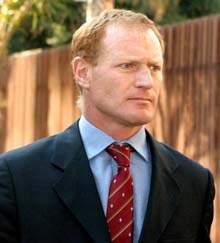 Richard Rouget, the French-born South-African Bancroft employee who is the primary source for the New York Times article cited below, let’s the company’s PR mask fall momentarily and reveals a 19th century colonial mentality when he refers to his Somali adversaries as “savages”.