Vanity Fair: On September 17, several hundred people marched to an empty square in Lower Manhattan—a place so dull that the bankers and construction workers in the neighborhood barely knew it was there—and camped out on the bare concrete. They would be joined, over the next two months, by thousands of supporters, who erected tents, built makeshift institutions—a field hospital, a library, a department of sanitation, a free-cigarette dispensary—and did a fair amount of drumming.
It was easy to infer from the signs protesters carried what the grievances that gave rise to Occupy Wall Street were: an ever widening gap between rich and poor; a perceived failure by President Obama to hold the financial industry accountable for the crisis of 2008; and a sense that money had taken over politics.
The amazing thing about the Occupy Wall Street movement is not that it started—America was full of fed-up people at the end of 2011—but that it worked. With a vague agenda, a nonexistent leadership structure (many of the protesters were anarchists and didn’t believe in leaders at all), and a minuscule budget (as of December, they’d raised roughly $650,000—one-eighth of Tim Pawlenty’s presidential campaign haul), the occupiers in Zuccotti Park nevertheless inspired similar protests in hundreds of cities around the country and the world. What they created was, depending on whom you asked, either the most important protest movement since 1968 or an aimless, unwashed, leftist version of the Tea Party.
Occupy Wall Street quickly attracted intellectual celebrities—and, eventually, actual celebrities—but its founders were an unlikely assortment of stifled activists, part-time provocateurs, and people who simply had no place else to turn. There was Kalle Lasn, who ran an obscure Vancouver-based magazine called Adbusters with just 10 employees and an anti-consumerist agenda. Another key organizer, Vlad Teichberg, was a 39-year-old former derivatives trader who spent his weekends and evenings producing activist video art. David Graeber, an anthropologist at the University of London, quickly emerged as the movement’s intellectual force. If he was known at all, it was not for his anarchist theories or for his research into the nature of debt, but for being let go by Yale in 2005—in part, he believes, on account of his political leanings.
It is unclear whether the impact of Occupy Wall Street will be lasting or brief. But the story of how these unlikely organizers—and the activists, students, and homeless people who joined them—managed to seize control of the national conversation is remarkable, miraculous even. This is how it happened.
Author Archives: News Sources
Debate: The UN should admit Palestine as a full member state
An edited version of this debate can be heard on this NPR page.
Oil industry sees China winning, West losing from Iran sanctions
Reuters reports: As the European Union prepares to ban Iranian oil and the United States turns the screw on payments, oil executives and policymakers say China and Russia stand to gain the most and Western oil firms and consumers may emerge the biggest losers.
Iran will continue to sell much the same volume of oil – 2.6 million barrels per day or around 3 percent of world supply – but almost all of it will flow to China, they reason. And being pretty much Iran’s only remaining customer, Beijing will be able to negotiate a much reduced price.
The EU will ban Iranian oil from July. The United States plans sanctions on Iran’s central bank and possibly its shipping firm. European headquartered oil firms such as France’s Total and Royal Dutch Shell have already abandoned Iranian oil purchases or are in the process of doing so.
Japan and South Korea have signaled they may reduce purchases of Iranian oil to comply with U.S. sanctions designed to put pressure on Tehran over its nuclear program.
That leaves a growing number of buyers competing for alternative supplies. Inevitably attention has turned to Saudi Arabia, the world’s biggest exporter and the only country that can quickly increase oil output and help the West avoid a price spike that would deal a severe economic blow.
Meanwhile, the Financial Times reports that “Iran’s parliament could ban oil exports to Europe as early as next week, in a move that could hit economically weak southern European countries.” The EU recognizes that Greece, Spain and Italy need several months to secure alternative supplies to the ones they now rely on from Iran.
Iraq makes sanctions against Iran ineffective
Nima Khorrami Assl writes: The US and EU have announced new sanctions in the hope of persuading Iran to abandon its alleged nuclear weapons programme, though how effective these will be is questionable. China, India, Russia, Turkey, Japan, and South Korea have already refused to go along with the new measures. Iran also has the means to evade the sanctions – through its proximity to Iraq.
Iran has often been singled out as the main beneficiary of the US-led invasion of Iraq, as well as the biggest threat to Iraq’s stability in the post-Saddam era. Iran’s uninterrupted support for Shia militia groups in southern Iraq, particularly the Mahdi army, is seen as one indication of its involvement in Iraqi politics and its ability to cause problems for adversaries.
And yet Iran’s key interest in Iraq is less about realpolitik than about trade. Iran is one of Iraq’s most important regional economic partners, with an annual trade volume between the two sides standing at $8bn to $10bn (£5bn to £6.4bn). However, it is Iraq’s 910-mile border with Iran, and therefore its geographical suitability as a smuggling hub for sanctioned goods, which is of paramount importance to Iran at present.
Until 2010, most of the sanctioned goods smuggled into Iran came through the UAE and Oman. Backed by the Iranian government and the Revolutionary Guards (IRGC), “small-size” strategic goods, including aircraft components and sophisticated electronic equipment, were smuggled into the Iranian islands of Kish and Qeshm from Dubai, Ras al-Khaimah and Madha. Since the beginning of 2010, however, the US government has put immense pressure on the Emirati and Omani governments to curb smuggling, threatening that failure to do so would cost them access to US markets and technology.
Wary of this, the UAE and Oman have both made the obvious choice and cracked down on smuggling between the southern and northern edges of the Gulf. In response, the Iranian government has turned its attention to Iraq in order to bypass western sanctions, and has imposed restrictions on Iranian businesses in the Gulf.
So far, most of the smuggling through Iraq has taken place in the mountainous Kurdish regions. For instance, since June 2010, when the US and EU imposed tougher sanctions on Iran’s gasoline imports, hundreds of millions of dollars in crude oil and refined products from the Kurdish region, Kirkuk, and Baiji have been smuggled to Iran on a daily basis.
Iran oil halt ‘would raise price 30 per cent’
Al Jazeera reports: The International Monetary Fund (IMF) has warned that global crude prices could rise as much as 30 per cent if Iran halted oil exports as a result of US and European Union sanctions.
If Iran halts exports to countries without offsets from other sources, it would likely trigger an “initial” oil price jump of 20 to 30 per cent, or about $20 to $30 per barrel, the IMF said in its first public comment on a possible Iranian oil supply disruption.
The IMF highlighted the risks of rising tensions over Iran sanctions in a note on Wednesday sent to deputies from G20 countries who met in Mexico City last week.
The price impact caused by a cut in Iranian exports could be exacerbated by below average oil stocks in many countries, the result of tight oil market conditions through much of last year, the IMF said.
Iran to restart IAEA nuclear talks
The Guardian reports: Iran is due to open talks with UN nuclear inspectors on Sunday in an attempt to allay their suspicions of a covert Iranian weapons programme, the first such discussions in more than three years.
The three days of meetings in Tehran between Iranian nuclear officials and a team from the International Atomic Energy Agency (IAEA) represent the only diplomatic progress in more than a year, as tensions mount over Iran’s nuclear programme and western attempts to cut off the country’s oil trade.
Diplomats familiar with the visit said that the IAEA team would seek assurances that they will be able to interview key Iranian scientists suspected of past involvement in weapons research, visit sensitive sites and see documents concerning the procurement of dual-use technology. The Iranian government denies it is seeking to make nuclear weapons, insisting its research is for scientific or civil power-generating purposes.
Diplomats and analysts have played down prospects of a quick breakthrough.
If the talks were to collapse, the pressure on Iran could intensify. The IAEA has warned that Tehran could be referred to the UN security council for possible further punitive measures if it fails to cooperate.
Video: Israel to become biggest jailer of refugees
Video: Egypt: A year on and still unresolved?
Libyan militias accused of torture
The Guardian reports: Three months after the killing of Muammar Gaddafi, concerns are mounting about the mistreatment and torture of prisoners held by Libyan militiamen who are operating beyond the control of the country’s transitional government, as well as by officially recognised security bodies.
Amnesty International warned that prisoners from Libya and other African countries have been subject to abuse. The warning comes against a background of anxiety in western capitals about Tripoli’s failure to tackle security and political issues.
This week’s fighting in Bani Walid, a former stronghold of the Gaddafi regime to the south of the capital, has fuelled fears that tribal rivalries and armed clashes could explode into a wider conflict. Last week, the president of the National Transitional Council, Mustafa Abdel-Jalil, was mobbed by demonstrators in his Benghazi office.
Ian Martin, the UN’s special envoy to Libya, told the security council on Wednesday that the Bani Walid fighting did not indicate a resurgence of pro-Gaddafi sentiment, but added this warning: “The former regime may have been toppled, but the harsh reality is that the Libyan people continue to have to live with its deep-rooted legacy.”
Navi Pillay, the UN human rights chief, said that more than 8,500 detainees were being held by militia groups in about 60 centres.
The aid agency Médecins Sans Frontières has added its voice to the chorus of concern by announcing that it had halted work in the coastal city of Misrata because staff were being asked to patch up detainees during torture sessions. “Patients were brought to us in the middle of interrogation for medical care, in order to make them fit for more interrogation,” said MSF’s Christopher Stokes. “This is unacceptable. Our role is to provide medical care to war casualties and sick detainees, not to repeatedly treat the same patients between torture sessions.”
Amnesty said its delegates in Libya had met detainees in and around Tripoli, Misrata and Gheryan who showed marks indicating they had recently been tortured. Injuries included open wounds on the head, limbs, back and elsewhere.
Oliver Miles writes: Since I returned from a week in Libya a few days ago there have been some bad headlines, for example “Protesters storm Libyan government HQ in Benghazi” and “Gaddafi loyalists seize Libyan town”. It was my first visit since the revolution, and I have already written about my impressions, which were favourable and sometimes inspiring. Was I wrong?
First, a word about the media situation. Foreign correspondents move freely in Libya. Ordinary Libyans have found their voice, and there is a flood of new Arabic language newspapers, which have yet to prove themselves. The National Transitional Council is lamentably weak in strategic communication and has failed to make public even basic facts like the names and number of members.
As a result, news stories have to be looked at critically. While I was there I heard two stories that never made the media: two people “executed” in central Tripoli, quite close to my hotel, and four international officials kidnapped in the far south. Neither story turned out to be accurate – the “execution” was of two would-be carjackers who happened to pick on a car full of armed militia, and the “kidnapping” was the temporary detention of four foreigners driving in an unmarked car in the desert without papers.
Bani Walid, the town reportedly seized by Gaddafi loyalists, is quite remote. It is also untypical, perhaps unique in Libya, in that its inhabitants are virtually all from one tribe. Since the first reports of what happened there a day or two ago, a more complicated story has begun to emerge (as reflected in more recent reports). A fighter with the revolutionary forces had claimed that Gaddafi loyalists were flying green flags in the central town, but it now appears that this is not true. We are left with a serious breakdown of law and order in which at least four people were killed.
The transitional government will only be in power until the summer. If plans work out it will then hand over to an elected government. It is not even a lame duck, because it never walked on two legs. It faces many interlinked problems, the most urgent being security, humanitarian relief and kickstarting the economy.
The Arab Spring, U.S. foreign policy, the Status-Quo Lobby and the Dream Palace of the Zionists
Issandr El Amrani writes: I’d like to touch upon America and Egypt, because I’ve seen a lot of hand-wringing in American newspapers about the future of that relationship and a sense of misplaced buyers’ remorse about the Egyptian revolution – misplaced because the US had little to do with the revolution, and because it is wrong-headed thinking about an unstoppable, irreversible event.
Generally speaking, the American foreign policy establishment is stuck on Egypt. It is having a hard time imagining a different Middle East. Its path of least resistance is banking on their financial and political relationship with the generals now in charge and maintaining the ability to project power in the region that it has had since 1945 to some extent and since 1990 in particular. If it continues on this path, which is unfortunately likely, because of the dearth of imagination in a foreign policy elite that has grown lazy in its imperial thinking, and because of the dire state of American politics, it will fail.
The most important thing you can do about Egypt right now is be patient and not try to force things or maintain a system that Egyptians clearly want to change. This is what worries me the most: that the US will choose to encourage the perpetuation of military rule in Egypt, as people like Jon Alterman have already subtly advocated and many others in Washington are discreetly but more vigorously doing in games of “armchair generals”. They are the Status Quo Lobby.
America is a country that has grown complacent in its assumptions about the Middle East and its politics, and too wedded to the idea of having an imperial role in the region (of which CENTCOM is the embodiment) and the world more generally. For several years I have advocated an American withdrawal from the Arab world. The Arab uprisings have made this all the more urgent, although it is a delicate, difficult, and potentially dangerous matter. But that’s a debate for another day.
Let me focus now on a few pieces by people who have written very unwise things, and who are the other bigpart of the problem with American foreign policy in the region: those who primarily see US Middle East policy through the lens of Israel.
Robert Satloff, a leading hack of the Israel lobby think tank WINEP, and Eric Trager have a piece in the WSJ you can read here. A few years ago Satloff was all into pressuring Egypt on democracy issues, but now has buyer’s remorse – confirming my long-held suspicion that people like him and Elliott Abrams (and many others) were only tactically interested in democracy promotion as a manner to wield greater influence over the Mubarak regime. Now that Islamists have won a majority in Egypt’s parliament, they are shitting their proverbial pants.
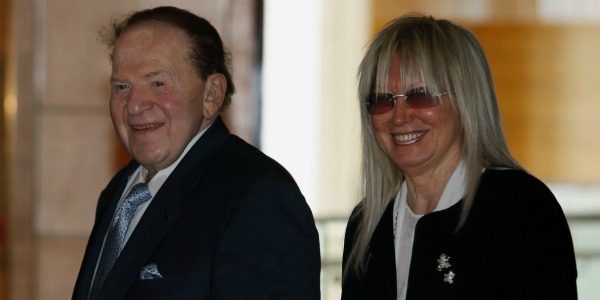
The Adelson axis of influence

Neocon Zionist casino boss, Sheldon Adelson and his wife, Miriam, are the money behind Newt Gingrich — and a prime force in the colonization of Greater Israel.
Muckety has created a useful graphic to show the many strands of the Adelson empire.
Sopa and Pipa: they’ll be back
Bill McGeveran writes: At the end of a Hollywood blockbuster, when the vanquished villain declares that he should have won and that we haven’t seen the last of him, we all know what it means: the sequel is coming.
So, Hollywood’s top lobbyist, former Senator Chris Dodd, followed a familiar script last week after sweeping online protests derailed the Stop Online Piracy Act (Sopa) and Protect IP Act (Pipa), a pair of legislative proposals backed by movie and music distributors. Dodd snarled that his opponents had misled the public and vowed to continue pressing for new laws to combat unauthorized copying of intellectual property. Coming soon to a congressional hearing room near you, it’s Sopa II: Revenge of the Content Industries.
While the US Senate and House of Representatives deferred immediate action on the bills, few doubt that Congress will debate some form of legislation aimed at overseas web sites engaged in intellectual property (IP) infringement, probably later this year. Even Dodd’s enemies acknowledge that these sites pose a problem, though many question industry estimates about its scope.
Those of us who opposed the excesses of Sopa and Pipa need to prepare for the next round. Sponsors have already abandoned the bills’ most objectionable feature, which interfered with the domain name addressing system in an attempt to cut off access to “pirate” sites – a measure critics charged would “break the internet”. At a minimum, Congress must address three other problems as well.
Egypt’s uprising continues to be a work in progress
Issandr El Amrani writes: There is a dramatic video made by Egyptian activists that has been circulating online lately. In it, actors play the roles of some of the major protagonists of the Egyptian uprising and its aftermath: Hosni Mubarak, the military, the Muslim Brotherhood, the Salafists, the liberals, and of course the courageous activists who took to the streets a year ago and toppled a “Pharaoh”.
The narrative shows the military turning the political players against each other: the Salafist against the activist, the Muslim Brother against the Salafist, the liberal against the Islamists and so on. Later, the politicians do nothing as the military beats the activist: they are too busy with ballot boxes, and finish by fighting each other for an empty throne. The video ends with the words, “All of you sold Egypt.”
For some of the revolutionaries who participated in last year’s uprising, which began a year ago today, this serves as an accurate depiction of their betrayal at the hands of, well, everybody. The Muslim Brotherhood, which did not even back protests last January, has won nearly half the seats in parliament and is set to be the key negotiator of the military’s handover of power to a civilian government by next July.
Since last October, over 100 protestors have been killed in clashes with army and police, even as elections were under way, and very few politicians joined the protestors’ call for an immediate end to the rule of the Supreme Council of the Armed Forces (SCAF). Even as the anniversary of January 25 was being prepared and the same revolutionaries called for a “second revolution,” the leading political parties were calling for a calm celebration of the revolution and trust in parliament to continue to transition process.
Meanwhile, the SCAF added insult to (grievous) injury by announcing it would distribute a “January 25 medallion” to every wounded revolutionary and every soldier drafted into military service since the uprising.
So is this what the Egyptian revolution of 2011 has come to, a deal with Islamists and the military to stabilise the country, repress democracy activists and keep the country going pretty much as it used to, except with a more religious and overtly militaristic veneer?
Not so fast. Implicit in the video is not only disappointment with Egypt’s elites, but with its people. In recent months I have often heard the complaint that Egyptians are all too easily manipulated by the military and Islamist politicians, and too eager for a return to normality. It may be true to some extent – in autocracies and democracies alike public opinion is manipulated – but the bottom line of this worldview is a dead-end idea: that the people betrayed the revolution. It is an idea with no future because if not for the people, in whose name are the revolutionaries speaking?
Castro’s take on the U.S. presidential race
In his regular op-ed, Fidel Castro writes:
I must note that, going by what everyone is saying, that the selection of a Republican candidate to aspire to the presidency of this globalized and far-reaching empire is, in its turn – I am serious – the greatest competition of idiocy and ignorance that I have ever heard. As I have things to do, I cannot devote any time to the subject. I already knew it would be like that.
Earlier this month Castro lamented that there isn’t a “robot capable of governing the United States and preventing a war which would put an end to human life.” Were the situation otherwise, he wrote:
I am sure that 90% of U.S. citizens registered, especially Latinos, Blacks and a growing number of those in the middle class, the impoverished, would vote for the robot.
Video: Will the West interfere in Syria?
How the NYPD trains its officers to fear Islam
The New York Times reports: Ominous music plays as images appear on the screen: Muslim terrorists shoot Christians in the head, car bombs explode, executed children lie covered by sheets and a doctored photograph shows an Islamic flag flying over the White House.
“This is the true agenda of much of Islam in America,” a narrator intones. “A strategy to infiltrate and dominate America. … This is the war you don’t know about.”
This is the feature-length film titled “The Third Jihad,” paid for by a nonprofit group, which was shown to more than a thousand officers as part of training in the New York Police Department.
In January 2011, when news broke that the department had used the film in training, a top police official denied it, then said it had been mistakenly screened “a couple of times” for a few officers.
A year later, police documents obtained under the state’s Freedom of Information Law reveal a different reality: “The Third Jihad,” which includes an interview with Commissioner Raymond W. Kelly, was shown, according to internal police reports, “on a continuous loop” for between three months and one year of training.
During that time, at least 1,489 police officers, from lieutenants to detectives to patrol officers, saw the film.
News that police trainers showed this film so extensively comes as the department wrestles with its relationship with the city’s large Muslim community. The Police Department offers no apology for aggressively spying on Muslim groups and says it has ferreted out terror plots.
But members of the City Council, civil rights advocates and Muslim leaders say the department, in its zeal, has trampled on civil rights, blurred lines between foreign and domestic spying and sown fear among Muslims.
“The department’s response was to deny it and to fight our request for information,” said Faiza Patel, a director at the Brennan Center for Justice at New York University Law School, which obtained the release of the documents through a Freedom of Information request. “The police have shown an explosive documentary to its officers and simply stonewalled us.”
At Davos, a big issue is the have-lots vs. the have-nots
The New York Times reports: A year ago at the World Economic Forum here, Jamie Dimon, the chief executive of JPMorgan Chase, lashed out at what he saw as unfair criticism of the world’s financial wizards.
“I just think this constant refrain, ‘bankers, bankers, bankers’ — it’s just a really unproductive and unfair way of treating people,” he said. “People should just stop doing that.”
After several years of financial crisis, during which the word banker had become a catchall epithet for the undeserving rich, the global economy appeared to be on the mend. Perhaps the bankers, and the other millionaires and billionaires, could wear their pinstripes with pride again and get back to business as usual.
Yet even as Mr. Dimon was speaking, a new wave of anger was welling up, one that, over the last year, would shake up old assumptions about the ultrarich, the middle class and the growing gulf that separates them.
Today, the gap between the haves and the have-nots is no longer just a rallying cry to incite anticapitalist advocates. It has become a mainstream issue, debated openly in arenas where the primacy of laissez-faire capitalism used to be taken for granted and where talk of inequality used to be derided as class warfare.
In the United States, the issue surfaced when protesters proclaimed they were the “99 percent” of the population who were paying for the sins of the wealthy “1 percent,” taking their grievances directly to the epicenter of capitalism. The Occupy Wall Street protests, which began in New York, spread to other cities around the United States and across the world.
In Spain, thousands of “indignados” converged on Madrid and other cities to vent their frustration over mass unemployment and government austerity measures. In the Arab world, a wave of unrest that toppled governments began with a protest over a lack of economic opportunities in Tunisia.
And now, as the Republican Party chooses a nominee for the United States presidential election, rivals of one candidate, Mitt Romney, are rounding on him over his wealth and his background in the private equity business.
Meanwhile, the World Economic Forum, in a recent report, named the growing income divide as one of the biggest risks facing the world in the years to come.
The West Bank: Whose Promised Land?
“The West Bank: Whose Promised Land?”
Esti Marpet made this film about the Israeli occupation of the West Bank almost 30 years ago. The settlement project was already gaining pace even though at that time there was only a fraction of the population that now numbers over 700,000.
What strikes me about the people represented in this film is this: the two sides do not simply reflect an imbalance in power.
I don’t hear the Palestinians denying the humanity of the Israelis. They are angry but not filled with contempt.
The settlers on the other hand express the purest contempt, denying the Palestinians’ rights, their history, and their existence as human beings. This contempt is so deeply embedded in their outlook that it buries the Palestinians alive.
Anyone who dehumanizes their adversary in this way, cannot do so without sacrificing their own humanity.