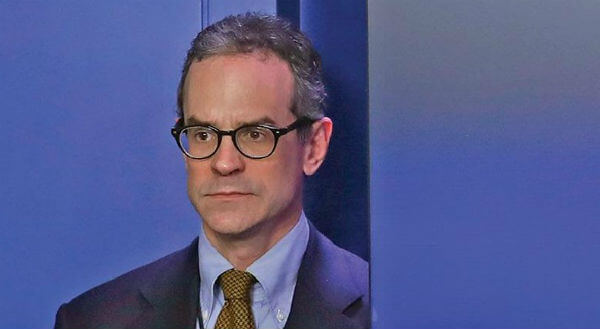
The Guardian reports: A prominent Kremlin critic and Russian opposition figure who has been in a coma since last week has been diagnosed with “acute poisoning by an undefined substance”, his wife has said.
Vladimir Kara-Murza, 35, who works for Mikhail Khodorkovsky’s Open Russia foundation, had been in Russia to screen a documentary film about his friend Boris Nemtsov, the opposition leader and former deputy prime minister who was gunned down near the Kremlin in 2015.
Kara-Murza was about to fly back to the US for his daughter’s eighth birthday when he woke up at 5am on Thursday with an accelerated heartbeat and difficulty breathing. He remained in a stable but critical condition on Tuesday in a medically induced coma, his wife, Yevgeniya, said.
Kara-Murza was taken to the same hospital in 2015, when he was diagnosed with acute kidney failure in connection with poisoning and only just survived. He later said it had been an attempt to kill him for his political activities. The symptoms were the same in this latest attempt on his life, his wife told the Guardian. [Continue reading…]
Author Archives: News Sources
Russia’s not-so-hot Euro-election subversion strategy is failing in France
Christopher Dickey writes: If Vladimir Putin’s keyboard commandos are hoping to hack up French presidential elections the way they did America’s, they are, well, a little off their game. And their more-than-willing tool, Julian Assange, the Australian anarchist who brought us WikiLeaks, appears to be getting a little antsy.
It’s been a week or so since Assange announced he had pirated cables and emails about the three most prominent candidates, but nobody in France paid much—or any—attention. The cables were old, had been well sifted in the past, and there were other much bigger, fresher, and sexier scandals emerging from more conventional sources.
So Russia’s state-subsidized news sites tried to give Assange a boost. Sputnik, straining to write something entertaining about such a non-story, cobbled together a piece on Feb. 2 from various Twitter feeds mocking those who suggested the latest WikiLeaks announcement was part of a Russian democracy-disrupting conspiracy like the alleged one that made U.S. President Donald Trump’s election resemble a bad serialized version of The Manchurian Candidate.
“WikiLeaks vs. French Presidential Hopefuls: Who is the real ‘Kremlin Agent’?” read the headline. The conclusion, of course, none of the above.
But in the days since, it’s begun to look more and more as if Assange, at least, wants rather desperately to sway the elections, which are now three months away, and he’s doing his best to focus his leaks on the candidates most likely to face far-right-wing populist nationalist Marine Le Pen in the final showdown for the French presidency. [Continue reading…]
Authoritarians have no trouble finding the people they need to carry out their acts of cruelty
Chris Edelson writes: A week ago, men and women went to work at airports around the United States as they always do. They showered, got dressed, ate breakfast, perhaps dropped off their kids at school. Then they reported to their jobs as federal government employees, where, according to news reports, one of them handcuffed a 5-year-old child, separated him from his mother and detained him alone for several hours at Dulles airport.
At least one other federal employee at Dulles reportedly detained a woman who was traveling with her two children, both U.S. citizens, for 20 hours without food. A relative says the mother was handcuffed (even when she went to the bathroom) and threatened with deportation to Somalia.
At Kennedy Airport, still other federal employees detained and handcuffed a 65-year-old woman traveling from Qatar to visit her son, who is a U.S. citizen and serviceman stationed at Fort Bragg, N.C. The woman was held for more than 33 hours, according to the New York Times, and denied use of a wheelchair.
The men and women who work for the federal government completed these and other tasks and then returned to their families, where perhaps they had dinner and read stories to their children before bedtime.[Continue reading…]
Iran’s supreme leader thanks Trump for showing America’s ‘true face’
The New York Times reports: With Iran calibrating how to deal with President Trump, its supreme leader, Ayatollah Ali Khamenei, caustically thanked the new American leader on Tuesday for revealing “the true face” of the United States.
“We are thankful to this newcomer,” Ayatollah Khamenei told Iranian Air Force commanders, according to a report posted on his official website.
Iranian officials had been showing caution since Mr. Trump took office last month. Despite expressing anger at his policies and comments, even hard-liners have taken care not to provoke the new American president.
But on Tuesday, it became seemingly apparent to Iran’s leaders that Mr. Trump is not easily ignored. After Ayatollah Khamenei spoke out sarcastically about Mr. Trump, others expressed worries. [Continue reading…]
Up to 13,000 secretly hanged in Syrian jail, says Amnesty
The Guardian reports: As many as 13,000 opponents of Bashar al-Assad were secretly hanged in one of Syria’s most infamous prisons in the first five years of the country’s civil war as part of an extermination policy ordered by the highest levels of the Syrian government, according to Amnesty International.
Many thousands more people held in Saydnaya prison died through torture and starvation, Amnesty said, and the bodies were dumped in two mass graves on the outskirts of Damascus between midnight and dawn most Tuesday mornings for at least five years.
The report, Human Slaughterhouse, details allegations of state-sanctioned abuse that are unprecedented in Syria’s civil war, a conflict that has consistently broken new ground in depravity, leaving at least 400,000 people dead and nearly half the country’s population displaced. [Continue reading…]
Reuters reports: Syrian President Bashar al-Assad said U.S. President Donald Trump prioritizing the fight against jihadists led by Islamic State was promising although it was too early to expect any practical steps, state news agency SANA reported on Tuesday.
The Kremlin, Assad’s most powerful ally, said Trump and Russian President Vladimir Putin discussed setting up “genuine coordination” in the fight against Islamic State and “other terrorist groups” in Syria during a phone call last month.
Assad was quoted by SANA as telling a group of Belgian reporters that Trump’s position was promising. “I believe this is promising but we have to wait and it’s too early to expect anything practical,” he said. Assad was also quoted as saying that U.S-Russian cooperation in stepping up the fight against the militants would have positive repercussions. [Continue reading…]
Trump discovers, to his shock, he can be held accountable for what he says
The Washington Post reports: Throughout Donald Trump’s campaign and now into the first weeks of his presidency, critics suggested that he cool his incendiary rhetoric, that his words matter. His defenders responded that, as Corey Lewandowski said, he was being taken too “literally.” Some, like Vice President Pence, wrote it off to his “colorful style.” Trump himself recently explained that his rhetoric about Muslims is popular, winning him “standing ovations.”
No one apparently gave him anything like a Miranda warning: Anything he says can and will be used against him in a court of law.
And that’s exactly what’s happening now in the epic court battle over his travel ban, currently blocked by a temporary order set for argument Tuesday before a three-judge panel of the U.S. Court of Appeals for the 9th Circuit.
The states of Washington and Minnesota, which sued to block Trump’s order, are citing the president’s inflammatory rhetoric as evidence that the government’s claims — it’s not a ban and not aimed at Muslims — are shams.
In court papers, Washington and Minnesota’s attorneys general have pulled out quotes from speeches, news conferences and interviews as evidence that an executive order the administration argues is neutral was really motivated by animus toward Muslims and a “desire to harm a particular group.” [Continue reading…]
The march to impeachment
Robert Kuttner writes: There are already plenty of grounds to impeach Donald Trump. The really interesting question is when key Republicans will decide that he’s more of a liability than an asset.
If Trump keeps sucking up to Vladimir Putin, it could happen sooner than you think.
The first potential count is Trump’s war with the courts. The Supreme Court is likely to give expedited review to the order by the 9th Circuit upholding Judge James Robart’s order that tossed out Trump’s bans on immigrants or refugees from seven countries, even permanent US residents and others with valid green cards.
It’s encouraging that the agencies of government, such as the State Department and the Department of Homeland Security, immediately deferred to the court order, not to a president who thinks he can govern by decree.
But suppose the Supreme Court finds against Trump? Will he try to defy the high court? That would be a first-class impeachable offense. Even Richard Nixon deferred to a Supreme Court order to turn over the Watergate tapes.
A second category of impeachable offense involves his mixing his personal profits with his official duties as president. That describes his bizarre romance with Vladimir Putin, who presides over a nation where Trump has extensive business interests, as well as Trump’s double standards in determining which Muslim nations were exempted from his executive order. [Continue reading…]
Protests, phone calls, and mobilization are making a difference, showing that resistance against Trump works
Chris Ruddy, the chief executive of Newsmax Media and an old friend of Trump, told the New York Times: “Now he’s so caught up, the administration is so caught up in turmoil, perceived chaos, that the Democrats smell blood, the protesters, the media smell blood.”
Matthew Yglesias writes: It’s easy to miss amid Donald Trump’s frenetic pace of activity and nonstop media coverage, but the most important story in American politics right now isn’t about what Trump is doing: It’s that the opposition is working.
The millions of people who marched in Washington and other cities around the world on inauguration weekend and then demonstrated again at airports the following weekend are making a concrete difference in the world. So are the tens of thousands who’ve called members of Congress or showed up in person at their events.
Trump is getting things done, but all presidents do that. Look at what he’s not getting done. A Republican-controlled Congress bowed to public outrage over an attempt to water down an ethics office. Trump dramatically downscaled his own executive order barring entry to the United States from seven Muslim-majority countries. He’s having unprecedented difficulty getting his Cabinet nominees confirmed, even though the Senate’s rules have changed to make confirmations easier than ever. Conservatives in Congress have put their big plans to privatize Medicare and public lands on hold. And the drive to repeal the Affordable Care Act is running into very big trouble.
None of this is based on the discipline and self-restraint on the part of the White House. It’s thanks to bold acts of resistance. The result is lives have been saved, many more lives have been demonstrably improved, and the proven template for future success has been created.
Not only have the resisters already markedly altered the trajectory of public policy, they have also begun to make a difference in each other’s lives and their own conceptions of themselves. And this is the greatest threat to the Trump movement.
For the moment, Trumpism holds the vast preponderance of political power despite its thin electoral base. That means Trumpism will make progress, even in the face of effective resistance. But for the positioning to hold, Trump needs to convince his opponents that they are failing, so the prophecy will become self-fulfilling.
That is why it’s crucial for Trump’s opponents to be aware that protesters’ efforts are not futile. We know they can succeed, because they are already succeeding. What’s needed is for Trump’s critics to continue to resist the siren song of sectarianism and keep at it. If they do, Trumpism will be buried. [Continue reading…]
Government by white nationalism is upon us

Jamelle Bouie writes: Before the election, when Donald Trump was still just an unlikely presidential nominee, a conservative under the pseudonym “Publius Decius Mus,” wrote a remarkable essay in support of Trump. The pseudonym alone gave a glimpse into the writer’s thinking. The real-life Decius was a Roman consul who sacrificed himself to the gods for the sake of his embattled army. And in the same way, our internet Decius called on conservatives to embrace Trump — to back the vulgarian who mocked their ideals — for the sake of saving the country as they knew it. “The ceaseless importation of Third World foreigners with no tradition of, taste for, or experience in liberty means that the electorate grows more left, more Democratic, less Republican, less republican, and less traditionally American with every cycle,” he wrote, hailing the real estate mogul as the only figure who understood the stakes, who would beat back these “foreigners” and preserve America’s democratic tradition as Decius saw it. Not a tradition of pluralism, but one of exclusion, in which white Americans stand as the only legitimate players in political life. A dictatorship of the herrenvolk.
“Decius” — since revealed as Michael Anton, a former George W. Bush administration speechwriter — now works for President Trump. And he isn’t the only figure in the Trump circle who holds these views. Alabama Sen. Jeff Sessions, his former aide Stephen Miller, and right-wing media mogul Stephen Bannon occupy prominent positions in the present administration. Like Anton, they hold deep antagonism to immigrants and immigration, opposition to their equality within American society, and nostalgia for a time when prosperity was the province of the native-born and a select few “assimilated” immigrants. But these aren’t just ideologues with jobs in a friendly administration. They are the architects of Trump’s policy, the executors of a frighteningly coherent political ideology.
What is that ideology? Most Americans think of “racism” in individualized terms. To call someone a “racist,” then, is to pass judgment on his or her character — a declaration that this person doesn’t belong in polite society. It’s why, when faced with the accusation, Americans often rush to deny any prejudice. I don’t have a racist bone in my body, goes the cliché. But individualized prejudice is just one way to think of racism. There’s also institutional bias or systemic outcomes — the things that lead critics to deem the criminal justice system as “racist.” And beyond the material, there’s racism as ideology — a structured worldview defined by support for race hierarchy and racial caste. [Continue reading…]
Russia’s arc of influence from Ukraine to Libya threatens Europe
Politico reports: When EU leaders began wrestling with how to confront Russia over its military intervention in Ukraine, there seemed little connection between events in Crimea and Donbas, the raging conflict in Syria and the outset of a second civil war in Libya.
As they gather Friday for an informal European Council summit on the island of Malta, a striking new geopolitical landscape has come clearly into focus: a crescent of Russian influence, arching from Donetsk in the east to Tripoli in the west.
Having cemented Russia’s role as the dominant belligerent against a pro-Western Ukraine, where the half-frozen conflict in the east has flared up in the past week, and in Syria where a fragile ceasefire has taken hold with Moscow’s ally Bashar al-Assad still in power, President Vladimir Putin has turned his attention to Libya.
For Europe, this raises the worrying prospect that Russia could gain control over the flow of migrants across the central Mediterranean, giving Putin leverage to destabilize Europe by unleashing a flood of refugees like the exodus from Syria that caused a crisis in Europe in 2015.
“It would have a tap to open when it needs something from us,” warned one Central European diplomat. [Continue reading…]
Trump wants to push back against Iran, but Iran is now more powerful than ever
The Washington Post reports: President Trump’s tough talk on Iran is winning him friends in the Arab world, but it also carries a significant risk of conflict with a U.S. rival that is now more powerful than at any point since the creation of the Islamic republic nearly 40 years ago.
With its warning last week that Iran is “on notice,” the Trump administration signaled a sharp departure from the policies of President Barack Obama, whose focus on pursuing a nuclear deal with Iran eclipsed historic U.S. concerns about Iranian expansionism and heralded a rare period of detente between Washington and Tehran.
Many in the region are now predicting a return to the tensions of the George W. Bush era, when U.S. and Iranian operatives fought a shadow war in Iraq, Sunni-Shiite tensions soared across the region and America’s ally Israel fought a brutal war with Iran’s ally Hezbollah in Lebanon.
Except that now the United States will be facing down a far stronger Iran, one that has taken advantage of the past six years of turmoil in the Arab world to steadily expand its reach and military capabilities. [Continue reading…]
The Guardian reports: Theresa May has resisted pressure to re-examine the viability of the international nuclear deal with Iran from her Israeli counterpart, Benjamin Netanyahu, who urged her to follow Donald Trump’s example by imposing fresh sanctions.
May also said only a two-state solution could bring about peace in the Middle East, and her spokeswoman said the extension of illegal settlements made a solution more difficult.
Netanyahu had said “responsible” countries should follow Trump in imposing new sanctions against Iran after it test-fired a ballistic missile. But May expressed her concern about Iran’s actions without saying there was a need for sanctions. [Continue reading…]
U.S. developing counter-propaganda initiative targeting Russia
The Daily Beast reports: President Trump may be continuing his public pursuit for Vladimir Putin’s affections. But behind the scenes, the United States is quietly preparing to wage an information war against Russia.
The 2016 presidential campaign alerted the public to the concept of information as a weapon — and to its incredible effectiveness when used just right. From WikiLeaks to RT to Sputnik, the Russian government tried to sow discord among Americans, according to a recent U.S. intelligence report. To some extent it succeeded, by facilitating public skepticism of American institutions and the press—and undermining Hillary Clinton’s campaign.
“Russia is trying to create civic chaos, questions about what is reliable, and mistrust about institutions,” said Karl Altau, director of the Joint Baltic American National Committee, which advocates against Russian misinformation. “It’s a national threat. This is something responsible citizens need to be aware of.”
Russian intervention in the U.S. democratic process caught many American policymakers dozing at the wheel, observers say. But the dramatic nature of the intelligence community’s findings, both before and after Trump’s election, has woken them up.
“This was not paid much attention to until the Hillary Clinton [presidential campaign was upended by hacked and leaked emails] last summer,” said Donald Jensen, a senior fellow at the Center for European Policy Analysis, a leading think-tank on Russian information warfare. “If you went around town last spring and asked senators and lawmakers if this is a problem, they would have said ‘no’… People are playing catch-up.”
Without fanfare, the catch-up is slowly beginning. The United States government is spending tens of millions of dollars to counter propaganda from Vladimir Putin and other state actors, a move slipped into the thousands of pages of the annual defense policy bill passed by Congress. [Continue reading…]
Trump should not be allowed to speak in UK parliament, says Speaker
The Guardian reports: Donald Trump is unfit to address MPs, according to the Speaker of the House of Commons who said that he would refuse to invite the US president to speak at Westminster because of parliament’s long held opposition “to racism and to sexism”.
John Bercow warned that the opportunity to speak in the prestigious Westminster Hall during a state visit “is not an automatic right, it is an earned honour” in an extraordinary intervention that divided MPs and annoyed No 10.
The unprecedented step caused many MPs to pour praise on Bercow, but also triggered an angry response in parts of government with ministers privately claiming that he had overstepped the mark.
Senior figures accused the Speaker of grandstanding – while his counterpart in the House of Lords, Lord Fowler, was understood to be irritated by the unexpected statement.
Bercow, whose role is non-political, told MPs that he did not have the power to block the state visit invitation extended to Trump by Theresa May, but made clear that he would use his authority to prevent what is considered one of the high points of the official trip.
The speaker made clear that he was always against the idea of Trump making a speech in the same hall that Barack Obama did in 2012, but said recent policies had even more determined to block the move. [Continue reading…]
Former top diplomats, tech giants blast immigration order as court showdown looms
The Washington Post reports: Fresh challenges to President Trump’s court-frozen immigration order took shape Monday with two former secretaries of state claiming the White House was undermining national security and nearly 100 Silicon Valley tech companies arguing it will keep the best minds from coming to America.
The powerful new voices were added with another legal showdown coming as early as Monday. The suspension of the order, meanwhile, has allowed those previously banned more time to try to reach the United States.
A decision Sunday by the U.S. Court of Appeals for the 9th Circuit preserved a lower judge’s order to temporarily halt the ban — and based on a schedule the court outlined, the stop will remain in place at least until sometime on Monday. The Justice Department said it would not elevate the dispute to the Supreme Court before that.
Trump responded to the development Sunday by writing on Twitter that he had “instructed Homeland Security to check people coming into our country VERY CAREFULLY.” A Department of Homeland Security spokeswoman did not immediately return messages seeking comment on how, practically, that screening would be implemented.
“Just cannot believe a judge would put our country in such peril,” Trump wrote. “If something happens blame him and court system. People pouring in. Bad!”
The next few days will be telling for the future of the president’s executive order. The appeals court asked those challenging the ban to file written arguments by 4 a.m. Eastern on Monday and asked Justice Department lawyers to reply by 6 p.m. Eastern. They could then schedule a hearing or rule whether the ban should remain on hold.
Early Monday, two former secretaries of state — John F. Kerry and Madeline Albright — joined a six-page joint statement saying Trump’s order “undermines” national security and will “endanger U.S. troops in the field.” The rare declaration, addressed to the 9th Circuit, was also backed by top former national security officials including Leon Panetta, who served as a past CIA director and defense secretary during the Obama administration. [Continue reading…]
Trump, Le Pen and the ideas more dangerous than bullets that were planted in the mind of the Quebec City killer
CBC News published a transcript of Imam Hassan Guillet’s English address to the Quebec City convention centre during the funeral for three of the six victims of Sunday night’s mosque shooting, in which he said: Khaled, Aboubaker, Abdelkrim, Azzedine, Mamadou and Ibrahima they selected the place they wanted to live in. They selected the society they wanted to be their society.
They selected with whom they wanted their children to grow. And it was Canada. It was Quebec. It was the city of Quebec in the same way they selected Quebec.
They chose Quebec to live in, and they chose the Canadian passport.
It is up to the society to choose them the same way they have chosen this society.
They had their dream to send their kids to school, to buy a house, to have a business and we have to continue their dreams. We have to continue their dreams the same way they extended their hands to the others. It is up to others to extend their hands toward them.
Now unfortunately, it is a little bit late. But not too late.
The society that could not protect them, the society that could not benefit from their generosity still has a chance. The hands that didn’t shake the hands of Khaled or Aboubaker or Abdelkrim or Azzedine or Mamadou or Ibrahima, that society can shake the hands of their kids.
We have 17 orphans. We have six widows. We have five wounded.
We ask Allah for them to get them out of the hospital as soon as possible.
Did I go through the complete list of victims? No.
There is one victim. None of us want talk about him.
But given my age, I have the courage to say it. This victim, his name is Alexandre Bissonnette.
Alexandre, before being a killer he was a victim himself. Before planting his bullets in the heads of his victims, somebody planted ideas more dangerous than the bullets in his head.
This little kid didn’t wake up in the morning and say ‘Hey guys instead of going to have a picnic or watching the Canadiens, I will go kill some people in the mosque.’ It doesn’t happen that way.
Day after day, week after week, month after month, certain politicians unfortunately, and certain reporters unfortunately, and certain media were poisoning our atmosphere. [Continue reading…]

Trump signs executive orders without understanding their details while aides fumble around the White House in the dark
The New York Times reports: Mr. Priebus has told Mr. Trump and Mr. Bannon that the administration needs to rethink its policy and communications operation in the wake of embarrassing revelations that key details of the orders were withheld from agencies, White House staff and Republican congressional leaders like Speaker Paul D. Ryan.
Mr. Priebus has also created a 10-point checklist for the release of any new initiatives that includes signoff from the communications department and the White House staff secretary, Robert Porter, according to several aides familiar with the process.
Mr. Priebus bristles at the perception that he occupies a diminished perch in the West Wing pecking order compared with previous chiefs. But for the moment, Mr. Bannon remains the president’s dominant adviser, despite Mr. Trump’s anger that he was not fully briefed on details of the executive order he signed giving his chief strategist a seat on the National Security Council, a greater source of frustration to the president than the fallout from the travel ban. [Emphasis mine]
It is partly because he is seen as having a clear vision on policy. But it is also because others who had been expected to fill major roles have been less confident in asserting their power.
Jared Kushner, Mr. Trump’s son-in-law, occupies a central role in the administration and has been present at most major decisions and photo ops, but he is a father of young children who has taken to life in Washington, and, along with his wife, Ivanka Trump, has already been spotted at events around town.
Mr. Bannon has rushed into the vacuum, telling allies that he and Mr. Miller have a brief window in which to push through their vision of Mr. Trump’s economic nationalism. [Continue reading…]
James Baker on how to run a White House that works and why the world is so scared right now
Politico reports: Democrats and Republicans agree on one thing: James A. Baker III was the gold standard when it came to running a White House. And so far he’s not overly impressed when it comes to the troubled kickoff of the Trump administration.
In his first extensive comments on America’s controversial new president, the former chief of staff, campaign manager, diplomat and all-around GOP wise man offered a serious and substantive critique of the early days of President Trump’s takeover. His advice: Stop blowing up the U.S. relationship with Mexico, don’t expect them to pay for the wall, don’t act as “Israel’s lawyer,” don’t be an isolationist, support NATO and do a much better job of working with the other power centers of Washington — Congress and the Cabinet — before unveiling disruptive new policies like the temporary refugee ban. “The rollout here was deficient, we have to acknowledge that,” he says.
When we met in his Houston office last week for the launch of The Global Politico, our new weekly podcast on international affairs in the Trump era, Baker held forth for nearly an hour about how things are supposed to work in a West Wing that’s got its game on, the ways in which the brash billionaire in the White House is — and is not — like his old boss Ronald Reagan, and his disappointment in Barack Obama for leaving “the world in much worse shape than it was eight years ago.”
He also weighed in on Russia sanctions, taking a firm line that they should remain in place to remind the Russian President Vladimir Putin that “rolling the tanks” into neighboring countries like Ukraine will not be tolerated, worried that Trump will trade those sanctions away for “nothing” and argued that Israel is risking its future by building more settlements. “We have allies that are just scared to death,” he notes, as a result of Trump’s early rhetoric and unpredictable foreign policy. [Continue reading…]
The battle over truth is now central to our politics
Charles J. Sykes writes: By now, it ought to be evident that enemies are important to this administration, whether they are foreigners, refugees, international bankers or the press.
But discrediting independent sources of information also has two major advantages for Mr. Trump: It helps insulate him from criticism and it allows him to create his own narratives, metrics and “alternative facts.”
All administrations lie, but what we are seeing here is an attack on credibility itself.
The Russian dissident and chess grandmaster Garry Kasparov drew upon long familiarity with that process when he tweeted: “The point of modern propaganda isn’t only to misinform or push an agenda. It is to exhaust your critical thinking, to annihilate truth.”
Mr. Kasparov grasps that the real threat is not merely that a large number of Americans have become accustomed to rejecting factual information, or even that they have become habituated to believing hoaxes. The real danger is that, inundated with “alternative facts,” many voters will simply shrug, asking, “What is truth?” — and not wait for an answer.
In that world, the leader becomes the only reliable source of truth; a familiar phenomenon in an authoritarian state, but a radical departure from the norms of a democratic society. The battle over truth is now central to our politics. [Continue reading…]