Author Archives: News Sources

After the USSR fell, the world fell asleep

Gary Kasparov writes: It is difficult to describe what life in the U.S.S.R. was like to people in the free world today. This is not because repressive dictatorships are an anachronism people can’t imagine, like trying to tell your incredulous children that there was once a world without cellphones and the internet. The U.S.S.R. ceased to exist in 1991, but there are plenty of repressive, authoritarian regimes thriving in 2016. The difference, and I am sad to say it, is that the citizens of the free world don’t much care about dictatorships anymore, or about the 2.7 billion people who still live in them.

The words of John F. Kennedy in 1963 Berlin sound naive to most Americans today: “Freedom is indivisible, and when one man is enslaved, all are not free,” he said. That for decades the U.S. government based effective foreign policy on such lofty ideals seems as distant as a world without iPhones.

Ronald Reagan’s warning that “freedom is never more than one generation away from extinction” was never meant to be put to the test, but it is being tested now. If anything, Reagan’s time frame of a generation was far too generous. The dramatic expansion of freedom that occurred 25 years ago may be coming undone in 25 months. [Continue reading…]

Facebooktwittermail

Iran and Russia stand to gain immensely following the fall of Aleppo

Nabeel Khoury writes: Aleppo has fallen to Bashar Al-Assad’s forces, battered by unrelenting Russian bombardment and surrounded by Shiite militias from Syria, Lebanon, Iran, and Iraq. The Syrian regime is poised to reap the rewards of this regional and international onslaught. The rebels’ goal of ousting President Al-Assad has now become virtually impossible, at least in the near term. To be sure, there are further battles to be fought in Syrian territory still beyond the reach of the regime. Idlib is likely the next battlefront, but one can already project an empowered Syria-Iran-Russia axis planning the next steps ahead.

Toward the end of 2012, when Syrian rebel resistance to Al-Assad was gaining in strength and pressing hard against the regime’s bastions in Damascus and Latakia, the regime’s military strategy, no doubt recommended by Iran and Hezbollah, was to secure a line of defense around Syria’s major urban centers that would stretch from the Turkish border in the north to the Jordanian border in the south. Hezbollah started the process by besieging and taking the town of Qusayr in the summer of 2013.

This was a strategic turnaround for the regime, the significance of which the Barack Obama administration completely missed. By not intervening or helping the opposition hold on to Qusayr, the United States allowed the regime to stop arms smuggling to the rebels via Tripoli and the Lebanese border. Qusayr also helped consolidate a defensive line between Latakia and Damascus, allowing the regime to protect its core areas. The three years that followed saw the regime further strengthening its defenses along the Lebanese borders guaranteeing free movement for Hezbollah in and out of Syria. [Continue reading…]

Facebooktwittermail

Israel’s settlement Regulation Bill violates international law

Yael Ronen and Yuval Shany write: The proposed (and euphemistically titled) “Regulation Bill” is a bill pending before the Israeli Knesset which seeks to authorize the expropriation of private Palestinian property in order to render legal hundreds, if not thousands, of houses constructed unlawfully by Israeli West Bank settlers. It raises significant legal problems under Israeli law and under international law, as the latter is interpreted and applied by Israeli courts. Among many other problems, the Bill interferes with private property rights of Palestinian land owners in order to benefit Israeli settlers, and runs contrary to long-standing jurisprudence of the Israeli Supreme Court, according to which the construction of settlements in the West Bank can be permitted only on non-private land. It also raises serious issues concerning the power of the Israeli Knesset to regulate land rights in an area not subject to Israeli law (unlike East Jerusalem and the Golan Heights, Israel has never extended its domestic law to the West Bank). It is for these reasons that the Attorney-General of the State of Israel has objected to the Bill and has taken the extraordinary step of declaring that he would not defend the State in litigation concerning the constitutionality of the Bill. Yet a group of lawyers, most of whom belong to a right-wing think tank, the Kohelet Policy Forum (where Eugene Kontorovich heads the international law department) have testified before a Knesset Committee and have published several op-eds maintaining that the Bill is valid under Israeli law, arguing inter alia that the Knesset may pass legislation which violates international law. They have also alleged as an alternative claim that the Bill does not violate international law, for reasons which are cited by Kontorovich in his Just Security post. In the following lines we address only this alternative claim, namely, that the draft Bill does not violate international law. We also disagree with the main claim made by the Kohelet lawyers, and believe that if the Bill is passed, it should be struck down by Israeli courts as unconstitutional. [Continue reading…]

Facebooktwittermail

Why the State Department is worried about Donald Trump and his tweets

Politico reports: en President-elect Donald Trump announced last week that he wanted ExxonMobil CEO Rex Tillerson to be his secretary of state, many in the foreign policy establishment were worried. Aside from the fact that Tillerson has zero public service experience, his history of striking oil deals with foreign leaders, notably Vladimir Putin, raises questions about his ability to defend U.S. interests that may conflict those of ExxonMobil.

But the State Department has a bigger disruption to worry about.

The person who actually sets the department’s diplomatic agenda — in ways both overt and subtle — isn’t the secretary of state; it’s the president. The president’s words, as uttered in speeches and other official statements, literally shape American foreign policy. In turn, State Department bureaucrats rely on the commander in chief to articulate clear, thoughtful and consistent views, based on facts and a knowledge of history. Only then can the entire weight of the large State Department bureaucracy follow seamlessly behind him — and carry out his goals.

As Trump veers from one surprise tweet to the next — at times misspelled 140-character statements that seem to contradict decades of U.S. foreign policy, State Department bureaucrats are facing a unique challenge: How to follow the lead of a president who seems uninterested in consistency, protocol and nuance? [Continue reading…]

Facebooktwittermail

Donald Trump’s network of unsavory Russian connections

James S Henry writes: A few of Donald Trump’s connections to oligarchs and assorted thugs have already received sporadic press attention — for example, former Trump campaign manager Paul Manafort’s reported relationship with exiled Ukrainian oligarch Dmytro Firtash. But no one has pulled the connections together, used them to identify still more relationships, and developed an image of the overall patterns.

Nor has anyone related these cases to one of the most central facts about modern Russia: its emergence since the 1990s as a world-class kleptocracy, second only to China as a source of illicit capital and criminal loot, with more than $1.3 trillion of net offshore “flight wealth” as of 2016.

This tidal wave of illicit capital is hardly just Putin’s doing. It is in fact a symptom of one of the most epic failures in modern political economy — one for which the West bears a great deal of responsibility. This is the failure, in the wake of the Soviet Union’s collapse in the late 1980s, to ensure that Russia acquires the kind of strong, middle-class-centric economic and political base that is required for democratic capitalism, the rule of law, and stable, peaceful relationships with its neighbors.

Instead, from 1992 to the Russian debt crisis of August 1998, the West in general — and the U.S. Treasury, USAID, the State Department, the IMF/World Bank, the ERDB, and many leading economists in particular — actively promoted and, indeed, helped to finance one of the most massive transfers of public wealth into private hands that the world has ever seen. [Continue reading…]

Stay informed. Click below to sign up for daily email updates from War in Context:

sign up now

Facebooktwittermail

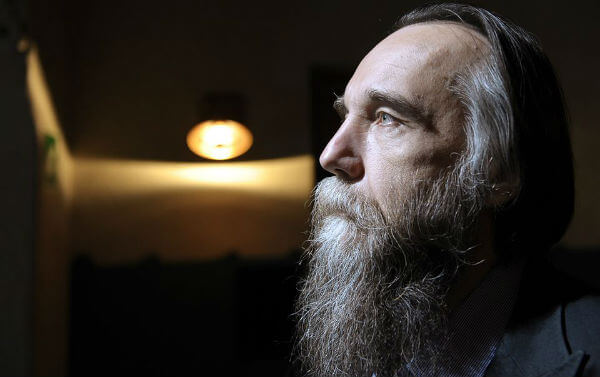
In Donald Trump, Alexander Dugin trusts

Matthew d’Ancona writes: Russian hacking, White House warnings, angry denials by Vladimir Putin’s officials: we are edging towards a digital Cuban crisis. So it is as well to ask what is truly at stake in this e-conflict, and what underpins it.

To which end, meet the most important intellectual you have (probably) never heard of. Alexander Dugin, the Russian political scientist and polemicist, may resemble Santa’s evil younger brother and talk like a villain from an Austin Powers movie. But it is no accident that he has earned the nickname Putin’s Rasputin. His books and posts – often, it must be said impenetrable or plain madcap – are required reading for those who seek to understand the new landscape of Brexit, Donald Trump’s victory and the global surge of the far right.

Born in Moscow in 1962, Dugin is a ferocious champion of Russian imperialism, or what he calls Eurasianism. He supports tradition against liberalism, autocracy against democratic institutions, stern uniformity against Enlightenment pluralism. In The Fourth Political Theory (2009), he claims all this adds up to a new and coherent ideology, supplanting liberal democracy, Marxism and fascism – though he still seems pretty fond of fascism.

The extent of Dugin’s personal access to the Kremlin remains opaque: it has certainly waxed and waned over the decades. What is beyond dispute, however, is the influence his geopolitical vision has enjoyed in the general staff academy and the Russian ministry of defence. Putin’s intervention in Georgia in 2008, his invasion of Ukraine in 2014, and his tightening grip on Syria are all entirely consistent with Dugin’s strategy for Mother Russia.

All of which is alarming enough. But what makes Dugin so suddenly significant is his growing influence in the west. It has long been alleged that he acts as a covert intermediary between Moscow and far-right groups in Europe, many of which are believed to receive funding from the Kremlin.

The purpose of operations like the hacking of the US election has been to destabilise the Atlantic order generally, and America specifically. And on this great struggle, Dugin is positively millenarian: “We must create strategic alliances to overthrow the present order of things, of which the core could be described as human rights, anti-hierarchy, and political correctness – everything that is the face of the Beast, the anti-Christ.” [Continue reading…]

Stay informed. Click below to sign up for daily email updates from War in Context:

sign up now

Facebooktwittermail

Donald Trump will violate the U.S. constitution on inauguration day

Laurence H Tribe writes: When Donald Trump swears at the inauguration that he will “faithfully execute the office of president of the United States, and will to the best of my ability, preserve, protect and defend the constitution of the United States”, he will be committing a violation of constitutional magnitude.

The US constitution flatly prohibits any “Person holding any Office of Profit or Trust under [the United States]” from accepting “any present, Emolument, Office, or Title, of any kind whatever, from any King, Prince, or foreign State”.

Known as the emoluments clause, this provision was designed on the theory that a federal officeholder who receives something of value from a foreign power can be tempted to compromise what the constitution insists be his exclusive loyalty: the best interest of the United States. The clause applies to the president and covers even ordinary, fair market value transactions with foreign states and their agents that result in any profit or benefit. That a hostile government has gotten its money’s worth from our president is obviously no defense to a charge that he has abused his office.

Trump’s continued interest in the Trump Organization and his steady stream of monetary and other benefits from foreign powers put him on a collision course with the emoluments clause. Disentangling every improper influence resulting from special treatment of Trump’s business holdings by foreign states would be impossible. The American people would be condemned to uncertainty, leaving our political discourse rife with accusations of corruption. These problems are exacerbated by the fact that Trump has regularly declined to make his business dealings or tax returns transparent. [Continue reading…]

Facebooktwittermail

Trump private security force ‘playing with fire’

Politico reports: President-elect Donald Trump has continued employing a private security and intelligence team at his victory rallies, and he is expected to keep at least some members of the team after he becomes president, according to people familiar with the plans.

The arrangement represents a major break from tradition. All modern presidents and presidents-elect have entrusted their personal security entirely to the Secret Service, and their event security mostly to local law enforcement, according to presidential security experts and Secret Service sources.

But Trump — who puts a premium on loyalty and has demonstrated great interest in having forceful security at his events — has opted to maintain an aggressive and unprecedented private security force, led by Keith Schiller, a retired New York City cop and Navy veteran who started working for Trump in 1999 as a part-time bodyguard, eventually rising to become his head of security.

Security officials warn that employing private security personnel heightens risks for the president-elect and his team, as well as for protesters, dozens of whom have alleged racial profiling, undue force or aggression at the hands Trump’s security, with at least 10 joining a trio of lawsuits now pending against Trump, his campaign or its security.

“It’s playing with fire,” said Jonathan Wackrow, a former Secret Service agent who worked on President Barack Obama’s protective detail during his 2012 reelection campaign. Having a private security team working events with Secret Service “increases the Service’s liability, it creates greater confusion and it creates greater risk,” Wackrow said. [Continue reading…]

Facebooktwittermail

Russian ambassador shot dead in Turkey as Syria roils region

Bloomberg reports: Russia’s ambassador was shot dead in the Turkish capital on Monday in an assassination apparently linked to Syria’s civil war, heightening tensions over a conflict that’s drawn in almost all the region’s main powers.

Andrey Karlov was shot in the back at an art exhibit in Ankara on Monday and died from his injuries, according to the Russian Foreign Ministry. “Don’t forget Aleppo,” the gunman shouted, in a reference to the Syrian city where mostly Islamist rebels have been defeated this month by Russian-backed government troops. The attacker, who was killed by security forces, was a 22-year-old active-duty police officer. His possible connection with organized groups is being probed, Turkey’s Interior Minister Suleyman Soylu said.

Russia and Turkey signaled that they don’t want the attack on the ambassador to turn into another flashpoint between countries that are engaged on opposite sides of the Syrian war, a recurring risk in a conflict with multiple armed parties and outside backers. Their relations came under heavy strain after the Turkish military shot down a Russian plane last year, and both governments have since made an effort to repair them.

Russian President Vladimir Putin said in televised remarks that Karlov’s killing was an “open provocation” aimed at undermining the search for peace in Syria and the normalization of ties with Turkey, and he said the response will be stronger cooperation between the countries. Putin’s Turkish counterpart Recep Tayyip Erdogan agreed, saying they’ll jointly investigate the attack and won’t allow it to disrupt a collaboration that’s crucial for the region. [Continue reading…]

The Daily Beast reports: Reaction in both Russia and Turkey has been swift, incensed and conspiratorial.

Alexey Pushkov, the former head of the foreign affairs committee of the Russian State Duma, or lower house of parliament, has claimed the killing was a direct result of media “hysteria” concerning Aleppo, purveyed by “enemies” of Moscow. Vladimir Zhirinovsky, a far-right Russian nationalist parliamentarian, claimed that the West orchestrated the shooting to prevent Turkish-Russian rapprochement following close to a year of a breach, which has gradually narrowed in recent months.

Russian Foreign Ministry spokeswoman Maria Zakharova issued a statement: “Terrorism will not pass! We will fight it resolutely. Memory of this outstanding Russian diplomat, a man who did so much to counter terrorism in his diplomatic line of work, Andrei Gennadyevich Karlov, will remain in our hearts forever.”

Meanwhile, pro-government journalists in Turkey are beginning to suggest that the assassin was affiliated with the Islamist movement of exiled cleric Fethullah Gülen, who is widely blamed in the country for orchestrating last July’s abortive coup. (He lives in the Poconos of Pennsylvania and Turkey is seeking his extradition from the United States.) [Continue reading…]

Facebooktwittermail

Turkey and Iran on collision course

Ali Vaez writes: Today’s competition between Turkey and Iran is the latest iteration of an old power game: a struggle their progenitors, the Byzantine and Persian empires, started over the control of Mesopotamia — today’s Iraq and Syria. While the rivalry outlived their transformation from empires to nation-states, they have managed to keep the peace between themselves for nearly 200 years.

Yet Turkey and Iran are now on a collision course, mostly because of their involvement as the region’s major Sunni and Shiite powers in the deepening sectarian conflicts in Iraq and Syria. Their inability to accommodate each other has the potential to undermine or even undo the strong ties they have developed over the past two decades, as their economies became increasingly intertwined.

How the two countries choose to deploy their power and whether they can overcome their differences are vitally important to determining the future of the Middle East. Left unchecked, the present dynamics point toward greater bloodshed, growing instability and greater risks of direct — even if inadvertent — military confrontation. [Continue reading…]

Facebooktwittermail

Iraqi Kurdistan slides toward autocracy

Akbar Shahid Ahmed reports: Most mornings this August, Wedad Hussein Ali, a 28-year-old Kurdish journalist with a trim beard and a penchant for spiking his hair, would get up early to drive his big brother, Sardar, to work. The trip from Kora, their leafy, ancient village in Iraqi Kurdistan’s mountains, to Dohuk, the nearest big town, took 30 minutes.

On Aug. 13, they reached Sardar’s construction site at 9:15 a.m. He got out of the car as usual. Ali drove on.

Minutes later, two unmarked cars cut off Ali. Three men got out. One pointed a gun to the journalist’s head. The others tied his wrists and placed a hood over his head. As witnesses watched, the men loudly announced that they had official business with Ali. They placed him in one of their cars and drove away.

A few hours later, a police officer called Ali’s family to say his body was at a local morgue. It had been transferred there after police in a neighboring village found it dumped by the side of a road, the police contact said. Ali had been cut, beaten and bruised, showing signs, one doctor said, of having been hit by a long object like a bat or a baton. To the family, it looked like he had suffered third-degree burns and beatings with electric cables. His eyes appeared to have been torn out with knives.

There were plenty of groups that could have killed Ali. The vicious Islamic State group maintains sleeper cells across Iraq, including in Kurdistan; Dohuk is just an hour’s drive from Mosul, the chief ISIS hub in the country. Iran-backed Shiite militias have tortured and terrorized thousands of their fellow Iraqis over the past decade, focusing their attention on people who follow the rival Sunni branch of Islam — which most Kurds do. And Iraqi Kurdistan has long hosted an internationally condemned Kurdish movement called the Kurdistan Workers’ Party (PKK), which has issued harsh punishments, including executions, to Kurds who refuse to collaborate with it.

But Ali’s family doesn’t blame ISIS, Shiite militias or the PKK for his murder. They believe Iraqi Kurdistan’s U.S.-friendly leaders were responsible for his death.

Nine weeks after Ali’s murder, Massoud Barzani, the president of Iraqi Kurdistan, held a triumphant press conference. The day before, 4,000 Iraqi Kurdish fighters had begun moving toward Mosul. Scores of American advisers boosted their ranks, and American B-1 and F-15 jets provided air support.

The Kurds’ advance was sold as a key sign that the U.S. had rallied its partners in Iraq and prepared them to push ISIS out of the country for good. Brett McGurk, the top American managing the U.S.-led coalition against the Islamic State, wished the Kurds and others “Godspeed” on Twitter. “We are proud to stand with you,” he added.

Since the U.S. and Kurdistan first began major cooperation against ISIS in August 2014, Barzani, an iconic former militia man who has been close to winning Time’s Person of the Year award, has pushed the region ever closer to autocracy.

But the Obama administration and President-elect Donald Trump have largely ignored warning signs — including Ali’s death — that point to a dark future for Kurdistan.

Parliament has not functioned since last October, because Barzani banned its speaker, an opposition politician, from entering the capital. Thousands of refugees who have sought sanctuary in the region have seen their freedoms restricted. Kurdish authorities have meted out particularly harsh treatment to Sunni Arabs, mimicking the Iraqi policies that provoked Sunni dissatisfaction and enabled the initial rise of ISIS. U.S.-backed Kurdish forces have demolished the homes of Sunni Arabs in areas recaptured from ISIS. Kurdistan has subjected many of the Yazidis, the minority group whose genocide prompted U.S. action against ISIS, to painful shortages of food, water, fuel and medicine because of their affinity for the anti-Barzani PKK ― only strengthening the militant Kurdish group’s appeal. [Continue reading…]

Facebooktwittermail

The fall of Aleppo is a huge gift to ISIS

Michael Weiss and Hassan Hassan write: Abu Bakr al-Baghdadi, the “Caliph Ibrahim” of the so-called Islamic State, had an excellent week last week.

The fall of Aleppo to a consortium of Iranian-built militias backed by Russian airpower and special forces constitutes not only a loud victory for Damascus but also a quieter one for ISIS, or the Islamic State, which mounted a surprise attack that retook the ancient city of Palmyra.

The contrast could not have been starker or a more clear vindication of one of ISIS’s longest-running propaganda tropes: the “infidels” and “apostates” will do nothing to save Sunni Arabs from the pillage, rape, and barrel bombs of the Russians, Alawites, and Shia. But Aleppo’s fall also buttresses one of the lesser-scrutinized claims made by ISIS’s former spokesman Abu Mohammed al-Adnani, shortly before his demise.

In May, months before he was taken out by a U.S. airstrike, Adnani issued what would turn out to be a final communiqué refuting a common Sunni criticism of ISIS, namely that the group’s takeover of Sunni towns and cities invariably brought only devastation. See Fallujah and Ramadi. For Adnani, however, such devastation was never the fault of ISIS, as rival jihadist enterprises had discovered at their peril.

“If we knew that any of the righteous predecessors surrendered a span of land to the infidels, using the claim of popular support or to save buildings from being destroyed or to prevent bloodshed, or any other alleged interest,” he said, “we would have done the same as the Qa’idah of the Fool of the so-called Ummah.” Only steadfastness, even in the face of overwhelming odds, would restore Sunni dignity.

Thanks to Bashar al-Assad, Vladimir Putin, and Ayatollah Ali Khamenei—not to say Barack Obama—Adnani now gets to play the posthumous prophet. Rather than die fighting for Aleppo, the Free Syrian Army (and its Western backers), plus rival Islamist or jihadist groups such the Syrian al Qaeda franchise Jabhat Fatah al-Sham, negotiated the terms of their surrender through a series of failed and humiliating “ceasefires” and evacuations, which are in fact forced population transfers. And Aleppo was still pulverized. [Continue reading…]

Facebooktwittermail

Pro-regime forces in Syria are stretched thin  – and fighting among themselves

Tom Cooper writes: Five years into Syria’s apocalyptic civil war, there is no more Syrian Arab Army on the country’s battlefields. So who’s fighting for Syrian president Bashar Al Assad?

The answer is a shocking one. Today the forces fighting for the Syrian regime represent a hodgepodge of sectarian local militias, most of which do not fall under the regime’s direct control.

In other words, Al Assad is waging a war with virtually no troops of his own.

The exceptions to this rule are few  — only around a dozen of company-sized formations that survived the collapse of the Syrian army’s Republican Guards Division and 4th Armored Division. And those companies were never within the normal army chain of command, instead personally answering to Al Assad.

The majority of the remaining “regime forces” — some 70,000 combatants  —  belong to the Syrian militias, all of which were established by either the Iranian Revolutionary Guard Corps or Hezbollah, and the majority of which now fall under Iranian control. [Continue reading…]

Facebooktwittermail

Aleppo refugees reach safety after being held at government checkpoint

The Guardian reports: Hundreds of people from east Aleppo who spent hours in limbo crammed on to buses at a Syrian government checkpoint have reached safety, becoming the latest group to be evacuated from the embattled city.

Two days after the deal to evacuate tens of thousands of civilians in the shrinking and besieged rebel enclave appeared on the verge of unravelling, it seems to be back on track. But many remain languishing in the winter cold and hundreds are still being held at the Syrian government checkpoint.

A source with knowledge of the evacuation deal said roughly 1,000 civilians in 25 buses had been evacuated overnight into the western Aleppo countryside, which is controlled by the opposition. Another 20 are still stuck at the government crossing in the district of Ramouseh, awaiting the parallel evacuation of residents in two pro-government villages besieged by rebels.

Among those who were rescued was Bana al-Abed, a seven-year-old girl whose tweets about life in east Aleppo under bombardment captured the attention of hundreds of thousands of people on social media, including prominent figures such as author JK Rowling.

Humanitarian workers in the area published images showing a smiling Bana on their shoulders, wearing a winter jacket and woollen head cover. Her tweets had drawn attention to the suffering of east Aleppo’s residents, and there were fears that she might be killed or fall into the hands of government forces. [Continue reading…]

Facebooktwittermail

Donald Trump has no idea how to run a superpower, say Chinese media

The Guardian reports: Donald Trump appears to have not a clue how to lead a superpower.

That was the conclusion of China’s Global Times newspaper on Monday morning as the country’s media weighed in on the president-elect’s latest social media assaults on Beijing.

“Trump is not behaving as a president who will become master of the White House in a month,” the Communist party controlled newspaper wrote in an editorial. “He bears no sense of how to lead a superpower.”

The article came after the US president-elect again used Twitter, which has been blocked in China since 2009, to berate the leaders of the world’s second largest economy.

“China steals United States Navy research drone in international waters – rips it out of water and takes it to China in unpresidented [sic] act,” Trump tweeted early on Saturday morning after it emerged the Chinese navy had seized a US naval drone that had been operating in the South China Sea.

In a second tweet, Trump wrote:


Those 221 characters threatened to further alienate China’s rulers, already reeling from Trump’s recent decision to hold a 10-minute phone call with the Taiwanese president, Tsai Ing-wen, and threat to upend long-standing US policy on Taiwan.

On Friday, President Obama cautioned Trump against allowing relations with China slip into “full conflict mode”. [Continue reading…]

Facebooktwittermail

‘Tragedy’ inside Mosul as food runs out and the battle against ISIS drags on

The Washington Post reports: Hundreds of thousands of people who remain in this northern Iraqi city are struggling to find food and safe drinking water as the protracted offensive against Islamic State militants batters their neighborhoods.

When the battle began seven weeks ago, aid agencies feared that an exodus from the city would overwhelm already crowded camps. Instead, most people heeded government advice to stay in their homes as security forces advanced.

Now many of those residents lack even basic services, with water supplies cut by the fighting, and U.N. and government aid distributions unable to reach all of those in need. Some residents are moving from neighborhood to neighborhood in search of food or to escape the bombardment.

Meanwhile, in areas still controlled by the Islamic State, a siege by security forces is slowly tightening, pushing up food prices and causing shortages while the militants prevent people from leaving.

Iraq is struggling to meet the needs of 3.2 million people displaced over the past three years during fighting against the Islamic State. To limit the displacement from Mosul, the government airdropped leaflets over the city telling civilians to stay put.

But few commanders expect the battle to finish anytime soon, and the misery unfolding in Mosul is expected to worsen as winter sets in. [Continue reading…]

Facebooktwittermail

The sixth anniversary of the start of the Arab uprisings

Gilbert Achcar writes: Six years ago, on 17 December 2010, Mohamed Bouazizi immolated himself in the Tunisian city of Sidi Bouzid. Bouazizi did not know that by this extreme form of protest, he was setting not only himself or his town on fire, nor his province or even his Tunisian homeland alone, but the whole Arab region. Indeed, his protest inspired millions of others — “from the Ocean to the Gulf” as the saying went in the heyday of Arab nationalism — to protest their regimes and the status quo.

The tragedy is that this wave of protests did not bring the renewal that was promised by the branding phrase “Arab Spring,” but rather what followed were more of the old calamities, aggravated to a frightening degree in some cases. It is necessary therefore to emphasize two crucial issues regarding the sad condition under which we commemorate the sixth anniversary of the Arab uprisings.

The first issue concerns a view that has spread quite understandably in the Arab region, according to which the lesson of the past six years is that the old order, despite its huge problems, was better than the revolt against it since the latter only managed to create a bigger disaster. The truth is that if we were to apply the same logic to any of the great revolutions in history, assessing them only a few years after their beginning, we would condemn them all. Thus, if we envisaged the French Revolution from the angle of where it stood six years after its start in 1789, we would find an appalling situation in France with an ongoing civil war that killed hundreds of thousands and a revolutionary regime that executed tens of thousands in a reign of terror. France was, later, to go through an imperial stage followed by the restoration of the monarchy that the revolution had overthrown. Only close to a century after the revolution’s start did the republican regime stabilize. And yet, the anniversary of the French Revolution on 14 July is the greatest yearly celebration in contemporary France, and the French recall their revolution as a glorious historical event, which most of their historians rally to defend against anyone who denigrates it by trying to portray it as a catastrophe. [Continue reading…]

Facebooktwittermail