The Hill reports: Pressure is growing on the White House to respond to Russia’s apparent hack of the Democratic National Committee (DNC), placing President Obama in a delicate political position.
Evidence has mounted that the Russian government was behind the theft of tens of thousands of damaging internal emails from the DNC, leading prominent lawmakers from both sides of aisle to call for some form of response.
The ranking members of the House and Senate Intelligence committees and the chairman and ranking member of the Senate Judiciary Committee have all issued calls for Obama to “seek justice” for the alleged attack.
But should Obama publicly point the finger at the Kremlin, it could expose covert intelligence capabilities and damage already touchy discussions over Russia’s behavior in Syria and Ukraine, experts say.
That dynamic reflects one the central challenges the White House faces in responding to cyberattacks. Without any international rules of engagement, officials must weigh a response to each attack individually.
The FBI has opened an investigation into the hack, but because of the risks, experts say, the public is unlikely to ever know the results, even if it is able to prove Russia’s guilt beyond a shadow of a doubt.
Obama has a slate of possible responses at his disposal, but each carries its own set of problems.
“They are really in between a rock and a hard place. Everything they do has a downside,” said Herb Lin, a senior research scholar who studies cyber policy and security at Stanford. [Continue reading…]
Author Archives: News Sources
Can we trust Julian Assange and WikiLeaks?
Alex Gibney writes: I’ve had my own run-ins with Mr. Assange. During the making of my 2013 film, “We Steal Secrets: The Story of WikiLeaks,” I spent an agonizing six hours with him, when he was living in an English country house while out on bail. I was struck by how insistently he steered the conversation away from matters of principle to personal slights against him, and his plans for payback. He demanded personal “intel” on others I had interviewed, and dismissed questions about the organization by saying, “I am WikiLeaks” repeatedly. (Later, Mr. Assange and his followers attacked both me and my film.)
Even given that history, I believe that WikiLeaks was fully justified in publishing the D.N.C. emails, which provided proof that members of the D.N.C., in a hotly contested primary, discussed how to undermine the campaign of Bernie Sanders. They are clearly in the public interest.
As for Mr. Assange’s animus against Hillary Clinton — he has written that she “lacks judgment and will push the United States into endless, stupid wars which spread terrorism” — that is evidence of bias, but no more than that. After all, many news outlets are clearly, and sometimes proudly, biased.
We still don’t know who leaked the D.N.C. archive, but given Mr. Assange’s past association with Russia, it wouldn’t surprise me to learn that it was a Russian agent or an intermediary. Mr. Assange insists this is a mere distraction from the issue of D.N.C. interference, but the answer is also in the public interest. We should all be concerned (although hardly surprised) if it is that easy for the Russians to break into the D.N.C. and possibly United States government networks. [Continue reading…]
Syria’s civil war: Rebels push to take all of Aleppo
Al Jazeera reports: A Syrian rebel alliance has announced the start of a battle to recapture the whole of Aleppo, a day after it broke a government siege on the rebel-held half of the city.
The Army of Conquest, a coalition of rebel groups including Jabhat Fatah al-Sham (formerly the al-Nusra Front), said in a statement on Sunday that it would “double the number of fighters for this next battle”.
“We announce the start of a new phase to liberate all of Aleppo,” the group said. “We will not rest until we raise the flag of the conquest over Aleppo’s citadel.”
Footage obtained by Al Jazeera showed rebel fighters at government checkpoints on Saturday after breaking the month-long siege on the rebel-held eastern neighbourhoods of the city in a major setback for the forces of President Bashar al-Assad. [Continue reading…]
Obama releases drone strike ‘playbook’
Politico reports: President Barack Obama has to personally approve the killing of a U.S. citizen targeted for a lethal drone strike outside combat areas, according to a policy Obama adopted in 2013.
The president also is called upon to approve drone strikes against permanent residents of the U.S. and when “there is a lack of consensus” among agency chiefs about whom to target, but in other cases he is simply “apprised” of the targeting decision, the newly-disclosed document shows.
The presidential policy guidance on drone strikes, often called the drone “playbook,” was disclosed in an edited form Friday night in response to a Freedom of Information Act lawsuit brought by the American Civil Liberties Union.
When Obama approved the guidance in May 2013, the White House issued a fact sheet about the policy, but declined to release the document itself — even in a redacted form.
However, a series of decisions from a federal appeals court in New York and from lower court judges have made it more difficult for the government to withhold legal and policy documents when many of the details in them have been disclosed elsewhere, such as in speeches or press releases. [Continue reading…]
Israel seen as a ‘pariah state,’ says top strategy official
The Times of Israel reports: A top official engaged in the campaign to improve Israel’s international standing said Sunday the Jewish state is seen as an apartheid “pariah state” abroad, while expressing the hope that by 2025, no one will question Israel’s right to exist.
Director-General of the Strategic Affairs Ministry Sima Vaknin-Gil also told the Knesset Special Committee for the Transparency and Accessibility of Government Information that Israel is making progress against the Boycott, Divestment and Sanctions (BDS) movement, the Haaretz newspaper reported.
“Today, among the countries of the world, Israel is a pariah state,” she said. “Our objective is that in 2025 nobody in the world will raise the question ‘does Israel have the right to exist?’” [Continue reading…]
The mind of Donald Trump

Dan McAdams writes: Donald Trump’s basic personality traits suggest a presidency that could be highly combustible. One possible yield is an energetic, activist president who has a less than cordial relationship with the truth. He could be a daring and ruthlessly aggressive decision maker who desperately desires to create the strongest, tallest, shiniest, and most awesome result — and who never thinks twice about the collateral damage he will leave behind. Tough. Bellicose. Threatening. Explosive.
In the presidential contest of 1824, Andrew Jackson won the most electoral votes, edging out John Quincy Adams, Henry Clay, and William Crawford. Because Jackson did not have a majority, however, the election was decided in the House of Representatives, where Adams prevailed. Adams subsequently chose Clay as his secretary of state. Jackson’s supporters were infuriated by what they described as a “corrupt bargain” between Adams and Clay. The Washington establishment had defied the will of the people, they believed. Jackson rode the wave of public resentment to victory four years later, marking a dramatic turning point in American politics. A beloved hero of western farmers and frontiersmen, Jackson was the first nonaristocrat to become president. He was the first president to invite everyday folk to the inaugural reception. To the horror of the political elite, throngs tracked mud through the White House and broke dishes and decorative objects. Washington insiders reviled Jackson. They saw him as intemperate, vulgar, and stupid. Opponents called him a jackass—the origin of the donkey symbol for the Democratic Party. In a conversation with Daniel Webster in 1824, Thomas Jefferson described Jackson as “one of the most unfit men I know of” to become president of the United States, “a dangerous man” who cannot speak in a civilized manner because he “choke[s] with rage,” a man whose “passions are terrible.” Jefferson feared that the slightest insult from a foreign leader could impel Jackson to declare war. Even Jackson’s friends and admiring colleagues feared his volcanic temper. Jackson fought at least 14 duels in his life, leaving him with bullet fragments lodged throughout his body. On the last day of his presidency, he admitted to only two regrets: that he was never able to shoot Henry Clay or hang John C. Calhoun.
The similarities between Andrew Jackson and Donald Trump do not end with their aggressive temperaments and their respective positions as Washington outsiders. The similarities extend to the dynamic created between these dominant social actors and their adoring audiences — or, to be fairer to Jackson, what Jackson’s political opponents consistently feared that dynamic to be. They named Jackson “King Mob” for what they perceived as his demagoguery. Jackson was an angry populist, they believed — a wild-haired mountain man who channeled the crude sensibilities of the masses. More than 100 years before social scientists would invent the concept of the authoritarian personality to explain the people who are drawn to autocratic leaders, Jackson’s detractors feared what a popular strongman might do when encouraged by an angry mob.
During and after World War II, psychologists conceived of the authoritarian personality as a pattern of attitudes and values revolving around adherence to society’s traditional norms, submission to authorities who personify or reinforce those norms, and antipathy — to the point of hatred and aggression — toward those who either challenge in-group norms or lie outside their orbit. Among white Americans, high scores on measures of authoritarianism today tend to be associated with prejudice against a wide range of “out-groups,” including homosexuals, African Americans, immigrants, and Muslims. Authoritarianism is also associated with suspiciousness of the humanities and the arts, and with cognitive rigidity, militaristic sentiments, and Christian fundamentalism.
When individuals with authoritarian proclivities fear that their way of life is being threatened, they may turn to strong leaders who promise to keep them safe — leaders like Donald Trump. In a national poll conducted recently by the political scientist Matthew MacWilliams, high levels of authoritarianism emerged as the single strongest predictor of expressing political support for Donald Trump. Trump’s promise to build a wall on the Mexican border to keep illegal immigrants out and his railing against Muslims and other outsiders have presumably fed that dynamic.
As the social psychologist Jesse Graham has noted, Trump appeals to an ancient fear of contagion, which analogizes out-groups to parasites, poisons, and other impurities. In this regard, it is perhaps no psychological accident that Trump displays a phobia of germs, and seems repulsed by bodily fluids, especially women’s. He famously remarked that Megyn Kelly of Fox News had “blood coming out of her wherever,” and he repeatedly characterized Hillary Clinton’s bathroom break during a Democratic debate as “disgusting.” Disgust is a primal response to impurity. On a daily basis, Trump seems to experience more disgust, or at least to say he does, than most people do.
The authoritarian mandate is to ensure the security, purity, and goodness of the in-group — to keep the good stuff in and the bad stuff out. In the 1820s, white settlers in Georgia and other frontier areas lived in constant fear of American Indian tribes. They resented the federal government for not keeping them safe from what they perceived to be a mortal threat and a corrupting contagion. Responding to these fears, President Jackson pushed hard for the passage of the Indian Removal Act, which eventually led to the forced relocation of 45,000 American Indians. At least 4,000 Cherokees died on the Trail of Tears, which ran from Georgia to the Oklahoma territory.
An American strand of authoritarianism may help explain why the thrice-married, foul-mouthed Donald Trump should prove to be so attractive to white Christian evangelicals. As Jerry Falwell Jr. told The New York Times in February, “All the social issues — traditional family values, abortion — are moot if isis blows up some of our cities or if the borders are not fortified.” Rank-and-file evangelicals “are trying to save the country,” Falwell said. Being “saved” has a special resonance among evangelicals — saved from sin and damnation, of course, but also saved from the threats and impurities of a corrupt and dangerous world.
When my research associates and I once asked politically conservative Christians scoring high on authoritarianism to imagine what their life (and their world) might have been like had they never found religious faith, many described utter chaos — families torn apart, rampant infidelity and hate, cities on fire, the inner rings of hell. By contrast, equally devout politically liberal Christians who scored low on authoritarianism described a barren world depleted of all resources, joyless and bleak, like the arid surface of the moon. For authoritarian Christians, a strong faith — like a strong leader — saves them from chaos and tamps down fears and conflicts. Donald Trump is a savior, even if he preens and swears, and waffles on the issue of abortion.
In December, on the campaign trail in Raleigh, North Carolina, Trump stoked fears in his audience by repeatedly saying that “something bad is happening” and “something really dangerous is going on.” He was asked by a 12-year-old girl from Virginia, “I’m scared — what are you going to do to protect this country?”
Trump responded: “You know what, darling? You’re not going to be scared anymore. They’re going to be scared.” [Continue reading…]

Why ‘launch under attack’ should not be a mainstay of U.S. nuclear policy

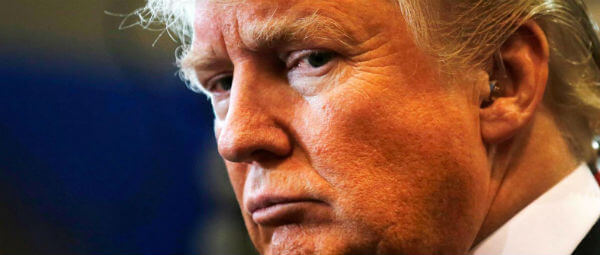
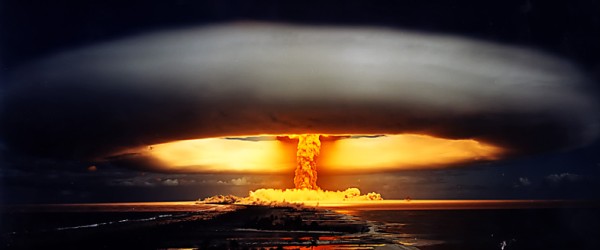
Jeffrey Lewis writes: Once a president gives the order to use nuclear weapons, there is no turning back. The system is designed to very quickly render the president’s will into death and destruction on the other side of the world. So maybe don’t elect the guy who melts down on Twitter every other day.
Trump’s temperament is pretty different from, say, that of Brzezinski, who tells the story about the 3 a.m. phone call as kind of a dark gag. I suppose Zbig got used to it. There was a series of false alarms in June 1980, usually described as having occurred because of the failure of a 46 cent computer chip. A few years later, the Center for Defense Information — the forerunner, in a roundabout way, to Global Zero — learned that between 1977 and 1984, there were 1,152 “moderately serious” false alarms. False alarms are so common that I actually suspect the system would fail to respond to a real Russian launch. I just can’t imagine Bushes, Clintons, or Barack Obama retaliating while there’s even a glimmer of doubt about an attack. My guess is that they would all decide to risk waiting to be sure an attack was underway, that it wasn’t a false alarm or cyberattack, instead of hastily opting for certain nuclear holocaust. Given what we know about human beings and confirmation bias, launch under attack is probably less dangerous than just pointless.
The problem, though, is what happens in a crisis. What happens when confirmation bias is pushing in the other direction? If we think Russia might launch such an attack, then it is easier to imagine a president making a hasty decision.
My advice to any future president would be to drop launch under attack as a mainstay of U.S. nuclear policy. Some systems might still be capable of launching quickly, but I would design the nuclear force around the assumption that the president plans to “ride out” a nuclear attack. This means having enough weapons at sea to do the job and relegating any land-based nuclear weapons to the role of warhead “sink,” drawing fire away from cities. The Obama administration has made some steps in this direction, instructing the military to plan for more realistic contingencies — but it has still elected to retain launch under attack as an option.
I am not much of a fan of launch under attack, and have said as much to policymakers in Washington, but I’ve long been resigned to no one listening to me. Defense experts have a fetish about giving the president options, and they are simply loath to abandon this one, no matter how unrealistic. It is U.S. policy now and for the foreseeable future. In fact, Washington has gone to great lengths to design its nuclear forces, as well as its command and control system, around the ability of the president to determine the fate of hundreds of millions of people in a matter of minutes. The upcoming deliberations about nuclear modernization, which will probably cost a trillion dollars over the next 30 years or so, will proceed on the same assumption. If we’re going to design the entire system in this way, to emphasize the speed and decisiveness of a single person, we should probably also pick that person carefully. [Continue reading…]
Trump’s core supporters don’t like the way he treated the Khans — but they’re still afraid of Muslims
Greg Sargent writes: Trump’s attacks on the Khan family appear to have gone too far even for his core supporters. American voters overall disapprove of his handling of the exchange with the Khans by 74-13, and Trump-leaning groups agree: Non-college whites disapprove by 67-14; non-college white men disapprove by 64-19; and white evangelicals disapprove by 63-20. (By the way, Republicans and GOP-leaners disapprove by 58-23, and conservatives disapprove by 62-18.)
The overwhelming public disapproval of Trump’s battle with the Khan family is encouraging to see. It’s looking increasingly like Trump, by engaging the Khans, helpfully reinforced many of the messages coming out of the Democratic convention about Trump’s demagogic scapegoating by religion and his overall hostility towards diversifying America. If the Dem convention brought a sledgehammer down on Trump’s worldview, he basically picked up that sledgehammer and continued to hit himself over the head with it — especially in the eyes of the college educated white voters who appear increasingly repulsed by Trumpism.
And yet, even after the battle over the Khans forced a national debate over Trump’s fearmongering about Muslims, his core voting groups are still sticking by the temporary ban on their entry into the United States — which, after all, is a core tenet of the story he’s telling about America. [Continue reading…]
Why are some conservative thinkers falling for Trump?
Peter Beinart writes: Logically, Donald Trump should have less support among intellectuals than he had a year ago. That’s because over the past year, he has made statements that expose him as both ignorant of public policy and contemptuous of liberal-democratic norms. He has proposed banning Muslims from entering the United States, incited violence against protesters at his rallies, responded to The Washington Post’s critical coverage by warning that its owner is “getting away with murder” on his taxes and “we can’t let him get away with it,” declared a federal judge biased because he’s Mexican American, and twice revealed his unfamiliarity with the term nuclear triad.
Instead, more than a year after Trump announced his presidential bid, his support among intellectuals has grown. Of course, many prominent conservatives — from George Will to William Kristol to David Brooks to Erick Erickson — oppose him militantly. But another cluster of writers and thinkers have declared themselves supportive of, or at least open to supporting, Trump. Among Trump’s critics, the predominant explanation for this openness is opportunism: Supporting the Republican nominee can have professional benefits. But a deeper dynamic is at work. It’s just hard to recognize, because American intellectuals haven’t felt the allure of authoritarian, illiberal politics this strongly in a long time.
In 1953, Czesław Miłosz published The Captive Mind, which described how a series of Polish intellectuals came to embrace Stalinism. Miłosz detailed the role that “coercion” and “personal ambition” played in their ideological transformation. But he stressed that he was concerned “with questions more significant than mere force” or material advancement. “To belong to the masses is the great longing of the ‘alienated’ intellectual,” Miłosz argued. “The gratifications of personal ambition … are merely the outward and visible signs of social usefulness, symbols of a recognition that strengthens the intellectual’s feeling of belonging.” [Continue reading…]
Obama prepares to boost U.S. cyberwarfare capabilities
Reuters reports: The Obama administration is preparing to elevate the stature of the Pentagon’s Cyber Command, signaling more emphasis on developing cyber weapons to deter attacks, punish intruders into U.S. networks and tackle adversaries such as Islamic State, current and former officials told Reuters.
Under the plan being considered at the White House, the officials said, U.S. Cyber Command would become what the military calls a “unified command” equal to combat branches of the military such as the Central and Pacific Commands.
Cyber Command would be separated from the National Security Agency, a spy agency responsible for electronic eavesdropping, the officials said. That would give Cyber Command leaders a larger voice in arguing for the use of both offensive and defensive cyber tools in future conflicts. [Continue reading…]
Syria’s rebels unite to break Assad’s siege of Aleppo
The Guardian reports: A Syrian military academy in the heart of Aleppo made for a bold, even reckless target for opposition forces trying to break a devastating siege, but the rebels gambled on a double advantage: surprise and suicide bombers.
Soon the rebels were sharing pictures of abandoned artillery and a smashed portrait of President Bashar al-Assad on Twitter, flaunted as triumphant proof that the army was routed and opposition forces were within a few hundred metres of their besieged comrades.
Hours later, the people of east Aleppo were dancing in the street, as rebels and activists confirmed that the month-long siege of the area had been broken. The fate of the opposition-held city was back in play. “Morale is very high now,” said activist and poet Mahmoud Rashwani, who had been living largely underground to avoid airstrikes, eking out his supplies of canned food.
The victory is a fragile one. The area is still a conflict zone and it may be some time before a secure corridor for food and medical supplies can be set up, and the regime has called in reinforcements.
“We expect revenge bombing by the regime, including, possibly, chemical weapons,” said Zaher Sahloul, a Syrian-American doctor who coordinates medical aid in the city.
Still, for the rebels, it has been a remarkable triumph against the odds. After months of retreat under pressure from government forces and Russian airstrikes, they have not only broken the siege, but overrun a key base the regime had used to enforce it and apparently taken possession of a large cache of weapons and artillery. [Continue reading…]
Middle East Eye reports: Fighting on the southern edges of Aleppo continued into Sunday morning, hours after rebels said they had broken a three-week government siege of the Syrian city.
Rebels spearheading the push to seize control of Syria’s most populous city released a statement on Sunday morning confirming that the fight was ongoing and pledging to protect civilians.
“Anyone who heads to rebel-held areas will be safe, and we will continue to protect the lives of all Syrians, no matter what your affiliation or background,” the branch of the Free Syrian Army active in Aleppo said.
The alliance of rebels said late on Saturday that they had opened a new route into Aleppo’s eastern neighbourhoods, home to some 250,000 people.
But the road, which passes through southern edges of the city, remains too dangerous for civilians to use, the Syrian Observatory for Human Rights said on Sunday. [Continue reading…]
Middle East bishops say U.S. has ‘moral responsibility’ to help Christians
Crux reports: Catholic leaders in the Middle East say that the United Sates has the “moral responsibility” to help stop the savagery against Christians in the region, and to provide assistance to help them stay in the region, because it was the U.S. that unleashed the chaos in the first place.
“They were the ones who invaded [Iraq] in 2003 and changed the whole region, and they had the moral responsibility to fix the situation before leaving the country,” said the Chaldean Catholic Archbishop of Erbil, Iraq, Bashar Matti Warda.
Jean-Clément Jeanbart, Greek Melkite Archbishop of Aleppo, the “martyred city” of Syria, said that the U.S. has a two-fold responsibility. On the one hand, he asked the U.S. government to ensure that the aid being sent to the region is also distributed among Christians, which, he said, means entrusting a portion of it to the churches.
As the system is set up, he said, all the aid goes to the refugee camps. Yet Christians see their lives at risk there, so they generally choose to seek shelter at churches and convents instead.
“If the help went to the churches, it wouldn’t mean that they’re giving special rights to Christians, but that they’re actually helping everyone,”Jeanbart said at a press conference held on Wednesday during the Knights of Columbus’s 134th Supreme Convention, which took place in Toronto, Canada.
The many Christian churches in the region – in Syria, there are six different Catholic rites alone – fund schools, hospitals, and provide shelter to all refugees, without distinguishing between Muslims, Yazidis or Christians, he said. [Continue reading…]
What’s really behind Israel’s attack on Christian charity World Vision?
Ali Abunimah writes: Israel grabbed global headlines on Thursday with sensational allegations that tens of millions of dollars from the Christian relief and advocacy organization World Vision had been diverted to the military wing of the resistance group Hamas in Gaza.
But a day later, the Israeli claims look more than ever like sloppy propaganda. A World Vision official says Israel’s sums don’t add up and it has also emerged that a Mossad-linked Israeli group has been stoking allegations against the charity for years.
An Israeli general has said that Israel is relying on a “confession” extracted by an intelligence agency which is notorious for using torture.
Israel has also instructed its diplomats to smear World Vision, especially among Christian communities around the world.
But if Israel’s intention was to damage international humanitarian efforts in Gaza, it can chalk up a success, at least for now. [Continue reading…]
Iran says it executed nuclear scientist for spying
The Washington Post reports: Iran has executed a nuclear scientist who mysteriously turned up in the United States six years ago and returned to Tehran a few months later, authorities said Sunday, in the first official confirmation of the researcher’s fate since he arrived back in his homeland.
Iranian officials offered no details about the charges against Shahram Amiri, whose case has left unanswered questions about whether he voluntarily defected to the United States or — as he claimed — was abducted by agents while on a religious pilgrimage in Saudi Arabia in 2009.
Amiri surfaced in 2010 in videos posted online from an undisclosed location in the United States. Later that year, he arrived unannounced at the Iranian interests section at the Pakistani Embassy in Washington and demanded to be sent home. [Continue reading…]
Nuclear power is losing money at an astonishing rate
Joe Romm writes: Half of existing nuclear power plants are no longer profitable. The New York Times and others have tried to blame renewable energy for this, but the admittedly astounding price drops of renewables aren’t the primary cause of the industry’s woes — cheap fracked gas is.
The point of blaming renewables, which currently receive significant government subsidies, is apparently to argue that existing nukes deserve some sort of additional subsidy to keep running — beyond the staggering $100+ billion in subsidies the nuclear industry has received over the decades. But a major reason solar and wind energy receive federal subsidies — which are being phased out over the next few years — is because they are emerging technologies whose prices are still rapidly coming down the learning curve, whereas nuclear is an incumbent technology with a negative learning curve.
The renewable red herring aside, existing nukes can make a reasonable case for a modest subsidy on the basis of climate change — though only because they are often replaced by carbon-spewing gas plants. That said, the “$7.6 billion bailout” New York state just decided to give its nuclear plants appears to be way too large, as we’ll see. [Continue reading…]
Against all odds: #TeamRefugees at Rio
A rousing emotional welcome for #RefugeeOlympicTeam at #Rio2016 #OpeningCeremony #TeamRefugees @Refugees pic.twitter.com/R05lWDgbgt
— UN Spokesperson (@UN_Spokesperson) August 6, 2016
The Guardian reports: For the first time in Olympic history, 10 athletes will compete at Rio 2016 for the Refugee Olympic Team in a move designed to bring global attention to the magnitude of the worldwide refugee crisis.
After the International Olympic Committee president, Thomas Bach, announced in March that a team would be selected, 43 were identified as candidates and 10, displaced from South Sudan, Ethiopia and the Democratic Republic of Congo, have since been picked in three sports – athletics, swimming and judo. The athletes will march with the Olympic flag immediately before host nation Brazil at Friday’s opening ceremony.
Bach said: “These refugees have no home, no team, no flag, no national anthem. We will offer them a home in the Olympic Village together with all the athletes of the world. The Olympic anthem will be played in their honour and the Olympic flag will lead them into the Olympic Stadium.
“This will be a symbol of hope for all the refugees in our world, and will make the world better aware of the magnitude of this crisis. It is also a signal to the international community that refugees are our fellow human beings and are an enrichment to society. These refugee athletes will show the world that, despite the unimaginable tragedies they have faced, anyone can contribute to society through their talent, skills and strength of the human spirit.” [Continue reading…]
UNHCR – The UN Refugee Agency: Each day war forces thousands of families to flee their homes. People like you, people like me.
To escape the violence, they leave everything behind – everything except their hopes and dreams for a safer future. UNHCR, the UN Refugee Agency believes that all refugees deserve to live in safety.
Add your name to the #WithRefugees petition to send a clear message to governments that they must act with solidarity and shared responsibility.
Bernie Sanders: I support Hillary Clinton. So should everyone who voted for me
Bernie Sanders writes: The conventions are over and the general election has officially begun. In the primaries, I received 1,846 pledged delegates, 46% of the total. Hillary Clinton received 2,205 pledged delegates, 54%. She received 602 superdelegates. I received 48 superdelegates. Hillary Clinton is the Democratic nominee and I will vigorously support her.
Donald Trump would be a disaster and an embarrassment for our country if he were elected president. His campaign is not based on anything of substance — improving the economy, our education system, healthcare or the environment. It is based on bigotry. He is attempting to win this election by fomenting hatred against Mexicans and Muslims. He has crudely insulted women. And as a leader of the “birther movement,” he tried to undermine the legitimacy of our first African American president. That is not just my point of view. That’s the perspective of a number of conservative Republicans.
In these difficult times, we need a president who will bring our nation together, not someone who will divide us by race or religion, not someone who lacks an understanding of what our Constitution is about.
On virtually every major issue facing this country and the needs of working families, Clinton’s positions are far superior to Trump’s. Our campaigns worked together to produce the most progressive platform in the history of American politics. Trump’s campaign wrote one of the most reactionary documents. [Continue reading…]
Why we ask to see candidates’ tax returns
Mitchell Zuckoff writes: Lost in the debate over Donald J. Trump’s refusal to release his tax returns is the story of where the custom of disclosure comes from — and why it can be so valuable as a measure of character. It’s a tale of presidential tax shenanigans, political scandal and one of the most famous quotations in American history: Richard M. Nixon’s “I am not a crook.”
The story begins in July 1969, when Congress eliminated a provision of the tax code that had allowed a sitting or former president to donate his papers to a public or nonprofit archive in exchange for a very large tax deduction. Congress’s rationale was that a president’s papers already belonged to the public.
In his taxes for 1969, President Nixon indicated that four months before Congress acted, he had donated more than 1,000 boxes of documents to the National Archives. He claimed a deduction of more than $500,000. [Continue reading…]