Author Archives: News Sources

Riots, slowdown and corruption eat away at southern Africa’s promise

By Stephen Chan, SOAS, University of London

These are dark days for southern Africa. The last month has seen xenophobic riots and killings in Zambia, once an almost immaculately peaceful country, and the reinstatement of several hundred corruption charges which could be delivered against South Africa’s president, Jacob Zuma.

Times have changed in Zambia since its first president, Kenneth Kaunda, galvanised the country’s 72 ethnic groups (not counting European and Indian populations) into a united nation. During his decades in power, he defied the white minority regimes to his south, Rhodesia and Apartheid South Africa. He hosted the exile headquarters of the ANC and sheltered the Namibian exile group SWAPO, whose country South Africa occupied in defiance of the UN.

Landlocked Zambia took a terrible hammering as the white regimes controlled its transport links to the sea. From time to time there were military incursions into Lusaka, the capital city – yet the Zambians took it all with a stoicism born of genuine solidarity.

But times have changed. Kaunda’s successors have not developed their own moral stature, and the country has been badly mismanaged.

Continue reading

Facebooktwittermail

How the Philippines’ new strongman romped into office despite a shocking campaign

By Pauline Eadie, University of Nottingham

Mayor Rodrigo Duterte of Davao City in Mindanao is now president elect of the Philippines. His path to the presidency was controversial, riddled with expletives and reduced his detractors to mud slinging and comparisons with Hitler. But the mud failed to stick: with almost all precincts reporting, he looked to have won the race to the presidency with more than 15m votes and nearly 40% of the vote. His nearest rivals have conceded defeat.

Duterte came to the presidential race late, prompted by a Senatorial Electoral Tribunal decision to allow Senator Grace Poe to run for the presidency. Her presidential aspirations had been dogged by her background as a foundling, her temporary conversion to US citizenship and her alleged failure to meet the residency requirements for government office. Despite the tribunal’s verdict, Duterte threw his hat in the ring, saying he didn’t want an “American” to be president of the Philippines.

As election day loomed, surveys were released showing that Duterte was more than 10% ahead of his nearest rival, and his opponents mounted desperate efforts to stop his campaign juggernaut. Senator Antonio Trillanes, a vice-presidential candidate, accused Duterte of stashing unexplained funds in hidden bank accounts, of shooting people in the head at point blank range, and of being in league with the Communist Party of the Philippines. Duterte responded by filing treason charges against Trillanes, though they seem unlikely to stick.

Continue reading

Facebooktwittermail

Why we need to tackle the growing mountain of ‘digital waste’

By Chris Preist, University of Bristol

We are very aware of waste in our lives today, from the culture of recycling to the email signatures that urge us not to print them off. But as more and more aspects of life become reliant on digital technology, have we stopped to consider the new potential avenues of waste that are being generated? It’s not just about the energy and resources used by our devices – the services we run over the cloud can generate “digital waste” of their own.

Current approaches to reducing energy use focus on improving the hardware: better datacentre energy management, improved electronics that provide more processing power for less energy, and compression techniques that mean images, videos and other files use less bandwidth as they are transmitted across networks. Our research, rather than focusing on making individual system components more efficient, seeks to understand the impact of any particular digital service – one delivered via a website or through the internet – and re-designing the software involved to make better, more efficient use of the technology that supports it.

We also examine what aspects of a digital service actually provide value to the end user, as establishing where resources and effort are wasted – digital waste – reveals what can be cut out. For example, MP3 audio compression works by removing frequencies that are inaudible or less audible to the human ear – shrinking the size of the file for minimal loss of audible quality.

This is no small task. Estimates have put the technology sector’s global carbon footprint at roughly 2% of worldwide emissions – almost as much as that generated by aviation. But there is a big difference: IT is a more pervasive, and in some ways more democratic, technology. Perhaps 6% or so of the world’s population will fly in a given year, while around 40% have access to the internet at home. More than a billion people have Facebook accounts. Digital technology and the online services it provides are used by far more of us, and far more often.

Continue reading

Facebooktwittermail

America is silent as Aleppo is massacred

Roy Gutman writes: The city of Aleppo has been one of the most important symbols of the five-year-long uprising against the regime of President Bashar al-Assad. For that reason, it is no surprise the Syrian government has been mounting an air and ground assault on Aleppo for the past two weeks in the hope of winning it back. What’s much harder to understand is why the United States has been sending out ambiguous signals about its view of the offensive on the city.

The United States and Russia agreed to a cease-fire in Aleppo on Wednesday, which was supposed to last for 48 hours. While violence has decreased in the aftermath of the agreement, it seems likely to have only delayed the larger struggle for control of the city.

The Obama administration has chosen not to spotlight what by most definitions are widespread and systematic war crimes. On occasion, it blames the Syrian Air Force for bombing hospitals and other civilian targets but rarely discusses Russian violations. It doesn’t even share with the public the rampant infractions of the cease-fire it is overseeing. That’s all classified.

Instead, U.S. officials have repeatedly focused attention on al Qaeda’s affiliate in Syria, the Nusra Front. In a series of inaccurate or loosely worded statements, officials have implied Nusra Front has a major presence in Aleppo — assertions that the Russian and Syrian governments could interpret, or exploit, as an invitation to carry on with the bombardment.

American policy baffles allies in the Sunni Muslim world. Turkish officials say Russia’s intervention in Syria upended the battlefield by shifting the balance of power in the Assad regime’s favor, and it has to be righted before there can be a political solution.

But the Obama administration views Russian intervention from a more benign perspective.

There was real concern in Russia “about a potential catastrophic success” by rebel forces in mid-2015, “where Assad collapses, but so do all the Syrian state institutions, and you have even more of a failed state,” the senior administration official told FP. “What Russia has done is return it to the stalemate.”

That perspective, coupled with the U.S. refusal to contemplate the use of force, sets the context for a series of wrong or ambiguous U.S. statements about the role of Nusra Front in Syria.

The first to raise a furor was by Col. Steve Warren, the spokesman for the U.S.-led coalition fighting the Islamic State. Voicing concern that the Assad regime with Russian support was concentrating forces around Aleppo, he added: “That said, it’s primarily al-Nusra who holds Aleppo, and of course, al-Nusra is not part of the cessation of hostilities. So it’s complicated. We’re watching it.”

Asked by FP to double-check his information, Warren replied that his statement was wrong.

“I was incorrect when I said Nusra holds Aleppo,” he said in an email. “Turns out that our current read is that Nusra controls the northwest suburbs” and other groups control the center.

His remarks, however, had already spread around the world, including on the BBC, Fox News, and Iran’s Press TV.

Humanitarian aid officials in Turkey, who have to negotiate with all the armed groups, were stunned.

“I can find no one who thinks that Nusra is in control, aside from the U.S. spokesperson,” said a top official of one international group that sends food and medical supplies to northern Syria. “Totally inaccurate. They’re the faction with the least presence,” said an aid official, who is in touch with the factions on the ground and the aid organizations providing assistance. He added that Nusra Front had recently set up five checkpoints within the city.

In fact, according to Aleppo officials and rebel sources, moderate rebels, many of them recipients of U.S.-approved covert support, control some 80 percent of Aleppo. [Continue reading…]

Facebooktwittermail

While Obama portrays their combat role as over, American forces are increasingly being called on to fight

The New York Times reports: The Taliban attacked the Afghan police compound at first light, coming from all sides at the American Green Berets holed up inside. The insurgents fired assault rifles, heavy machine guns and rocket-propelled grenades. They came in what a soldier called “human waves.”

Not even strafing runs by American F-16 fighters stopped the assault. The elite American soldiers — whose mission was only to train and advise Afghan troops — had never seen a firefight as intense.

Holding the compound, another soldier said, took an “Alamo defense.”

On the morning of Oct. 1, about 30 soldiers were in close-quarters combat against Taliban fighters — even though White House and Pentagon officials have repeatedly insisted that American troops no longer play that role.

The Americans were not ambushed while advising local forces behind the front lines or struck by rocket fire while manning a fortified base. Nine months after President Obama declared an end to the American combat mission in Afghanistan, these Green Berets were at the leading edge of an offensive to retake Kunduz, where Afghan forces had melted away as insurgents attacked, leaving an entire city in the Taliban’s grip for the first time since 2001.

The fight for the police compound proved crucial in rallying Afghan forces to retake the city.

It also offered the starkest example to date of a blurry line in Afghanistan and Iraq between the missions that American forces are supposed to be fulfilling — military training and advising — and combat. Mr. Obama has portrayed that combat role as over. But as the Taliban in Afghanistan and the Islamic State in Iraq have threatened the delicate stability he hoped to leave behind, American forces are increasingly being called on to fight. [Continue reading…]

Facebooktwittermail

U.S. troops confused about their mission in Afghanistan

Reuters reports: Amid fierce fighting after the Taliban captured the northern Afghan city of Kunduz last year, U.S. special forces advisers repeatedly asked their commanders how far they were allowed to go to help local troops retake the city.

They got no answer, according to witnesses interviewed in a recently declassified, heavily redacted Pentagon report that lays bare the confusion over rules of engagement governing the mission in Afghanistan.

As the Taliban insurgency gathers strength, avoiding enemy fire has become increasingly difficult for advisers, who have been acting as consultants rather than combatants since NATO forces formally ceased fighting at the end of 2014.

In the heat of the battle, lines can be blurred, and the problem is not exclusive to Afghanistan: questions have arisen over the role of U.S. troops in Iraq after a U.S. Navy SEAL was killed by Islamic State this month.

“‘How far do you want to go?’ is not a proper response to ‘How far do you want us to go?'” one special forces member told investigators in a report into the U.S. air strikes on a hospital in Kunduz that killed 42 medical staff, patients and caretakers. [Continue reading…]

Facebooktwittermail

She spoke up about cooked ISIS intel. They booted her — for cursing

The Daily Beast reports: She worked on and off for five years identifying targets for the U.S. military’s Central Command.

And then, when, some believe, she spoke up about cherry-picked intelligence in the ISIS war, she was drummed out of her job—allegedly for cursing twice in the span of the year.

Those were just some of the surreal allegations thrown around last week in a Tampa law office conference room turned into a quasi-courtroom.

Had the case not involved the third-highest ranking person at the Defense Intelligence Agency, a two-star general, a military judge, and hours of testimony — all at a cost of thousands of dollars — it would have been hard to take seriously. Even with those high-ranking officials, at times it was hard not to do a double-take about what was happening.

After all, if cursing were really a fireable offense in the military, every soldier, sailor, Marine, and Defense Department civilian would have to be sent home. [Continue reading…]

Facebooktwittermail

The war against ISIS hits hurdles just as the U.S. military gears up

The Washington Post reports: After months of un­expectedly swift advances, the U.S.-led war against the Islamic State is running into hurdles on and off the battlefield that call into question whether the pace of recent gains can be sustained.

Chaos in Baghdad, the fraying of the cease-fire in Syria and political turmoil in Turkey are among some of the potential obstacles that have emerged in recent weeks to complicate the prospects for progress. Others include small setbacks for U.S.-allied forces on front lines in northern Iraq and Syria, which have come as a reminder that a strategy heavily reliant on local armed groups of varying proficiency who are often at odds with one another won’t always work.

When President Obama first ordered U.S. warplanes into ­action against the extremists sweeping through Iraq and Syria in 2014, U.S. officials put a three- to five-year timeline on a battle they predicted would be hard. After a rocky start, officials say they are gratified by the progress made, especially over the past six months.

Since the recapture of the northern Iraqi town of Baiji last October, Islamic State defenses have crumbled rapidly across a wide arc of territory. In Syria, the important hub of Shadadi was recaptured with little resistance in February, while in Iraq, Sinjar, Ramadi, Hit and, most recently, the town of Bashir have fallen in quick succession, lending hope that the militants are on the path to defeat.

“So far, in terms of what we had hoped to do, we are pretty much on track,” said a U.S. official who spoke on the condition of anonymity in order to discuss sensitive subjects. “We’re actually a little bit ahead of where we wanted to be.”

The fight, however, is entering what Pentagon officials have called a new and potentially harder phase, one that will entail a deeper level of U.S. involvement but also tougher targets.

In an attempt to ramp up the tempo of the war, the U.S. military is escalating its engagement, dispatching an additional 450 Special Operations forces and other troops to Syria and Iraq, deploying hundreds of Marines close to the front lines in Iraq and bringing Apache attack helicopters and B-52s into service for the air campaign.

The extra resources are an acknowledgment, U.S. officials say, that the war can’t be won without a greater level of American involvement. The targets that lie ahead are those that are most important to the militants’ self-proclaimed caliphate, including their twin capitals of Raqqa in Syria and Mosul in Iraq and, to a lesser extent, Fallujah, a key concern because of its proximity to Baghdad. [Continue reading…]

Facebooktwittermail

The inconsolable grief of Syrian refugees

The Independent reports: A doctor has revealed the devastating impact the bombing of Aleppo is having on traumatised refugees, with relatives of those killed falling ill and trying to harm themselves in a concerning pattern forming at a camp in Greece.

An Irish medic working in Idomeni, Dr Connor Kenny, described the moment one distraught man was brought to a Doctors Without Borders (MSF) clinic after trying to suffocate himself.

“Before I could even see him, I could hear his screams through the fabric of the field clinic tent, getting closer every second,” he said.

“Carried into the tent in a dark thermal blanket by four young men, he was in tears, screaming and writhing in agony.

“We placed him immediately on our assessment bench. It was clear that this was an emergency. Each of his friends took hold of one limb to control the forcible kicking and lashing out, and to prevent him from hitting objects in the clinical area and causing significant harm to himself.”

Dr Kenny said the refugee, a 22-year-old man called Hamza, only became more agitated as medics tried to treat him.

“Seeing his extreme distress, my initial thought was that it was a surgical problem – possibly a kidney stone or a perforation in the gut,” he added.

“But during my assessment of his airway, it became obvious he was forcibly trying to swallow his tongue, actively holding his breath at the same time. As a result his oxygen levels were falling.”

With the help of translator, friends explained that Hamza had just been told his sister had been killed in an air strike in Aleppo.

“He was so stricken with grief that he was now trying to seriously harm himself,” Dr Kenny said.

“When I first arrived in Idomeni, this might have shocked me, or at least made me feel slightly surprised. But now it doesn’t.”

The doctor said he had seen several refugees become seriously ill after hearing news of their loved one’s deaths, including a 68-year-old woman also from Aleppo who has been carried to the MSF clinic several times after fainting, following the loss of a relative in bombardment of the city.

No “medical reason” for the responses has been found, but a concerning pattern is forming, affecting refugees of all ages who have managed to reach the camp after making the treacherous boat crossing from Turkey to Greece. [Continue reading…]

Facebooktwittermail

Syrian-Russian businessman serves as middleman between ISIS and Assad

The Wall Street Journal reports: In Syria, George Haswani sees himself as a patriot. In the West, he is a wanted man.

Mr. Haswani acts as a middleman between Islamic State and the Syrian government, the terror group’s largest customer, Western security officials allege. Islamic State controls much of Syria’s energy infrastructure and sells stolen oil and natural gas at a discount—even to the regime it is ostensibly battling.

Emerging from the fog of Syria’s multisided civil war, the businessman, 69 years old, says he is helping keep his country from plunging into the dark ages, given that Syria’s power plants run on fuel controlled largely by Islamic State. To the Syrian nuns he helped free from extremist kidnappers, Mr. Haswani is a hero.

U.S. and European Union officials, meanwhile, have sanctioned Mr. Haswani, a dual-Russian-Syrian national, for his alleged role as a broker of crude-oil shipments from Islamic State to the government of President Bashar al-Assad. The sanctions freeze assets held by Mr. Haswani in the U.S. and EU.

“We’ve declared to the world…that we’re going after him,” said Amos Hochstein, a State Department special envoy who oversees U.S. efforts to cripple Islamic State’s energy business.

The role played by men such as Mr. Haswani is one reason why Islamic State has been able to sustain itself financially despite U.S.-led military strikes and plunging oil prices. The group’s energy profits have fallen by as much as half over the past year, officials said, but sales continue to make up a sizable proportion of total revenues, estimated at $1 billion to $2 billion annually, including income from the Assad regime.

Buttressing Mr. Hawsani are his strong ties to Russia. He teamed up years ago with one of President Vladimir Putin’s closest associates to build the sprawling gas-production facility in Syria’s Tuweinan region that caught the attention of the Obama administration.

Administration officials said Moscow’s military and economic alliance with Damascus makes it clear Russia knows of the dealings between the Assad regime and Islamic State. [Continue reading…]

Facebooktwittermail

Muslim leaders wage theological battle, stoking ISIS’ anger

The New York Times reports: As the military and political battle against the Islamic State escalates, Muslim imams and scholars in the West are fighting on another front — through theology.

Imam Suhaib Webb, a Muslim leader in Washington, has held live monthly video chats to refute the religious claims of the Islamic State, also known as ISIS or ISIL. In a dig at the extremists, he broadcast from ice cream parlors and called his talks “ISIS and ice cream.”

Sheikh Hamza Yusuf, an American Muslim scholar based in Berkeley, Calif., has pleaded with Muslims not to be deceived by the “stupid young boys” of the Islamic State. Millions have watched excerpts from his sermon titled “The Crisis of ISIS,” in which he wept as he asked God not to blame other Muslims “for what these fools amongst us do.”

It is a religious rumble that barely makes headlines in the secular West since it is carried out at mosques and Islamic conferences and over social media.

The Islamic State, however, has taken notice.

The group recently threatened the lives of 11 Muslim imams and scholars in the West, calling them “apostates” who should be killed. The recent issue of the Islamic State’s online propaganda magazine, Dabiq, called them “obligatory targets,” and it said that supporters should use any weapons on hand to “make an example of them.”

The danger is real enough that the F.B.I. has contacted some of those named in the Islamic State’s magazine “to assist them in taking proper steps to ensure their safety,” said Andrew Ames, a spokesman for the F.B.I.’s field office in Washington. [Continue reading…]

Facebooktwittermail

ISIS affiliate claims Cairo drive-by killings

The Wall Street Journal reports: An Egyptian Islamic State affiliate on Sunday claimed responsibility for a drive-by shooting that killed eight policemen in a Cairo suburb, the first attack on the capital’s police forces in months.

Four masked gunmen in a pickup truck blocked the path of a minibus carrying plainclothes officers as they patrolled the south Cairo suburb of Helwan, the Interior Ministry said in a statement.

The gunmen then jumped off the truck and sprayed the minibus with bullets, killing all aboard including a ranking supervising officer before driving away, the ministry said, without identifying the suspects.

Investigators found some 120 shell casings at the scene, prosecutors said.

The affiliate, Islamic State Egypt, released a statement calling the attack a retaliation for the Egyptian government’s jailing of “pure” women, an apparent reference to dissident Islamists detained in Egypt.

It identified the slain ranking officer and included five photos of the bullet-riddled minibus with the officers’ bodies inside. It said the assailants had taken some weapons from the scene as “spoils.” [Continue reading…]

Facebooktwittermail

The Israeli generals who shoot and cry and shoot again

Gideon Levy writes: And here they come, those new-old sensitive heroes, soldiers who shoot but cry over it, a 2016 version of the Six-Day War soldiers featured in “The Seventh Day: Soldiers Talk about the Six-Day War.” In the Six-Day War, they were soldiers who shot and cried and were therefore considered moral. After the second intifada that broke out in 2000, there were the old-boy “gatekeepers,” (the former Shin Bet security service directors) who suddenly sobered up and were deemed men of conscience.

Now it’s the turn of the most senior commanders in office who are sobering up and sounding the alarm, the threesome of Defense Minister Moshe Ya’alon, Israel Defense Forces Chief of Staff Gadi Eisenkot and Deputy Chief of Staff Yair Golan. It could have impressed and inspired respect had it not been for one tiny problem. The three aren’t doing a thing to change the situation that they are taking exception to.

These nice and principled military figures are beloved on the center-left, which has always dreamed about ethical generals who make eloquent Holocaust Remembrance Day speeches, but they are nothing more than empty salves to the conscience of the purportedly enlightened tribe.

Ya’alon, Eisenkot and Golan said some things that are correct and resounding. Ya’alon warned against the army becoming bestial. For his part, Eisenkot doesn’t want soldiers to empty their ammunition cartridges on 13-year-old girls. And last week on Holocaust Day, Golan said he saw concerning signs reminiscent of pre-Holocaust Germany in Israel.

It’s hard not to appreciate their courage, but we cannot ignore the fact that these are not three observers from the sidelines. All three bear direct and heavy responsibility for the situation that they are criticizing and have contributed for years to bringing it about.

They head the IDF, which is one of the most major agents of damage to Israeli society. They are in charge of an army most of whose operations consist of maintaining the occupation through brutal force. And anyone who heads an occupation army, who has commanded some of its worst military operations, lacks the necessary moral authority to preach morality — unless they have truly changed. [Continue reading…]

Facebooktwittermail

Trumpism meets its first defeat … in London

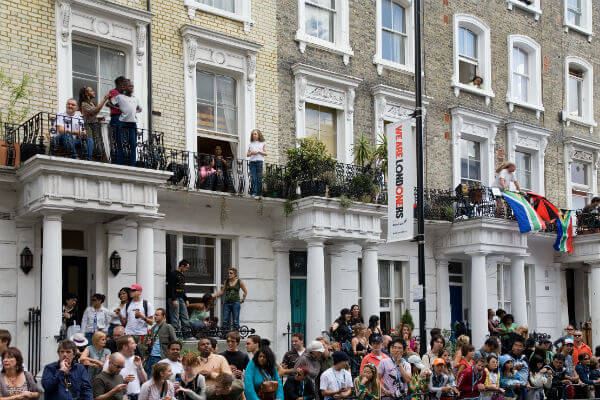
Londoners

Pankaj Mishra writes: Donald Trump became last week the presumptive Republican nominee in the U.S. presidential elections. But those condemned to agonizing suspense and anxiety until November should note that Trumpism, or the politics of hate and fear, also suffered a major defeat last week.

I refer to the election of former human rights lawyer Sadiq Khan as London’s mayor. That the son of a Pakistani bus driver, whose campaign team included gay men and Jewish women, should become the mayor of a great European city would at any time have signaled hope for our irrevocably mixed societies. Its significance in this era of politically expedient bigotry cannot be overestimated.

For, as Khan said a day after his remarkable victory, his Conservative opponents set out “to divide London’s communities in an attempt to win votes,” using “fear and innuendo to try and turn different ethnic and religious groups against each other — something straight out of the Donald Trump playbook.” [Continue reading…]

Facebooktwittermail

Twitter bars intelligence agencies from using analytics service

The Wall Street Journal reports: Twitter Inc. cut off U.S. intelligence agencies from access to a service that sifts through the entire output of its social-media postings, the latest example of tension between Silicon Valley and the federal government over terrorism and privacy.

The move, which hasn’t been publicly announced, was confirmed by a senior U.S. intelligence official and other people familiar with the matter. The service — which sends out alerts of unfolding terror attacks, political unrest and other potentially important events — isn’t directly provided by Twitter, but instead by Dataminr Inc., a private company that mines public Twitter feeds for clients.

Twitter owns about a 5% stake in Dataminr, the only company it authorizes both to access its entire real-time stream of public tweets and sell it to clients.

Dataminr executives recently told intelligence agencies that Twitter didn’t want the company to continue providing the service to them, according to a person familiar with the matter. The senior intelligence official said Twitter appeared to be worried about the “optics” of seeming too close to American intelligence services. [Continue reading…]

Facebooktwittermail

Famine is caused by politics — the remedy is political

Alex de Waal writes: The worst drought in three decades has left almost 20 million Ethiopians — one-fifth of the population — desperately short of food. And yet the country’s mortality rate isn’t expected to increase: In other words, Ethiopians aren’t starving to death.

I’ve studied famine and humanitarian relief for more than 30 years, and I wasn’t prepared for what I saw during a visit to Ethiopia last month. As I traveled through northern and central provinces, I saw imported wheat being brought to the smallest and most remote villages, thanks to a new Chinese-built railroad and a fleet of newly imported trucks. Water was delivered to places where wells had run dry. Malnourished children were being treated in properly staffed clinics.

Compare that to the aftermath of the 1984 drought, which killed at least 600,000 people, caused the economy to shrink by nearly 14 percent and turned the name “Ethiopia” into a synonym for shriveled, glazed-eyed children on saline drips.

How did Ethiopia go from being the world’s symbol of mass famines to fending off starvation? Thanks partly to some good fortune, but mostly to peace, greater transparency and prudent planning. Ethiopia’s success in averting another disaster is confirmation that famine is elective because, at its core, it is an artifact and a tool of political repression. [Continue reading…]

Facebooktwittermail

Panama paper trail goes online with massive searchable database

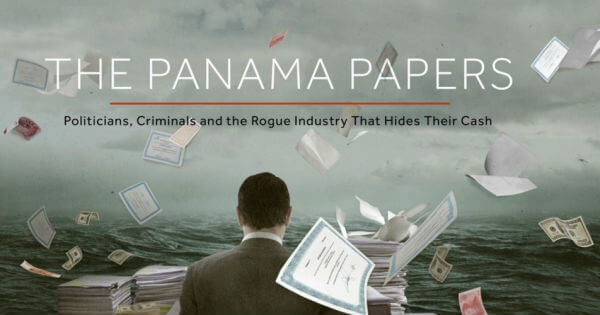
panama-papers

CNET reports: One of the biggest databases of leaked documents has just hit the internet, and what lies within is a massive and complicated web of corporate ownership that spans the globe.

The Panama Papers contain more than 2.5 million files, analysed by the International Consortium of Investigative Journalists and 112 reporters across 58 countries. Today’s data dump is just part of the picture, detailing the relationships between individuals, companies and offshore entities.

Think of it like a searchable corporate registry. But in this case, it’s a network made up of hundreds of thousands of individuals and companies, with seemingly endless links criss-crossing from Australia to Zimbabwe. The question now is which of these links can be used to prove the companies involved were attempting to hide massive wealth overseas.

While there’s no evidence that any of the entities have acted illegally, the “John Doe” behind the leak argues the data dump exposes the names behind growing income inequality, saying “it doesn’t take much to connect the dots.” [Continue reading…]

Facebooktwittermail

There are no conflicts in the Middle East that date back millennia

Muhammad Idrees Ahmad writes: In February 1994, during the Siege of Sarajevo, a Bosnian Serb mortar landed in a market, killing 68 and wounding 144. US President Bill Clinton, who had made his “never again” campaign promise to prevent genocide, was up in arms.

“Until those folks get tired of killing each other over there, bad things will continue to happen,” he said.

Two decades later, confronted with indiscriminate bombings in Aleppo and a starvation siege in Madaya, Barack Obama waxed similarly fatalistic. “The Middle East is going through a transformation that will play out for a generation,” he said, because it was “rooted in conflicts that date back millennia”.

There are no conflicts in the Middle East that date back millennia. The conflict in Syria is just over five years old. Nothing about it is fixed. In its scope and its intensity, in its balance of forces and its cast of characters, the conflict has been constantly evolving. The only element that has remained static, however, is the international response.

In speaking of the horrors unfolding in Syria, it is hard to avoid a certain sense of déjà vu. Everything that can be said about Aleppo has already been said about Homs, Houla, Daraya and Douma. But with each new horror comes a growing sense that, for all the obtrusive violence, for all our pleas, we are plunging into the deep, smothered by apathy, abandoned by hope. [Continue reading…]

Facebooktwittermail