Author Archives: News Sources

Apple iPhone unlocking manoeuvre likely to remain secret

Reuters reports: The company that helped the FBI unlock a San Bernardino shooter’s iPhone to get data has sole legal ownership of the method, making it highly unlikely the technique will be disclosed by the government to Apple or any other entity, Obama administration sources said this week.

The White House has a procedure for reviewing technology security flaws and deciding which ones should be made public. But it is not set up to handle or reveal flaws that are discovered and owned by private companies, the sources said, raising questions about the effectiveness of the so-called Vulnerabilities Equities Process.

The secretive process was created to let various government interests debate about what should be done with a given technology flaw, rather than leaving it to agencies like the National Security Agency, which generally prefers to keep vulnerabilities secret so they can use them. [Continue reading…]

Facebooktwittermail

Oil industry knew of ‘serious’ climate concerns more than 45 years ago

The Guardian reports: The oil industry’s knowledge of dangerous climate change stretches back to the 1960s, with unearthed documents showing that it was warned of “serious worldwide environmental changes” more than 45 years ago.

The Stanford Research Institute presented a report to the American Petroleum Institute (API) in 1968 that warned the release of carbon dioxide from burning fossil fuels could carry an array of harmful consequences for the planet.

The emergence of this stark advice follows a series of revelations that the fossil fuel industry was aware of climate change for decades, only to publicly deny its scientific basis.

“Significant temperature changes are almost certain to occur by the year 2000 and these could bring about climatic change,” the 1968 Stanford report, found and republished by the Center for International Environmental Law, states. “If the Earth’s temperature increases significantly, a number of events might be expected to occur including the melting of the Antarctic ice cap, a rise in sea levels, warming of the oceans and an increase in photosynthesis.

“It is clear that we are unsure as to what our long-lived pollutants are doing to our environment; however, there seems to be no doubt that the potential damage to our environment could be severe.” [Continue reading…]

Facebooktwittermail

The brutality of ISIS has many precedents

John Gray writes: The rise of ISIS is intensely unsettling to the liberal West, and not just because of the capacity the jihadist group has demonstrated to launch a mass-casualty terrorist attack in a major European city. The group’s advance confounds the predominant Western view of the world. For the current generation of liberal thinkers, modern history is a story of the march of civilization. There have been moments of regression, some of them atrocious, but these are only relapses into the barbarism of the past, interrupting a course of development that is essentially benign. For anyone who thinks in this way, ISIS can only be a mysterious and disastrous anomaly.

For those baffled by ISIS, however, it cannot be only ISIS that is mysterious. So too must be much of modern history. ISIS has brought with it many atrocious assaults on civilized values: the sexual enslavement of women and children; the murder of gay men; the targeted killing of writers, cartoonists, and Jews; indiscriminate slaughter at a rock concert; and what amounted to the attempted genocide of the Yezidi. All of these acts of barbarism have modern precedents, many of them in the past century. The use of sexual violence as a military strategy featured in ethnic cleansing in Bosnia in the 1990s; during Bangladesh’s war of independence in 1971; in Nepal, Colombia, Sudan, the Democratic Republic of Congo, and many other conflict zones. The destruction of buildings and artworks, which ISIS has perpetrated at the ancient site of Palmyra among other places, has several twentieth-century precedents. Vladimir Lenin’s Bolsheviks razed churches and synagogues in Russia. Mao Zedong demolished large parts of China’s architectural inheritance and most of Tibet’s, while the Pol Pot regime wrecked pagodas and temples and aimed to destroy the country’s cities. In these secular acts of iconoclasm, the goal was to abolish the past and create a new society from “year zero” — an idea that goes back to “year one” of the calendar introduced in France in 1793 to signal the new era inaugurated by the French Revolution. Systematically destroying not only pre-Islamic relics but also long-established Islamic sites, the aim of ISIS is not essentially different. [Continue reading…]

Facebooktwittermail

Report: ‘Iraq may soon reach a point beyond repair’

Al Jazeera reports: Without a coherent strategy to address the urgent needs of displaced Iraqis, the opportunity to rebuild parts of the country liberated from ISIL may be lost, a new report has warned.

The report from the Minority Rights Group International and the Ceasefire Centre for Civilian Rights, released on Wednesday, highlights the dire situation facing millions of Iraqis amid the country’s ongoing war against the Islamic State of Iraq and the Levant (ISIL, also known as ISIS) group.

“In the context of limited governance and continued insecurity, the opportunity afforded by the retaking of territory from ISIS is being lost,” the report states. “If communities are unable to co-exist, Iraq may soon reach a point beyond repair.” [Continue reading…]

Facebooktwittermail

U.S. readies ‘Plan B’ to arm Syria rebels

The Wall Street Journal reports: The Central Intelligence Agency and its regional partners have drawn up plans to supply more-powerful weapons to moderate rebels in Syria fighting the Russia-backed regime in the event the country’s six-week-old truce collapses, according to U.S. and other officials.

The preparations for a so-called Plan B center on providing vetted rebel units with weapons systems that would help them in directing attacks against Syrian regime aircraft and artillery positions, the officials said.

The Wall Street Journal first reported in February that President Barack Obama’s top military and intelligence advisers were pressing the White House to come up with a Plan B to counter Russia in Syria. Since then, fresh details have emerged on the nature of the new weaponry that could be deployed under the covert program.

The preparations were discussed at a secret meeting of spy chiefs in the Middle East just before the cease-fire took effect on Feb. 27 and in follow-on exchanges between intelligence services.

In those meetings, officials briefed on the deliberations said, coalition members received provisional assurances from the CIA that they would be given approval to expand support to Syria’s moderate opposition. Coalition members have agreed on the outlines of Plan B, but the White House must still approve the list of specific Plan B weapons systems before they can be introduced to the battlefield. [Continue reading…]

Facebooktwittermail

Syria’s partial cease-fire shows signs of crumbling

The New York Times reports: A fragile and partial cease-fire in Syria is coming under new strains, with ground clashes and airstrikes intensifying as the government promises a new offensive and prepares to hold controversial parliamentary elections on Wednesday.

France, one of the most outspoken international opponents of Syria’s president, Bashar al-Assad, and Iran, his closest ally, both issued warnings that the partial cease-fire, which has lasted far longer than any other and has reduced the daily death toll significantly since Feb. 27, faced the threat of collapse.

A day before the next round of peace talks is set to start, France, along with opposition negotiators, blamed new government attacks in the northern province of Aleppo and the eastern suburbs of the capital, Damascus, for endangering the agreement, while Iran blamed “armed groups” fighting the government. Officials in the United States, too, said they were very concerned about the rise in violence.

The expressions of worry mounted as the special envoy for the United Nations, Staffan de Mistura, traveled to Tehran as part of a regional tour before the talks, which are set to resume in Geneva on Wednesday. After meeting with Iranian officials, he said he had emphasized the need to maintain the partial truce, known as a cessation of hostilities. [Continue reading…]

Facebooktwittermail

Syria’s Assad holds elections despite peace talks in Geneva

The Washington Post reports: Even as Syrian peace efforts resumed Wednesday in Geneva, President Bashar al-Assad took a major jab at the process from Damascus: voting in parliamentary elections denounced as a farce by the opposition.

Syria’s state-run media published photographs of the embattled leader and his wife, Asma al-Assad, smiling as they cast ballots in the capital for a new 250-member parliament.

The decision to hold the elections during peace talks in Geneva backed by the United Nations was yet another signal that the Syrian leader has no plans to step aside — a key demand of the opposition delegation at the negotiations. [Continue reading…]

Facebooktwittermail

Sanders campaign’s new Jewish outreach director is outspoken Israel critic

The Times of Israel reports: Simone Zimmerman, the Bernie Sanders campaign’s newly hired national Jewish outreach coordinator, is quite familiar with the American Jewish establishment.

She is used to fighting against it.

During the 2014 Gaza war, Zimmerman was one of the leaders of a group of young Jews that held regular protest vigils outside the offices of the Conference of Presidents of Major American Jewish Organizations, reading the names of Palestinians and Israelis killed in the conflict.

She opposes Israel’s occupation, wants Hillel to allow participation by groups that support the Boycott, Divestment and Sanctions movement against Israel, is against Jewish federation funding for Israeli projects in the West Bank and wrote favorably of the efforts of Jewish Voice for Peace, a pro-BDS group, to get “international corporations to stop profiting off human rights abuses.” (The Anti-Defamation League has called JVP one of America’s top 10 anti-Israel groups.) [Continue reading…]

Facebooktwittermail

FBI paid professional hackers one-time fee to crack San Bernardino iPhone

The Washington Post reports: The FBI cracked a San Bernardino terrorist’s phone with the help of professional hackers who discovered and brought to the bureau at least one previously unknown software flaw, according to people familiar with the matter.

The new information was then used to create a piece of hardware that helped the FBI to crack the iPhone’s four-digit personal identification number without triggering a security feature that would have erased all the data, the individuals said.

The researchers, who typically keep a low profile, specialize in hunting for vulnerabilities in software and then in some cases selling them to the U.S. government. They were paid a one-time flat fee for the solution. [Continue reading…]

Facebooktwittermail

Panama raids offices of Mossack Fonseca law firm

Reuters reports: Panama’s attorney general late on Tuesday raided the offices of the Mossack Fonseca law firm to search for any evidence of illegal activities, authorities said in a statement.

The Panama-based law firm is at the center of the “Panama Papers” leaks scandal that has embarrassed several world leaders and shone a spotlight on the shadowy world of offshore companies.

The national police, in an earlier statement, said they were searching for documentation that “would establish the possible use of the firm for illicit activities.” The firm has been accused of tax evasion and fraud. [Continue reading…]

Facebooktwittermail

‘Grand Theft Auto’ robs players of compassion

Tom Jacobs writes: The link between violent video games and aggressive behavior is old, if still troubling, news. But violence is not the only problematic aspect of these enormously popular entertainments: Many are also blatantly, unapologetically sexist.

Take the best-selling Grand Theft Auto series. In London’s Daily Telegraph, a reviewer called the fifth installment “relentlessly misanthropic,” adding that “the game often coerced me into actions that degraded women.”

Well, it turns out that sort of “fun” has real-life consequences. In a newly published study, a research team from Italy and the United States reports playing such games reduces some players’ compassion for women who have been victims of violence. [Continue reading…]

Facebooktwittermail

Most young Arabs reject ISIS and think ‘caliphate’ will fail, poll finds

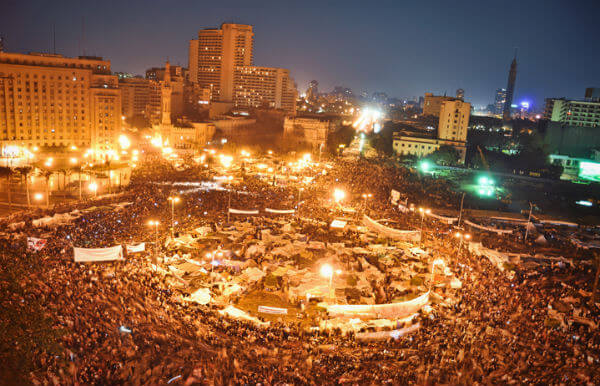
Tahrir_Square

The Guardian reports: The vast majority of young Arabs are increasingly rejecting Islamic State and believe the extremist group will fail to establish a caliphate, a poll has found.

Only 13% of Arab youths said they could imagine themselves supporting Isis even if it did not use much violence, down from 19% last year, while 50% saw it as the biggest problem facing the Middle East, up from 37% last year, according to the 2016 Arab Youth Survey.

However, concern is mounting across the region as a chronic lack of jobs and opportunities were cited as the principal factor feeding terrorist recruitment. In eight of the 16 countries surveyed, employment problems were a bigger pull factor for Isis than extreme religious views.

The eighth annual survey provides a snapshot of the aspirations of 200 million people. It found that five years after the start of the Arab spring, most youngsters prioritise stability over democracy. Optimism that the region would be better off in the wake of the 2011 uprisings has been steadily declining.

In 2016, only 36% of young people said they felt the Arab world was in better shape following the upheaval, down from 72% in 2012. The majority (53%) agreed that maintaining stability was more important than promoting democracy (28%). In 2011, 92% of Arab youth said “living in a democracy” was their most cherished wish. [Continue reading…]

Facebooktwittermail

Muslims used to love living in Tennessee — now it’s a nightmare

BuzzFeed reports: The fire department called before dawn. Daoud Abudiab and his 13-year-old daughter were already awake, so they got in the car quickly. From about a mile away, Abudiab saw a plume of black smoke rising above the low skyline and started getting nervous. He thought back to the arguments over whether to mark the Islamic Center of Columbia, Tennessee, the only mosque in the hundred-mile stretch between Nashville and Huntsville, with a large sign or a small, unassuming one. They had opted for a large one.

Abudiab and his daughter could feel the heat of the fire when they stood at the yellow police tape. A black swastika was spray-painted on the mosque’s facade. Flames pushed out from the burst windows and up through the collapsed roof. Abudiab’s wife arrived with the rest of the kids, followed by other congregants and their families.

Abudiab looked at the women and all he saw was headscarves. “Go home,” he pleaded. “Don’t go out. Don’t go to Walmart. Don’t go anywhere.”

The ringleader of the band of white supremacists who burned down the mosque with Molotov cocktails justified the act by saying, “What goes on in that building is illegal according to the Bible.” This was February 2008. The theory of Barack Obama’s crypto-Islamism was faint chatter on the fringes. But in the years after Obama’s election, Tennessee became a key battleground in a national anti-Muslim movement whose influence has culminated, for now, in the presidential campaigns of Republican frontrunners Donald Trump and Ted Cruz, both of whom are being advised by people whose views on Islam were once considered too extreme for mainstream politics. [Continue reading…]

Facebooktwittermail

IMF says Britain leaving the EU is a significant risk

The Guardian reports: A British vote to leave the EU risks causing severe economic and political damage to Europe that will spill over into an already febrile world economy, the International Monetary Fund has warned.

Cutting its forecasts for global growth and for the UK and other advanced economies, the IMF listed a potential Brexit vote in June’s EU referendum as a key risk in its latest World Economic Outlook (WEO).

Maurice Obstfeld, the IMF’s chief economist, said a decision to quit the EU was a “very real” possibility and would affect economic growth even if an exit was managed smoothly.

“In the United Kingdom, the planned June referendum on European Union membership has already created uncertainty for investors; a ‘Brexit’ could do severe regional and global damage by disrupting established trading relationships,” he said

The Washington-based Fund said economic growth was also threatened by a host of other factors, including “the tragedy of large-scale refugee inflows” to Europe, a potential reappearance of financial market turmoil, China’s difficult economic rebalancing and growing income inequality. [Continue reading…]

Facebooktwittermail

Syria peace talks — democracy left out in the cold

Saleh M. Mohamed writes: This week, United Nations talks meant to chart a path toward a peaceful, democratic future for Syria are set to resume in Geneva. But, in an absurd twist, the legitimate representatives of a large, democratically governed area in the country will not be invited to attend.

This area is called Rojava, in the northern part of Syria, and despite its frequent description as “Kurdish,” it is governed inclusively by Kurds, Arabs, and the area’s other ethnic groups. Furthermore, its self-defense forces are part of the Syrian Democratic Forces backed by the United States that have advanced toward Raqqa, the center of the Islamic State’s power in Syria.

Both in strategic and moral terms, Rojava’s existence is a rare bright spot in this conflict. So the exclusion of its representatives from the U.N. process is not only unfair, but makes no sense if the aim of the talks is to establish a viable path to democracy in Syria.

The primary reason for this injustice is that Turkey opposes Rojava’s military force, the People’s Protection Units, or Y.P.G., claiming it is one and the same with the P.K.K., a Kurdish group with a long history of armed conflict with the Turkish government.

This is not true. Both groups are Kurdish, but the Syrian Kurds, with their Arab allies and international support, are locked in a difficult, but thus far successful, battle against the Islamic State. The Y.P.G.’s fight is about Syria, not Turkey. Its role is to defend the institutions of self-government in Northern Syria (the party of which I am co-president, the Democratic Union Party, is part of this political coalition, along with other parties and civil society organizations).

It’s a fair question to ask what kind of democracy this is. Its central philosophy is that people should govern themselves from the bottom up, and so as much decision making as possible is left to local assemblies. These assemblies, furthermore, are designed to ensure a voice for non-Kurdish minorities and for women. This is real and genuinely inclusive democracy, and it deserves to be supported, not ignored. [Continue reading…]

Facebooktwittermail

As ISIS is pushed back in Iraq, worries about what’s next

Reuters reports: As U.S.-led offensives drive back Islamic State in Iraq, concern is growing among U.S. and U.N. officials that efforts to stabilize liberated areas are lagging, creating conditions that could help the militants endure as an underground network.

One major worry: not enough money is being committed to rebuild the devastated provincial capital of Ramadi and other towns, let alone Islamic State-held Mosul, the ultimate target in Iraq of the U.S.-led campaign.

Lise Grande, the No. 2 U.N. official in Iraq, told Reuters that the United Nations is urgently seeking $400 million from Washington and its allies for a new fund to bolster reconstruction in cities like Ramadi, which suffered vast damage when U.S.-backed Iraqi forces recaptured it in December.

“We worry that if we don’t move in this direction, and move quickly, the progress being made against ISIL may be undermined or lost,” Grande said, using an acronym for Islamic State.

Adding to the difficulty of stabilizing freed areas are Iraq’s unrelenting political infighting, corruption, a growing fiscal crisis and the Shiite Muslim-led government’s fitful efforts to reconcile with aggrieved minority Sunnis, the bedrock of Islamic State support. [Continue reading…]

Facebooktwittermail

How the expanding U.S. role in Iraq is kept quiet by pretending it’s not expanding

The New York Times reports: There are roughly 5,000 American service members in Iraq according to current Pentagon estimates, but the number often varies, sometimes daily, by hundreds. That number is higher than the cap the White House set last year, which limited the number of troops to be deployed to Iraq to 3,870. But under policies created by the military after the attacks of Sept. 11, 2001, service members who are planning to spend less than four months in a war zone are not counted.

Sergeant Cardin [who was killed on March 19] and the Marines [with him at Fire Base Bell, south of Mosul] were scheduled to be deployed in Iraq temporarily, so they did not count against the cap.

At the height of the war in 2007, the United States had roughly 165,000 troops deployed in 500 bases and outposts across Iraq. Mr. Obama, who ran for president in 2008 vowing to end the United States’ involvement, fulfilled his pledge when he pulled all American troops out of the country in 2011. But as the Islamic State has strengthened its hold in the region in the past two years, Mr. Obama has sent thousands of American service members back in. [Continue reading…]

Facebooktwittermail