The New York Times reports: President Vladimir V. Putin of Russia said on Thursday that his country’s more than five-month military operation in Syria had been a success, with the upper hand on the battlefield returned to the Syrian government and with President Bashar al-Assad ready to make the compromises necessary for a peaceful settlement.
As the Russian leader spoke, Kurdish leaders in northern Syria were putting the final touches on a plan that would unite territories controlled by Kurdish forces within an autonomus entity within a federated Syria.
The new entity is to be called the Democratic Federation of Rojava-North Syria, Kurdish leaders said at a news conference later in the day, and its structure and bylaws are to be hashed out by an executive council with 31 members, half of them female.
Anticipating criticism, a spokeswoman for the group, Hediye Yusif, said this was not intended as a first move toward the partition of the country. “We are against the division of Syria,” she said. “Federalism doesn’t mean partition. It’s the opposite; we see it as a positive step towards a democratic Syria for all.”
In Mr. Putin’s first extensive remarks on Syria since he ordered the bulk of Russian forces to return home on Monday night, he said that the Russian military would remain engaged in what he called the fight against terrorism, but added that it could return if needed.
“If necessary, literally within a few hours, Russia can build its contingent in the region to a size proportionate to the situation developing there,” Mr. Putin said.
Russian forces remain engaged in efforts to take back the ancient Syrian city of Palmyra, Mr. Putin said, adding that he expected it to be liberated soon. The city was captured from government forces last May by the Islamic State, which has destroyed temples, triumphal arches and other landmarks. [Continue reading…]
Author Archives: News Sources
In Syria, peaceful protesters demonstrate again Assad and Jabhat al-Nusra
The Associated Press reports: With Syria’s shaky cease-fire holding, peaceful protesters have yet again taken to the streets in opposition-held areas of the country. But this time, in addition to President Bashar Assad’s government, they have another despised authority they seek to topple — al-Qaida’s affiliate in the country, the oppressive Nusra Front.
The developments have raised questions as to whether the al-Qaida branch can be sidelined — or in fact even completely eradicated — from any future scenarios for Syria.
In the northwestern province of Idlib, protesters recently set fire to an office belonging to the Nusra Front after major fighting in the area saw the al-Qaida-linked militants crush a division of the U.S.-backed rebel Free Syrian Army, which has become popular with residents in the town of Maaret al-Numan and elsewhere across the province.
The nearly three-week truce — which excludes the Nusra Front and its rival, the Islamic State group, both designated by the United Nations as terrorist organizations — and the peace talks currently underway in Geneva between the Syrian government and Western-backed rebels have increased pressure on the Nusra Front.
According to Charles Lister, a Middle East Institute fellow who has written a book on jihadist dynamics in the Syria conflict, the truce “was a test of exactly how much” the Nusra Front would succeed in casting itself as a political force and a heavyweight in the conflict.
Apparently, not much. [Continue reading…]
‘In Iraq I would have died quickly. Here I feel I am dying, but very slowly’
Millennial refugees describe their lives to The Guardian, first, Akeel, 28, from Baghdad, who is now in Calais, France: I have been in the camp for six months now. It feels like such a long time. I get embarrassed when I speak to people who aren’t in my position. They probably just see me as a refugee and look at me with sympathy. If we had met in Baghdad I might have seemed quite cool.
I had a good life there. My life was probably very similar to that of anyone else my age. I wasn’t always living in a tent on my own, eating food from tins. I had such good friends. I really miss laughing with them. I adored my family, I still do. All my relationships are carried out on my phone now. I am on it all the time. It’s the only way to have any kind of life outside of this place.
I used to be a teacher. I taught maths and English. I wanted to be headmaster one day and run teaching camps for disadvantaged children in Iraq but who knows what I will do now, if anything. It’s hard being young in the camp – I mean, it’s hard being any age. It is just so, so boring. I feel like my 20s are going before my eyes. I feel 50, not 28.
I used to look at life with excitement, and wonder what would happen in the future – that’s what it’s like when you’re young. You have so many possibilities. I wanted to do a lot of good in my country. Now I feel like I am just a lot of needs: someone who needs a home, who needs food and on and on. Not someone who can do something for other people. That is the worst part of it.
I try to keep up the things I like. I love football. I try to play here and sometimes we watch matches on our phones. But we are all now thinking constantly about what life will be for us.
In Iraq I would have died quickly. Here I feel like I am just dying, but very slowly. [Continue reading…]
Refugees at sea: Surviving one of the deadliest routes to Europe
More than 44,000 refugees are already trapped in Greece, a number rising each day
The New York Times reports: Taha al-Ahmad’s family is sleeping in mud. His youngest daughter, age 1, lies beneath wet blankets, coughing inside their soggy tent. It has rained for days. Portable toilets are overflowing. Men burn firewood to stay warm. A drone circles overhead. Television trucks beam images of misery to the world.
It is primeval, and surreal, this squalid, improvised border camp of 12,000 refugees, a padlocked waiting room for entering the rest of Europe. Mr. Ahmad, barely two weeks out of Syria, does not understand why his family cannot cross the Macedonian border — roughly a football field away — and continue toward Germany. Hundreds of thousands of migrants passed through last year, but now Macedonia is closed. Europe’s door is slamming shut.
“I am in a very high degree of miserable,” Mr. Ahmad told me, speaking in a singsong English he learned in Syria, as our shoes sank into the muck.
“I ask my friends in Germany and Turkey: ‘What is happening? Tell us,’” he said. “We don’t know what is happening outside.”
To Mr. Ahmad, “outside” is the world of politics and policy beyond the wretchedness of the Idomeni camp. In Idomeni, refugees exist in a decrepit suspended animation. Disease spreads. Grandmothers sleep beside train tracks. Outside, specifically in Brussels, the leaders of the European Union, under public pressure to stop the migrant flow, will begin discussing the fate of refugees on Thursday, and a disputed plan to deport them to Turkey. [Continue reading…]
Ted Cruz’s new national security advisers include ‘one of America’s most notorious Islamophobes’
Huffington Post reports: A big part of Sen. Ted Cruz’s appeal is that he’s not Donald Trump, the openly bigoted billionaire currently leading the Republican Party’s presidential race.
But the notion that a Cruz presidency would be more palatable to those concerned about Trump’s anti-Muslim stance came into doubt on Thursday, when Cruz unveiled his own team of national security advisers. It includes Frank Gaffney, a man described by the Southern Poverty Law Center as “one of America’s most notorious Islamophobes.”
Gaffney, who served in the Reagan-era Defense Department, now heads the Center for Security Policy. It’s a think tank of sorts well known for promoting conspiratorial theories about the Muslim Brotherhood infiltrating the U.S. government at high levels and the Sharia system replacing American democracy. [Continue reading…]
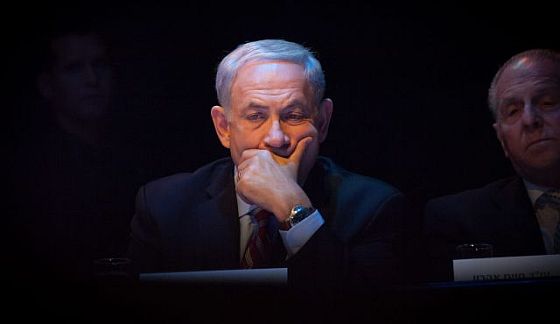
Netanyahu’s toxic embrace with Israel

Nicola Abé reports: Even though this new wave of violence has been underway since October, Netanyahu has been unable to do anything about it or bring peace to his country. Some would argue that his record is disastrous, and that the tense situation would harm his popularity, but the opposite has been true. Last year, Netanyahu expanded his power even further, simply claiming a number of ministries for himself. Now, in addition to being prime minister, he is also foreign minister, economy minister, communication minister and regional development minister. He has installed allies in the media, in the police force and in the judiciary. It’s as if Netanyahu is in a toxic embrace with his country.
During a state trip last fall, Netanyahu’s official plane flew through heavy, dark clouds, with the fasten seatbelt sign on. Just as the aircraft entered severe turbulence, Netanyahu appeared in the rear section of the aircraft, where the journalists sat. He wanted to give a background talk at that very moment. He had a full 12 hours to speak, but he only chose to do so a few minutes prior to landing.
As a hurricane-like storm brewed, the journalists clung to their seats. It was the middle of the night in Jerusalem and Netanyahu spoke with them about Syria and Iraq. He had dark circles under his eyes and unkempt hair. His words essentially amounted to nothing.
The plane swayed back and forth. His press spokesman then pulled at his sleeve, trying to get him to sit down. The aircraft hit an air pocket, but Netanyahu didn’t flinch. This was and is his message. He stages politics as a never-ending dance at the brink of an abyss — in which he constantly remains in control. This catastrophic backdrop allows Netanyahu to appear both as victim and savior. He turns everything into an existential question, because he derives his power from the existential.
“The survival mode is in the Israeli DNA,” says journalist Nahum Barnea of Yedioth Ahronoth, one of the country’s biggest daily newspapers. He has followed Netanyahu for years. “He plays the type who holds the dam together.” [Continue reading…]
Yemen conflict: Saudi Arabia to ‘scale back’ military operations
BBC News reports: Saudi Arabia has said its military coalition will scale back operations against rebels in Yemen.
The US-backed coalition of mostly Arab states began air strikes a year ago in support of Yemen’s internationally recognised government.
A Saudi military spokesman said that the coalition would continue to provide air support to Yemeni forces.
The announcement came as the death toll from a strike on a market this week doubled to more than 100. [Continue reading…]
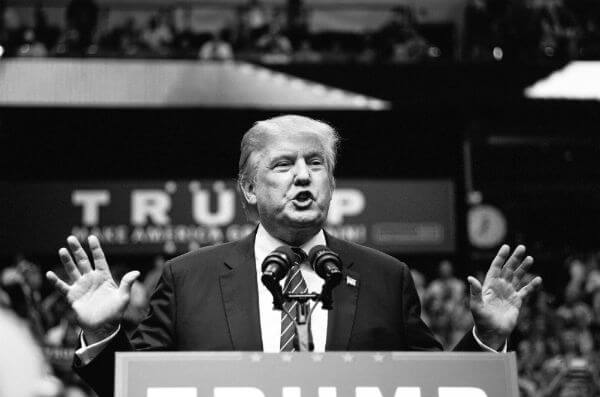
Global risks: Trump presidency as dangerous as jihadi terrorism, says The Economist
Politico reports: A Donald Trump presidency poses a top-10 risk event that could disrupt the world economy, lead to political chaos in the U.S. and heighten security risks for the United States, according to the Economist Intelligence Unit.
Electing Trump could also start a trade war, hurt trade with Mexico and be a godsend to terrorist recruiters in the Middle East, according to the latest EIU forecasts.
The well-respected global economic and geopolitical analysis firm put a possible Trump presidency in its top 10 global risks this month, released Wednesday. Other risks include a sharp slowdown in the Chinese economy, a fracture of the Eurozone, and Britain’s possible departure from the European Union. [Continue reading…]
On the nomination of Judge Merrick Garland to the Supreme Court
Lawrence Goldstone writes: With his nomination of Judge Merrick Garland to fill Supreme Court Justice Antonin Scalia’s seat, President Barack Obama has made clear the tone he wishes to strike with the nation. He faced a difficult choice: whether to nominate an eminently qualified liberal or an eminently qualified moderate. In opting for the latter, Obama has eschewed the standard Republican strategy of aiming every policy decision at the party’s most extreme faction, and instead sought to nominate a justice whom large swathes of both parties will see as appropriate to the high bench.
Garland, the chief judge of the U.S. Court of Appeals for the District of Columbia Circuit, is man whose academic, personal, and judicial credentials are such that Senator Orrin Hatch said just last week that the president “could easily name Merrick Garland, who is a fine man” to fill the seat, but “he probably won’t do that because this appointment is about the election, so I’m pretty sure he’ll name someone the [liberal Democratic base] wants.” In what is certain to cause Hatch to shift uncomfortably in his Judiciary Committee seat, Obama did precisely what the senator suggested and nominated an appellate court judge who has been lauded for a measured, non-ideological approach to the law.
Far more interesting, however, than Obama’s opening move is how Republicans will respond. Even before Scalia was buried, Republican Senate leaders announced that they would refuse to consider an Obama nominee. In choosing to strike preemptively, they locked themselves into a strategy that is somewhere between questionable and idiotic, and just may be the coup de grace to their political party, which now seems likely to be led by Donald Trump. [Continue reading…]
Garrett Epps writes: There are two possible interpretations of the president’s Garland strategy. The first is that Obama is playing on Republican fears of whomever a President Hillary Clinton might tap for the role and is trying to lure the Republicans into confirming an older, more moderate nominee. If they are successfully lured, then mission accomplished. If, however, Obama does not lure Republicans into confirming Garland, he will have at least embarrassed them and exposed the nakedly political nature of their tantrum.
The second interpretation — which I incline to — is that the meritocratic Boy Scout in Obama has called this shot. Garland is a terrific nominee and would make a wonderful justice. As Norman Ornstein of the American Enterprise Institute said Wednesday morning, Obama almost certainly made the pick “because he thought this was the best possible choice for the Supreme Court.” Obama might be unwilling to pass up a chance to make such an appointment, and to the extent there is political calculation behind it, the president is banking on the residual idealism of some Republican senators to respond. He may believe there is at least some chance Garland will be confirmed. If so, his belief in that reservoir of public spirit is a testament both to his own generosity and to his persisting naïveté.
Of course, the idea that Garland, at 63, is an older nominee who would serve a shorter time on the Court and pose less danger to the conservative legal agenda assumes facts not in evidence. Almost exactly a century ago, another Democrat named a Jewish nominee in an election year. The nomination was deeply controversial, and the Senate delayed hearings and a vote for four months — still a record for delay. The nominee was Louis D. Brandeis. He was 59 years old. Nearly a quarter-century later, at 82, he retired as perhaps the most influential liberal justice in American history. [Continue reading…]
Jay Michaelson writes: I was one of Judge Garland’s law clerks in his second year on the D.C. Circuit bench, back in 1998. Perhaps it sounds self-serving to say so, but Judge Garland is one of the hardest working, fairest-minded people I’ve ever met. He worked harder than any of us, staying late into the night, sometimes cutting out of the office to make time for his kids before coming back in for the midnight shift. Watching him stand alongside President Obama this morning filled me with respect and pride — in the moments when I could forget the disrespect he is soon to endure.
I also had some firsthand exposure to how he thinks. There was not a single case I worked on with him, from the most mundane Federal Energy Regulation Commission matter to a 20-plus-year-old civil rights case, in which politics played into his considerations. Conscience, sure — Judge Garland often reminded me that there were human beings on both sides of these contentious cases — but never ideology.
Not all judges on the D.C. Circuit were of that persuasion. I was friends with clerks for other judges, and some (whom, of course, I won’t name) would simply tell their clerks how they wanted the case to come out, leaving the clerks to get from point A to point B. That was never my experience with Judge Garland. [Continue reading…]
Rise of radical nationalism across Europe plays to Putin’s advantage
Bloomberg reports: A growing pro-Kremlin contingent in Europe, likely emboldened by Russia’s decision to withdraw most of its forces from Syria, is tipping popular sentiment further toward President Vladimir Putin.
The most pressing of the issues vital to Putin is European Union sanctions against Russia, introduced in the wake of Moscow’s intervention in Ukraine in 2014. It’s hard to say whether the EU can preserve unity on the subject for much longer, said Petras Vaitekūnas, the former Lithuanian foreign minister, who advises the Ukrainian Security Council.
“I expect big problems with that, and with our ability to repulse Putin’s onslaught,” he said.
Ten days ago, yet another far-right party supporting Russia gained a foothold in an EU country, this time Slovakia. People’s Party, Our Slovakia won 8% of the vote in national elections, joining a burgeoning club including Hungary’s Jobbik, Greece’s Golden Dawn and Marine Le Pen’s National Front in France.
The far-right parties, which often stem from neo-Nazi groups and sport crypto-fascist insignia, are the most visible layer of the pro-Russia camp in Europe. With Europe engulfed in a migrant crisis sparked by the war in Syria, their anti-immigrant and anti-EU rhetoric is in hot demand across the continent, particularly in the east. Party leaders are frequent guests in Moscow, and many of them are closely linked to Russia’s own reactionary networks. Together, they are nudging the political mainstream toward radical nationalism, which these days often comes hand in hand with pro-Russian sentiment. [Continue reading…]
Putin’s long-term strategy in Syria
Steven Simon writes: Over the past six months, Russian aircrews flew over 10,000 missions, averaging between 60 and 74 sorties per day, a relatively high operational tempo. They did this fairly cheaply, unlike Operation Inherent Resolve, the U.S. military operation against the Islamic State (also known as ISIS), in which attack aircraft need to traverse comparatively long distances from their bases to targets. The Russians have been able to stage strike aircraft literally minutes from their targets. Their cost per sortie has therefore been quite low. According to Jane’s, the estimated daily cost of Russian operations has been in the $4 million range, which is small potatoes in the context of a defense budget of $50 billion. In contrast, the average cost of a single air strike conducted under Inherent Resolve is $2.4 million.
Having dusted off and renovated its old installations at Tartus—and with personnel remaining in place—Russia can redeploy its aircraft on very little notice. Indeed, the Russians will probably do what the United States does in the Persian Gulf, rotating aircraft in and out of bases in Qatar and the United Arab Emirates in a manner that amounts to a permanent presence, but is technically temporary. Their removal back to Russian bases does not therefore represent some kind of closure owing to a presumed difficulty of reestablishing a presence in Syria in the future. It merely represents a tactical pause. [Continue reading…]
AFP reports: The US military said Wednesday it has seen no significant reduction in Russia’s combat power in Syria despite President Putin’s surprise announcement this week of a partial withdrawal of his country’s forces.
Colonel Steve Warren, a US military spokesman in the region, said Russian intentions remain unclear.
“We have not seen a significant reduction, frankly, in their combat power. Particularly the ground combat power remain static, the air combat power has been slightly reduced, but that’s it,” he said. [Continue reading…]
Is Putin trying to pressure Assad to negotiate?
Commenting on an article by Russia analyst Morteza Makki appearing in an Iranian daily, Arash Karami writes: Makki wrote that despite [Foreign Minister] Zarif’s positive statement on the withdrawal, “this quick and surprising decision by Russia shows that Iran and Russia’s partnership in Syria was not a strategic partnership. The Russians make decisions based on their own calculations and interests, and the partnership was not such that Iran and Syria would be able to push forward with their views and positions by leaning on the Russians.”
Makki continued that it is possible Russia’s decision was made to force President Bashar al-Assad’s government to show flexibility in the Geneva negotiations, saying that in their recent statements, the Syrians have been very optimistic and have presented red lines regarding Assad’s departure. Even conservative media outlets have suggested Russian President Vladimir Putin was angered by Syrian officials’ comments ahead of the negotiations in Geneva.
When it comes to Syria, the Iranian media has typically been keen to conform to the statements of officials. To see an article suggest that the official version presented by authorities is hiding key points is rare indeed. Most Iranian media outlets have parroted official positions on the Russian withdrawal, but they, too, have struggled to explain it. Even Iran Newspaper, which operates under the administration’s direction, called the withdrawal “surprising.” [Continue reading…]
Kurds hope to establish a federal region in northern Syria
The New York Times reports: Syrian Kurdish parties are working on a plan to declare a federal region across much of northern Syria, several of their representatives said on Wednesday. They said their aim was to formalize the semiautonomous zone they have established during five years of war and to create a model for decentralized government throughout the country.
If they move ahead with the plan, they will be dipping a toe into the roiling waters of debate over two proposals to redraw the Middle East, each with major implications for Syria and its neighbors.
One is the longstanding aspiration of Kurds across the region to a state of their own or, failing that, greater autonomy in the countries where they are concentrated: Turkey, Iraq, Iran and Syria, all of which view such prospects with varying degrees of horror.
The other is the idea of settling the Syrian civil war by carving up the country, whether into rump states or, more likely, into some kind of federal system. The proposal for a federal system has lately been floated by former Obama administration officials and publicly considered by Secretary of State John Kerry, but rejected not only by the Syrian government but by much of the opposition as well. [Continue reading…]
Middle East Eye reports: Syrian Kurds have declared a “Federation of Northern Syria” that unites three Kurdish majority areas into one entity, an announcement swiftly denounced by the Syrian government, opposistion and regional powers.
According to Kurdish Democratic Union Party (PYD) official Idris Nassan, the plan will involve “areas of democratic self-administration” under the federal banner, encompassing all ethnic and religious groups living in the area.
Two officials at talks involving Kurdish, Arab, and other parties in the town of Rmeilan told the AFP news agency that delegates had agreed a “federal system” unifying the three mainly Kurdish cantons in northern Syria.
According to the pro-Kurdish Firat News Agency (ANF), the “Rojava and Northern Syria Unied Democratic System Document Text” was approved after a vote from 200 delegates, which included Arab, Kurdish, Armenian, Turkmen, Chechen, Syriac and other ethnic groups.
The boundaries of the federalised region have yet to be established, according to a delegate to the talks on Twitter. [Continue reading…]
Is federalism the answer in Syria?
Kurd turns on Kurd as Turkey and U.S. back new faction in Syria
Middle East Eye reports: Turkey is backing a new Kurdish faction within the Free Syrian Army to take back territory from the Islamic State (IS) group and stop the Kurdish People’s Protection Units (YPG) from seizing further ground along the Turkish border.
The group, known as the Grandsons of Salahadin after the famed 12th-century Muslim Kurdish leader, has already captured several villages in the IS-controlled border region between Jarabulus and Azaz following Turkish artillery attacks and missile strikes. In response, IS hit the Turkish town of Kilis earlier this month, killing two civilians.
But threats to attack the YPG unless it withdraws from territory seized from opposition rebels during an advance by pro-government forces in northern Syria last month have stoked concerns of a possible “Kurdish civil war”.
Mahmoud Abu Hamza, a Grandsons of Salahadin commander based in Turkey, told Middle East Eye that the group was backed by both the US and Turkey and considered itself part of the international coalition fighting IS.
“Turkey doesn’t support us with arms. Our arms are American,” he said. [Continue reading…]
Strength in weakness: The Syrian army’s accidental resilience
Kheder Khaddour writes: The Syrian army was not combat ready when the country’s current conflict erupted in spring 2011. Decades of corruption had stripped the Syrian Arab Army of its combat and operational professionalism. And yet five years on, it has withstood a mass public revolt, a multifront war, and tens of thousands of defections.
The army’s ability to hold territory vital to the regime of Syrian President Bashar al-Assad is the result of an unexpected paradox: the factors that had eviscerated its fighting ability in peacetime have become its main strength during the war. In particular, the army’s networks of patronage and nepotism, which predate the war, have morphed into a parallel chain of command that strengthens the regime. By withdrawing the army from select front lines, the regime has managed to bolster its social, political, and local community base after outsourcing its infantry needs to ad hoc militias. The parallel chain of command has enabled the regime to adapt its strategy to reflect the conflict’s quickly changing dynamics, secure its authority over loyalist paramilitary forces, and entrench itself in key territories.
The army is not simply an instrument of the regime’s strategy; the two operate as distinct but interdependent agencies that need each other to survive. The army divisions’ entrenchment across wide swaths of Syrian territory has helped the regime maintain control over key population centers. The army also serves as the logistical backbone for regime-sponsored militias and as a crucial aid channel for the regime’s backers, Russia and Iran. While the militias have supplied much of the regime’s infantry needs, the army has maintained control over the air force and the use of heavy weapons. As a result, the number of casualties and defections has dropped, with the Assad regime’s image as a symbol of national unity bolstered. The Syrian army’s evolution and resilience since 2011 has thus far allowed the regime to withstand the conflict and position itself as an integral part of any negotiated political settlement that may be reached. [Continue reading…]
How Saudi Arabia turned its greatest weapon on itself
Andrew Scott Cooper writes: For the past half-century, the world economy has been held hostage by just one country: the Kingdom of Saudi Arabia. Vast petroleum reserves and untapped production allowed the kingdom to play an outsize role as swing producer, filling or draining the global system at will.
The 1973-74 oil embargo was the first demonstration that the House of Saud was willing to weaponize the oil markets. In October 1973, a coalition of Arab states led by Saudi Arabia abruptly halted oil shipments in retaliation for America’s support of Israel during the Yom Kippur War. The price of a barrel of oil quickly quadrupled; the resulting shock to the oil-dependent economies of the West led to a sharp rise in the cost of living, mass unemployment and growing social discontent.
“If I was the president,” Secretary of State Henry Kissinger fumed to his deputy Brent Scowcroft, “I would tell the Arabs to shove their oil.” But the president, Richard M. Nixon, was in no position to dictate to the Saudis.
In the West, we have largely forgotten the lessons of 1974, partly because our economies have changed and are less vulnerable, but mainly because we are not the Saudis’ principal target. Predictions that global oil production would eventually peak, ensuring prices stayed permanently high, never materialized. Today’s oil crises are determined less by the floating price of crude than by crude regional politics. The oil wars of the 21st century are underway. [Continue reading…]