Author Archives: News Sources

Why Boko Haram is the world’s deadliest terror group

By Vincent Hiribarren, King’s College London

On Christmas Eve 2015 the Nigerian president, Muhammadu Buhari, was publicly confident that his country had “technically won the war” against the Islamist group Boko Haram. Less than two months into 2016, and the group is still wreaking havoc across northern Nigeria and beyond.

Since the beginning of the year, the group has killed more than 100 people and continued to drive many more from their homes as they flee for their safety. Its most recent atrocity was the February 10 suicide attack on a refugee camp near Maiduguri that killed 58 people.

From any reasonable angle, the situation hardly looks resolved. According to UN assistant secretary general and regional humanitarian co-ordinator for the Sahel, Toby Lanzer, Boko Haram has become the deadliest terrorist group in the world. As of the beginning of 2016, 2.8m people living in the Lake Chad region have been displaced, including more than a million children; a million children are out of school, and hundreds of thousands are at risk of starving to death.

Continue reading

Facebooktwittermail

The city where war is the best employer: Life in liberated Aden

Ghaith Abdul-Ahad reports: A few nights before he was blown up by a car bomb, the governor of Aden was reclining on a purple velvet cushion, elaborating on his dreams for the port city, when a white smartphone started buzzing. He gave it a quick glance, winked and whispered: “It is the president.”

“Yes sir, I tried to call you earlier, I have a problem and I need your help,” he said, explaining that the Yemeni national airline had sold tickets for a flight from Dubai without obtaining landing permissions from the Saudi-led coalition. Since Yemeni militia backed by Saudi airstrikes retook the port city from Houthi rebels in July last year, Aden was officially back in government control but largely dependent on other countries for its security.

Aden – pulverised by air strikes and tank shells – represents the Saudi-backed government’s greatest success in Yemen’s civil war, yet with a victorious coalition of separatist militia, jihadis, Salafists and loyalist army units unravelling, and few sources of employment for the civilian population, the city is fragile. The Yemeni state shows no sign of re-establishing itself despite the return of its president from exile. [Continue reading…]

Facebooktwittermail

Curb antibiotic use in farm animals

Scientific American reports: In 1945 Alexander Fleming, the man who discovered penicillin, warned that overuse of his miracle drug could make bacteria immune to it. He was right — and not just about penicillin: the Centers for Disease Control and Prevention has estimated that antibiotic-resistant bacteria infect more than two million people a year, at least 23,000 of whom die. A significant part of that overuse, the cdc says, involves feeding the drugs to the animals we eat. Farmers do this not to cure or prevent disease but simply to make livestock grow bigger and faster.

In 2013 the Food and Drug Administration finally stepped in, asking drug companies to stop selling antibiotics for the purpose of promoting the growth of animals by December 2016. The agency still allows the use of these drugs for “disease prevention,” however — that is, to fight off infections animals have not yet gotten. In principle, it might sound reasonable. In practice, this loophole may be big enough to allow farmers to continue with what they have been doing all along, raising concerns that the fda’s plan will not amount to much. [Continue reading…]

Facebooktwittermail

Russia warns Assad not to snub Syria ceasefire plan

Reuters reports: President Bashar al-Assad was out of step with the views of his main ally, Russia, when he said he planned to fight on until he re-established control over all of Syria, Russia’s envoy to the United Nations was quoted as saying on Thursday.

In the first public sign of cracks in the alliance between Moscow and Damascus, the envoy, Vitaly Churkin, said Russia had helped Assad turn the tide of the war so it was now incumbent on him to follow Russia’s line and commit to peace talks.

Churkin said Russia was working towards a peaceful settlement for Syria, and that attempting to take back control over the whole country would be a futile exercise which would allow the conflict to drag on indefinitely.

Asked in an interview with Kommersant newspaper about Assad’s comments that he would keep fighting until all rebels were defeated, Churkin said: “Russia has invested very seriously in this crisis, politically, diplomatically, and now also in the military sense.

“Therefore we of course would like that Bashar al Assad should take account of that.”

“I heard President Assad’s remarks on television… Of course they do not chime with the diplomatic efforts that Russia is undertaking…. The discussions are about a ceasefire, a cessation of hostilities in the foreseeable future. Work is underway on this.” [Continue reading…]

Facebooktwittermail

Saudi foreign minister: ‘I don’t think World War III is going to happen in Syria’

Der Spiegel reports:
SPIEGEL: Is Saudi Arabia in favor of supplying anti-aircraft missiles to the rebels?

Al-Jubeir: Yes. We believe that introducing surface-to-air missiles in Syria is going to change the balance of power on the ground. It will allow the moderate opposition to be able to neutralize the helicopters and aircraft that are dropping chemicals and have been carpet-bombing them, just like surface-to-air missiles in Afghanistan were able to change the balance of power there. This has to be studied very carefully, however, because you don’t want such weapons to fall into the wrong hands.

SPIEGEL: Into the hands of Islamic State.

Al-Jubeir: This is a decision that the international coalition will have to make. This is not Saudi Arabia’s decision.

SPIEGEL: The Russian intervention has had a big impact on the situation in Syria. How would you describe Saudi Arabia’s relationship with Russia at this point?

Al-Jubeir: Other than our disagreement over Syria, I would say our relationship with Russia is very good and we are seeking to broaden and deepen it. Twenty million Russians are Muslims. Like Russia, we have an interest in fighting radicalism and extremism. We both have an interest in stable energy markets. Even the disagreement over Syria is more of a tactical one than a strategic one. We both want a unified Syria that is stable in which all Syrians enjoy equal rights. [Continue reading…]

Facebooktwittermail

Video found in Belgium of nuclear official may point to bigger plot

The New York Times reports: A suspect linked to the Nov. 13 Paris attackers was found with surveillance footage of a high-ranking Belgian nuclear official, the Belgian authorities acknowledged on Thursday, raising fears that the Islamic State is trying to obtain radioactive material for a terrorist attack.

The existence of the footage, which the police in Belgium seized on Nov. 30, was confirmed by Thierry Werts, a spokesman for Belgium’s federal prosecutor, after being reported in the Belgian daily newspaper La Dernière Heure.

The news set off an immediate outcry among Belgian lawmakers, who charged that they and the country had been misled about the extent of the potential threats to the country’s nuclear facilities, as well as about the ambitions of the terrorist network linked to the Islamic State that used Belgium to plot the Paris attacks, which killed 130 people.

The International Atomic Energy Agency and the State Department also confirmed on Thursday a report by Reuters that radioactive material had disappeared since November in Iraq, where the Islamic State controls broad areas of territory, adding to fears that the group may be able to acquire material for an attack with newly disconcerting dimensions. [Continue reading…]

Facebooktwittermail

U.S. strikes ISIS in Libya, more than 40 dead

Reuters reports: U.S. warplanes carried out air strikes against Islamic State-linked militants in western Libya on Friday, killing as many as 40 people in an operation targeting a suspect linked to two deadly attacks last year in neighbouring Tunisia.

It was the second U.S. air strike in three months against Islamic State in Libya, where the hardline Islamist militants have exploited years of chaos following Muammar Gaddafi’s 2011 overthrow to build up a presence on the southern shores of the Mediterranean Sea.

The mayor of the Libyan city of Sabratha, Hussein al-Thwadi, told Reuters the planes struck at 3:30 a.m. (0130 GMT), hitting a building in the city’s Qasr Talil district, home to many foreign workers.

He said 41 people had been killed and six wounded. The death toll could not immediately be confirmed with other officials. [Continue reading…]

Facebooktwittermail

The Kingdom and the Caliphate: Duel of the Islamic states

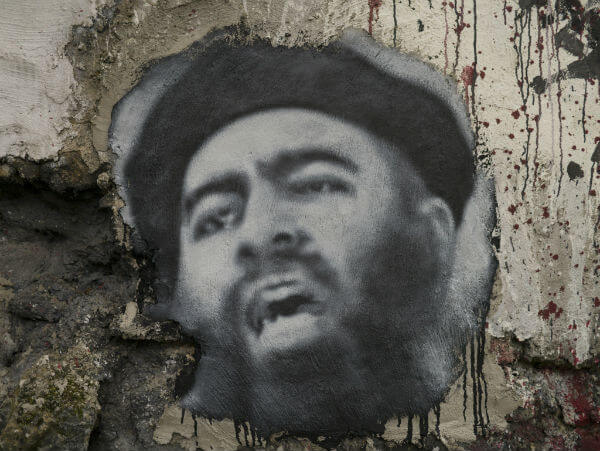
Baghdadi

Cole Bunzel writes: For Osama bin Laden, the United States was the “head of the snake” — the primary target of al-Qaeda’s jihad. “Its many tails,” the authoritarian regimes of the Middle East, were deemed of secondary importance.

For Abu Bakr al-Baghdadi, however, it is the regime in Saudi Arabia that is the “head of the snake,” as he has said in a metaphorical revision worthy of note. This revision by the leader of the Islamic State marks a significant change in the priorities of the global jihadi movement now spearheaded by that group. Notwithstanding the deadly terrorist attacks in Paris in November 2015, this group’s focus is on the Middle East before the West. Its slogan, “remaining and expanding,” is indicative of its foremost aims: entrenching itself in its Syrian and Iraqi territories and conquering new ones. One of those territories increasingly in its sights is Saudi Arabia, home to Islam’s holiest places and one-quarter of the world’s known oil reserves.

The competition between the jihadi statelet and the Gulf monarchy is playing out on two levels, one ideological and one material.

Ideologically, the Islamic State presents itself as the true guardian of the particular version of Islam native to Saudi Arabia — that is, Wahhabism, a variant of Salafism. Over the past two decades the jihadi-Salafi movement, which encompasses both al-Qaeda and the Islamic State, has become more Wahhabi in orientation, its leaders and thinkers rooting their radical ideas in the Wahhabi tradition. Wahhabism has thus emerged as the most prominent feature of the Islamic State’s ideology. It follows that the conflict between Saudi Arabia and the Islamic State can be understood as one between competing models of the same idea, namely, an Islamic state. Both are self-professed Islamic polities claiming to represent Wahhabi Islam.

Materially, the Islamic State has launched a string of attacks on Saudi soil, targeting Shia civilians and Saudi security forces, and has made its presence official with the establishment of three declared provinces. The latter are, of course, provinces in name only. The Islamic State does not administer or oversee territory in Saudi Arabia; it carries out terrorist attacks in the name of an administrative fiction that it hopes one day to make reality. While for the foreseeable future the provinces will remain fictional, the terrorism intended to realize them is likely to continue.

Throughout 2015, several authors offered rather unfavorable comparisons of Saudi Arabia and the Islamic State, some drawing a direct line from one to the other. They pointed out the similar educational curricula used by the two and the shared practice of beheading, among other things. Kamel Daoud, in a November 2015 New York Times op-ed, argued that “Saudi Arabia is a Daesh that has made it,” referring to the group by the Arabic acronym for its former name — a “dressed up” form of the same thing. But for the most part these comparisons are wide of the mark, as Saudi Arabia seeks partnership with the West and does not aspire to global conquest.

The comparison worth noting is the one in the minds of the Islamic State’s jihadi thinkers, the idea that Saudi Arabia is a failed version of the Islamic State. As they see it, Saudi Arabia started out, way back in the mid-eighteenth century, as something much like the Islamic State but gradually lost its way, abandoning its expansionist tendencies and sacrificing the aggressive spirit of early Wahhabism at the altar of modernity. This worldview is the starting point for understanding the contest between the kingdom and the caliphate, two very different versions of Islamic states competing over a shared religious heritage and territory. [Continue reading…]

Facebooktwittermail

Reformist view of Iran’s Rouhani: ‘Yes he can’ becomes ‘No, he didn’t’

Scott Peterson reports: It was Hossein Dehbashi’s magic touch that added some of the inspirational glitter to Hassan Rouhani, when the cleric promised Iranians a new era of moderation and hope, and won the presidency by a landslide in 2013.

Not only did Mr. Dehbashi create the candidate’s two campaign videos, but he added a passion project of his own: An emotional Iranian version of President Obama’s “Yes We Can” video, which portrayed Mr. Rouhani as an inclusive, modern leader and brought tears to many Iranian eyes.

That video, “New Voyager,” marked Rouhani’s first 100 days in office and scored half a million hits in the first 48 hours it was posted online.

But as Iran prepares for parliamentary elections on Feb. 26, Rouhani’s shine has faded for Dehbashi and other disgruntled supporters who say he has failed to keep promises of loosened restrictions and an improved economy. [Continue reading…]

Facebooktwittermail

Trump: I’ll be ‘neutral’ on Israel and Palestine

The Hill reports: GOP presidential front-runner Donald Trump on Wednesday refused to pick sides in the conflict between Israel and Palestine.

“You know, I don’t want to get into it,” he told hosts Joe Scarborough and Mika Brzezinski during a MSNBC town hall in Charleston, S.C.

“If I win, I don’t want to be in a position where I’m saying to you [my choice] and the other side now says, ‘We don’t want Trump involved,'” the real estyate mogul said of potentially winning the presidency and then brokering a lasting peace deal.
“Let me be sort of a neutral guy,” the billionaire added. “I have friends of mine that are tremendous businesspeople, that are really great negotiators, [and] they say it’s not doable.

“You understand a lot of people have gone down in flames trying to make that deal. So I don’t want to say whose fault it is — I don’t think that helps.” [Continue reading…]

Facebooktwittermail

Médecins Sans Frontières: Attacks on civilians and hospitals in Syria have become routine

Dr Joanne Liu, International President of Médecins Sans Frontières, writes: Today in Syria, the abnormal is now normal. The unacceptable is accepted.

Relentless, brutal, and targeted attacks on civilians are the dominant feature of this war. In addition to the countless numbers of dead, hundreds of thousands of people are fleeing for their lives. Many of them trapped, and denied the fundamental right to flight.

Deliberate attacks against civilian infrastructure, including hospitals struggling to provide lifesaving assistance, are routine.

Healthcare in Syria is in the crosshair of bombs and missiles. It has collapsed.

Let me be clear: attacks on civilians and hospitals must stop. The normalization of such attacks is intolerable. [Continue reading…]


[Click infographic to enlarge]

Facebooktwittermail

Refugees are becoming Russia’s weapon of choice in Syria

refugee5

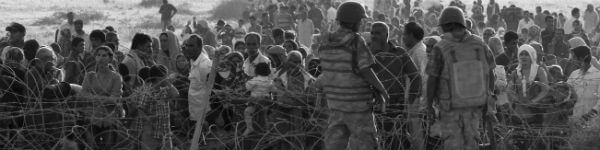
Simon Tisdall writes: Excerpts from a report by Turkey’s security services, published on Tuesday in Hurriyet newspaper, highlighted Turkish suspicions that Russia was purposefully attempting to “weaponise” the refugee crisis.

The report warned: “Regime forces and allies are trying to create a new refugee wave by moving towards Azaz [in northern Syria] … There are 10 refugee camps between this town and Turkey’s town of Kilis, approximately along an eight-kilometre line. The residents of these camps will likely flee and seek shelter in Turkey while these camps would be taken by the PYD or Assad forces.”

Security officials told the paper that Russia was employing tactics previously used in the first Chechen war in the north Caucasus in the 1990s, known as the “Grozny model”. This involved forcibly emptying urban residential areas through a campaign of attrition against the local population. Once this was achieved, heavy weapons were deployed to eradicate opposing forces, entailing widespread destruction of homes and infrastructure.

Given Assad’s previous documented use of barrel bombs, chemical weapons, airstrikes and heavy artillery against civilian areas, Russia’s alleged tactics hardly seem new. What appears to be different is the deliberate creation of tactical refugee emergencies to influence outside actors who must deal with the fallout.

Speaking at the weekend, US senator John McCain, a fierce critic of the Obama administration’s policy of non-intervention and a noted hawk, said Russia’s strategy was “to exacerbate the refugee crisis and use it as a weapon to divide the transatlantic alliance and undermine the European project”.

European politicians attending the weekend Munich security conference, prior to Monday’s attacks, echoed McCain’s concerns saying shops, schools and hospitals were being targeted in an attempt to force the local population to capitulate and increase the flow of refugees towards Turkey and Europe. [Continue reading…]

Facebooktwittermail

The Russian quagmire in Syria and other Washington fairy tales

Michael Kofman writes: Assad is not necessarily winning in Syria. The Russian-led coalition, together with Iran, Hezbollah, and what’s left of the Syrian army, is winning. That is a distinction with an important political difference for Assad to play out at the end of this conflict. While Saudi Arabia and Iran have intractable positions on Assad’s fate, Russia seems much more open-minded on alternative futures, though it will not condone regime change by discussing his removal publicly. It is difficult to see how Russian leaders could count on Syria being stable in the long term under his leadership. They’ve made a much larger political and military stake in the country, and Assad does not look like the man to keep it secure in the long term. Some are certain that Russia will never give up Assad, but who has a good track record in predicting events in the Middle East?

The Geneva negotiations are not just a ploy; Russia needs that settlement eventually in any scenario. It is simple battlefield reality. The more territory the Russian-led coalition regains, the more a political settlement is a necessity. If Assad’s forces could not hold the rapidly dwindling piece of Syria they had left in 2015 how can they defend much larger real estate, together with major cities? The answer is they can’t. We can see how the Assad regime might retake Aleppo, but what’s the plan for holding it along with other cities for the next decade or so? Gaining terrain is one thing, keeping it is another. Assad said he plans to retake the whole country — a dictator can dream. Russia started the negotiations precisely to avoid retracing America’s steps in Iraq and Afghanistan, where military victory is day one of the quagmire to come. Certainly Russian leaders remember the Soviet Union’s own fruitless struggle in Afghanistan. Political settlement is the only way for Russia to lock in any gains in Syria.

If this is so, then why have the Geneva talks been suspended through February, while Russia keeps bombing? The short answer is that the Russian-led coalition is not done capturing the territory they feel must be regained, especially the city of Aleppo, and as a result have no intention of giving rebel groups a respite. Russia’s intervention forced them to the table, but they are not weak enough and some of them Moscow does not want to see in Geneva at all. Aleppo is a hulking ruin, but its fall would be a colossal symbolic defeat. It could split the rebel groups Saudi Arabia worked hard to unite in Riyadh. Russia is pressing its advantage, hoping to secure the major cities for the Syria regime, while leaving the ISIL-held eastern part of the country as an “American problem.” [Continue reading…]

Facebooktwittermail

The cost Sweden has paid for its unshared idealism in welcoming refugees

James Traub writes: The Swedish Migration Agency in Malmo, the southern port city on the border with Denmark, occupies a square brick building at the far edge of town. On the day that I was there, Nov. 19, 2015, hundreds of refugees, who had been bused in from the train station, queued up outside in the chill to be registered, or sat inside waiting to be assigned a place for the night. Two rows of white tents had been set up in the parking lot to house those for whom no other shelter could be found. Hundreds of refugees had been put in hotels a short walk down the highway, and still more in an auditorium near the station.

When the refugee crisis began last summer, about 1,500 people were coming to Sweden every week seeking asylum. By August, the number had doubled. In September, it doubled again. In October, it hit 10,000 a week, and stayed there even as the weather grew colder. A nation of 9.5 million, Sweden expected to take as many as 190,000 refugees, or 2 percent of the population — double the per capita figure projected by Germany, which has taken the lead in absorbing the vast tide of people fleeing the wars in Syria, Iraq, and elsewhere.

That afternoon, in the cafeteria in the back of the Migration Agency building, I met with Karima Abou-Gabal, an agency official responsible for the orderly flow of people into and out of Malmo. I asked where the new refugees would go. “As of now,” she said wearily, “we have no accommodation. We have nothing.” The private placement agencies with whom the migration agency contracts all over the country could not offer so much as a bed. In Malmo itself, the tents were full. So, too, the auditorium and hotels. Sweden had, at that very moment, reached the limits of its absorptive capacity. That evening, Mikael Ribbenvik, a senior migration official, said to me, “Today we had to regretfully inform 40 people that we could [not] find space for them in Sweden.” They could stay, but only if they found space on their own.

Nothing about this grim denouement was unforeseeable — or, for that matter, unforeseen. Vast numbers of asylum-seekers had been pouring into Sweden both because officials put no obstacles in their way and because the Swedes were far more generous to newcomers than were other European countries. A few weeks earlier, Sweden’s foreign minister, Margot Wallstrom, had declared that if the rest of Europe continued to turn its back on the migrants, “in the long run our system will collapse.” The collapse came faster than she had imagined.

The vast migration of desperate souls from Syria, Iraq, and elsewhere has posed a moral test the likes of which Europe has not faced since the Nazis forced millions from their homes in search of refuge. Europe has failed that test. Germany, acutely aware that it was the author of that last great refugee crisis, has taken in the overwhelming fraction of the 1 million asylum-seekers who have reached Europe over the past 18 months. Yet the New Year’s Eve 2016 orgy of rape and theft in Cologne, in which migrants have been heavily implicated, may force Chancellor Angela Merkel to reconsider the open door. Her policy of generosity is now being openly attacked by her own ministers.

Most of Europe, and much of the world, has, as Wallstrom feared, turned its back. The ethnically homogeneous nations of Eastern Europe have refused to take any refugees at all; Hungary, their standard-bearer on this issue, has built fences along its borders to keep refugees from even passing through. Balkan countries, by contrast, helped migrants pass through their territories to the West — until mid-November, when they collectively began blocking asylum-seekers who did not hail from Iraq, Syria, or Afghanistan. England has agreed to take only those refugees arriving directly on its shores from the Middle East. Denmark has taken out ads in Arabic-language newspapers warning refugees that they will not be welcome, and has passed legislation authorizing officials to seize migrants’ assets to pay for their care. In the United States, where politicians eager to exploit fear of terrorism have found a receptive audience, Congress has sought to block President Barack Obama’s offer to accept a meager 10,000 Syrians.

And then there is Sweden, a country that prides itself on generosity to strangers. During World War II, Sweden took in the Jews of Denmark, saving much of the population. In recent years the Swedes have taken in Iranians fleeing from the Shah, Chileans fleeing from Gen. Augusto Pinochet, and Eritreans fleeing forced conscription. Accepting refugees is part of what it means to be Swedish. Yet what Margot Wallstrom meant, and what turned out to be true, was that Germany, Sweden, Austria, and a few others could not absorb the massive flow on their own. The refugee crisis could, with immense effort and courage, have been a collective triumph for Europe. Instead, it has become a collective failure. This is the story of the exorbitant, and ultimately intolerable, cost that Sweden has paid for its unshared idealism. [Continue reading…]

Facebooktwittermail

European states deeply divided on refugee crisis before key summit

The Guardian reports: Europe’s deep divide over immigration is to be laid bare at an EU summit in Brussels on Thursday, with German chancellor Angela Merkel struggling to salvage her open-door policy while a growing number of countries move to seal borders to newcomers along the Balkan routes.

A debate on the migration crisis over dinner on Thursday evening will do little to resolve the differences, senior EU officials predict. Donald Tusk, the president of the European council, has avoided putting any new decisions on the agenda in an attempt to avoid fresh arguments.

The leaders of four anti-immigration eastern European countries met in Prague on Monday and demanded alternative EU policies by next month. Their plan amounts to exporting Hungary’s zero-immigration razor-wire model to the Balkans, sealing Macedonia’s border with northern Greece, and bottling up the vast numbers of refugees in Greece unless they are deported back to Turkey. [Continue reading…]

Facebooktwittermail

Trump campaign manager: Assad ‘keeping things in check’ in Syria

BuzzFeed reports: Donald Trump’s campaign manager, Corey Lewandowski, said in an interview on Tuesday that Syrian President Bashar al-Assad is “keeping things in check” in the war-torn country.

The conflict in Syria, which has been ongoing for four-and-a-half years, has resulted in the deaths of hundreds of thousands of Syrians, and created a refugee crisis in the region. Trump has said he wants to work with Russia on Syria to defeat ISIS and opposes overthrowing Assad.

Appearing on the John Fredericks Show, Lewandowski, defending Trump’s position, said, “He is very, very bad individual, but he is an individual who, in his country, is keeping things in check because he is such a bad guy they’re afraid of him.” [Continue reading…]

Facebooktwittermail

Reflections on Palestinian strategy

Amal Ahmad writes: The Palestinian people began the New Year facing a bleak political situation, with a weak and compromised leadership, a geographically and administratively fragmented people, and a civil society increasingly marked by individualism and loss of political anchor. The state-building project that promised so much in the 1980s and 1990s is fast losing adherents – a recent poll revealed that nearly two-thirds of Palestinians no longer believe it is practical even though 137 countries now recognize Palestine. Yet little has emerged by way of an alternative political goal that enjoys popular support.

This commentary argues that the current political weakness of the Palestinian people derives in large part from the absence of strategic thinking, despite some organized efforts in this regard including for example by the Palestine Strategy Group and by Masarat. Yet it is vital that Palestinians strategize with or without the political factions within and outside the Palestine Liberation Organization (PLO): Without a clear and agreed strategy, some of the tools and tactics being adopted risk draining energies and proving ineffective or producing unwanted results. [Continue reading…]

Facebooktwittermail

The archaic All Writs Act the government is using to try and unlock a terrorist’s iPhone

The Washington Post reports: The U.S. government and Apple are locked in a legal battle over unlocking an iPhone used by one of the San Bernardino shooters. But a new court order is throwing a law that dates to the days of the founding fathers into a high-tech debate over digital security.

On Tuesday, a U.S. magistrate judge in California ordered Apple to provide “reasonable technical assistance” to the government as it tries to bypass security features built into its products based on an interpretation of the “All Writs Act.”

The original form of that statute dates to the Judiciary Act of 1789, centuries before the iPhone was a twinkle in Steve Jobs’s eye. In its current form, the law gives federal courts the power to “issue all writs necessary or appropriate in aid of their respective jurisdictions and agreeable to the usages and principles of law.”

Basically, it’s “a very short, cryptic statute” that gives the courts “all sorts of incidental powers” to require things not specifically covered by other laws, according to Stephen Vladeck, a law professor at American University.

In the past, the act has been used to compel non-parties — like service providers of tech companies — to help in criminal investigations, Vladeck said. But that help has typically been limited to straightforward requests, like activating or turning off particular features and using systems that are already in place, he said.

The new order is different: It tells Apple to help the government by creating an entirely new software to help investigators bypasses security features. “That requires Apple to go much further than any company has ever been required to go in one of these cases,” said Vladeck. [Continue reading…]

Last October, Jennifer Granick and Riana Pfefferkorn wrote: Under the government’s interpretation of the All Writs Act, anyone who makes software could be dragooned into assisting the government in investigating users of the software. If the court adopts this view, it would give investigators immense power. The quotidian aspects of our lives increasingly involve software (from our cars to our TVs to our health to our home appliances), and most of that software is arguably licensed, not bought. Conscripting software makers to collect information on us would afford the government access to the most intimate information about us, on the strength of some words in some license agreements that people never read. (And no wonder: The iPhone’s EULA came to over 300 pages when the government filed it as an exhibit to its brief.)

The government’s brief does not acknowledge the sweeping implications of its arguments. It tries to portray its requested unlocking order as narrow and modest, because it “would not require Apple to make any changes to its software or hardware, … [or] to introduce any new ability to access data on its phones. It would simply require Apple to use its existing capability to bypass the passcode on a passcode-locked iOS 7 phone[.]” But that undersells the implications of the legal argument the government is making: that anything a company already can do, it could be compelled to do under the All Writs Act in order to assist law enforcement. [Continue reading…]

Facebooktwittermail