Find out more about the Social Progress Index.




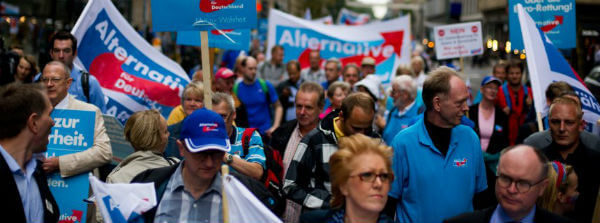
The Independent reports: Germany’s eurosceptic right-wing party has hit a new all-time high in the opinion polls as concern about migration rises in the country.
Alternative for Germany (AfD) would take 11.5 per cent of the vote is a federal general election were held today, according to a poll for Bild magazine.
The party is in third place after Angela Merkel’s CDU/CSU, who are on 35 per cent. The centre-left social democrats are on 21.5 per cent.
The Green Party and the Left Party are on 10 per cent each, while the centre-right liberal FDP would re-enter parliament on 6 per cent after it was wiped out in the most recent Federal elections. [Continue reading…]

Reuters reports: Wearing black jackets adorned with a symbol of a Viking and the Finnish flag, the “Soldiers of Odin” have surfaced as self-proclaimed patriots patrolling the streets to protect native Finns from immigrants, worrying the government and police.
On the northern fringes of Europe, Finland has little history of welcoming large numbers of refugees, unlike neighbouring Sweden. But as with other European countries, it is now struggling with a huge increase in asylum seekers and the authorities are wary of any anti-immigrant vigilantism.
A group of young men founded Soldiers of Odin, named after a Norse god, late last year in the northern town of Kemi. This lies near the border community of Tornio, which has become an entry point for migrants arriving from Sweden.
Since then the group has expanded to other towns, with members stating they want to serve as eyes and ears for the police who they say are struggling to fulfil their duties.
Members blame “Islamist intruders” for what they believe is an increase in crime and they have carried placards at demonstrations with slogans such as “Migrants not welcome”.
While most Finns disapprove of the group, its growth signals disquiet in a country strained by the cost of receiving the asylum seekers while mired in a three-year-old recession that has forced state spending and welfare cuts.
Finnish police have also reported harassment of women by “men with a foreign background” at New Year celebrations in Helsinki, as well as at some public events last autumn. [Continue reading…]
The Wall Street Journal reports: Multiple blasts and gunfire jolted the Indonesian capital Thursday in what officials said were coordinated Islamic State-linked terror attacks, killing seven and shattering a relatively peaceful period.
The dead comprised two civilians — a Canadian national and an Indonesian — and five terrorists, Indonesian police said.
The extremist group claimed responsibility for the attacks in an official Arabic-language statement distributed to its social media accounts, according to the SITE Intelligence Group, which monitors global jihadist activity.
“In a unique security operation, a group of Islamic State soldiers targeted a group of Crusader citizens who are fighting the Islamic State in Jakarta,” the statement said. “May the civilians of the Crusader alliance and those who protect them know that there is no safety for them in the lands of Muslims after today, God willing.”
The gun-and-bomb assaults struck in the heart of Jakarta’s downtown, popular with shoppers and tourists, when a suicide bomber entered a Starbucks and detonated a bomb, killing himself but no one else, police said.
Two more suicide bombers detonated blasts as motorists left their cars and joined hundreds fleeing the area. A Canadian citizen was shot near the Starbucks and an Indonesian was killed by shrapnel, police said.
Police shot and killed two other militants, leaving all five attackers dead, and said they found six small bombs after sweeping the area. Twenty civilians were injured, including a Dutch national and a German, officials said. [Continue reading…]
By Noor Huda Ismail, Monash University
Explosions and gunfire on Thursday left seven people dead in Jakarta. The blasts and gunfight between Indonesian police and the suspected attackers took place near the busy Sarinah shopping mall in central Jakarta. Indonesian President Joko Widodo spoke of “acts of terror”.
Five suspected attackers are reportedly among those killed. What affiliation if any they had to a terrorist group is currently unknown.
Since 2000, Islamic hardliners in Indonesia have carried out several high-profile bombing attacks. Notably, the Bali bombings in 2002 killed 202 people, including 88 Australians.
The Conversation spoke to Noor Huda Ismail, a counter-terrorism analyst from Monash University, on the landscape of Indonesia’s terror groups and the threat the country faces.

The Wall Street Journal reports: When Al Jazeera America was launched to great fanfare in 2013, its then-leader boasted he didn’t have to worry too much about profits.
After all, the cable news channel was backed by the oil-and-gas-rich government of Qatar, and oil was trading around $100 a barrel.
On Wednesday, with oil trading near $30, Al Jazeera made an about-face, announcing it was shutting its American cable channel by April 30 for economic reasons.
“The economic landscape of the media environment has driven its strategic decision to wind down its operations and conclude its service,” wrote Al Anstey, an Al Jazeera executive who took over as chief executive of the American channel in May after its founding CEO was ousted in the wake of discrimination suits.
Charles Herring, president of Herring Broadcasting Co., which runs the conservative One America News Network, said his company is interested in buying the channel because of its valuable affiliation agreements. One America is currently available is about a quarter as many homes as Al Jazeera America and would like to put its channel in this wider footprint, he said. A spokesman for Al Jazeera declined to comment. Trade publication Multichannel News earlier reported Herring’s interest.
Partly as a result of its weak negotiating position, Al Jazeera America was forced to stop streaming Al Jazeera English online in the U.S., which had helped it build influence thanks to its close-up coverage of the Arab Spring. It was a condition of its deals with distributors, who are never fans of paying for channels that also put their content online free.
As part of its announcement on Wednesday, Al Jazeera said it will now “expand its existing international digital services to broaden its multiplatform presence in the United States.” [Continue reading…]
Hopefully this means the return of full online access to Al Jazeera English programming. Stay tuned…
Ivan Krastev writes: “Vladimir Vladimirovich, is war coming?”
The question is asked in the first frame of “Myroporyadok” (“World Order”), a manifesto-style documentary aired in the last days of December on Russian state television. And in the following two-plus hours, President Vladimir V. Putin, aided by diplomats, policy analysts, conspiracy theorists and retired foreign statesmen, attempts to provide an answer.
Though the Russian leader resists sounding the alarm, the audience is nonetheless convinced that if nothing changes in the coming months, the Big War could be imminent. And the Kremlin isn’t doing much to dissuade them: Days after the film’s airing, its new national security strategy, which declares NATO and the United States as fundamental threats to Russia’s future, was unveiled.
“Myroporyadok” is a powerful expression of the Kremlin’s present state of mind. It views the world as a place on the edge of collapse, chaotic and dangerous, where international institutions are ineffective, held hostage to the West’s ambitions and delusions. Nuclear weapons represent the sole guarantee of a country’s sovereignty, and sovereignty is demonstrated by a willingness and capacity to resist Washington’s hegemonic agenda. [Continue reading…]
Helen Pidd writes: “You are not going to like me saying this,” my dad said, “but you need to get a lock on your bedroom door and a lock on your bathroom door. Men can get very frisky when they are away from their wives.”
I rolled my eyes, hung up and panicked. I’d rung my parents to tell them that Yasser, a Syrian refugee, was coming to live with me while he arranged for his wife and baby to join him in Britain. I was a little nervous about the arrangement, but of all the many things worrying me – would he disapprove of my single heathen lifestyle? Could I carry on having bacon butties at the weekend? Should I edit my drinks cupboard? – the possibility of getting molested by my lodger had yet to occur to me.
I first had lunch with Yasser one day in August, after a mutual friend in Turkey told me he had arrived in Manchester and had no mates. She didn’t tell me he was Syrian, or how he had reached our rainy island. So I was gobsmacked when, in very broken English, he told me of his 37-day odyssey across land and sea. He had sailed across the Mediterranean in an inflatable boat in the dead of night, even though he can’t swim; walked from Greece to Macedonia, and crossed Europe until he reached the Jungle in Calais, where he jumped on trucks for six nights before making it to England hidden in the back of a lorry. After 17 hours packed between boxes of toys, he banged on the door. The truck driver was furious: he would face a £2,000 fine were the border police to discover his human cargo. Yasser scarpered. He wasn’t sure he was even in England until a car passed him driving on the left. He walked to the nearest petrol station and asked them to call the police. His new life had begun.
I wondered how I could help him. He was living on £5 a day given to him by Serco, the outsourcing company contracted by the Home Office to process asylum applications. While Yasser waited, he couldn’t take paid work and was living in a Serco house off the Curry Mile with five other asylum seekers: Syrians, Eritreans, a guy from Sudan. I asked if he fancied coming round to help me strip wallpaper on the bank holiday weekend. He agreed, but then I had to go and cover the world gravy wrestling championships in Bacup (try explaining that one to someone whose first language isn’t English), so left him to it.
When I got back, he had almost finished. We had an awkward meal together, then I tried to give him some money. Yasser looked appalled. “No, no,” he said. “I don’t want money. I want friends.”
Two days later, three-year-old Alan Kurdi washed up on a beach in Turkey. The mood in Britain changed. Suddenly the sort of newspapers who usually run stories about immigrants eating swans started showing compassion. David Cameron agreed to resettle 20,000 of the most vulnerable Syrian refugees – and I offered my spare room to Yasser. [Continue reading…]
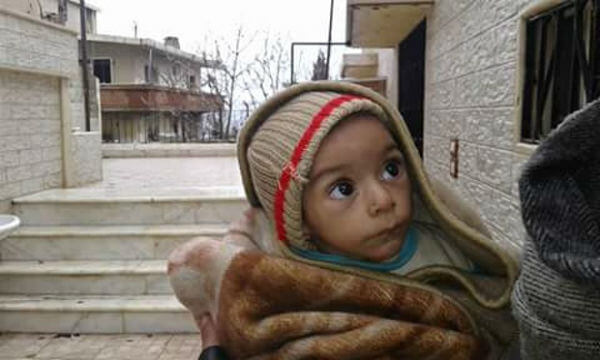
Reuters reports: Residents of a besieged Syrian town have told U.N. investigators how the weakest in their midst, deprived of food and medicines in violation of international law, are suffering starvation and death, the top U.N. war crimes investigator told Reuters on Tuesday.
An aid convoy on Monday brought the first food and medical relief for three months to the western town of Madaya, where 40,000 people are trapped by encircling government forces.
Another United Nations official who oversaw the aid delivery described on Tuesday how he saw malnourished residents, particularly children, some of whom were little more than skeletons and barely moving.
The U.N. commission of inquiry documenting war crimes in Syria has been in direct contact with residents inside Madaya, the commission’s chairman Paulo Pinheiro said in an emailed reply to Reuters questions.
“They have provided detailed information on shortages of food, water, qualified physicians, and medicine. This has led to acute malnutrition and deaths among vulnerable groups in the town.” he said in the email sent from his native Brazil.
The U.N. inquiry, composed of independent experts, has long denounced use of starvation by both sides in the Syrian conflict as a weapon of war, and has a confidential list of suspected war criminals and units from all sides which is kept in a U.N. safe in Geneva. [Continue reading…]

Reuters reports: The Obama administration is set to refund as much as $14 million in royalties to a coal company run by billionaire investor William Koch that says it is entitled to the money since the now-shut mine on federal land was costly to operate.
The Interior Department recommended the payout in a December letter to Colorado Governor John Hickenlooper, seen by Reuters, that gives the state executive a chance to object.
The subsidy, part of a decades-old program to promote coal production on public lands, is now under scrutiny since President Barack Obama has vowed to curb the nation’s reliance on fossil fuels, which contribute to global warming. [Continue reading…]
Der Spiegel reports: No, Frans Timmermans says, unfortunately he still hasn’t received an answer. The deputy head of the European Commission has written to the government in Warsaw twice in recent weeks to express his concern over the rule of law in Poland. Instead of the requested letter, all he got was gloating on the part of new Polish Foreign Minister Witold Waszcykowski. Any EU official “who came to office via political connections” is “not a legitimate partner” for a government elected by the people, Waszcykowski scoffed.
Timmermans these days is having to exercise his utmost diplomatic skill in order to avoid an escalation of tensions. When, during a visit to Amsterdam on Thursday, Timmermans was asked about the Polish foreign minister’s jibe, he could have struck back. But there is already enough tension, so he chose to take a different tack, instead praising the transformation of Eastern European countries from socialist dictatorships to free societies. But, he added, true democracies include two important elements: the protection of human rights and adherence to the rule of law.
The fact that Timmermans had to utter something that obvious says a lot about the current state of the European Union — and developments in Poland. In less than two months, the country’s new nationalist-conservative government has succeeded in disempowering the constitutional court, passing a law establishing government control over public broadcasting and installing party-aligned political appointees at the head of its intelligence services. “We want to cure our country of a few illnesses,” Foreign Minister Waszcykowski told Germany’s tabloid Bild earlier this month.
It’s a choice of words most often associated with autocrats and has alarmed the European Commission. On Wednesday, the EU executive is expected to discuss whether or not it will open the so-called “rule of law mechanism.” Should it do so, it would mark the first time a member state has been subjected to that level of scrutiny for violating the fundamental values of the European Union. [Continue reading…]
By Alan Greene, Durham University
A new year brings with it the feeling of hope that can only come with starting afresh. It did not take long, however, for us to be abruptly reminded of the most unpleasant aspects of 2015.
The release of a new Islamic State execution video became almost common place last year, so IS obviously feels the need to ratchet up the shock factor.
The latest video, released on January 4, did just that. It showed a young child with an English accent threatening to kill all non-believers in the UK. The video is also notable for the appearance of a so-called “new Jihadi John” following the death of Mohammed Emwazi, the previous owner of that moniker, in a US drone-strike in November.
A key suspect in the scramble to identify this new IS executioner is Siddhartha Dhar, a British Muslim convert from east London who skipped bail and travelled to Syria to join IS in 2014. Dhar was awaiting trial for being a member of the prescribed organisation Al-Muhajiroun. He is also known as Abu Rumaysah.

The New York Times reports: Iran’s release of 10 United States Navy sailors on Wednesday, less than 24 hours after they were detained on the Persian Gulf, is being hailed in both countries as a sign that their relations have evolved since the signing of the nuclear accord last summer.
Secretary of State John Kerry thanked the Iranians “for their cooperation in swiftly resolving this matter” and suggested in a statement that the quick resolution of the issue was a product of the nearly daily back-and-forth that now takes place between Washington and Tehran, after three decades of hostility and stony silence.
In an appearance later Wednesday at the National Defense University in Washington, Mr. Kerry said that his focus on diplomacy with a country “we hadn’t talked to for 35 years” before the nuclear negotiations had paid off.
“These are always situations that as everybody knows, if not properly handled, can get out of control,” Mr. Kerry said. “We can all imagine how a similar situation might have played out three or four years ago.” [Continue reading…]
By Nilufer Tuptuk, UCL and Stephen Hailes, UCL
When more than 100,000 people in and around the Ukrainian city of Ivano-Frankivsk were left without power for six hours, the Ukrainian energy ministry accused Russia of launching a cyberattack on the country’s national energy grid.
Now reports released by security researchers from the SANS Industrial Control Systems team and the Industrial Control Systems Cyber Emergency Response Team confirm their belief that a cyberattack was responsible for the power cut, making the incident one of the first significant, publicly reported cyberattacks on civil infrastructure.
This is a rare event, of which the most famous example is the Stuxnet malware used to destroy equipment in the Iranian nuclear programme. Many consider Stuxnet so sophisticated that national governments must have been involved. But as is frequently the case, attributing responsibility for Stuxnet has proved difficult, and it’s likely that, despite circumstantial evidence, it will be the same in this case. While the Ukrainian Security Service (SBU) and the international press were quick to blame Russian state-backed hackers, Moscow has remained silent.

The Associated Press reports: Palestinian journalist Ayman al-Aloul frequently writes about the hardships of life in the Gaza Strip, and is one of the few voices willing to publicly criticize the rule of the Islamic Hamas movement.
But after nine days in jail, al-Aloul says he won’t be writing about politics anymore. He said a painful experience that included beatings and being forced to sit uncomfortably in a tiny chair has made him a “new man” and that he will now focus on less controversial topics like sports, food, literature and fashion.
“I’ve decided not to talk about the general situation anymore,” al-Aloul said in an interview at his home Tuesday, a day after he was released. “The experience I went through was very difficult.”
Al-Aloul’s experience is part of a crackdown by Hamas at a time when the continuing miseries of life in Gaza appear to be driving its population toward more open dissent. Critics have grown bolder on social media sites, and attempts by Hamas to impose new taxes have triggered rare public protests. [Continue reading…]
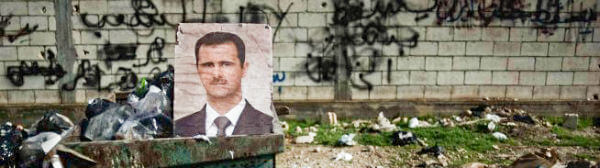
The Economist reports: It has become fashionable in some circles to ape Russia and Iran in blaming this failure [of the Arab Spring] on supposedly “naive” Western policymakers. Had Western powers not abandoned old allies such as Egypt’s Hosni Mubarak; had they not intervened in support of Libyan rebels; had they not presumed that the Syrian dictator Bashar al-Assad was just another domino waiting to topple; had they not turned a blind eye to the danger of Islamist fanatics: then all would be well.
This is tosh [nonsense]. To frame the uprisings of 2011 as a sequence of isolated events, each of which had a unique and optimal policy response, is to deny the historical reality of what happened. Such hindsight belies the actual experience of seeing an entire region — and the world’s most politically torpid region, at that — whirl into sudden, synchronised motion. It also denies agency to the actors themselves: to the crowds whose cries of “Enough!” reached critical mass; to the paranoid rulers whose responses exacerbated the protests.
This is not to say that the events of 2011 had no precursors. Algeria’s Islamist uprising in 1991, two intifadas in Palestine, the “Independence revolution” that ousted Lebanon’s government in 2005, even the short-lived “Green revolution” in non-Arab but nearby Iran, all signalled the region’s desire for change. But the world’s democracies were, by and large, correct in judging that what they were seeing in 2011 was something broader, more potent and more difficult to steer than a set of national crises that happened to coincide. Nor were they naive to think that an empowered “Arab street” would seek to move its countries closer to global norms of good governance. That was the demand the demonstrators made in protest after protest, from the Gulf to the Atlantic.
The West’s naivety, which was shared — and paid for — by those hopeful demonstrators, lay in underestimating two things. One was the fragility of many Arab states, too weak in their institutions to withstand such ructions in the way that, say, South Africa did when apartheid fell. The other was the vicious determination with which established regimes would seek to retain or recapture control. Who could believe that a soft-spoken leader such as Mr Assad would prefer to destroy his country rather than leave his palace? Those were the truths that brought hope to the ground.
Just as the spring itself was more than just a set of national events, so the current period of counter-revolution is an international matter. Conservatives across the region have received powerful backing from the Gulf. One early and stark example of this was Bahrain, where the ruling family called on fellow Sunni monarchs to help it crush a pro-democracy movement championed by its Shia majority. Last year’s intervention in Yemen by a Saudi-sponsored coalition can be seen in the same light. The Saudis are seeking not only to thwart Houthi rebels, whose Iranian backing they revile. They are trying to force a return to the status quo.
The most internationalised conflict is the bitter civil war in Syria, where powers from the region and beyond contend through proxies. The war has long since metastasised into a monumental free-for-all involving dozens of belligerents. But it remains at its core a fight between aggrieved citizens and a narrowly based — and in Syria’s case largely sectarian — elite intent on keeping its hold on power.
In Egypt, a nation-state of longer standing and greater stability, the ancien régime’s fight has — again with help from the Gulf — been won, for now. Egypt has long been seen as the region’s bellwether, and for good reason. Over the past five years it has provided the Arab spring’s most revealing story of failure; today it highlights the degree to which the tensions persist that brought about the uprisings. [Continue reading…]

Roger Cohen writes: Is realism really, really what America wants as the cornerstone of its foreign policy?
Stephen M. Walt, a professor of international affairs at Harvard University, has an eloquent ode to realism in Foreign Policy magazine. He argues that, with realism as the bedrock of its approach to the world over the past quarter century, the United States would have fared far better. Realists, he reminds us, “have a generally pessimistic view of international affairs and are wary of efforts to remake the world according to some ideological blueprint.”
Pessimism is a useful source of prudence in both international and personal affairs. Walt’s piece makes several reasonable points. But he omits the major European conflict of the period under consideration — the wars of Yugoslavia’s destruction, in which some 140,000 people were killed and millions displaced.
Realists had a field day with that carnage, beginning with former Secretary of State James Baker’s early assessment that, “We don’t have a dog in that fight.” This view was echoed by various self-serving assessments from the Clinton White House that justified inaction through the portrayal of the Balkans as the locus of millennial feuds neither comprehensible nor resolvable.
True, discerning a vital American national interest in places with names like Omarska was not obvious, even if the wars upset the European peace America had committed to maintaining since 1945. The realpolitik case for intervention was flimsy. Sarajevo was not going to break America, less even than Raqqa today.
The moral case was, however, overwhelming, beginning with the Serbian use in 1992 of concentration camps to kill Bosnian Muslim men deemed threatening, and expel Muslim women and children. These methods culminated at Srebrenica in 1995 with the Serbian slaughter of about 8,000 male inhabitants. In the three-year interim, while realists rationalized restraint, Serbian shelling of Sarajevo blew up European women and children on a whim. Only when President Clinton changed his mind and NATO began concerted bombing was a path opened to ending the war.
I covered that conflict and its resolution. For my baby-boomer generation, spared Europe’s repetitive bloodshed by American military and strategic resolve, it was a pivotal experience. After that, no hymn to realism pure and simple could ever be persuasive. Walt calls me “a liberal internationalist;” I’ll take that as an honorable badge. [Continue reading…]