Author Archives: News Sources

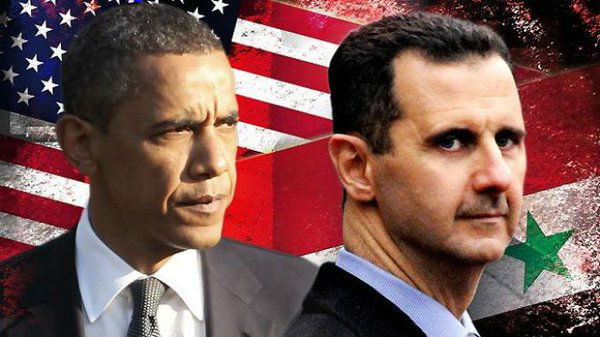
U.S. expects Assad to remain in power longer than Obama

obama-assad

The Associated Press reports: The Obama administration’s best-case scenario for political transition in Syria does not foresee Bashar Assad stepping down as the country’s leader before March 2017, outlasting Barack Obama’s presidency by at least two months, according to a document obtained by The Associated Press.

An internal timeline prepared for U.S. officials dealing with the Syria crisis sets an unspecified date in March 2017 for Assad to “relinquish” his position as president and for his “inner circle” to depart. That would be more than five years after Obama first called for Assad to leave.

The timeline is based on a broad U.N.-endorsed plan that was initially laid out at an international conference in Vienna in November. Syria, according to that strategy, would hold elections for a new president and parliament in August 2017 — some 19 months from now. In the interim, Syria would be run by a transitional governing body. [Continue reading…]

Facebooktwittermail

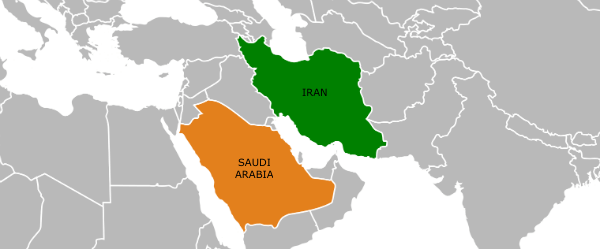
Gulf states guarding their interests in Saudi-Iran rift

iran-saudi

The New York Times reports: For all the diplomatic dominoes that have fallen across the Middle East in recent days, with ambassadors from different countries flying home as a result of the explosive rift between Saudi Arabia and Iran, the map of allegiances has not significantly altered.

Certainly, several countries offered muscular shows of solidarity to Saudi Arabia after an Iranian mob attacked its embassy in Tehran over the weekend, prompting a crisis that has put the United States in a bind and has threatened to set back the prospects for a resolution to the conflict in Syria.

By Tuesday, Kuwait had recalled its ambassador to Iran, the United Arab Emirates had downgraded its diplomatic relationship, and Bahrain and Sudan had joined Saudi Arabia in severing its relationship with Tehran entirely.

Yet many other Sunni Muslim countries signaled that they intended to take a more measured approach to the argument — sympathizing with Saudi Arabia, a rich and powerful ally, but also determined to avoid getting sucked into a harmful conflict with Iran, a country governed by Shiite clerics, with potentially grave costs.

“The smaller Gulf states are worried they will get caught in the middle,” said Michael Stephens, a research fellow at the Royal United Services Institute in London. “It worries them greatly that things could go badly.”

Some countries, like Turkey, Egypt and Pakistan, are already battling their own domestic insurgencies. Others are keen to guard their strategic interests or to keep the door open to trade with Iran while there is a prospect of American sanctions being lifted.

Qatar, which shares with Iran access to the world’s largest natural gas field in the Persian Gulf, has yet to declare its hand. Oman has also been quiet, sticking to its longstanding position of neutrality on Saudi Arabia and Iran.

In Turkey, where senior officials have warned about the impact of the crisis on a “powder keg” region, Prime Minister Ahmet Davutoglu offered his country’s services to help resolve the conflict peacefully. [Continue reading…]

Facebooktwittermail

Iran and its allies vowed to avenge Sheikh Nimr if he was executed

Phillip Smyth writes: Ever since Tehran started beating the drum over Nimr, its Shiite Islamist proxies across the Middle East have followed suit.

In early January 2015, Kataib Hezbollah, an Iraqi Shiite militia and Iran proxy group listed by the U.S. State Department as a terrorist organization, released a propaganda song that threatened the Saudis with an attack if they carried out the sentenced execution. The tune also included the rare addition of English translations and was likely aimed at Western, particularly American, audiences. The song blared, “The enemies of God will not be safe.… Ali’s [Shiite Islam’s first imam’s] enemies fear him [Nimr].… We will avenge Sheikh Nimr if he is executed.… Our brigades will roar like a lion.”

It wasn’t the only time that Kataib Hezbollah would threaten Saudi Arabia over Nimr’s fate. In March, the Iraqi militia posted another video showing trucks loaded with rockets and balaclava-wearing armed militiamen driving up to the Iraqi-Saudi border.

Iran’s other proxies in the region have adopted a similar stance. Starting in July, Kataib Sayyid al-Shuhada, another Iranian-sponsored Shiite militia in Iraq, ran a promotional video to show support for Nimr, and Lebanese Hezbollah pushed solidarity campaigns for the Saudi cleric.

Following Nimr’s execution, Iran’s allies in the region issued nearly matching statements condemning Saudi Arabia and at times blaming the United States for the cleric’s death. Lebanese Hezbollah, Iraq’s Asaib Ahl al-Haq, the Badr Organization, Harakat Hezbollah al-Nujaba, Kataib Hezbollah, and Kataib Sayyid al-Shuhada are just some of the Iranian-backed and ideologically loyal Shiite militias that toed Iran’s line on the issue.

The Iraqi Shiite militias loyal to Iran claimed they would retaliate against Saudi Arabia at a time and place of their choosing. Kataib Hezbollah later announced that the execution had given it the “green light” to target Saudi interests in Iraq. These Iran proxies also amplified threats by shadowy organizations: Harakat Hezbollah al-Nujaba, an Iraqi Shiite militia and Iran proxy active in Iraq and Syria, for instance, claimed that an otherwise unspecified “Resistance in Qatif” had threatened to attack the Ras Tanura refinery, an important oil port in Saudi Arabia’s majority Shiite Eastern Province.

The campaign has not simply been limited to mere threats. In mid-December, around 26 Qatari hunters — some of whom are members of the Qatari royal family — were kidnapped by some 100 armed men on the Iraq-Saudi border. While nine were released, the rest are still being held by the gunmen. One of the conditions for the detained Qataris’ release had been the Saudi government’s release of Nimr. (Kataib Hezbollah has been accused of kidnapping the Qataris, but has denied it.)

These messages are part and parcel of Tehran’s geopolitical strategy — a way of asserting that it can and will protect its Shiite coreligionists. The fact that the factions of the Shiite “Islamic Resistance” across the Middle East acted as one further demonstrates Iranian power and the Islamic Resistance’s ability and willingness to project power on behalf of Iran’s regional goals. [Continue reading…]

Facebooktwittermail

What now for Lebanon and Syria?

Alex Rowell writes: Lebanon’s Prime Minister Tammam Salam may have declared himself hopeful for positive change in 2016, but if the year continues in the vein of its first five days, he appears destined for disappointment. The execution by Saudi Arabia of leading Shiite cleric and opposition activist, Sheikh Nimr al-Nimr, and the subsequent torching of the Saudi embassy in Tehran, which in turn led Riyadh and a number of its allies to sever or downgrade diplomatic relations with Iran, had by Tuesday escalated into bloodshed, with Sunni mosques bombed and a muezzin gunned down by suspected Shiite militants in Iraq; a Shiite resident of Saudi’s eastern province also fatally shot; and a reported intensification of Saudi air strikes on Shiite rebel targets in Yemen.

In Lebanon, no violence has yet broken out, but the political atmosphere has been considerably poisoned. On Sunday, Tehran ally Hezbollah’s Secretary-General Hassan Nasrallah gave an extraordinarily foul-tempered speech, going far further in criticisms of Saudi Arabia than he ever has previously. Likening the “takfiri and terrorist” state to both ISIS and Israel, he accused the ruling family of being a mass-murdering agent of Western imperialism and Zionism, drawing multiple outbursts of “Death to the Saud family!” chants from the crowd. In an unabashedly sectarian analogy, he compared Sheikh Nimr al-Nimr to the Prophet’s granddaughter, Zainab bint Ali, “speaking truth to Ibn Ziad and Yazid bin Mu`awiya,” thereby overtly tying the controversy into a 1,300-year-old Sunni-Shiite conflict.

Perhaps unsurprisingly, then, officials from Hezbollah’s main Lebanese rival, the Saudi-backed Future Movement, told NOW the new state of affairs would complicate the resolution of various pressing matters, including the twenty-month-long presidential vacuum. [Continue reading…]

Facebooktwittermail

ISIS threatens to destroy Saudi prisons after executions

Reuters reports: Islamic State threatened to destroy Saudi Arabian prisons holding jihadists after Riyadh’s execution of 47 people including 43 convicted al Qaeda militants.

The militant group, which has claimed responsibility for attacks in the kingdom and stepped up operations in neighbouring Yemen, singled out the al-Ha’ir and Tarfiya prisons where many al Qaeda and Islamic State supporters have been detained.

“The Islamic State always seeks to free prisoners, but we calculate that the ending of the issues of prisoners will not happen except with the eradication of the rule of tyrants, and then destroying their prisons and razing them to the ground,” it said in an article posted online on Tuesday. [Continue reading…]

Facebooktwittermail

Saudi executions seen as sending message to all dissenters

The New York Times reports: Officials in Saudi Arabia have said that the executions of 47 prisoners on Saturday were a long overdue reckoning for militants, including accused Qaeda members who were said to be recruiters, propagandists or bomb makers who helped carry out deadly attacks in the kingdom more than a decade ago.

But despite the weight of some of the accusations, the Saudi authorities had been in no hurry to put the men to death, allowing some to languish in prison for a decade or more. Only four of the men were convicted of crimes in the most severe category, punishable by death under Islamic law, reinforcing the fact that the death penalty is far less common in terrorism cases in Saudi Arabia than in drug or murder cases, according to human rights advocates.

With its decision to execute the accused militants, along with Sheikh Nimr al-Nimr, an outspoken antigovernment cleric and advocate for Saudi Arabia’s Shiite minority who was arrested in 2012, the Saudi government seemed willing to endure the potentially high political costs of the killings in order to deliver a warning to would-be militants, political dissidents and others that any challenge to the royal family’s rule would not be tolerated, analysts say.

It remained to be seen whether the executions would provoke a backlash among Sunni ultraconservatives. But the killings of Sheikh Nimr and three other Shiite dissidents undermined the government’s assertions that it had executed only terrorists and prompted an explosion of tensions between Saudi Arabia and the Shiite government of Iran that has shaken the region. [Continue reading…]

Facebooktwittermail

Journalist Ruqia Hassan murdered by ISIS after writing on life in Raqqa

The Guardian reports: Islamic State militants murdered a journalist who wrote about daily life in occupied Raqqa, having accused her of being a spy, activists have confirmed.

Ruqia Hassan, 30, was killed in September, but news of her death became widely known this week after Isis claimed on social media that she was still alive.

Writing under the pen name Nissan Ibrahim, Hassan’s posts described life for residents of Raqqa, Isis’s Syrian stronghold, and the frequent coalition airstrikes against the group.

Hassan studied philosophy at Aleppo University and later joined the opposition to the regime of Bashar al-Assad when the revolution began in Raqqa. She refused to leave after Isis entered the city. [Continue reading…]

Facebooktwittermail

Inside ISIS’s weapons R&D lab

Sky News reports: Terror group Islamic State is employing scientists and weapons experts to train jihadists to carry out sophisticated “spectacular” attacks in Europe, while also modifying weapons systems capable of targeting passenger jets and military aircraft.

From a “jihadi university” in the Syrian city of Raqqa, the scientists have stunned western weapons experts by producing a homemade thermal battery for surface-to-air missiles.

It had been regarded as a virtually impossible feat for terror groups working without a military infrastructure.

But footage exclusively obtained by Sky News shows that IS can now recommission thousands of missiles assumed by western governments to have been redundant through old age. [Continue reading…]

Facebooktwittermail

Militant in ISIS video believed to be British bouncy castle salesman

BBC News reports: The main suspect in the latest propaganda video by so-called Islamic State is thought to be British man Siddhartha Dhar, the BBC understands.

An official source told the BBC Mr Dhar was the focus of investigations into the video, which purports to show the killing of five men IS says were spies.

“A lot of people think it is him,” the source said, although there has been no official confirmation.
Mr Dhar, also known as Abu Rumaysah, fled Britain in 2014 while on bail.

The father-of-four, from Walthamstow in east London, had been arrested on suspicion of encouraging terrorism, but later travelled to Syria. [Continue reading…]

Vice News posted the following report on November 26, 2014:

Facebooktwittermail

China to increase wind, solar power capacity by 21% in 2016

Bloomberg reported on December 30: China, the world’s biggest clean energy investor, plans to increase wind and solar power capacity by more than 21 percent next year as it works to reduce greenhouse gas emissions by cutting its reliance on coal.

The nation is targeting at least 20 gigawatts of new wind power installations and 15 gigawatts of additional photovoltaic capacity next year, the National Energy Administration said in a statement on Tuesday.

China has pledged to peak carbon emissions around 2030, by which time it aims to derive 20 percent of the energy it uses from clean sources. China will also stop approving new coal mines in the next three years, the Xinhua News Agency reported Tuesday, citing National Energy Administration head Nur Bekri.

The world’s biggest producer of carbon emissions is expected at the end of this year to have a total of 120 gigawatts of wind power, 43 gigawatts of solar, and 320 gigawatts of hydro power, the NEA said. To accommodate the clean energy additions, China will promote the construction of electricity networks, the agency said.[Continue reading…]

Facebooktwittermail

The story behind the ‘spontaneous’ torching of the Saudi embassy in Tehran

IranWire reports: Following the execution of Shia cleric Sheikh Nimr al-Nimr in Saudi Arabia on Saturday, January 2, a one-line notice appeared on an Iranian website called Officers of the Soft War. Posted at 5:00 PM, it read, “At 15:00 on Sunday all gather in front of the Al-Zion Stable in Tehran.” The “Al-Zion Stable” was the site’s pejorative term for the Saudi embassy.

The website is an important news and propaganda site for hardline supporters of Iran’s political system. The notice followed its publication of pictures of protests that led to an attack on the Saudi consulate in Mashhad.

But according to another Iranian site, the Tasnim News Agency, some protesters had already gathered in front of the Saudi embassy in Tehran by the time the notice went online. They were calling the Saudi royal family “jackals of the Zionists.”

Iran’s Diplomatic Police, who are responsible for protecting diplomatic missions, ended that round of protests. Some of them began to paint over the anti-Saudi graffiti on the embassy walls. Pictures show that by 5:00 PM, at least three layers of Diplomatic Police were protecting the embassy.

But five hours later, the embassy was deserted. It seems embassy staff had predicted that another attack was on its way. But the Diplomatic Police either had no inkling of this, or did not want to show that it knew what would happen next.

At 10:00 PM demonstrators launched a new attack.

Most of the protesters were young, and many carried posters of al-Nimr, one of 47 men executed by the Saudi government on Saturday. Some were armed with stones or bows and arrows, and had covered their faces with Arabic keffiyehs—patterned cloths often associated with Palestinian protestors.

Members of the crowd then set the embassy alight with Molotov cocktails. Photographs from the scene show no shortage of the Diplomatic Police, but one policeman was quoted on social media saying, “we have been told not to obstruct them too much.” [Continue reading…]

The New York Times adds: “What group here in Iran benefits politically from storming an embassy?” a former member of the Iranian National Security Council, Aziz Shahmohammadi, asked rhetorically. He was suggesting that the answer lay with the hard-liners — a loose alliance of clerics, ideologues and military commanders. “Such people are even against foreign soccer coaches to train our teams.”

The embassy attack played into their agenda of opposition to President Rouhani, whom Mr. Shahmohammadi said was clearly blindsided by the riot.

“For them, this might lead to electoral gains, an example that Iran is better off isolated. But they are missing the big picture here: We need and want peace and calm,” he said.

The act of cutting ties seems a simple one, but the consequences can be far-reaching. “We are moving increasingly towards conflict,” Mr. Shahmohammadi said.

“This is bad for the entire region — in Syria, in Yemen, and to a lesser extent in Lebanon and Iraq as well,” he added. “Cutting ties is fanning the flames in a region already on fire.” [Continue reading…]

Facebooktwittermail

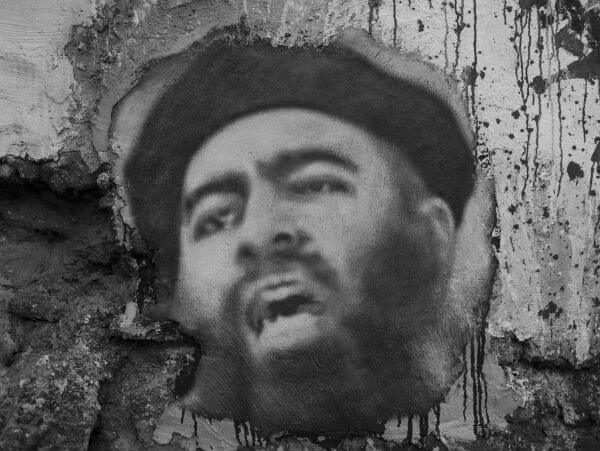
How the Saudis’ fear of ISIS may have been behind the decision to execute Sheikh Nimr al-Nimr

Baghdadi-bw

Nibras Kazimi writes: Far more than al-Qaeda, the Islamic State has focused on the danger posed by Saudi Shias to ‘Sunnidom’ and had castigated the House of Saud as de facto protectors of the Shia.

Al-Nimr was specifically mentioned in a speech made by the Nejd (Central Saudi Arabia) ‘Province’ of the Islamic State in October 2015. The unidentified speaker alleged that al-Nimr was spearheading the secession of the eastern section of Saudi Arabia, where a large minority of Shias reside. According to the speaker, the House of Saud are in collusion with foreign plans to weaken Sunnis by allowing the Shias to break off and create a pro-Iran satellite state.

This rhetorical tussle between the Saudis and IS bears the element of taunting, with the latter asserting that the royals had lost their ‘virility’.

‘Caliph’ al-Baghdadi makes this point clear in his May 2015 audio speech when speaking about the Saudi military campaign against the Houthis in Yemen, what the Saudis call the ‘Storm of Decisiveness’:

“For it is only a ‘storm of delusion’ after the fires of the [Shias] had lapped at their thrones and their encroachment has reached our people in the Arabian Peninsula, which will lead lay Muslims to find refuge in the Islamic State because it is their defender, and this terrifies the [House of Saud] and the rulers of the Arabian Peninsula and shakes their bastions and that is the secret of their alleged ‘storm’ and, God willing, it shall be the [cause of their] demise. For the [House of Saud] and the rulers of the Arabian Peninsula are not people of warfare, and they do not have the patience for it, and they are people of luxury and frivolity, and people of drunkenness and dancing and banquets, who have acquiesced to the protection afforded to them by the Jews and Crusaders..”

This sort of taunting is not new to the Saudis. Nor is their counter reaction to prove their anti-Shia credentials from time to time. What is different nowadays is the scale of it, and the degree to which both sides are willing to go. [Continue reading…]

Facebooktwittermail

The danger in Saudi Arabia’s ongoing sectarian and anti-Iranian incitement is that it is uncontrollable

Toby Craig Jones writes: After the 2003 invasion of Iraq unleashed a new wave of Sunni-Shiite tension across the Middle East, Riyadh started to shift course. But in 2011, as the Arab world exploded in popular protests, the Saudi government cemented its commitment to sectarian confrontation. The Shiite majority population in neighboring Bahrain rose up against the Sunni-dominated monarchy. The Shiite minority in Saudi Arabia also took to the streets, protesting for political reform.

Invoking Iran and Shiites as a terrifying menace, Saudi rulers framed everything from domestic protests to intervention in Yemen in sectarian terms and in the process sought not only to demonize a minority group, but also to undermine the appeal of political reform and protest.

Sheikh Nimr had a long history of challenging the Saudi ruling family, but it was his post-2011 activism that led to his execution. After speaking defiantly about anti-Shiite discrimination, he was chased and arrested by Saudi police in July 2012. The police who apprehended him claimed that he had fired on them. Officially, Sheikh Nimr was executed for sedition and other charges. More likely, he was executed for being critical of power. He was not a liberal, but he gave voice to the kinds of criticisms the Saudi royals fear most and tolerate least.

Still, Sheikh Nimr’s execution was more important for what it communicated to the kingdom’s domestic allies and to potential future dissidents. The emergence of anti-Shiite sentiment over the past decade has not only been used to stamp out efforts by the Shiite minority to gain more political rights. In quashing calls for democracy originating from the Shiite community, Riyadh has also undermined broader demands for political reform by casting protesters as un-Islamic. Many Sunni reformers who cooperated with Shiites in the past have since stopped.

The Saudi authorities have good reason to be concerned about new calls for reform. About a week before Sheikh Nimr’s execution, the kingdom announced that it was facing an almost $100 billion deficit for its 2016 national budget. Declining oil revenues may soon force the kingdom to slash spending on social welfare programs, subsidized water, gasoline and jobs — the very social contract that informally binds ruler and ruled in Saudi Arabia. The killing of a prominent member of a loathed religious minority deflects attention from impending economic pressure.

The danger in Saudi Arabia’s ongoing sectarian and anti-Iranian incitement — of which Sheikh Nimr’s execution is just one part — is that it is uncontrollable. As is clear in Syria, Iraq and even further afield, sectarian hostility has taken on a life beyond what the kingdom’s architects are able to manage. [Continue reading…]

Facebooktwittermail

Can the U.S. avoid taking sides in the Saudi-Iran conflict?

Trita Parsi writes: from the U.S. perspective, Saudi Arabia’s destabilizing activities are a vindication of the nuclear deal it struck with Iran in 2015. One critical benefit of that deal, left unstated by Obama administration officials, is that it helped reduce U.S. dependency on Saudi Arabia.

By resolving the nuclear standoff and getting back on talking terms with Iran, Washington increased its options in the region.

As Admiral Mike Mullen wrote in Politico last year in regards to the benefits of the nuclear deal: “It would also more fairly rebalance American influence. We need to re-examine all of the relationships we enjoy in the region, relationships primarily with Sunni-dominated nations. Detente with Iran might better balance our efforts across the sectarian divide.”

Mindful of the deliberate manner Saudi Arabia is driving matters towards a crisis in the region – partly motivated by a desire to trap the United States in Riyadh’s own enmity with Iran – Washington is clearly better off being able to play a balancing role between Saudi and Iran rather than being obligated to fully support Saudi Arabia’s regional escapades. [Continue reading…]

Laura Rozen reports: Saudi Arabia, in carrying out the execution and severing relations with Iran, may have been trying to send messages to both domestic and international audiences about its resolve against what Riyadh perceives as Iranian expansionism in the region, but it may have miscalculated how the messages would be received, [Philip Gordon, former Obama White House top Middle East adviser] said.

“It is a sign of insecurity,” Gordon, now a senior fellow at the Council on Foreign Relations, said. “I do worry that it is a miscalculation.”

“One of the things the Saudis worry about is that people [including in the US administration] come to the conclusion that Iran, while we have problems with it, could be a partner … [and] we should start working with them,” he said. “With this, the Saudis are saying, that won’t work — choose sides.” [Continue reading…]

Facebooktwittermail

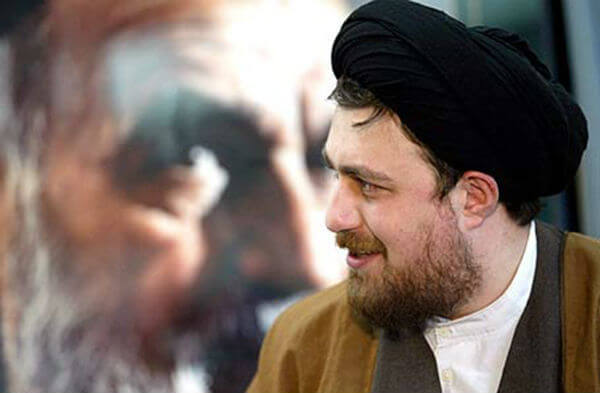
Will Hassan Khomeini shape the future of Iran?

Hassan-Khomeini

A special correspondent for Foreign Policy reports: Hassan Khomeini, the best-known grandson of Ayatollah Ruhollah Khomeini, registered on Dec. 18 as a candidate in next year’s elections for the Assembly of Experts. The 88-member committee is charged with selecting Iran’s next supreme leader when the incumbent, Ayatollah Ali Khamenei, who is 76 years old and is said to be ailing, dies. The young Khomeini is the first member of his family to seek public office since the death in 1989 of his feted grandfather, who founded the Islamic Republic and served as its first supreme leader. The only question is whether the 43-year-old will be allowed to embark on a path that could eventually lead to the very top of Iran’s complex power structure.

Hassan was born in Qom, the center of religious education in Iran, and home to the country’s clerical political establishment. Hassan’s father, Ahmad, was involved only peripherally in government, having played an influential role in assisting his own father after the long-exiled ayatollah’s triumphant return to Tehran in February 1979. Had he not died of a heart attack in 1995, Ahmad might have preceded his son’s entry to electoral politics.

But now it is Hassan who is moving to center stage.

Having studied and taught in Qom, his main job has been running the mausoleum in Tehran where his father and grandfather are interred, considered a hallowed task by many in Iran. He first started stirring notice in political circles in 2008, when he implicitly criticized Iran’s new political and military elite, which has filled its pockets even while preaching loyalty to the revolution’s founder and the Iranian people.

The IRGC, established by the first supreme leader to protect Iran from foreign and domestic threats, proved its worth during the Iran-Iraq war — but has since earned the enmity of many Iranians by engaging in widespread cronyism and throwing its weight behind the most hard-line figures in the Islamic Republic.

“Those who claim to be loyal to Imam Khomeini should follow his order that the military must stay out of politics,” the younger Khomeini said in an explosive speech when the IRGC was flexing its muscles in 2008 by supporting then-President Mahmoud Ahmadinejad. Khomeini met with reformists before the election the following year and then spoke out in support of the movement’s two defeated candidates, Mir-Hossein Mousavi and Mehdi Karroubi, who claimed the presidential ballot was rigged.

Keeping such company earned Khomeini some credit among moderates. He also shunned Ahmadinejad’s inauguration ceremony, depriving the event of the legitimacy of his family’s endorsement.

Supporters have long wanted Khomeini to enter the public arena. He is markedly younger than the current crop of top Iranian politicians and has already shown something of a youthful, common touch: He’s known to be a fan of Iran’s soccer league and has appeared as a guest on a popular television fanzine. On the show, he said he thought he could have had a career in the game if his grandfather had not ordered him to deepen his religious studies when he was 21 years old.

Khomeini’s 18-year-old son, Ahmad, is another asset. He has 188,000 followers on Instagram, which unlike Facebook or Twitter is not blocked in Iran and offers his father a unique platform to connect with young voters. The Instagram feed provides an insight into the societal change that Khamenei shows no willingness to acknowledge: Photos show Ahmad in Nike sports clothes at a time when Khamenei says American brands should be banned. Yet the teenager is also reverent toward his ancestors, posting pictures of his great-grandfather (who famously branded America “the Great Satan”) and he has taken part in religious ceremonies himself, seamlessly inhabiting both the old and new Iran. [Continue reading…]

Facebooktwittermail

Five reasons so many Iranians want to run in February’s elections

Ali Omidi writes: Speculation is that if the Guardian Council approves the candidacies of Khomeini, Rafsanjani and Rouhani, this trio will be able to change the conservative face of the Assembly of Experts. Meanwhile, in the case of parliament, it appears certain that its current conservative face is about to change.

Mindful of the above, the surge in the number of registered candidates can be traced to five main motivating factors.

First is the absence of institutionalized political parties in Iran. The main and most important reason for the surge in the number of candidate registrations is that there are no real political parties in Iran. Although various political societies and factions are active and officially registered, they have been unable, for a variety of reasons, to assume an active role in society similar to that of political parties in Western Europe or North America. As long as political parties are not institutionalized in the political system of a country, each individual can be considered competent on his own. Moreover, since the norm of having political parties does not exist in Iran, some only put forth candidacies because they like the idea of going to the Ministry of Interior to register and getting the related media attention. In addition, considering the rate of unemployment and economic decline in Iran, certain educated but jobless individuals believe that becoming a member of parliament is an opportunity to gain access to better economic and political opportunities.

Second is the Reformists’ strategy. Supporters of the Rouhani administration, including Reformists, have adopted the strategy of introducing a lot of candidates in the hopes that if their leading figures are disqualified, lesser-known Reformists will be given the chance to run for parliament and pursue the Reformist agenda. This strategy is useful for mobilizing people in order to change the political makeup of parliament and the Assembly of Experts, both of which are currently dominated by non-Reformists. Prominent Reformists can of course wield more influence and be more effective compared to second- or third-rate colleagues. However, the Reformists are not going to give up easily. They are hoping to at least increase the political cost for the conservatives if the Guardian Council engages in mass disqualifications of registered candidates. [Continue reading…]

Shahir Shahidsaless writes: The outcome-determinative nature of the elections was recently discussed by Ahmad Khatami, a leading conservative figure and the cleric who leads Tehran’s Friday prayer.

Khatami once remarked that because “Ayatollah Khamenei is currently 74 years old and will be 82 in the next eight years some are thinking that the fifth [meaning next] Assembly of Experts may have to decide on the next leader”. Also speaking to reporters on 21 December, the moderate Rafsanjani said that in these elections “our nation is getting ready for determining their fate for years to come”.

In the past three decades, there have been at the public level cordial relations between Rafsanjani and Supreme Leader Khamenei. However, the two men have represented two competing schools of thought.

In Rafsanjani’s eyes “there is no expediency above people’s opinion”. He argues that “attracting their [the people’s] satisfaction” is essential “for the longevity and stability of the country”. He once remarked that “without people, even a godly government will not sustain and will not get anywhere”. [Continue reading…]

Facebooktwittermail

European sympathies lean toward Iran in conflict with Saudi Arabia

The New York Times reports: In the days since Saudi Arabia inflamed tensions with Iran by executing 47 people, including a Shiite cleric, European observers have been quick to condemn the action, reflecting broader concern across the Continent about Saudi policy and its role in the tumult rolling through the Middle East.

Opposition in Europe to the death penalty — and harsh corporal punishment, including the flogging of a Saudi blogger who has become something of a cause célèbre in Europe — is just one element of the criticism of the Saudi monarchy. Even as European governments continue to view Saudi Arabia as a vital if problematic stabilizing force in the region, as well as a rich market for European arms and other products, European opinion has grown increasingly critical of Saudi support and financing for Wahhabist and Salafist preachers who have contributed to the Sunni extremist ideology that has fueled Al Qaeda and the Islamic State.

In addition, the European Union and six major world powers reached a deal in Vienna over the summer to contain Iran’s nuclear program, and Iran is seen as essential to ending the five-year-old civil war in Syria, which has fueled a surge of migrants to the Continent, the highest number since World War II.

So for many Europeans, Iran — long a pariah because of its anti-Western rhetoric and its nuclear program — has suddenly become, at least in comparison with Saudi Arabia, an object of sympathy. [Continue reading…]

Facebooktwittermail