Author Archives: News Sources

Saudi dissident cleric also said Iran’s ally, Bashar al-Assad, deserved to be overthrown

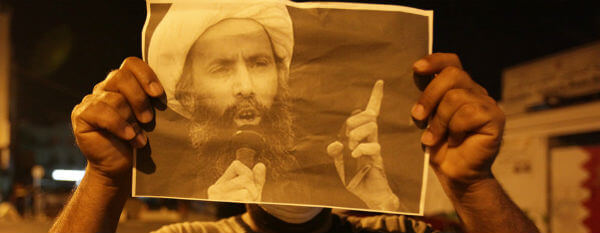
nimr-poster

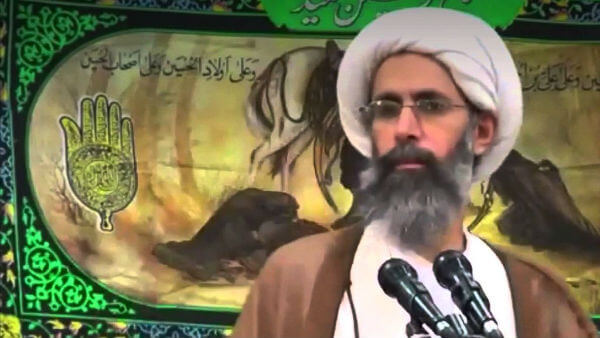
The Washington Post reports: Had Saudi Arabia not sentenced Sheik Nimr Baqr al-Nimr to death, it is unlikely his name would have resonated much beyond the Shiite communities of Saudi Arabia and Bahrain, where he helped inspire anti-government protests by disgruntled Shiites in 2011.

As it was, he became synonymous among Shiites across the region with the oppression of Shiite minorities in the Sunni Arab Gulf, and his execution on Saturday put him at the heart of the most dangerous rupture between Saudi Arabia and Iran in decades.

Forgotten in the furor over the trashing of the Saudi Embassy in Tehran and the subsequent rupture of diplomatic relations by Riyadh is Nimr himself, an enigmatic figure onto whom both sides in the regional conflict have projected their dueling visions.

“He would not have reached this level of prominence if the Saudis hadn’t turned him into a martyr by executing him,” said Mohamad Bazzi, a professor at New York University who is writing a book about the Saudi-Iranian rivalry.

Exactly who Nimr was and what he stood for remain something of a mystery, Bazzi said.

To the Saudis, he was as much of a terrorist as any of the al-Qaeda operatives executed the same day, a traitor who had incited violence and called repeatedly for the overthrow of the Saudi royal family.

His execution was every bit as justified as the killing by U.S. Navy SEALs of Osama bin Laden, a Saudi citizen, said Abdullah al-Shammari, a Saudi political analyst. “Osama bin Laden didn’t kill Americans with his own hand, but his role was to incite people to commit terrorism,” he said.

Iran has cast Nimr as a martyr who died for his faith at the hands of a tyrannical and illegitimate Sunni regime, an heir to the legacy of a long line of martyrs to the Shiite cause.

To his followers, he was an inspiration, a man who articulated their demands for a fairer society and in some instances marched alongside them in their protests. He insulted the royal family in language few Saudis would dare to use, saying in one sermon that he hoped that a Saudi prince who had recently died “will be eaten by worms and suffer the torment of hell in his grave.”

In his own words, according to the available records of his sermons and the few interviews he gave, he was an ardent and uncompromising advocate of the rights of the downtrodden, wherever they might be. Defying the sectarian straitjacket into which he has been cast by the uproar that followed his death, he identified Iran’s ally, Syrian President Bashar al-Assad, as being among the tyrants worthy of being overthrown. He favored peaceful protests — “the roar of the word against authorities rather than weapons,” according to an interview he gave to the BBC in 2011 — but did not explicitly rule out violence as a means of defeating tyranny.

He also defined Shiites as intrinsically more peaceful than Sunnis, telling U.S. diplomats in Riyadh that Shiites, “even more than Sunnis, are natural allies for America,” according to a 2008 diplomatic cable from the WikiLeaks website. [Continue reading…]


Facebooktwittermail

‘Children are eating leaves off the trees’: The nightmare of the siege of Madaya, Syria

Vice News reports: In the early hours of Sunday morning, a pregnant woman and her daughter tried to sneak out of Madaya, a mountain village perched in the snow-capped peaks of southwestern Syria.

As they reached the southern edge of town, someone tripped over a landmine, and the loud blast alerted a nearby Hezbollah checkpoint of their escape. The fighters opened fire, and between the explosion and the barrage, both mother and daughter died.

Desperate escape attempts like this one — which was reported by the UK-based Syrian Observatory for Human Rights, and confirmed to VICE News by local residents — have become more and more common in Madaya, a village of 40,000 that’s been under siege since July by a combination of Syrian forces loyal to President Bashar al-Assad and his ally, the Lebanese militia Hezbollah.

In the past month alone, 31 residents have died from starvation, or in attempts to run the Hezbollah-manned blockade that encircles the town. A report compiled by the Syrian-American Medical Society and made available to VICE News found that a kilogram (two pounds)of flour now retails for around $100, while the average Syrian makes less than $200 each month.

“I had strawberry leaves for dinner today,” Rajai, a 26-year old English and math teacher in Madaya, told VICE News by phone, asking that his name be withheld for security reasons. “I haven’t had a real meal in three months.” Since the siege began in July, he’s lost 50 pounds. “Kids are eating leaves off the trees, and the very old and very young are dying,” he said.

As the death toll mounted in December, residents of Madaya began posting desperate pleas on social media, along with disturbing images, reminiscent of Nazi concentration camps. [Continue reading…]

Facebooktwittermail

Even while claiming it was uncertain, the oil industry designed its infrastructure to withstand the effects of climate change

The Los Angeles Times reports: A few weeks before seminal climate change talks in Kyoto back in 1997, Mobil Oil took out a bluntly worded advertisement in the New York Times and Washington Post.

“Let’s face it: The science of climate change is too uncertain to mandate a plan of action that could plunge economies into turmoil,” the ad said. “Scientists cannot predict with certainty if temperatures will increase, by how much and where changes will occur.”

One year earlier, though, engineers at Mobil Oil were concerned enough about climate change to design and build a collection of exploration and production facilities along the Nova Scotia coast that made structural allowances for rising temperatures and sea levels.

“An estimated rise in water level, due to global warming, of 0.5 meters may be assumed” for the 25-year life of the Sable gas field project, Mobil engineers wrote in their design specifications. The project, owned jointly by Mobil, Shell and Imperial Oil (a Canadian subsidiary of Exxon), went online in 1999; it is expected to close in 2017.

The United States has never ratified the 1997 Kyoto Protocol to reduce greenhouse emissions.

A joint investigation by the Columbia University Graduate School of Journalism’s Energy and Environmental Reporting Project and the Los Angeles Times earlier detailed how one company, Exxon, made a strategic decision in the late 1980s to publicly emphasize doubt and uncertainty regarding climate change science even as its internal research embraced the growing scientific consensus.

An examination of oil industry records and interviews with current and former executives shows that Exxon’s two-pronged strategy was widespread within the industry during the 1990s and early 2000s.

As many of the world’s major oil companies — including Exxon, Mobil and Shell — joined a multimillion-dollar industry effort to stave off new regulations to address climate change, they were quietly safeguarding billion-dollar infrastructure projects from rising sea levels, warming temperatures and increasing storm severity. [Continue reading…]

Facebooktwittermail

Gun stocks are soaring as Obama proposes new gun control measures

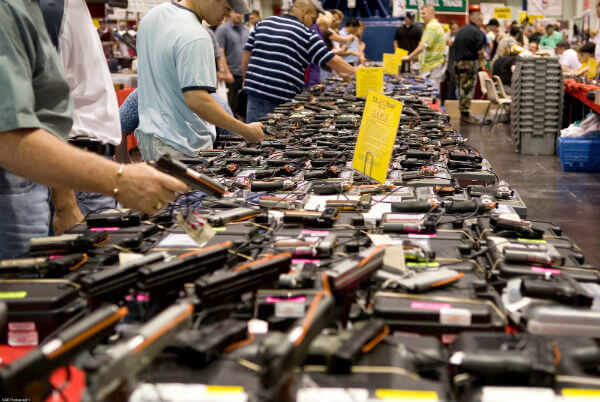
gun-shopping

Quartz reports: Another gun control measure, another rally for gun stocks.
As US president Barack Obama spoke about his proposal to further regulate firearms, shares of Smith & Wesson climbed more than 10% in midday trading today (Jan. 5), while Sturm, Ruger & Co. moved up 7%.

Although most Americans don’t own guns and want more gun control, a minority who do own guns end up buying more of them when they feel that stricter regulation — or even just the threat of it — is coming down the pike. And that’s what is set to happen now that Obama, after being repeatedly frustrated by Congress, has chosen to pursue the issue unilaterally with executive action that would: [Continue reading…]

Facebooktwittermail

The politics animating Sunni-Shia sectarian conflict

Nader Hashemi writes: The response by most Arab regimes, principally those of the GCC, to the Arab Spring is revealing. It serves to highlight the salience of authoritarianism over theology in understanding the dynamics of Sunni-Shi‘i relations today. Fearing that the demand for political change would sweep across the Arab world and destabilize their own societies, several of these regimes relied on a strategy of exploiting sectarianism to deflect demands for democratization. The response from these governments can be situated within the framework of Joel Migdal’s thesis [discussed earlier in this article] on the nature of “weak states” and the “strategies of survival” that shape their politics.

In writing about the House of Saud’s reaction to the Arab Spring, Madawi al-Rasheed observes that:

Sectarianism became a Saudi pre-emptive counter-revolutionary strategy that exaggerates religious difference and hatred and prevents the development of national non-sectarian politics. Through religious discourse and practices, sectarianism in the Saudi context involves not only politicizing religious differences, but also creating a rift between the majority Sunnis and the Shia minority.

This was made easier when only Shi‘as in the Eastern province came out to demonstrate during the Arab Spring, while similar protests in the rest of Saudi Arabia failed to materialize. The specter of an Iranian Shi‘i/Savafid threat was invoked, and the usual Wahhabi court (Ulema) were given air time to issue fatwas against public demonstrations and to warn people of the wrath of God that would fall upon those who defied their rulers. The security forces were then brought in as backup to restore order via the usual tactics of repression that are common in non-democratic regimes.

Al-Rasheed, however, notes that it is wrong to characterize relations between the Saudi regime and its Shi‘i population as a one-way street that relies exclusively on repression. The House of Saud “deploys multiple strategies when it comes to its religious minorities and their leadership,” she observes. “Wholesale systematic discrimination against the Shia may be a characteristic of one particular historical moment, but this can be reversed. A political situation may require alternatives to repression. Sometimes repression is combined with co-optation and even promotion of minority interests and rights.”

For example, when ISIS bombed Shi‘i worshippers on two occasions in May 2015, the Saudi regime strongly condemned the attacks and vowed to hunt down the perpetrators. Expressions of solidarity with the Shi‘a soon followed and were widely disseminated on official state media. Summarizing this strategy, al-Rasheed concludes that:

It is important to note that there is no regular and predictable strategy deployed by Saudi authoritarianism against the Shia. Each historical moment requires a particular response towards this community, ranging from straightforward repression to co-optation and concession. The Arab Spring and its potential impact on the country pushed the regime to reinvigorate sectarian discourse against the Shia in order to renew the loyalty of the Sunni majority.

[Continue reading…]

Facebooktwittermail

The Saudi execution will reverberate across the Muslim world

Brian Whitaker writes: Saudi Arabia’s execution of Sheikh Nimr al-Nimr, a prominent Shia cleric, on Saturday was an act motivated more by politics than judicial considerations. Although in a BBC interview William Patey – a former British ambassador in Riyadh – charitably described Nimr’s killing as a Saudi “miscalculation”, the consequences so far have been totally predictable.

In Iran, the headquarters of Shia Islam, the authorities turned a blind eye while demonstrators set fire to the Saudi embassy, and the Saudis have now responded by severing diplomatic relations. Bahrain quickly followed suit and the UAE downgraded its relations too. The execution has also triggered demonstrations among Shia communities elsewhere – including Bahrain, where the Shia majority is ruled by a Sunni minority.

More seriously, but no less predictably, the inflaming of sectarianism will have knock-on effects in Syria and Iraq. In Syria, where Saudi Arabia backs Sunni Islamists and Iran is supporting the President Assad regime, we can expect a hardening of positions at a time when international peace efforts are aimed at softening them and starting a dialogue. [Continue reading…]

Facebooktwittermail

Yemen: The country caught in the middle of the Iranian-Saudi power struggle

yemen-bombing

Bobby Ghosh writes: Of the two things Saudi Arabia did on Jan. 2 to make the world a more dangerous place, one has caught all the attention: the execution of the dissident Shia cleric Nimr al-Nimr. That led to the fire-bombing of the Saudi embassy in Tehran, and Riyadh’s retaliatory decision to break off diplomatic ties.

The other, however, has gone almost unnoticed: the formal ending of a poorly-observed truce in Yemen, and new airstrikes by a Saudi-led coalition of Arab states against Shia rebels known as the Houthis.

Much of the analysis following the events of the weekend has focused on fears that the Saudi-Iranian conflict will derail peace talks on Syria (paywall), where Iran backs president Bashar al-Assad and Saudi Arabia backs opposition rebels. Indeed, the talks planned for later this month may not now happen at all. But the consequences for Yemen are no less dire.

Yemen’s civil war, raging for nearly a year, seems fated to constantly be drowned out by tumult elsewhere in the region. (When it does get some press, headline writers inevitably label it the “forgotten war.”) Nearly 3,000 civilians have been killed in the fighting, the country’s already fragile economy has been shattered, and attempts at negotiated settlement have gone nowhere. The resumption of airstrikes by the Saudi-led coalition — which enjoys US support — means the impoverished nation at the foot of the Arabian Peninsula is not likely to find peace anytime soon.[Continue reading…]

Facebooktwittermail

Iraqi Sunni mosques attacked in apparent retaliation for Saudi execution

Reuters reports: At least two Sunni Muslim mosques have been attacked in Iraq and two people killed in apparent retaliation for the execution of a senior Shi’ite cleric in Sunni-ruled Saudi Arabia, officials and police said on Monday.Iraqi Shi’ites protesting the Jan. 2 execution of Saudi Shi’ite cleric Nimr al-Nimr separately marched in Baghdad and in southern cities, calling for a boycott of Saudi products and severing ties with the Sunni-ruled kingdom.Iraq’s Interior Ministry confirmed the attacks on Sunni mosques late Sunday in Hilla, around 100 km (60 miles) south of Baghdad. Prime Minister Haider al-Abadi blamed them on “Daesh (Islamic State) and those who are similar to them,” without further explanation.

He ordered provincial authorities “to chase the criminal gangs” who attacked the mosques. [Continue reading…]

Facebooktwittermail

The ten most important developments in Syria in 2015

Assad

Aron Lund writes at length on each of these developments:

10. The Death of Zahran Alloush.
9. The Failure of the Southern Storm Offensive.
8. Operation Decisive Quagmire.
7. Europe’s Syria Fatigue vs. Assad’s Viability
6. The Vienna Meeting, the ISSG, and Geneva III.
5. The Donald.
4. The Iran Deal.
3. The Continuing Structural Decay of the Syrian Government.
2. The American-Kurdish Alliance.
1. The Russian Intervention. [Continue reading…]

Facebooktwittermail

Russia names United States among threats in new security strategy

Reuters reports: A new appraisal names the United States as one of the threats to Russia’s national security for the first time, a sign of how relations with the west have deteriorated in recent years.

The document, “About the Strategy of National Security of Russian Federation”, was signed by President Vladimir Putin on New Year’s Eve. It replaces a 2009 version, endorsed by then- President Dmitry Medvedev, the current prime minister, which mentioned neither the United States not NATO.

It says Russia has managed to heighten its role in solving global problems and international conflicts. That heightened role has caused a reaction by the West, it says.

“The strengthening of Russia happens against the background of new threats to the national security, which has complex and interrelated nature,” the document says.

Conducting an independent policy, “both international and domestic” has caused “counteraction from the USA and its allies, which are striving to retain their dominance in global affairs.” [Continue reading…]

Facebooktwittermail

Suspect in pro-ISIS plot called mentally ill ‘panhandler’ who was ‘manipulated’

The Associated Press reports: An ex-convict arrested in a plot to carry out a pro-Islamic State attack at a bar on New Year’s Eve is a panhandler who had been asked to leave in the past, the bar’s owner said. The man’s family said he had a long history of mental problems.

Federal authorities have said Emanuel Lutchman, 25, sought to prove he was worthy of joining Isis by leading an attack in Rochester with a machete and knives that were provided by an FBI informant.

After authorities announced his arrest on Thursday, Lutchman’s father and mother described a man who had had psychiatric troubles since childhood, had recently stabbed himself in a suicide attempt and, they said, would not have conducted the attack on his own.

“The boy is impressionable,” his father, Omar Lutchman, told NBC News. “First he was a Blood, then he was a Crip, then he became a Muslim. He’s easily manipulated.”

The father and the suspect’s grandmother, Beverley Carridice-Henry, told the network Lutchman is married and has a two-year-old son but had been having marital and money problems. He was frustrated over being unable to find work and care for his family, they said. [Continue reading…]

Facebooktwittermail

ISIS signals business as usual, with menacing new ‘frontman’

Martin Chulov writes: His tone was flatter, his physique less muscled, but his intent as menacing as his predecessor. The debut of what appears to be a new British-accented jihadi in an Islamic State propaganda film seemed tailored to signal business as usual for the terror group, two months after its foreboding former face, Mohammed Emwazi, was killed.

A lot has happened since then; the coordinated attacks in Paris, three mass bombings in southern Turkey, apparent near-misses in Munich and Brussels, a downed Russian passenger jet in the Sinai and heightened anxiety from Madrid to Istanbul.

But this latest video was aimed directly at the UK. The message was simple: David Cameron’s decision to bomb Isis targets in Syria had made Britain more of a target. And that whenever one British Isis frontman was killed, another was ready to take his place. [Continue reading…]

Facebooktwittermail

Britain acts to stem flow of young doctors recruited by ISIS in Sudan

The Guardian reports: A British delegation, including an imam from London, have visited Sudan to try to dissuade young British doctors from joining Islamic State (Isis), which has been urgently seeking more foreign medics to help at its hospitals in Syria.

The Foreign Office is coordinating efforts to prevent more Britons travelling from Khartoum’s University of Medical Sciences and Technology (UMST). At least 17 British doctors travelled from there to Syria during 2015 to staff Isis’s health ministry.

It has emerged that a second group of UK doctors who left Sudan for Syria have joined up with members of an earlier group who travelled to join Isis in March. According to family sources, the second group of five Britons, including two brothers from Leicester, are understood to have joined up with 20-year-old Rowan Kamal Zine El Abidine, one of a group of nine British medical staff who journeyed from Khartoum months earlier. [Continue reading…]

Facebooktwittermail

Jihadists deepen collaboration in North Africa

The New York Times reports: A group of light armored vehicles skated over the moonscape of the Sahara, part of one of the largest detachments the French military has deployed here since colonial times. Its mission is growing ever more urgent: to cut smuggling routes used by jihadists who have turned this inhospitable terrain into a sprawling security challenge for African and international forces alike.

Many of the extremist groups are affiliates of Al Qaeda, which has had roots in North Africa since the 1990s. With the recent introduction of Islamic State franchises, the jihadist push has been marked by increasing, sometimes heated, competition.

But, analysts and military officials say, there is also deepening collaboration among groups using modern communications and a sophisticated system of roving trainers to share military tactics, media strategies and ways of transferring money.

Their threat has grown as Libya — with its ungoverned spaces, oil, ports, and proximity to Europe and the Middle East — becomes a budding hub of operations for both Al Qaeda and the Islamic State to reach deeper into Africa.

And as Africa’s jihadists come under the wing of distant and more powerful patrons, officials fear that they are extending their reach and stitching together their ambitions, turning once-local actors into pan-national threats. [Continue reading…]

Facebooktwittermail

Egypt now looks a lot like it did in 2010, just before 2011 unrest

Michele Dunne and Nik Nevin write: Egypt of December 2015 is looking a lot like Egypt of late 2010 and the final months of Hosni Mubarak‘s three-decade rule. The country’s longtime military president had little political sophistication; then as now, there were struggles between the military and businessmen for economic and political power, human rights abuses, economic woes, and jihadi groups in the Sinai. But today, these things appear more pronounced.

The membership and mission of the recently elected 598-seat House of Representatives bear similarities to the parliament chosen a few months before the January 2011 uprising, but each is more exaggerated. Other developments in Egypt echo the dysfunction of 2010, raising questions about whether another upheaval might be brewing. [Continue reading…]

Facebooktwittermail

Why Paris worked: A different approach to climate diplomacy

pattern4

David Victor writes: Why did Paris work when almost everything before it failed? The central answer lies in a new style of international cooperation, one that has enabled 195 countries to formally adopt an agreement that is likely to have a real impact on the emissions that cause climate change, as well as on how societies adapt to the big shifts in climate that are coming.

The contrast of Paris with the past could not be starker. The 1992 Rio framework to get serious climate diplomacy going was the right approach, but diplomats and climate activists steered that framework off the rails, and for 23 years — until now — they achieved very little. The 1997 Kyoto Protocol was so riddled with flaws that it had essentially no impact on emissions. The 2009 climate negotiations in Copenhagen ended in acrimony and recriminations.

Now, instead of setting commitments through centralized bargaining, the Paris approach sets countries free to make their own commitments. These “nationally determined contributions” are a starting point for deeper cooperation that will unfold over time. Once the Paris agreement enters into force and is fully in motion, around the year 2020, each nation will be expected to adopt a new pledge every five years in tandem with periodic overall efforts to take stock of how the group of nations is doing. [Continue reading…]

Facebooktwittermail

Iran warns of ‘divine vengeance’; Saudi Arabia breaks relations

Sheikh-Nimr-Baqr-al-Nimr

The Washington Post reports: Saudi Arabia severed relations with Iran on Sunday amid the furor that erupted over the execution by the Saudi authorities of a prominent Shiite cleric.

Foreign Minister Adel al-Jubair told reporters in Riyadh that the Iranian ambassador to Saudi Arabia had been given 48 hours to leave the country, citing concerns that Tehran’s Shiite government was undermining the security of the Sunni kingdom.

Saudi Arabian diplomats had already departed Iran after angry mobs trashed and burned the Saudi embassy in Tehran overnight Saturday, in response to the execution of Sheikh Nimr Baqr al-Nimr earlier in the day.

Iran’s Supreme Leader warned on Sunday that there would be divine retribution for Saudi Arabia’s rulers after the execution of a renowned Shiite cleric, sustaining the soaring regional tensions that erupted in the wake of the killing.

The warning came hours after crowds of protesters stormed and torched the Saudi embassy in Tehran to vent their anger at the execution of Nimr Baqr al-Nimr, who was among 47 people put to death in the kingdom on Saturday.

Shiites around the world expressed outrage, potentially complicating a surge of U.S. diplomacy aimed at bringing peace to the region, according to Toby Matthiesen, an expert on Saudi Arabia at the University of Oxford.

“Nimr had become a household name amongst Shiite Muslims around the world. Many had thought his execution would be a red line and would further inflame sectarian tensions,” he said. “So this will complicate a whole range of issues, from the Syrian crisis to Yemen.”

Saudi Arabia and Iran are backing rival sides in Syria’s war, and their enmity risks derailing a diplomatic effort led by the United States and Russia to convene peace talks between the factions in Geneva this month.

The two feuding powers also support opposing sides in the war in Yemen and more broadly find themselves in opposition in the deeply divided politics of the mixed Sunni-Shiite nations of Iraq and Lebanon.

The Obama administration’s hopes that the conclusion last summer of an agreement limiting Iran’s nuclear program would help bridge the sectarian divide between Tehran and the United States’ biggest Arab ally were further diminished by the eruption of fury that followed Nimr’s death. [Continue reading…]

Facebooktwittermail