Author Archives: News Sources

Erdoğan cites Hitler’s Germany as example of effective government — updated

erdogan

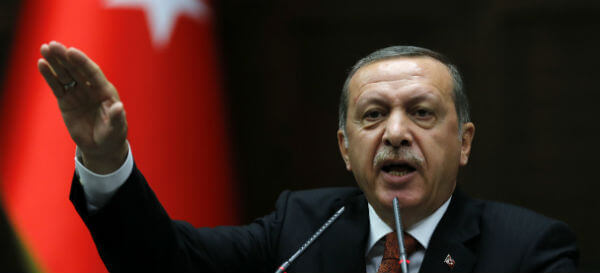
The Guardian reports: Turkey’s president has been pushing for some time for a new presidential system to govern the country, sparring with critics who accuse him of attempting a power grab.

Recep Tayyip Erdoğan’s latest comments in favour of greater executive powers are unlikely to help him bring those critics round. On Friday he was quoted by Turkish media as citing a striking example of an effective presidential system – Germany under Adolf Hitler.

Asked on his return from a visit to Saudi Arabia whether an executive presidential system was possible while maintaining the unitary structure of the state, he said: “There are already examples in the world. You can see it when you look at Hitler’s Germany. [Continue reading…]

The Associated Press now reports: The Turkish president’s office said Friday that Recep Tayyip Erdogan was not advocating a Hitler-style government when he called for a state system with a strong executive.

A statement from Erdogan’s office said the Turkish president has declared the Holocaust, anti-semitism and Islamophobia as crimes against humanity and that it was out of the question for him to cite Hitler’s Germany as a good example. [Continue reading…]

Facebooktwittermail

ISIS owns headlines, but Nigeria’s Boko Haram kills more than ever

NBC News reports: One terror group killed nearly 11,000 people in 2015 — and it wasn’t ISIS.

While the Sunni militants in Syria and Iraq dominated the headlines in 2015, Boko Haram was killing more people than ever — potentially eclipsing the tally of its partner in terror.

Nigeria’s new government pledged to oust Boko Haram and has boasted of successfully retaking territory from the extremists, but experts warn this might merely have forced the group to change tactics and possibly prompted a higher civilian casualty toll. [Continue reading…]

Facebooktwittermail

ISIS is here: Return of the jihadi

ISIS-catwalk-bw

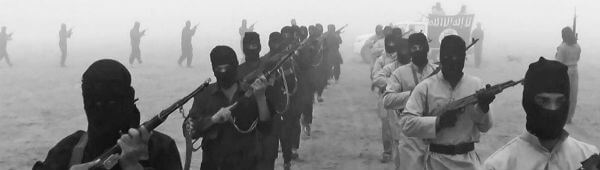
Bruce Hoffman writes: “This is sort of the new normal,” FBI Director James Comey observed after the most recent Fourth of July. Comey was talking about the ten persons who were arrested in connection with a variety of plots linked to ISIS in the weeks leading up to that national holiday. But while the threat of homegrown violent extremism inspired by either ISIS or Al Qaeda is now accepted as fact, there is still surprisingly little consensus on the potentially far greater danger posed by radicalized foreign fighters trained by ISIS, returning to their native or adopted homelands in the West, ready to carry out terrorist actions—despite the attacks that occurred in Paris last November.

Indeed, long before the latest incidents, the May 2014 killing of four people at the Jewish Museum of Belgium appeared to validate fears of the potential for violence imported from abroad. The alleged perpetrator, a twenty-nine-year-old French national of Algerian origin named Mehdi Nemmouche, reportedly had spent more than a year in Syria. When he was arrested in Marseilles days after the attack, French police found in his possession an ISIS flag and a tape recording claiming responsibility for the incident. An interview with a French hostage previously held captive in Syria by ISIS subsequently revealed that Nemmouche had not only fought with the group, but also had tortured prisoners and boasted of having committed worse atrocities.

The only other well-publicized terrorist incident in Europe involving a veteran of the fighting in Syria was the fracas last August on a high-speed train traveling from Belgium to France. A passenger discovered Ayoub El Khazzani in the train’s lavatory while the twenty-five-year-old Moroccan-born resident of Spain was trying to load a Kalashnikov assault rifle. A scuffle ensued as other passengers tackled and disarmed El Khazzani, who was also carrying a Luger pistol, nearly three hundred rounds of ammunition, a Molotov cocktail and a box cutter. Already on the watch lists of at least four European security services because of his ties to Islamist groups and to radical mosques in Spain, El Khazzani is believed to have traveled to Syria where he was trained by, and fought for, ISIS. [Continue reading…]

Facebooktwittermail

Why has the AK-47 become the jihadi terrorist weapon of choice?

The Guardian reports: In the early years after 9/11 the suicide belt, the car bomb and the homemade explosive device were the weapons of choice for jihadis: hidden, brutal and hard to counter.

But as 2015 heaves to a close, its atrocities littered across the calendar – Charlie Hebdo, Sousse, Garissa, Tunis, Copenhagen and Paris – it is the AK-47 that has come to the fore.

Across Europe more terrorist attacks have been carried out with Kalashnikov-type assault rifles this year than with any other device. In the 13 November Paris attacks, suicide bombers killed few but gunmen killed many. Further afield, in Tunisia and Kenya, it was also automatic weapons that did the damage.

The widespread availability of these guns has been known for years. But it took the scale of death meted out in Paris last month to force Europe to address the threat.

Now law enforcement officers across the continent are trying to establish some basic truths. Where do they come from? Who are the middlemen that deal in these deadly weapons? And why have they become so popular again? [Continue reading…]

Facebooktwittermail

When my Japanese-American family was treated as less than human

Mike Honda writes: In the aftermath of the Paris and San Bernardino, California, terrorist attacks, the dangerous and destructive discourse about Muslims and Muslim Americans has reached a tipping point. Some Republican presidential candidates are calling for a ban of Muslims entering the country, and a Democratic mayor in Virginia is demanding the internment of Syrian refugees.

I can’t help but fear that history could be on the verge of repeating itself.

I am a third-generation American of Japanese ancestry, born in Walnut Grove, California. Yet my family and I were classified as enemy aliens simply because we looked like the enemy. In the days before we were taken from our communities, the life we knew was ripped from us.

In the aftermath of the attack on Pearl Harbor, on Dec. 7, 1941, the United States blamed us for the Japanese attack. Because of what the 1988 Civil Liberties Act labeled “war hysteria, racism and a failure of political leadership,” President Franklin D. Roosevelt signed Executive Order 9066, which confined the Japanese-American community in internment camps — and forever changing our lives and our community. [Continue reading…]

Facebooktwittermail

Gun-friendly Texas is getting even friendlier

The New York Times reports: Texas is so gun-friendly that it is easier to get into the Capitol in Austin with a firearm than without one — licensed, gun-carrying lawmakers and members of the public have their own no-wait security lane, and the unarmed masses have to stand in line and slog through the metal detectors.

But on Friday, gun rights throughout the state expanded still more, as a new law took effect that allows certain Texans to wear their handguns in holsters on their hips — or in shoulder holsters, Dirty Harry-style — openly displaying the fact that they are armed as they work, shop, dine and go about their day.

The so-called open-carry law has set off a long-simmering debate over the limits of the Texas gun culture and has given gun rights advocates a hard-fought victory after they pushed for the expansion for years. Members of the pro-gun group Open Carry Texas were to gather at noon Friday on the south steps of the Capitol for a gun-on-their-hips celebration before walking down Congress Avenue. Other groups plan to display their weaponry at events in Houston, Dallas and other cities. [Continue reading…]

Facebooktwittermail

Stranger than Strangelove: How the U.S. planned for nuclear war in the 1950s

By Paul Lashmar, University of Sussex

Those who have written about the nuclear Cold War remain grateful to Stanley Kubrick for giving us the satirical 1964 film Dr Strangelove which captures the madness that swept the world for 40 years. The name Strangelove may be overused but the United States has now released a secret file that really does justify the sobriquet: “Stranger than Strangelove”. Almost anodyne in title, Atomic Weapons Requirements Study for 1959 is a truly shocking document, revealing the scale of the holocaust that would have been unleashed in a nuclear war.

But a little context first. Back in 2006, the journalist Michael Dobbs filed requests for the declassification of many Pentagon Cold War documents. Dobbs optimistically hoped these documents would illuminate his book on the Cuban Missile Crisis. After years in the review system, in October 2014, some 2,200 documents were released – and with Dobbs’ help, the not-for-profit National Security Archive in Washington DC (not to be confused with the National Security Agency) has been working on the bundle ever since.

The archive has recently released its assessment and the highlights are that major cities in the Soviet Bloc, including East Berlin, were high priorities in “systematic destruction” for nuclear attack and that H-bombs were to be used against priority “air power” targets in the Soviet Union, China, and Eastern Europe. The report also found that plans to target people (“population”) were in violation of international legal norms.

The cover of the SAC assessment.
National Security Archive, George Washington University

Meanwhile, Strategic Air Command (SAC) wanted a 60-megaton bomb – a weapon with the equivalent destructive power of over 4,000 Hiroshima devices.

Continue reading

Facebooktwittermail

Iran’s plan for Syria without Assad

assad-dumped

Joyce Karam writes: On February 25, 1987, late Syrian President Hafez al-Assad sent his troops to the Fathallah barracks in West Beirut, where they killed twenty-seven members of Hezbollah in a move designed to show Syria’s upper hand over Iran in Lebanon. Almost three decades later, this modus operandi is completely reversed under Assad the son, as Syria sinks into a war of attrition and Tehran gains the upper hand in Damascus.

For Iran, Bashar al-Assad has been a valuable ally but not an indispensable one. His coming to power in 2000, followed by the Iraq war in 2003 and Syria’s withdrawal from Lebanon in 2005, freed Iran’s hand in the Levant. Hezbollah under Bashar al-Assad has received weaponry and political backing unthinkable in his father’s time, including long-range Scud missiles and a 2010 Damascus visit by the party’s chief Hassan Nasrallah. But while Tehran has worked since the beginning of the Syrian war in 2011 to prolong Assad’s hold on power, it has also planned from the very early stages of the conflict for the day after, should its ally fall or should the regime lose Damascus.

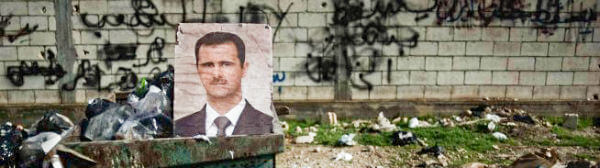
Even as Iran sits at the negotiating table in Vienna, its strategy overlooks the political debate and the successive failed processes. It is instead rooted in creating new realities and proxies on the ground in Syria, looking beyond Assad and preserving its core interests. These interests are defined today by three goals: (1) Ensuring arms shipments continue to Hezbollah; (2) Gaining a strategic foothold in Levant and against Israel; (3) Preventing a stable government opposed to Iran from fully ruling over Syria. [Continue reading…]

Facebooktwittermail

Will Green Movement haunt Iran’s upcoming elections?

green-movement

Arash Karami reports: The registration process for the February 2016 parliamentary and Assembly of Experts elections has come to end with a record number of candidates: Nearly 12,000 individuals registered to compete for a seat in the 290-member parliament. It will be the job of the conservative Guardian Council to determine which candidates pass through their filters and ultimately will be allowed to run. While the council is not obligated to specify publicly why the candidates are qualified or disqualified, it seems the 2009 presidential elections will be a central factor in their decision-making process.

Guardian Council spokesman Nejatollah Ebrahimian told Tasnim News Agency on Dec. 27 that the council will review all the comments and actions of the candidates during 2009 postelection protests. He said that the behavior of the candidates should not have been such that it could be construed that they participated in the illegal activities during 2009, adding they should have “clear and specific lines drawn with the sedition of 2009.”

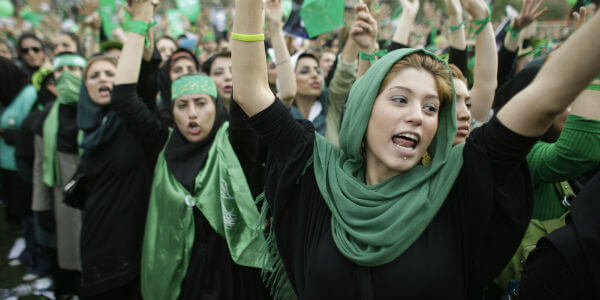
The contested 2009 presidential elections, which hard-liners refer to as the “2009 sedition,” was a turning point in Iranian elections. The incumbent, controversial hard-liner Mahmoud Ahmadinejad, was announced the victor. The Reformist candidates, Mir Hossein Mousavi and Mehdi Karroubi, challenged the results and encouraged their supporters to hold street protests — the largest since the 1979 Islamic Revolution. Despite hundreds of arrests, dozens of deaths and the house arrest of the so-called Green Movement leaders, Iranian officials responsible for the crackdown continue to raise the issue of the 2009 elections as a sort of dividing line between those who should be allowed to be part of the political process and those who should not. [Continue reading…]

Facebooktwittermail

Is U.S. Congress empowering Iranian hard-liners?

congress

Mahmoud Pargoo writes: [In 2013] Hassan Rouhani, who sternly criticized Ahmadinejad’s nuclear policies, won the election and appointed Mohammad Javad Zarif as foreign minister. Consequently, and as a result of the softening of the rhetoric and engagement in talks with the United States, the Joint Comprehensive Plan of Action (JCPOA) was signed between Iran and six world powers in July. The agreement was seen as evidence that if Iran engages in serious talks with the United States, issues can be gradually solved. Even Supreme Leader Ayatollah Ali Khamenei pointed to the likelihood of extending negotiations to other non-nuclear issues if the United States proves to be trustworthy.

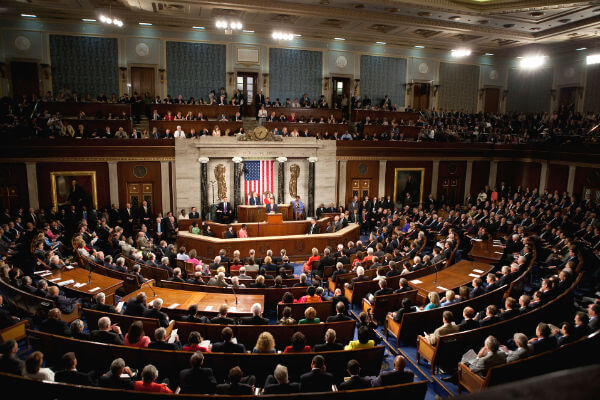
This line of thinking, however, is changing with the recent series of US measures — including the recent congressional vote to restrict visa-free travel to the United States for those who have visited Iran in the past five years. Indeed, many in Iran are coming to the conclusion that no matter what rhetoric or action the Islamic Republic may assume, the United States will continue its enmity with Iran. Thus, a new consensus is being formed — but this time, against the United States. People from almost all political orientations have interpreted the new Visa Waiver Program (VWP) changes as running counter to the JCPOA. Ali Larijani, the parliament speaker and a powerful conservative supporter of the nuclear negotiations, has criticized the law, while many Reformist politicians have also condemned it as being against Iranian goodwill in engaging with the United States. Zarif, the foreign minister and chief nuclear negotiator, has additionally said that the new law breaches the JCPOA.

When seen in the light of historical parallels, the recent developments could be an alarming sign that certain elements in the US foreign policy establishment are seeking to paralyze any effort to normalize relations with Iran. [Continue reading…]

Facebooktwittermail

Iran vows to respond to any new U.S. sanctions

The Wall Street Journal reports: Iranian President Hassan Rouhani ordered his defense minister to expedite Iran’s ballistic-missile program following newly planned U.S. sanctions, he said Thursday, casting fresh doubt on the implementation of a landmark nuclear accord reached in July.

Mr. Rouhani made the announcement on his official Twitter account, without elaborating on what steps he had ordered Defense Minister Hossein Dehghan to take.

“If [the] U.S. continues its illegitimate interference [with] Iran’s right to defend itself a new program will be devised to enhance missile capabilities,” Mr. Rouhani tweeted.

“We have never negotiated regarding our defense capabilities, including our missile program & will not accept any restrictions in this regard,” he said.

An Iranian Foreign Ministry spokesman said earlier Thursday that Iran considered any new U.S. sanctions on its ballistic-missile program illegal and would respond accordingly.

“Such actions are unilateral, arbitrary and illegal and the Islamic Republic of Iran has warned the U.S. in this respect,” said spokesman Hossein Jaber Ansari, according to the official Islamic Republic News Agency.

The Obama administration is planning new sanctions on Iran, targeting almost a dozen companies and individuals in Iran, Hong Kong and the United Arab Emirates, U.S. officials told The Wall Street Journal on Wednesday. The planned action by the Treasury Department is targeted at businesses and individuals for their alleged role in developing Iran’s ballistic-missile program and would represent the first new sanctions on Iran since six world powers, including the U.S., reached the nuclear deal with Tehran. [Continue reading…]

Facebooktwittermail

Months of fighting leaves 80% of Ramadi in ruins

Al Jazeera reports: Months of fighting and the recent pitched battle to take Iraq’s Ramadi from ISIL have levelled most of the key city as officials warned it was too soon for civilians to return after it was recaptured.

Local official Eid Amash said 80 percent of Ramadi, the provincial capital of Anbar, has been destroyed in the battles between Iraq’s army – backed by US air strikes – and the Islamic State of Iraq and the Levant group.

Amash, spokesman of Anbar’s provincial council, told Kurdish media network Rudaw that some districts of Ramadi were yet to be cleared of ISIL fighters. [Continue reading…]

Facebooktwittermail

Are clashes spreading to western Turkey?

Metin Gurcan writes: Clashes between the Turkish government and Kurdish forces continue unabated in southeastern towns mostly inhabited by Kurds. But now the Kurds appear to be taking the battle to Istanbul and other western Turkey cities.

Despite increasing social and economic costs, the parties show no signs of cooling down. Ankara says it will continue to combat terrorism no matter the cost, and the Kurdistan Workers Party (PKK) issues stern warnings that the clashes could escalate and spread.

The latest such threat came from Cemil Bayik, co-chair of the Union of Kurdish Communities’ (KCK) executive council. KCK is a unit of the PKK. Bayik bluntly said, “We are heading to the establishment of a revolutionary resistance front with the participation of organizations that will come from inside and outside of Turkey.” [Continue reading…]

Facebooktwittermail

Leaked documents may reveal the inner workings of the ISIS — but what if they are fake?

The Washington Post reports: If you want to really understand the Islamic State and go beyond the propaganda, looking at the militant group’s internal documents might be a good place to start. As the group expanded over the past year and attempted to turn into a functioning state, it released several internal orders and decrees that seek to organize this “caliphate.” These documents offer a glimpse of not only the way the Islamic State organizes but also the anxiety and disorder in the group that lies under the surface.

One example of this comes from documents that were recently revealed by Reuters and that appear to show the Islamic State decreeing who can have sex with captured enslaved women and who cannot. The documents showed that a bureaucracy appears to underpin even the most brutal acts committed by the group and hinted that some of the extreme behavior by its fighters led even the group’s own religious authorities to balk.

On the other hand, some experts believe that some purported Islamic State internal documents shared online are hoaxes, deliberately designed to deceive. These fakes are widespread enough that Aymenn Jawad al-Tamimi, a young British analyst who has made a name for himself with his analysis of extremist activity, recently published his own “guide to Islamic State document hoaxes.” [Continue reading…]

Facebooktwittermail

A Russian sentiment familiar to Americans: ‘It doesn’t concern me’

Zhanna Nemtsova writes: A public opinion survey recently asked Russians: “What was the main political event of the year?”

Events in Crimea, Ukraine and Syria featured prominently, but the most brutal political murder in modern Russia – the assassination of my father, Boris Nemtsov, a prominent opposition figure – didn’t even figure in the responses.

Another survey conducted by the independent Levada Centre in March, soon after he was shot dead on a bridge close to the Kremlin, found that one-third of the Russians polled had “no particular feelings” about his murder.

Taken together, these responses illustrate a broader problem with the current condition of Russian society, characterised by moral numbness and best illustrated by the popular Russian sentiment – “it doesn’t concern me”.

This climate has also compromised the quality of the opposition itself and made it a heroic feat to even take part in the opposition movement in Russia.

The political system that President Vladimir Putin has built relies on a lack of public thought, and on people’s reluctance to ask questions, formulate positions or remember the past. Putin’s Russia has no need of people who think for themselves. [Continue reading…]

Facebooktwittermail

Israel bans novel on Palestinian-Jewish romance, seen as threat to ‘national-ethnic identity’

Haaretz reports: Israel’s Education Ministry has disqualified a novel that describes a love story between an Israeli woman and a Palestinian man from use by high schools around the country. The move comes even though the official responsible for literature instruction in secular state schools recommended the book for use in advanced literature classes, as did a professional committee of academics and educators, at the request of a number of teachers.

Among the reasons stated for the disqualification of Dorit Rabinyan’s “Gader Haya” (literally “Hedgerow,” but known in English as “Borderlife”) is the need to maintain what was referred to as “the identity and the heritage of students in every sector,” and the belief that “intimate relations between Jews and non-Jews threatens the separate identity.” The Education Ministry also expressed concern that “young people of adolescent age don’t have the systemic view that includes considerations involving maintaining the national-ethnic identity of the people and the significance of miscegenation.”

The book, published in Hebrew by Am Oved about a year and a half ago, tells the story of Liat, an Israeli translator, and Hilmi, a Palestinian artist, who meet and fall in love in New York, until they part ways for her to return to Tel Aviv and he to the West Bank city of Ramallah. The book was among this year’s winners of the Bernstein Prize for young writers.

A source familiar with the ministry’s approach to the book said that in recent months a large number of literature teachers asked that “Borderlife” be included in advanced literature classes. After consideration of the request, a professional committee headed by Prof. Rafi Weichert from the University of Haifa approved the request. The committee included academics, Education Ministry representatives and veteran teachers. The panel’s role is to advise the ministry on various educational issues, including approval of curriculum.

According to the source, members of the professional committee, as well as the person in charge of literature studies, “thought that the book is appropriate for students in the upper grades of high schools – both from an artistic and literary standpoint and regarding the topic it raises. Another thing to remember is that the number of students who study advanced literature classes is anyhow low, and the choice of books is very wide.”

Another source in the Education Ministry said that the process took a number of weeks, and that “it’s hard to believe that we reached a stage where there’s a need to apologize for wanting to include a new and excellent book into the curriculum.” [Continue reading…]

Facebooktwittermail

Are most Jewish terrorists ‘crazy Americans’?

Haaretz reports: Laura Wharton, an American-born political scientist who represents the left-wing Meretz party on the Jerusalem city council, is not surprised by the large number of children of English-speaking families among the terror suspects, noting that immigrants from these countries tend to be highly ideologically motivated, and are more likely to have radical extremists among their ranks. “I think in general people who immigrate to Israel from English-speaking countries, in fact from all wealthy countries, need a stronger incentive to make the move,” she says. “They also want to make their mark when they come here, for better or for worse.”

Sara Yael Hirschhorn, who has spent many years studying American immigrants living in the West Bank, believes the radicalism could reflect a failure to integrate smoothly into Israeli society. “I think it has to do with the fact that these people are not assimilated in the way that their native Israeli or perhaps other immigrant peers have managed to be,” she observes.

In some cases, she says, these teens may be acting out against their parents for not doing enough to make their mark on Israeli society. “It could be a rebellion against parents they thought had come to do some great ideological pioneering, but instead, turned out to be average suburbanites in places like Ma’aleh Adumim,” notes Hirschhorn, who serves as the University Research Lecturer and Sidney Brichto Fellow in Israel Studies at the University of Oxford.

The author of the upcoming book “City on a Hilltop: Jewish-American Settlers in the Occupied Territories Since 1967,” Hirschhorn has concluded that roughly 60,000 American Jews live in West Bank settlements, where they account for 15 percent of the settler population.

The number of American immigrants living in Israel, including their children, has been estimated at about 170,000.

This is not the first time that U.S. citizens have been associated with or convicted of terror activities in Israel. In 1994, Brooklyn-born Baruch Goldstein, a physician from Kiryat Arba, massacred 29 Palestinians while they were worshipping in the Cave of the Patriarchs in Hebron. Yaakov Teitel, originally from Florida, has been convicted of various acts of terrorism and hate crimes against Palestinians, homosexuals, Messianic Jews and left-wingers. Boston-born Baruch Marzel, a Kahane disciple, has a criminal record that includes assaults on Palestinians, policemen and left-wingers. Former New Yorker Ira Rappaport, a member of the Jewish Underground that emerged in the 1980s, was found guilty of involvement in a car bombing that left the former mayor of Nablus maimed.

Already back then, American immigrants had acquired a reputation as potential extremists.

Chaim Waxman, a retired professor of sociology and Jewish studies at Rutgers University, who has published extensively on immigration to Israel from the United State, recalls teaching a course at Tel Aviv University in the 1980s when reports about the Jewish Underground first started surfacing.  “I remember the students talking about those ‘crazy Americans,’ even though only one member of the Underground was an American,” he recounts. “But that is an impression that many Israelis have.” [Continue reading…]

Facebooktwittermail

The paranoid style of American policing

Ta-Nehisi Coates writes: When I was around 10 years old, my father confronted a young man who was said to be “crazy.” The young man was always too quick to want to fight. A foul in a game of 21 was an insult to his honor. A cross word was cause for a duel, and you never knew what that cross word might be. One day, the young man got into it with one of my older brother’s friends. The young man pulled a metal stake out of the ground (there was some work being done nearby) and began swinging it wildly in a threatening manner. My father, my mother, or my older brother — I don’t recall which — told the other boy to go inside of our house. My dad then came outside. I don’t really remember what my father said to the young man. Perhaps he said something like “Go home,” or maybe something like, “Son, it’s over.” I don’t really recall. But what I do recall is that my dad did not shoot and kill the young man.

That wasn’t the first time I’d seen my father confront the violence of young people without resorting to killing them. This was not remarkable. When you live in communities like ours — or perhaps any community — mediating violence between young people is part of being an adult. Sometimes the young people are involved in scary behavior — like threatening people with metal objects. And yet the notion that it is permissible, wise, moral, or advisable to kill such a person as a method of de-escalation, to kill because one was afraid, did not really exist among parents in my community.

The same could not be said for those who came from outside of the community. [Continue reading…]

Facebooktwittermail