At the Woodrow Wilson Center on March 12, Hassan Hassan, co-author of ISIS: Inside the Army of Terror, talked about the rise and leadership of ISIS in the Middle East.




At the Woodrow Wilson Center on March 12, Hassan Hassan, co-author of ISIS: Inside the Army of Terror, talked about the rise and leadership of ISIS in the Middle East.
The New York Times: Yemen’s Houthi rebels said on Sunday that they had agreed to a five-day cease-fire proposed by Saudi Arabia that would allow desperately needed humanitarian relief supplies to be delivered to the country, according to a Houthi-controlled news service.
The Houthis’ acceptance of the cease-fire came as a Saudi-led military coalition bombed the private residence of Ali Abdullah Saleh, Yemen’s former president and the Houthis’ most important ally in the war. Mr. Saleh apparently survived the attack on his residence, in Sana, the Yemeni capital.
In its statement accepting the cease-fire, the Houthis said the group would “respond” to any violation of the truce by “Al Qaeda or those who stand with them.” The Houthis frequently assert that their opponents, who include southern separatists; supporters of Abdu Rabbu Mansour Hadi, Yemen’s exiled president; moderate Islamists; and more hard-line groups, all belong to Al Qaeda.
Reuters reports: Some Russian soldiers are quitting the army because of the conflict in Ukraine, several soldiers and human rights activists have told Reuters. Their accounts call into question the Kremlin’s continued assertions that no Russian soldiers have been sent to Ukraine, and that any Russians fighting alongside rebels there are volunteers.
Evidence for Russians fighting in Ukraine – Russian army equipment found in the country, testimony from soldiers’ families and from Ukrainians who say they were captured by Russian paratroopers – is abundant. Associates of Boris Nemtsov, a prominent Kremlin critic killed in February, will soon publish a report which they say will contain new evidence of the Russian military presence in Ukraine.
Until now, however, it has been extremely rare to find Russian soldiers who have fought there and are willing to talk. It is even rarer to find soldiers who have quit the army. Five soldiers who recently quit, including two who said they left rather than serve in Ukraine, have told Reuters of their experiences.
One of the five, from Moscow, said he was sent on exercises in southern Russia last year but ended up going into Ukraine in an armored convoy.
“After we crossed the border, a lieutenant colonel said we could be sent to jail if we didn’t fulfil orders. Some soldiers refused to stay there,” said the soldier, who served with the elite Russian Kantemirovskaya tank division. He gave Reuters his full name but spoke on condition of anonymity, saying he feared reprisals. [Continue reading…]
Reuters: International inspectors have found traces of sarin and VX nerve agent at a military research site in Syria that had not been declared to the global chemical weapons watchdog, diplomatic sources said on Friday.
Samples taken by experts from the Organisation for the Prohibition and Chemical Weapons (OPCW) in December and January tested positive for chemical precursors needed to make the toxic agents, the sources told Reuters on the condition of anonymity because the information is confidential.
“This is a pretty strong indication they have been lying about what they did with sarin,” one diplomatic source said. “They have so far been unable to give a satisfactory explanation about this finding.”
The Washington Post reports: A federal appeals court ruling that the National Security Agency’s collection of millions of Americans’ phone records is illegal could undercut more than just that program.
The 2nd Circuit Court of Appeals ruled Thursday that the phone records program violated the law used to authorize it, the USA Patriot Act. The program had been approved by the secretive Foreign Intelligence Surveillance Court, but it was not disclosed publicly until revealed by documents from former government contractor Edward Snowden.
The government argued that the huge volume of phone records were relevant to counterterrorism investigations because searching through them later might help discern links to terrorism suspects. But the court didn’t buy it, ruling that such an interpretation of “relevance” was “unprecedented and unwarranted.” The government’s argument, the judges said, boiled down to “the proposition that essentially all telephone records are relevant to essentially all international terrorism investigations.”
Knocking down that interpretation could have consequences that go beyond the program and even the part of the USA Patriot Act used to authorized it, Section 215. [Continue reading…]
The Wall Street Journal: A senior U.S. intelligence official on Friday afternoon suggested that the public blowback and corporate outrage that erupted after it was revealed that the National Security Agency collected bulk telephone records made it rather certain the government would not try to recreate such a program in the future.
Robert Litt, the Office of the Director of National Intelligence’s general counsel, told a panel hosted by the Sunlight Foundation that the intelligence community now decides when it creates any new program how it will look if it is leaked to the public.
He says they ask “Are the benefits we get from that program worth that risk?”
Center for Public Integrity: U.S. Army Specialist Stephanie Charboneau sat at the center of a complex trucking network in Forward Operating Base Fenty, near the Afghanistan-Pakistan border, that daily distributed tens of thousands of gallons of what soldiers called “liquid gold”: the refined petroleum that fueled the international coalition’s thirsty vehicles, planes, and generators.
A prominent sign in the base read: “The Army Won’t Go If The Fuel Don’t Flow.” But Charboneau, 31, a mother of two from Washington state, felt alienated after a supervisor’s harsh rebuke. Her work was a dreary routine of recording fuel deliveries in a computer and escorting trucks past a gate. But it was soon to take a dark turn into high-value crime.
She began an affair with a civilian, Jonathan Hightower, who worked for a Pentagon contractor that distributed fuel from Fenty, and one day in March 2010, he told her about “this thing going on” at other U.S. military bases around Afghanistan, she recalled in a recent telephone interview.
Soldiers were selling the U.S. military’s fuel to Afghan locals on the side, and pocketing the proceeds. When Hightower suggested they start doing the same, Charboneau said, she agreed.
In so doing, Charboneau contributed to thefts by U.S. military personnel of at least $15 million worth of fuel since the start of the U.S. war in Afghanistan. And eventually she became one of at least 115 enlisted personnel and military officers convicted since 2005 of committing theft, bribery, and contract rigging crimes valued at $52 million during their deployments in Afghanistan and Iraq, according to a comprehensive tally of court records by the Center for Public Integrity. [Continue reading…]
Gregory Beals writes: There is a nation of the dispossessed. The inhabitants are both exiled and among us, in temporary cities on others’ lands, and in our cities living in shadows. Their common national traits are fear, uncertainty, seemingly permanent impermanence. Taken collectively these individuals, families and communities who live as refugees or internally displaced people number more than 51.5 million. If they gathered together and were recognized by the world, they would represent the 25th largest nation on Earth.
The Venice Biennale, opening this weekend, celebrates the art of other nations in the most stunning and remarkable way imaginable. And yet it is important also to focus attention on the living creativity of those who represent the failure of nations, the failure of politics and the failure of diplomacy.
The citizens of Nation25 perish invisibly on the high seas. They live for years, sometimes decades in refugee camps, often with very little hope of returning home. They arrive from unspeakable landscapes of violence. The nature and scope of this violence is akin to a cancer that is metastasizing. The conditions they endure test the limits of human understanding. Their lives matter.
Why should we be concerned about art as it relates to refugees and migrants? Because their history and experience always seems to exist as a kind of world beneath the world. That is to say, people who endure war and deprivation often have an understanding of events that contrasts dramatically with mediated and sometimes sanitized versions of the past. It means having the ability to render a story or a gesture that would otherwise be hidden. It means discovering ways to address a hemorrhage in society that goes beyond the ephemeral nature of our news cycle. [Continue reading…]
The Associated Press: Conflicts and violence worldwide displaced a record 38 million people in 2014, with 2.2 million Iraqis alone forced to flee the Islamic State group, a Norwegian humanitarian group report released Wednesday revealed.
The findings of the study carried out by the Norwegian Refugee Council’s Internal Displacement Monitoring Center are endorsed by the United Nations refugee agency.
In a joint statement, they said 11 million were newly displaced last year — mostly because of conflicts in Syria, Iraq, South Sudan, Nigeria and the Democratic Republic of Congo. That’s the equivalent of 30,000 people each day.
The Washington Post reports: As fighters surged into Syria last summer, a video surfaced online with the grisly imagery and sneering tone of a propaganda release from the Islamic State.
“Run, do not walk, to ISIS Land,” read the opening line of a script that promised new arrivals would learn “useful new skills” such as “crucifying and executing Muslims.” The words were juxtaposed with images of the terrorist group’s atrocities: kneeling prisoners shot point-blank; severed heads positioned next to a propped-up corpse; limp bodies left hanging from crosses in public squares.
The source of the video was revealed only in its closing frame: the U.S. Department of State.
“Welcome to ISIS Land” was in some ways a breakthrough for the U.S. government after years of futility in attempting to compete with the propaganda of al-Qaeda and its off-shoots. The video became a viral phenomenon — viewed more than 844,000 times on YouTube — and a cause of significant irritation to its target.
But the minute-long recording also became a flash point in a much broader debate over how far the United States should go in engaging with a barbaric adversary online.
The clip was assembled by a special unit at the State Department charged with finding ways to contain the spread of militant Islamist ideology. The Center for Strategic Counterterrorism Communications, or CSCC, had direct backing from President Obama, help from the CIA, and teams of Arabic, Urdu and Somali speakers who were thrust into the fray on Twitter and other social-media platforms.
The center was to function “like a war room in a political campaign — shake things up, attack ads, opposition research,” said Alberto Fernandez, a veteran U.S. diplomat who was put in charge of the group. The video targeting the Islamic State, which is also known by the abbreviations ISIS and ISIL, was emblematic of that edgy approach, using the enemy’s own horrific footage to subvert the idea that recruits were “going off to Syria for a worthy cause,” Fernandez said, “and to send a message that this is actually a squalid, worthless, dirty thing.”
In seeking to change minds overseas, however, the CSCC also turned heads in Washington. Experts denounced the group’s efforts as “embarrassing” and even helpful to the enemy. Critics at the State Department and White House saw the use of graphic images as a disturbing embrace of the adversary’s playbook. And for all the viral success of “ISIS Land,” even the center’s defenders could never determine whether it had accomplished its main objective: discouraging would-be militants from traveling to Syria. [Continue reading…]
The New York Times reports: Saudi Arabia announced on Friday that it would halt its bombing campaign in Yemen for five days beginning on Tuesday, in a sign that it was bowing to international pressure to ease a worsening humanitarian crisis in a country battered by weeks of war.
Foreign Minister Adel al-Jubeir of Saudi Arabia said the cease-fire would begin at 11 p.m. Tuesday. Mr. Jubeir, who spoke at a news conference in Paris with Secretary of State John Kerry, said the success of the cease-fire was contingent on cooperation by the Houthis, the Yemeni rebel group that has been the target of a Saudi-led military offensive that began in late March.
“It is our hope and our desire that the Houthis will come to their senses,” Mr. Jubeir said. The Houthis did not react to the cease-fire proposal later on Friday. [Continue reading…]
Jonathan Freedland writes: In his victory speech outside Downing street, David Cameron reaffirmed his promise to stage a referendum on Britain’s membership of the European Union. That will happen before the end of 2017, which means a two-year-long campaign to get Britain out of the EU is under way now.
Those who marvelled at the power of last year’s plebiscite on Scottish independence to stir the deepest questions of identity and belonging should brace themselves. Just such a debate is coming to the entire UK, one that will rouse profound and unresolved questions. What is Britain’s place in the world? Where do we really belong? Are we one of many – or do we stand alone?
The party that was set to lead the case for “in” has been crushed: the Liberal Democrats will not bring much firepower to this coming contest. It will require a huge effort of will for Labour to regroup and marshal its resources for such an epochal fight. Meanwhile, Ukip – heartened by the nearly 4m votes and 12.6% share it won on Thursday, even if that translated into just a single seat – will be hungry for the battle of its life.
There is no date on the calendar for the other union struggle, but it is coming too – a contest over the union that binds the four nations of these islands. A party committed to Scottish independence is now Westminster’s third-largest, a nationalist force in parliament unseen for a century. The success of the SNP is the transformative, historic event of the 2015 election. The question now is not so much whether Scotland will break away from the UK, but rather what would have to happen to make a country that has voted en masse for a nationalist party not leave the union. [Continue reading…]
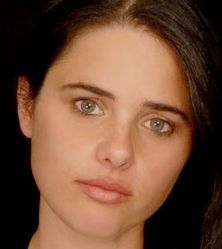
Foreign Policy reports: Last summer, thousands of Israelis shared a Facebook post published in Hebrew by little-known right-wing lawmaker Ayelet Shaked.Ayelet Shaked — “Angel of Death”
An excerpt from an unpublished article written by pro-settler Uri Elitzur, Prime Minister Benjamin Netanyahu’s onetime chief of staff, who passed away in May 2014, the post was published in English translation on a blog on the anti-Zionist website ElectronicIntifada.com. The author of the blog post claimed that the 631-word excerpt called Palestinian children “little snakes” and accused Palestinian mothers of raising their kids to become violent martyrs. And, the blog post said, it read as “a call for genocide” of the Palestinian people.
Shaked, at the time a junior member of the right-wing, nationalist Jewish Home party, quickly defended the post and argued that the translation was unfair, though she later removed the post from her Facebook page.
But the damage was already done. The story was soon picked up by American news outlets, and Turkey’s then prime minister, Recep Tayyip Erdogan, even used the incident as an occasion to describe her politics as no different from the Nazi Party. “What is the difference between this mentality and Hitler’s?” he said.
The episode didn’t end Shaked’s political career. Instead, it immediately raised her public profile — and her popularity among voters who share her skepticism about the intentions of the Palestinians and who fiercely oppose ceding the land necessary to create a Palestinian state.
Her rapid ascent to the highest reaches of the Israeli political system hit a new peak Wednesday, less than a year after that controversy, when the 39-year-old computer engineer and mother of two was given control of Israel’s Justice Ministry. Shaked got the post as part of a desperate last-minute deal that saved Netanyahu from a looming deadline that could have lost him his seat. [Continue reading…]

John Lanchester writes: Hands up if you saw that one coming. I confess that I didn’t. The first line of the BBC announcement, ‘Conservatives largest party’, was no shock. Then there was a pause a few seconds long, and the projection of 316 Tory seats came up. I nearly fell off my chair. From that point on, the surprises only got bigger.
Why was it so surprising, though? If you’d asked me six weeks ago what was going to happen, I’d have said, a little reluctantly, that the likeliest outcome was a Tory minority government. From that point to an outright majority is a step, but not a gigantic one. If I’d been granted a glimpse ahead to the result, I’d have said the Tories did better and Labour worse than expected, but not amazingly, bizarrely, unforeseeably so. The thing which turned this into such a blindsiding shock was the fact that the election campaign was so flat and eventless. For six weeks, nothing happened. The numbers refused to move. Then everything happened at once. The talk in politics these days is all about ‘narrative’ and ‘momentum’, but there was almost no sign of that in this election. There was little evidence that the electorate were paying any attention. The Tory campaign worked spectacularly, but did so in a new and peculiar way: it was like a pill that the patient refuses to swallow, and holds off swallowing, and then downs all at once.
First-past-the-post is not especially fair, but it is supposed to deliver clear outcomes. In 2010, it didn’t. This time, against all expectations, it did. Lots more detail will come in over the next weeks as the data are analysed and the political scientists do their thing, but for me, a couple of things really stand out. If Labour had retained all of their 41 Scottish seats, the Tories would still be the majority government. So that must mean Labour got creamed in England, yes? Actually, no. Labour’s share of the vote in England went up by 3.6 per cent. That’s more than the Tories: their share of the English vote only went up by 1.4 per cent. Labour could even claim that they won the English campaign, in the same sense that the British army could claim it won the Charge of the Light Brigade. [Continue reading…]
News Statesman reports: George Galloway, the Respect party’s only MP, has lost his seat in Bradford West. He was trounced by Labour candidate Naz Shah, selected for the seat after the original candidate, Amina Ali, stood down after four days. Shah won by a majority of over 11,000, more than doubling Galloway’s result and bettering his majority in the constituency’s 2012 by-election.
Shah gained notoriety early in the campaign for an open letter explaining her motivations for standing. Shah’s mother was a victim of domestic violence who was imprisoned for murder after killing her husband, and in the letter the Labour candidate explained that her selection was “not really about me, it’s the dream of my mother”.
Shah also wrote about her own forecd marriage at age 15, which Galloway then called into question during his campaign. As Aisha Gill explained in a piece for us earlier this week:
Despite George Galloway’s success in courting female Muslim voters in Bradford in the 2012 election, he has failed to grasp the context and complexities of forced marriage, and has proven insensitive to Shah’s own history of abuse….
In many ways, the stories of Naz and Zoora Shah are reflected in the experiences of Muslim women in Britain, especially in terms of domestic violence and castigation of the victim rather than the perpetrator. I hope that the people of Bradford, including the women, will challenge the patriarchal structures deeply embedded in Bradford West and come out in droves to vote on 7 May.
Galloway is also accused of tweeting out his party’s exit poll before voting ended yesterday, which is against electoral laws, and was reported to police by Bradford Council’s returning officer. West Yorkshire Police is reviewing the incident.
Middle East Eye reports: The seizure of large swathes of Syria’s Idlib province by opposition fighters has signalled for many a change in the balance of power in Syria’s seemingly unending civil war.
While previously many had been predicting that Syrian President Bashar al-Assad was on the verge of reasserting his authority over the country, the loss of the cities of Idlib and Jisr al-Shughur and the continuing consolidation of opposition control throughout the province have led to suggestions that Assad is being put on the backfoot.
Jaish al-Islam (JAI) has been one of the major groups involved in operations in Idlib, making up part of the Battle of Victory operations room that took the city of Jisr al-Shughur in later April, a group which also includes the al-Qaeda affiliate Al-Nusra Front.
Abdurrahman Saleh, head of JAI’s international media office, was one of the group’s early devotees.
“I am from Aleppo – I was a member of a rebel group fighting the regime and we joined Jaish al-Islam to organise our work against the regime, to get what we want,” he told Middle East Eye.
“But our work with Jaish al-Islam does not mean we are seperated from Syrian society. We are part of the Syrian revolutionaries, we fight under the banner of Jaish al-Islam as a revolutionary Syrian group. Not for anything else.”
JAI formed after a merger involving around 60 groups, including Liwa al-Islam, and is itself one of the main components of the Islamic Front – a group of Gulf-backed fighting groups – and are thought to be second only to Ahrar al-Sham in terms of power and numbers.
The Islamic Front issued a charter in 2013 (prior to Jaish al-Islam’s joining) that laid its principles for the creation of an Islamic-rooted society in which Islam would be the “religion of the state, and it is the principal and only source of legislation.”
However, Islamic Front have been careful to position itself within a nationalist framework, rejecting the “near enemy/far enemy” internationalism of al-Qaeda and the state-building project of the Islamic State (IS).
For their part, JAI are thought by analysts to command as many as 60 battalions, with around 20,000 fighters – entirely made up of Syrians, according to Saleh, rather than foreign volunteer fighters. [Continue reading…]
Farea Al-Muslimi writes: Since late March, a Saudi Arabia-led military coalition has been bombing Yemen extensively in an attempt to push back the Houthis, an insurgent Shia group, and their ally, former President Ali Abdullah Saleh. The coalition’s goal is to force the Houthis to retreat and to weaken Saleh’s hold on power. But so far, the only definitive outcome of the war is civilian devastation: At least a thousand Yemenis have died, thousands more have been injured, and hundreds of thousands have been forced to flee their homes.
Even if the Gulf countries do eventually succeed in driving out the Houthis, their intervention in Yemen is actually a sign of their failure, particularly Saudi Arabia’s. In effect, the richest country in the Arab world has had to bomb the poorest one to change its political dynamics. One might even go as far as to say that the current crisis in Yemen is a direct result of regional inaction over the last few years, if not decades.
In 2011, the Arab Spring pushed the country to the brink of civil war as protestors sought to oust a stubborn Saleh. The United Nations intervened by crafting a model for a peaceful transition with the support of six countries from the regional Gulf Cooperation Council (GCC). The initiative led to a successful handover of presidency from Saleh to interim leader Abd Rabbuh Mansur Hadi, but at that time, the Gulf States were not deeply invested in the process and only played a limited role in the power turnover. They had other preoccupations. Saudi Arabia, for example, was consumed with supporting Egypt’s own leadership change, and other Gulf countries were attempting to topple President Bashar al Assad’s regime in Syria.
These same countries watched from the sidelines as this UN-administered GCC project unraveled. After Saleh’s exit, the gradual power transition focused on building consensus among Yemen’s elites. Hadi proved an incompetent leader, unable to provide either physical or economic security to an unstable country. Over the years, while Hadi and the UN envoy to Yemen, Jamal Benomar led the peace process, busying themselves with meetings in the capital’s five star hotels, armed groups like the Houthis began to take over large swaths of the country. Here, the international community is also to blame. Last year, in attempt to stop the Houthis’ violent spread across Yemen, the UN Security Council sanctioned the group’s leaders with travel bans and asset freezes. But since the targeted figures never travelled outside Yemen and dealt strictly in cash, the sanction was a joke. [Continue reading…]