Author Archives: News Sources

How Middle East wars have created a boom for American defense contractors

The New York Times reports: To wage war in Yemen, Saudi Arabia is using F-15 fighter jets bought from Boeing. Pilots from the United Arab Emirates are flying Lockheed Martin’s F-16 to bomb both Yemen and Syria. Soon, the Emirates are expected to complete a deal with General Atomics for a fleet of Predator drones to run spying missions in their neighborhood.

As the Middle East descends into proxy wars, sectarian conflicts and battles against terrorist networks, countries in the region that have stockpiled American military hardware are now actually using it and wanting more. The result is a boom for American defense contractors looking for foreign business in an era of shrinking Pentagon budgets — but also the prospect of a dangerous new arms race in a region where the map of alliances has been sharply redrawn.

Last week, defense industry officials told Congress that they were expecting within days a request from Arab allies fighting the Islamic State — Saudi Arabia, the Emirates, Qatar, Bahrain, Jordan and Egypt — to buy thousands of American-made missiles, bombs and other weapons, replenishing an arsenal that has been depleted over the past year.

The United States has long put restrictions on the types of weapons that American defense firms can sell to Arab nations, meant to ensure that Israel keeps a military advantage against its traditional adversaries in the region. But because Israel and the Arab states are now in a de facto alliance against Iran, the Obama administration has been far more willing to allow the sale of advanced weapons in the Persian Gulf, with few public objections from Israel.

“When you look at it, Israel’s strategic calculation is a simple one,” said Anthony H. Cordesman of the Center for Strategic and International Studies. The gulf countries “do not represent a meaningful threat” to Israel, he said. “They do represent a meaningful counterbalance to Iran.”

Industry analysts and Middle East experts say that the region’s turmoil, and the determination of the wealthy Sunni nations to battle Shiite Iran for regional supremacy, will lead to a surge in new orders for the defense industry’s latest, most high-tech hardware. [Continue reading…]


Facebooktwittermail

Risking death in the Mediterranean: the least bad option for so many migrants

Patrick Kingsley reports: Sobbing and shaking, Mohamed Abdallah tries to explain why he still wants to risk crossing the Mediterranean Sea in an inflatable boat. He sits in a migrant detention centre in Zawya, Libya, surrounded by hundreds of fellow asylum seekers who nearly died this week at sea.

They survived only after being intercepted, detained and brought back to shore by Libyan coastguards, ending a week in which they went round in circles, starving and utterly lost. But despite their horror stories, Abdallah, 21, says the journey that his fellow inmates barely withstood – and that killed more than 450 others this week – is his only option.

“I cannot go back to my country,” says Abdallah, who is from Darfur, in Sudan. He left for what is now South Sudan in 2006, after he says his village was destroyed in the Darfur war, his father died, and his sisters raped. But in South Sudan, another war later broke out. So he made his way through the Sahara, a journey that he says killed his brother and cousin, to Libya. And there last year, he was witness to his third civil war in a decade – a war that still drags on, its frontline just a few miles from the camp at Zawya.

“There is a war in my country, there’s no security, no equality, no freedom,” Abdallah says. “But if I stay here, it’s just like my country. There is no security, there is violence. When you work, they take your money.”

He worked in a soap shop, and saved up to pay local smugglers for the boat to Europe. But just as he hoped to complete the payment, he was robbed, and then arrested. The recounting of his ordeal brings out first the tears, and then a conclusion: “I need to go to Europe.” [Continue reading…]

Facebooktwittermail

Hundreds more migrants feared drowned in the Mediterranean

The Wall Street Journal reports: As many as 700 migrants are believed to have died in a shipwreck about 70 miles from the Libyan coast, according to the United Nations High Commissioner for Refugees.

According to statements from survivors given to the UNHCR, a fishing boat carrying more than 700 people capsized during the night from Saturday and Sunday.

The 20-meter-long fishing boat, which was heavily overcrowded, launched a distress call during the night, the Italian Coast Guard said. The Italians sent a Portuguese mercantile vessel, the King Jacob, to help the boat, but when the migrants saw the ship approach, they rushed to one side, forcing the boat to capsize. Rescue teams saved 28 people and have recovered 24 bodies so far.

The Italian Coast Guard has dispatched 17 ships, including Maltese vessels, Italian fishing boats and other private vessels, to the area to search for other survivors.

Antonino Iraso, an officer with the Italian tax police, whose ships are involved in the search-and-rescue operation, told Italian television that the effort is now aimed at finding bodies, rather than other survivors. He said that the teams have sighted an oil slick, floating life jackets and fragments of wood in the area where the boat sank.

The route from Libya to the tiny Italian island of Lampedusa has become the deadliest migrant route in the world.

If the deaths are confirmed, it would bring to about 1,600 the number of migrants who have died since the start of the year in attempting to make the passage from Libya to Italy. For all of 2014, nearly 3,200 died attempting the passage, according to figures from the International Organization for Migration. According to the IOM, if the 700 deaths are confirmed, it would be one of the highest-ever migrant death tolls in a single incident.

Last year, about 170,000 African and Middle Eastern migrants arrived in Italy using that passage, with a total of nearly 300,000 arrivals in all since the start of 2011.

Yesterday, The Observer reported: Anti-immigrant rhetoric from politicians across Europe, including Britain, is blocking attempts to introduce large search-and-rescue operations in the Mediterranean that would save large numbers of migrant lives, a senior UN official has warned.

In comments that reveal the growing frustration within the UN Refugee Agency over Europe’s response to the growing migration crisis in the Mediterranean, Laurens Jolles said political expediency was preventing measures being taken to reduce migrant deaths.

Jolles, the United Nations High Commissioner for Refugees (UNHCR) representative in Italy, said: “In many countries in Europe at the moment, the [political] dialogue and the rhetoric is quite extreme and very irresponsible.”

On Friday, Anders Lustgarten wrote: The EU’s de facto policy is to let migrants drown to stop others coming. Last year nearly four thousand bodies were recovered from the Med. Those are just the ones we found. The total number of arrivals in Italy in 2014 went up over 300% from the year before, to more than 170,000. And the EU’s response, driven by the cruellest British government in living memory, was to cut the main rescue operation, Mare Nostrum.

The inevitable result is that 500 people have already died this year. The figure for the equivalent period in 2014 was 15. There are half a million people in Libya waiting to make the crossing. How many more deaths can we stomach?

Migration illustrates one of the signal features of modern life, which is malice by proxy. Like drones and derivatives, migration policy allows the powerful to inflict horrors on the powerless without getting their hands dirty. James Brokenshire, the minister who defended cutting Mare Nostrum on the nauseatingly hypocritical grounds that it encouraged migration, never has to let the deaths his decision helped to cause spoil his expensive lunch with lobbyists. It doesn’t affect him.

Facebooktwittermail

Pope urges world to act after new Mediterranean tragedy

AFP reports: Pope Francis on Sunday, April 19, urged world leaders to respond “decisively” after 700 migrants were feared drowned in the deadliest migrant shipwreck yet in the Mediterranean.

“These are men and women like us, brothers seeking a better life,” the leader of the world’s Roman Catholics said in his weekly address, urging leaders to “act decisively and quickly to stop these tragedies from recurring.”

Urging the faithful in St Peter’s square to pray for the victims, the pope added: “(They are) hungry, persecuted, injured, exploited, victims of war. They are seeking a better life, they are seeking happiness.” [Continue reading…]

Facebooktwittermail

Europe’s war on migrants — while we argue, thousands perish in the Mediterranean

By Heaven Crawley, Coventry University

The latest refugee deaths in the Mediterranean – 700 people drowned when the overcrowded fishing vessel in which they were travelling from North Africa capsized of the coast of Libya follows a similar tragedy last week in which 400 people perished.

In October 2013, more than 360 people – mostly from Eritrea – lost their lives when their boat caught fire and sank off the coast of the Italian island of Lampedusa. In September 2014 more than 500 migrants were deliberately killed at sea. The attack allegedly occurred after the migrants refused to board a smaller boat in the open water and the traffickers reportedly laughed as they drowned, hacking at the hands of those who tried to cling to the wreckage. Witnesses report that as many as 100 children were on board.

In the absence of official records, or bodies to count, it’s hard to say exactly how many people have died trying to cross the Mediterranean. The International Organisation for Migration (IOM) released a report in late September 2014 putting the number at 3,072, accounting for 75% of worldwide migrant deaths. But with so many lost at sea or along the way, the real figure could be far higher.

Continue reading

Facebooktwittermail

Wedge of warm Pacific seawater known as ‘the blob’ blamed for marine havoc

The Los Angeles Times reports: It’s called “the blob,” and some blame it for the thousands of dead seabirds and emaciated sea lion pups that have washed ashore on California beaches since late last year.

Ever since an unusually warm mass of seawater began spreading along the Pacific Coast of North America a year ago — wreaking havoc on the marine food chain — scientists have struggled to explain its presence.

In recent months, however, some experts have argued that this 500-mile-wide, 300-foot-deep wedge of warm seawater may in fact signal an epic cyclical change in the Pacific Ocean — a change that could possibly bring soaking rains to Southern California this winter but also accelerate the rise in global temperatures.

Though researchers disagree over just what this blob portends, the phenomenon is drawing intense scrutiny from climate scientists and oceanographers.

At the center of this debate is a poorly understood pattern of wind, ocean current and temperature variations that some scientists call the Pacific Decadal Oscillation, or PDO. [Continue reading…]

Facebooktwittermail

The terror strategist: Secret files reveal the structure of ISIS

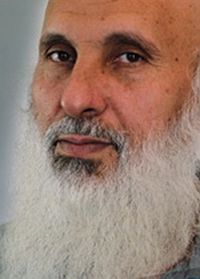
Samir Abd Muhammad al-Khlifawi aka Haji Bakr

Samir Abd Muhammad al-Khlifawi aka Haji Bakr

Christoph Reuter reports: Aloof. Polite. Cajoling. Extremely attentive. Restrained. Dishonest. Inscrutable. Malicious. The rebels from northern Syria, remembering encounters with him months later, recall completely different facets of the man. But they agree on one thing: “We never knew exactly who we were sitting across from.”

In fact, not even those who shot and killed him after a brief firefight in the town of Tal Rifaat on a January morning in 2014 knew the true identity of the tall man in his late fifties. They were unaware that they had killed the strategic head of the group calling itself “Islamic State” (IS). The fact that this could have happened at all was the result of a rare but fatal miscalculation by the brilliant planner. The local rebels placed the body into a refrigerator, in which they intended to bury him. Only later, when they realized how important the man was, did they lift his body out again.

Samir Abd Muhammad al-Khlifawi was the real name of the Iraqi, whose bony features were softened by a white beard. But no one knew him by that name. Even his best-known pseudonym, Haji Bakr, wasn’t widely known. But that was precisely part of the plan. The former colonel in the intelligence service of Saddam Hussein’s air defense force had been secretly pulling the strings at IS for years. Former members of the group had repeatedly mentioned him as one of its leading figures. Still, it was never clear what exactly his role was.

But when the architect of the Islamic State died, he left something behind that he had intended to keep strictly confidential: the blueprint for this state. It is a folder full of handwritten organizational charts, lists and schedules, which describe how a country can be gradually subjugated. SPIEGEL has gained exclusive access to the 31 pages, some consisting of several pages pasted together. They reveal a multilayered composition and directives for action, some already tested and others newly devised for the anarchical situation in Syria’s rebel-held territories. In a sense, the documents are the source code of the most successful terrorist army in recent history. [Continue reading…]

Facebooktwittermail

The Revolutionary Guard — Iran’s deep state

Aaron Bastani writes: At the beginning of March a photo emerged of Qassem Suleimani, the head of the Quds Force (the extraterritorial element of Iran’s Revolutionary Guard), smiling as he despatched troops into Tikrit, Saddam Hussein’s birthplace and now a front line in the fight against Isis. Ben De Pear, the editor of Channel 4 News, tweeted it alongside a similar photo, of a dozen men in desert fatigues and with smiles as wide as Suleimani’s, making victory signs to the camera. They were US marines in Tikrit in April 2003.


During that brief period of euphoric triumphalism in the White House and Downing Street, you’d have been laughed out of the room for suggesting that Tehran would gain the most from Saddam’s overthrow, and that within 12 years its sphere of influence would extend to four Arab capitals. More likely, the experts would have rejoined, that Iran would itself see regime change, by force if necessary.

Yet as Alireza Zakani, a member of parliament for Tehran, said last September, three Arab capitals – Beirut, Baghdad and Damascus – now ‘belong’ to the Islamic Revolution. The rise of Ansar Allah in recent months (the Zaidi Shia militias fighting in Yemen, often referred to as Houthis) means that Sana’a could be added to the list, though for how long is unclear.

The expansion of the Islamic Republic’s reach can’t be seen in isolation from the Arab Spring. Iran considers the uprisings the continuation of a historical movement it initiated. The former foreign minister Ali Akbar Velayati said in December that Iran supports the ‘rightful struggle’ of Ansar in Yemen, and considers the movement part of the ‘successful materialisation of the Islamic Awakening’ – Tehran’s name for the Arab Spring, which it views as evolving rather than defeated. [Continue reading…]

Facebooktwittermail

A century of chemical warfare

The Associated Press reports: As a spring breeze wafted into his trench, commander Georges Lamour of the French 73rd infantry saw something almost surreal drift his way. A yellow-green cloud.

He barely had time to react. “All my trenches are choked,” Lamour cried into the field telephone to headquarters. “I am falling myself!”

These were the last words heard from Lamour. World War I, and warfare itself, were never the same.

Chlorine gas — sent crawling in favorable winds over Flanders Fields from German positions — sowed terror and agony for the first time on April 22, 1915. The era of chemical weaponry had dawned. The weapon of mass slaughter came to symbolize the ruthlessness and, many say, futility of the 1914-1918 Great War.

“It is a new element in warfare. It is indiscriminate,” said Piet Chielens, curator at the In Flanders’ Fields Museum in nearby Ypres. And what’s more, he said, “you create psychological terror.”

Foaming at the mouth, crazed and blinded, the French soldiers fled in all directions — sucking for oxygen, finding poison instead. The chlorine seeped into body fluids and ate away at eyes, throat and lungs. Some 1,200 French soldiers were killed in the chaos of that first 5-minute gas attack and the fighting that followed. Lamour, like scores of comrades, was never found.

“You drown in your own lungs,” Chielens said. [Continue reading…]

Facebooktwittermail

Horrifying videos shown at UN display carnage of suspected chlorine attacks in Syria

Vice News: Hours after doctors from Syria offered testimony about a chlorine gas attack in the country’s northwest to the United Nations Security Council on Thursday, reportedly bringing its members to tears, they informed VICE News that their hospital had just received victims of what appeared to be another chemical weapon strike.

At the meeting, the doctors showed council members footage taken by a field hospital in Sarmin, in Idlib Province, on the night of March 16. The video, which was provided to VICE News, depicted frenetic efforts to resuscitate three young children exhibiting symptoms of chemical exposure. The children were inside their basement home along with their parents and grandmother when a crude barrel bomb landed on the building’s air shaft, trapping them inside a cloud of toxic vapor. All members of the family died.

Facebooktwittermail

Top Saddam Hussein aide reported killed in northern Iraq

The New York Times reports: An Iraqi provincial governor said Friday that militiamen had killed Izzat Ibrahim al-Douri, the highest-ranking official from Saddam Hussein’s government who was still on the loose, in clashes in a mountainous region of northern Iraq.

News of Mr. Douri’s death has been announced several times by different authorities over the years, and officials cautioned that confirmation would not come until DNA testing had been conducted.

The announcement was made by the governor of Salahuddin Province. Its capital is Tikrit, Mr. Hussein’s hometown, which was recently liberated from the Islamic State. A representative for one of the militias involved in the fighting on Friday, Asa’ib Ahl al-Haq, said a body that fighters believed was Mr. Douri’s was on its way to Baghdad on Friday evening for DNA testing. [Continue reading…]

Facebooktwittermail

Iraq: ISIS escapees describe systematic rape

Human Rights Watch: The extremist group Islamic State (also known as ISIS) has carried out systematic rape and other sexual violence against Yezidi women and girls in northern Iraq. Human Rights Watch conducted research in the town of Dohuk in January and February 2015, including interviewing 20 women and girls who escaped from ISIS, and reviewing ISIS statements about the subject.

Human Rights Watch documented a system of organized rape and sexual assault, sexual slavery, and forced marriage by ISIS forces. Such acts are war crimes and may be crimes against humanity. Many of the women and girls remain missing, but the survivors now in Iraqi Kurdistan need psychosocial support and other assistance.

“ISIS forces have committed organized rape, sexual assault, and other horrific crimes against Yezidi women and girls,” said Liesl Gerntholtz, women’s rights director at Human Rights Watch. “Those fortunate enough to have escaped need to be treated for the unimaginable trauma they endured.”

Facebooktwittermail

The EU’s de facto policy is to let migrants drown to stop others coming

Anders Lustgarten writes: In the desert, the smugglers lace their water with petrol so the smuggled won’t gulp it down and cost more. Sometimes the trucks they’re packed into stall crossing the Sahara; they have to jump out to push, and some are left behind when the trucks drive off again. In transit camps in Libya before the perilous venture across the Blue Desert, they play football, fight, and pool their scanty resources so an even poorer friend can pay his way. One man says his tiny wooden boat was flanked by dolphins as they made the journey, three on each side, like guardian angels, and this was what gave him hope.

These are the people we are allowing to die in the Mediterranean. The EU’s de facto policy is to let migrants drown to stop others coming. Last year nearly four thousand bodies were recovered from the Med. Those are just the ones we found. The total number of arrivals in Italy in 2014 went up over 300% from the year before, to more than 170,000. And the EU’s response, driven by the cruellest British government in living memory, was to cut the main rescue operation, Mare Nostrum.

The inevitable result is that 500 people have already died this year. The figure for the equivalent period in 2014 was 15. There are half a million people in Libya waiting to make the crossing. How many more deaths can we stomach?

Migration illustrates one of the signal features of modern life, which is malice by proxy. Like drones and derivatives, migration policy allows the powerful to inflict horrors on the powerless without getting their hands dirty. [Continue reading…]

Facebooktwittermail

The unpromised land for African refugees

Meron Rapoport writes: Two weeks ago, almost all Jews in Israel celebrated the first day of Passover by reading and singing the Hagada, the centuries-old text which tells the story of the miraculous exodus of the Jewish slaves from the hands of their oppressors in Egypt.

But in a strange coincidence, just one day before Passover, Israel announced its intention to initiate a new exodus: a forced removal of some 40,000 asylum seekers from Eritrea and Sudan back to Africa, dangerously close to the hands of their former oppressors. A reversed Hagada.

This new policy became known almost by chance. Dozens of Eritrean asylum seekers were summoned to the Population and Immigration Authority where they were given a letter saying that “after working hard” during the last few months, Israel has found “a country which will host you”.

Without naming it, the letter promises that this country “is in the process of economic development” and that it will provide them with residence and working permits. These Eritreans were given a simple choice: either accept this generous offer – which includes a $3500 grant – and leave Israel within 30 days or face an open-ended imprisonment in an Israeli jail.

In a court hearing a few days later, the Israeli authorities agreed to name these benevolent host countries – Rwanda and Uganda – but still refused to reveal the content of the agreements signed with them. A minister in the Rwandan government confirmed the existence of such an agreement, while the Ugandan government flatly denied it agrees to host refugees deported from Israel.

Using Rwanda and Uganda as target countries is not new in the ongoing attrition war between Israel and those tens of thousands of Eritreans and Sudanese who crossed its borders illegally in search of a safer and better life than the one they experienced in their war-torn countries.

Despite being one of the first signatories on the UN convention on refugees and despite the fact that most European countries view asylum seekers from Eritrea and Sudan as entitled to refugee status, Israel never welcomed them and refused to allow them any official status. At most, it granted them the right not be deported. [Continue reading…]

Facebooktwittermail

Al Qaeda in Yemen using chaos of war to carve out terrorism haven

The Los Angeles Times reports: A brazen territorial grab by Al Qaeda militants in Yemen — together with a $1-million bank heist, a prison break and capture of a military base — has given the terrorist group fundraising and recruitment tools that suggest it is following the brutal path blazed by Islamic State militants in Syria and Iraq.

Al Qaeda in the Arabian Peninsula, which was long forced into the shadows by U.S. drone strikes and commando raids, has taken advantage of the growing chaos in Yemen’s multi-sided war to carve out a potential haven that counter-terrorism experts say could help it launch terrorist attacks.

After seizing a regional airport and a coastal oil terminal this week, Al Qaeda militants consolidated their gains Friday in Mukalla, an Arabian Sea port. Fighters stormed a weapons depot and seized armored vehicles and rockets after apparently forging a truce with local tribes and forcing government troops to flee. [Continue reading…]

Facebooktwittermail

Germany is the tell-tale heart of America’s drone war

Jeremy Scahill reports: A top-secret U.S. intelligence document obtained by The Intercept confirms that the sprawling U.S. military base in Ramstein, Germany serves as the high-tech heart of America’s drone program. Ramstein is the site of a satellite relay station that enables drone operators in the American Southwest to communicate with their remote aircraft in Yemen, Somalia, Afghanistan and other targeted countries. The top-secret slide deck, dated July 2012, provides the most detailed blueprint seen to date of the technical architecture used to conduct strikes with Predator and Reaper drones.

Amid fierce European criticism of America’s targeted killing program, U.S. and German government officials have long downplayed Ramstein’s role in lethal U.S. drone operations and have issued carefully phrased evasions when confronted with direct questions about the base. But the slides show that the facilities at Ramstein perform an essential function in lethal drone strikes conducted by the CIA and the U.S. military in the Middle East, Afghanistan and Africa.

The slides were provided by a source with knowledge of the U.S. government’s drone program who declined to be identified because of fears of retribution. According to the source, Ramstein’s importance to the U.S. drone war is difficult to overstate. “Ramstein carries the signal to tell the drone what to do and it returns the display of what the drone sees. Without Ramstein, drones could not function, at least not as they do now,” the source said. [Continue reading…]

Facebooktwittermail

Louisiana five years after BP oil spill: ‘It’s not going back to normal no time soon’

The Guardian reports: To hear BP tell it, the environmental disaster that struck the Gulf of Mexico five years ago is nearly over – the beaches have been cleared of oil, and the water in the Gulf is as clear as it ever was. But how do you spot a continued disaster if its main indicator is the absence of something?

On this strip of land in south-eastern Louisiana, the restaurants are still empty, FOR SALE signs are increasing in store windows, people are still moving away, and this marina on Pointe a la Hache – once packed most afternoons with oystermen bringing in their catch on their small boats, high school kids earning a few bucks unloading the sacks, and 18-wheelers backed up by the dozen to carry them away – is completely devoid of life, save one man, 69-year-old Clarence Duplessis, who cleans his boat to pass the time.

“At this time of day, at this marina, it used to be packed,” Duplessis said. “And now there’s nothing.”

It’s been nearly five years since BP’s Deepwater Horizon oil rig exploded off the coast of Louisiana, killing 11 workers and spilling nearly 5 million barrels of oil into the Gulf of Mexico, and residents, fisherman, activists and scientists say the cleanup and restoration is far from over. While some phenomena in the Gulf – people getting sick, fishing nets coming back empty – are hard to definitively pin on BP – experts say the signs of ecological and economic loss that followed the spill are deeply concerning for the future of the Gulf. Meanwhile, BP has pushed back hard on the notion that the effects of its disaster are much to worry about, spending millions on PR and commercials to convince Gulf residents everything will be OK. [Continue reading…]

Facebooktwittermail

Congress to introduce last-ditch bill to reform NSA spying

National Journal reports: Backed up against a rapidly approaching do-or-die deadline, bipartisan lawmakers are poised to introduce legislation next week that would roll back the National Security Agency’s expansive surveillance powers.

The legislation could land as soon as Tuesday in the House, congressional aides and privacy advocates said, who would only speak on condition of anonymity because of the sensitivity of the negotiations.

The bill, known as the USA Freedom Act, would effectively end the NSA’s bulk collection of U.S. phone metadata — the numbers, time stamps, and duration of a call but not its actual content — by instead relying on phone companies to retain that data. The program is the first and one of the most controversial spying programs exposed by the Edward Snowden leaks that began nearly two years ago.

House Judiciary Committee Chairman Bob Goodlatte and Rep. John Conyers, the panel’s top Democrat, are expected to back the bill, as is Rep. Jim Sensenbrenner, the author of the original Freedom Act that first emerged in the fall of 2013, and Rep. Jerry Nadler. All four have been intensely involved in negotiations since the measure fell apart in Congress late last year.

But as the House barrels ahead, it remains unclear what strategy the bill’s advocates in the Senate, led chiefly by Sen. Patrick Leahy, intend to deploy. That question is complicated by the implications a fractious national security debate could have for the Republican caucus, whose three presidential aspirants — Sens. Ted Cruz, Rand Paul, and Marco Rubio — have adopted increasingly divergent positions on NSA surveillance. [Continue reading…]

Facebooktwittermail