Author Archives: News Sources

Hackers trick Israeli military with ‘girls in the IDF’ emails

Reuters reports: Hackers have managed to penetrate computer networks associated with the Israeli military in an espionage campaign that skillfully packages existing attack software with trick emails, according to security researchers at Blue Coat Systems Inc.

The four-month-old effort, most likely by Arabic-speaking programmers, shows how the Middle East continues to be a hotbed for cyber espionage and how widely the ability to carry off such attacks has spread, the researchers said.

Waylon Grange, a researcher with Blue Coat who discovered the campaign, said the vast majority of the hackers’ software was cobbled together from widely available tools, such as the remote-access Trojan called Poison Ivy.

The hackers were likely working on a budget and had no need to spend much on tailored code, Grange said, adding that most of their work appeared to have gone into so-called social engineering, or human trickery.

The hackers sent emails to various military addresses that purported to show breaking military news, or, in some cases, a clip featuring “Girls of the Israel Defense Forces.” Some of the emails included attachments that established “back doors” for future access by the hackers and modules that could download and run additional programs, according to Blue Coat. [Continue reading…]

Facebooktwittermail

Pentagon: Ramadi isn’t about to fall to ISIS, but if it does, it’s not a big deal (unless you live in Ramadi)

The Wall Street Journal reports: U.S. defense officials said a provincial capital in Iraq could soon fall to Islamic State, while America’s top military officer sought to minimize the strategic importance of the city.

At a Pentagon news conference, Gen. Martin Dempsey, chairman of the Joint Chiefs of Staff, suggested that maintaining control of Ramadi, the capital of Anbar province, isn’t central to the U.S. and Iraqi aims of defeating Islamic State forces.

“The city itself is not symbolic in any way,” Gen. Dempsey said. “It’s not been declared part of the caliphate on one hand, or central to the future of Iraq.”

Earlier this week, Pentagon officials minimized the possibility that Ramadi was going to fall. But U.S. officials have monitored large numbers of civilians fleeing from the city, a sign that residents fear an imminent takeover.

Islamic State fighters have taken over a number of villages surrounding Ramadi, destroyed bridges and other infrastructure and reversed recent gains by Iraqi Security forces, defense officials said Thursday.

The U.S. has been stepping up strikes around Ramadi, but those have been insufficient to blunt the advance of Islamic State fighters.

Officials compared the city with Kobani, a Syrian city that was on the brink of being taken over before Kurdish fighters, aided by U.S. airstrikes, retook it. [Continue reading…]

Which is to say, Ramadi is like Kobane, minus the Kurdish fighters.

Facebooktwittermail

Why Yemen’s political transition failed

Farea Al-Muslimi writes: For three years, Yemen has been touted as a successful model of international intervention to contain the crisis triggered by the Arab Spring—at least according to the United Nations, various UN Security Council ambassadors, and, most importantly, the UN special adviser on Yemen, Jamal Benomar, who today announced his resignation after four years in the job.

But the deteriorating situation of the country, particularly after President Abd-Rabu Mansour Hadi was ousted by the Zaidi Shia Islamist rebels known as the Houthis in mid-January 2015, has put an end to this rhetoric. And since March 25, when a Saudi-led coalition of Arab and other states launched a military intervention, the situation has worsened considerably.

When Jamal Benomar assumed his position as special envoy in April 2011, Yemen’s then-president, Ali Abdullah Saleh, knew that he could not hold out for long against the many opposition currents that had converged to overthrow him. This simplified the task of the UN envoy, who — along with Saudi Arabia and other Gulf states — brokered the implementation of the so-called Gulf Initiative, according to which Saleh would resign and hand power to Hadi, his vice president, in a managed transition. After months of negotiations and despite the intensification of violence, Hadi was finally able to accede to the presidency in February 2012 with considerable international and Yemeni support as part of a transitional process that was not to exceed two years. [Continue reading…]

Facebooktwittermail

Al-Qaeda seizes airport in eastern Yemen

The Washington Post: Al-Qaeda has seized an airport in eastern Yemen, an intelligence official confirmed Thursday, signaling that the extremist group is exploiting the chaos caused by the Saudi-led attacks in the country.

Fighters from the Yemeni branch of the militant group, known as al-Qaeda in the Arabian Peninsula (AQAP), on Tuesday seized the Riyan Airport in the city of Mukalla, said the Yemeni intelligence officer, who spoke on condition of anonymity.

The group was already in control of areas around the airfield, including the nearby city of Mukalla, which is the capital of Yemen’s Hadhramaut Province. According to the intelligence official, the militants faced no resistance when taking the airport, suggesting that AQAP receives significant support in the area.

Facebooktwittermail

Western officials dismiss Saudi claims that Yemen’s Houthis have close ties to Iran

Bloomberg reports: European leaders are signaling to Riyadh that patience with its three-week offensive — joined by nine mostly Sunni Muslim nations with the stated aim of restoring to power a legitimate, ousted government — is starting to wear thin. Yemen’s disintegration can only be prevented by negotiations between its competing factions, they say.

“The prospect of a military solution to the Yemen problem isn’t foreseen by anybody,” German Foreign Minister Frank-Walter Steinmeier said Wednesday after meeting his counterparts from the Group of Seven nations in the German port city of Luebeck. He said all G7 ministers called for a return to dialogue.

There are already indications that al-Qaeda’s branch in Yemen is gaining from the conflict. The group and allied fighters on Thursday seized control of an airport and oil export terminal around the town of Mukalla, which they captured this month, according to a local tribal leader.

The Houthis have been fighting against al-Qaeda for years, and say that Yemen’s government, counted by the U.S. as an ally against the jihadists, has been tacitly aiding them.

Secretary of State John Kerry and other top U.S. officials have accused Iran of providing military and financial support to the Houthis in an effort to expand its influence, American and European intelligence officers and diplomats following the issue closely say the Islamic Republic’s support is limited.

The Houthis are not aligned with the Iranian brand of Shiite Islam, two U.S. officials who requested anonymity to be critical of higher-ranking colleagues, pointed out. The group has no allegiance to Iranian leaders in Tehran or top clerics in the holy city of Qom, two European officials said.

The Houthis are fighting largely with small arms and light weapons they’ve had for years or seized from U.S.-backed Yemeni forces, according to one American official. They are not reliant on Iranian arms, money, intelligence or direction to nearly the degree that Hezbollah in Lebanon, some Shiite militias in Iraq or the Syrian government are, the official said. [Continue reading…]

Facebooktwittermail

Nuclear deal may open door to detente with Iran

Adm. Mike Mullen, the former Chairman of the Joint Chiefs of Staff, writes: Powerful factions in the leadership remain deeply suspicious of the West and even of this agreement, believing that the international community is only interested in regime change, and that only through geopolitical adventurism and the projection of power can the regime be sustained. Failure of the negotiating process will only reinforce their hand.

Iranian reformists, on the other hand, support a nuclear deal because it would be a first step in the evolution they would like to see. But its successful enactment would just be the opening salvo in a struggle between these two visions of Iran. Much will depend on President Rouhani’s ability to continue satisfying the electorate’s demand for change. The next showdown will come when a group of elders charged with selecting the next Supreme Leader get elected next winter. The third showdown comes with Parliamentary balloting in the spring of 2016, with the final showdown being the Presidential election in 2017.

Which of these two visions wins out will become clear over the next several years and will have tremendous repercussions for the future of the Middle East. It might also have tremendous repercussions for American foreign policy, pushing open a door which has remained closed for more than 35 years. Exposure to the Iranian people, and their exposure to us, may yield new opportunities to discourage Iranian support for terrorist groups and other abusive regimes where they exercise influence. It would also more fairly rebalance American influence. We need to re-examine all of the relationships we enjoy in the region, relationships primarily with Sunni-dominated nations. Detente with Iran might better balance our efforts across the sectarian divide. [Continue reading…]

Facebooktwittermail

How Israel hid its secret nuclear weapons program

Avner Cohen and William Burr write: For decades, the world has known that the massive Israeli facility near Dimona, in the Negev Desert, was the key to its secret nuclear project. Yet, for decades, the world — and Israel — knew that Israel had once misleadingly referred to it as a “textile factory.” Until now, though, we’ve never known how that myth began — and how quickly the United States saw through it. The answers, as it turns out, are part of a fascinating tale that played out in the closing weeks of the Eisenhower administration—a story that begins with the father of Secretary of State John Kerry and a familiar charge that the U.S. intelligence community failed to “connect the dots.”

In its final months, even as the Kennedy-Nixon presidential race captivated the country, the Eisenhower administration faced a series of crises involving Cuba and Laos. Yet, as the fall of 1960 progressed, President Dwight D. Eisenhower encountered a significant and unexpected problem of a new kind — U.S. diplomats learned and U.S. intelligence soon confirmed that Israel was building, with French aid, a secret nuclear reactor in the Negev Desert. Soon concluding that the Israelis were likely seeking an eventual nuclear weapons capability, the administration saw a threat to strategic stability in the Middle East and a nuclear proliferation threat. Adding fuel to the fire was the perception that Israel was deceitful, or had not “come clean,” as CIA director Allen Dulles put it. Once the Americans started asking questions about Dimona, the site of Israel’s nuclear complex, the Israelis gave evasive and implausible cover stories.

A little anecdote about an occurrence sometime in September 1960 sheds light on the development of U.S. perceptions that Israel was being less than honest about Dimona. That month, Addy Cohen, then the young director of the Foreign Aid Office at the Israeli Finance Ministry, hosted U.S. ambassador to Israel Ogden Reid and some of his senior staff for a tour of the Dead Sea Works — a large Israeli potash plant in Sdom, on the Dead Sea coast of Israel. The Israeli Air Force provided a Sikorsky S-58 helicopter to fly the American group from Tel Aviv to Sdom. As they were returning on the helicopter, near the new town of Dimona, Reid pointed to a huge industrial site under heavy construction and asked what it was. [Continue reading…]

Facebooktwittermail

Cyberattacks alleged to be coming from Iran may be increasing — or diminishing

The New York Times reports: In the report, to be released Friday, Norse — which, like other cybersecurity firms, has an interest in portraying a world of cyberthreats but presumably little incentive in linking them to any particular country — traced thousands of attacks against American targets to hackers inside Iran.

The report, and a similar one from Cylance, another cybersecurity firm, make clear that Iranian hackers are moving from ostentatious cyberattacks in which they deface websites or simply knock them offline to much quieter reconnaissance. In some cases, they appear to be probing for critical infrastructure systems that could provide opportunities for more dangerous and destructive attacks.

But Norse and Cylance differ on the question of whether the Iranian attacks have accelerated in recent months, or whether Tehran may be pulling back during a critical point in the nuclear negotiations.

Norse, which says it maintains thousands of sensors across the Internet to collect intelligence on attackers’ methods, insists that Iranian hackers have shown no signs of letting up. Between January 2014 and last month, the Norse report said, its sensors picked up a 115 percent increase in attacks launched from Iranian Internet protocol, or I.P., addresses. Norse said that its sensors had detected more than 900 attacks, on average, every day in the first half of March.

Cylance came to a different conclusion, at least for Iran’s activities in the past few months, as negotiations have come to a head. Stuart McClure, the chief executive and founder of Cylance, which has been tracking Iranian hacking groups, said that there had been a notable drop in activity over the past few months, and that the groups were now largely quiet. [Continue reading…]

Facebooktwittermail

The United States and Palestine

Rashid Khalidi writes: As with many other unresolved issues in the modern Middle East, it was Great Britain rather than the United States that initially created the problem of Palestine. But in Palestine, as elsewhere, it has been the lot of the United States, Britain’s successor as undisputed hegemon over the region, to contend with the complications engendered by British policy. And as elsewhere in the Middle East, in the end the United States significantly exacerbated the conflict over Palestine that it inherited from Britain. The outlines of the problem can be simply stated: with the Balfour Declaration of November 2, 1917, Great Britain threw the weight of the greatest power of the age, one which was at that moment in the process of conquering Palestine, behind the creation of a Jewish state in what was then an overwhelmingly Arab country, against the wishes of its inhabitants. Everything that has followed until this day in that conflict-riven land has flowed inevitably from this basic decision.

Woodrow Wilson was the first American president to support Zionism publicly, and his backing was crucial to the awarding of the League of Nations Mandate for Palestine to Britain. This in turn led to the inclusion of the text of the Balfour Declaration in the terms of the Mandate, committing the entire international community of that era to the establishment of a “Jewish national home.” Wilson extended the United States’ support to Zionism in spite of the results of the American King-Crane Commission, which discovered the majority Arab population of Palestine to be overwhelmingly opposed to the establishment of a Jewish national home — which they rightly feared would inexorably develop into an exclusively Jewish state in their homeland and at their expense.

Although the United States withdrew from active involvement in the League of Nations and from many other aspects of international politics soon afterwards, the impact on Palestine of these key post-World War I decisions in which the United States played a crucial role was to be lasting. Under the protection of the British Mandate, and with its invaluable support, and with financing which largely came from contributions raised from American donors, by 1939 the Zionist movement had created the nucleus of a viable, independent Jewish state. This American financing, from private and later governmental sources in the form of economic and military assistance, has been crucial to the success of the Zionist project and the state of Israel from the very beginnings and until the present day. [Continue reading…]

Facebooktwittermail

How could crimes that don’t warrant a life sentence justify a death sentence?

Conor Friedersdorf writes: Some of the most powerful people in the U.S. government wanted to kill Mohanad Mahmoud Al Farekh. The military, the CIA, and an influential Republican member of Congress all argued that a drone should be sent to kill the American.

Now he is in custody.

And if convicted of all charges that he faces, he’ll get a maximum of 15 years in prison–the same sentence that a brother and sister in Missouri got for growing marijuana.

How can a person narrowly escape extrajudicial assassination, get extradited to the United States, appear inside our judicial system, and face just 15 years in prison? Powerful people were prepared to end his life, but the extent of what they’re willing to prove beyond a reasonable doubt wouldn’t even draw a life sentence. [Continue reading…]

Facebooktwittermail

Pakistan could end up charging CIA officials with murder over drone strikes

Time: A landmark case may open the door for a possible multibillion-dollar class-action lawsuit launched by relatives of the alleged 960 civilian victims of U.S. drone strikes in Pakistan

A senior judge in Pakistan has ordered police to formally investigate former CIA agents for allegedly authorizing a 2009 drone strike.

If the case moves forward, it may subject the U.S. embassy in Islamabad to sensitive police investigations and even result in U.S. citizens for the first time being charged with murder for covert drone strikes in the South Asian nation.

Last Tuesday, the Islamabad High Court ordered police to open a criminal case against former CIA Islamabad Station Chief Jonathan Bank and ex-CIA legal counsel John A. Rizzo for murder, conspiracy, terrorism and waging war against Pakistan.

Facebooktwittermail

New studies reveal climate extremes from fire to ice

Climate Central: Climate scientists don’t just rely on computer models and contemporary observations to understand the intimate relationship between CO2 in the atmosphere and environmental conditions on Earth. They also look to the ancient past — and two reports in recent days have made it clear how intimate that relationship is. One chronicles an episode 2.4 billion years in the past, when the entire planet was covered in a layer of ice hundreds of feet thick, oceans and all, while global average temperatures hovered around 40° F below zero.

A massive infusion of heat-trapping CO2 from powerful volcanoes — more CO2 than we’re likely to emit in many hundreds of years, to be sure — saved the planet from this so-called Snowball Earth environment. The second report covers an event that happened about 250 million years ago, and this time the effects weren’t so benign. Another set of gigantic eruptions poured enough CO2 into the air not only to warm the planet drastically, but also to acidify the oceans so profoundly that some 90 percent of all ocean species died off, followed by two-thirds of land species. It’s the worst mass extinction, as far as we know, in history.

These monumental episodes of climate change, both linked intimately to levels of CO2 in the atmosphere, are a testament to the dramatic effects this greenhouse gas has on the entire planet. So it’s no surprise that the smaller amounts we’re emitting could have a significant effect as well. [Continue reading…]

Facebooktwittermail

In Yemen chaos, al Qaeda may be the biggest winners

Harriet Salem and Sama’a al Hamdani report: Standing beneath an ornate chandelier, Khaled Batarfi, a high-ranking member of al Qaeda in the Arabian Peninsula (AQAP), poses for a snapshot in the governor’s palatial residence in the port city of al Mukalla. Trampling on the Yemeni national flag, the bespectacled jihadi raises his index finger in salute as he grins at the cameraman.


Batarfi has plenty to smile about. As Yemen descends into a full-scale war between Shia Houthi rebels and the Saudi Arabia-backed forces of its president-in-exile, Abd Rabbuh Mansur Hadi, dormant AQAP factions — backed by a handful of Sunni tribes — have surged out of their heartlands into towns and cities across the country’s central and southern provinces.

Last week, in a lightning offensive, fighters from the group stormed al Mukalla, capital of the oil-rich Hadhramaut province. Entering in the dead of night by morning they had taken over government buildings, emptied the city’s bank vaults of the equivalent of $80 million, and freed 300 prisoners, including Batarfi and several other high-ranking members of AQAP, from the local jail.

But for the power hungry group, the snatch of al Mukalla is just the tip of the iceberg. The lawlessness that followed the revolution of 2011, coupled with the recent outbreak of war, has enabled AQAP to secure a stronghold in at least seven governorates: ‘Ibb, Al-Jawf, Ma’rib, Hadhramout, Lahj, Abyan, and Shabwah. [Continue reading…]

Facebooktwittermail

Congress can’t stop Iran sanctions unraveling

Barbara Slavin writes: For months now, Russia has been a constructive member of the international consortium negotiating with Iran, often proposing creative fixes to technical hurdles.

But this week, just as the Senate Foreign Relations Committee was taking up sensitive Iran-related legislation, Russia announced that it was going forward with an old contract to sell Iran an air defense missile system that could make it less vulnerable to foreign attack.

The deal to supply the S-300 is not illegal under UN sanctions, which prohibit selling offensive heavy weaponry to Iran. The message the Kremlin is sending is that Russia is not willing to wait for the conclusion of negotiations on Iran’s nuclear program to lock in the benefits of resumed trade with the Islamic Republic.

It is unfortunate that the government of Vladimir Putin didn’t wait a few months longer. Critics of the Iran deal have been quick to pounce on the announcement as proof that the Barack Obama administration was somehow duped by Moscow and that the Iran framework so laboriously negotiated over the past 13 months is a “sucker’s deal.”

A more insightful way to read Russia’s act is to see it as a recognition of reality that the elaborate web of multilateral sanctions imposed on Iran over the past five years is unraveling and only an egregious Iranian effort to break out and build a nuclear weapon could arrest that momentum. [Continue reading…]

Facebooktwittermail

Jihad: How British Muslims have been drawn to Syria

Mary Anne Weaver writes: He was a dreamer, with Che Guevara looks — a jet-black beard and eyes — who built a new persona online, as a Muslim warrior riding into battle in the back of an open-bed truck, dressed in black, his long hair blowing in the breeze, with an AK-47 hanging from his shoulder, strapped to his back. He had just turned 22 — the product of British private schools, a computer aficionado working in customer service at Sky News — when he decided to turn his dream into reality.

In May 2013, Ifthekar Jaman left his comfortable home in Portsmouth, England, explaining to his parents, who emigrated years earlier from Bangladesh, that he wanted to learn Arabic in the Middle East. Instead, he booked a one-way ticket to Turkey. The next time his parents, Enu and Hena, heard from him, he had crossed the Turkish border into Syria and joined the Islamic State in Iraq and al-Sham — also known as ISIS or ISIL — the most brutal, and now the most powerful, of a dozen or so militant Sunni Islamist groups arrayed against President Bashar al-Assad of Syria and his equally brutal Alawite government.

Ifthekar was part of the first wave of foreign fighters, whose motives were primarily humanitarian. Everyone — not just Muslims — was outraged by the atrocities of the Assad regime. Both the U.S. and the British governments were calling for Assad to step down. So were France, and Turkey, and a number of nations in the Middle East.

The foreign fighters were arriving by the hundreds to join one of the various rebel groups challenging Assad’s military-backed dictatorship. Many were as naïve and inexperienced as Ifthekar was. Some recruits were fervent believers; others showed scant knowledge of Islam. Ifthekar was pious, though not doctrinaire. He embraced his Bengali traditions, but he appeared well integrated into British life and was popular among his classmates and his non-Muslim friends. As a boy, he spent hours immersed in the tales of “Harry Potter” and “The Lord of the Rings.” As a teenager, he played the guitar and was a member of the Portsmouth Dawah Team, which, on weekends, distributed free copies of the Quran. He had a cat, Bilai, that he adored and that, on occasion, would follow him to dawn prayers at the Portsmouth Jami mosque.

Dressed, as he’d planned, all in black, a long, Salafist beard framing his face, a black prayer cap on his head, Ifthekar set out for Syria alone — there were no established routes or support networks then, as there are now — following the dusty road from the Turkish border town Reyhanli to the Bab al-Hawa crossing into Syria. He was intent on joining Jabhat al-Nusra, Al Qaeda’s Syrian branch, which was the pre-eminent Islamist group in the early stages of the anti-Assad campaign. The only problem was, he didn’t know how.

A chance encounter with a bearded man would provide the key: As he boarded a bus near the Turkish border, Ifthekar, still lacking any plan, quickly scanned the faces of his companions. “Turkey is a pretty secular country,” he would later explain, “and I only spotted one man with a beard.” Ifthekar approached the man and, as the bus careered down the road, offered him a small bottle of attar, an alcohol-free musk oil popular with Muslims. The two began to talk. The bearded man, a Syrian from Aleppo, asked Ifthekar if he was en route to Syria to do jihad. Ifthekar responded that he was. When the bus stopped on the other side of the border, the bearded man drove him, in his waiting car, to the recruitment office of Jabhat — also known as the Nusra Front.

Ifthekar was devastated when the group turned him down. He didn’t have the required letters of recommendation.

“I got teary,” he later recalled. “This is what I’d come for!” He pleaded with the Tunisian jihadist manning the recruitment desk, even offering to be held prisoner by the Nusra Front while it did a background check on him. It was all to no avail. Finally the Tunisian offered to help him join another Islamist group, Ahrar al-Sham. Ifthekar refused. He knew that Ahrar permitted smoking, of which he most strenuously disapproved.

And so it was that Ifthekar, after being vetted for a fortnight by the group, joined ISIS.

His major complaint — which echoed the complaints of many of the foreigners who had come to these battlefields — was that of boredom. Weeks turned into months, and he and many of his fellow fighters had yet to wage jihad. Many manned roadblocks or checkpoints; others performed menial tasks. Ifthekar, whose father owned a takeout restaurant, had traveled to Syria, at considerable risk, to be drafted as a chef.

Then, in December 2013, seven months after he arrived, Ifthekar was finally sent into battle in the eastern province of Deir Ezzor.

He was killed almost immediately. [Continue reading…]

Facebooktwittermail

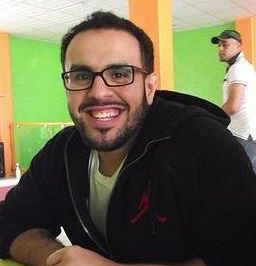
Mohamed Soltan — an American citizen abandoned by President Obama

In an open letter to President Obama on his 26th birthday, November 16, 2013, Mohamed Soltan wrote from a cell in Cairo’s infamous Tora Prison:

Dear President Obama,

Last week, I underwent a procedure to remove two 13” metal nails that were placed in my left arm to help support and repair the damage sustained from a gunshot wound I suffered at the hands of Egyptian security forces. The bullet that punctured my arm was paid for by our tax dollars. I was forced to undergo this procedure without any anesthesia or sterilization because the Egyptian authorities refused to transfer me to a hospital for proper surgical care.

Mohamed-SoltanAfter the nails penetrated the skin at my elbow from below, and ripped through my shoulder muscle from above. The doctor who performed this procedure is a cellmate. He used pliers and a straight razor in lieu of a scalpel. I laid on a dirty mat as my other cellmates held me down to ensure I did not jolt from the pain and risk permanent loss of feeling and function in that arm. The pain was so excruciating, it felt like my brain could explode at any given point. I was finally given two aspirin pills almost an hour later when the guards found my cellmates screams for help unbearable.

I share these details here because my mind drifted to 2007 as I stared at the ceiling of my cramped cell after surgery. During your first presidential campaign, I was moved by your message. I was so passionate about everything you represented. Finally, “change we can believe in.” I saw you, as many Americans did then, a true civil servant looking to put the disadvantaged first, and to pioneer a new model of governance. I felt I was part of the making of a great chapter in my country’s history. You were someone I wanted to stand behind, someone I wanted to support, so I volunteered and worked for your campaign in Ohio, a crucial swing state. As an O.S.U. student, I went door-to-door, made phone call after phone call, urged people to join the movement that would revolutionize American politics. It was time to go back to a government “for the people, of the people.”

Now as I sit in this crowded cell, I can’t help but ask myself, was I naïve to think you were a departure from the norm? As domestic and foreign policies I disagreed with passed during your terms, I chalked it up to the negative consequence of bipartisanship, but now after months of being held without cause in Egypt’s infamous prisons and so little [regard for] my Americanness, let alone humanity, shown, I am beginning to think I was just another silly, idealistic college kid who believed the world can look a whole lot different, with a leader such as yourself at the head of it.

Your abandonment of me, an American citizen who worked tirelessly towards your election, and a staunch supporter and defender of your presidency, has left a sting in me that is almost as intense as the sharp pain emanating from my recently sliced arm.

Last weekend Soltan was sentenced to life imprisonment:

An Egyptian court on Saturday sentenced an American citizen, Mohamed Soltan, to life imprisonment for supporting an Islamist protest against the military ouster of President Mohamed Morsi of the Muslim Brotherhood in the summer of 2013.

The presiding judge, Mohammed Nagi Shehata, sentenced more than 35 other defendants in the case to the same penalty and also confirmed death sentences in the same case for about a dozen defendants, including the Muslim Brotherhood’s top spiritual guide, Mohamed Badie, 71, as well as Mr. Soltan’s father, Salah Soltan.

Gehad el-Haddad, a spokesman for the Muslim Brotherhood, was also sentenced to life in prison. Members of the Soltan family have said they will appeal the decision, and other defendants are expected to appeal as well.

The verdict is the latest in a long series of similarly harsh sentences handed down at mass trials of dozens or hundreds of defendants accused of participating in violent protests or riots in the aftermath of the military takeover, often based on only police testimony or cursory evidence. Thousands more remain imprisoned without convictions. The sweeping penalties have drawn outraged denunciations from rights groups and milder rebukes from Western diplomats.

But the case of the younger Mr. Soltan, 27, is exceptional because he is an American citizen.

The verdict comes just days after President Obama released hundreds of millions of dollars in military aid for Egypt that had previously been suspended in response to the military takeover and subsequent repression.

The White House released a brief statement:

The United States condemns the life sentence issued today in Egypt against American citizen Mohamed Soltan. We call for Mr. Soltan’s immediate release from prison. We remain deeply concerned about Mr. Soltan’s health, which has suffered during his 20 month-long incarceration. The President is deeply committed to the welfare of all U.S. citizens abroad and we will ensure that Mr. Soltan continues to receive consular support until he can return safely to the United States, per his wishes.

Facebooktwittermail

Why won’t Obama help my Syrian Christian family?

Hadil Kouki writes: In 2011, I was one of a group that dreamed about living under the shadow of freedom, liberty, and the pursuit of happiness. Unfortunately, a dream does not always come true. Mine turned into a nightmare, as I spent 40 days in prison because of a dream.

I was 19 years of age, a law student at the University of Aleppo. In early March 2011, before anyone had marched against the dictator in Syria, I was sneaking with my friends from one venue to another distributing flyers that called on Syrians to march in the street for their freedom. As a result, my freedom was taken a few hours after that. I was tortured and placed in solitary confinement. I had no access to a lawyer and denied the right of visitation. My family was almost mourning me until a Syrian Secret Service patrol forced me out of my cell to direct them to my apartment in Aleppo. There I made sure to be seen by a man who knew my family, who later told them that he saw me with the “Visitors of the Night,” as we call them in Syria.

In prison I was denied all of my basic needs. I was denied any products for hygiene, and the cell was rotten and full of rodents. I said to myself, “How foolish you are; freedom, liberty, and pursuit of happiness? Are you getting all of that in this cell now?” Yes, this is Syria. [Continue reading…]

Facebooktwittermail

ISIS’ attack on Ramadi just upended U.S. war plans

Nancy A. Youssef reports: ISIS is reportedly marching on key Iraqi city of Ramadi—upending the momentum that the U.S.-led military coalition seemed to have just days ago, and threatening to shatter an already delicate recent power shift that both the U.S. and Iraq hoped to exploit.

Until Wednesday’s reports about Ramadi both U.S. and Iraqi officials were examining what effects ISIS’ recent losses could have in future battles. The officials were even talking about where they would take down ISIS next. During his visit to Washington, Iraqi Prime Minister Haider al Abadi suggested in an interview Wednesday with reporters that his troops could move on both Anbar province—where Ramadi in the local capital—and the oil-rich city of Baiji.

But that was before, according to residents, three cities near Ramadi fell into ISIS hands. Hours later, area security forces reportedly asked for more support from the central government to retain control of the city. Pentagon officials stopped short of saying the city was on the brink of falling. But they didn’t sound confident it would hold, either. [Continue reading…]

Facebooktwittermail