The animation in this video is taken from Alexander Petrov’s ‘My Love.’ The video ends abruptly — the complete ‘All Things’ can be heard here.




The animation in this video is taken from Alexander Petrov’s ‘My Love.’ The video ends abruptly — the complete ‘All Things’ can be heard here.
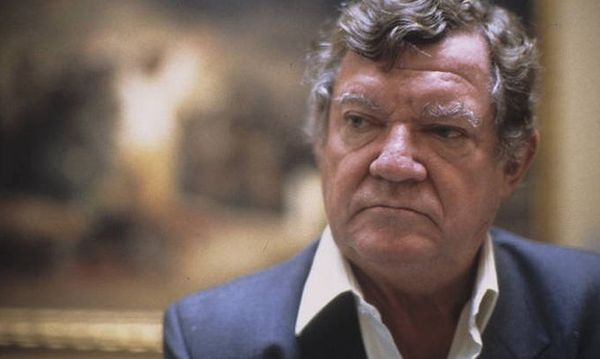
Ken Tucker writes: Robert Hughes, not only one of the greatest art critics, but one of the greatest critics in any medium, has died. He was 74. The Australian-born Hughes was the art critic for Time Magazine starting in 1970, the author of the bestselling history of Australia, The Fatal Shore, and was the writer, producer, and star of one of the finest television documentaries ever aired: The Shock of the New, first broadcast in 1980.
Hughes had a rugged pug face, a resonant voice that could hypnotize you when he narrated or lectured, and was a fiercely combative critic with strong opinions about beauty, the art market, and artists’ technical skills. He had little use for an awful lot of modern art, or what he describes here, in a clip from Shock of the New, as stuff such as “a videotape of some twit from the University of Central Paranoia”:
First broadcast by the BBC and in this country on PBS, The Shock of the New was, for me, a shock on a couple of levels. I’d never seen such a forcefully argued documentary on television; I’d never heard art explained with such clarity; I’d never felt such joy absorbing invective mingled with praise emanating from such a curt, dashing fellow.
What Hughes demonstrated so effectively was that television, in the right hands (which might not be easy to find), was a medium with a much greater capacity than to merely entertain; that it could cultivate and express intelligence. Unfortunately, that capacity has never much overlapped with its even greater capacity: to turn a profit and exploit the tradable value of stupidity.
Here’s the first episode of The Shock of the New. Don’t be put off by the cheesy synthesized music accompanying the titles — in those days the state-funded BBC worked on a tight budget.
Peter Coster writes: Robert Hughes took a long time dying. Not in the Calvary Hospital in New York on Monday. That was the end of a road bearing a cross he carried from a near-fatal car crash in Western Australia.
It was as he lay broken in the wreckage 13 years ago that the art critic and historian first saw death.
This brilliant son of a transplanted Irish Catholic family that achieved so much in Australia saw Death “sitting at a desk like a banker. He made no gesture, but he opened his mouth and I looked right down his throat, which distended to become a tunnel”.
Hughes said it led to the inferno of old Christian art.
He was grievously hurt in that car crash on what seemed an empty road in the Outback when his car and another somehow collided. Had they not seen each other? Were the drivers drunk?
Close to death, on life support, Hughes endured many operations. Catholics never escape their Catholicism, and Hughes thought he experienced a descent into hell as he lay in the wreckage of his car, his flesh torn by demons.
A handsome, powerful hunk of a human being, he was reduced to a shambling wreck as he staggered on over the next 13 years to die, like Christ at Calvary.
The analogy would not have escaped him, knowing the hospital in the Bronx was where life was likely to end.
He had limped away from Australia on sticks, but as always he returned to the country that made him and of which he wrote with such honest clarity.
Australia, too, came from a hell in its convict past, as Hughes wrote in The Fatal Shore, his history of the beginnings of Australia as a convict settlement that was born anew.
Hughes was not some effete to turn his nose away from the taint of the past. But Australia was also a place he had to leave to understand by seeing the world. It was also why he returned.
He hated the Australia that hurt him, but he recovered, though not from his wounds.
The flesh was weak, but the spirit still strong. He was a crumbling figure, a broken Toby Jug, when he was signing his book on the tempestuous Spanish artist Goya while speaking at a Melbourne art gallery.
I asked what he thought of the tens of millions of dollars being splashed then by hedge-fund manipulators and art ignoramuses on the great paintings of the world.
He was in pain, not entirely from his injuries. His great head shook. His cheeks reddened. He described the billionaire buyers of art as investment as “raw” people. He might have been talking about meat. He roared that putting great art before them was “like putting a bucket of blood in front of a pack of dingoes”.

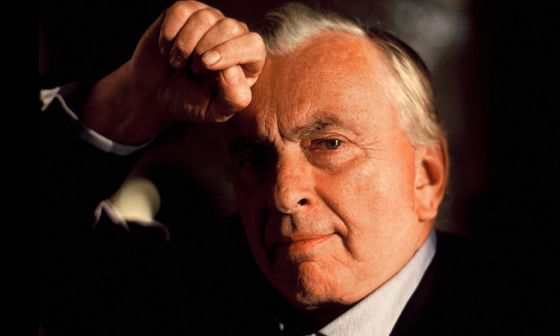
Gore Vidal: 1925-2012
Gore Vidal: Unlike most Americans who lie all the time, I hate lying. And here I am surrounded with these hills [in Hollywood] full of liars — some very talented.
Melvyn Bragg: What do you mean by lying in that sense? Do you mean telling fictions?
Vidal: Yeah, about themselves, about their beliefs, about their histories. Degrees, from universities — this is piled up lies.
Americans are not interested in the truth about anything. They assume everybody is lying because they go out and lie everyday about the automobile they are trying to sell you…
This is a country of hoax. P.T. Barnum is the god of this republic, which is no longer a republic alas. It is an oligarchy and a rather vicious one.
Bragg: Can I quote a bit from Montaigne — something from Montaigne that you quote and refer to several times in these memoirs [of yours], from his essay on lying —
Vidal: yes, wonderful…
Bragg: “Lying is an accursed vice. It is only our words which bind us together and make us human. If we realized the horror and weight of lying, we would see that it is more worthy of the stake than other crimes.”
Vidal: … and I’ll drop the match [to set aflame the convict].
Yes, it is … — you see this whole American society is based on advertising, which in turn grabbed on to something called television which could just perpetrate lies everywhere into this society and does and did.
So I have lived in a rather troubling time.
Gore Vidal, who died yesterday evening, was interviewed by Melvyn Bragg on the South Bank Show in 2008. The interview lasts 48 minutes and is worth watching from beginning to end — you will never see an interview and portrait of this quality and depth on American television.

Tim Doody writes: At 9:30 in the morning, an architect and three senior scientists—two from Stanford, the other from Hewlett-Packard—donned eyeshades and earphones, sank into comfy couches, and waited for their government-approved dose of LSD to kick in. From across the suite and with no small amount of anticipation, Dr. James Fadiman spun the knobs of an impeccable sound system and unleashed Beethoven’s “Symphony No. 6 in F Major, Op. 68.” Then he stood by, ready to ease any concerns or discomfort.
For this particular experiment, the couched volunteers had each brought along three highly technical problems from their respective fields that they’d been unable to solve for at least several months. In approximately two hours, when the LSD became fully active, they were going to remove the eyeshades and earphones, and attempt to find some solutions. Fadiman and his team would monitor their efforts, insights, and output to determine if a relatively low dose of acid—100 micrograms to be exact—enhanced their creativity.
It was the summer of ’66. And the morning was beginning like many others at the International Foundation for Advanced Study, an inconspicuously named, privately funded facility dedicated to psychedelic drug research, which was located, even less conspicuously, on the second floor of a shopping plaza in Menlo Park, Calif. However, this particular morning wasn’t going to go like so many others had during the preceding five years, when researchers at IFAS (pronounced “if-as”) had legally dispensed LSD. Though Fadiman can’t recall the exact date, this was the day, for him at least, that the music died. Or, perhaps more accurately for all parties involved in his creativity study, it was the day before.
At approximately 10 a.m., a courier delivered an express letter to the receptionist, who in turn quickly relayed it to Fadiman and the other researchers. They were to stop administering LSD, by order of the U.S. Food and Drug Administration. Effective immediately. Dozens of other private and university-affiliated institutions had received similar letters that day.
That research centers once were permitted to explore the further frontiers of consciousness seems surprising to those of us who came of age when a strongly enforced psychedelic prohibition was the norm. They seem not unlike the last generation of children’s playgrounds, mostly eradicated during the ’90s, that were higher and riskier than today’s soft-plastic labyrinths. (Interestingly, a growing number of child psychologists now defend these playgrounds, saying they provided kids with both thrills and profound life lessons that simply can’t be had close to the ground.)
When the FDA’s edict arrived, Fadiman was 27 years old, IFAS’s youngest researcher. He’d been a true believer in the gospel of psychedelics since 1961, when his old Harvard professor Richard Alpert (now Ram Dass) dosed him with psilocybin, the magic in the mushroom, at a Paris café. That day, his narrow, self-absorbed thinking had fallen away like old skin. People would live more harmoniously, he’d thought, if they could access this cosmic consciousness. Then and there he’d decided his calling would be to provide such access to others. He migrated to California (naturally) and teamed up with psychiatrists and seekers to explore how and if psychedelics in general—and LSD in particular—could safely augment psychotherapy, addiction treatment, creative endeavors, and spiritual growth. At Stanford University, he investigated this subject at length through a dissertation—which, of course, the government ban had just dead-ended.
Couldn’t they comprehend what was at stake? Fadiman was devastated and more than a little indignant. However, even if he’d wanted to resist the FDA’s moratorium on ideological grounds, practical matters made compliance impossible: Four people who’d never been on acid before were about to peak.
“I think we opened this tomorrow,” he said to his colleagues.
And so one orchestra after the next wove increasingly visual melodies around the men on the couch. Then shortly before noon, as arranged, they emerged from their cocoons and got to work.
* * *
Over the course of the preceding year, IFAS researchers had dosed a total of 22 other men for the creativity study, including a theoretical mathematician, an electronics engineer, a furniture designer, and a commercial artist. By including only those whose jobs involved the hard sciences (the lack of a single female participant says much about mid-century career options for women), they sought to examine the effects of LSD on both visionary and analytical thinking. Such a group offered an additional bonus: Anything they produced during the study would be subsequently scrutinized by departmental chairs, zoning boards, review panels, corporate clients, and the like, thus providing a real-world, unbiased yardstick for their results.
In surveys administered shortly after their LSD-enhanced creativity sessions, the study volunteers, some of the best and brightest in their fields, sounded like tripped-out neopagans at a backwoods gathering. Their minds, they said, had blossomed and contracted with the universe. They’d beheld irregular but clean geometrical patterns glistening into infinity, felt a rightness before solutions manifested, and even shapeshifted into relevant formulas, concepts, and raw materials.
But here’s the clincher. After their 5HT2A neural receptors simmered down, they remained firm: LSD absolutely had helped them solve their complex, seemingly intractable problems. And the establishment agreed. The 26 men unleashed a slew of widely embraced innovations shortly after their LSD experiences, including a mathematical theorem for NOR gate circuits, a conceptual model of a photon, a linear electron accelerator beam-steering device, a new design for the vibratory microtome, a technical improvement of the magnetic tape recorder, blueprints for a private residency and an arts-and-crafts shopping plaza, and a space probe experiment designed to measure solar properties. Fadiman and his colleagues published these jaw-dropping results and closed shop. [Continue reading…]
Robert Wyatt and Annie Whitehead perform the “Sea Song” from the Wyatt’s album “Rock Bottom.”
A director of a global internet services company writes: I like the internet. I use it a lot. In fact, I work at a senior level in the industry and from here the internet does not look like a fad that will pass any time soon.
Hundreds of millions think Facebook is fun, that Google is useful, and that iPlayer is essential. Each day people reach for their phones to see if their latest Instagram is a hit, if a new profile pic is liked, or if they have been retweeted.
We do this because it is addictive – literally addictive. Each time there’s a new email, our brains reward us with a hit – a dopamine high – which encourages repeat behaviour. Apparently, it’s one of the ways in which we learn. As one behavioural psychologist put it, the internet creates “a dopamine-induced loop”, giving us “almost instant gratification of our desire to seek“.
Computer game manufacturers have long known this, and so they make products, apps or games that are “sticky”, in the jargon. Society has long known it too: stories of gamers dying of exhaustion at their keyboards are more than five years old now, not to mention “crackberries“. What they want most is for their app to be the first thing to come to your mind when your brain is idle for a second and you think, “What shall I do now?”
But why has the internet industry not asked itself whether it should be taking responsibility for these products, for creating content that is actually designed to be addictive? Does it ask whether building the digital equivalent of a Skinner box or discussing how to manufacture desire is necessarily a good thing?
In other words, are we – the internet industry – the new tobacco? And, if we are, what stage of the marketing of this new industry are we at? Is this the equivalent of the 1930s? Are we at the stage of “More doctors smoke Camels”? [Continue reading…]
Chris Hedges writes: Cultures that endure carve out a protected space for those who question and challenge national myths. Artists, writers, poets, activists, journalists, philosophers, dancers, musicians, actors, directors and renegades must be tolerated if a culture is to be pulled back from disaster. Members of this intellectual and artistic class, who are usually not welcome in the stultifying halls of academia where mediocrity is triumphant, serve as prophets. They are dismissed, or labeled by the power elites as subversive, because they do not embrace collective self-worship. They force us to confront unexamined assumptions, ones that, if not challenged, lead to destruction. They expose the ruling elites as hollow and corrupt. They articulate the senselessness of a system built on the ideology of endless growth, ceaseless exploitation and constant expansion. They warn us about the poison of careerism and the futility of the search for happiness in the accumulation of wealth. They make us face ourselves, from the bitter reality of slavery and Jim Crow to the genocidal slaughter of Native Americans to the repression of working-class movements to the atrocities carried out in imperial wars to the assault on the ecosystem. They make us unsure of our virtue. They challenge the easy clichés we use to describe the nation—the land of the free, the greatest country on earth, the beacon of liberty—to expose our darkness, crimes and ignorance. They offer the possibility of a life of meaning and the capacity for transformation.
Human societies see what they want to see. They create national myths of identity out of a composite of historical events and fantasy. They ignore unpleasant facts that intrude on self-glorification. They trust naively in the notion of linear progress and in assured national dominance. This is what nationalism is about—lies. And if a culture loses its ability for thought and expression, if it effectively silences dissident voices, if it retreats into what Sigmund Freud called “screen memories,” those reassuring mixtures of fact and fiction, it dies. It surrenders its internal mechanism for puncturing self-delusion. It makes war on beauty and truth. It abolishes the sacred. It turns education into vocational training. It leaves us blind. And this is what has occurred. We are lost at sea in a great tempest. We do not know where we are. We do not know where we are going. And we do not know what is about to happen to us.
The psychoanalyst John Steiner calls this phenomenon “turning a blind eye.” He notes that often we have access to adequate knowledge but because it is unpleasant and disconcerting we choose unconsciously, and sometimes consciously, to ignore it. He uses the Oedipus story to make his point. He argued that Oedipus, Jocasta, Creon and the “blind” Tiresias grasped the truth, that Oedipus had killed his father and married his mother as prophesized, but they colluded to ignore it. We too, Steiner wrote, turn a blind eye to the dangers that confront us, despite the plethora of evidence that if we do not radically reconfigure our relationships to each other and the natural world, catastrophe is assured. Steiner describes a psychological truth that is deeply frightening. [Continue reading…]
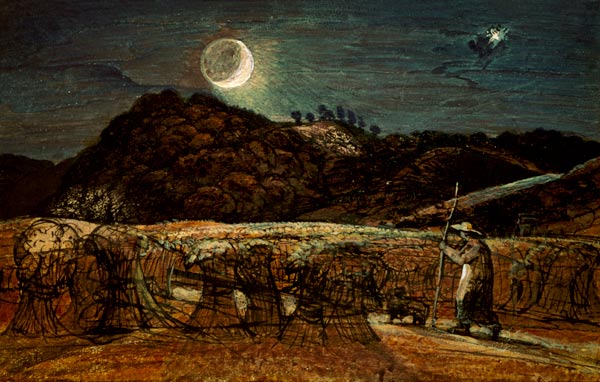
George Monbiot writes: The land around Helpston, just to the north of Peterborough in Northamptonshire, now ranks among the most dismal and regularised tracts of countryside in Europe. But when the poet John Clare was born this coming Friday in 1793, it swarmed with life. Clare describes species whose presence there is almost unimaginable today. Corncrakes hid among the crops, ravens nested in a giant oak, nightjars circled the heath, the meadows sparkled with glow worms. Wrynecks still bred in old woodpecker holes. In the woods and brakes the last wildcats clung on.
The land was densely peopled. While life was hard and spare, it was also, he records, joyful and thrilling. The meadows resounded with children pranking and frolicking and gathering cowslips for their May Day games; the woods were alive with catcalls and laughter; around the shepherds’ fires, people sang ballads and told tales. We rightly remark on the poverty and injustice of rural labour at that time; we also forget its wealth of fellowship.
All this Clare notes in tremulous bewitching detail, in the dialect of his own people. His father was a casual farm labourer, his family never more than a few days’ wages from the poorhouse. Clare himself, from early childhood, scraped a living in the fields. He was schooled capriciously, and only until the age of 12, but from his first bare contact fell wildly in love with the written word. His early poems are remarkable not only for the way in which everything he sees flares into life, but also for his ability to pour his mingled thoughts and observations on to the page as they occur, allowing you, as perhaps no other poet has done, to watch the world from inside his head. Read The Nightingale’s Nest, one of the finest poems in the English language, and you will see what I mean.
And then he sees it fall apart. Between 1809 and 1820, acts of enclosure granted the local landowners permission to fence the fields, the heaths and woods, excluding the people who had worked and played in them. Almost everything Clare loved was torn away. The ancient trees were felled, the scrub and furze were cleared, the rivers were canalised, the marshes drained, the natural curves of the land straightened and squared. Farming became more profitable, but many of the people of Helpston – especially those who depended on the commons for their survival – were deprived of their living. The places in which the people held their ceremonies and celebrated the passing of the seasons were fenced off. The community, like the land, was parcelled up, rationalised, atomised. I have watched the same process breaking up the Maasai of east Africa.
Clare documents both the destruction of place and people and the gradual collapse of his own state of mind. “Inclosure came and trampled on the grave / Of labour’s rights and left the poor a slave … And birds and trees and flowers without a name / All sighed when lawless law’s enclosure came.”
As Jonathan Bate records in his magnificent biography, there were several possible causes of the “madness” that had Clare removed to an asylum in 1837: bipolar disorder, a blow to the head, malaria (then a common complaint on the edge of the fens). But it seems to me that a contributing factor must have been the loss of almost all he knew and loved. His work is a remarkable document of life before and after social and environmental collapse, and the anomie that resulted.
What Clare suffered was the fate of indigenous peoples torn from their land and belonging everywhere. His identity crisis, descent into mental agony and alcohol abuse, are familiar blights in reservations and outback shanties the world over. His loss was surely enough to drive almost anyone mad; our loss surely enough to drive us all a little mad. [Continue reading…]

Tony Dokoupil writes: Before he launched the most viral video in Internet history, Jason Russell was a half-hearted Web presence. His YouTube account was dead, and his Facebook and Twitter pages were a trickle of kid pictures and home-garden updates. The Web wasn’t made “to keep track of how much people like us,” he thought, and when his own tech habits made him feel like “a genius, an addict, or a megalomaniac,” he unplugged for days, believing, as the humorist Andy Borowitz put it in a tweet that Russell tagged as a favorite, “it’s important to turn off our computers and do things in the real world.”
But this past March Russell struggled to turn off anything. He forwarded a link to “Kony 2012,” his deeply personal Web documentary about the African warlord Joseph Kony. The idea was to use social media to make Kony famous as the first step to stopping his crimes. And it seemed to work: the film hurtled through cyberspace, clocking more than 70 million views in less than a week. But something happened to Russell in the process. The same digital tools that supported his mission seemed to tear at his psyche, exposing him to nonstop kudos and criticisms, and ending his arm’s-length relationship with new media.
He slept two hours in the first four days, producing a swirl of bizarre Twitter updates. He sent a link to “I Met the Walrus,” a short animated interview with John Lennon, urging followers to “start training your mind.” He sent a picture of his tattoo, TIMSHEL, a biblical word about man’s choice between good and evil. At one point he uploaded and commented on a digital photo of a text message from his mother. At another he compared his life to the mind-bending movie Inception, “a dream inside a dream.”
On the eighth day of his strange, 21st-century vortex, he sent a final tweet — a quote from Martin Luther King Jr.: “If you can’t fly, then run, if you can’t run, then walk, if you can’t walk, then crawl, but whatever you do, you have to keep moving forward” — and walked back into the real world. He took off his clothes and went to the corner of a busy intersection near his home in San Diego, where he repeatedly slapped the concrete with both palms and ranted about the devil. This too became a viral video.
Afterward Russell was diagnosed with “reactive psychosis,” a form of temporary insanity. It had nothing to do with drugs or alcohol, his wife, Danica, stressed in a blog post, and everything to do with the machine that kept Russell connected even as he was breaking apart. “Though new to us,” Danica continued, “doctors say this is a common experience,” given Russell’s “sudden transition from relative anonymity to worldwide attention — both raves and ridicules.” More than four months later, Jason is out of the hospital, his company says, but he is still in recovery. His wife took a “month of silence” on Twitter. Jason’s social-media accounts remain dark.
Questions about the Internet’s deleterious effects on the mind are at least as old as hyperlinks. But even among Web skeptics, the idea that a new technology might influence how we think and feel — let alone contribute to a great American crack-up — was considered silly and naive, like waving a cane at electric light or blaming the television for kids these days. Instead, the Internet was seen as just another medium, a delivery system, not a diabolical machine. It made people happier and more productive. And where was the proof otherwise?
Now, however, the proof is starting to pile up. The first good, peer-reviewed research is emerging, and the picture is much gloomier than the trumpet blasts of Web utopians have allowed. The current incarnation of the Internet — portable, social, accelerated, and all-pervasive — may be making us not just dumber or lonelier but more depressed and anxious, prone to obsessive-compulsive and attention-deficit disorders, even outright psychotic. Our digitized minds can scan like those of drug addicts, and normal people are breaking down in sad and seemingly new ways. [Continue reading…]
When 30 years ago the Large Hadron Collider was first proposed, its construction was far from certain. Robin McKie writes: The US was then planning the Superconducting Super Collider (SSC), an underground tunnel – 54 miles in circumference – round which protons would be hurled at energies three times those generated by those in the LHC. Why construct an inferior device, critics asked?
But the SSC proved to be a debacle. Individual congressmen initially backed it because they hoped it would be built in their state. But after Texas was selected, those outside the state lost interest. Costs soared and the SSC, now friendless, was cancelled. So the US put its money into the international space station, a project of no scientific value but which upset no vested interests.
After its rival disappeared, the case for the LHC looked stronger. Yet it still took a decade of negotiations to get Cern’s member nations to agree to build it. Eventually a deal was signed – only for Britain, following its 1993 economic crisis, and Germany, reeling under the cost of reunification, to renege. In both cases, last-minute deals saved the project, although Llewellyn Smith says it had balanced, several times, on the edge of extinction. “It was touch and go on a number of occasions. It could so easily not have happened.”
And that point has clear implications for the LHC. If its giant detectors produce evidence of Higgs bosons and little else in its lifetime, particle physicists will struggle to persuade the world they need a bigger machine to probe even further into the structure of matter, a point stressed by the Nobel prize-winning physicist Steven Weinberg.
“My nightmare is that the LHC’s only important discovery will be the Higgs,” says Weinberg. “Its discovery was important. It confirms existing theory but it does not give us any new ideas. We need to find new things that cry out for further investigation if we are to get money for a next generation collider.”
Candidate discoveries would include particles that could explain the presence of dark matter in the universe. Astronomers know that the quarks, electrons and other forms of normal matter found on Earth can only explain about a sixth of the mass of the universe. There is something else out there. Scientists call it dark matter but cannot agree about its nature. A particle, as yet undetected, that permeates the cosmos, might be responsible.
As Weinberg says: “What could be more exciting than finding a particle that makes up most of the universe’s mass?” Certainly, finding hints of dark matter would help scientists get the billions they will need for a next generation collider. But if they find no exotic fare like this, they will flounder.
This point is backed by [Sir Christopher] Llewellyn Smith [Cern’s director general in the 1990s]. “The only real case for a next generation device would be the discovery of a phenomenon that the LHC could only just detect but could not study properly. We will have to wait and see if something like that happens. Certainly, it will give scientists plenty to do at the LHC for the next few years.”
As to the nature of that next generation device, by far the most likely candidate would be a linear – as opposed to a circular – accelerator which would fire electrons in straight lines for miles before smashing them together. A world consortium of experts, including Lyn Evans, has already been set up to create plans. But until the LHC produces results, its design will remain uncertain. “It is quite conceivable that we have reached the end of the line,” adds Llewellyn Smith. “Certainly, unless someone comes up with an unexpected breakthrough, it is hard not to conclude we have come about as far as we can with accelerator technology.” After 50 years of whizzing sub-atomic particles along tunnels before battering them together, we appear to be approaching the limits of this technology.
And even if the technical hurdles can be overcome, the political issues may be insurmountable. Battles over local interests will inevitably strike again. Scientists will then have to use other methods to study the fabric of the cosmos: powerful, space-based telescopes that could peer back into the early universe. On their own, these are unlikely to produce major breakthroughs. As a result, when LHC has completed its work next decade, we may face a long pause in our progress in unravelling the universe’s structure.