Author Archives: Paul Woodward

Barghouti’s release a wild card in Mideast

Barghouti’s release a wild card in Mideast

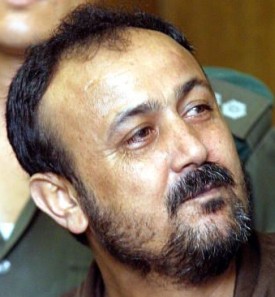
Amid swirling speculation about an imminent Israel-Hamas prisoner swap, the possible release of Fatah leader Marwan Barghouti could change the political dynamic in stalled Israeli-Palestinian peace efforts.

More than any other of the hundreds of Palestinians that are expected to be freed by Israel in return for Sgt. Gilad Shalit after three years of captivity in Gaza, the possibility of a Barghouti release carries political repercussions beyond the actual swap.

A proponent of the militarization of the Palestinian uprising that broke out in late 2000, Barghouti was convicted and sentenced to life in prison in 2004 on five counts of murder, including a shooting attack on a Tel Aviv restaurant.

But Barghouti also supports a two-state compromise with Israel and is a Hebrew-speaking, charismatic warrior-statesman with public opinion ratings among Palestinians that rival Palestinian Authority President Mahmoud Abbas and Hamas leader Ismail Haniyeh. Some say Barghouti could succeed Mr. Abbas, unify the Palestinians and provide Israel with the powerful partner it has lacked since the death of Yasser Arafat in 2004. [continued…]

Facebooktwittermail

The Invention of the Jewish People

Shlomo Sand interviewed on Al Jazeera, speaking about The Invention of the Jewish People

Book review: Shlomo Sand’s The Invention of the Jewish People

Sand traces how Zionist ideology drove the project of Jewish nationalism by turning Judaism “into something hermetic, like the German Volk …” (255). He argues that history and biology were enlisted “to bind together the frangible secular Jewish identity.” Together, these engendered an “ethnonationalist historiography” which was typified by the mid-19th century German Jewish historian Heinricht Graetz and his friend Moses Hess, who “needed a good deal of racial theory to dream up the Jewish people” (256).

According to Sand, the destruction by the Romans of the Second Temple in 70 AD left the indigenous Jewish population of Judea and Samaria in place. “[T]he Romans never deported entire peoples. It did not pay to uproot the people of the land, the cultivators of produce, the taxpayers” (130). Furthermore, at that time there were already Jewish communities numbering up to four million persons in Persia, Egypt, Asia Minor and elsewhere (145). Palestine’s status as the unique “ancestral homeland” of the Jews collapses together with the myth of David and Solomon’s imposing kingdom.

Against the ethno-biological concept of a Jewish people — a “race” — whose linear descendants returned from exile to (re)found today’s Israel, Sand posits a religious community proliferating throughout and beyond the Mediterranean region by means of proselytism and conversion. He offers a detailed rebuttal of the conventional wisdom whereby “Judaism was never a proselytizing religion,” a view disseminated by historian Martin Goodman and others (150, note 42).

Most importantly, he concentrates attention on Khazaria, that “Strange Empire” that flourished in the Caspian region between the seventh and tenth centuries AD. By the eighth century the Khazars had adopted Hebrew as their sacred and written tongue, and “[a]t some stage between the mid-eighth and mid-ninth centuries, the[y] … adopted Jewish monotheism” (221). Sand speculates that this conversion was calculated to save them from absorption into either the Roman or the Islamic empires. The Khazars, he contends, engendered those Askhenazi Jews of central and eastern Europe who would later invent the myths of Zionism to justify their colonization of Palestine, a land to which they had no “ethnic” connection and where they remain the dominant elite. [continued…]

Facebooktwittermail

Ethnic cleansing of Jerusalem while Israel implements a fake settlement freeze

Ethnic cleansing of Jerusalem while Israel implements a fake settlement freeze

Ever since Hillary Clinton officially declared the peace process dead and buried — well, her precise words were that Israel was making “unprecedented” concessions on the issue of settlements — the settlement freeze-hoax has hardly seemed worth tracking. Still, a couple of items from the last few days are noteworthy.

First, Benjamin Netanyahu’s reassurance offered to leaders of Jewish communities in “Judea and Samaria” (the Israeli occupied West Bank): “This order [to freeze new housing construction] is one-time only and it limits the duration of the suspension. There are nine months and three weeks left. Once the suspension has expired, we will continue to build.”

Then, the Jerusalem Post reported:

Strategic Affairs Minister Moshe Ya’alon, who voted in favor of the freeze last week as a member of the security cabinet, warned Thursday that if it continued beyond the 10-month period, ministers would begin to resign.

Ya’alon’s comments reflected earlier claims by Minister-without-Portfolio Bennie Begin, in which Begin promised that at the end of the 10-month period, building would begin “at a faster pace than before the freeze.”

Meanwhile, Haaretz reported on the massive increase in the pace of the ethnic cleansing of Jerusalem — part of the effort to solidify Israel’s claim to the city as an “undivided” Jewish capital.

Last year set an all-time record for the number of Arab residents of East Jerusalem who were stripped of residency rights by the Interior Ministry. Altogether, the ministry revoked the residency of 4,577 East Jerusalemites in 2008 – 21 times the average of the previous 40 years.

In the first 40 years of Israeli rule over East Jerusalem combined, from 1967 to 2007, the ministry deprived only 8,558 Arabs of their residency rights – less than double the number who lost their permits last year alone. Thus of all the East Jerusalem Arabs who have lost their residency rights since 1967, about 35 percent did so in 2008.

According to the ministry, last year’s sharp increase stemmed from its decision to investigate the legal status of thousands of East Jerusalem residents in March and April, 2008. The probe was the brainchild of former interior minister Meir Sheetrit (Kadima) and Yaakov Ganot, who headed the ministry’s Population Administration.

The ministry said the probe uncovered thousands of people listed as East Jerusalem residents but were no longer living in Israel, and were therefore stripped of their residency. Most of those who lost their residency for this reason did not just move from Jerusalem to the West Bank, but were actually living in other countries, the ministry’s data shows.

Those deprived of their residency included 99 minors under the age of 18.

Attorney Yotam Ben-Hillel of Hamoked: Center for the Defense of the Individual said the 250,000 Arab residents of East Jerusalem have the same legal status as people who immigrated to Israel legally but are not entitled to citizenship under the Law of Return.

“They are treated as if they were immigrants to Israel, despite the fact that it is Israel that came to them in 1967,” he said.

A resident, unlike a citizen, can be stripped of his status relatively easily. All he has to do is leave the country for seven years or obtain citizenship, permanent residency or some other form of legal status in another country, and he loses his Israeli residency automatically.

Once a Palestinian has lost his residency, even returning to Jerusalem for a family visit can be impossible, Ben-Hillel said. Moreover, he said, some of those whose residency Israel revoked may not have legal status in any other country, meaning they have been made stateless.

“The list may include students who went for a few years to study in another country, and can now no longer return to their homes,” he said.

Officials at Hamoked, which obtained the ministry data via the Freedom of Information Act, said they were concerned that some of those who lost their residency rights may not even know it.

“The phenomenon of revoking people’s residency has reached frightening dimensions,” said Dalia Kerstein, Hamoked’s executive director. “The Interior Ministry operation in 2008 is just part of a general policy whose goal is to restrict the size of the Palestinian population and maintain a Jewish majority in Jerusalem. The Palestinians are natives of this city, not Johnny-come-latelys.”

Sheetrit, however, insisted that the operation was necessary. “What we discovered is just the tip of the iceberg,” he said. “The State of Israel pays billions of shekels a year in stipends to people who don’t even live here. We sent notices to every one of them about the intention to revoke their residency; we gave them time to appeal. Those who appealed weren’t touched.”

The ministry data shows that 89 Palestinians got their residency back after appealing. Sheetrit said the probe revealed very serious offenses – such as 32 people listed as living at a single address that did not even exist.

Facebooktwittermail

There is a tremendous struggle to be waged, to force Israeli introspection, and change

There is a tremendous struggle to be waged, to force Israeli introspection, and change

I want to talk about a little bit of history, not too much, and then I want to talk about where I think BDS fits in to where we’re going in the struggle for justice, and why I think it’s going to work.

If you look at the history of Palestine over the past 62 years, ever since the destruction of much of Palestine and the establishment of the state of Israel on its ashes, I think it can be divided roughly into three phases of roughly 20 years. The first phase was from 1948 to 1967, that was the establishment of Israel, the ethnic cleansing of 90 percent of the population from inside the boundaries of what became Israel, the systematic destrucitoin of 500 towns and villages, and the exile of the indigenous population of the country. And of course the remaining Palestinians inside Israel subjected to military rule and to continued ethnic cleansing and removal from their land.

The second phase, beginning in 1967 with Israel’s 3-fold expansion, its conquest of Egypts’ Sinai peninsula, of southwest Syria, of the West Bank and Gaza Strip, was really the heyday, the era of maximum Israeli confidence, and the moment in which Zionism as we know it today became rooted in the American Jewish community. Before 1967 American Jews had for the most part not been captured by this ideology of Zionism and the virulent and racist nationalism that accompanies it. For Palestinians in the West Bank and Gaza Strip, it was the beginning of long occupation and colonization that continues to this day. It was also, from Israel’s perspective, a period of what I call a luxury occupation. The Palestinians in the West Bank and Gaza Strip were relatively quiescent, they were a source of cheap labor, Israelis allowed themselves to travel freely throughout the occupied territories, and it was bliss, it was a situation where Israelis said well, this is fine, we can stay like this as we build settlements, there’s no pressure on us to do anything, we don’t have to formally annex the West Bank and Gaza Strip, which would require us to give civil rights and voting rights to the Palestinians living there, so we just keep things as they are. [continued…]

Facebooktwittermail

Imposing idiot sanctions on Iran is a direct route to war

Imposing idiot sanctions on Iran is a direct route to war

What is the difference between Iraq, Afghanistan and Iran? The answer, future historians may relate, is none. At the dawn of the 21st century, all three states were ruled by nasty undemocratic regimes to which America and its allies took exception. Antagonism began with hectoring ostracism. This led to economic sanctions, diplomatic isolation and bloodcurdling threats of “other measures”. Finally a pretext was drummed up for military intervention, for bombing, invasion, occupation and appalling destruction.

Will Iran really be on this list? At present the west, covered in blood and expense, is trying to leave Iraq and Afghanistan, yet at the same time it stumbles into an identical trap in Iran.

The casus belli is the same. There is a declared ongoing threat and this is inextricably linked to a “humanitarian” need for regime change. In Afghanistan the trigger was the harbouring of Osama bin Laden. In Iraq it was a tenuous claim that Saddam possessed a nuclear capability and was preparing to use missiles against western targets. [continued…]

Facebooktwittermail

Hizbollah’s new manifesto

Hizbollah’s new manifesto

Hizbollah noted that the previous administration in Washington had made no distinction between terrorism and national resistance movements.

The document said: “the Bush administration sought to establish a conformity between terrorism and resistance to remove the latter’s legitimacy and therefore justify wars against its movements, seeking to remove the fundamental right of the nations of defending their right to live with dignity and national sovereignty.”

In presenting its vision of Lebanon, Hizbollah did so in terms encompassing the goals of a secular, pluralistic democracy.

“Our vision for the state that we should build together in Lebanon is represented in the state that preserves public freedoms, the state that is keen on national unity, the state that protects its land, people, and sovereignty, the state that has a national, strong and prepared army, the state that is structured under the base of modern, effective and cooperative institutions, the state that is committed to the application of laws on all its citizens without differentiation, the state that guarantees a correct and right parliamentary representation based on a modern election law that allows the voters of choosing their representative away from pressures, the state that depends on qualified people regardless of their religious beliefs and that defines mechanisms to fight corruption in administration, the state that enjoys an independent and non-politicized justice authority, the state that establishes its economy mainly according to the producing sectors and works on consolidating them especially the agriculture and industry ones, the state that applies the principle of balanced development between all regions, the state that cares for its people and works to provide them with appropriate services, that state that takes care of the youth generation and help young people to develop their energies and talents, the state that works to consolidate the role of women at all levels, the state that care for education and work to strengthen the official schools and university alongside applying the principle of obligatory teaching, the state that adopts a decentralised system, the state that works hard to stop emigration and the state that guards its people all over the world and protects them and benefits from their positions to serve the national causes.” [continued…]

Facebooktwittermail

‘People woke up, and they were gone’

‘People woke up, and they were gone’

The U.S. military called it shock and awe, and it began on March 21, 2003 — 8:09 p.m., to be exact. It concluded here with a sigh. No one quite remembers when the Americans withdrew from Forward Operating Base Summers.

“One morning they left, and they never came back,” said Osama Majid, a vendor on the road to the base, as he hovered over his shelves of Iranian and Turkish packaged sweets. “People woke up, and they were gone.”

Occupations probably never really end. Even after the last of the 115,000 U.S. soldiers leave, this one will live on in the national psyche, in the bearing of Iraq’s military, in cowboy boots, tattoos and, of course, language. “Badjat,” demand Iraqi sentries at Summers’ gates, waiting for a visitor’s identity card. Sometimes occupations leave behind the banal.

Summers is like an archaeological dig.

Perched 30 miles southeast of Baghdad, the former U.S. base — known before the Americans arrived and after they departed as Suwayrah Airport — often strikes the pose of a post-apocalyptic outcast, the posture of much of the country. The land around it is austere, possessed of beauty only at the gloaming, when loneliness becomes serene. Its outskirts were looted of everything years ago, down to the tan brick that once lined buildings’ walls. The compound itself feels forlorn and deserted, the doors of its buildings barricaded by plywood, its windows sealed by cinder block. [continued…]

Facebooktwittermail

Palestinian deemed ‘terrorist’ in ‘Bruno’ sues NBC, Baron Cohen

Palestinian deemed ‘terrorist’ in ‘Bruno’ sues NBC, Baron Cohen

We’ll have to admit that before the movie “Brüno” premiered earlier this year, we watched and chuckled as its star, British comedian Sacha Baron Cohen, promoted the film on David Letterman’s late-night show. In what quickly became a viral clip on the Web, Baron Cohen, who played a fictional gay, Austrian TV show host, described a scene in the film in which he interviews an “actual” Palestinian terrorist in a “secret location” in the Israeli-occupied West Bank.

In the scene, a caption identifies the man, Ayman Abu Aita, as a “terrorist group leader, al-aqsa martyrs brigade,” and Baron Cohen unsuccessfully tries to convince Abu Aita to kidnap him in a bid to get famous. Palestinian terrorists, Brüno said, are the “best in the business” and that “al-Qaeda is so 2001.”

Since the film was released, Abu Aita has fought back. He went on a media blitz to counter Baron Cohen’s claims in the film that he works for the al-Aqsa Martyrs’ Brigade, which was once an offshoot of a Palestinian political party to which Abu Aita currently belongs.

Today Abu Aita is in the U.S. with his lawyer, Joseph Peter Drennan, to announce the filing of a libel and slander lawsuit against Baron Cohen and NBC Universal, which released “Bruno.” (Click here for the complaint.) In the suit, filed in federal court in the District of Columbia, Abu Aita, who is Christian and owns a grocery store near Bethlehem, says Baron Cohen led him to believe he was a German filmmaker doing a film about the Palestinian cause. He then met him for an interview at a hotel near Bethlehem that is next door to an Israeli military facility. [continued…]

Facebooktwittermail

Our timeline, and the Taliban’s

Our timeline, and the Taliban’s

It is hard to be optimistic about the outcome of President Obama’s troop “surge” in Afghanistan. The additional forces sound large in headlines, but shrink small in the mountains. The commitment is intended as an earnest indication of America’s will. But neither the number of troops nor the timeline that mandates a drawdown in less than two years is likely to impress the Taliban, who think in decades, or for that matter the Afghan people.

Most decision-makers on both sides of the Atlantic now privately believe we are in the business of managing failure, and that is how the surge looks. The president allowed himself to be convinced that a refusal to reinforce NATO’s mission in Afghanistan would fatally weaken the resolve of Pakistan in resisting Islamic militancy. Meanwhile at home, refusal to meet the American generals’ demands threatened to brand him as the man who lost the Afghan war. Thus the surge lies in the realm of politics, not warfare. [continued…]

Editor’s Comment — “July 2011 is not a withdrawal date, but a specific target date for beginning to transition security responsibility to Afghan forces, the chairman of the Joint Chiefs of Staff said on several morning talk shows today,” the Pentagon says.

“The withdrawal of U.S. forces from Afghanistan, scheduled to begin in July 2011, will ‘probably’ take two or three years, Defense Secretary Robert M. Gates said Thursday, although he added that ‘there are no deadlines in terms of when our troops will all be out’,” the Washington Post reports.

So, on the one hand we have defense chiefs emphasizing the caveats but on the other a White House has that date “etched in stone” — the date is “locked in,” and, as the Los Angeles Times notes, the proposed date “would make it such that the withdrawal of troops would begin just as the campaign for the 2012 presidential election was heating up.”

Hmmm. Sounds like a campaign theme: “the troops are coming home” — “no more re-deployments”. The war itself might not be over, but for each American soldier heading home the war will be over.

Still, there are those who haven’t let go of the idea that this war can be won.

Seth Jones, author of In the Graveyard of Empires: America’s War in Afghanistan and a civilian adviser to the US military sees victory (or failure) hinging on Baluchistan:

The United States and Pakistan must target Taliban leaders in Baluchistan. There are several ways to do it, and none requires military forces.

The first is to conduct raids to capture Taliban leaders in Baluchistan. Most Taliban are in or near Baluchi cities like Quetta. These should be police and intelligence operations, much like American-Pakistani efforts to capture Khalid Shaikh Mohammed and other Qaeda operatives after 9/11. The second is to hit Taliban leaders with drone strikes, as the United States and Pakistan have done so effectively in the tribal areas.

The cost of failing to act in Baluchistan will be enormous. As one Russian diplomat who served in the Soviet Army in Afghanistan recently told me: “You are running out of time. You must balance counterinsurgency efforts in Afghanistan by targeting the leadership nodes in Pakistan. Don’t make the same mistake we did.”

The Cold War ensured that Baluchistan remained a safe haven in the ’80’s and there are compelling reasons why Pakistan will want it to remain off limits now.

Jones’ suggestion that Taliban leaders in Baluchistan can be hit with drone strikes seems a bit fanciful and it’s also odd that he doesn’t regard the use of drones as use of military forces.

Among the many good reasons for taking refuge in a city rather than an isolated tribal compound is that there really is safety in numbers. The death toll from any missile strike would be intolerably high in the eyes of Pakistanis and their government. As for policing operations, I suspect that the sympathies of the local population would likewise make that option unfeasible.

Meanwhile, the Pakistan government will depend on maintaining a certain level of goodwill among the Baluchis if Pakistan is to ever succeed in building the Iran-Pakistan-India pipeline — a pipeline destined to run right through Baluchistan.

But irrespective of whether the Pakistani government gives its consent to the US opening a new front in its clandestine war, it appears that preparations are being made to expand the campaign of drone attacks and the New York Times is playing its part to create a permissive environment here if not in Baluchistan itself.

Scott Shane refers to CIA drone operators in Virginia as “sharpshooters” who killed eight Taliban and al Qaeda suspects two weeks ago. He goes on to quote a government official who claims that as a result of approximately 80 missile strikes over two years, “We believe the number of civilian casualties is just over 20, and those were people who were either at the side of major terrorists or were at facilities used by terrorists.”

While Shane acknowledges that that number is “strikingly lower than many unofficial counts,” he does not mention the reporting by Jane Mayer in The New Yorker who provided this characterization of the drone attacks:

…the recent campaign to kill Baitullah Mehsud offers a sobering case study of the hazards of robotic warfare. It appears to have taken sixteen missile strikes, and fourteen months, before the C.I.A. succeeded in killing him. During this hunt, between two hundred and seven and three hundred and twenty-one additional people were killed, depending on which news accounts you rely upon.

If in the coming months there are even larger death tolls in Baluchistan, Americans might yet again later realize that it’s worth knowing a bit of history about a people before you start killing them.

Chris Zambelis, an analyst for the Jamestown Foundation, provides a useful background report:

Reports that the U.S. is seeking Pakistan’s approval for expanding its controversial drone campaign against targets in Balochistan – a clear red line for Pakistan – have raised serious concerns in Islamabad about Washington’s ultimate intentions. As the Obama administration escalates its military campaign in Afghanistan, Pakistani leaders have expressed deep concerns about the potential destabilization of Balochistan resulting from the intensified fighting expected in Afghanistan in the coming months. As if these concerns were not enough, Balochistan remains a hotbed of ethno-nationalist militancy, drug smuggling, and organized crime. Balochistan is also in the throes of a refugee crisis that has been largely ignored. The confluence of these trends – which indirectly or directly reinforce each other – is making an already dangerous situation worse with severe implications for Pakistan and the wider region.

Facebooktwittermail

Erik Prince: tycoon, contractor, soldier, spy

Erik Prince: tycoon, contractor, soldier, spy

“I put myself and my company at the C.I.A.’s disposal for some very risky missions,” says Erik Prince as he surveys his heavily fortified, 7,000-acre compound in rural Moyock, North Carolina. “But when it became politically expedient to do so, someone threw me under the bus.” Prince—the founder of Blackwater, the world’s most notorious private military contractor—is royally steamed. He wants to vent. And he wants you to hear him vent.

Erik Prince has an image problem—the kind that’s impervious to a Madison Avenue makeover. The 40-year-old heir to a Michigan auto-parts fortune, and a former navy seal, he has had the distinction of being vilified recently both in life and in art. In Washington, Prince has become a scapegoat for some of the Bush administration’s misadventures in Iraq—though Blackwater’s own deeds have also come in for withering criticism. Congressmen and lawyers, human-rights groups and pundits, have described Prince as a war profiteer, one who has assembled a rogue fighting force capable of toppling governments. His employees have been repeatedly accused of using excessive, even deadly force in Iraq; many Iraqis, in fact, have died during encounters with Blackwater. And in November, as a North Carolina grand jury was considering a raft of charges against the company, as a half-dozen civil suits were brewing in Virginia, and as five former Blackwater staffers were preparing for trial for their roles in the deaths of 17 Iraqis, The New York Times reported in a page-one story that Prince’s firm, in the aftermath of the tragedy, had sought to bribe Iraqi officials for their compliance, charges which Prince calls “lies … undocumented, unsubstantiated [and] anonymous.” (So infamous is the Blackwater brand that even the Taliban have floated far-fetched conspiracy theories, accusing the company of engaging in suicide bombings in Pakistan.) [continued…]

Facebooktwittermail

Meet the commanded-in-chief

Meet the commanded-in-chief

Let others deal with the details of President Obama’s Afghan speech, with the on-ramps and off-ramps, those 30,000 U.S. troops going in and just where they will be deployed, the benchmarks for what’s called “good governance” in Afghanistan, the corruption of the Karzai regime, the viability of counterinsurgency warfare, the reliability of NATO allies, and so on. Let’s just skip to the most essential point which, in a nutshell, is this: Victory at Last!

It’s been a long time coming, but finally American war commanders have effectively marshaled their forces, netcentrically outmaneuvering and outflanking the enemy. They have shocked-and-awed their opponents, won the necessary hearts-and-minds, and so, for the first time in at least two decades, stand at the heights of success, triumphant at last.

And no, I’m not talking about post-surge Iraq and certainly not about devolving Afghanistan. I’m talking about what’s happening in Washington.

You may not think so, but on Tuesday night from the U.S. Military Academy at West Point, in his first prime-time presidential address to the nation, Barack Obama surrendered. It may not have looked like that: there were no surrender documents; he wasn’t on the deck of the USS Missouri; he never bowed his head. Still, from today on, think of him not as the commander-in-chief, but as the commanded-in-chief. [continued…]

Facebooktwittermail

Obama’s war of necessity

Obama’s war of necessity

Among the many unanswered questions about President Obama’s approach to the war in Afghanistan, there is at this point one thing about which we can be certain: He does indeed regard this as a war of necessity.

But necessary for what?

Necessary for defeating al Qaeda?

Nah. Much as Americans have been indoctrinated to believe that eradicating terrorism might be akin to eradicating smallpox — an endeavor which if engaged with sufficient thoroughness could actually have an end — it should by now be clear to all but the most simple-minded that the kernel of the episodic terrorist threat to America is contained in dangerous and highly contagious ideas. It is not confined to a particular group of people confined to a particular location. The war in Afghanistan is doing more to cultivate the conditions for a continuation of that threat rather than being an instrument for its removal.

Necessary for ending the war in Iraq?

In part, yes — at least this was the presidential campaign logic. The war in Iraq needed to be wrapped up as quickly as possible because that war was a distraction and the war in Afghanistan was a necessity.

Obama’s opposition to the war in Iraq could only be sold in a campaign against hawkish Republicans if he could prove he was not an opponent of war per se — just an opponent of that particular one. “I am not opposed to all wars. I’m opposed to dumb wars,” Obama said in 2002 when laying out his credentials as an un-antiwar Illinois State Senator.

In the 2008 campaign, Obama’s proof that he possessed an adequate level of war-zest was to pronounce that he was a true believer when it came to the war in Afghanistan — the righteous war; the necessary war; the real war; the war the George Bush had neglected to win.

Necessary for re-election?

Maybe. The answer to that question might well be contained in the genesis of July 2011 as the date US troops will start pulling out of Afghanistan. As CBS News reports, that date is “locked in”. “The president told [press secretary Robert Gibbs, the date — contrary to assertions from US senators] IS locked in — there is no flexibility. Troops WILL start coming home in July 2011. Period. It’s etched in stone. Gibbs said he even had the chisel.”

The Pentagon doesn’t like firm dates. It cleaves firmly to the line that everything is provisional, depending on the current conditions. So it’s hard to believe that General McChrystal or General Petraeus would have volunteered this timetable.

Did it come from David Axelrod? Does July 2011 fit as a “necessity” into a 2012 campaign calender?

Facebooktwittermail

The Afghanistan parenthesis

The Afghanistan parenthesis

… who exactly are Al Qaeda now, and where are they located? In many ways the Vietnam War, though of an atrociousness the Afghanistan War has not yet approached, was pursued by the U.S. obedient to a much sounder theory than any offered for the present war. The theory was that World Communism was all one thing and its spread to a single country would lead inevitably to its spread to a continent. The theory turned out to be false; and its falseness was perceived as early as 1964 by critics of the war such as Hans J. Morgenthau. But what are we doing in Afghanistan but following an inferior and less persuasive version of a similar theory: namely that World Terrorism is all one thing, that its heart is in Afghanistan (because that is where we found it), and that if we don’t “defeat” it soon by “completing the mission,” the terror will stay and spread.

Omitted is the fact that Afghanistan is not our country. Admittedly, this is a truth that comes hard to Americans. “The very idea of the fabrication of a new government,” wrote Edmund Burke, “is enough to fill us with disgust and horror.” But David Brooks disagrees: “aside from killing bad guys,” he wrote in the spring, American troops are “also trying to figure out how to reweave Afghan society.” By what right do we engage in the reweaving and refabrication of a society that has thrown out conquerors for thousands of years? The effect of the self-conceit can only be to unite the society in hostility against us. For America to look on the native resistance to an occupying army as proof of terrorism will surely increase the obduracy of the resistance itself, and serve to recruit more terrorists.

Our war in the border regions is being fought by drone assassinations. A man at the control sits in front of a screen in Las Vegas, and fires when he has a certain shot. To a primitive mind (but not only to a primitive mind), this experiment on a country not our own has the trappings a video game played in hell. But the procedure was here embraced by the president in the antiseptic idiom of a practiced technocrat. He gave no sign of the effects of such killings by a foreign power out of reach in the sky. To assassinate one major operative, Baitullah Mehsud, as Jane Mayer showed in a recent article in the New Yorker, 16 strikes were necessary, over 14 months, killing a total of as many as 538 persons, of whom 200-300 were bystanders. What comes of the reputation of policemen in a crime-ridden neighborhood when they conduct themselves like that? And what makes anyone suppose the reaction will be less extreme when the policeman comes from another country? And yet, from the president’s West Point speech, one would not guess that he has reflected what our mere presence in West Asia does to increase the enchantment of violent resistance and to heat the anger that turns into terrorists people who have lost parents, children, cousins, clansmen, and friends to the Americans. The total number of Muslims killed by Americans in revenge for the attacks of September 11th now numbers more than a hundred thousand. Of those, few were members of Al Qaeda, and few harbored any intention, for good or ill, toward the United States before we crossed the ocean as an occupying power. [continued…]

Facebooktwittermail

Obama’s folly

Obama’s folly

Through war, Bush set out to transform the greater Middle East. Despite immense expenditures of blood and treasure, that effort failed. In choosing Obama rather than John McCain to succeed Bush, the American people acknowledged that failure as definitive. Obama’s election was to mark a new beginning, an opportunity to “reset” America’s approach to the world.

The president’s chosen course of action for Afghanistan suggests he may well squander that opportunity. Rather than renouncing Bush’s legacy, Obama apparently aims to salvage something of value. In Afghanistan, he will expend yet more blood and more treasure hoping to attenuate or at least paper over the wreckage left over from the Bush era.

However improbable, Obama thereby finds himself following in the footsteps of Richard Nixon. Running for president in 1968, Nixon promised to end the Vietnam War. Once elected, he balked at doing so. Obsessed with projecting an image of toughness and resolve — U.S. credibility was supposedly on the line — Nixon chose to extend and even to expand that war. Apart from driving up the costs that Americans were called on to pay, this accomplished nothing. [continued…]

President Obama’s secret: only 100 al Qaeda now in Afghanistan

As he justified sending 30,000 more troops to Afghanistan at a cost of $30 billion a year, President Barack Obama’s description Tuesday of the al Qaeda “cancer” in that country left out one key fact: U.S. intelligence officials have concluded there are only about 100 al Qaeda fighters in the entire country.

A senior U.S. intelligence official told ABCNews.com the approximate estimate of 100 al Qaeda members left in Afghanistan reflects the conclusion of American intelligence agencies and the Defense Department. The relatively small number was part of the intelligence passed on to the White House as President Obama conducted his deliberations. [continued…]

Brzezinski calls anti-corruption crusade in Afghanistan hypocritical

One of the most respected foreign policy voices in Democratic circles expressed “serious reservations” with components of a U.S. troop escalation in Afghanistan during an interview on Tuesday.

Former national security adviser Zbigniew Brzezinski, who was an early skeptic about increasing troops in Afghanistan, said he was not necessarily opposed to Obama’s decision to send an additional 30,000 troops there. But he stressed that the mission had to be defined properly.

For starters, he argued that if America’s military efforts lack a sufficient multilateral component, “it will in fact help to feed the insurgency.” Brzezinski also cautioned that it would be hypocritical and counterproductive for America to stress that Afghan President Hamid Karzai’s government be purged of corruption. [continued…]

Facebooktwittermail

US strategy in Afghanistan

Something from nothing

McChrystal’s announcements of new rules of engagement were part of a larger change of strategy in the eight-year-old war: a move to counterinsurgency (COIN).

In March 2009 the Obama administration gave itself one year to “shift the momentum” in the war—meaning, to stop losing. Three months later, Defense Secretary Robert Gates asked for McKiernan’s resignation. He was replaced by McChrystal, who, in late August, recommended increasing U.S.-troop deployment by 40,000 and implementing a COIN strategy. In his December 1 speech at West Point, Obama did not give McChrystal everything he asked for, but he largely embraced McChrystal’s analysis and fully accepted his COIN recommendations.

More than a specific code of action, COIN is about priorities. In a population-centric counterinsurgency campaign, the chief priority is protecting the population, not killing the enemy. The idea is to win over the people with security and services attentive to local needs, thereby depriving insurgents of popular support, dividing them from the people, and eventually affording an opportunity to kill or “reconcile” them.

In a near-fanatical fight for influence, proponents of COIN spent much of the past decade exhorting the U.S. military and government to embrace the strategy in the global war on terrorism. COIN shaped the “Surge” in Iraq in 2007, and its alleged success in reducing violence earned its military proponents a dominant role in strategic thinking. COIN’s biggest proponent is General David Petraeus, who is credited with designing the Surge and now oversees the wars in Iraq and Afghanistan as head of Central Command. Petraeus coauthored the latest edition of The U.S. Army/Marine Corps Counterinsurgency Field Manual, a seminal book in the COIN community. The Field Manual cites the view of “General Chang Ting-chen of Mao Zedong’s central committee . . . that revolutionary war was 80 percent political action and only 20 percent military.” According to the Field Manual, “such an assertion is arguable and certainly depends on the insurgency’s stage of development; it does, however, capture the fact that political factors have primacy in COIN” (emphasis added).

The team of ‘experts’ who advised McChrystal on his report—only one was expert on Afghanistan—included many celebrity pundits.

Opponents in the defense establishment warn that this emphasis on “political factors” undermines conventional war-fighting ability. They point to the Israeli military, bogged down as an occupying army for years and defeated by Hezbollah in conventional warfare in 2006. Some of these skeptics acknowledge COIN’s successes in the Iraq Surge. But Afghanistan, they argue, is a different case.

One circumstantial difference is that while General Petraeus conducted his Iraq review with people who knew the country well, McChrystal, a “hunter-killer” whose background in counterterrorism worried some supporters of COIN, called in advisors already committed to a population-centric COIN strategy. The team of “experts” who advised McChrystal on his August report—only one was expert on Afghanistan—included many celebrity pundits from both sides of the political divide in Washington, including Frederick Kagan, Stephen Biddle, Anthony Cordesman, and Michael O’Hanlon. It was a savvy move, sure to help win political support in Congress, but it had little to do with realities on the ground.

More fundamentally, COIN helped to control violence in Iraq because sectarian bloodshed—which changed the conflict from an anti-occupation struggle to a civil war, displaced millions, and resulted in the deaths of hundreds of thousands—was already exhausting itself when the Surge started in 2007. The Sunnis were willing to cooperate with the Americans because the Sunnis knew they had been defeated by the time the “Sunni Awakening” began in Anbar Province in September 2006; the victorious Shias were divided, and militias degenerated into gangsterism. In comparison with al Qaeda in Iraq and Shia gangs, the Americans looked good. They could step into the void without escalating the conflict, even as casualties rose temporarily. Moreover, with more than two-thirds of Iraqis in cities, the U.S. efforts could focus on large urban centers, especially Baghdad, the epicenter of the civil war.

In Afghanistan, there is no comparable exhaustion of the population, more than two-thirds of which lives in hard-to-reach rural areas. In addition, population protection—the core of COIN—is more complicated in Afghanistan. The Taliban only attack Afghan civilians who collaborate with the Americans and their puppet government or who are suspected of violating the extremely harsh interpretation of Islamic law that many Afghans accept. And unlike in Iraq, where innocent civilians were targeted only by predatory militias, civilians in Afghanistan are as likely to be targeted by their “own” government as by paramilitary groups. Afghanistan has not fallen into civil war—although tension between Pashtuns and Tajiks is increasing—so the United States cannot be its savior. You can’t build walls around thousands of remote Afghan villages; you can’t punish the entire Pashtun population, the largest group in the country, the way the minority Sunnis of Iraq were punished. [continued…]

Facebooktwittermail