Author Archives: Paul Woodward

NEWS & VIEWS ROUNDUP: March 4

gaza-bombshell.jpg
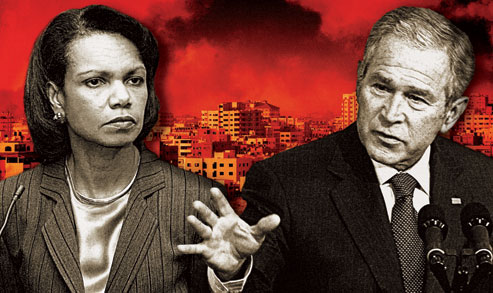
The Gaza bombshell

Vanity Fair has obtained confidential documents, since corroborated by sources in the U.S. and Palestine, which lay bare a covert initiative, approved by Bush and implemented by Secretary of State Condoleezza Rice and Deputy National Security Adviser Elliott Abrams, to provoke a Palestinian civil war. The plan was for forces led by Dahlan, and armed with new weapons supplied at America’s behest, to give Fatah the muscle it needed to remove the democratically elected Hamas-led government from power. (The State Department declined to comment.)

But the secret plan backfired, resulting in a further setback for American foreign policy under Bush. Instead of driving its enemies out of power, the U.S.-backed Fatah fighters inadvertently provoked Hamas to seize total control of Gaza.

Some sources call the scheme “Iran-contra 2.0,” recalling that Abrams was convicted (and later pardoned) for withholding information from Congress during the original Iran-contra scandal under President Reagan. There are echoes of other past misadventures as well: the C.I.A.’s 1953 ouster of an elected prime minister in Iran, which set the stage for the 1979 Islamic revolution there; the aborted 1961 Bay of Pigs invasion, which gave Fidel Castro an excuse to solidify his hold on Cuba; and the contemporary tragedy in Iraq.

Good morning, Hamas

But how can one reach a settlement with an organization that declares that it will never recognize Israel and whose charter calls for the destruction of the Jewish state?

All this matter of “recognition” is nonsense, a pretext for avoiding a dialogue. We do not need “recognition” from anybody. When the United States started a dialogue with Vietnam, it did not demand to be recognized as an Anglo-Saxon, Christian and capitalist state.

If A signs an agreement with B, it means that A recognizes B. All the rest is hogwash.

And in the same matter: The fuss over the Hamas charter is reminiscent of the ruckus about the PLO charter, in its time. That was a quite unimportant document, which was used by our representatives for years as an excuse to refuse to talk with the PLO. Heaven and earth were moved to compel the PLO to annul it. Who remembers that today? The acts of today and tomorrow are important, the papers of yesterday are not.

Truce or bloodbath

A recent poll published in the Israeli daily Ha’aretz suggested that 64% of Israelis favoured a negotiated truce with Hamas. But in the past few days, a military onslaught that has so far claimed more than a hundred Palestinian lives, mostly women and children, has made it clear that the Israeli leadership is not interested in any peaceful exit from the current predicament.

The Ha’aretz poll may point to a lack of confidence in the government’s ability to settle its problem with Gaza through the use of force, and vindicate those within the military and intelligence community who have been advising the Israeli prime minister, Ehud Olmert to talk to Hamas. A truce as once proposed by Giora Eiland, who served as national security adviser to the former prime minister Ariel Sharon, would entail a reasonable exchange of prisoners and a lifting of sanctions in exchange for a cessation of all hostilities between the two sides. Hamas would, in principle, have agreed to negotiate a truce along these terms. But it seems that Olmert’s cabinet has not given up on the idea of bringing Hamas to its knees or finishing it off altogether.

Israel can either reoccupy Gaza or talk with Hamas; there’s no other way

Just like Hizbullah did on the fourth day of the war in the north, Hamas is now asking, implicitly if not explicitly, for a ceasefire.

In Hamas’ view, it achieved everything it could get: It proved its stamina, the ability to launch rockets, and the ability to fight. The time has come to rehabilitate and rearm.

In July 2006, the government insisted on ignoring the requests for a ceasefire and continuing the fighting. That was a tragic mistake. Yet Lebanon is one thing and Gaza is another thing. Israel’s dilemma vis-à-vis Hamas is fundamentally different than the dilemma it was facing vis-à-vis Hizbullah.

The government of Israel has been postponing the decision on how to handle the Hamas regime in Gaza for eight and a half bloody months.

The time has come to decide.

Hamas wants lull in Gaza, but only on its own terms

The prevailing opinion in the government and Israel Defense Forces leadership on Sunday was that Hamas wants to end the current round of fighting with Israel. The Palestinians, it is thought, have suffered a nearly intolerable amount of casualties this past week and are looking for a way out of the hostilities.

But it appears that Israel forgot to take into consideration Hamas’ military wing, whose operatives have continued to launch Qassam and Grad Katyusha rockets on the western and northern Negev.

Sunday’s fighting was indeed more limited than the blood-drenched violence on Saturday. But some 40 rockets in one day, in addition to >12 Palestinian fatalities, cannot be considered a return to normal. In principle, the Israeli view is logical: Hamas is indeed interested in a lull. But at least for the meantime, despite the pressure being exerted by the IDF, the organization is prepared to agree to a cessation of hostility only on its own terms – after it proves that it can withstand Israel’s steamroller.

The ‘laptop of mass destruction’

The George W Bush administration has long pushed the “laptop documents” – 1,000 pages of technical documents supposedly from a stolen Iranian laptop – as hard evidence of Iranian intentions to build a nuclear weapon. Now charges based on those documents pose the only remaining obstacles to the International Atomic Energy Agency (IAEA) declaring that Iran has resolved all unanswered questions about its nuclear program.

But those documents have also been regarded with great suspicion by US and foreign analysts. German officials identified the source of the laptop documents in November 2004 as the Mujahideen e-Khalq (MEK), which along with its political arm, the National Council of Resistance in Iran (NCRI), is listed by the US State Department as a terrorist organization.

There are some indications, moreover, that the MEK obtained the documents not from an Iranian source but from Israel’s Mossad.

A solution for the US–Iran nuclear standoff

The recent National Intelligence Estimate’s conclusion that Tehran stopped its efforts to develop nuclear weapons in 2003, together with the significant drop in Iranian activity in Iraq, has created favorable conditions for the US to hold direct talks with Iran on its nuclear program. The Bush administration should act on this opportunity, if for no other reason than that its current position is growing weaker, and without such an initiative, Iran will continue its efforts to produce nuclear fuel that might, in the future, be used to build nuclear weapons.

Currently, Iran has approximately three thousand centrifuges, which it has used to produce small test batches of uranium that has been enriched to a low level (which cannot be used for nuclear weapons). Until now, Iranian engineers have not successfully operated a centrifuge cascade (a collection of centrifuges working together) at full capacity—which, as a practical matter, would be needed to enrich nuclear fuel to the level necessary either to establish an effective nuclear energy program or to manufacture nuclear weapons. But the Iranian government has declared its ambition to build more than 50,000 centrifuges, and recent reports also suggest that Tehran is testing a modified “P-2” centrifuge, a more advanced version of its existing centrifuge technology, which can produce a larger volume of enriched uranium.

We propose that Iran’s efforts to produce enriched uranium and other related nuclear activities be conducted on a multilateral basis, that is to say jointly managed and operated on Iranian soil by a consortium including Iran and other governments. This proposal provides a realistic, workable solution to the US–Iranian nuclear standoff. Turning Iran’s sensitive nuclear activities into a multinational program will reduce the risk of proliferation and create the basis for a broader discussion not only of our disagreements but of our common interests as well.


Facebooktwittermail

GUEST CONTRIBUTOR – John Robertson: The bullies converge

The bullies converge
By John Robertson, War in Context, March 3, 2008

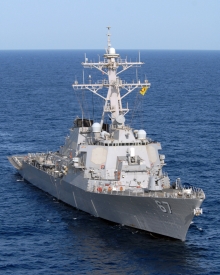
uss-cole.jpg28 and 29 February: the US parks the USS Cole off the shore of Lebanon. Uh-oh.

1 March: Israeli forces launch a major operation into Gaza, killing as many as 60 Palestinians, many of them civilians and children.

Senators Clinton, McCain, and Obama daily wage verbal slugfests on national security, the US’s proper role in the Middle East, and which of them will be best prepared to defend “our strong ally” Israel. OK, business as usual in an election year?

Er, . . . wait a minute.

The timing here ought to be raising antennae here in the US. You can bet that the Arab and Iranian “street” will be taking due note.

The arrival of a US Navy vessel off the coast of Lebanon had to send chills up the spines of many Lebanese. As Roger Morris recently reminded us in his chronicle of the life of Hezbollah “engineer” Imad Mugnieh, the US Navy has pumped shells into Lebanese villages on several occasions (even rolling out a World War II era battleship, the USS New Jersey, on one occasion to use its huge shells to get maximum killing and intimidation effect on the unfortunate villagers on whom they rained down ). That was in the context of the Lebanese civil war of 1975-1990, which featured ongoing deadly scrums involving the IDF, the PLO, and various Lebanese militias – Christian and Muslim, including the newly established Hezbollah. In the summer of 2006, Israel and Hezbollah got into it again, with horrific toll in life and infrastructure (especially on the Lebanese side) while US Secretary of State Condoleeza Rice, as a rather ghoulish birthing coach, urged on the IDF during what she then called the “birth pangs of a new Middle East.” Now, in March 2008, the Lebanese government is mired in a parliamentary impasse, unable to elect a new president. Not yet a full-fledged civil war in Lebanon, but the US Navy lies offshore again, this time, we’re told, to signal to Hezbollah (which is now a legitimately constituted, democratically elected political party in Lebanon’s political structure) that the US will tolerate no stronger interference from them (or from Syria or Hezbollah’s ally and patron, Iran) as Lebanon’s struggles continue.

Yet the very next day, the IDF launched its deadly raid into Gaza, knowing that Hamas forces would resist with whatever means they could muster but would be ultimately powerless to change the outcome. Might they assume (dare we say, hope?) that Hezbollah and Iran might find this an unacceptable provocation and wish to retaliate against Israel? Except that – gosh, wouldn’t you know it? – the US Navy is parked right offshore. And wouldn’t you know it? It’s the USS Cole, the same USS Cole in whose side an al-Qaeda suicide boat blew a hole in those distant days before 9-11. The irony is palpable – indeed, dare we say, intended? Certainly, from the US perspective, delicious.

So, with the US looming in the wings, Israel can do what it wants to in Gaza. And if Hezbollah (and, by implication, Iran) decide not to respond to Israel’s wanton holocaust of innocent Palestinians in Gaza (whose lives had already been made miserable by Israel’s US-approved blockade), they run the risk of accusations of cowardice in the face of the Zionist bullies. If they were to rise to the bait and retaliate, they run the risk of the bullies turning against them and trying to flatten them. Israeli prime minister Olmert will jump at the chance to atone for the disaster of the summer 2006 war, and George Bush may get the military confrontation with Iran that he well may have been hoping for all along.

And all the while, our senator-candidates must intone their often rehearsed mantra, “Israel has the right to defend itself against the terrorists.” The US Navy offshore, the US presidential candidates cowed by political realities in an election season — how much better cover could the bully have?

John Robertson is a professor of Middle East history at Central Michigan University and has his own blog, Chippshots.

Editor’s Comment — It’s worth recalling that less than two weeks before the beginning of the 2006 Lebanon War, Israel was in the middle of pounding Gaza in what Mahmoud Abbas described as an “unacceptable and barbaric collective punishment of civilians, including women, children and old people.”

Facebooktwittermail

NEWS & VIEWS ROUNDUP: March 2

Speaking well and doing great

Must a president be eloquent to be successful?

That question has sparked a heated quarrel between the campaigns of Hillary Rodham Clinton and Barack Obama. The senator from New York stresses “results, not rhetoric,” while her rival contends that a leader has to inspire Americans in order to produce “a new majority who can lead this nation out of a long political darkness.”

In politics as in poker, each candidate plays his or her strongest cards and suspects the opponent of bluffing. Yet the importance of this question shouldn’t be lost amid the clamor of a hard-fought campaign. Political oratory is an ancient craft. In the nearly 2,400 years since Plato defined rhetoric as “winning the soul through discourse,” effective speechmaking has been integral to the pursuit and the wielding of power. And the brief but contentious history of modern U.S. politics suggests that Obama has the better argument.

Barnstorming Obama plans to pick Republicans for cabinet
As Barack Obama enters the final stages of the fight for the Democratic presidential nomination, he is preparing to detach the core voters of John McCain, the likely Republican nominee, with the same ruthless determination with which he has peeled off Hillary Clinton’s supporters. The scene is set for a tussle between the two candidates for the support of some of the sharpest and most independent minds in politics. Obama is hoping to appoint cross-party figures to his cabinet such as Chuck Hagel, the Republican senator for Nebraska and an opponent of the Iraq war, and Richard Lugar, leader of the Republicans on the Senate foreign relations committee.

McCain channels his Inner Hillary
Frank Rich – What repeatedly goes unrecognized by all of Mr. Obama’s opponents is that his political Kryptonite is the patriotism he offers in lieu of theirs. His upbeat notion of a yes-we-can national mobilization for the common good, however saccharine, speaks to the pride and idealism of Americans who are bone-weary of a patriotism defined exclusively by flag lapel pins, the fear of terrorism and the prospect of perpetual war.

Islamophobia: ‘She wasn’t dressed right’
The Sept. 11 attacks, the Iraq war and suicide bombings worldwide have changed not only the way we live but the way we look at those around us, especially Muslims. “Islamophobia” has entered the American vernacular, and the anti-Muslim attitudes and prejudice it describes remain common. But what if you witnessed “Islamophobia” in action and saw someone being victimized because of someone else’s prejudices? What would you do?

How Hollywood learned to stop worrying and love the (ticking) bomb
Scott Horton – …one of the most pervasive memes of our modern political experience has been the notion of the “liberal media,” namely that key figures in broadcast and print media are more liberal than the average American, and that news and entertainment reflect their “liberal” bias. The torture issue provides an interesting opportunity to test this thesis. My view is that the Administration has had tremendous impact on coverage of the issue. It was able to transform well-settled media views. There are two aspects to this industry that I want to address today—first, news and second entertainment, though there is a rather nebulous middle ground of infotainment. But I want to come to a focus on the entertainment side, where the most serious issues exist.

A card-carrying civil libertarian
Jeffrey Rosen – If Barack Obama wins in November, we could have not only our first president who is an African-American, but also our first president who is a civil libertarian. Throughout his career, Mr. Obama has been more consistent than Hillary Clinton on issues from the Patriot Act to bans on flag burning. At the same time, he has reached out to Republicans and independents to build support for his views. Mrs. Clinton, by contrast, has embraced some of the instrumental tacking of Bill Clinton, whose presidency disappointed liberal and conservative civil libertarians on issue after issue.

One per cent of Americans now in jail
They used to call it the land of the free, but a new report shows that the United States is nowadays more a nation of the incarcerated. For the first time in history, more than 1 per cent of the US adult population is now behind bars. For minority populations, the rates of imprisonment are much higher.

Hizbullah slams deployment of US warships off coast
A US deployment of warships off the coast of Lebanon further sharpened tensions in the crisis-plagued country on Friday, as Hizbullah condemned the move and the Lebanese government said it did not ask for the ships to be sent. Hizbullah on Friday denounced Washington’s dispatch of the USS Cole and two other vessels to waters off Lebanon as military interference.

Hamas warns Israel not to invade Gaza
Hamas leader Ismail Haniyeh emerged from weeks of hiding Friday to warn Israeli officials against an anticipated large-scale offensive to uproot the militant Islamic group from the Gaza Strip. “I tell the leaders of the occupation: This round will end in terrible failure just like all the other rounds failed,” Haniyeh said at a mosque near his home in a Gaza City refugee camp.

Hamas’ next move will be to avenge Gaza deaths
It is a mistake for anyone in Israel to think that the high price that the Gaza Strip is paying will undermine Palestinian civilians’s support for the Hamas government. At least for the moment, the operation’s impact is the opposite. The Gaza residents who spoke Saturday with Haaretz expressed their absolute support for Hamas and its activities. Munir, a former officer in the Fatah security forces, is not a big fan of Hamas. But Saturday, after the killing of civilians in the IDF operation, he said: “All of Gaza has become Hamas. We will all fight Israel. If the IDF moves deep into the Gaza Strip, it should expect shooting from every home, even if it is populated [with civilians].”

Musharraf down but not out — and why
With his opponents openly asking him to step down and even some well-wishers suggesting a kind of ‘graceful exit’, President Musharraf may well be under tremendous pressure. Yet signals emanating from the president’s camp indicate that despite the heavy odds, he is determined not to throw in the towel — at least not in the initial few rounds.

Man acquitted in terror case faces deportation
The case of the “Liberty City Seven” stymied jurors. After a three-month trial late last year, they deadlocked on nearly all of the charges regarding the purported plot by several men to blow up the Sears Tower in Chicago. The one thing jurors could agree upon, however, was that one of the men, Lyglenson Lemorin, 33, was not guilty. “I was excited,” Lemorin said of his reaction on the December day that the verdict was announced. “I wanted to see my family.” Yet more than two months after his acquittal on charges of supporting terrorism, Lemorin remains incarcerated, and U.S. immigration officials are moving to deport him to Haiti, which he left more than 20 years ago. Officials are asking an administrative judge to order his deportation based on the same charges that the jury dismissed.

The three trillion dollar War: Nobel laureate Joseph Stiglitz and Harvard economist Linda Bilmes on the true cost of the US invasion and occupation of Iraq
Democracy Now! interview.

Economist Stiglitz says Iraq war costs may reach $5 trillion
Nobel economics laureate Joseph Stiglitz, author of a new book that claims the Iraq war will cost the U.S. more than $3 trillion, said the final tally is likely to climb much higher than that. “It’s much more like five trillion,” Stiglitz said yesterday in an interview with Bloomberg Radio. “We were trying to make Americans understand how expensive this war was so we didn’t want to quibble about a dime here or a dime there.”

Why I have new hope for the Mideast
Robin Wright – New public voices, daring publications and noisy protests across two dozen countries are giving shape to a vigorous, if disjointed, search for alternatives to the autocratic regimes and imperious monarchies that have proved they’re out of sync with their people. Dissident judges in Cairo, rebel clerics in Tehran, satellite television station owners in Dubai, the first female parliamentary candidates in Kuwait, young techies in Jeddah, intrepid journalists in Beirut, and bold businessmen in Damascus are carving out new space for political action.

‘Harry’s War’: The ugly truth
Overwhelming firepower (the kind that Harry co-ordinates) cannot resolve the fact that the British campaign in Helmand is illogical; we are trying to fight our way to winning hearts and minds and losing the trust of the population in doing so. Scores of civilians have been killed by British ordnance in Helmand. In 2007, at least 6,000 people died in the conflict across Afghanistan, of which approximately 1,400 were civilians. At least 500 of these deaths were directly attributable to Nato forces, mostly in air strikes; 89 British troops have been killed and 329 injured. As General Sir Richard Dannatt has pointed out, we are there for the good of the Afghans, but at the moment we are having the reverse effect. The Taliban are resurgent. Funded by millions of dollars of opium money, they are responding to greater British troop numbers by increased use of suicide bombing tactics.

Facebooktwittermail

CAMPAIGN 08 & EDITOR’S COMMENT: John McCain’s top surrogate – Hillary Clinton

Will Clinton or Obama protect your children?

If you vote for Barack Obama, your children are going to die in their beds. This is the message of the latest Clinton television ad running in Texas. The spot starts with a moonlit shot of a blond toddler in the warm tangle of her sheets and then cuts to a close-up of an infant also in deep REM sleep. For the next 15 seconds, the images shift from one cherubic sleeping face to another. You’d think you were watching a Baby Ambien ad if the narrator weren’t giving you nightmares: “It’s 3 a.m., and your children are safe and asleep. But there’s a phone in the White House, and it’s ringing. Something’s happening in the world. Your vote will decide who answers that call. Whether it’s someone who already knows the world’s leaders, knows the military—someone tested and ready to lead in a dangerous world.” At this point, we see our first adult, a concerned mother, opening the door and peering into her children’s bedroom. “It’s 3 a.m. and your children are safe and asleep,” the narrator repeats. “Who do you want answering the phone?” [complete article]

Editor’s Comment — Is this Hillary’s last ditch attempt to save her campaign, or has she already thrown the towel in and decided that as a McCain surrogate she has a long shot of being chosen as his VP? I jest of course, but it’s hardly surprising that National Review would say “it is awfully nice of Hillary to test out John McCain’s key theme against Obama,” and that Red State would have come up with a very modestly revised version of the ad.

Facebooktwittermail

REVIEW: Jabotinsky, Weizmann, and the roots of the most contentious communal struggle on earth today

Zion story

In her last, powerful little book, The Question of Zion (reviewed in the TLS, April 21, 2006), Jacqueline Rose perceptively observed that, “while Israel barely leaves the front page of the daily papers, Zionism itself is hardly ever talked about”. That’s quite true, though not quite unique. Think of the column inches and radio and television time that have been devoted to the small island of Ireland and its smaller province of Ulster, and of the vehement polemic they have inspired, and then ask how often the origins or meaning of Irish Republicanism or of Ulster Unionism are ever talked about, or how many of those commentators could write so much as a paragraph each on Arthur Griffith, Colonel Saunderson or General O’Duffy.

But the conflict in the Holy Land is still more dissonant in this regard. It is the single most bitterly contentious communal struggle on earth today (something which itself casts an ironical light on the aspiration of the first Zionists to “answer the Jewish question” by “normalizing” the Jews and removing them from the pages of history); it must receive more media coverage than India, which has a population a hundred times greater; it inflames acute passions. And yet it sometimes seems that the more strongly people feel, the less they actually know about the story of Zionism. Maybe it should be a requirement for anyone who wishes to hold forth on the subject to write first a few lines each on Ahad Ha’am, Max Nordau, George Antonius – or Vladimir Jabotinsky.

If not many Europeans or Americans know who “Jabo” was, Israelis certainly do. He remains the most charismatic, fascinating and controversial figure in the history of Zionism, and in the state to whose creation he devoted his life, but which he never saw. Born in 1880 in Odessa, he was converted to the Zionist cause as a young man by tsarist persecution, became a tireless publicist and organizer, and helped to create the Jewish Legion which fought with the British against Turkey during the First World War. In the 1920s he broke away to found the uniformed youth group Betar, and then the militantly nationalistic right-wing brand of Zionism he called Revisionism, in opposition to Chaim Weizmann and the general Zionists, and to David Ben Gurion and the Labour Zionists of the Yishuv, the Jewish settlement in Palestine.

From Betar would grow the Irgun Zvei Leumi, which waged an armed campaign against the British and the Arabs – in British and Arab eyes, a terrorist campaign – in the ten years before Israel was born. When Jabotinsky died in American exile in 1940, he had not seen the murderous horror that engulfed the European Jews, the creation of the Jewish state, or the legacy of his own movement. The Irgun evolved into the right-wing Herut party, which was not merely excluded from office but veritably anathematized in Israel for the first quarter-century the state existed after 1948, but which, now in the guise of Likud, took power at last in 1977 under the old Irgun leader Menachem Begin – and which descends to the present administration.

Almost unremarked in the West, Israel today has the purest Jabotinskian government yet seen. Ehud Olmert, the Prime Minister, has been called “one of Likud’s princes from a prominent Revisionist family”, which makes his rather fetching Foreign Minister, Tzipi Livni, a princess. Both their fathers were militants in the Irgun; the governing party is now called Kadima or “eastward”, the telling motto that Jabotinsky chose for the Jewish Legion; a picture of Jabotinsky hangs at party meetings; and Livni likes to quote him regularly, as Olmert did in his first speech to the Knesset as Prime Minister. Jabotinsky has never cast a longer shadow. [complete article]

Facebooktwittermail

NEWS: Israel threatens to commit genocide in Gaza

Israel threatens to unleash ‘holocaust’ in Gaza

An Israeli minister gave warning today that the Gaza faces a “holocaust” if Islamist militants there do not end their daily barrages of home-made Qassam rockets, and their increasing use of Iranian-built Grad missiles.

“The more Qassam fire intensifies and the rockets reach a longer range, they will bring upon themselves a bigger holocaust because we will use all our might to defend ourselves,” Matan Vilnai, the Deputy Defence Minister said.

The use of the term “holocaust” is usually restricted to descriptions of the Nazi genocide of the Jews in Europe in the Second World War, and many Israelis resent its use in any other context. Mr Vilnai’s deployment of the word appeared to show Israel’s growing frustration that Hamas and other militant groups in Gaza refuse to curb their attacks, despite heavy tolls inflicted in Israeli air strikes and tank raids. [complete article]

Facebooktwittermail

CAMPAIGN 08: Hope versus Armageddon

Some hateful, radical ministers — white evangelicals — are acceptable

One of this week’s hysterical press scandals was that Minister Louis Farrakhan praised Barack Obama’s candidacy even though Obama had previously denounced numerous Farrakhan remarks and the Obama campaign did nothing to seek out the Farrakhan praise. Nonetheless, Tim Russert demanded that Obama jump through multiple hoops to prove that he has no connection to — and, in fact, “rejects” — the ideas espoused by Farrakhan deemed to be radical and hateful.

Yesterday, though, the equally fringe, radical and hateful (at least) Rev. John Hagee — a white evangelical who is the pastor of a sprawling “mega-church” in Texas — enthusiastically endorsed John McCain. Did McCain have to jump through the same hoops which Russert and others set up for Obama and “denounce” Hagee’s extremism and “reject” his support? No; quite the opposite. McCain said he was “very honored” to receive this endorsement and, when asked about some of Hagee’s more twisted views, responded: “all I can tell you is that I am very proud to have Pastor John Hagee’s support.” [complete article]

Obama and the ‘Jewish Vote’

The reason people around the world are excited about the possibility of an Obama presidency is that they see in him a person who appears to live by that credo “neither inferior, nor superior, to anyone.” And that’s in marked contrast to the arrogance with which every U.S. president of the past quarter century has addressed the world.

Hillary Clinton is so imprisoned in this haughty arrogance that she mocks Obama for even suggesting that the starting point in dealing with Iran, or Cuba is to talk to the adversary and understand his concerns. Nope, Hillary is very much part of the bark-into-a-megaphone school of international affairs, of which the Bush Administration has simply been the zenith. [complete article]

Facebooktwittermail

NEWS ROUNDUP: February 28

Poll: Most Israelis back direct talks with Hamas on Shalit

Sixty-four percent of Israelis say the government must hold direct talks with the Hamas government in Gaza toward a cease-fire and the release of captive soldier Gilad Shalit. Less than one-third (28 percent) still opposes such talks.

The figures were obtained in a Haaretz-Dialog poll conducted Tuesday under the supervision of Professor Camil Fuchs of Tel Aviv University. According to the findings, Israelis are fed up with seven years of Qassam rockets falling on Sderot and the communities near Gaza, as well as the fact that Shalit has been held captive for more than a year and a half.

An increasing number of public figures, including senior officers in the Israel Defense Forces’ reserves, have expressed similar positions on talks with Hamas. It now appears that this opinion is gaining traction in the wider public, which until recently vehemently rejected such negotiations. The survey also showed that Likud voters are much more moderate than their Knesset representatives. About half (48 percent) support talks with Hamas.

Obama’s Ohio grilling

Obama on whether there should be negotiations with Hamas:
The answer is no. The answer is no and the distinction would be that Hamas is represented in the Palestinian legislature, or it was before the current rift, but they’re not the head of state. They are not a recognized government. So I think there is a distinction to be drawn there and a legitimate distinction to be drawn. Now again, going back to my experiences in Israel and the discussions I’ve had with security officials there, I think that there are communications between the Israeli government and Hamas that may be two or three degrees removed, but people know what Hamas is thinking and what’s going on, and the point is that with respect to Hamas, you can’t have a conversation with somebody who doesn’t think you should be on the other side of the table. At the point where they recognize Israel and its right to exist, at the point where they recognize that they are not going to be able to shove their worldview down the throats of others but are going to have to sit down and negotiate without resort to violence, then I think that will be a different circumstance. That’s not the circumstance that we’re in right now.

IDF kills 18 Palestinians in Gaza, W. Bank, including 5 children

Israeli security forces struck a range of targets in the West Bank and Gaza Strip on Thursday, killing a total of 18 Palestinians, including five children. Meanwhile, militants in Gaza continued to fire rockets at southern Israel, striking as far north as Ashkelon.

The deaths come a day after IDF troops killed 12 Palestinians and an Israeli was killed in a Qassam rocket strike on a college in Sderot. Prime Minister Ehud Olmert vowed that Israel’s response to the deadly barrage of Qassam rockets would be particularly harsh.

After nightfall Thursday, two Palestinians were killed in an Israel Air Force missile strike on a truck in Gaza City, near Shifa Hospital.
Advertisement
Early Thursday evening, an IAF helicopter attacked a police roadblock near the Gaza City home of Hamas Prime Minister Ismail Haniyeh, in which Palestinian officials said one person was killed and four others were wounded.

Ahmadinejad under fire for ‘coarse slogans’ after Israel attack

A top Iranian cleric on Wednesday made a rare criticism of President Mahmoud Ahmadinejad’s verbal attacks on Israel, saying a foreign policy of “coarse slogans” was not in the national interest.

Hassan Rowhani, a former top nuclear negotiator who still holds several influential positions, said Iran needed to show more flexibility and desire for dialogue in its dealings with the international community.

“Does foreign policy mean expressing coarse slogans and grandstanding?” Rowhani asked in a speech to a foreign policy conference in Tehran.

“This is not a foreign policy. We need to find an accommodating way to decrease the threats and assure the interests of the country.”

Sunni forces losing patience with U.S.

U.S.-backed Sunni volunteer forces, which have played a vital role in reducing violence in Iraq, are increasingly frustrated with the American military and the Iraqi government over what they see as a lack of recognition of their growing political clout and insufficient U.S. support.

Since Feb. 8, thousands of fighters in restive Diyala province have left their posts in order to pressure the government and its American backers to replace the province’s Shiite police chief. On Wednesday, their leaders warned that they would disband completely if their demands were not met. In Babil province, south of Baghdad, fighters have refused to man their checkpoints after U.S. soldiers killed several comrades in mid-February in circumstances that remain in dispute.

Some force leaders and ground commanders also reject a U.S.-initiated plan that they say offers too few Sunni fighters the opportunity to join Iraq’s army and police, and warn that low salaries and late payments are pushing experienced members to quit.

Islamists’ loss in Pakistan isn’t a U.S. win

To many Pakistanis, the armed confrontation with Islamic radicals remains “America’s war,” one whose cost in blood has been borne by Pakistani troops with little perceived benefit to this country.

Pakistan’s role in President Bush’s “war on terrorism” was a significant factor in a separate outpouring of voter fury last week against President Pervez Musharraf, who is seen as far too willing to do the military bidding of the United States.

“Not wanting the Islamists to be in charge of governmental affairs is not the same thing as supporting a U.S.-backed war against the militants, not at all,” said Khalid Aziz, a former provincial chief secretary who is now a Peshawar-based analyst.

Washington reaches to Muslim rebels

United States ambassador to the Philippines Kristie Kenney has crossed the line between her government and the Moro Islamic Liberation Front (MILF), the country’s largest armed Muslim rebel group which Washington had earlier considered including on its list of foreign terrorist groups along with the alleged al-Qaeda-linked Abu Sayyaf group.

Uniformed Moro rebels toting M-16 rifles and rocket-propelled grenade launchers welcomed Kenney and several high-ranking American officials on February 19 to an unannounced visit to the rebel group’s main Darapanan camp in Mindanao’s Shariff Kabunsuan province.

Kenney attended a closed-door meeting with MILF chieftain Al Haj Murad Ebrahim and other senior rebel members, which the US official later characterized as “a private visit”. Although Washington had previously sent government representatives to meet with MILF rebels, Kenney was the first US ambassador to meet the rebels for face-to-face talks.

Facebooktwittermail

NEWS & VIEWS ROUNDUP: February 26

America’s ghost story

The unfolding political contest in the United States is a window into America’s soul. The nation is arguing with itself. The candidates embody separate impulses. As voters choose sides, a red state-blue state polarity again takes shape. Within the Democratic Party, the dispute is narrower, but still sharp. Yet in truth, each citizen carries within herself or himself the structure of the conflict: hard versus soft, experience versus change, programmed versus spontaneous, self-interest versus empathy, hope in an open future versus lessons from the past. Politics, by isolating these positions and attributing them to one candidate over against another, parodies the interior struggle of every American.

In this era, humans have been cut loose from ancient moorings of meaning and purpose. The context within which this condition is most manifest in the United States is the debate – or, more precisely, the lack thereof – over what is called “national security.” The phrase is potent because it promises something that is impossible, since the human condition is by definition insecure. When candidates vie with one another over who is most qualified to be “commander in chief,” and when they unanimously promise to strengthen military readiness, they together reinforce the dominant American myth – that an extravagant social investment of treasure and talent in armed power of the group offers members of the group escape from the existential dread that comes with life on a dangerous planet. That such investment only makes the planet more dangerous matters little, since the feeling of security, rather than actual security, is the goal of the entire project.

The most wanted list

On February 13, Imad Moughniyeh, a senior commander of Hizbollah, was assassinated in Damascus. “The world is a better place without this man in it,” State Department spokesperson Sean McCormack said: “one way or the other he was brought to justice.” Director of National Intelligence Mike McConnell added that Moughniyeh has been “responsible for more deaths of Americans and Israelis than any other terrorist with the exception of Osama bin Laden.”

Joy was unconstrained in Israel too, as “one of the U.S. and Israel’s most wanted men” was brought to justice, the London Financial Times reported. Under the heading, “A militant wanted the world over,” an accompanying story reported that he was “superseded on the most-wanted list by Osama bin Laden” after 9/11 and so ranked only second among “the most wanted militants in the world.”

The terminology is accurate enough, according to the rules of Anglo-American discourse, which defines “the world” as the political class in Washington and London (and whoever happens to agree with them on specific matters). It is common, for example, to read that “the world” fully supported George Bush when he ordered the bombing of Afghanistan. That may be true of “the world,” but hardly of the world, as revealed in an international Gallup Poll after the bombing was announced. Global support was slight. In Latin America, which has some experience with U.S. behavior, support ranged from 2% in Mexico to 16% in Panama, and that support was conditional upon the culprits being identified (they still weren’t eight months later, the FBI reported), and civilian targets being spared (they were attacked at once). There was an overwhelming preference in the world for diplomatic/judicial measures, rejected out of hand by “the world.”

Inside a failed Palestinian police state

The death of Hamas preacher Majed al-Barghouti in a prison cell last week — apparently after being tortured — momentarily shattered the surface calm of news reports from Ramallah. But neither the subsequent rioting nor the fact that the dead man came from one of the most prominent Palestinian families disrupted the ‘democracy versus terror’ agenda that has distorted most news reporting out of the West Bank since last June (when Hamas took control of Gaza).

Martin Luther King once described rioting as ‘the voice of the unheard,’ but despite al-Barghouti’s death, most Ramallans currently seem too depressed to riot. The only events to have lifted spirits in the city lately have been a freak snow storm, and a similarly rare suicide bombing in Dimona — the latter prompting local shopkeepers to cut prices for the morning and, in one case, to waive payment altogether.

More typical events in the last week have included a mysterious explosion, continued Israeli army raids, and a major downtown gunfight between PA ’security’ forces in balaclavas and youths from the city’s Amari refugee camp. The violence, unheard outside Ramallah, is at once cause, effect and byproduct of a pervasive gloom that has settled over ‘Fatahland’ like smog.

Panetta’s lament: they had no plan

The argument that the constant carping about Hillary Clinton’s campaign has been a function of an Obama-friendly, process-obsessed media is well and good. But how, then, to explain the deeply held dissatisfaction of an old Clinton loyalist like Leon Panetta?

In an interview with The Observer, Mr. Panetta compared Mrs. Clinton’s top strategist Mark Penn to Karl Rove, suggested that the Clinton campaign had totally underestimated Barack Obama’s appeal, and complained about the overall lack of planning that he said had characterized the former First Lady’s bid to return to the White House.

It’s OK to vote for Obama because he’s black

I admit it: I’m voting for Barack Obama because he’s black. Yes, I’m voting for him because he’s qualified, intelligent, charismatic and competent — and because unlike Hillary Clinton, he opposed the Iraq war from the beginning. But if he weren’t black, and Hillary had opposed the war, I’d probably vote for her because of her greater experience. In any case, it’s a moot point, because if Obama weren’t black, he would not be the Democratic front-runner.

I believe that most of Obama’s supporters are voting for him for the same reason. Like me, they’re drawn to his idealism, his youthful energy, his progressive politics. But it’s his blackness that seals the deal.

And that’s OK. In fact, it’s wonderful.

A war we must end

Despite the Democratic presidential candidates’ expressed commitment to ending the war in Iraq, there is unease among the party’s base. Some ardent activists have suggested that upon election, a new Democratic president will come under inordinate pressure to sustain the U.S. military commitment to Iraq, albeit with some modifications. This concern demonstrates both the difficulty of ending a controversial war and the necessity of doing so.

Even a cursory examination of American history reveals the complexity of concluding a war that has taken on such a stark partisan tint. The shadow of Vietnam looms, as it has become standard Republican narrative that back then it was the Democrats in Congress who stabbed America in the back by cutting off funding for a winning cause. The fact that the war was lost in Southeast Asia, as opposed to the halls of Congress, is no matter. The Republican machine will press this same theme should it lose the White House in November. A Democratic administration would be accused of surrendering to evildoers, as once more the dovish successors of George McGovern are wrongly said to have pulled defeat out of the jaws of victory.

Such self-serving claims do not diminish the need and justification for ending one of America’s longest and most misguided wars. Republicans will claim that after four years of disastrous mistakes, the Bush administration finally got it right with its troop “surge.” Yet even despite the loss of nearly 1,000 American lives and the expenditure of $150 billion, the surge has failed in its stated purpose: providing the Iraqi government with the breathing space to pass the 18 legislative benchmarks the Bush administration called vital to political reconciliation. To date it has passed only four. Moreover, as part of the surge, the administration has further undermined Iraq’s government by providing arms and money to Sunni insurgent groups even though they have not pledged loyalty to Baghdad.

Who’s got the power?

President George W. Bush could be forgiven for underestimating China: He had spent some months there in the mid-1970s, when his father was U.S. Ambassador to Beijing. His firsthand experience of a largely pre-industrial colossus could hardly have prepared him for dealing with the China of today — a China to which the U.S. owes some $1.5 trillion and counting, and to which America’s beleaguered banks turn for the multibillion dollar loans required to keep them afloat.

By the time Bush took office, of course America was well aware of China’s growing economic significance — its ability to produce quality goods at lower prices for U.S. corporations had already largely gutted the U.S. manufacturing sector, and American politicians routinely complained about Chinese currency policy and the ballooning the U.S. trade deficit. (Less is said, of course, about the Chinese credit that allows Americans to consume way beyond their means — by one estimate, Beijing has loaned an equivalent of $4,000 to every person in the U.S. over the past decade alone.)

Honey, I shrank the superpower

In a snide reference to Bill Clinton’s 1992 promise to “build a bridge into the 21st century,” Barack Obama recently quipped that what Hillary Clinton really offers is a bridge back into the 20th century. Yet, a bridge back into the last century may be what all the major candidates are offering when they promise to restore the American leadership and primacy. The Republicans promise to restore American power by staying the course in Iraq, threatening Iran, and staring down “radical Islamic terrorism,” which John McCain calls “the transcendent issue of the 21st century.” The Democrats envisage turning the clock back eight years, restoring post-Cold War American primacy simply by adopting a more sober and consensus-based style. The problem, of course, is that while Bush’s reckless forays into the Middle East have accelerated the decline of America’s strategic influence, there’s little reason to believe that this decline can be reversed either by more of the same, or by a less abrasive tenant in the Oval Office.

Rising inflation creates unease in Middle East

Even as it enriches Arab rulers, the recent oil-price boom is helping to fuel an extraordinary rise in the cost of food and other basic goods that is squeezing this region’s middle class and setting off strikes, demonstrations and occasional riots from Morocco to the Persian Gulf.

Here in Jordan, the cost of maintaining fuel subsidies amid the surge in prices forced the government to remove almost all the subsidies this month, sending the price of some fuels up 76 percent overnight. In a devastating domino effect, the cost of basic foods like eggs, potatoes and cucumbers doubled or more.

In Saudi Arabia, where inflation had been virtually zero for a decade, it recently reached an official level of 6.5 percent, though unofficial estimates put it much higher. Public protests and boycotts have followed, and 19 prominent clerics posted an unusual statement on the Internet in December warning of a crisis that would cause “theft, cheating, armed robbery and resentment between rich and poor.”

The inflation has many causes, from rising global demand for commodities to the monetary constraints of currencies pegged to the weakening American dollar. But one cause is the skyrocketing price of oil itself, which has quadrupled since 2002. It is helping push many ordinary people toward poverty even as it stimulates a new surge of economic growth in the gulf.

Gates’ good advice for Turkey ought to be applied across the Middle East

US Defense Secretary Bob Gates had something very sensible to say on Sunday, warning his NATO ally Turkey that military action alone is not a solution to the problem of Kurdistan Workers Party rebels based in neighboring Iraq. He stressed that “dialogue” was an under-used tool in the conflict, and specified that this should be an ongoing process rather than an ad-hoc one employed exclusively during crises. “These economic and political measures are really important because after a certain point people become inured to military attacks,” Gates said. “If you don’t blend them with these kinds of non-military initiatives then at a certain point the military efforts become less and less effective.” As for the current Turkish campaign in Iraq, he said, “the shorter the better.”

It is precisely this kind of blunt advice that America’s allies in the volatile Middle East need to receive from the lone remaining superpower, a reminder that many issues simply cannot be made to go away by killing people. Unfortunately, however, the US government has been inured against this kind of logic for years, at least insofar as it regards Israel. That country’s multi-faceted conflict with the Arab and Islamic worlds has long been the prime mover of regional instability, and its habit of resorting to violence only makes the issues at stake more and more complicated. Worse yet, it rarely receives the kind of counsel that Turkey did from Gates.

In Israel, some see no option but war

Aharon Peretz has spent most of his 51 years in this cactus-fringed, working-class town, and he would like to stay.

But his wife and six children feel differently: Daily retreats to the basement during rocket strikes from the nearby Gaza Strip have frayed their nerves, and an attack that cost an uncle both his legs has convinced them it’s time to go.

Peace will return for his family, Peretz has decided, only if Israel chooses to go to war with his neighbors.

Qatar willing to broker cease-fire agreement between Israel and Hamas

Qatar is willing to broker a cease-fire agreement between Israel and Hamas, the Qatari prime minister, Sheikh Hamed bin Jassem al-Thani, told MK Yossi Beilin (Meretz) in Doha on Sunday.

Beilin, a former deputy foreign minister, met the Qatari at a conference for retired foreign ministers. Al-Thani also acts as his country’s foreign minister.

“You are making a big mistake if you think you can reach an agreement with Palestinian President Mahmoud Abbas without including Hamas in the talks,” said the Qatari premier, according to a report of the conversation received by Haaretz. Hamas, continued al-Thani, “must be taken into account,” because even if talks do progress with Abbas, “he will not be able to sign an agreement without Hamas’s consent.”

Facebooktwittermail

CAMPAIGN 08 & EDITOR’S COMMENT: The power of language

Finding political strength in the power of words

The 2008 presidential campaign has witnessed the rise of a whole arsenal of new political weapons, including Internet fundraising and sophisticated microtargeting of voters. For Sen. Barack Obama, however, the most powerful weapon has been one of the oldest.

Not since the days of the whistle-stop tour and the radio addresses that Franklin D. Roosevelt used to hone his message while governor of New York has a presidential candidate been propelled so much by the force of words, according to historians and experts on rhetoric.

Obama’s emergence as the front-runner in the race for the Democratic nomination has become nearly as much a story of his speeches as of the candidate himself. He arrived on the national scene with his address to the 2004 Democratic National Convention, his campaign’s key turning points have nearly all involved speeches, and his supporters are eager for his election-night remarks nearly as much as for the vote totals. [complete article]

Obama and the power of words

Mr. Obama is simply campaigning for office in the same way he says he would operate if he were elected. “We’re not looking for a chief operating officer when we select a president,” he said during a question and answer session at Google headquarters back in December.

“What we’re looking for is somebody who will chart a course and say: Here is where America needs to go — here is how to solve our energy crisis, here’s how we need to revamp our education system — and then gather the talent together and then mobilize that talent to achieve that goal. And to inspire a sense of hope and possibility.”

Like Ronald Reagan did. [complete article]

Editor’s Comment — Language is the thread out of which the human experience is woven. We are not alone because we can speak and understand.

To play down the importance of Obama’s oratory is not only an insult to those who find him inspiring; it also exhibits a stunning blindness to the context. We’re coming to the end of eight years with a president whose communications skills were not simply below average for a president; they were below average, period.

Bush likes to pretend that when he’s giving a press conference, he’s doing it off-the-clock. The hard work of a president happens outside the earshot of those journalists with their pesky questions. But everyone knows this is a charade. Bush tries to make up for his communication deficit with humor and put-downs, but if the president doesn’t embarrass his audience as much as he used to, it’s not because he’s become much more adept; it’s simply that we’ve got used to his clumsiness.

Obama on the other hand, doesn’t merely inspire; he raises the hope that when the president of the United States steps on to the world stage in 2009, he will make Americans proud. He will be capable of being both a president and executive ambassador — never has America more dearly needed one.

As for what makes Obama such a powerful speaker, it seems misleading to me to view this in terms of oratory. It goes beyond rhetoric, cadence, delivery and the technical skills of effective speech-making. It comes, as Obama himself acknowledged when describing his first experience in front of a rally when “I knew that I had them, that the connection had been made.” This ability to connect with his audience — this is what’s driving Obama’s momentum. Those who lack the same ability might want to play down its value but it hardly seems like an optional extra among the assets we would hope to find in a future president.

Facebooktwittermail

GUEST CONTRIBUTOR – Roger Morris: America’s shadow in the Middle East

roger-morris.jpgA death in Damascus
By Roger Morris, War in Context, February 24, 2008

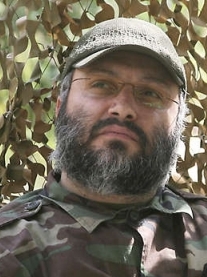
It was another car bomb in the Middle East, the victim this time one of those “notorious terrorists” seemingly generic to the landscape. Hezbollah’s Imad Mughniyeh died February 12 in Damascus as he lived most of his forty-five years, in that world of searing blast, mutilation, mayhem, and aftershock of cold fear.

Yet behind fleeting, often hackneyed reports of his death, he was no ordinary figure in the long blood-red line of killers and killed. Given a murderer’s good-riddance by Washington and Jerusalem while a martyr’s memorial from Gaza and Beirut to Baghdad and Tehran, Mughniyeh was emblematic of the gulf between worlds—of atrocities and abject failure of statesmanship on all sides, in which American policy has its own half-century share.

mughniyeh.jpgMillions on his head, Mughniyeh led a largely unseen life. But some of its milestones can be glimpsed from the archive of the past fifty years in the Middle East. It is in part the story of a man, a country, a region pitted against the United States in a shadow war of intervention and resistance, attack and reprisal, most Americans never saw.
No outrage or theology of the oppressed can rationalize the savagery of a Mughniyeh, spiraling vengeance that leaves the non-state terrorist—or the government practicing its own version in the guise of “special operations” or covert action—no better than the evil they claim as justification, and their cause ultimately no less betrayed. But there will be no end to reciprocal brutality and defeat in the Middle East until the history Mughniyeh embodies is understood.

Born in 1963 to Shiite peasant parents in Tayr Dibba, a village in impoverished southern Lebanon, he grew up in a cinder block house with no running water in a Levant of vast inequity, where pre-World War II French colonialism and then postwar U.S. support heedlessly fastened Western control with the proxy political-economic repression by the Maronite Christian minority with its avowedly fascist Phalangist party and militia. That client tyranny, masked by Beirut’s cosmopolitan façade, was perpetuated by the 1958 military intervention of US Marines and the ensuing CIA corruption of Lebanese politics through the 1970s, including millions in covert subsidies to the Phalange and numerous Lebanese politicians.

He was nine in July 1972 when near where he lived in south Beirut’s Shiite slums the city’s first car bomb, planted by the Israelis in retaliation for the recent Lod Airport massacre, blew up the spokesman of the group behind the Lod attack, Palestinian poet Ghassan Kanafani, along with his 17-year-old niece Lamees with him for a shopping trip.

Mughniyeh was thirteen in 1976 when the CIA and Israel covertly backed the invasion of Lebanon by Syria to thwart the emergence of a broad nationalist coalition representing the country’s Islamic majority and supported by the Palestinian Liberation Organization.

He was an eighteen-year-old engineering student at the American University of Beirut in 1981 when the U.S. gave a “green light” to the Israeli invasion of Lebanon in pursuit of the PLO.

He was nineteen in the summer of 1982 when the Israeli Army, with covert U.S. aid, laid siege to Beirut, raking the city with artillery, devastating Shiite neighborhoods. (Osama bin Laden would say later it was the attacks on Beirut’s high-rise apartment buildings that prompted him to retaliate against New York skyscrapers.)

By 1982, like several of his boyhood soccer team, teenage Mughniyeh joined the combined PLO and Lebanese nationalist resistance to the invasion, becoming a sniper along the Green Line. He watched that September as the West negotiated the PLO’s exit from Lebanon with guarantees that U.S. and other peacekeeping troops would protect Palestinian refugee camps from reprisal by hostile Lebanese factions—only to see the US Marine force swiftly withdrawn, leaving Lebanese militias to massacre helpless hundreds at the Shatila and Sabra camps as Israeli forces looked on. Even US officials, Secretary of State George Shultz and National Security Advisor Robert McFarlane, would call the episode “treacherous” and “criminal.”

In April 1983, a bombing of the US Embassy in Beirut killed several CIA agents pivotal in past covert actions in Lebanon, an attack Mughniyeh was later accused of “masterminding.” But there would be no real evidence of his role—only that the bombing was in retaliation for the Marine withdrawal allowing the Shatila and Sabra slaughter as well as earlier interventions.

He was twenty in September 1983 when the U.S. Sixth Fleet intervened in the Lebanese Civil War by firing on rebel forces fighting the reactionary Phalangist regime, the USS Virginia and John Rodgers pounding hills above Beirut with 24,000 pounds of ordnance, soon followed by the battleship New Jersey’s small car-size 2,000-pound shells inflicting untold civilian as well as combatant casualties.

On October 23, 1983, a truck bomb with 12,000 pounds of explosives killed 241 Marines quartered at the Beirut Airport after being sent back to Lebanon. U.S. officials later accused Mughniyeh in the attack, though again there would be no evidence—only that the assault on the Marines was in retaliation for the U.S. naval shelling and other interference in Lebanon’s civil war. “We still do not have the actual knowledge of who did the bombing of the Marine barracks at the Beirut Airport,” Caspar Weinberger, the Secretary of Defense at the time, told PBS in 2001, “and we certainly didn’t then.”

A turning point came for Mughniyeh came in 1985 when he was a twenty-two-year-old bodyguard to Sheikh Mohammad Hussein Fadlallah. A fiery preacher, spiritual mentor to many in the rising political consciousness of Lebanon’s Shiite community, Fadlallah took no political role, opposed violence and sectarian division, and defied growing Iranian influence in Lebanon. But on March 8, 1985—in reprisal for the Marine barracks bombing, and in an operation goaded by the Israelis and funded by the Saudis, both of whom saw Fadlallah as a threat to their own interests in Lebanon—the CIA tried to car-bomb Fadlallah. By chance the cleric escaped harm, but the huge explosion ravaged the poor Shiite area where he lived, wounding 200 and killing 80, among them Fadlallah’s bodyguards and Mughniyeh’s close friends. The next day, a banner hung over the smoking ruins—“Made in the USA.”

With the Fadlallah bombing, Mughniyeh joined the terrorist arm of the increasingly militant political impulse among Lebanon’s Shiites from which Hezbollah soon emerged, and as the resistance movement’s chief of security and intelligence, he joined one of history’s more vicious chain reactions.

Later in 1985 he reportedly interrogated kidnapped CIA agent William Buckley who soon died in captivity, and whose abduction set in motion the Washington sequel of trading arms for hostages that led to the Iran-Contra scandal.

In July 1985 he was involved in the hijacking of TWA Flight 847 with the brutal killing of U.S. Navy diver Robert Stethem, for which Mughniyeh and others were indicted by an American court.

In 1988, he was implicated in the kidnapping and murder of Marine Colonel William Higgins serving with UN peacekeeping forces in Lebanon, a crime a U.S. official would describe as a “blood debt” driving Washington’s further intervention in Lebanon and the region.

Over the 1980s, Mughniyeh conducted much of the Middle East’s shadowy minuet with Washington in which dozens of Western hostages were taken and traded for American arms for the Palestinians and Iranians as well as Hezbollah—the U.S. feeding Iran weapons in its 1980s war with Iraq while supplying the Iraqis intelligence on Iran in a ruthless policy of bleeding both.

Mughniyeh evaded numerous U.S. and Israeli attempts to assassinate him, including a 1994 car bomb that killed his brother. Become mythic, in the West a faceless monster, in the Middle East a tall, handsome, well-dressed hero fluent in English and French, he was widely credited with historic feats, including the deployment of armor-piercing roadside bombs driving Israeli forces from Lebanon in 2000 and 2006, and plaguing the U.S. occupation of Iraq. “When in doubt, and we are always in doubt about this,’ said an ex-CIA official, “blame Mughniyeh.”

His death, predictably, was shrouded in intrigue and menace. As Hezbollah threatened revenge, there were reports that he had been planning some retaliation for the recent Israeli bombing of Syria, that the headrest explosive in his SUV was triggered by satellite as only the U.S. or Israel could have managed, that some of his Syrian hosts may have conspired with the CIA in some new cabal, or even that the killing was faked so that he could go still deeper underground. In the old ceaseless, senseless cycle, reprisals were in the offing.

About his life, as Churchill said of historical tragedy, the terrible ifs accumulate. If in a Lebanon free of any real cold war Russian threat the West had not so reflexively and so long colluded with the colonial oligarchs against a political-economic democracy bringing long-term stability. If there had been from any side an equitable peace between Palestinians and Israelis. And perhaps most decisively, if the U.S. had not continuously thrown its vast weight into the scales—furtively if not always openly—with so little knowledge and sensibility that it ended with enemies America and its Israeli client need never have made.

How history will see Mughniyeh—vicious killer, fierce patriot, or both—will depend, of course, on who writes it in the era’s clashing dogmas. If only his death could teach, this figure who killed so many might yet save lives. But so long as the world’s greatest power lacks the wisdom and courage to face its past culpability and change its course in the Middle East, the key to so much else in its policies at home as well as abroad, one outcome seems sure. In some cinder block hovel in south Beirut, the rubble of Gaza, or the walled-in ghettos of the West Bank, some young man, or woman, is waiting to take his place.

© Roger Morris

(A shorter version of this article ran in Canada’s Globe and Mail February 23.)

Roger Morris, who served on the Senior Staff of the National Security Council under Presidents Johnson and Nixon before resigning over the invasion of Cambodia, is an award-winning historian and author of several books, including Shadows of the Eagle a history of US policy and covert action in the Middle East and South Asia, forthcoming from Knopf in 2008.

Facebooktwittermail

NEWS & VIEWS ROUNDUP: February 24

It’s a scary world. Don’t campaign reporters care?

The last year has thrown a dizzying array of foreign policy challenges at the United States. We deployed an additional 30,000 troops to Iraq. Venezuela’s Hugo Ch¿vez and Iran’s Mahmoud Ahmadinejad blustered their way across the world stage. Russian President Vladimir Putin flirted with a new cold war with Washington. Benazir Bhutto was assassinated in Pakistan.

And, of course, we all continue to live in the chilly shadow of 9/11.

You might imagine that such red-hot foreign policy issues, combined with a wide-open presidential election, would spark a journalistic fire so intense it would force candidates up into trees and out on limbs to defend their foreign policy positions.

But you’d be dreaming.

Battle company is out there

I went to Afghanistan last fall with a question: Why, with all our technology, were we killing so many civilians in air strikes? As of September of last year, according to Human Rights Watch, NATO was causing alarmingly high numbers of civilian deaths — 350 by the coalition, compared with 438 by the insurgents. The sheer tonnage of metal raining down on Afghanistan was mind-boggling: a million pounds between January and September of 2007, compared with half a million in all of 2006.

After a few days, the first question sparked more: Was there a deeper problem in the counterinsurgency campaign? More than 100 American soldiers were killed last year, the highest rate since the invasion. Why were so many more American troops being killed? To find out, I spent much of the fall in the Korengal Valley and elsewhere in Kunar province alongside soldiers who were making life-and-death decisions almost every day — decisions that led to the deaths of soldiers and of civilians.

The myth of the surge

It’s a cold, gray day in December, and I’m walking down Sixtieth Street in the Dora district of Baghdad, one of the most violent and fearsome of the city’s no-go zones. Devastated by five years of clashes between American forces, Shiite militias, Sunni resistance groups and Al Qaeda, much of Dora is now a ghost town. This is what “victory” looks like in a once upscale neighborhood of Iraq: Lakes of mud and sewage fill the streets. Mountains of trash stagnate in the pungent liquid. Most of the windows in the sand-colored homes are broken, and the wind blows through them, whistling eerily. House after house is deserted, bullet holes pockmarking their walls, their doors open and unguarded, many emptied of furniture. What few furnishings remain are covered by a thick layer of the fine dust that invades every space in Iraq. Looming over the homes are twelve-foot-high security walls built by the Americans to separate warring factions and confine people to their own neighborhood. Emptied and destroyed by civil war, walled off by President Bush’s much-heralded “surge,” Dora feels more like a desolate, post-apocalyptic maze of concrete tunnels than a living, inhabited neighborhood. Apart from our footsteps, there is complete silence.

Obama’s brain trust taking shape

When it comes to foreign affairs, Senator Obama’s inner circle of advisers includes a Swahili-speaking Air Force general he met on a trip to Africa; a 30-year-old speechwriter who helped draft the final report from the bipartisan Iraq Study Group, and President Clinton’s first national security adviser, who in 2005 converted to Judaism under the tutelage of the Navy’s chief Jewish chaplain.

Those advisers in order are Scott Gration, Ben Rhodes, and Anthony Lake. They are part of a nine-person team, in contact every day, often by e-mail. The team develops policy positions, clears language for use in comments to the press, and prepares the Democratic candidate who has won all the primaries since Super Tuesday for a dangerous world and a global war.

The audacity of hopelessness

When people one day look back at the remarkable implosion of the Hillary Clinton campaign, they may notice that it both began and ended in the long dark shadow of Iraq.

It’s not just that her candidacy’s central premise — the priceless value of “experience” — was fatally poisoned from the start by her still ill-explained vote to authorize the fiasco. Senator Clinton then compounded that 2002 misjudgment by pursuing a 2008 campaign strategy that uncannily mimicked the disastrous Bush Iraq war plan. After promising a cakewalk to the nomination — “It will be me,” Mrs. Clinton told Katie Couric in November — she was routed by an insurgency.

The Clinton camp was certain that its moneyed arsenal of political shock-and-awe would take out Barack Hussein Obama in a flash. The race would “be over by Feb. 5,” Mrs. Clinton assured George Stephanopoulos just before New Year’s. But once the Obama forces outwitted her, leaving her mission unaccomplished on Super Tuesday, there was no contingency plan. She had neither the boots on the ground nor the money to recoup.

Visiting the torture museum

Sometimes a little stroll through history can have its uses. Take, as an example, the continuing debate over torture in post-9/11 America. Last week, Stephen Bradbury, the head of the Justice Department’s Office of Legal Counsel, testified before the House Judiciary Committee about waterboarding. In defending its use, Bradbury took a deep dive into the past. He claimed that the CIA’s waterboarding of at least three of its prisoners bore “no resemblance” to what torturers in the Spanish Inquisition had done when they used what was then called “the Water Torture.”

As part of his defense of the techniques used by the Bush administration to gain information, Bradbury went out of his way to play the historian, claiming that the water torture of yore differed from today’s American-style version in crucial ways. The waterboarding employed by interrogators during the infamous Spanish Inquisition, he insisted, “involved the forced consumption of a mass amount of water.” This led, he claimed, to the “lungs filling with water” to the point of “agony and death.” The CIA, on the other hand, employed “strict time limits,” “safeguards,” and “restrictions,” making it a far more controlled technique. As he put it: “[S]omething can be quite distressing or uncomfortable, even frightening, [but] if it doesn’t involve severe physical pain, and it doesn’t last very long, it may not constitute severe physical suffering” – and so would not qualify as torture. Bradbury summed up his historical case this way, “There’s been a lot of discussion in the public about historical uses of waterboarding,” but the “only thing in common is the use of water.”

Inside the mind of a Gitmo detainee

As you read this, we expect to be in Guantanamo, meeting with the man President Bush mentions when he talks about the intelligence gained and the lives saved because of “enhanced” interrogation techniques. We represent Saudi-born Abu Zubaydah in a legal effort to force the administration to show why he is being detained. And this week, with our first meeting, we begin the laborious task of sifting fact from fantasy. Yet we worry it may already be too late.

The administration declares with certainty that Zubaydah is a “senior terrorist leader and a trusted associate of Osama bin Laden” who “helped smuggle al-Qaeda leaders out of Afghanistan.” Dan Coleman, a former FBI analyst who was on the team that reviewed Zubaydah’s background file, disagrees, describing him as “insane, certifiable” and saying he “knew very little about real operations, or strategy.” We do not presume to know the truth. So far, we know only what has been publicly reported. But we hope to uncover the facts and present them to those with the power to act upon them.

Justice probes authors of waterboarding memos

An internal watchdog office at the Justice Department is investigating whether Bush administration lawyers violated professional standards by issuing legal opinions that authorized the CIA to use waterboarding and other harsh interrogation techniques, officials confirmed yesterday.

H. Marshall Jarrett, counsel for the Office of Professional Responsibility, wrote in a letter to Democratic lawmakers that his office is investigating the “circumstances surrounding” Justice opinions that established a legal basis for the CIA’s interrogation program, including a now-infamous memo from August 2002 that narrowly defined torture and was later rescinded by the department.

Hamas and Israel should sign a cease-fire agreement

During the past several months I conducted a series of talks with several Hamas leaders in Gaza who approached me to advocate a cease-fire agreement with the government of Israel. I told those leaders that I would not take such a step unless they could deliver a Hamas guarantee that all of the factions in Gaza would adhere to the cease-fire. I proposed that they either undertake a commitment to impose the cease-fire on all factions or secure the agreement of all of them to sign on. I was informed that at least five meetings with leaders of all factions took place at the home of the prime minister of the Hamas-led government, Ismail Haniyya. However, until recently neither was the agreement of all factions secured nor was there a clear decision by Hamas to impose a cease-fire.

Following the issuing of the draft cease-fire agreement by Froman and Amayreh, several Hamas leaders in Gaza told me that they were willing to accept all of the terms of the draft and to make sure that all of the factions in Gaza adhered to it as well. I suggested that a formal statement be issued by Haniyya in Gaza and by Khaled Meshaal in Damascus. Such a formal statement has not yet been issued.

Israeli mayor of bombarded border town offers to break ranks and talk to Hamas

The mayor of Sderot, an Israeli town repeatedly targeted by rockets fired from the Gaza Strip, says in order to save Israeli lives he is ready to talk to Hamas – despite the international ban on contact with the militant Palestinian organisation.

“I would say to Hamas, let’s have a ceasefire, let’s stop the rockets for the next 10 years and we will see what happens,” said Eli Moyal, the mayor, who is a member of the rightwing Likud party. “For me as a person the most important thing is life and I’m ready to do everything for that. I’m ready to talk to the devil.”

Defining victory downward

Why was President Bush’s decision more than a year ago to send another 30,000 troops to Iraq called “the surge”? I don’t know who invented this label, but the word “surge” evokes images of the sea: a wave that sweeps in, and then sweeps back out again. The second part was crucial. What made the surge different from your ordinary troop deployment was that it was temporary. In fact, the surge was presented as part of a larger plan for troop withdrawal.

It was also, implicitly, part of a deal between Bush and the majority of Americans, who want out. The deal was: just let me have a few more soldiers to get Baghdad under control, and then everybody, or almost everybody, can pack up and come home.

In other words: you have to increase the troops in order to reduce them. This is so perverse on its face that it begins to sound zen-like and brilliant, like something out of Sun Tzu’s “The Art of War.” And in General David Petraeus, the administration conjured up its own Sun Tzu, a brilliant military strategist.

The guilty pleasure of Fidel Castro

There’s been predictably little interesting discussion in the United States of Fidel Castro’s retirement as Cuba’s commandante en jefe, maximo etc. That’s because in the U.S. political mainstream, Cuba policy has for a generation been grotesquely disfigured by a collective kow-towing — yes, collective, it was that craven Mr. Clinton who signed into law the Draconian Helms-Burton act that made it infinitely more difficult for any U.S. president to actually lift the embargo, and the equally craven Mrs. Clinton appears to pandering to the same crowd — to the Cuban-American Ahmed Chalabi figures of Miami, still fantasizing about a day when they’ll regain their plantations and poor people of color will once again know their place. But let’s not for a moment forget the mirror-image of that view so common on the left, where Castro’s patent fear of his own people and reluctance to trust them to debate ideas and options (much less hold competitive elections that, in all probability, he’d have easily won) is strenuously rationalized on the basis of the CIA’s repeated efforts to kill him. (Sure, they repeatedly tried to kill Castro, and Washington might like to manipulate Cuba’s politics given half a chance, but those are not sound reasons to imprison economists or avoid discussing policy options even within the Communist Party.)

Seduced by Putin’s smile

When I began what has been a journey of some 10,000 miles across Russia from Murmansk to Vladivostok, my lodestar was Winston Churchill’s aphorism about the Soviet Union being “a riddle wrapped in a mystery inside an enigma”. Having met hundreds of Russians of all types, I now think that there is no riddle, precious little mystery and almost nothing that is enigmatic about Putin’s Russia.

It has been an exhilarating and revelatory experience during which I have met some wonderful people and been on the receiving end of the warmest hospitality, but I have returned more aware than ever before that the Russian people are not like “us”. In a fundamental way they neither belong to the West nor share western values. While family life and social order are just as precious to them as to us, their concepts of justice and freedom have a quite different set of meanings from those to which we are accustomed. Their tormented history and the political culture this has nurtured set them sharply apart from, and frequently at odds with, mainstream western thought.

Putin’s iron grip on Russia suffocates opponents

Over the past eight years, in the name of reviving Russia after the tumult of the 1990s, Mr. Putin has waged an unforgiving campaign to clamp down on democracy and extend control over the government and large swaths of the economy. He has suppressed the independent news media, nationalized important industries, smothered the political opposition and readily deployed the security services to carry out the Kremlin’s wishes.

Facebooktwittermail

CAMPAIGN 08 EDITORIAL: The Obama cult meme

The Obama cult meme

“I just have a very bad feeling about the way things are going,” says Paul Krugman in the New York Times as he anticipates the “backlash against Obamamania.”

“Barack Obama, the wunderkind of US politics, has long basked in adulatory press coverage for his historic White House bid — but a media backlash appears to be building,” reports Jitendra Joshi for AFP. “Some Obama supporters fret already that his campaign has the trappings of a messianic cult, as thousands upon thousands pack auditoriums to bask in his uplifting oratory.”

“Obama’s high-flown, inspirational rhetoric often feeds into the impression of a political campaign veering into the realms of religion – never more so than when he declared in a victory speech that ‘we are the ones we’ve been waiting for,'” writes Helen Kennedy in the New York Daily News. “The line is the title of a 2006 Alice Walker book, but some saw it as another sign of the emerging Cult of Obama.”

And in Slate, John Dickerson asks, “Isn’t the generation that Obama has so successfully courted usually the first to toss overhyped products, even the overhyped products with which they were at first so enthralled? More generally, shouldn’t Democrats who have complained that George Bush was elected on the strength of a popularity contest be nervous that this blossoming Obamadulation is getting out of hand?”

So what’s going on here? Charles Krauthammer notes that in his post-Super Tuesday string of wins, “Obama has been able to win these electoral victories and dazzle crowds in one new jurisdiction after another, even as his mesmeric power has begun to arouse skepticism and misgivings among the mainstream media.”

There’s a message in that for Mr Krauthammer et al: the opinion writers and the talking heads — the media sages whose knowledge of politics has so much greater depth than the average Joe — are actually wielding very little influence. Who’d’ve thunk it? Of course many of them would in false modesty dismiss any suggestion that they are attempting to exercise influence, but at the very least, these are the people who make a living on the claim they know how to take a political pulse.

The backlash — and it is clearly a media backlash — probably has much more to do with journalism than it has with what’s going on across America. Journalists like to play a game of political impartiality. It’s never particularly convincing, but anyone who’s getting paid to be a messenger doesn’t want to be accused of distorting the message. At the same time, journalists are people and if the story you’re covering involves large numbers of people being swept up by a wave of enthusiasm, it’s hard not to get infected by at least a smidgen of that enthusiasm. The media backlash is an effort through which the media is now trying to disinfect itself.

So now let’s turn to the cult question — though first I should spell out where I stand.

I didn’t pay too much attention to the presidential race until the beginning of the primaries. I haven’t signed up on the mailing lists of any of the campaigns. I haven’t attended any political rallies. I don’t find “Yes We Can” a particularly compelling or moving slogan. The will.i.am “Yes We Can” video didn’t make me want to chant along — I can only name three of the people in it and one them is Barak Obama. I see change as the one certainty in life and thus not a choice. But when it comes time to vote, unless something totally unexpected happens, I’ll be voting for Obama. I will not be acting under the influence of a higher power.

Since the word “cult” has now been used so widely, the first thing we need to do is get clear about the defining characteristics of a cult. Some social scientists like to run through a checklist to determine whether a social grouping should be called a cult, but anyone who has encountered one or been in one knows that they are actually quite easy to distinguish.

The single most important feature of a cult is that it involves the sublimation of individual will and judgment through surrender to an external authority. That authority may come in the form of a charismatic teacher or it may be suffused across a group. In either case a social order exists that undermines the validity, authenticity, and moral authority of the cult member’s personal autonomy and judgment. Let thy will — not my will — be done.

This is where cults and social movements intersect. Both attach a higher value to the social fabric than to its individual strands. Where they differ — and this is all-important — is that one attempts to be inclusive in a widening circle of solidarity, whereas the other sees itself located in a spiritually embattled world. On the inside are the chosen, the saved, the enlightened; on the outside are lost souls. Social movements are in the business of empowering individuals collectively, not saving them.

By this measure, there is no cult of Obama. At the same time, Obama obviously has a fan base and some Obama fans can be as goofy as any others. Where the cult-analysis gets the Obama phenomenon completely wrong is the implication that the mass rallies are a vanguard that somehow sucks in much wider support.

Charles Krauthammer wants his readers to believe that we are witnessing the greatest political scam of all time as a “silver-tongued freshman senator has found a way to sell hope,” that he doesn’t attempt to explain how Obama closes the sale. Everyone acknowledges that Obama is appealing, inspiring and a great speaker, but these observations don’t explain the Obama phenomenon.

If the product was all in the packaging, the Obama product has plenty of strong selling points: good looks, an easy smile, a golden baritone, a rousing orator. But that isn’t enough. He’s also a bit skinny, looks even more youthful than his mere 46 years, and his debating skills don’t match his speaking skills.

No, the Obama hook isn’t a silver tongue or a mysterious ability to provoke intemperate enthusiasm; it is that he is believable. He has pulled off a miracle that no one thought possible: in spite of his being a politician, people actually believe what he’s saying. What makes him believable is something anyone can recognize even if they don’t know its name: authenticity. This is more than sincerity. It isn’t simply that Obama means what he says but what he says resonates in who he is.

Whereas an election campaign can generally do more than prove or disprove the proposition of electability, Obama’s campaign is itself a demonstration of his ability to deliver what he promises in his presidency: that he can bring people together, bridge divisions, and inspire support. He isn’t just providing a foretaste of what an Obama presidency might look like and passing the litmus test of “looking presidential”; he’s exercising the closest thing to presidential leadership that anyone could have prior to entering office.

Facebooktwittermail

CAMPAIGN 08, NEWS & EDITOR’S COMMENT: Clinton’s attacks won’t work

Clinton camp splits on message

Before the Iowa caucuses, senior aides to Sen. Hillary Rodham Clinton fell into a heated argument during a 7:30 a.m. conference call about the basic message their candidate was delivering to voters.

Mark Penn, chief strategist and pollster, liked Clinton’s emphasis on her “strength and experience,” and he defended the idea of her running as a quasi-incumbent best suited for the presidency. Harold Ickes and other advisors said that message was not working. A more promising strategy, they argued, would be to focus on the historic prospect of electing the first woman president.

Today, as Clinton tries to revive her campaign after losing 10 straight primary contests to Sen. Barack Obama, some insiders look back and wish that argument had produced a different outcome. Penn won the debate, say two people aware of the conversation, and Clinton went on to present herself to voters as a steely figure so familiar with the workings of government that she could lead from Day One.

The Clinton campaign now seems in peril, its precarious situation acknowledged on Wednesday even by former President Bill Clinton, who suggested that his wife could not survive a loss in either of the next two major contests, in Texas and Ohio on March 4. [complete article]

See also, As crucial tests loom, Clinton hits harder (WP).

Editor’s Comment — According to in the New York Times:

When Senator Hillary Rodham Clinton meets Senator Barack Obama at a one-on-one debate in Austin on Thursday night, one of her final opportunities to change the course of the race for the Democratic presidential nomination, she will again face the challenge that has repeatedly stymied her: how to discredit her popular opponent without hurting herself.

But that isn’t just a challenge; it’s a false proposition. The only reason the strategy of cutting down your opponent ever has a chance of working is when support for both candidates is weak. The attacks need to highlight flaws that were already visible and occur in a context where a significant number of voters are struggling to decide between the lesser of two evils.

Clinton’s problem is that her attacks reflect much more on her than they do on her opponent. To the extent that the Clinton campaign becomes focused on what’s wrong with Obama, she looks more and more like a sour loser — someone incapable of showing the grace to acknowledge defeat. On top of that, an attack campaign has a subtext that’s likely to offend the people it’s trying to win over. It’s saying: Vote for me. Don’t be a naive sucker who gets taken in by Obama’s charm and oratory. That’s an insult wrapped up inside an invitation.

Clinton’s other huge problem is that instead of running a presidential campaign, she’s been running a nomination campaign. If she were ever up against McCain, her whole strength-and-experience argument falls flat — unless of course the New York Times is able to intercede on her behalf and torpedo the strong and experienced Republican.

Facebooktwittermail

CAMPAIGN 08, OPINION & EDITOR’S COMMENT: A new face for American diplomacy

A new face for American diplomacy

When I was in Tehran, Iran, a year ago, I was asked by several senior government officials, including former President Mohammad Khatami, what to make of Barack Obama’s candidacy for president of the United States. The young senator from Illinois was still barely on the international radar then. My response was that I couldn’t see Americans nominating, let alone electing, a black man whose middle name was Hussein. My answer, clearly wrong in hindsight, stirred smiles and raised eyebrows among the Iranian leaders because they’d had no idea that Obama had a Muslim father. Even more surprising to them was that he carried, apparently without shame, a Muslim name. From Khatami this elicited an “Ajab!” — Farsi for, essentially, “You’ve got to be kidding!” There were also many nods of agreement with my conclusion about Obama’s chances.

At this point in the presidential race, although it is deeply heartening that I was so wrong in my judgment of American voters, Obama’s great potential to connect with the Muslim world, and to change how Muslims perceive the United States, is conspicuously absent from our national debate. A crucial question about who should be the next president is whether Obama, Hillary Clinton or John McCain is most likely to be able to heal the rift between the U.S. and much of the rest of the world, a rift not created but dangerously widened by the administration of George W. Bush. What is abundantly clear now — at least to many foreigners and particularly to Muslims in the Third World — is that Barack Obama is the candidate by far the best suited to begin healing that rift and restoring America’s global reputation, and perhaps even to begin reversing decades of anti-Americanism. Obama would begin a presidency with a huge advantage in terms of world perception. [complete article]

Editor’s Comment — The promise of an Obama presidency can easily be overstated, but what makes the view of the future much more interesting is to tie it to the present. Already there are very positive indications coming out of the Middle East suggesting that a President Obama would be warmly and enthusiastically received.

Consider this account from Tamara Cofman Wittes, Senior Fellow in Foreign Policy Studies at the Saban Center for Middle East Policy of the Brookings Institution. She’s been attending the 5th Annual U.S.-Islamic World Forum in Doha, which brings together Americans with Muslims from Nigeria to Malaysia and everywhere in between. She notes that this year there has been a tidal shift in attitudes towards America veering away from the hostility of recent times, but then she goes on to provide this unexpected explanation for the change in mood:

Quite honestly, though, I don’t think the relative love-fest at this year’s meeting is all ascribable either to regional shifts or to the conference organizers’ choice of speakers. The most powerful explanation for the change is evident in the overwhelming fact that all anyone at this conference really wants to talk about is Barack Obama. [My emphasis]

A friend from the Gulf tells me her young relative was so excited about the Democratic candidate that he tried to donate money over the Internet, as he’d heard so many young Americans were doing. Then he found out he had to be a U.S. citizen to do so. Another young woman, visiting from next-door Saudi Arabia, said that all her friends in Riyadh are “for Obama.” The symbolism of a major American presidential candidate with the middle name of Hussein, who went to elementary school in Indonesia, certainly speaks to Muslims abroad.

But more important is just the prospect of a refreshing shift in the the breeze off the Potomac. More than the changes in the region, it seems to be anticipated changes in Washington that are drawing the eyes of my Arab counterparts and giving the conference its unusually forward-looking tone. We’ll see how long the honeymoon lasts! [Thanks to Marc Lynch for bringing this to my attention.]

Change might be coming, but I seriously doubt it can come fast enough that Obama could turn his global popularity into an electoral advantage. Even so, there’s no question that herein lies a major part of his promise.

Facebooktwittermail

NEWS ROUNDUP: February 21

U.S. urges Pakistanis to keep Musharraf, despite election defeat

The Bush administration is pressing the opposition leaders who defeated Pakistani President Pervez Musharraf to allow the former general to retain his position, a move that Western diplomats and U.S. officials say could trigger the very turmoil the United States seeks to avoid.

U.S. officials, from President Bush on down, said this week that they think Musharraf, a longtime U.S. ally, should continue to play a role, despite his party’s rout in parliamentary elections Monday and his unpopularity in the volatile, nuclear-armed nation.

The U.S. is urging the Pakistani political leaders who won the elections to form a new government quickly and not press to reinstate the judges whom Musharraf ousted last year, Western diplomats and U.S. officials said Wednesday. If reinstated, the jurists likely would try to remove Musharraf from office.

Bush’s policy of hanging on to Musharraf has caused friction between the White House and the State Department, with some career diplomats and other specialists arguing that the administration is trying to buck the political tides in Pakistan, U.S. officials said.

The President is finished, he should copy Castro and quit

To call President Musharraf a lame duck is an evasion; he is surely finished. As the results from the Pakistani elections on Monday come in, it is clear that he has almost no support in Parliament — and the few in his party who kept their seats are rushing to distance themselves from him. So is the Army, which he commanded until November and which underpinned his eight-year military rule.

Pakistan’s victors may lack strength to oust Musharraf

This week’s election will leave President Pervez Musharraf weakened in his post, but continuing returns and haggling over the new government on Wednesday showed his opponents likely to fall short of the numbers needed to impeach him. The Pakistan Peoples Party, which won the most seats in the new Parliament, said it would not move against Mr. Musharraf if it could not muster the two-thirds majority needed to remove him or change the Constitution. “Musharraf is our problem,” said Ahmad Mukhtar, who successfully contested a seat against a powerful ally of Mr. Musharraf, Chaudhry Shujaat Hussein. “Today we don’t have the two-thirds majority. It is very difficult to talk about impeachment.”

U.S. payments to Pakistan face new scrutiny

Once a month, Pakistan’s Defense Ministry delivers 15 to 20 pages of spreadsheets to the U.S. Embassy in Islamabad. They list costs for feeding, clothing, billeting and maintaining 80,000 to 100,000 Pakistani troops in the volatile tribal area along the Afghan border, in support of U.S. counterterrorism efforts. No receipts are attached. In response, the Defense Department has disbursed about $80 million monthly, or roughly $1 billion a year for the past six years, in one of the most generous U.S. military support programs worldwide. The U.S. aim has been to ensure that Pakistan remains the leading ally in combating extremism in South Asia. But vague accounting, disputed expenses and suspicions about overbilling have recently made these payments to Pakistan highly controversial — even within the U.S. government.

Islamic stronghold in Pakistan goes secular

Hajji Ali Akbar wants his country to be governed by Islamic law. Yet in Monday’s elections in the North West Frontier Province (NWFP), he and many others voted for a party that rejects religion in politics. It has led many to herald these elections as a victory for secular democracy and as a sign of the failure of Islamic parties’ governance. The religious parties that held 46 of the 96 provincial parliamentary seats won only nine this time. Moreover, they have been replaced by the secular Awami National Party (ANP).

Making Iraq disappear

Think of the top officials of the Bush administration as magicians when it comes to Iraq. Their top hats and tails may be worn and their act fraying, but it doesn’t seem to matter. Their latest “abracadabra,” the President’s “surge strategy” of 2007, has still worked like a charm. They waved their magic wands, paid off and armed a bunch of former Sunni insurgents and al-Qaeda terrorists (about 80,000 “concerned citizens,” as the President likes to call them), and magically lowered “violence” in Iraq. Even more miraculously, they made a country that they had already turned into a cesspool and a slagheap — its capital now has a “lake” of sewage so large that it can be viewed “as a big black spot on Google Earth” — almost entirely disappear from view in the U.S.

Report: Barak warns Syria IDF planning Hezbollah op

Defense Minister Ehud Barak has warned Syria through Turkish mediation that the Israel Defense Forces is planning to escalate its military operations against Hezbollah and Hamas, the London-based daily Al-Hayyat reported on Thursday. On his visit to Turkey last week, Barak asked Turkish President Abdullah Ghoul to urge Syrian President Bashar Assad to adopt a different stance toward Hezbollah, according to Al-Hayyat.

Israel’s Mossad, out of the shadows

It’s fair to call Efraim Halevy—who served three Israeli prime ministers as chief of the Mossad, Israel’s national intelligence service—a hawk. He negotiated a covert peace deal with Jordan that preceded the countries’ public treaty in 1994. Nine years later, he resigned as head of Israel’s National Security Council over policy differences with then-prime minister Ariel Sharon. And when he left the Mossad, Halevy received the prestigious CIA Director’s Award from then-director George Tenet for his assistance to the U.S. intelligence service—the exact details of which Halevy cannot disclose.

Iran affirms its defiance on nuclear program

Iranian President Mahmoud Ahmadinejad said Wednesday that Iran’s determination to continue its nuclear program had brought major powers “to their knees.”

Minority Rules

For the past two years, politicians all over southeastern Turkey, along with human rights advocates, journalists and other public figures, have been sued for instances of Kurdish-language usage so minor that they are often a matter of a few words: sending a greeting card with the words “happy new year” in Kurdish, for example, or saying “my dear sisters” in a speech at a political rally. Such lawsuits have become so common that in some cases the accused is simply fined for using the letters W, X or Q — present in the Kurdish but not the Turkish alphabet — in an official capacity.

Rigged trials at Gitmo

Secret evidence. Denial of habeas corpus. Evidence obtained by waterboarding. Indefinite detention. The litany of complaints about the treatment of prisoners at Guantanamo Bay is long, disturbing and by now familiar. Nonetheless, a new wave of shock and criticism greeted the Pentagon’s announcement on February 11 that it was charging six Guantanamo detainees, including alleged 9/11 mastermind Khalid Shaikh Mohammed, with war crimes–and seeking the death penalty for all of them. Now, as the murky, quasi-legal staging of the Bush Administration’s military commissions unfolds, a key official has told The Nation that the trials have been rigged from the start. According to Col. Morris Davis, former chief prosecutor for Guantanamo’s military commissions, the process has been manipulated by Administration appointees to foreclose the possibility of acquittal.

Miliband admits US rendition flights stopped on UK soil

Britain acknowledged today for the first time that US planes on “extraordinary rendition” flights stopped on British soil twice. The admission came from the foreign secretary, David Miliband, who apologised to MPs for incorrect information given by his predecessor, Jack Straw, and the former prime minister Tony Blair.

CIA confirms rendition flights to Brits

CIA Director Michael Hayden acknowledged Thursday that two rendition flights carrying terror suspects refueled on British territory, despite repeated U.S. assurances that none of the secret flights since the Sept. 11 attacks had used British airspace or soil.

Stifling online speech

The rise of Internet journalism has opened a new front in the battle to protect free speech. A federal judge last week ordered the disabling of Wikileaks.org, a muckraking Web site. That stifles important speech and violates the First Amendment. It should be reversed, and Wikileaks should be allowed to resume operations.

Misguided judge pulls plug on Wikileaks

Wikileaks.org, a whistle-blower Web site that enables the anonymous (and, in theory, untraceable) leaking of confidential government and corporate documents, has gone dark.

Although Wikileaks’ silencing was sought by anti-democratic governments worldwide – including China, whose censors work mightily to block all access to the site – Wikileak’s plug was pulled, ironically, by a federal judge in San Francisco.
[Except this is the Internet – you can still find Wikileaks uncensored here.]

Spy satellite blast, caught on tape

A Navy missile blasted a dying spy satellite just above the atmosphere late Wednesday night. Here’s the footage of the hit:

Facebooktwittermail

EDITORIAL: For the New York Times, self-confidence on ethics poses its own risk — prigs can fall too

New York Times Exclusive Rumor: McCain in bed with lobbyist… maybe… at least we talked to a couple of people who thought that some other people might think that it looked like that was happening… maybe… at least we thought this was fit to print… at least fit to print if The New Republic was going to run it anyway

gordonbennett.jpgJim Rutenberg, Marilyn W. Thompson, David D. Kirkpatrick, and Stephen Labaton, along with research by Barclay Walsh and Kitty Bennett — a veritable posse of journalists! Are they all hoping they have a shot at getting a Pulizer prize? I don’t think so. This is about strength in numbers. No one wants to carry the can for a story destined for a special place in the New York Times‘ hall of fame for lousy journalism.

Now if John McCain really was in bed with a lobbyist that would be real news. Not necessarily something that the Times could bring itself to condense into a pithy little, no-nonsense, blaring headline.

Instead we have this story: “For McCain, Self-Confidence on Ethics Poses Its Own Risk.” Which is to say, there are indications that John McCain may have exercised an error in judgment by thinking that his own confidence in his own integrity meant that others would share that same confidence even when presented with the appearance that he might in fact be acting with a lack of integrity. (R.D. Laing would appreciate that — read Knots and you’ll know what I mean.) Oh, and by the way, McCain might actually have been having an affair. But we don’t know that — we just know that a few people thought that might be happening, but we don’t know who those people are, just that they included two associates “who said they had become disillusioned with the senator.” And that’s news? Gordon Bennett!

Facebooktwittermail

OPINION & EDITOR’S COMMENT: The triumph of narrative

The triumph of narrative

Though we may or may not have reached the end of the unexpected upsets and dramatic reversals of the primaries, much less the general election to come, there is no doubt that of all the people who ran for president this year, Obama has run the smartest and most skilled campaign. But of all the things he has done right, none may be more important than the fact that he has told far and away the best story.

This is a topic I addressed in two previous columns, and now that one nominee is chosen and the other will be soon (at least within a few months), it seemed appropriate to revisit the question of the narratives the candidates have built (the first installment is here, and the second is here). Those columns were written in July, but even before that—indeed, as long ago as his explosion into national consciousness at the Democratic convention in 2004—Obama has been telling a story perfectly keyed to the current moment in history.

As Obama tells it, the country is held hostage by a political class that sows partisan and cultural division, making solving problems ever more difficult, while the country yearns for a new day of unity. As the youngest candidate, the only post-boomer candidate, the only bi-racial candidate, and the one candidate with a preternatural ability to obtain the good will of those who disagree with him, he can bring all Americans together and lead us to a future built on hope.

Your own reaction to that story may be a quickening of the heartbeat, or a disgusted ‘”Give me a break.'” But there is no denying that many, many people are willing to sign on to it. And though he is careful not to say it himself, Obama”s story benefits greatly from how often other people say that he is a Man of Destiny. [complete article]

Editor’s Comment — This has been the week where the cult meme really took off among the chattering classes — it’s a topic I hope to write about at greater length soon.

Either we’re now witnessing one of the biggest, fastest growing cults ever seen, as a wave of intemperate enthusiasm is compelling people to suspend their critical judgement. Or, the support Obama is getting — support that comes from vastly more people than attend his rallies — is actually an exercise in critical judgement that commentators prefer to diminish. What’s irrational about imagining that America would be well served by a president who can inspire enthusiasm and who in a divided country and a divided world has the power to bring people together? We’re at a fork in the road. One way leads to tribalism, fractured societies, and ultimately our demise. The other way hinges on the understanding that we share a collective fate.

Facebooktwittermail