Author Archives: Paul Woodward

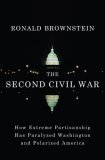
REVIEW: The Second Civil War

Division of the U.S. didn’t occur overnight

During President George W. Bush’s first term, one of his senior political advisers summed up the prevailing philosophy at the White House like this: “This is not designed to be a 55 percent presidency,” he said. “This is designed to be a presidency that moves as much as possible of what we believe into law while holding 50 plus one of the country and the Congress.” Bold ideas that could mobilize his conservative Republican base were prized over efforts to convince independent voters in the center; sharp divisions over the administration’s policies were regarded as proof of Mr. Bush’s decisiveness and willingness to challenge conventional thinking.

amazon-secondcivilwar.jpgAs the veteran political reporter Ronald Brownstein observes in his timely and compelling new book, this is very much how President Bush has governed: “In his congressional strategy he consistently demonstrated that he would rather pass legislation as close as possible to his preferences on a virtually party-line basis than make concessions to reduce political tensions or broaden his support among Democrats.” And in his dealings with both Congress and other nations before the invasion of Iraq, Mr. Brownstein goes on, Mr. Bush “sought not to construct a consensus for a common direction on Iraq, but rather to obtain acquiescence for the undeviating direction he had charted in his own mind.” [complete article]

Facebooktwittermail

ANALYSIS & EDITOR’S COMMENT: Is war talk just talk?

‘And then what?’ A strike on Iran may be one problem too many for Bush

Mr Bush himself has often been depicted as willing to use force to avoid going down in history as the president on whose watch Tehran made the decisive steps towards the bomb. But administration staff paint a very different picture of the president’s priorities during his last 14 months in office.

“For those problems we can solve, let’s solve them,” a senior administration official tells the Financial Times, setting out a framework the president has given his top staff. “For those that we cannot solve, let’s leave our successors a set of policies and instruments that provide them with, in our view, the best prospect for success after we leave office.”

Such comments almost sound like an advance excuse for not resolving the Iran dispute. But then the state of the US as a whole and the Bush administration in particular is very different from the days of 2002-03.

The terrorist attacks of September 11 2001 remain a powerful memory but the overwhelming support for Mr Bush that followed them is long gone. Instead of the enthusiasm America once exhibited for the invasion of Iraq and the toppling of Saddam Hussein, the country is now war-weary and its forces are already fighting in Iraq and Afghanistan. Oil is almost $100 a barrel and could go far higher in the event of an attack on Iran.

Of particular importance are the US military’s deep reservations about a pre-emptive attack on Iran, largely because of the uncertain consequences that would result. In addition, pragmatists have replaced hawks among Mr Bush’s closest colleagues. [complete article]

Editor’s Comment — Nothing seems more emblematic of the state of American presidential power than the fact that General Musharraf appears quite indifferent to its influence. And if there is a word that captures this moment it is “path.” If Pakistan can at least present the appearance of being oriented in the direction of democracy; if it can take one or two baby steps along that path, then that’s good enough for President Bush and his Secretary of State. It seems strange then that even when the president is clearly so weak that those competing to take his place are finding it so difficult to muster their own strength. Bush may have little power to shape the world, yet his administration seems as powerful as ever when it comes to shaping American political debate.

How to prevent Iran from acquiring nuclear weapons has been described as the defining foreign policy of the presidential race. Although that might currently be the case, the fact that it is, is not a reflection of a reality to which everyone is bound; it is a reflection of the weakness of the Democratic candidates in setting their own agendas.

Two questions on which the candidates should be pressed are these:

Firstly, as you strive to become the next president, will you allow the current presidency to define your own agenda?

And secondly, in as much as it can be assumed that dealing with Iran will be a major concern of the next president, do you anticipate that there will be other issues that command more of your attention — issues such as global warming?

Anyone with the courage to deconstruct the Iranian issue should start by posing a simple question: Is this about Iran or is it about nuclear weapons?

Nuclear proliferation is not unthinkable. In the space of a few years, India, Pakistan, and North Korea all barged into the nuclear club. Are we to understand then that whereas the new entries were undesirable, Iran’s possession of nuclear weapons would place it in a unique category? The suicidal state?

On the other hand, if we are to assume that Iran is not a country governed by people possessed by a death wish, then the issue must focus squarely on nuclear proliferation. Yet the underlying logic here is one that any eight-year old can understand. In the playground of global affairs we have two options: We either let the playground bullies make up rules that they can impose on others yet ignore themselves, or alternatively we accept that the strong and the weak must abide by an impartial set of rules that apply to everyone. In this case we would have to conclude that the issue is not Iran; it is a pressing need to halt proliferation which is itself an objective that can only exert the force of principle if bound to a practical effort to accomplish global nuclear disarmament. That’s an objective that several of the Democratic candidates tried on for size recently but one that thus far they have been much too timid to deploy for the purpose of setting the political agenda. It seems ironic that so many could aspire to become president, yet so few have much appetite for showing how they intend to be presidential.

Facebooktwittermail

OPINION & EDITOR’S COMMENT: The options table

Will wou attack Iran?

In the last few weeks, the Democratic field has settled on an attack against the frontrunner: Doublespeak. “I believe Senator Clinton should be held to the same standard that every one of us should be held to,” says John Edwards. “Tell the truth, no more double-talk.” Indeed, the Edwards camp even asked the Clinton campaign five simple question on Iraq, questions, “that every candidate should have to answer.”

The questions the Edwards camp asks are good ones. I too would like the various Democrats to go on the record as to whether they’ll leave permanent bases in Iraq. But here’s another question every campaign should have to answer, and that none of them have: Will you attack Iran in order to prevent their construction of a nuclear weapon?

That is, after all, the defining foreign policy question of the race. Iraq is a more acute concern, but so much of the damage there has already been done, and we are so hostage to the facts on the ground, that the differences and distinctions between the candidates are, in some ways, of relatively uncertain importance. Once in office, their actions on Iraq will be governed by the realities of the war and the domestic polls.

Not so with a nuclear Iran, where the executive really will be allowed to make the decision as to whether we launch air strikes, or whether we seek a policy of deterrence, negotiation, and engagement. Yet till now, the candidates have largely been allowed to divert such questions, and all have done so in the same way. Speaking at the Herzliya Conference, John Edwards said that, “to ensure that Iran never gets nuclear weapons, we need to keep all options on the table.” Asked by 60 Minutes where he would use military force to disrupt the Iranian weapon program, Barack Obama said, “I think we should keep all options on the table.” And Hillary Clinton, speaking to AIPAC, said, “We cannot, we should not, we must not, permit Iran to build or acquire nuclear weapons, and in dealing with this threat, as I have said for a very long time, no option can be taken off the table.” [complete article]

Editor’s Comment — It’s strange how a piece of gibberish — “no options can be taken off the table” — can so easily be elevated to the status of unassailable truth. Implicit in the assertion that options can’t be taken off the table is the idea that all possible options are cluttered there, in their abundance, all within easy reach. If this were not implied then we would perforce have to engage in as many debates about what can be put on the table as there are about what cannot be removed.

Consider then one option — on the table in as much as it is possible — that the Iranian conundrum be dealt with, with a finality that no one could dispute: a strategic nuclear strike. In as literal a sense as the expression can be used, Iran could be wiped off the map. The United States (and Israel) have the physical means to do this, but we all know it’s not going to happen because, fortunately, this is an option that is well and truly off the table. Neither Dick Cheney, nor Norman Podhoretz, nor Rudy Guiliani are going to say that incinerating 70 million Iranians is an option that must stay on the table.

Facebooktwittermail

NEWS: Staying on the path

Rice: Iran resolution doesn’t OK war

Secretary of State Condoleezza Rice said Sunday she does not believe a Senate resolution authorizes President Bush to take military action against Iran.

“There is nothing in this particular resolution that would suggest that from our point of view. And, clearly, the president has also made very clear that he’s on a diplomatic path where Iran comes into focus,” Rice said.

The Senate in late September voted 76-22 in favor of a resolution urging the State Department to designate Iran’s Islamic Revolutionary Guard Corps as a terrorist organization.

While the resolution, by Sens. Joe Lieberman, I-Conn., and Jon Kyl, R-Ariz., attracted overwhelming bipartisan support, a small group of Democrats said they feared labeling the state-sponsored organization a terrorist group could be interpreted as a congressional authorization of military force in Iran. [complete article]

Facebooktwittermail

NEWS & EDITOR’S COMMENT: Iran not scared by Israel (after strike on Syria)

Iranian FM: Israel is no military match for Tehran

Iran’s Foreign Ministry said on Monday that Israel poses no military threat to Iran, adding that any aggression on Israel’s part would spark retaliation and accusing Israel of trying to sabotage relations between Tehran and the International Atomic Energy Agency.

“The Zionist regime [Israel] is less than nothing to pose any kind of threat to Iran,” ministry spokesman Mohammad Ali Hosseini told reporters Sunday when questioned about recent comments on Tehran’s nuclear program made by Israeli officials.

It was not clear what Israeli threat Hosseini was referring to, but his statement came as Iran continues to defy international demands that it suspends uranium enrichment, a process that can produce fuel for a nuclear reactor or fissile material for a bomb. [complete article]

Editor’s Comment — I’ll hazard a guess about what Hosseini was referring to: the Israeli strike on Syria on September 6. Maybe this is the last Syria strike story — the one in which not even the word “Syria” appeared.

Facebooktwittermail

NEWS, ANALYSIS & EDITOR’S COMMENT: The long and winding path to democracy

Washington envisions a Pakistan beyond Musharraf

President Bush continues to praise Pakistan’s President Pervez Musharraf as a valued ally in the war on terror. At the same time, US officials are pressuring the military leader over his declaration of emergency law – though some Pakistanis call it pressure with kid gloves – as if he were the only acceptable game in Islamabad.

Yet even as Secretary of State Condoleezza Rice argues for patience toward General Musharraf, some US officials and South Asia experts are doing what they say the US has failed to do: envision and prepare for a post-Musharraf Pakistan.

“Washington’s approach to Pakistan has always been that the devil we know is better than the devil we don’t know. But there is every reason to believe that with Musharraf and Pakistan, that is not the case,” says Selig Harrison, director of the Asia Program at the Center for International Policy in Washington. “Musharraf has blinded Washington over and over again with a mastery of blackmail, but in the two areas we worry most about – nuclear proliferation and Islamist extremism – there are alternatives that are just as good, if not better.” [complete article]

Musharraf’s survival may hinge on elections

The Bush administration is betting that President Pervez Musharraf can survive the crisis in Pakistan if he moves decisively to lift emergency rule and hold elections over the next two months, despite new U.S. intelligence concerns about the dangers of long-term instability or, worse, a political vacuum, U.S. officials say. Timing is the key, they add.

Secretary of State Condoleezza Rice yesterday called on Musharraf to restore constitutional rule “as soon as possible.” The administration is considering sending a senior official to Islamabad this week to tell the Pakistani leader that he must urgently rescind restrictions on the media, civil society and opposition politicians, which could discredit any January elections — and endanger both Pakistan’s stability and his political future, the sources said. [complete article]

See also, Some doubt Musharraf can be ousted (LAT) and Pakistan to detain Bhutto in bid to stop protest march (NYT).

Editor’s Comment — Funny how an administration that is “dedicated to helping the Pakistani people come to a more democratic path” places all its attention on the theater of (riggable) elections yet says nothing about reinstituting the judiciary. The path to democracy is clearly much more appealing than the destination.

And how representative of Washington thinking is this? One former State official envisages one post-Musharraf scenario this way:

A less favorable alternative for the US, Markey, says, would be the rise of the Pakistan Muslim League (N), led by exiled former Prime Minister Nawaz Sharif.

“That wouldn’t mean an extremist Pakistan, but they just aren’t as keen on working that closely with the US, and they don’t see the world through Washington’s lenses,” says Markey.

Neocolonialism is alive and well. Can you imagine anyone in Pakistan saying, “We fear the next US president might be one who doesn’t see the world through Islamabad’s lenses”?

Facebooktwittermail

NEWS, ANALYSIS, OPINION & FEATURE: In Iraq, it’s getting harder to find any bad guys

Who’s the Enemy?

Who is the enemy? Who, exactly, are we fighting in Iraq? Why are we there? And what’s our objective?

Nearly five years into the war, the answers to basic questions like these ought to be obvious. In the Alice in Wonderland-like wilderness of mirrors that is Iraq, though, they’re anything but.

We aren’t fighting the Sunnis. Not any more, anyway. Virtually the entire Sunni establishment, from the moderate Muslim Brotherhood-linked Iraqi Islamic Party (which has been part of every Iraqi government since 2003) to the Anbar tribal alliance (which has been begging for U.S. support since 2004 and only recently got it) is either actively cooperating with the American military or sullenly tolerating what it hopes will be a receding occupation. Across Sunni-dominated parts of Iraq, the United States is helping to build army and police units as well as neighborhood patrols — the Pentagon calls them “concerned citizens” — out of former resistance fighters, with the blessing of tribal leaders in Anbar, Diyala, and Salahuddin provinces, parts of Baghdad, and areas to the south of the capital. We have met the enemy, and — surprise! — they are friends or, if not that, at least not active enemies. Attacks on U.S. forces in Sunni-dominated areas, including the once-violent hot-bed city of Ramadi, Anbar’s capital, have fallen dramatically. [complete article]

Inside the surge

Joint Security Station Thrasher, in the western Baghdad suburb of Ghazaliya, is housed in a Saddam-era mansion with twenty-foot columns and a fountain, now dry, that looks like a layer cake of concrete and limestone. The mansion and two adjacent houses have been surrounded by blast walls. J.S.S. Thrasher was set up last March, and is part of the surge in troops engineered by General David Petraeus, the American commander in Iraq. Moving units out of large bases and into Joint Security Stations—small outposts in Baghdad’s most dangerous districts—has been crucial to Petraeus’s counterinsurgency strategy, and Thrasher is now home to a hundred American soldiers and a few hundred Iraqis. This fall, on the roof of the mansion, amid sandbags, communications gear, and exercise equipment protected by a sniper awning, Captain Jon Brooks, Thrasher’s commander, pointed out some of the local landmarks. “This site was selected because it was the main body drop in Ghazaliya,” he said, indicating a grassy area nearby. “There were up to eleven bodies a week. Most were brutally mutilated.” [complete article]

2008: The year of federalism in Iraq?

In all the speculation about the fate of the US “surge” policy in Iraq, many analysts have overlooked a date on the 2008 calendar which is bound to become fateful: 11 April. On that day, the current moratorium on creating new federal entities – a last-minute addition to the Iraqi federalism legislation in October 2006 – comes to an end. From April 2008 onwards, the administrative map of Iraq could change dramatically.

The Iraqi constitutional and judicial modalities for creating new federal entities are poorly understood in the West. Under the legal framework adopted in October 2006, there are two paths to a federal status for an existing governorate: based on grassroots initiatives (by one tenth of its voters or by one third of the governorate council members) any Iraqi governorate can call a referendum for the creation of a new federal entity – consisting either of itself, or of itself in union with other governorates where the same kind of initiatives are launched (except Baghdad). A successful bid for federal status requires a simple majority of Yes votes in all governorates concerned. This is a complicated procedure, but it is at least a method that is based on popular initiatives. As such, it is antithetical to the recent resolution by the US Senate on federalism in Iraq, where there are suggestions about foreign “assistance” and elite conferences to “help” the Iraqis design a new administrative map – in other words, a plan to impose federalism on the entire country, not only “from above”, but also from the outside. [complete article]

Iraq to ease Baghdad controls

Iraqi military commanders signaled on Monday that they will soon remove some roadblocks, blast walls and other restrictions that had been imposed over the past nine months as part of the effort to reduce violence here in the capital.

However tens of thousands of American troops will remain on the streets of Baghdad, and the announcement appears to have been made to indicate to their constituents the Iraqi leaderships’ desire to change the emphasis from the military crackdown in the earlier stages of the operation to providing vital utilities and social services to the Baghdad population. [complete article]

The plight of American veterans

As an unpopular, ill-planned war in Iraq grinds on inconclusively, it can be a bleak time to be a veteran.

There is little outright hostility toward returning military personnel these days; few Americans are reviling them as “baby killers” or blaming them for a botched war of choice launched by the White House. Indeed, both Congress and the White House have been hymning their praises in the run-up to Veterans Day. But all too often, soldiers who return from Iraq or Afghanistan — and those who served in Vietnam or Korea — have been left to fend for themselves with little help from the government.

Recent surveys have painted an appalling picture. Almost half a million of the nation’s 24 million veterans were homeless at some point during 2006, and while only a few hundred from Iraq or Afghanistan have turned up homeless so far, aid groups are bracing themselves for a tsunamilike upsurge in coming years. [complete article]

Facebooktwittermail

NEWS & EDITOR’S COMMENT: PLO rejects recognition of Israel as religious state; Hamas and Fatah fight

Erekat: Palestinians will not accept Israel as ‘Jewish state’

Saeb Erekat, chief negotiator for the Palestine Liberation Organization, rejected on Monday the government’s demand that the Palestinians recognize Israel as a Jewish state.

In an interview with Israel Radio, Erekat said that “no state in the world connects its national identity to a religious identity.”

Also Monday, dozens of prominent Palestinian residents of Jerusalem published an appeal to the Abbas, asking him not to make concessions to Israel over the holy city in the upcoming talks. [complete article]

At least half a dozen killed at Gaza rally

At least six Palestinians were killed and more than 100 wounded here on Monday when a rally by the relatively pro-Western Fatah movement to mark the third anniversary of the death of its founder, Yasir Arafat, ended in armed clashes with its rival, Hamas.

Doctors at two Gaza hospitals said all of the dead and most of the wounded were Fatah supporters who had taken part in the rally.

Tens of thousands of residents of the Gaza Strip had turned out for what became the largest show of support for Fatah since the Islamist group Hamas seized control of the territory in June. [complete article]

Editor’s Comment — No amount of analysis of the power struggle going on inside Palestinian politics can undo this simple fact: the sight of Palestinians killing Palestinians does more to corrode international sympathy than anything else.

Facebooktwittermail

ANALYSIS & EDITOR’S COMMENT: The nuclear threat to democracy

So, what about those nukes?

The administration says it hopes to put Pakistan on a path to democracy. But Washington’s actions show it does not want to go so fast that nuclear control becomes a casualty. So President Bush was on the phone to General Musharraf on Wednesday to press for the patina of a return to democracy: He said General Musharraf must shed his title as army chief, hold parliamentary elections early next year, and find a way to work with Benazir Bhutto, the opposition leader with whom the United States has urged him to share power. The general promised to hold elections by February, but the crisis was far from over.

“The nightmare scenario, of course, is what happens if an extremist Islamic government emerges — with an instant nuclear arsenal,” said Robert Joseph, a counterproliferation expert who left the administration this year. John R. Bolton, the former United Nations representative who has accused Mr. Bush of going soft on proliferation, said more bluntly that General Musharraf’s survival was critical. “While Pervez Musharraf might not be a Jeffersonian democrat,” Mr. Bolton said, “he is the best bet to secure the nuclear arsenal.”

Americans might feel better about the arsenal if they knew how big it was — or even where the weapons were stored. Pakistan has done its best to keep that information secret.

There are also more than a dozen nuclear facilities, from fuel fabrication plants to laboratories that enrich uranium and produce next-generation weapons designs, that Al Qaeda and other terror groups have eyed for years. How safe are they? [complete article]

See also, Pakistan nuclear security questioned (WP) and Suitcase nukes said unlikely to exist (AP).

Editor’s Comment — How safe are they? This is currently Washington’s most vexing question. Indeed, as the New York Times presents it, the issue of nuclear peril is now being spun in such a way that we are meant to fear that Pakistan is such a dangerous place that it’s not safe enough for democracy.

So, when we pose the question, how safe are they?, we don’t pause to consider what should already be obvious: Pakistan’s nuclear weapons are already in the wrong hands. General Musharraf isn’t “indispensable” because, as John Bolton claims, “he is the best bet to secure the nuclear arsenal.” He’s immovable because he has no intention of letting go of the keys to his power. As Adrian Levy and Catherine Scott-Clark note, the Bhutto deal that Musharraf backed out of amounted to little more than the appearance of a transfer of power. In the secret negotiations prior to her return, Bhutto:

…agreed to an unprecedented compromise, ceding, should she win [upcoming elections], the foreign, military, internal and external security as well as Pakistan’s WMD portfolios to Musharraf. That left her with only a handful of power-light cards to play, while still giving the military a veneer of legitimacy.

But in Pakistan, nothing is agreed until it actually happens. And Musharraf backtracked as soon as Bhutto returned to the country Oct. 18.

Fueled by a potent mixture of patronage, tribalism, backstabbing, side dealing, blackmail and straightforward medieval feudalism, politics Pakistan-style makes Washington and London look like a pajama party. And Bhutto’s return to Pakistan was spectacular as well as murderous. It began with two ear-splitting bangs, the first when two explosions blew up her motorcade in Karachi, killing 145 and injuring hundreds more, and the second when Bhutto aides accused agents allied to the country’s pervasive intelligence establishment of arming the suicide bombers.

Bhutto swiftly picked herself up and dramatically began to galvanize support, with Pakistanis previously indifferent or critical of her embracing her high-profile return – a breath of fresh air after the vacuum of almost a decade of military repression.

Realizing this momentum could help her overwrite the power-ceding deal that had brought her home, Bhutto upped her campaign, bringing Pakistani politics to the boil. She condemned the country’s extremist groups and religious parties. She accused the government of manipulating them. An editorial in Pakistan’s Daily Times noted: “Ms. Bhutto arrived, not carrying flowers but a bunch of accusations.”

This was what Musharraf most feared.

Fears about the future of Pakistan’s nuclear weapons are legitimate, but the presumption that they are currently in safe hands is fanciful.

Facebooktwittermail

OPINION & EDITOR’S COMMENT: The species of oppression by which we are menaced

The coup at home

…there’s another moral to draw from the Musharraf story, and it has to do with domestic policy, not foreign. The Pakistan mess, as The New York Times editorial page aptly named it, is not just another blot on our image abroad and another instance of our mismanagement of the war on Al Qaeda and the Taliban. It also casts a harsh light on the mess we have at home in America, a stain that will not be so easily eradicated.

In the six years of compromising our principles since 9/11, our democracy has so steadily been defined down that it now can resemble the supposedly aspiring democracies we’ve propped up in places like Islamabad. Time has taken its toll. We’ve become inured to democracy-lite. That’s why a Mukasey can be elevated to power with bipartisan support and we barely shrug.

This is a signal difference from the Vietnam era, and not necessarily for the better. During that unpopular war, disaffected Americans took to the streets and sometimes broke laws in an angry assault on American governmental institutions. The Bush years have brought an even more effective assault on those institutions from within. While the public has not erupted in riots, the executive branch has subverted the rule of law in often secretive increments. The results amount to a quiet coup, ultimately more insidious than a blatant putsch like General Musharraf’s. [complete article]

See also, Abdicate and capitulate (NYT editorial).

Editor’s Comment — Whereas Frank Rich sees in America, “a people in clinical depression,” I’m inclined to think his diagnosis a little too forgiving. What he sees as a “permanent erosion inflicted over the past six years,” has, I believe, much more distant roots. Signs of their growth were anticipated over 150 years ago and described quite clearly in Democracy in America.

If an American rebellion is not around the corner, it appears to have much less to do with a form of political depression than with a pervasive indifference. Bush and Cheney have exploited that indifference but they didn’t create it.

This is how Tocqueville anticipated the trend through which we would end up too comfortable to care:

…the species of oppression by which democratic nations are menaced is unlike anything that ever before existed in the world; our contemporaries will find no prototype of it in their memories. I seek in vain for an expression that will accurately convey the whole of the idea I have formed of it; the old words despotism and tyranny are inappropriate: the thing itself is new, and since I cannot name, I must attempt to define it.

I seek to trace the novel features under which despotism may appear in the world. The first thing that strikes the observation is an innumerable multitude of men, all equal and alike, incessantly endeavoring to procure the petty and paltry pleasures with which they glut their lives. Each of them, living apart, is as a stranger to the fate of all the rest; his children and his private friends constitute to him the whole of mankind. As for the rest of his fellow citizens, he is close to them, but he does not see them; he touches them, but he does not feel them; he exists only in himself and for himself alone; and if his kindred still remain to him, he may be said at any rate to have lost his country.

Above this race of men stands an immense and tutelary power, which takes upon itself alone to secure their gratifications and to watch over their fate. That power is absolute, minute, regular, provident, and mild. It would be like the authority of a parent if, like that authority, its object was to prepare men for manhood; but it seeks, on the contrary, to keep them in perpetual childhood: it is well content that the people should rejoice, provided they think of nothing but rejoicing. For their happiness such a government willingly labors, but it chooses to be the sole agent and the only arbiter of that happiness; it provides for their security, foresees and supplies their necessities, facilitates their pleasures, manages their principal concerns, directs their industry, regulates the descent of property, and subdivides their inheritances: what remains, but to spare them all the care of thinking and all the trouble of living?

Thus it every day renders the exercise of the free agency of man less useful and less frequent; it circumscribes the will within a narrower range and gradually robs a man of all the uses of himself. The principle of equality has prepared men for these things;it has predisposed men to endure them and often to look on them as benefits.

After having thus successively taken each member of the community in its powerful grasp and fashioned him at will, the supreme power then extends its arm over the whole community. It covers the surface of society with a network of small complicated rules, minute and uniform, through which the most original minds and the most energetic characters cannot penetrate, to rise above the crowd. The will of man is not shattered, but softened, bent, and guided; men are seldom forced by it to act, but they are constantly restrained from acting. Such a power does not destroy, but it prevents existence; it does not tyrannize, but it compresses, enervates, extinguishes, and stupefies a people, till each nation is reduced to nothing better than a flock of timid and industrious animals, of which the government is the shepherd.
What sort of despotism democratic nations have to fear, Chapter VI, Section IV, Volume III, Democracy in America, by Alexis de Tocqueville.

Facebooktwittermail

FEATURE: Power is never relinquished without a struggle

Washington hails Musharraf as an ally in the war on terror, but critics make a case that Pakistani leader is a terrorist

In Pervez Musharraf, the West has got the leader it has unreservedly championed for the last nine years, someone it fears it cannot do without, a weakness that Musharraf has manipulated since he signed up to the war on terror in the days after 9/11. It is an increasingly cantankerous and one-way pact that has enabled the growth in power of the most destabilizing factor behind Pakistan’s implosion – the one Musharraf never referred to: the Pakistan military itself.

Musharraf likes to be seen as a firefighter, and has portrayed himself as a bridgehead between the West and the badlands of Islamic South Asia, where our own spooks and soldiers are rarely able to tread. He has worked hard to finesse his special relationship with Washington, familiarly known inside Pakistan as “Mush and Bush,” and it has paid off with Pakistan receiving billions of dollars in U.S. aid.

Underpinning this deal are Musharraf’s published credentials. He has always given the impression that he and his troops are Western-leaning moderates. However, the real Musharraf is far more complicated, and a good deal of the time we have paid the general to stand by us, he has been cosseting the forces that are bent on undermining the West, as part of a policy of defiance that stretches back two decades.

Musharraf’s career took off in the mid-1980s, when he was dispatched to train fighters aiding the mujahedeen in Afghanistan – all part of a U.S. proxy war to eject the Soviet army that had invaded there in 1979. The conflict brought a secular Pakistan army into close proximity with jihadis, serving to radicalize ordinary soldiers, as well as sharpening their intelligence skills and battle craft.

Musharraf won his first real plaudits in 1988 when he was ordered to cool a political uprising by Pakistani Shiites living in Gilgit, in the north. Using out-of-work mujahedeen fighters, Musharraf’s men killed hundreds, crushing the revolt, and he was rewarded with a job at army headquarters.

Born a Sunni, he had never identified with political Islamism but from then on he understood the power of manipulating faith. By the mid-1990s, as director general of military operations, he was serving Benazir Bhutto, who was in her second term as prime minister. He lobbied her to revive a flagging insurgency that Pakistan had lit in the Indian-administered sector of the divided state of Kashmir in 1989. “He told me he wanted to ‘unleash the forces of fundamentalism’ to ramp up the war,” Bhutto recalled.

Musharraf claimed he could gather as many as 10,000 fighters to send over the border, and he reached out to four extremist Sunni organizations, including one founded in 1987 by three followers of Osama bin Laden. Uncaring or oblivious to the consequences, Musharraf’s Kashmir plan sparked one of the bitterest episodes in Indo-Pakistan relations, giving birth to a vast army of battle-hardened Sunnis who would move on from Kashmir to fight the world over.

In 1996, Musharraf did it again, making contact with the Taliban, then an army of refugees and students. No one could have known in 1996, when the Taliban took control of Kabul, Afghanistan, where it would all lead. But Musharraf could not plead ignorance when he secretly rekindled the alliance long after 9/11. [complete article]

Facebooktwittermail

NEWS: Musharraf: “The emergency reinforces the war on terror”

Musharraf gives no date for end to rule

In a defiant news conference Sunday, the Pakistani president, General Pervez Musharraf, refused to give a date for the end of the de facto martial law that he imposed more than a week ago and suggested that it would continue indefinitely, including during parliamentary elections in early January.

Speaking one day after President George W. Bush said Musharraf was the best president for Pakistan, the general said the emergency decree was justified by the need to fight terrorism, and would “ensure absolutely fair and transparent elections.” [complete article]

See also, Bush, Rice defend Musharraf as an ally (WP), Pakistan to America: keep out (Bashir Goth), and Pakistan emergency ‘aiding Taliban’ (Al Jazeera).

Facebooktwittermail

OPINION: Bush’s sluggishness over Pakistan-based proliferation

Those nuclear flashpoints are made in Pakistan

George W. Bush is hardly the first U.S. president to forgive sins against democracy by a Pakistani leader. Like his predecessors from Jimmy Carter onward, Bush has tolerated bad behavior in hopes that Pakistan might do Washington’s bidding on some urgent U.S. priority — in this case, a crackdown on al-Qaeda. But the scariest legacy of Bush’s failed bargain with Gen. Pervez Musharraf isn’t the rise of another U.S.-backed dictatorship in a strategic Muslim nation, or even the establishment of a new al-Qaeda haven along Pakistan’s lawless border. It’s the leniency we’ve shown toward the most dangerous nuclear-trafficking operation in history — an operation masterminded by one man, Abdul Qadeer Khan.

For nearly four years, under the banner of the “war on terror,” Bush has refused to demand access to Khan, the ultranationalist Pakistani scientist who created a vast network that has spread nuclear know-how to North Korea, Iran and Libya. Indeed, Bush has never seriously squeezed Musharraf over Khan, who remains a national hero for bringing Pakistan the Promethean fire it can use to compete with its nuclear-armed nemesis, India. Khan has remained under house arrest in Islamabad since 2004, outside the reach of the CIA and investigators from the International Atomic Energy Agency, who are desperate to unlock the secrets he carries. Bush should be equally adamant about getting to the bottom of Khan’s activities.

Bush’s sluggishness over Pakistan-based proliferation, even as he has funneled about $10 billion in military and financial aid to Musharraf since Sept. 11, 2001, is even harder to explain when one considers the damage Khan has done to the world’s fragile nuclear stability. Khan used stolen technology and black-market sales to help Pakistan obtain its nuclear arsenal, setting the stage for a possible atomic showdown with India. He played a pivotal role in helping Iran start what we increasingly fear is a clandestine nuclear-arms program, allowing Tehran to make significant progress in the shadows before its efforts were uncovered in 2002. He gave key uranium-enrichment technology to North Korea. And if all this weren’t enough, he was busily outfitting Libya with a full bomb-making factory when his network was finally shut down in late 2003. Khan has been held incommunicado ever since, leaving the world with new nuclear flashpoints — and some burning, unanswered questions about his black-market spree. [complete article]

Facebooktwittermail

OPINION: War talk about Iran is a mistake

The spy who wants Israel to talk

Efraim Halevy, the former head of the Israeli intelligence agency Mossad, titled his memoirs “Man in the Shadows.” But now that he’s out in the sunlight, the 72-year-old retired spy chief has some surprisingly contrarian things to say about Iran and Syria. The gist of his message is that rather than constantly ratcheting up the rhetoric of confrontation, the United States and Israel should be looking for ways to establish a creative dialogue with these adversaries.

Halevy is a legendary figure in Israel because of his nearly 40 years of service as an intelligence officer, culminating in his years as Mossad’s director from 1998 to 2003. He managed Israel’s secret relationship with Jordan for more than a decade, and he became so close to King Hussein that the two personally negotiated the 1994 agreement paving the way for a peace treaty. So when Halevy talks about the utility of secret diplomacy, he knows whereof he speaks.

Of course, Halevy looks like the fictional master spy George Smiley — thinning hair, wise but weary eyes, the rumpled manner of someone who might have been a professor in another life. And Halevy has the gift of anonymity: You would look right past him in a crowded room, never imagining that he was the man who had conducted daring secret missions. After he appeared here with former CIA director George Tenet at a conference sponsored by the Brookings Institution’s Saban Center, Halevy agreed to sit down for an interview.

Halevy suggests that Israel should stop its jeremiads that Iran poses an existential threat to the Jewish state. The rhetoric is wrong, he contends, and it gets in the way of finding a peaceful solution to the Iranian nuclear problem.

“I believe that Israel is indestructible,” he insists. Iranian President Mahmoud Ahmadinejad may boast that he wants to wipe Israel off the map, but Iran’s ability to consummate this threat is “minimal,” he says. “Israel has a whole arsenal of capabilities to make sure the Iranians don’t achieve their result.” Even if the Iranians did obtain a nuclear weapon, says Halevy, “they are deterrable,” because for the mullahs, survival and perpetuation of the regime is a holy obligation. [complete article]

Facebooktwittermail

NEWS, ANALYSIS, OPINION & EDITOR’S COMMENT: Looking for Iran in Iraq

Iraq: Call an air strike

“… the literature on counter-insurgency is so enormous that, had it been put aboard the Titanic, it would have sunk that ship without any help from the iceberg. However, the outstanding fact is that almost all of it has been written by the losers.”
– Martin van Creveld, in The Changing Face Of War, 2006

Amid the George W Bush administration’s relentless campaign to “change the subject” from Iraq to Iran, how to “win” the war against the Iraqi resistance, Sunni or Shi’ite, now means – according to counter-insurgency messiah General David Petraeus – calling an air strike.

On a parallel level, the Pentagon has practically finished a base in southern Iraq less than 10 kilometers from the border with Iran called Combat Outpost Shocker. The Pentagon maintains this is for the US to prevent Iranian weapons from being smuggled into Iraq. Rather, it’s to control a rash of US covert, sabotage operations across the border targeting Iran’s Khuzestan province.

With the looming Turkish threat of invading Iraqi Kurdistan and President General President Musharraf’s new “let’s jail all the lawyers” coup within a coup in Pakistan, the bloody war in the plains of Mesopotamia is lower down in the news cycle – not to mention the interminable 2008 US presidential soap opera. Rosy spinning, though, still rules unchecked.

The Pentagon – via Major General Joseph Fil, commander of US forces in Baghdad – is relentlessly spinning there’s now less violence in the capital, a “sustainable” trend. This is rubbish. [complete article]

Iraqi fighters ‘grilled for evidence on Iran’

US military officials are putting huge pressure on interrogators who question Iraqi insurgents to find incriminating evidence pointing to Iran, it was claimed last night.

Micah Brose, a privately contracted interrogator working for American forces in Iraq, near the Iranian border, told The Observer that information on Iran is ‘gold’. The claim comes after Washington imposed sanctions on Iran last month, citing both its nuclear ambitions and its Revolutionary Guards’ alleged support of Shia insurgents in Iraq. Last week the US military freed nine Iranians held in Iraq, including two it had accused of links to the Revolutionary Guards’ Qods Force.

Brose, 30, who extracts information from detainees in Iraq, said: ‘They push a lot for us to establish a link with Iran. They have pre-categories for us to go through, and by the sheer volume of categories there’s clearly a lot more for Iran than there is for other stuff. Of all the recent requests I’ve had, I’d say 60 to 70 per cent are about Iran. [complete article]

Broken supply channel sent weapons for Iraq astray

As the insurgency in Iraq escalated in the spring of 2004, American officials entrusted an Iraqi businessman with issuing weapons to Iraqi police cadets training to help quell the violence.

By all accounts, the businessman, Kassim al-Saffar, a veteran of the Iran-Iraq war, did well at distributing the Pentagon-supplied weapons from the Baghdad Police Academy armory he managed for a military contractor. But, co-workers say, he also turned the armory into his own private arms bazaar with the seeming approval of some American officials and executives, selling AK-47 assault rifles, Glock pistols and heavy machine guns to anyone with cash in hand — Iraqi militias, South African security guards and even American contractors. [complete article]

Editor’s Comment — The path travelled by one of those Glocks is revealed in a report in The Guardian. The reporter describes interviewing a Sunni insurgent — one of America’s newly recruited fighters. “He pulled his pistol out and showed it to me. It was a Glock, supplied by the US to Iraqi security forces. ‘This belonged to the commander of al-Qaida here,’ he said. ‘They called him the White Lion. I killed him and got his gun.'”

Americans said to have proposed a six-month truce to the resistance groups

Al-Hayat says this morning that it has learned from “sources in the government and sources close to the armed groups” about a plan including a followup reconciliation meeting, to be arranged by the Iraqi Reconciliation Agency, but to be held under American and international auspices, along with a proposal for a six-month truce between the armed resistance groups and the American/Iraqi forces. [complete article]

Forced Iraq postings ‘may be necessary’

Four days before a deadline for Foreign Service officers to volunteer to go to Iraq or face the prospect of being ordered there, the State Department notified employees yesterday that “about half” of 48 open assignments there for next year have been filled.

“This reduces but does not eliminate the possibility that directed assignments may be necessary,” Deputy Secretary of State John D. Negroponte wrote in an e-mailed update. Filling the remaining jobs is still “the Department’s priority,” he said, adding that he is optimistic that more will volunteer. [complete article]

Editor’s Comment — The email had to come from Negroponte and not the Sectretary of State herself because madame secretary declines to use email. That’s right! “Rice does not use e-mail.”

Facebooktwittermail

OPINION: Is Islamophobia the ticket to the White House?

Rudy and Pat: hate expectations

You have to wonder how the conversation went: Did Rudy begin by convincing Pat that hating Muslims was more important than hating homosexuals? Or did he start by saying that hating Muslims should come before protecting fetuses?

One thing is crystal clear: Rudy knows Republican math. To win Republican primaries, you have to win the hearts of the Religious Right. And Rudy wasn’t going to do that with his life story (multiple marriages, multiple divorces) or his social positions (pro gay rights, pro choice). His only hope was to change the subject. And hating Muslims is a popular topic in Religious Right circles these days.

Here is what Rudy had to say about his new BFF Pat Robertson: “… he has a tremendous amount of insight into what the main issues are and how they should be dealt with.”

The main issue for Rudy is how to exploit the current fear of Muslims into a winning presidential campaign. Pat Robertson will offer his insights on that issue alongside America’s most prominent Islamophobes, including Norman Podhoretz, Peter King and Daniel Pipes. [complete article]

Facebooktwittermail

ANALYSIS & OPINION: There is no single story to al Qaeda

There’s no single story to al-Qaeda

In the mountains of the Swat valley, in north western Pakistan, a militant cleric called Maulana Fazlullah has successfully carved himself a miniature version of a Taliban state. His most potent weapon has been his radio station. ‘It’s all about the message,’ one of his associates told me in Peshawar, the nearest city, last month.

Islamic militants around the world have long known this. ‘The battle will be fought in the media,’ said al-Qaeda’s chief strategist, Ayman al-Zawahiri. After a suicide bomb in Afghanistan last week killed women and children, Taliban spokesmen phoned correspondents within minutes to deny responsibility. The videos pouring out of al-Qaeda’s in-house production system may indeed be, as some optimistically say, a sign of operational weakness and a consequent reliance on propaganda, but they are still coherent and cleverly targeted and their strength is that they explain, in simple and unvarying terms, what the militants believe to be the cause of the violence: the supposed war on Islam by the West and their allies among heretic, apostate and hypocritical Muslims.

In contrast, media interventions by Western governments, militaries and security services tend to be flat-footed. Last week, a speech by the new head of MI5, Jonathan Evans, generated many headlines, largely frightening ones about al-Qaeda ‘grooming’ British youths and ‘more than 2,000’ dangerous individuals on our streets. Evans’s disappointment at this coverage was in some ways understandable, having made the effort to remind his audience of journalists that as ‘we are tackling a threat which finds its roots in ideology… we must pay close attention to our use of language’ and having pointed out that the more lurid coverage of terrorism made him ‘grit his teeth’. [complete article]

Engineers of Jihad

While looking for something entirely different (research on the Italian mafia), I just came across this absolutely fascinating new paper (pdf) by Diego Gambetta and Steffen Hertog on engineers and Islamic terrorism. There’s been a lot of speculation about the visible elective affinity between education in certain technical disciplines and propensity to join Al-Qaeda and other terrorist groups, none of which has stopped some loons from claiming that the jihadists were led astray by trendy leftist post-modernist academics in the humanities and social sciences. Gambetta and Hertog use a combination of illustrative statistics, qualitative data and logistic regression to show not only that there is a strong relationship between an engineering background and involvement in a variety of Islamic terrorist groups, but to arrive at a plausible hypothesis as to why this relationship pertains. [complete article]

Facebooktwittermail

NEWS: Khatami rallies reformists

Iran’s Khatami urges reformists to rally for change

Former president Mohammad Khatami has called on fellow reformists to rally for change in the next parliamentary polls, warning that Iran was faced with “great threats”, newspapers reported on Saturday.

“The objective of the reformists is not only to collect votes but to serve the country. Our country is facing great threats and unfortunately there are serious concerns,” Khatami was quoted as saying by several reformist papers.

The former president addressed a number of reformist leaders on Thursday calling on them to consolidate their efforts ahead of the parliamentary elections on March 14. [complete article]

Facebooktwittermail
