Category Archives: Analysis

Saudi Arabia’s manifesto for change in the face of rumours of coup plots

The Telegraph reports: Saudi Arabia has issued a manifesto for change in the face of rumours of coup plots and international pressure, ranging from economic reform to the role of women and allowing human rights groups into the country.

At a time when the country’s internal politics are under more scrutiny than at any time for decades, close advisers to the new King Salman and his powerful son have taken the unprecedented step of outlining a detailed programme of its future government to The Telegraph.

It amounts to a Thatcherite programme of budget cuts, increasing the role of the private sector, and reforms to the way the kingdom is governed.

It obliquely acknowledges that radical changes in the royal family since the king acceded to the throne in January, including the sidelining of a generation of older princes and the former heir to the throne, have met with opposition. There have been claims outside the country that disgruntled princes are attempting to mount a coup to replace the king with one of his brothers.

But the statement of principles shown to the Telegraph says that the way the country has been run since its founding a century ago must give way to “youth”. “These resolute and decisive changes may have annoyed some people but it does not amount to a crisis,” it says. [Continue reading…]

Facebooktwittermail

Leaked UAE emails could threaten peace talks in Libya

The New York Times reports: The United Arab Emirates was shipping weapons to favored belligerents in Libya over the summer in violation of an international arms embargo while simultaneously offering a highly paid job to the United Nations diplomat drafting a peace accord there, leaked Emirati emails show.

The leaked correspondence is threatening to undermine months of Libyan talks by tarring the diplomat with an apparent conflict of interest. The emails also open a new window into the hidden and contradictory machinations of regional players like the United Arab Emirates that have helped inflame the fighting even as their diplomats say they support a peaceful solution.

“The fact of the matter is that the U.A.E. violated the U.N. Security Council Resolution on Libya and continues to do so,” Ahmed al-Qasimi, a senior Emirati diplomat, wrote in an email on Aug. 4 to Lana Nusseibeh, the United Arab Emirates’ ambassador to the United Nations. [Continue reading…]

Facebooktwittermail

Israel: Link between EU labelling and Europe’s ‘dark past’ is tactical and confected

By Yoav Galai, University of St Andrews

The EU’s announcement of new guidelines regarding the labelling of settlement products, has been greeted by Israeli officials as well as members of the opposition with a campaign which presents a uniform position against the document that takes the line: it is a boycott, and it is anti-semitic.

The new EU guidelines require that goods from, say, the Golan Heights should be labelled: “product from the Golan Heights (Israeli settlement)”. For products from Palestine territories that are not from settlements, an indication of origin could be “product from Palestine” or “product from West Bank (Palestinian product)”.

The EU is Israel’s largest trading partner, with trade worth about US$30 billion – but exports from settlements represent less than about 1% of overall trade.

The decision to label settlement products is in line with existing EU law since 2004 which requires the places of origin of fruits, vegetables and honey to be labelled, but the document has a strong symbolic meaning: it singles out products from settlements. It is this symbolic gesture that has caused alarm in Israel.

Continue reading

Facebooktwittermail

We have 15 years to halt biodiversity loss, can it be done?

By Richard Pearson, UCL

The UN’s ambitious new Sustainable Development Goals include a target to halt biodiversity loss by 2030. The SDGs have generated a great deal of comment, with questions raised as to whether the lofty aspirations can be turned into realistic policies. An article in The Lancet even dismissed the SDGs as nothing more than “fairy tales”.

So is halting biodiversity loss a fairy tale?

“Biodiversity” refers to the diversity of life on Earth. It includes diversity within species, between species, and of ecosystems. There are any number of statistics that confirm its decline across the globe. For instance, the Red List of threatened species, developed by the International Union for the Conservation of Nature (IUCN), identifies 22,784 that are at risk of extinction – almost 30% of the species that have been assessed. By other measures, habitats continue to be destroyed and degraded, and population sizes of most wild species are in decline.

Continue reading

Facebooktwittermail

Ben Carson’s top national security adviser says America has been ‘infiltrated’ by Muslims

James Bamford writes: When it comes to foreign policy, it’s tempting to grade Carson on a curve. A retired neurosurgeon with no political experience, Carson has promised that, as president, he would be as ready “as anybody else when foreign-policy questions come up” by surrounding himself with experts who would help him craft and, eventually implement, foreign policy.

But Carson’s foreign-policy experts are likely part of his problem. The candidate’s most outrageous statements on national security — including his shocking declaration in September that he believes Muslims are unfit to serve as president — aren’t merely a collection of ill-informed gaffes. They are a reflection of the troubling worldview of the people he has turned to for advice. Chief among them is Robert F. Dees, a retired Army officer who has indulged in anti-Muslim bigotry and advocated for a national security strategy centered on Christian evangelism.

Carson is said to have first met Dees at church last February. A four-hour dinner, and regular “study sessions,” followed that initial encounter. Carson has since called Dees “one of my most regular people” when it comes to foreign-policy briefings, and his campaign manager, Barry Bennett, has said that Carson’s national security team is headed by Dees. Dees, for his part, describes his current job title on LinkedIn as defense and national security advisor for Carson America.

It’s impossible to know the precise content of Dees’s advice to Carson. But Dees’s professional background doesn’t provide much reassurance. In 2013, he told a gathering at Wildfire Weekend, an all-male religious retreat, “My greatest pleasure has been being a private in the Lord’s army.” He also recounted being introduced to Jesus Christ by a math instructor at West Point not long after he enrolled there as a student in 1968. “Then I went off in the military,” he said, “as an ambassador for the Lord Jesus Christ.” Dees spent most of his career in the infantry and in staff positions in the United States, Germany, and Korea, eventually becoming deputy commander of the V Corps in Europe. His resume does not appear to list any combat assignments.

Dees has cited the 9/11 attacks as a personal and professional turning point. Speaking at Wildfire Weekend, Dees described visiting an intelligence center in Virginia sometime after the attacks. “I looked up on the wall … and there were cell-phone calls coming from certain places, and you could see where they would go into other places, and all of a sudden I saw Kandahar, Afghanistan, to Nashville, Tennessee; Dearborn, Michigan; Greensboro, South Carolina,” Dees told the gathering, describing the links between people in Afghanistan, where America was about to go to war, and residents of the United States.

Dees claimed to have an epiphany: When it comes to terrorism, all Muslims — some 23.4 percent of the world’s population — are equally worthy of suspicion. “It’s not about these guys who came from way out, knocked down some buildings, and then have left,” Dees explained at Wildfire Weekend. “We have a serious internal issue. We’ve been infiltrated.” [Continue reading…]

Facebooktwittermail

Barack Obama, Lawyer-in-Chief

Charlie Savage writes: June 2013, when a cascade of leaked top-secret documents showed the world that Barack Obama had entrenched the post-9/11 surveillance state bequeathed to him by George W. Bush, many observers were surprised. But several of Obama’s advisers thought back to an afternoon some 4½ years earlier, shortly after their administration took office. An important meeting with Obama was scheduled to begin in the Situation Room at half past noon on Friday, February 6, 2009. Officials who had been asked to participate gathered around the conference table waiting to brief the new president. He was late.

The officials were there to tell Obama about secret surveillance programs — including the fact that the National Security Agency was collecting Americans’ domestic phone records in bulk. The meeting and its aftermath helped establish a pattern for Obama’s presidency that has confounded many of his supporters. The liberal-minded legal scholar promised change from Bush’s “global war on terrorism,” but he ended up entrenching many Bush-like counterterrorism policies: drone strikes, military commissions, detaining Guantánamo prisoners without trial — and broad surveillance activities, including the NSA’s bulk phone records program. How did this seeming transformation happen? Obama’s approach to the bulk records program — driven, above all, by his inclinations as a lawyer — is key to deciphering the larger mystery. [Continue reading…]

Facebooktwittermail

Scientists confirm their fears about West Antarctica — that it’s inherently unstable

The Washington Post reports: It may be the biggest climate change story of the last two years.

In 2014, several research groups suggested that the oceanfront glaciers in the Amundsen Sea region of West Antarctica may have reached a point of “unstoppable” retreat due to warm ocean waters melting them from below. There’s a great deal at stake — West Antarctica is estimated to contain enough ice to raise global sea levels by 3.3 meters, or well over 10 feet, were it all to melt.

The urgency may now increase further in light of just published research suggesting that destabilization of the Amundsen sea’s glaciers would indeed undermine the entirety of West Antarctica, as has long been feared.

In a new study published Monday in the Proceedings of the National Academy of Sciences, Johannes Feldmann and Anders Levermann of the Potsdam Institute for Climate Impact Research use a sophisticated climate model to study what will happen if these glaciers are, indeed, fully destabilized. And in essence, they find that the process of retreat doesn’t end with the region currently up against the ocean. [Continue reading…]

Facebooktwittermail

Nothing can compete with renewable energy, says top climate scientist

The Guardian reports: Catastrophic global warming can be avoided with a deal at a crunch UN climate change summit in Paris this December because “ultimately nothing can compete with renewables”, according to one of the world’s most influential climate scientists.

Most countries have already made voluntary pledges to roll out clean energy and cut carbon emissions, and Prof John Schellnhuber said the best hope of making nations keep their promises was moral pressure.

Schellnhuber is a key member of the German delegation attending the Paris summit and has advised Angela Merkel and Pope Francis on climate change.

He said there was reason for optimism about the Paris talks, where at least 80 heads of state are expected. “That is a very telling thing – a sign of hope – because people at the top level do not want to be tainted by failure,” he said.

If a critical mass of big countries implement their pledges, he said in an interview with the Guardian, the move towards a global low-carbon economy would gain unstoppable momentum. [Continue reading…]

Facebooktwittermail

Why Iran and Russia aren’t as closely aligned on Syria as you might think

Saheb Sadeghi writes: Common and immediate objectives have united Iran and Russia on Syria in the short run, and this unity will probably be flexed against the West’s influence in the long term. However, when it comes to some key aspects of Syria’s future — including the nature of the government and the rebuilding of the Syrian military — differences between Tehran and Moscow are bound to come to the surface.

In broad terms, Iran and Russia have embarked on the same path and entered a new phase of the geopolitical game in Syria. A major power, Russia is trying to redefine its role in the world, as evidenced by its actions in Ukraine and Syria. After 40 years, Moscow has returned to the Middle East to prove that today’s world is different — and multipolar. Iran’s strategy also revolves around redefining its geopolitical role. Iran’s game in Syria, Iraq, Lebanon and even Yemen shouldn’t be considered only from an ideological point of view, but rather as the Islamic Republic seeking what can be defined as living space.

In the short run, both Iran and Russia will attempt to preserve Syrian President Bashar al-Assad’s position, help him maintain the territory his government now controls and retake territories that the Syrian army has recently lost. There is also the consideration of Russia seeking to test its new weapons and air force. In sum, the obvious aim is to weaken the position of Assad’s opponents in Syria as much as possible, and this short-term objective will ensure the current Iranian-Russian unity. [Continue reading…]

Facebooktwittermail

Geolocation once again disproves Russia’s targeting claims in Syria

Bellingcat reports: In just three days, Russian aircraft have carried out 137 sorties, targeting 448 “terrorist objects” throughout Syria, according to a Russian Ministry of Defense (MoD) press briefing held by spokesperson Igor Konashenkov on 9 November 2015. Three airstrikes previously posted on the MoD’s YouTube page were singled out by Konashenkov for closer examination. Given the Russian MoD’s well-documented propensity for fabricating information, it’s a worthwhile endeavor to verify the Russian MoD’s version of events.

The first video purports to show an airstrike on an “ammunition depot” in the governorate of Raqqa. According to Konashenkov, the depot contained “anti-tank systems, grenade launchers, and small arms,” and heavy vehicles were seen being loaded with weapons, which were “delivered to terrorist groups of the region.” Highlighting that the bombed depot was indeed located in Raqqa, the MoD presentation transitions to the video by having it zoom out from the approximate location where the strike allegedly took place: [Continue reading…]

Facebooktwittermail

Is the Iraqi army a lost cause?

By Jon Moran, University of Leicester

Building an army in a short space of time is a very difficult task. To be sure, there are some impressive examples. Cromwell’s republican New Model Army was put together while the English Civil War was already underway; Washington’s army of US Independence quickly wore down and beat the British in the 18th century; Napoleon’s revolutionary army was born from the French Revolution and swept all Europe before it; the Red Army of the Soviet Union was forged from the chaos of its defeat in World War I.

But the list of failures is just as spectacular. The South Vietnamese Army boasted billions of dollars, up-to-date equipment and state-of-the-art training, but couldn’t control even South Vietnam itself. It ultimately surprised observers only by holding on as long as it did after the Americans left.

The Soviet Union similarly built up the communist army in Afghanistan but always distrusted it as a fighting force; it ultimately suffered mass desertions.

And the latest ignominious addition to the list seems to be the Iraqi Army. Despite being nourished, trained and supplied by the US, it seems to be perpetually in trouble, whether failing to fend off terrorist groups or all but collapsing in the face of a stunning advance by Islamic State (IS).

Continue reading

Facebooktwittermail

Why we think the very first farmers were small groups with property rights

By Elizabeth Gallagher, UCL

For 95% of the history of modern humans we were exclusively hunter gatherers. Then suddenly about 12,000 years ago, something happened that revolutionised the way humans lived and enabled the complex societies we have today: farming.

But what triggered this revolution? Understanding this is incredibly challenging – because this occurred so far in the past, there are many factors to consider. However, by simulating the past using a complex computational model, we found that the switch from foraging to farming most likely began with very small groups of people that were using the concept of property rights.

Farming: an unlikely choice

It may seem obvious why we switched from foraging to farming: it made it possible to stay in one place, feed larger populations, have greater food security and build increasingly complex societies, political structures, economies and technologies. However, these advantages took time to develop and our early farmer ancestors would not have seen these coming.

Indeed, archaeological research suggests that when farming began it was not a particularly attractive lifestyle. It involved more work, a decrease in the quality of nutrition and health, an increase in disease and infection, and greater challenges in defending resources. For a hunter-gatherer at the cusp of the “agricultural revolution”, a switch to farming wasn’t the obvious choice.

Continue reading

Facebooktwittermail

Assad’s lifeline: The authoritarian stabilization pact in Syria

Steven Heydemann writes: The Syrian conflict has become a testing ground for techniques of authoritarian stabilization — the coordinated efforts of an interconnected network of authoritarian governments to prop up a like-minded regime threatened by a popular insurgency. Syria today stands out as a case of how developed global authoritarian networks have become. It sheds important light on the growing capacity of authoritarian actors to mobilize for the collective defense of regimes that are seen as central to the stability of such networks.

The authoritarian stabilization pact between Russia, Iran, and Syria that has kept Bashar al-Assad in power offers a stark example of an emerging international landscape in which democracies will find their room for maneuver increasingly constrained. Existing international institutions, notably the UN Security Council, have proven inadequate to respond to the challenges posed by the rise of such transnational authoritarian networks. Without a coordinated effort among democracies to overcome the institutional paralysis that has prevented decisive international action in cases like Syria, including formal legal standing for norms such as the Responsibility to Protect, democracies will find themselves at a significant disadvantage in resolving major regional and international conflicts, even as they — along with millions of Syrians — are compelled to bear the growing adjustment costs imposed by an increasingly polarized international order.

Russian President Vladimir Putin’s decision in late September to escalate Russia’s military support for the Assad regime, in close cooperation with Iran and its proxy, Hezbollah, provides a troubling but important case of authoritarian collective action to prevent the collapse of a strategically important ally. Syria’s experience underscores the growing scope of strategic and military cooperation among leading authoritarian regimes, as well as their increasingly sophisticated integration of military, political, economic, and diplomatic instruments — all buttressed by the effective use of conventional and social media to influence public opinion and create alternate realities justifying their actions. The pragmatic, non-ideological nature of this emerging authoritarian mutual defense pact permits alliances of convenience among both state and non-state actors (including Hezbollah forces, pro-Assad militias, and a range of Shi’a mercenaries from Iraq, Afghanistan, and Pakistan) and between authoritarian regimes that might otherwise be ideologically irreconcilable. In this ecumenical spirit, the leader of Hezbollah, Hassan Nasrallah, and the Primate of the Russian Orthodox Church have both endorsed Putin’s intervention in Syria, while Russian priests bless the missiles being loaded aboard Russian fighter jets. The Syrian case thus highlights the deepening cooperation among the Assad regime’s authoritarian allies, which now includes joint combat operations, intelligence sharing, and more tightly-linked diplomatic efforts. Russia has presented these new forms of cooperation as an alternative, authoritarian version of a “coalition of the willing,” drawing support from Egypt, China, and other authoritarian regimes that endorse the counter-terrorism narrative that Russia has used to justify its expanded intervention. [Continue reading…]

Facebooktwittermail

The riddle of ISIS leader, Haji Bakr

Kyle Orton writes: Al-Khlifawi [better-known by his pseudonym Haji Bakr and as the architect of ISIS’s expansion in Syria] was one of several military-intelligence officers who joined JTJ/AQI [Jamaat at-Tawhid wal-Jihad/al-Qaeda in Iraq] in the immediate aftermath of Saddam’s downfall. The changes to the Saddam regime in its last fifteen years, notably the Islamic Faith Campaign, which created a religious movement I have taken to calling “Ba’athi-Salafism” under Saddam’s leadership, had transformed a hard-secular regime into an Islamist State, and transformed Iraqi society, leaving a much more Salafized and sectarian population. The Iraqi security forces were deeply affected by the Islamization of Saddam’s regime. Ba’athism was a spent force; religion had filled the void. There is every indication that al-Khlifawi was among those who had taken to a variant of Salafism long before the Saddam regime’s deposition.

The years between 2004 and 2012 are murky for al-Khlifawi, but two things are known for certain. One is al-Khlifawi lived; the other is that he was expanding his power within AQI/ISI.

Al-Khlifawi’s longevity can partly be ascribed to the fact that military professionals like him moved into the insurgency “not necessarily as its foot soldiers but more as its planners and logistical experts,” as Ali Allawi explains in The Occupation of Iraq: Winning the War, Losing the Peace, meaning these men were away from the frontlines where casualties among the insurgents were inevitably highest.

Two American actions then accidentally helped al-Khlifawi to live and to rise through ISI’s ranks.

First, al-Khlifawi was arrested in 2006 and held between Camp Bucca — now notorious as “little more than social-networking furloughs for jihadists“ — and Abu Ghraib until 2008, according to [Der Spiegel reporter, Christoph] Reuter, which would have kept him out of harm’s way during ISI’s darkest days. (There is a claim in ISIS’s eulogy that al-Khlifawi was imprisoned twice, on one occasion for four years. No further details are available at present.)

Second, the Coalition took apart ISI’s leadership structure, including essentially decapitating it by capturing or killing eighty percent of its top forty-two leaders between April and June 2010. The survivors of this cull were largely FREs [former (Saddam) regime elements]. [Continue reading…]

Facebooktwittermail

Suspects in jet bombing expose their ISIS allies in Syria to a backlash from Russia

The New York Times reports from Cairo: Within months of the military takeover here two years ago, a little-known group calling itself Ansar Beit al-Maqdis managed to penetrate rings of checkpoints and heavy security to carry out a string of startling attacks, assassinating a senior police official at his home near here and blowing up a security headquarters here and in Mansoura, Egypt.

They were inside jobs. The Egyptian authorities concluded that the group had received crucial advice from two policemen, Lt. Mohamed Eweis and Col. Sameh el-Azizi, who were among a series of military and security officers the group eventually recruited.

Now the same group, operating as the Sinai Province of the Islamic State, is the prime suspect in yet another inside job: The bombing of the Russian charter jet that exploded last week in midair over the desert north of Sharm el Sheikh, Egypt, which killed all 224 people aboard. British and American officials say they believe it increasingly likely that the group planted the bomb before takeoff.

No government has confirmed that the Sinai Province has taken responsibility. But the group has eagerly claimed it and others in the Islamic State, also known as ISIS or ISIL, have celebrated — positions that reflect drastic changes in both the Islamic State and the Sinai Province since the Egyptian unit first pledged its allegiance one year ago. Attacks by the Sinai Province, previously a mostly Bedouin group that focused mainly on fighting the Egyptian security forces, have quickly grown in sophistication and bloodshed. If its role in bringing down the plane is confirmed, the Sinai Province may have even momentarily surprised and surpassed its vicious parent, and, some analysts said, risked a broad backlash against the Islamic State itself.

If the militants in the Sinai found an inside man who could help bring down a Russia-bound jet, “did the ISIS guys in Syria say, ‘Sure, why not? The more enemies the merrier?’ ” asked William McCants, a researcher at the Brookings Institution and the author of “The ISIS Apocalypse,” a study of the group. “Or are they just celebrating it after the fact, so they don’t look out of the loop on such a major attack?”

The parent group, based in Raqqa, Syria, has much to lose by approving or even embracing the apparent bombing, he argued. Although supporters of the Islamic State are calling the jet’s crash retribution against Russia for its intervention in Syria to prop up President Bashar al-Assad, Mr. McCants noted that the Russians had mostly attacked Western-backed rebel groups that were foes of the Islamic State.

“Russia has been hitting their enemies for them,” Mr. McCants argued. “I can’t imagine the guys in Raqqa want Russia to go all in against them.” [Continue reading…]

TASS reports: Russian Aerospace Forces have made 137 sorties over last three days and delivered airstrikes at 448 infrastructure facilities of terrorists in Syria, Russian Defense Ministry official spokesman Igor Konashenkov told journalists on Monday.

“Over the last three days, Russian jets made 137 sorties in the Syrian Arab Republic and destroyed 448 facilities of terrorist infrastructure in the provinces of Aleppo, Damascus, Idlib, Latakia, Raqqa, Hama and Homs,” Konashenkov said. [Continue reading…]

Facebooktwittermail

How those who cling to ‘stability’ end up fueling terrorism

Mohamad Bazzi writes: In Sisi, the House of Saud found a new strongman for Egypt. Sisi had served as an Egyptian military attaché to Saudi Arabia, and as he led the crackdown against the Brotherhood, the kingdom became his most important sponsor. The Sauds provided more than $12 billion to keep the Egyptian economy afloat, and they pressed two other Gulf monarchies, the United Arab Emirates and Kuwait, to pledge more aid. Since the coup, Sisi’s regime has received over $30 billion in support from the three Gulf monarchies.

A series of leaked audio recordings of Sisi and other top generals showed that the Emirates had provided funds to the Egyptian military to finance the protest campaign against Morsi. “Sir, we will need 200 tomorrow from Tamarod’s account—you know, the part from the UAE, which they transferred,” Sisi’s chief of staff, General Abbas Kamel, tells another general, later clarifying that he means 200,000 Egyptian pounds — about $30,000. At the time, the group that led the popular protests, Tamarod (Arabic for “Rebellion”), was portrayed in much of the Arab and Western press as a grassroots campaign that emerged spontaneously to agitate against Morsi’s misrule. After the coup, one recording captured Sisi instructing Kamel to keep billions of dollars in Saudi and other Gulf aid in accounts controlled by the defense ministry, rather than the civilian government. On other recordings, Sisi and his fellow generals can be heard snickering at their Gulf patrons and how easy it is to demand large sums from them. “Why are you laughing?” Sisi asks his chief of staff. “They have money like rice, man!”

In another recording, Sisi sounds incredulous of the sums he and the generals have received from their Gulf allies. “No, no, no! It’s not $8 billion in six months, no!” he says, before one of his deputies convinces him they have received a total of over $30 billion. “May God continue providing!” Sisi responds.

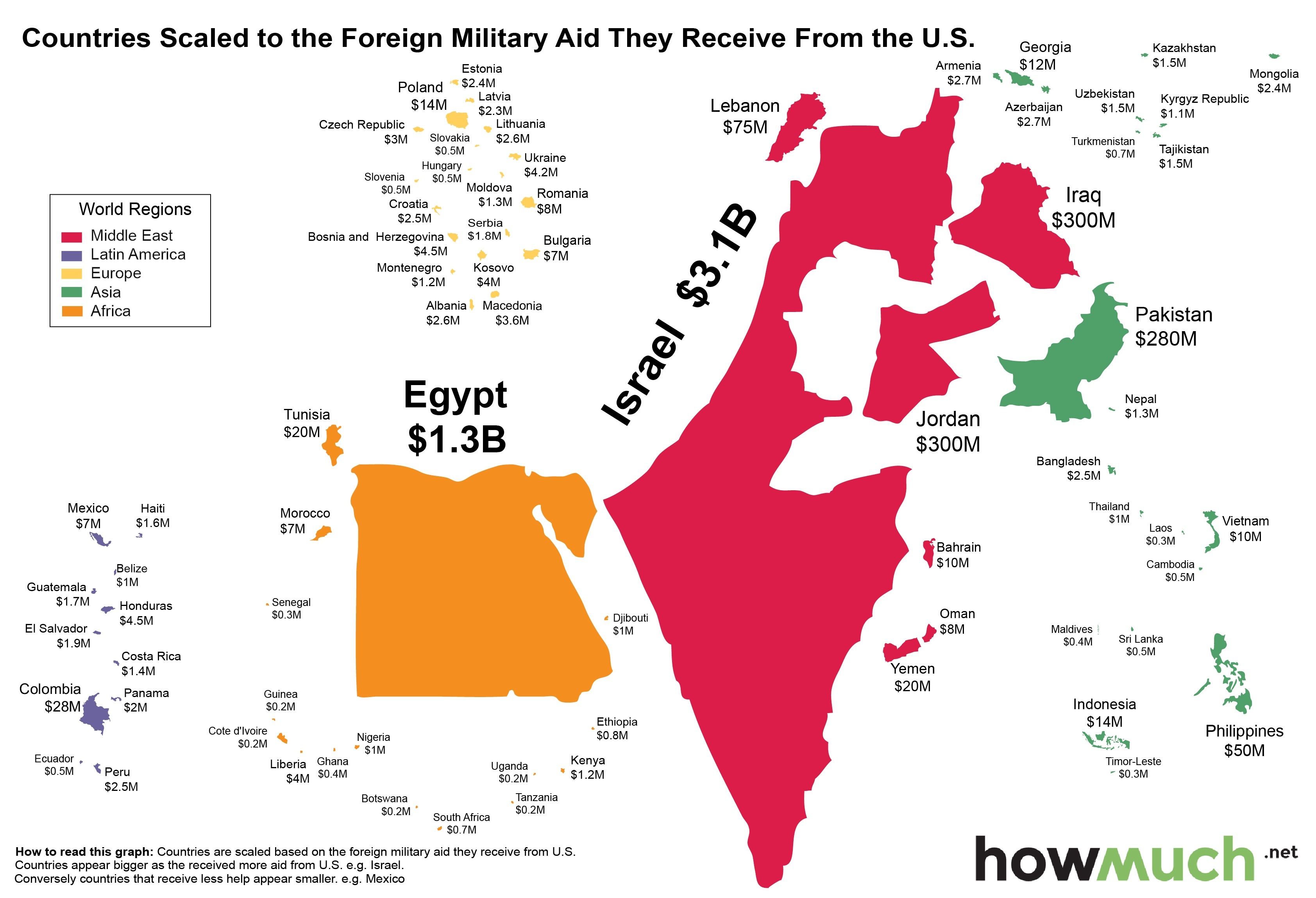
Today, Sisi’s regime can continue its crackdown with impunity partly because the United States and other world powers made clear that they favor stability over democracy. Much of the West accepted the coup and has remained largely silent about the sham trials and mass death sentences being handed down by the Egyptian judiciary. The United States provides Egypt with $1.3 billion in military aid each year, but it has been reluctant to use that as leverage against the Egyptian regime. Neither President Barack Obama nor Secretary of State John Kerry has substantively criticized Sisi’s dictatorship. [Continue reading…]

An editorial in the New York Times says: Viewing its alliance with Egypt as too crucial to fail, the Obama administration has done too little to confront the Sisi government’s expanding authoritarianism. Congress has continued to award Egypt $1.3 billion in military aid each year, despite ample evidence that its armed forces commit human rights abuses with impunity. The Obama administration and other Western governments have sought to nudge the Egyptian government to protect civil liberties with gentle public admonishments.

That approach is clearly not working. Egypt desperately needs international investment and deeply values its military relationship with the United States. Trade and military aid should be conditioned on clear signs that the government will respect freedom of expression and what’s left of the country’s civil society. [Continue reading…]

Facebooktwittermail

Hillary Clinton is an enemy of Israel

Gideon Levy writes: Hillary Clinton’s election as U.S. president would ensure Israel’s continued decline and degeneration. And so she is not a friend, but an enemy. She must not be allowed to deceive and present herself as a friend of Israel, as she tried so ingratiatingly to do in an article published in The Forward (“How I would reaffirm unbreakable bond with Israel — and Benjamin Netanyahu”) last week. The tear ducts were targeted as she wrote of how she assisted Magen David Adom in being accepted to the International Red Cross. But she and those like her – false friends of Israel – have been one of the curses on this country for years. Because of them, Israel can continue to act as wildly as it likes, thumbing its nose at the world and paying no price. Because of them, it can destroy itself unhindered.

Whether Clinton believes what she wrote or simply wanted once again to sell her soul for a fistful of dollars from Haim Saban and other Jewish donors, the result is extremely embarrassing. A love letter to Israel, the likes of which no U.S. statesman would ever write to another country. Americans believe “Israel is more than a country – it’s a dream,” she states. Most of the world calls it a nightmare, yet Clinton says a dream. What dream exactly? The dream of tyrannical control over another people? Racism? Nationalism? The killing of women and children in Gaza?

What happened to the Hillary Rodham Clinton who in her youth fought for civil rights and against the Vietnam War, and as a lawyer specialized in children’s rights? Did she not hear what her dream state is doing to Palestinian children? What happened to the glorious career woman who was considered liberal and justice-seeking on her way up? Did she forget it all? Does money buy everything? Or, when it comes to Israel, do all principles suddenly change?

Did the former secretary of state not hear about the Israeli occupation? After all, she didn’t mention it once in her article. This is not the time or place to anger Saban. To Clinton, Israel is a “thriving democracy” and to hell with the violent and totalitarian regime in its backyard. And so Clinton is also an enemy of peace and justice. She doesn’t believe there has been the slightest damage to Palestinian rights. Israelis being stabbed in Jerusalem “appalls” Clinton. Palestinians being unjustifiably shot to death, meanwhile, fails to register with her. They will love her for that on Fifth Avenue. Religious figures who encourage killing are, of course, only Muslim; only Israeli security must be vouchsafed. The synagogues of Manhattan will love that, too. [Continue reading…]

Facebooktwittermail