Category Archives: Editorials

Syria and the quest for objectivity

When it comes to press coverage, analysis, commentary, and blogging on the Arab Spring, objectivity has been a rare commodity — no more so than in the case of reporting the unrest/revolution/rebellion/civil war in Syria.

The difficulty in getting a clear picture of what’s happening inside a country now wracked by violence — a country in which so many outside powers have strong interests in the outcome — has been greatly compounded by the barriers to reporting imposed on journalists.

One journalist who has been able to conduct a more extensive investigation than any other is now being forced to defend the integrity of his work because he is being accused of spying for the Assad regime. The journalist in question is Nir Rosen and anyone who has followed his career over the last decade would know that it is absurd to imagine that he would compromise his work (and life) in this way.

Unfortunately, there are those with an endless appetite for conspiracy theories who are convinced that truth must always be a guarded secret demanding to be exposed rather than something much more complex that no one can fully discern. For those with such a mindset, there is probably little Rosen can say which will allay their suspicions, yet since his work is now being challenged he has been compelled to speak out.

Nir Rosen writes: In my nine years as a journalist I was accused of being an agent for the Americans, Iranians, Israelis, Qataris, the Afghan government and others. We journalists are used to these silly and ignorant slurs. The Taliban sentenced me to execution once because they thought I was a spy. But they are less sophisticated than others, I thought. So while I feel it is beneath me to respond to the contemptible people who now accuse of being an agent for the Syrian regime, I must do so anyway.

I have been accused of having “contact” with the Syrian regime. Of course this is true. I am not ashamed of it. I am a journalist. It is my job. We struggle to obtain contacts and access. This is the currency of our profession. I spent four months in Syria during the uprising writing and filming for al Jazeera. Though my last article was published by Foreign Policy.

I requested and received two visas which allowed me to enter Syria. No conditions or limitations were placed on me. I tried to help other journalists enter Syria one way or another as well. In January I was in touch with my friend, the late Anthony Shadid, who was frustrated that he was being denied a visa and was asking me for advice on whether he could get a visa or from where he should try to enter.

In the past I have requested and received access from American military Public Affairs Officers to embed in Iraq or Afghanistan, from Mahdi Army leaders in Sadr City, al Shabab commanders in Somalia, Mexican drug cartel leaders, Mujahedin leaders in Falluja, former Taliban Minister of Defense Mullah Baradar, and worst of all even from the Israeli Government Press Office so that I could operate in Occupied Palestine.

Some journalists compromise their work to obtain access and the privileges that come with it. I never have. As my work shows. And which is why I lose access as much as I gain it. Doing your job right often means burning those bridges and later losing access, but that’s part of the process of finding out truths people dont want to be revealed. The goal of my work has always been to challenge and subvert those in power. Any power. My own views on journalism can be found here.

I believe the trove of leaked emails from the Syrian government are indeed all real. The emails which contain my name are certainly real, I don’t mind saying. They are from people who were introduced to me and other western journalists as media and public relations advisers to the Syrian government or the president himself. They are the same people who arranged for the ABC News interview with Barbara Walters, for the Sunday Times interview with Bashar al Assad, for Agence France Presse, and for others to enter Syria. This is normal. How else does a journalist enter a country such as Syria?

In November 2011 after al Jazeera conducted a live interview with Iran’s president Ahmedinajad, I tried to persuade media advisers to the Syrian president that they should grant a similar one to al Jazeera’s English network. I sent them several emails trying to persuade them it was a good idea, including an email with my CV and biography. I also met with these media officials to try to persuade them.

And as this November email also shows, I forwarded them a link to a BBC program on Syria done by the heroic Paul Wood in order to try to persuade them that journalists are coming in anyway and they might as well let al Jazeera in formally.

Importantly, the fact that I had to send my resume and biography to establish my credentials for an interview bid with Assad and the very need for sending these things shows I was not an agent for them. And I never communicated any information to the authorities that was not already in the public domain by that point. It was normal for journalists to receive visas by communicating with the Syrian government back in November and I was not the only one. Now it is assumed that journalists have to sneak into Syria.

They did not want to let media they perceived as “hostile” to enter Syria so I sent links or told them about the many excellent (in my view) news programs that had already been aired by journalists from BBC, Sky News and other European agencies who had sneaked into Homs, meaning it was pointless to deny al Jazeera access when everybody can get in.

I did not inform on journalists who were already in Syria. In fact in my four months in Syria I never crossed paths with a journalist who had sneaked into the country and like the rest of us, I only found out that they had been in Syria once they left and published their stories or aired their news programs. These journalists, like Paul Wood, Ghaith Abdul Ahad, or my late friends Anthony Shadid and Marie Colvin, did amazing and important work. But because they were “embedded” with the opposition in one location their view was limited. My visa allowed me to travel throughout the country and obtain a more holistic picture of the situation. There is nothing else in English, Arabic or any other language as extensive as the coverage of Syria I was able to provide based on a visa that allowed me entry and my own resourcefulness which made it possible for me to travel from Daraa to Idlib unhindered. [Continue reading…]


Facebooktwittermail

The campaign to silence Gilad Atzmon

Speaking at a panel discussion on “Jewish identity politics” in London last October, shortly after the publication of his book, The Wandering Who?, Gilad Atzmon made this observation:

Identity drifts you far away from what you are.

This is the issue. This is one of the most important [issues raised in the book] — I wouldn’t like to call it a revelation because maybe I’m not the one who brought it up — but people who know who they are, they don’t need identity.

Identity is actually a form of identification.

This book is now endorsed very widely by a lot of people, a lot of Muslims and Muslim converts wrote about it, like the one I have in mind at the moment is Kevin Barrett who wrote, this is the most important text — he is definitely not a Jew, he is a Muslim — he said this is a very important text for me about identity politics. It teaches me how to drift away from this whole restricting discourse into a society where we can celebrate who we are without falling into a kind of methodical discourse that tells us who we should be or what we ought to be.

This merits repetition and reflection: people who know who they are, don’t need identity.

And the converse is also true: people who cling to an identity, don’t know who they are.

For some people, these philosophical observation are not of the slightest interest when articulated by Atzmon for the simple reason that he has been labelled an antisemite. Thus, for someone like Alan Dershowitz, Atzmon is beneath contempt. Instead, Dershowitz shamelessly directs his venom at anyone in a position of influence who dares to suggest that Atzmon’s ideas are worth reflecting upon.

Atzmon is unphased, but he isn’t just getting attacked by Zionists.

“Not only has my latest book, The Wandering Who?, rocked the boat, but it also has managed to unite Alan Dershowitz and Abe Foxman with Ali Abunimah and Max Blumenthal. That is pretty encouraging: it means that peace may prevail after all.”Gilad Atzmon, March 14, 2012.

The Emergency Committee for Palestine has now spoken:

For many years now, Gilad Atzmon, a musician born in Israel and currently living in the United Kingdom, has taken on the self-appointed task of defining for the Palestinian movement the nature of our struggle, and the philosophy underpinning it. He has done so through his various blogs and Internet outlets, in speeches, and in articles. He is currently on tour in the United States promoting his most recent book, entitled, ‘The Wandering Who.’

The Wandering Who? Gilad AtzmonWith this letter, we call for the disavowal of Atzmon by fellow Palestinian organizers, as well as Palestine solidarity activists, and allies of the Palestinian people, and note the dangers of supporting Atzmon’s political work and writings and providing any platforms for their dissemination. We do so as Palestinian organizers and activists, working across continents, campaigns, and ideological positions.

Atzmon’s politics rest on one main overriding assertion that serves as springboard for vicious attacks on anyone who disagrees with his obsession with “Jewishness”. He claims that all Jewish politics is “tribal,” and essentially, Zionist. Zionism, to Atzmon, is not a settler-colonial project, but a trans-historical “Jewish” one, part and parcel of defining one’s self as a Jew. Therefore, he claims, one cannot self-describe as a Jew and also do work in solidarity with Palestine, because to identify as a Jew is to be a Zionist. We could not disagree more. Indeed, we believe Atzmon’s argument is itself Zionist because it agrees with the ideology of Zionism and Israel that the only way to be a Jew is to be a Zionist.

This statement — part of an open letter titled “Granting No Quarter: A Call for the Disavowal of the Racism and Antisemitism of Gilad Atzmon” — was preceded by a similar denunciation, “Not Quite ‘Ordinary Human Beings’ — Anti-imperialism and the anti-humanist rhetoric of Gilad Atzmon,” written by “some North American anti-imperialists,” and signed by a large number of representatives of the Palestinian solidarity movement.

They say at the end of their statement: “We wish to reiterate that we consider many of those promoting Atzmon’s work to be allies, but would ask that they reconsider their decision to do so. This is not a call for censorship, but for consistency and accountability.”

What is clear is that Atzmon offends, antagonizes and is felt as threatening by a number of anti-Zionists. The group of Palestinian activists who I facetiously labelled the Emergency Committee for Palestine are making a show of solidarity with fellow anti-Zionists. Their move might be well-intentioned, but at the same time it is by its nature, presumptuous, patronizing and authoritarian.

What should follow this disavowal? Should there be a book-burning event in order to protect the minds of those of us who might be so imprudent as to show some curiosity about Atzmon’s ideas?

Statements of disavowal and denunciation, the picketing of Atzmon’s lectures, and a campaign to persuade others not to provide Atzmon with a platform — if this is not an effort at censorship, what would be involved in actually trying to silence Atzmon?

In reality, this is clumsy neo-McCarthyism. It deserves no more respect than the pronouncements of Zionists like Dershowitz who as much as he might profess a belief in the value of free speech will do whatever he can to silence those he opposes.

A year ago, Rabbi Michael Lerner, who had heard the criticisms leveled at Atzmon, did something that few of these critics have the courage to do: he invited the-man-who-should-be-shunned into his home and engaged him in conversation. Unfortunately, it doesn’t appear that the whole discussion has been put online, but here’s a snippet that is worth watching — unless of course one wants to follow the advice of the disavowalists.

At the conclusion of a response he has written to the current round of criticism, Atzmon says: “If my opposition is concerned with my thoughts, it will have to learn to debate. Before we can proceed, I guess, my detractors may have to actually read my book and decide exactly what they are against.”

He says this in full awareness that many of his critics prefer to rely on the judgements of others rather than engage in their own inquiry. This has led to an absurd situation: Atzmon’s lectures are being picketed by individuals who when confronted by him admit that they have not actually read his work, but instead merely rely on damning quotes, cherry-picked by anti-Atzmon activists who seem to welcome neither free speech nor free inquiry.

Free speech is not some fatuous liberty like being able to shop on EBay or dye your hair purple. The reason we have free speech is because in a society governed by the people, no one can be allowed the privilege or assume the power of becoming the guardians of thought. Those who try to limit the free exchange of ideas have a casual and dangerous disregard for the value of political freedom.

No one is being forced to consider what Atzmon has to say — but neither should anyone try and coerce others to refrain from pursuing such an interest.

There is something frankly moronic about any political culture where individuals are encouraged to swallow or reject ideas simply because of the reputation of the source. This is an insult to human intelligence and an invitation to intellectual idleness.

For those with an interest in the dangerous activity of thinking — and in defiance of those who pronounce I should not be providing such a platform — here is a panel discussion on “Jewish identity politics” in which Atzmon was joined last fall by Irving Rappaport (moderator), Glenn Bowman (social anthropologist, University of Kent), Oren Ben-Dor (Reader in the Philosophy of Law, University of Southampton — who remains silent for reasons unknown), and Karl Sabbagh (author, journalist and television producer).

The discussion, followed by questions, runs for one hour forty minutes, divided into ten parts. It’s well worth watching from beginning to end.

Part One

Part Two

Part Three

Part Four

Part Five

Part Six

Part Seven

Part Eight

Part Nine

Part Ten

Facebooktwittermail

On Iran, most Americans favor diplomacy but most American Jews favor war — corrected

Correction: As a reader pointed out, the report I linked to at Haaretz is from 2009. My mistake. The 66 percent American Jewish support for an Israeli attack on Iran comes from the 2009 Annual Survey of American Jewish Opinion conducted by the American Jewish Committee. The 2011 survey puts that level of support at 68 percent and this is in response to the question: If diplomacy and sanctions fail, would you support or oppose Israel taking military action against Iran to prevent it from developing nuclear weapons?

In a new University of Maryland poll of American public opinion, only 24 percent of those polled said they favor an Israeli strike against Iran’s nuclear program. A national poll of American Jews however, shows that 66 percent of them favor an Israeli attack on Iran.

In an indication that American Jews are out of sync with Israeli Jews, a poll conducted in Israel in November showed that only 43 percent favored an Israeli attack.

When it comes to American Jewish views on the creation of a Palestinian state, opinion is divided with 49 percent in favor and 41 percent against. However, 75 percent agree with the statement: “The goal of the Arabs is not the return of occupied territories but rather the destruction of Israel.”

Facebooktwittermail

Did Israel provoke Gaza escalation to test Iron Dome?

Four days ago I suggested that the reason Israel assassinated the Popular Resistance Committee leader Zuhair Qaisi in Gaza may have had less to do with foiling an attack and much more to do with testing Iron Dome. Yousef at The Jerusalem Fund agrees, saying that a successful test of the missile defense system could go a long way to assuage the Israeli public’s fears about retaliation from Iran following an Israeli attack.

The greatest obstacle to Israeli public support for a unilateral Israeli strike on Iran is the belief that the consequences of the attack from Iran, Hezbollah and other factions like Islamic Jihad, would be too high a cost to bear.

What could the Israeli government do to change this perception? Well, a successful large scale live action test of the US funded Iron Dome would probably help, and assassinating a PRC militant would provoke the projectiles to trigger one.

In the glow of the test’s successful outcome, Israel’s defense minister Ehud Barak didn’t even seem to think it was worth the effort to perpetuate the narrative that Qaisi had ever posed an imminent threat. After the militant leader’s assassination, Barak said: “it is not completely clear what the plan was and where, or if it had been foiled.”

Facebooktwittermail

U.S. officials continue to conceal the identity and now whereabouts of accused soldier

Over three days after 16 Afghan citizens were murdered, U.S. military officials have still not revealed the identity of the American soldier who is believed to have shot them.

Earlier today the Associated Press reported:

Afghan lawmakers have demanded that the shooter, identified by U.S. officials as a staff sergeant, face a public trial inside Afghanistan. They have called on Afghan President Hamid Karzai to suspend any negotiations with the U.S. on a long-term military pact until this happens.

“No final decision has been made yet” on the location of the trial, said Col. Gary Kolb, a U.S. military spokesman in Afghanistan.

“We have done court martials in Afghanistan before, so we have the capability,” Kolb said. “They’ll take a look at all the circumstances and determine if they do it here or if it goes back to the States.”

The AP now reports that the soldier has been whisked out of the country:

The soldier was taken aboard a U.S. military aircraft to a “pretrial confinement facility” in another country, the official said, but would not confirm if that meant an American military base or another type of facility. The official spoke anonymously because the information had not yet been publicly announced.

The official did not provide a reason for the move, saying only that legal proceedings would continue outside of Afghanistan.

Facebooktwittermail

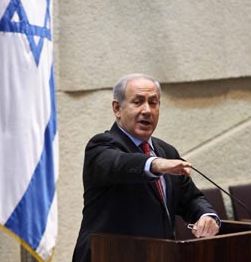
If Netanyahu doesn’t strike Iran, will he launch another war on Gaza instead?

Did Benjamin Netanyahu return from his recent trip to Washington with some unsatisfied bloodlust?

It seems increasingly unlikely that Israel will go it alone and attack Iran’s nuclear facilities without American support. In the Knesset today, Netanyahu said: “Over time we will discover that our relationship with the United States is becoming stronger and closer.”

That’s the kind of statement one might expect from a prime minister who’s reconciling himself to the idea that the current U.S. president will probably be around for a lot longer than the Israeli leader had initially hoped.

As much as he might trumpet Obama’s recognition that Israel has the right to defend itself, Netanyahu’s emphasis on Israel’s autonomy looks more than anything else like a way of justifying his deference to American demands to give sanctions and diplomacy a chance.

But if under pressure from the U.S. and from his own military and intelligence advisers the Israeli prime minister has been forced back down somewhat from his aggressive posture towards Iran, no doubt he wants to do it in a way through which he can avoid losing face.

If Netanyahu can’t order bombs to be dropped on Iran, then maybe he can satisfy his need to look strong by slaughtering Palestinians instead.

Here’s how he now justifies that latest (and next?) round of blood-spilling:

“Make no mistake,” he stated, “Gaza is Iran. The missiles are Iran, the money is Iran, the infrastructure is Iran and in many cases the instruction are form Iran. Gaza is a front post for Iran.

“Iran has been allowed into Gaza – and will take it out of Gaza,” he continued. Netanyahu’s speech was interrupted several times by Arab MKs, who were called to order by Knesset Speaker Reuven Rivlin.

“Our enemies must know that Israel will not tolerate an Iranian terror base in Gaza Strip and sooner or later it will be ripped out.”

And what will this “ripping” entail? Cast Lead Two?

The fact that Hamas has very publicly parted ways with Iran is apparently of no consequence to those in Israel who have a religious devotion to symbols of hatred. That Hamas even went so far as to say that it would not involve itself in a war between Israel and Iran, supposedly means nothing.

The constituency that Netanyahu is reaching out to is presumably the same one that responds well to images like this:

Ami Kaufman, at +972, caught this. It shows Alon Ben David, the military correspondent for Israel’s Channel 10, presenting the “score” from this weekend’s violence: “Death toll: Israel: 0, Gaza: 25”

Facebooktwittermail

… as if it were our own citizens

“The United States takes this as seriously as if it was our own citizens, and our children, who were murdered,” President Obama said today, referring to the 16 Afghan citizens who were apparently killed by a single American soldier before dawn on Sunday morning. “We’re heartbroken over the loss of innocent life.”

Yet more than two days after the shooting, the Pentagon has still not named the suspect.

Contrast this with the 2011 Tuscon shooting in which six people died and Jared Lee Loughner’s name and photo were being published by every mainstream media outlet within hours.

The unnamed soldier responsible for Sunday’s massacre will likely become the only American soldier whose name the people of Afghanistan never forget.

As much as the White House and the Pentagon work to present this turn of events as an aberration, it will for most Afghans and much of the world come to symbolize America’s involvement in a country few Americans knew anything about before 9/11 and just as few care much about now.

Once this soldier’s name is eventually made public it seems likely that whatever motivated him to go on a brutal yet systematic rampage, his actions will be portrayed as the product of the singular workings of his own mind or damaged brain. The Pentagon will present this as the story of soldier X — not the closing chapter in an ill-conceived war.

But there might be another reason the suspect has not already been named.

Two of the villagers who lost relatives insist that at least two soldiers took part in the shootings, according to the Associated Press.

One Afghan guard saw a U.S. soldier leave the base at 1.30am. This guard’s replacement also saw a soldier leave at 2.30am. It has yet to be determined whether this was the same soldier.

In the event that there was indeed more than one soldier involved in the shooting, the narrative of an aberrant possibly brain-damaged individual, falls apart.

This would not only be a mass murder but also a conspiracy and it could no longer be attributed to the cognitive or moral degeneration of one mind.

The more slowly the facts emerge, the more one has to wonder whether it is because they are so hard to determine or because there is looming fear about where the facts might lead.

Facebooktwittermail

Why attack Gaza now?

Israel’s latest assault on Gaza began with a missile strike killing the secretary general of the Popular Resistance Committees, Zuhair Qaisi. His assassination was justified on the grounds that it “foiled a major terror attack,” the Jerusalem Post claimed. [My emphasis]

Yet the same report went on to say: “The IDF decided on Friday to close Route 12 – which runs along the border with Egypt – due to fears that the planned attack might still take place.” [My emphasis.]

The Post also reported:

Assessments ahead of the decision to bomb the car carrying Zuhair Qaisi predicted that around 100 rockets could be fired into Israel during each day of the round of violence expected to erupt. This was a price the government felt it was capable of paying.

Setting aside the question of whether the price of the attack is being paid by the Israeli government, the residents of Southern Israel or those in Gaza, 100 rockets a day might have been less of a price and more of a reward.

How so?

Even while ratcheting up the threat of war on Iran, the Israeli government has been cutting spending on domestic defense. It doesn’t want to spend more on Iron Dome anti-missile batteries which would be its primary defense from missiles being fired by Hezbollah from Southern Lebanon in the event that they launched attacks in response to an Israeli strike on Iran’s nuclear facilities.

During the 2006 Lebanon war, about 900 rockets hit urban areas in Northern Israel. That averaged about 27 a day.

The Post reports on the current round of rocket attacks:

The three Iron Dome batteries deployed in Ashdod, Ashkelon and Beersheba succeeded in interpreting [sic] 27 rockets fired from Gaza out of 30 that they tried to shoot down, marking a record-high interception rate of 90 percent.

So was this the point of the exercise? Assassinate a militant leader in order to trigger a significant reprisal with rocket attacks in order to then test the Iron Dome batteries in battlefield conditions?

Hamas is committed to a political track that makes them very reluctant to get dragged into another war and they have also ruled out offering military support for Iran in any war with Israel. Israel probably calculated that the risks of escalation beyond a few days of rocket attacks were fairly low.

So as for who actually pays the price for Israel’s Iron Dome test exercise, more than anyone else it ends up being the residents of Gaza — the people that Israel treats as its laboratory animals for testing its war machine.

Facebooktwittermail

Renewed Israeli assault on Gaza

The latest round of violence was triggered by Israel’s assassination of Zuhair al-Qaisy secretary-general of the Popular Resistance Committees along with two associates in an airstrike on Gaza yesterday.

Ynet reported:

Minister of Home Front Defense Matan Vilnai stressed on Saturday that “the IDF is not planning on launching another military campaign in Gaza.

“This round of fighting began due to the targeted killing of a PRC operative who was in the midst of planning another attack. It was clear to the security establishment that this would lead to an escalation, but targeting him was necessary,” he noted.

Israel repeatedly trots out these two explanations for its attacks: that it is thwarting a Palestinian attack that is being prepared or that it is directly targeting rocket-launching sites. But if the escalation of rocket attacks on Southern Israel (apparently 100 rockets so far) is greater than the attack that has supposedly been thwarted, there’s little logic to this kind of “preemptive” attack.

As always, there seems to be greater reason to think that Israel initiates an action like this for political rather than security reasons.

Hamas’s political power is rising. It has struck a deal on joint governance with Fatah and in response to the Arab Spring is strengthening its ties with other branches of the Muslim Brotherhood while severing its ties with Syria. It now has growing political support from Qatar, Egypt, and Turkey.

In this context, Benjamin Netanyahu would no doubt prefer to see Hamas abandon its ceasefire with Israel. While he is internationally perceived as a man itching to start a war on Iran, a few dozen rockets getting fired at Israel is probably a welcome sight since it helps renew the appearance of Israel as victim rather than aggressor.

Hamas seems unlikely to rise to the bait and given that they already announced that they would not involve themselves in a war between Israel and Iran, many Israelis (especially those in the south) must be wondering how they are served by a defense force that might more accurately be called the Israel Provocation Force.

Facebooktwittermail

Kony baloney

Invisible Children filmmakers pose with officers of the Sudan People’s Liberation Army on the Congo-Sudan border during failed peace talks between the LRA and the Ugandan Government, April 2008. Photo by Glenna Gordon.

Here’s how far behind the crest of the social media wave I ride: it wasn’t until last night that I heard about Kony2012. Google News had by that point insisted that this was the most important news in the world and so I tracked down the video. Mind you, just because something is spreading like a contagious disease (it’s “gone viral”) seems little reason to suppose it must be a good thing.

The New York Times takes a sip of the #StopKony Kool Aid:

Jason Russell said he never knew he was driving into a war zone. At 24, he had just graduated from the University of Southern California after studying film, he said, and was out looking for a story to tell.

Suddenly, he said, gunmen shot at the truck in front of him, and that is how he discovered the horrors wrought by Joseph Kony and his Lord’s Resistance Army. Mr. Russell would dedicate the next nine years of his life, often in obscurity, to making them a household name.

This week, in a testament to the explosive power of social media, he managed to do so in a matter of days, baffling diplomats, academics and Ugandans who have worked assiduously on the issue for decades without anything close to the blitz of attention that Mr. Russell and his tight-knit group of activists have generated.

Since being posted on Monday, their video, “KONY 2012,” has attracted more than 50 million views on YouTube and Vimeo, generating hundreds of thousands of dollars in donations on the first day alone and rocketing across Twitter and Facebook at a pace rarely seen for any video, let alone a half-hour film about a distant conflict in central Africa.

But is this a film about a distant conflict in central Africa?

While we are being told it’s all about the invisible children of Uganda threatened by the baddest man in the world, Joseph Kony, the real stars of the video are its maker, Jason Russell, and his son, Gavin. And as an exercise in awareness raising, Russell sets the bar pretty low — as though it would be enough to promote a message a child of any age could understand. Let’s get the bad guy. Yeah! The filmmaker apparently also has an eye on another prize — an Oscar.

Michael Deibert points out that Invisible Children doesn’t merely oversimplify the issues with its narrow focus on Joseph Kony — it will actually make matters worse by empowering the central government in Kampala.

The problem with Invisible Children’s whitewashing of the role of the government of Uganda’s president Yoweri Museveni in the violence of Central Africa is that it gives Museveni and company a free pass, and added ammunition with which to bludgeon virtually any domestic opposition, such as Kizza Besigye and the Forum for Democratic Change.

By blindly supporting Uganda’s current government and its military adventures beyond its borders, as Invisible Children suggests that people do, Invisible Children is in fact guaranteeing that there will be more violence, not less, in Central Africa.

I have seen the well-meaning foreigners do plenty of damage before, so that is why people understanding the context and the history of the region is important before they blunder blindly forward to “help” a people they don’t understand.

U.S. President Bill Clinton professed that he was “helping” in the Democratic Republic of Congo in the 1990s and his help ended up with over 6 million people losing their lives.

David Leon is similarly enraged by Invisible Children’s fixation on Kony.

In the whole half hour of the video, the name of Yoweri Museveni does not even crop up once. Museveni has been President of Uganda for the past 26 years, and it is against his rule that the LRA rebellion started. He is a corrupt autocrat, ineffective in providing basic social and economic services, with a history of well-documented human rights violations – not least of which was his role as a major instigator of the Second Congo War with his invasion and occupation of the DRC, a conflict which resulted in the deaths of 5.4 million people, making it the bloodiest conflict worldwide since World War II. Although the conflict officially ended in 2003, it was estimated that in the following year, there were 1000 deaths every single day from disease and malnutrition in the Democratic Republic of Congo as a result of the destruction caused by the war– these are the real invisible deaths, not the spectacular kidnappings of a crazed jungle warlord.

A charity that rewards its staff well and uses less than a third of the funds it raises on direct aid, can, as one newspaper in Uganda suggests, be viewed as merely having positioned itself to “make a quick buck” while “feeding off their harrowing tales” of those it claims to help.

Facebooktwittermail

Netanyahu — guided by tales of genocide (updated)

After Benjamin Netanyahu’s meeting at the White House with Barack Obama on Monday, Haaretz reported:

The Iran issue was the focus of the talks. It permeated everything from the agenda of the one-on-one meeting to Netanyahu’s gift to Obama: a decorated copy of the Book of Esther, which will be read tomorrow night and Thursday morning at Purim services around the world. It recounts the story of the evil Persian King Ahasuerus and his viceroy, Haman, who tried but failed to annihilate the Jewish people.

“Then, too, they wanted to wipe us out,” Netanyahu told the president.

Robert Wright points out that not every Biblical reference to the Persians is negative.

Netanyahu could choose to emphasize a part of the Hebrew Bible that depicts Persians in a more flattering light. For example, the part that calls Cyrus the Great, the Persian king, the “messiah” because he delivered the exiled Israelites back to their home. (Yes, the only non-Hebrew called messiah in the entire Hebrew Bible is a Persian!)

To be sure, Esther is a book of special significance for Jews this week and so was in that sense an appropriate gift. But it’s not as if diplomatic protocol demands that you give the President a religious text when visiting him. Had Netanyahu not been inclined to cast Persians in a bad light, he could have just given Obama, say, a paperweight or a nice fountain pen.

Of course, those things wouldn’t have had quite the same emotional impact on conservative American Jews and conservative American evangelicals as a Bible story that, by Netanyahu’s reading, depicts Iranians as eternal enemies.

This idea that the Bible can shed light on contemporary Israeli-Iranian relations seems to figure prominently in Netanyahu’s thinking.

In May, 2009, Daniel Lubin wrote:

Jeffrey Goldberg’s latest op-ed in the New York Times contains the following interesting passage:

I recently asked one of his advisers to gauge for me the depth of Mr. Netanyahu’s anxiety about Iran. His answer: “Think Amalek.”

“Amalek,” in essence, is Hebrew for “existential threat.” Tradition holds that the Amalekites are the undying enemy of the Jews. They appear in Deuteronomy, attacking the rear columns of the Israelites on their escape from Egypt. The rabbis teach that successive generations of Jews have been forced to confront the Amalekites: Nebuchadnezzar, the Crusaders, Torquemada, Hitler and Stalin are all manifestations of Amalek’s malevolent spirit.

If Iran’s nuclear program is, metaphorically, Amalek’s arsenal, then an Israeli prime minister is bound by Jewish history to seek its destruction, regardless of what his allies think.

Strangely, Goldberg does not mention what is perhaps the most striking and well-known fact about the Amalekites: they were the targets of divinely sanctioned genocide. As related in 1 Samuel 15, God instructed the Israelite king Saul to “go and smite Amalek, and utterly destroy all that they have, and spare them not; but slay both man and woman, infant and suckling, ox and sheep, camel and ass.” Saul “utterly destroyed all the people with the edge of the sword,” but spared their king Agag and the best of Amalek’s livestock, for which he was punished by God. When Saul’s successor David attacked the Amalekites (along with the Geshurites and Gezrites), he “smote the land, and left neither man nor woman alive.” (1 Samuel 27:9).

Unsurprisingly, these passages have been the subject of a great deal of commentary in the millenia since, and a number of rabbis have offered interpretations that seek (with varying degrees of success) to mitigate the apparent brutality of God’s command. But as Christopher Hitchens noted a few months ago, Amalek has also in recent decades become a rhetorical touchstone on the right-wing fringes of Israeli society, as rabbis such as Schmuel Derlich and Israel Hess have promoted the idea that the Palestinians are the new Amalekites and must be dealt with accordingly. Apparently Netanyahu has altered this line of thinking to identify the Amalekites with the Iranians rather than the Palestinians.

Goldberg clearly does not wish to rattle his right-thinking liberal New York Times audience, so he conveniently omits all this from his account of Amalek. However, if Netanyahu’s advisors are right to say that Bibi sees Iran as the new Amalek, this is a fact with profoundly disturbing implications. After all, the biblically ordained way to deal with the Amalekites is not through “smart but tough” diplomacy, “crippling” sanctions, or even precise and targeted military strikes. Rather, it is through root-and-branch extermination — that is, wiping Iran off the map.

UpdateMarsha Cohen provides some scholarly analysis which shows why the Book of Ester (like the rest of the Bible) should not be viewed as a record of history:

Although many apologists for the Book of Esther have claimed its author was familiar with the intimate details of life at the Persian court, such claims don’t hold up in light of what we now know of Persian history (559-331 BC), apart from the copious Greek propaganda produced during the Greco-Persian Wars (492-449 BC).

A Persian king sleeping with a virgin every night? This sounds remarkably like premise of the tale of Sharazad in Hezar Afsaneh, a collection of ancient Persian folk tales. According to Elias Bickerman, a highly respected scholar on Jewish literature of the Achaemenid Persian period, “We have here a typical tale of palace intrigue that could as well find a place in the Persian histories of Herodotus and Ctesias, or in the Arabian Nights. The only Jewish element of the tale is that, according to the author, Mordecai is a Jew.” “Mordecai” was not a Jewish name in ancient times (it is now); nor was “Esther.” In fact, it has been noted numerous times that the two names bear a remarkably close resemblance to those of the Babylonian deities Marduk and Ishtar.

A Persian king marrying a mysterious Jewess who kept her origins secret for five years (especially with her known to be Jewish cousin/uncle lurking around outside, exchanging messages with her through courtiers)? No way! A Persian king’s marriages, as Maria Brosius explains, were alliances with the daughters of foreign potentates and the leading families of the Persian empire for reasons of statecraft. The Achaemenid Persian tradition seems to have been postponing the designation of any of the king’s wives as what might best be translated as “queen” until after she had given birth to his designated heir. Neither Esther nor Vashti is mentioned as having been the mother of Ahasuerus’ children. Furthermore, a Persian monarch’s mother and his wife were entitled to see him whenever they wished.

Finally, there is no historical record of any King Ahasuerus or a Queen Vashti, and, most significantly, no record of a plot to ethnically cleanse the Achaemenid Persian Empire of its Jews. Nor is there any account by any ancient historian of vengeful Jewish mobs slaughtering nearly 76,000 residents of the Persian Empire.

Facebooktwittermail

Washington’s undignified relationship with Israel

As a duel national born in a country fond of trumpeting its special relationship with the United States, I’m familiar with the ways foreign leaders can often embarrass themselves (and those they represent) by going too far in their expressions of affection for Uncle Sam. During his brief tenure as British prime minister, Gordon Brown for instance was no less gushing than his predecessors in saying how much he admired the United States. It didn’t do him much good though when it came to improving his access to the White House.

The one exception in special relationships, as James Fallows notes, is that between the United States and Israel and in this case the starry-eyed lover is the one that on all other occasions maintains the dignity of a great power.

In the diplomatic tone from which Fallows never strays, he referred to the “oddity” of the AIPAC appearances by U.S. politicians.

Of course politicians aspiring to any office, including the presidency, plead for support from any number of groups. Even sitting presidents, with all their augustness and power, do something similar, especially at re-election time. Barack Obama would be crazy not to remind everyone in Michigan how he pushed for the auto-bailout bill — or not to tell an AARP convention or a university crowd, respectively, about what he has done on Social Security and student-loan programs. I have seen Bill Clinton in front of black organizations, arguing that he had been their dependable tribune.

What I found odd about the AIPAC performance is that an American president was expected to make similar pleas about his reliability in support of another country’s government. Let’s imagine that Barack Obama’s next big speech is to the National Council of La Raza. We would expect him to remind the crowd what he has done on immigration and affirmative-action issues, and to contrast that with the Republicans. We would not expect him to say that he has stood with the government of Mexico “every single time.” Before a Korean-American group, we would expect him to talk about what he has done for peace on the Korean peninsula, for trade agreements, against the North Korean threat, and so on. We would never hear him say that his policies have been indistinguishable from the Republic of Korea’s. So on down a list of foreign states.

My premise is that sovereign nations are sometimes bound by formal alliances (as the US is with its NATO partners, but is not with Israel), and other times by values, ethnicity, heritage, interests, and ideals (a combination of which usually binds the U.S. to Israel, and to many other states). But their interests are not identical — a point that is obvious, and that Prime Minister Netanyahu himself made in his latest AIPAC speech. Therefore to me it seems undignified to put an American president in a setting where he is expected to proclaim “every single time” adherence to the interests and policies of another state.

Facebooktwittermail

Netanyahu asked Panetta to approve sale of bunker-busting bombs, U.S. official says

Haaretz reports: Prime Minister Benjamin Netanyahu requested the United States approve the sale of advanced refueling aircraft as well as GBU-28 bunker-piercing bombs to Israel during a recent meeting with Defense Secretary Leon Panetta, a top U.S. official said on Tuesday.

The American official said that U.S. President Barack Obama instructed Panetta to work directly with Defense Minister Ehud Barak on the matter, indicating that the U.S. administration was inclined to look favorably upon the request as soon as possible.

During the administration of former U.S. President George Bush, the U.S. refused to sell bunker-penetrating bombs and refueling aircrafts to Israel, as a result of American estimates that Israel would then use them to strike Iran’s nuclear facilities.

Following Obama’s entrance into the White House, however, the United States approves a string of Israeli requests to purchase advance armament.

Diplomatic cables exposed by the WikiLeaks website exposed discussion concerning advanced weapons shipments. In one cable which surveyed defense discussions between Israel and the United states that took place on November 2009 it was written that “both sides then discussed the upcoming delivery of GBU-28 bunker busting bombs to Israel, noting that the transfer should be handled quietly to avoid any allegations that the USG is helping Israel prepare for a strike against Iran.”

It’s widely assumed that the more bunker buster bombs there are available to the Israelis, the more inclined they will be to use them in a strike on Iran. That might not be the case however if this is a unilateral attack. The weight of the GBU-28 means that only one can be carried by each aircraft and since a significant number would inevitably miss their targets, the Israeli air force may simply be too small to mount an effective attack. Nothing will make Israel look more impotent than if after engaging in a long-threatened attack, the “day after” turns out to be one in which Iran can proudly show off an array of undamaged nuclear facilities.

Facebooktwittermail

Iran ready to push Assad aside?

An email dated December 13, 2011 (part of the intelligence trove newly released by Wikileaks) containing information gathered by Reva Bhalla, Director of Analysis at Stratfor, says that Iran recognizes that Bashar al-Assad will soon lose control of Syria and that it might be in Tehran’s interests to see him go sooner rather than later.

Both Khamenei and Ahmadinejad have concluded that Asad’s regime cannot be rescued. It is perfectly understood that the regime in Damascus will fall along lines similar to the Libyan model. There will have to be a coup in Damascus, be it a military or political one.

One must not dismiss the pragmatism of Khamenei. Iran appears to be willing to use its influence in Syria to stage a coup, provided that it is able to ensure that the new leadership will continue to pursue excellent relations with Tehran. The Iranians have approached the Americans on this. In the past, Iran collaborated with the U.S. on the ouster of Saddam Hussein and Iran won big in Iraq. The Iranians would not mind working again on ousting Asad if they can secure good results in Syria. Syria’s contiguity to Iraq allows Iran to play a direct role in the affairs of Damascus.

The Iranians feel they need to act on Syria soon because the Turks have their own plans for Syria and are not coordinating with the Iranians. He says the Turks are moving slowly but systematically. Iran does not want to allow Turkey to take over Syria. Whereas the Turks are coordinating with the Brotherhood and the FSA, the Iranians prefer a palace coup in damascus in order to maintain their ties with Asad’s successors. What is delaying action in Syria is the fact that the U.S. has not yet decided on the shape of the post-Asad political system. Nevertheless, he insists that Asad’s regime will fall, although the future of Syria after the regime change remains nebulous.

Who is “he”, Stratfor’s source? A member of Hezbollah’s politburo — not someone likely to be cheering Asad’s departure.

The analysis also says:

Alawite officers are aware that Asad is trying to find an asylum for himself and his family should his regime become unslavageable. This is upsetting many Alawites who are coming to realize that Asad will abandon them. If so, they reason that it would be suicidal to continue to win the wrath of the Sunnis.

Facebooktwittermail

How to combat anti-Zionism: defend colonialism

The prominent Israeli Zionist, Rafael Castro, presents an interesting argument in Ynet. (Over at Mondoweiss there’s a discussion on whether this piece should have appeared in Ynet or The Onion — tough call.) And as for who this Castro really is? Who knows, but dafter ideas do with some frequency come from the mouths of Zionists.

Castro notes that anti-Zionists are not anti-Semites. “[They] gladly rally against neo-Nazis and have no qualms about socializing with or marrying Jews.” He neglects to mention (a mere oversight it would seem) that many anti-Zionists are themselves Jews, but this just confirms his point.

Moreover, as Castro correctly observes, anti-Zionism is merely a strand in the broader leftist current: anti-colonialism. This therefore can only point to one logical conclusion for those who want to defend Zionism: they need to restore the unfairly tarnished name of colonialism.

The belief that colonialism was an absolute evil is so deeply engrained in the contemporary Western psyche that all enterprises bearing any parallels to it are automatically censored. This explains why people whose heroes are Bolivar and Gandhi instinctively side with the Palestinians.

To these people, claims that God promised the Land of Israel to the Jews reek of religious fanaticism. To make the argument that Israel is the only liberal democracy in the Middle East invites allegations that it pursues apartheid policies. To counter all these claims is time-consuming and requires a taste for nuances. But why should anyone trade nuances for the facile certainty that colonialism is inherently evil?

Zionism will only cease being demonized in the politically correct corners of the West once our schools and film industry cease to demonize colonialism. The politically correct depiction of the colonialist as a racist and covetous brute must give space to the majority of well-meaning administrators that helped build roads, schools, and hospitals for the natives.

It must be shown that colonialists administered law and justice far more fairly than most pre-colonial chieftains or post-colonial despots. It must be taught that human development indicators plummeted in the majority of African and Asian countries following independence.

Once an honest discussion about colonialism is tabled, hostility to Zionism will wane in leftist circles. Not because they will shed the belief that Zionism is a form of colonialism, but because it will be possible for them to appreciate the merits of Zionism.

This is an ambitious enterprise and time is running out, but if organizations like the Emergency Committee for Israel are serious about their mission they should start working on a new video series. Go out and start interviewing citizens in former colonies who can still remember the good old days when they were natives and they could rely on upstanding white men, such as officers of the British empire, to help them build railways and make the trains run on time. Imperial nostalgia! I’m sure it’s still out there. It just needs to be captured on film and then spliced together with images of IDF soldiers politely guiding elderly Palestinians through checkpoint turnstiles.

But there is one catch with Castro’s argument. Zionism is not just any old form of colonialism; it’s colonialism of the most brutal pedigree. It’s worse than apartheid South Africa, as Nelson Mandela and Desmond Tutu have both noted. Restoring the good name of brutality? That’s going to be even tougher, but hey, anything’s worth a try.

Facebooktwittermail

Dershowitz doth protest too much, and he’s at it again

Cases of spontaneous human combustion, though rare, have been documented. At this point no one seems to think rage could be the cause of ignition, but to hear him rant, Alan Dershowitz sounds like he might be at risk of setting himself on fire.

He’s certainly mad as hell — or at least that’s how he’s acting. But for a trial lawyer who so often craves media attention, it’s never really clear whether he’s as hot on the inside as he is on the outside.

Dershowitz doth protest too much, and he’s at it again. The object of his rage this time is the avuncular M.J. Rosenberg.

Rosenberg’s “sin” is that he has used — and despite severe admonishment persists in using — the unconscionable phrase Israel Firster — at least it’s a phrase that’s unconscionable in the eyes of Israel Firsters like Dershowitz.

The Magnes Zionist writes:

For years I have been waiting for Alan Dershowitz to meet his Edward R. Murrow, and I believe that he has met him in M.J. Let me tell you something about M.J. Rosenberg – to call him “anti-Israel” is as absurd as calling the New Israel Fund, J Street, the Meretz party, B’Tselem, anti-Israel – which, of course, is done everyday by the New Zealots, those self-appointed guardians of the Jewish state. M.J. has is a life-long liberal Zionist and supporter of the State of Israel, even when – especially when — he has criticized its government.

M.J. accused AIPAC of being an Israel-firster organization, and that aroused the ire of Dershowitz? M.J. worked for AIPAC for years, and he knows whereof he speaks. I can tell you that many AIPAC people I know, including relatives and friends, not only place Israel’s interests above American’s interest, they delude themselves into thinking that Israel’s interests are by definition identical with America’s interests.

M.J. allegedly tweeted in response to Dershowitz’s threats that he can go to hell. Dershowitz has responded by going nuclear. Because of his fury at Rosenberg, he is willing to attempt to cost Obama the election if the White House doesn’t publicly distance itself from Media Matters, or if Media Matters doesn’t fire Rosenberg, such is his fervor of the heresy hunter scorned. This time he has set the bar high, and, optimist that I am, I trust that he will fail.

Liberal Zionists, I am talking to you! Stand up for M.J. and you are standing up for your own against the like of those who delude themselves into thinking they are liberal Zionists. Otherwise you will end up by saying:

I was silent when Dershowitz went after Norman Finkelstein because I am not Norman Finkelstein. I was silent when he came for Matar, Giora, and Sand because, well, I had never heard of them. I was silent when he came for a liberal Zionist like M.J. Rosenberg because I don’t tweet. Then when he went after me, nobody was there to help me….

Perhaps there is a ray of light in all this. The Israeli Reut Institute last year outlined an Israel advocacy strategy of driving a wedge between the liberal Zionist and the extreme left in Israel and abroad. For the most part, it hasn’t worked. There is indeed a gap, but it is between the real liberal Zionists like M.J., Peter Beinart, Naomi Hazan, Larry Derfner, Michael Lerner, Leibel Fein, David Grossman, Amos Oz, as well as the activist groups in Israel like B’Tselem, Rabbis for Human Rights, Breaking the Silence, on the one hand, and the faux liberal Zionists like Dershowitz, Abe Foxman, Benny Morris, Ari Shavit, and all those members of the so-called “disappointed left” in Israel, on the other.

How do you distinguish between the genuine and the fake liberal Zionist? After all, both kinds say that they are for two states, oppose settlements and settlers, support territorial compromise, etc. It’s very simple: if they publicly criticize Israel’s human rights violations; if they support groups that expose such violations; if they call out Israel’s elected leaders on matters of policy and morality — in short, if they adopt the stance of moral critic because that is deep in their Jewish and mentshlich soul – then they are true liberal Zionists. All the others are deluded into thinking they are.

And no one is more deluded into thinking he is a liberal Zionist than Alan Dershowitz, who never ceases to remind his readers that he opposes the settlements and supports the two-state solution. Sorry, Professor, that is not enough to qualify. You also have to support harsh measures against the state if the settlements continue. You can’t be a liberal Zionist and support Binyamin Netanyahu, the arch-enemy of liberal Zionists. If you care about Israel as Jewish and democratic, to borrow the language of the liberal Zionists, you will – like M.J. and the others – have to fight against those Israeli government policies that are destroying the democratic nature of the state. You will join hands with human right activists, Jewish and Palestinian, who are fighting for justice. You will support, like M.J., Peter Beinart, David Grossman, and Amos Oz, boycotts against the settlers and the settlements. You will support pressure from the Americans and the European states to stop Israel’s slide into a Putin-style democracy.

Facebooktwittermail

Israeli foreign minister: ‘Obama definitely doesn’t need our advice’

Here’s a mangled piece of reporting from Josef Federman at the Associated Press. First the snippet, then the corrections:

Israel’s foreign minister said Sunday that American pressure will not affect Israeli thinking on how to cope with the threat posed by Iran’s nuclear program.

Avigdor Lieberman delivered his assessment on the eve of a key meeting between Israeli Prime Minister Benjamin Netanyahu and President Barack Obama at the White House.

Both countries believe that Iran is developing nuclear weapons, but divisions have emerged on how to confront the threat. Israel has sent a series of signals recently that military action may be needed to stop the Iranians. The U.S., while not ruling out the threat of force, has said that tough new Western economic sanctions imposed on Iran must be given time to work. Iran claims its program is for peaceful purposes.

In comments aimed at Israel, Obama said in a magazine interview last week that he is not bluffing about attacking Iran if it builds a nuclear weapon. But he also cautioned Israel that a premature attack on Iran would do more harm than good.

Asked about the president’s comments, Lieberman told Israel Radio said that Israel doesn’t “dictate anything” to the U.S.

“It is definitely important to discuss the issue in the appropriate forums and make decisions quietly and responsibly. All this chatter does not help anybody,” he said.

Asked what Netanyahu should tell Obama to ensure that Israel is not left by itself to deal with the Iranian threat, Lieberman said the sides would exchange opinions but ultimately Israel would act in its own interests.

“President Obama definitely doesn’t need our advice,” he said. “We are an independent sovereign state, and at the end of the day, the state of Israel will make the most correct decisions as we understand them.”

The report then goes on to cite a recent poll which indicates that the overwhelming majority of Israelis oppose a unilateral Israeli strike on Iran.

The actual quotes from Lieberman indicate that he doesn’t believe the U.S. needs directions from Israel — at least he wants to pay lip service to the idea that Israel has no right to try and determine U.S. foreign policy. He doesn’t talk about needing to resist American pressure.

But the most glaring factual error in this report comes here: “Both countries [the US and Israel] believe that Iran is developing nuclear weapons…”

How many U.S. intelligence reports need to be produced before journalists register that irrespective of what hyperventilating Israeli and American politicians and pundits might claim, neither the U.S. nor Israel have clear evidence that Iran is developing nuclear weapons?

The New York Times, February 24, 2012:

Even as the United Nations’ nuclear watchdog said in a new report Friday that Iran had accelerated its uranium enrichment program, American intelligence analysts continue to believe that there is no hard evidence that Iran has decided to build a nuclear bomb.

Recent assessments by American spy agencies are broadly consistent with a 2007 intelligence finding that concluded that Iran had abandoned its nuclear weapons program years earlier, according to current and former American officials. The officials said that assessment was largely reaffirmed in a 2010 National Intelligence Estimate, and that it remains the consensus view of America’s 16 intelligence agencies.

At the center of the debate is the murky question of the ultimate ambitions of the leaders in Tehran. There is no dispute among American, Israeli and European intelligence officials that Iran has been enriching nuclear fuel and developing some necessary infrastructure to become a nuclear power. But the Central Intelligence Agency and other intelligence agencies believe that Iran has yet to decide whether to resume a parallel program to design a nuclear warhead — a program they believe was essentially halted in 2003 and which would be necessary for Iran to build a nuclear bomb. Iranian officials maintain that their nuclear program is for civilian purposes.

In Senate testimony on Jan. 31, James R. Clapper Jr., the director of national intelligence, stated explicitly that American officials believe that Iran is preserving its options for a nuclear weapon, but said there was no evidence that it had made a decision on making a concerted push to build a weapon. David H. Petraeus, the C.I.A. director, concurred with that view at the same hearing. Other senior United States officials, including Defense Secretary Leon E. Panetta and Gen. Martin E. Dempsey, the chairman of the Joint Chiefs of Staff, have made similar statements in recent television appearances.

Likewise, in an interview with Israeli Army Radio this January, Israeli Defense Minister Ehud Barak confirmed that Israel agrees with the US: Iran is not building nuclear weapons.

Facebooktwittermail

Following the money in Baba Amr — back to Damascus?

Syrian authorities and state media have long insisted that rebels under assault in Homs have foreign backing. Now that the fighters have been forced to make what they described as a tactical retreat from Baba Amr, Syrian state television has stacks of money that supposedly got left behind — foreign money. Proof of foreign support?

Robert Mackey reports:

One of the last shots in the state television report showed a stack of foreign currency, apparently evidence discovered in Baba Amr proving that the rebels were paid agents. A closer examination of the money, however, reveals that all of the the bills are notes of very small denomination withdrawn from circulation years ago in Lebanon, Turkey, Israel and the Philippines.

After more footage of the foreign currency was broadcast on the Iranian government’s Arabic-language satellite channel, the Syrian activist and blogger Shakeeb Al-Jabri pointed out on Twitter that some of the bills described as “Israeli bank notes,” were, in fact, small denomination Lebanese liras that have not been in use since 1985 and an old type of Philippine peso that was replaced by a coin a decade ago.

So why exactly would Baba Amr’s fighters have been hording worthless out-of-circulation currency? Most likely this “evidence” didn’t show up until after the fighters had fled and rather than having come from outside the Syria it more likely came out of some dusty store room in the central bank in Damascus.

Facebooktwittermail