Category Archives: Editorials

Why Israel shrugs at retaliation after attack on Iran

Daniel Nisman and Avi Nave write: Last week Iran sent a high-level envoy, Saeed Jalili, on a particularly controversial public-relations tour to Lebanon and Syria, the most explosive corner of the region. After ruffling feathers during a Beirut stopover, Mr. Jalili traveled to Damascus to meet with President Bashar al- Assad, where he declared the ties between Iran, Syria, and Hezbollah to be an “axis of resistance.”

Jalili is an iconic figure, whose position as the head of Iran’s Supreme National Security Council also affords him the role of chief negotiator for Iran’s contentious nuclear program. Amidst a deadlock in negotiations and a rehashing of threatening rhetoric, Jalili’s visit was meant to remind the Israelis that Iran’s proxies on Israel’s northern doorstep remain ready and willing to plunge the region into chaos if Israel strikes Iran’s nuclear facilities.

It appears however, that Iran’s allies in the eastern Mediterranean may not be as keen about going to war for the ayatollahs as Tehran would like – and the Israelis know it.

The threat of a simultaneous war with Hezbollah, Syria, and Gaza militants is the primary concern for the Israeli security establishment as it weighs a strike on Iran. Dubbed “the long arm of Iran” at the Israel Defense ForcesI headquarters, Hezbollah in Lebanon is said to possess more than 70,000 missiles that can strike as far south as Israel’s nuclear reactor near the city of Dimona – nearly 140 miles from the Lebanese border.

Combine this arsenal with the more than 10,000 rockets and missiles in the Gaza Strip and with Mr. Assad’s chemical weapons, and the threat to Israel’s home front is the most formidable since the 1973 Yom Kippur War when Egypt and Syria attacked Israel.

And yet, Israeli leaders seem content to shrug off this threat. On two recent occasions, Defense Minister Ehud Barak boldly estimated that Israel would sustain 300 to 500 casualties in a conflict with Iran and its proxies. Such an estimate suggests that Mr. Barak himself does not believe that Israeli cities will bear the full brunt of Iran’s “long arm” as a consequence to a strike.

Prime Minister Benjamin Netanyahu also dismissed the danger of regional conflict by stating that these threats to the home front are “dwarfed” by a nuclear Iran.

Judging from their statements, Hezbollah leaders aren’t so sure they want to enter into a conflict with Israel at Iran’s behest. In February 2012, Hezbollah leader Hassan Nasrallah said, “I tell you that the Iranian leadership will not ask Hezbollah to do anything. On that day, we will sit, think and decide what we will do.”

Mr. Nasrallah’s hesitation is understandable. Entering into broad conflict with Israel would result in even greater destruction to Lebanon than in the 2006 Lebanon war. This time, Hezbollah would be unable to replenish its stockpiles or rebuild destroyed villages so easily. Nasrallah’s guarantor in Damascus is on his last legs, while his primary bankrollers in Tehran have already cut funding to the group as a result of sanctions and diversion of resources to Syria.

Note that when Nasrallah issued a warning to Israel on Friday he described the devastating response Hezbollah would launch in response to an attack on Lebanon.

Speaking about Israel’s repeated threats to attack Iran’s nuclear facilities, Nasrallah said the Jewish state knows very well that Iran’s response would be devastating.

“Iran is a strong and courageous state … The Israelis, myself and everyone else know that Iran’s response would be great and shocking were it to be hit by Israel,” he said.

“If Israel attacked, it would give Iran the golden opportunity it has been waiting for,” Nasrallah added.

He added that Israel was afraid of Iran and that the former recognized that the cost of a strike on the Islamic Republic outweighs the benefits.

Reading between the lines, the Hezbollah leader seems to be indicating that like their counterparts in Gaza, Lebanon’s resistance fighters have the same preeminent concern: self defense. They are not mere proxies for Tehran and will ultimately act in whatever they perceive to be their own interests.

Facebooktwittermail

‘Fabricated’ Israeli threats provoke escalation in threats from Iran

(Update below)

After a week in which speculation about the chances of an imminent Israel attack on Iran have dominated the headlines in Israel, the Washington Post reports:

Israeli capabilities are at the heart of the debate over a military strike. Israeli leaders are concerned that Iran will use more time to move its critical nuclear facilities out of reach of Israel’s arsenal. That would leave only the United States with the unquestioned ability to destroy deeply buried Iranian facilities.

U.S. officials say Israeli leaders are sincere about the need to act quickly, but they said they do not think Netanyahu has made the decision to strike. Rather, the Israeli leader is trying to pressure the United States.

“They are deadly serious, as is the president, about the need to prevent Iran from getting a nuclear weapon,” a senior U.S. official said. “But there has been far too much talking — background leaks and fabrications — that hurt the cause.”

The anonymous official quoted here is most likely U.S. Defense Secretary Leon Panetta and when he speaks of ‘fabrications’ he is most likely referring to a fake document that was thrust into the public debate this week by an American blogger who seems to crave media attention at any cost. Indeed, the spectacle of massive destruction across Iran presented in this bogus war plan may well have contributed to further escalation in bellicose rhetoric from Iran.

The Associated Press reports:

A senior Iranian commander says a possible Israeli airstrike against his country’s nuclear facilities is “welcome” because it would give Iran a reason to retaliate and “get rid of” the Jewish state “forever.”

The remarks by Gen. Amir Ali Hajizadeh, head of the Revolutionary Guard’s air force, were reported Saturday by the official IRNA news agency.

Hajizadeh says in the event of an Israeli strike, Iran’s response would be “swift, decisive and destructive.” But he also claims Israeli threats of a strike are just part of a psychological war against Iran.

The effect of this psychological war is not only that both sides will further limit their options, eventually to a point at which war becomes unavoidable, but Israel’s threats function as blackmail on the U.S..

Israel is relying on one of its most loyal supporters to deliver their blackmail demands to Washington. Dennis Ross writes:

[S]enior American officials should ask Israeli leaders if there are military capabilities we could provide them with — like additional bunker-busting bombs, tankers for refueling aircraft and targeting information — that would extend the clock for them.

…[T]he White House should ask Mr. Netanyahu what sort of support he would need from the United States if he chose to use force — for example, resupply of weapons, munitions, spare parts, military and diplomatic backing, and help in terms of dealing with unexpected contingencies. The United States should be prepared to make firm commitments in all these areas now in return for Israel’s agreement to postpone any attack until next year…

In this context, an Israeli plan to attack Iran (even one that turns out to have been fabricated) can be understood as part of an ongoing campaign through which Israel continues to blackmail the U.S. government.

Update: It’s been pointed out to me that a much more likely explanation for the mention of ‘fabrications’ is that this referred to the suggestion that there is a new US National Intelligence Estimate supporting Israel’s claims about the level to which Iran’s nuclear program has advanced, alongside a number of other baseless claims that have emanated from Israeli officials. In other words, this official was not alluding to fake war plans that have been floating around in the blogosphere. I stand corrected.

Facebooktwittermail

Richard Silverstein exposed

In a post I published yesterday I described Richard Silverstein as a fool. It appears that I may have been treating him too kindly.

Richard Silverstein

Soon after Silverstein published a “document” which he described as “Bibi’s Secret War Plan” a number of Israeli readers were quick to note the glaring similarity between this “document” and a post on the Israeli social media site, Fresh.

Silverstein accounted for the similarities by saying this:

My original IDF source leaked the post to a Fresh member and me at the same time. That person published a small portion of the original memo at Fresh, embellishing it with much material that was meant to disguise what it was and where it came from. I can’t ascribe motives to whoever published it at Fresh, but much of it [is] fantasy and isn’t in the original document.

The operators of Fresh have now released the following statement which makes it clear that Silverstein’s “document” originated from the Fresh post itself. Whether it was Silverstein’s own plagiarism or someone else’s we don’t know, but his claim that this is an Israeli government document has now been shown to be false. Again, whether Silverstein was duped or was a knowing participant in this act of falsification, we don’t know.

I suggested yesterday that Silverstein has been given attention by the mainstream media that he doesn’t deserve, but I think the situation has now changed. The same reporters who were recently willing to turn to him for information about his latest dubious “scoop” should now be calling him to ask some tough questions.

Here’s the statement from Fresh:

Over the past two days, most of the people in Israel (ourselves included), have seen news reports all over the media, detailing the “Israeli Iran Attack Plan”, allegedly originating from one Richard Silverstein, an American Anti-Israeli blogger.

Silverstein, whose lack of integrity is shown by his claims to have never visited www.fresh.co.il though he has an active account, which he used to write 11 posts (the 12th was an attempt to publish classified information and resulted in deletion and a six month suspension of his account – suspension which was ended over a year ago), published yesterday a translation of what he claimed to have been a document obtained from “a high-level Israeli source who received it from an IDF officer”.

Since we can’t read minds, we can only guess whether Silverstein source actually exist, and whether the source was informed on this “attack plan”. What we don’t need to speculate about, is the fact the first publication of the said document (in a different version, which defined it as “an optimistic scenario for an attack in Iran” and clearly stated that it was based on foreign and non-classified sources and on the author’s own imagination) – was published four days before Silverstein’s publication, right here, on this website, in the Army and Security Forum, as a thread which was started by the forum’s moderator, Sirpad, on behalf of one of the forum’s most veteran and respected users, who was the original author of the document (yes, he and non-other).

Since we have no expectations that a man who dedicates his life to causing harm to the State of Israel and its citizens, will be honest enough to admit that his “scoop” is neither scoop nor his, we were hoping that at least the Israeli Media, which rushed to quote Silverstein, Will know to give Sirpad, the real author, and original place of publication, their due credit. Needless to say they we were disappointed. Since yesterday there were articles in NRG, YNET, Channel 2, Ma’ariv (whose printed version did point out that Silverstein wasn’t in fact the first publisher of the story, but failed to name Sirpad, The real author, or fresh.co.il and identified the true origin as “an Israeli Forum” ), Israel army radio and “Israel Hayom” – and none of them gave the credit which media outlets are supposed to give.

Worthy of a positive mention is Avri Gilad who named the true origin of the story both in his morning show in Channel 2 and in his radio show in the Army radio.

We understand there is great deal of embarrassment among the media, which had quoted a dubious and irresponsible blogger, but that shouldn’t, in our opinion, cause them to refrain from correcting their articles, now, when they know the truth. In fact the seriousness of a news publication can be measured in its willingness to admit its mistakes and to correct them.

We hope that media outlets, mentioned here, all of them among the most respected in Israel, will know to set things right, and clarify that the original publication was written by a veteran and well known member of the fresh.co.il community, and was published on his behalf by the Moderator of the Army and Security Forum, Sirpad. That is how a responsible media should act – and this how any news organization would expect other to treat him or its reporters were things different.

Sincerely,
Fresh.co.il team

Facebooktwittermail

Who delivers the smart message?

This is the definition of ideological myopia: the ideologue can’t see beyond his or her own convictions and so is singularly lacking when it comes to the art of persuasion.

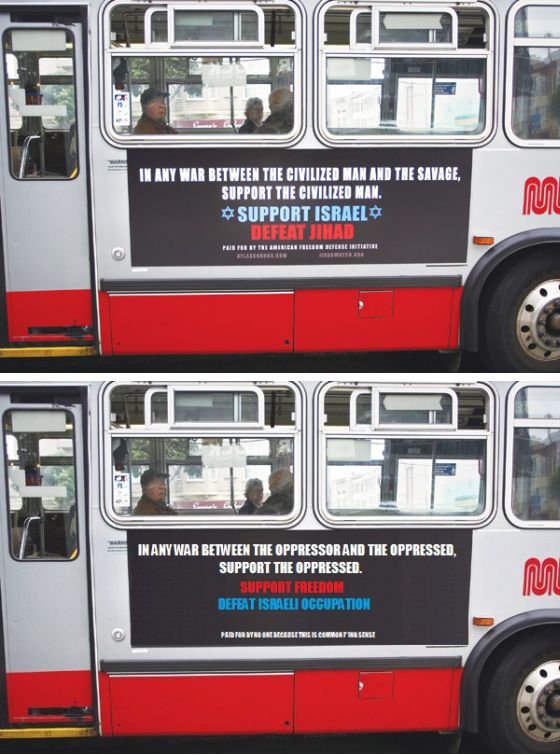
Pamela Geller thinks that a message plastered on the side of a bus is a good way of reaching a lot of people — especially in a city like San Francisco where there are lots of buses and lots of pedestrians. The problem for her is that the message she wants to spread is one that is likely to only appeal to Islamophobic bigots like her. It’s hateful tone simply won’t resonate with people who don’t already share her fears.

Yousef Munayyer has come up with a counter-message (which is thus far just a photoshop image) and since he doesn’t go for the jugular or push a slogan that merely appeals to pro-Palestinian activists, he’s crafted a message that does what every effective political message should do: attempt to engage people with open minds.

Facebooktwittermail

Richard Silverstein is a fool. Shame on the media for taking him seriously

There’s a form of laziness, opportunism, and cynicism that is far too common among mainstream journalists: the willingness to report on stories that news reporters themselves believe to be false.

Why would a journalist from the BBC or the New York Times or some other publication that purports to have a high regard for its own credibility treat as newsworthy something that even their own readers will quickly conclude deserves no attention?

For the simple reason that once something, however fanciful, enters the public domain thanks to the world of push-button publishing we now live in, it can be treated as a phenomenon in the news environment and thus traded as a piece of news. Its veracity can be treated as secondary to the fact that it has already become a subject of conversation. Most importantly, the journalist who chooses to breath life into such a worthless story can contrive a judicious distance from the story by attaching the necessary number of caveats that make it clear that he is doing nothing more than repeat someone else’s claims. Note that this kind of reporting will always repeatedly use the phrase “says” in order to underline that no factual claims are being made by the reporter. The reporter assumes a pretense of agnosticism.

In addition to employing fake naivety, the reporter will also fall back on the myth that journalists are mere observers — that they do not have an instrumental role in making news.

So, to turn to the specific case now at hand — Richard Silverstein’s latest episode of blogging buffoonery — the BBC‘s diplomatic correspondent Jonathan Marcus who interviewed Silverstein yesterday would no doubt explain his choice to do so by saying that the story — Silverstein’s promotion of a bogus war plan for an Israeli attack on Iran — is “out there.”

Marcus writes:

The leaked text may or may not be a precis of Israel’s battle plans.

But it is now an integral part of the increasingly feverish national debate and a debate that resonates well beyond Israel’s own borders.

But it’s only an integral part of that debate thanks to the BBC and others. Were it not for the attention that the press gives Silverstein, his blog would generally be ignored and he would not be flattered by being referred to as a journalist.

Silverstein’s latest antics began with a post titled “Bibi’s Secret War Plan“. The post includes a passage of text that Silverstein describes as a “document” and he claims that this is Benjamin Netanyahu’s “pitch for war” against Iran. He claims that this is an “Israeli government document” yet presents no evidence to back up this claim other than that his source’s source described it as such.

The one thing that seems clear about this “document” is that it was written by someone who knows Hebrew so I think one could strongly infer that means the author is in Israel. Having limited the number of possible authors to a few million Hebrew speakers, how are we going to radically narrow that range and determine this was written inside the Israeli government for consideration by its highest officials. That’s a tall claim and requires strong evidence.

Silverstein has no physical document and merely the claim from a purported former Israeli minister (not a rare species given the rapid turnover of Israeli governments and ministerial positions) that he received it from an IDF officer (and there are only a few tens of thousands of those).

Preempting reader doubts, Silverstein writes:

There will be those who will dispute the authenticity of this document. I’m convinced it is what my source claims, based on his prior track record and the level of specificity offered in the document. It references cities by name and the facilities they contain. It names new weapons systems including one Israel supposedly hasn’t even shared with the U.S.

Anyone who follows Silverstein’s “exclusives” should know that the credibility of his source(s) is highly debatable, but most importantly — and this is something Silverstein clearly does not understand — the authenticity of a document can rarely be established on the basis of its content. Content merely points to plausibility — or in this case implausibility. Referencing Iranian facilities and their locations can be accomplished by anyone with access to the internet. If these details carried any weight in authenticating the document they’d have to reveal vastly more — such as the naming of facilities whose existence is only known to Israeli intelligence. But even if that much was established it would still not take us that extra and all-important leap — to show that this is indeed a briefing document written for Netanyahu. Moreover, even if we were to cast an uncritical eye on the claim about the document’s authenticity, we are still left with the most problematic question: if this was being leaked from the prime minister’s office, why would it end up being passed on to a blogger, least of all one with such a dubious reputation?

Needless to say, none of this concerns Silverstein as he breathlessly declares:

This story is now a screaming headline in the Israeli media and at no point has anyone in the Israeli government maintained that this document is anything other than what I claim it to be. They know it is authentic. Anyone else who claims otherwise does so at the risk of their own credibility (if they have any).

Sorry, but the absence of a denial is not the proof of truth. And in this instance, when the Israeli prime minister and defense minister have already been working overtime raising to fever pitch the talk of war, Silverstein’s entry into the arena is no doubt welcomed as yet another element in the war-is-just-around-the-corner hysteria.

Beyond the implausibility of a war plan that makes grandiose claims about Israel’s ability to launch an attack on Iran that, as described, would militarily be more impressive than the U.S. invasion of Iraq, some observers were quick to note the Silverstein’s “secret document” was actually already in the public domain and had appeared as a post in a military and security forum on the Israeli social media site, Fresh.

Silverstein hit back:

Israelis are posting a claim that the document I published is identical to a post published by Fresh, an Israeli gossip/news portal, a few days ago. It is not. My original IDF source leaked the post to a Fresh member and me at the same time. That person published a small portion of the original memo at Fresh, embellishing it with much material that was meant to disguise what it was and where it came from. I can’t ascribe motives to whoever published it at Fresh, but much of it fantasy and isn’t in the original document.

And in a follow-up post he writes:

Contrary to claims made by many in the hasbarafia at sites like Harry’s Place and CIF Watch, anyone who actually reads the Fresh post and compares it to what I translated & published would see that there is very little overlap. Of the entire 500 word (in English translation) document, perhaps 100 words are in the Fresh post, which itself is quite long, probably over 1,000 words (I haven’t checked).

Let’s see how this assertion checks out by comparing the translation of the “document” Silverstein posted with a Google translation of the Hebrew post appearing at Fresh. (Bear with me. I don’t understand Hebrew and Google’s automated translation produces mangled English, but still, the correspondence between the two texts should be obvious.)

The Silverstein “document”:

The Israeli attack will open with a coordinated strike, including an unprecedented cyber-attack which will totally paralyze the Iranian regime and its ability to know what is happening within its borders. The internet, telephones, radio and television, communications satellites, and fiber optic cables leading to and from critical installations—including underground missile bases at Khorramabad and Isfahan—will be taken out of action. The electrical grid throughout Iran will be paralyzed and transformer stations will absorb severe damage from carbon fiber munitions which are finer than a human hair, causing electrical short circuits whose repair requires their complete removal. This would be a Sisyphean task in light of cluster munitions which would be dropped, some time-delayed and some remote-activated through the use of a satellite signal.

Fresh post:

Israel’s attack opens a combined action an unprecedented cyber attack, completely paralyzing the Iranian government ability to know what’s going on in his own country. Internet networks, telephone, radio and television, satellite communications and fiber optic and leading to important sites – including underground missile bases and Asfahn Bhorambad – find out of action. Years of careful planning, and intelligence assets landfill command day – worthwhile. Power grids across Iran are paralyzed, and hate sites (transformers of the power grid) suffer serious injuries of arms dissipating carbon fiber fish trough person – creating short in order to fix them requires removing the physical – a task Sisyphean light quenching area arming cluster shared a time delay and some remotely operated via satellite signal.

The Silverstein “document”:

A barrage of tens of ballistic missiles would be launched from Israel toward Iran. 300km ballistic missiles would be launched from Israeli submarines in the vicinity of the Persian Gulf. The missiles would not be armed with unconventional warheads [WMD], but rather with high-explosive ordnance equipped with reinforced tips designed specially to penetrate hardened targets.

Fresh post:

Barrage of dozens of ballistic missiles from Israel to Iran shot. Missiles are equipped with non-conventional warhead – but charged warheads and explosives specially ruggedized bow, designed to penetrate hardened targets deep in particular. […] Short Range Ballistic Missiles (300 km), shooting Israeli submarines.

The Silverstein “document”:

The missiles will strike their targets—some exploding above ground like those striking the nuclear reactor at Arak–which is intended to produce plutonium and tritium—and the nearby heavy water production facility; the nuclear fuel production facilities at Isfahan and facilities for enriching uranium-hexaflouride. Others would explode under-ground, as at the Fordo facility.

Fresh post:

Missiles hitting their target – some above ground, such as Arak nuclear reactor designed to produce plutonium and tritium, production facility next to the heavy water, the production facilities of nuclear fuel conversion facilities Baisfahn gas and uranium Hksaflurid.

The Silverstein “document”:

A barrage of hundreds of cruise missiles will pound command and control systems, research and development facilities, and the residences of senior personnel in the nuclear and missile development apparatus. Intelligence gathered over years will be utilized to completely decapitate Iran’s professional and command ranks in these fields.

Fresh post:

The hundreds of cruise missiles adequate command and control systems, facilities development and research institutes, and even in residential buildings and villas surrounded by lush greenery of senior officials in the nuclear and missile development of Iran. For years, collected intelligence manifested almost complete decapitation of professional ranks and command of Iran in these areas.

The Silverstein “document”:

After the first wave of attacks, which will be timed to the second, the “Blue and White” radar satellite, whose systems enable us to perform an evaluation of the level of damage done to the various targets, will pass over Iran. Only after rapidly decrypting the satellite’s data, will the information be transferred directly to war planes making their way covertly toward Iran. These IAF planes will be armed with electronic warfare gear previously unknown to the wider public, not even revealed to our U.S. ally. This equipment will render Israeli aircraft invisible. Those Israeli war planes which participate in the attack will damage a short-list of targets which require further assault.

Fresh post:

After the first assault wave, precise timing of seconds, flies over Iran satellite radar “Blue and White”. Its systems allow to evaluate the extent of damage caused purposes. Only after the fastest decryption of satellite data, data is transferred directly to the aircraft en route to the unknown paths towards Iran. these planes of the Israeli air force, equipped with electronic warfare suits that were brought to the attention of the general public, nor exposed to the Friends of Israel from the United States. Systems can then be puzzled by the weapons expert in the world – yes, they made the Israeli planes can be elusive. Air Force aircraft participating in the attack last – and affect only a small number of targets that require further injury – not detected at all by the discovery and tracking system of Iran. Air defense system will launch into the sky hundreds of anti-aircraft missiles – blindly – futile attempt to harm aircraft corps.

The Silverstein “document”:

Among the targets approved for attack—Shihab 3 and Sejil ballistic missile silos, storage tanks for chemical components of rocket fuel, industrial facilities for producing missile control systems, centrifuge production plants and more.

Fresh post:

Among the targets approved injury – storage sites such ballistic missile Shahab-3 and Sejil, reservoirs of chemicals used in rocket fuel materials, industrial facilities for the production control systems for missiles, the factories producing centrifuges, and more.

Let’s reconsider Silverstein’s claim: “anyone who actually reads the Fresh post and compares it to what I translated & published would see that there is very little overlap.”

OK. I think that most readers who have trudged through this tedious process this far will probably share my assessment. Richard Silverstein is a fool and it’s time the media stopped treating him like Julian Assange. He might share Assange’s hunger for media attention, but unlike Wikileaks which understands that the organization’s credibility will evaporate if it starts publishing bogus documents, for Silverstein getting his name in the newspaper appears to be the be all and end all of his operation.

Facebooktwittermail

U.S. special ops and intel launch attack on the White House

Reuters reports: A group of former U.S. intelligence and Special Forces operatives is set to launch a media campaign, including TV ads, that scolds President Barack Obama for taking credit for the killing of Osama bin Laden and argues that high-level leaks are endangering American lives.

Leaders of the group, the Special Operations OPSEC Education Fund Inc, say it is nonpartisan and unconnected to any political party or presidential campaign. It is registered as a so-called social welfare group, which means its primary purpose is to further the common good and its political activities should be secondary.

In the past, military exploits have been turned against presidential candidates by outside groups, most famously the Swift Boat ads in 2004 that questioned Democratic nominee John Kerry’s Vietnam War service.

The OPSEC group says it is not political and aims to save American lives. Its first public salvo is a 22-minute film that includes criticism of Obama and his administration. The film, to be released on Wednesday, was seen in advance by Reuters.


The OPSEC Team that created this video has on its website as a slogan part of the “Special Forces Creed” — “I serve quietly, not seeking recognition or accolades…”

It’s debatable whether launching a campaign like this during a presidential election campaign exemplifies the spirit of serving quietly. On the other hand, if it turns out that Obama fails to score as many political points as he hoped for being the Assassin-in-Chief, then maybe he can think a bit more deeply about what this country needs rather than imagining that his willingness to order people’s executions makes him look good.

Facebooktwittermail

Damascus ‘UN bombing’ narrative falls apart

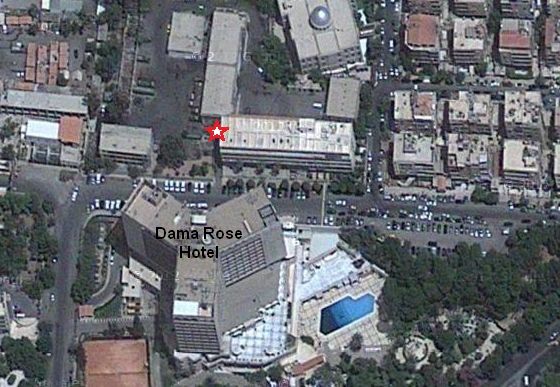
This is how state propaganda works. A bomb goes off in central Damascus, apparently targeting a meeting of top security officials, and the location of the attack is close to the Dama Rose Hotel which has been housing UN observers.

Another major breach of security threatens the Assad regime and so it attempts to obscure what has happened by claiming that rebels attacked the UN.

The slow-footed Western media with little else to rely on simply repeats the narrative pumped out by Syrian state media:

CBS/AP reports: A bomb attached to a fuel truck exploded Wednesday outside a Damascus hotel where U.N. observers are staying, wounding at least three people, Syria’s state TV reported.

The government controlled channel said the explosion took place near a parking lot used by the army command, which is about 300 yards away.

Syrian Deputy Foreign Minister Faisal Mekdad toured the area of the blast and said none of the U.N. staff was hurt. The explosion occurred as U.N. humanitarian chief Valerie Amos was in the Syrian capital but her team is believed to be staying at a different hotel.

CBS News’ George Baghdadi reports the area near the blast was quiet following the explosion. There had been reports of clashes after the blast, but Baghdadi saw no sign of violence.

Mekdad called the explosion a “terrorist act” meant to “destabilize” the country.

The lot where the explosion occurred is near the Dama Rose Hotel, popular with the U.N. observers in Syria.

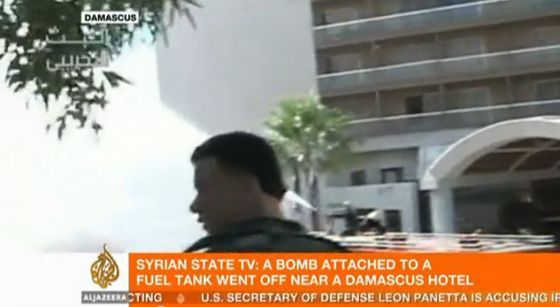
Here’s a screenshot that shows a firetruck outside the entrance to the hotel with a soldier in the foreground watching a firefighter on top of the truck directing a water cannon to the left. The scene of the explosion is off to the left, correct?

Dama Rose Hotel, Damascus

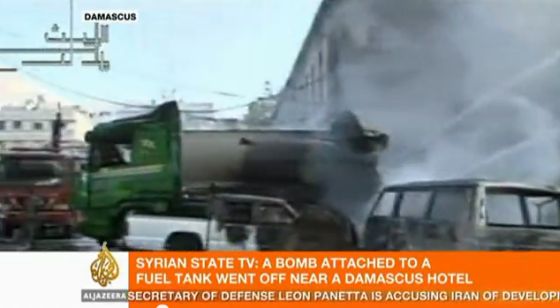
The camera pans to the left and we see the scene of the bombing:

However, watch the video carefully and you will notice that the panning is actually the splicing together of two separate pieces of footage. In fact, the Syrian propaganda effort in its haste spin an implausible narrative (pause for a moment to consider: why would the FSA target the UN?) also included real evidence that the bomb did not target the Dama Rose Hotel but exploded several hundred meters away.

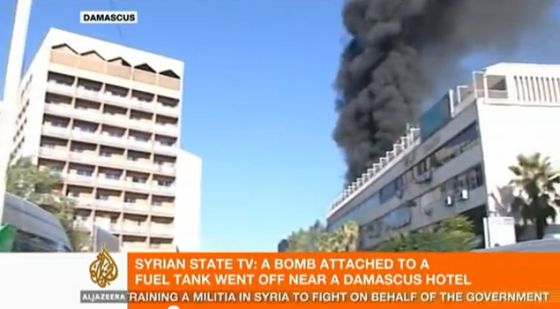
This screenshot from Syrian state TV images shows the Dama Rose Hotel to the left, and a thick plume of smoke rising beyond a building that separates the hotel from the site of the bombing:

Site of bombing some distance from Dama Rose Hotel

The actual location of the bombing is shown here:

Location of blast shown with a red star.

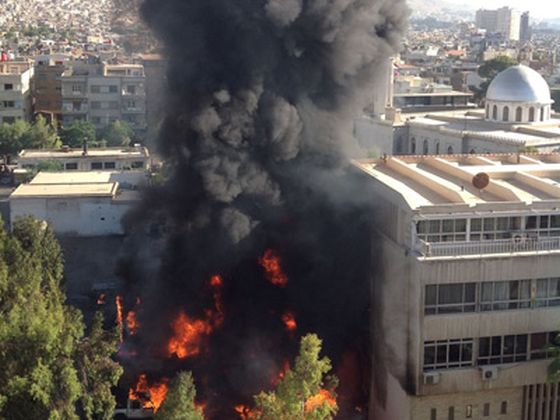
This is a photo of the bombing location in which the Al Hassan Mosque can be seen in the background.

Damascus bombing, August 15, 2012

Al Jazeera interviewed Abu Noor, a FSA spokesman who explains where the bomb was located and who it was targeting.

Facebooktwittermail

Video showing bodies being thrown off the roof of a post office in Al Bab, near Aleppo

If bodies are thrown off the rooftop of a post office, can we infer that because it was a post office the dead men must have been postal workers?

That logical leap is apparently not a leap too far for some observers of events in Syria — especially those who regard the Kremlin’s propaganda outlet, Russia Today, as a reliable news source. RT provided its audience with this usefully descriptive headline: “Syrian atrocity: Bodies of postal workers thrown from roof (GRAPHIC VIDEO)”

The RT report begins:

A horrific amateur video appeared on YouTube, apparently showing an atrocity against public service workers in Syria. The footage displays a crowd of people callously throwing the bodies of slain postal workers from a post office rooftop.

The report provides no explanation on how it could be determined that the bodies were those of postal workers. The video can be viewed here.

As with most videos coming out of Syria, it’s rarely possible to establish the facts about what the images reveal, but in this case we can make a number of fairly strong inferences and observations.

Most observers seem in agreement that the men being thrown off the roof were already dead. Although it’s possible that they could have been killed somewhere else in the building and then hauled to the rooftop, it seems more likely that the bodies were being cast down from relatively close to where they died.

The act of throwing bodies off a building and the way onlookers on the street respond, gives the impression that these were vengeance killings of some kind.

Was this vengeance against the willingness of many Syrians to be complicit in supporting the state by working as civil servants, or — and I think this seems somewhat more likely — does this have something to do with actions these individuals were engaged in immediately prior to their deaths?

Municipal buildings like post offices are generally in central locations providing easy access to the populations they serve. In the current conditions in Syria, the rooftops of such locations now also often serve as positions for government snipers.

What seems more likely? That the bodies in this video were postal workers, or that they were snipers?

It seems to me more likely that they were snipers.

Does that mean that their bodies deserved to be treated in this way? No.

Still, if the residents of a town have been unable to walk through their own streets without either getting shot or risking getting shot by a group of snipers, if the threat then gets eliminated it’s not hard to understand that there might be a brutal display of vengeance of the type this video appears to depict.

According to the following account, this is exactly what happened.

The Los Angeles Times reports: A Syrian media activist and member of the Al-Bab Coordinating Committee said via Skype that the incident occurred about three weeks ago as rebels battled government forces for control of the city.

“There were snipers on the roof of the post office,” said the activist, who asked to be identified as Barry for security’s sake. “Several of them surrendered and left the building. Five remained, killing at least seven fighters.

“There was a lot of anger,” he said. “Finally the rebels managed to storm the post office and threw explosive devices and the five snipers were killed. Then the rebels threw the bodies from the roof.”

“What happened was really bad. We should respect the dead even if they were our enemies,” he added, saying that later the bodies were buried according to Muslim customs.

In June 2007, during a U.S.-backed attempted coup aimed at toppling the Hamas-run government in Gaza, there were reports of both Hamas and Fatah engaging in violations of international law including throwing prisoners off high-rise buildings. Human Rights Watch described these actions as war crimes.

Did this lead Western pro-Palestinian activists to denounce the Palestinian cause? I don’t believe so.

The reality is that in armed conflicts, atrocities are committed. Should they be condemned? Of course. But even if these kinds of incident are shocking, they should not be surprising.

War unleashes the ugliest features of human behavior and the idea that those in the midst of the fighting will always conduct themselves in a dignified way is an illusion that can only be entertained by those able to observe from a comfortable distance.

Facebooktwittermail

Why do Israeli media keep predicting war with Iran?

Tony Karon writes: If the White House believes November will arrive without any nasty surprises in the Iran nuclear standoff, it is not taking seriously the feverish chatter throughout Israel‘s media positing an imminent Israeli attack on the Islamic Republic. The front pages of the four main Israeli dailies last Friday reflected what appeared to be a concerted campaign to create the impression that Israel is preparing itself to start a hot war with Iran sometime over the next 12 weeks, notwithstanding objections by the U.S. and other Western powers — and, indeed, by much of Israel’s security establishment. “[Benjamin] Netanyahu and [Ehud] Barak determined to strike Iran in the fall,” proclaimed Yedioth Ahronoth. Haaretz offered: “Senior Israeli official — The Iranian sword at our throat is sharper than the run-up to the war in 1967.” Maariv informed us in its banner headline that 37% of the Israeli public believes that “If Iran gets the bomb, it might result in a second Holocaust.” And Yisrael Hayom said: “Iran significantly speeds up its progress toward the bomb.” The following day, the latter paper included a headline claiming that, according to Israeli TV, a “Decision by Netanyahu and Barak to strike Iran is almost final.”

Haaretz seemed to suggest that part of the renewed urgency was a claim that new intelligence allegedly received by the U.S. ostensibly showed Iran making accelerated progress toward a capability to build nuclear warheads, although there was no U.S. confirmation of those claims. And others in the Israeli media were skeptical. One of Israel’s most senior columnists, Maariv’s Ben Caspit, sought to calm the media frenzy. “You can all relax,” wrote Caspit. “In the last two weeks, nothing new has happened with regards to an attack on Iran. The Cabinet hasn’t convened, the Defense Minister hasn’t summoned the IDF general staff, and no new information has been received. Everything that is known today was also known two weeks and two months ago.

Caspit suggested that the new “bomb Iran” talk wasn’t based on any qualitative shift in the nature of Iran’s nuclear work. The U.S. intelligence assessment until now has been that despite steadily accumulating the means to build nuclear weapons, Iran has not thus far moved to enrich uranium to weapons grade or to begin the process of actually building a bomb. Nor has it taken a strategic decision to do so as yet. The problem is that the “red lines” adopted by Israel and the U.S. for triggering a military response are different: President Obama has vowed to take military action to stop Iran from acquiring a nuclear weapon, whereas Israel has insisted that Iran can’t be allowed to maintain the capability to build such weapons — a technological capacity it essentially already has. [Continue reading…]

It’s not really correct to say that Israel insists Iran can’t “maintain” the capability to build nuclear weapons. In one of his most recent statements, Netanyahu said: “I think it’s important to do everything in our power to prevent the Ayatollahs from possessing that capability.” Clearly, that wouldn’t be possible if in his view Iran already possessed this capability.

The problem is, there is no consensus on what nuclear capability means. As Mark Donig Jaclyn Tandler write:

In reality, possessing a nuclear capability could mean anything from having the infrastructure and know-how of a civilian nuclear program (like Japan) to possessing a dedicated nuclear weapons program just short of testing a nuclear weapon (like Pakistan before 1998). “Capability” is a spectrum, not a clear line that is either crossed or not.

Indeed, capability is a rhetorical red line imposed by those who want to sound emphatic but prefer not to be clear about what they mean.

Facebooktwittermail

U.S. officials fling strong accusations against Hezbollah but offer no evidence

When Obama administration officials accuse Hezbollah of advising the Assad regime and the accusation is met with skepticism by Washington’s mainstream reporters, it’s pretty obvious that the U.S. has a credibility problem.

The latest U.S. attack on Hezbollah has the ring of pure political opportunism — a way of currying favor with the Israelis and of offering the Obama campaign some extra snippets of rhetoric that it can use to buttress the president’s tough-on-Iran, tough-on-terrorism posture.

The New York Times reports: The United States accused the Lebanese militant group Hezbollah on Friday of deep involvement in the Syrian government’s violent campaign to crush the uprising there, asserting that Hezbollah has trained and advised government forces inside Syria and has helped to expel opposition fighters from areas within the country.

The American accusations, which were contained in coordinated announcements by the Treasury and State Departments announcing new sanctions against Syria, also accused Hezbollah of assisting operatives of Iran’s Revolutionary Guards Quds Force in training Syrian forces inside Syria. A Treasury statement said the Hezbollah secretary general, Hassan Nasrallah, had overseen those activities, which it called part of the Syria government’s “increasingly ruthless efforts to fight against the opposition.”

The accusations, which went beyond previous American charges about Hezbollah support for Syria’s government, seemed intended to counter critics of the Obama administration who say that the White House is not doing enough to support the Syrian opposition now that diplomatic efforts to resolve the conflict are paralyzed.

Some Hezbollah experts expressed considerable skepticism, however, saying that the accusations should be approached with caution unless more evidence was presented.

The accusations were also part of an effort to further draw attention to the Hezbollah-Iran alliance, which American and Israeli intelligence officials have sought to portray as a subversive collaboration that has not only destabilized the Middle East but has been implicated in terrorist violence elsewhere, including a deadly bus bombing of Israeli tourists in Bulgaria last month.
[…]
American officials would not provide evidence for the new accusations against Hezbollah and avoided specifying whether its operatives were engaged in combat inside Syria, as some anti-Assad fighters have asserted. But the accusations appeared to open a new avenue of American pressure on Syria’s government and to be a way to embarrass Mr. Nasrallah, a powerful figure whose unwavering public support for Mr. Assad has created political strains in his home base of Lebanon.

Many Lebanese support the uprising against Mr. Assad and his ruling Alawite minority, and thousands of Syrian refugees from Mr. Assad’s crackdown have fled to Lebanon.

“Hezbollah is actively providing support to the Assad regime as it carries out its bloody campaign against the Syrian people,” David. S. Cohen, the Treasury’s under secretary for terrorism and financial intelligence, told reporters in a telephone conference call. He said the designation of Hezbollah in a Treasury Department sanction makes “clear to parties around the world — both domestically and internationally — the true nature of Hezbollah’s activities.”

The State Department’s coordinator for counterterrorism, Daniel Benjamin, who also participated in the call, said, “Hezbollah’s actions in Syria underscore its fears of a Syria without the Assad regime and the impact that this would have on the group’s capabilities and its strength over the long term.”

Despite repeated questioning, neither official would provide details to support the accusations, or specific evidence of how they had reached their conclusions. “This is not a matter of idle speculation or press reports,” Mr. Benjamin said. “This is based on a great deal of information-gathering that we have done and we’ve synthesized and we’ve put it together in an authoritative document, and we believe that it will be taken seriously by many around the world.”

An American official, who spoke on condition of anonymity, said Hezbollah was using “its specialized skill set and understanding of insurgencies” to aid Syria. “The group’s deep familiarity with the Syrian landscape makes it a nimble and effective military partner,” the official said.

Hassan Nasrallah has made it clear that Hezbollah fears the collapse of the Assad regime and the loss of Syria’s indispensable support, but it doesn’t follow from that that the Lebanese organization can actually do much to save its ally.

When the Syrian Army outnumbers the Free Syrian Army by an estimate of close to five to one, it seems reasonable to ask why the regime appears to have been unwilling to use this numerical advantage so that it can clear rebels out of their strongholds, street by street? Their preference is to opt for the far more destructive tactic of first pulverizing these neighborhoods with heavy weapons, causing the kind of wanton destruction usually inflicted on enemy states (i.e. destroying cities with the callous realism that it will be someone else’s miserable task to rebuild them).

The most plausible explanation I’ve heard is not that the regular forces lack skill in urban warfare (skill that Hezbollah could supposedly enhance) but that Syrian commanders are reluctant to send their troops into positions that make it much easier for them to switch sides.

Facebooktwittermail

In the shadow of Assad’s bombs — ‘death has become a part of our lives’

Some of those who need to read this note and the article that follows perhaps won’t because they are still too busily absorbed in the obscenely foolish idea that Syria is being destroyed not by its own rulers but by powers outside that blood-drenched country.

For many months the world has been witness to images of wholesale destruction — cities reduced to rubble — and yet even now, there are some observers who still find it difficult to unequivocally assign blame for this violence. Assad’s tanks, artillery, bombers, and helicopters pound Aleppo and other cities with shells, bombs, and missiles, and yet there are those who regard this as a legitimate yet regrettable response to provocation and foreign meddling.

Among the ranks of the overt or implicit apologists for Assad, the award for the supreme expression of idiocy probably deserves to go to Amal Saad-Ghorayeb for what she wrote in June:

The Palestinian cause has become deeply etched in the Arab collective subconscious and has even become an increasingly pervasive slogan in western liberal activist discourse. Now the real litmus of Arab intellectuals’ and activists’ commitment to the Palestinian cause is no longer their support for Palestinian rights, but rather, their support for the Assad leadership’s struggle against the imperialist-Zionist-Arab moderate axis’ onslaught against it. [My emphasis]

If to some degree that view resonates with your own, please spare me. I have no interest in your elaboration or in engaging in what would undoubtedly be a fruitless debate. There are other venues where such discussions take place.

That’s it for my little rant. Now read this. It’s a first-hand account by a writer who has an intimate knowledge of Syria because she comes from a prominent Alawite family who — except for her — have remained resolutely loyal supporters of President Bashar al Assad.

Samar Yazbek writes:

It was not yet 5 on Tuesday morning. I was lying on one side of the bed and the two little girls I was watching were on the other. None of us had slept a wink. Snipers’ gunfire rang out from time to time; bombs were crashing all around us. The girls’ frightened mother entered the room. “The bombing is getting worse,” she said.

We ran out, heading downstairs. Women and children and some men had gathered in the shelter. The children were now capable of distinguishing between the sound of bombs and gunfire, between distant and nearby shelling, and they could discern the direction from which it was all coming.

Ever since we had entered the country, running across the border late Sunday night, four young men had gone out of their way to protect me. They cut a hole in the barbed wire fence so that I could scramble through. A bomb fell very close to us as we sped away. Bombs were falling the whole way as the car zoomed along. As we passed through the town of Atarib in the dark, I understood what “extermination” meant. Atarib was a completely decimated city: the streets were cratered by bombs, doors were scorched, houses demolished, streets empty. At night not even the howling of dogs could be heard. It was a ghost town. No life whatsoever. Here and there, on one street or another, lay the charred remains of a government tank.

We should have gone to sleep after our long journey across the border from Turkey. We were exhausted. But in Saraqib, my host’s family had stayed up waiting for us, so we sat together into the wee hours of Monday morning as they told me about their neighbors who had been killed, about the young men who had been summarily executed in the town square.

Saraqib was one of the first towns to come out against the regime. The punishment was severe — siege, bombing, arrests and killing. Now it has five groups of Free Syrian Army battalions to protect it. Still, there are government snipers in the middle of town, with their headquarters inside the state radio and television building. There are nine in all; each works a four-hour shift in the building, which is protected by a tank that shells the town from time to time. Once, when the F.S.A. managed to take out a sniper, the government’s army responded by strafing the town with bombs. The townspeople say the snipers hunt people down and kill them at random.

A few days ago a sniper shot a 4-year-old girl, Diana, wounding her in the back, paralyzing her permanently. She was so small and frail that I couldn’t believe her body wasn’t totally pulverized by the impact of the bullet.

On Monday night, we went to meet a group of Free Syrian Army fighters in the town of Binnish. The oldest one was no more than 35. All were full of vitality and optimism, but also exhaustion. I shook hands with every man, except for one, who placed his hand on his heart and bowed respectfully.

They weren’t Islamic fundamentalists. I’ve encountered very few Islamist groups and have not observed any connection to Al Qaeda or Salafism, a movement based on a rigid, austere interpretation of Islam. The young men there told me that a few Salafi jihadis had started to appear recently, but that they did not constitute a significant number.

As we were sitting out on the balcony overlooking an olive orchard, the bombs started falling all around us. Nearby, the town of Taftanaz was being shelled; we could see it from the balcony. I asked the head of the division, who’d prepared dinner for us, “Aren’t you afraid that a bomb might fall on your heads right now?” He replied: “We aren’t afraid. Death has become a part of our lives.”

As we dined, the main topic of discussion was Aleppo, Syria’s most populous city. A number of the young men present were from the besieged neighborhood of Salaheddin and were getting ready to return. They refused to let me go with them for fear of the looming battle.

Samar Yazbek

I was the only woman among them, and the young F.S.A. men treated me like part of the group. During that meeting it became clear that it’s a mistake to consider the F.S.A. as a single bloc. It is a hodgepodge of battalions, including secularists, moderate Islamists and all-too-ordinary people who joined up to defend their lives and their families.

At the end of our journey back to Saraqib, the commander told me, “We are one people, we and the Alawites are brothers. We had never thought about the sort of things that the regime is trying to stir up.”

I was silent for a moment, until I realized what he was telling me, the daughter of a well-known Alawite family that supports President Bashar al-Assad unconditionally. Some of my relatives have publicly disowned me for turning my back on the regime as many others have, announcing on Facebook that I am no longer considered one of them.

I squeezed the commander’s hand. [Continue reading…]

Facebooktwittermail

The intellectual cowardice of Günter Grass’s critics

In his controversial new poem, “What Must Be Said,” Günter Grass felt obliged to anticipate the utterly predictable reaction: “the verdict ‘Anti-semitism’ falls easily.”

Jacob Heilbrunn describes Grass’s language as “wild and fevered and calumniatory,” though this is a more accurate description of his own feculent commentary. Under a headline posing the question, Is Günter Grass An Antisemite?, Heilbrunn proceeds with passion and no reason to a foregone conclusion:

Now, anti-Semitism is a charge that is flung about too frequently against critics of Israel. Unfortunately, in this instance it is fully deserved. Here is what must be said: Grass has achieved the impossible. He has further besmirched his reputation.

The theatrical and logical contours of the performances of Israel’s mindless and rabid defenders should by now be perfectly familiar.

First comes the shock and outrage. When anyone in proximity to the trauma of the Holocaust gets upset they tend to solicit a human response. We don’t try and reason with them — we offer them sympathy and try and soothe their distraught emotions. But when the shock and outrage is contrived, it serves a purpose: it is designed to distract and pacify those who might otherwise pose awkward or challenging questions.

Then comes the defamation. Why must Grass be condemned and his words ignored? Because as a seventeen year-old he served for five months in the Waffen-SS. “[A] former member of the SS has no moral standing, to put it mildly, to criticize Israel.” Heilbrunn whips the SS line so hard and fast, he’s forced to drag up from his thesaurus the awkward phrase “quondam SS member.”

Then comes the logical sleight-of-hand: a criticism is rebuffed by being restated in a distorted form. And the distortion always involves the same shift: actions are treated as matters of identity.

Israel is attacked not because of what it does but because of what it is: a Jewish state. Actions demand accountability, but if the assault is treated as striking at the state’s very identity, then the victim can bask in its innocence.

This is how it works in Grass’s case. Grass has written that Israel poses the greatest threat to world peace. Read the headlines, listen to the politicians and commentators. How outrageous! Except there’s one small problem: that’s not what he wrote. He wrote this:

Why only now, grown old,
and with what ink remains, do I say:
Israel’s atomic power endangers
an already fragile world peace? [My emphasis.]

When there is a rush to war because of the mere fear that Iran might develop nuclear weapons, how can the world remain silent about the fact that Israel already possesses hundreds of these tools of genocide?

What is being described as an attack on Israel is no such thing. It is a demand that Israel’s own nuclear arsenal be recognized and acknowledged as a decisive element in the rising tension in the Middle East.

Perhaps there are those who believe that Israel’s existence utterly depends on its possession of nuclear weapons. If that’s the case then maybe we should no longer refer to it as a Jewish and democratic state, but as a nuclear-armed Jewish and democratic state, since retaining the ability to incinerate its neighbors is apparently an essential attribute of such a state.

If however the existence of a Jewish state and its possession of a nuclear arsenal are not inextricably intertwined, then it is perfectly legitimate for Günter Grass or anyone else to say that in the shadow of war, the world can no longer remain silent about Israel’s weapons of mass destruction.

Facebooktwittermail

Mohamed Merah and the folly of the war on terror

Following the dramatic killing of Mohamed Merah in Toulouse yesterday, there has been plenty of finger-pointing by those who believe the young gunman should have been stopped before anyone had been shot, or that the operation during which he was held under siege could have been handled better.

There is perhaps only one lesson to be drawn, but it’s a truth everyone knows but no one fully digests: we can’t predict the future.

Only once it becomes the past is the future turned into something seemingly obvious. But the idea that Merah should or could have been stopped presupposes that he knew where he was going — it turns out he didn’t.

As the Wall Street Journal reports:

Merah… initially had no plans to attack the Jewish school where he allegedly gunned down three children and a teacher, and instead had planned to target another soldier, said the head of France’s intelligence agency.

Mr. Merah spoke to police negotiators during a 33-hour standoff that ended with his death on Thursday from a police gunshot to the head. During the siege he claimed responsibility for killing seven people, including three French paratroopers, prosecutors said.

In an interview with French newspaper Le Monde to be published Saturday, French intelligence chief Bernard Squarcini said Mr. Merah told police the school attack early Monday morning was improvised.

“According to what he said during the siege, he wanted to kill another military man, but got there too late,” said Bernard Squarcini, the head of the Central Directorate of Interior Intelligence. “Since he knew the area well, he improvised and attacked the Ozar Hatorah school.”

Who knows why Merah was late. Maybe he overslept. Whatever the reason, it seems his attack on the Jewish school was capricious. That he justified his brutality with the explanation that he was avenging the deaths of Palestinian children might reveal less about his ideological focus than it says about a desire to mask his violent impulsiveness.

AFP reports:

Israeli security experts on Friday heaped scathing criticism on the French police’s handling of a 32-hour siege involving a gunman who killed seven people, three of them Jewish children.

“Operational failure” was the title of an analysis in the top-selling Yediot Aharonot daily written by former special forces officer Lior Lotan, who now heads a counter-terrorism think-tank.

“The French security forces failed in their mission,” he wrote of their attempt to capture self-proclaimed Al-Qaeda gunman Mohamed Merah at an apartment in the southwestern French city of Toulouse.

Police from the elite RAID unit failed to make proper use of “deception and concealment” thereby letting the suspect take the initiative, he wrote of the operation which ended when Merah jumped out of a window and was shot dead as he tried to fire on police.

“This is not how a professional unit to combat terror behaves,” former commando officer Uri Bar-Lev wrote in the rival Maariv newspaper.

“But it’s not fair for us to level criticism at them. They don’t have the professionalism and the experience that we’ve accumulated in combating terror.”

Perhaps these Israelis would have been a little more cautious about trumpeting Israeli expertise had they known that Israel actually had an opportunity to stop Merah: he was arrested in Jerusalem in 2010 and then released.

Haaretz reports:

The head of the French intelligence agency DCRI said in an interview on Friday that the Toulouse shooter was arrested by Israel Police in Jerusalem in 2010, after he was found in possession of a knife.

Bernard Squarcini told the French newspaper Le Monde that Mohamed Merah… was held by police in Jerusalem during his visit to Israel in 2010, but was released shortly after his detainment.

Squarcini said that Merah visited several other Middle Eastern countries during that trip, including Turkey, Syria, Lebanon, Jordan, and Afghanistan. He said that French intelligence tracked him and investigated to see if he is suspicious, but found that he had not been engaging in any ideological activism or religious activity.

Squarcini responded to allegations about the French intelligence services’ failures during the hunt after Merah.

When asked about French Interior Minister Claude Guean’s statements about a possible intelligence failure, Squarcini said that the minister’s words were misinterpreted. “People, including children, died in a cruel way,” he said, “and we inevitably ask the question – could we have done something different? Did we miss something? Were we fast enough?”

On Thursday, Le Monde reported that Merah was not a member of any well-known Islamic terrorist organization, but did undergo a process of radicalization. He was also added to a “no fly” list maintained by U.S. authorities some time ago, two American officials told Reuters. The officials would not disclose precisely when Merah was placed on the list.

Although someone of this name is apparently on a no-fly list, it remains to be seen whether this was the gunman. It would seem likely that the Mohamed Merah on the list was the same as the one who had escaped from a prison outside Kandahar in 2008, but Afghan authorities say this man was not French.

The New York Times reported:

The Afghan authorities said that a Mohammad Merah was arrested on Dec. 19, 2007, and convicted of planting bombs in and around the southern city of Kandahar, which is the area where the Taliban movement began.

“All I can say is that we have this guy Mohammed Merah in our records, but he’s an Afghan citizen,” said Brig. Gen. Abdul Raziq, the police chief of Kandahar Province. “He’s certainly not French.”

He was sent to serve his three-year sentence at the city’s Saraposa prison, said Ghulam Faruq, the chief of the detention facility, citing prison records. That is a high-security prison on Kandahar’s southern outskirts.

“We have this name in our book,” Mr. Faruq said. “He was registered in 2007 and he was brought to the prison and he was convicted for planting bombs and I.E.D.’s inside and outside Kandahar city.”

A spokesman for the government of Kandahar Province, Zalmai Ayoubi, said that the man was from Kandahar and that officials even knew his father’s name — Ahmad Shah, also a citizen of Afghanistan.

And to confuse matters even more, The Independent reports that Merah was arrested by U.S. in Afghanistan in 2008 and then sent home to France. Keep in mind that by that time Merah was only 19.

The Washington Post reports:

The French Defense Ministry said that before his jihad-related travels, Merah had tried once to enlist in the regular French army and once in the Foreign Legion. Both times he was turned down, the ministry said, because of a long record of juvenile offenses such as purse snatching and dealing in stolen goods.

Might these rejections have been instrumental in turning the teenager in a radical direction?

Francois Molins, the chief Paris prosecutor heading the investigation into Merah’s actions has an obvious question: how could the unemployed Merah afford his rented car, his two automatic rifles, his several pistols and his trips to Afghanistan?

The one person who might be able to answer these and other important questions is his 29-year-old brother, Abdelkader Merah, who was arrested on Wednesday and can be held without charge for 96 hours.

Abdelkader has already told the police that he is proud of how his brother died, that he approved of his actions and that he has no regrets.

A woman from the same neighborhood as Merah in Toulouse, told Le Télégramme that the “true mind” behind the suspect was his brother Abdelkader.

As the French police and security services continue their investigation, there might be new revelations about mistakes made and warning signs ignored, yet what will most likely remain outside scrutiny is the culpability of the political leaders on both sides of the Atlantic who over the last decade effectively empowered terrorists and would-be terrorists by promoting the idea that such individuals, through an audacious violent action, could bring a nation to its knees.

Too much attention has been given to the threat of terrorism and far too little to the ways we react.

Facebooktwittermail

The story we’ll never know

Reuters reports: A 23-year-old gunman suspected of killing seven people in southwestern France in the name of al Qaeda, jumped from a window to his death in a hail of bullets after police stormed his apartment on Thursday.

“At the moment when a video probe was sent into the bathroom, the killer came out of the bathroom, firing with extreme violence,” Interior Minister Claude Gueant said, adding that Merah was firing several guns at once.

“In the end, Mohamed Merah jumped from the window with his gun in his hand, continuing to fire. He was found dead on the ground,” he told reporters at the scene. Two police commandos were wounded.

The New York Times reports: A top editor at the news channel France 24 said in a televised interview that she had spoken by telephone to a man who claimed to be the shooter in the hours before the police surrounded Mr. Merah’s building. “He was calm, was speaking in very good French and punctuated by Arabic expressions,” said the editor, Ebba Kalondo. She also said he spoke of planning more attacks and of intending to post video of his killings online.

“This man wanted to bring the Republic to its knees,” President Nicolas Sarkozy of France said on Wednesday, but “the Republic did not yield.” He spoke in nearby Montauban at a funeral service for three soldiers that Mr. Merah said he had killed in the days leading up to Monday’s killings of a rabbi and three children at a religious school here.

No doubt Sarkozy, in the middle of an election campaign, can be expected to frame this story in melodramatic terms, but just because Merah boasted that he had brought France to its knees, is no reason to treat that claim seriously by acting as though it demanded to be refuted.

If Merah had instead claimed that he was about to take over the world, would Sarkozy be saying that France stopped that from happening?

Yesterday, the French defense minister seemed to have a more sober assessment of the situation.

“This will not last for days, because of physical and mental fatigue. All the experience with crazed gunmen like this is that they stop at some point,” defence minister Gerard Longuet said on TF1 television.

“What we want is to capture him alive, so that we can bring him to justice, know his motivations and hopefully find out who were his accomplices, if there were any,” he added.

Unless it turns out Merah was a secret blogger or kept some other kind of journal, it seems unlikely that we’ll ever know much more about his motives or methods.

If there is one salutary lesson for American observers to take away from this, it is that just as was already shown in the 2008 Mumbai attacks and the 2011 Norway attacks, terrorism does not require access to high explosives or complex bomb-making skills. All that is necessary is easy access to guns and yet in the United States the relationship between gun control and counter-terrorism can’t even be discussed.

Facebooktwittermail

Child killers: Mohamed Merah and Sgt. Robert Bales

As much as the loss of innocent life universally provokes grief, horror, and rage, never is this more so than when the victims are children killed in cold calculation by adults.

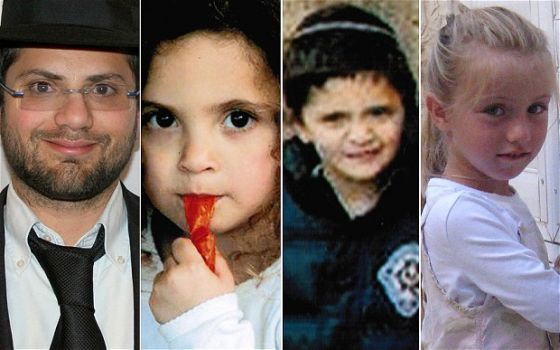
Even before Mohamed Merah had been tracked down to an apartment in Toulouse, the names and images of some of his victims had been widely publicized.

Rabbi Jonathan Sandler, 30, his two sons, Gabriel, 3, Arye, 6, and Miriam Monsonego, 8.

Such are the typical records of lives cut short — faces with bright shining eyes looking into a future they never reached.

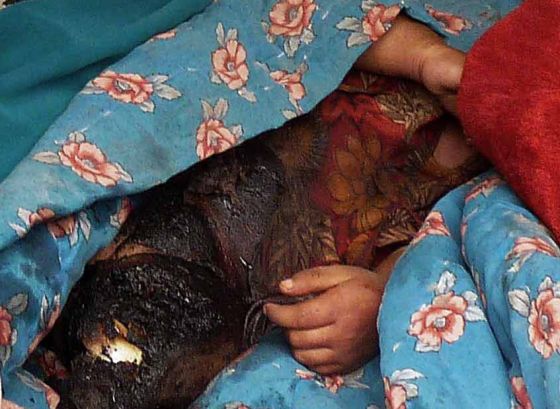
In the first few days after Robert Bales gunned down his sixteen victims, we knew neither his name nor theirs. All we saw was a glimpse of a child’s charred body — a detail from an AFP photograph which showed victims in the back of a pickup truck surrounded by those in grief. The larger photograph was widely published, but few if any outlets drew attention to this gruesome element — a glimpse of a life lost but no record whatsoever of the lives lived.

The charred body of Shatarina, Zahra, Nazia, Masooma, Farida, Palwasha, Nabia, Esmatullah, or Faizullah? We'll never know.

When it comes to Bales’ victims all we have is a list of names without ages.

But are Robert Bales and Mohamed Merah as radically different as is the coverage of their crimes?

Reuters reports:

Merah’s profile is typical of hundreds of second- or third-generation French immigrants from North Africa who have travelled to Afghanistan or Pakistan over the last two decades attracted by militant Islamist groups, security officials say.

Many were radicalised by the Israeli-Palestinian conflict, which triggered a wave of attacks on Jewish targets in France in the early 2000s, including arson attacks on synagogues. The number of anti-Semitic attacks declined last year, figures published by the Jewish community showed.

But this profile of radicalization does not diverge so far from the portrait of Sergeant Bales since both men were seen by those who knew them as regular guys.

Cedric Lambert, 46, father of an upstairs neighbour, said Merah was friendly and had helped them about 10 months ago to carry a heavy sofa upstairs.

“He was extremely normal,” Lambert said.

A group of four 24-year-old men of similar ethnic background who said they were friends of Merah tried to go to his apartment block on Wednesday to persuade him to surrender but were stopped at a police roadblock.

All told a Reuters reporter he had never talked to them about religion and they had no idea he had been to Afghanistan.

One friend who gave his name as Kamal, a financial adviser at La Banque Postale, said he had known Merah at school and they had done soccer training together after meeting again two years ago.

“He is someone who is very discreet. He is not someone who would brag and go around and say ‘Oh look at my new girlfriend, look how great I am.’ He is very polite and always well-behaved,” Kamal said.

“He never spoke about Islam but he did pray. But we all pray five times a day. There’s nothing strange about that.”

Another friend of Moroccan origin, who gave the pseudonym Danny Dem, said Merah had tried to enlist in the French army but had been rejected. He said he had seen Merah in a city centre nightclub just last week.

Merah did not drink “but I don’t think he is any more religious than I am. I think he has just lost the plot,” Danny Dem said.

A third contemporary, who declined to give his name, said he went to primary school with Merah and they had remained friends.

“He likes football and motor-bikes like any other guy his age,” said the man, dressed in a blue French national soccer shirt. “I didn’t even know he prayed.”

Pamela Geller, from her perch in Manhattan, made this comment while French police attempted to negotiate Merah’s surrender: “Negotiations? He should be shot in the head.”

She also offers this advice: “Jews. please. leave. Europe.”

I wonder whether President Obama would share Geller’s view, given that no one seems to be in any doubt that Merah is the killer? Even if he does, the problem with the administration of instant “justice,” is not simply that it might be of dubious legality but that it undermines a crucial element of criminal investigation: to better understand the motives of the perpetrator.

This isn’t a matter merely of academic interest.

When Merah claims that he was trying to avenge the deaths of Palestinian children killed by Israelis, is he merely parroting the views of radicals by whom he was indoctrinated, or was the Israeli-Palestinian conflict the primary cause of his radicalization? It’s worth knowing the answer and if he gets shot in the head we’ll probably never find out.

As for the idea that the death of four Jews in France — indisputably targets of an anti-semitic attack given that Merah knew perfectly well that these individuals had no role in the killing of Palestinian children — the idea that these deaths should prompt other Jews to flee Europe, begs this question:

If this would be sufficient cause for Jews to flee Europe, haven’t Jews in Israel already been given thousands of similar reasons to flee the Jewish state?

Neither flight nor vengeance offer an intelligent answer to this violence.

Facebooktwittermail

Why Netanyahu must think the killing of Jewish children in France is a good thing

On September 11, 2001, after 3,000 people had been killed, Benjamin Netanyahu said the attacks would be “very good,” having the effect of strengthening the bond between America and Israel.

Seven years later the then-leader of Likud held to the same conclusion as U.S. forces struggled to contain the civil war in Iraq.

“We are benefiting from one thing, and that is the attack on the Twin Towers and Pentagon, and the American struggle in Iraq,” the Israeli newspaper Ma’ariv quoted Netanyahu as saying in April, 2008. He added, these events “swung American public opinion in our favor.”

While the Israeli prime minister has been forthright in talking about how he sees the killing of Americans as serving Israel’s interests, there are limits to his candor. No one would expect him to declare that the shooting of Rabbi Jonathan Sandler, his two sons, Gabriel and Arieh, and seven-year-old Miriam Monsonego in Toulouse on Monday, was “very good.”

Even though I don’t believe Netanyahu is a ghoul who celebrates death, as a political opportunist he undoubtedly recognizes when tragedy serves his own political agenda.

The Guardian spoke to their reporter, Phoebe Greenwood, who has been at the funeral of Rabbi Sandler and the other victims in Jerusalem today.

One mourner told Phoebe that although the school [in Toulouse] was “a very safe place”, the murders would make many Jews worried about security in Europe consider moving to Israel. She said: “Many of the people who are thinking about moving to Israel now certainly will.”

Whether that’s true, there’s little doubt that Netanyahu and many of Israel’s other leaders would welcome a growing sense among the Jewish diaspora that Israel is the only safe place for Jews to live — even as these same leaders push for another war in the Middle East and thereby increase the chances that the Jewish “safe haven” will come under attack.

The alleged gunman in France, Mohammad Merah, a 24-year-old Frenchman of Algerian descent, is said to have wanted to avenge the deaths of Palestinian children. He also claims to have ties to al Qaeda.

Documents seized from Osama bin Laden’s compound in Abbottabad confirm that the al Qaeda leader strongly believed that the movement he had spawned should be focused on Palestine. As Paul Pillar writes:

The one issue that bin Laden evidently stressed to his associates should be emphasized publicly above all others was Palestine. He criticized affiliates and followers for justifying their actions as responses to local matters rather than being performed on behalf of the preeminent cause for all Muslims, which was Palestine. In making such admonitions, bin Laden was recognizing the enormous salience the Palestinian issue continues to have for for Muslims generally. It has all the ingredients for a cause well suited for exploitation by extremists. At its core is the injustice of indefinite occupation by a conquering power of land that is home to Muslims. On top of that is a added religious dimension to the conflict and the perception of the occupying power as a kind of Western, Judeo-Christian imposition on the Middle East.

That bin Laden was issuing such instruction is a further indication of the power of Palestine as an extremist cause célèbre. Bin Laden’s first wish probably would have been to overthrow the House of Saud in Arabia. His strategy of going after the far enemy in the form of the United States as a way of defeating the near enemies in Arab capitals was never more than a minority view in jihadist circles. In this respect he did not see eye-to-eye with his onetime mentor Abdullah Azzam, who believed the first priority of jihad ought to be the liberation of Muslim lands from non-Muslim occupiers. That is why Azzam was a leader in supporting the Afghan jihad against Soviet occupation, and why he—himself a Palestinian—believed liberation of Palestinian land from Israeli occupation needed to be given foremost priority. The Palestinian issue has the power it does not because individual terrorist leaders like bin Laden necessarily make it their first personal priority but instead because it has tremendous resonance among the Muslim populations to which they appeal. The reason that supporters and rank-and-file practitioners of anti-U.S. terrorism cite most frequently for their hatred of the United States is U.S. condoning of Israeli occupation of Palestinian-inhabited land and of other Israeli actions that involve the killing or subjugation of Muslims.

There are many good reasons not to let the Israeli-Palestinian issue fester. Its role as a readily exploitable extremist cause is one of them.

The problem is, as much as the conflict is an exploitable cause for extremists, extremist acts of violence are themselves events that can easily be exploited by those who want to claim that the life of every Jew is at risk and that an undercurrent of antisemitism still pervades the world.

In other words, for those Jews inside and outside Israel who react to terrorism targeting Jews by saying, “I told you so,” such attacks validate their view of the world. This violence is less a problem to be remedied, than a confirmation that part of what it means to be Jewish is to be hated and that the only way of surviving in such a world is through the segregation provided by a Jewish state.

From the mindset of eternal victim-hood, it makes no difference what you do, since it is your fate to always be judged because of who you are.

Facebooktwittermail

Remembering the names of the victims

Qais Azimy, a senior producer for Al Jazeera in Afghanistan, acknowledges that his outlet like most others, neglected to pay much attention to the victims in the recent massacre.

In the days following the rogue US soldier’s shooting spree in Kandahar, most of the media, us included, focused on the “backlash” and how it might further strain the relations with the US.

Many mainstream media outlets channelled a significant amount of energy into uncovering the slightest detail about the accused soldier – now identified as Staff Sergeant Robert Bales. We even know where his wife wanted to go for vacation, or what she said on her personal blog.

But the victims became a footnote, an anonymous footnote. Just the number 16. No one bothered to ask their ages, their hobbies, their aspirations. Worst of all, no one bothered to ask their names.

In honoring their memory, I write their names below, and the little we know about them: that nine of them were children, three were women.

The dead:
Mohamed Dawood son of Abdullah
Khudaydad son of Mohamed Juma
Nazar Mohamed
Payendo
Robeena
Shatarina daughter of Sultan Mohamed
Zahra daughter of Abdul Hamid
Nazia daughter of Dost Mohamed
Masooma daughter of Mohamed Wazir
Farida daughter of Mohamed Wazir
Palwasha daughter of Mohamed Wazir
Nabia daughter of Mohamed Wazir
Esmatullah daughter of Mohamed Wazir
Faizullah son of Mohamed Wazir
Essa Mohamed son of Mohamed Hussain
Akhtar Mohamed son of Murrad Ali

The wounded:
Haji Mohamed Naim son of Haji Sakhawat
Mohamed Sediq son of Mohamed Naim
Parween
Rafiullah
Zardana
Zulheja

But even with these names now published, it seems unlikely that this will have much impact on the perceptions of those Americans who see Robert Bales himself as the victim.

Imagine how different the story would be had he embarked on his killing spree after returning home and the victims had white faces and English names. We would by now know vastly more about them and the portraits of “Bobby” Bales would no doubt be much less sympathetic.

Exactly what set off the Army sergeant accused of massacring 16 civilians in Afghanistan’s Kandahar Province is far from clear. But already, organizations and individuals with differing agendas have portrayed Bales as the personification of something that is profoundly broken, and have seized on his case to question the war itself or to argue that the American government is asking too much of its warriors.

On the website of Iraq Veterans Against the War, organizer Aaron Hughes declared that Afghan war veterans “believe that this incident is not a case of one ‘bad apple’ but the effect of a continued U.S. military policy of drone strikes, night raids, and helicopter attacks where Afghan civilians pay the price.” Those veterans, he wrote, “hope that the Kandahar massacre will be a turning point” in the war.

“Send a letter to the editor of your local paper condemning the massacre and calling for an end to our occupation in Afghanistan,” Hughes wrote.

On March 11, authorities say, Bales, a 38-year-old married father of two from Washington state, stalked through two villages, gunned down civilians and attempted to burn some of the bodies. The dead included nine children.

In Lake Tapps, Wash., neighbors knew Bales as a patriot, a friendly guy who loved his wife and kids, and a man who never complained about the sacrifices his country repeatedly asked of him. They find it hard to believe he could be capable of such depravity.

“I kind of sympathize for him, being gone, being sent over there four times,” said Beau Britt, who lives across the street. “I can understand he’s probably quite wracked mentally, so I just hope that things are justified in court. I hope it goes OK.”

Paul Wohlberg, who lives next door to the Baleses, said: “I just can’t believe Bob’s the guy who did this. A good guy got put in the wrong place at the wrong time.” [Associated Press]

Facebooktwittermail

The names of the killer and the killed

It took close to a week before Robert Bales’ name was released.

One gets the impression that this delay served a purpose: that his name should not simply be attached to a pile of dead bodies; that along with the name there would be a biography, a smiling face and as much as possible in this interval there could be created some distance between the killer and the killed.

Robert Bales is a good American who did something bad.

The home of Robert Bales, the US soldier accused of killing 16 Afghan civilians, in Lake Tapps, Washington, stood empty last night.

The family of the 38-year-old sergeant, who has plunged US policy in Afghanistan into one of its worst crises, has been moved to Lewis-McChord army base where Bales’s unit, the 3rd Stryker Brigade, has its headquarters. Now his house is up for sale.

The first journalists from a Fox news affiliate – the network that revealed his name after a six-day blackout imposed by the Pentagon – found neighbours surprised and baffled by the revelation that the man they knew as Bob was accused of massacring women and children during a murderous rampage through a village in Afghanistan’s Panjwai district.

“Bob’s a normal guy,” former neighbour Paul Wohlberg told Fox. “Not normal now but, yeah …” Another neighbour, Kassie Holland, told US media: “He always had a great attitude about being in the service. He seemed just like, yeah, it’s my job, it’s … what I do.”

The picture of Bales that is emerging is a long way from the man who spoke to the Northwest Guardian three years ago after the battle of Zarqa in Iraq, when he insisted that what differentiated soldiers like him from those they were fighting was the ability to distinguish between combatants and civilians. “I’ve never been more proud to be a part of this unit than that day,” Bales said in that article. “We discriminated between the bad guys and the non-combatants, and then afterwards we ended up helping the people who three or four hours before were trying to kill us.

“I think that’s the real difference between being an American as opposed to being a bad guy, someone who puts his family in harm’s way like that.”

But when it comes to the difference between Robert Bales, the American, and the people he killed, perhaps the most telling fact is that while the press dutifully waited until it got the go ahead to tell his story, no one bothered even attempting to tell the stories of the dead.

The Afghan government has not as far as I am aware been withholding anyone’s name, yet it appears that only one of the dead has been named: Muhammad Dawoud, a 55 year-old farmer.

Of the rest of the victims we know no more than these sparse details: that 11 belonged to the family of Abdul Samad. He lost his wife, four daughters between the ages of 2 and 6, four sons between 8 and 12, and two other relatives. The other victims were in the home of Hajji-Sayed who lost his wife, nephew, grandson and brother.*

Sixteen lives and this is as much as we are likely to ever know about them.

Why?

Because they are not Americans.

* Even these details are unclear. Another report said the four victims were in the home of Habibullah Khan who lost his wife, sisters and a baby nephew.

Facebooktwittermail