Category Archives: ISIS

Islamic State of Iraq and Syria

Munich on high alert after New Year’s Eve terrorism threat

The New York Times reports: Hundreds of police officers remained on alert in Munich on Friday, after a threat of a suicide bombing attack by the Islamic State led the authorities to evacuate two train stations on New Year’s Eve.

The German authorities said on Friday that five to seven people may have been involved in the terrorist threat. The two stations, in the city center and in the Pasing district, were both reopened.

Officials defended their decision to close the two transit hubs hours before midnight and to flood the city with heavily armed officers — 550 as of Friday morning, including police officers from other parts of the southern state of Bavaria. They said they had received a “very concrete tip” around 7:40 p.m. from intelligence sources in France and the United States indicating that militants from Iraq and Syria were planning to carry out attacks. [Continue reading…]

Facebooktwittermail

Monitoring of terrorism threats has risen, official says

The New York Times reports: A senior European counterterrorism official said on Thursday that spy services in several countries had increased their monitoring and surveillance, and governments had put heightened security measures in place, even before recent arrests in Belgium and Turkey.

Hours after the official spoke, the police in the southern German city of Munich evacuated two train stations and warned residents to avoid large groups of people, citing “concrete hints” of a possible terrorist attack amid New Year’s celebrations.

Joachim Herrmann, interior minister for the state of Bavaria, of which Munich is the capital, told reporters early Friday that the German authorities had been tipped by a foreign intelligence service that the Islamic State was linked to a plot to carry out attacks in Munich.

Hubertus Andrä, head of the Munich police, said officials suspected that several suicide bombers had planned to carry out the attacks. [Continue reading…]

Facebooktwittermail

ISIS owns headlines, but Nigeria’s Boko Haram kills more than ever

NBC News reports: One terror group killed nearly 11,000 people in 2015 — and it wasn’t ISIS.

While the Sunni militants in Syria and Iraq dominated the headlines in 2015, Boko Haram was killing more people than ever — potentially eclipsing the tally of its partner in terror.

Nigeria’s new government pledged to oust Boko Haram and has boasted of successfully retaking territory from the extremists, but experts warn this might merely have forced the group to change tactics and possibly prompted a higher civilian casualty toll. [Continue reading…]

Facebooktwittermail

ISIS is here: Return of the jihadi

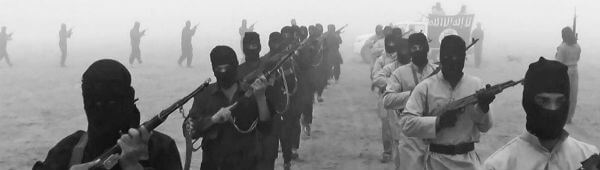
ISIS-catwalk-bw

Bruce Hoffman writes: “This is sort of the new normal,” FBI Director James Comey observed after the most recent Fourth of July. Comey was talking about the ten persons who were arrested in connection with a variety of plots linked to ISIS in the weeks leading up to that national holiday. But while the threat of homegrown violent extremism inspired by either ISIS or Al Qaeda is now accepted as fact, there is still surprisingly little consensus on the potentially far greater danger posed by radicalized foreign fighters trained by ISIS, returning to their native or adopted homelands in the West, ready to carry out terrorist actions—despite the attacks that occurred in Paris last November.

Indeed, long before the latest incidents, the May 2014 killing of four people at the Jewish Museum of Belgium appeared to validate fears of the potential for violence imported from abroad. The alleged perpetrator, a twenty-nine-year-old French national of Algerian origin named Mehdi Nemmouche, reportedly had spent more than a year in Syria. When he was arrested in Marseilles days after the attack, French police found in his possession an ISIS flag and a tape recording claiming responsibility for the incident. An interview with a French hostage previously held captive in Syria by ISIS subsequently revealed that Nemmouche had not only fought with the group, but also had tortured prisoners and boasted of having committed worse atrocities.

The only other well-publicized terrorist incident in Europe involving a veteran of the fighting in Syria was the fracas last August on a high-speed train traveling from Belgium to France. A passenger discovered Ayoub El Khazzani in the train’s lavatory while the twenty-five-year-old Moroccan-born resident of Spain was trying to load a Kalashnikov assault rifle. A scuffle ensued as other passengers tackled and disarmed El Khazzani, who was also carrying a Luger pistol, nearly three hundred rounds of ammunition, a Molotov cocktail and a box cutter. Already on the watch lists of at least four European security services because of his ties to Islamist groups and to radical mosques in Spain, El Khazzani is believed to have traveled to Syria where he was trained by, and fought for, ISIS. [Continue reading…]

Facebooktwittermail

Why has the AK-47 become the jihadi terrorist weapon of choice?

The Guardian reports: In the early years after 9/11 the suicide belt, the car bomb and the homemade explosive device were the weapons of choice for jihadis: hidden, brutal and hard to counter.

But as 2015 heaves to a close, its atrocities littered across the calendar – Charlie Hebdo, Sousse, Garissa, Tunis, Copenhagen and Paris – it is the AK-47 that has come to the fore.

Across Europe more terrorist attacks have been carried out with Kalashnikov-type assault rifles this year than with any other device. In the 13 November Paris attacks, suicide bombers killed few but gunmen killed many. Further afield, in Tunisia and Kenya, it was also automatic weapons that did the damage.

The widespread availability of these guns has been known for years. But it took the scale of death meted out in Paris last month to force Europe to address the threat.

Now law enforcement officers across the continent are trying to establish some basic truths. Where do they come from? Who are the middlemen that deal in these deadly weapons? And why have they become so popular again? [Continue reading…]

Facebooktwittermail

Months of fighting leaves 80% of Ramadi in ruins

Al Jazeera reports: Months of fighting and the recent pitched battle to take Iraq’s Ramadi from ISIL have levelled most of the key city as officials warned it was too soon for civilians to return after it was recaptured.

Local official Eid Amash said 80 percent of Ramadi, the provincial capital of Anbar, has been destroyed in the battles between Iraq’s army – backed by US air strikes – and the Islamic State of Iraq and the Levant group.

Amash, spokesman of Anbar’s provincial council, told Kurdish media network Rudaw that some districts of Ramadi were yet to be cleared of ISIL fighters. [Continue reading…]

Facebooktwittermail

Leaked documents may reveal the inner workings of the ISIS — but what if they are fake?

The Washington Post reports: If you want to really understand the Islamic State and go beyond the propaganda, looking at the militant group’s internal documents might be a good place to start. As the group expanded over the past year and attempted to turn into a functioning state, it released several internal orders and decrees that seek to organize this “caliphate.” These documents offer a glimpse of not only the way the Islamic State organizes but also the anxiety and disorder in the group that lies under the surface.

One example of this comes from documents that were recently revealed by Reuters and that appear to show the Islamic State decreeing who can have sex with captured enslaved women and who cannot. The documents showed that a bureaucracy appears to underpin even the most brutal acts committed by the group and hinted that some of the extreme behavior by its fighters led even the group’s own religious authorities to balk.

On the other hand, some experts believe that some purported Islamic State internal documents shared online are hoaxes, deliberately designed to deceive. These fakes are widespread enough that Aymenn Jawad al-Tamimi, a young British analyst who has made a name for himself with his analysis of extremist activity, recently published his own “guide to Islamic State document hoaxes.” [Continue reading…]

Facebooktwittermail

Middle East still rocking from First World War pacts made 100 years ago

isis-sykes-picot

Ian Black writes: In an idle moment between cocktail parties in the Arab capital where they served, a British and French diplomat were chatting recently about their respective countries’ legacies in the Middle East: why not commemorate them with a new rock band? And they could call it Sykes-Picot and the Balfour Declaration.

It was just a joke. These first world war agreements cooked up in London and Paris in the dying days of the Ottoman empire paved the way for new Arab nation states, the creation of Israel and the continuing plight of the Palestinians. And if their memory has faded in the west as their centenaries approach, they are still widely blamed for the problems of the region at an unusually violent and troubled time.

“This is history that the Arab peoples will never forget because they see it as directly relevant to problems they face today,” argues Oxford University’s Eugene Rogan, author of several influential works on modern Middle Eastern history.

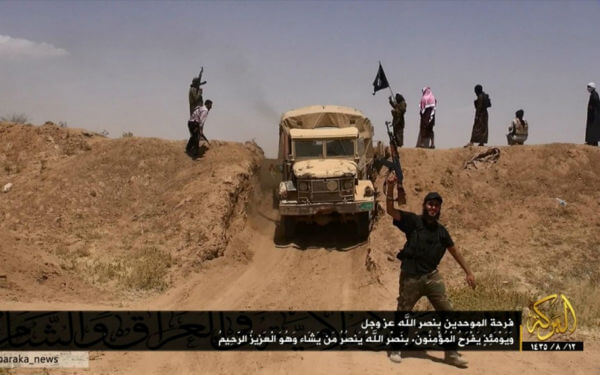
In 2014, when Islamic State fighters broke through the desert border between Iraq and Syria – flying black flags on their captured US-made Humvees – and announced the creation of a transnational caliphate, they triumphantly pronounced the death of Sykes-Picot. That gave a half-forgotten and much-misrepresented colonial-era deal a starring role in their propaganda war – and a new lease of life on Twitter. [Continue reading…]

Facebooktwittermail

As U.S. focuses on ISIS and the Taliban, Al Qaeda re-emerges

The New York Times reports: Even as the Obama administration scrambles to confront the Islamic State and a resurgent Taliban, an old enemy seems to be reappearing in Afghanistan: Qaeda training camps are sprouting up there, forcing the Pentagon and American intelligence agencies to assess whether they could again become a breeding ground for attacks on the United States.

Most of the handful of camps are not as big as those that Osama bin Laden built before the Sept. 11, 2001, attacks. But had they re-emerged several years ago, they would have rocketed to the top of potential threats presented to President Obama in his daily intelligence briefing. Now, they are just one of many — and perhaps, American officials say, not even the most urgent on the Pentagon’s list in Afghanistan.

The scope of Al Qaeda’s deadly resilience in Afghanistan appears to have caught American and Afghan officials by surprise. Until this fall, American officials had largely focused on targeting the last remaining senior Qaeda leaders hiding along Afghanistan’s rugged, mountainous border with Pakistan.

At least in public, the administration has said little about the new challenge or its strategy for confronting the threat from Al Qaeda, even as it rushes to help the Afghan government confront what has been viewed as the more imminent threat, the surge in violent attacks from the Taliban, the Haqqani network and a new offshoot of the Islamic State. Former administration officials have been more outspoken — especially those who were on the front lines of the original battle to destroy Al Qaeda’s central leadership. [Continue reading…]

Facebooktwittermail

ISIS leaders fall, ISIS remains

Kyle Orton writes: Last night, Steve Warren, the American colonel who is the spokesman for the international campaign against the Islamic State (IS), the U.S.-led Operation INHERENT RESOLVE, announced that between December 7 and December 27, ten IS “leaders” had been killed. Col. Warren adumbrated the positions of the IS leaders, allowing the conclusion that five had been part of IS’s external operations wing, which conducts international terrorism, and five were part of IS’s internal operations, i.e. part of the military operations and security infrastructure that helps IS maintain and expand its statelet in Syria and Iraq. Col. Warren presented this as an important blow to IS that had assisted in the recent loss of territorial losses for IS. There is reason for scepticism on these points. [Continue reading…]

Facebooktwittermail

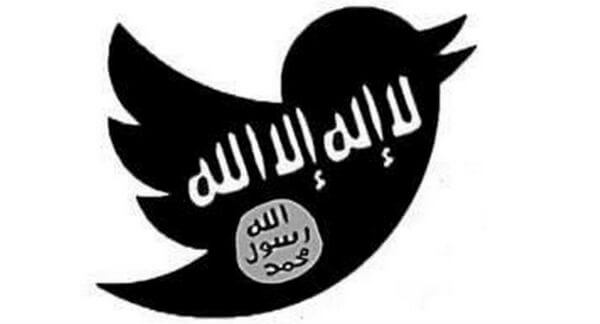
What Twitter really means for ISIS supporters

isis-twitter

Amarnath Amarasingam writes: Abu Ahmad, one of Islamic State’s most active supporters online says he has had over 90 Twitter accounts suspended, but is not planning to slow down. He is a trusted member of what has come to be called the Baqiya family, a loose network of Islamic State supporters from around the world who share news, develop close friendships, and help each other when members get arrested or come under law enforcement surveillance. Abu Ahmad, as with all Baqiya members, agreed to talk to me on the condition that his real name and location not be published.

While Islamic State social media accounts used to flourish, Twitter has now been suspending the accounts of fighters and supporters alike. Scholars and analysts continue to debate whether this is effective and worthwhile.

For over two years now, I have co-directed a study of Western foreign fighters based at the University of Waterloo and have been interviewing — on Skype and various text messaging platforms — several dozen fighters and members of this Baqiya family. A few things are clear: First, while Twitter suspensions certainly disrupt their ability to seamlessly spread information, they have developed innovative and effective ways of coming back online. Second, these youth receive an enormous amount of emotional and social benefits from participating in their online “family.”

This online network is important for spreading the new Twitter accounts of individuals coming back from suspension. Watching Abu Ahmad’s accounts, for instance, I have been amazed at how quickly he is able to re-acquire his followers. At times, his new accounts are only active for a day or two before getting suspended again, but he manages to get most of his 1,000-plus followers back every time. “I follow people, and they follow me back. We do shout outs,” he told me during an interview last month; “we also have secret groups online which don’t get suspended, and we share our new accounts on there.” [Continue reading…]

Facebooktwittermail

Suspects arrested after plotting New Year’s Eve attacks in Ankara and Brussels

The New York Times reports: Two Islamic State militants who were plotting a suicide attack on the Turkish capital, Ankara, on New Year’s Eve have been detained, Turkish officials said on Wednesday.

The two men were held after an early morning counterterrorism operation at a house in the Yakupabdal neighborhood of Ankara, according to the semiofficial Anadolu News Agency. Their identities and nationalities were not disclosed, but the Turkish news media reported that the men were of Turkish origin and had traveled to Syria.

They were planning attacks on the central Kizilay Square in Ankara, where large crowds gather annually to usher in the new year, a senior government official said. [Continue reading…]

CNN reports: Belgian authorities have arrested two people on suspicion of being involved in a plot to attack “emblematic sites” in Belgium’s capital during New Year’s celebrations, the country’s federal prosecutor’s office said Tuesday.

The men are members of a Muslim biker gang called the Kamikaze Riders and are suspected to have discussed attacking Brussels’ Grand Place square and other places where crowds gather as well as police and military facilities, a senior Belgian counterterrorism official told CNN on condition of anonymity. [Continue reading…]

Facebooktwittermail

War by other means in the shadow of globalization

destruction

Peter Pomerantsev writes: perhaps this year’s most spectacular propagandists are those of ISIS, with its aggressive use of social media to recruit new combatants and slick, gruesome execution videos to provoke and frighten opponents. Though ISIS has killed roughly seven times fewer people in Syria than the Assad regime, the group has used social media (some 46,000 accounts on Twitter alone) to make itself look even more menacing than it is. Every social-media user who retweets or posts ISIS material, whether in support or censure, ultimately helps strengthen ISIS’s narrative of history-making stature and millenarian significance. The Islamic State’s terrorist attacks in Paris left 130 people dead in a spate of horrific violence, but the operation was executed in a manner that made it seem as if the organization had killed orders of magnitude more.

There is, of course, nothing new about using information as a vital instrument of war. But in the past information tended to be a handmaiden to action. Now the informational element appears to be as important as, if not more important than, the physical dimension. Take Russia’s air strikes in Syria. The Kremlin’s official rationale for the military campaign was to combat the Islamic State. But very few of its operations have actually been aimed at ISIS, with many more directed at U.S.-supported rebels fighting Syrian President, and Russian client, Bashar al-Assad. The Kremlin clearly has more in mind than defeating ISIS militarily. Russia has entered the Syrian stage in such a way as to surprise the West and ensure it will play a starring role in any narrative going forward — whether that narrative involves keeping Assad in power or a “global fight against terror.” The Russian military might be small compared to America’s, and the Russian economy may be a mess, but Vladimir Putin has cleverly undermined America’s reputation as a “global policeman” and boosted his stature as the man who is restoring Russia as a Great Global Power.

This is not “soft power” in the classic sense of projecting a positive national image through culture and public relations, but rather a case of using strategic narrative to keep your opponent intimidated, confused, and dismayed — of exploiting ubiquitous information to appear bigger, scarier, and more indispensable than reality would suggest. Russia’s bombing raids in Syria also have the positive side effects (for Moscow) of distracting from the conflict in Ukraine and helping maintain a steady torrent of refugees to Europe, which in turn strengthens right-wing parties in countries such as France and Hungary that peddle anti-refugee fears, are supported by the Kremlin, and advocate dropping Western sanctions against Russia. What matters in the information age is not so much “military escalation dominance” — the Cold War doctrine emphasizing the ability to introduce more arms than the enemy into a conflict. Rather, it’s “narrative escalation dominance” — being able to introduce more startling storylines than your opponent. [Continue reading…]

Facebooktwittermail

Strike that killed Syrian rebel chief complicates peace talks push, says U.S.

Reuters reports: Russian air strikes like the one that killed a top Syrian rebel leader last week send the wrong message to groups engaged in a political dialogue to end the conflict and complicate efforts to begin negotiations, the U.S. State Department said on Monday.

Syrian rebel chief Zahran Alloush, the leader of Jaysh al Islam who commanded thousands of fighters in the Damascus suburbs, was killed on Friday in an air strike that rebel sources said was carried out by Russian warplanes.

Jaysh al Islam was a participant in the Riyadh conference where Syrian opposition groups agreed on common aims for proposed political negotiations to end the country’s civil war and chose a former Syrian prime minister to represent them in the dialogue.

State Department spokesman Mark Toner said the United States did not provide support to Alloush’s group and had concerns about its “behavior on the battlefield,” but noted that Jaysh al Islam had fought Islamic State rebels and was participating in the political dialogue to end Syria’s civil war. [Continue reading…]

Facebooktwittermail

Saudi Grand Mufti calls ISIS ‘part of the Israeli army’

Bruce Riedel writes: The most senior cleric in Saudi Arabia has called for greater Islamic cooperation against the Islamic State, while also labeling ISIS a “part of the Israeli army.” The revealing interview this week with Grand Mufti of Saudi Arabia Sheikh Abdulaziz Al Sheikh provides important insight into the Wahhabi establishment, which is the core partner of the House of Saud.

The Mufti praised the creation of an Islamic military alliance to fight terrorism, promising the alliance will defeat the Islamic State, which he labeled a heretical and un-Islamic movement. The new alliance is the brainchild of Deputy Crown Prince and Defense Minister Prince Muhammed bin Salman, the king’s favorite son.

The 72-year old cleric was asked about comments made by Abu Bakr al-Baghdadi, the self proclaimed caliph of the Islamic State, that the new alliance is not serious because it is not “killing Jews and liberating Palestine.” Al-Baghadi called the new Saudi-led alliance a pawn of the United States and Israel, promising that the “tanks of the mujahideen are moving closer to Israel day after day.”

Al Sheikh dismissed al-Baghdadi’s threat to Israel, calling it “simply a lie.” He added: “Actually Da’esh [another term for the Islamic State] is part of the Israeli soldiers,” therefore asserting a supposed relationship between the Israeli army and the Islamic State. [Continue reading…]

I imagine that among those observers who are already convinced that ISIS was created by the Saudis, the idea that it’s an Israeli creation must be equally appealing — and the Grand Mufti the least credible source for this ‘revelation.’ There are just too many conspiracy theories to choose from!

Facebooktwittermail

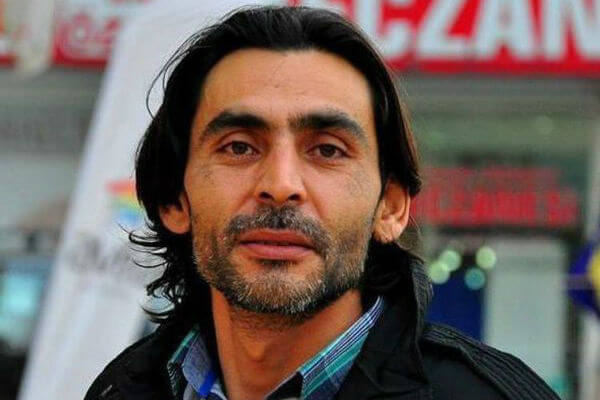
This Syrian filmmaker was assassinated in broad daylight after receiving death threats

Naji-al-Jerf

Borzou Daragahi reports: If all had gone according to plan, Syrian filmmaker and activist Naji al-Jerf, his wife, and their two daughters would be in the relative safety of France right now, 2,000 miles from Turkey’s troubled southeast.

But on Sunday, the violence increasingly spilling over from Syria into Turkey caught up with Jerf when he was gunned down in broad daylight by a masked assassin. He was 37.

Amid wailing and stunned friends and colleagues, he was buried in a hilltop cemetery plot Monday afternoon. “Congratulations, congratulations!” his anguished wife, Bushra Kashmar, cried as she gripped his coffin. “Now you will have the freedom that you wanted,” she said, wrapped in the flag of Syria’s revolution. “Now you will have the peace that you wanted.”

A foe of both ISIS and the Syrian regime, the independent filmmaker and native of Salamia, a town near the city of Hama, was among the peaceful democracy activists who spearheaded the 2011 uprising against Bashar al-Assad. They are now being subsumed by the ensuing violence and sidelined by a war that has become a regional conflagration with no end in sight. [Continue reading…]

Facebooktwittermail

Armed with intel, U.S. strikes curtail ISIS oil sector

Iraq Oil Report reports: An intensifying campaign of U.S. air strikes on the self-proclaimed Islamic State (IS) has nearly shut down its oil operations in Iraq and has hampered its more lucrative business in Syria, eroding the group’s largest source of financing and threatening its ability to govern territory.

Iraq Oil Report has compiled a comprehensive history of the IS oil sector based on the organization’s own records, details of which have just been declassified by the U.S. government and are being published here for the first time. Those accounts have been broadly corroborated by the first-hand testimony of residents and oil workers in IS-occupied territory.

They show that, until recently, nearly 2,000 IS oil workers, many recruited from abroad, were able to outfox early U.S. attempts to derail the group’s oil operations. From the end of 2014 through May 2015, even after being hit by a series of air strikes, the highly bureaucratic and organized operation generated as much as $40 million per month from the sale of crude oil. (The IS organization generated millions more by taxing transportation and refining, though the U.S. officials declined to give more detailed figures.)

“From the documents, we see this: oil has traditionally been approaching 50 percent of their profits. And the other 50 percent was the total of all the other things,” said Amos Hochstein, the State Department’s Special Envoy for International Energy Affairs, who is at the center of the U.S. government’s efforts to identify weaknesses in the IS group’s oil sector. [Continue reading…]

Facebooktwittermail

Seized documents reveal ISIS’s department of ‘war spoils’

Reuters reports: Islamic State has set up departments to handle “war spoils,” including slaves, and the exploitation of natural resources such as oil, creating the trappings of government that enable it to manage large swaths of Syria and Iraq and other areas.

The hierarchical bureaucracy, including petty rivalries between officials, and legal codes in the form of religious fatwas are detailed in a cache of documents seized by U.S. Special Operations Forces in a May raid in Syria that killed top IS financial official Abu Sayyaf. Reuters has reviewed some of the documents.

U.S. officials say the documents have helped deepen their understanding of a militant group whose skill in controlling the territory it has seized has surprised many. They provide insight into how a once small insurgent group has developed a complex bureaucracy to manage revenue streams – from pillaged oil to stolen antiquities – and oversee subjugated populations.

“This really kind of brings it out. The level of bureaucratization, organization, the diwans, the committees,” Brett McGurk, President Barack Obama’s special envoy for the anti-IS coalition, told Reuters. [Continue reading…]

Facebooktwittermail