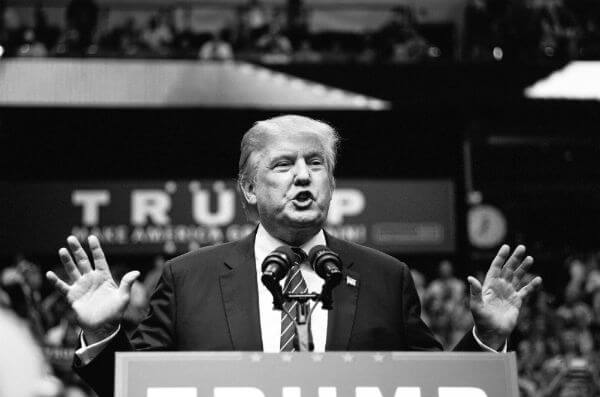
Many have speculated how a Trump victory would affect the U.S., but few have thought about the consequences of a Trump loss. After falling behind Hillary Clinton in the polls, Donald Trump has already developed a narrative for his exit: The election was rigged.
So how likely is a rigged vote?
Full-throated claims
Last week Trump told Fox News: “I’m telling you – Nov. 8, we’d better be careful because that election is going to be rigged. And I hope the Republicans are watching closely or it is going to be taken away from us.”
This is not just an isolated or off-the-cuff statement. Trump confidant Roger Stone recently noted: “I think that we have widespread voter fraud, but the first thing that Trump needs to do is begin talking about it constantly.”
Trump’s campaign manager Paul Manafort noted: “Frankly we think that the situation in the country, just like with the DNC’s primaries, is a situation where if you rely on the Justice Department to ensure the security of elections, we have to be worried.”
That President Obama has dismissed these claims as ridiculous will do little to reassure Trump supporters.
In an interview with the Washington Post, Robert P. Jones, author of The End of White Christian America, says: The American religious landscape is being remade, most notably by the decline of the white Protestant majority and the rise of the religiously unaffiliated. These religious transformations have been swift and dramatic, occurring largely within the last four decades. Many white Americans have sensed these changes, and there has been some media coverage of the demographic piece of the puzzle. But while the country’s shifting racial dynamics are certainly a source of apprehension for many white Americans, it is the disappearance of White Christian America that is driving their strong, sometimes apocalyptic reactions. Falling numbers and the marginalization of a once-dominant racial and religious identity — one that has been central not just to white Christians themselves but to the national mythos — threatens white Christians’ understanding of America itself. [Continue reading…]
The New York Times reports: Mr. Ailes brings enormous experience in preparing for presidential debates, but his addition to Mr. Trump’s team also raises intriguing questions.
Mr. Trump’s support among female voters has eroded during the course of his campaign, after a number of incendiary statements.
Mr. Trump’s challenge during the crowded Republican primary debates was far less pronounced than it will be in what could be a head-to-head against Mrs. Clinton over 90 minutes. He was one of ten candidates onstage and could often filibuster his way through questions or avoid them entirely as his rivals consumed airtime — an approach that would be untenable in a one-on-one or even a three-way matchup including the Libertarian candidate, Gary Johnson.
What is more, some of Mr. Trump’s worst moments in the primary debates involved Ms. Kelly and Carly Fiorina, the only woman vying in the Republican nomination contest. Mr. Trump, who has repeatedly swatted away accusations of sexism during the campaign, will likely require coaching on how to handle the potential first female president in a debate.
Whether Mr. Ailes can best address that concern is unclear. [Continue reading…]
In an editorial, the Wall Street Journal says: Mr. Trump’s advisers and his family want the candidate to deliver a consistent message making the case for change. They’d like him to be disciplined. They want him to focus on growing the economy and raising incomes and fighting terrorism.
They think he should make the election a referendum on Hillary Clinton, not on himself. And they’d like him to spend a little time each day — a half hour even — studying the issues he’ll need to understand if he becomes President.
Is that so hard? Apparently so. Mr. Trump prefers to watch the cable shows rather than read a briefing paper. He thinks the same shoot-from-the-lip style that won over a plurality of GOP primary voters can persuade other Republicans and independents who worry if he has the temperament to be Commander in Chief.
He also thinks the crowds at his campaign rallies are a substitute for the lack of a field organization and digital turnout strategy. And he thinks that Twitter and social media can make up for being outspent $100 million to zero in battleground states.
By now it should be obvious that none of this is working. It’s obvious to many of his advisers, who are the sources for the news stories about dysfunction.
The “Trump pivot” always seemed implausible given his lifelong instincts and habits, but Mr. Trump promised Republicans. “At some point I’ll be so presidential that you people will be so bored, and I’ll come back as a presidential person, and instead of 10,000 people I’ll have about 150 people and they’ll say, boy, he really looks presidential,” he said in April.
Those who sold Mr. Trump to GOP voters as the man who could defeat Hillary Clinton now face a moment of truth. Chris Christie, Newt Gingrich, Rudy Giuliani, Paul Manafort and the talk-radio right told Republicans their man could rise to the occasion.
If they can’t get Mr. Trump to change his act by Labor Day, the GOP will have no choice but to write off the nominee as hopeless and focus on salvaging the Senate and House and other down-ballot races. As for Mr. Trump, he needs to stop blaming everyone else and decide if he wants to behave like someone who wants to be President — or turn the nomination over to Mike Pence. [Continue reading…]
Two days after claiming that the only way he could lose in Pennsylvania would be if there was “cheating” on election day, Trump now concedes that he could lose for a much more likely reason: that an insufficient number of votes are cast in his favor.
He noted this yesterday in Connecticut while reiterating the fact that whatever happens on November 8, his arrival on Pennsylvania Avenue is assured:
I’m building a hotel on Pennsylvania Avenue, right next to The White House. I’ve said, I don’t give a damn — I’m coming to Pennsylvania Avenue one way or the other. Trump International. It was the Old Post Office building… it’s one of the most beautiful buildings in the country. Can you imagine, I got it through the Obama administration? Does that tell you how good I am?… It’s almost finished. It’s more than one year ahead of schedule and it’s substantially under budget… Wouldn’t it be great if our country could do things where they’re ahead of schedule and under budget?… With all the money I spent — in the primaries I spent over $50 million. Now I’m spending a fortune for the general election.
Oh you’d better elect me folks or I’ll never speak to you again.
Can you imagine how badly I’ll feel if I spent all of that money, all of this energy, all of this time, and lost? I will never ever forgive the people of Connecticut, I will never forgive the people of Florida and Pennsylvania and Ohio, but I love them anyway…
This isn’t an election in which Trump thinks he has to demonstrate what makes him worthy of support. On the contrary, it’s a test of the American people to discover whether this country is capable of grasping the opportunity of coming under Trump’s unparalleled leadership.
From Trump’s perspective, if he loses the election it will be America’s loss. He has no doubt that he’d be a great president, but what seems to be dawning on him is that there may be an insufficient number of Americans who share his conviction in his own greatness.
What Trump will never abandon is his narrative of success. For him to follow advice from the Wall Street Journal or anyone else would be to concede that he’s mismanaged his own campaign and that would be a concession that undermines the core of his identity.
John Sides writes: If you were running for president, and you wanted to make sure that your supporters actually showed up and voted on Nov. 8, should you be warning of a “rigged election”? If you are Donald Trump, the apparent answer is yes.
Already people are dubious about whether this is actually a good strategy:
In USC/LATimes poll, Trump supporters' likelihood of voting has fallen a bunch over past week. His "rigged" message may depress his turnout.
Now, new research by political scientists Adam Levine and Robin Stiles suggests that, indeed, Trump’s message is not good for mobilizing voters. [Continue reading…]
The New York Times reports: On a leafy side street off Independence Square in Kiev is an office used for years by Donald J. Trump’s campaign chairman, Paul Manafort, when he consulted for Ukraine’s ruling political party. His furniture and personal items were still there as recently as May.
And Mr. Manafort’s presence remains elsewhere here in the capital, where government investigators examining secret records have found his name, as well as companies he sought business with, as they try to untangle a corrupt network they say was used to loot Ukrainian assets and influence elections during the administration of Mr. Manafort’s main client, former President Viktor F. Yanukovych.
Handwritten ledgers show $12.7 million in undisclosed cash payments designated for Mr. Manafort from Mr. Yanukovych’s pro-Russian political party from 2007 to 2012, according to Ukraine’s newly formed National Anti-Corruption Bureau. Investigators assert that the disbursements were part of an illegal off-the-books system whose recipients also included election officials.
In addition, criminal prosecutors are investigating a group of offshore shell companies that helped members of Mr. Yanukovych’s inner circle finance their lavish lifestyles, including a palatial presidential residence with a private zoo, golf course and tennis court. Among the hundreds of murky transactions these companies engaged in was an $18 million deal to sell Ukrainian cable television assets to a partnership put together by Mr. Manafort and a Russian oligarch, Oleg Deripaska, a close ally of President Vladimir V. Putin. [Continue reading…]
Based on its analysis of the polls, FiveThrityEight currently gives Donald Trump an 11.9% chance of winning Pennsylvania’s 20 electoral votes on November 8. In its aggregate of all recent polls in Pennsylvania, RealClearPolitics finds that in a two-way race, Hillary Clinton leads with 49.2% and Trump trails at 40.0%.
With collapsing support, Trump seems to have concluded that the only way he can win in a state like this is by promoting a stop-the-vote campaign targeting minority voters.
The Los Angeles Times reports: In remarks with strong racial overtones, Donald Trump told a mainly white rural crowd in Pennsylvania on Friday that vote fraud could cheat him out of victory and vowed to dispatch police who support him to monitor polls in “certain parts” of the state.
“We’re going to have unbelievable turnout, but we don’t want to see people voting five times, folks,” the Republican presidential nominee said at a rally in Altoona, Pa.
After months of racially charged violence between Trump supporters and protesters at his rallies, the comments raised the specter of confrontations on election day in precincts with many minority voters.
Trump, who previously suggested the Nov. 8 election would be rigged for Democratic rival Hillary Clinton, said he’d “heard some stories about certain parts of the state, and we have to be very careful.”
“Maybe you should go down and volunteer or do something,” Trump told the audience, bemoaning Pennsylvania’s lack of voter identification requirements.
“We have a lot of law enforcement people working that day,” he said. “We’re hiring a lot of people. We’re putting a lot of law enforcement — we’re going to watch Pennsylvania, go down to certain areas and watch and study, and make sure other people don’t come in and vote five times.”
Trump’s remarks came two weeks after a federal appeals court struck down a voter ID law in North Carolina, another presidential battleground state. The law targeted African Americans “with almost surgical precision” in an effort to suppress the black vote, the court found. [Continue reading…]
The Washington Post reports: After telling an audience in Altoona, Pa., that he would seek their help in policing the polls in November to root out voter fraud — something that even the state of Pennsylvania has noted doesn’t exist in any meaningful way — Donald Trump’s campaign nationalized the effort on Saturday morning. Now eager Trump backers can go to Trump’s website and sign up to be “a Trump Election Observer.” Do so, and you get an email thanking you for volunteering and assuring you that the campaign will “do everything we are legally allowed to do to stop crooked Hillary from rigging this election.”
There are any number of problems with this, again starting with the fact that the frequency of in-person voter fraud in elections is lower than getting five numbers right in the Powerball. But there’s a potentially bigger legal problem noted by election law expert Rick Hasen of the University of California at Irvine: Trump’s unnecessary effort could be violating a prohibition against voter intimidation that applies to the Republican Party. [Continue reading…]
The Washington Post reports: Economic distress and anxiety across working-class white America have become a widely discussed explanation for the success of Donald Trump. It seems to make sense. Trump’s most fervent supporters tend to be white men without college degrees. This same group has suffered economically in our increasingly globalized world, as machines have replaced workers in factories and labor has shifted overseas. Trump has promised to curtail trade and other perceived threats to American workers, including immigrants.
Yet a major new analysis from Gallup, based on 87,000 interviews the polling company conducted over the past year, suggests this narrative is not complete. While there does seem to be a relationship between economic anxiety and Trump’s appeal, the straightforward connection that many observers have assumed does not appear in the data.
According to this new analysis, those who view Trump favorably have not been disproportionately affected by foreign trade or immigration, compared with people with unfavorable views of the Republican presidential nominee. The results suggest that his supporters, on average, do not have lower incomes than other Americans, nor are they more likely to be unemployed. [Continue reading…]
Carey Purcell writes: I had been at Trump magazine for only four months when my first paycheck bounced.
We’d heard rumors of the company’s financial troubles, but I had no idea how bad it really was until my landlord called me one afternoon to tell me that my rent check hadn’t cleared. I logged into my online banking account and saw, to my amazement, that the magazine I worked for — the one with the billionaire’s name on the cover — had stiffed me. Although it was a stressful moment, the irony was not lost on me. It felt like I was living in an Onion article: “Luxury Lifestyle Magazine Can’t Pay Its Own Employees.”
It was the fall of 2006, and Trump magazine was my first job in journalism — albeit as the receptionist. I’d landed the gig by answering an ad on Craigslist. Fresh out of journalism school, I moved to New York with two undergraduate degrees, my student loans, some meager savings and dreams of becoming a theater critic. The receptionist gig paid a paltry $25,000 per year—barely minimum wage. And that was when the checks cleared.
Personally, I had never been a fan of Donald Trump and knew very little about the man. I had never seen The Apprentice and I was hardly a real estate expert. The piles of fan mail that arrived at our office addressed to him — filled with adoring testaments to his “genius” — amused me to no end. We received handwritten letters asking for money, a formal request for Donald’s daughter Ivanka to escort a woman’s son to his Junior Ring Dance at the Air Force Academy, and incoherent six-page rants about the state of the economy and how Trump was the only man who could fix it. One letter stated, “I sincerely hope you will run for president someday.”
Before I was hired at Trump, the magazine had already gained a reputation, most of which I wouldn’t find out about until after it folded. And by that time, I had been diagnosed with cancer and — thanks to Trump — lost my health coverage. [Continue reading…]
Politico reports: After doubling down on his assertion that President Barack Obama is the “founder” of the Islamic State, Donald Trump on Friday suggested he was being sarcastic.
“Ratings challenged @CNN reports so seriously that I call President Obama (and Clinton) ‘the founder’ of ISIS, & MVP,” Trump tweeted Friday morning. “THEY DON’T GET SARCASM?” [Continue reading…]
It’s worth remembering at this time the real, demonstrable, non-hyperbolic role Trump has played in helping ISIS and Al Qaeda recruit new members:
In Trump’s tweet today, he alludes to the fact that even as he pours contempt on the press, he and they are indeed partners in a ratings-driven tango.
The conservative talk show host, Hugh Hewitt, had this exchange with Trump on the claim that Obama was the “founder” of ISIS:
Hugh Hewitt: I think I would say they created, they lost the peace. They created the Libyan vacuum, they created the vacuum into which ISIS came, but they didn’t create ISIS. That’s what I would say.
Donald Trump: Well, I disagree.
HH: All right, that’s okay.
DT: I mean, with his bad policies, that’s why ISIS came about.
HH: That’s…
DT: If he would have done things properly, you wouldn’t have had ISIS.
HH: That’s true.
DT: Therefore, he was the founder of ISIS.
HH: And that’s, I’d just use different language to communicate it…
DT: But they wouldn’t talk about your language, and they do talk about my language, right?
HH: Well, good point. Good point.
Trump lays the bait and the media bites, but the way it bites is what keeps the story alive for 24 hours instead of two.
Instead of feigning shock in response to each new Trumpism, a serious interviewer would drill into Trump’s wild claims — something like this:
Trump: Obama was the founder of ISIS.
Interviewer: Really? That’s an interesting claim you’re making. You know most experts say that ISIS was founded by Abu Musab al-Zarqawi back in 1999. Are you saying that back when Barack Obama was a state senator in Illinois, he was also a secret jihadist?
Trump: No, I’m just saying he founded ISIS.
Interviewer: Yes, I got that — I just want to flesh out more of the details. When did he do this?
Trump: You’d need to talk to the intelligence agencies.
Interviewer: OK. But just to be clear: You’re saying that although Abu Bakr al-Baghdadi is generally viewed as the leader of ISIS, Obama has a more pivotal role. Did he appoint Baghdadi?
Trump: As I said, you’d need to talk to the intelligence agencies.
Interviewer: But, here’s my problem: I’m sure that if I talked to anyone at any level in the CIA or the NSA or any other agency, no one would say Obama founded ISIS. You’re the person making this claim and either you back it up with some substance, or concede that it’s just a line designed to grab a headline — otherwise you’re just going to be seen as a guy who fools around and is willing to say anything to get attention.
Trump: I really don’t see what you’re driving at, but I will repeat what I told Hugh Hewitt yesterday, ISIS came about because of Obama’s bad policies.
Interviewer: Ah, so “founder” — that’s just you messing with the media…
While Trump has differentiated himself as the first presidential candidate to lend credence to conspiracy theories about Obama’s motives and background, his views are shared by a majority of Republican voters and have been for some time.
A recent NBC News Survey Monkey poll found that a whopping 72 percent of Republicans have doubts about Obama’s citizenship and 41 percent are emphatic that he was foreign born. Meanwhile, 31 percent are unsure if he is an American, leaving 27 percent who acknowledge that their country’s president was born in the U.S.
The fact that most rank-and-file Republicans refuse to accept the legitimacy of Obama’s birth certificate has long been something of an embarrassing open secret which prominent party leaders have chosen to sidestep. The reality is that even after the president begrudgingly released his long-form birth certificate — confirming that was born in Hawaii — to the public in April of 2011 to quash the rumors, it did little to shake conservatives’ steadfast belief that he is a fraud. [Continue reading…]
The New York Times reports: The throngs of New Yorkers who poured into Coney Island on a sweltering Sunday in July 1939 — shuffling past the rides, hot-dog stands and freak shows — confronted one last spectacle blaring just beyond the surf.
At 65 feet and outfitted with enormous Trump signs, the yacht called the Trump Show Boat was hard to miss. And that was the point.
Its loudspeakers blasted recordings of “The Star-Spangled Banner” and “God Bless America” over and over, compelling many sunbathers, reluctant to be seen as unpatriotic, to stand and salute each time. When the boat floated swordfish-shaped balloons — redeemable for $25 or $250 toward a new Trump Home — toward the shore, bathers nearly rioted as they raced to snatch them up.
Fred C. Trump, the owner of the boat and the master builder of solid homes in Brooklyn and Queens, is often considered a point of contrast to his flashy son Donald, the brash developer who built gilded towers in Manhattan, and became a tabloid fixture, television personality and now, Republican presidential nominee.
But Donald J. Trump inherited more than just a real estate empire from his father. As a salesman, competitor, courter of politicians and controversy and above all, as a showboating self-promoter, Fred Trump was the Donald Trump of his day. [Continue reading…]
“The Russian market is attracted to me,” Trump told Real Estate Weekly in 2013. “I have a great relationship with many Russians, and almost all of the oligarchs were in the room.”
In November 1996, Trump spent three days in Moscow with Lorber and visited Ducat Place, a site being developed by Liggett-Ducat Ltd., a cigarette company that was owned by Lorber’s Vector Group at the time.
“We’re looking at building a super-luxury residential tower … which I think Moscow desperately wants and needs,’ Trump told the Moscow Times at the time.
Lorber’s business partner Ben LeBow was also involved in arranging Trump’s trip to Moscow. He bragged about bringing the Trump Organization to Russia in a 1996 interview with the Moscow Times.
“Donald is the preeminent marketeer and developer in the world,” said LeBow. “We want the best for Moscow — and Donald’s it.”
Trump’s plans to build a Trump Tower in Moscow and reconstruct the Moscow hotels eventually fizzled out. But 15 years later, Trump was still at it. In 2013, while he was organizing the Miss Universe pageant in Moscow, Trump tried to restart the Moscow Trump Tower project. He entered talks with Russian billionaire Araz Agalarov, who happened to own the Crocus City Hall, where the Miss Universe finals were held.
Lorber is only the latest Trump adviser to have long ties to Russia and a financial stake there. Campaign chairman Paul Manafort was a paid adviser to Russia’s client Ukrainian President Viktor Yanukovych for more than a decade. Foreign policy adviser Carter Page is a consultant for Russian state-owned energy firm Gazprom.
Donald Trump Jr. has been a huge proponent of expanding the family business to Russia, making half a dozen trips there on behalf of the Trump Organization during the latest U.S. financial crisis. [Continue reading…]
David S. Cohen writes: One day after his widely discussed “reboot” in which he did nothing more than read basic Republican economic talking points from a teleprompter, Donald Trump uttered perhaps his most outrageous – and dangerous – ad-lib yet. And that’s saying something for a campaign in which he’s criticized John McCain for being a prisoner of war, characterized Mexicans as rapists, called for banning Muslims from coming into the country, picked a fight with a Gold Star family and urged Russia to hack his political opponent.
Speaking to a crowd in Wilmington, North Carolina, Tuesday, Trump expressed concern about Hillary Clinton possibly picking Supreme Court justices and other judges. He then said, “If she gets to pick her judges, nothing you can do, folks. Although the Second Amendment people, maybe there is. I don’t know.”
Let that soak in for a second. One of the two major-party nominees for president just called for “Second Amendment people” to “do” something about his political opponent’s judges. According to the Trump campaign’s rapid response team, he was talking about those “Second Amendment people” coming together politically – “unification,” as they called it. The Clinton campaign, and pretty much the entire Internet, saw it differently: as a clear suggestion of violence against a political opponent.
It’s hard not to side with the Clinton campaign here. What Trump said was that a particular group – those who are defined by rallying around guns – should do something about Clinton and her judicial nominees. What can people who rally around guns do that’s different than others? Use those guns.
But it’s really irrelevant what Trump actually meant, because enough people will hear Trump’s comments and think he’s calling for people to take up arms against Clinton, her judges or both. Though most of the people hearing that call may claim he was joking, given what we know about people taking up arms in this country, there will undoubtedly be some people who think he was serious and consider the possibility.
In other words, what Trump just did is engage in so-called stochastic terrorism. This is an obscure and non-legal term that has been occasionally discussed in the academic world for the past decade and a half, and it applies with precision here. Stochastic terrorism, as described by a blogger who summarized the concept several years back, means using language and other forms of communication “to incite random actors to carry out violent or terrorist acts that are statistically predictable but individually unpredictable.”
Let’s break that down in the context of what Trump said. Predicting any one particular individual following his call to use violence against Clinton or her judges is statistically impossible. But we can predict that there could be a presently unknown lone wolf who hears his call and takes action in the future.
Stated differently: Trump puts out the dog whistle knowing that some dog will hear it, even though he doesn’t know which dog. [Continue reading…]
Reuters reports: Nearly one-fifth of registered Republicans want Donald Trump to drop out of the race for the White House, according to a Reuters/Ipsos poll released on Wednesday, reflecting the turmoil his candidacy has sown within his party.
Some 19 percent think the New York real estate magnate should drop out, 70 percent think he should stay in and 10 percent say they “don’t know,” according to the Aug. 5-8 poll of 396 registered Republicans. The poll has a confidence interval of six percentage points.
Among all registered voters, some 44 percent want Trump to drop out. That is based on a survey of 1,162 registered voters, with a confidence interval of 3 percentage points. That is 9 points higher than his support for the presidency in the latest Reuters/Ipsos tracking poll registered on Monday. [Continue reading…]
Robert P. Jones writes: On the surface, the answer to why the campaign rallies of Donald Trump have been frequently marked by vitriolic and racist outbursts, harsh rhetoric and even violence is simple: the candidate has encouraged it. But the raw materials Trump has at his disposal have been mined and refined for nearly half a century. Trump is not the source but an igniting spark.
The apocalyptic rhetoric that regularly escapes the bounds of civil discourse at Trump events is fueled by the particular energies that are unleashed when a long-dominant group senses the looming end of its era. Certainly, the boarded up shop fronts of small towns that testify to the disappearance of reliable working class jobs are a critical part of this sense of loss and distress. But the watershed moment that many analysts have missed, and that Trump’s most ardent supporters feel in their bones, is this: During Barack Obama’s tenure as president, the United States has crossed the threshold from being a majority white Christian country (54 percent in 2008) to a minority white Christian country (45 percent in 2015). The passing of a coherent cultural world — where working class jobs made ends meet and white conservative Christian values held sway — has produced this powerful politics of white Christian resentment. [Continue reading…]
The New York Times reports: Fifty of the nation’s most senior Republican national security officials, many of them former top aides or cabinet members for President George W. Bush, have signed a letter declaring that Donald J. Trump “lacks the character, values and experience” to be president and “would put at risk our country’s national security and well-being.”
Mr. Trump, the officials warn, “would be the most reckless president in American history.”
The letter says Mr. Trump would weaken the United States’ moral authority and questions his knowledge of and belief in the Constitution. It says he has “demonstrated repeatedly that he has little understanding” of the nation’s “vital national interests, its complex diplomatic challenges, its indispensable alliances and the democratic values” on which American policy should be based. And it laments that “Mr. Trump has shown no interest in educating himself.”
“None of us will vote for Donald Trump,” the letter states, though it notes later that many Americans “have doubts about Hillary Clinton, as do many of us.”
Among the most prominent signatories are Michael V. Hayden, a former director of both the C.I.A. and the National Security Agency; John D. Negroponte, who served as the first director of national intelligence and then deputy secretary of state; and Robert B. Zoellick, another former deputy secretary of state, United States trade representive and, until 2012, president of the World Bank. Two former secretaries of homeland security, Tom Ridge and Michael Chertoff, also signed, as did Eric S. Edelman, who served as Vice President Dick Cheney’s national security adviser and as a top aide to Robert M. Gates when he was secretary of defense. [Continue reading…]
Politico reports: It was a strange day for Estonia when the tiny Baltic nation became the focus of intense debate in the U.S. presidential campaign.
At issue: Would the United States honor its NATO obligation to defend Estonia in the event of an attack by Russia? Donald Trump, who has repeatedly criticized small NATO members for “taking advantage” of the United States, hedged his answer. “Have they fulfilled their obligations to us?” he told the New York Times. “If they fulfill their obligations to us, the answer is yes.”
Hours later, Trump backer Newt Gingrich doubled down on the Republican candidate’s skepticism toward NATO duties, saying: “Estonia is in the suburbs of [the Russian city of] St. Petersburg … I’m not sure I would risk nuclear war over the suburbs of St. Petersburg.”
For Estonians, and all other NATO members in the region, that was a chilling message. “All of a sudden the issue closest to our skin — the defense of Estonia, of all things — becomes an issue in this campaign,” Jüri Luik, former Estonian ambassador to Russia, said. “It’s a totally unexpected development, and a gloomy situation for all of Eastern Europe.”
“NATO’s deterrent power depends in large part on the U.S. president’s position. If he is unsure … that weakens the deterrent immensely.”
Beyond regional security, the Estonian episode raised a bigger, more troubling question for Europeans watching the U.S. presidential campaign: If Trump wins, will he feel any obligation to uphold his country’s historical role as defender and guarantor of the West? [Continue reading…]
This website or its third-party tools use cookies, which are necessary to its functioning. By closing this banner, you agree to the use of cookies.