



The Associated Press reports: Donald Trump’s paid campaign staffers have declared on their personal social media accounts that Muslims are unfit to be U.S. citizens, ridiculed Mexican accents, called for Secretary of State John Kerry to be hanged and stated their readiness for a possible civil war, according to a review by The Associated Press of their postings.
The AP examined the social media feeds of more than 50 current and former campaign employees who helped propel Trump through the primary elections. The campaign has employed a mix of veteran political operatives and outsiders. Most come across as dedicated, enthusiastic partisans, but at least seven expressed views that were overtly racially charged, supportive of violent actions or broadly hostile to Muslims.
A graphic designer for Trump’s advance team approvingly posted video of a black man eating fried chicken and criticizing fellow blacks for ignorance, irresponsibility and having too many children. A Trump field organizer in Virginia declared that Muslims were seeking to impose Sharia law in America and that “those who understand Islam for what it is are gearing up for the fight.”
The AP’s findings come at a time when Trump is showing new interest in appealing to minority voters, insisting he will be fair in dealing with the 11 million people in the U.S. illegally and explicitly pitching himself to African-Americans, saying “what do you have to lose?” [Continue reading…]
These days, we’re in what seems like an election campaign of one. It’s Trump vs. Trump. Does Hillary even exist? There’s conflicting evidence on that. If Trump loses, I suspect we’ll all be able to say that never has a candidate trounced himself quite so efficiently. All his opponent evidently has to do is not give press conferences, stay out of the spotlight, and wait for Trump to tromp Trump.
At the moment, his polling figures are looking increasingly dismal and he’s shaken up his campaign team (yet again!) — the Ukrainians having lost out to Breitbart News and American “nationalism.” Still, The Donald rumbles on. He’s a figure the usual journalistic crew is essentially incapable of covering. For that, you need a coterie of cartoonists and, of course, New Yorker satirist Andy Borowitz.
Only recently, for instance, The Donald gave a speech in which he suggested that a new Cold-War-style “ideological screening test” for immigrants be developed to keep… well, you know whom out. He’s referred to the process he imagines putting in place as “extreme vetting.” The goal, he says, is to ban those “who support bigotry and hatred” (of whom he perhaps feels we already have our fill without the aid of immigrants) and, above all, those “who believe that Sharia law should supplant American law.” He hasn’t yet suggested just what that screening test might be like, but TomDispatch has a few obvious suggestions.
The first question for any prospective immigrant would surely have to be: “Do you belong to ISIS?” The answer to that one will obviously eliminate many of the most dangerous potential infiltrators. You’d then follow up with the surefire extreme-vetting question: “Do you believe that Sharia law should be imposed on the United States?” And if that doesn’t eliminate the rest of the potential Islamic terrorists, you’d finish off the process with a trick question. Best suggestion at present: “Death to America: Yea or Nay?”
Those who pass will obviously be ready to receive their visas and, as The Donald so movingly puts it, “embrace a tolerant American society.”
Let me just add that Trump supporters shouldn’t feel complete despair if, in the course of this election campaign, The Donald goes down in electoral flames. As TomDispatch regular Todd Miller suggests in his latest report from the U.S.-Mexican border, when Hillary Clinton emerges from the shadows to take the oath of office, she will find herself presiding over far more Trumpian American borderlands than many of us might assume. And for that we’ll have to offer thanks not only to the inspiration of Trump but to the actions of two other figures on the American political landscape: Bill and Hillary Clinton. Tom Engelhardt
No need to build The Donald’s wall, it’s built
Trump’s America already exists on the border
By Todd MillerAt the federal courthouse, Ignacio Sarabia asks the magistrate judge, Jacqueline Rateau, if he can explain why he crossed the international boundary between the two countries without authorization. He has already pleaded guilty to the federal misdemeanor commonly known as “illegal entry” and is about to receive a prison sentence. On either side of him are eight men in the same predicament, all still sunburned, all in the same ripped, soiled clothes they were wearing when arrested in the Arizona desert by agents of the U.S. Border Patrol.
Once again, the zero tolerance border enforcement program known as Operation Streamline has unfolded just as it always does here in Tucson, Arizona. Close to 60 people have already approached the judge in groups of seven or eight, their heads bowed submissively, their bodies weighed down by shackles and chains around wrists, waists, and ankles. The judge has handed out the requisite prison sentences in quick succession — 180 days, 60 days, 90 days, 30 days.
On and on it goes, day-in, day-out. Like so many meals served in fast-food restaurants, 750,000 prison sentences of this sort have been handed down since Operation Streamline was launched in 2005. This mass prosecution of undocumented border crossers has become so much the norm that one report concluded it is now a “driving force in mass incarceration” in the United States. Yet it is but a single program among many overseen by the massive U.S. border enforcement and incarceration regime that has developed during the last two decades, particularly in the post-9/11 era.
Sarabia takes a half-step forward. “My infant is four months old,” he tells the judge in Spanish. The baby was, he assures her, born with a heart condition and is a U.S. citizen. They have no option but to operate. This is the reason, he says, that “I’m here before you.” He pauses.

Anna Nemtsova writes: In living rooms and kitchens across Russia and Ukraine, the U.S. presidential election is as riveting to TV viewers as “Game of Thrones” is to their American counterparts. Every time Hillary Clinton and Donald Trump speak of Russian President Vladimir Putin, Crimea, Russian hackers or the Donbas (the disputed region of eastern Ukraine) — and it’s rebroadcast here, which it usually is — people in both countries sit up as if some crazy American reality show has just come on. Almost every day, television channels in both countries highlight America’s new scandals and intrigues involving Trump’s connections with post-Soviet oligarchs, or leaked DNC emails, or the endless hurling of insults and the constant debate over America’s supposedly disappearing greatness.
But the main reason the U.S. election has become must-see TV is not because it’s a great reality show, or because Putin and the conflict between Russia and Ukraine come up as issues in the campaign as often as Mexican immigrants, ISIS and Benghazi. It’s because the political rhetoric across the Atlantic is actually starting to change facts on the ground in Russia and Ukraine. In both countries, coverage of the political chaos in the United States — the north star of politics for both anti-American and pro-American figures in this part of the world — is stirring public discontent and doubt about the future in Ukraine, and a sense of confidence, even arrogance, in Russia.
In short, the rhetoric in the U.S. election campaign — especially Trump’s — is already altering policy in the region, hardening Moscow’s attitude toward Ukraine and at the same time frustrating and confusing the Ukrainians who want to stand up to Putin. [Continue reading…]
Ronald Radosh writes: Why has the Trump campaign taken as its new head a self-described Leninist?
I met Steve Bannon—the executive director of Breitbart.com who’s now become the chief executive of the Trump campaign, replacing the newly resigned Paul Manafort — at a book party held in his Capitol Hill townhouse in early 2014. We were standing next to a picture of his daughter, a West Point graduate, who at the time was a lieutenant in the 101 Airborne Division serving in Iraq. The picture was notable because she was sitting on what was once Saddam Hussein’s gold throne with a machine gun on her lap. “I’m very proud of her,” Bannon said.
Then we had a long talk about his approach to politics. He never called himself a “populist” or an “American nationalist,” as so many think of him today. “I’m a Leninist,” Bannon proudly proclaimed.
Shocked, I asked him what he meant.
“Lenin,” he answered, “wanted to destroy the state, and that’s my goal too. I want to bring everything crashing down, and destroy all of today’s establishment.” Bannon was employing Lenin’s strategy for Tea Party populist goals. He included in that group the Republican and Democratic Parties, as well as the traditional conservative press. [Continue reading…]
The New York Times reports: During major inflection points in Donald J. Trump’s campaign, the advisers, family members and friends who make up his kitchen cabinet burn up their email accounts and phone lines gaming out how to get his candidacy on track (and what counsel he might go along with).
But one person in the mix brings more than just his political advice. He also happens to control an hour of prime time on the Fox News Channel.
That person is Sean Hannity.
Mr. Hannity uses his show on the nation’s most-watched cable news network to blare Mr. Trump’s message relentlessly — giving Mr. Trump the kind of promotional television exposure even a billionaire can’t afford for long.
But Mr. Hannity is not only Mr. Trump’s biggest media booster; he also veers into the role of adviser. Several people I’ve spoken with over the last couple of weeks said Mr. Hannity had for months peppered Mr. Trump, his family members and advisers with suggestions on strategy and messaging.
So involved is Mr. Hannity that three separate denizens of the hall of mirrors that is Trump World told me they believed Mr. Hannity was behaving as if he wanted a role in a possible Trump administration — something he denied to me as laughable and contractually prohibitive in an interview on Friday.
But he did not dispute that he lends his thoughts to Mr. Trump and others in his close orbit whom Mr. Hannity has known for years.
“Do I talk to my friend who I’ve known for years and speak my mind? I can’t not speak my mind,’’ he said.
But, Mr. Hannity said, “I don’t say anything privately that I don’t say publicly.’’ And, he acknowledged, it’s unclear how far his advice goes with Mr. Trump, given that “nobody controls him.”
Mr. Hannity is unapologetic about his aim. “I’m not hiding the fact that I want Donald Trump to be the next president of the United States.” After all, he says, “I never claimed to be a journalist.” [Continue reading…]
The New York Times reports: On the campaign trail, Donald J. Trump, the Republican presidential nominee, has sold himself as a businessman who has made billions of dollars and is beholden to no one.
But an investigation by The New York Times into the financial maze of Mr. Trump’s real estate holdings in the United States reveals that companies he owns have at least $650 million in debt — twice the amount than can be gleaned from public filings he has made as part of his bid for the White House. The Times’s inquiry also found that Mr. Trump’s fortunes depend deeply on a wide array of financial backers, including one he has cited in attacks during his campaign.
For example, an office building on Avenue of the Americas in Manhattan, of which Mr. Trump is part owner, carries a $950 million loan. Among the lenders: the Bank of China, one of the largest banks in a country that Mr. Trump has railed against as an economic foe of the United States, and Goldman Sachs, a financial institution he has said controls Hillary Clinton, the Democratic nominee, after it paid her $675,000 in speaking fees.
Real estate projects often involve complex ownership and mortgage structures. And given Mr. Trump’s long real estate career in the United States and abroad, as well as his claim that his personal wealth exceeds $10 billion, it is safe to say that no previous major party presidential nominee has had finances nearly as complicated.
As president, Mr. Trump would have substantial sway over monetary and tax policy, as well as the power to make appointments that would directly affect his own financial empire. He would also wield influence over legislative issues that could have a significant impact on his net worth, and would have official dealings with countries in which he has business interests. [Continue reading…]
In an editorial, the New York Times says: Donald Trump is heading to November like a certain zeppelin heading to New Jersey, in a darkening sky that crackles with electricity. He is fighting crosswinds and trying new tacks — hiring the head of Breitbart News to run his campaign, trying on a new emotion (regret) in a speech on Thursday night, promising to talk more this week about immigration, his prime subject. There’s still no telling what will happen when the gasbag reaches the mooring.
It could be that the polls are right, and Mr. Trump will go down in flames. But while that will solve an immediate problem, a larger one will remain. The message of hatred and paranoia that is inciting millions of voters will outlast the messenger. The toxic effects of Trumpism will have to be addressed.
The most obvious damage has already been done — to the debate over immigration, a subject that is America’s pride but that can also show the country at its worst. Mr. Trump’s solution is to build an unbuildable border wall and force 11 million people out of the country, while letting millions of “good ones” back in. Or maybe not — now he says he wants to bar immigrants from most of the world, except for a few who pass religious and ideological tests. “Extreme vetting,” he calls it, bringing the Alien and Sedition Acts and McCarthyism into the reality-TV age.
Yes, Mr. Trump speaks frontier gibberish. Outright nativism remains a fringe American phenomenon. But there is no shortage of mainstream politicians who have endorsed his message by endorsing the Republican nominee. Anyone hoping to build a serious solution to immigration after this election will have to confront the unworkable ideas and vicious emotions that Mr. Trump, with many enablers, has dragged into the open. [Continue reading…]
David Sax writes: According to Chuck Dueck, a senior vice-president at icuc.social, a company that manages the online presence for hundreds of companies and organizations, trolls fall into four different categories: those who deliberately practice harassment, those who enjoy being outrageous and causing havoc, those who love to argue, and those too stupid to know they are trolls. Dueck believes Trump is most like the second and third. “He has a long career of making outrageous statements designed to get attention,” Dueck says. “He now has the biggest stage to do it from. I believe he enjoys tossing out a statement and watching the reaction.”
Back in July, Trump tweeted out an image of Hilary Clinton’s face in front of a pile of cash, with the words “Most Corrupt Candidate Ever!” stamped on a red, six-pointed star. In response to the wave of accusations of anti-semitism, Trump didn’t apologize or attempt to put the event behind him. In true troll fashion, he chose to encourage the conflict instead of resolve it – first by saying it was a “sheriff’s star”, and then posting a photo of a six-sided star on a Frozen children’s book, asking whether this was also a Star of David.
Time and again, his outrageous comments and statements have seized the narrative away from his rivals, distracted the media with the antics of insults and bizarre statements, and steered the conversation away from substantive issues. Think back to the Republication primaries. Can you remember a single policy proposal debated by the candidates? Probably not. But who can forget Trump’s promise to build a giant wall with Mexico and block Muslim immigration, or his schoolyard nicknames for “Little Marco” and “Lyin’ Ted”? By playing the troll, Trump has masterfully dominated the news cycle and placed himself within reach of the Oval Office.
Trolling works for Trump because it is fundamentally a manipulation of our emotions. “Trolling is crafted by people who believe it is their job to figure out exactly what people’s buttons are, then press those buttons,” says Jessamyn West, a veteran community manager who now works at the Internet Open Archives Library.
Trump’s trolling is a high-impact, low-output strategy. A single tweet or comment can generate days worth of free publicity, and keep him the central character in the race. Like all skilled trolls, Trump has proven masterful at inspiring his followers to do the bulk of his dirty work. According to West, the best trolls enter a conversation, make a comment or two, set off a fight, and step back as other trolls emerge to sling punches. Trolls aren’t warriors, they’re instigators. They know how to imply something racist, hateful or misogynistic, blowing rhetorical dog whistles that bring out more blatantly offensive supporters while allowing themselves deniability. “There’s an art to this,” West says. “It’s like a flaming bag of dog shit on someone’s doorstep.” Even if you know who likely put it there, it’s not like you can dust it for prints. [Continue reading…]
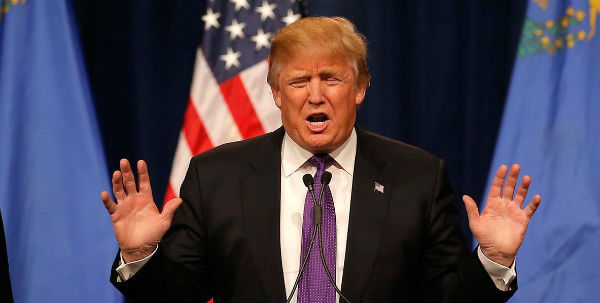
Christian Science Monitor reports: The appointment of Breitbart news chief Stephen Bannon to head Donald Trump’s presidential campaign this week marks the official entree of the so-called “alt-right” into the Republicans’ top campaign.
For the Trump campaign, Mr. Bannon is an experienced political street fighter who is well-versed in the sharp-edged, populist message that served the candidate well in the Republican primaries.
Mr. Trump’s tapping of the alt-right could help solidify his base by letting Trump be Trump, and potentially propel him to hit Hillary Clinton’s weak points harder.
But critics say that Bannon’s hiring resonates far beyond the Trump campaign in troubling ways. It marks a worrisome marriage of the Republican Party with an Internet culture that, they say, peddles in white identity, misogyny, anti-Semitism, and Clinton conspiracies.
In short, it doubles down on a largely white voting bloc that, in the words of Brendan O’Neill, a commentator for the conservative Spectator magazine in Britain, is “convinced the world is one big lefty, feminist plot to ruin your average white dude’s life.” [Continue reading…]

Ben Geman writes: On Saturday night, the British distance runner Mo Farah will try and become the first athlete to sweep the 5,000- and 10,000-meter races at consecutive Olympics since Finland’s Lasse Viren won both in 1972 and 1976. Farah has already found a heart-stopping way to pay homage to the Finn, albeit accidentally. Viren famously fell mid-race during the 10,000-meter in 1972 but managed to get up and still win. Forty-four years later, in the middle of last Saturday’s 10,000 in Rio, Farah got tangled up with the American runner Galen Rupp, his friend and sometime training partner, and went crashing onto the track. It briefly looked as though Farah’s race was over. But he sprang up, rejoined the pack, and won in the same way he’s dominated the biggest international races for a half-decade: by separating himself from runners still in the mix and entering the final lap with a blistering closing kick.
Farah is tangled up with forces off the track too. He’s an immigrant who came to England from Somalia in order to escape conflict there at the age of eight. Time and again in recent years, the 33-year-old Farah, a devout Muslim, has prayed on the track and draped himself in the British flag after crossing the line for wins on the biggest stage, including at London’s 2012 games and then biennial World Championships in Russia and China in 2013 and 2015.
Still, Farah has faced claims that he’s not truly a British athlete throughout his career. In an ugly incident last year after Farah set the European record in the half-marathon, the man he took it from, Spain’s Fabian Roncero, dismissed the feat, reportedly claiming that an athlete “born in Somalia is Somali forever.” And this year’s Olympics are unfolding at a very different and even more fraught political moment than Farah’s earlier wins, arriving just weeks after anti-immigrant sentiment helped elicit Britain’s exit from the European Union. Across the Atlantic, Donald Trump has made condemning immigrants a pillar of his campaign to capture the GOP nomination and the White House. [Continue reading…]
CNN reports: FBI and Justice Department prosecutors are conducting an investigation into possible US ties to alleged corruption of the former pro-Russian president of Ukraine, including the work of Paul Manafort’s firm, according to multiple US law enforcement officials.
The investigation is broad and is looking into whether US companies and the financial system were used to aid alleged corruption by the party of former president Viktor Yanukovych.
Manafort, who resigned as chairman of Donald Trump’s campaign Friday, has not been the focus of the probe, according to the law enforcement officials. The investigation is ongoing and prosecutors haven’t ruled anything out, the officials said.
The probe is also examining the work of other firms linked to the former Ukrainian government, including that of the Podesta Group, the lobbying and public relations company run by Tony Podesta, brother of Clinton campaign chairman John Podesta. [Continue reading…]
The New York Times reports: Donald J. Trump on Thursday expressed regret for making statements that have “caused personal pain,” a rare display of contrition that followed the shake-up of his campaign’s leadership this week.
“Sometimes, in the heat of debate and speaking on a multitude of issues, you don’t choose the right words or you say the wrong thing,” Mr. Trump said. “I have done that. And believe it or not, I regret it.”
The crowd gathered at a convention center here responded by chanting Mr. Trump’s name, and he gave them a thumbs-up.
“And I do regret it, particularly where it may have caused personal pain,” Mr. Trump added. “Too much is at stake for us to be consumed with these issues.”
Mr. Trump’s statement of regret, in a prepared speech in which he spoke of a “New American Future,” seemed to be a step toward trying to recover from a number of public quarrels and other episodes that have damaged his campaign, including a dispute with the family of an American Muslim soldier who was killed in Iraq.
But in his speech, which he read off a teleprompter, he did not specify what he regretted, offer specific apologies or linger on the subject. In his campaign, Mr. Trump has at times sounded restrained and on-message, only to quickly revert to his more pugilistic nature. [Continue reading…]
The reporting at the failing @nytimes gets worse and worse by the day. Fortunately, it is a dying newspaper.
— Donald J. Trump (@realDonaldTrump) August 19, 2016
The Daily Beast reports: Donald Trump’s campaign is under new management — and his white nationalist fanboys love it.
The campaign’s new chief executive, Stephen Bannon, joins from Breitbart News — where he helped mainstream the ideas of white nationalists and resuscitate the reputations of anti-immigrant fear-mongers.
White nationalists today invest a lot of energy worrying about growing Hispanic and Muslim populations in the U.S. Turns out, Breitbart News spends a lot of time worrying about those things, too. And in Bannon, they see a media-friendly, ethno-nationalist fellow traveler.
“Latterly, Breitbart emerged as a nationalist site and done great stuff on immigration in particular,” VDARE.com editor Peter Brimelow told The Daily Beast.
VDare is a white supremacist site. It’s named after Virginia Dare, the first white child born to British colonists in North America. Brimelow said he and Bannon met briefly last month and exchanged pleasantries about each other’s work.
“It’s irritating because VDARE.com is not used to competition,” Brimelow added. “I presume that is due to Bannon, so his appointment is great news.”
Brimelow isn’t the only prominent white nationalist to praise the Bannon hire. Richard Spencer, who heads the white supremacist think tank National Policy Institute, said he was also pleased. Under Bannon’s leadership, Breitbart has given favorable coverage to the white supremacist Alt Right movement. And Spencer loves it. [Continue reading…]
McClatchy reports: Stanley Vernon Majors was a neighbor from hell.
For five years, according to witness accounts and court papers, Majors terrorized the Jabara family living next door to him in suburban Tulsa, Oklahoma.
He disrupted their family gatherings. He hassled visitors if they parked in front of his house. He hurled racial slurs at a black friend of the family. He even made false claims to health inspectors, the Jabaras said, sabotaging their lucrative catering contract providing hummus to Whole Foods stores.
Majors often mentioned the family’s Arab roots in his tirades; one police report quoted him as calling them “filthy Lebanese.” He also used “Ay-rabs” and “Mooslems,” recalled the Jabaras, who are Christians.
The harassment took a violent turn last September, when Majors was charged with ramming his car into the Jabara family’s 65-year-old matriarch, Haifa, who suffered a collapsed lung, head trauma and broken bones from her nose to her ankle. Majors was awaiting trial on charges from that incident when, last Friday, according to the authorities, he walked next door and fired four shots at 37-year-old Khalid Jabara, killing him on his front porch.
Among Arab and Muslim Americans, the case immediately was viewed as a hate crime, with Jabara portrayed as the latest victim in a bloody wave of attacks against people perceived as foreigners or Muslims. “Hate was definitely part of it. This guy did hate our family,” said Jabara’s brother, Rami, speaking by phone to McClatchy this week.
Yet despite the well-documented history of Majors’ targeting the family, there’s no guarantee that prosecutors will seek hate crime charges in addition to the murder charge against him. Legal specialists who track hate-crime prosecutions nationwide say the Jabara case is likely to run into the same hurdles that civil rights advocates have warned about in numerous studies: Hate crime laws can be prohibitively difficult to use, narrow as to what offenses are covered, and dependent on police who often have no obligation to report – or lack training in how to respond to – crimes involving bias.
That disconnect – having laws on the books but problems using them – is a source of growing frustration for Arab-American, Muslim and other civil rights activists who have seen numerous attacks that appear to have been motivated by racial or religious hatred, but weren’t considered that way under the law. The result, activists say, is the loss of confidence in the justice system just as a nasty political climate deepens fears of bias-motivated attacks. [Continue reading…]
Charles Blow writes: So now Donald Trump is campaigning for the black vote. (Long, awkward pause.)
Like so much of what Trump has said and done, this new outreach forces writers like me to conduct scatological studies, framing Trump’s actions in their historical and intellectual absurdity.
But, here we go.
Trump, who got a shocking 1 percent of support among black voters in a recent NBC News/Wall Street Journal poll, has been urged to reach out to black voters.
A day after The New York Times published an article pointing out that “the Republican nominee has not held a single event aimed at black voters in their communities, shunning the traditional stops at African-American churches, historically black colleges and barber shops and salons that have long been staples of the presidential campaign trail,” Trump ventured to a suburban town outside Milwaukee that is 95 percent white and 1 percent black to tell the black population of America — a population that has been consumed in recent years by a discussion of police misconduct and extrajudicial killings — that “the problem in our poorest communities is not that there are too many police, the problem is that there are not enough police.”
The speech was tone deaf, facile and nonsensical, much like the man who delivered it. [Continue reading…]
The Associated Press reports: Donald Trump’s campaign chairman helped a pro-Russian governing party in Ukraine secretly route at least $2.2 million in payments to two prominent Washington lobbying firms in 2012, and did so in a way that effectively obscured the foreign political party’s efforts to influence U.S. policy.
The revelation, provided to The Associated Press by people directly knowledgeable about the effort, comes at a time when Trump has faced criticism for his friendly overtures to Russian President Vladimir Putin. It also casts new light on the business practices of campaign chairman Paul Manafort.
Under federal law, U.S. lobbyists must declare publicly if they represent foreign leaders or their political parties and provide detailed reports about their actions to the Justice Department. A violation is a felony and can result in up to five years in prison and a fine of up to $250,000. [Continue reading…]
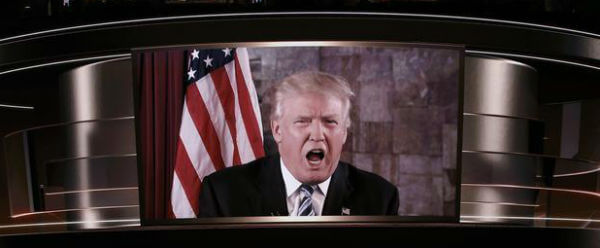
Timothy Shenk writes: [Leviathan and Its Enemies, by Samuel Francis, finished in 1995 but not discovered until after his death a decade later and published earlier this year, is] one of the most impressive books to come out of the American right in a generation – and the most frightening. It is a searching diagnosis of managerial society, written by an author looking for a strategy that could break it apart.
Like much of Francis’s writing, Leviathan and Its Enemies began with Burnham – in this case, quite literally. “This book,” Francis announced in the first sentence, “is an effort to revise and reformulate the theory of the managerial revolution as advanced by James Burnham in 1941 [in The Managerial Revolution: What Is Happening in the World].”
Francis agreed that society had been taken over by managers, but he believed the new ruling class was far more vulnerable than Burnham had realised. Not everyone had benefited from the rise of the experts – and Francis saw this unequal distribution of rewards as the managerial regime’s greatest weakness.
For reasons he never quite explained, he insisted that the cosmopolitan elite threatened the traditional values cherished by most Americans: “morality and religion, family, nation, local community, and at times racial integrity and identity”. These were sacred principles for members of a new “post-bourgeois proletariat” drawn from the working class and the lower ranks of the middle class. Lacking the skills prized by technocrats, but not far enough down the social ladder to win the attention of reformers, these white voters considered themselves victims of a coalition between the top and bottom against the middle.
According to Francis, this cohort had supplied the animating spirit of rightwing politics since the death of Franklin Roosevelt in 1945. They had supported Goldwater – but Francis regarded Goldwater’s programme, like the “movement conservatism” of the National Review, as a “quaintly bourgeois” throwback to the oligarchic politics of the 19th century, with nothing to offer the modern working man. Their tribune was not Goldwater but George Wallace, the notorious segregationist and Democratic governor of Alabama – who won five southern states as an anti-civil rights third-party candidate in the 1968 presidential election. Richard Nixon and Ronald Reagan had appealed to this group, too, but neglected their interests after taking office. Despite having elected multiple presidents, the post-bourgeois proletariat had yet to find a voice.
Yet Francis had difficulty explaining why managerial society would generate so much opposition in the first place. In Leviathan and Its Enemies, he argued that resistance to the cosmopolitan elite would be driven by “immutable elements of human nature” that “necessitate attachment to the concrete and historical roots of moral values and meaning”.
He was more candid in a speech he gave while working on the book. “What we as whites must do,” he declared, “is reassert our identity and our solidarity, and we must do so in explicitly racial terms through the articulation of a racial consciousness as whites.” Where mainstream conservatives depicted the US as a nation whose diverse population was linked by devotion to its founding principles, Francis viewed it as a racial project inextricably bound up with white rule. The managerial revolution jeopardised this racial hierarchy, and so it must be overthrown.
Francis delivered his remarks on racial consciousness at a conference organised by American Renaissance, an obscure journal devoted to promoting white nationalism. Years earlier, Francis had struck up a friendship with Jared Taylor, who went on to found the magazine with Francis’s encouragement. From their first encounter, Taylor recalled, he and Francis “understood each other immediately”.
Francis’s employers at the Washington Times were not as sympathetic. The paper fired him after his comments were released, a move that was part of his larger expulsion from the respectable right. [William J.] Buckley himself dismissed Francis as “spokesman” for a group that had “earned their exclusion from thoughtful conservative ranks”.
Yet Francis would not be so easily purged. For years he had cultivated a relationship with Pat Buchanan, a one-time Nixon protege who had become one of the country’s most recognisable conservatives thanks to his role as co-host of CNN’s popular debating programme Crossfire. In 1992, Buchanan launched a long-shot campaign against incumbent president George HW Bush that, against all expectations, garnered almost 3m votes in the primaries. While all this was going on, Buchanan was growing closer to Francis, whom he later called “perhaps the brightest and best thinker on the right”.
Francis and Buchanan were linked by their association with a breakaway faction on the right known as paleoconservatism. While mainstream conservatives had taken advantage of cushy gigs in New York and Washington, paleocons depicted themselves as spokesmen for the forgotten residents of flyover country. Francis urged Buchanan to make another run for the White House in 1996, this time as the candidate of the post-bourgeois resistance. That campaign would be based on three issues: protectionism, opposition to immigration and an “America First” foreign policy that repudiated global commitments and foreign interventions in order to focus on defending the national interest. [Continue reading…]
