Category Archives: GOP

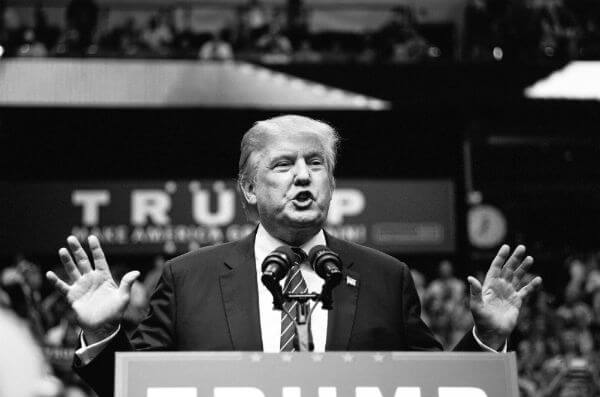
Ted Cruz, not Donald Trump, is the scariest candidate standing

By Randall Stephens, Northumbria University, Newcastle

The 2016 Republican primary is now essentially a two-man race. Donald Trump has tallied an astonishing 678 delegates, while Ted Cruz, the dogmatic, far-right Texas Republican, who apparently gets along with no one in his own party, has garnered 423. Even though John Kasich, former governor and the last great hope for moderates, won his home state of Ohio, his candidacy is mathematically dead in the water; his only hope is to pull some remarkable trick at a contested convention.

For Cruz as well, it’s still an uphill battle. But depending on the outcomes of subsequent primaries, other Republican leaders may yet rally to his side. As CBS News put it: “Cruz may be the only candidate who can beat Trump in the delegate count before the convention.”

This is the mainstream party’s worst nightmare. Comedy Central’s Daily Show compared the choice between Trump and Cruz to picking between getting a blood clot or bone cancer, and to listen to the party’s establishment, the clot has so far been getting the most attention. As a Los Angeles Times headline put it, “Cruz is Scary, Trump Is Dangerous”. Jeb Bush memorably called Trump the “chaos candidate”. George W. Bush’s former press secretary, Ari Fleischer, describes Trump as a “wrecking ball”.

South Carolina senator and former GOP candidate Lindsey Graham has decided to back Cruz in a desperate effort to stop the chaos candidate, but even he once compared the decision to choosing between being poisoned or shot by a firing squad. The cyanide capsule seems to have cracked between Graham’s teeth.

Continue reading

Facebooktwittermail

Progressive only on Palestine?

Yesterday, I saw someone on Facebook express his disgust for Hillary Clinton’s speech at AIPAC by concluding that the most dangerous presidential candidates are first Clinton, second Cruz, and third Trump.

Underneath this outrage there clearly lurked a tenuous hope that Clinton’s message might have been different — that along with the predictable pandering there might have been a modicum of truth telling.

Still, it makes more sense to be disappointed that any politician chooses to speak at an AIPAC conference rather than disappointed by what they end up saying after having crossed that threshold. Everyone knows in advance that these are servile and self-serving exercises.

If we need to score such performances in some way, the criteria on which they should be assessed are their measures of cynicism, shamelessness, gall, hyperbole, and obsequiousness. By those measures, everyone tends to compete very closely.

For that reason, it’s debatable how much value there is in analyzing the specific content of any AIPAC speech when there is arguably no other venue in which such little weight can be attached to what anyone says.

Nevertheless, there is a risk that a small constituency of American voters, on the basis of her AIPAC speech (and her political history), are now leaning in the direction of believing that it would be worse to see Hillary Clinton enter the White House than it would be for Donald Trump to be elected.

Phil Weiss writes:

If there was any doubt that Hillary Clinton is running to the right of Donald Trump on Israel, she removed it this morning with a fist-pumping hard-right speech to the Israel lobby group AIPAC that mentioned Israeli settlements just once, in passing, and continually derided the idea of American “neutrality” in the conflict, which Trump has embraced.

Often projecting an adamant posture in the speech, Clinton said she was willing to use force against Iran if it violates the Iran deal, praised Israeli PM Benjamin Netanyahu, and promised to invite the PM to the White House in one of her first acts in office. She concluded the speech by thrusting her fist in the air as she vowed to take the relationship to the “next level” so that Israel and the U.S. could face the future together.

When Trump addressed the AIPAC conference yesterday afternoon, he offered a clue of how the “neutrality” of a Trump administration would work:

When I’m president, believe me, I will veto any attempt by the U.N. to impose its will on the Jewish state. It will be vetoed 100 percent.

He also said:

The United States can be useful as a facilitator of negotiations, but no one should be telling Israel that it must be and really that it must abide by some agreement made by others thousands of miles away that don’t even really know what’s happening to Israel, to anything in the area. It’s so preposterous, we’re not going to let that happen.

And in the most loyal expression of fealty to the Zionist lobby, Trump promised:

We will move the American embassy to the eternal capital of the Jewish people, Jerusalem.

Let’s assume that Trump is no less cynical than any other politician in serving up the sentiments that AIPAC wants to hear. Would it be worth voting for him on the basis of some tentative hope that he might turn out to be a great Middle East deal maker? Or, simply because you imagine that in relation to Israel, Clinton could be worse.

Hell no!

The fact that for some people, Palestine is the only issue, doesn’t actually make it the only issue. It just means they have chosen to reduce politics to the singular focus of their own passion.

Ironically, for some Palestine watchers, as humanitarian as their sensibilities might be, in recent years their focus has become so tightly constrained, they have largely averted their gaze from the worst humanitarian crisis of the twenty-first century — even as it unfolds right next door in Syria.

To be open-minded about a Trump presidency solely on the basis that on a few occasions he has broken ranks with the pro-Israel political establishment, is to overlook the fact that whatever his actions on this issue might turn out to be, he would certainly be more active in many other arenas — active in ways that pose all kinds of adverse consequences.

Even if one adopts a thoroughly agnostic position and decides that it’s impossible to predict what a President Trump might do, the question is: Do you want to take the risk of finding out?

This much we already know: Trump is a demagogue. He is vain, ignorant, extraordinarily arrogant, and deceitful. He promotes xenophobia and mob violence. He is a misogynist and a bully.

However dark your view of the U.S. presidency might be, Donald Trump isn’t fit for office.

As sickened as many Americans feel about the corrupt nature of this country’s political culture, sending Trump to Washington makes no more sense than employing an arsonist to put out a fire.

Facebooktwittermail

In speech to AIPAC, Donald Trump affirms support for Israel

The Wall Street Journal reports: Despite threats of protests, the crowd appeared largely receptive to Mr. Trump, save for a few moments. He received several rounds of cheers, with some standing to applaud him, when he said Israel would no longer be treated like a “second-class citizen” and when he criticized the Iran deal.

But he drew some titters when he said that no one had studied the Iran deal more than him — “believe me.”

Having drawn fire last year for giving an ambiguous response on a key litmus-test issue, Mr. Trump also told the audience: “We will move the American Embassy to the eternal capital of the Jewish people, Jerusalem.”

Mr. Trump’s prior insults to women and minorities had prompted protests from rabbis and other critics who threatened to walk out or boycott the address. Some attendees, wearing stickers that read “Come together against hate” — a play-off of Aipac’s theme, “Come Together” — planned to walk out before he began speaking, while protesters gathered outside.

Daniel Burg, a rabbi from Baltimore who was attending Aipac this week for the ninth year in a row, was among the attendees who walked out. “People are exercising their rights to not simply abide the presence of Mr. Trump and pretend that this election cycle is business as usual,” he said. He called the real-estate billionaire’s rhetoric “so hateful, so misogynistic, so racist” and said it had “undermined the democracy that we believe in.”

Rick Jacobs, a rabbi from New York City and president of the Union for Reform Judaism, helped author a letter to Mr. Trump requesting a meeting to discuss the community’s concerns with the front-runner, citing his comments about Mexican immigrants, women, Muslims, and other groups.

Mr. Jacobs said the campaign has said it is considering setting up a meeting later this week. “It’s not that we won’t engage with this candidate,” he said. “We want to have a chance not just to listen—we want to have a chance to speak.”

Mr. Jacobs walked out ahead of Mr. Trump’s speech and gathered with about 70 others outside the auditorium while Mr. Trump speaking. He said he saw hundreds leaving the stadium before Mr. Trump took the stage. [Continue reading…]

Politico reports: The leaders of the largest American pro-Israel lobby distanced themselves on Tuesday morning from Donald Trump’s attacks on President Barack Obama at their policy conference.

Trump addressed the annual Washington gathering of the American Israel Public Affairs Committee on Monday night, and some of his biggest applause lines were his characteristically blunt critiques of Obama, who he said “may be the worst thing to ever happen to Israel, believe me, believe me.”

AIPAC president Lillian Pinkus read a statement from the stage on Tuesday to disavow Trump’s remarks.

“We say unequivocally that we do not countenance ad hominem attacks, and we take great offense to those that are levied against the United States of America from our stage,” Pinkus said. “While we may have policy differences, we deeply respect the office of the president of the United States and our president, Barack Obama.”

She also castigated attendees who responded positively to Trump’s comments. [Continue reading…]

Facebooktwittermail

Donald Trump’s new foreign policy advisers are as rotten as his steaks

Shane Harris writes: A Christian academic accused of inciting violence against Muslims. A former Pentagon official who blocked investigations into Bush administration bigwigs. And an assortment of self-professed experts probably few in established foreign policy circles have ever heard of. These are the minds advising Republican presidential candidate Donald Trump on foreign policy and national security.

Trump, who has been pressed for months to name his council of advisers, revealed five in a meeting with The Washington Post editorial board on Tuesday: Keith Kellogg, Carter Page, George Papadopoulos, Walid Phares, and Joseph E. Schmitz.

Few of these names will register with most voters, or many experts in Washington. None of them are especially sought after for foreign policy views and national security expertise in the nation’s capital — which may be why they’re attractive to Trump.

Trump revealed little about what specific advice they’d given so far, or how any of them may have shaped Trump’s surprising new position that the U.S. should rethink whether it needs to remain in the seven-decades-old NATO alliance with Europe.

Sounding more like a CFO than a commander-in-chief, Trump said of the alliance, “We certainly can’t afford to do this anymore,” adding, “NATO is costing us a fortune and yes, we’re protecting Europe with NATO, but we’re spending a lot of money.” [Continue reading…]

Facebooktwittermail

Does Roland Barthes shed light on Donald Trump?

Judd Legum writes: Barthes is best known for his work in semiotics, the study of signs and symbols. But he wasn’t limited to lengthy, esoteric treatises. Rather, Barthes published much of his work in short, accessible pieces breaking down elements of popular culture. The New York Times described Barthes as the godfather of the TV recap.

His most famous essay, published in his 1957 book Mythologies, focuses on professional wrestling. Could an essay about professional wrestling hold the key to understanding Trump’s appeal? It’s worth noting that, before he was a presidential candidate, Trump was an active participant in the WWE. In 2013, Trump was inducted into the WWE Hall of Fame.

In his essay, Barthes contrasts pro wrestling to boxing.

This public knows very well the distinction between wrestling and boxing; it knows that boxing is a Jansenist sport, based on a demonstration of excellence. One can bet on the outcome of a boxing-match: with wrestling, it would make no sense. A boxing- match is a story which is constructed before the eyes of the spectator; in wrestling, on the contrary, it is each moment which is intelligible, not the passage of time… The logical conclusion of the contest does not interest the wrestling-fan, while on the contrary a boxing-match always implies a science of the future. In other words, wrestling is a sum of spectacles, of which no single one is a function: each moment imposes the total knowledge of a passion which rises erect and alone, without ever extending to the crowning moment of a result.

In the current campaign, Trump is behaving like a professional wrestler while Trump’s opponents are conducting the race like a boxing match. As the rest of the field measures up their next jab, Trump decks them over the head with a metal chair. [Continue reading…]

Facebooktwittermail

The Trump phenomenon is what the founders feared and Lincoln warned against

trump-bw

Peter Wehner writes: “I think you’d have riots.” So said Donald J. Trump last week, when he was asked by CNN what he thought would happen if he arrived at the Republican Convention this summer a few delegates short of the 1,237 needed to win outright and didn’t set forth from Cleveland as the party’s nominee.

It is stunning to contemplate, particularly for those of us who are lifelong Republicans, but we now live in a time when the organizing principle that runs through the campaign of the Republican Party’s likely nominee isn’t adherence to a political philosophy — Mr. Trump has no discernible political philosophy — but an encouragement to political violence.

Mr. Trump’s supporters will dismiss this as hyperbole, but it is the only reasonable conclusion that his vivid, undisguised words allow for. As the examples pile up, we should not become inured to them. “I’d like to punch him in the face,” Mr. Trump said about a protester in Nevada. (“In the old days,” Mr. Trump fondly recalled, protesters would be “carried out in a stretcher.”)

Of another protester, Mr. Trump said, “Maybe he should have been roughed up.” In St. Louis, Mr. Trump sounded almost wistful: “Nobody wants to hurt each other anymore.” About protesters in general, he said: “There used to be consequences. There are none anymore. These people are so bad for our country. You have no idea folks, you have no idea.”

Talk like this eventually finds its way into action. And so on March 10, a Trump supporter named John McGraw, was charged with assault, battery and disorderly conduct, after a protester was sucker-punched as he was being hauled by security guards out of a Trump rally in North Carolina the day before. When interviewed afterward Mr. McGraw said, “The next time we see him, we might have to kill him.”

And Donald Trump’s reaction? He said he was considering paying Mr. McGraw’s legal fees. “He obviously loves his country,” Mr. Trump added, “and maybe he doesn’t like seeing what’s happening to the country.”

Welcome to Donald Trump’s America.

Mr. Trump’s comments, startling in a leading presidential candidate, have raised widespread concern about the path we find ourselves on. But concern about political violence, mob rule and unchecked passion is hardly new in American history. [Continue reading…]

Facebooktwittermail

‘Trump’s relationship with Israel and the Jews is beyond fabulous,’ says former chairman of Palm Beach County Republican Party

The New York Times reports: Sheldon Adelson, the casino magnate and a major donor to Republican and Israeli causes, said recently that he would back Mr. Trump if he were the nominee, and a newspaper that he owns, Israel Hayom, has written favorably about Mr. Trump.

But there is still concern about Mr. Trump’s behavior, which if not anti-Semitic is at least seen by many Jews as overly accommodating of bigotry. “The way he dillydallied with David Duke basically sent a message that was perceived by many in the Jewish community as he’s looking for any votes he can get from the hard right,” said Alan M. Dershowitz, the defense lawyer.

To Mr. Dershowitz, the problem is not simply Mr. Trump; it is the white supremacists who have rallied around his candidacy. “It’s quite frightening to see who supports him,” he said.

Ms. Hicks, the campaign spokeswoman, said Mr. Trump had “disavowed David Duke and continues to strongly condemn any groups that share those hateful views.”

And for all of his critics in the Jewish world, Mr. Trump also has his supporters, including Sid Dinerstein, the former chairman of the Palm Beach County Republican Party in Florida.

“Donald Trump’s relationship with Israel and the Jews is beyond fabulous,” Mr. Dinerstein said, noting that his wife displayed a Trump bumper sticker on the dashboard of her Mercedes-Benz.

Mr. Dinerstein said he trusted Mr. Trump to negotiate good deals for Israel — “he only negotiates from strength, he doesn’t know anything else” — and to make sure that America “doesn’t get pushed around.”

He and his wife are hardly the lone Trump supporters in their predominantly Jewish community, he said, though not everyone is outspoken about it.

“Sometimes people come over to me and quietly say, ‘Sid, I never thought I would say this, but I’m voting for Trump,’” Mr. Dinerstein said. “And I say, ‘Everybody says that.’ ” [Continue reading…]

Facebooktwittermail

The mutual dependence of Donald Trump and the news media

Jim Rutenberg writes: Did you catch the Trump-Kelly bout Friday night? What a show.

It had Donald J. Trump, The Likely Republican Presidential Nominee, throwing the first punch (of that day) at the star Fox News anchor Megyn Kelly by composing a Twitter post describing her as “overrated” and calling for a boycott of her show.

Then Fox News Channel counterpunched, accusing the candidate of having a sexist and “sick obsession” with its popular journalist. Boom. Another Trump News avalanche!

The Trump-Kelly feud once again became a focal point of the presidential campaign coverage, cascading across Twitter, cable news and digital news outlets, including this one.

As in any good prizefight, everybody came out the richer Friday, putting aside the potentially severe internal injuries.

Mr. Trump riled up his fans against a recurring villain in his running campaign narrative and ensured the news was once again all about him. Fox News, the cable news ratings leader that is so often impugned as an arm of the Republican Party, got to ring a bell for journalistic independence. Ms. Kelly got the sort of support from the network that she has described as lacking from her colleague Bill O’Reilly; guaranteed big ratings to come; and got more fodder for the book she sold for many millions of dollars after the Trump feud began.

Newspapers and online news organizations got a click-worthy story line tailor-made for a fast read on the iPhone. And, finally, there were the viewers and the readers, who are benefiting from a transitioning media industry’s desire to give them what they want, where they want it, as fast as possible. As the people have made clear, they want Trump.

It was the perfect boil-down of the disturbing symbiosis between Mr. Trump and the news media. There is always a mutually beneficial relationship between candidates and news organizations during presidential years. But in my lifetime it’s never seemed so singularly focused on a single candidacy. And the financial stakes have never been so intertwined with the journalistic and political stakes. [Continue reading…]

Facebooktwittermail

Torturing for Trump

decay16bw

Eric Fair writes: In March 2004, at Forward Operating Base St. Mere outside Falluja, Iraq, I was walking home from work. Ferdinand Ibabao, my close friend and fellow contractor, was walking with me. It had been a long day of interrogations, so we were looking forward to checking emails, and hearing about what our families were up to back home.

As we walked through a large open field on the base, the distinct sound of incoming mortar rounds interrupted our conversation. We’d been talking about finding new contracting jobs in Iraq. Conducting interrogations at places like Abu Ghraib and Falluja was beginning to take a toll. We both agreed it was time to move on to something less complicated, something that didn’t force us to set aside our humanity in order to go to work.

As the mortars detonated nearby, Ferdinand, always one to joke, ran around like a baseball player trying to catch a pop fly shouting “I got it, I got it!” He said it would be a mercy killing.

I found myself thinking about Ferdinand and his dark humor after Ted Cruz and Donald J. Trump unapologetically endorsed the use of waterboarding at a Republican debate early last month. “I’d bring back waterboarding,” Mr. Trump said, “and I’d bring back a hell of a lot worse than waterboarding.”

I don’t know what drives a man to say such things. I just know that when they do, men like Ferdinand and me will be forced to shoulder the consequences.

In my role as a civilian contractor for the Department of Defense, I spent the first three months of 2004 torturing Iraqi prisoners. At the time, we were calling it enhanced interrogation, but that’s a phrase I don’t use anymore. Stress positions, slaps to the face and sleep deprivation were an outrage to the personal dignity of Iraqi prisoners. We humiliated and degraded them, and ourselves. [Continue reading…]

Facebooktwittermail

For many Americans, Trump personifies the ideal life

Virginia Postrel writes: Why would anyone vote for Donald Trump? One popular theory holds that his supporters are bigots angered by America’s changing racial mix. Another is that they’re salt-of-the-earth working folks left behind by the loss of manufacturing jobs, alienated from the moneyed ruling class and irritated by the tyranny of political correctness. Or some combination thereof.

These theories, which contain elements of truth, emphasize Trump’s dire assessment of present-day America and his followers’ discontent. They focus on negative sentiment. But an important part of the story is Trump’s positive allure — the way the candidate taps into, and projects, the most fundamental outlines of the American Dream.

Conventional explanations miss the glamour of Trump’s message.

The word “glamour” originally meant a literal magic spell that makes people see things differently than they are. Understood correctly, glamour is not a particular style — different styles seem glamorous to different people — but, like humor, a form of communication that creates a specific emotional response. Glamour generates a feeling of projection and longing: “if only.” If only I could walk that red carpet, drive that car, wear that dress, belong to that group, have that job, be (or be with) that person . If only I could have that life.

The feeling is universal, but the manifestation is particular: One person’s glamorous vacation may be a busy trip to Paris, while another dreams of the solitude of a mountain cabin. What you find glamorous depends on who you are — and who you yearn to be. [Continue reading…]

Facebooktwittermail

Ted Cruz’s new national security advisers include ‘one of America’s most notorious Islamophobes’

Huffington Post reports: A big part of Sen. Ted Cruz’s appeal is that he’s not Donald Trump, the openly bigoted billionaire currently leading the Republican Party’s presidential race.

But the notion that a Cruz presidency would be more palatable to those concerned about Trump’s anti-Muslim stance came into doubt on Thursday, when Cruz unveiled his own team of national security advisers. It includes Frank Gaffney, a man described by the Southern Poverty Law Center as “one of America’s most notorious Islamophobes.”

Gaffney, who served in the Reagan-era Defense Department, now heads the Center for Security Policy. It’s a think tank of sorts well known for promoting conspiratorial theories about the Muslim Brotherhood infiltrating the U.S. government at high levels and the Sharia system replacing American democracy. [Continue reading…]

Facebooktwittermail

Global risks: Trump presidency as dangerous as jihadi terrorism, says The Economist

trump-bw

Politico reports: A Donald Trump presidency poses a top-10 risk event that could disrupt the world economy, lead to political chaos in the U.S. and heighten security risks for the United States, according to the Economist Intelligence Unit.

Electing Trump could also start a trade war, hurt trade with Mexico and be a godsend to terrorist recruiters in the Middle East, according to the latest EIU forecasts.

The well-respected global economic and geopolitical analysis firm put a possible Trump presidency in its top 10 global risks this month, released Wednesday. Other risks include a sharp slowdown in the Chinese economy, a fracture of the Eurozone, and Britain’s possible departure from the European Union. [Continue reading…]

Facebooktwittermail

On the nomination of Judge Merrick Garland to the Supreme Court

Lawrence Goldstone writes: With his nomination of Judge Merrick Garland to fill Supreme Court Justice Antonin Scalia’s seat, President Barack Obama has made clear the tone he wishes to strike with the nation. He faced a difficult choice: whether to nominate an eminently qualified liberal or an eminently qualified moderate. In opting for the latter, Obama has eschewed the standard Republican strategy of aiming every policy decision at the party’s most extreme faction, and instead sought to nominate a justice whom large swathes of both parties will see as appropriate to the high bench.

Garland, the chief judge of the U.S. Court of Appeals for the District of Columbia Circuit, is man whose academic, personal, and judicial credentials are such that Senator Orrin Hatch said just last week that the president “could easily name Merrick Garland, who is a fine man” to fill the seat, but “he probably won’t do that because this appointment is about the election, so I’m pretty sure he’ll name someone the [liberal Democratic base] wants.” In what is certain to cause Hatch to shift uncomfortably in his Judiciary Committee seat, Obama did precisely what the senator suggested and nominated an appellate court judge who has been lauded for a measured, non-ideological approach to the law.

Far more interesting, however, than Obama’s opening move is how Republicans will respond. Even before Scalia was buried, Republican Senate leaders announced that they would refuse to consider an Obama nominee. In choosing to strike preemptively, they locked themselves into a strategy that is somewhere between questionable and idiotic, and just may be the coup de grace to their political party, which now seems likely to be led by Donald Trump. [Continue reading…]

Garrett Epps writes: There are two possible interpretations of the president’s Garland strategy. The first is that Obama is playing on Republican fears of whomever a President Hillary Clinton might tap for the role and is trying to lure the Republicans into confirming an older, more moderate nominee. If they are successfully lured, then mission accomplished. If, however, Obama does not lure Republicans into confirming Garland, he will have at least embarrassed them and exposed the nakedly political nature of their tantrum.

The second interpretation — which I incline to — is that the meritocratic Boy Scout in Obama has called this shot. Garland is a terrific nominee and would make a wonderful justice. As Norman Ornstein of the American Enterprise Institute said Wednesday morning, Obama almost certainly made the pick “because he thought this was the best possible choice for the Supreme Court.” Obama might be unwilling to pass up a chance to make such an appointment, and to the extent there is political calculation behind it, the president is banking on the residual idealism of some Republican senators to respond. He may believe there is at least some chance Garland will be confirmed. If so, his belief in that reservoir of public spirit is a testament both to his own generosity and to his persisting naïveté.

Of course, the idea that Garland, at 63, is an older nominee who would serve a shorter time on the Court and pose less danger to the conservative legal agenda assumes facts not in evidence. Almost exactly a century ago, another Democrat named a Jewish nominee in an election year. The nomination was deeply controversial, and the Senate delayed hearings and a vote for four months — still a record for delay. The nominee was Louis D. Brandeis. He was 59 years old. Nearly a quarter-century later, at 82, he retired as perhaps the most influential liberal justice in American history. [Continue reading…]

Jay Michaelson writes: I was one of Judge Garland’s law clerks in his second year on the D.C. Circuit bench, back in 1998. Perhaps it sounds self-serving to say so, but Judge Garland is one of the hardest working, fairest-minded people I’ve ever met. He worked harder than any of us, staying late into the night, sometimes cutting out of the office to make time for his kids before coming back in for the midnight shift. Watching him stand alongside President Obama this morning filled me with respect and pride — in the moments when I could forget the disrespect he is soon to endure.

I also had some firsthand exposure to how he thinks. There was not a single case I worked on with him, from the most mundane Federal Energy Regulation Commission matter to a 20-plus-year-old civil rights case, in which politics played into his considerations. Conscience, sure — Judge Garland often reminded me that there were human beings on both sides of these contentious cases — but never ideology.

Not all judges on the D.C. Circuit were of that persuasion. I was friends with clerks for other judges, and some (whom, of course, I won’t name) would simply tell their clerks how they wanted the case to come out, leaving the clerks to get from point A to point B. That was never my experience with Judge Garland. [Continue reading…]

Facebooktwittermail

Trump: I consult myself on foreign policy

Politico reports: Donald Trump finally shared the name of someone he consults on foreign policy: himself.

Asked on MSNBC’s “Morning Joe” who he talks with consistently about foreign policy, Trump responded, “I’m speaking with myself, number one, because I have a very good brain and I’ve said a lot of things.”

“I know what I’m doing and I listen to a lot of people, I talk to a lot of people and at the appropriate time I’ll tell you who the people are,” Trump said. “But my primary consultant is myself and I have a good instinct for this stuff.” [Continue reading…]

Facebooktwittermail

I cheered as Trump supporters clashed with protesters. Then I felt shame

Matt Laslo writes: I was in Philadelphia for a funeral on Friday when Chicago friends started blowing up my phone after Donald Trump’s rally was canceled. The situation in Chicago devolved into chaos, with people on both sides wildly swinging at each other, others storming the stage, vitriolic barbs being lobbed by both Trump fans and enemies alike. I should have been mourning, but I was cheering.

Chicago is the city I grew up in. I cheer for its sports teams and rappers alike (though I’m never voting Kanye for president. Sorry, bruh). That’s partially why I was initially elated that my hometown – black, brown and white alike; male and female – finally stood up to Trump and what he represents to many: outright xenophobia and thinly veiled support of racists and bigots.

My initial reaction was wrong. I’ve allowed myself to be debased by Trumpian politics, and for that I’m ashamed. American politics should be about ideas, not about who can land a more ferocious uppercut. [Continue reading…]

Facebooktwittermail

Trump’s long romance with Russia

Josh Rogin writes: When Donald Trump talks about his desire to have good relations between the U.S. and Russia, it’s not a recent attraction. Trump’s attempts to expand his business and his brand there date back decades, and this history casts a shadow over his pro-Russian foreign policy. As a presidential candidate, he courts Putin’s favor, extending the charm offensive intended to build the Trump real-estate empire.

“Wouldn’t it be nice if actually we could get along with Russia?” Trump asked at a recent Republican presidential debate. It’s a line he’s used in rallies as well. Trump and Russian President Vladimir Putin have exchanged praise and Trump said he “would probably get along with him very well.”

Trump’s attraction to Russia seems to be mutual. There is a Russian-language website that collects Trump news and offers sales of Trump books and products. There’s even a Trump 2016 Russian language mock campaign site. [Continue reading…]

Facebooktwittermail

White voters hope Trump will restore the racial hierarchy upended by Barack Obama

Jamelle Bouie writes: In a nation shaped and defined by a rigid racial hierarchy, [Barack Obama’] election was very much a radical event, in which a man from one of the nation’s lowest castes ascended to the summit of its political landscape. And he did so with heavy support from minorities: Asian Americans and Latinos were an important part of Obama’s coalition, and black Americans turned out at their highest numbers ever in 2008.

For liberal observers, this heralded a new, rising electorate, and — in theory — a durable majority. “The future in American politics belongs to the party that can win a more racially diverse, better educated, more metropolitan electorate,” wrote Harold Meyerson in the Washington Post after the 2008 election. “It belongs to Barack Obama’s Democrats.”

For millions of white Americans who weren’t attuned to growing diversity and cosmopolitanism, however, Obama was a shock, a figure who appeared out of nowhere to dominate the country’s political life. And with talk of an “emerging Democratic majority,” he presaged a time when their votes—which had elected George W. Bush, George H.W. Bush, and Ronald Reagan—would no longer matter. More than simply “change,” Obama’s election felt like an inversion. When coupled with the broad decline in incomes and living standards caused by the Great Recession, it seemed to signal the end of a hierarchy that had always placed white Americans at the top, delivering status even when it couldn’t give material benefits.

In a 2011 paper, Robin DiAngelo — a professor of multicultural education at Westfield State University — described a phenomenon she called “white fragility.” “White Fragility is a state in which even a minimum amount of racial stress becomes intolerable, triggering a range of defensive moves,” she writes. “These moves include the outward display of emotions such as anger, fear, and guilt, and behaviors such as argumentation, silence, and leaving the stress-inducing situation. These behaviors, in turn, function to reinstate white racial equilibrium.”

DiAngelo was describing private behavior in the context of workplace diversity training, but her diagnosis holds insight for politics. You can read the rise of Obama and the projected future of a majority nonwhite America as a racial stress that produced a reaction from a number of white Americans — and forced them into a defensive crouch. You can see the maneuvering DiAngelo describes in the persistent belief that Obama is a Muslim — as recently as last fall, 29 percent of Americans held this view, against all evidence. It is a way to mark Obama as “other” in a society where explicit anti-black prejudice is publicly unacceptable. Consistent with this racialized fear and anxiety is the degree to which white Americans now see “reverse discrimination” as a serious problem in national life. For its American Values Survey, the Public Religion Research Institute asks respondents whether “discrimination against whites is a significant problem.” In last year’s survey, 43 percent of Americans — including 60 percent of working-class whites — said discrimination against whites had become as big a problem as discrimination against blacks and other minorities.

The anxieties DiAngelo describes, and the fears cataloged by the American Values Survey, have real political impact. In a 2014 study, political scientists Maureen Craig and Jennifer Richeson tried to measure “perceived status threat” from a shift in racial demographics, surveying how people responded when informed that California is now home to more blacks, Hispanics, and Asians than non-Hispanic whites. In other words, how do white Americans react to unrelated political questions when exposed to news of a “majority-minority” future? The results were clear. “Making the majority-minority shift in California salient led politically unaffiliated white Americans to lean more toward the Republican Party,” wrote Craig and Richeson. Likewise, “making the changing national racial demographics salient led white Americans (regardless of political party affiliation) to endorse both race-related and relatively race-neutral conservative policy positions more strongly.”

The Obama era didn’t herald a post-racial America as much as it did a racialized one, where millions of whites were hyperaware of and newly anxious about their racial status. [Continue reading…]

Facebooktwittermail