Category Archives: Obama administration

Some U.S. officials question administration response to Iran plot

Reuters reports: While President Barack Obama and top aides have been united this week in grave warnings over an alleged Iranian assassination plot, some U.S. government officials are privately expressing disquiet that the outlandish-sounding plan has triggered U.S. calls for stiff new action against Iran.

These officials, while not disputing many facts of the case, say that if anything, the scheme reveals weaknesses in Iran’s security agencies, and the increasingly fractured state of Iran’s government as it faces intense international pressure.

They also questioned the wisdom of the White House strategy in using the affair to rapidly push for tougher sanctions on Tehran, increasing regional tensions.

“A lot of people basically feel really suspicious about this,” one official said, questioning the White House’s motivation “in ratcheting this thing up so quickly.”

Like others, this official insisted on anonymity because he was not authorized to speak publicly.

A second U.S. official said he shared those concerns, and questioned whether new sanctions, especially unilateral U.S. ones, would have much more than a cosmetic effect on the already heavily sanctioned country.

The consensus view in the administration is that Iran’s supreme leader, Ayatollah Ali Khamanei, probably knew of the alleged plot to kill Saudi Arabia’s ambassador in Washington, while President Mahmoud Ahmadinejad did not.

But the skeptical officials said there is no hard evidence Khamanei knew or approved of the plan.

Facebooktwittermail

Egypt’s military, with U.S. support, blocks transition to civilian rule

The New York Times reports: Egypt’s military rulers are moving to assert and extend their own power so broadly that a growing number of lawyers and activists are questioning their willingness to ultimately submit to civilian authority.

Two members of the military council that took power after the ouster of former President Hosni Mubarak said for the first time in interviews this week that they planned to retain full control of the Egyptian government even after the election of a new Parliament begins in November. The legislature will remain in a subordinate role similar to Mr. Mubarak’s former Parliament, they said, with the military council appointing the prime minister and cabinet.

“We will keep the power until we have a president,” Maj. Gen. Mahmoud Hegazy said. The military had pledged in formal communiqués last March to hold the presidential election by September. But the generals now say that will come only after the election of a Parliament, the formation of a constitutional assembly and the ratification of a new constitution — a process that could stretch into 2013 or longer.

A transition to civilian rule before and not after the drafting of a new constitution was also a core component of a national referendum on a “constitutional declaration” that passed in March as well. The declaration required that the military put in place democratic institutions and suspend a 30-year-old emergency law allowing arrests without trial before the drafting of the constitution to ensure a free debate. But by extending its mandate, the military will now preside over the constitutional process.

The military’s new plan “is a violation of the constitutional declaration,” Tarek el-Bishry, the jurist who led the writing of that declaration, wrote this week in the newspaper Al Sharouk, arguing that the now-defunct referendum had been the military’s only source of legitimacy.

The United States, where concerns run high that early elections could bring unfriendly Islamists to power and further strain relations with Israel, has so far signaled approval of the military’s slower approach to handing over authority. In an appearance this week with the Egyptian foreign minister, Secretary of State Hillary Rodham Clinton urged an early end to the emergency law but called the plan for elections “an appropriate timetable.”

Facebooktwittermail

The war on Copts in Egypt: its origins

As’ad AbuKhalil writes: There is a war on Copts in Egypt. It is unmistakable and state military and religious institutions are guilty in sponsoring and launching the war. It was no coincidence that the chief of Al-Azhar (a former puppet of Mubarak and his ruling party) was on an official visit to Saudi Arabia during the week of killing the Copts in the streets of Cairo.

The official statement about the visit by Al-Azhar chief and his meeting with Wahhabi clerics of the House of Saud was blatantly sectarian and spoke about protecting Sunnis, as if the majority of the world’s Muslims are under attack in the region from Muslim sects and non-Muslims. The meeting in Saudi Arabia is an example of the fanatical religious movement that leads and sponsors the industries of religious and sectarian hate in the region. But it is not only the Egyptian government which squarely bears the responsibility for the savage attacks on Copts on the streets, and for sponsoring the blatant sectarian agitation that filled Egyptian state airwaves.

The US and Saudi Arabia are also responsible. It is fair to say that the US was party to the Saudi-directed campaign of global religious fanaticism – in two stages. The first phase was during the Cold War when Saudi Arabia, in partnership with the US, unleashed international religious forces to undermine the cause of communism and leftism in general. The movement that produced Bin Laden and his terrorist organization was mid-wived by Saudi Arabia and the US during the war in Afghanistan. The goal was to defeat communism at any price, even if the regimes that followed were much worse than what prevailed under communism, especially if one cares about women’s rights. It can be argued for instance that the Soviet-supported regime in Kabul was far more reformist and enlightened than the reactionary regime that the US installed in Kabul in 2001.

The second wave of global fanaticism was unleashed by Saudi Arabia after the 2003 invasion of Iraq and with the full support of Israel and the US. The US wanted to divert the attention of Arabs from Israel and its crimes and demonized Iran, promoting it as the only danger to Arabs (only Muslims because non-Muslims don’t figure in US calculations and certainly not in the calculations of the Wahhabi clerics). Israel was not to be seen as the enemy, or so wanted the American government, and Saudi Arabia was more than happy to oblige.

Facebooktwittermail

Saudi Arabia needs powerful enemies more than ever

Tariq Alhomayed, Editor-in-Chief of Asharq Al-Awsat, advises his readers that they should develop their understanding of the Washington bombing plot by paying attention to official statements — not the media. As the editor of a publication supporting the Saudi government, I guess he sees himself as more of a mouthpiece of government than as a journalist.

Reviving one of the favorite claims of the neocons, Alhomayed insinuates that al Qaeda is a proxy for Iran:

Had the planned assassination of the Saudi Ambassador succeeded – God forbid – we would have seen a statement issued by al-Qaeda claiming that the operation was in retaliation to the killing of Osama bin Laden, and the real story would be lost as usual.

Alhomayed then gets even more carried away by likening Saudi Arabia to the World Trade Center and Iran to the 9/11 hijackers:

Tehran wants to target the only high-rise building in our region, namely Saudi Arabia, more than ever before. With the consecutive impact of the Arab political earthquake upon most principal Arab states, only one Arab edifice remains intact; Saudi Arabia, with its religious, economic and political weight.

What for others is likened to Spring, for the Saudis feels like an earthquake.

Ironically, Saudi Arabia and Iran both face the same enemy: democracy. Yet each must direct attention away from this internal threat by pointing to an external and existential threat. The fact that the US government is such a willing collaborator in this counter-democratic program suggests that it too is becoming unnerved by emerging and unwelcome democratic possibilities.

The Obama administration’s willingness to support Saudi Arabia’s counter-revolutionary efforts has nowhere been more evident than in Washington’s tepid response to the brutal suppression of Bahrain’s democracy movement. This has provided part of the context in which the Saudis now feel at liberty to inject yet another twist to a story that is still being written.

McClatchy reports:

[A]n adviser to the Saudi government said that Gholam Shakuri, named in the U.S. Justice Department’s criminal complaint as the Iranian official supporting the plot, was already known to the Saudi government as one of the officers who directed Iranian support to Shiite Muslims in Bahrain when they rose up in February to demand political rights from the minority Sunni regime.

“The officer does exist, and we have known him for a while,” said the adviser, Nawaf Obeid. He said that based on telephone intercepts and other intelligence, the Bahraini and Saudi governments believe that Shakuri, a colonel, had urged protesters to go to the Saudi embassy and backed a plan to take control of Bahrain’s state television.

Like Gaddafi, the Saudis want to cast the Arab Awakening as a destabilizing force, not only as great as the threat from terrorism but intimately tied to terrorism.

Meanwhile, the people of Bahrain understand that an American president who shows much more concern about the danger posed by a scatterbrained used-car salesman than he does about the threat the Bahrain government poses to its own people, also know that the struggle for freedom is one they must continue to fight largely on their own. Obama has no tangible support to offer.

Reuters reports:

In a defiant show of unity, Bahrain opposition parties have jointly denounced the Sunni-ruled Gulf Arab island as a police state and demanded a transition to a constitutional monarchy.

Five groups, including the main Shi’ite party Wefaq and the secular Waad party, vowed to keep up a pro-democracy campaign with peaceful rallies and marches — despite a Saudi-backed government crackdown that crushed similar protests in March.

In their “Manama Document,” the first such joint statement since the unrest, the opposition groups said Bahrain was a police state akin to those that prevailed in Egypt and Tunisia before popular uprisings swept their leaders from power.

The document, issued on Wednesday, said the ruling Al Khalifa family’s role should be to “govern without powers” in a constitutional monarchy, drawing attacks from pro-government media which described it as a power grab by majority Shi’ites.

Unrest still roils Bahrain months after the ruling family brought in troops from Sunni allies Saudi Arabia and the United Arab Emirates to help crush a protest movement they said was fomented by Iran and had Shi’ite sectarian motives.

The government says nightly clashes between police and Shi’ite villagers and other forms of civil disobedience are hurting the economy of the banking and tourism hub. Many firms have relocated elsewhere in the Gulf.

A military court has convicted 21 opposition figures, human rights campaigners and online activists who led the protests of trying to overthrow the ruling system. Eight were jailed for life. Waad leader Ibrahim Sharif, a Sunni, received a five-year sentence.

“In pursuit of democracy, opposition forces intend to fully and solely embrace peaceful measures,” the Manama Document said, calling for a direct dialogue between the government and opposition, backed by unspecified international guarantees.

Facebooktwittermail

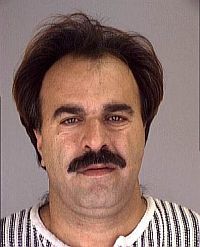
The scatterbrained, hapless, terrorist, used-car salesman

The San Antonia Express-News reports: The man accused of scheming to kill a Saudi diplomat is described by those who know him as a scatterbrained, hapless businessman who in college earned the nickname “Jack” for his affinity for whiskey — hardly the type to mastermind a terrorist plot.

A long-time associate and former business partner of Manssor Arbabsiar said the terror suspect had owned a string of used-car and other businesses in the Corpus Christi area, but if anything seemed absentminded and shifty.

“He was pretty disorganized, always losing things like keys, titles, probably a thousand cellphones,” said David Tomscha, an Aransas Pass businessman who ran a used-car lot with Arbabsiar. “He wasn’t meticulous with taking care of things.”

News that Arbabsiar was implicated in a plot to assassinate the Saudi Arabian ambassador to the U.S. surprised Tomscha and others who knew him.

Tomscha said that if the allegations were true, Arbabsiar must have been driven by “easy, squeezy” money rather than religious or political zealotry.

“He never spoke ill of the United States,” Tomscha said. “I always thought he liked it here, because he could make money. He loved to make money.”

Tomscha said his acquaintance with Arbabsiar, who liked to be called “Jack,” went back more than a decade, though they’d lost touch about a year ago.

Tom Hosseini, an Iranian whose friendship with Arbabsiar dates back 30 years, went as far as calling Arbabsiar “a joke.”

The two were roommates at what’s now Texas A&M University-Kingsville, but Arbabsiar dropped out after two semesters and finished his degree in Louisiana.

It was Hosseini who nicknamed Arbabsiar “Jack,” for the quantities of Jack Daniel’s whiskey Arbabsiar would drink.

“Scarface,” another nickname, was for the lasting reminder of the time Arbabsiar arranged for the then-college students to party with some girls, not knowing the girls’ boyfriends would arrive wielding bats and knives.

Was Arbabsiar religious?

“He couldn’t even pray, doesn’t know how to fast. He used to drink, smoke pot, go with the prostitutes,” Hosseini said, laughing with a clerk at his market in downtown Corpus Christi. “His first wife left him because he would lose his keys every other day. … This guy is not a mastermind.”

Reuters reports: The Obama administration has conducted numerous undercover and sting operations leading to arrests of many people seeking to carry out bombing or other attacks on U.S. soil, prompting some questions about the tactics used.

No individuals charged in terrorism cases involving undercover operations since the Sept. 11, 2001, attacks have prevailed using an entrapment defense, said Georgetown University law professor David Cole, a longtime expert on the subject who has challenged terrorism policies in U.S. court.

“Entrapment requires the defendant to show that he was not predisposed to commit the crime, so that the crime was instigated by the government rather than by himself,” said Cole.

“The more serious the crime, the more difficult it is to imagine that someone would commit it who was not predisposed to commit it,” he said.
[…]
To ensure an individual is not entrapped, undercover agents offer the person chances to back out and typically discuss possible collateral damage, including killing bystanders.

In the case of Arbabsiar, the criminal complaint described how he approached an individual in Mexico — who turned out to be a paid U.S. Drug Enforcement Administration informant — with a plot to blow up a Saudi Arabian embassy.

Arbabsiar also discussed with the informant assassinating the Saudi ambassador, which was the plot they pursued, according to the sworn complaint signed by an FBI agent.

While the plot to kill Jubeir never reached the operational stage, the paid informant discussed with Arbabsiar that if they bombed a restaurant the diplomat frequented, potentially 150 others would be killed, including U.S. lawmakers.

Arbabsiar dismissed such concerns, stating “no problem” or “no big deal,” according to the criminal complaint.

Meir Javedanfar writes: Could elements within the Iranian government or security establishment have planned this attack, without Khamenei’s knowledge in order to hurt him and his regime? On the surface, at least, this seems unlikely. However, details of the US claims certainly suggest that the idea isn’t completely without merit. Why? Because according to the Justice Department, Arabisar, who the US government has accused of being connected to the Iranian government, is supposed to have wired $100,000 to the US undercover agent whom he thought would carry out the hit against the Saudi Ambassador.

But this would be extremely sloppy and unprofessional work by a government that has, over the years, become adept at hiding its tracks. Why would Khamenei make himself and his regime so vulnerable by wiring money directly? Why wouldn’t Iranian security officials use third parties operating through third countries?

As crazy as the Iranian regime can sound through its rhetoric, when it comes to protecting its interests, it‘s essentially rational and careful. Iran knows that it can’t afford a war against the United States. It also knows that further deterioration could mean more sanctions and further isolation, both of which would hurt the regime’s ability to sustain itself at home. This is more important to Khamenei’s interests right now than the elimination of the Saudi Ambassador in Washington.

The fact is that looking at Khamenei’s background, such a reckless initiative as the one he is accused of is almost too radical, the costs too high for his regime. This is why it seems at least plausible that elements within the Iranian regime could have orchestrated this to hurt him, with the goal of eventually pushing him out of power.

The Iranian regime is already fractured, and the business interests of many officials are being undermined by Khamenei’s nuclear policies. Meanwhile, the children of former officials such as Intelligence Minister Ali Younesi, are reportedly in jail because of their opposition to the regime. Anyone who wants to hurt Khamenei from within would have plenty of reason to undertake such an initiative, especially as it would ultimately tar the supreme leader.

Julian Borger asks: Could the alleged conspiracy be the work of an extremist cell within the Quds force? In that case, the unit is far more fragmented than previously thought and we should shortly see top people in the organisation disappearing from view. There is a precedent for such a cell: in 1999 the deputy minister of intelligence, Saeed Emami, was arrested and accused of carrying out a series of murders of intellectuals, known as the chain murders, without official authority. He was also reported to have tried smuggling missiles to Brussels to attack Nato. Emami was reported to have killed himself in prison.

Facebooktwittermail

How Obama could benefit from the alleged Iranian bombing plot

If Iran was going to engage in as risky an operation as to attempt to assassinate the Saudi ambassador in Washington, it wouldn’t use a flaky used-car salesman as its lead operative and it wouldn’t outsource the attack to some unknown hit men from a Mexican drug cartel. Anyone who knows anything about how Iran operates finds such a scenario highly implausible.

On the other hand, if someone else wanted to frame Iran, since they wouldn’t be able to enlist the kind of Iranian team capable of carrying out such an attack, they might well end up recruiting the very cast of characters who are alleged to have been involved. Indeed, if the object of the exercise was that the plot be exposed rather than carried out, then unwitting amateurs would be perfect for the job.

Given that informants for the US Drug Enforcement Agency played a pivotal role, suspicion about who might have been directing this operation has to fall on Washington. Are we talking about a false flag operation and a pretext for war?

The intemperate response from the Obama administration over the last few days might suggest that escalating tension with Iran has at this juncture passed a critical point and that the American public and the rest of the world is being warned that war may be on the horizon.

The drums of war have been beating for so long — mostly from Israel — that in some quarters the question has not been if a war will start, but when.

Has Obama now boarded the war train? I seriously doubt it.

Firstly, I think his innate timidity would make him very reluctant to start his own full-scale war — least of all a war that would likely be more devastating than all the wars of the preceding decade. Shock-and-awe was the style for his predecessor — this is a president who prefers assassinations.

Secondly, the American appetite for war has already been well and truly drained. Economic pain has promoted a grim realism in which most people recognize that another war is really the last thing this country needs. Launching a war against Iran would be like pounding the last nails into our own coffin.

So, if Washington was really behind this bombing plot and it wasn’t trying to start a war, how would it stand to benefit?

Here’s how: by driving down the price of oil.

Why make the Saudis the target of the attack? Because they would then feel compelled to retaliate and since they cannot threaten Iran militarily, they will rely on the only weapon they have: increasing oil production.

The consequent drop in oil prices will hurt Iran much more than Saudi Arabia and if by the summer of 2012, gas prices in the US have dropped below $3 a gallon, Americans will travel more and perhaps regain a bit of economic optimism — good news for Obama as he tries to close the deal in securing his second term.

At the same time, the attack-Iran hawks who love to talk war but who are actually happy with anything that undermines the regime in Tehran, will be pleased to see Iran suffer.

Andrew Scott Cooper writes: The alleged Iranian plot to blow up Saudi Arabia’s ambassador in Washington made for blazing headlines even as it obscured a deeper truth: Iran and Saudi Arabia have been engaged in a different sort of war of attrition over the past few decades, with economics, not explosives, the weapon of choice. Both regimes are keenly aware that although bullets may kill, they can’t bankrupt: only a sudden collapse in oil revenue can do that.

Skeptics who find it implausible that the oil markets can be harnessed as a weapon, and that oil can be turned into a financial super bomb to destabilize a national economy, should heed the words of a leading member of the Saudi royal family. Prince Turki al-Faisal, previously his country’s head of intelligence and ambassador to Washington, has long enjoyed a reputation for frank talk. Three and a half months ago, he delivered an address to a select group of NATO officials at an air base deep in the heart of the British countryside. In his remarks, the prince fired a shot across the bows of the Iranian regime.

This past year, the Saudi royal family was caught off-guard by the Arab Spring uprisings and badly shaken by the overthrow of old friends and allies in Egypt and Tunisia. The Saudis blame their neighbor Iran for inciting and stoking the troubles as part of a sinister plot to divide, weaken, and eventually topple the region’s conservative Sunni monarchies. Prince Turki made it clear that after six months of being on the defensive, the Saudi royal family had rallied and was about to fight its corner by unleashing the most powerful weapon in its arsenal: the kingdom’s massive oil reserves.

The Islamic Republic of Iran, jeered Prince Turki, was “dysfunctional,” a “paper tiger,” though one with “steel claws” whose survival depended on its ability to cash in on high oil prices “to maintain a level of economic prosperity that is just enough to pacify its people.” The implication was that Iran’s reliance on a single revenue stream to prop up a sclerotic political structure had left the regime in Tehran vulnerable to sabotage.

The Saudis, continued Prince Turki, were quite prepared to use their swing power as the world’s biggest oil producer to “squeeze” the Iranian economy. They could presumably do this by opening the spigots to flood the market with cheap oil, enough cheap oil indeed to force prices down and deprive Iran’s rulers of billions of dollars in government revenue necessary to buy social tranquility at home. Flooding the market is economic warfare on a grand scale, the oil industry’s equivalent of dropping the bomb on a rival. The prince’s threat sounds like a diabolical plot best suited for a novel–holding the world economy to ransom by manipulating commodity prices to settle scores with a neighbor–until you realize it’s been done before.

Facebooktwittermail

Iran sees terror plot accusation as diversion from Occupy Wall Street

The New York Times reports: Iran’s leaders marshaled a furious formal rejection on Wednesday of the United States accusations that the Islamic republic had schemed to assassinate the Saudi ambassador in Washington, calling the case a cynical fabrication meant to vilify Iran and distract Americans from their own severe economic problems, highlighted by the Occupy Wall Street movement.

The Foreign Ministry of Iran issued an angry complaint to the Swiss Embassy in Tehran, which is responsible for monitoring United States interests in Iran since the two broke diplomatic relations 32 years ago after the Islamic Revolution. The ministry said it had summoned the Swiss ambassador to personally convey its outrage over the American charges and warn “against the repetition of such politically motivated allegations.”

Iran’s supreme leader, Ayatollah Ali Khamenei, went a step further. In a speech broadcast on Iran state television, he predicted what he called the demise of American capitalism and corporate favoritism. Press TV, an Iran government Web site that translated portions of the ayatollah’s speech, said he emphasized that “the corrupted capitalist system shows no mercy to any nation, including the American people.”

The ayatollah commended the Occupy Wall Street protests in New York, Washington and other American cities, calling them a consequence of “the prevalence of top-level corruption, poverty and social inequality in America.” He denounced what he called “the heavy-handed treatment of the demonstrators by U.S. officials” and said that such treatment “is not seen even in underdeveloped countries with dictatorial regimes.”

“They may crack down on this movement but cannot uproot it,” Ayatollah Khamenei said. “Ultimately, it will grow so that it will bring down the capitalist system and the West.”

Not that Khamenei would have any experience in heavy-handed treatment of demonstrators!

Facebooktwittermail

Obama’s obsequiousness is shameful

Avraham Burg writes: It was depressing to see American President Barack Obama’s weak appearance at the United Nations. It was depressing to see this talented man, who brought such great hope to the world, presenting the pitiable position of a feeble empire. It was embarrassing to see him defending positions and people whom only a few months earlier he had attacked with fury. His obsequiousness is shameful, and this weakness is a real danger to the world. Therefore anyone who wants peace cannot make do merely with accusing Obama. One cannot allow his desperation to have veto power over our hope.

It is strange, but we no longer have anyone on whom to rely but the head of the Palestinian Authority, Mahmoud Abbas. If the current Palestinian move in the UN is successful, it will be wonderful. There will be two states between whom negotiations will be conducted – on an equal footing, and not as an occupying force and the vanquished – about their future and the relations between them. But if the move fails, because Obama has become a hostage in the hands of Prime Minister Benjamin Netanyahu, who himself is a hostage in the hands of the settlers and other Israeli extremists, we will be left merely to wonder what the next step will be.

In the past few years, there has been a change in the cast of players in the Middle East theater of the absurd. Israel has become big and clumsy, erring and intransigent. The Palestinians, or at least those among them who support the PA and the government in Ramallah, have taken over the role that was once ours: seeking peace, restraining violence, building a state, and initiating diplomacy. That is how things are in history – yesterday’s weak ones are today’s sated, decadent ones; the victim becomes the oppressor.

On the other hand, as has happened more than once in history, the hope for change lies with the weak. The weak side is the side that stands to gain most from change, and is therefore prepared to take great personal and political risks for change. Netanyahu is several times worse than former prime ministers – David Ben-Gurion, who established the state, or Menachem Begin who achieved peace with Egypt, or Yitzhak Rabin, who tried to follow the Oslo path and paid for it with his life. Abbas is several times better than PLO leader Yasser Arafat who preceded him. That is how things are. They are in a state of evolving and we are receding.

I realize that the commitment to democracy is an inseparable part of the PA’s leadership today. (It is not possible to say the same for the Israeli leadership ). I hope it is a path of no return. If the idea of realizing this aspiration in the framework of a democratic Palestinian state does not bear fruit, the Palestinians must embark on a worldwide initiative demanding that they be allowed to vote for the Knesset. Yes, Israel’s parliament.

This initiative must be accompanied by a non-violent civil rebellion. It will attract a great deal of attention and will cast the spotlight on the paradox of Israeli hypocrisy which claims that we are the only democracy in the Middle East but forgets to point out that we are a democracy for Jews alone. Because we are also the only colonialist conqueror that is left in the Western world.

In order to prove the seriousness of their intentions, the Palestinians need a pilot project, so here it is. The Palestinian leadership must ask the Arabs of East Jerusalem to get organized for the next municipal elections. Since 1967, there have been about one quarter of a million Arabs who have the right to vote in the municipality of Jerusalem alone. In protest against the offensive annexation of the eastern part of the city, they have never realized their democratic right. However this protest does not really help.

The time has come for the anger to be turned into a constructive step. I have no doubt that the moment that one third of the members of the city council of Israel’s capital represent the residents of East Jerusalem, everyone will start to wake up.

Even Netanyahu, who is always the last to wake up, will make sure to stay alert. Because Palestinian political partnership in Jerusalem means one city that belongs to all its residents. That will be very different from the disgraceful situation of discrimination that exists today. One city that belongs to all its residents is only the prologue to one state that belongs to all its citizens between the Jordan River and the sea. That is the real price of the refusal on the part of Netanyahu and the right.

Anyone who is not prepared to do anything to promote two states today – and who is not prepared to pay the price by evacuating the settlements – will, in the end, have to concede all of the state of Israel. That is to say, the Jewish and not so democratic state will be renounced in favor of a legitimate democratic process in which everyone between the Jordan River and the sea has one basic right – the human and civic equality to elect and to be elected. They will have at least the very same rights that are enjoyed by Obama and his new friend who knows just how to manipulate him, Netanyahu.

Avraham Burg is an Israeli author and a former Speaker of the Knesset.

Facebooktwittermail

The Obama administration’s fast and furious response to the Iranian bomb plot

The GOP is clearly eager to use whatever weapons it can grab in its campaign to ensure that Obama is a one-term president. Still, it’s hard not to wonder whether there might be a connection between the fact that yesterday, Attorney General Holder leaped into the media spotlight to draw attention to an alleged assassination and bombing plot, and today he has been subpoenaed by a Congressional committee chairman. Both cases involve US surveillance of Mexican drug cartels.

Rep. Darrell Issa (R-Calif.) subpoenaed Attorney General Eric Holder on Wednesday for documents related to the “Fast and Furious” gun tracking operation.

Issa, the chairman of the House Oversight and Government Reform Committee, contends Holder knew more about the botched operation than he has told Congress. His subpoenas are directed to Holder and other senior officials at the Department of Justice.

“Top Justice Department officials, including Attorney General Holder, know more about Operation Fast and Furious than they have publicly acknowledged,” Issa said in a statement announcing the subpoenas.

“The documents this subpoena demands will provide answers to questions that Justice officials have tried to avoid since this investigation began eight months ago. It’s time we know the whole truth.”

The 22-item subpoena seeks documents and communication records between Holder, Deputy Attorney General James Cole, Assistant Attorney General Lanny Breuer, the U.S. Attorney’s office in Arizona, the Executive Office of the President employees — including the White House’s associate communications director Eric Schultz — and nearly 20 other high-ranking officials within the DOJ.

Rep. Elijah Cummings (D-Md.), the ranking Democrat on Issa’s committee, called the subpoena a “deep-sea fishing expedition” and a “political stunt.”

“This subpoena is a deep-sea fishing expedition and a gross abuse of the Committee’s authority,” said Cummings in a statement. “It demands tens of thousands of pages of highly sensitive law enforcement and national security materials that have never been requested before and are completely unrelated to Operation Fast and Furious. Rather than legitimate fact-gathering, this looks more like a political stunt.”

Under Operation Fast and Furious, the Bureau of Alcohol, Tobacco, Firearms, and Explosives (ATF) oversaw the sale of thousands of firearms to known or suspected straw buyers for Mexican drug cartels with the hope of dismantling their gun trafficking routes. But the guns weren’t given proper supervision and most of them disappeared. Two of the guns sold under the operation were found at Border Patrol Agent Brian Terry’s murder scene in Arizona last year.

On Tuesday, Holder said: “[W]hat I want the American people to understand is that in complying with those subpoenas and dealing with that inquiry, that will not detract us from the important business that we here to do at the Justice Department, including matters like the one that we have announced today.”

Meanwhile, CBS News reports:

The Obama administration was taking its case against Iran to the world Wednesday, trying to stir up an international response to charges that the Islamic republic plotted to assassinate the Saudi Arabian ambassador to the U.S.

“It’s critically important that we unite the world in the isolation of and dealing with the Iranians,” Vice President Joe Biden said on “The Early Show” Wednesday. “That’s the surest way to be able to get results.”

Mr. Obama’s top national security aides have said the administration will lobby for the imposition of new international sanctions as well as for individual nations to expand their own penalties against Iran.

The State Department sent a cable to all American embassies and consulates around the world telling them to put the Iran case before their host governments. The officials said the cable, sent late Tuesday by Deputy Secretary of State William Burns and classified secret, tells them to detail the evidence against Iran as presented by federal prosecutors.

Reza Marashi and Trita Parsi warn:

U.S.-Iran tensions have long been a powder keg, overflowing with nuclear programs, human rights abuses, Stuxnet and secret assassinations. And the alleged terror plot against the Saudi Ambassador shows how easily a single incident can spark a wider conflict. Without serious efforts to defuse a crisis that is steadily spiraling out of control, we are on the precipice of a major war in the region.

This is why a containment policy can turn into a self-fulfilling prophecy. Short of a government collapse in Tehran or strategic shift in Washington — both unlikely in the short to medium term — containment has created an environment in which adversaries repeatedly provoke one another, without having the ability to reverse any escalation.

The Obama administration must avoid falling further into this trap — particularly if there are Iranian hardliners trying to bait the U.S. into a conflict.

Even so, as Reuters reports, the administration is showing little hesitation in escalating the emerging crisis:

U.S. officials said on Wednesday it was “more than likely” that Iran’s supreme leader and the head of its Quds force knew of the alleged plot to kill the Saudi ambassador to Washington, but acknowledged the claim was based on analysis rather than hard evidence.

Muhammad Sahimi, at Tehran Bureau, points out:

[D]espite its repressive domestic policy, when it comes to dealing with the outside world, the Islamic Republic of Iran (IRI) has followed a pragmatic approach, based first and foremost on protecting itself from external physical attacks, and then on expanding its influence when and where possible. We can see this from how it dealt with and received weapons from Israel in the 1980s during the notorious Iran-Contra affair, from the pragmatic way it sat out the conflict when the U.S. and its allies attacked Iraq to expel it from Kuwait in 1990 (despite many internal voices demanding that Iran assist Saddam Hussein’s regime against the Western forces), from its arming of the Bosnian Muslims with U.S. consent during the war with the Serbs, and from the significant assistance it provided to the U.S. invasion of Afghanistan in 2001. Based on a purely cost-benefit analysis, it is extremely difficult, if not impossible, to imagine that the IRI could have benefited from such a plot as is alleged. At a time when (a) international pressure on Iran is mounting in response to its gross human rights violations, (b) the sanctions that have been imposed on Iran are showing signs of working, (c) the IRI is deeply worried about the fate of its strategic partner in Syria, the government of Bashar al-Assad, (d) tensions with Turkey are increasing over its hostile policy toward the Assad regime, and (e) a fierce power struggle is underway within Iran between the supporters of Ayatollah Ali Khamenei and President Mahmoud Ahmadinejad, it is essentially impossible to believe that the IRI would act in such a way as to open a major new front against itself.

Moreover, although the IRI has carried out assassination operations beyond Iranian borders, some of which I have described here and here, they targeted Iranian dissidents, not foreign diplomats. Even at the height of the assassination wave, the IRI did not go after non-Iranians. It is keenly aware that it is under the American microscope. It is thus hard to believe that the IRI would actually embark on such a useless assassination involving a low-level, non-player individual, dealing with people that they do not know.

Furthermore, the IRI ended its foreign assassinations in the mid-1990s. And, with a single exception more than 30 years ago, the IRI avoided carrying out any such plots on U.S. soil. The first and last such act occurred in July 1980, when Ali Tabatabaei was murdered at his home in Bethesda, Maryland, by Dawud Salahuddin, an American sympathetic to the 1979 Revolution. Tabatabaei, press attaché in the Iranian Embassy in the United States under the Shah, had joined the opposition after the Revolution. Salahuddin, who was paid $5,000 to kill Tabatabaei, currently lives in Iran.

One may argue that the targets of the operation were Saudi Arabia and Israel. But this seems even more absurd. If the IRI really intends to harm Saudi Arabia, due to the increasing tension with the Riyadh government, why should it try to do it here in the United States and in Washington? Why not attack the Saudis embassies in, for example, chaotic locations in the Middle East, such as Afghanistan, Iraq, and Yemen? Why not carry out a sabotage operation against Saudi Arabia’s oil fields in the eastern part of the country, where the Shia population is centered? That would increase the price of oil dramatically, which would benefit the IRI and hurt the fragile economies of the West.

Facebooktwittermail

The “very scary” Iranian terror plot

Glenn Greenwald writes: The most difficult challenge in writing about the Iranian Terror Plot unveiled yesterday is to take it seriously enough to analyze it. Iranian Muslims in the Quds forces sending maurading bands of Mexican drug cartel assassins onto sacred American soil to commit Terrorism — against Saudi Arabia and possibly Israel — is what Bill Kristol and John Bolton would feverishly dream up while dropping acid and madly cackling at the possibility that they could get someone to believe it. But since the U.S. Government rolled out its Most Serious Officials with Very Serious Faces to make these accusations, many people (therefore) do believe it; after all, U.S. government accusations = Truth. All Serious people know that. And in the ensuing discussion one finds virtually every dynamic typically shaping discussions of Terrorism and U.S. foreign policy.

Facebooktwittermail

Americans warned about global threat posed by used-car salesmen

Manssor Arbabsiar — used-car salesman cum terrorist-mastermind — is in detention and no longer poses a threat to the world, but the State Department wants Americans to take care when traveling overseas: there could be other dumb hustlers out there hatching dastardly plots, so the US government urges all Americans to exercise caution when traveling anywhere or even thinking about it.

The warning contains two anomalies, however:

1. It expires on January 11, 2012, just three months away. Surely the danger will persist right up until November 6, 2012. It seems imprudent to let our guard down before we’ve chosen the next president.

2. Arbabsiar is a US citizen. Don’t we need to be exercising as much if not more caution inside America. After all, who buys a used-car when overseas?

MSNBC reports: The State Department issued a worldwide travel alert late Tuesday for American citizens after the United States accused Iran of backing a plot to kill Saudi Arabia’s ambassador to Washington.

“The U.S. government assesses that this Iranian-backed plan to assassinate the Saudi ambassador may indicate a more aggressive focus by the Iranian government on terrorist activity against diplomats from certain countries, to include possible attacks in the United States,” it said in a statement on its website.

The alert, which expires January 11, 2012, urged Americans living and traveling abroad to be wary.

“U.S. citizens residing and traveling abroad should review the Department’s Worldwide Caution and other travel information when making decisions concerning their travel plans and activities while abroad,” it added.

U.S. authorities said earlier on Tuesday that they had broken up a plot by two men linked to Iran’s security agencies to assassinate Saudi Ambassador Adel al-Jubeir. One, a former Texas used-car dealer named Manssor Arbabsiar, was arrested last month while the other was believed to be in Iran.

However a friend and one-time business partner of Arbabsiar, David Tomscha, said Arbabsiar, known as Jack to his friends, made an unlikely secret agent.

Tomscha said Arbabsiar, 56, a naturalized U.S. citizen who holds an Iranian passport, was likeable, a bit lazy and “no mastermind.”

“I can’t imagine him thinking up a plan like that. I mean, he didn’t seem all that political. He was more of a businessman … He was sort of a hustler,” he said.

Meanwhile, following Attorney General Eric Holder’s dramatic announcement about the plot, a US official has provided the New York Times with additional details:

The alleged plot also included plans to pay the cartel, Los Zetas, to bomb the Israeli Embassy in Washington and the Saudi and Israeli Embassies in Argentina, according to a law enforcement official.

The plotters also discussed a side deal between the Quds Force, part of Iran’s Islamic Revolutionary Guards Corps, and Los Zetas to funnel tons of opium from the Middle East to Mexico, the official said. The plans never progressed, though, because the two suspects — the Iranian-American and an Iranian Quds Force officer — unwittingly were dealing with an informant for the Drug Enforcement Administration, officials said.

It’s quite baffling that Arbabsiar and Shakuri’s plans should have been so limited in their scope — but what a stroke of luck that the feds managed to get on to the case and play such a creative role in allowing it to unfold!

Facebooktwittermail

Obama’s October surprise?

I know an October surprise is meant to happen weeks — not a full year — before a presidential election, but if one considers the different players affected by the alleged Iranian assassination and bombing plot, President Obama is the only who comes out with a clear advantage.

Today’s news might not herald another war, but a year of increasing tension between the US and Iran could serve the interests of a president whose strongest card has turned out to be national security. With no relief in sight on the economic front, the campaign may end up turning on who we are supposed to be more comfortable with in handling an international crisis — the seasoned incumbent or a novice? At least, that’s a scenario that might look appealing to the Obama 2012 campaign right now.

“We see this as a chance to go out to capitals around the world and talk to allies and partners about what the Iranians tried to do,” a White House official tells David Ignatius. “We’re not going to tolerate targeting a diplomat in Washington. We’re going to try to use this to isolate them to the maximum extent possible.”

Meanwhile, James Traub describes how far removed such issues are from the GOP primary campaign:

The world beyond America’s borders just doesn’t figure in the 2012 campaign. In the 2008 Republican debates, candidates regularly crossed swords on the war in Iraq, the nuclear showdown with Iran, and the proper conduct of the war on terror. At this year’s first real debate, held in Manchester, New Hampshire, the rest of the world wasn’t even mentioned until more than 90 minutes into the two-hour event. “Given the focus on economic issues, it’s difficult to get the candidates interested in foreign policy,” laments Jamie Fly, head of the Foreign Policy Initiative, which acts as a transmission belt between conservative intellectuals and politicians. Audiences seem similarly apathetic. The heartiest applause often goes to libertarian Rep. Ron Paul when he calls for as little foreign policy as possible, as he did recently in Iowa during a discussion of the Middle East. His prescription: “Stay out of their internal business. Don’t get involved in these wars. And just bring our troops home.”

To the extent that the Republicans cleave to this domestic-issues-only line, an international crisis in the run up to 2012 could clearly assist Obama.

Whatever Messrs Arbabsiar and Shakuri were up to, one element has become surprisingly predictable in this type of story: each time the Justice Department announces a stunning breakthrough in preventing an act of terrorism, it turns out that federal agents were involved in the plot from early in its conception. In these undercover operations the line between investigation and instigation gets repeatedly blurred.

If the Iranian government had the serious intent to assassinate the Saudi ambassador to the United States and to do so by bombing a restaurant in Washington DC, one wonders why the breaking news was not about a plot being stymied and not instead about a horrific explosion.

The idea that Iran would outsource such an operation to a Mexican drug cartel is being viewed with appropriate skepticism.

Tim Padgett writes:

If Iranian government operatives really did try to contract a Mexican drug cartel to assassinate the Saudi ambassador to the U.S., as the Obama Administration alleges today, then they weren’t just being diabolical. They were being fairly stupid.

Granted, the Zetas – the drug mafia that Iranian-American Manssor Arbabsiar allegedly thought he was dealing with on behalf of Tehran – is certainly Mexico’s most bloodthirsty: they are the narcos that brought beheadings and wholesale massacres of innocent civilians to the nightmarish drug war scene south of the border. But even the Zetas, founded more than a decade ago by former Mexican army commandos, know better than to venture north of the border and invite the kind of U.S. law enforcement heat that a political assassination of this magnitude would have brought on them. They’re more than willing to murder high and low inside Mexico – the Zetas are the chief suspects, for example, in last year’s assassination of Tamaulipas state gubernatorial candidate Rodolfo Torre – but they’ve rarely if ever directed that kind of mayhem inside the U.S.

And for good reason: they’ve experienced the vast difference between cops, prosecutors and judges in Mexico, whom they can buy off or kill with impunity, and the U.S. judicial system. In 2005 and 2006, for example, Zetas murdered at least five rival gangsters in Laredo, Texas, just across the border from one of their strongholds, Nuevo Laredo, Mexico. A number of Zetas were arrested and prosecuted as a result and sent away to U.S. prisons – which are a lot harder to break out of than Mexican penitentiaries are, and where you can’t live the comfortable life that drug lords make for themselves inside Mexican lockups. Zeta leaders like Heriberto Lazcano, aka El Verdugo, or The Executioner, learned fairly quickly that the world across the Rio Grande was a different ballgame – and that if they didn’t want to jeopardize their lucrative drug distribution networks in the U.S., it was best to avoid bloodshed there as well.

And then there is the most basic question: how could Iran possibly benefit if this plot had been carried out?

Max Fisher writes:

What would it really mean for Iran if the Saudi ambassador to the U.S. were killed in a terrorist attack in Washington? The U.S.-Saudi relationship has been bad and getting worse since the start of the Arab Spring, with the Saudi monarchy working increasingly against the democratic movements that the U.S. supports. A senior member of the royal family even threatened to cut off the close U.S.-Saudi relationship if Obama opposed the Palestinian statehood bid, which he did. If the U.S. and Saudi Arabia really broke off their seven-decade, oil-soaked romance, it would be terrific news for Iran. Saudi Arabia depends on the U.S. selling it arms, helping it with intelligence, and overlooking its domestic and regional (see: Bahrain) abuses.

If the U.S.-Saudi alliance fell apart, the Shia-majority Islamic Republic of Iran would have an easier time pushing its regional influence against Saudi Arabia, especially in some of the crucial states between the two: Iraq, Bahrain, and the United Arab Emirates. Iran would be able to reverse its increasing regional isolation and perhaps flip some Arab leaders from the U.S.-Saudi sphere toward its own. The best part of this, for Iran, is that it probably wouldn’t even have to do anything: the U.S.-Saudi special relationship, if it collapses, would do so without Iran having to lift a finger. The dumbest thing that Iran could possibly do, then, would be stop the collapse, to find some way to bring the U.S. and Saudi Arabia back together. For example, by attempting to blow up the Saudi ambassador to the U.S. on American
soil.

The Iranian leadership, for all their twisted human rights abuses and policies that often serve the regime at the cost of actual Iranians, are not idiots.

Facebooktwittermail

U.N. finds ‘systematic’ torture in Afghanistan

Is this why President Obama banned torture? Just so that American hands could remain clean while its allies used torture techniques even more gruesome than the kind George Bush and Dick Cheney approved?

The New York Times reports: Detainees are hung by their hands and beaten with cables, and in some cases their genitals are twisted until the prisoners lose consciousness at sites run by the Afghan intelligence service and the Afghan National Police, according to a United Nations report [PDF] released here on Monday.

The report, based on interviews over the past year with more than 300 suspects linked to the insurgency, is the most comprehensive look at the Afghan detention system and an issue that has long concerned Western officials and human rights groups.

It paints a devastating picture of abuse, citing evidence of “systematic torture” during interrogations by Afghan intelligence and police officials even as American and other Western backers provide training and pay for nearly the entire budget of the Afghan ministries running the detention centers.

The report does not assess whether American officials knew of the abuses. But such widespread use of torture in a detention system supported by American mentors and money raises serious questions about potential complicity of American officials and whether they benefited from information obtained from suspects who had been tortured.

Facebooktwittermail

White House clarifies when it’s OK for Obama to kill Americans

A week after the assassination of Anwar al-Awlaki — “a great day for America,” as one senior Obama administration official put it — and then a flurry of headlines about Obama killing US citizens, the White House clearly sees the need to change the narrative. Although it had already been stated that the president was exerting powers in accordance with legal advice, the administration wants to assure everyone that this was sound advice — the kind that would require the thoroughness of a 50-page memo drafted by a team of lawyers.

In other words, to those who are concerned about the suspension of the rule of law, the consolation is rule by procedure. It’s not due process, but it involved meetings, legal opinions, documentation, signatures — all the essential ingredients to ensure that those involved can later point to the ways in which they diligently followed procedures and ultimately no one can be held responsible. The buck stops nowhere.

Even so, since this is a presidency where secrecy often appears to be cherished more than anything else, we don’t get to actually read the Justice Department’s memorandum describing the circumstances in which Obama has the discretion to suspend the constitution. Instead, the contents of the memo get selectively revealed to a reporter.

It’s not exactly a leak — more like a drip.

The New York Times reports: The Obama administration’s secret legal memorandum that opened the door to the killing of Anwar al-Awlaki, the American-born radical Muslim cleric hiding in Yemen, found that it would be lawful only if it were not feasible to take him alive, according to people who have read the document.

The memo, written last year, followed months of extensive interagency deliberations and offers a glimpse into the legal debate that led to one of the most significant decisions made by President Obama — to move ahead with the killing of an American citizen without a trial.

The secret document provided the justification for acting despite an executive order banning assassinations, a federal law against murder, protections in the Bill of Rights and various strictures of the international laws of war, according to people familiar with the analysis. The memo, however, was narrowly drawn to the specifics of Mr. Awlaki’s case and did not establish a broad new legal doctrine to permit the targeted killing of any Americans believed to pose a terrorist threat.

The Obama administration has refused to acknowledge or discuss its role in the drone strike that killed Mr. Awlaki last month and that technically remains a covert operation. The government has also resisted growing calls that it provide a detailed public explanation of why officials deemed it lawful to kill an American citizen, setting a precedent that scholars, rights activists and others say has raised concerns about the rule of law and civil liberties.

But the document that laid out the administration’s justification — a roughly 50-page memorandum by the Justice Department’s Office of Legal Counsel, completed around June 2010 — was described on the condition of anonymity by people who have read it.

The legal analysis, in essence, concluded that Mr. Awlaki could be legally killed, if it was not feasible to capture him, because intelligence agencies said he was taking part in the war between the United States and Al Qaeda and posed a significant threat to Americans, as well as because Yemeni authorities were unable or unwilling to stop him.

The memorandum, which was written more than a year before Mr. Awlaki was killed, does not independently analyze the quality of the evidence against him.

The administration did not respond to requests for comment on this article.

Facebooktwittermail

Obama, the loner president

Scott Wilson writes: Beyond the economy, the wars and the polls, President Obama has a problem: people.

This president endures with little joy the small talk and back-slapping of retail politics, rarely spends more than a few minutes on a rope line, refuses to coddle even his biggest donors. His relationship with Democrats on Capitol Hill is frosty, to be generous. Personal lobbying on behalf of legislation? He prefers to leave that to Vice President Biden, an old-school political charmer.

Obama’s circle of close advisers is as small as the cluster of personal friends that predates his presidency. There is no entourage, no Friends of Barack to explain or defend a politician who has confounded many supporters with his cool personality and penchant for compromise.

Obama is, in short, a political loner who prefers policy over the people who make politics in this country work.

“He likes politics,” said a Washington veteran who supports Obama, “but like a campaign manager likes politics, not a candidate.” The former draws energy from science and strategy, the latter from contact with people.

Which raises an odd question: Is it possible to be America’s most popular politician and not be very good at American politics?

Facebooktwittermail

U.S. had ‘frighteningly simplistic’ view of Afghanistan, says McChrystal

The Guardian reports: One of America’s most celebrated generals has issued a harsh indictment of his country’s campaign in Afghanistan on the 10th anniversary of the invasion to topple the Taliban.

The US began the war with a “frighteningly simplistic” view of Afghanistan, the retired general Stanley McChrystal said, and even now the military lacks sufficient local knowledge to bring the conflict to an end.

The US and Nato are only “50% of the way” towards achieving their goals in Afghanistan, he told the Council on Foreign Relations.

“We didn’t know enough and we still don’t know enough. Most of us, me included, had a very superficial understanding of the situation and history, and we had a frighteningly simplistic view of recent history, the last 50 years.”

Facebooktwittermail

Jailed doctors call for U.S. support in Bahrain

The Washington Post reports: The relatively muted U.S. response to the sentencing this week of doctors, teachers and opposition activists in Bahrain is renewing calls there for the Obama administration to take a stronger line against rights abuses in the tiny Persian Gulf kingdom.

Dozens of people detained after huge anti-government protests in February have been tried under emergency law in the
quasi-military National Safety Court, and in recent days were given prison terms ranging from three years to life. A civilian court has ordered the retrial of 20 doctors, but at least 80 more people sentenced for crimes that include organizing illegal gatherings remain in prison.

Ali Alekri, a surgeon sentenced to a 15-year prison term, said he had been convicted only because he had treated injured protesters and because, like most of those involved in the uprising, he is a Shiite Muslim.

“The international community did nothing,” said Alekri, speaking by telephone from Bahrain, where he has been released on bail. “We expect pressure from the Americans, and we do not know why they did not do that. Possibly there is a conflict of interest.”

Alekri said that he had been beaten, that his family had been threatened and that he had been forced to sign a confession while in prison — charges echoed by others.

Bahrain is a key Middle Eastern ally for the United States, and government opponents say that status has led Washington to look the other way amid widespread allegations of torture and illegal detentions. The U.S. Navy’s 5th Fleet is anchored in Bahrain.

State Department spokesman Mark Toner said in a statement that the United States was “deeply disturbed” by the sentencing of 20 medical professionals and urged the Bahraini government to commit to transparent judicial proceedings. But officials have stopped short of directly condemning Bahrain’s authorities.

Facebooktwittermail