Category Archives: Obama administration

Why Obama has defaulted to Bush foreign policy positions

Why Obama has defaulted to Bush foreign policy positions

After a year with President Barack Obama at the helm of U.S. foreign policy, an observer could be forgiven for concluding that the presidency is more like taking over the controls of a train than getting behind the wheel of a car. That’s because you can’t steer a train; you can only determine its speed. So far, the menu of foreign policy challenges, and the Administration’s response to each, is remarkably similar at the close of 2009 to what it was at the close of 2008.

Obama’s promises of outreach to adversaries and consultation and coordination with allies certainly cleared away some of the negative atmospherics left by the Bush Administration. However, his substantial policy positions have proven to be remarkably similar to those of the second-term, chastened-by-reality George W. Bush. Indeed, anti-war Democrats groaned when the President, in his Nobel Peace Prize acceptance speech, referred to “evil in the world” and hailed America’s willingness to use force abroad over the past six decades as an essential component of global security. The neoconservatives cheered.

The reality is far more complex than that snapshot, of course, but a survey of Obama’s handling of the main strategic challenges appears to affirm the old Cold War dictum that domestic political partisanship ends at the water’s edge. [continued…]

Facebooktwittermail

War in the Age of Terrorism

War in the Age of Terrorism

This is change: we’ve gone from change we can believe in, to a change in the mood music.

If Dick Cheney was the éminence grise behind George Bush, one could now be forgiven for thinking that George Bush himself has quietly taken on the same role for Barack Obama. And if this administration — like the one before — can be accused of losing touch with reality, there is no more compelling piece of evidence than this: Obama regards his speech in Cairo last summer as one of the most important things he’s done in the fight against terrorism.

The New York Times — reporting as always from “inside” the administration, reveals in, “Inside Obama’s War on Terrorism”:

perhaps the biggest change Obama has made is what one former adviser calls the “mood music” — choice of language, outreach to Muslims, rhetorical fidelity to the rule of law and a shift in tone from the all-or-nothing days of the Bush administration. He is committed to taking aggressive actions to disrupt terrorist cells, aides said, but he also considers his speech in Cairo to the Islamic world in June central to his efforts to combat terrorism. “If you asked him what are the most important things he’s done to fight terrorism in his first year, he would put Cairo in the top three,” Rahm Emanuel, his chief of staff, told me.

Really? There might have been good reason for Obama to have thought that at the time and for a few weeks afterwards, but by the time Washington caved under Israeli pressure by supporting a bogus settlement freeze, it became clear that the Cairo speech would be remembered across the Middle East as a bitter harbinger of disappointment.

As for Obama’s campaign promise that he would not only end the war in Iraq but end the mindset that took the US to war, it now turns out that as president he is quite content to follow in the footsteps of his predecessor:

A half-dozen former senior Bush officials involved in counterterrorism told me before the Christmas Day incident that for the most part, they were comfortable with Obama’s policies, although they were reluctant to say so on the record. Some worried they would draw the ire of Cheney’s circle if they did, while others calculated that calling attention to the similarities to Bush would only make it harder for Obama to stay the course. And they generally resent Obama’s anti-Bush rhetoric and are unwilling to give him political cover by defending him.

Michael Hayden, the last C.I.A. director under Bush, was willing to say publicly what others would not. “There is a continuum from the Bush administration, particularly as it changed in the second administration as circumstances changed, and the Obama administration,” Hayden told me. James Jay Carafano, a homeland-security expert at the Heritage Foundation, was blunter. “I don’t think it’s even fair to call it Bush Lite,” he said. “It’s Bush. It’s really, really hard to find a difference that’s meaningful and not atmospheric. You see a lot of straining on things trying to make things look repackaged, but they’re really not that different.”

Facebooktwittermail

Over 700 killed in 44 drone strikes in 2009

Over 700 killed in 44 drone strikes in 2009

Of the 44 predator strikes carried out by US drones in the tribal areas of Pakistan over the past 12 months, only five were able to hit their actual targets, killing five key Al-Qaeda and Taliban leaders, but at the cost of over 700 innocent civilians.

According to the statistics compiled by Pakistani authorities, the Afghanistan-based US drones killed 708 people in 44 predator attacks targeting the tribal areas between January 1 and December 31, 2009.

For each Al Qaeda and Taliban terrorist killed by US drones, 140 innocent Pakistanis also had to die. Over 90 per cent of those killed in the deadly missile strikes were civilians, claim authorities. [continued…]

Taliban: CIA attack was retaliation for drone strikes

A senior commander connected to the Afghan Taliban and involved with the attack against the CIA that left eight people dead said Saturday that the bombing was retaliation for U.S. drone strikes in the Afghan-Pakistan border region.

“We attacked this base because the team there was organizing drone strikes in Loya Paktia and surrounding area,” the commander said, referring to the area around Khost, the city where the U.S. facility was attacked. The commander, a prominent member of the Afghan insurgency, spoke on the condition of anonymity.

The suicide attack, which dealt the biggest loss to the agency in more than 25 years, killed a woman who was the station chief along with six other CIA officers and one private security contractor. [continued…]

CIA attacker driven in from Pakistan

The suicide bomber who killed at least six Central Intelligence Agency officers in a base along the Afghan-Pakistan border on Wednesday was a regular CIA informant who had visited the same base multiple times in the past, according to someone close to the base’s security director.

The informant was a Pakistani and a member of the Wazir tribe from the Pakistani tribal area North Waziristan, according to the same source. The base security director, an Afghan named Arghawan, would pick up the informant at the Ghulam Khan border crossing and drive him about two hours into Forward Operating Base Chapman, from where the CIA operates. [continued…]

Facebooktwittermail

The Yemen dilemma: what would Mr Bush have done?

The Yemen dilemma: what would Mr Bush have done?

The rhetoric is different, but there has been more continuity than change in US foreign policy from George Bush’s second term to Barack Obama’s first.

The US is leaving Iraq on the terms laid down by Mr Bush’s Status of Forces Agreement with the Baghdad government. Mr Obama has opted for a troop surge in Afghanistan, just as Mr Bush would surely have done. Having accepted “no, but” as Israel’s answer to his settlement-freeze demand, Mr Obama is pursuing his predecessor’s policy of propping up the Palestinian president Mahmoud Abbas and a hypothetical peace process while condoning Israel’s chokehold on Gaza and trying to marginalise Hamas.

So while “What would George Bush have done?” may seem like an odd place to start in discussing Mr Obama’s options over al Qa’eda in Yemen, the truth is that his positions on the key strategic challenges after a year in office are remarkably similar to those adopted by the man before.

The question is whether he will respond to the attempted bombing of a US airliner over Detroit by a Nigerian trained by al Qa’eda in Yemen with a military campaign like that launched by Mr Bush in Afghanistan after 9/11. [continued…]

Don’t lose perspective on Yemen

The rush to partner with the Yemeni government to “tackle extremism”, as Gordon Brown says, illustrates the need to think carefully about the political dimension. The government of Ali Abdullah Saleh is to a great extent the problem, not the solution. Ever since Saleh recanted on his vow to not seek re-election and cheated his way to victory over Faisal bin Shamlan (who symbolically died this week), Yemen’s political system has taken a sharp turn for the worse. Corruption, always bad, has skyrocketed. So have human rights abuses and political repression, including a wide range of attacks on media freedoms. Heavy-handed security services have a lot to do with the outbreak and perpetuation of the Houthi rebellion; as Joost Hilterman points out, “the Houthi leadership has portrayed its position as purely defensive against acts of state oppression and attacks by the Yemeni army.” In short, partnering with the Yemeni government to provide honest, legitimate government may seem like a good response, but it is not likely to succeed. If you like working with Hamid Karzai, you’re going to love Ali Abdullah Saleh. [continued…]

Profile: Al-Qaeda in the Arabian Peninsula

Al-Qaeda in the Arabian Peninsula (AQAP) was formed in January 2009 by a merger between two regional offshoots of the international Islamist militant network in neighbouring Yemen and Saudi Arabia.

Led by a former aide to Osama Bin Laden , the group has vowed to attack oil facilities, foreigners and security forces as it seeks to topple the Saudi monarchy and Yemeni government, and establish an Islamic caliphate. [continued…]

US shuts embassy as al-Qaeda ‘plans attack in Yemen’

The US has indications that al-Qaeda is planning an attack in the Yemeni capital Sanaa, President Barack Obama’s top counter-terrorism adviser has said.

John Brennan was speaking after the US shut its embassy in Yemen. “We’re not going to take any chances,” he told the Associated Press news agency.

Britain also closed its embassy, after threats from an al-Qaeda offshoot which claimed a failed bomb plot in the US. [continued…]

Yemen’s deteriorating security, economy could fuel terrorism

Yemen’s problems are many, and some are already spreading beyond its borders. Security and stability are deteriorating. The population is growing rapidly. The economy is collapsing. There are few good options today; things will look worse tomorrow. Immediate and sustained international attention is needed to at least lessen the impact of some problems.

Yemen is a weak state with little history of central government control. The government’s first priorities have been a civil war in the north and a growing secessionist movement in the south; lower on the list has been confronting al-Qaeda, which is now resurgent. The government does not fully control all territory, nor does it have the authority or capacity to adequately deliver social services in many rural areas. Organizations inspired or directed by al-Qaeda have sought refuge in undergoverned spaces.

Spending is not directed toward the root causes of instability but toward war costs, accelerating the economic collapse. [continued…]

Facebooktwittermail

Settlers, tell us, what do you think will happen?

Settlers, tell us, what do you think will happen?

What constitutes the life of a settler? A house on the cheap; a standard of living above the national average; a job usually subsidized by the government; a fierce religious, nationalist, uncompromising conviction on the justness of his cause; a supportive, heavy-handed social environment; a highway system; transportation arrangements; socially enriching activities; and, at times, a life that comes with the risk of danger.

The settler goes to and from his home without seeing anything. He does not see his neighbors, he does not see the danger he exposes his children to, he does not see the moral baggage he carries on his back. He does not want to see all this, and an entire system surrounds him that makes life easy for him despite his blindness.

Some of the highways on which he drives are cleansed of Palestinians; he has never visited the neighboring villages, not one of whose names he would know were it not for traffic signs pointing in their direction. His teachers, functionaries and rabbis sketch out the scenery that is his world, leaving him no shred of doubt: the Arabs are terrorists, all of them are suspicious packages, and the Jews are allowed to do as they wish, for they are the lords of the land, and there is no other but they. [continued…]


Just before Christmas, the US President, Barack Obama, signed into law one of his country’s biggest aid pledges of the year. It was bound not for Africa or any of the many struggling countries on the World Bank’s list.

It was a deal for $US2.77 billion ($3 billion) to go to Israel in 2010 and a total of $US30 billion over the next decade.

Israel is bound by the agreement to use 75 per cent of the aid to buy military hardware made in the US: in the crisis-racked US economy, those military factories are critical to many towns. [continued…]

Facebooktwittermail

From the Cairo Speech to the Cairo Declaration

From the Cairo Speech to the Cairo Declaration

In early June last year, after Barack Obama gave his Cairo speech, the think tanks in Washington were abuzz as analysts could barely contain their excitement at witnessing the new Democratic president making history.

“The United States does not accept the legitimacy of continued Israeli settlements. This construction violates previous agreements and undermines efforts to achieve peace. It is time for these settlements to stop,” Obama boldly declared in front of a youthful Egyptian audience giddy with hope inspired by the lofty oratory of America’s visionary leader.

When the embodiment of hope, invested with the authority of the White House, spoke, the world listened.

Six months later Obama’s authority seems to mean nothing and his words of hope have been soured by their apparent lack of authenticity.

Now comes the Cairo Declaration.

A few hundred activists whose hope of breaking the siege of Gaza got squashed like a bug under the heals of Egypt’s security forces, have signed a declaration. Will the world pay much attention?

Maybe not. But what the Gaza Freedom March lacks in authority it makes up for with authenticity and this — not political office — is ultimately what gives language its power.

End Israeli Apartheid
Cairo Declaration
January 1, 2010

We, international delegates meeting in Cairo during the Gaza Freedom March 2009 in collective response to an initiative from the South African delegation, state:

In view of:

* Israel’s ongoing collective punishment of Palestinians through the illegal occupation and siege of Gaza;
* the illegal occupation of the West Bank, including East Jerusalem, and the continued construction of the illegal Apartheid Wall and settlements;
* the new Wall under construction by Egypt and the US which will tighten even further the siege of Gaza;
* the contempt for Palestinian democracy shown by Israel, the US, Canada, the EU and others after the Palestinian elections of 2006;
* the war crimes committed by Israel during the invasion of Gaza one year ago;
* the continuing discrimination and repression faced by Palestinians within Israel;
* and the continuing exile of millions of Palestinian refugees;
* all of which oppressive acts are based ultimately on the Zionist ideology which underpins Israel;
* in the knowledge that our own governments have given Israel direct economic, financial, military and diplomatic support and allowed it to behave with impunity;
* and mindful of the United Nations Declaration on the Rights of Indigenous People (2007)

We reaffirm our commitment to:

Palestinian Self-Determination
Ending the Occupation
Equal Rights for All within historic Palestine
The full Right of Return for Palestinian refugees

We therefore reaffirm our commitment to the United Palestinian call of July 2005 for Boycott, Divestment and Sanctions (BDS) to compel Israel to comply with international law.

To that end, we call for and wish to help initiate a global mass, democratic anti-apartheid movement to work in full consultation with Palestinian civil society to implement the Palestinian call for BDS.

Mindful of the many strong similarities between apartheid Israel and the former apartheid regime in South Africa, we propose:

1) An international speaking tour in the first 6 months of 2010 by Palestinian and South African trade unionists and civil society activists, to be joined by trade unionists and activists committed to this programme within the countries toured, to take mass education on BDS directly to the trade union membership and wider public internationally;

2) Participation in the Israeli Apartheid Week in March 2010;

3) A systematic unified approach to the boycott of Israeli products, involving consumers, workers and their unions in the retail, warehousing, and transportation sectors;

4) Developing the Academic, Cultural and Sports boycott;

5) Campaigns to encourage divestment of trade union and other pension funds from companies directly implicated in the Occupation and/or the Israeli military industries;

6) Legal actions targeting the external recruitment of soldiers to serve in the Israeli military, and the prosecution of Israeli government war criminals; coordination of Citizen’s Arrest Bureaux to identify, campaign and seek to prosecute Israeli war criminals; support for the Goldstone Report and the implementation of its recommendations;

7) Campaigns against charitable status of the Jewish National Fund (JNF).

We appeal to organisations and individuals committed to this declaration to sign it and work with us to make it a reality. Continue reading

Facebooktwittermail

Standoff in Iran deepens with new show of force

Standoff in Iran deepens with new show of force

Iranian authorities sent police officers into the streets to deter protests on Friday as Mir Hussein Moussavi, the principal opposition leader, said in a statement that he did not fear giving his life as “a martyr.”

The continuing show of force in the capital and Mr. Moussavi’s declaration, in which he said that even killing him would not end the unrest, were part of a day of charges, countercharges and warnings from both sides, illustrating the deep divisions that have emerged since Iran’s political crisis began six months ago.

The government and its hard-line supporters continued to rely on force, and the threat of force, to quell protests and demand loyalty, while the opposition refused to back down. There was no indication that compromise was on the agenda. [continued…]

Chinese-made armored anti-riot trucks, equipped with plows, may arrive in Tehran

An opposition news website is reporting that Iran has imported high-tech armored anti-riot vehicles equipped with water cannons that can douse people with boiling water or teargas.

The U.S.-based Persian-language news website Rahesabz, or Green Path, posted a photograph of what it described as a photograph of two of the trucks arriving at the Iranian port city of Bandar Abbas in the south.

Iran-trucks3 The website said the vehicles were a rush order from their manufacturers in China, Dalian Eagle-Sky, according to the blogger Sohrebestan. [continued…]

Neocons worried that sanctions might not kill enough innocent Iranians

Wednesday’s Washington Post contains a rundown of the Obama administration’s current thinking on Iran sanctions. The bottom line: administration officials are increasingly open to sanctions, but want to find ways to target the Revolutionary Guard and other hardline elements within the regime without inflicting needless suffering on the civilian population. For that reason, the administration shows “little apparent interest in legislation racing through Congress that would punish companies that sell refined petroleum to Iran,” whose brunt would be borne by the most vulnerable segments of the populace. (”Look, we need to be honest about this,” neoconservative foreign policy guru Fred Kagan admitted this spring. “Iranians are going to die if we impose additional sanctions.”)

Even these more finely targeted sanctions appear to be more than the Iranian opposition desires. Spencer Ackerman, in his useful discussion of the Green Movement’s position on sanctions, notes that some elements of the opposition have come to view sanctions that specifically target the Revolutionary Guards in a more favorable light, but it appears that most continue to oppose sanctions in any form. (And of course, it appears that virtually no one in the Green Movement supports refined petroleum sanctions, which opposition leaders have repeatedly denounced.) [continued…]

Iran warns West it will make its own nuclear fuel

Iran set a one-month deadline Saturday for the West to accept its counterproposal to a U.N.-drafted nuclear plan and warned that otherwise it will produce reactor fuel at a higher level of enrichment on its own.

The warning was a show of defiance and a hardening of Iran’s stance over its nuclear program, which the West fears masks an effort to develop a nuclear weapons capability. Tehran insists its program is only for peaceful purposes, such as electricity production, and says it has no intention of making a bomb.

”We have given them an ultimatum. There is one month left and that is by the end of January,” Foreign Minister Manouchehr Mottaki said, speaking on state television. [continued…]

Facebooktwittermail

Mousavi defiant after new threats

Iran’s opposition leader defiant after new threats

Iran’s opposition leader on Friday pledged to remain defiant in the face of new threats — including calls by hard-liners for his execution — and said he was ready to sacrifice his life in defense of the people’s right to protest peacefully against the government.

Mir Hossein Mousavi’s remarks come after the worst unrest since the immediate aftermath of the disputed June presidential election. At least eight people died during anti-government protests on Sunday, including Mousavi’s nephew.

In one of his strongest statements to date, Mousavi said he was “ready for martyrdom” — the sacrifice of one’s life for a higher cause — and lashed out at the bloody crackdown the authorities are waging against the opposition. [continued…]

Israel seeks ‘crippling’ Iran sanctions

As the deadline for Iran to respond to the international community’s offer regarding its nuclear program passed Thursday, the US has toughened its rhetoric and is looking increasingly to sanctions rather than diplomacy.

That has pleased Israel, which wants strong action against the Islamic Republic as it continues to enrich uranium in defiance of international demands and has rejected US President Barack Obama’s outstretched hand.

The next step, according to Ambassador to the US Michael Oren, should be “imposing crippling sanctions” on the Teheran regime, which is in keeping with the pledge Oren said Obama made to Prime Minister Binyamin Netanyahu in May that the US would end the engagement phase toward Iran if it were unsuccessful by year’s end.

Oren told The Jerusalem Post that “there isn’t an Israeli view and an American view” on the Iranian question, but rather “one view.” [continued…]

Editor’s Comment — Israel is desperate to sustain the myth that Israeli and American interests are indistinguishable from one another, yet Israel’s insistence on pushing for crippling sanctions at this moment exposes the ugly truth: Israel regards the Iranian opposition movement as a threat.

If the Islamic Republic’s regime collapses, Israel will lose its indispensable enemy. An Israel that can no longer drum up support on the basis that it faces a so-called existential threat will find it much harder to cloak its own brutality.

The advance of democracy in Iran means the advance of Israel’s international status as a pariah state. If they could now secretly send advisers to coach Ayatollah Khamenei on how to most effectively suppress the uprising, I have little doubt the Israelis would gladly do so.

Facebooktwittermail

US Jewish community leaders favor bonehead approach with Iran

US Jewish community leaders don’t want to “try to become too smart” dealing with Iran

As anti-government protests — and government repression — flare in Iran, Jewish groups remain focused on the issue of nuclear proliferation there, prioritizing this problem over concern for the country’s opposition movement.

In interviews, Jewish leaders voiced sympathy for the cause of democracy backed by the protesters. But even as the administration is reportedly considering a shift to a strategy of narrow, targeted sanctions toward Iran — in part to take account of the surging protest movement — the Jewish community remains committed to more sweeping sanctions that Iran’s democracy activists decry as harmful to their cause.

The proliferation issue, Jewish activists say, should come first.

“For us, this was always the primary concern, because a nuclear Iran is an existential threat to Israel,” said Meagan Buren, director of research and training at The Israel Project, a pro-Israel group active on the Iranian issue. [continued…]

In the face of protests, Iran’s leaders are at an impasse

The mayhem that has swept over Iran in the past few days is once more calling into question the Islamic Republic’s longevity. Recent events are eerily reminiscent of the revolution that displaced the monarchy in 1979: A fragmented, illegitimate state led by cruel yet indecisive men is suddenly confronting an opposition movement that it cannot fully apprehend. It is premature to proclaim the immediate demise of the theocratic regime. Iran may well be entering a prolonged period of chaos and violence. In the aftermath of recent disturbances, however, it is obvious that the lifespan of the Islamic Republic has been considerably shortened.

In retrospect, the regime’s most momentous, and disastrous, decision was its refusal to offer any compromises to an angered nation after the fraudulent presidential election in June. The modest demands of establishment figures such as Ali Akbar Hashemi Rafsanjani, including for the release of political prisoners and restoring popular trust (via measures such as respecting the rule of law and opening up the media), was dismissed by an arrogant regime confident of its power.

Disillusioned elites and protesters who had taken to the streets could have been unified, or their resentment assuaged, by a pledge by Supreme Leader Ayatollah Ali Khamenei for the next election to be free and fair, for government to become more inclusive or for limits to be imposed on President Mahmoud Ahmadinejad’s prerogatives. Today, such concessions would be seen as a sign of weakness and would embolden the opposition. The regime no longer has a political path out of its predicament. Ironically, this was the shah’s dilemma, as he made concessions too late to fortify his power and broaden the social base of his government. [continued…]

Iran regime drums up its own crowds to oppose Green Movement

On Wednesday, the Islamic Republic of Iran reacted to last Sunday’s violent demonstrations by marshaling supporters in countrywide demonstrations and launching a media offensive against the opposition Green Movement.

At least 37 people were killed Sunday on the deadliest day of rioting since June’s disputed presidential election, which saw hard-line President Mahmoud Ahmadinejad returned to office amid widespread elections of fraud. For the first time, demonstrators switched from nonviolent tactics to engage the police with stones and batons. In response, the police fired tear-gas and bullets.

Government-funded newspapers lashed out Wednesday at the thousands of demonstrators who fought running battles with security forces during Shiite Islam’s major festival, labeling them “apostates” and calling for their “arrest and execution.” [continued…]

Regime wages a quiet war on ‘star students’ of Iran

Behind the drama unfolding in the streets of Iran, the regime is quietly clamping down on some of the nation’s best students by derailing their academic and professional careers.

On Wednesday, progovernment militia attacked and beat students at a school in northeastern Iran. Since last Sunday’s massive protests nationwide, dozens of university students have been arrested as part of an aggressive policy against what are known as Iran’s “star students.”

In most places, being a star means ranking top of the class, but in Iran it means your name appears on a list of students considered a threat by the intelligence ministry. It also means a partial or complete ban from education.

The term comes from the fact that some students have learned of their status by seeing stars printed next to their names on test results.

Mehrnoush Karimi, a 24-year-old law-school hopeful, found out in August that she was starred. She ranked 55 on this year’s national entrance exam for law schools, out of more than 70,000 test-takers. That score should have guaranteed her a seat at the school of her choice. Instead, the government told her she wouldn’t be attending law school due to her “star” status. [continued…]

Facebooktwittermail

Craving terrorist melodrama

Craving terrorist melodrama

The fact that Obama doesn’t hysterically run around like some sort of frightened chicken with his head cut off every time Al Qaeda sneezes — or swagger to the nearest camera to beat his chest and play the role of protective daddy-cowboy — is one of the things I like best about him. As for Armao’s “point” about how Janet Napolitano probably took it easy because the “boss was away” — and her belief that Terrorists will strike more on holidays if Obama isn’t affixed to his chair in the Oval Office, as though he’s the Supreme Airport Screener: those are so self-evidently dumb it’s hard to believe they found their way even into something written by one of Fred Hiatt’s editorial writers.

What this actually illustrates is that many people are addicted to the excitement and fear of Terrorist melodramas. They crave some of that awesome 9/12 energy, where we overnight became The Greatest Generation and — unified and resolute — rose to the challenge of a Towering, Evil Enemy. Armao is angry and upset because the leader didn’t oblige her need to re-create that high drama by flamboyantly flying back to Washington to create a tense storyline, pick up a bullhorn, stand on some rubble, and personally make her feel “safe.” Maureen Dowd similarly complained today that Obama “appeared chilly in his response to the chilling episode on Flight 253.”

That’s because Obama reacted as though this is exactly what it actually is: a lame, failed attempt to kill people by a fractured band of criminals. It’s not the Cuban Missile Crisis or the attack on Pearl Harbor, as disappointing and unfulfilling as it is to accept that. It merits analysis, investigation and possibly policy changes by the responsible government agencies — not a bright-red-alert, bell-ringing, siren-sounding government-wide emergency that venerates Al Qaeda into a threat so profound that the President can’t even be away from Washington lest they get us all. As always, Al Qaeda’s greatest allies are the ones in the U.S. who tremble with the most fear at the very mention of their name and who quite obviously crave a return of that stimulating, all-consuming, elevating 9/12 glory. [continued…]

Facebooktwittermail

President Obama takes the heat President Bush did not

President Obama takes the heat President Bush did not

Eight years ago, a terrorist bomber’s attempt to blow up a transatlantic airliner was thwarted by a group of passengers, an incident that revealed some gaping holes in airline security just a few months after the attacks of Sept. 11. But it was six days before President George W. Bush, then on vacation, made any public remarks about the so-called “shoe bomber,” Richard Reid, and there were virtually no complaints from the press or any opposition Democrats that his response was sluggish or inadequate.

That stands in sharp contrast to the withering criticism President Barack Obama has received from Republicans and some in the press for his reaction to Friday’s incident on a Northwest Airlines flight heading for Detroit. [continued…]

U.S. intel lapses helped Abdulmutallab

CBS News has learned that as early as August of 2009 the Central Intelligence Agency was picking up information on a person of interest dubbed “The Nigerian,” suspected of meeting with “terrorist elements” in Yemen.

Sources tell CBS News “The Nigerian” has now turned out to be Umar Farouk Abdulmutallab. But that connection was not made when Abudulmutallab’s father went to the U.S. Embassy in Nigeria three months later, on November 19, 2009. It was then he expressed deep concerns to a CIA officer about his son’s ties to extremists in Yemen, a hotbed of al Qaeda activity.

In fact, CBS News has learned this information was not connected until after the attempted Christmas Day bombing. [continued…]

Al-Qaeda ‘groomed Abdulmutallab in London’

The Christmas Day airline bomb plot suspect organised a conference under the banner “War on Terror Week” as he immersed himself in radical politics while a student in London, The Times has learnt.

Umar Farouk Abdulmutallab, 23, a former president of the Islamic Society at University College London, advertised speakers including political figures, human rights lawyers and former Guantánamo detainees.

One lecture, Jihad v Terrorism, was billed as “a lecture on the Islamic position with respect to jihad”.

Security sources are concerned that the picture emerging of his undergraduate years suggests that he was recruited by al-Qaeda in London. Security sources said that Islamist radicalisation was rife on university campuses, especially in London, and that college authorities had “a patchy record in facing up to the problem”. Previous anti-terrorist inquiries have uncovered evidence of extremists using political meetings and religious study circles to identify potential recruits. [continued…]

Facebooktwittermail

Watching government cure incompetence with idiocy

The trouser bomber effect: watching government cure incompetence with idiocy

The tragedy in the midst of this farce was that it was all so much easier. And the problem had nothing to do with any of the myriad of shinplaster grotesqueries we have come to expect from the Department of Homeland Security. Obama’s statement “that all appropriate measures be taken to increase security for air travel” is totally beside the point.

It is really simple, the American Embassy in Lagos, Nigeria screwed up bigtime. Even a minor consular officer like a grade 6 Foreign Service Officer can understand that, even if no one in the press or the Obama Administration seems to. Unfortunately it appears no minor consular officer ever got their hands on this in Lagos. This screw up was handled by the big guys at the Embassy.

Once a credible person of the stature of Abdulmutullab’s father, multimillionaire Umaru Mutullab, one of the most important figures in banking in all of Africa, contacted the Embassy and said he feared his son had been “radicalized,” the Embassy should have immediately reviewed the young man’s American multiple entry visa granted to him by the American Embassy in London in 2008 and placed a hold on it pending a hearing. But that’s not what happened. According to the Department of State, Umaru had a face to face meeting at the request of high officials in Nigerian Security with top American embassy officials on November 19th. And the records at State show what did happen. [continued…]

Facebooktwittermail

Strategic Balochistan becomes a target in war against Taliban

Strategic Balochistan becomes a target in war against Taliban

Look around Balochistan, and you may not see much. Pakistan’s largest province is also its poorest and least inhabited – an expanse of rocky deserts and ramshackle villages where hardy tribesmen live by ancient laws. But to outside eyes, Balochistan’s barren sands glisten with hidden value.

Mining companies eye its natural riches: vast and largely untapped reserves of copper, natural gas and possibly oil. Criminals see easy money: the world’s heroin superhighway, a network of smuggling trails, cuts through its lonely borders. Foreign governments consider its location: wedged between Iran and Afghanistan, and covering two-fifths of Pakistan, Balochistan occupies highly strategic real estate.

But for the black-turbaned clerics commanding the Afghan Taliban, the desolate province offers something else: a welcoming rear base. As the Taliban insurgency oozes across Afghanistan, Nato generals complain that the fighting is being directed from Balochistan. [continued…]

Troubling changes in Pakistan

n Thursday morning as Pakistan’s Defence Minister was preparing to board a flight to China for an official visit, he was detained by Pakistani security officials and was told he had been barred from leaving the country. An altercation ensued, but the country’s top civilian defence official was told by the police and soldiers that they take orders from senior generals and judges, not government ministers.

Minister Ahmad Mukhtar was told by the security officials that they were acting on instructions from the National Accountability Bureau, an arm of Pakistan’s intelligence service created by former military ruler Pervez Musharraf to harass political opponents with corruption charges. The Defence Minister was told his name was on an ‘Exit Control List’ even though he has never been convicted of a crime. Clearly, Pakistan has entered a decisive stage. Imagine the U.S. Defence Secretary being detained by U.S. marshals at JFK airport or the RCMP telling Peter MacKay, he cannot leave the country.

What was bizarre about this development is that although it was Pakistani’s Interior Ministry that was supposed to have issued the orders, the Interior Minister himself was named as someone not allowed to travel abroad without special permission. Clearly the administration of the government in Islamabad has been taken over by plainclothes military intelligence officials.

A coup by any other name is still a coup. [continued…]

Facebooktwittermail

US forces mounted secret Pakistan raids in hunt for al-Qaida

US forces mounted secret Pakistan raids in hunt for al-Qaida

American special forces have conducted multiple clandestine raids into Pakistan’s tribal areas as part of a secret war in the border region where Washington is pressing to expand its drone assassination programme.

A former Nato officer said the incursions, only one of which has been previously reported, occurred between 2003 and 2008, involved helicopter-borne elite soldiers stealing across the border at night, and were never declared to the Pakistani government.

“The Pakistanis were kept entirely in the dark about it. It was one of those things we wouldn’t confirm officially with them,” said the source, who had detailed knowledge of the operations. [continued…]

Welcome to Pashtunistan: the aim of America’s secret war?

Few people by now can be unaware of Blackwater, later known as Blackwater Worldwide and now as Xe. The private security agency formed in 1997 and based in North Carolina is owned by Erik Prince, a former member of the US Navy Seal special forces, and has long-standing links with both the CIA and the FBI.

Its presence in Pakistan has been an open secret for some years. The investigative journalist and writer Jeremy Scahill, an authority on Blackwater and author of the bestselling Blackwater: the Rise of the World’s Most Powerful Mercenary Army, revealed last month that it has been there since 2006. He says Blackwater is being employed for covert ops, essentially intended to target high-value al Qa’eda leaders, including Osama bin Laden, but it has also assisted in providing information for drone attacks and has kidnapped suspects and transported them covertly to the US for interrogation.

In other words, it is an American agency with a licence to kill or kidnap, thus exonerating official American agencies that might one day be held accountable. (Although personally I doubt if the CIA will ever be held accountable. I continue to aver that it is the only real rogue intelligence agency in the world. Mossad might enjoy liberty of action for any operation, but it cannot undertake one without the approval of the Israeli prime minister: no such restriction applies to the CIA.) [continued…]

Facebooktwittermail

U.S.-Israeli arms cooperation quietly growing

U.S.-Israeli arms cooperation quietly growing

Leaders in Washington and Jerusalem have publicly locked horns over the issue of West Bank settlements. And Israeli public opinion has largely viewed America’s new administration as unfriendly. But behind the scenes, strategic security relations between the two countries are flourishing.

Israeli officials have been singing the praises of President Obama for his willingness to address their defense concerns and for actions taken by his administration to bolster Israel’s qualitative military edge — an edge eroded, according to Israel, during the final year of the George W. Bush presidency.

Among the new initiatives taken by the administration, the Forward has learned, are adjustments in a massive arms deal the Bush administration made with Arab Gulf states in response to Israeli concerns. There have also been upgrades in U.S.-Israeli military cooperation on missile defense. And a deal is expected next year that will see one of the United States’ most advanced fighter jets go to Israel with some of America’s most sensitive new technology.

Amid the cacophony of U.S.-Israel clashes on the diplomatic front, public attention given to this intensified strategic cooperation has been scant. But in a rare public comment in October, Israeli Ambassador Michael Oren praised the Obama administration’s response to complaints about lost ground during the close of the Bush years as “warm and immediate.” [continued…]

CIA working with Palestinian security agents

Palestinian security agents who have been detaining and allegedly torturing supporters of the Islamist organisation Hamas in the West Bank have been working closely with the CIA, the Guardian has learned.
Less than a year after Barack Obama signed an executive order that prohibited torture and provided for the lawful interrogation of detainees in US custody, evidence is emerging the CIA is co-operating with security agents whose continuing use of torture has been widely documented by human rights groups.

The relationship between the CIA and the two Palestinian agencies involved – Preventive Security Organisation (PSO) and General Intelligence Service (GI) – is said by some western diplomats and other officials in the region to be so close that the American agency appears to be supervising the Palestinians’ work.

One senior western official said: “The [Central Intelligence] Agency consider them as their property, those two Palestinian services.” A diplomatic source added that US influence over the agencies was so great they could be considered “an advanced arm of the war on terror”. [continued…]

Obama told China: I can’t stop Israel strike on Iran indefinitely

President Barack Obama has warned his Chinese counterpart that the United States would not be able to keep Israel from attacking Iranian nuclear installations for much longer, senior officials in Jerusalem told Haaretz.

They said Obama warned President Hu Jintao during the American’s visit to Beijing a month ago as part of the U.S. attempt to convince the Chinese to support strict sanctions on Tehran if it does not accept Western proposals for its nuclear program.

The Israeli officials, who asked to remain anonymous due to the sensitivity of the matter, said the United States had informed Israel on Obama’s meetings in Beijing on Iran. They said Obama made it clear to Hu that at some point the United States would no longer be able to prevent Israel from acting as it saw fit in response to the perceived Iranian threat. Continue reading

Facebooktwittermail

Pakistan angered by American arrogance

Pakistan angered by American arrogance

Parts of the Pakistani military and intelligence services are mounting what American officials here describe as a campaign to harass American diplomats, fraying relations at a critical moment when the Obama administration is demanding more help to fight the Taliban and Al Qaeda.
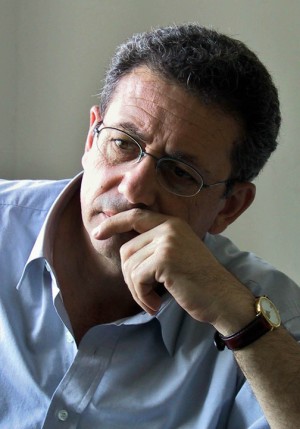
The campaign includes the refusal to extend or approve visas for more than 100 American officials and the frequent searches of American diplomatic vehicles in major cities, said an American official briefed on the cases.

The problems affected military attachés, C.I.A. officers, development experts, junior level diplomats and others, a senior American diplomat said. As a result, some American aid programs to Pakistan, which President Obama has called a critical ally, are “grinding to a halt,” the diplomat said.

American helicopters used by Pakistan to fight militants can no longer be serviced because visas for 14 American mechanics have not been approved, the diplomat said. Reimbursements to Pakistan of nearly $1 billion a year for counterterrorism have been suspended because the last of the American Embassy’s five accountants left the country this week after his visa expired.

“There’s an incredible disconnect between what they want of us and the fact we can’t get the visas,” the diplomat said.

Pakistani officials acknowledged the situation but said the menacing atmosphere resulted from American arrogance and provocations, like taking photographs in sensitive areas, and a lack of understanding of how divided Pakistanis were about the alliance with the United States. [continued…]

Facebooktwittermail

When will it be our time?

When will it be our time?

I have lived my entire adult life under occupation, with Israelis holding ultimate control over my movement and daily life.

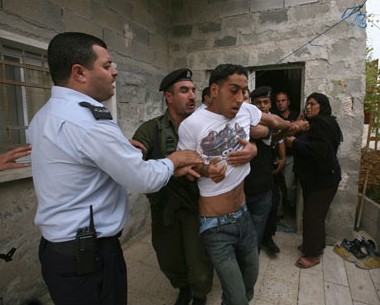
When young Israeli police officers force me to sit on the cold ground and soldiers beat me during a peaceful protest, I smolder. No human being should be compelled to sit on the ground while exercising rights taken for granted throughout the West.

It is with deepening concern that I recognize the Obama administration is not yet capable of standing up to Israel and the pro-Israel lobby. Our dream of freedom is being crushed under the weight of immovable and constantly expanding Israeli settlements.

Days ago, the State Department spokesman, Ian Kelly, managed only to term such illegal building “dismaying.” The Israeli foreign minister, Avigdor Lieberman, stands up and walks out on the U.S. envoy, George Mitchell, every time the American envoy mentions East Jerusalem.

And Javier Solana, just prior to completing his stint as European Union foreign policy chief, claimed Palestinian moves toward statehood “have to be done with time, with calm, in an appropriate moment.” He adds: “I don’t think today is the moment to talk about that.”

When, precisely, is a good time for Palestinian freedom? I call on Mr. Solana’s replacement, Catherine Ashton, to take concrete actions to press for Palestinian freedom rather than postpone it.

If Israel insists on hewing to antiquated notions of determining the date of another people’s freedom then it is incumbent on Palestinians to organize ourselves and highlight the moral repugnance of such an outlook.

Through decades of occupation and dispossession, 90 percent of the Palestinian struggle has been nonviolent, with the vast majority of Palestinians supporting this method of struggle. Today, growing numbers of Palestinians are participating in organized nonviolent resistance.

In the face of European and American inaction, it is crucial that we continue to revive our culture of collective activism by vigorously and nonviolently resisting Israel’s domination over us. [continued…]

Facebooktwittermail

Blaming the Goldstone Report

Blaming the Goldstone Report

A brief news item in the Jewish Telegraphic Agency (JTA) a few days ago made depressing reading. It was entitled: “State Department blames Goldstone for stalled peace talks.”

“Wow!” I thought to myself, has it really come down to this? The United States and Israel, who do not hesitate to toot their horn about their democratic credentials, now blame the stalled Arab-Israeli peace-making process on the publication of the report on the potential war crimes of the Gaza war issued in September by the UN Human Rights Council enquiry commission headed by Judge Richard Goldstone?

It is hard to think of a more distorted and backwards brand of political morality than this American-Israeli view of the Goldstone report, which most of the world sees as a historic breakthrough in the elusive quest to apply international norms of accountability to the savagery that has come to define Arab-Israeli warfare. [continued…]

Facebooktwittermail