Category Archives: Obama administration

Unholy alliance at war with Obama’s foreign policy

Unholy alliance at war with Obama’s foreign policy

Mr Cheney’s outburst [as he recently accused Barack Obama of being soft on terrorism]… is part of a bigger story in Washington. The aim reaches beyond self-exculpation for his lead role in the calamities of George W. Bush’s administration. It represents the sharp tip of a broader assault on Mr Obama’s foreign policy.

The proposition is that the world’s superpower has a binary choice – between aggression and appeasement – in the conduct of foreign policy. It can get its way by beating up enemies and bullying friends; or it can sacrifice the national interest to weak-kneed engagement and soggy multilateralism. Mr Obama has chosen appeasement.

On one level, there is nothing new in the charge. Republicans have accused the Democrats of being weak on defence ever since the end of the second world war, even if the attacks have rarely been infused with as much partisan vitriol. Soft on terrorism has become a substitute for soft on communism.

For all that, one might have thought that the events of the past few years would have given even the most partisan ideologues on the right pause for thought. The war in Iraq did more than any military adventure since the Vietnam war to drain American power and prestige. It was Mr Cheney and his chums who allowed the Taliban to return to Afghanistan and Mr bin Laden to escape. How did any of this make America safer?

The critics have moved on. The underlying charge now is that Mr Obama has decided that the US should accommodate the big shifts in global power that presage a relative weakening – relative is a vital qualification – in US primacy. Simply put, the president stands accused of standing idly by while other nations rise. America should be blocking the advance of future adversaries rather than inviting them to join a new global order.

Beguiling though the thought might be that history can be stopped in its tracks to preserve the west’s global hegemony for another couple of centuries, there is no accompanying explanation of how precisely Mr Obama can turn back the geopolitical tides. [continued…]

Editor’s Comment — At his inauguration, President Obama evinced an understanding that the primary challenge facing America is not whether it can retain its power but whether it has the flexibility to adapt — as he said: “the world has changed, and we must change with it.”

With the New American Century having lasted less than a decade, Obama recognized that the neoconservative vision of American hegemony was a fundamentally unrealistic imposition of the past on the present. But he has yet to clearly articulate a new vision of America’s role in the world and all too frequently falls back on familiar references to America’s greatness.

The strange thing about America’s enduring imperial pretensions is that they are rooted in an underlying sense of inferiority. What other nation engages in such frequent declarations about its own virtues? It’s as though in the absence of continuous self-praise, American pride would rapidly melt into a pool of self-doubt.

For America to meaningfully engage with the world, it also needs to engage with itself. In that process it must begin to move towards an era of national adulthood where it can look in the mirror and see its real face, without having to cling to a childish fantasy.


Facebooktwittermail

After the earthquake, how to rebuild Haiti from scratch

After the earthquake, how to rebuild Haiti from scratch

President Obama has declared that the United States will not forsake Haiti in its moment of agony. Honoring this commitment would be a first for Washington.

To prevent a deepening spiral of death, the United States will have to do things differently than in the past. American relief and development institutions do not function properly, and to believe otherwise would be to condemn Haiti’s poor and dying to our own mythology.

In Haiti, we are facing not only a horrific natural disaster but the tectonics of nature, poverty and politics. Even before last week’s earthquake, roughly half of the nation’s 10 million inhabitants lived in destitution, in squalid housing built of adobe or masonry without reinforcements, perched precariously on hillsides. The country is still trying to recover from the hurricanes of 2008 as well as longtime social and political traumas. The government’s inability to cope has been obvious, but those of us who have been around Haiti for many years also know about the lofty international promises that follow each disaster — and how ineffectual the response has been each time. [continued…]

Why Haiti matters

… above all, we act for a very simple reason: in times of tragedy, the United States of America steps forward and helps. That is who we are. That is what we do. For decades, America’s leadership has been founded in part on the fact that we do not use our power to subjugate others, we use it to lift them up — whether it was rebuilding our former adversaries after World War II, dropping food and water to the people of Berlin, or helping the people of Bosnia and Kosovo rebuild their lives and their nations.

At no time is that more true than in moments of great peril and human suffering. It is why we have acted to help people combat the scourge of HIV/AIDS in Africa, or to recover from a catastrophic tsunami in Asia. When we show not just our power, but also our compassion, the world looks to us with a mixture of awe and admiration. That advances our leadership. That shows the character of our country. And it is why every American can look at this relief effort with the pride of knowing that America is acting on behalf of our common humanity. [continued…]

Editor’s Comment — When human misery is at its most extreme and acute, is this the time to start singing praise to America?

President Obama is sending the fleet, soldiers, and relief to Haiti because… because that’s what we do: we’re Americans.

Instead, why not because… the Haitians, dirt poor, are nevertheless just like us (even though they’re not Americans)?

Is it possible to offer help without turning the occasion into a demonstration of national sainthood?

Of course there is nothing uniquely American about seeing crude nationalistic PR opportunities riding on tragedy.

Israelis, acutely conscious of the extent to which their national reputation has been shredded in recent years, clearly see in Haiti a stage for demonstrating the depth of compassion that exists in the Jewish state.

If the devastation wrought on southern Lebanon in 2006 and in Gaza a year ago and the ongoing merciless siege of Gaza all serve to reinforce an image of Zionist brutality, then sending teams of doctors to Haiti might go some way to counter that impression.

That at least seems to be the thinking behind Haaretz‘s headline story today, “Life amid death: Baby born in Israeli field hospital in Haiti” – a gripping narrative from the intrepid Natasha Mozgovaya.

She starts:

Amid the tragedy and devastation encompassing the Haitian capital of Port-au-Prince since Tuesday’s 7.0-magnitude earthquake, a happy event took place Sunday inside the field hospital erected by the Israeli relief delegation in the city. Doctor Shir, who works at Hadassah, delivered the first healthy baby in the Israeli hospital.

The mother told Dr. Shir that she would name her son Israel. “Amid all the death around us,” the doctor said, “it is very symbolic.” He added that childbirth in Haiti doesn’t usually take place in a hospital in the impoverished country, and that this particular woman received the best care from the best doctors.

Oh my! Israeli doctors in an Israeli hospital delivering a baby called Israel! And who would have thought little Israel could do so much good so far away?

Here’s one Haitian who was dumb-founded:

One of the Israeli search and rescue teams on Saturday freed 69-year-old France Gilles from the rubble.

“We told him we were from Israel and he asked if we were mocking him,” one rescuer said.

As for the non-Israeli relief efforts, well, when non-Israelis try and rescue someone the victim doesn’t survive:

Elsewhere, a British team was able to make contact with a woman trapped beneath the debris but was unable to reach her. Before they could dig their way through, a Haitian bulldozer destroyed the remains of the building and the woman was recovered, dead.

Poor woman, that the Israelis couldn’t get there first. When they do, they heroically save lives:

At another site Israelis spoke with a trapped man, seemingly the only survivor after a building collapsed. Following several hours of excavation, rescuers had succeeded in injecting him with fluids, one worker said, and that the team hoped to extricate him within a few more hours.

“We’ve had to drill through a concrete girder, as he is trapped between pipes and planking,” said Liron Shapira, deputy commander of the Israeli delegation. “We have already removed most of the piping and have managed to attach intravenous drips to his torso. As far as we are concerned, as soon as the drips are attached we can proceed smoothly. Now we need to remove the debris from around his legs. Then we should be able to pull him free.”

And might there be a religious dimension in the league table of compassion?

Distress has clearly not bred solidarity and shouts and elbows fly as the needy jostle for food. Three young women from Wisconsin – Susan, Becky and Jamie, volunteers at a Catholic orphanage – are trying to board their flight. “Don’t tell her anything,” one of the girls warns her friend, pointing at me. “She’ll use it to take our place on the flight.” Only after I explain that I have no intention of stealing their seats do they calm down. “We were originally supposed to leave today but because there are no phones or communications we didn’t know if there was a flight, so we came anyway.”

OK, cynicism aside, Israel’s 220-strong relief team is impressive coming from a country of just 7.5 million. Mind you, Iceland, a country that’s bankrupt and has a population of just 320,000 has managed to send a 37-strong search and rescue team. Good on those plucky Icelanders!

Facebooktwittermail

Elite US troops ready to combat Pakistani nuclear hijacks

Elite US troops ready to combat Pakistani nuclear hijacks

The US army is training a crack unit to seal off and snatch back Pakistani nuclear weapons in the event that militants, possibly from inside the country’s security apparatus, get their hands on a nuclear device or materials that could make one.

The specialised unit would be charged with recovering the nuclear materials and securing them.

The move follows growing anti-Americanism in Pakistan’s military, a series of attacks on sensitive installations over the past two years, several of which housed nuclear facilities, and rising tension that has seen a series of official complaints by US authorities to Islamabad in the past fortnight.

“What you have in Pakistan is nuclear weapons mixed with the highest density of extremists in the world, so we have a right to be concerned,” said Rolf Mowatt-Larssen, a former CIA officer who used to run the US energy department’s intelligence unit. “There have been attacks on army bases which stored nuclear weapons and there have been breaches and infiltrations by terrorists into military facilities.” [continued…]

Facebooktwittermail

Obama confidant’s spine-chilling proposal

Obama confidant’s spine-chilling proposal

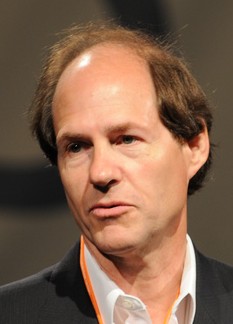
Cass Sunstein has long been one of Barack Obama’s closest confidants. Often mentioned as a likely Obama nominee to the Supreme Court, Sunstein is currently Obama’s head of the Office of Information and Regulatory Affairs where, among other things, he is responsible for “overseeing policies relating to privacy, information quality, and statistical programs.” In 2008, while at Harvard Law School, Sunstein co-wrote a truly pernicious paper proposing that the U.S. Government employ teams of covert agents and pseudo-“independent” advocates to “cognitively infiltrate” online groups and websites — as well as other activist groups — which advocate views that Sunstein deems “false conspiracy theories” about the Government. This would be designed to increase citizens’ faith in government officials and undermine the credibility of conspiracists. The paper’s abstract can be read, and the full paper downloaded, here.

Sunstein advocates that the Government’s stealth infiltration should be accomplished by sending covert agents into “chat rooms, online social networks, or even real-space groups.” He also proposes that the Government make secret payments to so-called “independent” credible voices to bolster the Government’s messaging (on the ground that those who don’t believe government sources will be more inclined to listen to those who appear independent while secretly acting on behalf of the Government). This program would target those advocating false “conspiracy theories,” which they define to mean: “an attempt to explain an event or practice by reference to the machinations of powerful people, who have also managed to conceal their role.” Sunstein’s 2008 paper was flagged by this blogger, and then amplified in an excellent report by Raw Story’s Daniel Tencer. [continued…]

Editor’s Comment — Glenn Greenwald’s whole analysis is well worth reading but I’ll make a couple of points. If Sunstein gave more attention to where conspiracy theories come from, he’d come at this issue from a completely different direction.

Buried deep in his paper is the following remark:

… we have conjectured that there is a causal link between the prevalence of conspiracy theories and the relative absence of civil liberties and a well-functioning marketplace of ideas, so it is unsurprising that such theories are even more widespread in the Muslim world than in the United States.

But as soon as has he makes this important observation he goes on to imply that the US government can exploit political repression overseas to its advantage. He notes that in the foreign arena “the U.S. enjoys greater freedom of action, in part because domestic U.S. politics will tolerate some actions abroad that it would not tolerate if taken at home.”

What Sunstein fails to do is look at the psychological dynamics in play in situations that provide fertile ground for the proliferation of conspiracy theories.

The US, relative the Middle East, might enjoy the protection of civil liberties and a marketplace of ideas — though I don’t know that anyone could seriously describe the latter as well-functioning — yet the appetite for conspiracy theories here, particularly relating to 9/11, is huge.

This is a reflection of two things:
1. Massive and historically deep-rooted mistrust of government, and
2. The widespread and well-founded belief that the citizens of this country exercise little influence over the workings of government.

Both of these factors (and especially the second one) serve to reinforce a profound sense of the grossly inequitable distribution of political power and a subjective experience in which government appears all-powerful and the individual essentially powerless.

The instinctive response to feelings of powerlessness is to grasp hold of a narrative of agency. Rather than feel that we are living in a world out of control, we prefer to believe that the control we lack is possessed by someone or something else. That might be a supposedly benign entity such as a loving God, or alternatively a cloaked and dangerous entity: the US government, a global Zionist conspiracy, aliens… you name it.

The psychological comfort that a belief in malevolent agency provides, is that it tells us we are not truly impotent but we have been deprived of the opportunity to exert our natural power. We are imprisoned but we can still rattle the bars.

Circling back to the problem that Sunstein wants to address, a real solution would not involve any of his preferred Orwellian machinations.

If the US government wants to challenge dangerous conspiracy theories it needs to pursue two far-reaching political goals:

1. Make government more trustworthy.
2. Turn “government of the people, by the people, for the people” into a reality.

For as long as neither of these goals have effectively been accomplished, conspiracy theories will remain popular. They should be seen for what they are: a symptom of an underlying socio-political disease; not the disease itself. People who think like Sunstein are part of the problem; not the solution.

Facebooktwittermail

Obama pledges aid to Haiti

Obama pledges aid to Haiti

President Obama on Thursday promised $100 million along with more American troops for the relief effort in Haiti, vowing that the United States would stand with the impoverished nation as it grappled with the devastation of its capital city.

The Pentagon sent 125 soldiers from the 82nd Airborne Division based at Fort Bragg, N.C., and said that by the end of the week their number would grow to 3,000. Military officials said their primary mission would be to provide security as aid began to arrive.

Those Army troops will be supplemented in the coming days by 2,000 Marines from Camp Lejeune, N.C., who are scheduled to arrive in Haiti by Monday. [continued…]

Editor’s Comment — How much is $100 million?

As much as the US Department of Defense spends in one hour, each hour, 24/7, 365 days a year. (In this case the DoD is of course making a major effort to help the people of Haiti so the US contribution will be more than $100 million.)

But since the United States is expected to spend over $880 billion on defense in 2010, it’s worth asking: Forgetting about the humanitarian imperative, which makes a more significant contribution to the US national security? A $100 million spent on relief work in Haiti or $100 million spent on the war in Afghanistan? (Before Obama announced his surge plan, the war was estimated to be costing $133 million a day.)

Facebooktwittermail

Turkish human rights group: Arrest Barak when he arrives here

Turkish human rights group: Arrest Barak when he arrives here

espite the intensifying crisis between Israel and Turkey, Defense Minister Ehud Barak is insisting to follow through with his scheduled plans to visit Turkey next week. However, on Thursday it became clear that an arrest warrant may await him there.

One of the major human rights organizations in Turkey, Mazlumder, requested from the Turkish state prosecution to order that Barak be arrested upon landing in the country for what they call “his responsibility for war crimes during Operation Cast Lead.”

A statement published Wednesday night by the Istanbul branch of Mazlumder claimed that the request is rooted in the right of universal jurisdiction and Article CMK98 of Turkish law. [continued…]

U.S. to store $800 million in emergency gear in Israel

The U.S. Army will double the value of emergency military equipment it stockpiles on Israeli soil, and Israel will be allowed to use the U.S. ordnance in the event of a military emergency, according to a report in Monday’s issue of the U.S. weekly Defense News.

The report, written by Barbara Opall-Rome, the magazine’s Israel correspondent, said that an agreement reached between Washington and Jerusalem last month will bring the value of the military gear to $800 million.

This is the final phase of a process that began over a year ago to determine the type and amount of U.S. weapons and ammunition to be stored in Israel, part of an overarching American effort to stockpile weapons in areas in which its army may need to operate while allowing American allies to make use of the ordnance in emergencies. [continued…]

Bomb in Jordan misses convoy of Israeli diplomats

A roadside bomb exploded near a convoy of vehicles carrying Israeli diplomats in Jordan on Thursday, but no one was injured, according to Israeli and Jordanian officials.

“All I can say at this moment is there was an attack that targeted an Israeli embassy vehicle,” foreign-ministry spokesman Yigal Palmor said. “The Israeli embassy staff in the vehicle were not injured. The vehicle proceeded.”

A senior Israeli official said Israel’s ambassador to Jordan, Danny Nevo, wasn’t in the convoy, but refused to specify who was. [continued…]

Facebooktwittermail

Suicide attack reveals threat to Obama’s Afghanistan plan

Suicide attack reveals threat to Obama’s Afghanistan plan

The bombing has focused new attention on the Haqqani network, an Afghan insurgent group that U.S. intelligence officials said is based in North Waziristan, has ties to members of the Pakistani military’s Inter-Services Intelligence agency and probably played a key role in the suicide bombing.

The relative sophistication of the attack, especially in contrast to the attempted Christmas Day bombing of a Northwest Airlines jet, suggests that the militants who been planned and ran it may have received some training or advice from rogue ISI officers, the officials said.

For example, they said, the bomber, 32-year-old Jordanian Humam Khalil Abu Mulal al Balawi, spent most of 2009 in Pakistan and traveled to Khost from Pakistan, and he managed to evade the counter-intelligence tools that customarily are used to assess whether a potential agent is reliable, they said.

“Pakistan has to decide whether Haqqani is an asset or a liability. At the moment, I think they’re veering towards liability, but it’s not clear,” said a Western official in Afghanistan, who couldn’t be named because he isn’t authorized to discuss the subject publicly. [continued…]

Facebooktwittermail

Yemen clerics warn US to stay out or face jihad

Yemen clerics warn US to stay out or face jihad

Yemen’s association of clerics warned yesterday they would call for jihad in the case of foreign military intervention amid growing concern that the United States might carry out direct strikes against al Qa’eda militants in the country.

“If any party insists on aggression, or invading the country or carrying out military or security intervention, then jihad becomes obligatory according to Islam,” said a statement signed by 150 clerics, announced at a meeting of dozens of prominent religious leaders.

The clerics, led by Sheikh Abdulmajeed al Zindani, a hardliner labelled by the US as a “global terrorist”, met amid heavy security at the historic al Mashhad mosque in Sana’a. [continued…]

Facebooktwittermail

George W. Obama

George W. Obama

Before President Obama, it was grimly accurate to write, as I often did in the Voice, that George W. Bush came into the presidency with no discernible background in constitutional civil liberties or any acquaintance with the Constitution itself. Accordingly, he turned the “war on terror” over to Dick Cheney and Donald Rumsfeld—ardent believers that the Constitution presents grave obstacles in a time of global jihad.

But now, Bush’s successor—who actually taught constitutional law at the University of Chicago—is continuing much of the Bush-Cheney parallel government and, in some cases, is going much further in disregarding our laws and the international treaties we’ve signed.

On January 22, 2009, the apostle of “change we can believe in” proclaimed: “Transparency and the rule of law will be the touchstones of my presidency.” But four months into his first year in command, Obama instructed his attorney general, Eric Holder, to present in a case, Jewel v. National Security Agency, a claim of presidential “sovereign immunity” that not even Dick Cheney had the arrant chutzpah to propose. [continued…]

Poll: Most Americans would trim liberties to be safer

After a recent attempted terrorist attack set off a debate about full-body X-rays at airports, a new McClatchy-Ipsos poll finds that Americans lean more toward giving up some of their liberty in exchange for more safety.

The survey found 51 percent of Americans agreeing that “it is necessary to give up some civil liberties in order to make the country safe from terrorism.”

At the same time, 36 percent agreed that “some of the government’s proposals will go too far in restricting the public’s civil liberties.” [continued…]

The U.S. military, al-Qaeda, and a war of futility

In his book on World War II in the Pacific, War Without Mercy, John Dower tells an extraordinary tale about the changing American image of the Japanese fighting man. In the period before the surprise attack on Pearl Harbor, it was well accepted in military and political circles that the Japanese were inferior fighters on the land, in the air, and at sea — “little men,” in the phrase of the moment. It was a commonplace of “expert” opinion, for instance, that the Japanese had supposedly congenital nearsightedness and certain inner-ear defects, while lacking individualism, making it hard to show initiative. In battle, the result was poor pilots in Japanese-made (and so inferior) planes, who could not fly effectively at night or launch successful attacks.

In the wake of their precision assault on Pearl Harbor, their wiping out of U.S. air power in the Philippines in the first moments of the war, and a sweeping set of other victories, the Japanese suddenly went from “little men” to supermen in the American imagination (without ever passing through a human phase). They became “invincible” — natural-born jungle- and night-fighters, as well as “utterly ruthless, utterly cruel and utterly blind to any of the values which make up our civilization.”

Sound familiar? It should. Following September 11, 2001, news headlines screamed “A NEW DAY OF INFAMY,” and the attacks were instantly labeled “the Pearl Harbor of the twenty-first century.” Soon enough, al-Qaeda, like the Japanese in 1941, went from a distant threat — the Bush administration, on coming into office, paid next to no attention to al-Qaeda’s possible plans — to a team of arch-villains with little short of superpowers. After all, they had already destroyed some of the mightiest buildings on the planet, were known to be on the verge of seizing weapons of mass destruction, and, if nothing was done, might soon enough turn the Muslim world into their “caliphate.” [continued…]

Facebooktwittermail

Iranian scientist killed by bomb had opposition links

Iranian scientist killed by bomb had opposition links

An Iranian nuclear physicist with ties to the reformist movement led by the opposition leader, Mir Hossein Moussavi, has been killed by a bomb near his home.

Dr Moussad Ali-Mohammadi was leaving his house on his way to work at Tehran University when the bomb, attached to a motorbike, went off, killing him instantly.

The Iranian authorities said they suspected the hand of exiled opposition movements working on behalf of America and Israel, a charge denied by Washington.

They drew parallels with the disappearance of a scientist attached to the country’s nuclear programme while on a pilgrimage in Saudi Arabia, who the authorities say was kidnapped and handed over to the Americans.

But Dr Ali-Mohammadi’s academic work was highly theoretical and the body responsible for the country’s nuclear research programme, which has brought Iran into conflict with the West, said he had no connection with it.

Opposition movement supporters also said he was on a list of 240 academic backers of Mr Moussavi published before last year’s disputed election. [continued…]

Editor’s Comment — It comes as little surprise that the Iranian government would be quick to accuse Israel and the US of being behind this assassination. The US is currently operating a far from covert assassination program in Pakistan and less than a year ago it was reported that Israel had launched a program specifically targeting Iran’s top nuclear scientists.

Last February, The Telegraph reported:

Israel has launched a covert war against Iran as an alternative to direct military strikes against Tehran’s nuclear programme, US intelligence sources have revealed.

It is using hitmen, sabotage, front companies and double agents to disrupt the regime’s illicit weapons project, the experts say.

The most dramatic element of the “decapitation” programme is the planned assassination of top figures involved in Iran’s atomic operations.

Israel is also widely assumed to have been behind the assassination of Imad Mughniyeh, a leading member of Hezbollah, in Damascus two years ago.

Governments that sanction or instigate assassinations have a hard time pleading innocence.

So, does this mean that Mossad is the prime suspect in this case? Probably not. More likely this was instigated by the regime itself. The killing would send multiple messages:

1. The official line – foreign enemies of the state are on the lose and Iranians must stand together to face this threat.
2. Those who support the opposition are risking their lives by doing so.
3. Any Iranian nuclear scientists who might consider defection have been served notice that they might meet the same fate.

Facebooktwittermail

UPDATED: Report: Iran slows down nuclear program in gesture to West

UPDATED: Report: Iran slows down nuclear program in gesture to West

Iran has suspended its uranium enrichment program for two months, Iranian media sources reported on Monday, saying the move was meant as a gesture of good will toward Western powers.

The report has not been confirmed by any other sources.

Meanwhile, with or without connection to these reports, U.S. government officials have said that there was still a chance of striking a deal with Iran over its nuclear program.

The possible deal, according to the Washington based newspaper Politico, would be based on the proposal formed late last September and early October in talks in Geneva and Vienna, between Iran and Western powers. The agreement may still go through, even though the deadline which U.S. President Barack Obama set for nuclear talks with Iran, the end of 2009, has expired. [continued…]

UPDATE: Iran denies report on uranium enrichment suspension

Iranian Foreign Ministry Spokesman Ramin Mehman-Parast on Monday dismissed an Israeli newspaper report on the suspension of Iran’s uranium enrichment activities as “unfounded” and “baseless”, stressing that Tehran will continue its unabated nuclear activities.

“From our viewpoint, these newspapers and information-dissemination sources are not creditable and there is no audience for such fabrication of news and purposeful mistakes in Iran,” Mehman-Parast told FNA. Israel’s Ha’aretz newspaper reported earlier that Iran has suspended its nuclear enrichment program in gesture of goodwill towards the West. [continued…]

Facebooktwittermail

The looming war in Gaza: Can Obama stop it before it starts?

The looming war in Gaza: Can Obama stop it before it starts?

Next week, or the week after, Barack Obama may well see intelligence reports of tank battalions moving south and west along Israeli highways, and whole infantry brigades setting up camp in the western Negev.

The countdown to the Second Gaza War has begun in earnest. Date it, if you like, to Sunday, and a coolly terrifying analysis by Yom Tov Samia, former overall Israeli military commander of the Gaza Strip and the adjacent Negev.

Or date it, if you prefer, according to axiom of contemporary Israeli history which reads: A future war becomes practically inevitable the moment a key IDF reserve major-general declares it so.

Alternatively, date it from the moment that selective amnesia allows Israeli political figures to court the illusion that Hamas can be invaded to death.

All this and more was to be had from an interview Samia gave Army Radio this week, which should give pause not only to the Palestinians and Israelis who may fall victim to a Second Gaza War, but to Washington as well. [continued…]

Israel’s crisis

Just back from Israel/Palestine, the overwhelming sense I carry away is that the present state cannot last. Just how it goes down I have no idea. But conditions are so obviously discriminatory, and the knowledge of these conditions now so widespread– among the Christian pilgrims in my Jerusalem guesthouse, among European leaders, and now too among the Israeli elite and American left–that the situation is reminiscent of the delegitimizing of communism in the 70s and 80s. The period of apartheid struggle that Ehud Olmert warned of two years ago is upon us. So too his warning of possible “national suicide.”

The surprise for me is that the indifference of American Jews to this injustice is more than matched by that of the mass of Israelis: They live inside the bubble of their opinion that Israeli society is fair. So this trip has left me pretty depressed, even as it has renewed my sense of ethnocentric purpose: I will do what I can to bring the American Jewish community into the world conversation about the reality of Israel/Palestine.

This will happen. A few weeks back Israeli activist Micha Kurz said that a war had begun between one part of Israeli society and another; and I come home knowing that that war is about to erupt inside American Jewish life. You might say that it has already erupted: J Street’s emergence and all the liberal Zionists in the New York Review of Books attacking the occupation are signs. But we ain’t seen nothing yet. We are on the verge of a Jewish intifada, and about time too. [continued…]

Facebooktwittermail

Iran offers nuke fuel deal

Iran offers nuke fuel deal

There are signs that negotiations with Iran over a nuclear fuel swap have resumed despite the expiration of the end-of-year deadline for a deal set by President Barack Obama.

While the Obama administration has stepped up talk of expanding sanctions on the regime’s Revolutionary Guards Corps, Iranian news reports and U.S. official sources say that Iran has recently returned a formal counter offer to swap low enriched uranium, or LEU, in exchange for nuclear fuel cells produced in the West.

The proposal comes as Iranian news reports say the foreign ministry has announced the halting of uranium enrichment for two months as a good-will gesture. Outside observers have not confirmed that claim. [continued…]

U.S. shifts Iran focus to support opposition

The Obama administration is increasingly questioning the long-term stability of Tehran’s government and moving to find ways to support Iran’s opposition “Green Movement,” said senior U.S. officials.

The White House is crafting new financial sanctions specifically designed to punish the Iranian entities and individuals most directly involved in the crackdown on Iran’s dissident forces, said the U.S. officials, rather than just those involved in Iran’s nuclear program.

U.S. Treasury Department strategists already have been focusing on Iran’s Revolutionary Guard Corps, which has emerged as the economic and military power behind Supreme Leader Ayatollah Ali Khamenei and President Mahmoud Ahmadinejad. [continued…]

The state of the opposition is strong

A couple of days after June’s stolen election in Iran, Flynt Leverett and I were both guests on “The Charlie Rose Show.” Mr. Leverett was waxing eloquent about how Ahmadinejad could have actually won the election. His supposed evidence was a May poll, conducted by phone from Turkey, before the presidential campaign had even begun. Apparently he did not read the entire report of the poll, merely a summary, published in a Washington Post editorial. Much of the full report contradicted his conclusions. Moreover, anyone who believes that Iranians today will reveal their real electoral preferences to a pollster calling from Turkey probably responds to emails from Nigerian princes. [continued…]

Steady drip of leaks corrodes the core of the Iranian regime

Beatings, arrests, show trials and even killings have failed to discourage Iranians from taking to the streets in protest. But those same tactics may be taking a toll on the government itself, eating away at its legitimacy even among its core of insiders, Iran experts are saying. The evidence? Leaks.

They began in December. Leaks about private meetings of the intelligence services and Revolutionary Guards; an embarrassing memo from state-owned television on how to cover the protests; a note about how the security services have been using petty criminals to fill out the ranks of pro-government demonstrations.

There is no way to verify the accuracy of these leaks. But the government appears to have grown so angry and frustrated with what it calls a “soft war” to overthrow the state that it recently made it a crime to be affiliated with many foreign news outlets, dozens of nongovernmental organizations and opposition Web sites deemed “antirevolutionary.” [continued…]

Iran’s parliament exposes abuse of opposition prisoners at Tehran jail

Iranian MPs lifted a blanket of official denial on the country’s post-election upheaval today by blaming a ­senior regime insider for abuses that led to the deaths of at least three prisoners in a detention centre.

In the first publicly documented ­admission that abuses occurred in the weeks after President Mahmoud Ahmadinejad’s disputed re-election, the majlis, Iran’s parliament, identified Saeed Mortazavi, Tehran’s former chief ­prosecutor, as the main culprit in the scandal over the Kahrizak facility.

A report read out to MPs said 147 prisoners had been held in a 70-square-metre room for four days without proper ventilation, heating and food on ­Mortazavi’s orders. The prisoners were sent to ­Kahrizak after being arrested at a demonstration on 9 July, less than a month after ­Ahmadinejad’s victory. [continued…]

Iran’s opposition spreads to heartland

Mohammad knew he had to be careful in approaching his old classmate Hamed, the one from the conservative Iranian family. They come from a small city, after all, and word gets around.

When they ran into each other last summer in their eastern Iranian hometown of Birjand, the pair hadn’t seen each other for nine years. As they caught up on old times, the conversation turned to the country’s disputed election in which President Mahmoud Ahmadinejad defeated challenger Mir-Hossein Mousavi.

“He believed Ahmadinejad’s victory was not fraudulent, and that Mousavi was angry because Iranians didn’t vote for him,” said Mohammad, a 23-year-old engineering student in Birjand, a provincial capital of 160,000 near the border with Afghanistan. “He also thought that the people who protest are some gangsters and not civilized people.” [continued…]

Rafsanjani so silent because he gets no respect, brother says

For months Iran watchers have wondered what was up with Ayatollah Ali Akbar Hashemi Rafsanjani, the head of Iran’s powerful Assembly of Experts and the Expediency Council, as well as a pillar of the 1979 Islamic Revolution.

Once considered the second-most powerful man in the country and the primary backer of Iran’s burgeoning opposition movement, he has grown uncharacteristically quiet in the last couple of months.

In an interview published this weekend by the Mehr news agency (in Persian), his younger brother, Mohammad, says he’s grown so silent “because no one listens to him.” [continued…]

Facebooktwittermail

Elite Revolutionary Guard’s expanding role in Iran may limit U.S. options

Elite Revolutionary Guard’s expanding role in Iran may limit U.S. options

A major expansion in the role played by Iran’s Revolutionary Guard Corps is giving the elite force new economic and political clout, but it could also complicate efforts by the United States and its allies to put pressure on the Iranian regime, according to U.S. officials and outside analysts.

Commanders of the Revolutionary Guard say its growth represents a logical expansion for an organization that is not a military force but a popular movement that protects the ideals of the 1979 Islamic revolution and Iran’s supreme leader, Ayatollah Ali Khamenei. The Guard’s expanded economic role is mirrored by a greater role in politics and security since the disputed presidential election in June, which the government says was won by incumbent Mahmoud Ahmadinejad in a landslide but which the opposition says was stolen.

U.S. officials consider the Guard a ripe target for sanctions over Iran’s controversial nuclear program because of the group’s central role in repressing post-election opposition protests. The officials are also concerned that broader-based sanctions risk alienating the Iranian public at a time when the government here faces protests from an energized opposition. But they also know that because of the Guard’s growing economic influence, sanctions on it could pinch the broader Iranian public as well.

Supporters and opponents alike say the Guard has dramatically expanded its reach into Iran’s economy, with vast investments in thousands of companies across a range of sectors. Working through its private-sector arm, the group operates Tehran’s international airport, builds the nation’s highways and constructs communications systems. It also manages Iran’s weapons manufacturing business, including its controversial missile program. [continued…]

Facebooktwittermail

White House aides said to chafe at slow pace of Afghan surge

White House aides said to chafe at slow pace of Afghan surge

Senior White House advisers are frustrated by what they say is the Pentagon’s slow pace in deploying 30,000 additional troops to Afghanistan and its inability to live up to an initial promise to have all of the forces in the country by next summer, senior administration officials said Friday.

Tensions over the deployment schedule have been growing in recent weeks between senior White House officials — among them Vice President Joseph R. Biden Jr., Gen. James L. Jones, the national security adviser, and Rahm Emanuel, the White House chief of staff — and top commanders, including Gen. Stanley A. McChrystal, the senior commander in Afghanistan.

A rapid deployment is central to President Obama’s strategy, to have a jolt of American forces pound the Taliban enough for Afghan security forces to take over the fight. Administration officials said that part of the White House frustration stemmed from the view that the longer the American military presence in Afghanistan continued, the more of a political liability it would become for Mr. Obama. But beyond the politics, the speeded up deployment — which Mr. Obama paired with a promise to begin troop withdrawals by July 2011 — is part of Mr. Obama’s so-called “bell curve” Afghanistan strategy, whereby American troops would increase their force in Afghanistan and step up attacks meant to quickly take out insurgents.

One administration official said that the White House believed that top Pentagon and military officials misled them by promising to deploy the 30,000 additional troops by the summer. General McChrystal and some of his top aides have privately expressed anger at that accusation, saying that they are being held responsible for a pace of deployments they never thought was realistic, the official said. [continued…]

Facebooktwittermail

What’s the difference between Obama’s anti-terrorism policies and Bush’s?

What’s the difference between Obama’s anti-terrorism policies and Bush’s?

If Obama is pretending we are not at war, he is not doing a very good job of it. “Our nation is at war against a far-reaching network of violence and hatred,” he declared in his inaugural address. “I don’t think there’s any question but that we are at war” with terrorists, his attorney general, Eric Holder, said at his confirmation hearing that same month. “We are indeed at war with Al Qaeda and its affiliates,” Obama said in May. “As the president has made clear,” his chief counterterrorism adviser, John Brennan, said in August, “we are at war with Al Qaeda.”

It’s true that Obama prefers to say we are at war with terrorists rather than terrorism, because, as Brennan put it, “you can never fully defeat a tactic like terrorism any more than you can defeat the tactic of war itself.” But since Al Qaeda and its allies won’t be signing an instrument of surrender anytime in the foreseeable future, the implications are similar.

Nor does there seem to be much difference between Bush and Obama in terms of the policies said to be justified by this permanent war. The closing of Guantanamo, which was supposed to happen this month but has been delayed until next year at the earliest, is by the Obama administration’s own account a symbolic move, aimed at removing a conspicuous “recruiting tool” for Al Qaeda. But the policy that Guantanamo represents will continue. [continued…]

America has an impressive record of starting wars but a dismal one of ending them well

Since 1945, the United States military has devoted itself to the proposition that, Hiroshima notwithstanding, war still works—that, despite the advent of nuclear weapons, organized violence directed by a professional military elite remains politically purposeful. From the time U.S. forces entered Korea in 1950 to the time they entered Iraq in 2003, the officer corps attempted repeatedly to demonstrate the validity of this hypothesis.

The results have been disappointing. [continued…]

Facebooktwittermail

President Obama orders a ban on fly-swatting in the Ministry of Information

President Obama orders a ban on fly-swatting in the Ministry of Information

The buck stops here; the president’s responsible; everyone’s accountable; no one gets the blame; the system’s not broken – just needs a tune up.

The problem with a war on terrorism – at least where it takes place on the communication’s front – is that the terrorists often end up coming out with the more credible statements.

In 1984, after the Brighton bombing which targeted the leadership of the British government then led by Margaret Thatcher, the IRA said:

Mrs. Thatcher will now realise that Britain cannot occupy our country and torture our prisoners and shoot our people in their own streets and get away with it. Today we were unlucky, but remember we only have to be lucky once. You will have to be lucky always. Give Ireland peace and there will be no more war.

Yesterday, Agence France-Presse reported:

Al-Qaeda hailed the suicide bombing that killed seven CIA agents in Afghanistan as “revenge” for the deaths of top militants in US drone strikes in Pakistan, Islamist websites said on Thursday.

Treat terrorism as bereft of political content then the issue will perpetually be framed as one of national security and we’ll get reports like this:

In a briefing after the President’s remarks, counterterrorism advisor John Brennan said he had personally let the president down.

Brennan said that the intelligence and law enforcement community had done a “stellar” job over the past year. “It was in this one instance that we did not rise to that same level of competence and success.”

Brennan said the president had told him he must do better. Said Brennan, “I told him that I will do better and we will do better as a team.”

Must do better… Indeed.

No more fly-swatting at the Ministry of Information — that should fix the problem.

(Anyone who’s seen Brazil will know what I mean. Anyone who hasn’t seen the movie, should — it’s as relevant now as it was when it came out in 1985.)

Facebooktwittermail

National security adviser: Airline bomber report to ‘shock’

National security adviser: Airline bomber report to ‘shock’

White House national security adviser James Jones says Americans will feel “a certain shock” when they read an account being released Thursday of the missed clues that could have prevented the alleged Christmas Day bomber from ever boarding the plane.

President Obama “is legitimately and correctly alarmed that things that were available, bits of information that were available, patterns of behavior that were available, were not acted on,” Jones said in an interview Wednesday with USA Today. [continued…]

Editor’s Comment — When historians have the leisure to assess the first year of Barack Obama’s presidency, it will be interesting to see to what extent they see it having been shaped more by his Chief of Staff, Rahm Emanuel, than by the president himself.

Emanuel is a little man driven to take on big fights — though he backs away from if it becomes apparent that he overestimated his strength. I have a feeling that we’re in for another round, but this time the administration’s target is one that may turn out to have the most vicious bite: the US intelligence community.

Intelligence is a field that seems to have a particular appeal to people possessed by a unique form of idealistic criminality: a conviction that the state’s most indispensable guardians are an elite of patriots who patrol the boundaries of law by exercising the freedom to step outside the law.

In the aftermath of the Christmas bomber, Emanuel (and of course I’m simply guessing in attributing this to him), recognizes that the president is acutely vulnerable to the right’s favorite charge — weak on terrorism — and so has pressed his boss to show no mercy in pointing out the extent of the intelligence failure. Objectively, this should be a perfectly reasonable response, but right now the community (and especially the CIA) must be in crisis.

With an airline almost brought down and a team of operatives getting blown up by an al Qaeda infiltrator, once again, the phrase “American intelligence” sounds like an oxymoron. I would expect that the CIA is currently a cauldron of anger, humiliation and confusion where self-protection is the dominant force.

When the community that feels threatened is also home to the masters of dirty tricks, the people who are nominally in charge of running this country may need to brace themselves for a few lessons on the limits of their own power.

Thomas H. Kean and John Farmer Jr., respectively, the co-chairman and senior counsel of the 9/11 commission, write in a New York Times op-ed:

Despite the best efforts of the 9/11 commission and other intelligence reformers, budgetary authority over intelligence remains unaligned with substantive responsibility. Turf battles persist among intelligence agencies. Power is sought while responsibility is deflected. The drift toward inertia continues.

Government agencies are most likely to succeed when structure matches mission. With its many jurisdictional boundaries and its persistent bureaucratic fault lines, our current system, although greatly improved since 9/11, affords too many opportunities to let information slip, too many occasions for human frailty to assert itself.

The attempted Christmas bombing carries an eerie echo of the failures that led to 9/11 because those fundamental flaws persist. The challenge for President Obama and Congress is to resist superficial sound-bite solutions and undertake the harder task of reinventing our national security system. As the president stated, “The margin for error is slim, and the consequences of failure can be catastrophic.”

If Obama was ready to take on the challenge of reinventing the US national security system — I doubt very much that he is — then he would need to go much further than the Bush administration did.

A good place to start would be with an acknowledgment that secrecy is the enemy of accountability and efficiency.

That the United States has 16 intelligence agencies is not a testament to the sophistication of its security structure but to the institutional greed out of which so many fiefdoms have been created.

Facebooktwittermail