Category Archives: Obama administration

Saudi Arabia passes Russia as world’s third biggest military spender

The Washington Post reports: Global military spending reached almost $1.7 trillion in 2015, marking a year-on-year increase for the first time since 2011, according to the Stockholm International Peace Research Institute, which tracks arms expenditure around the world.

The United States remained far and away the top spender, which despite a dip from 2014, accounted for more than a third of total global spending. It was followed by China and then, perhaps surprisingly, Saudi Arabia, which supplanted Russia in third place. [Continue reading…]

Facebooktwittermail

One of Libya’s rival governments steps down as new UN-brokered unity government is installed

The Associated Press reports: One of Libya’s rival governments has resigned, a step that helps efforts by a new, UN-brokered unity government to assert itself in the capital Tripoli despite opposition from some local militias.

In a statement, the Tripoli-based National Salvation government said it would “cease duties” as executive authority, and therefore absolve itself of responsibility for the country’s fate.

“We put the interests of the nation above anything else, and stress that the bloodshed stop and the nation be saved from division and fragmentation,” the statement read.

Western nations view the new unity government as the best hope for ending Libya’s chaos and uniting all factions against an increasingly powerful Islamic State affiliate, which has seized the central city of Sirte. Another government, based in the eastern city of Tobruk, still opposes the UN-backed body. [Continue reading…]

The Washington Post reports: The United States and European allies, including Italy, France and Britain, have made the unity government’s establishment a key precondition for launching twin missions to begin an international stabilization effort and help combat a growing Islamic State affiliate there.

Each of those tasks will be strained by tensions among militia factions that Western nations hope will form a unified front against terrorist groups and by strong reluctance among European nations to wade into Libya’s chaos — even among those countries most threatened by the Islamic State’s growth across the Mediterranean.

The tentative political progress comes as the United States moves forward with plans to launch intensified attacks against the Islamic State’s Libyan branch, which has up to 8,000 fighters and is the group’s strongest affiliate outside Iraq and Syria. [Continue reading…]

Facebooktwittermail

New threats rose as U.S. apathy became policy

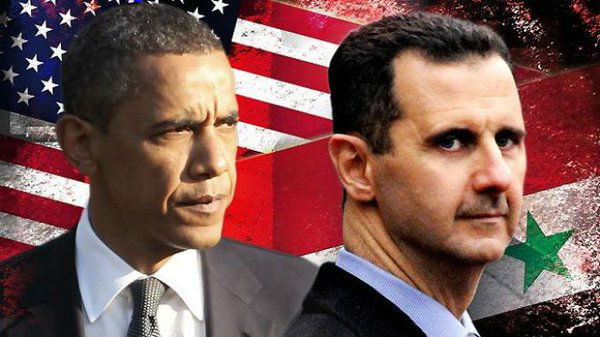
obama-assad

Garry Kasparov writes: The 21st century has been marked by two complementary trends in global security: the rise of new and unexpected threats and the return of old ones. Terrorist organizations have adapted modern technology to deadly purpose and paired it with global ambition. Nineteen well-trained individuals killed more Americans on 9/11 than the entire Japanese fleet killed in Pearl Harbor. Our ubiquitous smartphones and social networks turned out to be agnostic tools, serving both good and evil. They are boons for economic empowerment and cultural exchange, but also allow terror movements to recruit internationally, creating a homegrown terror threat that no border wall or refugee ban will prevent.

The old menaces of the 20th century have reappeared in updated forms. Communism as a political ideology is as bankrupt as ever, but the aggressive despotism that enforced it for decades before the fall of the Iron Curtain and the Soviet Union has returned to the world stage, due largely to Russian President Vladimir Putin. The United States, a global hegemon alternately over-eager or reluctant, has reacted in dramatically inconsistent ways to the new threats while mostly ignoring the resurgence of the old ones.

The checks and balances that frustrate every president domestically do little to prevent the commander-in-chief from wielding the power of life and death all over the world. The overwhelming military might of the United States is inherently agnostic as well. It can be used to attack or to defend, to protect innocent lives or to take them, to remove dictatorships or to support them.

The use of this fearsome power is guided by the American constitution and the founding American values of democracy and freedom. But it is up to the occupant of the White House to follow the Constitution and to live up to those values. The executive has found countless ways to evade checks on his authority, from signing “agreements” instead of treaties, to escalating foreign “police actions” instead of declaring war. American values have been applied selectively as well, as decades of relative unity in containing the Communist threat has given way to a neo-isolationist trend in both major American political parties. Instead of debating how the U.S. should act on the world stage, today’s presidential candidates are arguing about whether or not the U.S. should act at all. The specter of the 2003 Iraq War looms over every potential American action.

Such reflection is commendable, but in the seven years of the Obama administration we have seen that inaction can also have the gravest consequences. Inaction can fracture alliances. Inaction can empower dictators and provoke terrorists and enflame regional conflicts. Inaction can slaughter innocent people and create millions of refugees. We have the horrific proof in Syria, where Barack Obama’s infamous “red line” has been painted over in blood. [Continue reading…]

Facebooktwittermail

Travelling inside ISIS-controlled Syria and Iraq

Jürgen Todenhöfer writes: Abu Qatadah, a German-born Muslim convert, who has brokered our visit to the Islamic State, is almost as wide as he is tall, with a thick, reddish-brown beard. My photographer son Frederic and I load our bags into the bed of the white pickup Qatadah and his driver arrived in. The driver’s head and face are so thoroughly wrapped with a large grey shawl that only his eyes and the contours of his nose are visible. He murmurs a greeting in English in a strikingly rhythmic accent. For security reasons, we can’t use the main roads. The drive to Raqqa takes more than three hours.

Qatadah claims business is booming in Isis. Almost all the shops are open and lots of goods are being sold, above all at the markets. We notice the new construction. “In places that are not being bombed, life goes on as normal,” Qatadah tells us. Then he gives us a short lecture on Isis’s version of sharia.

Christians have to pay jizya, a protection tax. It comes to about $300 (£210) a year for poor people and $600 (£420) for the rich. But then that is the only tax. Christians are among the more prosperous inhabitants of the country. All they have to do is sell a couple of sheep to raise the money to cover the tax. [Continue reading…]

The Daily Beast reports: Two senior intelligence analysts at U.S. Central Command say the military has forced them out of their jobs because of their skeptical reporting on U.S.-backed rebel groups in Syria, three sources with knowledge of their claim told The Daily Beast. It’s the first known instance of possible reprisals against CENTCOM personnel after analysts accused their bosses of manipulating intelligence reports about the U.S.-led campaign against ISIS in order to paint a rosier picture of progress in the war.

One of the analysts alleging reprisals is the top analyst in charge of Syria issues at CENTCOM. He and a colleague doubted rebels’ capabilities and their commitment to U.S. objectives in the region. The analysts have been effectively sidelined from their positions and will no longer be working at CENTCOM, according to two individuals familiar with the dispute, and who spoke on condition of anonymity. [Continue reading…]

Facebooktwittermail

Obama’s nuclear security summit neglected 98 percent of the world’s bomb-ready uranium

The Intercept reports: At President Obama’s fourth and final nuclear security summit which took place last week, world leaders confronted the danger posed by nuclear terrorism — specifically, by reducing the ways that terrorists could get their hands on the uranium they would need to build a nuclear bomb.

But critics have pointed out that the summits have only focused on highly enriched uranium in civilian possession, which, according to the Department of Energy, only accounts for 2 to 3 percent of the world’s supply. That small percentage is used mostly by academics for research and medical isotope production.

The remaining 97 to 98 percent is held in military stockpiles, which the security summits have largely ignored. Countries keep the safeguards on these stockpiles secret, and military material falls outside the scope of international security agreements. [Continue reading…]

Facebooktwittermail

Mixed reactions from Iraqis as American troops enter the ground war against ISIS

Mustafa Habib writes: Iraqis found out that just about a week ago at dawn, the US military had entered the “war” against the extremist group known as the Islamic State, for real. In the northern province of Ninawa, near the extremist-held city of Mosul, US ground troops – a group of 200 soldiers from the 26th Marine Expeditionary Unit, according to the US Secretary of Defence, Ashton Carter – used their artillery against the Islamic State, or IS, group’s fighters in the area.

Speaking at a press briefing last Friday, Carter told reporters that the US troops had set up base at an outpost to be named Firebase Bell – as the LA Times newspaper reported, “this would be the first American combat base since the US returned to Iraq in 2014”.

So how did Iraqis feel about the apparent return of US boots to their ground?

“The US troops have finally decided to join in properly,” says Qais al-Saadi, a colonel in the Iraqi army. “Previously they were limited to air raids. I think now they have discovered that these air raids did not affect the Islamic State as much as they hoped and they have become convinced that ground troops are also important.”

Al-Saadi was happy about this, noting that the US was paving the way for the Iraqi army, especially with their recent success in eliminating two senior members of the IS group in quick succession.

Social media lit up with debate on the subject. Some welcomed the US troops, believing they were necessary in order to defeat the IS group. Often Iraqi commentators said that this move by the US was too late and that they should have helped from the beginning. Others were not so happy, saying it was a new occupation. [Continue reading…]

Facebooktwittermail

As long as there is no real democracy in the Middle East, ISIS will continue to mutate

David Hearst writes: The betting is that neither the pro-Assad coalition nor the Saudi-backed one will prevail in Syria. The likeliest outcome of a ceasefire is a Syria permanently fragmented into sectarian statelets in the way Iraq was after the US invasion.

This could be regarded as the least worst option for foreign powers meddling in Syria. Jordan, the Emirates and Egypt will have stopped this dangerous thing called regime change. Saudi will have stopped Iran and Hezbollah. Russia will have its naval base and retain a foothold in the Middle East. Assad will survive in a shrunken sectarian state. The Kurds will have their enclave in the north. America will walk away once more from the region.

There is just one loser in all this – Syria itself. Five million Syrians will become permanent exiles. Justice, self-determination, liberation from autocracy will be kicked into the long grass.

The history of the region has lessons for foreign powers. It proves that fragmentation only leads to further chaos. The region needs reconciliation, common projects and stability as never before. That will not come from creating sectarian enclaves backed by foreign powers.

The Islamic State is a distraction from the real struggle of the region, which is liberation from dictatorship and the birth of real democratic movements. IS is not a justification for the strong men. It is a product of their resistance to change. History did not start in 2011 and it won’t stop now. The revolutions of 2011 were empowered by decades of misrule. There is a reason why millions of Arab rose – peacefully at first – against their rulers and that reason still exists today.

As long as there is no real democratic solution in the Middle East, the Islamic State group will continue to mutate like a pathogen that has become antibiotic-resistant in the body politic of the Middle East. Each time it changes shape, it will become more virulent. [Continue reading…]

Facebooktwittermail

In Iraq 21 generals lead 5,000 U.S. troops — about what a colonel usually commands

Nancy Youssef reports: In the war against the self-proclaimed Islamic State, the U.S. military is notably short on soldiers, but apparently not on generals.

There are at least 12 U.S. generals in Iraq, a stunningly high number for a war that, if you believe the White House talking points, doesn’t involve American troops in combat. And that number is, if anything, a conservative estimate, not taking into account the flag officers running the U.S. air war, the admirals helping wage the war from the sea, or their superiors back at the Pentagon.

At U.S. headquarters inside Baghdad’s fortified Green Zone, even majors and colonels frequently find themselves saluting superiors at a pace that outranks the Pentagon and certainly any normal military installation. With about 5,000 troops deployed to Iraq and Syria ISIS war, that means there’s a general for every 416 troops, give or take. To compare, there are some captains in the U.S. Army in charge of that many people.

Moreover, many of those generals come with staffs and bureaucracy that some argue slows decision-making against an agile terror group.

The Obama administration has frequently argued that the U.S. maintains a so-called light footprint in Iraq to reassure the American public that its military is not back in Iraq. Indeed, at times, the United States has not acknowledged where it has deployed troops until one of them died.

But if the U.S. footprint is so small, why does the war demand so many generals? [Continue reading…]

In an editorial, the New York Times says: With the military campaign against the Islamic State making some progress, American officials have begun to sharpen plans to expel the terrorist organization from two major cities it still controls.

Recapturing Raqqa, in northern Syria, and Mosul, in northern Iraq, from the Islamic State is critical. But President Obama has not made the case for expanding America’s role in the fighting, nor has he given a forthright assessment of the resources that would be required.

Since Mr. Obama authorized the first airstrikes in Iraq and Syria in 2014 to curb the rise of the Islamic State, administration officials have been vague and at times disingenuous about the evolution of a military campaign that has escalated sharply. [Continue reading…]

Facebooktwittermail

Washington’s nuclear strategy doesn’t keep Europe safe — it puts everyone at risk of apocalyptic terrorism

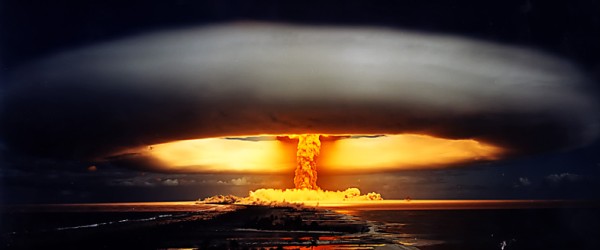
French nuclear test "Licorne", French Polynesia, July, 1970

Jeffrey Lewis writes: In an earlier job, I ran a project that tried to outline options for what would become the 2009 Nuclear Posture Review. One of the better parts was the travel. I made a lovely visit to Brussels, where my team had a series of very high-level meetings at the European Union and NATO headquarters. There were some steak frites, a little lambic beer, and a lot of talk about nuclear weapons. And at the time, senior U.S. military officers made one thing very clear to us: The security at the bases stunk. One commander noted that the upgrades necessary to meet security requirements would run into the hundreds of millions of dollars. Another said his worst fear was that a group of activists would be able to get inside the shelters where the nuclear weapons are stored and use a cell phone to publish a picture of the vaults.

And then it happened. In January 2010, a group of protesters who call themselves “Bombspotters” entered Kleine Brogel.

Apparently the plan was to hang around on the tarmac of the runway and get arrested. But no one came to arrest them. So they wandered around — for either 40 minutes or an hour, the accounts differ — before walking through an open gate into an area with hardened aircraft shelters for the base’s F-16s. Eventually, as the hippies continued to wander around the shelters, security arrived.

The “security force” was one moderately annoyed-looking Belgian guy with a rifle — an unloaded rifle. The effect would only have been more comedic if he had some powdered sugar on his face and maybe a little bit of waffle stuck to his uniform.

The protestors were briefly detained but not for long. There was no panic. The mood in Belgium seemed to be something like “you crazy kids.” Not to worry, the Belgians assured their American partners, the activists weren’t anywhere near the shelters with nuclear weapons.

So, a few months later, the activists entered the base again. They helpfully sent me a little note. This time, they not only got inside the proper area, but they also got inside one of the shelters.

Security never showed up. Apparently, the base commander found out about the incursion when the rest of us did — when the activists posted a video on YouTube a day or so later. This was literally the scenario the U.S. military officer had warned us about — hippies inside a shelter with a cell phone, security nowhere to be found.

Yet still no panic.

One way to look at this is to say that the multiple and redundant security features worked. Sure, the Belgians should have caught the activists at the fence. And, sure, the hippies got inside the inner perimeter. And, sure, the shelter shouldn’t have been unlocked. But the nuclear weapons inside the shelter were still secure in a vault in the floor. A terrorist would have needed the code or a jackhammer to access the bomb itself. Even if it was only the last, or next to last, line of defense, it still worked. Another day without a nuclear holocaust. Who’s complaining?

The other way to look at it is to see that the security failures were not independent. The base had a lax security culture that makes anything possible. There were no dogs because the Belgians were too cheap to hire a dog-master. Who is to say what other security breaches might be possible? Who is to say the same people who didn’t bother to lock the gates or the shelters wouldn’t also leave a vault open? Or wouldn’t say something indiscreet, allowing a group of armed men to show up as a bomb is being moved for servicing? According to this view, you either take security seriously, or you don’t. If you don’t, you are vulnerable to systematic breakdowns that allow the seemingly impossible to happen. [Continue reading…]

Facebooktwittermail

U.S. sold $33 billion of weapons to Gulf states in 11 months

Defense News reports: The US State Department has facilitated $33 billion worth of weapons sales to its Arab Gulf allies since May 2015, according to department figures.

The six Gulf Cooperation Council (GCC) countries have received weapons including ballistic missile defense capabilities, attack helicopters, advanced frigates and anti-armor missiles, according to David McKeeby, a spokesman the State Department’s Bureau of Political-Military Affairs.

“Consistent with the commitments we made to our Gulf partners at the Camp David summit last May, we have made every effort to expedite sales. Since then, the State and Defense departments have authorized more than $33 billion in defense sales to the 6 Gulf Coordination Council countries,” McKeeby told Defense News. [Continue reading…]

Facebooktwittermail

CIA-armed militias are shooting at Pentagon-armed ones in Syria

The Los Angeles Times reports: Syrian militias armed by different parts of the U.S. war machine have begun to fight each other on the plains between the besieged city of Aleppo and the Turkish border, highlighting how little control U.S. intelligence officers and military planners have over the groups they have financed and trained in the bitter 5-year-old civil war.

The fighting has intensified over the past two months, as CIA-armed units and Pentagon-armed ones have repeatedly shot at each other as they have maneuvered through contested territory on the northern outskirts of Aleppo, U.S. officials and rebel leaders have confirmed.

In mid-February, a CIA-armed militia called Fursan al Haq, or Knights of Righteousness, was run out of the town of Marea, about 20 miles north of Aleppo, by Pentagon-backed Syrian Democratic Forces moving in from Kurdish-controlled areas to the east.

“Any faction that attacks us, regardless from where it gets its support, we will fight it,” said Maj. Fares Bayoush, a leader of Fursan al Haq.

Rebel fighters described similar clashes in the town of Azaz, a key transit point for fighters and supplies between Aleppo and the Turkish border, and March 3 in the Aleppo neighborhood of Sheikh Maqsud. [Continue reading…]

Facebooktwittermail

The war on terror has turned the whole world into a battlefield

destruction11

Arun Kundnani writes: When opinion polls find that most Muslims think Westerners are selfish, immoral and violent, we have no idea of the real causes. And so we assume such opinions must be an expression of their culture rather than our politics.

Donald Trump and Ted Cruz have exploited these reactions with their appeals to Islamophobia. But most liberals also assume that religious extremism is the root cause of terrorism. President Obama, for example, has spoken of “a violent, radical, fanatical, nihilistic interpretation of Islam by a faction — a tiny faction — within the Muslim community that is our enemy, and that has to be defeated.”

Based on this assumption, think-tanks, intelligence agencies and academic departments linked to the national security apparatus have spent millions of dollars since 9/11 conducting research on radicalization. They hoped to find a correlation between having extremist religious ideas, however defined, and involvement in terrorism.

In fact, no such correlation exists, as empirical evidence demonstrates — witness the European Islamic State volunteers who arrive in Syria with copies of “Islam for Dummies” or the alleged leader of the November 2015 Paris attacks, Abdelhamid Abaaoud, who was reported to have drunk whisky and smoked cannabis. But this has not stopped national security agencies, such as the FBI, from using radicalization models that assume devout religious beliefs are an indicator of potential terrorism.

The process of radicalization is easily understood if we imagine how we would respond to a foreign government dropping 22,000 bombs on us. Large numbers of patriots would be volunteering to fight the perpetrators. And nationalist and religious ideologies would compete with each other to lead that movement and give its adherents a sense of purpose.

Similarly, the Islamic State does not primarily recruit through theological arguments but through a militarized identity politics. It says there is a global war between the West and Islam, a heroic struggle, with truth and justice on one side and lies, depravity and corruption on the other. It shows images of innocents victimized and battles gloriously waged. In other words, it recruits in the same way that any other armed group recruits, including the U.S. military.

That means that when we also deploy our own militarized identity politics to narrate our response to terrorism, we inadvertently reinforce the Islamic State’s message to its potential recruits. When British Prime Minister David Cameron talks about a “generational struggle” between Western values and Islamic extremism, he is assisting the militants’ own propaganda. When French President François Hollande talks of “a war which will be pitiless,” he is doing the same.

What is distinctive about the Islamic State’s message is that it also offers a utopian and apocalyptic vision of an alternative society in the making. The reality of that alternative is, of course, oppression of women, enslavement of minorities and hatred of freedom.

But the message works, to some extent, because it claims to be an answer to real problems of poverty, authoritarian regimes and Western aggression. Significantly, it thrives in environments where other radical alternatives to a discredited status quo have been suppressed by government repression. What’s corrupting the Islamic State’s volunteers is not ideology but by the end of ideology: they have grown up in an era with no alternatives to capitalist globalization. The organization has gained support, in part, because the Arab revolutions of 2011 were defeated, in many cases by regimes allied with and funded by the U.S.

After 14 years of the “war on terror,” we are no closer to achieving peace. The fault does not lie with any one administration but with the assumption that war can defeat terrorism. The lesson of the Islamic State is that war creates terrorism. [Continue reading…]

Facebooktwittermail

Tanya Golash-Boza: How many presidents does it take to deport 11 million people?

Donald Trump’s presidential campaign was never birthed; it was always birthered. The man who, as his wife told a Vanity Fair reporter back in 1990, had a book of Hitler’s speeches in a cabinet by his bedside, has an unerring eye for how to wield anti-Muslim and anti-immigrant sentiments for his own benefit. Back in 2011, while considering a presidential run, he birthed his first version of the birther controversy, the claim that Barack Obama was born not in Hawaii but Kenya and so was the ultimate Muslim outsider (and an illegitimate president). It was his equivalent of dipping a toe in the political waters and testing the temperature before diving in — and he still credits that ludicrous claim with burnishing his reputation. (“I don’t think I went overboard. Actually, I think it made me very popular… I do think I know what I’m doing,” he said in 2013.) This time around, if Donald Trump has proven anything, it’s that he knows exactly what he’s doing and just what impact the symbols he calls up — from that Obama birth certificate to Arizona Sheriff Joe Arpaio — are likely to have. It’s clear enough that he’s been a student of the trade of demagogue, that he has a natural flair for it, and that when he births a new symbol, it tends to be potent.

None more so than the Wall (which should by now be capitalized). You know just what wall I mean without my writing another word. There’s only been one wall on the planet since his campaign began and, classically enough for our moment, it arrived by escalator. It came full blown, wrapped in a Trumpian ribbon, all 2,000 miles of it strung along the Mexican border of his mind, complete from day one with “rapists,” and the news that “they” were taking our jobs in return for “drugs” and “crime.”

A package deal, that wall arrived full grown on June 16, 2015, when Donald Trump and his present wife, Melania, descended by escalator from the heavens of Trump Tower in New York to announce his presidential bid to the planet. And that wall — the idea, that is, of purifying our American world of “them” by keeping undocumented immigrants out and getting rid of those already here — was from that moment at the heart of everything he did. As he said that day, “I would build a great wall, and nobody builds walls better than me, believe me, and I’ll build them very inexpensively, I will build a great, great wall on our southern border. And I will have Mexico pay for that wall. Mark my words.”

And they were worth marking. Anyone who has watched his rallies since knows that those words have become the call-and-response chorus at the heart of Trumpismo, our new nativist celebrity religion. That the wall (no less the idea that Mexico will cover the cost of building it) is a fantasy isn’t beside the point, it’s the point itself. What would you expect but a fantasy version of future American life from the presidential candidate nominated by The Apprentice, whose closest adviser is, by his own admission, himself. In such a world, the wish, however malign, is truly the father of reality and the world a fantasy object.

Unfortunately, such fantasies have real consequences, which is why TomDispatch asked Tanya Golash-Boza, author of Deported: Immigrant Policing, Disposable Labor, and Global Capitalism, to explore both the walling in and deportation dreams (or nightmares) of Trump and his rival Ted Cruz and what exactly to make of them. Tom Engelhardt

Day of the demagogue
Trumpian deportation fantasies and American realities
By Tanya Golash-Boza

In 2006, when I first began researching deportations, George W. Bush was president and quietly building a deportation machine in the Department of Homeland Security. Outside of small activist circles, few Americans knew that deportations had been rising since 1996 due to legislation signed by President Bill Clinton. Nor could anyone then have imagined that the next President would be a Democrat, the son of a Kenyan immigrant, and would make Bush look like a piker when it came to record-high deportations. Nor, for that matter, would anyone have dreamed that deportation would become a — possibly the — signature issue of the 2016 presidential campaign.

And yet, all of this and more has come to pass in a blistering season of demagoguery, nativism, and outright racism. As again would have been unimaginable a mere decade ago, Republican front-runners Donald Trump and Ted Cruz have both promised to deport every last one of the estimated 11 million undocumented migrants in the United States, the whole lot of them, while as a bonus banning Muslims from the country. Trump gave his particular proposals a special twist by labeling Mexicans coming across the border as “rapists,” and immigrants more generally as “snakes.”

Continue reading

Facebooktwittermail

Defeats in Mideast raise ISIS threat to the West

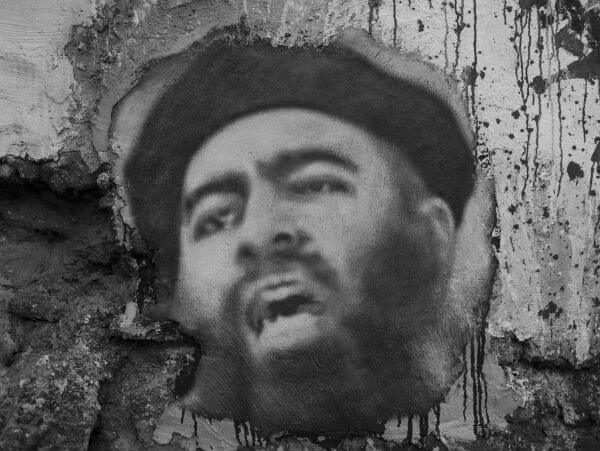
Baghdadi-bw

The Wall Street Journal reports: When European Islamists started streaming into Syria and Iraq a few years ago, some European counterterrorism officials viewed it as a blessing in disguise. Better to have them pulverized on a Middle Eastern battlefield, they argued, than dispersed and plotting mischief at home.

Today, that battlefield has become more dangerous than ever for Islamic State, which is reeling under U.S.-backed military campaigns in both Syria and Iraq. One consequence of this progress is that trained and battle-hardened foreign fighters from Europe are more likely to head back to home ground.

That is the alarming paradox of the U.S.-led campaign against the radical group: In the months and even years ahead, an Islamic State defeated in a conventional war may pose a far greater danger to the West than when it was focused on conquering villages in the Euphrates river valley or the hill country of Aleppo.

“It’s going to get worse before it gets better,” warned Bruno Tertrais, senior fellow at the Foundation for Strategic Research in Paris and former policy adviser at the French Defense Ministry.

“If you manage to deflate Islamic State’s narrative of inevitable expansion, this would eventually reduce its attractiveness, at least for some recruits. But in the short term, as it finds itself in difficulty on one field it will try attacking another,” Mr. Tertrais said.

In the long run, of course, protecting Europe and the U.S. from the kinds of attacks witnessed in Brussels and Paris would be impossible without strangling Islamic State in its cradle.

“The frequency and magnitude of these operations is increasing as refugees are flooding Europe and elsewhere, and as [Islamic State] recruits and brainwashes people already in Europe,” said Ayad Allawi, the former Iraqi prime minister who heads a major parliamentary bloc. “This will have to be dealt with at source, and the source is here in the greater Middle East.”

In the region, there is no doubt that Islamic State’s mantra of “persisting and advancing,” which fueled its aura of invincibility just a year ago, no longer reflects reality on the ground. [Continue reading…]

Facebooktwittermail

How Saudi Arabia captured Washington

yemen-bombing

Max Fisher reports: There was a moment almost exactly one year ago, in March 2015, that revealed some uncomfortable truths about America’s relationship with Saudi Arabia.

That month, as Saudi Arabia prepared to launch what would become its disastrous war against Shia rebels in neighboring Yemen, the Saudi ambassador in Washington, Adel al-Jubeir, brought a list of “high-value targets” to CIA Director John Brennan. The Saudis were asking for American support in the war; the list was meant as a show of cooperation.

But when US intelligence agencies checked the list against their own information, they found that many of the targets had little or no military value, according to a report at the time by the Wall Street Journal’s Maria Abi-Habib and Adam Entous. Many were civilian structures in or near population centers.

The US warned Saudi Arabia off the targets, and Saudi officials said they complied. But when the air war began, Saudi bombs fell heavily on “hospitals, schools, a refugee camp, and neighborhoods,” according to the Journal.

The US initially held back from the war. But soon, in an apparent effort to purchase Saudi acquiescence to the nuclear deal with Iran, the US substantially increased support for the Saudi-led campaign, providing midair refueling, weapons and supplies, targeting information, and 45 dedicated intelligence analysts.

A year after the war began, it is now a disaster, as detailed in a New York Times account. Half of the 6,000 casualties are thought to be civilians; al-Qaeda’s hold in Yemen has strengthened; Saudi Arabia has failed in its objective to force the war’s end, instead only exacerbating the ongoing violence. The US has helped Saudi Arabia to accelerate the implosion of another Mideast state, with unknown but surely far-reaching implications.

You would think that Washington’s foreign policy community — a close-knit network of think tanks, academic outfits, and other institutions that heavily influence the media and whose members frequently rotate into and out of government positions — would be outraged. That community is overwhelmingly focused on the Middle East, prides itself on high-minded humanitarian ideals and far-thinking strategy, and is often critical of President Obama’s foreign policy.

But aside from a few dissident voices, the Washington foreign policy community has been relatively quiet on America’s involvement backing Saudi Arabia’s war in Yemen. Instead, this week, much of that community expressed outrage over a very different story about the US relationship with Saudi Arabia: Obama, in an interview, had seemed to deride the Saudi leadership and its influence in Washington. [Continue reading…]

Facebooktwittermail

In speech to AIPAC, Donald Trump affirms support for Israel

The Wall Street Journal reports: Despite threats of protests, the crowd appeared largely receptive to Mr. Trump, save for a few moments. He received several rounds of cheers, with some standing to applaud him, when he said Israel would no longer be treated like a “second-class citizen” and when he criticized the Iran deal.

But he drew some titters when he said that no one had studied the Iran deal more than him — “believe me.”

Having drawn fire last year for giving an ambiguous response on a key litmus-test issue, Mr. Trump also told the audience: “We will move the American Embassy to the eternal capital of the Jewish people, Jerusalem.”

Mr. Trump’s prior insults to women and minorities had prompted protests from rabbis and other critics who threatened to walk out or boycott the address. Some attendees, wearing stickers that read “Come together against hate” — a play-off of Aipac’s theme, “Come Together” — planned to walk out before he began speaking, while protesters gathered outside.

Daniel Burg, a rabbi from Baltimore who was attending Aipac this week for the ninth year in a row, was among the attendees who walked out. “People are exercising their rights to not simply abide the presence of Mr. Trump and pretend that this election cycle is business as usual,” he said. He called the real-estate billionaire’s rhetoric “so hateful, so misogynistic, so racist” and said it had “undermined the democracy that we believe in.”

Rick Jacobs, a rabbi from New York City and president of the Union for Reform Judaism, helped author a letter to Mr. Trump requesting a meeting to discuss the community’s concerns with the front-runner, citing his comments about Mexican immigrants, women, Muslims, and other groups.

Mr. Jacobs said the campaign has said it is considering setting up a meeting later this week. “It’s not that we won’t engage with this candidate,” he said. “We want to have a chance not just to listen—we want to have a chance to speak.”

Mr. Jacobs walked out ahead of Mr. Trump’s speech and gathered with about 70 others outside the auditorium while Mr. Trump speaking. He said he saw hundreds leaving the stadium before Mr. Trump took the stage. [Continue reading…]

Politico reports: The leaders of the largest American pro-Israel lobby distanced themselves on Tuesday morning from Donald Trump’s attacks on President Barack Obama at their policy conference.

Trump addressed the annual Washington gathering of the American Israel Public Affairs Committee on Monday night, and some of his biggest applause lines were his characteristically blunt critiques of Obama, who he said “may be the worst thing to ever happen to Israel, believe me, believe me.”

AIPAC president Lillian Pinkus read a statement from the stage on Tuesday to disavow Trump’s remarks.

“We say unequivocally that we do not countenance ad hominem attacks, and we take great offense to those that are levied against the United States of America from our stage,” Pinkus said. “While we may have policy differences, we deeply respect the office of the president of the United States and our president, Barack Obama.”

She also castigated attendees who responded positively to Trump’s comments. [Continue reading…]

Facebooktwittermail

Killing from the conference room

David Cole writes: On March 4, the United States used drones and other aircraft to drop precision bombs on Somalia, a country with which we are not at war, reportedly killing about 150 al-Shabab militants who were said to be preparing for an imminent attack on American and African Union forces. The US government asserted that no civilians were killed, although neither that claim nor the allegation of an imminent attack could be verified. What do we really know about how American officials decide to launch such strikes?

In the last two weeks, the Obama administration has announced that it will for the first time make public a redacted version of the Presidential Policy Guidance outlining the standards for targeted killing and will also provide its own estimates of combatant and civilian deaths in drone attacks dating back to 2009. Yet much about these decisions remains opaque. In Eye in the Sky, a remarkably timely and important new film about a fictional drone strike against al-Shabab, South African director Gavin Hood offers a hypothetical window into such decision-making. The picture it paints is deeply disturbing, and raises fundamental questions about when, if ever, such attacks are justified. It may be the closest those of us on the outside ever get to the internal process behind the drone war.

In the film, Helen Mirren plays Katherine Powell, a steely British colonel charged with tracking terrorists in North Africa. The only travel Powell needs to do, however, is between her home in Surrey and her office in London, where she operates a top-secret drone program, in conjunction with American drone operators in Nevada and African agents in Kenya. As the film opens, Powell wakes to learn that a British woman, who has become a leader of al-Shabab, has been located in Nairobi along with her husband, an American citizen who is also an al-Shabab leader. What follows is a tense minute-by-minute depiction of one of the most daunting ethical and legal decisions a nation’s military and civilian leaders ever have to make—whether to kill a suspected enemy, even if innocent civilians may also die. Without taking sides, the film dramatically illustrates why technology, far from answering such questions, has only made them more difficult. [Continue reading…]

Facebooktwittermail

If Merrick Garland serves on the Supreme Court it could be good for the environment

coal-power

Mother Jones reports: Merrick Garland has spent the last decade in the weeds of some of the most contentious clean air cases in history — and he’s consistently come out on the side of the environment and against big polluters.

Garland, the DC Circuit Court chief judge who is President Barack Obama’s pick to replace Antonin Scalia on the Supreme Court, faces a steep climb to confirmation in the face of fierce opposition from Senate Republicans.

But if Garland makes it to the Supreme Court, the battle over Obama’s flagship climate regulations will likely be one of his first big cases. That policy, known as the Clean Power Plan, aims to slash the nation’s carbon footprint by restricting greenhouse gas emissions from power plants. The Environmental Protection Agency built the plan on a provision of the Clean Air Act that allows it to set emissions standards for existing “stationary” sources (i.e., power plants, rather than, say, cars) and then leave it up to each state to choose how to reach that standard. The rule was immediately challenged by two dozen coal-reliant states, which have argued that it oversteps EPA’s legal authority because it applies to the whole electricity system rather than to individual power plants. Shortly before Scalia’s death, the Supreme Court voted 5-4 to put the plan on hold while Garland’s current colleagues in the DC circuit court weigh its legality.

The climate regulations will likely wind up in front of SCOTUS sometime next year. So, Garland’s record on cases involving the Clean Air Act—which many legal experts see as the world’s single most powerful piece of environmental law—is a helpful guide for how he might rule. Garland once described the Clean Air Act as “this nation’s primary means of protecting the safety of the air breathed by hundreds of millions of people.” [Continue reading…]

Facebooktwittermail