Category Archives: Obama administration

On the nomination of Judge Merrick Garland to the Supreme Court

Lawrence Goldstone writes: With his nomination of Judge Merrick Garland to fill Supreme Court Justice Antonin Scalia’s seat, President Barack Obama has made clear the tone he wishes to strike with the nation. He faced a difficult choice: whether to nominate an eminently qualified liberal or an eminently qualified moderate. In opting for the latter, Obama has eschewed the standard Republican strategy of aiming every policy decision at the party’s most extreme faction, and instead sought to nominate a justice whom large swathes of both parties will see as appropriate to the high bench.

Garland, the chief judge of the U.S. Court of Appeals for the District of Columbia Circuit, is man whose academic, personal, and judicial credentials are such that Senator Orrin Hatch said just last week that the president “could easily name Merrick Garland, who is a fine man” to fill the seat, but “he probably won’t do that because this appointment is about the election, so I’m pretty sure he’ll name someone the [liberal Democratic base] wants.” In what is certain to cause Hatch to shift uncomfortably in his Judiciary Committee seat, Obama did precisely what the senator suggested and nominated an appellate court judge who has been lauded for a measured, non-ideological approach to the law.

Far more interesting, however, than Obama’s opening move is how Republicans will respond. Even before Scalia was buried, Republican Senate leaders announced that they would refuse to consider an Obama nominee. In choosing to strike preemptively, they locked themselves into a strategy that is somewhere between questionable and idiotic, and just may be the coup de grace to their political party, which now seems likely to be led by Donald Trump. [Continue reading…]

Garrett Epps writes: There are two possible interpretations of the president’s Garland strategy. The first is that Obama is playing on Republican fears of whomever a President Hillary Clinton might tap for the role and is trying to lure the Republicans into confirming an older, more moderate nominee. If they are successfully lured, then mission accomplished. If, however, Obama does not lure Republicans into confirming Garland, he will have at least embarrassed them and exposed the nakedly political nature of their tantrum.

The second interpretation — which I incline to — is that the meritocratic Boy Scout in Obama has called this shot. Garland is a terrific nominee and would make a wonderful justice. As Norman Ornstein of the American Enterprise Institute said Wednesday morning, Obama almost certainly made the pick “because he thought this was the best possible choice for the Supreme Court.” Obama might be unwilling to pass up a chance to make such an appointment, and to the extent there is political calculation behind it, the president is banking on the residual idealism of some Republican senators to respond. He may believe there is at least some chance Garland will be confirmed. If so, his belief in that reservoir of public spirit is a testament both to his own generosity and to his persisting naïveté.

Of course, the idea that Garland, at 63, is an older nominee who would serve a shorter time on the Court and pose less danger to the conservative legal agenda assumes facts not in evidence. Almost exactly a century ago, another Democrat named a Jewish nominee in an election year. The nomination was deeply controversial, and the Senate delayed hearings and a vote for four months — still a record for delay. The nominee was Louis D. Brandeis. He was 59 years old. Nearly a quarter-century later, at 82, he retired as perhaps the most influential liberal justice in American history. [Continue reading…]

Jay Michaelson writes: I was one of Judge Garland’s law clerks in his second year on the D.C. Circuit bench, back in 1998. Perhaps it sounds self-serving to say so, but Judge Garland is one of the hardest working, fairest-minded people I’ve ever met. He worked harder than any of us, staying late into the night, sometimes cutting out of the office to make time for his kids before coming back in for the midnight shift. Watching him stand alongside President Obama this morning filled me with respect and pride — in the moments when I could forget the disrespect he is soon to endure.

I also had some firsthand exposure to how he thinks. There was not a single case I worked on with him, from the most mundane Federal Energy Regulation Commission matter to a 20-plus-year-old civil rights case, in which politics played into his considerations. Conscience, sure — Judge Garland often reminded me that there were human beings on both sides of these contentious cases — but never ideology.

Not all judges on the D.C. Circuit were of that persuasion. I was friends with clerks for other judges, and some (whom, of course, I won’t name) would simply tell their clerks how they wanted the case to come out, leaving the clerks to get from point A to point B. That was never my experience with Judge Garland. [Continue reading…]


Facebooktwittermail

Kurd turns on Kurd as Turkey and U.S. back new faction in Syria

Middle East Eye reports: Turkey is backing a new Kurdish faction within the Free Syrian Army to take back territory from the Islamic State (IS) group and stop the Kurdish People’s Protection Units (YPG) from seizing further ground along the Turkish border.

The group, known as the Grandsons of Salahadin after the famed 12th-century Muslim Kurdish leader, has already captured several villages in the IS-controlled border region between Jarabulus and Azaz following Turkish artillery attacks and missile strikes. In response, IS hit the Turkish town of Kilis earlier this month, killing two civilians.

But threats to attack the YPG unless it withdraws from territory seized from opposition rebels during an advance by pro-government forces in northern Syria last month have stoked concerns of a possible “Kurdish civil war”.

Mahmoud Abu Hamza, a Grandsons of Salahadin commander based in Turkey, told Middle East Eye that the group was backed by both the US and Turkey and considered itself part of the international coalition fighting IS.

“Turkey doesn’t support us with arms. Our arms are American,” he said. [Continue reading…]

Facebooktwittermail

The Madison Valleywood Project: A media-tech alliance formed to fight ISIS

Kaveh Waddell writes: On January 8, White House Chief of Staff Denis McDonough, Attorney General Loretta Lynch, the directors of the FBI and the NSA, the director of national intelligence, and other officials traveled to San Jose, California, to meet in secret with tech-company executives. The officials asked for the executives’ advice for how to launch counter-messaging campaigns on social media, according to reports. And a few weeks later, Secretary of State John Kerry made his way to Universal Studios, where he met with a dozen Hollywood studio executives to discuss how film and storytelling could be used to counter extremist narratives, reports said.

The culmination of the government’s efforts came just last month, when officials packed a room to capacity for a closed-door meeting at the Justice Department in Washington, D.C. There, the three elements of the government’s push came together both in person and in name: The agenda that was distributed to participants bore the title “Madison Valleywood Project,” in honor of the three main industries in attendance.

The meeting, which was scheduled to take three hours, was a chance to connect attendees whose worlds don’t usually intersect. After Carlin gave opening remarks, a New York-based branding consultant presented an overview of ISIS media strategies and recruiting tactics. Then, participants broke into eight-person teams and had an hour to storyboard a messaging plan.

The government played host and incubator, but left the creative work to the guests, who also included documentary filmmakers, political consultants, NGO representatives, and even a video-game developer. “We tried to cast a wide net,” said the administration official with knowledge of the meeting. “A lot of effort went into ensuring that each table had a person from each community.” Each table also included someone from the government.

Sitting next to Carlin, Jeffrey connected with another of his tablemates, a D.C.-based political consultant who staffed Obama’s 2008 and 2012 campaigns. The two began to talk about one of the main hurdles that the anti-extremist project faces: how to fund it.

They’re considering setting up a 501(c)(3) non-profit or a foundation, which would allow American companies to donate toward the cause. It’s important the money come from the private sector and individuals, Jeffrey said. “It can’t look like anything political or part of the U.S. government.”

One reason the government wants to stay out of the equation is to preserve the credibility of whatever the participants produce. For a would-be terrorist, the U.S. government probably isn’t the most trusted source for information. Officials are bringing people together, and giving them advice and information, but they appear to want the final product to be free of the baggage of being connected to the feds. [Continue reading…]

That’s right: ISIS recruits aren’t big fans of Uncle Sam, but they use social media, seem impressed by Hollywood blockbuster-style violence, and are responsive to slick advertising.

The logic of bringing together Hollywood, Madison Avenue, and Silicon Valley to fight ISIS, makes sense, kind of — except it really doesn’t.

The masters of form in this arena seem about as clueless as anyone else when it comes to content. There’s a consensus, apparently, that they need to come up with a “positive message.”

ISIS is appealing to people who want to bring about a radical change in the world and participate in the fulfillment of what they regard as a utopian vision. A plausible alternative would need to go some distance in appealing to such grandiose ambitions.

Whatever this as-yet unfunded project ends of producing, seems likely to be as half-baked as its conception.

If they are really intent on countering the propaganda coming from ISIS, then at the outset they surely need to be as focused and serious about their own undertaking as is ISIS’s own propaganda machine.

There’s no point coming up with a brand if you don’t have a product.

Facebooktwittermail

What does Russia’s partial withdrawal from Syria signify?

Foreign Policy reports: Joshua Landis, director of the Center for Middle East Studies at the University of Oklahoma, said that until the past week, he had been in touch with officials close to the Assad regime in Damascus who expressed “a constant drumbeat of confidence that they’re going to take back every inch of Syrian soil, and Russia is their partner.” But those communications abruptly fell off earlier this month. “No one was answering the phones in Damascus. That leads me to believe they were thrown for a loop.”

Landis said that Putin’s planned withdrawal from Syria means he’s not going to back Assad “all the way.” But he said the move was also likely aimed at Washington, which has frustrated Moscow by refusing to work with Putin to fight the Islamic State. “This is a shot across America’s bow as well,” Landis said, “with Russia saying, ‘We’ll leave, and you’ll be stuck holding the bag in Syria.’”

The withdrawal announcement, reported by Russian state media, appears to have caught the White House off guard. A senior administration official said Monday that they had seen reports of the Russian move and that “we expect to learn more about this in the coming hours.” A spokesman for the Defense Department declined to comment. [Continue reading…]

BBC News reports: Russia will continue air strikes in Syria despite the withdrawal of most of its forces, a senior official has said.

Deputy Defence Minister Nikolay Pankov said it was too early to speak of defeating terrorism, after a campaign that has bolstered Syria’s government.

Russian defence ministry video showed the first group of aircraft taking off from Hmeimim air base in Syria on Tuesday morning and in flight.

Hours later, Russian TV showed planes arriving in the southern Russian city of Voronezh, where they were greeted on the tarmac by priests and crowds waving balloons.

Su-24 tactical bombers, Su-25 attack fighters, Su-34 strike fighters and helicopters were returning home, the TV said. [Continue reading…]

The Associated Press reports: The head of the defense committee in Russia’s upper house of parliament has estimated that about 1,000 Russian military personnel will remain in Syria at Russia’s two bases.

The head of the parliamentary defense committee, Viktor Ozerov, said Tuesday that he estimated about 1,000 Russian military personnel would remain in Syria at the two bases. That’s according to the Interfax news agency.

Ozerov says Russia would need a minimum of two battalions, a total of 800 troops, to protect the two bases. He says it will continue to conduct air reconnaissance, requiring some of the plane crews to remain, and the military specialists advising the Syrian army also would stay.

The estimate follows President Vladimir Putin’s announcement Monday that some of the Russian aircraft and troops would be withdrawn. Russia has not revealed how many soldiers it has deployed to Syria, where it maintains a naval facility as well as an air base, but U.S. estimates of the number of Russian military personnel varies from 3,000 to 6,000.

Britain’s foreign minister says he is skeptical about Russia’s announced military withdrawal from Syria.

Foreign Secretary Philip Hammond told lawmakers in the House of Commons that Russia had made past pledges to pull its troops out of Ukraine, “which later turned out to be merely routine rotation of forces.”

He says that “because Russia is completely un-transparent about its motives and its plans, we can only speculate.”

Hammond says a genuine de-escalation by Russia “would be welcome,” and urges Moscow to use its influence on President Bashar Assad’s government to seriously engage with the opposition.

Hammond said that “Russia has unique influence to help make these negotiations succeed and we sincerely hope that they will use it.” [Continue reading…]

Laura Rozen spoke to Paul Saunders, a Russia expert at the Center for the National Interest, who said: “It is striking, and many in … and out of the region will take note of the fact that President Putin said that withdrawal is going to take place because the Russian forces have achieved their objective,” Saunders told Al-Monitor March 14. “Because when they went in, it was framed very much in terms of strikes on [IS]. That mission is not really completed.”

“What has actually been accomplished is this rather tentative temporary cessation of hostilities leading to some kind of successful peace process between Assad and the forces of the opposition,” Saunders said.

Putin “is trying to send a message to both sides,” Saunders said. “Certainly for the Assad regime side, it makes very clear to them that they better actually negotiate seriously.”

But the announced partial withdrawal “does not mean Russia is just walking away,” Saunders added. “The pace of the withdrawal … also provides leverage. It can be slowed, it can be accelerated. Moscow has the continuing leverage that it needs.” [Continue reading…]

The New York Times reports: The announcement on Monday surprised people on all sides of the conflict. State Department officials, Syrian antigovernment activists, Mr. Assad’s supporters and Syrian opposition negotiators all reacted with disbelief, not sure whether to lament, celebrate or laugh.

In Idlib Province, held by a combination of insurgents that range from the Nusra Front to American-backed rebels, people fired guns in the air.

“People are distributing sweets and calling ‘God is great’ from the mosques,” said a fighter who gave his name as Ahmed. “There’s optimism, but we don’t know what’s hidden.”

Farther south, in Homs, an antigovernment activist, Firas — who, like Ahmed, asked that only his first name be used for safety reasons — was worried. “The Russians were sponsoring the cease-fire,” he said. “Now the regime will bomb again and the Russians will leave us for the Iranians, a disaster.”

Even in Geneva, the opposition spokesman, Salem al-Muslet, reflected that ambivalence, resenting Russia’s support for Mr. Assad but seeing Mr. Putin as the only figure who could force Mr. Assad to negotiate in earnest.

“Nobody knows what is in Putin’s mind, but the point is, he has no right to be in our country in the first place,” he said at first. “Just go.” Later, he added, “If it’s true, this is a good sign and a good start to a political solution.” [Continue reading…]

Facebooktwittermail

Obama’s policy of inaction in Syria rests on an anachronistic view of U.S. interests

Steven Heydemann writes: Did Syria’s sectarian make-up doom it to follow Iraq down the path of sectarian polarization, extremism and territorial fragmentation? Did demographics and history determine Syria’s fate? Only if we accept that these conditions are the causes of violence — a product of the “ancient hatreds” and not its effects. In the Syrian case, however, the evidence points in the opposite direction: polarization, extremism and fragmentation are the effects of escalating violence, not its causes. Participants in the uprising, as well as forthcoming research by Princeton political scientist Kevin Mazur, highlight the regime’s instrumental use of violence to exacerbate sectarian tensions. Recent survey data reflect the impact of sectarian polarization in Syria after years of conflict, but also the extent to which Syrians continue to express tolerance and a desire for cross-sectarian compromises in the name of peace.

Despite deep flaws in the assumptions underlying the administration’s policy, advocates of engagement inevitably run up against the ultimate defense of inaction: Syria just isn’t worth it. Supporters of the administration’s approach regularly fall back on the claim that the Syrian conflict is simply not central to U.S. strategic interests. Politically, they note, Syria has always been an adversary to the United States. Economically, its ties to the United States are trivial. However wrenching the conflict might be, the United States has little at stake in its outcome.

The only basis on which such a claim can stand, however, is to adopt an anachronistic, rigid conception of state interest — a conception the administration knows is inadequate in an era of hyper-globalization and increasingly porous state borders. Does the United States have an interest in preventing atrocities and supporting international mechanisms, such as Responsibility to Protect? Is it a matter of interest to the United States whether Iran consolidates its position as regional hegemon in the Arab east? Should the stability of Syria’s neighbors matter to the United States? Is the stability of the European Union in America’s interest? Does the United States have an interest in preserving a liberal international order that constrains authoritarian regimes such as Russia and Iran, including by raising the costs of aggression, whether in Syria or the Ukraine? As freedom of movement within the E.U. erodes, a global network of authoritarian regimes emerges to weaken liberal norms and institutions globally, and while the Arab state order unravels, it is increasingly clear that what is at stake for the United States in Syria was never simply about U.S.-Syrian relations. It is sadly ironic that the president’s commitment to inaction has undermined his vision of an international system in which military restraint and a smaller U.S. footprint would produce a more stable and peaceful international order. [Continue reading…]

Facebooktwittermail

White voters hope Trump will restore the racial hierarchy upended by Barack Obama

Jamelle Bouie writes: In a nation shaped and defined by a rigid racial hierarchy, [Barack Obama’] election was very much a radical event, in which a man from one of the nation’s lowest castes ascended to the summit of its political landscape. And he did so with heavy support from minorities: Asian Americans and Latinos were an important part of Obama’s coalition, and black Americans turned out at their highest numbers ever in 2008.

For liberal observers, this heralded a new, rising electorate, and — in theory — a durable majority. “The future in American politics belongs to the party that can win a more racially diverse, better educated, more metropolitan electorate,” wrote Harold Meyerson in the Washington Post after the 2008 election. “It belongs to Barack Obama’s Democrats.”

For millions of white Americans who weren’t attuned to growing diversity and cosmopolitanism, however, Obama was a shock, a figure who appeared out of nowhere to dominate the country’s political life. And with talk of an “emerging Democratic majority,” he presaged a time when their votes—which had elected George W. Bush, George H.W. Bush, and Ronald Reagan—would no longer matter. More than simply “change,” Obama’s election felt like an inversion. When coupled with the broad decline in incomes and living standards caused by the Great Recession, it seemed to signal the end of a hierarchy that had always placed white Americans at the top, delivering status even when it couldn’t give material benefits.

In a 2011 paper, Robin DiAngelo — a professor of multicultural education at Westfield State University — described a phenomenon she called “white fragility.” “White Fragility is a state in which even a minimum amount of racial stress becomes intolerable, triggering a range of defensive moves,” she writes. “These moves include the outward display of emotions such as anger, fear, and guilt, and behaviors such as argumentation, silence, and leaving the stress-inducing situation. These behaviors, in turn, function to reinstate white racial equilibrium.”

DiAngelo was describing private behavior in the context of workplace diversity training, but her diagnosis holds insight for politics. You can read the rise of Obama and the projected future of a majority nonwhite America as a racial stress that produced a reaction from a number of white Americans — and forced them into a defensive crouch. You can see the maneuvering DiAngelo describes in the persistent belief that Obama is a Muslim — as recently as last fall, 29 percent of Americans held this view, against all evidence. It is a way to mark Obama as “other” in a society where explicit anti-black prejudice is publicly unacceptable. Consistent with this racialized fear and anxiety is the degree to which white Americans now see “reverse discrimination” as a serious problem in national life. For its American Values Survey, the Public Religion Research Institute asks respondents whether “discrimination against whites is a significant problem.” In last year’s survey, 43 percent of Americans — including 60 percent of working-class whites — said discrimination against whites had become as big a problem as discrimination against blacks and other minorities.

The anxieties DiAngelo describes, and the fears cataloged by the American Values Survey, have real political impact. In a 2014 study, political scientists Maureen Craig and Jennifer Richeson tried to measure “perceived status threat” from a shift in racial demographics, surveying how people responded when informed that California is now home to more blacks, Hispanics, and Asians than non-Hispanic whites. In other words, how do white Americans react to unrelated political questions when exposed to news of a “majority-minority” future? The results were clear. “Making the majority-minority shift in California salient led politically unaffiliated white Americans to lean more toward the Republican Party,” wrote Craig and Richeson. Likewise, “making the changing national racial demographics salient led white Americans (regardless of political party affiliation) to endorse both race-related and relatively race-neutral conservative policy positions more strongly.”

The Obama era didn’t herald a post-racial America as much as it did a racialized one, where millions of whites were hyperaware of and newly anxious about their racial status. [Continue reading…]

Facebooktwittermail

Obama blithely sells out his allies and millions of Syrians in legacy interview

By Scott Lucas, University of Birmingham

In the last months of his administration, US President Bill Clinton tried to resolve the Israel-Palestine dispute. The effort fell short, but it was the closest anyone came to resolving the conflict since the creation of the Israeli State in 1948.

In the last months of his administration, President Barack Obama is giving interviews to explain how everyone else is to blame for the five-year Syrian conflict – which has supplanted the Israeli-Palestinian issue as the region’s destabilising centre and shows no sign of receding.

Rather than evaluate what could be done to mitigate the damage, Obama has chided allies such as Britain, Germany, and France. He has implicitly lashed out at his former Secretary of State, Hillary Clinton, as she campaigns to succeed him. And he has shown little regard for the hundreds of thousands of Syrians who have been killed and the millions who have been displaced, and who will continue to die and flee in his final months in office.

Continue reading

Facebooktwittermail

Obama’s disastrous handling of the Syrian conflict

Hisham Melhem writes: For more than three decades, I have tried to interpret America to the Arabs and to explain the Arabs to Americans. I have never seen such disillusionment with an American president and his policies expressed by people in the region, ordinary citizens as well as public figures. In private, I have heard Arab officials express critical views of Obama and his style of leadership bordering on utter contempt; some Israeli officials did that publicly. For his Arab allies, Obama was too deferential to Iran and too quick to dump President Hosni Mubarak of Egypt — views also held by Israeli officials. Arabs feel Obama also mishandled Syria, a view strongly held also by Turkey. It is rarely the case for an American president to find that his relationships with Arabs, Israelis, and Turks are simultaneously troubled and in some cases very bitter.

Nor is Obama popular with the region’s ordinary citizens. A Pew Research Center poll in June 2015 shows that Obama’s image in the Middle East is mostly negative, with more than eight in ten Palestinians and Jordanians saying that they have no confidence in Obama to do the right thing in world affairs. In Lebanon 64 percent have no confidence in Obama’s leadership, with only 50 percent of Israelis saying they have confidence in the American president. In Turkey Obama’s fortune is better, but not by much where 46 percent of Turks have a negative assessment of his leadership. There is much anecdotal evidence showing that Arab youth in general have soured on Obama, accusing him of reneging on his early pledges to oppose Arab despotism and to stand by those who sought peaceful change in Egypt and Bahrain, and of abandoning Libya after the fall of the Gadhafi regime. However, what angers many Arabs is Obama’s disastrous handling of the Syrian conflict; they blame his indecisiveness on challenging the Bashar Al-Assad regime’s predations, and halfhearted measures toward helping the Syrian opposition, for the worst human tragedy in the twenty-first century. [Continue reading…]

Facebooktwittermail

How Iraq warped Obama’s worldview

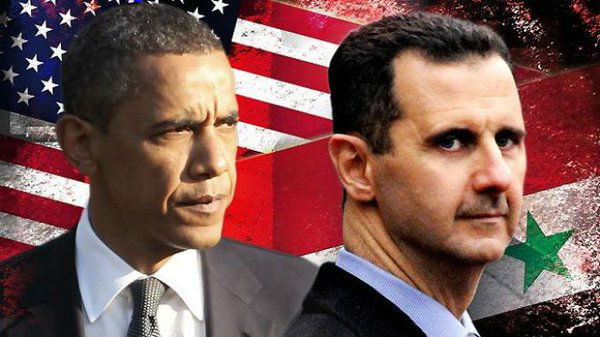
obama-assad

Shadi Hamid writes: On October 2, 2002, Barack Obama gave a speech opposing war in Iraq—perhaps, in retrospect, the most important speech he ever gave. He was right, of course, and the foreign-policy establishment was largely wrong. The problem is that politicians who were right about Iraq tend to overestimate what that says about their foreign-policy judgment. For Obama, the effects of being right are magnified. He became president, in part, because of Iraq and the considerable damage the conflict had done to the country. Obama offered the promise of a decisive correction and, for true believers, a kind of spiritual atonement.

It is unclear what being right on Iraq would mean for your likelihood of being right on Syria, since the contexts in question are, in a way, opposites: Civil war in Iraq began after the United States intervened. Civil war in Syria happened in the absence of intervention. History will have to judge, but it may actually be the case that being right on Iraq made you more likely to be wrong about subsequent interventions. The tragedy of Iraq, if you weren’t careful, was likely to distort your perception of everything that followed, for wholly understandable reasons.

Iraq’s dark shadow seems to be everywhere in Jeffrey Goldberg’s fascinating yet unsettling exchanges with Obama. “Multilateralism regulates hubris,” Obama says. And he is right: It does. What is left unsaid is why, exactly, regulating hubris should, seven years after the conclusion of the Bush era, remain a primary preoccupation. It is hard to imagine any world leader citing the hubris of overextension as the problem that the United States, today, must take extra care to correct for or guard against. Obama has already corrected for it, many times over. [Continue reading…]

Facebooktwittermail

How Obama has increased the risk of nuclear war

In January, the New York Times reported: As North Korea dug tunnels at its nuclear test site last fall, watched by American spy satellites, the Obama administration was preparing a test of its own in the Nevada desert.

A fighter jet took off with a mock version of the nation’s first precision-guided atom bomb. Adapted from an older weapon, it was designed with problems like North Korea in mind: Its computer brain and four maneuverable fins let it zero in on deeply buried targets like testing tunnels and weapon sites. And its yield, the bomb’s explosive force, can be dialed up or down depending on the target, to minimize collateral damage.

In short, while the North Koreans have been thinking big — claiming to have built a hydrogen bomb, a boast that experts dismiss as wildly exaggerated — the Energy Department and the Pentagon have been readying a line of weapons that head in the opposite direction.

The build-it-smaller approach has set off a philosophical clash among those in Washington who think about the unthinkable.

Mr. Obama has long advocated a “nuclear-free world.” His lieutenants argue that modernizing existing weapons can produce a smaller and more reliable arsenal while making their use less likely because of the threat they can pose. The changes, they say, are improvements rather than wholesale redesigns, fulfilling the president’s pledge to make no new nuclear arms.

But critics, including a number of former Obama administration officials, look at the same set of facts and see a very different future. The explosive innards of the revitalized weapons may not be entirely new, they argue, but the smaller yields and better targeting can make the arms more tempting to use — even to use first, rather than in retaliation. [Continue reading…]

Facebooktwittermail

It took a freedom of information lawsuit to uncover how the Obama administration killed FOIA reform

Jason Leopold reports: The Obama administration has long called itself the most transparent administration in history. But newly released Department of Justice (DOJ) documents show that the White House has actually worked aggressively behind the scenes to scuttle congressional reforms designed to give the public better access to information possessed by the federal government.

The documents were obtained by the Freedom of the Press Foundation, a nonprofit organization that supports journalism in the public interest, which in turn shared them exclusively with VICE News. They were obtained using the Freedom of Information Act (FOIA) — the same law Congress was attempting to reform. The group sued the DOJ last December after its FOIA requests went unanswered for more than a year.

The documents confirm longstanding suspicions about the administration’s meddling, and lay bare for the first time how it worked to undermine FOIA reform bills that received overwhelming bipartisan support and were unanimously passed by both the House and Senate in 2014 — yet were never put up for a final vote. [Continue reading…]

Facebooktwittermail

The Obama doctrine: The Middle East doesn’t matter but even if it did, there’s nothing the U.S. can do to fix it

Jeffrey Goldberg writes: Inside the West Wing, officials say that Obama, as a president who inherited a financial crisis and two active wars from his predecessor, is keen to leave “a clean barn” to whoever succeeds him. This is why the fight against isis, a group he considers to be a direct, though not existential, threat to the U.S., is his most urgent priority for the remainder of his presidency; killing the so-called caliph of the Islamic State, Abu Bakr al-Baghdadi, is one of the top goals of the American national-security apparatus in Obama’s last year.

Of course, isis was midwifed into existence, in part, by the Assad regime. Yet by Obama’s stringent standards, Assad’s continued rule for the moment still doesn’t rise to the level of direct challenge to America’s national security.

This is what is so controversial about the president’s approach, and what will be controversial for years to come—the standard he has used to define what, exactly, constitutes a direct threat.

Obama has come to a number of dovetailing conclusions about the world, and about America’s role in it. The first is that the Middle East is no longer terribly important to American interests. The second is that even if the Middle East were surpassingly important, there would still be little an American president could do to make it a better place. The third is that the innate American desire to fix the sorts of problems that manifest themselves most drastically in the Middle East inevitably leads to warfare, to the deaths of U.S. soldiers, and to the eventual hemorrhaging of U.S. credibility and power. The fourth is that the world cannot afford to see the diminishment of U.S. power. Just as the leaders of several American allies have found Obama’s leadership inadequate to the tasks before him, he himself has found world leadership wanting: global partners who often lack the vision and the will to spend political capital in pursuit of broad, progressive goals, and adversaries who are not, in his mind, as rational as he is. Obama believes that history has sides, and that America’s adversaries — and some of its putative allies — have situated themselves on the wrong one, a place where tribalism, fundamentalism, sectarianism, and militarism still flourish. What they don’t understand is that history is bending in his direction.

“The central argument is that by keeping America from immersing itself in the crises of the Middle East, the foreign-policy establishment believes that the president is precipitating our decline,” Ben Rhodes told me. “But the president himself takes the opposite view, which is that overextension in the Middle East will ultimately harm our economy, harm our ability to look for other opportunities and to deal with other challenges, and, most important, endanger the lives of American service members for reasons that are not in the direct American national-security interest.”

If you are a supporter of the president, his strategy makes eminent sense: Double down in those parts of the world where success is plausible, and limit America’s exposure to the rest. His critics believe, however, that problems like those presented by the Middle East don’t solve themselves — that, without American intervention, they metastasize.

At the moment, Syria, where history appears to be bending toward greater chaos, poses the most direct challenge to the president’s worldview. [Continue reading…]

Facebooktwittermail

Limit the next president’s power to wage drone warfare

Jameel Jaffer and Brett Max Kaufman write: When Barack Obama took office as the reluctant heir to George W. Bush’s “war on terror,” he renounced some of his predecessor’s most extreme policies. There is one Bush-era policy, though, that President Obama made emphatically his own: the summary killing of suspected militants and terrorists, usually by drone.

In less than a year, the president will bequeath this policy, and the sweeping legal claims that underlie it, to someone who may see the world very differently from him. Before that happens, he should bring the drone campaign out of the shadows and do what he can to constrain the power he unleashed.

President Bush started the drone wars, but Mr. Obama vastly expanded them. Almost entirely on his watch, United States strikes have killed as many as 5,000 people, possibly 1,000 of them civilians. The president approved strikes in places far from combat zones. He authorized the C.I.A. to carry out “signature strikes” aimed at people whose identities the agency did not know but whose activities supposedly suggested militancy. He approved the deliberate killing of an American, Anwar al-Awlaki.

The president also oversaw an aggressive effort to control the public narrative about drone strikes. Even as senior officials selectively disclosed information to the news media, his administration resisted Freedom of Information Act lawsuits, arguing that national security would be harmed if the government confirmed drone strikes were taking place. [Continue reading…]

Facebooktwittermail

U.S. strikes in Somalia kill 150 Shabab fighters

The New York Times reports: The fighters had just completed “training for a large-scale attack” against American and African Union forces, said Capt. Jeff Davis, a Pentagon spokesman.

Pentagon officials would not say how they knew that the Shabab fighters killed on Saturday were training for an attack on United States and African Union forces, but the militant group is believed to be under heavy American surveillance.

The Shabab fighters were standing in formation at a facility the Pentagon called Camp Raso, 120 miles north of Mogadishu, when the American warplanes struck on Saturday, officials said, acting on information gleaned from intelligence sources in the area and from American spy planes. One intelligence agency assessed that the toll might have been higher had the strike happened earlier in the ceremony. Apparently, some fighters were filtering away from the event when the bombing began.

The strike was another escalation in what has become the latest battleground in the Obama administration’s war against terror: Africa. The United States and its allies are focused on combating the spread of the Islamic State in Libya, and American officials estimate that with an influx of men from Iraq, Syria and Tunisia, the Islamic State’s forces in Libya have swelled to as many as 6,500 fighters, allowing the group to capture a 150-mile stretch of coastline over the past year.

The arrival of the Islamic State in Libya has sparked fears that the group’s reach could spread to other North African countries, and the United States is increasingly trying to prevent that. American forces are now helping to combat Al Qaeda in Mali, Niger and Burkina Faso; Boko Haram in Nigeria, Cameroon and Chad; and the Shabab in Somalia and Kenya, in what has become a multifront war against militant Islam in Africa. [Continue reading…]

Facebooktwittermail

Saudi Arabia’s unholy war in Yemen

yemen-bombing

Nasser Arrabyee writes: Since it began its war on the Houthis in March 2015, Saudi Arabia has justified its intervention as a broader holy duty to fight Shia and protect the government in exile. Yet Yemenis increasingly view Saudi intervention more as a campaign—in which they are collateral—to upgrade Riyadh’s own influence and an ill-conceived effort to promote Mohammed Bin Salman as a powerful future Saudi king. As such, Yemenis fail to see any moral or legal justification for the U.S.-backed Saudi war. What is evident to them is the deliberate destruction of people and capital—all to no end, as the war has failed to accomplish Saudi Arabia’s goal of weakening the Houthis. Instead, the airstrikes and blockade that form the core of Saudi Arabia’s strategy have increased anti-Saudi hatred, driving greater numbers of Yemenis to support the Houthis every day.

The war has done particular damage to infrastructure — including reservoirs, airports, electric power stations, bridges and roads, markets, factories, stadiums, and hospitals. The education sector has been hit especially hard, with 39 universities damaged, 810 primary and secondary schools damaged, and another 3,809 closed. About 85 percent of the population of 27 million is in dire need of food, water, medicine, and fuel. Over 2.5 million Yemenis are displaced, and the attacks have killed or injured more than 23,000 civilians — among them thousands of women and children—using internationally prohibited weapons such as cluster bombs, as documented by Human Rights Watch and Amnesty International. [Continue reading…]

Facebooktwittermail

This judge says toddlers can defend themselves in immigration court

Judge Jack H. Weil
Department of Justice
Office of the Chief Immigration Judge
Jack.Weil@usdoj.gov

The Los Angeles Times reports: A federal immigration judge believes migrant toddlers can defend themselves in court, according to a deposition in a court case brought by advocates seeking government-appointed attorneys for the youths.

“I’ve taught immigration law literally to 3-year-olds and 4-year-olds. It takes a lot of time. It takes a lot of patience,” Judge Jack Weil said. “They get it. It’s not the most efficient, but it can be done.”

The startling statement from Weil, a Virginia-based judge responsible for training his peers, comes at a time when the number of young unaccompanied migrants crossing the southern border has sharply risen.

In immigration court, there is no guarantee of counsel for adults or children. Advocates for immigrants have long argued that a person’s ability to make informed decisions — and their chances of being allowed to stay in the U.S. — are enhanced if an attorney represents them.

Last month, Senate Minority Leader Harry Reid of Nevada and other Democrats introduced legislation that would require the government to appoint attorneys for children in immigration court who crossed the border alone or were victims of abuse, torture and other violence. [Continue reading…]

Facebooktwittermail

U.S. has spent over $3.3 billion providing Israel with one of the most advanced missile defense systems in the world

The Washington Post reports: A joint exercise now being conducted between thousands of Israeli troops and the U.S. European Command represents a final test before Israel begins to deploy one of the most sophisticated missile defense systems in the world.

When it is complete, Israel’s multibillion-dollar rocket and missile air defense system will be far superior to anything in the Middle East and will likely rival, and in some ways surpass, in speed and targeting, air defenses deployed by Europe and the United States, its developers say.

The United States has provided more than $3.3 billion over the past 10 years to support the defensive system, which will be able to knock down not only ballistic missiles but also orbiting satellites.

Although Israeli Prime Minister Benjamin Netanyahu and President Obama have had a strained relationship, rubbed raw by their deep disagreement over the Iran nuclear deal, U.S. ­spending on Israel’s air defenses has soared in the past decade, from $133 million in 2006 to $619 million in 2015. [Continue reading…]

Facebooktwittermail