Category Archives: United Nations

Palestine vote showcases the decline of American power

Juan Cole writes:

The United States, castigated by its critics as recently as a decade ago as a “hyper-power,” is now so weak and isolated on the world stage that it may cast an embarrassing and self-defeating veto of Palestinian membership in the United Nations. Beset by debt, mired in economic doldrums provoked by the cupidity and corruption of its business classes, and on the verge of withdrawing from Iraq and ultimately Afghanistan in defeat, the U.S. needs all the friends it can get. If he were the visionary we thought we elected in 2008, President Obama would surprise everyone by rethinking the issue and coming out in favor of a U.N. membership for Palestine. In so doing, he would help the U.S. recover some of its tarnished prestige and avoid a further descent into global isolation and opprobrium.

It is often the little things that trip up empires and send them spiraling into geopolitical feebleness. France’s decision to react brutally to the Algerian independence movement from 1954 arguably helped send its West African subjects running for the exits, much to the surprise and dismay of a puzzled Gen. Charles de Gaulle. Empires are always constructed out of a combination of coercion and loyalty, and post-colonial historians often would prefer not to remember the loyalty of compradors and collaborators. But arguably it is the desertion of the latter that contributes most decisively to imperial collapse.

Thus, it is highly significant that an influential Saudi prince warned the United States that a veto of Palestine at the U.N. could well cost the latter its alliance with Saudi Arabia. The kingdom is the world’s swing petroleum producer and has done Washington many favors in the oil markets, and although such favors were seldom altogether altruistic, Riyadh’s good will has been a key element in U.S. predominance.

The House of Saud has other options, after all. It has been thinking hard about whether its ideological differences with the Chinese Communist Party are not outweighed by common interests. Among these mutual goals is the preservation of a model of authoritarian, top-down governance combined with rapid economic advance to forestall popular demands for participation, as an alternative to Western liberalism. For its part, China has invested $15 billion in the Arab world in recent years and is an increasingly appealing destination for Arab capital. Beijing is supporting Palestinian Authority President Mahmoud Abbas’ initiative for recognition in the U.N.

Facebooktwittermail

The end of Oslo

Judith Butler writes:

Among the many astonishing claims that Barack Obama made in his recent speech opposing the Palestinian bid for statehood was that ‘peace will not come through statements and resolutions.’ This is, at best, an odd thing to say for a president whose ascendancy to power itself depended on the compelling use of rhetoric. Indeed, his argument against the power of statements and resolutions at the United Nations to achieve peace was a rhetorical ploy that sought to minimise the power of rhetorical ploys. More important, it was an effort to make sure that the United States government remains the custodian and broker of any peace negotiation, so his speech was effectively a way of trying to reassert that position of custodial power in response to the greatest challenge it has received in decades. And most important, his speech was an effort to counter and drain the rhetorical force of the very public statements that are seeking to expose the sham of the peace negotiations, to break with the Oslo framework, and to internationalise the political process to facilitate Palestinian statehood.

There are reasons to question whether the Palestinian bid for statehood at this time and on these terms is the right thing to do, but they are not the ones that Netanyahu put forward in his blustery and arrogant remarks. Within the Palestinian debates, many have questioned whether the present bid for statehood effectively abandons the right of return for diasporic Palestinians, leaves unaddressed the structural discrimination against Palestinians within the current borders of Israel, potentially abandons Gaza, delegitimises the Palestinian Liberation Organisation by elevating the Palestinian Authority into a state structure, takes off the table the one-state solution, and mistakenly relies on the UN as an arbiter rather than insisting that Palestinian self-determination form the basis of any future state. Critics like Ali Abunimah, the editor of the Electronic Intifada, argue that the UN has proven itself time and again to be a venue for paralysis, given the veto rules that govern the Security Council and secure the hegemony of major powers, making it likely that the present bid for statehood will be defeated by a US veto.

And yet, one effect that is already felt as a consequence of these ‘resolutions and statements’ is that the 1993 Oslo Accords can no longer be presumed to be the framework for future negotiations – indeed, we may see that framework crumble definitively in the coming days. Oslo not only gave the US a privileged position as broker of all ‘peace’ negotiations, but effectively sponsored the massive growth of Israeli settlements on Palestinian land by refusing to recognise their illegal status according to international law. In fact, the Oslo years have seen the number of settlers grow from 241,500 in 1992 to 490,000 in 2010 (including East Jerusalem), and the indefinite deferral of all ‘permanent status issues’ – effectively establishing the occupation as a regime without foreseeable end. The Oslo Accords also implemented the principle that any change of status of Occupied Palestine would depend on the ‘consent’ of Israel. Thus, the power of Israel to decide the future of Palestine pre-empted the international right of Palestinians to self-determination.

Facebooktwittermail

Palestinians give ‘two weeks’ for UNSC action

Al Jazeera reports:

The Palestinians want the United Nations Security Council to decide on their bid for full membership of the world body within a fortnight, a leading Fatah official has said as difficult questions about the move’s consequences and the future of their statehood remained.

“Palestinians will wait two weeks for Security Council to consider application for membership,” Azzam al-Ahmad, was quoted telling the Maan news agency on Saturday.

Palestinian President Mahmoud Abbas also said on Saturday he expected the council to finish debating within weeks, not months.

Lebanon’s UN ambassador said the Security Council would convene on Monday to discuss the application after Abbas presented it to UN Secretary-General Ban Ki-moon on Friday.

Facebooktwittermail

The lies Netanyahu told at the UN

The Institute for Middle East Understanding fact-checked Israeli Prime Minister Benjamin Netanyahu’s address to the UN General Assembly on Friday.

NETANYAHU: “Ladies and gentlemen, Israel has extended its hand in peace from the moment it was established 63 years ago.”

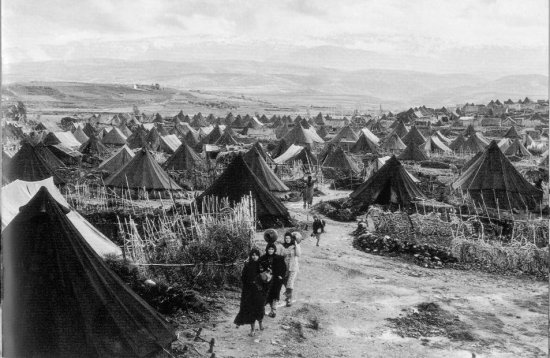
REALITY: The establishment of Israel in 1948 was accompanied by the expulsion of more than 700,000 Palestinians from their homes – over two-thirds of the population. It is estimated that more than 50 percent fled under direct military assault. Others fled in panic as news of massacres of hundreds of civilians in the villages of Deir Yassin and Tantura spread. Their exodus, or Nakba, was already nearly half-complete by May 1948, when Israel declared its independence and the Arab states entered the fray. Zionist forces depopulated more than 450 Palestinian towns and villages, most of which were demolished to prevent the return of the refugees. Although Jews owned only about seven percent of the land in Palestine in 1947 and constituted about 33 percent of the population, Israel was established the next year on 78 percent of Palestine.


In 1967, Israel launched a surprise attack on Egypt, leading to the 1967 war, where it militarily occupied the remaining 22 percent of historic Palestine (the West Bank and Gaza Strip) as well as the Syrian Golan Heights and the Egyptian Sinai. Of all this territory, Israel has to this day returned only the Sinai.

NETANYAHU: “And it’s here [at the United Nations], year after year that Israel is unjustly singled out for condemnation. It’s singled out for condemnation more often than all the nations of the world combined.”

REALITY: Israel is not above the law. International law is based on the notion that all human beings are worthy of the same rights and of being treated equally. These laws apply equally to all nations. The UN was instrumental in the creation of Israel through UN General Assembly resolution 181. Because of this, the UN, and the international community in general, bears a responsibility to help resolve the situation, guided by the standards of international law.

NETANYAHU: “Twenty-one out of the 27 General Assembly resolutions condemn Israel – the one true democracy in the Middle East.”

REALITY: For more than 43 years, Israel has militarily occupied the West Bank, Gaza Strip and East Jerusalem, a population now numbering 4.36 million people. Except for a few thousand Palestinian residents of East Jerusalem, this population has no voice in Israeli national policy despite being subjected to long-term Israeli occupation. Additionally, 1.2 million Palestinians are citizens of Israel and subject to more than 30 laws which discriminate against them solely based on their ethnicity, rendering them second or third-class citizens in their own homeland. From 1948 to 1966, those Palestinians who remained in what became Israel after the ethnic cleansing of the vast majority of the Palestinians from their homeland were governed by Israeli military rule (not unlike what exists in the Occupied Territories today). Thus for the entirety of its 63-year existence, there has been a period of only about one year, between the lifting of martial law in 1966 and the occupation which began in 1967, that Israel did not rule over large numbers of Palestinians to whom it granted no political or human rights. [Continue reading…]

Facebooktwittermail

September 23, 2011: A historic day for Israel-Palestine?

Daniel Levy writes:

Cynicism and skepticism always have their place, but today might just go down as an historic day on the Israeli-Palestinian front. No, there is no direct or quick fix move from the Palestinian application for U.N. membership to the actual realization of a Palestinian state (and certainly not when one factors in the Israeli response) but the Palestinian U.N. move does represent the most definitive break yet with the failed and structurally flawed strategies for advancing peace of many a year. Many Palestinians and others are now suggesting that the PLO leadership progress from the symbolism of September 23rd to a concerted struggle for their freedom centered on nonviolent resistance, diplomacy, and international legality, believing that this would finally deliver a breakthrough.

In its theatrics, today was rather predictable — other than the Quartet statement of the afternoon, on which more in a moment. The speeches of Abbas and Netanyahu held few, if any, surprises. Abbas played to the Palestinian community at home and around the world, and to the rest of the international community.

Abbas spoke to the refugee experience, including his own, while leaving wiggle room for a future solution and embracing the Arab Peace Initiative on this score. He clarified that the PLO would continue to represent all Palestinians until all issues are definitively resolved, urged that this not become a religious struggle (pushing back on Netanyahu’s attempt to make this about a Jewish state), and linked the Palestinian struggle for rights to the so-called Arab Spring, albeit something that will have to be born out in reality beyond the made-for-TV pictures from Ramallah’s town square.

Abbas could also not have been more explicit on this being a Palestine alongside Israel, on the 67 lines, on only 22% of Mandatory Palestine — and thus calling the lie on Netanyahu’s claim that Abbas wants to have a state that would come at Israel’s expense, replacing Israel.

Netanyahu was playing to the Israeli public and to the American and Jewish right. His speech represented a doubling down of the porcupine strategy that guides his government’s policy. He told the world body that its Security Council was being presided over by terrorists and posed as the champion of the “Clash of Civilizations” narrative. In reminding his audience of the sacrifices entailed by Israel’s withdrawal from Gaza six years ago, he somehow overlooked the fact that this was a withdrawal that he himself vociferously opposed. In referring several times to Israel’s peace with Egypt, Netanyahu may have left some reminiscing that in that agreement Israel withdrew to the last centimeter of the 67 lines, removed every settler and IDF position, and entrusted security to an international force — the MFO.

In response to their respective speeches, Abbas received overwhelming applause from the delegates in the GA hall while Netanyahu’s support came only from his own delegation and from the peanut gallery — perhaps that was filled with a U.S. congressional delegation on a daytrip to the U.N.!

Facebooktwittermail

As Netanyahu blasts the U.N. General Assembly the U.S. bullies members of the Security Council

Comparing Benjamin Netanyahu’s address to the UN today with Nikita Khrushchev’s boorish conduct in 1960, The Guardian‘s Julian Borger tweeted: “He didn’t take his shoe off and thump the lectern but Bibi just delivered one of the more combative speeches in UN history.”

Netanyahu proceeded to insult the UN which he called “the theater of the absurd”, while he compared the Palestinians to the Nazis.

Here in the UN automatic majorities can decide anything. They can decide that the sun sets in the West — or rises in the West. I think the first has already been preordained. They can also decide — they have decided — that the Western Wall in Jerusalem, Judaism’s holiest place, is occupied Palestinian territory.

And yet, even here, in the General Assembly, the truth can sometimes break through.

In 1984, when I was appointed as Israel’s ambassador to the United Nations, I visited the great rabbi of Lubavitch. He said to me — and ladies and gentlemen, I don’t want any of you to be offended because from personal experience of serving here, I know there are many honorable men and women, capable and decent people serving their nations here — but here’s what the rabbi said to me. He said to me: “You’ll be serving in a house of many lies.” And then he said: “Remember, that even in the darkest place, the light of a single candle can be seen far and wide.”

Today I hope that the light of truth will shine, if only for a few minutes, in a hall that for too long has been a place of darkness for my country. So as Israel’s prime minister, I didn’t come here to win applause. I came here to speak the truth.

Maybe Netanyahu’s truth-telling will have helped tip some undecided votes in the Security Council in Palestine’s favor but the odds don’t look good.

The Guardian reports:

[Palestinian president Abbas] privately retreated from his pledge to seek an immediate security council vote in part because he is no longer sure of winning the necessary majority, which would have given the Palestinians a moral victory even if the US used its veto. Palestinian sources say they believe Washington has bullied several security council members into withdrawing their support for the Palestinian move, including Portugal, by threatening to withhold support for its stricken economy, and Bosnia, over its opposition to Kosovo being admitted to the UN. Palestinian officials also believe Nigeria is no longer certain to vote in their favour. There are also questions about the position of Gabon and Colombia.

One senior Palestinian official described the Americans as “playing a really nasty game”.

Facebooktwittermail

The world — except for Israel and the US — welcomes the rebirth of Palestine

“Palestine is being reborn. This is my message. May all the people of the world stand with the people of Palestine as it marches steadfastly to its appointment with history toward its freedom and independence.” Palestinian President Mahmoud Abbas addressing the UN General Assembly today. (Full text of speech – PDF)

“susan rice, israeli delegation sit stone silent as the Gen Assembly offer rousing applause for Abbas” — Colum Lynch

The Palestinian bid for UN membership will be “quickly” handled and sent to the UN Security Council, UN spokesman Martin Nesirky said.

Speaking after Palestinian president Mahmud Abbas met UN leader Ban Ki-moon, Nesirky said: “The appropriate procedural reviews will be quickly undertaken in the secretariat and afterwards will be transmitted to the president of the Security Council and the president of the General Assembly”. (Al Jazeera)

Al Jazeera reports:

Palestinian president Mahmoud Abbas has handed over a historic request to UN chief Ban Ki-moon asking the United Nations to admit the state of Palestine as a full member.

The Palestinian leader won huge applause and a standing ovation on Friday from some of the assembly as he entered the hall before beginning his speech.

Abbas said he was ready to return to the negotiations, saying he did not want to isolate or delegitimize Israel.

“Here I declare that the Palestine Liberation Organization is ready to return immediately to the negotiating table on the basis of the adopted terms of reference … and a complete cessation of settlement activities,” he told the UN General Assembly.

But he maintained previous peace talks were “smashed against the rocks of the positions of the Israeli government, which quickly dashed the hopes raised by the launch of negotiations last September”.

Palestinians across the West Bank celebrated the formal submission of their bid to become a United Nations member state, despite opposition from the United States and Israel.

In city centres, giant television screens were set up so residents could watch Mahmoud Abbas, the Palestinian president, deliver a historic address to the 193 member states of the UN General Assembly.

Facebooktwittermail

Palestine doesn’t need Israel’s permission to exist

James Verini writes:

In 1988, Abba Eban, perhaps the finest diplomat and one of the sharpest minds Israel has ever produced, got up before a distinguished crowd in London to give an address with the predictable and yet absurd title, “Prospects for Peace in the Middle East.” Predictable not just in itself, but because Eban and other Israeli leaders had delivered countless such addresses in the 40 unpeaceful years since the country’s creation; absurd because his remarks, which concerned Palestine, came a year into the First Intifada.

But Eban, who served as Israel’s deputy prime minister, its foreign minister, and its ambassador to the United States, laid the case bare for his surprised listeners. He lamented “the paradox of the West Bank and Gaza as an area in which a man’s rights are defined not by how he behaves, but who he is.” He said of the Israeli occupation, “The need to rule one-and-a-half million people of specific and recognized national particularity against their will weakens our economy, distorts our image, complicates our regional and international relations,” and “prevents any prospect of peace.” Weighing the Palestinian stone-throwers in the streets against Israel’s indisputable — no, laughable — military supremacy over its neighbors, he concluded, “We come up against the immense gap between the reality of our power and the psychology of our vulnerability.”

“The immense gap between the reality of our power and the psychology of our vulnerability” — nicely put, and Israel’s existential dilemma crystallized. It’s a phrase worth bearing in mind this week as Israeli Prime Minister Benjamin Netanyahu, U.S. President Barack Obama, and even certain European leaders try to persuade Palestinian Authority President Mahmoud Abbas to not seek full statehood at the United Nations.

But there’s another phrase in Eban’s remarks that demands as much attention. Note that he referred to Palestinians as a “people of specific and recognized national particularity” — as a nation, in other words, or at least a population deserving one. Eban, who died in 2002, saw his fears borne out. He outlived the First Intifada only to catch the start of the second one, by which time the Palestinians were well-armed enough to inflict real damage, and to watch the eclipse in Gaza of Yasir Arafat’s Fatah party by the more militant Islamist party Hamas. Still, his epigones in Israel and the United States refute him as a matter of course. Get into a discussion with even a well-informed Israeli or defender of Israeli policy on the prospect of Palestinian nationhood, and the outdated and circular line of argument that Palestinians never comprised a state, and thus do not require one now, presents itself inside of a minute. If that doesn’t work, they’ll tell you that, anyway, Hamas has made a Palestinian state untenable.

Texas Gov. Rick Perry, for instance, justified his criticisms of what he says are Obama’s too weak efforts by saying, “America should not be ambivalent between the terrorist tactics of Hamas and the security tactics of the legitimate and free state of Israel.” Whether Perry knows that Abbas has risked life and limb defying Hamas he didn’t mention.

The first argument, too, still finds voice in the government offices of West Jerusalem, but it’s not the one Netanyahu and his colleagues, including the prime minister’s critics, are marshaling now. No, they say that recognition of a Palestinian state would subvert the principle of direct negotiation that has been the ideal since the Oslo process; that it would indeed embolden Hamas or inspire Palestine to rash actions such as seeking redress in international courts; or that it would — the psychology of vulnerability again, enhanced by the Arab Spring and the new anti-Israel flare-ups in Egypt, Jordan, and Turkey — compromise Israeli security. Obama, who has spent months trying to head off the vote, purports to agree at least with the first point and has promised to veto any resolution that makes it to the Security Council. But his U.N. ambassador, Susan Rice, was saying more than she knew when she asked, rhetorically, “What will change in the re­al world for the Pales­tini­an people?”

What neither government mentions — but what Eban, who also served as head of the Israeli mission to the United Nations, knew — is that Palestine already is essentially a nation in the eyes of the international body. As set forth in a decades-long procession of decisions in not just the Palestine-obsessed General Assembly, but also the U.S.-dominated Security Council, the West Bank and Gaza possess the same rights of self-determination as any nation. Palestine — and it is known officially as “Palestine” at the U.N. — participates in General Assembly and Security Council debates and enjoys a permanent mission. Merely making this formal, as Abbas wants, would change little at Turtle Bay — and, if history is any indication, less on the ground. [Continue reading…]

Facebooktwittermail

Libyan rebels discover Gaddafi’s chemical weapons

The Guardian reports:

Libyan rebel forces claim to have discovered banned chemical weapons stockpiles in southern desert areas captured from Gaddafi loyalists in the last few days.

Spokesmen for the National Transitional Council (NTC) said a depot had been found in the Jufra area, 435 miles (700km) south of Tripoli, during part of an offensive against regime strongholds in the remote south of the country.

The rebels also say they have now taken most of Sebha, the largest town in the area whose tribes were long seen as loyal to Gaddafi and is an important staging post for travel to Niger, where some former regime figures have fled. Libyan officials have confirmed that a senior intelligence officer was captured there two days ago.

It had been thought that Gaddafi himself might have been hiding in Sebha along with his fugitive second son, Saif al-Islam, but NTC fighters found no trace of them.

In New York, Libya’s new leaders were welcomed this week at the UN.

Libya’s new flag flew at the United Nations on Tuesday for the first time since Muammar Gaddafi’s overthrow as U.S. President Barack Obama called for the last of the deposed leader’s loyalists to stop fighting.

International leaders at a high-level U.N. conference on Libya congratulated Libyans — and themselves — for Gaddafi’s removal by NATO-backed rebels in a seven-month-old conflict.

U.N. Secretary-General Ban Ki-moon, welcoming Libya’s new leaders into the international community, said the Security Council had acted to protect the Libyan people from violence.

“Today, we must once again respond with such speed and decisive action — this time to consolidate peace and democracy,” Ban added.

Libya has reverted to the flag that was used from 1951 until 1977 when Gaddafi, who ruled for nearly 42 years, introduced a green flag for his Libyan Arab Jamahiriya, or people’s republic.

Libya’s new rulers, finally recognized on Tuesday by the African Union, are still trying to dislodge well-armed Gaddafi loyalists from several towns and have yet to start a countdown toward writing a new constitution and holding elections.

They face questions about whether they can unify a country divided on tribal, regional and ideological lines.

Mustafa Abdul Jalil, president of Libya’s ruling National Transitional Council (NTC), promised a spirit of tolerance and reconciliation and appealed for international assistance to help his country emerge from conflict and build democracy.

Meanwhile, Reuters reports:

A prominent critic of Libya’s new rulers said on Tuesday interim Prime Minister Mahmoud Jibril should resign over what he said was a failure to supply ammunition to troops fighting forces still loyal to Muammar Gaddafi.

Demands have been made before for members of the country’s National Transitional Council (NTC) to step down, but the latest intervention is likely to add to pressure on Jibril, who is already struggling with a stalled military offensive and a failure to form a new government.

Influential Islamist scholar Ali Al-Sallabi told Reuters that Jibril was responsible for failing to get enough ammunition to anti-Gaddafi forces struggling to take Sirte, one of the last remaining bastions of the former veteran ruler.

Sallabi, jailed in the 1980s for opposition activities, suggested ammunition levels among NTC forces were dangerously low.

“No doubt on the eastern front the ammunition has finished. We should ask Mr. Jibril, why did it finish?,” he said, speaking through a translator.

“Now there is an immense mass of revolutionaries that do not want Jibril. Accordingly, Mr. Jibril should resign. Why is he insisting to continue? Such persistence I see is a political mistake which is not in the interest of the Libyan people.”

NTC military spokesman Ahmed Bani denied that supplies were a problem. “There’s enough ammunition. The fighters say there is enough,” he told Reuters.

Since the fall of Tripoli a month ago, Sallabi has emerged as a prominent spokesman for groups of Islamists unhappy about what they see as attempts by Benghazi-based NTC leaders to exclude them from political life.

He has no formal political role but is a significant voice in Libyan affairs because he has good relations with Qatar, an influential backer of the NTC, and has a wide network of contacts in global Islamist circles.

He also is a friend of Tripoli’s military commander Abdel Hakim Belhadj, a rising Islamist figure in post-Gaddafi Libya.

Sallabi’s brother, Ismail, a commander of anti-Gaddafi fighters, earlier this month called on the NTC to resign because they were “remnants of the old regime.”

Sallabi’s pressure comes at a delicate moment for Jibril. His administration is in political limbo after he failed to get the full backing of the NTC for an enlarged executive committee, or cabinet, with himself ruling as both prime minister and foreign minister.

The executive committee was dissolved last month after procedural errors in an investigation into the unexplained killing of the NTC’s military chief. Sources familiar with the negotiations said that one of the sticking points in the weekend meeting was the future role of Jibril in the new cabinet.

In a telephone interview with Reuters from Qatar, where he is temporarily based, Sallabi said Jibril had failed to cultivate good relations with neighbouring countries such as Algeria, Niger, Chad and Tunisia.

Facebooktwittermail

Most Israelis willing to accept UN recognition of Palestinian state

The Jerusalem Post reports:

Israel should accept the decision if the UN recognizes a Palestinian state, about 70 percent of Israelis answered in a recent Hebrew University poll.

The poll, which was conducted jointly by the Harry S. Truman Research Institute for the Advancement of Peace at the Hebrew University of Jerusalem and the Palestinian Center for Policy and Survey Research in Ramallah, also found that over 80% of the Palestinians support turning to the UN to obtain recognition of a Palestinian state. The survey was supported by the Ford Foundation Cairo office and the Konrad Adenauer Stiftung in Ramallah and Jerusalem.

As well as exploring Israeli and Palestinian attitudes to the Palestinian bid to the UN to obtain recognition as an independent state, the poll looked at other topical domestic issues within each population.

In response to questions about the Palestinian appeal at the UN, 83% of the Palestinians surveyed supported the move to obtain recognition for their state. Majorities on both sides, 77% of the Palestinians and 79% of the Israelis, believed that the US would use its veto power in the UN Security Council to prevent the UN from admitting the state of “Palestine” as a UN member.

In the face of UN recognition of a Palestinian state, 69% of Israelis thought that Israel should accept the decision and either start negotiations with the Palestinians about its implementation (34%) or not allow any change on the ground by the Palestinians (35%); 16% said Israel should oppose the decision and intensify the construction in the settlements; 7% think that Israel should annex the PA territory to Israel; and 4% think Israel should invade the PA territories and use force to prevent the establishment of a Palestinian state.

Facebooktwittermail

Obama’s passivity could pave the way to a civil uprising against Israel

Akiva Eldar writes:

To realize the extent to which the lame-duck candidate has regressed from the positions of the new and promising President Obama, the speech to the United Nations in September 2011 should be compared to one he gave in Cairo in 2009. At that time he pledged to “personally pursue this outcome with all the patience that the task requires,” and said “… it is time for all of us to live up to our responsibilities.” Yesterday he sent the occupied and the occupier, the strong and the weak, to solve the core issues on their own.

In Cairo he recalled, along with Jewish suffering in the Holocaust, the “daily humiliations … that come with the occupation.” And he added: “Let there be no doubt: The situation for the Palestinian people is intolerable.” He even compared the struggle of the Palestinians for freedom to the struggle of black people in the United States for equal rights. On Wednesday, Obama paid pursed lip service to the legitimate aspirations and forgot to mention the occupation.

In June 2009, Obama spoke of “the obligations that the parties have agreed to under the road map.” He meant, among other things, and perhaps mainly, Israel’s obligation to completely stop construction in the settlements and dismantle the outposts built after March 2001. To remove all doubt, he stated resolutely: “It is time for these settlements to stop.”

On Wednesday, not one word of criticism was heard about Israel creating unilateral physical facts on the ground. To the 2011-model Obama, only the Palestinians’ approach to the United Nations is unilateral, objectionable and meriting the death penalty.

Facebooktwittermail

U.S. should recognize Palestinian state

Zvi Bar’el writes:

Memory is short and forgetfulness is often deliberate, but 23 years ago the UN General Assembly decided to move its session from New York to Switzerland so that Palestine Liberation Organization head Yasser Arafat could deliver a speech. The reason: U.S. Secretary of State George Schultz refused to issue Yasser Arafat an entry visa to the United States.

Today too, with the opening of the session of the General Assembly, Washington is standing like a fortified wall blocking the entry of Palestine to the UN building. Although Palestinian Authority President Mahmoud Abbas has no problem getting a visa, when he comes to ask for a state for the Palestinians he is put on a roller coaster. The list of threats and future punishments to be imposed on him and his country, if it is established, guarantees that this will be a state that is battered from birth.

Here is colonialism in all its glory. After all, the United States agrees that there should be a Palestinian state, it even twisted the arm of Prime Minister Benjamin Netanyahu a little bit, cautiously so it wouldn’t hurt, so that he would blurt out the necessary formula “two states for two peoples.” U.S. President Barack Obama even spoke about the optimal borders of the Palestinian state and Abbas was not yet required to recognize Israel.

After all, Arafat already recognized it. Palestine fulfilled all the threshold conditions. And still, this state has only one chance of being born the American way. Through negotiations that will lead to a consensual agreement and a handshake. And if Israel’s hand is missing, never mind, the Palestinians will wait until it grows.

But Abbas has learned a thing or two from Israel. The main lesson he has learned is that his real negotiations are not with Israel but with Washington. The second lesson: The negotiations must not take place on a playing field that is convenient for Obama, but rather at the United Nations. There Obama is not facing a beggarly Palestinian Authority that can be frightened with a shout, but 193 countries, each of which must be negotiated with.

New York is not Ramallah. Abbas saw how Israel chose its own playing field in the U.S. Congress, and carefully responded in kind. Instead of going out on a limb, he planted the tree by himself, nurtured it, diligently recruited most of the countries in the world, was helped substantially by Israel’s mistakes, took good advantage of Jerusalem’s isolation, examined the pros and cons and decided that even in loss there would be great gain.

If the United States casts a veto in the UN Security Council, it will cause more damage to Washington than to Abbas; if he makes do with recognition in the General Assembly, it will be in exchange for an American commitment to support a Palestinian state if negotiations fail, as they will.

Abbas caused Washington to be embroiled in a dispute with its European colleagues, and presented Israel as a cripple. He is forcing the United Nations to do what it usually fails to do: to find a peaceful solution to conflicts. As a bonus he caused Netanyahu to say that he is going to deliver a “speech of truth” at the United Nations, thereby admitting in effect that until now he has been lying.

The panic in Washington is genuine. It was evident when David Hale, Obama’s special envoy, was unable to control his temper and simply shouted at Abbas when he understood that he had no intention of retreating from his initiative.

Anger and helplessness could also be detected in the voice of U.S. Secretary of State Hillary Clinton, when she announced that the United States would cast a veto in the Security Council. Suddenly she realized that the Israeli-Palestinian conflict is not only “the business of the parties involved” but threatens Washington’s regional and international status.

If the United States fails to recognize the Palestinian state, it will have difficulty sidelining its rivals in the new Middle East, where the public has more power than the rulers; if it recognizes the Palestinian state, it will have to ensure its sustainability, in other words, to direct the sanctions against Israel. Truly a bad situation for a great power that aspires to draw the map of the new Middle East.

Had it only made an effort to achieve genuine negotiations when that was still possible, had it invested its efforts into reaching an agreement that it is now investing in preventing the declaration of independence, had it shared the threats equally between the PA and Israel, it may not have found itself in this difficult situation.

It should at least recognize the state now. It should recall what has happened since it refused to grant Arafat his visa.

Facebooktwittermail

In Palestinian eyes, U.S. president has become the bad guy

Akiva Eldar writes:

A short time after Palestinian Authority President Mahmoud Abbas landed in New York, MK Ahmed Tibi (United Arab List-Ta’al ) expressed a widespread feeling in the Palestinian delegation regarding U.S. President Barack Obama: “Were Martin Luther King to rise from the dead and see how a black president is waging an all-out war against the rights of the Palestinian people,” opined Tibi, “he would choose to return to the grave.”

This week, Obama has replaced Benjamin Netanyahu, and is playing the part of the bad guy in Palestinian perception. The supporting actor in this capacity is Quartet delegate Tony Blair, who is viewed by the Palestinians as a representative of the U.S. government beholden to the mission of scuttling Palestinian statehood recognition.

After the Palestinians rejected the “compromise proposal” that Blair presented to Abbas this weekend, Obama stepped up his full frontal attack against the Palestinians. The U.S. president wants to bury the Palestinian initiative in the United Nations without having to get his hands dirty by casting a veto in the Security Council. Why should he take the risk of annoying the Saudis if he can get rid of the statehood resolution by utilizing the UN’s serpentine procedures?

When the United States wanted UN action on the Republic of South Sudan, UN procedures lasted no longer than one week. In contrast, with regard to a resolution that is liable to alienate the U.S. Congress, UN procedures can be manipulated so that the proposal is battered for several long months. At the same time, the Americans are mobilizing their political and economic leverage so as to put together a majority of nine Security Council members who are opposed to the statehood resolution – a move that would force the Palestinians to accept a General Assembly decision to grant them a state status equivalent to that enjoyed by the pope’s residence.

As a result of contacts with European leaders, Abbas is aware that the American Goliath does not want to win a victory on points, or on a technical knockout. Obama is trying to persuade “quality states” in Europe to vote against the statehood resolution, or at least to abstain, in the General Assembly. As of Monday, the United States and the Palestinians are both trying to “win everything.”

The “compromise proposal” delivered to Abbas, via Blair, calling on the Palestinians to limit their effort to the General Assembly, is essentially a recycled version of a formula endorsed by Obama last July. The proposal stirred consternation among the three other Quartet partners, who eventually rejected it. The proposal contains not even a hint about a settlement freeze. It limits final status negotiations to a 12-month period, but grants Israel the authority to cease talks the moment it is dissatisfied with the actions of the Palestinian side (especially in the security sphere ).

The proposal refers to the establishment of a Palestinian state alongside the state of the Jewish people; the new state’s borders would not be the 1967 lines, and they would take into account demographic realities in the field. In other words, the July-Obama/Blair proposal enjoins Palestinian recognition of the legality of the settlements without requiring an Israeli commitment to a territorial concession comparable in size and quality.

Meanwhile, the Palestinian leadership is not disclosing the final formulation of the statehood recognition resolution to be brought to the UN. The scant information available indicates that the Palestinians will ask for recognition of a state in the 1967 borders, whose capital is East Jerusalem, and which will live in peace alongside the State of Israel. The resolution will refer to the Arab peace initiative of 2002, which offered Israel normalization in the region in exchange for withdrawal to the 1967 lines, and called for a just, agreed-upon solution to the refugee issue.

This Palestinian formulation could embarrass countries such as Iran and Syria. In the UN, they will have to choose between a vote against the state of Palestine, or the conferral of recognition, of sorts, to the State of Israel in the 1967 borders.

Facebooktwittermail

Obama’s perfect storm

Mark LeVine writes:

[Obama] might have dined with Palestinian professors back in Chicago, but there was no way he would have been allowed near the presidency if he actually internalised the historical narrative represented by Palestinian history and that of the Arab and larger developing worlds. Yes, he’s half African and grew up partly in Indonesia, and can give really nice speeches about the need for the peoples of the world to build a common future.

But more than anything, Obama is a product of the US political machine – from Harvard to Chicago to the White House. And you don’t go through that meat grinder and come out at the other end with many principles left intact.

Even if Obama can’t be blamed for the system – an-nitham, to use the entirely appropriate Arab connotation of the term – he must take responsibility for how many opportunities he has squandered and just how far US strategic designs have moved from the emerging realities in the Middle East and North Africa.

There are many arguments to be made for and against PA president Mahmoud Abbas bringing a statehood bid before the UN. Indeed, in a seemingly strange irony, one of the most eloquent arguments against the bid comes from Susan Rice, the US Ambassador to the UN, who explained that “there’s no shortcut, there’s no magic wand that can be waved in New York and make everything right … The reality is that nothing is going to change. There won’t be any more sovereignty, there won’t be any more food on the table.”

But of course, the reason for US opposition to the statehood bid – namely, US policy that supports Israel’s ongoing entrenchment of its occupation in the West Bank against the wishes of the entire world – is left unstated. Indeed, Rice and the Obama Administration are being patronising in the extreme by arguing that the push for a vote represents a “miscalculation” and a “gap between expectation and reality [that] is in itself quite dangerous”.

Instead, the reality is that the Obama administration, and the US foreign policy system it represents, are the ones who have badly miscalculated.

Palestinians understand quite well that this vote is largely symbolic. But with nothing to lose and the US hopelessly titled towards Israel, if the Palestinians can extract a political price by increasing the amplitude of the wave of anger of the newly empowered “Arab street” (a term that after decades of mis-use finally has some analytical bona fides) in response to the planned US veto in the Security Council, Palestinians will for once have played their historically bad hand well.

Facebooktwittermail

Where the 13 United Nations Security Council members stand on the upcoming Palestine vote

On Friday, Palestinian Authority president Mahmoud Abbas laid out his plans to seek full membership at the United Nations Security Council this week. In order for the vote to succeed, it needs nine votes and no veto, and then approval by a two-thirds majority of members of the General Assembly. Alternatively, the Palestinians can seek to win only limited membership as a non-voting member in the General Assembly as a fallback option.

ThinkProgress has reviewed the positions of the 13 Security Council members. Five members are firm supporters of the Palestinian bid, while two, like the United States are opposed. The largest group of countries is the undecided: [Continue reading…]

Facebooktwittermail