Category Archives: US government

U.S. made covert plan to retrieve Iran drone

The Wall Street Journal reports: U.S. officials considered conducting a covert mission inside Iran to retrieve or destroy a stealth drone that crashed late last week, but ultimately concluded such a secret operation wasn’t worth the risk of provoking a more explosive clash with Tehran, a U.S. official said…

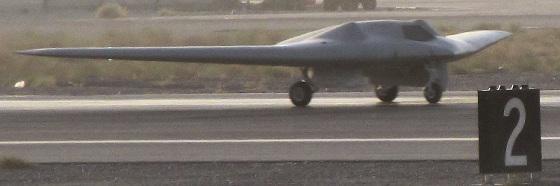
The officials considered various options for retrieving the wreckage of the RQ-170 drone.

Under one plan, a team would be sent to retrieve the aircraft. U.S. officials considered both sending in a team of American commandos based in Afghanistan as well as using allied agents inside Iran to hunt down the downed aircraft.

Another option would have had a team sneak in to blow up the remaining pieces of the drone. A third option would have been to destroy the wreckage with an airstrike.

However, the officials worried that any option for retrieving or destroying the drone would have risked discovery by Iran.

“No one warmed up to the option of recovering it or destroying it because of the potential it could become a larger incident,” the U.S. official said.

If an assault team entered the country to recover or destroy the drone, the official said, the U.S. “could be accused of an act of war” by the Iranian government.

The New York Times adds: The stealth C.I.A. drone that crashed deep inside Iranian territory last week was part of a stepped-up surveillance program that has frequently sent the United States’ most hard-to-detect drone into the country to map suspected nuclear sites, according to foreign officials and American experts who have been briefed on the effort.

Until this week, the high-altitude flights from bases in Afghanistan were among the most secret of many intelligence-collection efforts against Iran, and American officials refuse to discuss it. But the crash of the vehicle, which Iranian officials said occurred more than 140 miles from the border with Afghanistan, blew the program’s cover.

The overflights by the bat-winged RQ-170 Sentinel, built by Lockheed Martin and first glimpsed on an airfield in Kandahar, Afghanistan, in 2009, are part of an increasingly aggressive intelligence collection program aimed at Iran, current and former officials say.

Facebooktwittermail

CIA has operated fleet of stealth drones spying on Iran for years

The Associated Press reports: U.S. officials say a drone that crashed inside Iran over the weekend was one of a fleet of stealth aircraft that have spied on Iran for years from a U.S. air base in Afghanistan.

They say the CIA stealth-version of the RQ-170 unmanned craft was also used to survey Osama bin Laden’s compound before the May raid in Pakistan.

According to these officials, the U.S. has built up the air base Shindad, Afghanistan, with an eye to keeping a long-term presence there to launch surveillance missions and even special operations missions into Iran if deemed necessary.

In July, the US Air Force reported: By expanding to nearly three times its original size, Shindand Air Base recently became the second largest airfield throughout Afghanistan.

Colonel Larry Bowers, the 838th Air Expeditionary Advisory Group commander, opened the new expansion area upon completion of construction of approximately eight miles of perimeter fence line.

Having been in the works since fall of 2010, completion of the “Far East Expansion” makes the base second only to Bastion Field in Lashkar Gah in size.

The project is part of a $500 million military construction effort to support Regional Command West and turn Shindand AB into the premier flight-training base in Afghanistan, officials said.

The new expansion is slated to become the new living and working area for more than 3,000 coalition forces and government contractors, officials said. The relocation of these members will make room for a new a 1.3-mile NATO training runway, with construction scheduled to begin in early 2012.

Facebooktwittermail

While Iran dismantles a prize stealth drone, Lockheed’s PR consultants cover up the damage

Lockheed Martin RQ-170 Sentinel spy drone

It’s always strange when the main thrust of a news story is the message that it really isn’t news. It’s as though the business of journalism is in part a form of mind control — identifying the things which we shouldn’t trouble ourselves to think about.

As soon as Iran proudly announced that they had captured a Lockheed RQ-170 Sentinel stealth drone that had flown from Afghanistan, a stream of reports followed about how this will be of little consequence. An unfortunate mishap. Once in a while the US loses a drone. What to do. Let’s just move on because there’s nothing worth paying attention to here.

“I don’t think this is a dagger pointed at the heart of democracy,” said Loren Thompson, defense policy analyst for the Lexington Institute in Arlington, Va. “A lot of information about this aircraft was already known by foreign military intelligence officials.”

Harper’s Ken Silverstein has called the Lexington Institute the “defense industry’s pay-to-play ad agency” so I guess Thompson’s statement to the Los Angeles Times is predictably reassuring — at least it might serve as little bit of damage control as Lockheed Martin and the Pentagon try to account for the RQ-170’s loss.

Apparently the drone should have had a fail-safe mechanism that would have enabled it to return home or self-destruct.

The most likely reason that the Sentinel didn’t self-destruct or safely return is that it was lost because of an onboard mechanical malfunction, said Thompson…

“That means what the Iranians have is a pile of wreckage — many small and damaged pieces from which they could glean little in the way of technological insights,” he said.

The question is: why is the Los Angeles Times even quoting Thompson when they have also spoken to a U.S. official with access to intelligence who says that Iran recovered the drone largely intact?

“It’s bad — they’ll have everything” in terms of the secret technology in the aircraft, the official said. “And the Chinese or the Russians will have it too.”

That sounds like the real story — or at least a major part of it.

So why fill the reporting with chaff pumped out by an expert like Thompson — who also just happens to work as a paid consultant for Lockheed Martin?

Facebooktwittermail

Prepare for war: The insane plan to outlaw diplomacy with Iran

Dominic Tierney writes: Working its way through the congressional digestive tract like a poison pill is one of the worst ideas in modern legislative history: a bill that would make it illegal to conduct diplomacy with Iran.

In an almost unprecedented move, the Iran Threat Reduction Act of 2011 (H.R. 1905) includes a clause that reads, “No person employed with the United States Government may contact in an official or unofficial capacity any person that … is an agent, instrumentality, or official of, is affiliated with, or is serving as a representative of the Government of Iran.”

The notion of outlawing contact with Iran is one of those ideas that at first glance sounds merely awful — and then upon reflection, seems truly dreadful.

The United States does not have formal relations with Iran but Washington engages in a variety of unofficial contacts, most of which would become illegal. The bill would outlaw discussion with Iran about ways to end its nuclear program, even though this is a supposed aim of U.S. foreign policy. It would also stop the United States and Iran from cooperating in areas like Afghanistan, where there is actually some overlap of interests in avoiding a Taliban resurgence.

Facebooktwittermail

Why Afghans have come to hate Americans

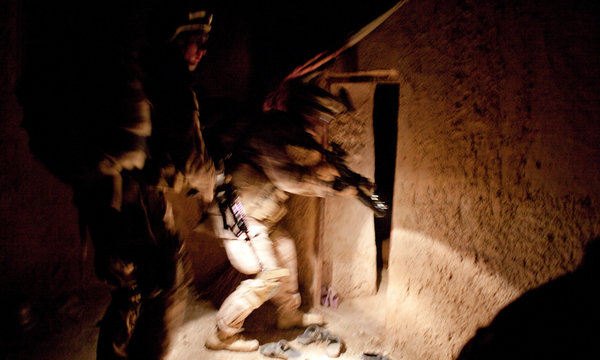
U.S. and Afghan government officials are struggling to reach a strategic long-term agreement — the sticking point is Afghan opposition to night raids which have surged under the Obama administration and now happen as often as 40 times a night.

NATO officials say they have modified how night raids are conducted in response to the Afghan government’s concerns.

“Ninety-five percent of all night operations at this stage are already partnered,” said Brig. Gen. Carsten Jacobson, the NATO spokesman in Afghanistan. “So basically the recommendation of the traditional loya jirga is already put into action.”

“It is in our combined interest that as soon as possible, Afghanization is accomplished,” he added, referring to an Afghan takeover of security responsibility.

Mr. Faizi was unimpressed by that argument. “According to reports from our officials in different provinces, the Afghan security forces are leaving with the American forces to go conduct night operations without being informed directly where they are going, which house they are searching and who is the target,” he said.

While General Jacobson said night raids averaged 10 a night now, a recent study of night raids by the Open Society Foundations, financed by George Soros, estimated that 19 a night were taking place during the first three months of 2011.

The American military is so enamored of the tactic that some generals have said that without night raids, the United States may as well go home.

General Jacobson said that 85 percent of night raids took place without a single shot fired, and that over all such operations accounted for less than one percent of all civilian casualties.

Statistics might calm the doubts of feeble-minded U.S. senators, but they will have little to no impact on the perceptions of Afghans whose homes are being violated. To live in a country where there is an ever-present risk of foreign soldiers breaking into your house in the middle of the night is to live in a state of oppression. This is the nature of occupation.

[Aimal Faizi, the spokesman for President Hamid Karzai,] said the raids were the biggest complaints that Mr. Karzai heard when visitors from the provinces met with him.

“If one of the messages of the United States is to win the hearts and minds of the Afghan people, then these night raids are totally against this,” he said. “People are becoming more and more against the international presence in Afghanistan.”

On the frontlines of southern Helmand Province, the governor of Sangin district, Mohammad Sharif, is a critic of the practice, even though his district has been the center of some of the toughest fighting of the war, with among the highest casualty rates for NATO forces. He said the Special Operations forces that carried out the raids often got the wrong people, including many pro-government people. “People are not happy, and they feel bad toward Americans,” he said.

A high-ranking official in Helmand Province saw the matter differently, although he did not want to be quoted by name endorsing night raids because of their unpopularity. “So many Taliban commanders have been killed or detained in night raids, and if it wasn’t for them, we would not have the peace we now have,” he said. “Taliban commanders are like snakes: it’s hard to catch them, and night raids are their charmers.”

He also noted that trying to arrest a Taliban commander during the day would inevitably mean a battle, which might well cause casualties among bystanders.

Mr. Faizi said the president was concerned that in many cases, Afghan families were forced to give food and shelter to insurgents, and then later were blamed for doing so and arrested. “We think that all these night raids, they bring the conflict directly to the homes of the Afghan people,” he said. “It has to be the opposite, the fight has to be fought somewhere else.”

Facebooktwittermail

Senate votes not to vote on indefinite detention on Americans

Adam Serwer writes: Can Americans be indefinitely detained by the military on suspicion of terrorism if arrested on American soil? Thursday evening the Senate added a compromise amendment to the defense spending bill that states: Maybe. Specifically, it says the bill does not alter current authorities relating to detention, leaving either side free to argue whether current law allows or prohibits indefinite military detention of Americans captured in the US.

The compromise amendment passed by a 99-1 after a previous effort by Senator Dianne Feinstein (D-Calif) that would have explicitly prevented the indefinite detention of Americans without trial failed 45-55. Several Democrats joined Republicans in blocking the latter amendment with Republican Senators Mike Lee (R-Utah) Rand Paul (R-Ky) and Mark Kirk (R-Ill) joining most Democrats in voting for Feinstein’s amendment.

The reason the compromise amendment worked is that it leaves the question of domestic military detention open, leaving the matter for Supreme Court to resolve should a future president decide to assert the authority to detain a US citizen on American soil. Senators who defended the detention provisions can continue to say that current law allows Americans to be detained based on the 2004 Hamdi v Rumsfeld case in which an American captured fighting in Afghanistan was held in military detention. Opponents can continue to point out that the Hamdi case doesn’t resolve whether or not Americans can be detained indefinitely without charge if captured in their own country, far from any declared battlefield. They have the better of the argument.

Dahlia Lithwick writes: The detainee language only makes us all safer if you assume that “they” are always guilty whenever the government says so. It’s the job of the courts to decide whether the government is right. Justice Antonin Scalia himself put it this way: “Where the Government accuses a citizen of waging war against it, our constitutional tradition has been to prosecute him in federal court for treason or some other crime. … The very core of liberty secured by our Anglo-Saxon system of separated powers has been freedom from indefinite imprisonment at the will of the Executive.”

One of the two Republican senators to vote for the Udall Amendment yesterday was Sen. Rand Paul, who quoted Thomas Jefferson: “The means of defense against foreign danger historically have become instruments of tyranny at home.” No. Truer. Words. At this moment in America we seem to be so fond of dividing Americans into us and them that we have created all sorts of intriguing new legal double standards for the thems. Don’t think for a minute that these new powers will be used only against suspected terrorists. We already know that suspected illegal immigrants, suspected environmental activists, and suspected protesters have very different legal rights—which is to say, far more limited rights—than anyone else. And as Benjamin Wallace Wells detailed last August, the landmark anti-terror legislation known as the Patriot Act has, in the 10 years since its passage, been used in 1,618 drug cases and 15 terrorism cases. You’d never know it from watching the GOP hopefuls joyfully demonize women, immigrants, the poor, the prisoners, OWS protesters, and union members, but at some point, them always becomes us.

Facebooktwittermail

Will the U.S. get dragged into Israel’s next war?

Reuters reports: The top U.S. military officer told Reuters on Wednesday he did not know whether Israel would alert the United States ahead of time if it decided to take military action against Iran.

General Martin Dempsey, the chairman of the Joint Chiefs of Staff, also acknowledged differences in perspective between the United States and Israel over the best way to handle Iran and its nuclear program.

He said the United States was convinced that sanctions and diplomatic pressure was the right path to take on Iran, along with “the stated intent not to take any options off the table” – language that leaves open the possibility of future military action.

“I’m not sure the Israelis share our assessment of that. And because they don’t and because to them this is an existential threat, I think probably that it’s fair to say that our expectations are different right now,” Dempsey said in an interview as he flew to Washington from London.

Asked whether he was talking about the differences between Israeli and U.S. expectations over sanctions, or differences in perspective about the future course of events, Dempsey said: “All of the above.” He did not elaborate.

He also did not disclose whether he believed Israel was prepared to strike Iran.

Meanwhile, Israel’s Defense Minister Ehud Barak told Israel Radio on Thursday: “Israel is a sovereign state and it is the government of Israel, the Israeli army and security forces who are responsible for Israel’s security, future and survival.”

Ali Gharib notes:

Barak reportedly rebuffed U.S. Defense Secretary Leon Panetta last month when Panetta sought assurances that Israel would give the U.S. a heads up if it decided to attack Iran. Barak refused to “give any assurances that Israel would first seek Washington’s permission, or even inform the White House in advance” of an impending attack, according to an unnamed source in the U.K.’s Telegraph newspaper.

So here’s the question Panetta, Dempsey, President Obama, and all the GOP presidential candidates need to answer: In the event that without warning or contrary to U.S. advice, Israel preemptively attacks Iran, will the United States nevertheless be obliged to intervene on Israel’s behalf?

In other words, is the United States a pawn that Israel is free to move whenever it chooses?

Facebooktwittermail

The $7 trillion secret loan program. The government and big banks should be punished

Eliot Spitzer writes: Imagine you walked into a bank, applied for a personal line of credit, and filled out all the paperwork claiming to have no debts and an income of $200,000 per year. The bank, based on these representations, extended you the line of credit. Then, three years later, after fighting disclosure all the way, you were forced by a court to tell the truth: At the time you made the statements to the bank, you actually were unemployed, you had a $1 million mortgage on your house on which you had failed to make payments for six months, and you hadn’t paid even the minimum on your credit-card bills for three months. Do you think the bank would just say: Never mind, don’t worry about it? Of course not. Whether or not you had paid back the personal line of credit, three FBI agents would be at your door within hours.

Yet this is exactly what the major American banks have done to the public. During the deepest, darkest period of the financial cataclysm, the CEOs of major banks maintained in statements to the public, to the market at large, and to their own shareholders that the banks were in good financial shape, didn’t want to take TARP funds, and that the regulatory framework governing our banking system should not be altered. Trust us, they said. Yet, unknown to the public and the Congress, these same banks had been borrowing massive amounts from the government to remain afloat. The total numbers are staggering: $7.7 trillion of credit—one-half of the GDP of the entire nation. $460 billion was lent to J.P. Morgan, Bank of America, Citibank, Wells Fargo, Goldman Sachs, and Morgan Stanley alone — without anybody other than a few select officials at the Fed and the Treasury knowing. This was perhaps the single most massive allocation of capital from public to private hands in our history, and nobody was told. This was not TARP: This was secret Fed lending. And although it has since been repaid, it is clear why the banks didn’t want us to know about it: They didn’t want to admit the magnitude of their financial distress.

The banks’ claims of financial stability and solvency appear at a minimum to have been misleading—and may have been worse. Misleading statements and deception of this sort would ordinarily put a small-market player or borrower on the wrong end of a criminal investigation.

So where are the inquiries into the false statements made by the bank CEOs? And where are the inquiries about the Fed and Treasury officials who stood by silently as bank representatives made claims that were false, misleading, or worse?

Only now, because of superb analysis done by Bloomberg reporters — who litigated against the Fed and the banks for years to get the information — are we getting a full picture of the Fed and Treasury lending. The reporters also calculated that recipient banks and other borrowers benefited by approximately $13 billion simply by taking advantage of the “spread” between their cost of capital in these almost interest-free loans and their ability to lend the capital.

Facebooktwittermail

Senate bill grants power to imprison Americans indefinitely without trial

The New York Times reports: Defying the Obama administration’s threat of a veto, the Senate on Tuesday voted to increase the role of the military in imprisoning suspected members of Al Qaeda and its allies — including people arrested inside the United States.

By a vote of 61 to 37, the Senate turned back an effort to strip a major military bill of a set of disputed provisions affecting the handling of terrorism cases. While the legislation still has several steps to go, the vote makes it likely that Congress will eventually send to President Obama’s desk a bill that contains detainee-related provisions his national-security team has said are unacceptable.

The most disputed provision would require the government to place into military custody any suspected member of Al Qaeda or one of its allies connected to a plot against the United States or its allies. The provision would exempt American citizens, but would otherwise extend to arrests on United States soil. The executive branch could issue a waiver and keep such a prisoner in the civilian system.

A related provision would create a federal statute saying the government has the legal authority to keep people suspected of terrorism in military custody, indefinitely and without trial. It contains no exception for American citizens.

Facebooktwittermail

Iranian exile terrorist group has bipartisan support in Washington

The New York Times reports: At a time of partisan gridlock in the capital, one obscure cause has drawn a stellar list of supporters from both parties and the last two administrations, including a dozen former top national security officials.

That alone would be unusual. What makes it astonishing is the object of their attention: a fringe Iranian opposition group, long an ally of Saddam Hussein, that is designated as a terrorist organization under United States law and described by State Department officials as a repressive cult despised by most Iranians and Iraqis.

The extraordinary lobbying effort to reverse the terrorist designation of the group, the Mujahedeen Khalq, or People’s Mujahedeen, has won the support of two former C.I.A. directors, R. James Woolsey and Porter J. Goss; a former F.B.I. director, Louis J. Freeh; a former attorney general, Michael B. Mukasey; President George W. Bush’s first homeland security chief, Tom Ridge; President Obama’s first national security adviser, Gen. James L. Jones; big-name Republicans like the former New York mayor Rudolph W. Giuliani and Democrats like the former Vermont governor Howard Dean; and even the former top counterterrorism official of the State Department, Dell L. Dailey, who argued unsuccessfully for ending the terrorist label while in office.

The American advocates have been well paid, hired through their speaking agencies and collecting fees of $10,000 to $50,000 for speeches on behalf of the Iranian group. Some have been flown to Paris, Berlin and Brussels for appearances.

Tom Ridge expresses the sentiment and rationale shared by most of the MEK’s Washington supporters: the enemy of my enemy is my friend. No doubt the MEK itself used the same reasoning when aligning itself with Saddam Hussein (as did the U.S.). For the MEK’s current allies in Washington it apparently matters little that the organization actually has a long history of befriending America’s enemies and opposing America’s friends — but maybe that says more about the capricious nature of American friendship than it says about the MEK.

Maybe the solution is not the removal of the MEK from the State Department’s list of Foreign Terrorist Organizations. Instead, the U.S. government can simply start designating countries and organizations as “Enemies” and “Friends” and then at the beginning of the springtime awards season, before the Oscars, there can be a televised event where the president hands out awards and opprobrium to this year’s winners in each category.

As far as what might be the implications for Iran (apart from continuation of the current campaign of terrorism targeting Iranian scientists), there is one curious dimension to the support the MEK now enjoys in Washington: the defining event in modern US-Iranian relations — the 1979 takeover of the US embassy in Tehran — turns out not to have been so unforgivable as it is generally portrayed.

“MEK members participated in and supported the 1979 takeover of the U.S. Embassy in Tehran and … the MEK later argued against the early release the American hostages,” says the State Department. But let’s not dwell on the past, says Woolsey, Ridge et al.

On the other hand, for those who retain an interest in the past and the State Department’s description of the MEK’s activities, here it is:

The group’s worldwide campaign against the Iranian government uses propaganda and terrorism to achieve its objectives. During the 1970s, the MEK staged terrorist attacks inside Iran and killed several U.S. military personnel and civilians working on defense projects in Tehran. In 1972, the MEK set off bombs in Tehran at the U.S. Information Service office (part of the U.S. Embassy), the Iran-American Society, and the offices of several U.S. companies to protest the visit of President Nixon to Iran. In 1973, the MEK assassinated the deputy chief of the U.S. Military Mission in Tehran and bombed several businesses, including Shell Oil. In 1974, the MEK set off bombs in Tehran at the offices of U.S. companies to protest the visit of then U.S. Secretary of State Kissinger. In 1975, the MEK assassinated two U.S. military officers who were members of the U.S. Military Assistance Advisory Group in Tehran. In 1976, the MEK assassinated two U.S. citizens who were employees of Rockwell International in Tehran. In 1979, the group claimed responsibility for the murder of an American Texaco executive. Though denied by the MEK, analysis based on eyewitness accounts and MEK documents demonstrates that MEK members participated in and supported the 1979 takeover of the U.S. Embassy in Tehran and that the MEK later argued against the early release the American hostages. The MEK also provided personnel to guard and defend the site of the U.S. Embassy in Tehran, following the takeover of the Embassy.

In 1981, MEK leadership attempted to overthrow the newly installed Islamic regime; Iranian security forces subsequently initiated a crackdown on the group. The MEK instigated a bombing campaign, including an attack against the head office of the Islamic Republic Party and the Prime Minister’s office, which killed some 70 high-ranking Iranian officials, including Chief Justice Ayatollah Mohammad Beheshti, President Mohammad-Ali Rajaei, and Prime Minister Mohammad-Javad Bahonar. These attacks resulted in an expanded Iranian government crackdown that forced MEK leaders to flee to France. For five years, the MEK continued to wage its terrorist campaign from its Paris headquarters. Expelled by France in 1986, MEK leaders turned to Saddam Hussein’s regime for basing, financial support, and training. Near the end of the 1980-1988 Iran-Iraq War, Baghdad armed the MEK with heavy military equipment and deployed thousands of MEK fighters in suicidal, mass wave attacks against Iranian forces.

The MEK’s relationship with the former Iraqi regime continued through the 1990s. In 1991, the group reportedly assisted the Iraqi Republican Guard’s bloody crackdown on Iraqi Shia and Kurds who rose up against Saddam Hussein’s regime. In April 1992, the MEK conducted near-simultaneous attacks on Iranian embassies and consular missions in 13 countries, including against the Iranian mission to the United Nations in New York, demonstrating the group’s ability to mount large-scale operations overseas. In June 1998, the MEK was implicated in a series of bombing and mortar attacks in Iran that killed at least 15 and injured several others. The MEK also assassinated the former Iranian Minister of Prisons in 1998. In April 1999, the MEK targeted key Iranian military officers and assassinated the deputy chief of the Iranian Armed Forces General Staff, Brigadier General Ali Sayyaad Shirazi.

In April 2000, the MEK attempted to assassinate the commander of the Nasr Headquarters, Tehran’s interagency board responsible for coordinating policies on Iraq. The pace of anti-Iranian operations increased during “Operation Great Bahman” in February 2000, when the group launched a dozen attacks against Iran. One attack included a mortar attack against a major Iranian leadership complex in Tehran that housed the offices of the Supreme Leader and the President. The attack killed one person and injured six other individuals. In March 2000, the MEK launched mortars into a residential district in Tehran, injuring four people and damaging property. In 2000 and 2001, the MEK was involved in regular mortar attacks and hit-and-run raids against Iranian military and law enforcement personnel, as well as government buildings near the Iran-Iraq border. Following an initial Coalition bombardment of the MEK’s facilities in Iraq at the outset of Operation Iraqi Freedom, MEK leadership negotiated a cease-fire with Coalition Forces and surrendered their heavy-arms to Coalition control. Since 2003, roughly 3,400 MEK members have been encamped at Ashraf in Iraq.

In 2003, French authorities arrested 160 MEK members at operational bases they believed the MEK was using to coordinate financing and planning for terrorist attacks. Upon the arrest of MEK leader Maryam Rajavi, MEK members took to Paris’ streets and engaged in self-immolation. French authorities eventually released Rajavi.

Facebooktwittermail

The intelligence on Afghanistan that Obama refuses to reveal

Steve Coll writes: In late 2008, the United States intelligence community produced a classified National Intelligence Estimate on the war in Afghanistan that has never been released to the public. The N.I.E. described a “grim situation” overall, according to an intelligence officer’s private briefing for NATO ambassadors.

In late 2010, there was another N.I.E. on the war. This one painted a “gloomy picture,” warning that “large swaths of Afghanistan are still at risk of falling to the Taliban,” the Los Angeles Times reported. This N.I.E., too, has never been published.

This autumn, intelligence analysts have again been poring over their secret district-by-district maps of Afghanistan, finding and assessing patterns. A new N.I.E. on Afghanistan is just about finished, people familiar with the latest draft told me this week. This one looks forward to 2014, when President Obama has said U.S. troops will be reduced to a minimal number, and Afghan security forces will take the lead in the war.

The new draft Afghanistan N.I.E. is a lengthy document, running about a hundred pages or more. As is typically the case, it is a synthesis, primarily written by civilian intelligence analysts—career civil servants, mainly—who work in sixteen different intelligence agencies. These days, an Estimate usually contains “Key Judgments” backed by analysis near the front of the document. There are six such judgments in the Afghanistan draft, I was told. I wasn’t able to learn what all of them were; according to the accounts I heard, however, the draft on the whole is gloomier than the typical public statements made by U.S. military commanders in Afghanistan.

Facebooktwittermail

Pakistan demands U.S. vacate suspected drone base

The Associated Press reports: The Pakistani government has demanded the U.S. vacate an air base within 15 days that the CIA is suspected of using for unmanned drones.

The government issued the demand Saturday after NATO helicopters and jet fighters allegedly attacked two Pakistan army posts along the Afghan border, killing 24 Pakistani soldiers.

Islamabad outlined the demand in a statement it sent to reporters following an emergency defense committee meeting chaired by Pakistani Prime Minister Yousuf Raza Gilani.

Shamsi Air Base is in southwestern Baluchistan province. The U.S. is suspected of using the facility in the past to launch armed drones and observation aircraft to keep pressure on Taliban and al-Qaeda militants in Pakistan’s tribal region.

Facebooktwittermail

How Occupy stopped the supercommittee

Dean Baker writes: Those who want lower deficits now also want higher unemployment. They may not know this, but that is the reality – since employers are not going to hire people because the government has cut its spending or fired government employees. The world does not work that way.

While this is the reality, the supercommittee was about turning reality on its head. Instead of the problem being a Congress that is too corrupt and/or incompetent to rein in the sort of Wall Street excesses that wrecked the economy, we were told that the problem was a Congress that could not deal with the budget deficit.

To address this invented problem, the supercommittee created an end-run around the normal congressional process. This was a long-held dream of the people financed by investment banker Peter Peterson. Their strategy was derived from the conclusion that it would not be possible to make major cuts to social security and Medicare through the normal congressional process because these programs are too popular.

Both programs enjoy enormous support across the political spectrum. Even large majorities of self-identified conservatives and Republicans are opposed to cuts in social security and Medicare. For this reason, they have wanted to set up a special process that could insulate members of Congress from political pressure. The hope was that both parties would sign on to cuts in these programs, so that voters would have nowhere to go.

However, this effort went down in flames this week. Much of the credit goes to the Occupy Wall Street (OWS) movement: OWS and the response it has drawn from around the country has hugely altered the political debate. It has put inequality and the incredible upward redistribution of income over the last three decades at the center of the national debate. In this context, it became impossible for Congress to back a package that had cuts to social security and Medicare at its center, while actually lowering taxes for the richest 1%, as the Republican members of the supercommittee were demanding.

Facebooktwittermail