Category Archives: democracy

NEWS: Bush coddles tyrants

Bush lauds Egypt leader, avoiding record on dissent

President Bush lavished praise on President Hosni Mubarak of Egypt on Wednesday, emphasizing the country’s role in regional security and the Israeli-Palestinian peace process while publicly avoiding mention of the government’s actions in jailing or exiling opposition leaders and its severe restrictions on opposition political activities.

Ending an eight-day trip through the Middle East in which he highlighted democratic change as the foundation for peace and security throughout the region, Mr. Bush strikingly avoided direct criticism of Mr. Mubarak, an autocratic leader in power since late 1981. In the past, Mr. Bush criticized Egypt for arresting political dissidents.

“I appreciate very much the long and proud tradition that you’ve had for a vibrant civil society,” said Mr. Bush, whose appearance with Mr. Mubarak was unannounced and, according to the White House, had been uncertain until the last minute.

Mr. Bush’s remarks reflected some of the contradictions evident in the issues he addressed on his trip.

He spoke passionately at times about the birth of liberty and justice in countries that restrict them and the role of women in societies that still largely sequester them.

And yet he avoided public disputes with monarchical leaders widely accused of limiting freedoms as he sought Arab support for the peace talks between the Israelis and Palestinians, the war in Iraq, diplomatic efforts to isolate Iran and easing the strain on the American economy caused by high oil prices. [complete article]

Facebooktwittermail

OPINION & EDITOR’S COMMENT: Faith talk on the campaign trail

Is religion a threat to democracy?

It’s a presidential campaign like no other. The candidates have been falling all over each other in their rush to declare the depth and sincerity of their religious faith. The pundits have been just as eager to raise questions that seem obvious and important: Should we let religious beliefs influence the making of law and public policy? If so, in what way and to what extent? Those questions, however, assume that candidates bring the subject of faith into the political arena largely to justify — or turn up the heat under — their policy positions. In fact, faith talk often has little to do with candidates’ stands on the issues. There’s something else going on here.

Look at the TV ad that brought Mike Huckabee out of obscurity in Iowa, the one that identified him as a “Christian Leader” who proclaims: “Faith doesn’t just influence me. It really defines me.” That ad did indeed mention a couple of actual political issues — the usual suspects, abortion and gay marriage — but only in passing. Then Huckabee followed up with a red sweater-themed Christmas ad that actively encouraged voters to ignore the issues. We’re all tired of politics, the kindly pastor indicated. Let’s just drop all the policy stuff and talk about Christmas — and Christ.

Ads like his aren’t meant to argue policy. They aim to create an image — in this case, of a good Christian with a steady moral compass who sticks to his principles. At a deeper level, faith-talk ads work hard to turn the candidate — whatever candidate — into a bulwark of solidity, a symbol of certainty; their goal is to offer assurance that the basic rules for living remain fixed, objective truths, as true as religion. [complete article]

Editor’s Comment — In his introduction to Ira Chernus’ piece, Tom Engelhardt writes:

… the “change” candidates of 2008, wielding the “C” word for an audience “fired up” for… well, you know what, so just shout it out… must themselves swear that they are “consistent” in their positions, that, in short, they do not change. The one thing these candidates of change can’t go out in public and say is something like: “Well, that was 2002, but in the intervening years, I’ve done a lot of thinking, had new experiences, grown, matured… changed, and so has my position on [you fill in the issue].”

This makes me think of a line from Gandhi: “My aim is not to be consistent with my previous statements on a given question, but to be consistent with truth as it may present itself to me at a given moment.”

To say otherwise is to say: My understanding of the world is impervious to the effect of experience. What I thought yesterday, I will think tomorrow. I am incapable of having a fresh thought. My brain has stopped working. I want to become the next president.

Facebooktwittermail

NEWS: Bush promotes hypocrisy

“Nobody believes anymore what Mr. Bush is saying”

Shortly before President Bush showed up in the region last week, human rights activist Abduljalil Alsingace tried to deliver a petition to the U.S. Embassy complaining about the lack of democracy in his native Bahrain. He thought he might have some hope, given the strong language coming from the White House on the need for political reform in the Middle East.

But as he tells it, the U.S. Embassy was cool to his plans to deliver a petition, accepting his document only grudgingly after several days of negotiations. Then he was astounded to hear Bush’s description of Bahrain as an example of positive democratic reform. “All the wealth and power are with the royal family,” Alsingace said in an interview.

Adam Ereli, the U.S. ambassador in Bahrain, disputed Alsingace’s account, saying the embassy was happy to accept the petition and sees its job as listening to “all sides of the political spectrum.”

Still, the episode underscores the sharp disappointment with Bush among democracy advocates and dissidents in the region, who were buoyed by Bush’s clarion call in 2005 for freedom and democracy in the Middle East. They say the White House has backtracked because of a need to cultivate an alliance against Iran with the region’s autocratic leaders and, perhaps, because elections in the Palestinian territories did not go the way it had wanted. [complete article]

Bush talks the talk on free speech. Now he must walk the walk

President George Bush is under pressure from human rights groups to use his visit to Saudi Arabia today to seek the release of the pioneering blogger Fouad al-Farhan, who has been jailed without charge for more than a month.

The human rights groups, including Amnesty International and the Committee to Protect Journalists, are urging the president to raise Mr Farhan’s case with King Abdullah today. They also want him to appeal for the release of an Egyptian blogger, Abdel Karim Suleiman, the first to be jailed in Egypt, when he meets President Hosni Mubarak at Sharm-el-She-ikh on Wednesday. The Egyptian blogger is serving a four-year sentence for insulting President Mubarak. [complete article]

Facebooktwittermail

NEWS, FEATURE & EDITOR’S COMMENT: Pakistan’s complex political landscape

Next-gen Taliban

The intelligence officer I met in Dera Ismail Khan, whose area of operations included the Taliban-ruled enclave of South Waziristan, maintains that his contacts with the militants were severed long ago. “We can hardly work there anymore,” he told me. “The Taliban suspect everyone of spying. All of our sources have been slaughtered.”

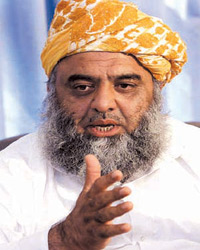
maulana-fazlur-rehman.jpgI asked [Jamiat Ulema-e-Islam chief, Maulana Fazlur] Rehman, who used to refer to the Taliban as “our boys,” if he still considered the Taliban, even those who might be firing rockets at his house, his boys. “Definitely,” he replied. “But because of America’s policies, they have gone to the extreme. I am trying to bring them back into the mainstream. We don’t disagree with the mujahedeen’s cause, but we differ over priorities. They prefer to fight, but I believe in politics.”

Mushahid Hussain, secretary general of the pro-Musharraf faction of the Pakistan Muslim League, told me that no one can negotiate the politics of the North-West Frontier Province better than Rehman. “We know that we need a bearded, turbaned guy out there,” Hussain told me. It is perhaps a measure of how inextricable Islamism and politics have become in Pakistan that even the United States would deal with an anti-American like Rehman. In September, he had the first meeting of his 30-year political career with an American ambassador. What did Rehman and Anne Patterson, the American envoy, discuss? “She urged me to form an electoral alliance with Benazir Bhutto and Musharraf,” he told me a few days after the meeting. “I am not against it. But politically, because of the American presence in Afghanistan and rising extremism, it is a bit hard for us to afford.” Plus, the fact that the Americans thought Bhutto could tackle the Taliban had simply baffled him. “She has no strategy in those areas, and nothing to do with those people,” he said.

When asked if Patterson’s meeting signaled a change in American attitudes, an embassy spokeswoman said it “reflects our approach to democratic politics in Pakistan” and was “part of a process of talking to all those who represent political movements in Pakistan, across the spectrum.” The U.S. has given more than $5 billion to Pakistan in the past few years to fight Islamist militants, but recent reports suggest that the aid has not been effective. Late last month, Congress put restrictions on some military aid and called for the restoration of democratic rights. [complete article]

Democracy gets small portion of U.S. aid

Two years before Benazir Bhutto was assassinated while leading her Pakistan People’s Party in its campaign against the rule of President Pervez Musharraf, the Bush administration devoted this much new aid money to strengthen political parties in Pakistan: $0.

The entire U.S. budget for democracy programs in Pakistan in 2006 amounted to about $22 million, according to State Department documents, much of it reserved for aiding the Election Commission — an entity largely controlled by Musharraf. That $22 million was just a small fraction of the $1.6 billion in aid the United States gave Pakistan that year, and it was equivalent to the value of jet engine and helicopter spare parts that Pakistan purchased in 2006 with the help of U.S. funds.

In the past year, as Musharraf’s grip on power became increasingly fragile, the Bush administration has scrambled to build contacts with the opposition and to provide expertise to opposition parties. The money devoted to democracy programs in the 165 million-person country was almost doubled in the fiscal 2008 budget, to $41 million, but that is still less than the $43 million set aside for such efforts in Kosovo, the former Albanian enclave of Serbia with a population of 2 million. In the region, U.S. democracy programs aimed at Afghanistan, Iraq, Iran and Egypt are all larger than the effort in Pakistan. [complete article]

At the heart of Pakistan, life keeps a normal beat

The presence of a Western journalist provokes rowdy debates. The collective answer to the question ‘Is the West anti-Islamic?’ is that governments are, but people are not. Razzaq, the teashop owner, answers the question of whether the dozen or so men there feel themselves to be Pakistani, Sindhi or Muslim. ‘We are Muslim and then Pakistani,’ he says to general approbation. The television, momentarily ignored, is tuned to a satellite TV station broadcasting in the local Sindhi, not Urdu, the national language.

Faith and politics are intertwined with local identity, too. Radical Islam that probably led to the killing of Bhutto is seen as foreign here, where the folksy, pluralistic Barelvi strand of the faith is dominant.

‘We are not extreme,’ said Maja Ali, Old Jatoi’s storekeeper. ‘We are Sindhis. We are secular and democratic people. We are not sectarian. We are not like people in other parts of Pakistan.’ The regional pride is sometimes hidden, but always there in the background. When one of the rare local supporters of Benazir Bhutto blames ‘the Punjab’ for her death, he is at the same time accusing the army, dominated by Pakistanis originating in the eastern province, and expressing a long-standing resentment against the politically and economically dominant north.

But the political debate does not last long. The villagers return to topics of more interest: the cricket, inflation and the interesting stories about the barber’s wife who, everyone agrees, is as beautiful as the heroine of a Bollywood movie, the highest possible praise. [complete article]

See also, It’s troubled, but it’s home (Mohsin Hamid).

Editor’s Comment — It’s not that the United States needs to be spending more on “democracy promotion” in Pakistan or anywhere else. Such efforts can rightly be regarded as intrusive. The need is simply to spend less on butressing governments that suppress the rights of their own people to self-determination. The will of the people has to be expressed — guess what? — by the people.

Facebooktwittermail

NEWS, ANALYSIS & EDITOR’S COMMENT: How stable is “stability”?

Ghosts that haunt Pakistan

The legend cultivated by Pakistani politicians like Ms. Bhutto and her principal civilian rival, Nawaz Sharif, cast the generals as the main villains in stifling democracy, emerging from their barracks to grab power out of Napoleonic ambition and contempt for the will of ordinary Pakistanis. It is a version of history calculated to appeal strongly to Western opinion. But it has been carefully drawn to excuse the role the politicians themselves have played in undermining democracy, by using mandates won at the polls to establish governments that rarely amounted to much more than vehicles for personal enrichment, or for pursuing vendettas against political foes.

William Dalrymple, a British author who has written widely about India and Pakistan, put it bluntly in an article for Britain’s left-of-center Guardian newspaper in 2005. “As Pakistan shows, rigid, corrupt, unrepresentative and flawed democracies without the strong independent institutions of a civil society — a free press, an independent judiciary, an empowered election commission — can foster governments that are every bit as tyrannical as any dictatorship,” he wrote. “Justice and democracy are not necessarily synonymous.” [complete article]

Musharraf apparently riding out crisis

In the first days after the Dec. 27 attack, the already unpopular Musharraf’s grip on power seemed to hang in the balance. Riots raged for three days in Karachi, Bhutto’s hometown, and across her home province of Sindh.

Much of the fury over the killing of the former prime minister and one of the most popular politicians in the country’s history was aimed directly at one man: the president. In a dozen cities, demonstrators shouted slogans such as “Musharraf, dog!” and “Musharraf, killer!”

But a scant week later, analysts and observers said the Pakistani leader appeared to have weathered the storm, methodically taking a series of steps aimed at shoring up his position, at least in the short term. [complete article]

See also, Bhutto was killed by single assassin, say investigators (The Observer), U.S. relying on two in People’s Party to help stabilize Pakistan (WP), and Sharif carrying the torch of opposition in Pakistan (LAT).

Editor’s Comment — Remember who said, “it is the practice of democracy that makes a nation ready for democracy, and every nation can start on this path”? Of course President Bush was talking about Iraq and the Middle East and it was four years ago. Pakistan isn’t in the Middle East, neoconservatism is festering in the garbage can of history, and the word on everyone’s lips is not “democracy”; it’s “stability.”

Facebooktwittermail

EDITORIAL: The vanishing facade of democracy

The vanishing facade of democracy

The undemocratic tendencies of Pervez Musharraf have never deeply offended President Bush. Even after declaring a state of emergency, firing the Supreme Court and jailing most of his political opponents, Bush claimed that, “truly,” Musharraf was “somebody who believes in democracy.” Bush, on the other hand, is somebody who truly believes in loyalty. This is the glue that holds together the edifice of his own power. Musharraf might be Bush’s most dangerous friend but the fear of what might happen if the general feels betrayed indicates why, in the name of democracy, the president has so far only asked his friend to set aside his military uniform but not relinquish the presidency.

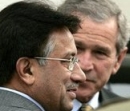
pervez-and-george.jpgAccording to Bruce Riedel, former CIA officer, National Security Council staff member and now a Brookings fellow, when Deputy Secretary of State John D. Negroponte went to Islamabad in September, “he basically delivered a message to Musharraf that we would stand by him, but he needed a democratic facade on the government, and we thought Benazir was the right choice for that face.”

The message from the Bush administration to Musharraf over the last seven years has been consistent: the appearance of democracy (or at least the promise of democracy) is more important than democracy itself.

Now, after it turns out that democracy will need a new face in Pakistan, we learn from Bhutto’s aides, that there is damning evidence that Pakistan’s Inter-Services Intelligence agency, have been busy laying the groundwork for rigging the upcoming parliamentary elections. Bhutto’s Pakistan People’s Party (PPP) has prepared a detailed report that Benazir Bhutto herself planned to share with two members of Congress in a meeting due to take place the day she was assassinated. The PPP trusted Senator Arlen Specter, a Republican, and Democratic Congressman Patrick Kennedy, rather than representatives from the Bush administration which they regard as too closely aligned with Musharraf. From The Independent we learn that:

The report compiled by the PPP apparently includes information on an alleged “safehouse” being run by the ISI in a neighbourhood of Islamabad called G-5, from which the rigging operation was run. “It was compiled from sources within the [intelligence] services who were working directly with Benazir Bhutto,” said Mr Lashari [a member of the PPP election monitoring cell].

The report names a recently retired ISI officer who has allegedly been running the rigging unit and claims he worked in tandem with another named senior intelligence officer. It also claims that US aid funds were being used for the projects.

At the heart of the scheme, the report says, was a project in which ballot papers – stamped in favour of the Pakistan Muslim League-Q (PML-Q), which supports Mr Musharraf – were to be produced by the intelligence agencies in about 100 constituencies. Mr Lashari said the effort was directed at constituencies where the result was likely to be decided by a small margin, so it would not be obvious. “They diverted money from aid activities. We had evidence of where they were spending the money,” he added.

Is it possible that the Bush administration already knew of, or had received intimations that Musharaff’s intelligence services had such a scheme in operation? Even before Bhutto’s assassination and while expectations of vote rigging remained high, the administration had no qualms about sending an assistant secretary of state up to Capitol Hill to assert in the face of deep skepticism that, “I do think they can have a good election. They can have a credible election. They can have a transparent election and a fair election.”

The aroma of complicity (which it should be noted necessitates neither foreknowledge, nor support, but simply acquiescence) is perhaps evident in the way Washington responded to Bhutto’s assassination. First came the chorus that this was the dastardly work of al Qaeda, or one of its allies, the Taliban leader, Baitullah Meshud, who is effectively the Amir of South Waziristan. Then some intelligence sources started pulling back from that line and instead suggested that this was the work of al Qaeda infiltrators in the lower echelons of Pakistan’s intelligence services. What no administration official was willing to concede was that the jihadists might in this instance have been acting as minions for high-ranking intelligence officers.

Ever since 9/11, President Bush has been a captive of his own for-us-or-against-us logic when it comes to dealing with Pervez Musharraf. If Musharraf could not be painted as an ally, the risks of turning him into an enemy seemed too daunting to contemplate. In Musharraf’s hands, nuclear deterrence became a principle with new meaning as it served to deter threats to a regime rather than a state.

Pakistan’s nuclear arsenal continues to protect Musharraf’s power for as long as Washington is paralyzed by the fear that nuclear material could slip out of his control and fall into the hands of al Qaeda. What Bush wants us to view as the Musharraf nuclear insurance policy is in fact a nuclear protection racket. Fearful of the mayhem that the boss’ removal might unleash, we have funneled billions of dollars in aid to Pakistan’s military, no strings attached, all in the tenuous name of keeping the neighborhood safe.

To those with a firm grasp on power, democracy must always appear risky and threatening. Democracy necessarily entails the dispersal of power and challenges the claims of those who would make themselves the guardians of power. Yet the pledge that all such guardians effectively make with the people they claim to be serving amounts to this: Trust me, because I can’t trust you.

Facebooktwittermail

OPINION: Replacing Bhutto

The dangerous void left behind

[Benazir Bhutto’s] longest-running battle was not with the extremists but with the army, whose leaders never trusted her. She was too secular, too worldly and perhaps too wise. Bhutto was killed leaving a political rally in Rawalpindi, just two miles from where her father, prime minister Zulfiqar Ali Bhutto, was hanged by another military dictator 30 years ago. The tragedy of the Bhutto family — her brothers also died violently, one poisoned, one shot, and her husband spent seven years in prison — has become part of the saga and struggle by Pakistanis to create a viable democratic, modern state.

Yesterday, her party’s stalwarts were on the streets, accusing Musharraf and the military of perpetrating the latest murder of a Bhutto. That is extremely unlikely, not least because last night the government itself was in despair.

The classic use of a sniper to cut her down as at least one suicide bomber blew up her vehicle bore the hallmarks of a Pakistani suicide squad expertly trained by the al-Qaeda terrorists who are ensconced in northwest Pakistan.

Her death only exacerbates the problems Pakistan has been grappling with for the past few months: how to find a modicum of political stability through a representative government that the army can accept and will not work to undermine, and how to tackle the extremism spreading in the country.

If the elections are canceled, it is imperative that Musharraf drop his single-minded desire for power and establish a national government made up of all the country’s leading politicians and parties. Together, they may agree on how to conduct an orderly election while trying to beat back the specter of extremism that is haunting this benighted land. But Musharraf may not survive the fallout of Bhutto’s death. His actions have not been honorable, and none of the political opposition is willing to sit down with him. It is unlikely that they will accept Musharraf’s continued presidency.

If rioting and political mayhem worsen, if the opposition refuses to cooperate with Musharraf and the United States finally begins to distance itself from him, then the army may be forced to tell Musharraf to call it a day. If that happens, it will be even more imperative that the world supports a national government, elections and a speedy return to civilian rule — and not another military dictatorship. [complete article]

Editor’s note: The following two articles were published a week before Benazir Bhutto’s assassination.

Aitzaz Ahsan replacing Benazir Bhutto in Washington?

The United States is silently patronizing another candidate for the post of Prime Minister or Senate or opposition leader in the next Pakistani parliament.

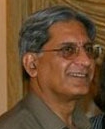
aitzaz-ahsan.jpgHe is Washington’s ‘back up man’ in Pakistan. He can replace Benazir Bhutto in case she tumbles on the way due to any reason. Aitzaz Ahsan is the next horse Washington and the CIA are betting their future on in Pakistan.

He has so far shown the required defiance to President Musharraf and is well projected within the U.S. administration as well as in the media and liberal society in the country.

Why a ‘back up man’ for Mrs. Bhutto is becoming a necessity for Washington?

The answer is simple.

Mr. Musharraf has scuttled the “conspiracy” to throw him out of power, in which at least the U.S. media played a crucial role. Washington also exerted unbelievable pressures to ease Mr. Musharraf’s supposed replacement, Benazir Bhutto, in power in Islamabad. But that entire plan has been scuttled. And Mr. Musharraf is in fact consolidating his power. He might even end up having enough majority in the next parliament to change the constitution and transform Pakistan into a presidential democracy. From the American standpoint, Musharraf needs to be restrained, since his ouster does not seem possible for the time being.

Mr. Ahsan’s ambitions have extremely offended Mrs. Bhutto and her frustration is so obvious that it is even being noted on the streets. Mr. Ahsan remains part of PPP but the party leader continues to feel seriously threatened by him as he is now the next U.S. candidate to replace her in case she fails to deliver. [complete article]

Can a democrat like Mr. Aitzaz Ahsan answer these questions?

Mr. Aitzaz Ahsan, a Pakistani politician turned rights activist, is successfully pandering to an American audience that knows zilch about Pakistan, or about Mr. Ahsan’s own history. He can wow the Americans all he wants, but only we, the ordinary Pakistanis, know Mr. Ahsan’s undemocratic history within his own political party. Welcome again to Pakistan, where the hero-of-the-month is just another feudal politician fighting for his pie. [complete article]

See also, Anti-Bhutto army factions behind murder? (B. Raman), Sharif’s party to boycott elections (AP), and Nawaz Sharif holds Musharraf responsible for Bhutto killing (Indo-Asian News Service).

Facebooktwittermail

NEWS & EDITOR’S COMMENT: Promoting democracy in Israel; war on Hamas

Adalah center says it may seek supranational regime in ‘all historic Palestine’

The Arab minority rights center, Adalah, is considering a proposal calling for a “democratic constitution for a supranational regime in all of historic Palestine,” including the territory of Israel and the Palestinian Authority. This constitutes a shift from the proposed Democratic Constitution that Adalah offered as a constitution for Israel.

While it is not clear when this change occurred, Adalah sources said Wednesday that the effort does not aim to do away with Israel or delegitimize its existence.

Adalah announced in its monthly newsletter Wednesday that it seeks to establish a group of international experts, including Palestinians and Israelis, to help “finalize the text of the Democratic Constitution.”

In its proposal for a constitution for all historic Palestine, Adalah points to the European Convention on Human Rights as a model. [complete article]

For Israel’s Arab citizens, isolation and exclusion

Fatina and Ahmad Zubeidat, young Arab citizens of Israel, met on the first day of class at the prestigious Bezalel arts and architecture academy in Jerusalem. Married last year, the couple rents an airy house here in the Galilee filled with stylish furniture and other modern grace notes.

But this is not where they wanted to live. They had hoped to be in Rakefet, a nearby town where 150 Jewish families live on state land close to the mall project Ahmad is building. After months of interviews and testing, the town’s admission committee rejected the Arab couple on the grounds of “social incompatibility.” [complete article]

Editor’s Comment — The difference between Israel and South Africa is that the South African whites took pride in their racism and thus gave it a name and a rationale. Most Israeli Jews on the other hand are too attached to their pluralistic Western image and thus an approach described as ensuring “social compatibility” refuses to accept its real name: apartheid.

Israelis cool to an offer from Hamas on a truce

Officials in the Israeli prime minister’s office reacted coolly on Wednesday to an indirect approach by the Hamas leader in Gaza offering talks on a truce.

The offer was relayed through an Israeli reporter, Sleman al-Shafhe, of Channel 2 television. On a news broadcast on Tuesday night, Mr. Shafhe said Ismail Haniya, the leader of the Hamas government in Gaza, had called him earlier in the day to convey a message to the Israelis.

According to Mr. Shafhe, Mr. Haniya said he had the ability to stop the rocket fire directed at Israel from Gaza, on condition that Israel stopped the killing of Palestinians there and lifted the blockade of Gaza.

Mr. Haniya’s call followed Israeli military strikes that killed at least 10 Palestinians in Gaza between Monday night and Tuesday morning, in a concerted effort to suppress the rocket fire. Eight of those killed were from Islamic Jihad, which has been responsible for most of the recent rocket fire, and included a top commander of the group’s military wing, Israeli officials said. [complete article]

Israeli operations in Gaza meet little resistance in Washington

As Israel stepped up air attacks on Gaza this week, the Bush administration refrained from blocking any measures or criticizing Israel’s activity.

The Israeli Air Force last week renewed the practice known as “targeted killing” against members of the Palestinian Islamic Jihad group in Gaza. Israeli officials have said in recent weeks that if rocket fire against Israeli towns is not stopped, further escalation might be imminent, including a full-scale ground incursion into the Hamas-controlled strip.

Administration officials have directed all the blame for the deteriorating situation in Gaza onto Hamas, which seized control of the area in June. Israel, according to diplomatic sources in Washington, was not asked to scale down its actions or to refrain from a ground operation. “I haven’t heard of any red light,” an Israeli official said. The administration’s policy since the recent Annapolis, Md., peace summit entails a two-pronged approach toward the Palestinian Authority. On one hand, Washington will allow Israel to take tough measures against Hamas-ruled Gaza. On the other hand, assistance will be increased to the government of Fatah leader Mahmoud Abbas in the West Bank. At a December 17 donor conference in Paris, the administration pledged $550 million in aid to Abbas’s P.A., an amount that exceeds any previous American financial assistance to the Palestinians. [complete article]

Facebooktwittermail

NEWS: Sharif excluded from upcoming election

Pakistan rejects Sharif’s election bid appeal

Pakistan’s Election Commission has upheld an election ban on former prime minister Nawaz Sharif, his lawyer said on Tuesday, barring a main rival of President Pervez Musharraf from the January polls.

Sharif, who Musharraf ousted in 1999, was allowed back from seven years of exile last month and has been campaigning for the January 8 general election despite the ban, imposed this month for past criminal convictions he says were politically motivated.

Sharif had challenged the ban, but the Election Commission rejected his appeal, saying it should be filed with an election tribunal made up of judges who swore allegiance to Musharraf after he imposed emergency rule on November 3. [complete article]

Facebooktwittermail

NEWS: Pakistan is quietly gagged

Pakistan’s news media no longer silent, but Musharraf has muted his critics

Nearly all private television channels blacked out last month by President Pervez Musharraf’s emergency decree are back on the air. But the country’s once-thriving television news media remain largely muzzled by sweeping new restrictions that journalists and Western diplomats say stifle criticism of the government.

After the blackout cost leading channels tens of millions of dollars in lost advertising revenues, owners of all but one channel agreed to stop broadcasting the country’s highest-rated political talk shows and signed the government-ordered “code of conduct.”

And under a new ordinance, unilaterally enacted by Mr. Musharraf, television journalists face up to three years in jail for broadcasting “anything which defames or brings into ridicule the head of state” and other restrictions. The law will remain in place after Mr. Musharraf ends the state of emergency, which he has promised to do on Saturday.

“He’s getting away with it, really, because the Western support is there again,” said Talat Hussain, a popular talk show host whose program is no longer aired on two stations, “Aaj TV” or “Today TV.” “There isn’t enough pressure.” [complete article]

Facebooktwittermail

OPINION: Forgeting how democracy works

Hey, young Americans, here’s a text for you

Is America still America if millions of us no longer know how democracy works?

When I speak on college campuses, I find that students are either baffled by democracy’s workings or that they don’t see any point in engaging in the democratic process. Sometimes both.

Not long ago, I gave a talk at a major university in the Midwest. “They’re going to raze our meadows and put in a shopping mall!” a young woman in the audience wailed. “And there’s nothing we can do!” she said, to the nods of young and old alike.

I stared at her in amazement and asked how old she was. When she said 26, I suggested that she run for city council. Then she stared at me– with complete incomprehension. It took me a long time to convince her and her peers in the audience that what I’d suggested was possible, even if she didn’t have money, a major media outlet of her own or a political “machine” behind her.

This lack of understanding about how democracy works is disturbing enough. But at a time when our system of government is under assault from an administration that ignores traditional checks and balances, engages in illegal wiretapping and writes secret laws on torture, it means that we’re facing an unprecedented crisis. [complete article]

Facebooktwittermail

OPINION: The price of freedom is freedom?

Here come the thought police

With overwhelming bipartisan support, Rep. Jane Harman’s “Violent Radicalization and Homegrown Terrorism Prevention Act” passed the House 404-6 late last month and now rests in Sen. Joe Lieberman’s Homeland Security Committee. Swift Senate passage appears certain.

Not since the “Patriot Act” of 2001 has any bill so threatened our constitutionally guaranteed rights.

The historian Henry Steele Commager, denouncing President John Adams’ suppression of free speech in the 1790s, argued that the Bill of Rights was not written to protect government from dissenters but to provide a legal means for citizens to oppose a government they didn’t trust. Thomas Jefferson’s Declaration of Independence not only proclaimed the right to dissent but declared it a people’s duty, under certain conditions, to alter or abolish their government.

In that vein, diverse groups vigorously oppose Ms. Harman’s effort to stifle dissent. Unfortunately, the mainstream press and leading presidential candidates remain silent. [complete article]

Facebooktwittermail

NEWS: Time running out for picking a president

What happens next in Lebanon is anyone’s guess

Despite frantic international mediation and declarations of a desire for consensus from both of Lebanon’s feuding political camps, it remains impossible to say what will happen in the few days remaining before the country risks sliding into a constitutional vacuum, a number of political analysts told The Daily Star on Tuesday.

“Nobody knows,” said Timur Goksel, former senior adviser to the United Nations Interim Force in Lebanon (UNIFIL). “I don’t know either.”

Legal expert Ziad Baroud echoed that sentiment.

“I simply don’t know,” he said. “Things are so complicated that you could hardly predict what could be the outcome. I don’t think that we have enough information. [complete article]

Facebooktwittermail

FEATURE: Ikhwan bloggers

Young Brothers in cyberspace

In September 2007, the Society of Muslim Brothers, Egypt’s largest organized political force, released a draft political party platform to a select group of around 50 Egyptian intellectuals. The response was scathing. Planks such as those advocating formation of a “higher council” of religious scholars with what looked like a legislative role and a ban on a female or Christian head of state triggered an avalanche of complaint from friend and foe alike. For the Brothers’ enemies, the draft platform was a gift from heaven, revealing at last the Islamist organization’s “true face” and justifying the constitutional ban on political parties with a “religious basis,” strengthened by the government in March with the clear purpose of preventing the Brothers from becoming a legal party. As the debate unfolded, however, a novel feature of the Brothers’ “true face” began to emerge: sustained criticism of the platform posted by young Muslim Brothers on their personal blogs. “Is this the platform of a political party or a religious organization?” queried one youthful blogger, ‘Abd al-Mun‘im Mahmoud. The posts, in turn, generated another sharp debate, not only about the platform, but also about what it means to be a member of the Brothers and the limits of public dissent.

These online discussions are a manifestation of a new trend among young Muslim Brothers and a dynamic new force inside the organization. As of the spring of 2007, there were an estimated 150 bloggers in the organization—an impressive number given that less than a year before there had been virtually none. At home in cyberspace, blogging Brothers have more in common with other young Egyptian activists, whether leftist or nationalist, than they do with their less wired peers. Their jibes at the draft platform, along with those of secular commentators, were undoubtedly one reason why the draft party platform was withdrawn for revision in late October (though leaders have said the offending clauses in the platform will not be altered). [complete article]

Facebooktwittermail

NEWS: U.S. considers military solution for Pakistan’s political crisis

U.S. considers enlisting tribes in Pakistan to fight al Qaeda

A new and classified American military proposal outlines an intensified effort to enlist tribal leaders in the frontier areas of Pakistan in the fight against Al Qaeda and the Taliban, as part of a broader effort to bolster Pakistani forces against an expanding militancy, American military officials said.

If adopted, the proposal would join elements of a shift in strategy that would also be likely to expand the presence of American military trainers in Pakistan, directly finance a separate tribal paramilitary force that until now has proved largely ineffective and pay militias that agree to fight Al Qaeda and foreign extremists, officials said. The United States now has only about 50 troops in Pakistan, a Pentagon spokesman said, a force that could grow by dozens under the new approach.

The new proposal is modeled in part on a similar effort by American forces in Anbar Province in Iraq that has been hailed as a great success in fighting foreign insurgents there. But it raises the question of whether such partnerships can be forged without a significant American military presence on the ground in Pakistan. And it is unclear whether enough support can be found among the tribes. [complete article]

Musharraf rejects U.S. pressure to lift emergency rule

President Pervez Musharraf on Saturday rebuffed pressure from a senior U.S. envoy to revoke emergency rule under the country’s current security situation, envoys said.

In a tense two-hour meeting, Deputy Secretary of State John D. Negroponte delivered a “very strong message” urging Musharraf to end the state of emergency, step down as head of the military and release of thousands of political prisoners.

“Emergency rule is not compatible with free, fair and credible elections,” Negroponte said at a news conference Sunday morning, referring to parliamentary elections set for early January. “The people of Pakistan deserve an opportunity to choose their leaders free from the restrictions that exist under a state of emergency.”

A diplomat characterized the meeting as “short of tough love, but still tough.” [complete article]

Musharraf widens his sphere of punishment

Two weeks into the crisis that began when Musharraf purged the judiciary, muzzled the media and clamped down on politicians who opposed his re-election, the full details of what the ‘state of emergency’ entails are emerging as human rights groups in Karachi, Islamabad and Lahore collect testimonies.

Retribution is being meted out on a massive scale and Pakistan’s powerful gossip mill has attributed a particular motive to Musharraf’s thinking – his aim is to ‘teach a lesson’ to those who have dared object to his belief that only he can save his country. The aim of the state of emergency has been largely to humiliate the opposition. [complete article]

See also, U.S. aims to reshape Pakistan aid (LAT), Pakistan court bulldozes through rulings for Musharraf (Reuters), and Threat to strip Benazir Bhutto of amnesty (The Sunday Times).

Facebooktwittermail

NEWS & ANALYSIS: Busharraf

Pakistanis growing frustrated with U.S.

Inside call centers and in high school social studies classes, at vegetable markets and in book bazaars, Pakistanis from different walks of life here say that ever since President Pervez Musharraf imposed emergency rule two weeks ago, he’s been the most unpopular figure in the country. But running a close second, many say, is his ally: President Bush.

“We used to love America. Give me Tom Cruise and a vacation in Florida any day,” said Parveen Aslam, 30, who like many Pakistanis has relatives in the United States. “But why isn’t the U.S. standing up for Pakistan when we need it most? Is America even listening to us? We are calling them Busharraf now. They are the same man.”

While many Pakistanis lament that the Bush administration is involved in their country’s politics, they also see the United States as the only force strong enough to do what they say is necessary to temper the crisis: pressure the military-led government to restore the constitution, release thousands of political prisoners and lift restrictions on the news media. [complete article]

Militants gain despite decree by Musharraf

Gen. Pervez Musharraf, the Pakistani president, says he instituted emergency rule for the extra powers it would give him to push back the militants who have carved out a mini-state in Pakistan’s tribal areas.

But in the last several days, the militants have extended their reach, capturing more territory in Pakistan’s settled areas and chasing away frightened policemen, local government officials said.

As inconspicuous as it might be in a nation of 160 million people, the takeover of the small Alpuri district headquarters this week was considered a particular embarrassment for General Musharraf. It showed how the militants could still thumb their noses at the Pakistani Army.

In fact, local officials and Western diplomats said, there is little evidence that the 12-day-old emergency decree has increased the government’s leverage in fighting the militants, or that General Musharraf has used the decree to take any extraordinary steps to combat them. [complete article]

Benazir vs. Musharraf is Punch vs. Judy

Musharraf didn’t declare emergency rule because he feared Bhutto’s challenge; he declared emergency rule because the Supreme Court was about to rule that he was not, in fact, legitimately the president of Pakistan, because he violated the constitution by standing for the presidency while in command of the military. And the reason Bhutto appeared to hesitate when it happened was obvious: She has as much to fear from the independent judiciary in Pakistan as Musharraf does. The same judges threatening to strip Musharraf of the presidency had also warned that the amnesty extended by him to Bhutto — absolving her of numerous corruption charges — was also illegal. (And, for good measure, the same judges had also ruled that Nawaz Sharif’s expulsion was illegal.) The last thing Bhutto needs is the rule of law and an independent judiciary in Pakistan, for that would pull the rug out from her deal with Musharraf, put her back in court, and bring her fiercest political rival back into the picture at a moment when she is increasingly vulnerable, politically, by virtue of her alliance with the U.S.

House arrest, if anything, gives Benazir political cover for avoiding the streets. Better for Bhutto to sit out whatever turmoil will come in the weeks ahead, cultivating an image of martyrdom ahead of the elections that Musharraf promises for January (although a Musharraf promise and a dollar will buy you a cup of chai at Pak Punjab on Houston Street). Remember, Bhutto’s party may be the largest single party in Pakistan, but its ceiling is about 30% of the vote. If the Washington-brokered deal is to work, Musharraf, too, needs Bhutto’s popularity to be boosted.

Proxies always have independent agendas; if they didn’t, well, they wouldn’t be proxies. So, the U.S. struggles to get Musharraf to do its bidding — because he has a far keener sense of the requirements of his own survival in a dangerous part of the world, and also of Pakistan’s strategic interests, than do his U.S. interlocutors. And Musharraf struggles to control the Taliban in the same way. The Taliban, remember, was literally created by Pakistan’s Inter Service Intelligence in the early 1990s, as a proxy force to take charge in Afghanistan and end the chaos there by establishing a monopoly of force in the hands of a Pakistan ally. This was a continuation of the U.S.-Saudi-Pakistan policy in the 1980s of using Pakistan as a sanctuary from which to train and recruit jihadis to fight the Soviets in Afghanistan, and also of Pakistan’s pursuit of its own interest to counter the power in Afghanistan of warlords allied with its key regional rivals, India and Iran — i.e. the forces grouped in the Northern Alliance. [complete article]

Students hand Khan to police

Iran Khan, one of the last remaining independent political voices at liberty in Pakistan, was attacked by hardline Islamic students yesterday and handed over to police.

With the former prime minister Benazir Bhutto under house arrest and thousands of activists and lawyers in prison, the only political force left free in the country is the religious Right. General Pervez Musharraf’s regime has not moved concertedly against the mullahs, who have always been close to the army.

Mr Khan made his first public appearance yesterday since going into hiding when the emergency was declared on 3 November. Police had sealed off all entrances to Punjab University in Lahore, where he had announced that he would address students.

Somehow he made it through the cordon, appearing suddenly just after midday, where hundreds of students had gathered, chanting slogans against the regime. He was immediately hoisted on to people’s shoulders, raising his fist in the air, amid scenes of jubilation.

But events turned nasty very quickly as the “beards” – students belonging to the feared Islami Jamiat Talba – moved in. The crowd was pushed towards a nearby building. Mr Khan was bundled inside and the gates were locked. Some claimed that he was punched repeatedly. The entrance was guarded by Jamiat students. [complete article]

See also, Imran Khan’s kin, party workers arrested (Zee News) and Musharraf swears in caretaker government (AP).

Facebooktwittermail

OPINION: The West’s silence on Egypt’s assault on human rights

Behind closed doors

The justice systems in Britain and the US may not be perfect. But viewed from Egypt, the jurisprudence and transparency that attend the vast majority of trials there are very much to be envied.

In Cairo today, some 40 leading members of the Muslim Brotherhood are facing a secret military tribunal. Thirty sessions have been held so far, while all journalists, reporters and domestic or international human rights observers have been denied access. These members of the country’s most powerful political opposition – which holds about a fifth of the seats in Egypt’s parliament – stand before this tribunal despite civilian courts acquitting them four times of all charges brought by the notorious state security prosecutor, describing them as “fabricated, groundless, and politically motivated”.

They are standing before the tribunal despite a court ruling that found the president’s decision to transfer them to a military tribunal “unconstitutional”, on the basis that they are civilian opposition leaders who should be tried by civilian courts. The treatment of these representatives of the region’s largest Islamist movement, which advocates a moderate, peaceful approach, has been roundly condemned by international human rights organisations, including Amnesty International and Human Rights Watch. [complete article]

Facebooktwittermail

NEWS: Fight against terrorism threatens “fundamental principles of a democratic society”

Panel decries terrorism blacklist process

The methods used by the United Nations and the European Union for blacklisting terrorism suspects are “totally arbitrary” and “violate the fundamental principles of human rights and rule of law,” a European human rights panel said Monday.

The Council of Europe’s legal committee urged an overhaul of international regulations so that individuals and groups being blacklisted — which imposes a freeze on assets and a ban on traveling — would have access to evidence against them, rights to a fair trial or impartial review within a reasonable time and compensation for wrongful designation as a terrorist. [complete article]

Facebooktwittermail