Robin Wright writes: Rouhani’s victory, an upset, spawned great expectations of change. A pragmatic centrist, he campaigned on the promise of “hope and prudence.” After the election, in a series of speeches and tweets, he pledged new freedoms and challenged past practices, including censorship. His quasi-official account tweeted, “Web filtering unable to produce results. Which important piece of news has #filtering been able to black out in recent years.” Rouhani was particularly tough on the country’s state-controlled television, Islamic Republic of Iran Broadcasting (I.R.I.B.):
#Rouhani: If day comes that #IRIB has more news coverage than foreign channels such as BBC, people will reconcile with it
— Hassan Rouhani (@HassanRouhani) July 3, 2013
#Rouhani: When #IRIB airs birth of panda in China but nothing abt unpaid workers protesting, obvious that ppl & youth will ignore it
— Hassan Rouhani (@HassanRouhani) July 3, 2013
Over the past year, though, Rouhani has conspicuously failed to uphold his promise. “We have freedom of expression in Iran,” Shamsolvaezin told me. “We just don’t have freedom after expression.” In accepting his press award, in April, Shamsolvaezin called for the release of forty-eight other jailed journalists.
Rouhani’s domestic agenda has generally suffered in his first year, while he concentrated on foreign policy—and, almost single-mindedly, on negotiating a nuclear deal with the world’s six major powers. (Talks will resume next week in Vienna.)
In the meantime, Iran maintains a bifurcated legal system that can charge people on vague grounds of un-Islamic behavior or unrevolutionary activities. Rouhani has been unwilling to take on either Iran’s deep state — a mix of security and intelligence agencies with their own political agendas — or the judiciary, over which he has no constitutional control. In addition to civil and criminal courts, Iran has Islamic revolutionary courts. Amnesty International warned last week that “despite President Rouhani’s popular mandate, Iran’s clerically-dominated politico-religious establishment, headed by Supreme Leader Ayatollah Ali Khamenei, and hardliners within its security and judicial sectors, retain enormous power and influence and, to a large extent, continue to have the determining voice on the nature and pace of change in Iran.” As Shamsolvaezin put it, “The ruling system is the deep state.” [Continue reading…]
Category Archives: human rights
Major terrorism trial could be held in secret for first time in UK legal history
The Guardian reports: A major terrorism trial is set to be held entirely in secret for the first time in British legal history in an unprecedented departure from the principles of open justice, the court of appeal has heard.
The identities of the two defendants charged with serious terror offences are being withheld from the public, and the media are banned from being present in court to report the forthcoming trial against the two men, known only as AB and CD.
The unprecedented secrecy has been imposed on the proceedings after the Crown Prosecution Service obtained legal orders to withhold the names of the defendants and allow the trial to take place in private on the grounds, they said, of national security.
At the court of appeal in London, Anthony Hudson, representing the Guardian and several other media organisations, challenged the orders, which will allow a secret criminal trial to take place for the first time in legal history. [Continue reading…]
Guantanamo prisoners get to play video games in a recliner — while being force-fed
Jason Leopold reports: Military officials at the Guantanamo Bay detention facility are attempting to make force-feeding a little more fun for detainees. Some longterm hunger strikers can now kick back in a plush recliner — well, not literally, since their ankles are restrained by shackles — and play video games or watch TV while being tube fed a liquid nutritional supplement.
The policy was implemented last October at about the same time prison officials were rewriting a new standard operating procedure that rebranded the hunger strikes as “long-term non-religious fasts.”
VICE News obtained from Guantanamo attorneys newly unsealed declarations in a lawsuit filed by a detainee who is challenging the legality of the force-feeding process. In one sworn declaration, Army Colonel John Bogdan discussed the new reclining chair policy. He said it only applies to detainees who are “compliant.” [Continue reading…]
Afghanistan 2016 withdrawal keeps secret Bagram detainees in limbo
The Guardian reports: President Barack Obama’s decision to keep American troops in Afghanistan until 2016 is likely to mean two more years behind bars for America’s most secret detainee population, according to Pentagon officials.
On the outskirts of the massive Bagram airfield, about an hour’s drive from the capital of Kabul and in what the military calls the Detention Facility in Parwan, the US holds about 50 prisoners. The government has publicly disclosed nearly nothing about them, not even their names, save for acknowledging that they are not Afghans.
These are the last detainees the US holds in the Afghanistan war. It relinquished hundreds of Afghan detainees, and almost all of the detention facility, to Afghan control last year. Sometimes called, in military parlance, “Enduring Security Threats”, the non-Afghans have posed a dilemma for the Department of Defense for years, as officials pondered what to do about them ahead of a pullout that had been anticipated for December 2014. [Continue reading…]
Obama administration continues to obstruct release of drone strike memo
The New York Times reports: One week after the Obama administration said it would comply with a federal appeals court ruling ordering it to make public portions of a Justice Department memo that signed off on the targeted killing of a United States citizen, the administration is now asking the court for permission to censor additional passages of the document.
In the interim, the Senate voted narrowly last week to confirm David Barron, the former Justice Department official who was the memo’s principal author, to an appeals court judgeship. At least one Democratic senator who had opposed Mr. Barron over the secrecy surrounding his memo voted for him after the administration said it would release it.
The 41-page memo, dated July 16, 2010, cleared the way for a drone strike in Yemen in September 2011 that killed Anwar al-Awlaki, an American citizen accused by intelligence officials of plotting terrorist attacks. The American Civil Liberties Union and The New York Times are seeking the memo’s public disclosure in lawsuits under the Freedom of Information Act.[Continue reading…]
The case for reparations
Ta-Nehisi Coates writes: Clyde Ross was born in 1923, the seventh of 13 children, near Clarksdale, Mississippi, the home of the blues. Ross’s parents owned and farmed a 40-acre tract of land, flush with cows, hogs, and mules. Ross’s mother would drive to Clarksdale to do her shopping in a horse and buggy, in which she invested all the pride one might place in a Cadillac. The family owned another horse, with a red coat, which they gave to Clyde. The Ross family wanted for little, save that which all black families in the Deep South then desperately desired — the protection of the law.
In the 1920s, Jim Crow Mississippi was, in all facets of society, a kleptocracy. The majority of the people in the state were perpetually robbed of the vote—a hijacking engineered through the trickery of the poll tax and the muscle of the lynch mob. Between 1882 and 1968, more black people were lynched in Mississippi than in any other state. “You and I know what’s the best way to keep the nigger from voting,” blustered Theodore Bilbo, a Mississippi senator and a proud Klansman. “You do it the night before the election.”
The state’s regime partnered robbery of the franchise with robbery of the purse. Many of Mississippi’s black farmers lived in debt peonage, under the sway of cotton kings who were at once their landlords, their employers, and their primary merchants. Tools and necessities were advanced against the return on the crop, which was determined by the employer. When farmers were deemed to be in debt—and they often were—the negative balance was then carried over to the next season. A man or woman who protested this arrangement did so at the risk of grave injury or death. Refusing to work meant arrest under vagrancy laws and forced labor under the state’s penal system.
Well into the 20th century, black people spoke of their flight from Mississippi in much the same manner as their runagate ancestors had. In her 2010 book, The Warmth of Other Suns, Isabel Wilkerson tells the story of Eddie Earvin, a spinach picker who fled Mississippi in 1963, after being made to work at gunpoint. “You didn’t talk about it or tell nobody,” Earvin said. “You had to sneak away.”
When Clyde Ross was still a child, Mississippi authorities claimed his father owed $3,000 in back taxes. The elder Ross could not read. He did not have a lawyer. He did not know anyone at the local courthouse. He could not expect the police to be impartial. Effectively, the Ross family had no way to contest the claim and no protection under the law. The authorities seized the land. They seized the buggy. They took the cows, hogs, and mules. And so for the upkeep of separate but equal, the entire Ross family was reduced to sharecropping.
This was hardly unusual. In 2001, the Associated Press published a three-part investigation into the theft of black-owned land stretching back to the antebellum period. The series documented some 406 victims and 24,000 acres of land valued at tens of millions of dollars. The land was taken through means ranging from legal chicanery to terrorism. “Some of the land taken from black families has become a country club in Virginia,” the AP reported, as well as “oil fields in Mississippi” and “a baseball spring training facility in Florida.” [Continue reading…]
Guantánamo prosecutor fights handing secrets over to defense
The New York Times reports: The chief prosecutor at the Guantánamo Bay war-crimes court has asked a judge to set aside an order that requires the government to give defense lawyers sweeping amounts of classified details related to the Central Intelligence Agency’s treatment of Abd al-Rahim al-Nashiri, a Saudi detainee accused of orchestrating the 2000 bombing of the destroyer Cole.
In a pretrial motion declassified last week, the prosecutor, Brig. Gen. Mark S. Martins, cited Obama administration efforts to declassify information related to a Senate Intelligence Committee report about the detention and interrogation program. That process, he said, should be allowed to play out.
Richard Kammen, an Indianapolis defense lawyer representing Mr. Nashiri, said in a phone interview that he was drafting a motion to oppose any attempts to reverse the judge’s order. He noted that he had a security clearance, and said the information he was seeking was for his own investigations and was not necessarily going to be made public. [Continue reading…]
How many have we killed with drones?
David Cole writes: On Monday, The New York Times reported that “the Senate has quietly stripped a provision from an intelligence bill that would have required President Obama to make public each year the number of people killed or injured in targeted killing operations in Pakistan and other countries where the United States uses lethal force.” National security officials in the Obama administration objected strongly to having to notify the public of the results and scope of their dirty work, and the Senate acceded. So much for what President Obama has called “the most transparent administration in history.”
The Senate’s decision is particularly troubling in view of how reticent the administration itself continues to be about the drone program. To date, Obama has publicly admitted to the deaths of only four people in targeted killing operations. That came in May 2013, when, in conjunction with a speech at the National Defense University, and, in his words, “to facilitate transparency and debate on the issue,” President Obama acknowledged for the first time that the United States had killed four Americans in drone strikes. But according to credible accounts, Obama has overseen the killing of several thousand people in drone strikes since taking office. Why only admit to the four Americans’ deaths? Is the issue of targeted killings only appropriate for debate when we kill our own citizens? Don’t all human beings have a right to life?
In the NDU speech, President Obama also announced new limits on the use of drones “beyond the Afghan theater.” He proclaimed that drone strikes would be authorized away from the battlefield only when necessary to respond to “continuing and imminent threats” posed by people who cannot be captured or otherwise countermanded. Most important, he said, “before any strike is taken, there must be near-certainty that no civilians will be killed or injured—the highest standard we can set.” Yet in December, a US drone strike in Yemen reportedly struck a wedding party. The New York Times reported that while some of the victims may have been linked to al-Qaeda, the strike killed “at least a half dozen innocent people, according to a number of tribal leaders and witnesses.” [Continue reading…]
Mystery surrounds move of Afghan ‘torturer in chief’ to U.S. amid allegations of spy agency abuse
The Washington Post reports: In Afghanistan, his presence was enough to cause prisoners to tremble. Hundreds in his organization’s custody were beaten, shocked with electrical currents or subjected to other abuses documented in human rights reports. Some allegedly disappeared.
And then Haji Gulalai disappeared as well.
He had run Afghan intelligence operations in Kandahar after the U.S.-led invasion in 2001 and later served as head of the spy service’s detention and interrogation branch. After 2009, his whereabouts were unknown.
Because of his reputation for brutality, Gulalai was someone both sides of the war wanted gone. The Taliban tried at least twice to kill him. Despite Gulalai’s ties to the CIA and Afghan President Hamid Karzai, United Nations officials and U.S. coalition partners sought to rein him in or have him removed.
Today, Gulalai lives in a pink two-story house in Southern California, on a street of stucco homes on the outskirts of Los Angeles. [Continue reading…]
U.S. senators remove requirement for disclosure over drone strike victims
The Guardian reports: At the behest of the director of national intelligence, US senators have removed a provision from a major intelligence bill that would require the president to publicly disclose information about drone strikes and their victims.
The bill authorizing intelligence operations in fiscal 2014 passed out of the Senate intelligence committee in November, and it originally required the president to issue an annual public report clarifying the total number of “combatants” and “noncombatant civilians” killed or injured by drone strikes in the previous year. It did not require the White House to disclose the total number of strikes worldwide.
But the Guardian has confirmed that Senate leaders have removed the language as they prepare to bring the bill to the floor for a vote, after the director of national intelligence, James Clapper, assured them in a recent letter that the Obama administration was looking for its own ways to disclose more about its highly controversial drone strikes. [Continue reading…]
Karen Greenberg: Abu Ghraib never left us
In mid-April, Abu Ghraib was closed down. It was a grim end for the Iraqi prison where the Bush administration gave autocrat Saddam Hussein a run for his money. The Iraqi government feared it might be overrun by an al-Qaeda offshoot that calls itself the Islamic State of Iraq and the Levant. By then, the city of Fallujah for which American troops had fought two bitter, pitched battles back in 2004 had been in the hands of those black-flag-flying insurgents for months. Needless to say, the American project in Iraq, begun so gloriously — remember Iraqi exiles assuring Vice President Cheney that the invaders would be greeted with “sweets and flowers” — was truly in ruins. By then, hundreds of thousands had died in the aftermath of the 2003 invasion, the insurgencies that followed, and the grimmest of sectarian civil wars. And the temperature was rising anew in that divided land, where only the Kurdish north was relatively peaceful. Iraq was once again threatening to fracture, with suicide bombers and car bombs daily occurrences, especially in Shiite areas of the country, and the body count rising rapidly.
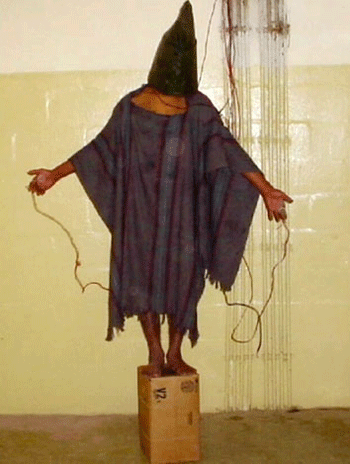
The legacy of America’s Iraq is essentially an oil-producing wreck of a state with another autocrat in power, a Shiite government allied to Iran in Baghdad, and a Sunni population in revolt. That, in short, is the upshot of Washington’s multi-trillion-dollar war. It might be worth a painting by George W. Bush. Or maybe the former president should reserve his next round of oils not for the world leaders he met (and Googled), but for those iconic photos from the prison that might have closed in Iraq, but will never close in the American mind. From the torture troves of Abu Ghraib, there are so many scenes that the former president could focus on in his days of tranquil retirement.
Those photos from hell were, at the time, so run-of-the-mill for the new American Iraq (“as common as cornflakes”) that they were used as screen-savers by U.S. military guards at that prison. The images then returned to the United States as computer “wallpaper” before making it onto “60 Minutes II” and into our collective brains. They revealed to this country for the first time that, post-9/11, Washington had taken a cue from the Marquis de Sade and any other set of sadists you cared to invoke. Of course, the photos and the systematic torture and abuse that went with them at Abu Ghraib were quickly blamed on the usual “few bad apples” and “some hillbilly kids out of control.”
As it happened, those photos that first entered public consciousness 10 years ago this week exposed a genuine American nightmare that led right to the top in Washington and has never ended. Included in the debacle were Justice Department lawyers who, at the bidding of the highest officials in the land, redefined torture in remarkable ways. They made it clear, for instance, that the only person who could affirm whether torture had actually taken place was the torturer himself. (If he didn’t think he had tortured, he hadn’t, or so the reasoning then went.)
No one has followed this endlessly grim tale more assiduously than TomDispatch regular Karen Greenberg, the chronicler of the creation of the prison at Guantanamo Bay and the editor of The Torture Papers: The Road to Abu Ghraib. Today, she explores the shameful tale of why, a decade later, the Abu Ghraib affair remains without an end. Tom Engelhardt
The road from Abu Ghraib
A torture story without a hero or an ending
By Karen J. GreenbergIt’s mind-boggling. Torture is still up for grabs in America. No one questions anymore whether the CIA waterboarded one individual 83 times or another 186 times. The basic facts are no longer in dispute either by those who champion torture or those who, like myself, despise the very idea of it. No one questions whether some individuals died being tortured in American custody. (They did.) No one questions that it was a national policy devised by those at the very highest levels of government. (It was.) But many, it seems, still believe that the torture policy, politely renamed in its heyday “the enhanced interrogation program,” was a good thing for the country.
Now, the nation awaits the newest chapter in the torture debate without having any idea whether it will close the book on American torture or open a path of pain and shame into the distant future. No one yet knows whether we will be allowed to awake from the nightmarish and unacceptable world of illegality and obfuscation into which torture and the network of offshore prisons, or “black sites,” plunged us all.
The living death of solitary confinement
Lisa Guenther writes: I first met Five Omar Mualimm-ak at a forum on solitary confinement in New York City. He wore track shoes with his tailored suit. ‘As long as the Prison Industrial Complex keeps running, so will I,’ he explained. After hearing him speak about the connections between racism, poverty, mass incarceration and police violence, I invited Five to speak at a conference I was organising in Nashville, Tennessee. He arrived, as always, in a suit and track shoes. As we walked across campus to a conference reception, I worked up the courage to ask him how he got his name. He told me: ‘I spent five years in solitary confinement, and when I came out I was a different person.’
In an article for The Guardian last October, Five described his isolation as a process of sensory and existential annihilation:
After only a short time in solitary, I felt all of my senses begin to diminish. There was nothing to see but grey walls. In New York’s so-called special housing units, or SHUs, most cells have solid steel doors, and many do not have windows. You cannot even tape up pictures or photographs; they must be kept in an envelope. To fight the blankness, I counted bricks and measured the walls. I stared obsessively at the bolts on the door to my cell.
There was nothing to hear except empty, echoing voices from other parts of the prison. I was so lonely that I hallucinated words coming out of the wind. They sounded like whispers. Sometimes, I smelled the paint on the wall, but more often, I just smelled myself, revolted by my own scent.
There was no touch. My food was pushed through a slot. Doors were activated by buzzers, even the one that led to a literal cage directly outside of my cell for one hour per day of ‘recreation’.
Even time had no meaning in the SHU. The lights were kept on for 24 hours. I often found myself wondering if an event I was recollecting had happened that morning or days before. I talked to myself. I began to get scared that the guards would come in and kill me and leave me hanging in the cell. Who would know if something happened to me? Just as I was invisible, so was the space I inhabited.
The very essence of life, I came to learn during those seemingly endless days, is human contact, and the affirmation of existence that comes with it. Losing that contact, you lose your sense of identity. You become nothing.
Five’s experience of solitary confinement is extreme, but it’s not atypical. His feeling of disconnection from the world, to the point of losing his capacity to make sense of his own identity and existence, raises philosophical questions about the relation between sense perception, sociality, and a meaningful life. Why does prolonged isolation typically corrode a prisoner’s ability to perceive the world and to sustain a meaningful connection with his own existence? The short answer to this question is that we are social beings who rely on our interactions with other people to make sense of things. But what does it mean to exist socially, and what is the precise connection between our relations with others, our perception of the world, and the affirmation of our own existence?
My response to this question is shaped by the philosophical practice of phenomenology. Phenomenology begins with a description of lived experience and reflects on the structures that make this experience possible and meaningful. The main insight of phenomenology is that consciousness is relational. [Continue reading…]
Tom Engelhardt: Knowledge is crime
Why kidnapping, torture, assassination, and perjury are no longer crimes in Washington
By Tom Engelhardt
How the mighty have fallen. Once known as “Obama’s favorite general,” James Cartwright will soon don a prison uniform and, thanks to a plea deal, spend 13 months behind bars. Involved in setting up the earliest military cyberforce inside U.S. Strategic Command, which he led from 2004 to 2007, Cartwright also played a role in launching the first cyberwar in history — the release of the Stuxnet virus against Iran’s nuclear program. A Justice Department investigation found that, in 2012, he leaked information on the development of that virus to David Sanger of the New York Times. The result: a front-page piece revealing its existence, and so the American cyber-campaign against Iran, to the American public. It was considered a serious breach of national security. On Thursday, the retired four-star general stood in front of a U.S. district judge who told him that his “criminal act” was “a very serious one” and had been “committed by a national security expert who lost his moral compass.” It was a remarkable ending for a man who nearly reached the heights of Pentagon power, was almost appointed chairman of the Joint Chiefs of Staff, and had the president’s ear.
In fact, Gen. James Cartwright has not gone to jail and the above paragraph remains — as yet — a grim Washington fairy tale. There is indeed a Justice Department investigation open against the president’s “favorite general” (as Washington scribe to the stars Bob Woodward once labeled him) for the possible leaking of information on that virus to the New York Times, but that’s all. He remains quite active in private life, holding the Harold Brown Chair in Defense Policy Studies at the Center for Strategic and International Studies, as a consultant to ABC News, and on the board of Raytheon, among other things. He has suffered but a single penalty so far: he was stripped of his security clearance.
A different leaker actually agreed to that plea deal for the 13-month jail term. Nearly three weeks ago, ex-State Department intelligence analyst Stephen E. Kim pled guilty to “an unauthorized disclosure of national defense information.” He stood before U.S. District Judge Colleen Kollar-Kotelly, who offered those stern words of admonition, and took responsibility for passing classified information on the North Korean nuclear program to Fox News reporter James Rosen in 2009.
Still, someday Cartwright might prove to be unique in the annals of Obama era jurisprudence — the only Washington figure of any significance in these years to be given a jail sentence for a crime of state. Whatever happens to him, his ongoing case highlights a singular fact: that there is but one crime for which anyone in America’s national security state can be held accountable in a court of law, and that’s leaking information that might put those in it in a bad light or simply let the American public know something more about what its government is really doing.
If this weren’t Washington 2014, but rather George Orwell’s novel 1984, then the sign emblazoned on the front of the Ministry of Truth — “War is Peace, Freedom is Slavery, Ignorance is Strength” — would have to be amended to add a fourth slogan: Knowledge is Crime.
CIA torture architect: ‘I’m just a guy who got asked to do something for his country’
Jason Leopold reports: Dr James Elmer Mitchell has been called a war criminal and a torturer. He has been the subject of an ethics complaint, and his methods have been criticized in reports by two congressional committees and by the CIA’s internal watchdog.
But the retired air force psychologist insists he is not the monster many have portrayed him to be.
“The narrative that’s out there is, I walked up to the gate of the CIA, knocked on the door and said: ‘Let me in, I want to torture people, and I can show you how to do it.’ Or someone put out an ad on Craigslist that said, ‘Wanted: psychologist who is willing to design torture program.’ It’s a lot more complicated than that,” Mitchell told the Guardian in his first public comments since he was linked to the CIA’s enhanced interrogation program seven years ago.
“I’m just a guy who got asked to do something for his country by people at the highest level of government, and I did the best that I could.”
Mitchell is featured prominently in a new report prepared by the Senate select committee on intelligence, which spent five years and more than $40m studying the CIA’s detention and interrogation program.
The findings, according to a summary leaked to McClatchy, are damning: that the agency misled the White House, Congress and the American people; that unauthorised interrogation methods were used; that the legal opinions stating the techniques did not break US torture laws were flawed; and perhaps most significant, that the torture yielded no useful intelligence. [Continue reading…]
Britain increasingly invokes power to disown its citizens
The New York Times reports: The letter informing Mohamed Sakr that he had been stripped of his British citizenship arrived at his family’s house in London in September 2010. Mr. Sakr, born and raised here by British-Egyptian parents, was in Somalia at the time and was suspected by Western intelligence agencies of being a senior figure in the Shabab, a terrorist group linked to Al Qaeda.
Seventeen months later, an American drone streaked out of the sky in the Lower Shabelle region of Somalia and killed Mr. Sakr. An intelligence official quoted in news reports called him a “very senior Egyptian,” though he never held an Egyptian passport. A childhood friend of Mr. Sakr, Bilal al-Berjawi, a Lebanese-Briton also stripped of his citizenship by the British government, was killed in a drone strike a month earlier, after having escaped an attack in June 2011.
Senior American and British officials said there was no link between the British government’s decision to strip the men of their citizenship and the subsequent drone strikes against them, though they said the same intelligence may have led to both actions.
But the sequence of events effectively allowed the British authorities to sidestep questions about due process under British law, mirroring the debate in the United States over the rights of American citizens who are deemed terrorist threats. The United States and Britain have a long history of intelligence sharing and cooperation in fighting terrorist threats. [Continue reading…]
CIA’s use of harsh interrogation went beyond legal authority, Senate report says
McClatchy reports: A still-secret Senate Intelligence Committee report calls into question the legal foundation of the CIA’s use of waterboarding and other harsh interrogation techniques on suspected terrorists, a finding that challenges the key defense on which the agency and the Bush administration relied in arguing that the methods didn’t constitute torture.
The report also found that the spy agency failed to keep an accurate account of the number of individuals it held, and that it issued erroneous claims about how many it detained and subjected to the controversial interrogation methods. The CIA has said that about 30 detainees underwent the so-called enhanced interrogation techniques.
The CIA’s claim “is BS,” said a former U.S. official familiar with evidence underpinning the report, who asked not to be identified because the matter is still classified. “They are trying to minimize the damage. They are trying to say it was a very targeted program, but that’s not the case.” [Continue reading…]
It is the second degree torture, when the torturer singles out someone else for abuse, that plays on your mind
Clive Stafford Smith writes: Two nights ago I watched The Railway Man at a local film festival. Afterwards, one of the writers, Andy Paterson, was being interviewed by Jon Ronson, the curator of the event. They discussed how Colin Firth’s character, Eric Lomax, had suffered from post-traumatic stress disorder (PTSD) as a result of his torture by the Japanese during the second world war. Paterson had just returned from Tokyo, where it became clear to him that most Japanese people have not got to grips with what happened on the Thai-Burma railway.
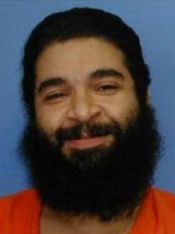
I wonder how long it will take us to understand what we are continuing to do to Shaker Aamer in Guantánamo Bay?
I have represented Aamer unsuccessfully for a long time, and we have just received the first independent medical evaluation of him in 12 years. Dr Emily Keram, a respected psychiatrist, despairs for him as long as he remains in Guantánamo Bay. Her report makes for devastating and depressing reading.
Because of society’s eternal prejudices, I am loth to discuss Aamer’s mental health status, but ultimately I must. So let me preface it with an admission: I, too, suffer from PTSD, albeit on an inconsequential scale when compared with either Aamer or Lomax. My own flashbacks, black-and-white negatives of what I witnessed, stem from watching six of my clients die – two each in the electric chair, in the gas chamber and on the lethal injection gurney. The hardest was Nicholas Ingram. I was born in the same hospital as him, and he was electrocuted in a gratuitously grotesque manner.
For Aamer, yes there was all the physical abuse, from beatings, to strappado (dislocating the shoulders by hanging by the wrists), most of which happened to Lomax. But it was the second degree torture (originated by the Spanish Inquisition) that got to Aamer most – when the torturer singles out someone else for abuse and plays on your mind. The American interrogators assured him that they had his family, and they described what they were going to do to his daughter, then five years old: “They are going to screw her. She will be screaming, ‘Daddy! Daddy!'”
I have a five-year-old myself. No wonder Aamer told Keram he felt powerless, guilty that he had failed his kids, his mind imploding. [Continue reading…]
Senate panel finds CIA illegally interrogated terror suspects after 9/11
McClatchy reports: CIA officers subjected some terrorism suspects the agency held after the Sept. 11 attacks to interrogation methods that were not approved by either the Justice Department or their own headquarters and illegally detained 26 of the 119 in CIA custody, the Senate Intelligence Committee has concluded in its still-secret report, McClatchy has learned.
The spy agency program’s reliance on brutal techniques _ much more abusive than previously known _ and its failure to gather valuable information from the detainees harmed the U.S.’s credibility, according to the committee’s findings in its scathing 6,300-page report on the CIA’s interrogation and detention program.
The agency also repeatedly misled the Justice Department while stymieing Congress’ and the White House’s efforts to oversee the secret and now-defunct program, McClatchy has learned.
In all, the committee came to 20 conclusions about the CIA’s harsh interrogation tactics after spending six years and $40 million evaluating the controversial program, which began during the Bush administration.
The committee voted 11-3 Thursday to declassify an executive summary and conclusions. The findings and summary now will go to the White House and CIA for eventual public release. [Continue reading…]