Category Archives: human rights

Judge, jury, and executioner: Obama gets Awlaki. Can the president kill his way to re-election?

Spencer Ackerman reports:

An American citizen responsible for taking al-Qaida’s message viral has been killed in Yemen, according to the Yemeni government. As a target, the Obama administration considered him second only to Osama bin Laden. But don’t expect al-Qaida’s surging Yemeni cell to grow much weaker as a result.

Anwar al-Awlaki, a New Mexico-born extremist, was reportedly killed while traveling in southern Yemen, his base of operations for years. The Yemeni government made the announcement of Awlaki’s death on Friday, but left out the circumstances — notably, who killed Awlaki.

Agence France Presse reports that “tribal sources” said Awlaki was killed “in air strike that hit two vehicles in Marib province.” If true, that means the U.S. killed Awlaki. Not only does Yemen lack the capability for a precision air strike, but joint CIA and U.S. Special Operations Forces teams have stepped up both intelligence and strike operations in the past year, including armed drone flights. Indeed, Rep. Peter King, the chairman of the House homeland-security committee, jumped the gun by praising President Obama and U.S. intelligence for Awlaki’s death.

It would also mean that the Obama administration assassinated an American citizen without due process of law. Ever since evidence emerged in late 2009 that Awlaki communicated with both Fort Hood shooter Maj. Nidal Malik Hasan and would-be Christmas bomber Umar Farouk Abdulmutallab, the U.S. has launched numerous air strikes in the hope of killing him. A bevy of U.S. counterterrorism officials have testified that Awlaki plays an “operational” role in al-Qaida in the Arabian Peninsula. None have offered any evidence for that conclusion.

In 2008 Obama was able to inspire a grassroots campaign, mobilizing young people across America with the bland and non-committal slogan: “Change We Can Believe In.” Now we have an even less meaningful “Obama for America” in 2012. Maybe it should be: “Obama — the lean, mean, killing machine,” or “Obama: on target for 2012.”

There’s no way he can get re-elected on the strength of the economy, so maybe it will come down to this: being able to kill the right people at the right time.

David Axelrod is probably gathering reports right now on whether Obama’s latest assassination is really going to be a vote winner. There might not be the same expression of jubilation that accompanied Osama bin Laden’s killing, so maybe this will have to be decided by focus groups.

This is a great day for America,” a senior administration official says. That’s what they think in the White House. And then there are those of us left to wonder whether by the end of his first term, we’ll end up sick and bemused, having concluded: Obama turned out to be worse than Bush.

Glenn Greenwald writes:

It was first reported in January of last year that the Obama administration had compiled a hit list of American citizens whom the President had ordered assassinated without any due process, and one of those Americans was Anwar al-Awlaki.  No effort was made to indict him for any crimes (despite a report last October that the Obama administration was “considering” indicting him).  Despite substantial doubt among Yemen experts about whether he even has any operational role in Al Qaeda, no evidence (as opposed to unverified government accusations) was presented of his guilt.  When Awlaki’s father sought a court order barring Obama from killing his son, the DOJ argued, among other things, that such decisions were “state secrets” and thus beyond the scrutiny of the courts.  He was simply ordered killed by the President: his judge, jury and executioner.  When Awlaki’s inclusion on President Obama’s hit list was confirmed, The New York Times noted that “it is extremely rare, if not unprecedented, for an American to be approved for targeted killing.”

After several unsuccessful efforts to assassinate its own citizen, the U.S. succeeded today (and it was the U.S.).  It almost certainly was able to find and kill Awlaki with the help of its long-time close friend President Saleh, who took a little time off from murdering his own citizens to help the U.S. murder its.  The U.S. thus transformed someone who was, at best, a marginal figure into a martyr, and again showed its true face to the world.  The government and media search for The Next bin Laden has undoubtedly already commenced.

Facebooktwittermail

A secret license to kill

David Cole writes:

On Friday, a front-page New York Times story reported that a rift has emerged within the Obama Administration over whether it has authority to kill “rank-and-file” Islamist militants in foreign countries in which there is not an internationally recognized “armed conflict.” The implications of this debate are not trivial: Imagine that Russia started killing individuals living in the United States with remote-controlled drone missiles, and argued that it was justified in doing so because it had determined, in secret, that they posed a threat to Russia’s security, and that the United States was unwilling to turn them over. Would we calmly pronounce such actions compliant with the rule of law? Not too likely.

And yet that is precisely the argument that the Obama Administration is now using in regard to American’s own actions in places like Yemen and Somalia—and by extension anywhere else it deems militant anti-US groups may be taking refuge. On the same day the Times article appeared, John Brennan, President Obama’s senior advisor on homeland security and counterterrorism, gave a speech at Harvard Law School in which he defended the United States’ use of drones to kill terrorists who are far from any “hot battlefield.” Brennan argued that the United States is justified in killing members of violent Islamist groups far from Afghanistan if they pose a threat to the United States, even if the threat is not “imminent” as that term has traditionally been understood. (As if to underscore the point, The Washington Post reports that the US has “significantly increased” its drone attacks in Yemen in recent months, out of fears that the government may collapse.)

In international law, where reciprocity governs, what is lawful for the goose is lawful for the gander. And when the goose is the United States, it sets a precedent that other countries may well feel warranted in following. Indeed, exploiting the international mandate to fight terrorism that has emerged since the September 11 attacks, Russia has already expanded its definition of terrorists to include those who promote “terrorist ideas”—for example, by distributing information that might encourage terrorist activity— and to authorize the Russian government to target “international terrorists” in other countries. It may seem fanciful that Russia would have the nerve to use such an authority within the United States—though in the case of Alexsander Litvinenko it appears to have had few qualms about taking extreme measures to kill an individual who had taken refuge in the United Kingdom. But it is not at all fanciful that once the US proclaims such tactics legitimate, other nations might seek to use them against their less powerful neighbors.

Facebooktwittermail

Saudi Arabia executes man convicted of ‘sorcery’

Saudi Arabia’s government should establish an immediate moratorium on executions in the kingdom, Amnesty International said today after a Sudanese man convicted of “sorcery” was put to death.

Abdul Hamid bin Hussain bin Moustafa al-Fakki was beheaded in Madina on Monday. Saudi Arabia has now executed 44 people this year. Eleven were foreign nationals.

“Abdul Hamid’s execution is appalling as is Saudi Arabia’s continuing use of this most cruel and extreme penalty,” said Malcolm Smart, Amnesty International’s Director for the Middle East and North Africa.

“That he should have been executed without having committed anything that would appear to constitute a crime is yet another deeply upsetting example of why the Saudi Arabian government should immediately cease executions and take steps to abolish the death penalty.”

The crime of “sorcery” is not defined in Saudi Arabian law but it has been used to punish people for the legitimate exercise of their human rights, including their right to freedom of expression.

Abdul Hamid bin Hussain bin Moustafa al-Fakki was arrested in 2005 after he was entrapped by a man working for the Mutawa’een (religious police) who asked him to produce a spell that would lead to the man’s father leaving his second wife.

It was alleged that Abdul Hamid said he would do this in exchange for 6,000 Saudi Arabian riyals (approximately US$1,600).

Reportedly beaten after his arrest, Abdul Hamid is believed to have been coerced to confess to carrying out acts of sorcery.

He was sentenced to death by the General Court in Madina in March 2007. Few details are available about his trial but he is reported to have been tried behind closed doors and without legal representation.

Facebooktwittermail

U.S. assembling secret drone bases in Africa, Arabian Peninsula, officials say

The Washington Post reports:

The Obama administration is assembling a constellation of secret drone bases for counterterrorism operations in the Horn of Africa and the Arabian Peninsula as part of a newly aggressive campaign to attack al-Qaeda affiliates in Somalia and Yemen, U.S. officials said.

One of the installations is being established in Ethi­o­pia, a U.S. ally in the fight against al-Shabab, the Somali militant group that controls much of that country. Another base is in the Seychelles, an archipelago in the Indian Ocean, where a small fleet of “hunter-killer” drones resumed operations this month after an experimental mission demonstrated that the unmanned aircraft could effectively patrol Somalia from there.

The U.S. military also has flown drones over Somalia and Yemen from bases in Djibouti, a tiny African nation at the junction of the Red Sea and the Gulf of Aden. In addition, the CIA is building a secret airstrip in the Arabian Peninsula so it can deploy armed drones over Yemen.

The rapid expansion of the undeclared drone wars is a reflection of the growing alarm with which U.S. officials view the activities of al-Qaeda affiliates in Yemen and Somalia, even as al-Qaeda’s core leadership in Pakistan has been weakened by U.S. counterterrorism operations.

The U.S. government is known to have used drones to carry out lethal attacks in at least six countries: Afghanistan, Iraq, Libya, Pakistan, Somalia and Yemen. The negotiations that preceded the establishment of the base in the Republic of Seychelles illustrate the efforts the United States is making to broaden the range of its drone weapons.

The island nation of 85,000 people has hosted a small fleet of MQ-9 Reaper drones operated by the U.S. Navy and Air Force since September 2009. U.S. and Seychellois officials have previously acknowledged the drones’ presence but have said that their primary mission was to track pirates in regional waters. But classified U.S. diplomatic cables show that the unmanned aircraft have also conducted counterterrorism missions over Somalia, about 800 miles to the northwest.

The cables, obtained by the anti-secrecy group WikiLeaks, reveal that U.S. officials asked leaders in the Seychelles to keep the counterterrorism missions secret. The Reapers are described by the military as “hunter-killer” drones because they can be equipped with Hellfire missiles and satellite-guided bombs.

To allay concerns among islanders, U.S. officials said they had no plans to arm the Reapers when the mission was announced two years ago. The cables show, however, that U.S. officials were thinking about weaponizing the drones.

Facebooktwittermail

White House debates who it has the ‘right’ to kill

The New York Times reports:

The Obama administration’s legal team is split over how much latitude the United States has to kill Islamist militants in Yemen and Somalia, a question that could define the limits of the war against Al Qaeda and its allies, according to administration and Congressional officials.

The debate, according to officials familiar with the deliberations, centers on whether the United States may take aim at only a handful of high-level leaders of militant groups who are personally linked to plots to attack the United States or whether it may also attack the thousands of low-level foot soldiers focused on parochial concerns: controlling the essentially ungoverned lands near the Gulf of Aden, which separates the countries.

The dispute over limits on the use of lethal force in the region — whether from drone strikes, cruise missiles or commando raids — has divided the State Department and the Pentagon for months, although to date it remains a merely theoretical disagreement. Current administration policy is to attack only “high-value individuals” in the region, as it has tried to do about a dozen times.

But the unresolved question is whether the administration can escalate attacks if it wants to against rank-and-file members of Al Qaeda in the Arabian Peninsula, based in Yemen, and the Somalia-based Shabab. The answer could lay the groundwork for a shift in the fight against terrorists as the original Al Qaeda, operating out of Afghanistan and Pakistan, grows weaker. That organization has been crippled by the killing of Osama bin Laden and by a fierce campaign of drone strikes in the tribal regions of Pakistan, where the legal authority to attack militants who are battling United States forces in adjoining Afghanistan is not disputed inside the administration.

Facebooktwittermail

Rights groups rally to oppose U.S. aid to Uzbekistan

The Washington Post reports:

Human rights groups are lining up to pressure Congress not to authorize the provision of U.S. military aid to the Central Asian country of Uzbekistan, even though such assistance could prove crucial to getting supplies into and out of Afghanistan.

With the Obama administration weighing whether to request a waiver that would allow military aid to Uzbekistan for the first time since 2005, the groups recently sent a letter to members of the Senate pleading with them to oppose any such move, saying, “Uzbekistan’s status as a strategic partner to the United States should not be allowed to eclipse concerns about its appalling human rights record.”

The issue of military aid to Uzbekistan is a complicated one, but goes to the heart of the U.S.-led military campaign in Afghanistan. Uzbekistan has been prohibited from receiving military aid since government security forces there massacred demonstrators six years ago, and the authoritarian state has carried out a host of human rights abuses since that time.

For Washington, however, the government of Islam Karimov matters more now than perhaps at any other time in the history of their relationship.

U.S. military officials remain leery that Pakistan, a sometimes fickle ally, could cut off its supply routes to American troops in Afghanistan — as it has done for limited stretches in the past. And if that happens, Uzbekistan becomes the best transhipment point into the war zone.

Facebooktwittermail

US detention post-9/11: Birth of a debacle

Lisa Hajjar writes:

Days after the terrorist attacks of September 11, 2001, the Bush administration started making decisions that led to the official authorisation of torture tactics, indefinite incommunicado detention and the denial of habeas corpus for people who would be detained at Guantánamo, Bagram, or “black sites” (secret prisons) run by the CIA; kidnappings, forced disappearances and extraordinary rendition to foreign countries to exploit their torturing services.

While some of those practices were cancelled when Barack Obama took office in January 2009, others continue to characterise US detention policy in the “war on terror”. Even the cancelled policies continue to stain the record because there has been a total failure to hold the intellectual authors of these illegal practices accountable or to provide justice for the victims of American torture and extraordinary rendition.

This five-part series traces the detention policy debacle as it has evolved over the last ten years.

Part 1: Birth of a debacle

Initially, the driving force behind the Bush administration’s post-9/11 decision-making was the legitimate need to compensate for the dearth of intelligence about al-Qaeda, which had perpetrated one of the most deadly and destructive terrorist attacks in history, and to acquire information about possible future attacks. President George W Bush decreed the attacks an act of war, and responded in kind.

On September 14, 2001, Congress passed the Authorisation to Use Military Force (AUMF), which granted the president the authority to use all “necessary and appropriate force” against those whom he determined “planned, authorised, committed or aided” the 9/11 attacks, or who harboured said persons or groups. The AUMF did not delineate any territorial specificity or geographical limits.

As is common in asymmetrical wars when states fight non-state groups, the need for information about al-Qaeda elevated the importance of gathering “actionable intelligence” through interrogation of captured enemies. But the decision to endorse the use of violent and degrading methods (even before anyone had been taken into custody) was a choice, not a necessity. [Continue reading…]

Facebooktwittermail

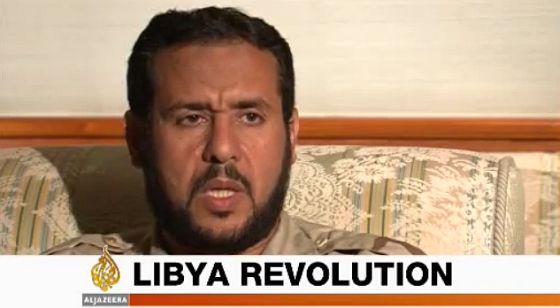
Libyan rebel leader says MI6 knew he was tortured

The Independent reports:

“They knew I was being tortured, I have no doubt of that,” Abdelhakim Belhaj, a former prisoner who is now the rebel security chief of the Libyan capital, said about the British intelligence agents who came to interrogate him while he was in the hands of Muammar Gaddafi’s secret police.

“I hoped they would do something about it. I was too terrified during the meeting to say out loud what was being done to me because I thought the Libyans [secret police] were taping what was going on. When the Libyan guards left I made sign movements with my hands.

“The British people nodded, showed they understood. They showed this understanding several times. But nothing changed, the torture continued for a long time afterwards.”

The appalling treatment inflicted on Mr Belhaj, a former head of the Libyan Islamist Fighting Group (LIFG), is now in the centre of an international diplomatic storm. The Independent revealed, after discovering secret files in Tripoli, how Britain played a key role in the rendition of Mr Belhaj, which delivered him into hands of the Gaddafi regime for seven years of incarceration, six of them in solitary confinement.

Mr Belhaj’s vehement claims that British officials were fully aware of the maltreatment he was undergoing and lays the UK intelligence services open to charges of direct complicity. There is nothing to suggest in a tranche of MI6 papers that the UK raised concerns about his ordeal with the regime.

Instead there are repeated requests to the Libyan secret police for information about Mr Belhaj, including one believed to be from Sir Mark Allen, who was then MI6’s head of counter-terrorism and now works for BP, when arranging Tony Blair’s visit to meet Colonel Gaddafi. “I was grateful to you for helping the officer we sent out last week. Abu Abd Allah’s [a nom-de-guerre for Mr Belhaj] information on the situation in this country is of urgent importance to us.”

Speaking to The Independent in a Tripoli hotel now being used by the Transitional National Council (TNC), Mr Belhaj described being interviewed by three British agents, one woman and two men, at the security headquarters of Moussa Koussa, who was then Libya’s spymaster. The two questioning sessions each lasted about two hours. The name of the female officer is known to The Independent but it is not being published for security reasons. Documents show that she was one of the most frequent visitors to Tripoli under the Gaddafi regime.

“The British people they sent were real experts, they knew the names of LIFG members in England, even their codenames. I have been told [by regime officials] that if I named them as being involved with al-Qa’ida they would be returned to Libya and my own conditions would improve. I was given names of other opposition people who were not even members of LIFG, who I did not even know,” Mr Belhaj, 45, said.

“I told the British, as I told everyone else, that LIFG had no link with al-Qa’ida. I knew making a link would stop what was happening to me, but I was not going to do it. I showed the British about what was happening to me.”

Mr Belhaj’s sense of being betrayed extends beyond the unheeded plea for help to the UK agents during his interrogation. After being arrested in Malaysia as a suspect during the US-led “war on terror”, he had applied for asylum to the UK, which was supposedly granted. Instead, British intelligence used the system to start a chain of events that led to his rendition to Libya. As Mr Belhaj and his wife, who was four months pregnant, travelled from Kuala Lumpur to the Thai capital, Bangkok, on the way to London in March 2004 they were arrested by CIA officers and the Thai police.

Mr Belhaj said he was subjected to physical abuse in Thailand before being moved to Abu Salim prison, a place of fear for Libyans where torture became a daily occurrence and often involved being suspended from the ceiling by his wrists.

Mr Belhaj, who was released from prison under an amnesty by the regime earlier this year, said yesterday: “My wife is still badly affected by what happened, even after all these years. It was very frightening for her. I am angry that the asylum application was used in this way. I thought Britain was a place where human rights were respected. I thought it was a place I could go to be safe. Instead, they used this to trap me.

Patrick Cockburn writes:

Here is an account by a Libyan, who did not want to disclose his name, of what it was like to be tortured by Libyan security. He says: “I was blindfolded and taken upstairs. I was shocked with electricity and made to sit on broken glass. They were kicking and punching me until I confessed. I said ‘No’.” This went on for over a week.

One day the interrogators tied his hands behind his back and took him upstairs. He continues: “They opened the door and I saw my son and wife. There were five or six members of security with masks. They tied me to a chair and one of them said: ‘Do you want to sign or should we torture them?'”

According to the prisoner one of the interrogators took his 10-month-old son and put a wire on his hand and “he screamed and his face turned red”. The little boy appeared to stop breathing. Soon afterwards the prisoner signed the confession demanded by Libyan security.

The testimony about the baby’s torture in front of his father was recorded by Human Rights Watch in Tripoli in 2005. The same year the UK signed a Memorandum of Understanding accepting Libyan diplomatic assurances that torture would not be used against Libyan exiles repatriated from the UK to Libya. Few documents agreed to by a British government exude so much hypocrisy and cynicism.

Facebooktwittermail

In records of court case lie details of secret airlifts of terror suspects to CIA-run prisons

The Associated Press reports:

The secret airlift of terrorism suspects and American intelligence officials to CIA-operated overseas prisons via luxury jets was mounted by a hidden network of U.S. companies and coordinated by a prominent defense contractor, newly disclosed documents show.

More than 1,700 pages of court files in a business dispute between two aviation companies reveal how integral private contractors were in the government’s covert “extraordinary rendition” flights. They shuttled between Washington, foreign capitals, the U.S. military base at Guantanamo Bay, Cuba, and, at times, landing points near once-secret, CIA-run overseas prisons.

The companies ranged from DynCorp, a leading government contractor that secretly oversaw the flights, to caterers that unwittingly stocked the planes with fruit platters and bottles of wine, the court files and testimony show.

A New York-based charter company, Richmor Aviation Inc., which supplied corporate jets and crews to the government, and a private aviation broker, SportsFlight Air, which organized flights for DynCorp, have been engaged in a four-year legal dispute. Both sides have cited the government’s program of forced transport of detainees in testimony, evidence and legal arguments. The companies are fighting over $874,000 awarded to Richmor by a New York state appeals court to cover unpaid costs for the secret flights.

The court files, which include contracts, flight invoices, cell phone logs and correspondence, paint a sweeping portrait of collusion between the government and the private contractors that did its bidding — some eagerly, some hesitantly. Other companies turned a blind eye to what was going on.

Trial testimony studiously avoided references to the CIA. When lawyers pressed a witness about flying terrorists from Washington or Europe to Guantanamo Bay, Supreme Court Judge Paul Czajka of Columbia County, N.Y., put on the brakes: “Does this have anything to do with the contract? I mean, it’s all very interesting, and I would love to hear about it, but does it have anything to do with how much money is owed?”

At another point, the name of a high-level CIA official was mentioned, but the official’s intelligence ties were not divulged.

Among the new disclosures:

—DynCorp, which was reorganized and split up between another major contractor and a separate firm now known as DynCorp International, functioned as the primary contractor over the airlift. The company had not been previously linked to the secret flights.

—Airport invoices and other commercial records provide a new paper trail for the movements of some high-value terrorism suspects who vanished into the CIA “black site” prisons, along with government operatives who rushed to the scenes of their capture. The records include flight itineraries closely coordinated with the arrest of accused 9/11 mastermind Khalid Sheik Mohammed and the suspected transport of other captives.

—The private jets were furnished with State Department transit letters providing diplomatic cover for their flights. Former top State Department officials said similar arrangements aided other government-leased flights, but the documents in the court files may not be authentic since there are indications that the official who purportedly signed them was fictitious.

—The private business jets shuttled among as many as 10 landings over a single mission, costing the government as much as $300,000 per flight.

According to invoices between 2002 and 2005, many of the flights carried U.S. officials between Washington Dulles International Airport and the Guantanamo detention compound, where the U.S. was housing a growing population of terror detainees. Other flights landed at a dizzying array of international airports.

Jets were dispatched to Islamabad; Rome; Djibouti; Frankfurt, Germany; Dubai, United Arab Emirates; Shannon, Ireland; Glasgow, Scotland; Tenerife, Spain; Sharm el Sheik, Egypt; and even Tripoli.

Some flights landed at airports near where CIA black sites operated: Kabul, Bangkok and Bucharest. Others touched down at foreign outposts where obliging security services reportedly took in U.S. terror detainees for their own severe brand of persuasion: Cairo; Damascus, Syria; Amman, Jordan; and Rabat, Morocco.

Facebooktwittermail

The CIA’s ties to the Gaddafi regime

The Wall Street Journal reports:

The Central Intelligence Agency and Libyan intelligence services developed such a tight relationship during the George W. Bush administration that the U.S. shipped terror suspects to Libya for interrogation and suggested the questions they should be asked, according to documents found in Libya’s External Security agency headquarters.
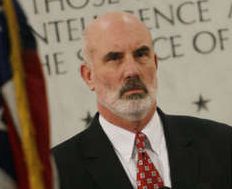
The relationship was close enough that the CIA moved to establish “a permanent presence” in Libya in 2004, according to a note from Stephen Kappes, at the time the No. 2 in the CIA’s clandestine service, to Libya’s then-intelligence chief, Moussa Koussa.

The memo began “Dear Musa,” and was signed by hand, “Steve.” Mr. Kappes was a critical player in the secret negotiations that led to Libyan leader Col. Moammar Gadhafi’s 2003 decision to give up his nuclear program. Through a spokeswoman, Mr. Kappes, who has retired from the agency, declined to comment.

A U.S. official said Libya had showed progress at the time. “Let’s keep in mind the context here: By 2004, the U.S. had successfully convinced the Libyan government to renounce its nuclear-weapons program and to help stop terrorists who were actively targeting Americans in the U.S. and abroad,” the official said.

The files documenting the renewal of ties between the CIA and Libyan intelligence were reviewed and copied by researchers from Human Rights Watch during a tour of Libya’s External Security agency headquarters in downtown Tripoli. Emergencies Director Peter Bouckaert said he was touring the building on Friday as part of the group’s effort to help the Libyan transitional authority secure sensitive documents left by the Gadhafi regime, which collapsed in August after a five-month rebellion.

Mr. Bouckaert said he discovered the files inside the complex in a room that guards described as the former office of Mr. Koussa, who became foreign minister in 2009. Mr. Bouckaert photographed the documents, leaving the originals in their place, and gave copies to The Wall Street Journal.

Human Rights Watch has been critical of the U.S. policy of sending terror suspects to third countries for interrogation, a practice known as rendition. The practice dates at least to 1995, when Egypt began aiding the U.S. with rendition.

U.S. officials say they obtained assurances from the recipient countries that the rendered detainees would be treated humanely. “There are lots of countries willing to take terrorists off the street who want to kill Americans,” the U.S. official said. “That doesn’t mean U.S. concerns about human rights are ignored in the process.”

In an April 15, 2004 letter to Libyan intelligence, the CIA proposed the rendition of another man, saying, “We respectfully request an expression of interest from your service regarding taking custody.”

Citing “recently developed agreements,” the CIA asked the Libyans to “agree to take our requirements for debriefings of [the suspect], as well as a guarantee that [his] human rights will be protected.”

The files also show the close relationship that some British intelligence officials had with Mr. Koussa.

Mr. Koussa, who defected from Col. Gadhafi’s government in March, was credited with helping negotiate Libya’s rapprochement with the international community and bartering an end to sanctions in return for Libya renouncing its weapons-of-mass-destruction program.

Yet he was also one of the stalwarts of the Gadhafi regime and headed the foreign intelligence service during a time when many Western officials believed Col. Gadhafi was funding and supporting international terrorist groups. In 1980, he was expelled from his diplomatic post in the U.K. after calling in a newspaper interview for the killing of Libyan dissidents in Great Britain. Libya later claimed he had been misquoted.

By the early years of the George W. Bush administration, however, as seen in the 2004 memo, Mr. Kappes was writing to Mr. Koussa: “Libya’s cooperation on WMD and other issues, as well as our nascent intelligence cooperation mean that now is the right moment to move ahead.”

The intelligence services had discussed the move for “quite some time” Mr. Kappes wrote.

The files provide an extraordinary window into the highly secretive and controversial practice of rendition, whereby the agency would send detainees to other countries for interrogation, including ones known for harsh treatment of detainees. The program was ramped up for terror detainees after the Sept. 11 attacks.

When taking over the CIA at the outset of the Obama administration, then-director Leon Panetta said the agency would continue to use rendition, but would seek assurances that the detainee wouldn’t be tortured—which has been the standing U.S. policy. Mr. Panetta left the CIA two months ago to lead the Pentagon.

“We are eager to work with you in the questioning of the terrorist we recently rendered to your country,” Mr. Kappes wrote in the memo, adding that he would like to send two more officers to Libya to question a suspect directly.

A lengthy profile of Kappes appeared in Washingtonian Magazine last year written by Jeff Stein, the SpyTalk columnist for the Washington Post. Stein’s account describes Kappes as resolutely loyal, dedicated, well-liked, politically skilled, and incompetent. Under his watch, the CIA was implicated in fraud, rape, and homicide.

Jeffrey Castelli, a friend of Kappes, had a pivotal role in propagating myths about Saddam Hussein’s WMD program. Castelli passed along the bogus intelligence that allowed President Bush, in his 2003 State of the Union speech to claim that Saddam had attempted to buy yellow cake uranium from Niger.

Castelli then oversaw the kidnapping of Abu Omar off a Milan street, which led to him and 24 other CIA agents being indicted by Italian magistrates.

In spite of this track record, “in 2008, Kappes picked Castelli to run the CIA’s New York station, one of the agency’s most prestigious appointments. Shock turned into protest, according to CIA insiders, forcing Kappes to drop the idea. Castelli soon retired.”

Kappes’s rise to behind-the-scenes stardom in the intelligence community is a lesson in how to maneuver in Washington: It’s one thing to be successful in the field; it’s more valuable to convince Congress you’re effective. “Kappes runs better ops on the Hill and with the White House than he ran human sources in the field,” a CIA veteran says in what turns out to be a consistent refrain.

“He’s the Teflon Don,” says a veteran of the CIA’s Operations Directorate, renamed the National Clandestine Service in 2005. “Nothing bad ever sticks to him.”

Over more than 20 years with the CIA, Kappes’s career has taken him through most of the world’s cold- and hot-war battlefields from India and Pakistan to Germany and Russia. But the journey of Kappes from secret agent to CIA superstar began in Libya.

In March 2003, leader Muammar Qaddafi signaled that he was ready to jump-start his on-again, off-again campaign to end his long diplomatic and commercial isolation, get off Washington’s list of terrorist states, and get back into the oil business with the West. Two years earlier, he’d dispatched one of his top operatives, Michigan State–educated Mousa Kousa, to a clandestine meeting in London with top CIA and British intelligence officials. Kousa carried with him the names of some of Osama bin Laden’s closest associates, including Ibn al-Sheikh al-Libi, a Libyan who would soon be the first major catch in the CIA’s pursuit of al-Qaeda. But with Qaddafi dragging his feet on final payouts over Libya’s 1988 downing of PanAm Flight 103 over Lockerbie, Scotland, negotiations stalled.

Then, with American and British troops massing to invade Iraq, Qaddafi decided it was time to talk again—in secret.

President George W. Bush and CIA chief George Tenet, desperate for intelligence on al-Qaeda, decided the time was ripe, too. But they wanted something big in return, a “deliverable,” as Bush put it: Qaddafi’s public renunciation of his nuclear, chemical, and biological weapons programs.

For the secret mission to Tripoli to work out the deal, they chose Steve Kappes.

By 2003, Kappes was deeply schooled in the dark arts. He had been station chief in Kuwait and Moscow. At a CIA station in Frankfurt, he had run highly sensitive operations targeting Iran’s nuclear-weapons program, and he had served in Pakistan, which sheltered its own nuclear-bomb effort. For the past year, as associate deputy director for operations, he had supervised some of the CIA’s most secret programs, from “extraordinary renditions”—kidnapping terrorist suspects abroad—to the agency’s secret foreign prisons to waterboarding and other “enhanced interrogation techniques.”

Then came Libya.

“Clearly, Kappes was a man who could keep a secret, and Bush gave him one: No one at State or Defense, not even Rumsfeld or Powell, should know about this major initiative,” Ron Suskind wrote in the Washington Monthly. Suskind’s account of the clandestine affair was one of a flurry of flattering articles about Kappes that began surfacing in the spring of 2006 as pressure was building to bring Kappes back to Langley.

The Libyan mission was a “lengthy dialogue, a delicate and subtle dance,” wrote Newsweek’s Mark Hosenball, quoting an anonymous former agency official. “And Steve handled it very well.”

Qaddafi did renounce his weapons-of-mass-destruction programs, allowing the Bush administration to claim that regime change in Iraq was already paying dividends elsewhere. After the Lockerbie claims were finally settled, diplomatic recognition came. The oil companies moved into Libya.

Washington, the story went, had eliminated a potential threat and gained an ally in the “war on terror.”

But on closer examination, some thought Qaddafi got the better end of it: His nuclear effort had never really gotten off the ground, intelligence sources say, despite the acquisition of millions of dollars of black-market equipment and supplies from Pakistani rogue nuclear scientist A.Q. Khan.

Qaddafi liked to buy stuff that was way beyond his scientists’ ken to assemble, a former top CIA official says.

Nor were Qaddafi’s other WMD programs much to write home about, according to the Monterey Institute’s Jonathan Tucker, one of the foremost WMD experts.

Libya’s chemical-warfare capability was “quite limited,” Tucker says. “Although Libya wanted to expand its chemical arsenal to include nerve agents, it did not have the materials, equipment, or know-how needed to do so. The nuclear program, however embryonic, was perceived as being of greater potential value, but after the interdiction of [A.Q. Khan’s] centrifuges en route to Libya, Qaddafi began to view his WMD programs as a security risk rather than an asset.”

Kappes has a reputation for micromanagement, right down to his recent insistence on selecting applicants for a two-person station. Therefore, says a former high-level official, Kappes had to know—and approve of—virtually everything that went on in the counterterrorism program after 9/11.

“All decision making in the Directorate of Operations flowed through the ADDO,” or assistant deputy director of operations, the position Kappes held when the war on terror ramped up in 2002–04, says a former top official during that era. “And he was specifically in a position of decision making and influence and persuasion. . . . So any decision or voice he gave to a particular point of view would have been, and was, given great consideration.”

“So if he was opposed to [waterboarding] and made his position known,” the former official adds, “that would have carried great weight. After all, not only was he ADDO, but don’t forget that at the same time he was carrying water for the White House on the Libya stuff and had a personal relationship, he claimed, with the President. So if he was able to do what he did on Libya, he should have been able to persuade the same decision makers with respect to enhanced interrogation techniques if he actually was opposed to them.”

It’s not likely Kappes was opposed to such programs, says a retired station chief who knows Kappes well: “He’s very jingoistic, very much a believer in American exceptionalism and the leading place the United States has in the world.”

Says John Sifton, a private investigator and attorney in New York who has carried out extensive research on the CIA’s secret programs for law firms and human-rights groups: “It strains credulity for him to say, ‘I didn’t know, I wasn’t involved.’ His denials would be like the Yankees pitching coach saying he didn’t know the playoffs rotation.”

“He became ADDO in the fall of 2002,” Sifton said, “just as the CIA was expanding its program for secret prisons and harsh interrogations and as it continued its renditions program with zeal.”

In at least one case, Kappes didn’t stay far away, sources say. According to an internal investigation, he helped tailor the agency’s paper trail regarding the death of a detainee at a secret CIA interrogation facility in Afghanistan, known internally as the Salt Pit.

The detainee froze to death after being doused with water, stripped naked, and left alone overnight, according to reports in the Washington Post and Los Angeles Times. He was secretly buried and his death kept “off-the-books,” the Post said.

According to two former officials who read a CIA inspector general’s report on the incident, Kappes coached the base chief—whose identity is being withheld at the request of the CIA—on how to respond to the agency’s investigators. They would report it as an accident.

“The ADDO’s direction to the field officer anticipated that something worse had occurred and so gave him directions on how to report the situation in his cable,” one of the former officials says.

“The ADDO basically told the officer, ‘Don’t put something in the report that can’t be proved or that you are going to have trouble explaining.’ In essence, the officer was told: Be careful what you put in your cable because the investigators are coming out there and they will pick your cable apart, and any discrepancies will be difficult to explain.”

As a result, the former official says, the Salt Pit officer’s cable was “minimalist in its reporting” on what happened to the prisoner. “It seems to me the ADDO should have been telling him, ‘Report the truth, don’t hold anything back, there’s an investigative team coming out, be honest and forthright. But that was not the message that was given to the chief of base by the ADDO.”

Facebooktwittermail

Libyan rebel military chief says he was tortured by CIA

Patrick Cockburn writes:

The overthrow of Gaddafi has brought together strange allies, but few stranger than Abdulhakim Belhaj, the military commander of all rebel military forces in Tripoli, and Nato. An Islamist whom Gaddafi tried to have the US list as a terrorist, Mr Belhaj says he was tortured by CIA agents after being arrested in the Far East in 2004 and later handed over by them to Colonel Gaddafi for further torture and imprisonment in Libya.

Mr Belhaj, the head of the military council for Tripoli, who led an Islamist guerrilla organisation fighting the Gaddafi regime in the 1990s, told The Independent in an interview that he had been directly “tortured by CIA agents” in Thailand after being first arrested in Malaysia.

If true, his story is evidence of the close co-operation between the CIA and Colonel Gaddafi’s security services after the Libyan leader denounced the 9/11 attacks. After his stint in the hands of the CIA, Mr Belhaj was kept in Abu Salim prison in Tripoli. He says: “I was in prison for seven years during which I was subjected to torture as well as solitary confinement. I was even denied a shower for three years.” Other Libyan Islamist prisoners have related how they were sometimes taken from Abu Salim to be questioned by US officials in Tripoli.

Released from prison in 2010, Mr Belhaj, who had military experience from fighting in Afghanistan against the Russians in the 1980s, became one of the most effective rebel military commanders. He is said by diplomats to have played a crucial role in the capture of Tripoli at the end of last month, and is highly regarded by the chairman of the Transitional National Council (TNC), Mustafa Abdul Jalil.

Ironically, given his claims of previous mistreatment at US hands, Mr Belhaj has emerged as one of Nato’s most important allies during their air campaign in support of the rebels over the last six months. Speaking in his headquarters in the Mitiga military airbase on the eastern outskirts of Tripoli, he forcefully denied that he and the Libyan Islamic Fighting Group (LIFG), which he helped found in 1995, had ever been allied to al-Qa’ida.

“We never had any link to al-Qa’ida,” said Mr Belhaj, a short, soft-spoken, bearded man, who does not use a military title. “We never took part in global jihad. The fact that we were in the same country, Afghanistan, [as al-Qa’ida] does not mean we had the same goal.” He stresses that the sole aim of the LIFG was always to overthrow Gaddafi.

Despite his current close co-operation with Nato, Mr Belhaj says he finds it difficult to forgive his treatment by the CIA in the past.

When first detained at an airport in Malaysia in 2004 he says he was with his wife: “She was six months pregnant and she suffered a lot.”

After a few days, CIA agents took him to Thailand as part of the notorious rendition process by which the agency transferred prisoners to countries where security forces were known to use torture. He says that in Thailand CIA agents took a direct part in his torture, though he did not give details. He says that “if I ever have the chance I will take legal action” against those responsible.

The disclosure of Libya’s intelligence files may reveal embarrassing details of co-operation between the CIA and other Western intelligence agencies with Gaddafi’s brutal and ruthless security services in pursuit of Islamist opponents. Mr Belhaj says that in the wake of 9/11, the US administration reacted by pursuing “any organisation with an Islamic agenda”.

Mr Belhaj spent seven years in Abu Salim prison which was the site of the Gaddafi regime’s most infamous atrocity, the massacre of some 1,200 prisoners in 1999, almost all of them Islamists, who had protested against conditions. The first protests which ushered in the uprising in Benghazi this February was by lawyers representing the families of the dead Abu Salim prisoners.

The Libyan prison was run with great savagery even against those whose offences were minor. Students accused of being excessively religious were stripped naked and attacked by dogs. Prisoners who survived might spend decades without seeing their families. In Abu Salim, Mr Belhaj helped write a 419-page document, published in 2009, which repudiated the Jihadi doctrine of holy war and the use of violence to change regimes. The name of the LIFG was changed to the Libyan Islamic Movement for Change. The ideological change, spurred by the failure of radical Islamic groups fighting on their own to overthrow governments, led to Islamists seeking the co-operation of more secular and liberal groups also opposed to Arab police states. It is these popular front coalitions that have won victories in Tunisia, Egypt and now Libya.

The New York Times reports on evidence gathered from the bombed ruins of Gaddafi’s intelligence headquarters in Tripoli that corroborates Belhaj’s account.

When Libyans asked to be sent Abu Abdullah al-Sadiq, another member of the [Libyan Islamic Fighting G]roup, a [CIA] case officer wrote back on March 4, 2004, that “we are committed to developing this relationship for the benefit of both our services,” and promised to do their best to locate him.

Two days later, an officer faxed the Libyans to say that Mr. Sadiq and his pregnant wife were planning to fly into Malaysia, and the authorities there agreed to put them on a British Airways flight to London that would stop in Bangkok. “We are planning to take control of the pair in Bangkok and place them on our aircraft for a flight to your country,” the case officer wrote.

Mr. Bouckaert of Human Rights Watch said he had learned from the documents that Sadiq was a nom de guerre for Abdel Hakim Belhaj, who is now a military leader for the rebels.

In an interview [with The Independent — see above] on Wednesday, Mr. Belhaj gave a detailed description of his incarceration that matched many of those in the documents. He also said that when he was held in Bangkok he was tortured by two people from the C.I.A.

Facebooktwittermail

How Israel takes its revenge on boys who throw stones

The Independent reports:

The boy, small and frail, is struggling to stay awake. His head lolls to the side, at one point slumping on to his chest. “Lift up your head! Lift it up!” shouts one of his interrogators, slapping him. But the boy by now is past caring, for he has been awake for at least 12 hours since he was separated at gunpoint from his parents at two that morning. “I wish you’d let me go,” the boy whimpers, “just so I can get some sleep.”

During the nearly six-hour video, 14-year-old Palestinian Islam Tamimi, exhausted and scared, is steadily broken to the point where he starts to incriminate men from his village and weave fantastic tales that he believes his tormentors want to hear.

This rarely seen footage seen by The Independent offers a glimpse into an Israeli interrogation, almost a rite of passage that hundreds of Palestinian children accused of throwing stones undergo every year.

Israel has robustly defended its record, arguing that the treatment of minors has vastly improved with the creation of a military juvenile court two years ago. But the children who have faced the rough justice of the occupation tell a very different story.

“The problems start long before the child is brought to court, it starts with their arrest,” says Naomi Lalo, an activist with No Legal Frontiers, an Israeli group that monitors the military courts. It is during their interrogation where their “fate is doomed”, she says.

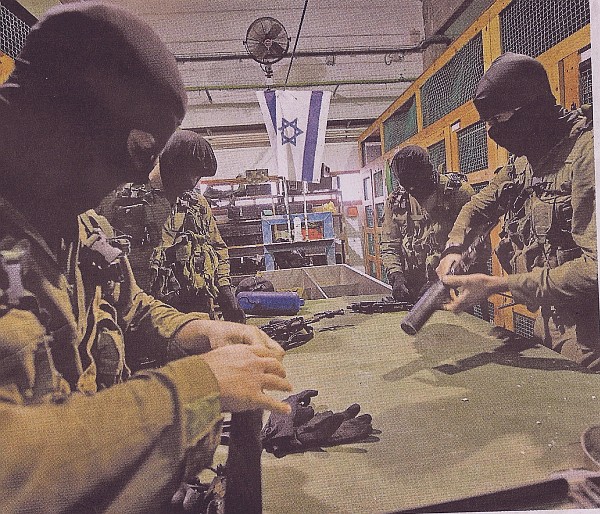
Sameer Shilu, 12, was asleep when the soldiers smashed in the front door of his house one night. He and his older brother emerged bleary-eyed from their bedroom to find six masked soldiers in their living room.

Checking the boy’s name on his father’s identity card, the officer looked “shocked” when he saw he had to arrest a boy, says Sameer’s father, Saher. “I said, ‘He’s too young; why do you want him?’ ‘I don’t know,’ he said”. Blindfolded, and his hands tied painfully behind his back with plastic cords, Sameer was bundled into a Jeep, his father calling out to him not to be afraid. “We cried, all of us,” his father says. “I know my sons; they don’t throw stones.”

In the hours before his interrogation, Sameer was kept blindfolded and handcuffed, and prevented from sleeping. Eventually taken for interrogation without a lawyer or parent present, a man accused him of being in a demonstration, and showed him footage of a boy throwing stones, claiming it was him.

“He said, ‘This is you’, and I said it wasn’t me. Then he asked me, ‘Who are they?’ And I said that I didn’t know,” Sameer says. “At one point, the man started shouting at me, and grabbed me by the collar, and said, ‘I’ll throw you out of the window and beat you with a stick if you don’t confess’.”

Sameer, who protested his innocence, was fortunate; he was released a few hours later. But most children are frightened into signing a confession, cowed by threats of physical violence, or threats against their families, such as the withdrawal of work permits.

When a confession is signed, lawyers usually advise children to accept a plea bargain and serve a fixed jail sentence even if not guilty. Pleading innocent is to invite lengthy court proceedings, during which the child is almost always remanded in prison. Acquittals are rare. “In a military court, you have to know that you’re not looking for justice,” says Gabi Lasky, an Israeli lawyer who has represented many children.

There are many Palestinian children in the West Bank villages in the shadow of Israel’s separation wall and Jewish settlements on Palestinian lands. Where largely non-violent protests have sprung up as a form of resistance, there are children who throw stones, and raids by Israel are common. But lawyers and human rights groups have decried Israel’s arrest policy of targeting children in villages that resist the occupation.

In most cases, children as young as 12 are hauled from their beds at night, handcuffed and blindfolded, deprived of sleep and food, subjected to lengthy interrogations, then forced to sign a confession in Hebrew, a language few of them read.

Israeli rights group B’Tselem concluded that, “the rights of minors are severely violated, that the law almost completely fails to protect their rights, and that the few rights granted by the law are not implemented”.

Israel claims to treat Palestinian minors in the spirit of its own law for juveniles but, in practice, it is rarely the case. For instance, children should not be arrested at night, lawyers and parents should be present during interrogations, and the children must be read their rights. But these are treated as guidelines, rather than a legal requirement, and are frequently flouted. And Israel regards Israeli youngsters as children until 18, while Palestinians are viewed as adults from 16.

Facebooktwittermail

Hold Israel accountable with Leahy law

Josh Ruebner writes:

Apologists for Israeli occupation and apartheid claim that advocates for holding Israel accountable for its human rights abuses of Palestinians are “singling Israel out for extra scrutiny” or “holding Israel to a higher standard than other countries.”

Yet, ironically, Israel’s supporters also claim that U.S. military aid to Israel is sacrosanct and, unlike every other governmental program on the chopping block these days, cannot be questioned due to the “special U.S.-Israeli relationship.” Dan Carle, a spokesperson for Sen. Patrick Leahy (D-Vt.), has noted correctly that you cannot have your cake and eat it too.

In response to an article in the Israeli newspaper Ha’aretz suggesting that the Vermont Senator will attempt to apply sanctions to certain units of the Israeli military for human rights violations, Carle explained that “the [Leahy] law applies to U.S. aid to foreign security forces around the globe and is intended to be applied consistently across the spectrum of U.S. military aid abroad. Under the law the State Department is responsible for evaluations and enforcement decisions and over the years Senator Leahy has pressed for faithful and consistent application of the law.”

The possibility of Senator Leahy consistently applying this eponymous legislation and holding Israel to the exact same standard as every other country has Israeli Defense Minister Ehud Barak, whose office may have leaked the story in an effort to kill the initiative, in a tizzy.

The “Leahy Law,” as it is commonly known, prohibits the United States from providing any weapons or training to “any unit of the security forces of a foreign country if the Secretary of State has credible evidence that such unit has committed gross violations of human rights.” In the past, this law has been invoked to curtail military aid to countries as diverse as Indonesia, Colombia, Pakistan, and the Philippines. Along with other provisions in the Foreign Assistance Act, of which it is a part, and the Arms Export Control Act, it forms the basis of an across-the-board policy that is supposed to ensure that U.S. assistance does not contribute to human rights abuses.

Ha’aretz reports that the Senator is looking to invoke this prohibition regarding “Israel Navy’s Shayetet 13 unit, the undercover Duvdevan unit and the Israel Air Force’s Shaldag unit.” The inclusion of specific units in the story may indicate that Leahy already has findings from the Secretary of State that these Israeli military units have committed human rights abuses.

If so, then this could be a much-overdue watershed in holding accountable Israel, the largest recipient of U.S. military aid, for its gross misuse of U.S. weapons to commit systematic human rights abuses of Palestinians living under Israel’s illegal 44-year military occupation of the West Bank, East Jerusalem, and Gaza Strip.

Facebooktwittermail

Report reveals harsh condition in Israeli jails

Haaretz reports:

Inmates were cuffed hand and foot as a punishment, sometimes for months on end, while prisoners considered suicidal remained in restraints for long periods without access to proper medical care, according to a recent report on conditions in Israeli prisons in 2009 and 2010.

The report, issued by the Justice Ministry’s Public Defender’s Office, reveals widespread overcrowding, poor hygienic conditions and excessive punitive measures in most facilities.

In the Sharon Prison, for example, the agency found a policy of restraining suicidal inmates to their beds in order to punish them rather than in order to protect them.

One prisoner was found to have been kept in bed with arm and leg restraints for several hours, during which time he was unable to eat, smoke, cover himself with a blanket or go to the toilet. The restraints were so tight they left red marks on the prisoner’s wrists.

In Tsalmon Prison representatives of the Public Defender’s Office observed a prisoner kept in bed with arm and leg restraints in a stench-filled cell with cockroaches crawling on the walls. The prisoner, who is being treated with psychiatric drugs, told PDO officials he had been held for a number of months in this way. He said that in order to use the toilet he had to shout for a guard stationed some distance away, at the entrance to the wing.

PDO officials observed an inmate at Hadarim Detention Center who had been cuffed to his bed 24 hours a day for five and a half months, and afterward remained in restraints at night, for 13 hours a day, for an additional period of about six months.

Facebooktwittermail

U.S. senator seeks to cut aid to Israeli special forces operating in West Bank and Gaza

Haaretz reports:

U.S. Senator Patrick Leahy is promoting a bill to suspend U.S. assistance to three elite Israel Defense Forces units, alleging they are involved in human rights violations in the West Bank and Gaza Strip.

Leahy, a Democrat and senior member of the U.S. Senate, wants assistance withheld from the Israel Navy’s Shayetet 13 unit, the undercover Duvdevan unit and the Israel Air Force’s Shaldag unit.

Defense Minister Ehud Barak, a long-time friend of Leahy’s, met with him in Washington two weeks ago to try to persuade him to withdraw the initiative.

According to a senior Israeli official in Jerusalem, Leahy began promoting the legislation in recent months after he was approached by voters in his home state of Vermont.

A few months ago, a group of pro-Palestinian protesters staged a rally across from Leahy’s office, demanding that he denounce the killing by Shayetet 13 commandos of nine Turkish activists who were part of the flotilla to Gaza last May.

Leahy, who heads the Senate Appropriations Committee’s sub-committee on foreign operations, was the principle sponsor of a 1997 bill prohibiting the United States from providing military assistance or funding to foreign military units suspected of human rights abuses or war crimes. The law also stipulates that the U.S. Defense Department screen foreign officers and soldiers who come to the United States for training for this purpose.

Leahy wants the new clause to become a part of the U.S. foreign assistance legislation for 2012, placing restrictions on military assistance to Israel, particularly to those three units.

Facebooktwittermail

Torture still rampant in post-revolution Egypt, activists say

McClatchy reports:

Egyptian human rights activists say they’ve documented hundreds of cases of civilians tortured by police and army forces since the revolution that toppled Hosni Mubarak, but that none have yet gone to trial.

Under former President Mubarak, the security services were notorious for abuses, but since he left office in February dozens of cases have been filed to the general prosecutor’s office accusing police and military authorities of torture and other crimes against anti-government protesters.

For activists, that’s a sign that the interim military government hasn’t reined in the security forces, which were all-powerful during the Mubarak era. The only difference in post-revolution Egypt, they say, is that victims empowered by the uprising are speaking publicly of their brutal experiences.

Hossam Bahgat, the executive director of the Egyptian Initiative for Personal Rights, offered a grim list of the torture methods that authorities are accused of using: “kicking and punching; beating using batons, rifle butts, whips; electrocuting (shocking) victims; hanging in painful positions; sleep and food deprivation; and sexual assault.”

Bahgat, who’s run the advocacy group since 2002, said that until the revolution, torture victims “were unable to speak. At times there was an informant watching the victim’s house. If they see activists making contact they either harassed them or threatened the victim not to speak.”

Facebooktwittermail

Avoiding impunity: the need to broaden torture prosecutions

Marjorie Cohn writes:

President Barack Obama declared “nobody’s above the law” in 2009, as Congress contemplated an investigation of torture authorized by the Bush administration. However, Obama has failed to honor those words. His Justice Department proclaimed its intention to grant a free pass to Bush officials and their lawyers who constructed a regime of torture and abuse. US Attorney General Eric Holder announced last week that his office will investigate only two instances of detainee mistreatment. He said the department “has determined that an expanded criminal investigation of the remaining matters is not warranted.” Holder has granted impunity to those who authorized, provided legal cover, and carried out the “remaining matters.”

Both of the incidents that Holder has agreed to investigate involved egregious treatment and both resulted in death. In one case, Gul Rahman froze to death in 2002 after being stripped and shackled to a cold cement floor in a secret American prison in Afghanistan known as the Salt Pit. The other man, Manadel al-Jamadi, died in 2003 at Abu Ghraib prison in Iraq. He was suspended from the ceiling by his wrists, which were bound behind his back. Tony Diaz, a military police officer who witnessed al-Jamadi’s torture, reported that blood gushed from his mouth like “a faucet had turned on” when al-Jamadi was lowered to the ground. These two deaths should be investigated and those responsible punished in accordance with the law.

The investigation must also have a much broader scope. More than 100 detainees have died in US custody, many from torture. Untold numbers were subjected to torture and cruel treatment in violation of US and international law. General Barry McCaffrey said, “We tortured people unmercifully. We probably murdered dozens of them during the course of that, both the armed forces and the C.I.A.”

Facebooktwittermail