Category Archives: human rights

A window into CIA’s embrace of secret jails

A window into CIA’s embrace of secret jails

In March 2003, two C.I.A. officials surprised Kyle D. Foggo, then the chief of the agency’s main European supply base, with an unusual request. They wanted his help building secret prisons to hold some of the world’s most threatening terrorists.

Mr. Foggo, nicknamed Dusty, was known inside the agency as a cigar-waving, bourbon-drinking operator, someone who could get a cargo plane flying anywhere in the world or quickly obtain weapons, food, money — whatever the C.I.A. needed. His unit in Frankfurt, Germany, was strained by the spy agency’s operations in Afghanistan and Iraq, but Mr. Foggo agreed to the assignment.

“It was too sensitive to be handled by headquarters,” he said in an interview. “I was proud to help my nation.”

With that, Mr. Foggo went on to oversee construction of three detention centers, each built to house about a half-dozen detainees, according to former intelligence officials and others briefed on the matter. One jail was a renovated building on a busy street in Bucharest, Romania, the officials disclosed. Another was a steel-beam structure at a remote site in Morocco that was apparently never used. The third, another remodeling project, was outside another former Eastern bloc city. They were designed to appear identical, so prisoners would be disoriented and not know where they were if they were shuttled back and forth. They were kept in isolated cells. [continued…]

Interrogator: ‘intolerance’ led to torture

Former Air Force Maj. Matthew Alexander, whose questioning of a captured terrorist led to the elimination al Qaeda’s top man in Iraq, said a pervasive “intolerance” of Arabs and Muslims among American interrogators led to abuses at Abu Ghraib and other prisons.

“Soldiers referred to them as rag heads and so on,” Alexander said during a Monday talk at the International Spy Museum, in Washington, D.C. to promote his book, “How To Break a Terrorist: The U.S. Interrogators Who Used Brains, Not Brutality, to Take Down the Deadliest Man in Iraq.”

“They had read things like ‘The Politically Incorrect Guide to Islam,’ which characterizes its practitioners as potential terrorists, he added.

An Air Force criminal investigator for over a decade before being assigned to Iraq in March 2006, Alexander was careful not to characterize all, or even most, interrogators as bigots, although he said, “it was not just a few bad apples” who tortured prisoners.

“It was not a majority of interrogators. If I had to guess, maybe 20 per cent,” he told a packed room at the International Spy Museum, which opened its doors in July 2002.

“A small minority with a lot of power” at the top of the chain of command was responsible for fostering at atmosphere in which abuses could flourish, he said. [continued…]

Facebooktwittermail

Obama officials to tour Michigan prison

Obama officials to tour Michigan prison

Obama administration officials plan on Thursday to tour a soon-to-be-shuttered Michigan state prison considered an option to hold terrorism suspects now detained at Guantanamo Bay in Cuba.

Two government officials said representatives of the Defense, Justice and Homeland Security departments would visit a state prison in Standish. The officials spoke on condition of anonymity because they were not authorized to speak publicly about the visit.

An Obama administration official said the visit was intended to gather information about the facility and no decisions had been made about where to move the detainees. Multiple options are being considered, said the official, who spoke on condition of anonymity because of the sensitivity of the discussions. [continued…]

Facebooktwittermail

Target of Obama-era rendition alleges torture

Target of Obama-era rendition alleges torture

During the 2008 presidential campaign, Barack Obama sharply criticized the Bush Administration’s extraordinary renditions program. “To build a better, freer world, we must first behave in ways that reflect the decency and aspirations of the American people,” he wrote in Foreign Affairs. “This means ending the practice of shipping away prisoners in the dead of night to be tortured in far-off countries, of detaining thousands without charge or trial, of maintaining a network of secret prisons to jail people beyond the reach of law.” But Obama was consistently careful never to commit to ending the practice of rendition entirely. When the issue flared shortly after his inauguration, senior administration officials were quick to say that abuses including torture would end, but that “ordinary” renditions – the spiriting away of suspects from other countries without going through the formal process of extradition — would be continued in a cleaned-up form. Now in a federal court in suburban Washington, a case is unfolding that gives us a practical sense of what an Obama-era rendition looks like.

Raymond Azar, a 45-year-old Lebanese construction manager with a grade school education, is employed by Sima International, a Lebanon-based contractor that does work for the U.S. military in Iraq and Afghanistan. He also has the unlikely distinction of being the first target of a rendition carried out on the Obama watch.

According to court papers, on April 7, 2009, Azar and a Lebanese-American colleague, Dinorah Cobos, were seized by “at least eight” heavily armed FBI agents in Kabul, Afghanistan, where they had traveled for a meeting to discuss the status of one of his company’s U.S. government contracts. The trip ended with Azar alighting in manacles from a Gulfstream V executive jet in Manassas, Virginia, where he was formally arrested and charged in a federal antitrust probe.

This rendition involved no black sites and was clearly driven by a desire to get the target quickly before a court. Also unlike renditions of the Bush-era, the target wasn’t even a terror suspect; rather, he was suspected of fraud. But in a troubling intimation of the last administration, accusations of torture hover menacingly over the case. According to papers filed by his lawyers, Azar was threatened, subjected to coercive interrogation techniques and induced to sign a confession. Azar claims he was hooded, stripped naked (while being photographed) and subjected to a “body cavity search.”

On a ride to the infamous Bagram air base in Afghanistan — site of the torture-homicides involving U.S. interrogators exposed in the Oscar-winning documentary Taxi to the Dark Side — Azar contends that a federal agent pulled a photograph of Azar’s wife and four children from his wallet. Confess that you were bribing the contract officer, the agent allegedly said, or you may “never see them again.” Azar told his lawyers he interpreted that as a threat to do physical harm to his family. [continued…]

2 U.S. architects of harsh tactics in 9/11’s wake

Col. Steven M. Kleinman, an Air Force interrogator and intelligence officer who knows Dr. Mitchell and Dr. Jessen, said he thought loyalty to their country in the panicky wake of the Sept. 11 attacks prompted their excursion into interrogation. He said the result was a tragedy for the country, and for them.

“I feel their primary motivation was they thought they had skills and insights that would make the nation safer,” Colonel Kleinman said. “But good persons in extreme circumstances can do horrific things.”

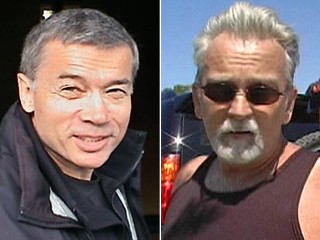
For the C.I.A., as well as for the gray-goateed Dr. Mitchell, 58, and the trim, dark-haired Dr. Jessen, 60, the change in administrations has been neck-snapping. For years, President George W. Bush declared the interrogation program lawful and praised it for stopping attacks. Mr. Obama, by contrast, asserted that its brutality rallied recruits for Al Qaeda; called one of the methods, waterboarding, torture; and, in his first visit to the C.I.A., suggested that the interrogation program was among the agency’s “mistakes.”

The psychologists’ subsequent fall from official grace has been as swift as their rise in 2002. Today the offices of Mitchell Jessen and Associates, the lucrative business they operated from a handsome century-old building in downtown Spokane, Wash., sit empty, its C.I.A. contracts abruptly terminated last spring. [continued…]

Facebooktwittermail

Judge: CIA interrogations not relevant to 9/11 accused’s sanity

Judge: CIA interrogations not relevant to 9/11 accused’s sanity

US military defense lawyers for accused 9/11 conspirator Ramzi bin al Shibh cannot learn what interrogation techniques CIA agents used on the Yemeni before he was moved to Guantánamo to be tried as a terrorist, an Army judge has ruled.

Bin al Shibh, 37, is one of five men charged in a complex death penalty prosecution by military commission currently under review by the Obama administration. He allegedly helped organize the Hamburg, Germany, cell of the Sept. 11, 2001, hijackers before the suicide mission that killed 2,974 people in New York, the Pentagon and Pennsylvania.

But his lawyers say he suffers a “delusional disorder,” and hallucinations in his cell at Guantánamo may leave him neither sane enough to act as his own attorney nor to stand trial. Prison camp doctors treat him with psychotropic drugs. [continued…]

Facebooktwittermail

Criminal investigation into CIA treatment of detainees expected

Criminal investigation into CIA treatment of detainees expected

US Atty. Gen. Eric H. Holder Jr. is poised to appoint a criminal prosecutor to investigate alleged CIA abuses committed during the interrogation of terrorism suspects, current and former U.S. government officials said.

A senior Justice Department official said that Holder envisioned an inquiry that would be narrow in scope, focusing on “whether people went beyond the techniques that were authorized” in Bush administration memos that liberally interpreted anti-torture laws.

Current and former CIA and Justice Department officials who have firsthand knowledge of the interrogation files contend that criminal convictions will be difficult to obtain because the quality of evidence is poor and the legal underpinnings have never been tested.

Some cases have not previously been disclosed, including an instance in which a CIA operative brought a gun into an interrogation booth to force a detainee to talk, officials said.[continued…]

Facebooktwittermail

UN Special Rapporteur calls on APA, US to remove psychologists from torture sites

UN Special Rapporteur calls on APA, US to remove psychologists from torture sites

In a major development on the issue of maltreatment at Guantanamo, the UN Special Rapporteur on Torture, Manfred Nowak has written today to James Bray, President of the American Psychological Association, indicating that he has determined that Guantanamo prison is “outside, or in violation of, international law.” Nowak cites ongoing arbitrary detention, forced feeding of hunger strikers, use of isolation, rough physical treatment, and past practice of torture as reasons for his decision. He concludes:

Given the now public record of psychologists’ involvement in the design, supervision, implementation, and legitimization of a regime of physical and psychological torture at US military and intelligence facilities, including Guantánamo, it is incumbent upon the APA to ensure that its standards comport with international law as well as the UN Principles of Medical Ethics Relevant to the Role of Health Personnel. These instruments require an absolute ethical prohibition of psychologists’ presence or involvement in these operations. [continued…].

Obama administration asks Supreme Court to block detainee photos

The Obama Administration is asking the Supreme Court to block the public release of detainee abuse photos that were the subject of a high-profile reversal by President Barack Obama earlier this year.

On Friday afternoon, the Justice Department filed a petition with the Supreme Court asking it to overturn an appeals court decision requiring the Pentagon to disclose the photos, which depict alleged abuse of prisoners in U.S. military custody in Iraq and Afghanistan.

“The President of the United States and the Nation’s highest-ranking military officers responsible for ongoing combat operations in Iraq and Afghanistan have determined that disclosure by the government of the photographs at issue in this case would pose a significant risk to the lives and physical safety of American military and civilian personnel by inciting violence targeting those personnel,” Solicitor General Elena Kagan wrote. [continued…]

Facebooktwittermail

Death of Pakistan Taliban chief Baitullah Mahsud is confirmed

Death of Pakistan Taliban chief Baitullah Mahsud is confirmed

Pakistani Taliban chief Baitullah Mahsud, Pakistan’s most wanted terrorist and a staunch Al Qaeda ally, was killed in an American missile strike, a Pakistani government minister confirmed today, dealing a severe blow to militants who have been the architects of some of Pakistan’s worst terrorist attacks in recent years.

Mahsud’s death represents a significant victory in the bid by Pakistan and the U.S. to eliminate the Taliban and Al Qaeda. Mahsud, believed to be 35, is aligned with Al Qaeda and is thought to be responsible for dozens of suicide bombing attacks, beheadings and killings throughout Pakistan. [continued…]

Taliban leader in Pakistan was killed, his aides say

Mr. Mehsud, a diabetic in his late 30s, had been sick for some time and had come to the house of his father-in-law, Mulvi Ikramuddin, in the village of Zanghara. Mr. Ikramuddin’s brother, a medical practitioner, was treating him, the Taliban fighters said.

He had been appointed in 2004 by the Afghan Taliban leader, Mullah Omar, as the top commander for his tribe, but had a reputation for fairness and modesty, and had risen through the ranks assuming leadership over other factions of the Taliban in Pakistan, including the Wazir tribe.

The apparent death also raises questions for the future of ordinary Pashtuns, the ethnic group that predominates in the tribal areas, the overwhelming majority of whom do not support militancy or Mr. Mehsud directly.

A prominent member of the Mehsud tribe in Karachi, who spoke on the condition of anonymity because he was afraid of trouble from the military and the Taliban alike, said taking a public position on Mr. Mehsud’s death was a delicate balancing act and that Pashtuns were watching nervously to see who will come out on top: Pakistan’s military or a successor of Mr. Mehsud. [continued…]

Most Americans oppose Afghanistan war: poll

Most Americans now oppose the war in Afghanistan, which President Barack Obama has made a priority, dispatching tens of thousands of troops to fight a growing insurgency, a poll has found.

In a new low in public support for the war effort, 54 per cent of respondents said they opposed the US-led fight against the Taliban and their al-Qaeda allies, with only 41 per cent in favour in the CNN/Opinion Research Corporation poll.

The survey came as violence hit an all-time high in the nearly eight-year-old war, with 76 foreign troops killed in July, including 45 US troops ahead of elections on August 20. [continued…]

Facebooktwittermail

Allegations that Britain colluded in torture of terror suspects reach European court

Allegations that Britain colluded in torture of terror suspects reach European court

Amin says that he was beaten, whipped, deprived of sleep and threatened with an electric drill while being asked questions that would subsequently be put to him again during non-violent interviews by two MI5 officers. Before Amin went on trial, the judge ruled that his conditions in ISI custody had been “physically oppressive” but that he had exaggerated his mistreatment and that it fell short of torture.

Since then, Human Rights Watch (HRW), the New York-based NGO, has spoken to a number of Pakistani intelligence officers who they say corroborated the accounts of torture given by several British citizens alleging UK complicity.

In the case of Amin, according to HRW, the Pakistani sources said his account was “essentially accurate”, adding that it was a “high-pressure” case and the desire for information on the part of both British and American authorities was “insatiable”. HRW add that their sources say British intelligence officials were “perfectly aware that we were using all means possible to extract information from him and were grateful that we were doing so”. [continued…]

Facebooktwittermail

Obama faces court test over detainee

Obama faces court test over detainee

The fate of one of the youngest detainees at the Guantánamo Bay prison is emerging as a major test of whether the courts or the president has the final authority over when prisoners there are released.

After a federal judge said earlier this month that the government’s case for holding the detainee, Mohammed Jawad, was “riddled with holes,” the Obama administration conceded defeat and agreed that Mr. Jawad would no longer be considered a military detainee. But the administration said it would still hold him at the prison in Cuba for possible prosecution in the United States.

On Tuesday, Mr. Jawad’s lawyers attacked that position, arguing that the government had given up any authority to hold him. “Enough is enough,” the lawyers said in legal papers that urged the judge, Ellen Segal Huvelle, to send him back to Afghanistan, which has requested his return. [continued…]

Arrests in terror case bewilder associates

Daniel Boyd was a man of rare conviction for these parts.

Rare because he and his family were Muslims in this quiet rural subdivision where the denominations generally run from Baptist to Presbyterian. But also rare for his intensity.

“How many Christians you see standing in the yard praying five times a day?” asked Jeremy Kuhn, 20, who lives across the street. “They just believed more than anyone else.”

But to the disbelief of Mr. Kuhn, the federal authorities say Mr. Boyd and two of his sons took their convictions beyond religious faith and into terrorism. They were among seven men charged on Monday with supporting violent jihad movements in countries including Israel, Jordan, Kosovo and Pakistan. An eighth man was still being sought, said a spokeswoman for federal prosecutors in Raleigh, about 20 miles north of here.

The men are charged with stockpiling automatic weapons and traveling abroad numerous times to participate in jihadist movements. There is no indication in the indictment that they were planning attacks in the United States, though prosecutors said they had practiced military tactics this summer in a rural county close to Virginia. [continued…]

Britain’s own Guantánamo

Piece by piece, the truth is finally coming out about Britain’s own Guantánamo Bay – Diego Garcia. Today the human rights lawyers group Reprieve began a legal case on behalf of Saad Iqbal Madni, who they say was transited through the UK-controlled Indian Ocean island as part of the CIA’s secret rendition programme.

Madni, whom Reprieve says was tortured in Egypt, Afghanistan, and Guantánamo Bay after his stopover in Diego Garcia, has been released in Pakistan where – according to Clive Stafford Smith, the Reprieve director – he is “effectively crippled by his torture”.

For more than six years following the declaration of a war on terror in 2001, British and US officials adamantly rejected the existence of a rendition facility or secret CIA prison on the island, the site of a major British-American military base since the 1970s and long off-limits to civilians, reporters, and investigators. Dismissing reports about detainees on the atoll as “totally without foundation”, Britain’s then foreign secretary, Jack Straw, asserted: “United States authorities have repeatedly assured us that no detainees have at any time passed in transit through Diego Garcia or its territorial waters or have disembarked there.”

However, allegations kept accumulating. [continued…]

Facebooktwittermail

U.S. judge challenges evidence on a detainee

U.S. judge challenges evidence on a detainee

The Obama administration has until Friday to decide whether to continue to defend the six-year imprisonment of an Afghan at the prison at Guantánamo Bay, Cuba, who was a teenager when he came into American hands.

The decision was prompted by Judge Ellen Segal Huvelle of Federal District Court, who last week criticized the government’s case against the detainee as “an outrage” that was “riddled with holes.” Judge Huvelle’s comments, made at a hearing in district court in Washington, were not reported at the time.

The detainee, Mohammed Jawad, has drawn international attention because of questions about his treatment as one of the youngest prisoners at Guantánamo. [continued…]

Facebooktwittermail

Amnesty accuses Saudi Arabia of ‘gross’ abuses

Amnesty accuses Saudi Arabia of ‘gross’ abuses

The human rights group Amnesty International accused Saudi Arabia on Wednesday of using its campaign against terrorism as a facade for “a sustained assault on human rights” and said the rest of the world had failed to hold the authorities to account for “gross violations.”

Its report said thousands of people had been arrested and detained in virtual secrecy “while others have been killed in uncertain circumstances.” It accused the Saudi authorities of using torture to extract confessions and of using their “powerful international clout to get away with it.”

Rich in oil, Saudi Arabia is an important Western ally, both as a bulwark against Iran and as a wealthy and influential player in the Middle East crisis. But it has been under Western pressure to combat terrorism since 15 of the 19 hijackers in the Sept. 11, 2001, attacks were found to be Saudi citizens. [continued…]

Facebooktwittermail

Obama’s Gitmo task force blows its deadline

Obama’s Gitmo task force blows its deadline

An Obama administration task force set up to develop a plan for the closure of the U.S. detention facility at Guantánamo Bay will miss its first deadline this week—and put off a key report—amid continued divisions over how to resolve one of the president’s thorniest policy dilemmas.

The task force, set up on Obama’s second day in office, was charged with preparing a report to the president by Tuesday, July 21, outlining a long-term detention plan for detainees captured in counterterrorism operations after Sept. 11. But continued debate within the task force over the legal basis for holding detainees who are not charged with any crimes—and where to house them once they are moved from Guantánamo—has forced the task force to postpone its report by a “few months,” a senior administration official told Newsweek.

A separate task-force report on interrogations—also due this week—is being put off as well, said the official, who, like others quoted in this article, asked not to be named talking about private deliberations. [continued…]

Facebooktwittermail

The counter-terrorists – 7/19

Internal rifts on road to torment

In April 2002, as the terrorism suspect known as Abu Zubaida lay in a Bangkok hospital bed, top U.S. counterterrorism officials gathered at CIA headquarters in Langley, Va., for a series of meetings on an urgent problem: how to get him to talk.

Put him in a cell filled with cadavers, was one suggestion, according to a former U.S. official with knowledge of the brainstorming sessions. Surround him with naked women, was another. Jolt him with electric shocks to the teeth, was a third.

One man’s certitude lanced through the debate, according to a participant in one of the meetings. James E. Mitchell, a retired clinical psychologist for the Air Force, had studied al-Qaeda resistance techniques.

“The thing that will make him talk,” the participant recalled Mitchell saying, “is fear.” [continued…]

A response to General Dostum

Dostum asserts that “it is impossible that Taliban or Al-Qaeda prisoners could have been abused.” In fact, preliminary investigations carried out shortly after the alleged killings by highly experienced and respected forensic analysts from Physicians for Human Rights established the presence of recently deceased human remains at Dasht-e Leili and suggested that they were the victims of homicide.

I was a human rights investigator in northwestern Afghanistan in February 2002. At the time, numerous witnesses spoke of seeing several trucks dumping what appeared to be human remains in Dasht-e Leili, while others told of detainees being held for days in overcrowded shipping containers without food, water, or medical care, and, in some instances, being shot while inside the containers. [continued…]

Afghan massacre: the convoy of death (video)

Facebooktwittermail

EDITORIAL: The scapegoat with a savage bite

The scapegoat with a savage bite

Everyone’s afraid of the CIA.

On PBS’s Washington Week last night, in a roundtable discussion on the Pelosi-CIA joust, there was a clear consensus among the assembled reporters: anyone who dares pick a fight with the CIA does so at their own peril and is almost certain to lose.

As is always the case, the only thing the press is interested in here is the fight — who, if anyone, is telling the truth is apparently of no consequence. It also appears that journalists — just as much as the White House and Congress — are afraid of challenging the agency. No one’s at risk of ending up with a bullet in the back of their head, but that isn’t because the CIA is benign — it just means it can exploit much subtler but equally effective methods for accomplishing its aims.

Consider for a moment that we supposedly live in a democracy. How can it be that the head of state, the executive and legislative branches of government and the erstwhile Fourth Estate should all be afraid of a single government agency?

Why is it that an agency that enjoys the medieval privilege of operating with a “black budget” in the ostensible interests of national security, nevertheless always seems able to lift the umbrella of secrecy as and when it serves its own interests?

After Nancy Pelosi accused the CIA of lying about briefing Congressional leaders on waterboarding, CIA Director Leon Panetta’s response was to publicly issue a statement to CIA employees. This was a multi-layered message.

Top layer: The agency didn’t lie. He said: “…our contemporaneous records from September 2002 indicate that CIA officers briefed truthfully on the interrogation of Abu Zubaydah, describing ‘the enhanced techniques that had been employed.’ ” (This isn’t a particularly solid statement. “Contemporaneous records” — so might there be other records that tell a different story? “CIA officers briefed truthfully” — briefed who truthfully? “Describing ‘the enhanced techniques that had been employed'” — why didn’t he put it in black and white: Nancy Pelosi was told by CIA officers that Abu Zubaydah was waterboarded?)

Next layer: I’m defending you guys (and want to be seen defending you — hence, he didn’t just send out the memo but also put it on the CIA web site). He said: “We are an Agency of high integrity, professionalism, and dedication. Our task is to tell it like it is — even if that’s not what people always want to hear. Keep it up. Our national security depends on it.”

Next layer: But I do have to cover my own ass: “Let me be clear: It is not our policy or practice to mislead Congress.”

Why should the employees of the CIA need reminding that they shouldn’t mislead — which is to say, lie to or deceive — Congress? Oh yes, because it’s already public knowledge that in 2005, even after having been requested by Rep. Jane Harman not to do so, they destroyed video tapes of the torture of Abu Zubaydah and Abd al-Rahim al-Nashiri — tapes that would almost certainly have been used as evidence if anyone is ever prosecuted for torture.

For the last seven years, the CIA has been playing what probably ranks as the most masterful political game in its history. When 9/11 should have posed an existential threat to the agency, instead it was able to distance itself from the Bush administration to such a degree that it ended up being perceived as the victim of a neocon vendetta. Former agents became honorary members of the anti-Bush movement with Valerie Plame as their poster child.

Even now, as the agency fends off demands for investigations into its use of torture, a defense narrative has already being wheeled into service. We were just honest government employers doing what we were asked to do. The real offenders were in Cheney’s office.

I have no problem with the idea that it is the decision-makers and architects of the torture program who should be held responsible. But that doesn’t mean that torturers and murderers get off the hook. Indeed, an agency that goes to such lengths to protect its own doesn’t just need reform; it needs breaking up.

Facebooktwittermail

NEWS & VIEWS ROUNDUP & EDITOR’S COMMENTS: May 15

The truth about Richard Bruce Cheney

My investigations have revealed to me — vividly and clearly — that once the Abu Ghraib photographs were made public in the Spring of 2004, the CIA, its contractors, and everyone else involved in administering “the Cheney methods of interrogation”, simply shut down. Nada. Nothing. No torture or harsh techniques were employed by any U.S. interrogator. Period. People were too frightened by what might happen to them if they continued.

What I am saying is that no torture or harsh interrogation techniques were employed by any U.S. interrogator for the entire second term of Cheney-Bush, 2005-2009. So, if we are to believe the protestations of Dick Cheney, that Obama’s having shut down the “Cheney interrogation methods” will endanger the nation, what are we to say to Dick Cheney for having endangered the nation for the last four years of his vice presidency?

Likewise, what I have learned is that as the administration authorized harsh interrogation in April and May of 2002–well before the Justice Department had rendered any legal opinion–its principal priority for intelligence was not aimed at pre-empting another terrorist attack on the U.S. but discovering a smoking gun linking Iraq and al-Qa’ida.

So furious was this effort that on one particular detainee, even when the interrogation team had reported to Cheney’s office that their detainee “was compliant” (meaning the team recommended no more torture), the VP’s office ordered them to continue the enhanced methods. The detainee had not revealed any al-Qa’ida-Baghdad contacts yet. This ceased only after Ibn al-Shaykh al-Libi, under waterboarding in Egypt, “revealed” such contacts. Of course later we learned that al-Libi revealed these contacts only to get the torture to stop.

There in fact were no such contacts. (Incidentally, al-Libi just “committed suicide” in Libya. Interestingly, several U.S. lawyers working with tortured detainees were attempting to get the Libyan government to allow them to interview al-Libi….) [continued…]

Editor’s Comment — Conspiracy is notoriously difficult to prove, but can we go at least this far: Dick Cheney, the CIA and Libya all had a mutual interest in Ibn al-Shaykh al-Libi’s death. Might a mutual interest have gone as far as a mutual understanding? Might the former vice president have ever so discreetly let it be known that Libi’s sudden demise could send out a useful message to anyone else with a loose tongue?

Death in Libya, betrayal in the west

News of the death, in a Libyan jail, of Ibn al-Shaikh al-Libi, a US terror suspect who was the subject of an extraordinary rendition, then tortured in Egypt and Jordan as well as CIA prisons in Afghanistan and Poland has, understandably, raised questions about whether he committed suicide – as the Libyan authorities claimed – or whether he was murdered. Just two weeks ago, representatives of Human Rights Watch saw him in Tripoli’s Abu Salim prison, and although he refused to speak to them, they reported that he “looked well.”

Al-Libi’s death should also raise uncomfortable questions for former US vice-president Dick Cheney, who is still turning up with alarming regularity on US television, peddling his claims that the use of torture saved America from further terrorist attacks. The focus on al-Libi should be a stark reminder that, when he was rendered to Egypt in early 2002, the CIA’s proxy torturers extracted a false confession from him – that al-Qaida operatives had received training from Saddam Hussein in the use of chemical and biological weapons – which was used not to protect the US from attack, but to justify the invasion of Iraq. The claim featured prominently in secretary of state Colin Powell’s presentation to the UN, just a month before the invasion began.

However, beyond the story of al-Libi’s mysterious death and of Dick Cheney’s role in torturing him to launch an illegal war – as documented by Moazzam Begg earlier this week – another disturbing aspect of America’s cosy relationship with Colonel Gaddafi, in the war on terror emerged in Human Rights Watch’s press release about al-Libi’s death. The organisation noted that its researchers had interviewed four other prisoners also rendered to Libya by the CIA, who reported that they had been tortured – by or on behalf of US forces – in Afghanistan, Pakistan and Thailand. [continued…]

Graham: CIA gave me false information about interrogation briefings

In testimony that could bolster Speaker Nancy Pelosi’s claim that the CIA misled her during briefings on detainee interrogations, former Senator Bob Graham insisted on Thursday that he too was kept in the dark about the use of waterboarding, and called the agency’s records on these briefings “suspect.”

In an interview with the Huffington Post, the former Senate Intelligence Committee Chairman said that approximately a month ago, the CIA provided him with false information about how many times and when he was briefed on enhanced interrogations. [continued…]

Editor’s Comment — The CIA is immensely concerned about its image. It doesn’t want to appear to be a den of rogues. It wants to be seen as a bastion of upright patriots, but please, let’s get real.

What’s the appeal of joining an intelligence agency? Does the CIA find its recruits among those who believe in transparency in government; in full accountability and strict compliance with the law? Or is it looking for those drawn by the adventure of crossing boundaries, taking risks and avoiding getting caught? To be blunt, does intelligence work not actually appeal to a certain kind of grandiose criminality?

Soufan: CIA torture actually hindered our intelligence gathering

“Within the first hour of interrogation,” Soufan said, “we gained actionable intelligence.” Soufan could not say what that information was because it remains classified. Zubaydah had been injured during his capture, and Soufan’s team arranged for medical care and continued talking to the prisoner. Within the next few days, Soufan made one of the most significant intelligence breakthroughs of the so-called war on terror. He learned from Zubaydah that Khalid Sheikh Mohammed was the mastermind behind the attacks on 9/11.

Then, however, a CIA interrogation team from Washington led by a contractor arrived at the secret location. Zubaydah was stripped naked and the contractor began a series of coercive, abusive interrogations, based on Cold War-era communist techniques designed to elicit false confessions. During the Korean War, for example, Chinese interrogators employed the measures to get captured American pilots to make false confessions. “The new techniques did not produce results, as Abu Zubaydah shut down and stopped talking,” Soufan explained. “After a few days of getting no information, and after repeated inquiries from D.C. asking why all of a sudden no information was being transmitted … we again were given control of the interrogation.”

As Soufan and his team resumed their interrogation, Zubaydah revealed information about Jose Padilla, the alleged “dirty bomber.”

But after that, the CIA and the contractor again took over, using what Soufan called an “untested theory” that the Cold War techniques might work for getting good information. “Again, however, the technique wasn’t working,” Soufan recalled.

Soufan’s team was brought back yet again. “We found it harder to reengage him this time, because of how the techniques had affected him,” Soufan noted. “But eventually, we succeeded.”

A third time the CIA and the contractor team took over, using increasingly brutal methods. Soufan reported what he called “borderline torture” to his superiors in Washington. In protest of the abuse, former FBI Director Robert Mueller pulled Soufan out of the location. [continued…]

Editor’s Comment — As Dick Cheney pursues his campaign to avoid criminal prosecution, it’s natural that he would want to frame the issue of so-called “enhanced interrogations” in terms of necessity and national security. At the same time, for Cheney and Bush the use of torture fits very comfortably into their general approach to politics. These are men who have neither an aptitude in the art of persuasion nor skill in outwitting their opponents. The way you win is through dominance and when necessary, crushing your opponent. The idea that interrogation might involve building a rapport with a terrorist suspect is something that would simply seem objectionable.

Cheney’s role deepens

At the end of April 2003, not long after the fall of Baghdad, U.S. forces captured an Iraqi who Bush White House officials suspected might provide information of a relationship between al Qaeda and Saddam Hussein’s regime. Muhammed Khudayr al-Dulaymi was the head of the M-14 section of Mukhabarat, one of Saddam’s secret police organizations. His responsibilities included chemical weapons and contacts with terrorist groups.

“To those who wanted or suspected a relationship, he would have been a guy who would know, so [White House officials] had particular interest,” Charles Duelfer, head of the Iraqi Survey Group and the man in charge of interrogations of Iraqi officials, told me. So much so that the officials, according to Duelfer, inquired how the interrogation was proceeding.

In his new book, Hide and Seek: The Search for Truth in Iraq, and in an interview with The Daily Beast, Duelfer says he heard from “some in Washington at very senior levels (not in the CIA),” who thought Khudayr’s interrogation had been “too gentle” and suggested another route, one that they believed has proven effective elsewhere. “They asked if enhanced measures, such as waterboarding, should be used,” Duelfer writes. “The executive authorities addressing those measures made clear that such techniques could legally be applied only to terrorism cases, and our debriefings were not as yet terrorism-related. The debriefings were just debriefings, even for this creature.” [continued…]

Facebooktwittermail

Thinking about torture

Where this buck stops

The trouble with this desire for retribution isn’t that it goes too far. The trouble is that it doesn’t go far enough. There is another group — a large one — that stood by doing nothing while Americans grabbed people off the streets of foreign countries, took them to other foreign countries (because we don’t allow this sort of thing in the United States!) and tortured them until they said whatever our government wanted to hear. If you’re going to punish people for condoning torture, you’d better include the American citizenry itself.

Sixty-two million of us voted to reelect George W. Bush in 2004. That was more people than had ever voted for a presidential candidate up until then. (In 2008, Obama got 69 million.) Unlike 2000, Bush’s 2004 victory was solid and unambiguous.

Bush was so unpopular by the time he left office that it’s hard to believe he was reelected four years earlier. That gave him and his associates four more years to violate America’s dearest principles. But plenty of torture had gone on by the end of his first term. If you’re looking to punish the ultimate decision makers, you can’t stop at the Justice Department or even the White House. You’ve got to go all the way to the top. You have to ask the famous Howard Baker question about the voters themselves: What did we know, and when did we know it? [continued…]

Editor’s Comment — People don’t think much. It’s sad but true. So to point to the complicity of the American public in supporting the use of torture says as much about what people fail to reflect on as it says about what they believe. It also leaves out the instrumental role that journalists played in making torture acceptable by declining to insist on calling it torture.

In the name of impartiality, reporters generally sided with the Bush administration by using phrases such as “harsh interrogation techniques” without placing the terms in quotation marks. Even now, the New York Times in its reporting prefers the pseudo-neutral term “interrogation” as though it still awaits a directive from the ministry of information (the most effective agency in the executive branch that without a budget or any staff is able to persuade American journalists to police themselves).

When the press has been so shy about using the word “torture,” how are ordinary Americans supposed to reflect on the implications of a state-sanctioned torture program?

If we want to think about torture, we first need to think about human rights.

A few Americans might claim that “human rights” is a concept concocted by liberals and bodies like the UN, but I think the majority would accept the basic proposition that human rights deserve protection. Moreover, most would agree that human rights, if they are fitly named, must be utterly non-discriminatory. I’ve never heard anyone argue that such and such a person or such and such an action provided grounds that would justify someone’s human rights being taken away. Prisoners lose their liberty but they retain their human rights.

The most widely accepted enunciation of human rights is the Universal Declaration of Human Rights adopted by the United Nations in 1948. In laying out prohibitions in conduct, the only act that ranks higher than the prohibition of torture in the articles of the declaration is the prohibition of slavery.

Article Five says:

No one shall be subjected to torture or to cruel, inhuman or degrading treatment or punishment.

“No one” is unequivocal. It’s not, “no one, unless they’re suspected of being a terrorist,” or “no one, unless they’re regarded as an enemy of the state.”

The most fundamental rights exist for the protection of everyone and they can only perform that function if they protect anyone, irrespective of that individual’s history or predispositions.

So far, we have not really had a national conversation about torture. The Bush administration’s torture program was largely hidden — with the press corps’ complicity — behind a shield of terms whose function was to legitimize what had been done. The methods used were portrayed as debatable in character yet judicious in their application and effective in their outcome. Most Americans did not so much condone torture as much as swallow a claim that whatever was being done was done with the best of intentions and for the good of the country.

Even now, when we learn that torture is particularly favored by evangelical church-goers, I’m less inclined to assume that evangelical Christianity has a particular appeal for sadists, than that Americans whose religion and nationalistic fervor are deeply entwined, have a faith-based approach to national security. Their support for torture is an expression of their trust in George Bush — the man willing to do “what needed to be done.”

Ignorance absolves no one of moral responsibility, but the voices that America most needs to hear right now are those made vivid by nightmares — the enduring horror of the tortured and the torturers. Only when such publicly spoken and televised testimony shapes this debate will America begin the process of self-examination that is now needed.

Abu Zubaydah’s suffering

No one can pass unscathed through an ordeal like this. Abu Zubaydah paid with his mind.

Partly as a result of injuries he suffered while he was fighting the communists in Afghanistan, partly as a result of how those injuries were exacerbated by the CIA and partly as a result of his extended isolation, Abu Zubaydah’s mental grasp is slipping away.

Today, he suffers blinding headaches and has permanent brain damage. He has an excruciating sensitivity to sounds, hearing what others do not. The slightest noise drives him nearly insane. In the last two years alone, he has experienced about 200 seizures. [continued…]

Survey: Support for terror suspect torture differs among the faithful

The more often Americans go to church, the more likely they are to support the torture of suspected terrorists, according to a new survey.

More than half of people who attend services at least once a week — 54 percent — said the use of torture against suspected terrorists is “often” or “sometimes” justified. Only 42 percent of people who “seldom or never” go to services agreed, according to the analysis released Wednesday by the Pew Forum on Religion & Public Life.

White evangelical Protestants were the religious group most likely to say torture is often or sometimes justified — more than six in 10 supported it. People unaffiliated with any religious organization were least likely to back it. Only four in 10 of them did. [continued…]

Facebooktwittermail

EDITORIAL: Churchill’s “we don’t torture” — except they did

Churchill’s “we don’t torture” — except they did

During last night’s news conference, President Obama took a less than subtle jab at his predecessor by citing Winston Churchill’s statement: “We don’t torture.” Whether the exact words that we’re so familiar with coming from George Bush’s mouth were ever also uttered by his English hero, I don’t know, but even if they were, it’s unfortunate that Obama would cite Churchill’s as quite such a principled stance. The British war record actually reveals a dark side even more chilling than the one Dick Cheney inspired.

In 2005, The Guardian reported on then newly-revealed records of Britain’s brutal treatment of Nazi prisoners — treatment that led to Britain being accused of operating concentration camps after World War Two had ended. Citing the British example is useful, but not for the purpose of showing that those who espouse high principles necessarily have the integrity to match their words with their actions.

And herein lies the fatal flaw of the conceit: we’re better than that. We don’t torture because we’re Americans.

In truth there is no failing from which Americans are immune. On the contrary, as Americans we’re just like anyone else — just like the British and so many others who under the pressure of a perceived necessity think that torture can be justified even while its use must remain a closely guarded secret.

In other words, if we argue that we must not torture, it should be because we recognize that Americans are just as capable as anyone else of tumbling down a moral spiral in which conscience and individual responsibility make themselves subordinate to a collective imperative.

The reason we should not torture terrorists isn’t because we operate on a higher moral plane than them, but because we know that we too are capable of descending into barbarity and moral depravity. We should not torture because we want to protect ourselves from our own demons.

Consider then the chilling British record:

The interrogation camp that turned prisoners into living skeletons

Despite the six years of bitter fighting which lay behind him, James Morgan-Jones, a major in the Royal Artillery, could not have been more specific about the spectacle in front of him. “It was,” he reported, “one of the most disgusting sights of my life.”

Curled up on a bed in a hospital in Rotenburg, near Bremen, was a cadaverous shadow of a human being. “The man literally had no flesh on him, his state of emaciation was incredible,” wrote Morgan-Jones. This man had weighed a little over six stones (38kg) on admission five weeks earlier, and “was still a figure which may well have been one of the Belsen inmates”. At the base of his spine “was a huge festering sore”, and he was clearly terrified of returning to the prison where he had been brought so close to death. “If ever a man showed fear – he did,” Morgan-Jones declared.

Adolf Galla, 36, a dental technician, was not alone. A few beds away lay Robert Buttlar, 27, a journalist, who had been admitted after swallowing a spoon handle in a suicide attempt at the same prison. He too was emaciated and four of his toes had been lost to frostbite.

The previous month, January 1947, two other inmates, Walter Bergmann, 20, and Franz Osterreicher, 38, had died of malnutrition within hours of arriving at the hospital. Over the previous 13 months, Major Morgan-Jones learned, 45 inmates of this prison, including several women, had been dumped at Rotenburg. Each was severely starved, frostbitten, and caked in dirt. Some had been beaten or whipped.

The same week that Major Morgan-Jones was submitting his report, a British doctor called Jordan was raising similar concerns at an internment camp 130 miles away. Dr Jordan complained to his superiors that eight men who had been transferred from the same prison “were all suffering gross malnutrition … one in my opinion dying”.

They included Gerhard Menzel, 23, a 6ft German former soldier who weighed seven stones, and was described as a living skeleton. Another, admitted as Morice Marcellini, a 27-year-old Frenchman, later transpired to be Alexander Kalkowski, a captain in the Soviet secret police, the NKVD. He weighed a little over eight stones, and complained that he had been severely beaten and forced to spend eight hours a day in a cold bath.

Prisoners complained thumbscrews and “shin screws” were employed at the prison and Dr Jordan’s report highlighted the small, round scars that he had seen on the legs of two men, “which were said to be the result of the use of some instrument to facilitate questioning”. One of these men was Hans Habermann, a 43-year-old disabled German Jew who had survived three years in Buchenwald concentration camp.

All of these men had been held at Bad Nenndorf, a small, once-elegant spa resort near Hanover. Here, an organisation called the Combined Services Detailed Interrogation Centre (CSDIC) ran a secret prison following the British occupation of north-west Germany in 1945.

CSDIC, a division of the War Office, operated interrogation centres around the world, including one known as the London Cage, located in one of London’s most exclusive neighbourhoods. Official documents discovered last month at the National Archives at Kew, south-west London, show that the London Cage was a secret torture centre where German prisoners who had been concealed from the Red Cross were beaten, deprived of sleep, and threatened with execution or with unnecessary surgery.

As horrific as conditions were at the London Cage, Bad Nenndorf was far worse. Last week, Foreign Office files which have remained closed for almost 60 years were opened after a request by the Guardian under the Freedom of Information Act. These papers, and others declassified earlier, lay bare the appalling suffering of many of the 372 men and 44 women who passed through the centre during the 22 months it operated before its closure in July 1947.

They detail the investigation carried out by a Scotland Yard detective, Inspector Tom Hayward, following the complaints of Major Morgan-Jones and Dr Jordan. Despite the precise and formal prose of the detective’s report to the military government, anger and revulsion leap from every page as he turns his spotlight on a place where prisoners were systematically beaten and exposed to extreme cold, where some were starved to death and, allegedly, tortured with instruments that his fellow countrymen had recovered from a Gestapo prison in Hamburg. Even today, the Foreign Office is refusing to release photographs taken of some of the “living skeletons” on their release.

Initially, most of the detainees were Nazi party members or former members of the SS, rounded up in an attempt to thwart any Nazi insurgency. A significant number, however, were industrialists, tobacco importers, oil company bosses or forestry owners who had flourished under Hitler.

By late 1946, the papers show, an increasing number were suspected Soviet agents. Some were NKVD officers – Russians, Czechs and Hungarians – but many were simply German leftists. Others were Germans living in the Russian zone who had crossed the line, offered to spy on the Russians, and were tortured to establish whether they were genuine defectors.

One of the men who was starved to death, Walter Bergmann, had offered to spy for the British, and fell under suspicion because he spoke Russian. Hayward reported: “There seems little doubt that Bergmann, against whom no charge of any crime has ever been made, but on the contrary, who appears to be a man who has given every assistance, and that of considerable value, has lost his life through malnutrition and lack of medical care”.

The other man who starved to death, Franz Osterreicher, had been arrested with forged papers while attempting to enter the British zone in search of his gay lover. Hayward said that “in his struggle for existence or to get extra scraps of food he stood a very poor chance” at Bad Nenndorf.

Many of Bad Nenndorf’s inmates were there for no reason at all. One, a former diplomat, remained locked up because he had “learned too much about our interrogation methods”. Another arrived after a clerical error, and was incarcerated for eight months. As Inspector Hayward reported: “There are a number against whom no offence has been alleged, and the only authority for their detention would appear to be that they are citizens of a country still nominally at war with us.”

Today, the older people of Bad Nenndorf talk about August 1 1945, the day the British arrived, with undisguised bitterness. A convoy of trucks pulled into the village, and the Tommies took over from an easygoing US infantry division. Within hours, the British had ordered everybody in the centre of the village to pack their belongings and leave. Bad Nenndorf was heaving with refugees from the bomb-ravaged ruins of Hanover, 18 miles to the east: hundreds of people were given 90 minutes to pack some food and valuables, and get out.

“We thought everyone would be allowed back in a few days,” recalls Walter Münstermann, now a retired newspaperman, but then a 14-year-old. “Then the soldiers started putting barbed wire fences around the centre of the village, and slowly we began to realise that this was going to be no ordinary camp.”

Walter and his neighbours realised that the centre of their village was being transformed into a prison camp when they heard that the British were converting a large, 40-year-old bath-house, ripping out the baths and installing heavy steel doors to turn each cubicle into a cell. They saw the first batch of prisoners arrive in the back of a truck. Later groups arrived at the village railway station in cattle trucks.

Ingrid Groth, then a seven-year-old, said locals claimed that if you crept up to the barbed wire at night, you could hear the prisoners’ screams. Mr Münstermann, who passed the main gate on his way to school each day, insists that the opposite was true: that it was a sinister place precisely because “you never, ever saw anyone, and you never heard a sound”. Among the people of Lower Saxony, Bad Nenndorf became known as das verbotene dorf – the forbidden village.
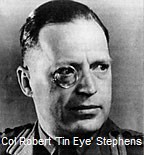
The commanding officer was Robin “Tin Eye” Stephens, 45, a monocled colonel of the Peshawar Division of the Indian Army who had been seconded to MI5 in 1939, and who had commanded Camp 020, a detention centre in Surrey where German spies had been interrogated during the war.

An authoritarian and a xenophobe with a legendary temper, Stephens boasted that interrogators who could “break” a man were born, and not made. Of the 20 interrogators ordered to break the inmates of Bad Nenndorf, 12 were British, a combination of officers from the three services and civilian linguists. The remaining eight included a Pole and a Dutchman, but were mostly German Jewish refugees who had enlisted on the outbreak of war, and who, Inspector Hayward suggested, “might not be expected to be wholly impartial”.

Most of the warders were soldiers barely out of their teens. Some had endured more than a year of combat, at the end of which they had liberated Belsen. Some represented the more unruly elements of the British Army of the Rhine, sent to Bad Nenndorf after receiving suspended sentences for assault or desertion. Often, Hayward said, they were the sort of individuals “likely to resort to violence on helpless men”.

The inmates were starved, woken during the night, and forced to walk up and down their cells from early morning until late at night. When moving about the prison they were expected to run, while soldiers kicked them. One warder, a soldier of the Welsh Regiment, told Hayward: “If a British soldier feels inclined to treat a prisoner decently he has every opportunity to do so; and he also has the opportunity to ill-treat a prisoner if he so desires”.

The Foreign Office briefed Clement Attlee, the prime minister, that “the guards had apparently been instructed to carry out physical assaults on certain prisoners with the object of reducing them to a state of physical collapse and of making them more amenable to interrogation”.

Former prisoners told Hayward that they had been whipped as well as beaten. This, the detective said, seemed unbelievable, until “our inquiries of warders and guards produced most unexpected corroboration”. Threats to execute prisoners, or to arrest, torture and murder their wives and children were considered “perfectly proper”, on the grounds that such threats were never carried out.

Moreover, any prisoner thought to be uncooperative during interrogation was taken to a punishment cell where they would be stripped and repeatedly doused in water. This punishment could continue for weeks, even in sub-zero temperatures.

Naked prisoners were handcuffed back-to-back and forced to stand before open windows in midwinter. Frostbite became common. One victim of the cold cell punishment was Buttlar, who swallowed the spoon handle to escape. An anti-Nazi, he had spent two years as a prisoner of the Gestapo. “I never in all those two years had undergone such treatments,” he said.

Kalkowski, the NKVD officer, claimed that toenails were ripped out and that he had been hung from his wrists during interrogation, with weights tied to his legs. British NCOs, he alleged, would beat him with rubber truncheons “while the interrogating officers went for lunch”. Hayward concluded, however, that “there was not a shred of evidence to support these allegations”.

Whatever was happening during the interrogations must have been widely known among many of the camp’s officers and men. In common with every CSDIC prison, each cell was bugged, so that the prisoners’ private utterances could be matched against their “confessions”.

Inspector Hayward’s investigation led to the courts martial of Stephens, Captain John Smith, Bad Nenndorf’s medical officer, and an interrogator, Lieutenant Richard Langham. The hearings were largely held behind closed doors. A number of sergeants – men who had carried out the beatings – were told they would be pardoned if they gave evidence against their officers. [continued…]

Facebooktwittermail

Torture only used in moderation

Despite reports, Khalid Sheikh Mohammed was not waterboarded 183 times

The New York Times reported last week that Khalid Sheikh Mohammed, the alleged mastermind of the Sept. 11 terror attacks, was waterboarded 183 times in one month by CIA interrogators. The “183 times” was widely circulated by news outlets throughout the world.

It was shocking. And it was highly misleading. The number is a vast inflation, according to information from a U.S. official and the testimony of the terrorists themselves.

A U.S. official with knowledge of the interrogation program told FOX News that the much-cited figure represents the number of times water was poured onto Mohammed’s face — not the number of times the CIA applied the simulated-drowning technique on the terror suspect. According to a 2007 Red Cross report, he was subjected a total of “five sessions of ill-treatment.” [continued…]

Editor’s Comment — So there we were — we torture scaremongers — hyperventilating that Khalid Sheikh Mohammed had been waterboarded an excessive 183 times and it turns out he was only brought close to drowning 183 times during a mere five sessions of waterboarding. It turns out that the CIA torturers studied the rules very carefully and realized that water poured for less than 10 seconds didn’t “count.” It did of course count as far as diligent torture bookkeeping is concerned — hence the carefully recorded 183 fleeting glimpses of death. Thanks goes to Fox News for helping set the record straight.

Since Sean Hannity recently agreed to submit himself to waterboarding “for charity” (is he going to raise money for Amnesty International’s fight against torture?), perhaps when he gets waterboarded he’ll be man enough to take a dozen 9-second pours — the ones that don’t really count. And once he’s graduated from this kiddy torture he’ll be ready to show us he can handle the real thing — Jay Bybee-approved waterboarding, that is.

Facebooktwittermail