Category Archives: Issues

Jill Stein’s ideology says one thing — her multi-million dollar investment portfolio says another

The Daily Beast reports: According to the financial-disclosure form she filed with the U.S. Office of Government Ethics on March 30, 2016, [Green Party presidential nominee Jill] Stein and her husband, Richard Rohrer, have investments (with the exception of real estate) valued at anywhere from $3,832,050 to $8,505,000.

Stein’s controversial investments include:

Big Carbon. On Oct. 26, 2015, Stein’s campaign sent out a statement calling for Exxon to get the death penalty for its “climate-change fraud.” (it should be noted that Stein has called for the abolition of the death penalty for human beings). She has also repeatedly called for public pension funds to divest from companies in the fossil-fuel industry.

Yet Stein has invested $995,011 to $2.2 million in funds such as the Vanguard 500 fund that maintain significant stakes in Exxon and other energy companies like Chevron, Duke Energy, Conoco Phillips, and Toho Gas, a Japanese company that engages in the sale of natural gas, tar, and coke, a fuel made from coal.

Financial Industry. Like Sen. Bernie Sanders, Stein has consistently denounced the banking industry and Wall Street. She has said that big banks should be nationalized or broken up. And she has refused to agree that there is a stark difference between how the Democrats have regulated the financial-services industry and how Republicans have approached the same task.

Yet Stein has invested roughly $1.2 to $2.65 million in funds like the TIAA-CREF Equity Index that have big stakes in the financial-services industry. Holdings in these funds include big banks like JP Morgan Chase, Citigroup, and Deutsche Bank as major parts of their investment portfolios. Five of the funds that Stein invests in maintain large positions in Wells Fargo, which has come under fire recently amid charges that its employees were pressured to open up fraudulent new accounts for clients.

One of the funds Stein has invested in maintains a significant position in Goldman Sachs bonds. Stein once referred to Goldman Sachs as Hillary Clinton’s best friend. She has also invested in a fund that contains significant investments in mortgage-backed securities, including subprime mortgage-backed securities, and mortgage-backed derivatives. These financial instruments played a significant role in the financial crisis of 2008. [Continue reading…]


Facebooktwittermail

Trump moves to protect his assets as he faces electoral bankruptcy

The New York Times reports: As his poll numbers have declined in the closing weeks of the presidential race, Donald J. Trump has begun to engage in barely veiled promotions of his business brand off the campaign trail, dragging reporters to his marquee properties in between his campaign events.

On Tuesday, Mr. Trump added an abrupt appearance at the Trump National Doral, one of his gilded golf courses and resorts in Florida, ostensibly to demonstrate how many employees he has there and how much they admire him as a boss.

On Wednesday, instead of spending the morning in one of the battleground states where polls show him trailing Hillary Clinton, Mr. Trump planned to attend a ribbon-cutting at his elaborately remade hotel at the Old Post Office on Pennsylvania Avenue in Washington.

The stops are a remarkable display of personal promotion by a presidential nominee, raising questions about whether the businessman, who has lived by the mantra that “all publicity is good publicity,” is at least partly casting his eye past the 2016 race, and toward bolstering the brand that bears his name.

In a telephone interview, Mr. Trump rejected such questions and said he was demonstrating his credentials for the presidency at such events by showing the type of efficiencies he would bring to government.

“Today it was about jobs. Tomorrow it’s about being under budget and ahead of schedule,” Mr. Trump said, referring to the Washington hotel.

His critics saw a different motive.

“This is the worst message to send to all of those true and loyal Trump supporters out there who actually did believe in him and actually did have a stake in this election,” said Kevin Madden, a former adviser to Mitt Romney, the 2012 Republican nominee.

“With less than two weeks to go until Election Day,” Mr. Madden added, “Mr. Trump is repaying them by using their campaign to showcase his hotel. He said he wouldn’t let them down, but he already has. They have a right to be disappointed.” [Continue reading…]

Facebooktwittermail

Trump adviser says Israeli settlements are ‘not illegal’

Middle East Eye and agencies reports: Donald Trump’s adviser on Israel said on Wednesday that Jewish settlements in the occupied West Bank are not illegal, adding that he believes the candidate agrees with him, putting the pair at odds with much of the world.

Speaking to AFP at a rooftop restaurant on Jerusalem’s Mount Zion after a pro-Trump rally, David Friedman also said the US presidential candidate was “tremendously sceptical” about the prospects for a two-state solution to the Israeli-Palestinian conflict.

About 150 people, including right-wing Israelis and evangelical Christians, attended Wednesday’s Trump rally outside the walls of Jerusalem’s Old City, near the flashpoint Al-Aqsa mosque compound.

The compound is holy to both Muslims and Jews, who refer to it as the Temple Mount. Located in East Jerusalem, it was occupied by Israel in 1967 and later annexed in a move never recognised by the international community.

Asked whether Trump viewed the West Bank as part of Israel, as many far-right Israelis do, Friedman did not answer directly.

“I don’t think he believes that the settlements are illegal,” Friedman said. [Continue reading…]

Facebooktwittermail

The Pentagon’s ‘Terminator conundrum’: Robots that could kill on their own

The New York Times reports: The small drone, with its six whirring rotors, swept past the replica of a Middle Eastern village and closed in on a mosque-like structure, its camera scanning for targets.

No humans were remotely piloting the drone, which was nothing more than a machine that could be bought on Amazon. But armed with advanced artificial intelligence software, it had been transformed into a robot that could find and identify the half-dozen men carrying replicas of AK-47s around the village and pretending to be insurgents.

As the drone descended slightly, a purple rectangle flickered on a video feed that was being relayed to engineers monitoring the test. The drone had locked onto a man obscured in the shadows, a display of hunting prowess that offered an eerie preview of how the Pentagon plans to transform warfare.

Almost unnoticed outside defense circles, the Pentagon has put artificial intelligence at the center of its strategy to maintain the United States’ position as the world’s dominant military power. It is spending billions of dollars to develop what it calls autonomous and semiautonomous weapons and to build an arsenal stocked with the kind of weaponry that until now has existed only in Hollywood movies and science fiction, raising alarm among scientists and activists concerned by the implications of a robot arms race.

The Defense Department is designing robotic fighter jets that would fly into combat alongside manned aircraft. It has tested missiles that can decide what to attack, and it has built ships that can hunt for enemy submarines, stalking those it finds over thousands of miles, without any help from humans. [Continue reading…]

Facebooktwittermail

Donald Trump’s deep-seated fear of public embarrassment

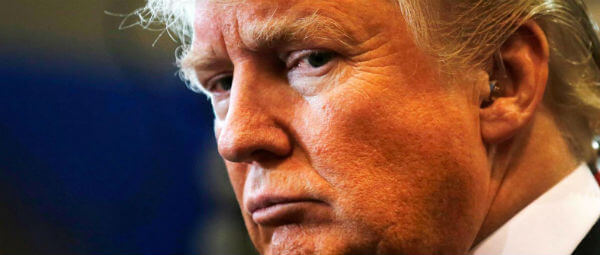
trump-frown

The New York Times reports: The intense ambitions and undisciplined behaviors of Mr. Trump have confounded even those close to him, especially as his presidential campaign comes to a tumultuous end, and he confronts the possibility of the most stinging defeat of his life. But in the more than five hours of conversations — the last extensive biographical interviews Mr. Trump granted before running for president — a powerful driving force emerges: his deep-seated fear of public embarrassment.

The recordings reveal a man who is fixated on his own celebrity, anxious about losing his status and contemptuous of those who fall from grace. They capture the visceral pleasure he derives from fighting, his willful lack of interest in history, his reluctance to reflect on his life and his belief that most people do not deserve his respect.

In the interviews, Mr. Trump makes clear just how difficult it is for him to imagine — let alone accept — defeat.

“I never had a failure,” Mr. Trump said in one of the interviews, despite his repeated corporate bankruptcies and business setbacks, “because I always turned a failure into a success.”

When people lose face, Mr. Trump’s reaction is swift and unforgiving.

And when Mr. Trump feels he has been made a fool of, his response can be volcanic. Ivana Trump told Mr. D’Antonio [the author of a biography of Trump called The Truth About Trump] about a Colorado ski vacation she took with Mr. Trump soon after they began dating. The future Mrs. Trump had not told her boyfriend that she was an accomplished skier. As she recalls it, Mr. Trump went down the hill first and waited for her at the bottom:

IVANA TRUMP: So he goes and stops, and he says, “Come on, baby. Come on, baby.” I went up. I went two flips up in the air, two flips in front of him. I disappeared. Donald was so angry, he took off his skis, his ski boots, and walked up to the restaurant. … He could not take it. He could not take it. [Continue reading…]

Facebooktwittermail

In pop culture, there are no bad police shootings

Alyssa Rosenberg writes: Movies, television and novels have trained audiences to excuse almost any police shooting, including the deaths of children — until now, when the emergence and near-ubiquity of real-life videos have made the gap between fiction and reality undeniable.

Whether a shooting is legal is determined in part by an officer’s fear. But when the Los Angeles Police Department cleared scripts for television series such as “Dragnet” or “Adam-12,” “any shooting that was done on the shows was squeaky clean,” explained former detective sergeant Joseph Wambaugh, who worked briefly in the LAPD’s public information office, where the scripts were reviewed. “Any officer would have to be in total control.”

If this standard had nothing to do with how officers actually reacted after shooting someone, it was intended to bolster the audience’s confidence in police officers.

In fact, officers on early cop shows such as “Dragnet” and “Naked City” were often presented as so decent that they questioned their own decisions to shoot and had to be convinced that they’d done the right thing. Often, the person doing the convincing was a parent or relative of the dead person.

The first time Joe Friday (Jack Webb), the archetypal stoic police officer, killed a person in the “Dragnet” episode “The Big Thief,” he was so distressed that his partner had to help him fill out his incident report. “I kind of wonder if there was another way,” Friday declared glumly, unconvinced that he was right to shoot even though the other man had a gun. Friday was ultimately reassured by the law itself, when the shooting was ruled a justifiable homicide.

Friday’s question hangs in the air, but it both casts and dispels doubt in a single sentence. If someone who cares as much as Joe Friday does couldn’t find a better solution when confronted with a dangerous criminal, then maybe one doesn’t exist. Friday’s concerns are themselves the proof that he would never do the wrong thing. [Continue reading…]

Facebooktwittermail

Gambia latest African country deciding to pull out of International Criminal Court

The Washington Post reports: Gambia has announced that it will withdraw from the International Criminal Court, the third African country to declare its departure in just two weeks.

Explaining the country’s decision, Gambian Information Minister Sheriff Bojang said on state television late Tuesday that the global judicial body was really an “an International Caucasian Court for the persecution and humiliation of people of color, especially Africans.”

Last Tuesday, Burundi announced its own intention to leave the court and on Friday, South Africa did the same. Then came Gambia, the tiny West African country. There are worries that this could be the beginning of an African exodus from the court, a dwindling membership on a continent with a long list of conflicts and human rights abuses to adjudicate.

Experts believe Kenya, Namibia and Uganda could be among the next countries to leave the court.

For years, many African nations have claimed that the ICC, which was established in 2002, is biased against the continent’s leaders. Nine of its 10 current investigations involve African countries.

The decision of three successive countries to leave the court could mark a watershed moment for an institution whose legitimacy is derived largely from its members’ consent. No country had previously withdrawn from the ICC. [Continue reading…]

Facebooktwittermail

Fearing being bullied by Trump, American Bar Association stifled report that called him a ‘libel bully’

The New York Times reports: Alarmed by Donald J. Trump’s record of filing lawsuits to punish and silence his critics, a committee of media lawyers at the American Bar Association commissioned a report on Mr. Trump’s litigation history. The report concluded that Mr. Trump was a “libel bully” who had filed many meritless suits attacking his opponents and had never won in court.

But the bar association refused to publish the report, citing “the risk of the A.B.A. being sued by Mr. Trump.”

David J. Bodney, a former chairman of the media-law committee, said he was baffled by the bar association’s interference in the committee’s journal.

“It is more than a little ironic,” he said, “that a publication dedicated to the exploration of First Amendment issues is subjected to censorship when it seeks to publish an article about threats to free speech.”

In internal communications, the bar association’s leadership, including its general counsel’s office and public relations staff, did not appear to dispute the report’s conclusions. [Continue reading…]

Facebooktwittermail

The definitive compendium of insults made by Donald Trump on Twitter

The New York Times reports: The mixed martial arts fighter Ronda Rousey is “not a nice person.” The golf swing of the actor Samuel L. Jackson is “not athletic.” A lectern in the Oval Office “looks odd,” and the mobile carrier T-Mobile’s service “is terrible.”

These comments are not private thoughts, nor are they the result of an embarrassing hidden camera, an off-the-record comment or a document release. They are public statements made by Donald Trump to his 5.9 million Twitter followers.

We know this because we’ve read, tagged and quoted them all.

The end result is “Donald Trump’s Twitter Insults: The Complete List (So Far).” It’s not a sample of some insults, or just those about his political rivals — though plenty of those exist. It’s the full count — a 100 percent sample, in polling terms — representing our best effort to categorize more than 4,000 tweets Mr. Trump has made since he declared his candidacy in June 2015.

Of those, we found that one in every eight was a personal insult of some kind. [Continue reading…]

Julie Irwin writes: Research shows that one of the primary reasons to denigrate people is to signal membership in a group: They are out, so you are in. People are always looking to belong, and Trump may represent, for some people, a particularly attractive membership opportunity. He is clear about what “his kind” of people are — the winners, the big men on campus.

When he insults people as not having these qualities, he is providing an opportunity for others to affirm themselves by joining him in the insulting chorus. They can call back to him by being insulting to the losers, too. It becomes a signaling contest, and humans engage in this type of behavior all the time, insulting people while other people are watching, chirping on Twitter and at rallies, looking for their groups.

One of my favorite social psychology experiments makes the point: Students in fraternities and sororities who wanted to signal their loyalty were especially likely to denigrate people other fraternities and sororities by judging them as “foolish” or “unintelligent” if the insults were public. The insults are not for the insulted but for the group calling out to them.

This process only works if it is linked with warmth within the group.

On Twitter, Trump is friendly and chatty with people who support him, especially if they try to get his attention by insulting nonbelievers. “Trump pummels his opponents — and the press” one recent tweet said from someone named John to a few hundred followers — and Trump retweeted it to 5.75 million. He commonly quotes ordinary folks’ tweets and says “Thanks!!!!” to them as if they were his best friends. [Continue reading…]

Facebooktwittermail

Turkish government gave security services ‘blank cheque’ to use torture says Human Rights Watch

Reuters reports: Turkey has effectively written a “blank cheque” to security services to torture people detained after a failed military coup attempt, a U.S.-based rights group said on Tuesday, citing accusations of beatings, sleep deprivation and sexual abuse.

A report by Human Rights Watch (HRW) said a “climate of fear” had prevailed since July’s failed coup against President Tayyip Erdogan and the arrest of thousands under a State of Emergency. It identified more than a dozen cases raised in interviews with lawyers, activists, former detainees and others.

A Turkish official said the Justice Ministry would respond to the report later in the day; but Ankara has repeatedly denied accusations of torture and said the post-coup crackdown was needed to stabilise a NATO state facing threats from Kurdish militants as well as wars in neighbouring Iraq and Syria. [Continue reading…]

Facebooktwittermail

German terrorism case highlights Europe’s security challenges

The New York Times reports: The warning came to the German security authorities in early September from “our best partners,” as they euphemistically refer to the American intelligence agencies: A terrorist assault might be in the works.

In the weeks that followed, the Germans identified a suspect, a refugee from Syria. They unearthed evidence that he had been casing a Berlin airport for an attack, and they recovered powerful explosives from his apartment, only to see him slip through their fingers. When they eventually captured him, the suspect promptly hanged himself in his jail cell.

The case was notable for its dramatic turns. But it also underscored two central challenges facing the Continent: getting a handle on the security risk related to the arrival of more than a million migrants last year, and addressing the continued reliance of European governments on intelligence from the United States to avert attacks.

Both issues have been plaguing Europe since the high-profile attacks in France and Belgium over the past two years. Governments have scrambled to counter the threat even as migrants, many with little or no documentation of their identity or country of origin, came over their borders in previously unheard-of numbers. The challenge has become more pressing in Germany in recent months after a spate of arrests and attacks, some linked to migrants.

“In a way, we have outsourced our counterterrorism to the United States,” said Guido Steinberg, a terrorism expert at the German Institute for International and Security Affairs. “The Germans are not ready to build up their intelligence capabilities for political reasons, so this will continue.” [Continue reading…]

Facebooktwittermail

Gary Younge: America’s deserving and undeserving dead children

It’s rare to hear an author say, “Researching and writing this book has made me want to scream.”  But perhaps it’s not surprising, given the topic of Gary Younge’s Another Day in the Death of America: A Chronicle of Ten Short Lives — the daily, weekly, monthly, yearly death-by-gun of startling numbers of kids in this country — and the time he spent tracking down the stories of the young Americans who died on a single day in November 2013 in separate incidents nationwide.

After all, these days, the U.S. is a haven and a heaven for guns.  It’s hard to find another nation on the planet — except in places like Syria or Afghanistan where whole populations have been thrown into desperate internecine conflicts — in which guns are so readily available. Between 1968 and 2015, the number of guns in the U.S. essentially doubled to 300 million. Between 2010 and 2013 alone, American arms manufacturers doubled their production of weapons to almost 11 million a year.  And those guns have gotten more deadly as well.  Military-style assault rifles and semi-automatic handguns are now the weapons of choice for mass killers and “lone wolf” terrorists in this country.  In almost all cases those killers got their guns and ammo (often high-capacity magazines capable of holding 15 to 100 rounds) in perfectly legal fashion. And it’s getting easier to carry concealed weapons all the time. Missouri, for instance, recently passed a law that allows the carrying of such a weapon without either a permit or training of any sort.

Under the circumstances, no one should be surprised that kids die in remarkable numbers from guns for all kinds of reasons. Believe me, though, that makes it no less shocking when you read Younge’s unsettling and moving book. Long a journalist, columnist, and editor for the British Guardian stationed here in the U.S., today he offers us a look at the death toll from guns among our young and the way we Americans generally like to explain that toll to ourselves (or rather how we like to explain it away). Tom Engelhardt

An all-American slaughter
The youthful carnage of America’s gun culture
By Gary Younge

Every day, on average, seven kids and teens are shot dead in America. Election 2016 will undoubtedly prove consequential in many ways, but lowering that death count won’t be one of them. To grapple with fatalities on that scale — 2,500 dead children annually — a candidate would need a thoroughgoing plan for dealing with America’s gun culture that goes well beyond background checks. In addition, he or she would need to engage with the inequality, segregation, poverty, and lack of mental health resources that add up to the environment in which this level of violence becomes possible.  Think of it as the huge pile of dry tinder for which the easy availability of firearms is the combustible spark. In America in 2016, to advocate for anything like the kind of policies that might engage with such issues would instantly render a candidacy implausible, if not inconceivable — not least with the wealthy folks who now fund elections.

So the kids keep dying and, in the absence of any serious political or legislative attempt to tackle the causes of their deaths, the media and the political class move on to excuses. From claims of bad parenting to lack of personal responsibility, they regularly shift the blame from the societal to the individual level. Only one organized group at present takes the blame for such deaths.  The problem, it is suggested, isn’t American culture, but gang culture.

Researching my new book, Another Day in the Death of America, about all the children and teens shot dead on a single random Saturday in 2013, it became clear how often the presence of gangs in neighborhoods where so many of these kids die is used as a way to dismiss serious thinking about why this is happening. If a shooting can be described as “gang related,” then it can also be discounted as part of the “pathology” of urban life, particularly for people of color. In reality, the main cause, pathologically speaking, is a legislative system that refuses to control the distribution of firearms, making America the only country in the world in which such a book would have been possible.

Continue reading

Facebooktwittermail

Clinton’s careful courtship of Muslim voters

The Atlantic reports from Alexandria, Virginia: This Democratic headquarters one warm October night could have been practically anywhere in the country. Volunteers crammed into a dingy, decrepit office suite, complete with fake wood paneling from the era when Hillary Clinton still wore bell-bottoms, filling up every space—crouched over rickety tables or into corners, reciting a script as they called worked through long lists of voters, checking to see if people were supporting Hillary Clinton and whether they’d be willing to volunteer.

The only clue that this was an unusual event was sartorial: Several women wore headscarves, and a man sported a stylish kaffiyeh. The phone bank is one of dozens of Muslims for Hillary events that the Clinton campaign has arranged this year, part of what the campaign contends is an unprecedented effort to court a small but growing population.

On Friday, the Clinton campaign released an ad featuring Khizr Khan, the father of U.S. soldier Humayun Khan, who was slain fighting in Iraq. The ad, set to air in seven battleground states, is notable for its direct invocation of Islam. Telling the story of his son’s death saving comrades, Khan says, “He was 27 years old, and he was a Muslim American. I want to ask Mr. Trump, would my son have a place in your America?”


Such an ad would have been unthinkable as recently as four years ago, as Barack Obama grappled with false rumors that he was a secret Muslim. It’s surprising even now, amid a national campaign that has seen direct demonization of Muslims. But Donald Trump’s decision to demonize Islam has created what the Clinton team sees as an opening, leading the Democrat to court Muslim votes more boldly and methodically than any predecessor. [Continue reading…]

Facebooktwittermail

Iran is enjoying the U.S. presidential election

Robin Wright writes: The first season of “House of Cards,” the Netflix series about the demonic American politician Frank Underwood and his duplicitous wife, Claire, recently made its début on Iranian television, just in time for the finale of the American elections. The show has been dubbed in Farsi — as “Khaneh Poushaly,” or “House of Straw” — by a state-run television channel. It ran every night for two weeks. The timing seemed deliberate, and authorized from the top: the Islamic Republic vigorously censors most American programs, and the director of Iran’s broadcasting authority, I.R.I.B., is appointed by the Supreme Leader.

Among hard-liners, the response to the series has been gleeful. It fits their profile of the United States as the Great Satan. Mashregh, a Web site linked to the Revolutionary Guards, commented, “House of Cards has skillfully shown the deception in the complicated political sphere of liberal American civilization, as well as the treason, power-hungriness, promiscuities and crimes behind those ruling in the country.”

Iran’s media has generally been obsessed with the upcoming American contest, even more than with the country’s own Presidential election, scheduled for next May. Mashregh has an entire page devoted to it. For the first time, Iranian television broadcast an American Presidential debate live, in simultaneous translation — the October 9th encounter, in which Donald Trump denied sexually assaulting women and threatened to put Hillary Clinton in prison if he is elected. [Continue reading…]

Facebooktwittermail

Iranian human rights activist given six years in prison for hand-written unpublished story

IranWire reports: On Tuesday, October 4, writer and human rights activist Golrokh Ebrahimi received a strange phone call ordering her to present herself at Evin Prison by noon on Wednesday evening to start serving her prison sentence. By law, authorities much convey such an order by way of a written summons. But that was not the only unusual thing about the call.

“The arresting officer used the phone of Navid Kamran, a codefendant of mine,” Ebrahimi told IranWire hours before presenting herself at Evin. “They had gone to his shop to arrest him and used his phone. When I answered the call, the man who introduced himself as an agent of the Centre for the Implementation of Sentences said that I must present myself to serve the sentence. I said that I had received no official summons or a call from Evin Court. ‘You are using my friend’s phone to call me and it might be a joke,’ I said. ‘I don’t know you and I have no idea who is talking to me.’ He answered back that ‘you might think this is a joke but we are here to arrest your friend and you must present yourself at Evin’s court right away.’ I said that I could not get there by the end of business hours but perhaps I could do it the next day. He said that I would be arrested if I did not present myself by the next day.”

Ebrahimi’s ordeal began when the Revolutionary Guards arrested her along with her husband, Arash Sadeghi, at his workplace in Tehran on September 6, 2014. The Guards had no arrest warrant, but took the couple to their home, ransacked the place, and confiscated their computers, CDs, and notes. Among the confiscated items was a story about the punishment, under Islamic law, of death by stoning. According to a report from Amnesty International, “The story describes the emotional reaction of a young woman who watches the film, The Stoning of Soraya M, which tells the true story of a young woman stoned to death for adultery — and becomes so enraged that she burns a copy of the Quran.” [Continue reading…]

Facebooktwittermail

Donald Trump’s threat to reject election results alarms scholars

Max Fisher writes: Donald J. Trump’s suggestions that he might reject the results of the American election as illegitimate have unnerved scholars on democratic decline, who say his language echoes that of dictators who seize power by force and firebrand populists who weaken democracy for personal gain.

“To a political scientist who studies authoritarianism, it’s a shock,” said Steven Levitsky, a professor at Harvard. “This is the stuff that we see in Russia and Venezuela and Azerbaijan and Malawi and Bangladesh, and that we don’t see in stable democracies anywhere.”

Throughout October, Mr. Trump has claimed, without evidence, that the vote will be “rigged” and “taken away from us.” At the final presidential debate, he refused to say he would accept the election’s outcome, and later joked at a rally that he would accept the results “if I win.”

In weak democracies around the world, scholars warned Friday, political leaders have used the same language to erode popular faith in democracy — often intending to incite violence that will serve their political aims, and sometimes to undo democracy entirely.

The United States is not at risk of such worst-case scenarios. American democratic norms and institutions are too strong for any one politician to destabilize. But Mr. Trump’s language, the scholars say, follows a similar playbook and could pose real, if less extreme, risks. [Continue reading…]

Facebooktwittermail

Trump Organization is using horribly insecure email servers

Zack Whittaker reports: If you thought Former Secretary of State Hillary Clinton’s private email server was a mess, Donald Trump’s company is running email servers that look like a dumpster fire by comparison.

Security researcher Kevin Beaumont said in a tweet on Monday that the Trump Organization, the parent company of the alleged billionaire’s portfolio of realty, steaks, golf, and hotels, is running a set of email servers that are horribly outdated and long past the end-of-life, meaning they haven’t received security patches in over a year.

Beaumont said he found that the company’s email system is running the decade-old Windows Server 2003 and Internet Information Servers 6, both of which haven’t been supported in over a year.

Both sets of software are so old that Microsoft no longer patches even known security vulnerabilities. Instead, users should upgrade. Patches remain as one of the best ways for preventing hackers from exploiting security flaws.

A spokesperson for Trump, now the Republican presidential candidate, could not be reached on Tuesday. [Continue reading…]

Facebooktwittermail