



Sebastian Mallaby writes: On Tuesday 16 September 2008, early in the afternoon, a self-effacing professor with a neatly clipped beard sat with the president in the Roosevelt Room of the White House. Flanked by a square-shouldered banker who had recently run Goldman Sachs, the professor was there to tell the elected leader of the world’s most powerful country how to rescue its economy. Following the bankruptcy of one of the nation’s storied investment banks, a global insurance company was now on the brink, but drawing on a lifetime of scholarly research, the professor had resolved to commit $85bn of public funds to stabilising it.
The sum involved was extraordinary: $85bn was more than the US Congress spent annually on transportation, and nearly three times as much as it spent on fighting Aids, a particular priority of the president’s. But the professor encountered no resistance. “Sometimes you have to make the tough decisions,” the president reflected. “If you think this has to be done, you have my blessing.”
Later that same afternoon, Federal Reserve chairman Ben Bernanke, the bearded hero of this tale, showed up on Capitol Hill, at the other end of Pennsylvania Avenue. At the White House, he had at least been on familiar ground: he had spent eight months working there. But now Bernanke appeared in the Senate majority leader’s conference room, where he and his ex-Wall Street comrade, Treasury secretary Hank Paulson, would meet the senior leaders of both chambers of Congress. A quiet, balding, unassuming technocrat confronted the lions of the legislative branch, armed with nothing but his expertise in monetary plumbing.
Bernanke repeated his plan to commit $85bn of public money to the takeover of an insurance company.
“Do you have 85bn?” one sceptical lawmaker demanded.
“I have 800bn,” Bernanke replied evenly – a central bank could conjure as much money as it deemed necessary.
But did the Federal Reserve have the legal right to take this sort of action unilaterally, another lawmaker inquired?
Yes, Bernanke answered: as Fed chairman, he wielded the largest chequebook in the world – and the only counter-signatures required would come from other Fed experts, who were no more elected or accountable than he was. Somehow America’s famous apparatus of democratic checks and balances did not apply to the monetary priesthood. Their authority derived from technocratic virtuosity. [Continue reading…]
The Guardian reports: Britain’s biggest banks are preparing to relocate out of the UK in the first few months of 2017 amid growing fears over the impending Brexit negotiations, while smaller banks are making plans to get out before Christmas.
The dramatic claim is made in the Observer by the chief executive of the British Bankers’ Association, Anthony Browne, who warns “the public and political debate at the moment is taking us in the wrong direction”.
A source close to Brexit secretary David Davis said he and the chancellor Philip Hammond had last week sought to offer reassurance that they were determined to secure the status of the City of London.
However, the government’s stated intention to take control of the freedom of movement into the UK is widely recognised among officials to be a hammer blow to any chance of retaining the present terms of trade for banks, particularly given the bellicose rhetoric of major politicians on the continent. [Continue reading…]
NBC News reports: Andrew Komarov of InfoArmor told NBC News he didn’t see any sign of Russian involvement at all, whether state or private [in the “denial of service,” or DDoS, attacks that caused massive internet outages across the U.S. on Friday]. He noted that the botnet used in the attack, “Mirai,” was developed by an English speaker and that he had found no link between “Mirai” and the Russians, who have their own much more sophisticated methods.
He said the attacks seemed more consistent with the methods used by the hacking group known as Lizard Squad, two of whose members, both teens, were arrested earlier this month in the U.S. and the Netherlands and charged in connection with DDoS attacks.
Said Komarov, “We have some context, that because of similar victims, using Dyn, and also tactics, tools and procedures by threat actors, it may be a revenge for the past arrests of DDoS’ers in the underground, happened several weeks ago.”
Dmitri Alperovitch of Crowdstrike also expressed doubt about a link to the Russian government, and speculated the attacks might have to do with a recent interview that cybersecurity expert Brian Krebs did with Dyn mentioning Russian organized crime. Alperovitch said use of a botnet bears the hallmark of a criminal rather than state attack, and the target may simply have been Dyn, not the U.S.
Flashpoint, a private cybersecurity and intelligence firm, noted that the Krebs site was attacked in September by a Mirai botnet, and the Krebs site was among those attacked Friday. The hacker who attacked Krebs in September released the source code on the web earlier this month, and hackers have copied the code to create their own botnets.
Flashpoint said it had concluded that the Friday attacks were not mounted by hacktivists, a political group or a state actor. [Continue reading…]
TechCrunch reports: In the past few weeks, hackers have upped the DDoS stakes in a big way. Starting with the attack on KrebsonSecurity.com and increasing in severity from there, hundreds of thousands of devices have been used to perpetrate these actions. A number that dwarfs previous attacks by orders of magnitude.
While it isn’t yet confirmed, evidence points to the attack that we saw on Friday morning following this same playbook, but being perpetrated on a much larger scale, relying on Internet of Things (IoT) devices rather than computers and servers to carry out an attack.
In fact, in all likelihood an army of surveillance cameras attacked Dyn. Why surveillance cameras? Because many of the security cameras used in homes and business around the world typically run the same or similar firmware produced by just a few companies.
This firmware is now known to contain a vulnerability that can easily be exploited, allowing the devices to have their sights trained on targets like Dyn. What’s more, many still operate with default credentials — making them a simple, but powerful target for hackers.
Why is this significant? The ability to enslave these video cameras has made it easier and far cheaper to create botnets at a scale that the world has never seen before. If someone wants to launch a DDoS attack, they no longer have to purchase a botnet—they can create their own using a program that was dumped on the internet just a few weeks ago. [Continue reading…]
The New York Times reports: Dale Drew, chief security officer at Level 3, an internet service provider, found evidence that roughly 10 percent of all devices co-opted by Mirai were being used to attack Dyn’s servers. Just one week ago, Level 3 found that 493,000 devices had been infected with Mirai malware, nearly double the number infected last month.
Mr. Allen added that Dyn was collaborating with law enforcement and other internet service providers to deal with the attacks.
In a recent report, Verisign, a registrar for many internet sites that has a unique perspective into this type of attack activity, reported a 75 percent increase in such attacks from April through June of this year, compared with the same period last year.
The attacks were not only more frequent, they were bigger and more sophisticated. The typical attack more than doubled in size. What is more, the attackers were simultaneously using different methods to attack the company’s servers, making them harder to stop.
The most frequent targets were businesses that provide internet infrastructure services like Dyn. [Continue reading…]
Brian Krebs reports: The attack on DYN comes just hours after DYN researcher Doug Madory presented a talk on DDoS attacks in Dallas, Texas at a meeting of the North American Network Operators Group (NANOG). Madory’s talk — available here on Youtube.com — delved deeper into research that he and I teamed up on to produce the data behind the story DDoS Mitigation Firm Has History of Hijacks.
That story (as well as one published earlier this week, Spreading the DDoS Disease and Selling the Cure) examined the sometimes blurry lines between certain DDoS mitigation firms and the cybercriminals apparently involved in launching some of the largest DDoS attacks the Internet has ever seen. Indeed, the record 620 Gbps DDoS against KrebsOnSecurity.com came just hours after I published the story on which Madory and I collaborated.
The record-sized attack that hit my site last month was quickly superseded by a DDoS against OVH, a French hosting firm that reported being targeted by a DDoS that was roughly twice the size of the assault on KrebsOnSecurity. As I noted in The Democratization of Censorship — the first story published after bringing my site back up under the protection of Google’s Project Shield — DDoS mitigation firms simply did not count on the size of these attacks increasing so quickly overnight, and are now scrambling to secure far greater capacity to handle much larger attacks concurrently. [Continue reading…]
Reuters reports: An international inquiry found Syrian government forces responsible for a third toxic gas attack, according to a confidential report submitted to the U.N. Security Council on Friday, setting the stage for a showdown between Russia and western council members over how to respond.
The fourth report from the 13-month-long inquiry by the United Nations and the Organization for the Prohibition of Chemical Weapons (OPCW), the global chemical weapons watchdog, blamed Syrian government forces for a toxic gas attack in Qmenas in Idlib governorate on March 16, 2015, according to a text of the report seen by Reuters.
The third report by the inquiry in August blamed the Syrian government for two chlorine attacks – in Talmenes on April 21, 2014 and Sarmin on March 16, 2015 – and said Islamic State militants had used sulfur mustard gas.
The results set the stage for a Security Council showdown between the five veto-wielding powers, likely pitting Russia and China against the United States, Britain and France over how those responsible should be held accountable. [Continue reading…]
@wikileaks – America owes you, bigly! Thank you and God bless you! pic.twitter.com/gvElqdeiOa
— David Duke (@DrDavidDuke) October 21, 2016
Why the hell would we fight for Hillary against Russia, when WikiLeaks proves without doubt she and her controllers are 🇺🇸 true enemies? pic.twitter.com/sHht9OrylW
— David Duke (@DrDavidDuke) October 18, 2016
Trump is the real deal.
Americans, no matter race/religion should be backing Trump. Together we can lockup the common enemies among us. https://t.co/rByoLnnbjz
— David Duke (@DrDavidDuke) October 20, 2016
Hillary Clinton is the epitome of a race traitor. This deceitful, lying witch does NOT care about European Americans–she is very dangerous. pic.twitter.com/OuaQVUnv6S
— David Duke (@DrDavidDuke) October 20, 2016
Dana Millbank writes: The need to deal Trump a humiliating defeat has a sociological basis in the “degradation ceremony,” in which the perpetrator (Trump) is held by denouncers (officeholders and others in positions of influence) to be morally unacceptable, and witnesses (the public) agree that the perpetrator is no longer held in good standing.
Psychologist Wynn Schwartz, who teaches at Harvard Medical School, explained to me that what’s needed to have a successful degradation of Trump is an epic defeat. “If it is lopsided enough,” he said, “you don’t have critical masses of people who feel disenfranchised” or “who feel justified in saying that it was stolen.”
But if Clinton’s victory is narrow, the degradation ceremony fails, because a large chunk of the population feels swindled and remains loyal to Trump. “The margin matters a lot,” Schwartz said.
Trump’s recent actions — talking about a “rigged” election while laying the foundation for a Trump TV network — suggest that he will attempt to defy the degradation ceremony that a loss typically confers. Hence the importance of a landslide.
Arizona would offer an ideal rebuke. Carolyn Goldwater Ross, granddaughter of the conservative icon, introduced Obama on Thursday by saying, “I come from a long line of Republicans and I’ve stayed independent. . . . But this time it’s different.” She submitted that Trump violates her grandfather’s “basic values.”
Apparently, many Arizonans agree. Maricopa County Sheriff Joe Arpaio, the anti-immigrant icon and Trump backer, is trailing his Democratic opponent by 15 points in polling by the Republic. The newspaper endorsed Clinton, its first embrace of a Democrat for president in its 126-year history. Arizona’s junior Republican senator, Jeff Flake, is an outspoken Trump critic, its senior Republican senator, John McCain, has been attacked by Trump, and former Republican attorney general Grant Woods has endorsed Clinton. [Continue reading…]
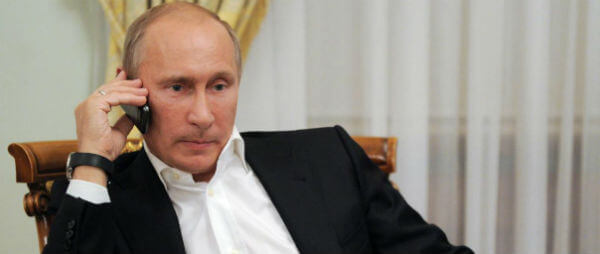
Thomas Rid writes: On an April afternoon earlier this year, Russian president Vladimir Putin headlined a gathering of some four hundred journalists, bloggers, and media executives in St. Petersburg. Dressed in a sleek navy suit, Putin looked relaxed, even comfortable, as he took questions. About an hour into the forum, a young blogger in a navy zip sweater took the microphone and asked Putin what he thought of the “so-called Panama Papers.”
The blogger was referring to a cache of more than eleven million computer files that had been stolen from Mossack Fonseca, a Panamanian law firm. The leak was the largest in history, involving 2.6 terabytes of data, enough to fill more than five hundred DVDs. On April 3, four days before the St. Petersburg forum, a group of international news outlets published the first in a series of stories based on the leak, which had taken them more than a year to investigate. The series revealed corruption on a massive scale: Mossack Fonseca’s legal maneuverings had been used to hide billions of dollars. A central theme of the group’s reporting was the matryoshka doll of secret shell companies and proxies, worth a reported $2 billion, that belonged to Putin’s inner circle and were presumed to shelter some of the Russian president’s vast personal wealth.
When Putin heard the blogger’s question, his face lit up with a familiar smirk. He nodded slowly and confidently before reciting a litany of humiliations that the United States had inflicted on Russia. Putin reminded his audience about the sidelining of Russia during the 1998 war in Kosovo and what he saw as American meddling in Ukraine more recently. Returning to the Panama Papers, Putin cited WikiLeaks to insist that “officials and state agencies in the United States are behind all this.” The Americans’ aim, he said, was to weaken Russia from within: “to spread distrust for the ruling authorities and the bodies of power within society.”
Though a narrow interpretation of Putin’s accusation was defensible—as WikiLeaks had pointed out, one of the members of the Panama Papers consortium had received financial support from USAID, a federal agency—his swaggering assurance about America’s activities has a more plausible explanation: Putin’s own government had been preparing a vast, covert, and unprecedented campaign of political sabotage against the United States and its allies for more than a year.
The Russian campaign burst into public view only this past June, when The Washington Post reported that “Russian government hackers” had penetrated the servers of the Democratic National Committee. The hackers, hiding behind ominous aliases like Guccifer 2.0 and DC Leaks, claimed their first victim in July, in the person of Debbie Wasserman Schultz, the DNC chair, whose private emails were published by WikiLeaks in the days leading up to the Democratic convention. By August, the hackers had learned to use the language of Americans frustrated with Washington to create doubt about the integrity of the electoral system: “As you see the U. S. presidential elections are becoming a farce,” they wrote from Russia.
The attacks against political organizations and individuals absorbed much of the media’s attention this year. But in many ways, the DNC hack was merely a prelude to what many security researchers see as a still more audacious feat: the hacking of America’s most secretive intelligence agency, the NSA.
Russian spies did not, of course, wait until the summer of 2015 to start hacking the United States. This past fall, in fact, marked the twentieth anniversary of the world’s first major campaign of state-on-state digital espionage. In 1996, five years after the end of the USSR, the Pentagon began to detect high-volume network breaches from Russia. The campaign was an intelligence-gathering operation: Whenever the intruders from Moscow found their way into a U. S. government computer, they binged, stealing copies of every file they could.
By 1998, when the FBI code-named the hacking campaign Moonlight Maze, the Russians were commandeering foreign computers and using them as staging hubs. At a time when a 56 kbps dial-up connection was more than sufficient to get the best of Pets.com and AltaVista, Russian operators extracted several gigabytes of data from a U. S. Navy computer in a single session. With the unwitting help of proxy machines—including a Navy supercomputer in Virginia Beach, a server at a London nonprofit, and a computer lab at a public library in Colorado—that accomplishment was repeated hundreds of times over. Eventually, the Russians stole the equivalent, as an Air Intelligence Agency estimate later had it, of “a stack of printed copier paper three times the height of the Washington Monument.” [Continue reading…]

Politico reports: Donald Trump angrily insisted on Wednesday night that he is not Vladimir Putin’s “puppet.”
But at a minimum, in recent months he has often sounded like the Russian president’s lawyer—defending Putin against a variety of specific charges, from political killings to the 2014 downing of a passenger jet over Ukraine, despite the weight of intelligence, legal findings and expert opinion.
Wednesday, for instance, Trump dismissed Hillary Clinton’s assertion that Russia was behind the recent hacking of Democratic Party and Clinton campaign emails.
“She has no idea whether it’s Russia or China or anybody else,” Trump retorted. “Our country has no idea.”
As Clinton tried to explain that the Russian role is the finding of 17 military and civilian intelligence agencies, Trump cut her off: “I doubt it.”
On Oct. 7, the Department of Homeland Security and the Office of the Director of National Intelligence released a joint statement saying that the U.S. intelligence community “is confident that the Russian Government directed the recent compromises of e-mails from US persons and institutions, including from US political organizations.” That finding has also been relayed directly to Trump in the classified national security briefings he receives as a major party nominee. [Continue reading…]
Motherboard reports: On March 19 of this year, Hillary Clinton’s campaign chairman John Podesta received an alarming email that appeared to come from Google.
The email, however, didn’t come from the internet giant. It was actually an attempt to hack into his personal account. In fact, the message came from a group of hackers that security researchers, as well as the US government, believe are spies working for the Russian government. At the time, however, Podesta didn’t know any of this, and he clicked on the malicious link contained in the email, giving hackers access to his account.
Months later, on October 9, WikiLeaks began publishing thousands of Podesta’s hacked emails. Almost everyone immediately pointed the finger at Russia, who is suspected of being behind a long and sophisticated hacking campaign that has the apparent goal of influencing the upcoming US elections. But there was no public evidence proving the same group that targeted the Democratic National Committee was behind the hack on Podesta — until now.
The data linking a group of Russian hackers — known as Fancy Bear, APT28, or Sofacy — to the hack on Podesta is also yet another piece in a growing heap of evidence pointing toward the Kremlin. And it also shows a clear thread between apparently separate and independent leaks that have appeared on a website called DC Leaks, such as that of Colin Powell’s emails; and the Podesta leak, which was publicized on WikiLeaks.
All these hacks were done using the same tool: malicious short URLs hidden in fake Gmail messages. And those URLs, according to a security firm that’s tracked them for a year, were created with Bitly account linked to a domain under the control of Fancy Bear. [Continue reading…]
Politico reports: Donald Trump is pointing to a stream of hacked emails as proof that Hillary Clinton would be a compromised president, but a surprising number of progressives are drawing similar conclusions — albeit for a totally different reasons.
Some of the left’s most influential voices and groups are taking offense at the way they and their causes were discussed behind their backs by Clinton and some of her closest advisers in the emails, which swipe liberal heroes and causes as “puritanical,” “pompous”, “naive”, “radical” and “dumb,” calling some “freaks,” who need to “get a life.”
There are more than personal feelings and relationships at stake, though.
If polls hold and Clinton wins the presidency, she will need the support of the professional left to offset what’s expected to be vociferous Republican opposition to her legislative proposals and appointments.
But among progressive operatives, goodwill for Clinton — and confidence in key advisers featured in the emails including John Podesta, Neera Tanden and Jake Sullivan — is eroding as WikiLeaks continues to release a daily stream of thousands of emails hacked from Podesta’s Gmail account that is expected to continue until Election Day.
Liberal groups and activists are assembling opposition research-style dossiers of the most dismissive comments in the WikiLeaks emails about icons of their movement like Clinton’s Democratic primary rival Bernie Sanders, and their stances on trade, Wall Street reform, energy and climate change. And some liberal activists are vowing to use the email fodder to oppose Clinton policy proposals or appointments deemed insufficiently progressive. [Continue reading…]
A conversation between Nader Hashemi and Danny Postel on the Syrian catastrophe and what should be done about it. Hashemi is Director of the Center for Middle East Studies and Associate Professor of Middle East and Islamic Politics at the Josef Korbel School of International Studies, University of Denver. Postel is the Associate Director of the Center for Middle East Studies at the Josef Korbel School of International Studies, University of Denver. Together they are the co-editors of The People Reloaded: The Green Movement and the Struggle for Iran’s Future (2011), The Syria Dilemma (2013), and Sectarianization: Mapping the New Politics of the Middle East (forthcoming in early 2017).
Charlie Winter writes: It is vastly outmanned and outgunned and, much as it would prefer otherwise, Mosul’s fall in the next few months is near inevitable. No matter how much social-media savvy the Islamic State possesses, this is an unsavory truth that its propaganda machine cannot spin.
But contrary to some reports, this does not pose an existential threat to the Islamic State. For some time, the group has been preparing for this very moment and others like it (the recent loss of Dabiq, for example), proactively but subtly shifting its overarching narrative away from divine aggression and towards steadfast resistance, reshaping it in order to allow for defeat, even the most catastrophic sort. While leaders of the Islamic State were already hinting at such a shift last year, this pivot first began to manifest properly following a May 2016 statement, directed at the coalition, by late spokesman Abu Muhammad al-Adnani. “Would we be defeated and you be victorious if you were to take Mosul or Sirte or Raqqa or even take all the cities and we were to return to our initial condition?” (“Certainly not!” was the answer he provided, in case you were wondering.)
In the ensuing months, the notion that the caliphate was on the cusp of downsizing — from proto-state to proto-insurgency — and that this was perfectly fine, received more attention from Islamic State media, notably from, among others, the al-Naba newspaper editorial board. This re-framing — casting the staggering loss of territory as a simple expression of God’s divine project — first really came to bear in June 2016, when Fallujah fell to Iraqi forces. Before this setback, the Islamic State had a clear-cut policy for dealing with defeat: Look the other way. When, for example, the Syrian border town of Tel Abyad fell to a coalition of Kurdish and Free Syrian Army fighters in June 2015, propaganda coverage was notably lacking, with many Islamic State supporters asserting that it was nothing more than a tactical retreat in the absence of an officially delineated line. Likewise, other significant losses, like Tikrit, Ramadi, and Palmyra, were more or less overlooked by the propaganda factory.
This obfuscation worked in some places, but it could never work with Fallujah. This would have been too big a loss for the Islamic State to simply sweep under the rug. It owed a lot to the city, which it had largely controlled for two and a half years. Its roots there, symbolic and logistical, ran far deeper than they did in any of the above towns. Losing it would have strong reverberations.
Recognizing this conundrum, the Islamic State’s leaders considered their next steps with care. First, they embraced the battle for Fallujah wholeheartedly, producing a constant flow of operational reports, short videos, newspaper articles, and photographic essays, not to mention high-spec documentaries like “Fallujah of the Resistance” and “Signs of Victory,” all of which, at least initially, depicted the battle as epic, heroic, and distinctly undecided. However, as Fallujah’s imminent capture by Iraqi forces became apparent just two weeks into the offensive, the Islamic State slowed the flood to a trickle, but not before making sure to frame its loss appropriately.
Since its Fallujah test run, the Islamic State’s media mavens appear to have continued in this vein, deeming it a better bet to prioritize long-term inevitability over short-term triumphalism. This shift, something of a tactical retreat, enabled them to reframe territorial loss as a confirmation of the nearing apocalypse, rather than evidence of a failing insurgency. [Continue reading…]
Jamelle Bouie writes: In 1800, Federalist president John Adams lost to Thomas Jefferson and his Democratic-Republicans, following a painful and contentious contest. And rather than fight or challenge the results, Adams handed his rival the reins of power, the first peaceful transition of power in a democracy and a milestone in the history of the modern world. The act of conceding, in other words, is vital to the functioning of democracy. It confers legitimacy on the winner of an election, giving him or her a chance to govern. To refuse to concede, to deny that legitimacy, is to undermine our democratic foundations.
Surrogates for Trump have tried to defend his comments, citing then–Vice President Al Gore’s conduct following the 2000 election. But Gore didn’t challenge the process; he let it move forward. As ordered by state law, Florida had to do a recount. That recount was then stopped by the Supreme Court. At that point, Gore conceded the election, gracefully and without public hesitation.
In presidential elections at least, there’s simply no precedent for what Trump is promising. The slave South may have seceded from the Union following the 1860 election, but neither of Abraham Lincoln’s opponents denied his legitimacy as the duly-elected leader for the United States. It is world-historic in the worst possible way. [Continue reading…]
The Wall Street Journal reports: With the hacking of Hillary Clinton’s campaign and the Democratic National Committee, U.S. officials say Russia has unleashed a strengthened cyberwarfare weapon to sow uncertainty about the U.S. democratic process.
In doing so, Russia has transformed state-sponsored hackers known as Fancy Bear and Cozy Bear from internet spies to political tools with the power to target the country’s adversaries, according to U.S. officials and cybersecurity experts.
The attacks are the harder side of parallel campaigns in the Kremlin’s English-language media, which broadcast negative news about Western institutions and alliances and focus on issues that demonstrate or stoke instability in the West, such as Brexit. Moscow seeks particularly to weaken the North Atlantic Treaty Organization, which has expanded its defense against Russia.
“The underlying philosophy of a lot of these attacks is about establishing information as a weapon,” said Alexander Klimburg, a cyber expert at the Hague Center for Strategic Studies. “Hacking for them is literally about controlling information.”
President Vladimir Putin denies Russian involvement in the hacking, but in a way that telegraphs glee about the potential chaos being sown in the U.S. democratic process.
“Everyone is talking about who did it, but is it so important who did it?” Mr. Putin said. “What is important is the content of this information.”
Former Central Intelligence Agency Director Michael Hayden said the Kremlin doesn’t appear to be trying to influence the election’s outcome, noting Russian involvement has provided fodder for both Republicans and Democrats. “They are not trying to pick a winner,” he said Tuesday at a cybersecurity conference in Washington. Rather, Russia is likely unleashing the emails “to mess with our heads.”
Pro-Kremlin commentators in Russia have seized on the DNC leaks to cast doubt on the American democratic process and argue that Washington has no right to criticize Moscow. They have said the hacked DNC emails, which showed party officials working to undermine primary runner-up Bernie Sanders, prove Americans are hypocritical when they malign Mr. Putin’s authoritarianism. [Continue reading…]
John Avlon writes: “I’ll keep you in suspense.”
That was Donald Trump, candidate for president of the United States, treating the peaceful transfer of power like a reality-TV show cliffhanger in the final presidential debate.
The hyperpartisan hype man was either teasing the opening season of Trump TV or promising a constitutional crisis. Either way, it’s a display of stomach-churning disregard for our democracy by a celebrity demagogue whose narcissism has already stained our political history.
By now, we’re now used to The Donald treating this election as a vehicle for his vanity. Most sober Republicans have slowly come to the horrified realization that they have a manifestly irresponsible man at the top of their ticket. But the radius of damage seemed contained to the GOP and the quality of our civic debates. Donald changed that Wednesday night.
Once the act-like-an-adult sedatives wore off around 30 minutes into the third debate, he lapsed into his reflexive lying and insult comedy. He lied about insulting a disabled reporter. He lied about his past praise of Putin and his call for Japan to pursue nukes. He called his opponent a “nasty woman” and said she shouldn’t be allowed to vote, let alone run for president.
But those were just the fetid appetizers before the rotten main course that instantly defined the third debate.
The most troubling rumble from Trump’s flailing final weeks has been his suggestions that maybe he wouldn’t accept defeat. He teased this riff repeatedly to crowds only to have it be denied by his designated straight man, Mike Pence. But Trump went full wingnut with his comments in the third debate, refusing to say whether he would accept the results of the election if—as the polls show is likely—he loses on Nov. 8.
Put down the popcorn for a second. Remember that this election is real. It is not a reality show. [Continue reading…]
Neve Gordon and Nicola Perugini write: From the war in Afghanistan and the US-backed Saudi intervention in Yemen, to the Israeli occupation of Palestine and the Syrian civil war, hospitals have increasingly been targeted by military forces. The justification for many of these attacks has been uncannily similar: the hospitals were bombed because they were shielding combatants and therefore the attacks do not constitute a violation of international law. Hospitals, in other words, are now classified as if they are equivalent to human shields.
The figures are revealing. One year following the infamous US bombardment of the Doctors Without Borders hospital in Kunduz — which Afghan Defense Ministry officials initially tried to justify on the theory that the Taliban were “using the hospital as the equivalent of a human shield” — the humanitarian organization reported that 77 of its medical facilities have been attacked during the last twelve months alone. Yes, that’s over six per month. In June 2016, a United Nations commission documented that in Syria “more than 700 doctors and medical personnel have been killed in attacks on hospitals since the beginning of the conflict” and that medical facilities “are being turned into rubble.”
Politicians and military officers from Gaza to Yemen use the same refrain to defend these attacks. During its 2014 war on Gaza, Israel bombed different Palestinian medical facilities, destroying parts of one hospital and 5 primary health care centers. In an attempt to defend its strikes, Israel accused Hamas of using hospitals to store weapons and hide armed militants.
In a similar vein, after the recent bombardment of an underground medical facility in a rebel controlled area, a Syrian regime official declared that militants would be targeted wherever they were found, “on the ground and underground,” while his Russian patron explained that rebels were using “so-called hospitals as human shields.”
Saudi officials attempting to justify the high number of air strikes targeting medical facilities have adopted the same catchphrases. They, too, accused their adversaries, the Houthi militias, of using hospitals to hide their military forces. This exact claim is also reiterated in a recent UN report.
What ties all of these examples together is not merely the use of similar rhetoric, but more importantly the same underlying assumption: when health care facilities become “hospital shields” they lose the protected status they are granted by the Geneva Conventions. Thus, once framed as shields, these facilities can be bombarded without violating international law.
Let there be no mistake, “hospital shield” is an extremely dangerous neologism since it undermines one of the founding pillars of international law: the principle of distinction between legitimate military targets and protected civilian sites. The tragic irony is that international humanitarian law itself offers the legal toolkit for these regimes to justify the bombing of hospitals. It does so in two ways. [Continue reading…]
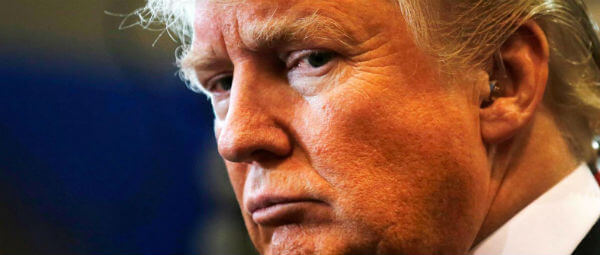
A science reporter for Business Insider seems somewhat disturbed about the likelihood that Hillary Clinton might be receiving unscientific advice on how to debate Donald Trump in Nevada tonight:
Hillary Clinton and Donald Trump are set to face off tonight in the third and final presidential debate of the 2016 election.
In August, The New York Times reported that Clinton’s campaign brought in psychology experts to help her prepare for her first debate with Donald Trump — which is weird, because that’s not really what psychologists do.
Here is the relevant part of The Times’ article (emphasis mine):
Hillary Clinton’s advisers are … seeking insights about Mr. Trump’s deepest insecurities as they devise strategies to needle and undermine him … at the first presidential debate … Her team is also getting advice from psychology experts to help create a personality profile of Mr. Trump to gauge how he may respond to attacks and deal with a woman as his sole adversary on the debate stage. They are undertaking a forensic-style analysis of Mr. Trump’s performances in the Republican primary debates, cataloging strengths and weaknesses as well as trigger points that caused him to lash out in less-than-presidential ways.
There’s not a tremendous amount of information here, but it’s enough to work from if we want to find research relevant to the work these psychologists (or “psychology experts”) are reportedly doing. The strange part is that there isn’t much to find.
Much as I can bemoan the reporting language of the New York Times on stylistic grounds, I will credit its reporters for their precision and/or intentional vagueness in their choice of words. To wit: psychology experts. If this report was referring to psychologists, I venture to assume that’s the term that would have been used.
While professional psychologists should be experts in psychology, there are all kinds of people who can be loosely described as psychology experts even if they aren’t actually psychologists — they might be lawyers, boxing coaches, politicians, or come from any walk of life through which they have acquired particular insight into the workings of the human mind. Psychology experts don’t need to licensed.
As for Clinton’s psychology experts, their particular skill need be no broader than in unlocking the operations inside one mind: Donald Trump’s. Or to be precise: one person. Trump’s way of being is so unreflective and so visceral that his thinking generally appears subordinate to the way he feels for which reason the Clinton campaign should probably have also sought some input from a primatologist.
Much as America and the whole world is already sick this man’s facility to generate a kind of universal consciousness — never before in human history has one living person captured the attention of this many people (an insane observation but surely true!) — one of the political payoffs for the Clinton campaign from the excessive media coverage Trump has received is that his insistence on being in the spotlight has rendered him all the more easy to analyse. What need is there for emails and tax returns when there is an endless supply of pure Trump?
Ultimately, however, irrespective of the extent to which Hillary Clinton’s debate preparation has been guided by genuine insight into her opponent, her success will hinge as much if not more on the moves she makes as they do those of Trump.
At this juncture in the campaign there is a real danger she may suffer from over-confidence — however much she has been told and tells herself to take nothing for granted.
