The New York Times reports: For much of a year, Gonzalo P. Curiel, then a federal prosecutor in California, lived officially in hiding.
He hunkered down for a while on a naval base and in other closely guarded locations under the protection of United States marshals. Even his siblings did not know exactly where he was at times.
The reason: In a secretly taped conversation inside a San Diego prison, a man accused of being a gunman for a Mexican drug cartel said that he had received permission from his superiors to have Mr. Curiel assassinated.
“It was kind of scary,” said Mr. Curiel’s brother Raul. “He had to be protected. He always had one or two bodyguards with him.”
Nearly 20 years later, Gonzalo Curiel, now a federal judge, is being targeted in a very different way.
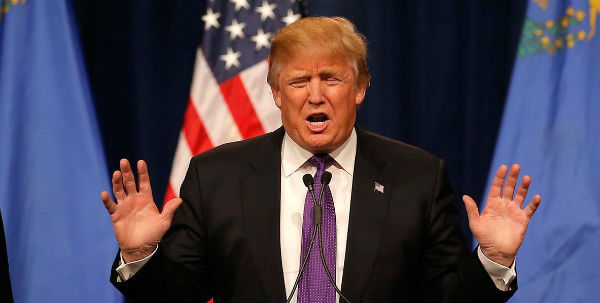
The presiding judge in a lawsuit filed by former students of Trump University, he has been called a “hater” of Mr. Trump by the presumptive Republican presidential nominee himself. At a rally last week, Mr. Trump said the judge “happens to be, we believe, Mexican,” suggesting that he was biased because of Mr. Trump’s calls to build a wall along the border to prevent illegal immigration. Angry supporters have been calling the judge’s chambers. [Continue reading…]
Category Archives: Issues
Trump University: It’s worse than you think
John Cassidy writes: Following the release, earlier this week, of testimony filed in a federal lawsuit against Trump University, the United States is facing a high-stakes social-science experiment. Will one of the world’s leading democracies elect as its President a businessman who founded and operated a for-profit learning annex that some of its own employees regarded as a giant rip-off, and that the highest legal officer in New York State has described as a classic bait-and-switch scheme?
If anyone still has any doubt about the troubling nature of Donald Trump’s record, he or she should be obliged to read the affidavit of Ronald Schnackenberg, a former salesman for Trump University. Schnackenberg’s testimony was one of the documents unsealed by a judge in the class-action suit, which was brought in California by some of Trump University’s disgruntled former attendees.
Schnackenberg, who worked in Trump’s office at 40 Wall Street, testified that “while Trump University claimed it wanted to help consumers make money in real estate, in fact Trump University was only interested in selling every person the most expensive seminars they possibly could.” The affidavit concludes, “Based upon my personal experience and employment, I believe that Trump University was a fraudulent scheme, and that it preyed upon the elderly and uneducated to separate them from their money.” [Continue reading…]
Dalai Lama distances himself from Brexit poster
The Guardian reports: The Dalai Lama has distanced himself from a poster circulated by Brexit campaigners that suggested the Tibetan Buddhist spiritual leader was in favour of the UK leaving the EU.
Leave.EU, the unofficial Brexit campaign run by the Ukip donor Arron Banks, tweeted an image of a quote attributed to the Dalai Lama stating: “The goal should be that migrants return and help rebuild their countries. You have to be practical … It’s impossible for everyone to come.”
Underneath, the tweet written by Leave.EU said: “The Dalai Lama favours a more balanced approach to migration. Let’s reclaim democratic control on June 23rd!”
The Dalai Lama favours a more balanced approach to migration. Let's reclaim democratic control on June 23rd! pic.twitter.com/S7Ws8bnoJa
— LEAVE.EU (@LeaveEUOfficial) June 1, 2016
A representative for the Dalai Lama, who is a refugee from Tibet, said no permission was given to use his words as part of an anti-EU campaign.
“We are not aware of any campaign using His Holiness’ image in regard to the issue of the UK leaving the European Union and would certainly not have given permission,” said Tenzin Taklha, secretary to the Dalai Lama.
Though the Dalai Lama has not taken any official position on the EU, Thubten Samdup, his former representative in northern Europe, said he thought it highly unlikely that he would support Brexit.
“In fact he has always mentioned highly of how EU has come together for the benefit of the people of Europe,” he said. “He felt it made lot of sense and encouraged others to do the same in this rapidly changing and inter-connected world.” [Continue reading…]
The Dalai Lama, having lived in exile from the country of his birth, Tibet, since 1959, understands the plight of refugees.
Those who see refugees as a threat and who are more broadly opposed to immigration — treating non-natives as intruders — overlook the sense of loss incurred in every form of exile. The immigrant is viewed in terms of the things to which he might lay claim rather than that which he left behind.
Irrespective of the national identities we immigrants might lose or adopt, the loss of ones homeland is mostly experienced on a more granular level.
Home is made up from so many tightly woven threads of familiarity — relatives and friends, food and music, abodes and terrain. Plants, birdsong, weather patterns, sounds, and smells — each contribute to a sense of place once known in intimate detail as a sensory world and now confined to memory.
This is what gets left behind and the sense of loss must be so much more acute when it’s clear that what has been lost has been destroyed forever.
Israel-Palestinian peace initiatives are suddenly popping up everywhere
The Washington Post reports: Until a week ago, it seemed the Israeli-Palestinian peace process was a flat-liner.
President Obama thought so. In March, he said he wouldn’t seek to jump-start talks — the two sides were too far apart; it was not in the cards.
Now Israeli-Palestinian peace initiatives are popping up all over.
On Friday, the French will host a meeting of about 25 foreign ministers, including Secretary of State John F. Kerry, to seek international consensus on a way to move talks forward.
State Department spokesman John Kirby said Kerry was going to Paris to learn and listen — not to lead.
“It’s about being there, being part of the discussion, exploring ideas and options that might get us closer to a two-state solution,” Kirby said.
But Kerry’s presence in Paris worries Israelis who fear that the international community is going to press them to end the 49-year military occupation of the West Bank and the partial trade and travel blockage of Gaza, and to stop ongoing construction of Jewish settlements on land the Palestinians want for a future state.
The Israelis also have their eyes on the calendar. They are concerned that the Obama administration will, before leaving office, enshrine a two-state solution in a speech or a U.N. resolution, in effect laying out the final status ahead of negotiations.
Kerry spent nine months trying to bring the two sides together in 2014. The talks ended in recriminations about who was to blame for their failure.
Across the political spectrum in Ramallah and Jerusalem, nobody holds out much hope for the French effort.
French diplomats shrug and say in briefings with journalists, “We have to do something.”
In Israel, there is a feeling that something is happening.
Just this week, the once-moribund Arab Peace Initiative is back in the game after years on the sidelines.
Proposed by Saudi Arabia in 2002, the deal offers the idea that the Arab states will normalize relations with Israel after Israel withdraws from the occupied territories — including East Jerusalem — and begins the process of allowing for a Palestinian state.
Former Israeli governments have been hostile or lukewarm to the Arab proposal.
Former prime minister Ariel Sharon called the Arab Peace Initiative a “nonstarter” when it was proposed.
This week, Prime Minister Benjamin Netanyahu called the Arab peace offer intriguing. But Netanyahu also suggested that the Arab states recognize Israel first as Israel makes moves toward giving the Palestinians a state.
That will be a tough sell in the Arab League.
Into this mix comes former British prime minister Tony Blair, who has been shuttling between Egypt, the Arab Gulf states and the Israelis, trying to broker a way to get the sides talking.
Also intriguing, Egyptian President Abdel Fatah al-Sissi said in a recent speech that he thinks the time is ripe to revisit a deal between Israel and the Palestinians.
The French seem ready to press ahead with what they see as a solution to the conflict — including what borders should look like for a Palestinian state and whether Palestinians should have a capital in Jerusalem.
The French also may try to set deadlines for future talks. If their efforts fail, French diplomats have warned that they may unilaterally recognize a Palestinian state. [Continue reading…]

Can Trump sustain his success story?

Michael Wolff writes: One thing to understand about Trump is that, rather unexpectedly, he’s neither angry nor combative. He may be the most threatening and frightening and menacing presidential candidate in modern life, and yet, in person he’s almost soothing. His extreme self-satisfaction rubs off. He’s a New Yorker who actually might be more at home in California (in fact, he says he usually comes to his home here — two buildings on Rodeo Drive [in Beverly Hills] — only once a year). Life is sunny. Trump is an optimist — at least about himself. He’s in easy and relaxed form campaigning here in these final days before the June 7 California primary, even with Hillary Clinton’s biggest backers and a city that is about half Latino surrounding him.
Earlier in the day, I’d met with Trump at a taping of ABC’s Jimmy Kimmel Live! at the El Capitan Theatre on Hollywood Boulevard, where he was the single guest for the evening (musicians The Weeknd and Belly canceled upon learning of his appearance). “Have you ever seen anything like this?” he asked. He meant this, the Trump phenomenon. Circumventing any chance that I might dampen the sentiment, he quickly answered his own question: “No one ever has.”
His son-in-law, New York Observer owner Jared Kushner, married to his daughter Ivanka and also a real estate scion — but clearly a more modest and tempered fellow, a wisp next to his beefsteak father-in-law — offered that they may have reached 100 percent name recognition. In other words, Trump could be the most famous man in the world right now. “I may be,” says Trump, almost philosophically, and referencing the many people who have told him they’ve never seen anything like this. “Bill O’Reilly said in his lifetime this is the greatest phenomenon he’s ever seen.”
That notion is what’s at the center of this improbable campaign, its own brilliant success. It’s its main subject — the one you can’t argue with. You can argue about issues, but you can’t argue with success. Hence, to Trump, you’re really foolish to argue with the Trump campaign. “I’ve spent $50 million of my own money to go through the primaries. Other people spent $230 million and they came in last. You know what I’m saying?” And this provides him the reason to talk endlessly and repetitively about the phenomenon of the campaign. [Continue reading…]
Trump doesn’t have to make serious campaign promises or coherently articulate his vision for how exactly he intends to make America great again. Instead, he’s offering himself as the embodiment of success.
The long calendar of the primaries and the large number of GOP contestants have served the Trump campaign well by sustaining a rolling narrative of perpetual and rising success.
The question is, once Trump has had his official coronation at the Republican National Convention in Cleveland next month, how will he sustain his success narrative for three more months with little else to point at than polling numbers?
Of course, if he soars ahead in the polls, then Trump America is just around the corner. But if he doesn’t pull away, his message of success may start to lose a lot of its power.
The Democrats might try to build solidarity around fear of Trump with the unintended effect of magnifying both negative and positive perceptions of his strength, but perhaps instead they need to focus their attack on the Trump brand of success. Once Trump loses a firm grip on his success story, he has nothing.
Why Trump University got chased out of Texas
USA Today reports: The Texas Attorney General’s Office opened a deceptive trade practices investigation of Trump University in 2010 and chased the business out of the state, saying the promises made to students were “virtually impossible to achieve,” according to documents unearthed by a Democratic super PAC.
Assistant Attorney General Rick Berlin wrote to Donald Trump’s lawyers in June 2010 that Trump University seminars – for which students paid thousands of dollars – were targeted at real estate novices and promised “to teach these novices everything they need to know to be a successful residential real estate broker — in 3 days.”
But in Texas, “to become licensed as a real estate broker you must have 900 hours of classroom instruction and 2 years selling experience,” Berlin said, in the memo the Democratic super PAC American Bridge 21st Century uncovered through a public records request and provided to USA TODAY. The information given to students by Trump University “is essentially unusable,” and students “will be unable to recoup their investment in the course, much less make a profit, as promised by Trump U,” Berlin wrote. [Continue reading…]
The easiest way to guess if someone supports Trump? Ask if Obama is a Muslim
Philip Klinkner writes: You can ask just one simple question to find out whether someone likes Donald Trump more than Hillary Clinton: Is Barack Obama a Muslim? If the answer is yes, 89 percent of the time that person will have a higher opinion of Trump than Clinton.
That’s more accurate than asking people if it’s harder to move up the income ladder than it was for their parents (54 percent), whether they oppose trade deals (66 percent), or if they think the economy is worse now than last year (81 percent). It’s even more accurate than asking them if they are Republican (87 percent).
Those results come from the 2016 American National Election Study (ANES) pilot survey. My analysis indicates that economic status and attitudes do little to explain support for Donald Trump. [Continue reading…]
The roots of Hitler’s power
Neal Ascherson writes: Thousands of people around us daydream about world conquest, fondle hate fantasies about what they might do to immigrants or jihadists, lap up conspiracy theories or impress their mates – after a pint or six – with bellowing rants about politicians or bankers. Most of them, fortunately, stay below the political radar. They lack a soil in which their urges can swell until they overshadow the earth. They lack the licence of Alasdair Gray’s Law of Inverse Exclusion (outlined in his novel Lanark), which ‘enables a flea in a matchbox to declare itself jailer of the universe’. And they lack a weapon.
But Hitler, hopping mad in his own matchbox, had all three. Fermenting Munich after a lost war and a failed revolution provided the soil, while his weapon was oratory: Hitler’s one tremendous gift and his only natural talent. One day in Munich, as a lecture to demobilised soldiers ended, the speaker noticed a knot of men in the emptying hall. They were listening ‘transfixed by a man who was speaking to them with growing passion and an unusual guttural voice’. The lecturer saw ‘a pale, drawn face underneath a decidedly unmilitary shock of hair, with a trimmed moustache and remarkably large, light-blue, fanatically cold, gleaming eyes’.
Hitler had an excellent voice, and his harsh ‘Austrian’ (actually Lower Bavarian) accent seems to have given North Germans an impression of sincerity rather than provincial uncouthness. But to read or listen to his speeches today is disconcerting: how could anyone have taken seriously such stagy bellowing and preposterous ideas? What we are missing now is not only the desperation and paranoia which his early audiences brought with them into the beer cellar or the stadium, but the tricks of Hitler’s trade. He required a strong warm-up before, deliberately late, he strode into the hall. He insisted where possible on seating that was spread horizontally before him rather than a narrow corridor reaching far back: this gave him as much close impact as possible. Cleverly, he channelled his own tendency to throw tantrums into a speech-style: beginning with long, droning and ostensibly sober recitals of fact and analysis, he would suddenly shift his voice upwards almost an octave, double its pace and explode into yelling demagogy. (I once saw Oswald Mosley do exactly this in the 1950s, and in spite of my contempt for all that he was saying, that sudden gearshift raised all the hairs on my neck.) His old trench comrade Max Amann saw him in 1919: ‘He yelled and indulged in histrionics. I’d never seen the like of it. But everyone said: “This fellow means what he says.” He was drenched in sweat, completely wet. It was unbelievable.’
The discovery of this gift of rhetoric, and the techniques to intensify its impact, set Hitler on his way. [Continue reading…]
What happens after ISIS?
The Daily Beast reports: Troops fighting ISIS appeared to on the verge of another victory over the self-proclaimed Islamic State Wednesday, as they moved into a city that has served as the main thoroughfare for ISIS foreign fighters and weapons. But the potential seizure of the Syrian city of Manbij by U.S.-backed forces is only likely to set off a new battle for control — this time pitting Arabs against Kurds.
The battle Wednesday reflected a growing problem for the U.S. and its push to train local fighters, even as those forces take territory from ISIS. Who exactly will govern those towns now? Will it be the Kurds who have led the fight against ISIS? Or will it be what some in the Pentagon have privately called the “token Arabs” trained by the U.S. to accompany them?
Two defense officials told The Daily Beast Wednesday they don’t know. They believe the Arabs would be in charge. But even these officials admit that asking the 5,000-or-so newly-trained Arab fighters to control three or more formerly ISIS-controlled areas — and at the same time move into the ISIS capital of Raqqa — would be difficult.
On the other hand, some worry that a Kurdish controlled Manbij could be ethnically cleansed, creating the kind of Sunni disenfranchisement that led to the rise of ISIS. The fall of Manbij into Kurdish hands, however, would give the Kurds a contiguous region in northern Syria. Moreover, a Kurdish controlled Manbij could draw the ire of U.S.-allied Turkey, which rejects a Kurdish controlled region on its border.
The question “what happens after ISIS?” looms increasingly over the U.S.-led effort. Indeed, defense officials said how the governance question is answered in Manbij could foreshadow the strategy for Raqqa, ISIS’s capital. Local U.S.-backed forces, accompanied by U.S. forces, have moved within 18 miles of the city in the last week. Over the Memorial Day weekend, one U.S. service member was injured while supporting the local fighters. [Continue reading…]
The forgotten story of European refugee camps in the Middle East
Ishaan Tharoor writes: Tens of thousands of refugees fled a war. They journeyed across the Eastern Mediterranean, a trip filled with peril. But the promise of sanctuary on the other side was too great.
No, this is not the plight faced by Syrian refugees, desperate to escape the desolation of their homeland and find a safer, better life in Europe. Rather, it’s the curious and now mostly forgotten case of thousands of people from Eastern Europe and the Balkans who were housed in a series of camps across the Middle East, including in Syria, during World War II.
As the Nazi and Soviet war machines rolled through parts of Eastern Europe and the Balkans, vast civilian populations were displaced in their wake. In areas occupied by fascist troops, Jewish communities and other undesired minorities faced the harshest onslaught, but others, particularly those suspected of backing partisan fighters, also were subject to targeted attacks and forced evacuations. [Continue reading…]
How the U.S. flooded Iran with weapons
PRI reports: According to the arms transfers database of the independent international think tank, Stockholm International Peace Research Institute (SIPRI), which compiled all transfers of major conventional weapons in the world since 1950, the US was the largest arms exporter to Iran from the 1950s to 1970s.
The supply of arms from the US started to climb in 1953 after Iran’s democratically elected prime minister Mohammad Mosaddegh was overthrown in a coup engineered by the British and American intelligence services. The Iranian shah, Mohammad Reza Shah Pahlavi, returned from exile to rule and become a close ally of the US.
According to a Senate Committee on Foreign Relations staff report in 1976, Iran was the largest single purchaser of US military equipment then. Military sales had increased more than sevenfold from $524 million in 1972 to $3.91 billion in 1974.
SIPRI data shows that the amount rose and peaked in 1977. [Continue reading…]
It wasn’t a ‘glitch’: State Department deliberately cut embarrassing questions from press briefing video
The Washington Post reports: The State Department acknowledged Wednesday that someone in its public affairs bureau made a “deliberate” request that several minutes of tape be cut from the video of a 2013 press briefing in which a reporter asked if the administration had lied about secret talks with Iran.
The embarrassing admission by State Department spokesman John Kirby came three weeks after another spokesperson insisted that a “glitch” had caused the gap, discovered only last month by the reporter whose questioning had mysteriously disappeared.
“This wasn’t a technical glitch, this was a deliberate step to excise the video,” Kirby told reporters.
Kirby said he had not been able to learn who ordered the deletion, which appeared as a jarring, undisguised white flash on the archived video posted on the State Department’s website and in its YouTube video.
“The recipient of the call doesn’t remember anything other than the caller, the individual who called this technician, was passing on a request from someone else within the public affairs bureau,” Kirby said, explaining the faulty memory by adding, “This happened three years ago.”
The curious gap in an old video of a public briefing is not of the same ilk as the famous 18 1/2- minute gap in audio tapes of President Nixon’s Oval Office conversations during the Watergate coverup. The official written transcript of the State Department briefing always carried the full exchange.
But it is likely to further fuel controversy over the administration’s nuclear deal with Iran, coming amid allegations that the White House duped the press and misled Congress and foreign policy scholars about the Iran nuclear deal that was implemented in January. [Continue reading…]
Teaching ‘grit’ is bad for children, and bad for democracy
Nicholas Tampio writes: According to the grit narrative, children in the United States are lazy, entitled and unprepared to compete in the global economy. Schools have contributed to the problem by neglecting socio-emotional skills. The solution, then, is for schools to impart the dispositions that enable American children to succeed in college and careers. According to this story, politicians, policymakers, corporate executives and parents agree that kids need more grit.
The person who has arguably done more than anyone else to elevate the concept of grit in academic and popular conversations is Angela Duckworth, professor at the Positive Psychology Center at the University of Pennsylvania. In her new book, Grit: The Power of Passion and Perseverance, she explains the concept of grit and how people can cultivate it in themselves and others.
According to Duckworth, grit is the ability to overcome any obstacle in pursuit of a long-term project: ‘To be gritty is to hold fast to an interesting and purposeful goal. To be gritty is to invest, day after week after year, in challenging practice. To be gritty is to fall down seven times and rise eight.’ Duckworth names musicians, athletes, coaches, academics and business people who succeed because of grit. Her book will be a boon for policymakers who want schools to inculcate and measure grit.
There is a time and place for grit. However, praising grit as such makes no sense because it can often lead to stupid or mean behaviour. Duckworth’s book is filled with gritty people doing things that they, perhaps, shouldn’t. [Continue reading…]
In America, domestic extremists are a bigger risk than foreign terrorism
By David Alpher, George Mason University
Take America back from those who have stolen it.
Protect America from those who want to destroy it.
Restore the principles that these usurpers betrayed.
These are the messages that have defined the GOP presidential race. They have been used for the past eight years to justify obstruction of the Obama administration, and are now being used to paint the Democratic candidates as dangerous. In the late stages of the GOP primary as the rhetoric became increasingly xenophobic, they were applied to increasingly broad swaths of the American population as well.
Years of constant repetition by members of the GOP have given them an appearance of legitimacy, now strengthened by Donald Trump’s victory in the GOP primary contest and the party’s growing embrace of him as their standard-bearer.
Unfortunately, the Republican Party isn’t alone in using these messages.
Right-wing extremist groups use them as well, and to very specific ends: to define the conditions under which antigovernment violence becomes legitimate in their worldview.
I have spent nearly 15 years studying how the risk of violence grows within societies around the world, and running programs designed to stem the tide. I have seen rhetoric like this used to mobilize violence in countries like Iraq and Kenya.
This same dynamic, I argue, is taking shape within American society now. If it continues, it represents a greater threat than anything we face from terrorist groups outside our own borders.
Whither Jerry Brown goes, so will many Democrats

Todd S. Purdum writes: When an endorsement is as tepid as Jerry Brown’s — call it a non-endorsement endorsement — does it really make any difference at all? Perhaps not — except as a bellwether. The California governor’s eleventh-hour announcement on Tuesday that he’s supporting Hillary Clinton over Bernie Sanders, only a week before the biggest primary election in the presidential race, is emblematic of the months-long head-heart dilemma that has plagued the many Democrats who have a complicated history with the Clintons.
No one embodies this ambivalence, in fact, more than Jerry Brown himself, who a generation ago was seen more or less as the Bernie Sanders of his time. After all, it was Brown who, in the heat of his insurgent 1992 primary campaign for president against Bill Clinton, denounced him as “the prince of sleaze,” and described the work for the Arkansas state government of Hillary Clinton’s law firm as “a conflict of interest” and “a scandal of major proportion,” while carrying his candidacy to the bitter end at the Democratic National Convention in New York.
“I don’t care what you say about me, but you ought to be ashamed of yourself for jumping on my wife,” Bill Clinton told Brown in an angry Chicago debate in which the rivals pointed fingers in each other’s faces. “You’re not worth being on the same platform with my wife. I never funneled any money to my wife’s law firm. Never.”
Twenty-four years later, politics has once again made strange bedfellows — and Brown’s accommodation points to where many other progressive Democrats will likely end up, whether or not they are directly influenced by his action. It’s not that they like Hillary any better now than they did before, but much as the prospect of hanging concentrates the mind, the looming nomination of Donald Trump appears to supply the necessary nudge. If Hillary Clinton wins, it will be as part of a “Stop Trump” movement by many Democrats, nothing more. [Continue reading…]
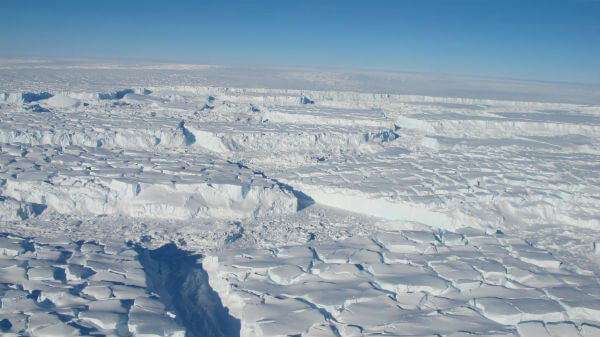
Scientists have found yet another part of Antarctica that may be in trouble

The Washington Post reports: The forces affecting the ice in West Antarctica are an area of urgent focus for climate scientists who are all too aware of the ice sheet’s huge potential contributions to global sea-level rise. A great deal of this attention has centered on a specific region bordering the Amundsen Sea, south of the Antarctic Peninsula, where research has suggested that a set of rapidly retreating glaciers — including the famous Thwaites and Pine Island glaciers — may be increasingly vulnerable to collapse.
But research is increasingly suggesting that the region is not the only area deserving of concern. Just last month, a new study suggested that the Totten Glacier in East Antarctica, which has typically been considered much less of a threat than West Antarctica, is also thinning quickly and has retreated inland by close to two miles in some areas. Overall, the glacier has the potential to raise sea levels by about 13 feet should it collapse.
And now, a new study just published in the journal Geophysical Research Letters has identified a new area of concern. The new research focuses on the Bellingshausen Sea region, an area just above the Amundsen Sea on the west side of the Antarctic Peninsula. Using four decades’ worth of satellite data, researchers have found that ice in this region has also experienced significant retreat, particularly since 1990, and could be a bigger threat than expected. [Continue reading…]
Nuclear plants, despite safety concerns, gaining support among environmentalists
The New York Times reports: Just a few years ago, the United States seemed poised to say farewell to nuclear energy. No company had completed a new plant in decades, and the disaster in Fukushima, Japan, in 2011 intensified public disenchantment with the technology, both here and abroad.
But as the Paris agreement on climate change has put pressure on the United States to reduce greenhouse gas emissions, some state and federal officials have deemed nuclear energy part of the solution. They are now scrambling to save existing plants that can no longer compete economically in a market flooded with cheap natural gas.
“We’re supposed to be adding zero-carbon sources, not subtracting,” Ernest Moniz, the energy secretary, said recently at a symposium that the department convened to explore ways to improve the industry’s prospects.
As a result, there are efforts across the country to bail out nuclear plants at risk of closing, with important test cases in Illinois, Ohio and New York, as well as proposed legislation in Congress.
Exelon, one of the country’s largest nuclear operators, for example, is deciding whether to close two of its struggling plants in Illinois after efforts to push a bailout through its Legislature fell apart.
Nuclear power remains mired in longstanding questions over waste disposal, its safety record after the catastrophes at places like Fukushima and Chernobyl, and the potential for its plants to be converted into weapon-making factories. In spite of the lingering issues, policy makers, analysts and executives, along with a growing number of environmentalists, say that at stake is the future of the country’s largest source of clean energy.
“Nothing else comes close,” Mr. Moniz, a nuclear physicist, said at the symposium. [Continue reading…]
Renewable energy surges to record levels around the world
BBC News reports: New solar, wind and hydropower sources were added in 2015 at the fastest rate the world has yet seen, a study says.
Investments in renewables during the year were more than double the amount spent on new coal and gas-fired power plants, the Renewables Global Status Report found.
For the first time, emerging economies spent more than the rich on renewable power and fuels.
Over 8 million people are now working in renewable energy worldwide.
For a number of years, the global spend on renewables has been increasing and 2015 saw that arrive at a new peak according to the report. [Continue reading…]