Mark Landler writes: As Hillary Clinton makes another run for president, it can be tempting to view her hard-edged rhetoric about the world less as deeply felt core principle than as calculated political maneuver. But Clinton’s foreign-policy instincts are bred in the bone — grounded in cold realism about human nature and what one aide calls “a textbook view of American exceptionalism.” It set her apart from her rival-turned-boss, Barack Obama, who avoided military entanglements and tried to reconcile Americans to a world in which the United States was no longer the undisputed hegemon. And it will likely set her apart from the Republican candidate she meets in the general election. For all their bluster about bombing the Islamic State into oblivion, neither Donald J. Trump nor Senator Ted Cruz of Texas have demonstrated anywhere near the appetite for military engagement abroad that Clinton has.
“Hillary is very much a member of the traditional American foreign-policy establishment,” says Vali Nasr, a foreign-policy strategist who advised her on Pakistan and Afghanistan at the State Department. “She believes, like presidents going back to the Reagan or Kennedy years, in the importance of the military — in solving terrorism, in asserting American influence. The shift with Obama is that he went from reliance on the military to the intelligence agencies. Their position was, ‘All you need to deal with terrorism is N.S.A. and C.I.A., drones and special ops.’ So the C.I.A. gave Obama an angle, if you will, to be simultaneously hawkish and shun using the military.”
Unlike other recent presidents — Obama, George W. Bush or her husband, Bill Clinton — Hillary Clinton would assume the office with a long record on national security. There are many ways to examine that record, but one of the most revealing is to explore her decades-long cultivation of the military — not just civilian leaders like Gates, but also its high-ranking commanders, the men with the medals. Her affinity for the armed forces is rooted in a lifelong belief that the calculated use of military power is vital to defending national interests, that American intervention does more good than harm and that the writ of the United States properly reaches, as Bush once put it, into “any dark corner of the world.” Unexpectedly, in the bombastic, testosterone-fueled presidential election of 2016, Hillary Clinton is the last true hawk left in the race. [Continue reading…]
Category Archives: Issues
Hillary Clinton will consider picking another woman for VP. Could it be Elizabeth Warren?
James Hohmann reports: Working in Warren’s favor:
- Clinton would never choose Sanders as her running mate, but Warren might be able to activate many of his core supporters. If the former Secretary of State remains soft with liberals come summer, she might look leftward.
- Democrats do not have a deep bench of senior women who are plausible as HRC’s VP. There are only three Democratic women who hold governorships and 14 in the Senate, including Warren.
- Privately, Warren appears to covet the job. She’s picked her spots, carefully choosing which issues she weighs in on. But she’s signaled recently that she would embrace with gusto the attack dog role typically played by a VP candidate. Earlier this week, she ripped into Ted Cruz for saying that seeking the presidency requires significant sacrifice. She spent another recent day going after Donald Trump.
Hillary Clinton’s quiet supporters
Michelle Goldberg writes: Until Tuesday night, I had assumed that my neighborhood, Cobble Hill, Brooklyn, was overwhelmingly supporting Bernie Sanders. Sanders bumper stickers and T-shirts outnumbered those for Hillary Clinton by what seemed like 20 to 1. A couple of times, I thought about putting my baby daughter in a Clinton onesie — whatever my hesitations about Clinton’s candidacy, I love the idea of my girl’s first image of an American president being female. But I always hesitated, not wanting to invite playground harangues from local dads about Goldman Sachs and the Fed.
When I looked up Cobble Hill on the nifty New York Times tool providing neighborhood-by-neighborhood results, however, it turned out that Clinton won the immediate area around my apartment by 59.4 percent. A block over, she won by 72.5 percent. She won all around me. A lot of Clinton supporters, evidently, have been keeping quiet about their allegiances.
There are a couple of explanations for this. Sanders fans seem to be more enthusiastic, though it takes a certain amount of enthusiasm to vote in a primary at all. Registered independents couldn’t vote in New York’s closed primary, particularly given the absurd, undemocratic October deadline for switching parties. But I think there might be something else at work as well: an optical illusion that the candidate with the most white male support had the most support, period. I had let myself mistake the loudest people for The People.
I’m not trying to deny that the Sanders coalition is diverse or to erase the many passionate women and men of color who supported him. But the fact remains that according to exit polls, Clinton won every racial and gender demographic except white men. And somehow, I’d become convinced that, in my own backyard, their preferences were far more widespread than they really are. [Continue reading…]
‘America treats us worse than animals’ — victims of Obama’s secret drone war speak out
The Guardian reports: Because US drone strikes are cloaked in secrecy, occur in remote or dangerous locales and target people presumed to be terrorists, Americans rarely hear from survivors or their relatives. But a theme emerges in interviews the Guardian has conducted with more than half a dozen drone survivors: the pain from the strike never ends, as the apparatus of secrecy renders closure unobtainable.
According to six people in Pakistan and Yemen who have lost their brothers, sons and grandparents to drone strikes, the strike lasts a moment and the consequences last a lifetime. Most of them have never told their stories to an American reporter. Some of them have theories about whom the US was targeting, while others are left guessing. The interviews were facilitated by the human rights group Reprieve and the Foundation for Fundamental Rights and conducted in translation.
The people are left impoverished, anguished and infuriated. Justice, let alone apologies, never arrive, even as a modest amount of blood money flows from the local governments. The United States, which styles itself a force for justice in the world, is to them the remote force that introduced death into their lives and treats them like they are subhuman, fit only to be targeted. At any moment, they fear, another drone could come for them.
The White House has said it will soon release of a tally of drone deaths. Relatives of the dead and survivors of the attacks expect little of it to include the truth, and doubt it will lead to the public apologies they desire – particularly since a senior aide to Barack Obama recently told the Atlantic that the president “has not had a second thought about drones”.
The CIA would not comment for this piece. An Obama administration official said: “It is certainly not the case that lives of a certain nationality are more valuable to us than those of any other. What is true, however, is that the president has said … that the American people need information to hold their government accountable. That is in part why we have been especially transparent when it comes to the deaths of US citizens.”
Nabila’s father, and Mamana’s son, Rafiq ur-Rehman, took a different view. “If America kills any westerner, one of their own, white people, they apologize and compensate. But if it’s Pakistanis like us, they don’t care. In my opinion, America treats us worse than animals.” [Continue reading…]
Pratap Chatterjee: Inside the devastation of America’s drone wars
In our part of the world, it’s not often that potential “collateral damage” speaks, but it happened last week. A Pakistani tribal leader, Malik Jalal, flew to England to plead in a newspaper piece he wrote and in media interviews to be taken off the Obama White House’s “kill list.” (“I am in England this week because I decided that if Westerners wanted to kill me without bothering to come to speak with me first, perhaps I should come to speak to them instead.”) Jalal, who lives in Pakistan’s tribal borderlands, is a local leader and part of a peace committee sanctioned by the Pakistani government that is trying to tamp down the violence in the region. He believes that he’s been targeted for assassination by Washington. (Four drone missiles, he claims, have just missed him or his car.) His family, he says, is traumatized by the drones. “I don’t want to end up a ‘Bugsplat’ — the ugly word that is used for what remains of a human being after being blown up by a Hellfire missile fired from a Predator drone,” he writes. “More importantly, I don’t want my family to become victims, or even to live with the droning engines overhead, knowing that at any moment they could be vaporized.”
Normally, what “they” do to us, or our European counterparts (think: Brussels, Paris, or San Bernardino), preoccupies us 24/7. What we do to “them” — and them turns out to be far more than groups of terrorists — seldom touches our world at all. As TomDispatch readers know, this website has paid careful attention to the almost 300 wedding celebrants killed by U.S. air power between late 2001 and the end of 2013 — eight wedding parties eviscerated in three countries (Iraq, Afghanistan, and Yemen). These are deaths that, unlike the 14 Americans murdered in San Bernardino, the 32 Belgians and others killed in Brussels, and the 130 French and others slaughtered in Paris, have caused not even a ripple here (though imagine for a second the reaction if even a single wedding, no less eight of them and hundreds of revelers, had been wiped out by a terror attack in the U.S. in these years).
Any sense of sadness or regret for Washington’s actions, when it comes to the many killed, wounded, or traumatized in its never-ending, implacable, and remarkably unsuccessful war on terror, is notable mainly for its absence from our world. So it’s an extraordinary moment when any Americans — no less a group that has been deeply involved in prosecuting the drone war on terror — publicly expresses empathy for the “collateral damage” inflicted in that ongoing conflict. That’s why TomDispatch regular Pratap Chatterjee brings genuine news today from the heart of America’s drone wars, from those who should best be able to assess the grim reality of just what Washington has been doing in our name. Tom Engelhardt
Drone whistleblowers step out of the shadows
In Washington’s drone wars, collateral damage comes home
By Pratap ChatterjeeIn a trio of recent action-packed movies, good guys watch terrorists mingling with innocent women and children via real-time video feeds from halfway across the world. A clock ticks and we, the audience, are let in on the secret that mayhem is going to break loose. After much agonized soul-searching about possible collateral damage, the good guys call in a missile strike from a U.S. drone to try to save the day by taking out a set of terrorists.
Such is the premise of Gavin Hood’s Eye in the Sky, Andrew Niccol’s Good Kill, and Rick Rosenthal’s Drones. In reality, in Washington’s drone wars neither the “good guys” nor the helpless, endangered villagers under those robotic aircraft actually survive the not-so secret drone war that the Obama administration has been waging relentlessly across the Greater Middle East — not, at least, without some kind of collateral damage. In addition to those they kill, Washington’s drones turn out to wound (in ways both physical and psychological) their own operators and the populations who live under their constant surveillance. They leave behind very real victims with all-too-real damage, often in the form of post-traumatic stress disorder on opposite sides of the globe.
“Sometimes I am so sad that my heart wants to explode,” an Afghan man says, speaking directly into the camera. “When your body is intact, your mind is different. You are content. But the moment you are wounded, your soul gets damaged. When your leg is torn off and your gait slows, it also burdens your spirit.” The speaker is an unnamed victim of a February 2010 drone strike in Uruzgan, Afghanistan, but he could just as easily be an Iraqi, a Pakistani, a Somali, or a Yemeni. He appears in National Bird, a haunting new documentary film by Sonia Kennebeck about the unexpected and largely unrecorded devastation Washington’s drone wars leave in their wake. In it, the audience hears directly from both drone personnel and their victims.
Hamas linked to Jerusalem bus bombing
The Times of Israel reports: One mystery is solved. The identity of a man severely wounded in Tuesday’s terrorist attack in Jerusalem — suspected of having planted the bomb that exploded on the Number 12 bus — was discovered last night, shortly after the hospital announced he had succumbed to his wounds.
But the Hamas announcement that Abdel al-Hamid Abu Srour, 19, from the al-Ayda refugee camp in the Bethlehem area, was “one of ours” fell short of a full claim of responsibility for the attack, which injured 20 other people.
The Gaza-based terror group released a photo of Abu Srour wearing a Hamas scarf, and another photo that was decorated with emblems of the Second Intifada. But the announcement on the organization’s official website opened with a quote from a “Zionist” Facebook page providing the initial information that it was Abu Srour who had carried out the attack. [Continue reading…]
UN says up to 500 migrants may have drowned on their way to Italy
The Washington Post reports: As many as 500 migrants seeking a better future in Europe may have drowned last week in the Mediterranean Sea between Libya and Italy, U.N. refugee officials said Wednesday.
If true, the toll would make the incident one of the worst tragedies involving refugees and migrants over the last year.
On Tuesday, a team from the United Nations High Commissioner for Refugees (UNHCR) spoke with some of the 41 survivors of the alleged accident who had arrived at Kalamata, a Greek town on the Peloponnese Peninsula, the U.N. agency said in a statement.
“If confirmed, as many as 500 people may have lost their lives when a large ship went down in the Mediterranean Sea at an unknown location between Libya and Italy,” said the agency.
The survivors included 37 men, three women and a 3-year-old child. They were from Somalia, Ethiopia, Egypt and Sudan. All were rescued by a merchant ship that then brought them to Greece. [Continue reading…]
Obama’s November surprise?
Philip Weiss writes: The organized liberal Jewish community has a new vision: that President Obama will use the lame duck period of his presidency to make a major initiative on the Israel/Palestine conflict and introduce resolutions at the United Nations Security Council to condemn settlements and/or set out the parameters of a two-state solution.
Thus Obama will establish a more assertive U.S. policy in favor of Palestinian human rights and self-determination that the next president will live by.
Hillary Clinton won’t let him go forward with such a resolution now because it would capsize her campaign. But when he does it in November or December– after she is elected president, according to the scenario– then she will say, There is only one US president at a time, and Obama’s policy is my inherited policy.
The dream was alive at J Street’s gala dinner the other night. Both Joe Biden and John Kerry were coming! That was a huge score for the liberal Zionist organization. President Obama invited members of J Street’s youth chapter into the White House last Friday! Mort Halperin the chairman of the J Street board (and the father of political talking head Mark Halperin) said the organization is counting on the Obama administration to set out the parameters of a final deal between Israel and Palestine.
Then Biden and Kerry spoke, and the wealthy elderly legion at J Street derived hope from the following statements. Biden:
Despite our overwhelming frustration with the Israeli government, we have an obligation to push them as hard as we can… at the same time being a guarantor, an absolute guarantor of their security.
I can tell you that for these next nine months we will not stop working to find a way…
[N]o matter how many times we hear people tell us the goal is unattainable, they can’t do it, they’re not ready, I remember the words of Mandela: “Nothing is impossible until it is done.”
The J Street people think that Obama still has a trick up his sleeve and he owes it to them because they helped him get the Iran deal. The theme of the evening was: Obama wouldn’t have gotten the Iran deal if we had not taken on AIPAC inside the official Jewish community. But J Street took on AIPAC and cracked the monolith and signaled to politicians around the country, they could support the deal and still get Jewish backing. J Street is justly proud of this. And by the way, Trita Parsi of the National Iranian American Council and Joe Cirincione of Ploughshares were in the hall that night; they also delivered the Iran deal. As did Jewish Voice for Peace, Code Pink and a lot of grassroots groups.
Do I actually believe that Obama will come up with a November surprise? Yes, I think he will do something. But will it mean anything or have any effect; that is the real question. [Continue reading…]
Saudi-led air strikes with U.S. support responsible for two thirds of civilian deaths in Yemen conflict

Reuters reports: U.N. investigators say that air strikes by the Saudi-led coalition are responsible for two thirds of the 3,200 civilians who have died in Yemen, or approximately 2,000 deaths. They said that Saudi forces have killed twice as many civilians as other forces in Yemen.
On the ground, Saudi-led forces have often struggled to achieve their goals, making slow headway in areas where support for Iran-allied Houthi rebels runs strong.
And along the Saudi border, the Houthis and allied forces loyal to former Yemeni president Ali Abdullah Saleh have attacked almost daily since July, killing hundreds of Saudi troops.
Instead of being the centrepiece of a more assertive Saudi regional strategy, the Yemen intervention has called into question Riyadh’s military influence, said one former senior Obama administration official. “There’s a long way to go. Efforts to create an effective pan-Arab military force have been disappointing.”
Behind the scenes, the West has been enmeshed in the conflict. Between 50 and 60 U.S. military personnel have provided coordination and support to the Saudi-led coalition, a U.S. official told Reuters. And six to 10 Americans have worked directly inside the Saudi air operations centre in Riyadh. Britain and France, Riyadh’s other main defence suppliers, have also provided military assistance.
Last year, the Obama administration had the U.S. military send precision-guided munitions from its own stocks to replenish dwindling Saudi-led coalition supplies, a source close to the Saudi government said. Administration officials argued that even more Yemeni civilians would die if the Saudis had to use bombs with less precise guidance systems. [Continue reading…]
William D Hartung writes: When President Obama visits Saudi Arabia this week for a meeting with representatives from the Gulf Cooperation Council countries, he should avoid doing what he did at Camp David last May, the last time he met with them: promise more arms sales. Since Mr. Obama hosted that meeting, the United States has offered over $33 billion in weaponry to its Persian Gulf allies, with the bulk of it going to Saudi Arabia. The results have been deadly.
The Saudi-American arms deals are a continuation of a booming business that has developed between Washington and Riyadh during the Obama years. In the first six years of the Obama administration, the United States entered into agreements to transfer nearly $50 billion in weaponry to Saudi Arabia, with tens of billions of dollars of additional offers in the pipeline.
The Pentagon claims that these arms transfers to Saudi Arabia “improve the security of an important partner which has been and continues to be an important force for political stability and economic progress in the Middle East.” Recent Saudi actions suggest otherwise. [Continue reading…]
Senator says he may back bill exposing Saudis to 9/11 lawsuits
The New York Times reports: A bill opposed by the Obama administration that would expose Saudi Arabia to legal jeopardy for any role in the Sept. 11 attacks appeared to gain momentum on Tuesday when the senator holding it up said he would be open to supporting it.
Senator Lindsey Graham, Republican of South Carolina, said in an interview on Tuesday that he would drop his opposition to the bill — predicting it could pass the Senate next week — if the sponsors of the legislation agreed to changes that he believed were important to protect American interests abroad. He did not specify what changes he was requesting.
“The goal is to bring people to justice who have been involved in terrorism,” Mr. Graham said. But he added, “I don’t want Americans to be held liable because of one bad actor in some embassy somewhere.” [Continue reading…]
The Daily Beast reports: There’s a major push in Congress right now for a bill that could hold the government of Saudi Arabia legally responsible for the 9/11 attacks. U.S. military and counterterrorism officials now leading the fights against al Qaeda and ISIS think that bill is a terrible idea.
“We don’t need this debate right now,” one defense official said, like others speaking on condition of anonymity because they’re not authorized publicly to criticize the bill, known as the Justice Against Sponsors of Terrorism Act. Saudi officials have lobbied hard against the bill, telling members of the Obama administration, lawmakers, and journalists that the Saudi government has been a stalwart ally with the U.S. and was fighting al Qaeda years before it ever attacked American soil.
That message is resonating inside the Pentagon and in U.S. national security circles. Two former officials, who likewise declined to comment on the record about the bill, said it represented a troubling insertion of politics at a key point in the war against ISIS and would distract from a shared goal of combatting Islamic extremism. [Continue reading…]
Kabul car bomb reminds us this bloody conflict is no nearer an ending
The Guardian reports: The complex attack by the Taliban on an elite military unit at the heart of the Afghan capital on Tuesday morning was a bloody reminder of how the war there is spiralling to new levels of violence, and spilling into urban areas that were once deemed relatively safe.
For years Afghans fled to the capital, and other major cities, to escape the daily brutality of a war fought mostly in their rural home districts. But as the conflict has intensified nationwide, following the departure of western forces, both fear and bloodshed has spilled over into urban areas.
The promise of the government and its western backers that their authority would stand firm in towns and cities, even if insurgents took the countryside, are ringing increasingly hollow.
Kabul’s streets are now deemed so dangerous that the US embassy ferries its staff from airport to bunkered embassy by helicopter, to avoid a five-minute drive down a broad, straight road. [Continue reading…]
FBI says it needs hackers to keep up with tech companies
The New York Times reports: The F.B.I. defended its hiring of a third party to break into an iPhone used by a gunman in last year’s San Bernardino, Calif., mass shooting, telling some skeptical lawmakers on Tuesday that it needed to join with partners in the rarefied world of for-profit hackers as technology companies increasingly resist their demands for consumer information.
Amy Hess, the Federal Bureau of Investigation’s executive assistant director for science and technology, made the comments at a hearing by members of Congress who are debating potential legislation on encryption. The lawmakers gathered law enforcement authorities and Silicon Valley company executives to discuss the issue, which has divided technology companies and officials in recent months and spurred a debate over privacy and security.
The hearing follows a recent standoff between the F.B.I. and Apple over a court order to force the company to help unlock an iPhone used by one of the San Bernardino attackers. Apple opposed the order, citing harm to the privacy of its users. The F.B.I. later dropped its demand for Apple’s help when it found a third-party alternative to hack the device. [Continue reading…]
Anders Behring Breivik’s inexplicable crime

Karl Ove Knausgaard writes: Norway is a small country. It is also relatively homogeneous and egalitarian. This means that the distance from top to bottom is short, and that great disasters affect the entire populace. For example, every Norwegian knows someone who knows someone who died when the Alexander Kielland drilling rig capsized, in 1980 — I recall that my brother had a schoolmate whose father died in the disaster — or when, a decade later, a ferry, the Scandinavian Star, burned and a hundred and fifty-eight of the passengers died. There is also something deeply sincere, almost innocent, about Norwegian culture. Practically every time something about Norway or one of its people appears in the foreign press, the Norwegian media mention this with pride. And every May 17th, National Constitution Day, people don their nicest clothes, whether these be bunads, suits, or dresses, retrieve their flags and ribbons with Norwegian colors, and spill onto the streets to watch children sing songs about Norway, while everyone shouts hurrah and waves flags in a show of patriotism that encompasses every layer of society and plays out in every part of the country. The celebration takes place without irony and is essentially unpolitical — both the left and the right are united in this sea of flags and children. This says something about the country’s egotism, but also about its harmlessness.
It was out of this world that the thirty-two-year-old Anders Behring Breivik stepped when, on the afternoon of July 22, 2011, he set out from his mother’s flat in Oslo’s West End, changed into a police uniform, parked a van containing a bomb, which he had spent the spring and summer making, outside Regjeringskvartalet, lit the fuse, and left the scene. While the catastrophic images of the attack, which killed eight people, were being broadcast across the world, Breivik headed to Utøya. That was where the Workers’ Youth League had its annual summer camp. There Breivik shot and killed sixty-nine people, in a massacre that lasted for more than an hour, right until the police arrived, when he immediately surrendered.
He wanted to save Norway. Just a few hours before detonating the bomb, Breivik e-mailed a fifteen-hundred-page manifesto to a thousand recipients, in which he said that we were at war with Muslims and multiculturalism and that the slaughter of the campers was meant to be a wake-up call. He also uploaded to YouTube a twelve-minute video that revealed, with propagandistic simplicity, what was about to happen in Europe: the Muslim invasion.
The shock in Norway was total. After the Second World War, the most serious political assault in the country had been the so-called Hadeland Murders, in 1981. Two young men, members of a small neo-Nazi underground movement, Norges Germanske Armé, were killed. Breivik’s crime was radically different. The television broadcasts of the scene were chaotic; the journalists and anchorpeople were just as affected by the events as the people they were interviewing; one read in their eyes and their body language incredulity, shock, confusion. The usual detachment with which news is delivered had collapsed. Indeed, at that moment it seemed as if the world stood open. [Continue reading…]
The New York Times reports: Anders Behring Breivik, the Norwegian extremist who killed 77 people in a bomb and gun rampage in 2011, lives in conditions that would seem luxurious by American incarceration standards: a three-room suite with windows that includes a treadmill, a fridge, a television with DVD player and even a Sony PlayStation.
But on Wednesday, a Norwegian court found that the government had violated his human rights, concluding that his long-term solitary confinement posed a threat to his mental health. Mr. Breivik has virtually no contact with other inmates and is subjected to frequent strip searches and searches of his cell. At a trial in March, he argued that his isolation amounted to torture.
Judge Helen Andenaes Sekulic of the Oslo District Court, who oversaw the trial, which was held at the prison for security reasons, found on Wednesday that prison officials had violated an article of the European Convention of Human Rights that prohibits “inhuman or degrading treatment or punishment.” She directed the government to reduce the extent of Mr. Breivik’s isolation — though she did not specify how — and ordered the government to pay Mr. Breivik’s legal fees of 331,000 kroner, or about $40,600. [Continue reading…]
U.S. feels ‘overwhelming frustration’ with Israeli government, says Biden
Reuters reports: U.S. Vice President Joe Biden on Monday acknowledged “overwhelming frustration” with the Israeli government and said the systemic expansion of Jewish settlements was moving Israel toward a dangerous “one-state reality” and in the wrong direction.
Addressing the J Street lobby group in Washington, Biden said despite disagreements with Israel over settlements or the Iran nuclear deal, the United States had an obligation to push Israel toward a two-state solution to end the conflict between Israelis and Palestinians.
“We have an overwhelming obligation, notwithstanding our sometimes overwhelming frustration with the Israeli government, to push them as hard as we can toward what they know in their gut is the only ultimate solution, a two-state solution, while at the same time be an absolute guarantor of their security,” Biden said. [Continue reading…]
The Times of Israel reports: The United States on Monday objected to Prime Minister Benjamin Netanyahu’s assertion that the Golan Heights will forever remain under Israeli control, reiterating that it does not recognize the Jewish state’s claims to the strategic plateau.
US State Department spokesman John Kirby said that the Obama administration does not consider the Golan Heights to be part of Israel.
“The US position on the issue is unchanged,” Kirby said at a daily media briefing at the State Department in Washington. “This position was maintained by both Democratic and Republican administrations. Those territories are not part of Israel and the status of those territories should be determined through negotiations.” [Continue reading…]
Israeli convicted of Palestinian murder that helped trigger 2014 war
AFP reports: The Israeli ringleader in the beating and burning alive of a Palestinian teenager in 2014 has been convicted of his murder.
Yosef Haim Ben David, 31, was found in November to have led the assault, but a verdict was delayed after his lawyers submitted last-minute documents saying he suffered from mental illness.
The court ruling on Tuesday said that Ben David “was not psychotic, fully understood the facts, was responsible for his actions, had no difficulty in understanding reality and had the capacity to prevent the crime”.
A sentencing hearing has been set for 3 May.
The family of the teenager, Mohammed Abu Khdeir, welcomed the decision but said they hoped judges followed through with a life sentence for Ben David.
At the hearing Mohammed’s mother wore a heart-shaped pendant containing an image of her son wearing a baseball cap, and his father said the decision “should have been made a long time ago”.
“We knew that he wasn’t mad,” Hussein Abu Khdeir told Agence France-Presse. “It was all a big lie to get off from the crime which he carried out. Even if they sentence him for life, this will never bring Mohammed back again. Our hearts are wounded from what happened.”
In February, a court sentenced Ben David’s two young Israeli accomplices to life and 21 years in prison for the killing, which was part of a spiral of violence in the run-up to the 2014 Gaza war. [Continue reading…]
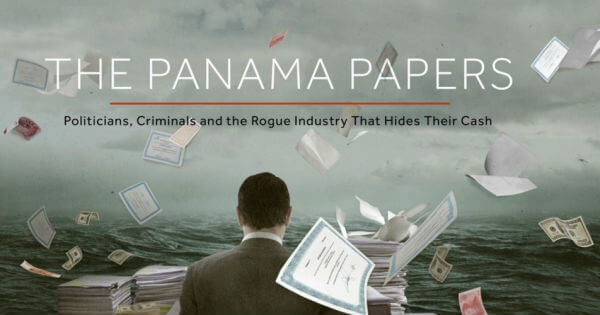
Palestinians pop up in Panama Papers

Adnan Abu Amer writes: Ever since the inception of the Palestinian Authority (PA) in 1994, local and international organizations have repeatedly issued reports on the rampant corruption plaguing its ministries and departments. The problem is not limited to administrative and financial excesses committed by irresponsible individuals for personal motives, but rather is seems entrenched in the PA’s structure.
The most recent corruption case was revealed by the so-called “Panama Papers,” which were published April 4. The Panama Papers exposed the involvement of international figures in tax evasion and money laundering.
Tareq Abbas, the son of Palestinian President Mahmoud Abbas, was among the Palestinian names contained in the papers. According to these documents, Abbas secretly owns, in partnership with the PA, a holding company worth more than $1 million in the British Virgin Islands. [Continue reading…]
Offshore in central London — the curious case of 29 Harley Street
The Guardian reports: On 10 November, 2003, Gerry Florent, and Ralph Abercia, plus his son, Ralph Jr, left the Bellagio Hotel in Las Vegas, and drove to the Stirling Club, a high-end private venue just off the Strip. They were to attend separate meetings with Sir Richard Benson, but had met each other that morning, when they were collectively coached on the etiquette expected of them: speak only when spoken to, stand when he comes in. They were happy to comply. This was a man who had bailed out the Queen, after all.
Both Florent and the Abercias wanted the same thing from Sir Richard: money, of which he had plenty. Sir Richard, who was portly, balding and elderly, explained to them that he owned a company named Sherwin & Noble, which was worth billions and was prepared to finance their business projects. At their meetings, the prospective investors received a glossy spiral-bound summary of S&N’s balance sheet, which showed it to be a financial firm of significant size.
Florent wanted $55m to buy land on which to build a hotel in Florida; the Abercias needed $105m for an “aquarium/entertainment complex” in Houston. In return for the money, all Sir Richard asked was that they pay advance fees (two payments of $412,250 each from Florent, and two payments of $787,500 each from the Abercias) to signal their commitment to the projects. If S&N decided not to go ahead with the loans, the fees would be repaid.
The investors left Las Vegas, instructed their lawyers to wire the first tranche of the fees over, and settled down to wait for their money. They waited. And they waited. When they rang or faxed the S&N office in London, they were reassured that there was nothing to be concerned about. But, over the next few months, Florent and his business associates became suspicious. They held off wiring the second half of the fee, and brought in a private investigator, who discovered that S&N, far from being worth billions, was an empty shell company. The glossy booklet detailing its assets had been copied from the banking company HBOS, with the names changed.
Thus, the fraud fell apart. The Abercias, who had wired the whole fee asked of them, were devastated. “That was a lot of money,” Ralph Sr told a local journalist. “We’re still paying the damgum thing back.”
The whole saga had been scripted by a conman named Lal Bhatia. Sir Richard Benson was an actor. He had never rescued Buckingham Palace from foreclosure. The billions and the knighthood were fictitious. S&N had no assets, beyond a registered presence at a house in London – 29 Harley Street. [Continue reading…]
Taliban starts spring offensive with Kabul truck bomb
The Wall Street Journal reports: The Taliban claimed responsibility for a bombing outside a Kabul government building that Afghan officials said killed at least 28 people and wounded more than 300 others, the deadliest attack in the capital in months.
The Islamist militant group said it had detonated a truck laden with explosives, though the report couldn’t be immediately confirmed by Afghan officials. It announced the start of its annual spring offensive last week and has since intensified attacks across the country.
Tuesday’s bombing targeted a compound used by Afghanistan’s Secret Service, flattening part of its perimeter wall. Taliban gunmen disguised in military uniform stormed it shortly after the explosion and continued to battle Afghan security forces for a few hours. The fighting ended in the early afternoon when Afghan government officials said two gunmen had been shot dead. [Continue reading…]