Wired reports: In armed conflicts of the past, the “fog of war” meant a lack of data. In the era of ubiquitous pocket-sized cameras, it often means an information overload.
Four years ago, when analysts at the non-profit Carter Center began using YouTube videos to analyze the escalating conflicts in Syria and Libya, they found that, in contrast to older wars, it was nearly impossible to keep up with the thousands of clips uploaded every month from the smartphones and cameras of both armed groups and bystanders. “The difference with Syria and Libya is that they’re taking place in a truly connected environment. Everyone is online,” says Chris McNaboe, the manager of the Carter Center’s Syria Mapping Project. “The amount of video coming out was overwhelming…There have been more minutes of video from Syria than there have been minutes of real time.”
To handle that flood of digital footage, his team has been testing a tool called Montage. Montage was built by the human rights-focused tech incubator Jigsaw, the subsidiary of Google’s parent company Alphabet that was formerly known as a Google Ideas, to sort, map, and tag video evidence from conflict zones. Over the last few months, it allowed six Carter Center analysts to categorize video coming out of Syria—identifying government forces and each of the slew of armed opposition groups, recording the appearance of different armaments and vehicles, and keeping all of that data carefully marked with time stamps and locations to create a searchable, sortable and mappable catalog of the Syrian conflict. “Some of our Montage investigations have had over 600 videos in them,” says McNaboe. “Even with a small team we’ve been able to go through days worth of video in a relatively short amount of time.” [Continue reading…]
Category Archives: Issues
How Facebook plans to take over the world
The Guardian reports: When Zuckerberg addresses the F8 audience [at Facebook’s annual developer conference] it is with the composure and conviction of a president addressing his citizens. “We’ve gone from a world of isolated communities to one global community, and we are all better off for it,” he says as he hammers home his “mission” to connect the world.
He warns of “people and nations turning inwards – against this idea of a connected world and community”, a position that fits both with his ideology and that of Facebook. This is not a speech about technical tweaks, but a state of the union address.
“It takes courage to choose hope over fear,” he adds. Behind the rhetoric and the casual clothes, the message is clear: Facebook is one of the big boys now, taking on huge global challenges and planning for prosperity.
The scale of Facebook’s audience is unprecedented. More than 1.6 billion people use Facebook at least once a month, or half of all internet users. That’s before you count users on other Facebook-owned sites including WhatsApp, which has more than 1 billion monthly active users, and photo-sharing site Instagram, which has 400 million.
Facebook has also introduced its free basics service to 37 countries, offering a free but limited package of apps to mobile phone users, but which some critics say allows Facebook to tightly control the online experience of potentially the next billion people to come online.
“You hear all the platitudes about Facebook connecting the planet, but to say they are doing it for benevolent reasons is absolute nonsense. It’s about connecting commerce, not people,” says venture capitalist and former journalist Om Malik, who reminds us of the hidden agenda of social networking firms: if you’re not paying, you’re the product. [Continue reading…]
The problem with rebuilding a Palmyra ruin destroyed by ISIS – does it simply help Assad?
Adam Taylor writes: London Mayor Boris Johnson unveiled a stunning site in his city’s historic Trafalgar Square on Tuesday: a replica of the 2,000-year-old Arch de Triumph from Palmyra, Syria.
The original arch, once part of the internationally famous UNESCO world heritage site in Palmyra, was destroyed in an explosion by the Islamic State after it took control of the city last year. This new 20-foot-tall re-creation of the monument was crafted by the Institute of Digital Archaeology, a joint venture among Harvard University, the University of Oxford and Dubai’s Museum of the Future, which used 3-D imaging technology to map the arch and digital tools to carve it out of Egyptian marble.
During the unveiling ceremony, Johnson told spectators that they were gathered “in defiance of the barbarians” who destroyed the arch, the BBC reports. But despite the triumphant nature of the day and the clear delight that many had in the rebuilding of the historic ruin, some were concerned about what, exactly, Palmyra had come to represent.
Although few would argue that the ancient sites of Palmyra shouldn’t be protected, there are concerns that the city’s ancient wonders could become a propaganda tool for the regime of Syrian President Bashar al-Assad. Annie Sartre-Fauriat, an expert on Syrian heritage who works with UNESCO, said the Palmyra site should be evaluated and perhaps restored once the conflict is over.
“For the moment, we should not be fooled of the manipulations of opinion by a bloody dictator,” Sartre-Fauriat said.
Syria’s government declared just last month that it had forced the Islamic State from Palmyra after a prolonged campaign. “The liberation of the historic city of Palmyra today is an important achievement and another indication of the success of the strategy pursued by the Syrian army and its allies in the war against terrorism,” Assad said at the time.
For Assad and the Syrian regime, the capture of Palmyra seems to have been not only a symbol of the newfound prowess the Syrian military had on the battlefield with Russian air support, but also a claim that Syrians were the only ones who could protect Syria’s heritage. Palmyra itself had relatively little strategic value for the Islamic State, Aymenn Jawad al-Tamimi, a fellow at the Middle East Forum think tank, told Al Jazeera as the city was liberated. “Palmyra is more important for the regime, symbolically, to present itself as the defender of civilisation against barbarism,” Tamimi said.
This message has an international audience, too. The Islamic State’s destruction of Palmyra had created a global outcry. Now the Syrian regime and its Russian backers were able to portray themselves as the protectors of the ancient cultural site. In the days after their troops took Palmyra, the Syrian regime quickly took Western journalists to the ancient city to show them what the Islamic State had destroyed and what, by extension, Syrian troops had saved.
In doing so, the Syrian regime was ignoring the damage it had caused to Palmyra, Sartre-Fauriat said. Assad’s troops had inflicted their own damage on the site, Sartre-Fauriat explained, firing shells and rockets into ancient sites and also looting graves. [Continue reading…]
‘It seems that no regime is too despotic for Tony Blair to work for – provided the price is right’
The Daily Mail reports: Tony Blair touted his firm’s services to a dictator for £5.3million a year, the Daily Mail can reveal today.
He made the shameless sales pitch to Nursultan Nazarbayev, offering the Kazakh president his ‘unique personal experience and insights’.
Leaked documents lay bare the former prime minister’s dealings with a regime behind appalling human rights abuses.
It is accused of routinely torturing citizens and massacring 15 defenceless protesters in 2011. The dossier reveals that:
- A key aide offered Mr Blair’s ‘private strategic advice’ to Mr Nazarbayev only a year after he left No 10;
- Six years on he was still touting for work in Kazakhstan, despite civil rights fears;
- The pitch promised Mr Blair would be ‘particularly closely involved’ – for a bigger fee;
- He rewrote a speech for Mr Nazarbayev to fend off criticism over the 2011 massacre;
- His firm tried to involve an EU crony in lobbying for the Kazakh regime.
The extent of Mr Blair’s dealings with the former Soviet republic in central Asia raises further questions about his apparent willingness to work with unsavoury leaders.
‘It seems that no regime is too despotic for Tony Blair to work for – provided the price is right,’ said Conservative MP Andrew Bridgen.
‘Since leaving office he has become a gun for hire for all manner of dubious regimes, damaging our reputation around the world.’ [Continue reading…]
Ex-CIA officer faces extradition from Portugal to Italy for alleged role in cleric’s rendition
The Washington Post reports: More than 13 years after an Egyptian cleric was kidnapped off the streets of Milan by CIA operatives, one former agency officer now living in Portugal faces extradition to Italy, where she was sentenced to four years in prison for the abduction.
Sabrina De Sousa, 60, was one of 26 Americans convicted in absentia by Italian courts for her alleged role in the February 2003 rendition of Hassan Mustafa Osama Nasr, also known as Abu Omar.
Like the other convicted Americans, De Sousa never really faced the threat of Italian imprisonment, because she had moved back to the United States long before the Italian trials began.
But last spring, De Sousa moved to Portugal to be near relatives. In the fall, she was detained by local authorities at the Lisbon airport on a European arrest warrant.
This week, Portugal’s highest court upheld the country’s lower courts’ rulings, declared that they did not violate the constitution, and said De Sousa should be sent to Italy as soon as May 4. Portugal’s Constitutional Court also reiterated a condition set by the lower courts — and guaranteed by Italy in De Sousa’s European arrest warrant — that once she arrives in Italy, she must be given another trial or a chance to appeal with new evidence, and the ability to call Italian and U.S. witnesses, because she had been tried in absentia. [Continue reading…]
Fate of world’s coastlines rests on melting Antarctic ice

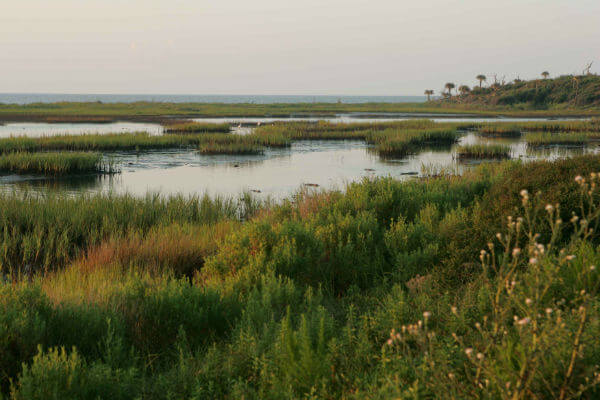
John Upton writes: Councilmembers of an island town in Georgia met in a police station near sandy beaches last week to mull a plan for coping with worsening floods. The meeting followed unprecedented king tide floods in the fall that inundated the island and nearby Savannah, and shut down the highway that connects them.
“We’ve had more frequent flooding in areas that haven’t flooded before,” said Jason Buelterman, mayor of the beach town on the eastern shore of Tybee Island, where the population of a few thousand residents swells each summer with vacationers. “In November, water was coming into people’s garages and stuff. It had never happened before.”
The meeting was held eight days before world leaders were due to converge in New York this Friday to ratify a United Nations treaty, aiming to avert the worst impacts of climate change. If the treaty succeeds, Tybee Island and other coastal communities may flood terribly in the coming decades, but will most likely remain mostly above sea level, recent Antarctic modeling suggests. Vast scientific uncertainties, however, mean even that cannot be assured.
Mayors from small towns, planners from the world’s largest cities and U.N. diplomats are being guided on the details of a looming coastal crisis by sea level projections compiled by a U.N. science panel. The panel’s work includes warnings about the amount of flooding that could be caused by melting in Antarctica, and those warnings have been growing bleaker.
The barren continent — the planet’s greatest reservoir of ice — remains shrouded in frigid mystery, and a lack of scientific knowledge about its ice sheet means scientists can’t yet predict how much flooding it could cause as temperatures continue to climb. A recent study, though, added to concerns that it could begin disintegrating, inundating coastal neighborhoods around the world, unless the heady goals of the new U.N. climate pact are achieved.
The Intergovernmental Panel on Climate Change’s most recent findings, from three years ago, appear to have underestimated the potential seriousness of the Antarctic problem, with sweeping implications for the urgency of pollution cuts — and for the futures of coastal communities like Tybee Island’s.
Instead of the anticipated several feet of sea level rise this century if current pollution rates continue, the latest modeling-based science warns that melting could lead to twice that amount. That sobering estimate is a rough one. [Continue reading…]
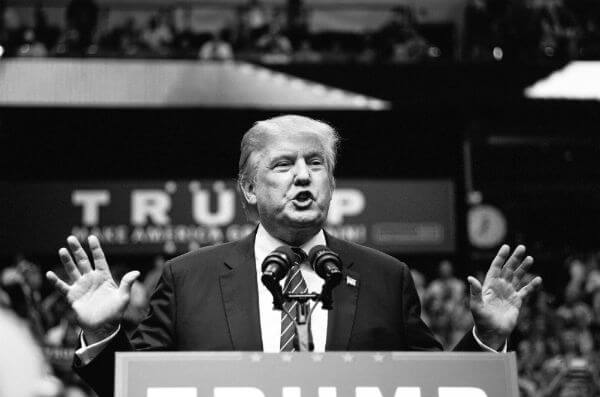
Trump terrifies world leaders

Politico reports: Obama hears world leaders’ fears about the Republican front-runner so often that he has developed a speech meant to ease their nerves.
First, he walks them through the Republican primary process: Trump has had success, but there are big states yet to vote and the front-runner could still stumble. Then he explains the complications of the GOP convention and how weak rules and convoluted balloting could leave Trump a loser. And finally, Obama assures America’s allies that Hillary Clinton can defeat the Manhattan billionaire.
It’s a familiar routine but not a particularly successful one. They respond — sometimes directly to Obama and other top administration officials, sometimes stewing privately about being brushed off again — that the Obama administration has been downplaying Trump’s odds for six months.
“Most people said that he didn’t have the wit, wisdom or wealth to get very far in the primaries,” said Peter Mandelson, a member of the British Cabinet under Prime Ministers Tony Blair and Gordon Brown, as well as a former European commissioner for trade who remains in touch with many leaders. “And they’ve been wrong.”
Now, world leaders cop to being afraid of a Trump presidency, and they’re making preparations: scrambling to get deals done with the Obama administration while they still have the chance.
Leaders, members of their governments, even their aides are so spooked that they don’t want to say anything, and many privately admit that it’s because they think he’ll win, and a quote now could mean a vengeful President Trump going after them personally next year.
“As we’re on the record, I’m rather hesitant to give you big headlines on this,” said Olli Rehn, the Finnish minister of economic affairs. “In Europe, we are concerned about the U.S. possibly turning toward a more isolationist orientation. That would not be good for United States, good for Europe, good for the world. We need the U.S. engaged in global affairs in a constructive, positive way.”
They’re not caught up in some gushy lament about what’s become of American politics, as Obama has sometimes framed the conversations when he’s talked about them publicly. They’re worried about what it means for them: for their arms deals, for their trade deals, for international funding and alliances that they depend on.
“However much people recoiled from George W. Bush or have been disappointed by Obama, they see Trump as off the Richter scale,” Mandelson said. “The reason for that is not that he must be stupid — nobody thinks that — but that he’s disdainful, unscrupulous, prepared to say anything to harvest the populist vote. And that makes people frightened.”
Then there are the more parochial concerns: that Trump’s rise will encourage and empower their own nationalists. [Continue reading…]
Failed state: Can a unity government succeed in divided Libya?
Der Spiegel reports: This may be the only thing you need to know about the situation in Libya: For security reasons, the headquarters of the United Nations Special Representative for Libya is situated 500 kilometers (311 miles) away from Tripoli in the Tunisian capital of Tunis. Martin Kobler’s office is located in a non-descript building in the city’s Les Berges du Lac diplomatic quarter.
For trips to Libya, he has an 18-seat propeller plane at his disposal, parked at the nearby airport. He uses it to commute several times each month to Libya. But sometimes, he isn’t given permission to land, for no apparent reason. On such occasions, the plane remains grounded, along with Kobler, in Tunis.
On a recent Sunday in April, Kobler has invited us to a meal in the restaurant Au Bon Vieux Temps in a posh suburb of Tunis. The view of the Mediterranean is spectacular. A slight man with a warm glint in his eyes, Kobler, 63, was once chief of staff to former German Foreign Minister Joschka Fischer. He has also served as German ambassador to Cairo and Iraq and, most recently, as the UN special representative to the Democratic Republic of Congo.
Today he has one of the most difficult jobs in the world. His task is to help create a state out of Libya at the behest of the international community. The fact that Libya was never truly a state, even under dictator Muammar Gadhafi, who was toppled in 2011, doesn’t make things any easier. Considering what he’s up against, Kobler is pursuing his mission with astounding optimism.
The situation in Libya is important for Europe for two reasons. First, because Islamic State (IS) is continuing to spread unhindered in the civil war-torn country. Second, because one of the most important routes for migrants making their way to Europe runs through Libya. [Continue reading…]
The New York Times reports: The United States on Tuesday imposed sanctions on a prominent Libyan politician as part of a broader Western effort to force Libya’s warring factions to accept the authority of a unity government backed by the United Nations.
The Treasury Department said it was adding the politician, Khalifa al-Ghweil, the leader of a self-declared government in the capital, Tripoli, to its sanctions list and would freeze any assets he might have in the United States.
The sanctions are a boost to the new unity government, which was formed under the auspices of the United Nations in December, has strong support from Western countries that are desperate to end years of turmoil in Libya. It also enjoys the allegiance of Libya’s national oil company, the central bank and some of the militias that guard the country’s oil fields. [Continue reading…]
The Guardian reports: The United Nations envoy to Libya, Martin Kobler, has called for western forces to help combat Islamic State in partnership with the country’s new government.
With Barack Obama due to meet four European leaders in Germany on Monday for a summit that is likely to focus on Libya, Kobler said foreign powers should offer training and military support, combined with an end to the UN arms embargo.
“The Daesh [Isis] expansion can only be stopped militarily,” he said. “There is a consensus that a united Libyan army needs training; the lifting of the weapons embargo is very important. We need the most modern weapons to finish Daesh.”
Isis has been stepping up its offensive against Libya’s oilfields. An assessment circulating in foreign missions reports that in the last two weeks the group has broken out of its base in the coastal town of Sirte in three thrusts. [Continue reading…]
Think Merkel’s got problems now? Wait until she takes on Libya
Arne Delfs writes: Angela Merkel is pushing the boundaries of her realpolitik.
A leader whose pragmatism trumps ideology every time, the German chancellor faces international criticism, alienated voters and a rift in her coalition because of her choices in combating the refugee crisis.
That might just be the start of her difficulties. With the European Union deal she pushed with Turkey beginning to deter illegal migration, Merkel is shifting her focus to the surge in refugee flows across the central Mediterranean to Italy. And that means engaging with Libya and Egypt.
Merkel will host U.S. President Barack Obama and the leaders of the U.K., France and Italy in Hanover, western Germany, on Monday to discuss Libya and migration, Syria and Islamic State, along with what the White House described as additional steps NATO allies must take to address the “challenges on Europe’s eastern and southern periphery.”
German intelligence suggests some one million refugees are waiting in the Maghreb countries to cross to Europe, causing alarm in the Chancellery in Berlin, according to an official from Merkel’s party who asked not to be named discussing internal deliberations.
German foreign policy is now “driven by the domestic imperative to bring down the number of refugees: this is Merkel’s live-or-die issue,” said Josef Janning, head of the Berlin office of the European Council on Foreign Relations. Germany is set to become “much more active” in North Africa, and “for Merkel this is a challenge, because you have to be cautious about doing things that the public doesn’t understand.” [Continue reading…]
Invasion of Iraq ‘undoubtedly increased the threat’ of terrorist attacks in UK, said then-head of MI5
Richard Norton-Taylor writes: We can confidently make some assumptions about the Chilcot inquiry, whose report has just been delivered to the Cabinet Office for “national security checks”. It will strongly criticise Tony Blair for promising George Bush that the UK would join the US-led invasion of Iraq in 2003 but keeping parliament and the public in the dark; attack ministers, mandarins and top brass alike for allowing Blair to delay military preparations; and damn the catastrophic failure to prepare for the subsequent occupation of the country.
What has received far less attention is the devastating evidence Chilcot heard about the invasion making Britain more vulnerable to terrorism. Blair has always dismissed suggestions that his foreign policy decisions were in any way responsible for encouraging terrorist attacks and “radicalising” young British Muslims as a charge perpetuated by “the left”.
The evidence to Chilcot contradicts his assertion. Lady Manningham-Buller, head of MI5 at the time, bluntly told the inquiry the invasion “undoubtedly increased the threat” of terrorist attacks in Britain.
She said she communicated her view to Blair via Whitehall’s Joint Intelligence Committee (JIC). “The number of plots, the number of leads, the number of people identified, and statements of people as to why they were involved,” all pointed to the increased terrorist threat to the UK. [Continue reading…]
FBI director suggests bill for iPhone hacking topped $1.3 million
The New York Times reports: The director of the F.B.I. suggested Thursday that his agency paid at least $1.3 million to an undisclosed group to help hack into the encrypted iPhone used by an attacker in the mass shooting in San Bernardino, Calif.
At a technology conference in London, a moderator asked James B. Comey Jr., the F.B.I. chief, how much bureau officials had to pay the undisclosed outside group to demonstrate how to bypass the phone’s encryption.
“A lot,” Mr. Comey said, as audience members at the Aspen Institute event laughed.
He continued: “Let’s see, more than I will make in the remainder of this job, which is seven years and four months, for sure.”
The F.B.I. had been unwilling to say anything at all until Thursday about how much it paid for what has become one of the world’s most publicized hacking jobs, so Mr. Comey’s cryptic comments about his own wages and the bounty quickly sent listeners scurrying in search of their calculators.
The F.B.I. director makes about $185,100 a year — so Mr. Comey stands to earn at least $1.35 million at that base rate of pay for the remainder of his 10-year term. [Continue reading…]
Europe says U.S. regulations keeping it from trade with Iran
The New York Times reports: With the completion of the nuclear deal with Iran and the opening of its market, European businesses expected a trade bonanza.
But three months after the lifting of many sanctions against Iran, there is growing frustration among European politicians, diplomats and businesspeople over the inability to complete dozens of energy, aviation and construction deals with the Iranians.
The main obstacle, the Europeans say, is their ally, and the driving force behind the historic nuclear agreement, the United States. Wary of running afoul of new sanctions imposed by Washington over Iran’s missile program and accusations that Iran sponsors terrorism, European banks are refusing to finance any of the deals, effectively perpetuating Iran’s isolation from the global financial system.
Europeans also point to new American visa regulations that make it more difficult for them to enter the United States if they have traveled to Iran. Those financial and travel restrictions, they say, make it nearly impossible to reach agreements with their Iranian counterparts. [Continue reading…]
Decriminalize all drugs, business and world leaders tell UN
The Guardian reports: A British billionaire, three former presidents and a renowned Aids researcher have called for all drugs to be decriminalized at a press conference that was sharply critical of the United Nations’ latest drug policy agreement, adopted this week.
Leaders of the Global Commission on Drug Policy said the UN’s first special session on drugs in 18 years had failed to improve international narcotics policy, instead choosing to tweak its prohibition-oriented approach to drug regulation.
“The process was fatally flawed from the beginning,” said Richard Branson, the head of the Virgin Group, adding that it may “already be too late” to save the international drug law system.
This week’s United Nations general assembly special session, UNgass, clearly displayed the deep divisions between member states over narcotics: while a growing number of countries, including several states in the US, have moved towards decriminalizing or legalizing drugs, others continue to execute people convicted of drug crimes. Three UN conventions prohibit drug use that is not medical or scientific.
The meeting, held Tuesday through Thursday in New York City, was billed as a forum to debate drug laws, called for by Mexico, Colombia and Guatemala in 2014. All three countries suffered disproportionate violence from cartels controlling drug supplies to the north. In Mexico alone, the government estimates 164,000 people were the victims of homicide related to cartel violence between 2007 and 2014. [Continue reading…]
Snowden seeks assurance from Norway it won’t extradite him
The Wall Street Journal reports: Edward Snowden, the former defense contractor charged by U.S. authorities for leaking classified documents to the media, is seeking assurance that Norway won’t extradite him if he comes here to collect a free-speech prize.
Mr. Snowden, who resides in Russia, has petitioned a Norwegian court, asking it to rule that the espionage charges filed by the U.S. Justice Department against him wouldn’t constitute grounds for extradition.
The Schjodt law firm, which filed the motion with the Oslo District Court on Mr. Snowden’s behalf, said Thursday that political crimes were formally excluded from a bilateral treaty and other rules governing extradition between Norway and the U.S.
“Mr. Snowden’s whistleblower activities must undoubtedly be seen as matters of political character,” the law firm said in its motion to the court.
The law firm said it has evidence that the U.S. has filed an extradition request to Norwegian authorities in the event Mr. Snowden arrives in Norway.
A spokesman at Norway’s Justice Ministry declined to comment on a court matter. The court said it hadn’t yet received Mr. Snowden’s documents. The U.S. Justice Department didn’t respond to a request for comment.
Debates inside and outside the courts over Mr. Snowden’s petition could challenge relations between the U.S. and the small Nordic country, traditionally a strong U.S. ally but also a strong advocate of whistleblower rights. [Continue reading…]
UK spy agencies have collected bulk personal data since 1990s, files show
The Guardian reports: Britain’s intelligence agencies have been secretly collecting bulk personal data since the late 1990s and privately admit they have gathered information on people who are “unlikely to be of intelligence or security interest”.
Disclosure of internal MI5, MI6 and GCHQ documents reveals the agencies’ growing reliance on amassing data as a prime source of intelligence even as they concede that such “intrusive” practices can invade the privacy of individuals.
A cache of more than 100 memorandums, forms and policy papers, obtained by Privacy International during a legal challenge over the lawfulness of surveillance, demonstrates that collection of bulk data has been going on for longer than previously disclosed while public knowledge of the process was suppressed for more than 15 years.
The files show that GCHQ, the government’s electronic eavesdropping centre based in Cheltenham, was collecting and developing bulk data sets as early as 1998 under powers granted by section 94 of the 1984 Telecommunications Act.
The documents offer a unique insight into the way MI5, MI6, and GCHQ go about collecting and storing bulk data on individuals, as well as authorising discovery of journalists’ sources.
Bulk personal data includes information extracted from passports, travel records, financial data, telephone calls, emails and many other open or covert sources. Often they are “fused” together to help pinpoint suspects. [Continue reading…]
Alleged bomber of Jerusalem bus came from a well-to-do Palestinian family
The Washington Post reports: The young man accused of being the first suicide bomber in Jerusalem in a decade doesn’t fit the profile of a desperate Hamas operative — and that worries the Israelis.
His uncles are prosperous merchants. He did not grow up in a refugee camp. He went on shopping trips to Jordan.
But the cover photo on his Facebook page includes the image of Yahya Ayyash, a.k.a. “The Engineer,” the chief bombmaker for Hamas, who likely was killed by an exploding mobile phone planted by Israeli agents in 1996.
On Monday afternoon, 19-year-old Abdel Hamid Abu Srour boarded the Egged No. 12 bus and placed a package between his legs. His uncles think that it might have been his first visit to Jerusalem.
His seat was above the vehicle’s gas tanks, according to Israeli news media. His relatives scoffed at the idea that Abu Srour would know how to make a bomb himself.
His high school grades were poor enough that he wanted to retake subjects and redo his exams.
Who gave him the bomb and how it was detonated is the object of a fast-moving investigation.
Hamas claimed that Abu Srour was a member of the Islamist militant movement, although the Gaza-based terrorist group did not assert direct responsibility for the bombing.
Israeli police announced Thursday that they had arrested several members of a Hamas cell in Bethlehem tied to the case. [Continue reading…]
2016 U.S. election critical to success of Paris climate pact
Climate Central reports: The 2016 presidential election is likely to be enormously consequential to the success of the Paris climate agreement, due to be signed Friday at the United Nations, and the ability of the United States to lead the world in reducing greenhouse gas emissions to keep global warming to “well below” 2°C (3.6°F).
Climate Central asked more than a dozen climate and political scientists and other experts how the outcome of that election will affect the climate pact.
The consensus was clear: If a Republican administration is elected in November, the Paris agreement would be severely undermined and any efforts to cut greenhouse gas emissions on a global scale will be cast into doubt. If a Democratic administration is elected, the Paris agreement will remain intact. [Continue reading…]
How the Paris Agreement is driving climate action
Climate Nexus reports: This past December, representatives from 195 nations gathered in Paris to negotiate an historic agreement to combat climate change and accelerate the transition to a sustainable, low-carbon future. After two weeks of negotiations, the nations unanimously agreed to adopt the international climate pact. On April 22, 2016, nations will again gather, this time at the United Nations headquarters in New York, to formally sign the Paris Agreement.
The world has already seen a significant shift towards stronger climate action, in the ensuing months since the adoption of the Agreement.
The adoption of the Paris negotiations delivered a signal to governments, businesses and the global public: All parties, from national governments to small businesses, must do their part to minimize the risks and impacts of climate change.
This signal has mobilized actions by public and private sector institutions to move away from fossil fuels, which drive climate change, and towards an economy powered by renewable energy. [Continue reading…]