Category Archives: Issues

Obama: Doomed to disappoint

John J Mearsheimer writes:

Barack Obama gave a major speech on the Middle East on Thursday, May 19, and it is clear from the subsequent commentary that he impressed few people. The main reason for this is that he did not say much new or indicate that there would be any serious changes in US policy in the region. It was essentially more of the same with some tweaking here and there. Nevertheless, he did manage to anger some people. For example, Israel’s hard-line supporters were outraged that he said: “Palestine should be based on the 1967 lines with mutually agreed swaps.” For them, the 1967 borders are “Auschwitz borders” and thus can never serve as a basis for negotiations.

Many Palestinians, on the other hand, did not like Obama’s assertion that it made little sense for them to go to the UN General Assembly this September and win recognition for a Palestinian state based on the 1967 borders. Surely they also noticed that shortly after saying “every state has the right to self-defence, and Israel must be able to defend itself,” the president said that the Palestinians would have to be content with “a sovereign non-militarised state,” which means that they would not be able to defend themselves against Israel – or any other state for that matter. Hypocrisy appears to be wired into the DNA of US foreign policy makers.

Obama’s failure to impress and move US Middle East policy in new directions raises the intriguing question: Did he blow an opportunity to give a truly important speech at what appears to be a plastic moment in history? I think not. The sad fact is that Obama has remarkably little manoeuvre room on the foreign policy front. The most important item on his agenda is settling the Israeli-Palestinian conflict, and there he knows what has to be done: Push both sides toward a two-state solution, which is the best outcome for all the parties, including the United States. Indeed, he has been trying to do just that since he took office in January 2009. But the remarkably powerful Israel lobby makes it virtually impossible for him to put meaningful pressure on Israeli Prime Minister Benjamin Netanyahu, who is committed to creating a Greater Israel in which the Palestinians are restricted to a handful of disconnected and impoverished enclaves. And Obama is certainly not going to buck the lobby – with the 2012 presidential election looming larger every day.


Facebooktwittermail

Our revolt is not Obama’s

Ahdaf Soueif writes:

This wasn’t slipping poison into the honey; it was smearing chemical sweeteners on to toxic pellets. Barack Obama listed what he sees as his country’s “core interests” in my country Egypt and my region; his country’s “core principles” governing how it will act towards us, and his policies to promote US interests within the frame of US principles. Let’s translate the US president’s description of his “core interests in the region” into effects on the ground:

“Countering terrorism” has implicated (at least) Egypt, Syria and Jordan in the US’s extraordinary rendition programme, turning our governments into torturers for hire and consolidating a culture of security services supremacy and brutality that is killing Syrian protesters today and manifests itself in Egypt as a serious counter-revolution.

“Stopping the spread of nuclear weapons” highlights consistent US double standards as Arab nuclear scientists are murdered, the US threatens Iran, and Israel happily develops its illicit arsenal.

“Securing the free flow of commerce” has meant shoving crony capitalism down our throats, bribing governments to sell our national assets and blackmailing us into partnerships bad for us.

“Supporting Israel” has led to land, resources and hope being stolen from Palestinians while Egypt becomes their jailer and dishonest broker, losing its credibility and self-respect.

Obama has all the information above; he knows that Hosni Mubarak’s dedication to delivering US “core interests” is why the Egyptian millions demanded his departure, why Tahrir proclaimed him an “agent of America and Israel”, and why he is now under arrest.

The blame is not all with America. We had a regime that was susceptible, that became actively complicit; assiduously finding ways to serve US and Israeli interests – and ruin us. But: we got rid of it. Peaceably, with grace and within the law. We Got Rid of It.

So when Obama says, “We will continue to do” the things described above, it’s a challenge. When he adds, “with the firm belief that America’s interests are not hostile to people’s hopes; they are essential to them” – it’s obfuscation and an insult to every citizen across the world – including Americans – who followed our revolutions with empathy and with hope.

Facebooktwittermail

Palestine’s hidden history of nonviolence

Yousef Munayyer writes:

Last weekend, as tens of thousands of unarmed refugees marched toward Israel from all sides in a symbolic effort to reclaim their right of return, the world suddenly discovered the power of Palestinian nonviolence. Much like the “Freedom Flotilla,” when nine activists were killed during an act of nonviolent international disobedience almost a year ago, the deaths of unarmed protesters at the hands of Israeli soldiers drew the world’s attention to Palestine and the refugee issue.

The world shouldn’t have been so surprised. The truth is that there is a long, rich history of nonviolent Palestinian resistance dating back well before 1948, when the state of Israel was established atop a depopulated Palestine. It has just never captured the world’s attention the way violent acts have.

Indeed, by the issuance of the Balfour Declaration in 1917, well before the establishment of the state of Israel, and during a period when the Jewish population of historic Palestine had yet to reach 10 percent, the native Arabs of Palestine could already see that their hopes for self-determination — in a homeland where they constituted a vast majority — were being jeopardized by their soon-to-be colonial master.

Resistance to Zionism during this period was characterized by various efforts led by elite members of Arab society who raised awareness about the dangers Zionism posed. Just before the war, Palestine saw a huge spike in new newspapers, and writers and editors such as Ruhi al-Khalidi, Najib Nassar, and Isa al-Isa regularly zeroed in on the threat of Zionism to Palestinian life. Diplomatic efforts to lobby the mandatory government ensued while concurrently peasants occasionally clashed with the European newcomers, but violence was largely localized and communal and took place amid larger, more peaceful, and political efforts to resist Zionist aims.

Facebooktwittermail

Awakening, cataclysm, or just a series of events? Reflections on the current wave of protest in the Arab world

Michael Hudson writes:

In 1938 the Palestinian-British intellectual George Antonius published his famous book The Arab Awakening. It described the nahda—the Arab literary and cultural renaissance of the nineteenth century—and the development of organized groups in an emerging modern and civil society in the early twentieth century. While the term “awakening” to some connotes a kind of benign Orientalism—it took Westernization to rouse these people from their long slumber—one might yet claim that this “awakening” was the emergence of a new national self-consciousness that would lay the groundwork for the populist Arab unity movement that rocked the Arab world in the 1950s and 1960s.

The original nahda was about constructing a collective identity and community. But what is the “awakening” of the present about? I don’t yet have a clear answer. It does appear, however, that the thrust of today’s wave of protest is less about identity than it is about authority. In every case the discourse is challenging the legitimacy of the rulers and/or ruling elites and objecting to their arbitrary, unaccountable, corrupt and often brutal behavior. And yet is there not something about the powerful “contagion effect” that suggests that some kind of latent identity politics—a tacit understanding that “we are all in the same boat”—is also in play?

The story of how the struggle for Arab national independence and unity was derailed into a system of segmented authoritarianisms is well known. Arab nationalist aspirations were cut short by the colonialist interventions after World War I. The map of the old mostly Ottoman-dominated Arab world was redrawn. Instead of a unified Arab state constructed along liberal and constitutional lines, the pre-existing colonial creations became independent and took on an authoritarian character of their own. The “progressives”, led most famously by Egypt’s Gamal Abdel Nasser and the Ba’th Party pursued the dream of Arab unity, liberation, and socialism (wahda, hurriyya, and ishtirakiyya) through the modalities of a military-dominated single-party “republicanism”. The “conservatives,” mainly traditional monarchies (some of them oil-rich) preferred paternalism, capitalism and protection from the West. Their legitimacy rested on their claims to represent authentic cultural traditions and Islamic rectitude. But they were no less authoritarian than their “republican” counterparts.

This state of affairs has lasted for half a century. Political scientists specializing on the Middle East might be forgiven, then, for focusing on why authoritarianism has been so persistent. They came up with multiple explanations, among them the following:

  • The mukhabarat state. Whether republican or patrimonial, Arab regimes were able to build up formidable bureaucracies of control: intelligence agencies, multiple police forces, paramilitary organizations, and of course the military establishment. People obeyed because they were afraid.
  • ”Deferential” Arab political culture. Although this argument is almost universally rejected by serious social scientists, it still enjoys wide currency in Western policy circles, public opinion, and even among many people in the Middle East. It holds that authoritarian rule “fits” the political culture because that culture privileges the elites over the masses (the khassa over the ‘amma) and because people are socialized from earliest childhood to defer to patriarchal authority. Islam, it is said, also counsels obedience even to a bad ruler over the worse alternative of fitna or chaos.
  • Western domination. By this argument the colonial period put in place the structures and habits of authoritarianism that would outlast the colonial period itself. Moreover, the post-colonial period itself was marked by significant manipulation of local politics by the new global hegemons—the Soviet Union, and then, solely, the United States. Through economic and military assistance, intelligence cooperation, and diplomatic support the United States propped up friendly authoritarian regimes for reasons of Realpolitik and especially because it feared the anti-American tendencies in Arab public opinion. That condition, of course, was due primarily to America’s support for Israel and its occupation of Palestinian territory. To this very day American politicians and officials debate whether the U.S. should support friendly dictators or take its chances with emerging (but possibly unstable) democratic forces.
Facebooktwittermail

The Middle East is running dry – and into the perfect storm?

Damian Carrington writes:

Water, it’s the very stuff of life, and a high-resolution analysis of the most water-stressed places on Earth reveals anew a stark reality. The Middle East and north Africa (Mena), currently in the middle of a historic wave of unrest, is by far the worst affected region.

Of the 16 nations suffering extreme water stress, according to risk analysts Maplecroft, every single one is in the Mena region. Bahrain tops the list of those using far more water than they sustainably receive. Other crisis-hit countries, including Libya, Yemen, Egypt and Tunisia, are not far behind. Syria tops the next category: high stress. (The full top 20 is in a table below, with a bit on the methodology).

The obvious question is to what extent this severe lack of water underlies the troubles affecting these nations? The obvious response is that only a fool would wade into political and historical waters so deep and try to divine the role of a single factor, amid poverty, unemployment, repression and more.

But reassured by a middle east expert here at the Guardian that water is indeed a major underlying issue in many Mena nations, and John Vidal’s article from February, I’m going to dip my toe in as far as following the chain of events that starts with scarce water. Why? Because it powerfully demonstrates how the world’s biggest environmental problems link together with profound effect.

Facebooktwittermail

Court filings imply Israel had link to 9/11 attacks?

OK. That’s not exactly the wording of the New York Times‘ headline. It says “Court Filings Assert Iran Had Link to 9/11 Attacks,” so how did I come up with the alternative interpretation?

In a criminal case, if one of the defendants or a key witness is murdered before the trial, it’s fair to assume that if the murderer has a vested interest in the outcome of the trial then they were serving their own interest by making sure the victim could not offer damaging testimony in the trial.

The Times reports on a suit that was first brought in Washington in 2002 and then moved to Manhattan that claims Iran provided assistance to the 9/11 hijackers.

In their court papers, the lawyers assert that Imad Mugniyah, as the military chief of Hezbollah, was a terrorist agent for Iran, and that he traveled to Saudi Arabia in 2000 to help with preparations for the 9/11 attacks.

Imagine if Mugniyah was tried and convicted. The US-Israeli anti-Iran lobby would have a field day! War against Iran would be unavoidable.

Instead, Mugniyah was assassinated in Damascus in 2008 in what is widely believed to have been a Mossad operation. The Israelis apparently wanted to make sure he could never be questioned in court.

The Times says:

The 9/11 commission report said there was “strong evidence that Iran facilitated the transit of Al Qaeda members into and out of Afghanistan before 9/11, and that some of these were future 9/11 hijackers.” The report also said there was circumstantial evidence that senior Hezbollah operatives were closely tracking the travel of some of the hijackers into Iran in November 2000.

But the commission said that it had “found no evidence that Iran or Hezbollah was aware of the planning for what later became the 9/11 attack,” and that the “topic requires further investigation by the U.S. government.”

The CIA and FBI were also tracking individuals involved in the attacks.

Holy moly! Does that mean that the US, Iran and Israel were jointly behind 9/11?!?!

On the other hand, perhaps it would be more enlightening to know who the hell is paying the lawyers who filed this case in Manhattan.

Facebooktwittermail

The borders of Auschwitz

David Ben-Gurion, Israel’s first prime minister, had he not died before 1967, would surely have been disappointed to hear it said that he and fellow Zionists who fought to create a Jewish state had such meager success that in its first two decades of existence, Israel was barely an improvement on Auschwitz.

It’s hard to know who should be more offended by that assessment: the victims of the Holocaust or Israel’s founders?

In his response to President Obama’s suggestion that Israel should — with mutually agreed land swaps with Palestinians — retreat to its 1967 borders, Benjamin Netanyahu says that such a move would place Israel behind “indefensible” borders.

Netanyahu is alluding to a phrase now employed by many on the right that he himself once invoked: “the borders of Auschwitz.”

In the New York Times, Robert Mackey and Elizabeth Harris explain:

That resonant phrase, which suggests that Israelis would face genocide should they withdraw fully from the land they have occupied since the end of the 1967 war, is based on a mangled version of a remark made by the Israeli diplomat Abba Eban in 1969. According to Haaretz, Mr. Eban told the German newsweekly Der Spiegel in that year: “We have openly said that the map will never again be the same as on June 4, 1967. For us, this is a matter of security and of principles. The June map is for us equivalent to insecurity and danger. I do not exaggerate when I say that it has for us something of a memory of Auschwitz.”

Israeli leaders have frequently used some version of this phrase to invoke the existential dread of the Holocaust when pressed to withdraw from the occupied territories as part of a peace agreement.

In 2002, Ariel Sharon told William Safire that a proposed Saudi peace plan was unacceptable because, “Israel cannot return to the ‘67 borders. Abba Eban long ago called them ‘Auschwitz borders’; Israel would not be able to exist.”

A decade earlier, when another Israeli leader, Yitzhak Shamir, expressed his outrage when the administration of President George H. W. Bush called for a freeze on Jewish settlements in the occupied territories — in exchange for $10 billion in American loan guarantees — The Times reported that a senior official in the prime minister’s office, a young Benjamin Netanyahu, complained that Israel was being asked to accept, “the borders of Auschwitz.”

Writing about the use and abuse of this phrase in 2007, the Haaretz columnist Bradley Burston observed that the right-wing Israeli politicians who had frequently invoked Mr. Eban to support their refusal to cede territory were less likely to mention another of his famous maxims: “Israel’s birth is intrinsically and intimately linked with the idea of sharing territory and sovereignty.”

Facebooktwittermail

Obama granted Netanayhu a major diplomatic victory

Aluf Benn writes:

Prime Minister Benjamin Netanyahu can feel satisfied while flying to Washington Thursday night. U.S. President Barack Obama has granted Netanyahu a major diplomatic victory.

In return for his call for the establishment of a Palestinian state based on 1967 borders with agreed land swaps, without defining the size of these lands, Obama accepted Netanyahu’s demands for strict security arrangements and a gradual, continuous withdrawal from the West Bank.

He suggested beginning negotiations on borders and security arrangements, and delaying discussions on the core issues such as Jerusalem and refugees.

More importantly, Obama scornfully rejected the Palestinian initiative to attain recognition at the United Nations and to isolate Israel, demanded the Palestinians return to negotiations, and called on Hamas to recognize Israel’s right to exist. These points came straight out of the policy pages of the Prime Minister’s Bureau in Jerusalem. Netanyahu could not have asked for more: Obama outright rejects Palestinian President Mahmoud Abbas’ recognition campaign, as well as the Palestinian reconciliation agreement.

It seems that the new Fatah-Hamas unity has saved Netanyahu from a much more aggressive and binding speech on the part of Obama.

Obama could have also delivered his Mideast speech during the impending AIPAC conference, which he will attend this coming Sunday.

Facebooktwittermail

Every state has the right to self-defense — except a Palestinian state

After returning to the White House having delivered his much anticipated Middle East speech, I imagine President Obama now eagerly awaits news on how quickly and handsomely he will be rewarded by nervous campaign donors who were still unsure about his loyalty to Israel. The cash will no doubt now start rolling in.

As for security, every state has the right to self-defense, and Israel must be able to defend itself – by itself – against any threat. Provisions must also be robust enough to prevent a resurgence of terrorism; to stop the infiltration of weapons; and to provide effective border security. The full and phased withdrawal of Israeli military forces should be coordinated with the assumption of Palestinian security responsibility in a sovereign, non-militarized state.

Every state has the right to self-defense, unless it’s a Palestinian state. In a Palestinian state the primary responsibility of its security forces will be to protect Israel.

From Israel, Larry Derfner comments:

In his speech on the Middle East, Obama gave the Palestinians nothing and gave Israel a lot, which means he strengthened the status quo, which Israel is perfectly happy with and only the Palestinians want to change. By saying the Israeli-Palestinian border should be based on the ’67 line, he just repeated what Clinton said publicly about a year ago (and what her husband said in the White House a decade ago). What was new, or at least newer, was his endorsement of Netanyahu’s call for a “non-militarized” Palestine – which is a contradiction to a sovereign Palestine, something Obama claimed also to support. And by mentioning the need to stop the smuggling of weapons into Palestine, he might have been giving a nod to Netanyahu’s demand to keep the Israeli army on the Jordan Valley. Also, he repeated his opposition to the Palestinians’ plan to seek recognition from the UN in September. In all, a very, very good day for the occupation. But I think Obama just lost the Palestinians. Abbas cannot go along with this prescription, none of them can. They have to go to the UN, they have to go ahead with the popular resistance, to go out into the street en masse – to the settlements, to the army outposts, to the fence, and hope for the Tahrir effect – to win the world to their side – and for this, they must remain non-violent – and shame Israel in the eyes of the world and force Obama and the other timid Western leaders to force Israel to end the occupation. There’s just no other way. I’d thought that maybe after killing Bin Laden, Obama would have the political capital to pressure Israel. Whether he has it or not, he’s too timid, or too election-minded, to use it. To the cause of peace and justice in Israel and Palestine, he just became a write-off.

Who could have predicted that after two years, Obama’s greatest achievement is that he increasingly makes George Bush look like a man of substance.

To my ear, the best worst paragraph in the speech was this:

That is the choice that must be made – not simply in this [Israeli-Palestinian] conflict, but across the entire region – a choice between hate and hope; between the shackles of the past, and the promise of the future. It’s a choice that must be made by leaders and by people, and it’s a choice that will define the future of a region that served as the cradle of civilization and a crucible of strife.

At least when Dubya delivered a vacuous statement like this, he’d make it a bit more entertaining by mangling a few words or making an inappropriate facial expression.

Facebooktwittermail

Follow the money

The Wall Street Journal reports:

Jewish donors and fund-raisers are warning the Obama re-election campaign that the president is at risk of losing financial support because of concerns about his handling of Israel.

The complaints began early in President Barack Obama’s term, centered on a perception that Mr. Obama has been too tough on Israel.

Some Jewish donors say Mr. Obama has pushed Israeli leaders too hard to halt construction of housing settlements in disputed territory, a longstanding element of U.S. policy. Some also worry that Mr. Obama is putting more pressure on the Israelis than the Palestinians to enter peace negotiations, and say they are disappointed Mr. Obama has not visited Israel yet.

One top Democratic fund-raiser, Miami developer Michael Adler, said he urged Obama campaign manager Jim Messina to be “extremely proactive” in countering the perception in the Jewish community that Mr. Obama is too critical of Israel.

He said his conversations with Mr. Messina were aimed at addressing the problems up front. “This was going around finding out what our weaknesses are so we can run the best campaign,” said Mr. Adler, who hosted a fund-raiser at his home for Mr. Obama earlier this year.

“Good friends tell you how you can improve. They don’t tell you ‘everything’s great’ and then you find out nobody buys the food in your restaurants,” he said.

It is difficult to assess how widespread the complaints are. Many Jews support Mr. Obama’s approach to the Middle East, and his domestic agenda. But Jewish fund-raisers for Mr. Obama say they regularly hear discontent among some supporters.

Facebooktwittermail

Assassination nation: Are there any limits on President Obama’s license to kill?

James Bovard writes:

How much evidence should the US government be obliged to show before it kills an American citizen?

None, according to the Obama administration.

And how much evidence should the government be obliged to possess of an American’s wrongdoing before officially targeting them for killing?

That’s a secret, according to the Obama team.

As part of its war against violent extremism, the Obama administration now claims a right to kill Americans without a trial, without notice, and without any chance for targets to legally object. On May 6, the US government launched a drone attack to try to kill a US citizen in Yemen. The Obama administration alleges that Anwar al-Awlaki, an American born Muslim cleric, helped spark killings at Fort Hood, Texas, and an attempt to blow up a jetliner in 2009. Mr. Awlaki might be a four-star bad guy, but government press releases and background briefings have not previously been sufficient to justify capital punishment. The drone attack failed to terminate Awlaki, though two other people were killed.

The US government has admitted that it has added the names of other Americans to a list for targeted killing. The American Civil Liberties Union sued last year to compel the government “to disclose the legal standard it uses to place US citizens on government kill lists,” but was thwarted when the Obama administration claimed the entire program was a “state secret.” Last December, federal Judge John Bates dismissed the ACLU’s lawsuit because “there are circumstances in which the Executive’s unilateral decision to kill a US citizen overseas” is “judicially unreviewable.”

Assuming that Obama doesn’t lose his appetite for extrajudicial killing, it seems likely that missiles fired from drones will remain his weapon of choice. Old-fashioned death squads leave open the inconvenient possibility that the assassination target might attempt to surrender.

Did Osama bin Laden have his empty hands held high just before he was shot in the head? We can only be sure that any awkward record of such a fact would remain sealed in a vault for many decades.

Facebooktwittermail

Anticipation builds (in Washington) for Obama’s big Mideast speech

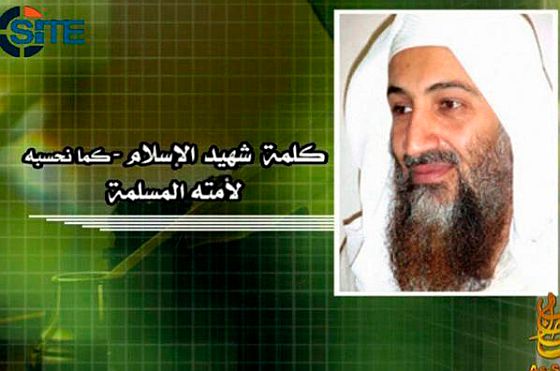
Osama bin Laden might be dead, but al Qaeda still operates a nimble media outfit.

Just as the US media drone anticipating President Obama’s speech later this morning started to grow tiresome, Obama’s words got preempted by Osama’s.

I can’t help wondering what his assassination would have looked like if it had occurred immediately after he expressed support for the Arab Awakening.

In an audio message recorded shortly before his death, Reuters reports:

Bin Laden praised the Egyptian revolution and urged Arab protesters to maintain their momentum, adding: “I believe that the winds of change will envelope the entire Muslim world.”

“This revolution was not for food and clothing. Rather, it was a revolution of glory and pride, a revolution of sacrifice and giving. It has lit the Nile’s cities and its villages from its lower reaches to the top,” he said.

“To those free rebels in all the countries — retain the initiative and be careful of dialogue. No meeting mid-way between the people of truth and those of deviation.”

Bin Laden made no specific reference to Libya, Syria, Bahrain and Yemen, where pro-democracy protesters have had less success than in Egypt and Tunisia, but said Israel, reviled by many ordinary Arabs, was worried by the unrest.

Bin Laden called on young Arabs to consult “those of experience and honesty” and to set up a framework that would allow them to “follow up events and works in parallel… to save the people that are struggling to bring down their tyrants.”

How significant is Osama’s endorsement of the uprisings? It probably won’t have much influence on the average demonstrator in Syria, Bahrain, Libya, Egypt, or Yemen. But it might result in a few would-be jihadists joining the political mainstream.

Meanwhile, how much influence is Obama likely to have two years after his previous and much-hyped Cairo speech turned out to be hollow rhetoric?

McClatchy’s Hannah Allam just took the pulse of the Arab street:

Most common responses when I asked random Egyptians about watching Obama’s #MEspeech: He’s speaking? When? About what?

Facebooktwittermail

The new geopolitics of food

Lester Brown writes:

In the United States, when world wheat prices rise by 75 percent, as they have over the last year, it means the difference between a $2 loaf of bread and a loaf costing maybe $2.10. If, however, you live in New Delhi, those skyrocketing costs really matter: A doubling in the world price of wheat actually means that the wheat you carry home from the market to hand-grind into flour for chapatis costs twice as much. And the same is true with rice. If the world price of rice doubles, so does the price of rice in your neighborhood market in Jakarta. And so does the cost of the bowl of boiled rice on an Indonesian family’s dinner table.

Welcome to the new food economics of 2011: Prices are climbing, but the impact is not at all being felt equally. For Americans, who spend less than one-tenth of their income in the supermarket, the soaring food prices we’ve seen so far this year are an annoyance, not a calamity. But for the planet’s poorest 2 billion people, who spend 50 to 70 percent of their income on food, these soaring prices may mean going from two meals a day to one. Those who are barely hanging on to the lower rungs of the global economic ladder risk losing their grip entirely. This can contribute — and it has — to revolutions and upheaval.

Already in 2011, the U.N. Food Price Index has eclipsed its previous all-time global high; as of March it had climbed for eight consecutive months. With this year’s harvest predicted to fall short, with governments in the Middle East and Africa teetering as a result of the price spikes, and with anxious markets sustaining one shock after another, food has quickly become the hidden driver of world politics. And crises like these are going to become increasingly common. The new geopolitics of food looks a whole lot more volatile — and a whole lot more contentious — than it used to. Scarcity is the new norm.

Until recently, sudden price surges just didn’t matter as much, as they were quickly followed by a return to the relatively low food prices that helped shape the political stability of the late 20th century across much of the globe. But now both the causes and consequences are ominously different.

In many ways, this is a resumption of the 2007-2008 food crisis, which subsided not because the world somehow came together to solve its grain crunch once and for all, but because the Great Recession tempered growth in demand even as favorable weather helped farmers produce the largest grain harvest on record. Historically, price spikes tended to be almost exclusively driven by unusual weather — a monsoon failure in India, a drought in the former Soviet Union, a heat wave in the U.S. Midwest. Such events were always disruptive, but thankfully infrequent. Unfortunately, today’s price hikes are driven by trends that are both elevating demand and making it more difficult to increase production: among them, a rapidly expanding population, crop-withering temperature increases, and irrigation wells running dry. Each night, there are 219,000 additional people to feed at the global dinner table.

More alarming still, the world is losing its ability to soften the effect of shortages. In response to previous price surges, the United States, the world’s largest grain producer, was effectively able to steer the world away from potential catastrophe. From the mid-20th century until 1995, the United States had either grain surpluses or idle cropland that could be planted to rescue countries in trouble. When the Indian monsoon failed in 1965, for example, President Lyndon Johnson’s administration shipped one-fifth of the U.S. wheat crop to India, successfully staving off famine. We can’t do that anymore; the safety cushion is gone.

That’s why the food crisis of 2011 is for real, and why it may bring with it yet more bread riots cum political revolutions. What if the upheavals that greeted dictators Zine el-Abidine Ben Ali in Tunisia, Hosni Mubarak in Egypt, and Muammar al-Qaddafi in Libya (a country that imports 90 percent of its grain) are not the end of the story, but the beginning of it? Get ready, farmers and foreign ministers alike, for a new era in which world food scarcity increasingly shapes global politics.

Facebooktwittermail

The geopolitical battle for the Arab street

Trita Parsi and Reza Marashi write:

The Middle East is undergoing its most dynamic transformation since World War I, when Sir Mark Sykes and Georges Picot first divided the region into colonized spheres of influence. Nearly 100 years later, with the overthrow of Hosni Mubarak in Egypt and Zine El-Abidine Ben Ali in Tunisia, and the ongoing struggle in Yemen, Syria, Libya and Bahrain, all states in the region – or involved in the region – have been forced to reassess their policies and alliances.

These developments have also permanently shattered the frames through which the Middle East was understood – or presented – by various governments. The defining struggle is not between “moderates” and “radicals” – at least not if the definition of “moderate” is an Arab state allied with the U.S. and at virtual peace with Israel. The deposed dictatorships in Cairo and Tunis both fit this false definition of “moderate.” Nor is the struggle between Islamic and secular forces. As R. K. Ramazani points out, the rallying call of protesters across the region has been democracy and dignity, not Islam and Sharia. And to the extent that protests in Bahrain have taken on a sectarian tone, it is arguably due to the efforts of the Al-Khalifa royal family and its Saudi Arabian protector – both considered “moderates” in the old frame.

These recent developments have shocked not only status quo political systems, but also an increasingly intense rivalry for regional influence between Israel, Saudi Arabia and the U.S. on one side, Iran on another, and Turkey as the third vertex in an emerging triangle of competition. Rather than end the rivalry, this shock has changed its context and created both challenges and opportunities for all sides. Regional unrest has demonstrated both the Arab street’s relevance, and its ability to play a decisive role in the region’s future. Thus, if the Arab democracy wave continues unabated, it will not only test status-quo powers investing in an order that suppresses the streets, but also emerging powers that claim to champion them.

Facebooktwittermail

For many Israelis the words “Arabs” and “peace” can’t be combined

Mark Perry writes:

We have before us the example of George Orwell, the eccentric British author of 1984, whose real name was Eric Blair. What’s interesting about Orwell (or, perhaps, simply predictable) is that he adopted his pen name to save his respectable parents the disgrace of having to admit that their son didn’t work for a living, but was (oh, the humiliation) . . . a writer. And the irony: this same Orwell spent years toiling over a story whose theme is that it’s possible to erase the past by a simple act of denial. Thus, Winston Smith (“1984″‘s main character) is told in a torture chamber of the “Ministry of Love” that his belief that his country, “Oceania” was, at one time, not at war with Eastasia is a delusion: “Oceania is at war with Eastasia,” he is told. “Oceania has always been at war with Eastasia.”

Orwell would tell us that those who read “1984” and put it aside in relief (“thank God we don’t live in a world like that”), miss the point. The past is altered continuously, even perniciously–and now (some 63 years after the book’s publication) no more constantly than when it comes to the Middle East. “Mubarak is a moderate,” “we have always supported democracy in Egypt” and “the Arabs aren’t interested in peace” are perhaps not as insidious as “Oceania has always been at war with Eastasia,” but they’re damned close. The beauty of these phrases (as Winston Smith learned) is that if you utter them often enough, they actually become true. Hence, we described former Egyptian President Hosni Mubarak as a moderate so often that we actually came to believe it–and were taken by surprise when we discovered the Egyptian people didn’t agree. So? So now we’re worried that the current revolution will deny the Egyptian people their fundamental rights. Unlike with Mubarak–who was chock full of them.

Human beings are good at this kind of thing, as it turns out, because adopting these phrases (“we have always supported democracy in Egypt”) helps us evade responsibility for the state of the world. Then too, it’s easier to follow the script than to utter the truth–“Mubarak is a tyrant, but what the hell, we supported him anyway,” “we’ve never given a fig for democracy in Egypt” and (finally) “it’s not the Arabs who aren’t interested in peace, but Israel.” It’s this last phrase that seems most pertinent now, when the-take-it-or-leave-it 2002 Arab Peace Initiative is being discussed (again), as a possible resolution of the Arab-Israel (and, hence, the Palestinian-Israeli) conflict.

Facebooktwittermail

Debunking the mythical “Sharia threat” to our judicial system

The ACLU’s Blog of Rights says:

As the ACLU has documented elsewhere, there has been a wave of anti-Muslim sentiment and attacks on Muslim communities in the U.S. in the last few years. Most recently, multiple states have proposed legislation banning the consideration of Islamic or "Sharia" law by state courts. Anti-Muslim groups claim these measures are necessary because the courts are being "overtaken" by Sharia law. Specifically, Sharia-ban proponents have pointed to a number of court cases involving Islamic religious doctrine or Muslim parties that supposedly evince a "Sharia threat" to our judicial system.

A new report by the ACLU, Nothing to Fear: Debunking the Mythical "Sharia Threat" to Our Judicial System, examines, in detail, the cases repeatedly cited by anti-Muslim groups as evidence of the alleged "Sharia threat" to our judicial system. The report concludes that these cases do not stand for the principles that anti-Muslim groups claim. Rather, these court cases deal with routine matters, such as religious freedom claims and contractual disputes. Courts treat these lawsuits in the same way that they deal with similar claims brought by people of other faiths. So instead of the harbingers of doom that anti-Muslim groups make them out to be, these cases illustrate that our judicial system is alive and well, and operating as it should.

As we argue in our case challenging an Oklahoma Sharia law ban, prohibiting courts from considering Islamic law serves only one purpose: to bar Muslims from having the same rights and access to the courts as any other religious individuals. For example, if Sharia law were completely banned from consideration, it would be nearly impossible for Muslims to bring First Amendment claims when their religious rights are violated because the court could be barred from referring to a Muslim plaintiff’s religious beliefs. This result would be patently unfair because it would single out Muslims for disfavorable treatment in our judicial system and render them second-class citizens.

People of all faiths routinely turn to our legal system to protect the right to practice their religion. The Supreme Court has, for example, upheld the right of a Christian to receive unemployment benefits after refusing to work on Sundays in violation of his religious beliefs; and the right of Amish parents to withhold their children from compulsory education on religious grounds. Muslims should not be denied the same opportunities in court, and lawsuits that happen to involve their Islamic faith do not present a "threat" to our legal system any more than claims asserted by Christians, Jews, or other religious individuals.

Facebooktwittermail

The slap that sparked a revolution

The Observer reports:

Manoubia Bouazizi has grown used to the idea that her son Mohamed no longer belongs to her but to the Arab world. In the streets near where she lives on the outskirts of Tunis, she is stopped by people who recognise her, who have heard she is the mother of the market trader who set himself on fire in protest against an authoritarian regime, who kick-started the Jasmine revolution, and so the Arab spring.

His likeness is everywhere. Around the corner from her home, a pizza restaurant proprietor has mounted a full-colour reproduction of Mohamed’s face in his window to advertise a special discounted “Revolutionary Menu”.

Manoubia freely admits she, also, has made money from the global interest surrounding her son’s death. Sometimes she will be paid by the media organisations who want to interview her, and she has a ready-made contract drawn up for them to sign. The family were given 20,000 Tunisian dinars (about £9,000) by former president Zine al-Abidine Ben Ali as compensation for their loss and there are rumours – which Manoubia denies – that she has sold Mohamed’s vegetable cart to a rich businessman in the Emirates.

Still, her new-found prosperity is much in evidence. The Bouazizi family used to live in a modest, concrete house in the central Tunisian town of Sidi Bouzid. Now Manoubia, her husband and her six surviving children have decamped to a large apartment in La Marsa, a pretty seaside suburb of Tunis. Inside, there are caged canaries hanging from the tiled walls and a computer in one of the bedrooms.

When asked to describe what kind of person her son was, Manoubia has difficulty replying. “I can’t think of one single memory,” she says. “He was a man of good faith.” When pressed, her daughter Laila remembers that her brother’s favourite meal was “steak and chips” and that he supported Esperance Sportive, a Tunisian football team. Other than this, the family is disinclined to dwell on personal detail.

For Manoubia, as for those around her, it seems that the man has been subsumed by the myth. “It is strange to think that my little Mohamed should grow up to become this person,” Manoubia says, sitting in the front room of her rented house, her black robes gathered around her and set starkly against a bright orange blanket covering the sofa. She turns away as she speaks, not making eye contact, and it feels sometimes as though she is reciting answers she has learned by rote, having formulated the sentences hundreds of times before. “I am proud and happy that he should have been the first spark of the revolution.”

It is a phrase I will hear again and again, in varying forms across Tunisia. Some will call Mohamed Bouazizi “the drop that tipped over the vase”; others will insist that his death “lit the touchpaper” for the Arab spring revolts. But listen closely and there is also a growing murmur of dissent among those who believe that Mohamed was not a political hero but a media creation, manufactured by a myth-making machine that swung into action in the immediate aftermath of his death.

Facebooktwittermail

U.S. speeds up direct talks with Taliban

The Washington Post reports:

The administration has accelerated direct talks with the Taliban, initiated several months ago, that U.S. officials say they hope will enable President Obama to report progress toward a settlement of the Afghanistan war when he announces troop withdrawals in July.

A senior Afghan official said a U.S. representative attended at least three meetings in Qatar and Germany, one as recently as “eight or nine days ago,” with a Taliban official considered close to Mohammad Omar, the group’s leader.

State Department spokesman Michael A. Hammer on Monday declined to comment on the Afghan official’s assertion, saying the United States had a “broad range of contacts across Afghanistan and the region, at many levels. . . . We’re not going to get into the details of those contacts.”

The talks have proceeded on several tracks, including through nongovernmental intermediaries and Arab and European governments. The Taliban has made clear its preference for direct negotiations with the Americans and has proposed establishing a formal political office, with Qatar under consideration as a venue, according to U.S. officials.

Facebooktwittermail