Are Palestinians the only group so blocked from making pages? Well, not really… after a little fiddling around, I discovered that al-Qaida Refugee ResearchNet and Nazi Refugee ResearchNet are filtered too.
It does seem a bit odd, however, that a population of up to 12 million people, receiving more than a billion dollars in international aid, recognized by the UN, and enjoying a degree of formal diplomatic recognition from the United States — is placed in the same filtered category as Nazis and al-Qaida.
I’ve sent an email to Facebook customer service—we’ll see what they say.
Just to be sure, I tried myself to create a “Palestinian sports” page — not allowed.
“Don’t boycott Israel,” says the headline in Newsweek.
Jacob Weisberg, editor-in-chief at Slate and author of the piece calls a boycott a “repellent idea” with consequences that are “intrinsically vile.” But pointing out the “sheeplike, liberal opinion” of celebrities like Meg Ryan is unlikely to break up the flock. Indeed, Weisberg must vastly overestimate his own degree of influence in Hollywood if he imagines that his protestations will have more effect than do celebrities influence each other.
His appeal is perhaps not an effort to shepherd celebrity opinion but a reflex expression of alarm as he witnesses the boycott movement rapidly acquiring critical mass. Support from politically uninformed but socially influential celebrities is important because it signals the point at which the Palestinian cause rises above its regional, ethnic, religious and historical boundaries, and is being adopted as a humanitarian cause.
Weisberg, in a chaotic effort to marshall his arguments claims:
The stronger case against a cultural boycott of Israel is based on consistency, proportionality, and history. That supporters of this boycott seldom focus on China or Syria or Zimbabwe — or other genuinely illegitimate regimes that systematically violate human rights — underscores their bad faith.
The bad faith that proponents of an Israel boycott are supposedly exhibiting is that they are singling Israel out; that Israel as a target of a boycott is a target of victimization. Any fair-minded person would see how much Israel, China, Syria and Zimbabwe have in common and treat them similarly… Oh, but maybe that isn’t exactly what Weisberg’s trying to say.
As a good liberal, Weisberg isn’t eager to play the anti-Semitic card and he doesn’t see an anti-Semitic trend in Hollywood, but he goes ahead and makes the accusation anyway by saying that the boycott movement “is hard to disassociate from anti-Semitism — even if Ryan and Costello intend nothing of the kind.”
There is an issue here that I suspect touches a raw nerve for Weisberg and many others and it’s not thinly disguised anti-Semiticism; it’s the power of social exclusion.
The boycott — at least a particularly ugly form of boycott — is the Israel lobby’s favorite weapon. Attacks on critics of Israel are invariably ad hominem attacks — the campaign against Judge Richard Goldstone being among the most vociferous of such denunciations. This isn’t about vigorous opposition to ideas; it’s about the effort to destroy people — their reputations, their careers, and their social standing.
Weisberg sees the same spirit in the boycott movement:
What they’re saying is, “We consider your country so intrinsically reprehensible that we are going to treat all of your citizens as pariahs.”
The subtext: It’s not about what we do; it’s about who we are.
This is how Israel washes away its sins — and it’s a way of refusing to face the charge upon which the boycott movement rests: that Israel continues to deny the Palestinians their fundamental rights for freedom, equality and self-determination. If this denial of human rights leads to Israel’s increasing isolation, this is a path that Israelis have chosen. Israel is not a victim of an unjust world or an ill-conceived boycott movement.
One-state solution? Two-state solution? Isn’t it time for a democratic state solution?
In response to an article in Haaretz on proposals for a one-state solution coming from the Israeli right, Uri Avnery warns that the “attractive leftist vision of the one-state solution may grow up into a rightist monster.”
The regime described here is not an apartheid state, but something much worse: a Jewish state in which the Jewish majority will decide if at all, and when, to confer citizenship on some of the Arabs. The words that come up again and again – “perhaps within a generation” – are by nature very imprecise, and not by accident.
But most important: there is a thunderous silence about the mother of all questions: what will happen when the Palestinians become the majority in the One State? That is not a question of “if”, but of “when”: there is not the slightest doubt that this will happen, not “within a generation”, but long before.
This thunderous silence speaks for itself. People who do not know Israel may believe that the rightists are ready to accept such a situation. Only a very naive person can expect a repetition of what happened in South Africa, when the whites (a small minority) handed power over to the blacks (the large majority) without bloodshed.
We said above that it is impossible to “turn the triangle into a circle”. But the truth is that there is one way: ethnic cleansing. The Jewish state can fill all the space between the sea and the Jordan and still be democratic – if there are no Palestinians there.
Ethnic cleansing can be carried out dramatically (as in this country in 1948 and in Kosovo in 1998) or in a quiet and systematic way, by dozens of sophisticated methods, as is happening now in East Jerusalem. But there cannot be the slightest doubt that this is the final stage of the one-state vision of the rightists.
Let’s grant Avnery all his assumptions about the real intentions of these one-state rightists, and let’s on that basis say that their disingenuous vision underlines the necessity for a swiftly implemented two-state solution.
And let’s go one step further and anticipate that a contiguous, viable, sovereign Palestinian state is created and operates peacefully alongside the neighboring Jewish state of Israel.
Israel still has a problem. It has a sizable and growing Palestinian minority. Unless Avnery and other two-state proponents imagine that the vast majority of Palestinian Israelis would decide to move to a newly-created Palestinian state, Israel will still have to address the problem of reconciling its Jewish and democratic identities.
If Israel fails to address that issue, then neither one state nor two states presents a solution. The issue in either context remains: is a Jewish population willing to place a higher value on democracy than it does on Jewish rule?
“… if those who suffered during the Holocaust and died would come back to life, I am sure they will be today supportive of the Palestinian rights, because they would not accept injustice that they were also subjected to.” (Full transcript at Pulse.)
On September 11, 2001, America froze in shock and the shock was followed by a mix of fear, anger and bewilderment.
Yet for some, the first response was also the enduring response: a knowing dread that what followed would be far worse than what just happened; that America’s reaction would be wildly disproportionate and vastly more destructive than the events of that day.
Some of us had the luxury of holding that dispassionate wide-angle perspective from the comfort of distance — I lived on the West Coast at that time. But there were others who saw what was coming even while still breathing the dust from the collapsed Twin Towers. Tom Engelhardt was such an observer and has been chronicling the 9/11 fallout ever since.
Neither Iraq nor Afghanistan could possibly be mistaken for successes, and yet the neocons have succeeded in creating a political climate in which, as Engelhardt explains, war and security are somehow seen as being synonymous. As a result, any alternative to war has become tantamount to diminishing our security — and is therefore politically untenable. Alternatives to war get no serious hearing in modern Washington. And while the mainstream media apparently doesn’t find this the least bit strange, Engelhardt does.
He asks good questions about it. “What does it mean,” he writes, “when the most military-obsessed administration in our history, which, year after year, submitted ever more bloated Pentagon budgets to Congress, is succeeded by one headed by a president who ran, at least partially, on an antiwar platform, and who then submitted an even larger Pentagon budget?”
Indeed, it would appear that unless things change dramatically, we are condemned to enduring war, in the form of a Global War on Terror (GWOT) that never ends. At least now you know why.
Engelhardt devotes some time to chronicling the nation’s massive, insatiable war machine — and our country’s role as arms supplier to the world. (When’s the last time you saw anything in the news about that?)
He exposes what he calls the “garrisoning of the planet” by literally countless U.S. military bases around the globe — bases that drain our treasury while angering our allies and energizing our enemies.
“Basing is generally considered here either a topic not worth writing about or an arcane policy matter best left to the inside pages for the policy wonks and news junkies,” Engelhardt writes. “This is in part because we Americans — and by extension our journalists — don’t imagine us as garrisoning or occupying the world; and certainly not as having anything faintly approaching a military empire.”
He chronicles the extraordinary barbarity of the air war and the “collateral damage” it wreaks; an enterprise now made even more soulless as death is unleashed from drones operated by pilots hundreds or thousands of miles away.
Rather than look away as most of us do, Engelhardt faces right up to the greatest, most horrible irony of the post 9/11 period: that we did to ourselves “what al-Qaeda’s crew never could have done. Blinding ourselves via the GWOT, we released American hubris and fear upon the world, in the process making almost every situation we touched progressively worse for this country.”
At Huffington Post, Iara Lee from Cultures of Resistance, writes:
In the immediate aftermath of the massacre aboard the Mavi Marmara on May 31st, 2010, while journalists and activists were detained and isolated from the world, the Israeli government was quick to unleash their own version of events. Like the physical assault on the boat, the Israeli media assault was also reckless, clumsy, malicious, and dangerous. They were cynical enough to understand that first impressions in the mainstream American media are what count, and with this in mind they began to frantically hurl the word “terrorist” in reference to both the victims of their attack, as well as one of the main organizers of the Gaza Freedom Flotilla, the Turkish NGO IHH. It is a curious thing that few people asked the Israeli government why they would release “terrorists” that they had in their custody, and even fewer asked for (or received) solid evidence to support this claim. Despite the fact that several courageous journalists both in the US and abroad thoroughly debunked the Israeli account of what happened (this includes deliberately doctored footage along with the libelous accusations of links to terrorism), the damage was done.
Before speakers from the Mavi Marmara were scheduled to speak in New York about what happened on May 31st, local politicians began to put forth the rhetoric of their Israeli handlers, using slanderous language to demonize the victims of Israel’s illegal act of war. And most recently, 87 US senators have urged President Obama to launch an investigation of whether or not IHH should be added to the US list of foreign terrorist organizations.
I am a firm believer that actions speak louder than words, and in this spirit I thought it might help to take a closer look at IHH, and judge this group based on their actions, rather than empty words.
IHH began in 1992 as a humanitarian mission to offer relief to victims injured and displaced during the Bosnian war. They have held Special Consultative Status with the United Nations Economic and Social Council since 2004, and since becoming a fully-registered NGO in 1995, IHH — The Foundation for Human Rights and Freedoms and Humanitarian Relief — has accumulated more than 60,000 volunteers for their grassroots humanitarian efforts in 120 countries all over the world. Since May 31st, the number of volunteers has skyrocketed.
After the attack on the Mavi Marmara, I had an opportunity to ask the vice president of IHH, Huseyin Oruc, about accusations of IHH terror links. While he was not interested in dignifying such claims, he was very emphatic about the transparency of IHH’s work over the years, and hoped people would look at their large-scale sanitation and medical missions around the African continent — including 40,000 cataract surgeries in Sudan alone, clean water projects in Ethiopia- and IHH’s extensive work dealing with orphans in Iraq, Afghanistan, Pakistan, Bangladesh, and Gaza. While they are an Islamic organization, Oruc told me that IHH refuses to differentiate who receives attention based on religion, race, or political affiliation, and has noted their various projects in South America where Muslim populations are slight.
Their modus operandi is simple and direct. Given the neutrality of their humanitarian mission, IHH has been able to access some of the most inaccessible and dangerous regions of the world to help those most in need. Like most NGOs, this means they must coordinate with local governments in order to reach these populations. So while they must communicate with the Hamas government of Gaza to help civilians there, they must likewise do so with Fatah in the West Bank, Al Shabab in Somalia, the military junta in Myanmar and so on. Oruc was adamant that this did not mean IHH endorses any of those governments, and said that anyone who cared to investigate their work would find nothing other than great successes in helping ordinary people in situations of war, poverty, and natural disasters in places such as Haiti, Indonesia, and even the US in the aftermath of Hurricane Katrina. He also told me people were free to investigate their funding, most of which comes from lower and middle class donors, while the rest is raised through food fairs, auctions for Turkish artifacts, and other cultural events. By its own mandate, IHH is not beholden to any government or business interests.
We must remember that an attack on IHH is an attack on all humanitarian groups around the world. Given that IHH is among the most courageous humanitarian NGOs in the world — risking their lives to work in places like Somalia, cleaning up American messes in Iraq and Afghanistan — our politicians should perhaps be thanking them, rather than trying to tarnish their stellar reputation. Thankfully, IHH’s track record speaks for itself, as do the actions of their accusers — a comparison which does not calculate favorably for the Israeli government when asking just who, exactly, the terrorists are.
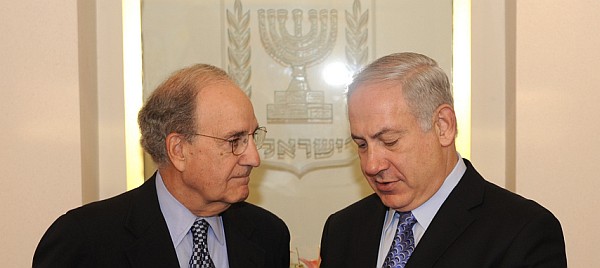
“Senator Mitchell will … work to support the objectives that the President and I believe are critical and pressing in Gaza, to develop a program for humanitarian aid and eventual reconstruction,” said Secretary of State Hillary Clinton on January 22, 2009, the day George Mitchell was named Special Envoy for Middle East Peace.
Since then a stream of political leaders have visited Gaza including: Senator John Kerry, chair of the Foreign Relations Committee, US Congress members Brian Baird and Keith Ellison, the European Union’s high representative for foreign affairs and security policy, Catherine Ashton, the Quartet’s Middle East envoy, Tony Blair, UN Secretary-General Ban Ki-moon, Secretary-General of the Arab League Amer Mousa, and a European Parliamentary Delegation comprised of 55 MEPs and MPs.
So far, the closest Mitchell has come to Gaza is to visit the Kerem Shalom crossing where he participated in an Israeli PR stunt at the end of June.
When he left the Senate, Mitchell said he hoped to become baseball commissioner — he’d turned down an offer from President Clinton to become a Supreme Court justice. He went on to become Chairman of the Walt Disney Company.
After a year and a half as so-called Middle East peace envoy, Mitchell has accomplished less than nothing. He should do himself and the region a favor: salvage a bit of dignity and quit.
This weekend, Chris Patten, the British Conservative politician and former European Commissioner, became the latest high profile figure to do what George Mitchell can’t bring himself to do: visit Gaza.
On a visit to Gaza over the weekend, former EU commissioner, Chris Patten, has called for an end to the blockade of the Strip and for a reassessment of the ‘ridiculous’ policy of isolating Hamas.
At a press conference in the territory on Monday, he called for channels of dialogue with Hamas to be re-opened and stated that the siege of Gaza did not result in a moderate position but in an increase of tensions.
Patten called for the necessity of ending the illegal Israeli settlement expansion in the West Bank and pressed hard for an end the siege of the Gaza Strip, and the application of UN Resolution 1860. His visit coincides with the second visit of the High Representative for Common Foreign and Security Affairs in the European Union, Catherine Ashton, to Gaza who also called on Israel not just to allow more goods into the sector but to fully open Gaza’s borders.
Patten said that as the biggest supporter of the Palestinian people and Israel’s largest economic partner, the EU should play a greater role in the Middle East.
He stated that many of the health problems suffered by residents of the sector were caused by the embargo, which prohibits the entry of medical supplies and prevents patients with certain conditions from travelling to receive medical treatment. Patten visited the director of operations for UNRWA in Gaza, John Ging, as well as several medical sector projects and was briefed on health conditions in the sector.
Every year, the images of a national security state careening out of control, as depicted in Terry Gilliam’s 1985 movie Brazil, become eerily more realistic. In his Ministry of Information, the underlings sneak their entertainment when the overseer steps out of sight, but at the National Counterterrorism Center (a “dumping ground for bad analysts“), entertainment (otherwise known as cable news) is on constant big-screen display.
The Washington Post‘s investigation into “Top Secret America” reveals two sadly predictable tendencies:
1. That the default position inside the US government remains: any problem can be solved if enough money is thrown at it, and
2. the primary responsibility of an investigative reporter dealing with a story like this is supposedly to focus on whether taxpayers’ money is being well-spent and making us safer.
At least 20 percent of the government organizations that exist to fend off terrorist threats were established or refashioned in the wake of 9/11. Many that existed before the attacks grew to historic proportions as the Bush administration and Congress gave agencies more money than they were capable of responsibly spending.
The Pentagon’s Defense Intelligence Agency, for example, has gone from 7,500 employees in 2002 to 16,500 today. The budget of the National Security Agency, which conducts electronic eavesdropping, doubled. Thirty-five FBI Joint Terrorism Task Forces became 106. It was phenomenal growth that began almost as soon as the Sept. 11 attacks ended.
Nine days after the attacks, Congress committed $40 billion beyond what was in the federal budget to fortify domestic defenses and to launch a global offensive against al-Qaeda. It followed that up with an additional $36.5 billion in 2002 and $44 billion in 2003. That was only a beginning.
With the quick infusion of money, military and intelligence agencies multiplied. Twenty-four organizations were created by the end of 2001, including the Office of Homeland Security and the Foreign Terrorist Asset Tracking Task Force. In 2002, 37 more were created to track weapons of mass destruction, collect threat tips and coordinate the new focus on counterterrorism. That was followed the next year by 36 new organizations; and 26 after that; and 31 more; and 32 more; and 20 or more each in 2007, 2008 and 2009.
In all, at least 263 organizations have been created or reorganized as a response to 9/11. Each has required more people, and those people have required more administrative and logistic support: phone operators, secretaries, librarians, architects, carpenters, construction workers, air-conditioning mechanics and, because of where they work, even janitors with top-secret clearances.
The report continues:
Not far from the Dulles Toll Road, the CIA has expanded into two buildings that will increase the agency’s office space by one-third. To the south, Springfield is becoming home to the new $1.8 billion National Geospatial-Intelligence Agency headquarters, which will be the fourth-largest federal building in the area and home to 8,500 employees. Economic stimulus money is paying hundreds of millions of dollars for this kind of federal construction across the region.
It’s not only the number of buildings that suggests the size and cost of this expansion, it’s also what is inside: banks of television monitors. “Escort-required” badges. X-ray machines and lockers to store cellphones and pagers. Keypad door locks that open special rooms encased in metal or permanent dry wall, impenetrable to eavesdropping tools and protected by alarms and a security force capable of responding within 15 minutes. Every one of these buildings has at least one of these rooms, known as a SCIF, for sensitive compartmented information facility. Some are as small as a closet; others are four times the size of a football field.
SCIF size has become a measure of status in Top Secret America, or at least in the Washington region of it. “In D.C., everyone talks SCIF, SCIF, SCIF,” said Bruce Paquin, who moved to Florida from the Washington region several years ago to start a SCIF construction business. “They’ve got the penis envy thing going. You can’t be a big boy unless you’re a three-letter agency and you have a big SCIF.”
SCIFs are not the only must-have items people pay attention to. Command centers, internal television networks, video walls, armored SUVs and personal security guards have also become the bling of national security.
“You can’t find a four-star general without a security detail,” said one three-star general now posted in Washington after years abroad. “Fear has caused everyone to have stuff. Then comes, ‘If he has one, then I have to have one.’ It’s become a status symbol.”
Among the most important people inside the SCIFs are the low-paid employees carrying their lunches to work to save money. They are the analysts, the 20- and 30-year-olds making $41,000 to $65,000 a year, whose job is at the core of everything Top Secret America tries to do.
At its best, analysis melds cultural understanding with snippets of conversations, coded dialogue, anonymous tips, even scraps of trash, turning them into clues that lead to individuals and groups trying to harm the United States.
Their work is greatly enhanced by computers that sort through and categorize data. But in the end, analysis requires human judgment, and half the analysts are relatively inexperienced, having been hired in the past several years, said a senior ODNI official. Contract analysts are often straight out of college and trained at corporate headquarters.
Nine years after the 9/11 attacks, the United States has a bloated national security structure of questionable effectiveness, at fantastic cost, and with very little accountability. Yet the analysis implies that if the system was more efficient and could indeed deliver as promised by making America safer, then this would indeed be a good thing.
But do we need to be safer or simply less afraid?
The explosion in the growth of the national security economy occurred right at the moment that the technology industry was desperate for support. The internet bubble had burst, an IPO no longer offered a path to quick fortunes for companies that had yet to develop an effective business model, so if the stock market was no longer willing to throw mountains of cash at speculative technological innovation, in the post 9/11 economy, the US government quickly became the investor of choice — at least for companies that could make a halfway plausible claim that their niche expertise might in some way enhance US national security.
If greed was the engine of economic growth of the 90s, fear has demonstrated its economic value for most of the last decade. But what neither greed nor fear do is to improve the quality of life. That only happens when we look at the ways our lives are impoverished and address those needs.
The need to feel safer is a need that has in large part been manufactured by those eager to capitalize on the economic value of fear.
Just suppose that after 9/11 George Bush’s response had been this: clean up the mess in New York and Washington, improve security on airlines so no one could hijack a plane with a pocket knife, and then be done with it. Would we not now be living in a much better world?
Perhaps we should be less afraid of those who might attack us than those who are in the business of protecting us. Top secret America looks like the biggest protection racket ever created.
Shir Hever, an economist from the Alternative Information Center, talks to the RealNews Network‘s senior editor, Paul Jay, on the growing and increasingly effective boycott movement.
Shir Hever: Basically, it’s a movement that comes from people who support it not because they love Palestinians. It’s not because they feel a special affinity with the Palestinian people in particular — although that also exists of course — but mostly because these people feel that there is a connection between what happens in Palestine, what happens in the Middle East, and their own lives. Because… Israel is a kind of factory for repression and mechanisms of repression that are being sold to other countries in the world, and mechanisms that are used against Palestinians are often replicated and used against citizens of other countries by their governments because they have already been tested on Palestinians as kind of guinea pigs, if you want. And so the boycott movement is also a way for people to voice their dissatisfaction with their governments. Why are their governments enabling Israel, allowing Israel, to continue to violate international law, to develop and create weapons of mass destruction illegally, to deny Palestinians citizenship and democracy and to incarcerate a million and a half people in the Gaza Strip in conditions of utter poverty where their only means of sustenance is aid from the international community? Why should the international community allow this?…
Paul Jay: So far, the boycott movement, what effect is it having on the Israeli economy?
Hever: The effect is hidden by the Israeli various bureaus of statistics and the manufacturers association for example. There was one survey for example that showed 21% of Israeli exporters reported on average 10% loss of income because of the boycott which was related specifically to the attack on Gaza in 2008-2009. But this report was censored. This report was removed from… was never published, was only leaked to the media once and it’s impossible to get it because the manufacturers association know if that information reaches people who support the boycott movement, that will empower them and give them more confidence to continue their efforts.
This interview is the final part in a three-part interview. Parts one and two are also well worth watching.
Who are the enemies of peace in the Middle East? No list can be comprehensive, but a shortlist should include a few individuals who present themselves as messengers of peace: Barack Obama, George Mitchell, J Street’s Jeremy Ben-Ami, Tony Blair…
In a word, the proponents of the two-state solution have become the enemies of peace.
A young Israeli leader says:
The assumption of the left is that once it hides behind the international border, everything will be permitted. But it’s clear already now that not everything is permitted and that the principle of proportionality is shackling Israel in Gaza — so what will happen in Judea and Samaria [the West Bank]? In fact, it goes even deeper. There is a moral failure here. After all, the left has long since stopped talking about peace and is resorting to a terminology of separation and segregation. They are also convinced that the confrontation will continue even afterward. The result is a solution that perpetuates the conflict and turns us from occupiers into perpetrators of massacres, to put it bluntly. It’s the left that made us a crueler nation and also put our security at risk.
This is Tzipi Hotovely from Likud, the youngest member of the Knesset and a proponent of some radical rethinking on the Israeli-Palestinian conflict. “The taboo that forbids talk about any option other than the two-state solution is almost anti-democratic. It’s like brain-gagging,” says Hotovely.
The one-state solution generally associated with the Israeli right and the settler movement does not usually go by that name. Eretz Yisrael, or Greater Israel, comes in various sizes but to its proponents it is seen as land on which Jews belong and to which Palestinians can be allowed to make no claim. But as Noam Sheizaf describes in this week’s Haaretz magazine cover story, a new trend is emerging on the right presenting a one-state solution that would offer Palestinians equal rights and full citizenship in an expanded Israeli state that includes the whole of the West Bank.
A number of figures on the right are presenting their own versions of this vision and so far they have not formed a political camp, yet many of their observations are based on a political realism that cannot be found among liberal Zionists. Indeed, they expose the fact that the advocates of a two-state solution are not merely victims of wishful thinking; they now bear the primary responsibility for the perpetuation of the conflict.
A one-state solution promoted by diehard Zionists might sound too toxic an idea for any Palestinian to entertain seriously, yet who can currently question the assertion that the prospects for the creation of a sovereign Palestinian state have never looked so bleak?
Perhaps more to the point, it needs to be remembered that the creation of a Palestinian state is and always has been a false promise if regarded as an ultimate goal and not simply a means to an end.
The goal of every legitimate political struggle is the creation of a fair society. Each struggle focuses on the most glaring forms of injustice — discrimination based on class, ethnicity, gender, sexual orientation, nationality, or faith. But as these struggles coalesce around the specific forms of inequality they seek to redress, they often lose sight of their overarching purpose by allowing political means to be turned into political goals. Rather than diluting the power of political elites, one elite ends up making way for another. The fact that a new elite might have closer ties to a wider population will allow it to operate in a more sympathetic context, but sooner or later the core political problem will reemerge: that any majority cannot indefinitely tolerate being governed by a minority whose primary loyalty is to its own narrow interests.
The one-state rightwing Zionists — at least as they are presented in this Haaretz article — are unequivocal in asserting that they refuse to abandon the requirement that Israel remains a Jewish state. What they fail to explain is how in practice Jews and non-Jews would have equal rights if, for instance, Jews retained the privilege enshrined in the Law of Return.
Moshe Arens says: “first of all, we need to take care of the Israeli Arabs who are citizens. That is also essential if we are thinking of giving citizenship to Palestinians from Judea and Samaria [the West Bank]. Only if they see that the Arabs have it good in Israel will they think it might be good for them, too.”
OK. But this begs the question: why is it that 62 years after its creation, Israel has not bridged the gap between its nature as a Jewish state and its claim to be a democratic state? Does its failure to take care of its non-Jewish citizens not expose the inherent contradiction in trying to merge the state’s Jewish and democratic identities?
A single state as envisioned by figures on the Israeli right may be more viable than the two-state solution, but eventually it will have to shed the shackles to which Zionism has always been bound: the idea that there can ever be any legitimacy to any form of ethnic or religious supremacy.
As liberal Zionists and their allies repeatedly — if unpersuasively — proclaim that the implementation of a two-state solution is now a matter of urgency, the explicit urgency is that this is the only way of ensuring that Israel will thwart the “demographic threat” of Jews becoming a minority in the country they insist they must run. At the same time, the creation of a Palestinian state is presented as the means to fulfill the national aspirations of the Palestinian people.
What never gets stated in this narrative is that the two-state solution would be the ultimate concession for Palestinians as it cements the loss of a land which was once their own.
Against the background of Barack Obama’s attempt to defend the idea of “two states for two peoples” in Israel/Palestine, consider a recent talk given by the Palestinian Sufian Abu-Zayda. Abu-Zayda is fifty years old. He was born in the Jabalya refugee camp in northern Gaza, the largest of the Palestinian camps, and he is considered the Palestinian spokesman most fluent in Hebrew, which he learned during the fourteen years that he spent in an Israeli prison on charges of participating in terrorist activities. After his release in 1993, he was one of the senior Fatah leaders in Gaza and was appointed to various positions in the Palestinian government. Among other activities he has been active in the Israeli-Palestinian Geneva Initiative, in which moderates from both sides argue that it is possible to find a just two-state solution.
It was quite surprising, therefore, that Abu-Zayda, in his talk to an Israeli audience, announced that he had changed his mind. Like other Palestinians who spoke to the Israeli media over the last months, he was responding to Prime Minister Benjamin Netanyahu’s speech at Bar Ilan University—itself a response of sorts to President Obama’s June 2009 speech at the University of Cairo. With some drama, Netanyahu had agreed that a Palestinian state should be established in territory of the Land of Israel to the west of the Jordan River. This was a significant change for Netanyahu, whose roots are in the nationalist movement that has given up its earlier slogan—“There are two banks to the Jordan, this one is ours, and so is that one”—but that still demands Israeli rule in the “Greater” Land of Israel west of the Jordan. Commentators talked of a “fissure” on the Israeli Right; it was widely believed that as long as Ben Zion Netanyahu is still alive, his son wouldn’t dare rebel against the nationalist traditions of the family.
But what might have seemed unbelievable a short time ago has become a reality. Netanyahu, at the head of the nationalist, right-wing government with members like Benny Begin (son of Menachem Begin) who have consistently rejected all concessions, has accepted the idea of a Palestinian state.
In his talk at Tel Aviv University, Abu-Zayda responded to what the prime minister had said: “Many thanks to Benjamin Netanyahu. After twenty years of the peace process [since the Madrid Conference in 1991], and after the mutual recognition of Israel and the PLO [in the Oslo Accords], he finally agrees to a Palestinian state.” There was irony in his voice as he continued, “Do you think you are doing us a favor when you agree to two states? No favor at all. From my side, from the Palestinians’ side—let there be one state, not two…. I was introduced to you as Sufian Abu-Zayda from the Jabalya camp, but I’m not from Jabalya. I might have been born there, but my family had been exiled in 1948 from a village named “Breer,” where Kibbutz Bror Hayill now stands, near the Gaza border. If there will be one state, I’ll be happy to rent or buy a house near the kibbutz and live there.” And then Abu-Zayda said in a loud voice, “You are doing yourselves a favor by establishing two states, not us.”
All the Islamic countries are afraid of Israel, and for good reason — because this country is much stronger than all of them put together. We do things to the Palestinians, to Syria, to Lebanon and, reportedly, to Iran that we would never let anyone do to us in a million years — and they can’t stop us. They are extremely reluctant to even try; our military power deters them.
So what more do we want from our enemies before we’ll stop screwing with them? Love? Recognition of the justice of the Zionist cause? An admission that they were wrong all these years and we were right?
If that’s what we’re waiting for, we came to the wrong neighborhood. If we’re going to go on intercepting ships until their sponsors accept our right to keep Gaza under lock and key, we’re going to be engaged in gunboat diplomacy for a long time. If we think we can rule the West Bank Palestinians until they give up even nonviolent resistance, fly spy planes over Lebanon until Hizbullah agrees that we have the right to bear arms but it doesn’t, and bomb enemy nuclear sites until the whole Middle East acknowledges Israel as its sole, rightful nuclear power, then our future here is untenable.
Maybe the United States and Russia can hold sway over their regions, maybe they can have spheres of influence, but a little Jewish state surrounded by 57 Muslim states cannot. Neither our enemies nor our friends will allow us to be a mini-empire, a hegemon, for long. That’s a recipe for escalating, never-ending conflict.
The new cry of gevalt around here is that Israel’s legitimacy is under worldwide attack — but the truth is that the West has accepted the legitimacy of the Jewish state since 1947, and nothing’s changed. As for the Muslim world, it never has and never will accept the legitimacy of the Jewish state — but it has accepted the hard fact of it since the Six Day War.
Between Israel’s legitimacy in the West and deterrent power in the Middle East, we have what we need to survive as a Jewish state within our rightful, democratic borders. But we can’t survive as the neighborhood bully.
Pakistan retains Afghanistan within its sphere of influence, India retains Kashmir, while al Qaeda loses its foothold in the region — this is the potential resolution to a war over which the US and its allies now have little control, writes William Dalrymple.
Internally, the war is viewed primarily as a Pashtun rebellion against a Tajik, Uzbek and Hazara-dominated regime, which has only a fig leaf of Pashtun window-dressing in the person of Karzai. For although Karzai is a Pashtun, under his watch Nato installed the Northern Alliance in Kabul and drove out of power Afghanistan’s Pashtun majority.
In this way we unwittingly took sides in the Afghan civil war that began in the 1970s – siding with the north against the south, the town against the country, secularism against Islam, and the Tajiks against the Pashtuns. We installed a government and trained up an army that in many ways discriminated against the Pashtun majority, and whose top-down constitution allowed for little federalism or regional representation. No matter how much western liberals may dislike the Taliban, they are in many ways the authentic voice of rural Pashtun conservatism, whose wishes are ignored by the government in Kabul and who are largely excluded from power.
Externally the war has now turned, like Kashmir, into an Indo-Pak proxy war in which Nato is really a bit player. Under Karzai, India has established increasing political and economic influence in Afghanistan, opened four regional consulates and provided reconstruction assistance amounting to about $662m. The Pakistani military establishment, already terrified of India turning into a new economic superpower, has always believed it would be suicide to accept an Indian presence in what they regard as their strategic Afghan backyard, and is completely paranoid about the still small Indian presence, rather as the British used to feel about Russians in Afghanistan in the days of the Great Game.
According to Indian diplomatic sources there are still less than 3,600 Indians in Afghanistan, almost all of them businessmen and contract workers; there are only 10 Indian diplomatic officers as opposed to nearly 150 in the UK embassy. Yet The horror of being squeezed in an Indian nutcracker has led the ISI to risk its internal security and coherence – as well as Pakistan’s relationship with its main strategic ally, the US – in order to keep the Taliban in play and its leadership under watch and ISI patronage in Quetta. Indeed the degree to which the ISI has been controlling the Afghan Taliban has only just emerged. A report by Matt Waldman of the Carr Centre for Human Rights at Harvard, based on interviews with 10 former Taliban commanders, documented how the ISI “orchestrates, sustains and strongly influences” the Taliban, and that the ISI are even “represented as participants or observers on the Taliban supreme leadership council, the Quetta Shura”.
Karzai’s new deal with the Pakistanis, and his obvious intention to try to reach some accommodation with the Haqqani wing of the Taliban through Pakistan’s mediation, therefore represents a major strategic victory for the Pakistani military and a serious diplomatic defeat for India – though it remains to be seen if the ISI really can deliver the Taliban, who today were proclaiming their unwillingness to negotiate with Karzai. It also remains to be seen whether the Pakistani military can defend their own country from the jihadi Frankenstein’s monster they have created.
This dangerous new situation does offer some opportunities. Until now India, relishing its ever-growing international status, has understandably and angrily resisted any linkage between an Afghan settlement and Indo-Pak peace, which would involve finding a final agreement on Kashmir. Yet the linkage is already there, and there are many clear benefits for India if it is prepared to accept ground realities and negotiate.
The stage is now open for a deal whereby India could agree to minimise its presence in Afghanistan – which it could accept as Pakistan’s sphere of influence – in return for Pakistan withdrawing its longstanding sponsorship of the Kashmir jihad, which it could accept as India’s domain. To satisfy Nato, an undertaking by Pakistan to drive al-Qaida from the region would also need to be included.
At least, this might be the shape of a deal unless Gen David Petraeus and Senator Carl Levin have their way.
The new American military commander in Afghanistan, Gen. David H. Petraeus, is pushing to have top leaders of a feared insurgent group designated as terrorists, a move that could complicate an eventual Afghan political settlement with the Taliban and aggravate political tensions in the region.
General Petraeus introduced the idea of blacklisting the group, known as the Haqqani network, late last week in discussions with President Obama’s senior advisers on Pakistan and Afghanistan, according to several administration officials, who said it was being seriously considered.
Such a move could risk antagonizing Pakistan, a critical partner in the war effort, but one that is closely tied to the Haqqani network. It could also frustrate the Afghan president, Hamid Karzai, who is pressing to reconcile with all the insurgent groups as a way to end the nine-year-old war and consolidate his own grip on power.
The CIA has lost one of its most valued former spies.
Iranian nuclear scientist Shahram Amiri, who defected to the US, is now on his way back home to Tehran after a very messy and public re-defection. ABC News obtained exclusive photos of Amiri leaving Washington’s Dulles International Airport late Tuesday night on a commercial flight to Doha, Qatar, en route to Iran.
Amiri was escorted directly to the jetway entrance by a security officer. He was flanked by what appeared to be a U.S. official and a representative from the Pakistani Embassy in Washington. He boarded the Qatar Airways flight ahead of the other passengers, and spoke only to his companions. After more than a year in the US, Amiri claimed he had never really defected. In a series of videos released on the internet, he insisted that he had been kidnapped, drugged and tortured by the CIA. The US flatly denies that it ever held Amiri against his will.
The Washington Post columnist and unofficial spokesman for the CIA, David Ignatius, attributes Amiri’s departure to a change of heart.
The CIA has struggled for decades with how to handle defectors better so that they are happy in a strange new land. The agency periodically tries to improve its tradecraft in working with these skittish guests. But defectors are trouble. They are like small boats in a heavy sea, not sure which way is home.
But Ignatius concedes that it is hard to understand why the Iranian scientist would have defected while leaving his wife and child behind. That detail, along with the deaths of Ardeshire Hassanpour and Masoud Alimohammadi, might seem to reinforce the claim that Amiri was in fact abducted and that all three cases be seen in the context of a US-backed, Israeli-led covert war targeting Iran’s nuclear programme.
What seems more likely however, is that the Iranians took the CIA for a ride — that Amiri’s “defection” took place so the Iran could glean more about the extent of American knowledge about its nuclear program and that the information he gathered was worth more valuable than the information he gave away.
When voters in Pennsylvania head to the polls this November to elect a new senator, Bill Kristol and his newly launched outfit want to make sure that the issue uppermost in the voters’ considerations is how great a friend of Israel their next senator will be — this is the first assignment adopted by the Emergency Committee for Israel (“we’re the pro-Israel wing of the pro-Israel community,” says Kristol) which is running this ad on Fox News and CNN:
This ad follows in the footsteps of an ad run earlier this year (before Congressman Joe Sestak won the Democratic primary) which says “keeping Israel safe helps keep America safe.”
For people like Bill Kristol and the rest of the gang that makes up the Israel lobby, keeping Israel safe keeps America safe, is a strong expression of the unbreakable bond that Israel’s Democratic and Republican subordinates all like to celebrate. Yet for others — and this may turn out to include a plurality of Pennsylvania voters — this is a message that has more than a hint of a mafia protection racket threat. If you want to sleep comfortably in Philadelphia or Pittsburgh, you’d better take care of Israel. It’s quite a sinister message.
Meanwhile, as Kristol’s emergency committee works to shore up the unbreakable bond between Pennsylvania and Israel, it seems like another bond — one they might have imagined would need no defense — is showing signs of disrepair.
In a report on discrimination against Palestinians in Jerusalem, Fox News veered dangerously off message. (H/t Matt Duss at Think Progress.)
When Joe Sestak won the Democratic primary in May, Jon Delano, political director of KDKA-TV in Pittsburgh, noted: “Sestak has done this all on his own. He has had no support from the Washington crowd. None whatsoever. This is a victory that he can savor all by himself.”
As the mid-term elections approach, the Israel lobby imagines it can leverage disenchantment with Obama in support of its cause, yet to the extent that the election is a contest between Washington insiders and outsiders, the lobby, as a pillar of the Washington establishment, will find itself on the wrong side of the divide.
Even as they denounce reports of covert talks from news sources such as the New York Times and Al-Jazeera, high-ranking insurgents have begun very cautiously admitting for the first time that peace negotiations are not totally out of the question. “The Taliban will decide about an option other than war when the time comes that would favor such a decision,” says one senior Taliban provincial governor.
Washington is eager to make that happen — perhaps more eager than most Americans realize. “There was a major policy shift that went completely unreported in the last three months,” a senior administration official tells Newsweek, asking not to be named speaking on sensitive issues. “We’re going to support Afghan-led reconciliation [with the Taliban].” U.S. officials have quietly dropped the Bush administration’s resistance to talks with senior Taliban and are doing whatever they can to help Karzai open talks with the insurgents, although they still say any Taliban willing to negotiate must renounce violence, reject Al Qaeda, and accept the Afghan Constitution. (Some observers predict that those preconditions may eventually be fudged into goals.) One particular focus is the “1267 list,” which was established in 1999 by the U.N.’s Al-Qaida and Taliban Sanctions Committee. It takes its name from U.N. Security Council Resolution 1267. “There are 137 Taliban on the list,” says the senior administration official. “It’s a list of people who cannot travel, cannot have funds…We’re taking a very hard look at the 1267 list right now, looking at it on a case-by-case basis. We’ve been doing it for months.”
Afghan President Hamid Karzai plans to seek the removal of up to 50 former Taliban officials from a U.N. terrorism blacklist — more than a quarter of those on the list — in a gesture intended to advance political reconciliation talks with insurgents, according to a senior Afghan official.
The Afghan government has sought for years to delist former Taliban figures who it says have cut ties with the Islamist movement. But the campaign to cull names from the list, which imposes a travel ban and other restrictions on 137 individuals tied to the Taliban, has taken on renewed urgency in recent weeks as Karzai has begun to press for a political settlement to Afghanistan’s nearly nine-year-old conflict.
Much as Iraq was Bush’s war, Afghanistan has become Obama’s war. Yet the president clearly wants nothing more than to rid himself of his war. Obama has prolonged and escalated a conflict in which he himself manifestly does not believe. When after months of deliberation (or delay) he unveiled his Afghan “surge” in December 2009, the presidential trumpet blew charge and recall simultaneously. Even as Obama ordered more troops into combat, he announced their planned withdrawal “because the nation that I’m most interested in building is our own.”
The Americans who elected Obama president share that view. Yet the expectations of change that vaulted him to the presidency went well beyond the issue of priorities. Obama’s supporters were counting on him to bring to the White House an enlightened moral sensibility: He would govern differently not only because he was smarter than his predecessor but because he responded to a different — and truer — inner compass.
Events have demolished such expectations. Today, when they look at Washington, Americans see a cool, dispassionate, calculating president whose administration lacks a moral core. For prosecution exhibit number one, we need look no further than the meandering course of Obama’s war, its casualties and costs mounting without discernible purpose.
Bacevich concludes by asking:
Who is more deserving of contempt? The commander-in-chief who sends young Americans to die for a cause, however misguided, in which he sincerely believes? Or the commander-in-chief who sends young Americans to die for a cause in which he manifestly does not believe and yet refuses to forsake?
Any president who sends young Americans to die for no good reason is undoubtedly deserving great contempt, yet to observe that Obama’s war is a war he doesn’t believe in, begs an even more troubling question: Does Obama believe in anything?
How can a man whose ambitions, character, strengths and weaknesses were all hard to measure before he entered office, be even harder to read now that he has acquired a presidential track record — relatively short as that might be?
While George Bush might have entered office with a transparent sense of entitlement, what propelled Obama? Were his ambitions wrecked by impossibly difficult circumstances, or did they never hold any more substance than the nebulous promises of his campaign?
On the basis of our stated war objective — “[W]e cannot allow Al Qaeda or other transnational extremists to once again establish sanctuaries from which they can launch attacks on our homeland or on our allies,” as General Petraeus put it in his confirmation hearing at the end of June 2010 — success in Afghanistan means increasingly little. For al-Qaeda, Afghanistan was never significant in itself. It was always a place of (relative) convenience. If the U.S. were to bar access to it, there are so many other countries to choose from.
After all, what’s left of the original al-Qaeda — estimated by U.S. intelligence experts at perhaps 300 leaders and operatives — seems to have established itself in the Pakistani tribal borderlands, a place that the U.S. military could hardly occupy, no matter how many CIA drone attacks were sent against it. Moreover, U.S. intelligence experts increasingly suggest that al-Qaeda is in the process of fusing with local jihadist groups in those borderlands, Yemen, Somalia, North Africa, and elsewhere; that it is increasingly an amorphous “dispersed network,” or even simply an idea or crude ideology, existing as much online as anywhere in particular on the ground.
In this sense — and this is the only reason now offered for the American presence in Afghanistan — a counterinsurgency “success” there would be meaningless unless, based on the same strategic thinking, the U.S. then secured Pakistan, Somalia, Yemen, and a potential host of other places. In other words, the U.S. military would have to do one thing the Bush years definitively proved it couldn’t do: impose a Pax Americana on planet Earth.
This website or its third-party tools use cookies, which are necessary to its functioning. By closing this banner, you agree to the use of cookies.







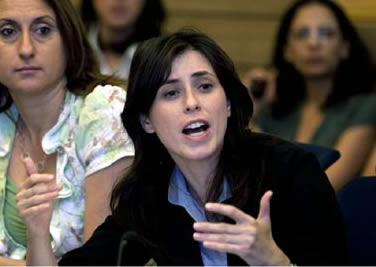 This is Tzipi Hotovely from Likud, the youngest member of the Knesset and a proponent of some radical rethinking on the Israeli-Palestinian conflict. “The taboo that forbids talk about any option other than the two-state solution is almost anti-democratic. It’s like brain-gagging,” says Hotovely.

 The CIA has lost one of its most valued former spies.