Category Archives: Issues

Iran is no existential threat

Iran is no existential threat

After months of halfhearted, fruitless attempts at engagement, the United States and its European partners are effectively re-enacting George W. Bush’s Iran policy. In 2006, after Iran had ended a nearly two-year voluntary suspension of uranium enrichment, then-U.S. president pushed the International Atomic Energy Agency (IAEA) to send Iran’s nuclear file to the U.N. Security Council, which duly imposed sanctions on the Islamic Republic. But the sanctions did not prove “crippling,” as Bush had hoped: Iran continued to expand its nuclear infrastructure, and the risks of a military confrontation between the United States and Iran climbed.

Unfortunately, Barack Obama’s administration has decided to repeat this sorry history. Last Friday, the IAEA passed a resolution urging Iran to send most of its current stockpile of low-enriched uranium abroad. It also reported Iran once again to the Security Council. Iran has wasted no time in upping the ante rather than backing down, saying it would restrict cooperation with the IAEA only to those measures “statutorily” required. Iranian President Mahmoud Ahmadinejad also announced that the Islamic Republic would build 10 new enrichment facilities in coming years. He later added, “Iran will produce fuel enriched to a level of 20 percent,” the level required for Iran’s research reactor in Tehran. This would be well above the 3 to 4 percent level that Iran has already achieved in producing low-enriched uranium and would take Iran closer to the 90 percent-plus level required for weapons-grade fissile material. [continued…]

Facebooktwittermail

Was Russian secret service behind leak of climate-change emails?

Was Russian secret service behind leak of climate-change emails?

The leaked emails, Professor van Ypersele said, will fuel scepticism about climate change and may make agreement harder at Copenhagen. So the mutterings have prompted the question: why would Russia have an interest in scuppering the Copenhagen talks?

This time, if it was indeed the FSB behind the leak, it could be part of a ploy to delay negotiations or win further concessions for Moscow. Russia, along with the United States, was accused of delaying Kyoto, and the signals coming from Moscow recently have continued to dismay environmental activists.

When Ed Miliband, the Secreatary of State for Climate Change, visited Moscow this year, he had meetings with high-level Russian officials and pronounced them constructive. But others doubt that Russia has much desire to go green.

Up in the far northern reaches of Russia, there are stretches of hundreds of miles of boggy tundra; human settlements are few and far between. Often, the only inhabitants are indigenous reindeer herders, who in recent years have reported that their cyclical lifestyle is being affected by the climate: they have to wait until later in the year to migrate to winter camps, because the rivers do not freeze as early as they used to. In spring, the snow melts quickly and it becomes harder for reindeer to pull sleds.

Much of Russia’s vast oil and gas reserves lie in difficult-to-access areas of the far North. One school of thought is that Russia, unlike most countries, would have little to fear from global warming, because these deposits would suddenly become much easier and cheaper to access. [continued…]

The stolen e-mails: has ‘climategate’ been overblown?

The controversy over e-mails stolen from global-warming researchers at the Climatic Research Unit (CRU) at Britain’s University of East Anglia has become so divisive that there is even disagreement over what to call it.

Skeptics of global warming, who have long considered climate change a fraud, refer to the incident as “Climategate,” with obvious intimations of scandal and cover-up. Advocates of action on warming call it “Swifthack,” a reference to the 2004 character attacks on presidential candidate Senator John Kerry by the group then known as Swift Boat Veterans for Truth — in other words, an invented scandal propagated by conservatives and the media that does nothing to change the scientific case for climate change. [continued…]

The climate denial industry is out to dupe the public. And it’s working

The denial industry, which has no interest in establishing the truth about global warming, insists that these emails, which concern three or four scientists and just one or two lines of evidence, destroy the entire canon of climate science.

Even if you were to exclude every line of evidence that could possibly be disputed – the proxy records, the computer models, the complex science of clouds and ocean currents – the evidence for man-made global warming would still be unequivocal. You can see it in the measured temperature record, which goes back to 1850; in the shrinkage of glaciers and the thinning of sea ice; in the responses of wild animals and plants and the rapidly changing crop zones.

No other explanation for these shifts makes sense. Solar cycles have been out of synch with the temperature record for 40 years. The Milankovic cycle, which describes variations in the Earth’s orbit, doesn’t explain it either. But the warming trend is closely correlated with the accumulation of heat-trapping gases in the atmosphere. The impact of these gases can be demonstrated in the laboratory. To assert that they do not have the same effect in the atmosphere, a novel and radical theory would be required. No such theory exists. The science is not fixed – no science ever is – but it is as firm as science can be. The evidence for man-made global warming remains as strong as the evidence linking smoking to lung cancer or HIV to Aids. [continued…]

Why Copenhagen may be a disaster

Physics has set an immutable bottom line on life as we know it on this planet. For two years now, we’ve been aware of just what that bottom line is: the NASA team headed by James Hansen gave it to us first. Any value for carbon dioxide (CO2) in the atmosphere greater than 350 parts per million is not compatible “with the planet on which civilization developed and to which life on earth is adapted.” That bottom line won’t change: above 350 and, sooner or later, the ice caps melt, sea levels rise, hydrological cycles are thrown off kilter, and so on.

And here’s the thing: physics doesn’t just impose a bottom line, it imposes a time limit. This is like no other challenge we face because every year we don’t deal with it, it gets much, much worse, and then, at a certain point, it becomes insoluble — because, for instance, thawing permafrost in the Arctic releases so much methane into the atmosphere that we’re never able to get back into the safe zone. Even if, at that point, the U.S. Congress and the Chinese Communist Party’s Central Committee were to ban all cars and power plants, it would be too late. [continued…]

Facebooktwittermail

U.S. man accused of helping plot Mumbai attack

U.S. man accused of helping plot Mumbai attack

An American at the center of an international terrorism investigation has been charged with helping plot the 2008 rampage in Mumbai, India, that left 163 people dead, according to a Justice Department complaint unsealed on Monday.

The suspect, David C. Headley of Chicago, is accused of helping identify targets for a Pakistan-based terrorist group called Lashkar-e-Taiba, whose two-day attack on luxury hotels, a popular restaurant, a Jewish community center and a crowded train station brought India’s financial capital to a halt and shocked the world. The complaint described Mr. Headley’s repeated scouting visits to the sites nearly two years before the attacks, which have reignited tensions between India and Pakistan.

The authorities say that among his conspirators was Ilyas Kashmiri, regarded by Western officials as one of the most dangerous Islamic militants operating in Pakistan’s restive tribal areas.

The charges, including six counts of conspiracy to bomb public places and to murder and maim, significantly expanded the government’s case against Mr. Headley, 49. And his profile — he has roots in the United States and links to high levels of the Pakistani government and military — makes him a highly unusual terror suspect. [continued…]

Editor’s Comment — What would make Headley truly unusual would be if there really was such a person as a typical terror suspect.

Facebooktwittermail

The third Viva Palestina Gaza convoy leaves London

“What Viva Palestina have achieved on their previous convoys has been incredible. Not only did they break the siege on Gaza, but they brought much needed aid, and solidarity on a massive international scale. The efforts of everyone from right across the world who took part in the previous convoy’s by giving up their time to drive to the stricken region of Gaza should be fully commended.

“To everyone taking part in the 3rd Viva Convoy, I wish you all the very best of luck, and your efforts for the people in Gaza just warms my heart. You bring hope, solidarity, peace, and love from right across the world. I am with you all the way in spirit.” — Noam Chomsky

Facebooktwittermail

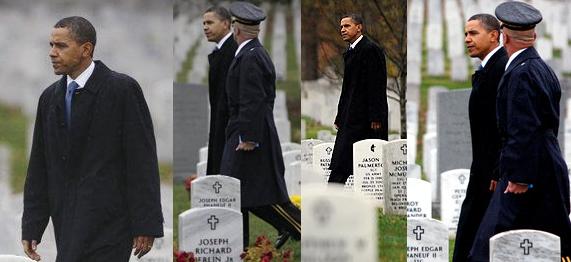
Obama wanted a surge, he’s getting a surge, and it feels good

Obama wanted a surge, he’s getting a surge, and it feels good

Mine might not be a headline the New York Times would choose, but that’s the story they tell under their flatly descriptive: “How Obama Came to Plan for ‘Surge’ in Afghanistan.”

The narrative reads like a script for NBC’s “West Wing” as it dramatises Obama’s deliberative process and that seems to have been the object of the exercise for this stellar team of reporters: paint a picture of presidential solemnity that will inspire confidence in how Obama makes decisions and thereby drum up a bit of good old-fashioned blind-faith in the presidency.

If there is no inescapable logic to the idea that a faster surge will enable a swifter withdrawal, then — the Times would have its readers believe — we shouldn’t worry our little heads about that because our fabulously diligent president has performed an operation of executive intelligence that renders all further consideration superfluous.

In a similar vein I’ll spare readers here the tedium of wading through a 4,660-word article and pick out some of the highlights. Actually, to my eye there is really only one point of substance:

Mr. Obama and his advisers … considered options for stepping up the pursuit of extremists in Pakistan’s border areas. He eventually approved a C.I.A. request to expand the areas where remotely piloted aircraft could strike, and other covert action. The trick would be getting Pakistani consent, which still has not been granted.

For “expand the areas” read: Baluchistan.

If getting Pakistani consent to open a new front in the war simply comes down to diplomatic finesse, then yes, you could call it a “trick” managing to get those instransigent Pakistanis to do the right thing.

In reality, it is merely the imperatives of fluent story-telling that compels the Times to glide over this important detail in the much larger and grimmer story of the war. Understanding why Baluchistan represents a red line that Pakistan refuses to abandon is something that Washington might grasp only when it’s too late.

The matter of most importance both for this administration and for the New York Times has less to do with people, places, history and geography, than it does with high-value words. Words like “surge”.

Obama wants to push in hard so he can pull out fast.

A three-month strategic review thus produced a choreographic solution:

The plan, called Option 2A, was presented to the president on Nov. 11. Mr. Obama complained that the bell curve would take 18 months to get all the troops in place.

He turned to General Petraeus and asked him how long it took to get the so-called surge troops he commanded in Iraq in 2007. That was six months.

“What I’m looking for is a surge,” Mr. Obama said. “This has to be a surge.”

That represented a contrast from when Mr. Obama, as a presidential candidate, staunchly opposed President Bush’s buildup in Iraq. But unlike Mr. Bush, Mr. Obama wanted from the start to speed up a withdrawal as well. The military was told to come up with a plan to send troops quickly and then begin bringing them home quickly.

On November 29, after winning the approval of all his immediate advisers, the president moved into action:

Mr. Obama then went to the Situation Room to call General McChrystal and Ambassador Eikenberry. The president made it clear that in the next assessment in December 2010 he would not contemplate more troops. “It will only be about the flexibility in how we draw down, not if we draw down,” he said.

Two days later, Mr. Obama flew to West Point to give his speech. After three months of agonizing review, he seemed surprisingly serene. “He was,” said one adviser, “totally at peace.”

Obama wanted a surge, he’s getting a surge, and it feels good — at least for now.

Facebooktwittermail

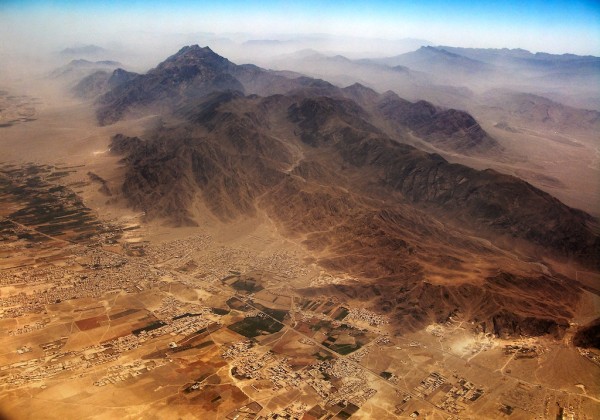
Separatists, Islamists and Islamabad struggle for control of Pakistani Balochistan

Separatists, Islamists and Islamabad struggle for control of Pakistani Balochistan

To say that the U.S.-led invasion and occupation of Afghanistan in October 2001 shook Pakistan to its core would be an understatement. Since then, the war in Afghanistan has spilled over into Pakistan on multiple levels. The escalating cycle of violence between Pakistani security forces and a patchwork of tribal militants, particularly the Tehrik-e-Taliban Pakistan (TTP) and foreign fighters aligned with the Taliban and al-Qaeda in the Federally Administered Tribal Areas (FATA) and the North-West Frontier Province (NWFP) is a case in point. Many observers of Pakistani affairs have used the deteriorating situation in the tribal agencies along the Afghanistan-Pakistan frontier as a bellwether of future trends in Pakistan. In this context, it is no surprise that events in Pakistan’s tribal areas seem to draw the most attention. Yet Pakistan’s Balochistan province is also beginning to draw interest as a center of Taliban and al-Qaeda activity.

Reports that the U.S. is seeking Pakistan’s approval for expanding its controversial drone campaign against targets in Balochistan – a clear red line for Pakistan – have raised serious concerns in Islamabad about Washington’s ultimate intentions (The News, [Islamabad], September 29). As the Obama administration escalates its military campaign in Afghanistan, Pakistani leaders have expressed deep concerns about the potential destabilization of Balochistan resulting from the intensified fighting expected in Afghanistan in the coming months (The Nation [Lahore], November 27). As if these concerns were not enough, Balochistan remains a hotbed of ethno-nationalist militancy, drug smuggling, and organized crime. Balochistan is also in the throes of a refugee crisis that has been largely ignored. The confluence of these trends – which indirectly or directly reinforce each other – is making an already dangerous situation worse with severe implications for Pakistan and the wider region. [continued…]

Facebooktwittermail

Obama’s ideal partner: Turkey

Obama’s ideal partner: Turkey

U.S. President Barack Obama laid out his new Afghanistan strategy on Tuesday night by ordering an additional 30,000 US forces to the country.

While the majority of the analysis and discussion in Washington has centered on the levels of US forces or the president’s reasoning for it, the president emphasized that the “burden [in Afghanistan] is not ours alone to bear.” Declaring that not only is NATO’s credibility on the line, but that the security of the US and all of its allies are at stake, the president invoked the international consensus on Afghanistan that led to a 43-nation coalition that has operated in the country since the attacks on Sept. 11, 2001, to sell his new strategy. Yet the reality is that this international coalition is waning, not surging, and is in desperate need of a regional champion that can serve as a model partner for the US in Afghanistan. Obama’s ideal partner is Turkey.

Consider the facts: Turkey boasts the second largest military in NATO after only the US and the largest in Europe. Turkey has been a close American bilateral and NATO ally for more than 60 years. In addition to being a member of almost every European organization, Turkey is a UN Security Council member, a member of the G-20, has successfully pushed Ekmeleddin İhsanoğlu as the secretary-general of the Organization of the Islamic Conference (OIC) and is one of the few examples of a fully functioning Muslim-majority democracy in the Middle East. On top of all of this, Ankara has close historic ties with Afghanistan that date back to the 1920s when the founder of the modern republic, Atatürk, served as a model for modernization that collapsed only after great power interference in Kabul carved up the country. Often referred to as Afghanistan’s “closest neighbor without borders,” Turkey also shares considerable cultural, ethnic and linguistic links that make it an ideal partner for the US to work with. [continued…]

Facebooktwittermail

Iran will not quit treaty, its nuclear chief asserts

Iran will not quit treaty, its nuclear chief asserts

Urging moderation after a week of harsh rhetoric over Iran’s nuclear program, the head of the country’s nuclear agency emphasized Saturday that Iran would not seek to pull out of the international Nuclear Nonproliferation Treaty, Iran’s state-run Press TV reported.

The comments by Ali Akbar Salehi, the head of Iran’s Atomic Energy Organization, came just a day after the government ratcheted up tensions with the West by saying that it would keep the details of 10 planned uranium enrichment sites secret until six months before they would become operational.

The announcement on Nov. 29 that Iran would seek to build the new sites was taken as defiance of a resolution by the United Nations’ nuclear agency pushing Iran to halt all uranium enrichment activity immediately. Several hard-line members of the Iranian Parliament went even further, demanding that Iran pull out of the nonproliferation treaty and stop complying with international inspections under the agreement.

On Saturday, Mr. Salehi sought to assure that Iran had no interest in pulling out of the treaty, and he implied that any other suggestion was an attempt by Western countries to force Iran into a corner. “I think the West is trying to force us out of the N.P.T.,” he was quoted as saying on the Press TV Web site. [continued…]

Facebooktwittermail

The Invention of the Jewish People

Shlomo Sand interviewed on Al Jazeera, speaking about The Invention of the Jewish People

Book review: Shlomo Sand’s The Invention of the Jewish People

Sand traces how Zionist ideology drove the project of Jewish nationalism by turning Judaism “into something hermetic, like the German Volk …” (255). He argues that history and biology were enlisted “to bind together the frangible secular Jewish identity.” Together, these engendered an “ethnonationalist historiography” which was typified by the mid-19th century German Jewish historian Heinricht Graetz and his friend Moses Hess, who “needed a good deal of racial theory to dream up the Jewish people” (256).

According to Sand, the destruction by the Romans of the Second Temple in 70 AD left the indigenous Jewish population of Judea and Samaria in place. “[T]he Romans never deported entire peoples. It did not pay to uproot the people of the land, the cultivators of produce, the taxpayers” (130). Furthermore, at that time there were already Jewish communities numbering up to four million persons in Persia, Egypt, Asia Minor and elsewhere (145). Palestine’s status as the unique “ancestral homeland” of the Jews collapses together with the myth of David and Solomon’s imposing kingdom.

Against the ethno-biological concept of a Jewish people — a “race” — whose linear descendants returned from exile to (re)found today’s Israel, Sand posits a religious community proliferating throughout and beyond the Mediterranean region by means of proselytism and conversion. He offers a detailed rebuttal of the conventional wisdom whereby “Judaism was never a proselytizing religion,” a view disseminated by historian Martin Goodman and others (150, note 42).

Most importantly, he concentrates attention on Khazaria, that “Strange Empire” that flourished in the Caspian region between the seventh and tenth centuries AD. By the eighth century the Khazars had adopted Hebrew as their sacred and written tongue, and “[a]t some stage between the mid-eighth and mid-ninth centuries, the[y] … adopted Jewish monotheism” (221). Sand speculates that this conversion was calculated to save them from absorption into either the Roman or the Islamic empires. The Khazars, he contends, engendered those Askhenazi Jews of central and eastern Europe who would later invent the myths of Zionism to justify their colonization of Palestine, a land to which they had no “ethnic” connection and where they remain the dominant elite. [continued…]

Facebooktwittermail

Ethnic cleansing of Jerusalem while Israel implements a fake settlement freeze

Ethnic cleansing of Jerusalem while Israel implements a fake settlement freeze

Ever since Hillary Clinton officially declared the peace process dead and buried — well, her precise words were that Israel was making “unprecedented” concessions on the issue of settlements — the settlement freeze-hoax has hardly seemed worth tracking. Still, a couple of items from the last few days are noteworthy.

First, Benjamin Netanyahu’s reassurance offered to leaders of Jewish communities in “Judea and Samaria” (the Israeli occupied West Bank): “This order [to freeze new housing construction] is one-time only and it limits the duration of the suspension. There are nine months and three weeks left. Once the suspension has expired, we will continue to build.”

Then, the Jerusalem Post reported:

Strategic Affairs Minister Moshe Ya’alon, who voted in favor of the freeze last week as a member of the security cabinet, warned Thursday that if it continued beyond the 10-month period, ministers would begin to resign.

Ya’alon’s comments reflected earlier claims by Minister-without-Portfolio Bennie Begin, in which Begin promised that at the end of the 10-month period, building would begin “at a faster pace than before the freeze.”

Meanwhile, Haaretz reported on the massive increase in the pace of the ethnic cleansing of Jerusalem — part of the effort to solidify Israel’s claim to the city as an “undivided” Jewish capital.

Last year set an all-time record for the number of Arab residents of East Jerusalem who were stripped of residency rights by the Interior Ministry. Altogether, the ministry revoked the residency of 4,577 East Jerusalemites in 2008 – 21 times the average of the previous 40 years.

In the first 40 years of Israeli rule over East Jerusalem combined, from 1967 to 2007, the ministry deprived only 8,558 Arabs of their residency rights – less than double the number who lost their permits last year alone. Thus of all the East Jerusalem Arabs who have lost their residency rights since 1967, about 35 percent did so in 2008.

According to the ministry, last year’s sharp increase stemmed from its decision to investigate the legal status of thousands of East Jerusalem residents in March and April, 2008. The probe was the brainchild of former interior minister Meir Sheetrit (Kadima) and Yaakov Ganot, who headed the ministry’s Population Administration.

The ministry said the probe uncovered thousands of people listed as East Jerusalem residents but were no longer living in Israel, and were therefore stripped of their residency. Most of those who lost their residency for this reason did not just move from Jerusalem to the West Bank, but were actually living in other countries, the ministry’s data shows.

Those deprived of their residency included 99 minors under the age of 18.

Attorney Yotam Ben-Hillel of Hamoked: Center for the Defense of the Individual said the 250,000 Arab residents of East Jerusalem have the same legal status as people who immigrated to Israel legally but are not entitled to citizenship under the Law of Return.

“They are treated as if they were immigrants to Israel, despite the fact that it is Israel that came to them in 1967,” he said.

A resident, unlike a citizen, can be stripped of his status relatively easily. All he has to do is leave the country for seven years or obtain citizenship, permanent residency or some other form of legal status in another country, and he loses his Israeli residency automatically.

Once a Palestinian has lost his residency, even returning to Jerusalem for a family visit can be impossible, Ben-Hillel said. Moreover, he said, some of those whose residency Israel revoked may not have legal status in any other country, meaning they have been made stateless.

“The list may include students who went for a few years to study in another country, and can now no longer return to their homes,” he said.

Officials at Hamoked, which obtained the ministry data via the Freedom of Information Act, said they were concerned that some of those who lost their residency rights may not even know it.

“The phenomenon of revoking people’s residency has reached frightening dimensions,” said Dalia Kerstein, Hamoked’s executive director. “The Interior Ministry operation in 2008 is just part of a general policy whose goal is to restrict the size of the Palestinian population and maintain a Jewish majority in Jerusalem. The Palestinians are natives of this city, not Johnny-come-latelys.”

Sheetrit, however, insisted that the operation was necessary. “What we discovered is just the tip of the iceberg,” he said. “The State of Israel pays billions of shekels a year in stipends to people who don’t even live here. We sent notices to every one of them about the intention to revoke their residency; we gave them time to appeal. Those who appealed weren’t touched.”

The ministry data shows that 89 Palestinians got their residency back after appealing. Sheetrit said the probe revealed very serious offenses – such as 32 people listed as living at a single address that did not even exist.

Facebooktwittermail

There is a tremendous struggle to be waged, to force Israeli introspection, and change

There is a tremendous struggle to be waged, to force Israeli introspection, and change

I want to talk about a little bit of history, not too much, and then I want to talk about where I think BDS fits in to where we’re going in the struggle for justice, and why I think it’s going to work.

If you look at the history of Palestine over the past 62 years, ever since the destruction of much of Palestine and the establishment of the state of Israel on its ashes, I think it can be divided roughly into three phases of roughly 20 years. The first phase was from 1948 to 1967, that was the establishment of Israel, the ethnic cleansing of 90 percent of the population from inside the boundaries of what became Israel, the systematic destrucitoin of 500 towns and villages, and the exile of the indigenous population of the country. And of course the remaining Palestinians inside Israel subjected to military rule and to continued ethnic cleansing and removal from their land.

The second phase, beginning in 1967 with Israel’s 3-fold expansion, its conquest of Egypts’ Sinai peninsula, of southwest Syria, of the West Bank and Gaza Strip, was really the heyday, the era of maximum Israeli confidence, and the moment in which Zionism as we know it today became rooted in the American Jewish community. Before 1967 American Jews had for the most part not been captured by this ideology of Zionism and the virulent and racist nationalism that accompanies it. For Palestinians in the West Bank and Gaza Strip, it was the beginning of long occupation and colonization that continues to this day. It was also, from Israel’s perspective, a period of what I call a luxury occupation. The Palestinians in the West Bank and Gaza Strip were relatively quiescent, they were a source of cheap labor, Israelis allowed themselves to travel freely throughout the occupied territories, and it was bliss, it was a situation where Israelis said well, this is fine, we can stay like this as we build settlements, there’s no pressure on us to do anything, we don’t have to formally annex the West Bank and Gaza Strip, which would require us to give civil rights and voting rights to the Palestinians living there, so we just keep things as they are. [continued…]

Facebooktwittermail

Imposing idiot sanctions on Iran is a direct route to war

Imposing idiot sanctions on Iran is a direct route to war

What is the difference between Iraq, Afghanistan and Iran? The answer, future historians may relate, is none. At the dawn of the 21st century, all three states were ruled by nasty undemocratic regimes to which America and its allies took exception. Antagonism began with hectoring ostracism. This led to economic sanctions, diplomatic isolation and bloodcurdling threats of “other measures”. Finally a pretext was drummed up for military intervention, for bombing, invasion, occupation and appalling destruction.

Will Iran really be on this list? At present the west, covered in blood and expense, is trying to leave Iraq and Afghanistan, yet at the same time it stumbles into an identical trap in Iran.

The casus belli is the same. There is a declared ongoing threat and this is inextricably linked to a “humanitarian” need for regime change. In Afghanistan the trigger was the harbouring of Osama bin Laden. In Iraq it was a tenuous claim that Saddam possessed a nuclear capability and was preparing to use missiles against western targets. [continued…]

Facebooktwittermail

‘People woke up, and they were gone’

‘People woke up, and they were gone’

The U.S. military called it shock and awe, and it began on March 21, 2003 — 8:09 p.m., to be exact. It concluded here with a sigh. No one quite remembers when the Americans withdrew from Forward Operating Base Summers.

“One morning they left, and they never came back,” said Osama Majid, a vendor on the road to the base, as he hovered over his shelves of Iranian and Turkish packaged sweets. “People woke up, and they were gone.”

Occupations probably never really end. Even after the last of the 115,000 U.S. soldiers leave, this one will live on in the national psyche, in the bearing of Iraq’s military, in cowboy boots, tattoos and, of course, language. “Badjat,” demand Iraqi sentries at Summers’ gates, waiting for a visitor’s identity card. Sometimes occupations leave behind the banal.

Summers is like an archaeological dig.

Perched 30 miles southeast of Baghdad, the former U.S. base — known before the Americans arrived and after they departed as Suwayrah Airport — often strikes the pose of a post-apocalyptic outcast, the posture of much of the country. The land around it is austere, possessed of beauty only at the gloaming, when loneliness becomes serene. Its outskirts were looted of everything years ago, down to the tan brick that once lined buildings’ walls. The compound itself feels forlorn and deserted, the doors of its buildings barricaded by plywood, its windows sealed by cinder block. [continued…]

Facebooktwittermail

Palestinian deemed ‘terrorist’ in ‘Bruno’ sues NBC, Baron Cohen

Palestinian deemed ‘terrorist’ in ‘Bruno’ sues NBC, Baron Cohen

We’ll have to admit that before the movie “Brüno” premiered earlier this year, we watched and chuckled as its star, British comedian Sacha Baron Cohen, promoted the film on David Letterman’s late-night show. In what quickly became a viral clip on the Web, Baron Cohen, who played a fictional gay, Austrian TV show host, described a scene in the film in which he interviews an “actual” Palestinian terrorist in a “secret location” in the Israeli-occupied West Bank.

In the scene, a caption identifies the man, Ayman Abu Aita, as a “terrorist group leader, al-aqsa martyrs brigade,” and Baron Cohen unsuccessfully tries to convince Abu Aita to kidnap him in a bid to get famous. Palestinian terrorists, Brüno said, are the “best in the business” and that “al-Qaeda is so 2001.”

Since the film was released, Abu Aita has fought back. He went on a media blitz to counter Baron Cohen’s claims in the film that he works for the al-Aqsa Martyrs’ Brigade, which was once an offshoot of a Palestinian political party to which Abu Aita currently belongs.

Today Abu Aita is in the U.S. with his lawyer, Joseph Peter Drennan, to announce the filing of a libel and slander lawsuit against Baron Cohen and NBC Universal, which released “Bruno.” (Click here for the complaint.) In the suit, filed in federal court in the District of Columbia, Abu Aita, who is Christian and owns a grocery store near Bethlehem, says Baron Cohen led him to believe he was a German filmmaker doing a film about the Palestinian cause. He then met him for an interview at a hotel near Bethlehem that is next door to an Israeli military facility. [continued…]

Facebooktwittermail

Our timeline, and the Taliban’s

Our timeline, and the Taliban’s

It is hard to be optimistic about the outcome of President Obama’s troop “surge” in Afghanistan. The additional forces sound large in headlines, but shrink small in the mountains. The commitment is intended as an earnest indication of America’s will. But neither the number of troops nor the timeline that mandates a drawdown in less than two years is likely to impress the Taliban, who think in decades, or for that matter the Afghan people.

Most decision-makers on both sides of the Atlantic now privately believe we are in the business of managing failure, and that is how the surge looks. The president allowed himself to be convinced that a refusal to reinforce NATO’s mission in Afghanistan would fatally weaken the resolve of Pakistan in resisting Islamic militancy. Meanwhile at home, refusal to meet the American generals’ demands threatened to brand him as the man who lost the Afghan war. Thus the surge lies in the realm of politics, not warfare. [continued…]

Editor’s Comment — “July 2011 is not a withdrawal date, but a specific target date for beginning to transition security responsibility to Afghan forces, the chairman of the Joint Chiefs of Staff said on several morning talk shows today,” the Pentagon says.

“The withdrawal of U.S. forces from Afghanistan, scheduled to begin in July 2011, will ‘probably’ take two or three years, Defense Secretary Robert M. Gates said Thursday, although he added that ‘there are no deadlines in terms of when our troops will all be out’,” the Washington Post reports.

So, on the one hand we have defense chiefs emphasizing the caveats but on the other a White House has that date “etched in stone” — the date is “locked in,” and, as the Los Angeles Times notes, the proposed date “would make it such that the withdrawal of troops would begin just as the campaign for the 2012 presidential election was heating up.”

Hmmm. Sounds like a campaign theme: “the troops are coming home” — “no more re-deployments”. The war itself might not be over, but for each American soldier heading home the war will be over.

Still, there are those who haven’t let go of the idea that this war can be won.

Seth Jones, author of In the Graveyard of Empires: America’s War in Afghanistan and a civilian adviser to the US military sees victory (or failure) hinging on Baluchistan:

The United States and Pakistan must target Taliban leaders in Baluchistan. There are several ways to do it, and none requires military forces.

The first is to conduct raids to capture Taliban leaders in Baluchistan. Most Taliban are in or near Baluchi cities like Quetta. These should be police and intelligence operations, much like American-Pakistani efforts to capture Khalid Shaikh Mohammed and other Qaeda operatives after 9/11. The second is to hit Taliban leaders with drone strikes, as the United States and Pakistan have done so effectively in the tribal areas.

The cost of failing to act in Baluchistan will be enormous. As one Russian diplomat who served in the Soviet Army in Afghanistan recently told me: “You are running out of time. You must balance counterinsurgency efforts in Afghanistan by targeting the leadership nodes in Pakistan. Don’t make the same mistake we did.”

The Cold War ensured that Baluchistan remained a safe haven in the ’80’s and there are compelling reasons why Pakistan will want it to remain off limits now.

Jones’ suggestion that Taliban leaders in Baluchistan can be hit with drone strikes seems a bit fanciful and it’s also odd that he doesn’t regard the use of drones as use of military forces.

Among the many good reasons for taking refuge in a city rather than an isolated tribal compound is that there really is safety in numbers. The death toll from any missile strike would be intolerably high in the eyes of Pakistanis and their government. As for policing operations, I suspect that the sympathies of the local population would likewise make that option unfeasible.

Meanwhile, the Pakistan government will depend on maintaining a certain level of goodwill among the Baluchis if Pakistan is to ever succeed in building the Iran-Pakistan-India pipeline — a pipeline destined to run right through Baluchistan.

But irrespective of whether the Pakistani government gives its consent to the US opening a new front in its clandestine war, it appears that preparations are being made to expand the campaign of drone attacks and the New York Times is playing its part to create a permissive environment here if not in Baluchistan itself.

Scott Shane refers to CIA drone operators in Virginia as “sharpshooters” who killed eight Taliban and al Qaeda suspects two weeks ago. He goes on to quote a government official who claims that as a result of approximately 80 missile strikes over two years, “We believe the number of civilian casualties is just over 20, and those were people who were either at the side of major terrorists or were at facilities used by terrorists.”

While Shane acknowledges that that number is “strikingly lower than many unofficial counts,” he does not mention the reporting by Jane Mayer in The New Yorker who provided this characterization of the drone attacks:

…the recent campaign to kill Baitullah Mehsud offers a sobering case study of the hazards of robotic warfare. It appears to have taken sixteen missile strikes, and fourteen months, before the C.I.A. succeeded in killing him. During this hunt, between two hundred and seven and three hundred and twenty-one additional people were killed, depending on which news accounts you rely upon.

If in the coming months there are even larger death tolls in Baluchistan, Americans might yet again later realize that it’s worth knowing a bit of history about a people before you start killing them.

Chris Zambelis, an analyst for the Jamestown Foundation, provides a useful background report:

Reports that the U.S. is seeking Pakistan’s approval for expanding its controversial drone campaign against targets in Balochistan – a clear red line for Pakistan – have raised serious concerns in Islamabad about Washington’s ultimate intentions. As the Obama administration escalates its military campaign in Afghanistan, Pakistani leaders have expressed deep concerns about the potential destabilization of Balochistan resulting from the intensified fighting expected in Afghanistan in the coming months. As if these concerns were not enough, Balochistan remains a hotbed of ethno-nationalist militancy, drug smuggling, and organized crime. Balochistan is also in the throes of a refugee crisis that has been largely ignored. The confluence of these trends – which indirectly or directly reinforce each other – is making an already dangerous situation worse with severe implications for Pakistan and the wider region.

Facebooktwittermail