Category Archives: Issues

Barghouti: Shalit abduction achieved what no dialogue could

Barghouti: Shalit abduction achieved what no dialogue could

Fatah strongman Marwan Barghouti said in an interview on Wednesday that he intends to run in the next Palestinian presidential election, and remarked that the abduction of Israel Defense Forces soldier Gilad Shalit by Gaza militants achieved what no negotiations could ever achieve.

Shalit was kidnapped in a cross border raid in 2006, and has been held prisoner by Hamas for over three years. Recent reports suggest that Israel and Hamas are closer than ever to reaching an agreement on a deal that would see hundreds of Palestinian prisoners released in exchange for Shalit’s freedom. It is unclear whether Barghouti will be among those prisoners, as he is currently serving five consecutive life sentences in an Israeli prison for his role in murderous terror attacks. Continue reading

Facebooktwittermail

Why can we talk to Hamas about Shalit, but not peace?

Why can we talk to Hamas about Shalit, but not peace?

hy is it permissible to talk to Hamas about the fate of one captive soldier and another several hundred prisoners, but forbidden to talk to them about the fate of two nations? Never has Israeli logic been so distorted. Now, when our hearts look forward to the deal’s implementation, when every human heart should look forward to Gilad Shalit’s release – and yes, to the release of hundreds of Palestinian prisoners, some of them political prisoners for all intents and purposes, not just “terrorists with blood on their hands” – now is the time to finally rid ourselves of some of the foolish prohibitions we have imposed on ourselves and the entire international community.

It is now clear that there is someone to talk to. In Gaza and Damascus sit tough but reasonable statesmen. They are also concerned, in their own way, about the fate of their people, they too aspire to bring them freedom and justice. When the deal is implemented we will also discover that they can be taken at their word. Were it not for the fact that Israel is holding tens of thousands of prisoners – some who used base means to achieve a just objective – who are judged differently from Jewish murderers and criminals, perhaps Hamas would not have had to use the weapon of kidnapping. Continue reading

Facebooktwittermail

West Bank settlers carry on building as new freeze is proposed

West Bank settlers carry on building as new freeze is proposed

At the small Jewish community of Revava in the northern West Bank, it was difficult to see yesterday what difference Israel’s freeze on settlement building would make. Construction continued on 20 housing units and the locals were apparently unperturbed by politicking between Jerusalem and Washington.

Under the proposal announced by Binyamin Netanyahu on Wednesday, no new residential permits will be issued and no new residential construction can start for ten months in the West Bank, excluding east Jerusalem. This was not stopping an American-Israeli homeowner and his family, who were working on the shell of their new house — one of 3,000 that have already been started and which will, therefore, continue.

The settlers of Revava admitted that existing curbs on building were beginning to bite. “It is a big problem,” said David, an armed private security guard. “There’s a great demand for housing here. There are lots of people applying for housing. My family lived in a three-room apartment but the family grew and now it is too small.”

The settlers, who call the West Bank area Judea and Samaria, said that they would do their best to continue building, despite the Government’s plans. “This is the heartland of our national claim, and the essence of Zionism is the return to the heartland where we once lived,” said David Ha-Ivry, a spokesman for the Jewish community in the northern West Bank. “There are things that can be done [by the Government] to make it difficult for us to proceed, but we find solutions. It’s part of the game. We’re doing pretty well.” [continued…]

Editor’s Comment — Anywhere else in the world, what the Israeli government calls a “freeze” would be called a development plan.

Even if this ten-month pause is actually enforced (and that, as the article above suggests, seems unlikely), to stop housing construction while continuing infrastructure and services expansion is transparently a plan to further entrench the policy of colonization.

Haaretz reports: “Defense Minister Ehud Barak on Thursday ordered the IDF to issue a temporary freeze order, but at the same time allowed the construction of 28 new public buildings in settlements.”

Perhaps the Israeli government should adopt a new expression for their practice of animated suspension: a fluid freeze.

Can Obama stand up to Israel?

President Obama urgently needs to distance Washington from the provocative – and illegal – actions the Israeli government has been undertaking in Jerusalem.

He needs to do this to save the two-state solution that he supports between Israelis and Palestinians. He needs to do it, too, because it will help protect US troops around the world. Jerusalem is a core concern for many of the world’s 1.5 billion Muslims, and with US forces now facing tense situations in several majority-Muslim countries, Washington has a stronger need than ever to keep the goodwill of the peoples of those lands. [continued…]

Facebooktwittermail

Approval of Obama on Afghan war dives

Approval of Obama on Afghan war dives

Public approval of President Obama’s handling of the war in Afghanistan has plummeted, a USA TODAY/Gallup Poll finds, amid rising pessimism about the course of the conflict.

The nation is divided over what to do next: Nearly half of those surveyed endorse deploying thousands of additional U.S. troops, while four in 10 say it’s time to begin withdrawing forces. [continued…]

Two sides of the Coin

The proponents of Coin – or “Coinistas”, as they have come to be known – point to the success of the 2007 US military “surge” in troop numbers in Iraq under the leadership of General David Petraeus, which they credit with reducing the levels of violence and insurgency across the country.

It is this “surge narrative” that has emboldened the Coinistas, but traditionalists, such as Colonel Gian Gentile, director of the military history programme at the US Military Academy at West Point, remain unconvinced.

The dramatic drop in violence in Iraq was the result of “a decision by senior American leaders in 2007 to pay large amounts of money to Sunni insurgents to stop attacking Americans and join the fight against al-Qaeda”, says Gentile, who remains an outspoken critic of Coin despite being an active-duty officer. “Coupled with this was the decision by the Shia militia leader Moqtada al-Sadr to refrain from attacking coalition forces.”

Gentile, who commanded a cavalry squad­ron in west Baghdad before the surge, says his “fundamental mission was to protect the people” and the “overall methods that the US army employed at the small-unit level where [he] operated were no different from the so-called new counter-insurgency methods used today”.

Aside from the Iraq surge, Coinistas also point to earlier examples from history where counter-insurgency methods seem to have succeeded – in particular, the British colonial experience in Malaya (now Malaysia) between 1948 and 1960.

“Malaya is the ‘gold standard’ for Coin,” says the historian Michael Vlahos, a member of the national security assessment team at Johns Hopkins University. But, he argues, this is a mistaken view: the Chinese Communist insurgents were a tiny and unpopular outside movement removed from the population, the British had a close and credible relationship with the ruling princes, and the local people were politically passive. And, it should be noted, it still took the British a dozen years to prevail. [continued…]

Merkel under fire as general resigns over Kunduz massacre

The head of Germany’s armed forces has resigned over allegations of a military cover-up following a Nato air strike in Afghanistan that killed dozens of civilians. General Wolfgang Schneiderhan’s resignation caps a deeply embarrassing episode for Chancellor Angela Merkel and her government over the country’s policy in Afghanistan.

The 4 September bombing of two oil tankers in the northern Afghan town of Kunduz caused carnage, and was the deadliest incident involving German troops since the Second World War. At first the German Nato forces, which had ordered the attack, claimed that all those killed in the incident were insurgents, although later the government in Berlin expressed regrets if innocent people had been among the victims.

Yesterday General Schneiderhan, the highest ranking official in the Germany armed forces, asked to be relieved of his duties for failing to pass on crucial information to ministers. Peter Wichert, a deputy defence minister who was in office at the time of the attack also stepped down. The resignations came after Bild newspaper published photographs from a secret army video indicating that civilian deaths were known about even as the then defence minister, Franz Josef Jung, was insisting that there was no evidence to show anyone but Taliban fighters had died. [continued…]

Taliban leader says U.S. faces defeat in Afghanistan

As President Obama prepares to unveil his long-deliberated war strategy, the Taliban’s supreme commander declared Wednesday that U.S.-led forces would find only defeat, dishonor and “a bed of thorns” in Afghanistan.

The statement came as the White House announced that Obama will deliver a televised speech about the war Tuesday from the U.S. Military Academy at West Point. He is expected to announce higher troop levels for Afghanistan and detail a plan for ultimately withdrawing U.S. forces. [continued…]

Pakistan Taliban regrouping outside Waziristan

Since the Pakistani army launched a long-awaited offensive last month to destroy the Taliban in South Waziristan, many militants have fled to nearby districts and begun to establish new strongholds, a strategy that suggests they will regroup and remain a potent threat to the country’s weak, U.S.-backed government.

Pakistani Taliban militants have escaped primarily to Kurram and Orakzai, districts outside the battle zone but still within Pakistan’s largely ungoverned tribal areas along the Afghan border, villagers there say. The military lacks a significant presence in much of these areas, making them an ideal environment for the Islamic militants to regroup.

Newly arrived militants have terrorized Pashtun residents and replenished their coffers through kidnappings and robberies, villagers said during interviews in the Kurram and Orakzai districts. With AK-47s and rocket launchers slung over their shoulders, the militants have begun patrols through the new territory and have set up checkpoints. [continued…]

Facebooktwittermail

Why we should still talk with Iran

Why we should still talk with Iran

Since I was released from Tehran’s notorious Evin Prison last month, the questions have come again and again: Can we still talk to these people? Should the Obama administration engage in dialogue with Iran? What should the West do in nuclear negotiations? After being jailed, interrogated and beaten by the Revolutionary Guards for 118 days for reporting honestly on the disputed June 12 presidential elections, I am often expected to oppose any dialogue. But the West still needs Iran and should continue talking to it — no matter what it has done to people like me.

Inside Evin, I was forced to confess that I was part of an insidious Western media conspiracy to overthrow the regime. I was forced to apologize to Iran’s supreme leader, Ayatollah Khamenei. I was released as suddenly as I was arrested, without explanation. But my interrogator told me to send a message to the world: “We are a superpower. America’s power is waning, and we will soon overtake them. Now that Americans have started this war against us, we will not let them rest in peace.” He paused, perhaps realizing that he sounded defensive. I was a jailed journalist wearing a blindfold, not some sort of spy. (I’m not even American.) He changed the subject to “soft” war, a term Tehran uses to refer to an imaginary war that it says is promoted by the media against the “holy government of the Islamic Republic.” “We will answer their attacks with all our might,” he said.

The Revolutionary Guards are a schizophrenic bunch, plagued by both deep insecurities and a superiority complex. They have ambitions to take over the government and expand their business empire in Iran. At the same time, they are terrified of individuals and groups that question their grip on power. The Guards are the real power base of Khamenei. They are the main supporters of his claim to be Allah’s representative on Earth. One of the most serious charges against me was insulting Khamenei. In a private e-mail I had wondered whether Khamenei has been blinded by power and had lost touch with his people, and if that was why he was answering people’s peaceful demands with brute force. That was enough for my interrogator to kick and punch me for days and to threaten me with execution. [continued…]

Iranian-American faces new spying charge

An Iranian-American scholar, Kian Tajbakhsh, already serving a 15-year prison sentence for spying, is facing a new charge of spying, a family member said Wednesday.

Mr. Tajbakhsh told his wife during a visit at Evin prison in Tehran that he was taken before the Revolutionary Court on Monday, where a judge read new charges against him of “spying for the George Soros foundation,” a reference to the Open Society Institute, a pro-democracy group founded by Mr. Soros, a prominent financier and philanthropist. The accusation was brought by the intelligence section of the Revolutionary Guards, said the family member, who spoke on condition of anonymity for fear of complicating the case.

Mr. Tajbakhsh, an urban planner with a doctorate from Columbia University, was arrested in June after protests broke out over that month’s disputed presidential election, which the opposition says was fraudulent. [continued…]

Hezbollah’s Man in Iran

Ever since his right arm was blown off in Iran’s Damascus embassy in the early 1980’s, he has become more careful about where he goes, and whom with. Some Iranians believe that the beautiful book on Shiite Islam which contained the bomb was sent by the Israelis to Iran’s embassy in Damascus, where he had been working. According to Mohtashamipour, he is lucky that he placed the book on the table first, and opened it sideways. Had he opened it in front of his face, his head would have been ripped off from the explosion.

Although it cannot be confirmed, there is reason to believe the accusations suggesting Israel’s involvement. Ali Akbar Mohtashamipour is, after all, the Iranian who established Hezbollah in Lebanon. The first man who tried and failed was Mostafa Chamran. The U.S.-educated Chamran had a Ph.D. in Electrical Engineering from the University of California, Berkeley. He was then hired as a senior research staff scientist at Bell Laboratories and NASA. However, once the Islamic opposition against the Shah grew, the religious Chamran found his calling back in Iran amongst his fellow revolutionaries. A fervent Islamist who later became Iran’s Defense Minister, he tried at the beginning of 1980 to establish a pro-Iranian group amongst Lebanon’s Shiites. His main target was the Amal movement, which back then was the main representative of the Shiites in Lebanon’s political arena. However, he found that he was unable to convince them to accept Iran’s Velayat-e Faqih (Guardianship of the Jurists) system, whereby Iran’s Supreme Leader would be accepted by them as God’s representative on earth to all the Shiites. Chamran was killed on the battlefront during the war against Iraq in 1981.

In 1982, Mohtashamipour succeeded where Chamran had failed by convincing the new Hezbollah movement to accept Ayatollah Khomeini’s religious authority. The rest, as they say, is history.

You would be forgiven for thinking that Mohtashamipour is treated like a hero in Iran, but the reality is quite different. Many conservatives hate him; despite the fact that he created what many believe is Islamic Iran’s most successful political and military ally in the Middle East. The reason is simple: he is a reformist. [continued…]

Facebooktwittermail

Switzerland to vote on Islamophobic plan to ban minarets

Switzerland to vote on plan to ban minarets

On Sunday Swiss voters will have their say on a controversial proposal to impose a constitutional ban on the building of minarets.

The proposal is backed by conservative Christian groups and by the biggest party in Switzerland’s parliament, the right-wing Swiss People’s Party (SVP), which says allowing minarets would lead to the Islamisation of the country.

There are an estimated 400,000 Muslims in Switzerland, most from the former Yugoslavia or Turkey. Islam is the country’s most widespread religion after Christianity, but although there are Muslim prayer rooms, proper mosques with minarets are few and far between.

There are just four across Switzerland, and in recent years, all applications to build minarets have been turned down. [continued…]

Facebooktwittermail

Truth, if not justice – Britain’s Iraq Inquiry

Truth, if not justice

The trial of George W. Bush, Tony Blair, and the gang that got us into the Iraq War has now begun, after a fashion. It’s not taking place in the United States. And it doesn’t call itself a trial at all. There won’t be any convictions, nor even any conclusions likely until 2011. We won’t see ex-president Bush, or Dick Cheney, Donald Rumsfeld, or George Tenet in the dock. But Great Britain’s long-awaited Iraq Inquiry is about as close as we’ll get to an exhaustive investigation of the people and decisions that took the Americans, the British, and their motley Coalition of the Willing into dubious battle against Baghdad in 2003.

At its worst, the inquiry headed up by the mild-mannered former civil servant Sir John Chilcot will be a whitewash. At its best, it will be an exercise in truth and reconciliation. But any way you cut it, this exhaustively Webcast chronicle of misconceptions, misjudgments, malfeasance, and possible conspiracy will be a trial before the jury of public opinion. And if you have the patience to watch the hours of testimony, or read the voluminous pages of transcripts on the official site, the first two days of hearings already tell you a lot.

First up before the tribunal were three mandarins of the British civil service who have served in defense, diplomacy, and intelligence. When the highly ideological Bush administration came to power in 2001, they said, they knew that the Republicans had run on a platform supporting regime change in Iraq. The Bush “campaign manifesto” on national security, written by Condoleezza Rice, made that clear, according to Sir Peter Ricketts, who was chairman of Britain’s Joint Intelligence Council at the time. (Indeed, under pressure from Congress, the Clinton administration had made regime change official policy, too.) [continued…]

Editor’s Comment — Testimony by Sir Christopher Meyer, Britain’s former ambassador to the US, can be viewed here.

In Iraq, 2 attacks raise fears of sectarianism

During the darkest days of the sectarian bloodletting that swept Iraq several years ago, few terrors equaled the rise of the death squads — men in the guise of the Iraqi security forces who killed with impunity.

The death squad killings not only inflamed sectarian fighting but also undermined the public’s confidence in its own security forces. Since then, tens of thousands of members of the security forces have been purged, and the Iraqi Army and police have struggled to regain public confidence as the American military presence recedes.

But in the past two weeks, there have been two attacks by men wearing Iraqi Army uniforms that have revived the specter of the death squads, stirring concern at the highest levels of the Iraqi and American commands. [continued…]

Facebooktwittermail

Whatever happened to the CIA’s black sites?

Whatever happened to the CIA’s black sites?

Whatever happened to the so-called “black sites,” where suspected terrorists were held overseas by the CIA and submitted to harsh interrogations that included torture? On April 9, CIA chief Leon Panetta issued a statement notifying CIA employees that the agency “no longer operates detention facilities or black sites”—which were effectively shut down in the fall of 2006—”and has proposed a plan to decommission the remaining sites.” In the months since then, lawyers for several terrorism suspects have been trying to determine the status of these sites, as they seek evidence for their cases. But the US government has refused to disclose anything about what it has done with these facilities.

In his statement, Panetta noted, “I have directed our Agency personnel to take charge of the decommissioning process and have further directed that the contracts for site security be promptly terminated.” (He added that the suspension of these private security contracts would save the agency up to $4 million.) Though Panetta’s order might have seemed like good news to civil libertarians and critics of the Bush-Cheney administration’s detention policies, lawyers for several detainees who had been held in such sites immediately worried about one thing: “We thought they would be destroying further evidence,” says George Brent Mickum IV, a lawyer for Abu Zubaydah, a captured terrorism suspect whom President George W. Bush described (probably errantly) as “one of the top three leaders” of al Qaeda. (In 2007, the CIA disclosed that it had destroyed videotapes of interrogations of Zubaydah, who was waterboarded 83 times.) [continued…]

Facebooktwittermail

America’s undying faith in war

Why more favor war in Iran while support for the Afghan effort is dropping

Recent polls reveal a curious contrast between the public’s current feelings about America’s ongoing war in Afghanistan and the possibility of the nation adding another front to its list of military engagements, this one in Iran.

Though most Americans aren’t ready to cut and run, an increasing number are having second thoughts about U.S. involvement in Afghanistan. A Pew Research Center November poll finds 56 percent endorsing the initial decision to use force, down 8 percentage points since January. Similarly, a late September Pew poll found support among Americans for keeping troops in Afghanistan until the country is stable stood at 50 percent—a hefty seven-point drop since June. This despite the fact that fully three-in-four Americans see a Taliban takeover in Afghanistan as a major threat to U.S. well-being.

Yet even as enthusiasm for involvement in Afghanistan faded, an October Pew Research survey, found that by a substantial 61 percent to 24 percent margin, Americans said that it is more important to prevent Iran from developing nuclear weapons than to avoid a military conflict with that country. True, the survey also found hefty support for direct negotiations—but most Americans just don’t think they’ll work. And when faced with the choice between a nuclear-armed Iran and military action, most Americans choose conflict. [continued…]

Editor’s Comment — In one of the well-known Sufi stories about Mullah Nasruddin, the mullah has just returned from the market with a basket of red hot chili peppers. He is sitting in a room eating one after another and his mouth swells and his lips bleed and a student finds him and asks in bewilderment why the mullah is punishing himself. Nasruddin replies: “I keep on thinking that the next pepper will be sweet.”

Such is America’s triumph of hope over experience when it comes to contemplating the next war — the war which will vindicate this nation for all its earlier misadventures. This is the pathological shadow of the American can-do, optimistic spirit: faith in a future uncolored by the past.

Happy Thanksgiving!

Facebooktwittermail

The Boycott, Divestment and Sanctions movement is working

Mohammad Othman’s administrative detention is a sign BDS is working

Mohammad Othman, the BDS campaigner who was detained by Israel upon returning from a speaking tour in Norway, was given three months administrative detention yesterday in an Israeli military court. Othman had been held 63 days without charge before the court agreed to the prosecution’s request for administrative dentention. Othman has been under nearly constant interrogation during this time. [continued…]

Editor’s Comment — The ongoing debate about the BDS movement seems like it could be a waste of energy. If BDS gathers enough momentum then it will become a politically self-justifying exercise simply by virtue of the attention it receives. If it doesn’t acquire critical mass, then its merits or flaws will be moot.

And momentum itself is to a significant degree a self-fulfilling expectation. As an Indian master once said: “faith is the willingness to try.” That willingness is increasingly evident.

The fact that J Street is alarmed by a movement that is “spreading like wild fire” across American college campuses is a strong sign that what might have once looked like a form of fringe activism is already heading on a trajectory towards the mainstream — a domain that the “pro-Israel pro-peace” lobby can probably only dream of dominating.

Is Israel threatened by the BDS movement?

For nearly six weeks now Mohammed Othman, a prominent Palestinian activist and an outspoken advocate of the nonviolent boycott, divestment and sanctions (BDS) movement, has been held in an Israeli military prison without charges.

On 22 September 2009 Othman, 34, was detained at the Allenby Crossing as he attempted to return home to the occupied West Bank from Jordan. He was returning from a trip to Norway, where he met with that country’s Finance Minister Kristin Halvorsen, amongst other officials.

At the beginning of September, Finance Minister Halvorsen announced Norway’s divestment from the Israeli company Elbit due to “ethical concerns.” Elbit provides security systems for Israel’s separation wall in the West Bank, for illegal settlements as well as unmanned aerial vehicles (commonly known as drones) and other technology for the Israeli military. According to many Middle East analysts and human rights groups, Othman played a pivotal role in Norway’s decision to disassociate from Elbit. [continued…]

Facebooktwittermail

The real demographic threat facing the Jewish state

At the edge of the abyss

The chapter on Israel in the U.S. State Department’s 2009 Report on International Religious Freedom, issued in October, presents Israel in an embarrassing light – as one of the 30 countries “where violations of religious freedom have been noteworthy.” According to the Americans, Israel is more similar to Russia or Turkey than it is to Saudi Arabia or Iran, but that’s small comfort.

The report addresses at length the fact that one-quarter of students in the Jewish school system in Israel do not study general subjects such as English, mathematics and the sciences, and will thus find it difficult to enter the labor market. Like most Israelis, the Americans do not draw the correct conclusions: The difficult situation of today is just a promo – if the current trend continues things will get much worse here.

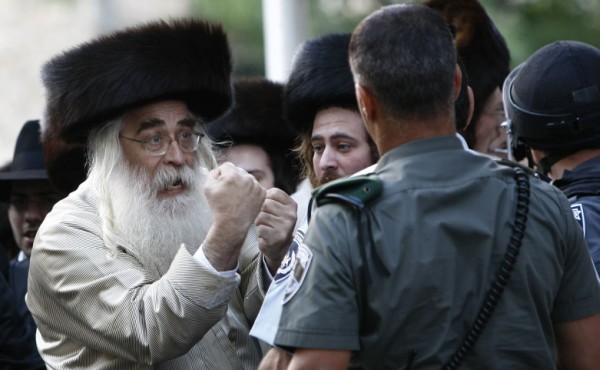
According to studies carried out by economist Eli Berman of the University of California, San Diego, Israel’s ultra-Orthodox population doubles every 16 years. Thirteen percent of Israelis who are eligible for the draft each year “enlist” in yeshivas. The Israel Defense Forces predicts that in 10 years one in every four 18-year-olds will evade service by studying in a yeshiva. For a long time now the problem has gone beyond discrimination; we are on the brink of a problem of national security.

According to researchers of the Israel 2028 project, headed by Eli Hurvitz and David Brodet, barring a significant change to the fertility rate in the Haredi community, the ultra-Orthodox will represent more than one-fifth of Israel’s Jewish population in 2028. Continue reading

Facebooktwittermail

The mystery of Dr Aafia Siddiqui

The mystery of Dr Aafia Siddiqui

In a hot summer morning 18 months ago a team of four Americans – two FBI agents and two army officers – rolled into Ghazni, a dusty town 50 miles south of Kabul. They had come to interview two unusual prisoners: a woman in a burka and her 11-year-old son, arrested the day before.

Afghan police accused the mysterious pair of being suicide bombers. What interested the Americans, though, was what they were carrying: notes about a “mass casualty attack” in the US on targets including the Statue of Liberty and a collection of jars and bottles containing “chemical and gel substances”.

At the town police station the Americans were directed into a room where, unknown to them, the woman was waiting behind a long yellow curtain. One soldier sat down, laying his M-4 rifle by his foot, next to the curtain. Moments later it twitched back.

The woman was standing there, pointing the officer’s gun at his head. A translator lunged at her, but too late. She fired twice, shouting “Get the fuck out of here!” and “Allahu Akbar!” Nobody was hit. As the translator wrestled with the woman, the second soldier drew his pistol and fired, hitting her in the abdomen. She went down, still kicking and shouting that she wanted “to kill Americans”. Then she passed out.

Whether this extraordinary scene is fiction or reality will soon be decided thousands of miles from Ghazni in a Manhattan courtroom. The woman is Dr Aafia Siddiqui, a Pakistani neuroscientist and mother of three. The description of the shooting, in July 2008, comes from the prosecution case, which Siddiqui disputes. What isn’t in doubt is that there was an incident, and that she was shot, after which she was helicoptered to Bagram air field where medics cut her open from breastplate to bellybutton, searching for bullets. Medical records show she barely survived. Seventeen days later, still recovering, she was bundled on to an FBI jet and flown to New York where she now faces seven counts of assault and attempted murder. If convicted, the maximum sentence is life in prison. [continued…]

Facebooktwittermail

UK role in torture of British citizens in Pakistan condemned

UK role in torture of British citizens in Pakistan condemned

Britain’s role in the torture of its own citizens in Pakistan is condemned today by one of the world’s leading human rights organisations as being cruel, counter-productive and in clear breach of international law.

In a damning report, published after an investigation spanning more than a year, Human Rights Watch (HRW) says the government finds itself in a “legally, morally and politically invidious position” through complicity in torture, and warns its moral legitimacy could be undermined.

The report by the New York-based NGO – entitled Cruel Britannia: British Complicity in the Torture and Ill-treatment of Terror Suspects in Pakistan – corroborates many of the findings of the Guardian’s own investigation into the mistreatment of people held during British-led counter-terrorism operations. [continued…]

Will Miliband address torture evidence?

Today sees the release by Human Rights Watch (HRW) of a searing exposé of the evidence against the British government of its complicity in the torture of people held in Pakistan suspected of terrorism. The report, Cruel Britannia, is based on evidence collected by Ali Dayan Hasan, a senior HRW researcher who interviewed not only suspects and their lawyers but also members of the Pakistani ISI agency who were involved in the torture. It corroborates and provides further detail for the investigative reporting on torture of the Guardian’s Ian Cobain, who recently won the Paul Foot award.

Human Rights Watch, a US-based organisation, has an excellent reputation for independence and fair-minded monitoring. The allegations that British security services knew about torture in Pakistan, took advantage of it and even encouraged it, must be taken very seriously.

The report analyses in some detail the “far from decisive” response of the UK government so far to these and other allegations. Foreign secretary David Miliband and others repeat a mantra that the UK government does not condone torture, but they have refused to investigate the allegations or to publish guidance to officials. Written instructions to security services interrogating suspects in Afghanistan after 9/11 disclosed earlier this year – while saying they should not be seen to “condone” torture – also made it clear that the UK government sanctions a blind eye. The instructions claimed (with dubious legality, let alone morality) that there was no obligation to intervene even when interrogators are aware of torture. [continued…]

Facebooktwittermail

Obama plans to send 34,000 more troops to Afghanistan

Obama plans to send 34,000 more troops to Afghanistan

President Barack Obama met Monday evening with his national security team to finalize a plan to dispatch some 34,000 additional U.S. troops over the next year to what he’s called “a war of necessity” in Afghanistan, U.S. officials told McClatchy.

Obama is expected to announce his long-awaited decision on Dec. 1, followed by meetings on Capitol Hill aimed at winning congressional support amid opposition by some Democrats who are worried about the strain on the U.S. Treasury and whether Afghanistan has become a quagmire, the officials said.

The U.S. officials all spoke on condition of anonymity because they weren’t authorized to discuss the issue publicly and because, one official said, the White House is incensed by leaks on its Afghanistan policy that didn’t originate in the White House. [continued…]

We can’t buy peace in Afghanistan

So now we know the secret weapon of the the new western plan to pacify Afghanistan: cash. As President Obama prepares to announce the expected dispatch of tens of thousands more troops to America’s eight-year-old war and occupation, US and British commanders on the ground have already begun to fund and equip Afghan militias to help fight the Taliban.

The idea behind the homely sounding Community Defence Initiative is to buy off disaffected fighters and create loyal tribal auxiliaries to support Nato occupation forces and the Afghan government. It’s the other leg of US General McChrystal’s plan for a military surge to turn round the deepening crisis of the Afghan war – and is directly modelled on the US surge of 2007 in Iraq.

That combined a large increase in US troop numbers with the creation of American-funded “awakening councils” out of parts of Iraq’s Sunni-based resistance who had come into conflict with al-Qaida. It led to an initial increase in violence and American deaths, followed by a sharp decrease in both thereafter. [continued…]

Why they hate us (I): on military occupation

One of the many barriers to developing a saner U.S. foreign policy is our collective failure to appreciate why military occupations generate so much hatred, resentment, and resistance, and why we should therefore go to enormous lengths to avoid getting mired in them. Costly occupations are an activity you hope your adversaries undertake, especially in areas of little intrinsic strategic value. We blundered into Somalia in the early 1990s without realizing that we weren’t welcome; we invaded Iraq thinking we would be greeted as liberators, and we still don’t fully understand why many Afghans resent our presence and why some are driven to take up arms against us.

The American experience is hardly unique: Britain’s occupation of Iraq after World War I triggered fierce opposition, and British forces in Mandate Palestine eventually faced armed resistance from both Arab and Zionist groups. French rule in Algeria, Syria, Lebanon, and Indochina spawned several violent resistance movements, and Russia has fought Chechen insurgents in the 19th, 20th and 21st centuries. The Shiite population of southern Lebanon initially welcomed Israel’s invasion in 1982, but the IDF behaved badly and stayed too long, which led directly to the formation of Hezbollah. Israelis were also surprised by the first intifida in 1987, having mistakenly assumed that their occupation of the West Bank was benevolent and that the Palestinians there would be content to be governed by the IDF forever. [continued…]

Facebooktwittermail

Iraq’s January elections face near certain delay

Iraq’s January elections face near certain delay

Iraq’s tortuous effort to hold its parliamentary election on schedule in January collapsed Monday, raising the prospect of a political and constitutional crisis next year as the United States begins withdrawing the majority of its combat troops.

After two days of divisive sessions and failed talks, Parliament disregarded a veto by one of the country’s vice presidents and approved new amendments that the vice president promptly indicated he would veto as well.

The moves deepened a crisis that had fleetingly seemed resolved after months of wrangling over how to set up the vote, widely seen as a barometer of Iraq’s progress toward democracy. [continued…]

British colonel’s scathing attack on ‘arrogant, bureaucratic’ Americans

Colonel J.K.Tanner: “We experienced real difficulty in dealing with the American military and civilian organisations who, partly through arrogance and partly through bureaucracy, dictate that there is only one way: the American way. As far as the Iraqis were concerned, here was a nation who could put people on the moon but who could not, or would not, fix the electricity supply. You need to have money in order to make things happen, to buy protection from the looters, to smooth out tribal problems and to have immediate and visible effect and we did not have that. Despite our so-called ‘special relationship’ I reckon that we were treated no differently to the Portugese…

“I realise now that I am a European, not an American. We managed to get on better militarily and administratively with our European partners and indeed at times with the Arabs than with the Americans. Europeans chat to each other whereas dialogue is alien to the US military.

“They need to reintroduce dialogue as a tool of command because, although it is easy to speak to Americans face-to-face and understand each other completely, dealing with them corporately is akin to dealing with a group of Martians.” [continued…]

Facebooktwittermail

Charges detail road to terror for 20 in U.S.

Charges detail road to terror for 20 in U.S.

Federal officials on Monday unsealed terrorism-related charges against men they say were key actors in a recruitment effort that led roughly 20 young Americans to join a violent insurgent group in Somalia with ties to Al Qaeda.

With eight new suspects charged Monday, the authorities have implicated 14 people in the case, one of the most extensive domestic terrorism investigations since the Sept. 11 attacks. Some of them have been arrested; others are at large, including several believed to be still fighting with the Somali group, Al Shabab.

The case represents the largest group of American citizens suspected of joining an extremist movement affiliated with Al Qaeda, senior officials said. Many of the recruits had come to America as young refugees fleeing a brutal civil war, only to settle in a gang-ridden enclave of Minneapolis. [continued…]

Editor’s Comment“one of the most extensive domestic terrorism investigations since the Sept. 11 attacks” — “the largest group of American citizens suspected of joining an extremist movement affiliated with Al Qaeda”…

Wow! This has to be a landmark event in the war on terrorism! The high-fives must really have been thrown around at the FBI after cracking open a major operation like this. Not another embarrassing headline like this one from a few months ago: “FBI ‘lured dimwits’ into terror plot.”

Except… “Domestic terrorism investigations” seems like a bit of a stretch. The closest this report gets to suggesting that any of these young Somali Americans were intent on engaging in an act of domestic terrorism is to say: “Law enforcement officials are concerned that the recruits, who hold American passports, could be commissioned to return to the United States to carry out attacks here, though so far there is no evidence of such plots.”

Al Shabab might be labeled a terrorist organization and it might have ties to al Qaeda, but make no mistake: it is fighting a real war with conventional war-ambitions — the conquest of territory. Al Shabab wants to control Somalia. It’s hard to imagine how sponsoring acts of terrorism elsewhere would further that strategic goal.

Should we be concerned that American kids are being enticed into a desperate and bloody conflict far away? Certainly.

But maybe that concern should not be restricted to the fate of kids at risk in Minneapolis. Maybe it should also include kids in New York and elsewhere who are being recruited to serve in the Israeli Defense Force.

Facebooktwittermail

Iraq report: Secret papers reveal Blair’s blunders and concealment

Iraq report: Secret papers reveal Blair’s blunders and concealment

On the eve of the Chilcot inquiry into Britain’s involvement in the 2003 invasion and its aftermath, The Sunday Telegraph has obtained hundreds of pages of secret Government reports on “lessons learnt” which shed new light on “significant shortcomings” at all levels.

They include full transcripts of extraordinarily frank classified interviews in which British Army commanders vent their frustration and anger with ministers and Whitehall officials.

The reports disclose that:

Tony Blair, the former prime minister, misled MPs and the public throughout 2002 when he claimed that Britain’s objective was “disarmament, not regime change” and that there had been no planning for military action. In fact, British military planning for a full invasion and regime change began in February 2002.

The need to conceal this from Parliament and all but “very small numbers” of officials “constrained” the planning process. The result was a “rushed”operation “lacking in coherence and resources” which caused “significant risk” to troops and “critical failure” in the post-war period.

Operations were so under-resourced that some troops went into action with only five bullets each. Others had to deploy to war on civilian airlines, taking their equipment as hand luggage. Some troops had weapons confiscated by airport security.

Commanders reported that the Army’s main radio system “tended to drop out at around noon each day because of the heat”. One described the supply chain as “absolutely appalling”, saying: “I know for a fact that there was one container full of skis in the desert.” [continued…]

Facebooktwittermail

Gideon Levy on Israel’s addiction

Gideon Levy on Israel’s addiction

Gaza militant groups agree to stop firing rockets into Israel

Hamas has won an agreement from other militant groups in Gaza to halt rocket fire into Israel for the first time in almost a year, asboth sides indicated progress on a deal to release a captured Israeli soldier.

The agreement, announced , appears to be an attempt by the Palestinian Islamist movement to prevent another descent into fighting at a time when reconstruction has barely begun almost 12 months after the devastating conflict with Israel.

It also reflected more progress in secretly mediated talks to release Gilad Shalit, the soldier captured more than three years ago, in exchange for the return of hundreds of Palestinian prisoners. [continued…]

Gaza water unfit for human consumption: Palestinians

Water in the Gaza Strip is so salty that it is unfit for human consumption, a Palestinian official in charge of water supplies inside the besieged coastal territory said on Saturday.

“The water is no longer fit for human consumption, with analysis and international studies showing that just 10 percent of water in the Gaza Strip is usable… threatening the lives of Palestinians,” Munzir Shiblak warned.

He called in a statement for “the necessary measures to be taken to end the problem of salinity in Gaza water supplies, a problem that is getting worse.” [continued…]

Obama must deal with important questions of the Mideast conflict

For 41 years, Washington turned a blind eye. It protested a bit, scolded a bit, and mostly made do with periodically stating that its policy has not changed – it still opposes settlements in the territories and does not recognize the annexation of East Jerusalem or the Golan Heights. Suddenly, it gave us a resounding slap, but one of the frustrating kind that misses the cheek and flies through empty air. Because the American demand that we freeze construction in the settlements, that “strong message” containing a threat, has become a personal duel between Prime Minister Benjamin Netanyahu and U.S. President Barack Obama, in place of a clear policy presented by the latter.

Obama will win, of course. He can set a meeting with Netanyahu late at night, not answer the prime minister’s phone calls, warn him from the Great Wall of China and even order his officials to give Israel’s requests the cold shoulder. Obama already has managed to garner international support for his demand that Israel freeze settlement construction, even in Jerusalem, and American public opinion is on his side. If Obama wants to undermine Israel’s trust in the United States, or to prove to Netanyahu who is stronger, he does not have to work hard.

The American demand is proper, even if it is very late and unusually aggressive. However, its lack of context is infuriating. Freezing settlements is not a policy. Its entire purpose is to give Mahmoud Abbas, the resigning Palestinian Authority president, a reason to get back to negotiations. But negotiations cannot be a final goal, just as freezing settlements cannot be considered the ultimate achievement. What then? Is Abbas doomed to be a constant negotiator in endless negotiations? Does Washington have a plan for continuing negotiations? Continue reading

Facebooktwittermail